Results for "auberge+ou+hôtel+|+122+>+74"
26925 results found.
Infos récentes Togo-Bénin? English translation pending
je pars debut decembre sur le burkina direction benin puis togo et retour au burkina 😎😎
je cherche des infos pratiques 😉: visite park, les hotels, restos, bon plans, etat des routes etc.....
je fait le voyage burkina-benin-togo avec la vielle mercedes conduite par mon copain burkina be :daouda😇
merci😊
je cherche des infos pratiques 😉: visite park, les hotels, restos, bon plans, etat des routes etc.....
je fait le voyage burkina-benin-togo avec la vielle mercedes conduite par mon copain burkina be :daouda😇
merci😊
Espagne: transport Girone vers Barcelone English translation pending
Bonjour à tous,
On part à 4 en octobre. On atterit à girone et on doit se rendre à barcelone mais on arrive pas à trouver les horaires et les tarifs pour se rendre d'une ville à l'autre en bus ou en train...
Peut-être l'un d'entre vous pourra-t-il nous éclairer.... 😉
Merci d'avance les travelleurs,
byhdoo and co
On part à 4 en octobre. On atterit à girone et on doit se rendre à barcelone mais on arrive pas à trouver les horaires et les tarifs pour se rendre d'une ville à l'autre en bus ou en train...
Peut-être l'un d'entre vous pourra-t-il nous éclairer.... 😉
Merci d'avance les travelleurs,
byhdoo and co
Moyens de transports et conseils sur l'Arménie et Géorgie English translation pending
Salut,
Avec ma copine on souhaite partir en armenie ainsi qu'en georgie (pour l'azerbaidjan on verra plus tard si on arrive a trouver une lettre d'invatation pas trop chere!!)
Nous souhaitons savoir si quelqu'un est deja parti dans cette region, si l'acces aux regions autonomes de georgie sont faciles, qu'elles sont les moyens de transports entre ces 2 pays (j'ai entendu dire qu'il y avait un train!), qu'elles sont les regions instables et aussi la question du logement: camping possible ou auberge?
Merci pour toutes infos
Avec ma copine on souhaite partir en armenie ainsi qu'en georgie (pour l'azerbaidjan on verra plus tard si on arrive a trouver une lettre d'invatation pas trop chere!!)
Nous souhaitons savoir si quelqu'un est deja parti dans cette region, si l'acces aux regions autonomes de georgie sont faciles, qu'elles sont les moyens de transports entre ces 2 pays (j'ai entendu dire qu'il y avait un train!), qu'elles sont les regions instables et aussi la question du logement: camping possible ou auberge?
Merci pour toutes infos
Visa russe: quelle galère! English translation pending
Bonjour,
En attendant un éventuel changement de procédure d'obtention de visa, suite à la visite du site de l'ambassade de Russie, j'ai quelques questions sur le visas Russe:
1/ Voucher Touristique
1.1 qu'est-ce que c'est?
1.2 Je lis sur leur site :" (bon d'échange) des agences de tourisme russes ou françaises"
Comme j'organise mon voyage moi-même je ne vois pas comment je pourrais obtenir quelque chose d'une agence de voyage. Par contre on peut peut-être obtenir ça d'un hotel russe (moyennant une réservation)
2/ Justificatif de l'accueil du touriste étranger
Je lis sur leur site :"(réservation de l'hôtel ou de l'agence touristique russe) mentionnant obligatoirement: le nombre d'entrées et de sorties; la nationalité du touriste; les dates d'entrée et de sortie; le nom et le prénom de la personne; sa date de naissance; le numéro de son passeport; la liste des villes à visiter; le lieu d'hébergement; le nom de l'hôtel ou de l'agence touristique russe qui se charge de l'enregistrement du touriste, son adresse et le numéro de référence consulaire."
2.1 Est-ce que c'est l'hotel qui doit m'envoyer ça?
2.2 Comme je ne reste pas au même endroit (St Pet, Moscow, Irkoutsk) est-ce que je dois obtenir ce document pour chaque hotel, ou bien un seul suffit?
2.3 Le nombre d'entrées/sorties c'est quoi? Ainsi que les dates d'entrées/Sorties? Ca correspond aux E/S du pays, de la ville?
2.4 "le nom de l'hôtel ou de l'agence touristique russe qui se charge de l'enregistrement du touriste" Je dois m'enregistrer sur place? ou ? quand? (sachant que je commence à St Pet).
2.5 son adresse et le numéro de référence consulaire C'est quoi le numéro consulaire.
3. Programme détaillé "Nota 2: si le visa dépasse 15 jours il est obligatoire de présenter le programme détaillé du séjour établi par l'agence de tourisme russe ou française." 3.1 Comme j'organise mon voyage moi-même je donne cette liste moi-même? Ou je demande un organisme russe de m'envoyer quelque chose? Dois-je demander un justificatif pour chaque hotel réservé? 3.2 Est-ce que je mets les infos sur le justificatif de l'accueil client ou sur une feuille à part?
4. Assurance Est-ce que ma carte CB Visa suffit comme assurance ou bien dois-je prendre une assurance complémentaire? Sachant que ce n'est pas une Visa Premier.
5. Format des papiers Est-ce que je dois fournir des originaux papiers ou des fax suffisent ou des photocopies suffisent? Et si des photocopies ne suffisent pas, comment font-ils la différence avec un fax?
Voila c'est tout pour le moment !
Merci, Wilfrid.
En attendant un éventuel changement de procédure d'obtention de visa, suite à la visite du site de l'ambassade de Russie, j'ai quelques questions sur le visas Russe:
1/ Voucher Touristique
1.1 qu'est-ce que c'est?
1.2 Je lis sur leur site :" (bon d'échange) des agences de tourisme russes ou françaises"
Comme j'organise mon voyage moi-même je ne vois pas comment je pourrais obtenir quelque chose d'une agence de voyage. Par contre on peut peut-être obtenir ça d'un hotel russe (moyennant une réservation)
2/ Justificatif de l'accueil du touriste étranger
Je lis sur leur site :"(réservation de l'hôtel ou de l'agence touristique russe) mentionnant obligatoirement: le nombre d'entrées et de sorties; la nationalité du touriste; les dates d'entrée et de sortie; le nom et le prénom de la personne; sa date de naissance; le numéro de son passeport; la liste des villes à visiter; le lieu d'hébergement; le nom de l'hôtel ou de l'agence touristique russe qui se charge de l'enregistrement du touriste, son adresse et le numéro de référence consulaire."
2.1 Est-ce que c'est l'hotel qui doit m'envoyer ça?
2.2 Comme je ne reste pas au même endroit (St Pet, Moscow, Irkoutsk) est-ce que je dois obtenir ce document pour chaque hotel, ou bien un seul suffit?
2.3 Le nombre d'entrées/sorties c'est quoi? Ainsi que les dates d'entrées/Sorties? Ca correspond aux E/S du pays, de la ville?
2.4 "le nom de l'hôtel ou de l'agence touristique russe qui se charge de l'enregistrement du touriste" Je dois m'enregistrer sur place? ou ? quand? (sachant que je commence à St Pet).
2.5 son adresse et le numéro de référence consulaire C'est quoi le numéro consulaire.
3. Programme détaillé "Nota 2: si le visa dépasse 15 jours il est obligatoire de présenter le programme détaillé du séjour établi par l'agence de tourisme russe ou française." 3.1 Comme j'organise mon voyage moi-même je donne cette liste moi-même? Ou je demande un organisme russe de m'envoyer quelque chose? Dois-je demander un justificatif pour chaque hotel réservé? 3.2 Est-ce que je mets les infos sur le justificatif de l'accueil client ou sur une feuille à part?
4. Assurance Est-ce que ma carte CB Visa suffit comme assurance ou bien dois-je prendre une assurance complémentaire? Sachant que ce n'est pas une Visa Premier.
5. Format des papiers Est-ce que je dois fournir des originaux papiers ou des fax suffisent ou des photocopies suffisent? Et si des photocopies ne suffisent pas, comment font-ils la différence avec un fax?
Voila c'est tout pour le moment !
Merci, Wilfrid.
Do travel encounters matter to you?
Hi there,
My name’s Emilie, and my view of travel has changed. I used to travel just to tick off the "places and things to do/see" boxes. But lately, I’ve realized that encounters have become really important to me while traveling. In fact, the people I’ve met and what they’ve brought to my life are now my best travel memories. What do you think? Have you had a similar shift in perspective? Are you more interested in meeting people while traveling now?
To be totally honest, I’m training to become a travel planner (a trip organizer), and I was thinking of focusing on organizing trips that are more centered around encounters. So I’d love to know if this makes sense—if travelers are interested in this kind of experience. Just to be clear, I’m not selling anything; I just want to chat and hear your thoughts.
Have a lovely evening, everyone! :)
My name’s Emilie, and my view of travel has changed. I used to travel just to tick off the "places and things to do/see" boxes. But lately, I’ve realized that encounters have become really important to me while traveling. In fact, the people I’ve met and what they’ve brought to my life are now my best travel memories. What do you think? Have you had a similar shift in perspective? Are you more interested in meeting people while traveling now?
To be totally honest, I’m training to become a travel planner (a trip organizer), and I was thinking of focusing on organizing trips that are more centered around encounters. So I’d love to know if this makes sense—if travelers are interested in this kind of experience. Just to be clear, I’m not selling anything; I just want to chat and hear your thoughts.
Have a lovely evening, everyone! :)
Cycling Algeria’s Coast – January 2025 Trip Report
Hi everyone,
First post here to share a quick recap of our west-to-east bike trip along Algeria’s coast in January 2025. It was just the two of us—my partner and I—with French passports and not a word of Arabic. No friends or welcoming hosts in the country.
Under those conditions, we’d strongly advise against going.
Our original plan was to follow the coast from Algiers to Tunis. We ended up cycling from Algiers to Béjaia, then took the train from Béjaia to Annaba (with a stop in Constantine), and finally biked to the border. We were tailed by police the whole way—whether on our bikes, on the train, or even on foot while exploring towns. On top of that, we couldn’t wild camp and were limited to the few state-approved hotels that accept foreigners. Under those circumstances, connecting with locals was especially tough.
With such an omnipresent and intrusive police presence, we’d definitely recommend against this destination for bike touring. A really sad situation that completely cuts you off from the local population...
We’d been warned, we went to check it out, and we weren’t disappointed!
You’ve been warned.
First post here to share a quick recap of our west-to-east bike trip along Algeria’s coast in January 2025. It was just the two of us—my partner and I—with French passports and not a word of Arabic. No friends or welcoming hosts in the country.
Under those conditions, we’d strongly advise against going.
Our original plan was to follow the coast from Algiers to Tunis. We ended up cycling from Algiers to Béjaia, then took the train from Béjaia to Annaba (with a stop in Constantine), and finally biked to the border. We were tailed by police the whole way—whether on our bikes, on the train, or even on foot while exploring towns. On top of that, we couldn’t wild camp and were limited to the few state-approved hotels that accept foreigners. Under those circumstances, connecting with locals was especially tough.
With such an omnipresent and intrusive police presence, we’d definitely recommend against this destination for bike touring. A really sad situation that completely cuts you off from the local population...
We’d been warned, we went to check it out, and we weren’t disappointed!
You’ve been warned.
Practical tips after 3 months in Morocco
MOROCCO END 2024 / BEGINNING 2025
Off-season, I was lucky enough to negotiate hotel prices.
I should also mention that this was for a solo traveler until December 30th.
After that, there’ll be three of us!
Practical info.
Here’s all the info I gathered during my 3-month trip.
Cities: TANGIER / CHEFCHAOUEN / FES / MOULAY IDRISS, VOLUBILIS / AZROU / MIDELT /
ERRACHIDIA / RISSANI / MERZOUGA / TINGHIR / BOUMLANE DADES, AIT OUGLIF /
OUARZAZATE / TALIOUINE / TAROUDANT / TIZNIT / TAFRAOUT / SIDI IFNI, LEGZIRA /
AGADIR / ESSAOUIRA / MARRAKECH ///
From there, we’ll be three people. Cities: IMLIL / OUARZAZATE / AGDZ / ZAGORA / AIT BEN HADDOU / MARRAKECH / ESSAOUIRA / CASABLANCA. (Generally, I found that mattresses in Morocco were quite hard. My solution: I put two, even three folded blankets on the mattress to add some softness. Wi-Fi almost never works in the room.)
Tangier: Hôtel Fuentes Petit Socco, Old Medina +212 539 934 669 (For one person, end of October) Upon arrival, 19 € for a double room with a private bathroom. Breakfast included. Chefchaouen: Dar Besmellah Av Ibn Askar +212 539 986 489 (For one person, end of October). I don’t recommend it. A small, low-ceilinged room with a window facing a patio. Very dark and damp. Shared bathroom. 9 € Dar Bleu Pearl N° 4 Derb Benyaakoub +212 (0)539 88 28 86. Negotiated on-site to 130 MAD instead of 160 on Booking. Small room, furniture, Wi-Fi, private bathroom. Fes: Riad Alfredo or Riad Rocco—it’s the same place. It’s in a very narrow alley. N° 15 Derb Sidi Kjih or Qjih Talla Sagira +212 662 769 688 (see photos and virtual tour) Negotiated to 13 € on-site; on Booking, it was 16 €. Breakfast included. Atypical Anne room with private bathroom, Wi-Fi. The room is a bit dark. One of the best beds on my trip. Again, this was for a solo traveler off-season (end of October to end of December). Moulay Idriss: Gite El Menzeh (see the map) Negotiated on-site to 14 € with breakfast; on Booking, it was 24 €. I also negotiated for dinner—very good and hearty—for 5 € (the manager wanted 20 €). I stayed in the large upstairs room with a double bed, window, and private bathroom, not the tiny windowless rooms downstairs. Azrou: Hôtel des Cèdres Place Mohamed V. (see the map and photos) Negotiated 13 € instead of 16 € on Booking for a room with two small beds and a private bathroom. This hotel is honestly run-down and not worth the price at all. The owner thinks it’s a very classy hotel because of its old reputation! Midelt: Chez Ali, city center (see map) Negotiated to 14 € instead of 17 € on Booking. Room with two beds, bathroom, window, small terrace, and Wi-Fi. Er Rachidia: Hôtel El Fekri. Rue Moulay Abdalah Ben Ali (see map and photos) Couldn’t negotiate on-site—14 €, but on Booking, it was 5 € more! Rissani: Hôtel Restaurant Panorama +212 615 978 445 Well, I’d say skip it. Rooms without windows and shared bathrooms. Or on the terrace, there’s a sort of space with a big bed and a small bed behind a locked iron door with a window and an external bathroom that’s also used by people eating on the terrace. If there are people on the terrace, forget about privacy! Not to mention the internet doesn’t work, and the bed is as hard as a straw mat. All that for 150 MAD—luckily, I didn’t book through Booking, or it would’ve been more expensive!!! I didn’t stay. This closet isn’t even worth 100 MAD—and even that’s too much! A little further on, I went to a hotel where no one spoke English or anything else. I got a large room with 3 beds, a private bathroom, and Wi-Fi for 100 MAD. Merzouga: Said’s apartment +212 618 659 264. No real address—it’s right next to a souvenir shop, far from the center. (see photos) 15 €. The apartment is large with two bedrooms and all the comforts. But for me, it was too far from the village. Chez Belkecem: Marked on GPS. I don’t have any coordinates (see photos). +212 666 911 732 Negotiated on-site to 13 € with breakfast; on Booking, it was 2 € more. The room is decorated in a Berber style, with a private bathroom and a window to the outside. The worst breakfast I had in Morocco! Tinghir: Dar Al Medina Av Mohamed V (see map) Beautiful hotel negotiated to 13 € instead of 18 € on Booking. Breakfast included, Wi-Fi, room with a double bed and a single bed, window, and private bathroom. (Top floor) Boumlane Dades: Auberge Tamazirt (no contact) see GPS. Negotiated to 13 € with breakfast. It’s rustic, but I had a private bathroom, a large bed, Wi-Fi, a window, and a double bed. And the best part—the super-friendly owner gave me one of the gas heaters from the hallway. Aït Ouglif: Hôtel Aït Marghad. (See the map) Negotiated to 150 MAD instead of 240 MAD with breakfast. The place was half-closed because it was off-season. Room with a double bed on the ground floor, window, Wi-Fi, and bathroom. Heating provided—essential. The hassle was that there was almost no hot water. Ouarzazate: Hôtel Atlas 13 rue du marché +212 524 887 745 It’s on the pedestrian street. (See photos) Negotiated to 13 €. Old-fashioned room, double bed with a very hard mattress. Private bathroom, window, and Wi-Fi. Taliouine: Hôtel Le Safran. A 20-minute walk from the center—no other choice. Otherwise, there are a few local hotels, but even if I’m not always picky, there are limits. (See the map) Negotiated from 300 MAD to 200 MAD. Breakfast, Wi-Fi, window, king-size bed, private bathroom. The room is large (No. 11). (There’s a pool in the hotel.) Hôtel Atlas Bordeaux: +212 666 752 292 (next to the bus station) Usually, I’m not too picky, but honestly, skip this one. This place could be good because it’s central if: the cleaning was thorough. The bathrooms need to be redone... etc. No sheets—just a sort of blanket on the mattress and another to cover yourself. Obviously not clean. No towel. A bathroom that hasn’t been cleaned in way too long. In short, absolutely avoid. 120 MAD! Taroudant: Hôtel (mini) Atlas Bld Mansour Eddahbi (see map and photos) Double room with window, large bed, private bathroom, Wi-Fi (not great). A hotel that doesn’t look like much but is sparkling clean! 90 MAD for a single, 120 MAD for a double. Tiznit: Résidence Chem (see map) 100 MAD for a room with two single beds (very hard), window, private bathroom, and Wi-Fi. Clean but poorly maintained. Tafraout: Espace Tifawine (see the map). Hotel with a pool. Negotiated to 14 € on-site instead of 30 € on Booking. I could even choose my room. A large room with two beds—one big and one small. A large bathroom, a window, and Wi-Fi. Sidi Ifni: Hôtel Suerte Loca. (No contact, see GPS) I paid 140 MAD for a room in this dive—no negotiation possible. My room had a tiny terrace, the walls were repainted, but it’s super noisy (neighbors). Worse, when someone uses the water, there’s a loud machinery noise. That’s not all—the mattress is really worn out and sagging. The bathroom isn’t great. The Wi-Fi doesn’t work! This place still enjoys its old reputation, but it’s really run-down, and everything is old. The bedding is the worst I had in Morocco. Skip it. There’s much better for cheaper elsewhere! Hôtel La Belle Vue: Just before Suerte Loca +212 528 875 242 The reception staff was more than unfriendly. After seeing the rooms, I didn’t stay because the bedding would’ve been like sleeping on a yoga mat. Obviously not worth the 200 MAD asked for. Hôtel Aït Baamrane. Further down on the beach. Same price as above. The only difference is that everything is in good condition and comfortable, with a warm welcome.
Hôtel Safa: (see the map and photos.) On-site, no negotiation possible—200 MAD; on Booking, it was over 350 MAD. Huge room with all the luxury you could hope for. Breakfast included, large bay window, king-size bed, TV, Wi-Fi, furniture, and of course, a private bathroom. Agadir: Hôtel Kamal (see map) The only hotel I booked through Booking because there was a good discount. Except on-site, the hotel never wanted to give me the discount. At night, small insects that strongly resemble cockroaches—yet it’s high-end with doormen, etc. I contacted Booking, but nothing worked! I paid 250 MAD! Essaouira: Hôtel Elkasbah Souiria (See map and photo) Small room (No. 18) with a single bed and all the comforts. Private bathroom, window, Wi-Fi, and breakfast included (all-you-can-eat buffet). No negotiation possible—200 MAD. Chez Lina: Rue El Khemiset +212 658 042 562 (she speaks French) Large apartment with two bedrooms. Private bathroom on the landing. Wi-Fi. New, so not yet well set up. Far from the center. I paid 15 € instead of 18 € on Booking. Marrakech: Hôtel Atlas 50 rue Sidi Bouloukate +212 661 358 662 Tiny room on the ground floor with a shared bathroom. Wi-Fi, tiny window, very dark and noisy. 12 €
On December 31st, I’m joined by friends. The rooms will be for three people. Marrakech: Hôtel Agnaou 10 avenue or passage Moulay Rachid. +212 705 306 275. Negotiated on-site to 28 € for a room with a window to the outside and a private bathroom. Wi-Fi. Riad Todos: in the old medina +34 643 480 502 Watch out for extra taxes they might try to charge you. No heating. This place could be nice if better maintained. Bad smell of cat urine. Water leak in the bathroom. Wall crumbling from humidity. However, the reception staff is warm and tries to satisfy you. 120 MAD booked on Airbnb! Imlil: Auberge de la Vallée (see map) Large room with 4 beds. All comforts. Private bathroom, heating, Wi-Fi, and breakfast. Negotiated on-site to 300 MAD for three people. Ouarzazate: Hôtel Iazal: Av. Moulay Abdellah +212 524 886 187 (see photos) Very expensive for this hotel. Small room for 3 with a tiny, impractical bathroom. Heating, Wi-Fi, window. The showerhead is placed between the tiny sink and the toilet. The small space floods quickly. Far from the pedestrian center. No negotiation possible—350 MAD for three. Agdz: Guesthouse Le Chant des Palmiers. (See map) Very nice room—more like a small apartment with a fireplace corner, gas heating, private bathroom, Wi-Fi, windows, bedroom area plus two single beds. Breakfast included. Negotiated to 400 MAD for 3 people instead of 840 MAD on Booking. Zagora: Hôtel La Palmeraie. (See map) Room with bathroom, Wi-Fi (not great), heating, and window. Breakfast included. No negotiation—300 MAD (for 3). Aït Ben Haddou: Auberge La Barraka (see the map) Large, beautiful room with windows, Wi-Fi, heating, bathroom. Breakfast included. Pool. Negotiate a good price—but I didn’t note it down. (Around mid-January) Essaouira: El Kasbah Souiria. (See above) Room for three. Same benefits. No negotiation. 500 MAD. Casablanca: 664, Résidence Clémentine BD Mohamed V, Roches Noires. +33 6681 48002 Large, upscale apartment. Not far from Casa Voyageurs train station. Booked on Booking. 45 € (Last day, January 16th). Upon arrival, the price is always a few euros cheaper than on Booking—except in rare cases. Then, negotiation is possible or not! Prices vary depending on the season.
A few good places (for me) to eat.
Fes: Chez Hakim. (See map) Very good, hearty, and almost cheaper than anywhere else in the medina. Ouarzazate: Pasto wood-fired oven Place Al-Mouahidine +212 696 484 281 It had been a long time since I’d eaten such a good pizza (better than in most restaurants in France). At a price that beats all competition! Midelt: Berber Restaurant. (See map and photos) A dive that doesn’t look like much but is delicious at a more than affordable price. Marrakech: Dar EL WALIDIN Raid laahrouse, Rte Sidi Abdelaziz +212 653 493 637 Great selection, good food, and also cheap!
(At Jemaa el-Fnaa square. Under the warm welcome at restaurant « Chez Ali N° 65 », we got scammed out of 7 € when paying the bill! Experts at swindling.) Azrou: Snack La Forêt (see map) Again, good food at a low price. Merzouga: Snack Alafrah VOLUBILIS: The price has gone up to 100 MAD. Honestly, if you’re not an archaeology buff, it’s not worth it! BANKS: The best exchange rate I got was at BMCI. For ATMs, I paid the least fees at Banque Populaire. TRANSPORTATION:
Airport taxi Tangier to Petit Socco: 100 MAD Train: Fes to Meknès Al Amir: 35 MAD Casablanca to Airport: 60 MAD
Grand Taxis: (Shared taxi for 7 people that only leaves when full. I never waited more than 15 minutes to leave. There’s good turnover, and the vehicles are in good condition. They go faster than buses and are almost always cheaper. Prices are fixed, and you don’t pay the driver but the station chief!)
Meknès to Moulay Idriss: 12 MAD Moulay Idriss to Azrou: 35 MAD Midelt to Errachidia: 60 MAD Errachidia to Rissani: 40 MAD (I preferred this option rather than leaving at night or very early in the morning from Errachidia to Merzouga with Supratour, the only company that goes to Merzouga.) Rissani to Merzouga: 15 MAD Taliouine to Taroudant: 45 MAD (The bus is cheaper but takes longer) Taroudant to Inezgane: 35 MAD (Agadir suburb) I connected directly to Tiznit. Inezgane to Tiznit: 35 MAD Tiznit to Tafraout: 45 MAD (2-hour trip) Tiznit to Sidi Ifni: 35 MAD Agadir to Essaouira: 100 MAD Essaouira to Marrakech: 100 MAD Imlil to Marrakech: 35 MAD Grand taxi for three to Imlil: 220 MAD BUS: Tangier to Chefchaouen: 65 + 5 MAD baggage CTM Chefchaouen to Fes: 135 + 5 MAD CTM Azrou to Midelt: 50 MAD local bus Merzouga to Tinghir: 110 + 5 MAD Supratour Tinghir to Boumlane Dades: 30 + 5 MAD Supratour Boumlane Dades to Ouarzazate: 30 MAD minibus Ouarzazate to Taliouine: 60 MAD Satas company Sidi Ifni to Agadir: 95 + 5 MAD CTM Agadir to Essaouira: 70 MAD Trans Al Yamama Essaouira to Marrakech: 65 MAD Argana company Marrakech to Essaouira: 60 + 5 MAD Virago Mogador company Essaouira to Casablanca: 100 + 5 MAD
Sidi Ifni: To go to Legzira, there are green shared buses that leave every 2 hours for 6 MAD. Petit Taxis: You have to negotiate hard—the price can double. Example: In Fes, they asked me for 50 MAD from the bus station to the Blue Gate. By walking a bit further and being patient, I got a taxi for 20 MAD! Another example: From Agadir’s bus station, they asked for 40 MAD to go to Hôtel Kamal. In the end, I paid 15 MAD! Here’s all the practical info I gathered during my trip to Morocco from late October to mid-January. It’s up to you to see if it’s useful or not.
From there, we’ll be three people. Cities: IMLIL / OUARZAZATE / AGDZ / ZAGORA / AIT BEN HADDOU / MARRAKECH / ESSAOUIRA / CASABLANCA. (Generally, I found that mattresses in Morocco were quite hard. My solution: I put two, even three folded blankets on the mattress to add some softness. Wi-Fi almost never works in the room.)
Tangier: Hôtel Fuentes Petit Socco, Old Medina +212 539 934 669 (For one person, end of October) Upon arrival, 19 € for a double room with a private bathroom. Breakfast included. Chefchaouen: Dar Besmellah Av Ibn Askar +212 539 986 489 (For one person, end of October). I don’t recommend it. A small, low-ceilinged room with a window facing a patio. Very dark and damp. Shared bathroom. 9 € Dar Bleu Pearl N° 4 Derb Benyaakoub +212 (0)539 88 28 86. Negotiated on-site to 130 MAD instead of 160 on Booking. Small room, furniture, Wi-Fi, private bathroom. Fes: Riad Alfredo or Riad Rocco—it’s the same place. It’s in a very narrow alley. N° 15 Derb Sidi Kjih or Qjih Talla Sagira +212 662 769 688 (see photos and virtual tour) Negotiated to 13 € on-site; on Booking, it was 16 €. Breakfast included. Atypical Anne room with private bathroom, Wi-Fi. The room is a bit dark. One of the best beds on my trip. Again, this was for a solo traveler off-season (end of October to end of December). Moulay Idriss: Gite El Menzeh (see the map) Negotiated on-site to 14 € with breakfast; on Booking, it was 24 €. I also negotiated for dinner—very good and hearty—for 5 € (the manager wanted 20 €). I stayed in the large upstairs room with a double bed, window, and private bathroom, not the tiny windowless rooms downstairs. Azrou: Hôtel des Cèdres Place Mohamed V. (see the map and photos) Negotiated 13 € instead of 16 € on Booking for a room with two small beds and a private bathroom. This hotel is honestly run-down and not worth the price at all. The owner thinks it’s a very classy hotel because of its old reputation! Midelt: Chez Ali, city center (see map) Negotiated to 14 € instead of 17 € on Booking. Room with two beds, bathroom, window, small terrace, and Wi-Fi. Er Rachidia: Hôtel El Fekri. Rue Moulay Abdalah Ben Ali (see map and photos) Couldn’t negotiate on-site—14 €, but on Booking, it was 5 € more! Rissani: Hôtel Restaurant Panorama +212 615 978 445 Well, I’d say skip it. Rooms without windows and shared bathrooms. Or on the terrace, there’s a sort of space with a big bed and a small bed behind a locked iron door with a window and an external bathroom that’s also used by people eating on the terrace. If there are people on the terrace, forget about privacy! Not to mention the internet doesn’t work, and the bed is as hard as a straw mat. All that for 150 MAD—luckily, I didn’t book through Booking, or it would’ve been more expensive!!! I didn’t stay. This closet isn’t even worth 100 MAD—and even that’s too much! A little further on, I went to a hotel where no one spoke English or anything else. I got a large room with 3 beds, a private bathroom, and Wi-Fi for 100 MAD. Merzouga: Said’s apartment +212 618 659 264. No real address—it’s right next to a souvenir shop, far from the center. (see photos) 15 €. The apartment is large with two bedrooms and all the comforts. But for me, it was too far from the village. Chez Belkecem: Marked on GPS. I don’t have any coordinates (see photos). +212 666 911 732 Negotiated on-site to 13 € with breakfast; on Booking, it was 2 € more. The room is decorated in a Berber style, with a private bathroom and a window to the outside. The worst breakfast I had in Morocco! Tinghir: Dar Al Medina Av Mohamed V (see map) Beautiful hotel negotiated to 13 € instead of 18 € on Booking. Breakfast included, Wi-Fi, room with a double bed and a single bed, window, and private bathroom. (Top floor) Boumlane Dades: Auberge Tamazirt (no contact) see GPS. Negotiated to 13 € with breakfast. It’s rustic, but I had a private bathroom, a large bed, Wi-Fi, a window, and a double bed. And the best part—the super-friendly owner gave me one of the gas heaters from the hallway. Aït Ouglif: Hôtel Aït Marghad. (See the map) Negotiated to 150 MAD instead of 240 MAD with breakfast. The place was half-closed because it was off-season. Room with a double bed on the ground floor, window, Wi-Fi, and bathroom. Heating provided—essential. The hassle was that there was almost no hot water. Ouarzazate: Hôtel Atlas 13 rue du marché +212 524 887 745 It’s on the pedestrian street. (See photos) Negotiated to 13 €. Old-fashioned room, double bed with a very hard mattress. Private bathroom, window, and Wi-Fi. Taliouine: Hôtel Le Safran. A 20-minute walk from the center—no other choice. Otherwise, there are a few local hotels, but even if I’m not always picky, there are limits. (See the map) Negotiated from 300 MAD to 200 MAD. Breakfast, Wi-Fi, window, king-size bed, private bathroom. The room is large (No. 11). (There’s a pool in the hotel.) Hôtel Atlas Bordeaux: +212 666 752 292 (next to the bus station) Usually, I’m not too picky, but honestly, skip this one. This place could be good because it’s central if: the cleaning was thorough. The bathrooms need to be redone... etc. No sheets—just a sort of blanket on the mattress and another to cover yourself. Obviously not clean. No towel. A bathroom that hasn’t been cleaned in way too long. In short, absolutely avoid. 120 MAD! Taroudant: Hôtel (mini) Atlas Bld Mansour Eddahbi (see map and photos) Double room with window, large bed, private bathroom, Wi-Fi (not great). A hotel that doesn’t look like much but is sparkling clean! 90 MAD for a single, 120 MAD for a double. Tiznit: Résidence Chem (see map) 100 MAD for a room with two single beds (very hard), window, private bathroom, and Wi-Fi. Clean but poorly maintained. Tafraout: Espace Tifawine (see the map). Hotel with a pool. Negotiated to 14 € on-site instead of 30 € on Booking. I could even choose my room. A large room with two beds—one big and one small. A large bathroom, a window, and Wi-Fi. Sidi Ifni: Hôtel Suerte Loca. (No contact, see GPS) I paid 140 MAD for a room in this dive—no negotiation possible. My room had a tiny terrace, the walls were repainted, but it’s super noisy (neighbors). Worse, when someone uses the water, there’s a loud machinery noise. That’s not all—the mattress is really worn out and sagging. The bathroom isn’t great. The Wi-Fi doesn’t work! This place still enjoys its old reputation, but it’s really run-down, and everything is old. The bedding is the worst I had in Morocco. Skip it. There’s much better for cheaper elsewhere! Hôtel La Belle Vue: Just before Suerte Loca +212 528 875 242 The reception staff was more than unfriendly. After seeing the rooms, I didn’t stay because the bedding would’ve been like sleeping on a yoga mat. Obviously not worth the 200 MAD asked for. Hôtel Aït Baamrane. Further down on the beach. Same price as above. The only difference is that everything is in good condition and comfortable, with a warm welcome.
Hôtel Safa: (see the map and photos.) On-site, no negotiation possible—200 MAD; on Booking, it was over 350 MAD. Huge room with all the luxury you could hope for. Breakfast included, large bay window, king-size bed, TV, Wi-Fi, furniture, and of course, a private bathroom. Agadir: Hôtel Kamal (see map) The only hotel I booked through Booking because there was a good discount. Except on-site, the hotel never wanted to give me the discount. At night, small insects that strongly resemble cockroaches—yet it’s high-end with doormen, etc. I contacted Booking, but nothing worked! I paid 250 MAD! Essaouira: Hôtel Elkasbah Souiria (See map and photo) Small room (No. 18) with a single bed and all the comforts. Private bathroom, window, Wi-Fi, and breakfast included (all-you-can-eat buffet). No negotiation possible—200 MAD. Chez Lina: Rue El Khemiset +212 658 042 562 (she speaks French) Large apartment with two bedrooms. Private bathroom on the landing. Wi-Fi. New, so not yet well set up. Far from the center. I paid 15 € instead of 18 € on Booking. Marrakech: Hôtel Atlas 50 rue Sidi Bouloukate +212 661 358 662 Tiny room on the ground floor with a shared bathroom. Wi-Fi, tiny window, very dark and noisy. 12 €
On December 31st, I’m joined by friends. The rooms will be for three people. Marrakech: Hôtel Agnaou 10 avenue or passage Moulay Rachid. +212 705 306 275. Negotiated on-site to 28 € for a room with a window to the outside and a private bathroom. Wi-Fi. Riad Todos: in the old medina +34 643 480 502 Watch out for extra taxes they might try to charge you. No heating. This place could be nice if better maintained. Bad smell of cat urine. Water leak in the bathroom. Wall crumbling from humidity. However, the reception staff is warm and tries to satisfy you. 120 MAD booked on Airbnb! Imlil: Auberge de la Vallée (see map) Large room with 4 beds. All comforts. Private bathroom, heating, Wi-Fi, and breakfast. Negotiated on-site to 300 MAD for three people. Ouarzazate: Hôtel Iazal: Av. Moulay Abdellah +212 524 886 187 (see photos) Very expensive for this hotel. Small room for 3 with a tiny, impractical bathroom. Heating, Wi-Fi, window. The showerhead is placed between the tiny sink and the toilet. The small space floods quickly. Far from the pedestrian center. No negotiation possible—350 MAD for three. Agdz: Guesthouse Le Chant des Palmiers. (See map) Very nice room—more like a small apartment with a fireplace corner, gas heating, private bathroom, Wi-Fi, windows, bedroom area plus two single beds. Breakfast included. Negotiated to 400 MAD for 3 people instead of 840 MAD on Booking. Zagora: Hôtel La Palmeraie. (See map) Room with bathroom, Wi-Fi (not great), heating, and window. Breakfast included. No negotiation—300 MAD (for 3). Aït Ben Haddou: Auberge La Barraka (see the map) Large, beautiful room with windows, Wi-Fi, heating, bathroom. Breakfast included. Pool. Negotiate a good price—but I didn’t note it down. (Around mid-January) Essaouira: El Kasbah Souiria. (See above) Room for three. Same benefits. No negotiation. 500 MAD. Casablanca: 664, Résidence Clémentine BD Mohamed V, Roches Noires. +33 6681 48002 Large, upscale apartment. Not far from Casa Voyageurs train station. Booked on Booking. 45 € (Last day, January 16th). Upon arrival, the price is always a few euros cheaper than on Booking—except in rare cases. Then, negotiation is possible or not! Prices vary depending on the season.
A few good places (for me) to eat.
Fes: Chez Hakim. (See map) Very good, hearty, and almost cheaper than anywhere else in the medina. Ouarzazate: Pasto wood-fired oven Place Al-Mouahidine +212 696 484 281 It had been a long time since I’d eaten such a good pizza (better than in most restaurants in France). At a price that beats all competition! Midelt: Berber Restaurant. (See map and photos) A dive that doesn’t look like much but is delicious at a more than affordable price. Marrakech: Dar EL WALIDIN Raid laahrouse, Rte Sidi Abdelaziz +212 653 493 637 Great selection, good food, and also cheap!
(At Jemaa el-Fnaa square. Under the warm welcome at restaurant « Chez Ali N° 65 », we got scammed out of 7 € when paying the bill! Experts at swindling.) Azrou: Snack La Forêt (see map) Again, good food at a low price. Merzouga: Snack Alafrah VOLUBILIS: The price has gone up to 100 MAD. Honestly, if you’re not an archaeology buff, it’s not worth it! BANKS: The best exchange rate I got was at BMCI. For ATMs, I paid the least fees at Banque Populaire. TRANSPORTATION:
Airport taxi Tangier to Petit Socco: 100 MAD Train: Fes to Meknès Al Amir: 35 MAD Casablanca to Airport: 60 MAD
Grand Taxis: (Shared taxi for 7 people that only leaves when full. I never waited more than 15 minutes to leave. There’s good turnover, and the vehicles are in good condition. They go faster than buses and are almost always cheaper. Prices are fixed, and you don’t pay the driver but the station chief!)
Meknès to Moulay Idriss: 12 MAD Moulay Idriss to Azrou: 35 MAD Midelt to Errachidia: 60 MAD Errachidia to Rissani: 40 MAD (I preferred this option rather than leaving at night or very early in the morning from Errachidia to Merzouga with Supratour, the only company that goes to Merzouga.) Rissani to Merzouga: 15 MAD Taliouine to Taroudant: 45 MAD (The bus is cheaper but takes longer) Taroudant to Inezgane: 35 MAD (Agadir suburb) I connected directly to Tiznit. Inezgane to Tiznit: 35 MAD Tiznit to Tafraout: 45 MAD (2-hour trip) Tiznit to Sidi Ifni: 35 MAD Agadir to Essaouira: 100 MAD Essaouira to Marrakech: 100 MAD Imlil to Marrakech: 35 MAD Grand taxi for three to Imlil: 220 MAD BUS: Tangier to Chefchaouen: 65 + 5 MAD baggage CTM Chefchaouen to Fes: 135 + 5 MAD CTM Azrou to Midelt: 50 MAD local bus Merzouga to Tinghir: 110 + 5 MAD Supratour Tinghir to Boumlane Dades: 30 + 5 MAD Supratour Boumlane Dades to Ouarzazate: 30 MAD minibus Ouarzazate to Taliouine: 60 MAD Satas company Sidi Ifni to Agadir: 95 + 5 MAD CTM Agadir to Essaouira: 70 MAD Trans Al Yamama Essaouira to Marrakech: 65 MAD Argana company Marrakech to Essaouira: 60 + 5 MAD Virago Mogador company Essaouira to Casablanca: 100 + 5 MAD
Sidi Ifni: To go to Legzira, there are green shared buses that leave every 2 hours for 6 MAD. Petit Taxis: You have to negotiate hard—the price can double. Example: In Fes, they asked me for 50 MAD from the bus station to the Blue Gate. By walking a bit further and being patient, I got a taxi for 20 MAD! Another example: From Agadir’s bus station, they asked for 40 MAD to go to Hôtel Kamal. In the end, I paid 15 MAD! Here’s all the practical info I gathered during my trip to Morocco from late October to mid-January. It’s up to you to see if it’s useful or not.
Enjoy Jordan: 3 semaines inoubliables English translation pending
Je vais me lancer dans un énième carnet sur cette fabuleuse destination. Je ne prétends pas égaler le style humoristique de certaines ou certains (ils se reconnaîtront !). Je vais juste essayer de vous faire vivre ou revivre quelques-uns de nos beaux souvenirs en ces temps où l'on ne sait plus vraiment quand nous pourrons refaire nos bagages et pour quelle destination.
Allez c'est parti, embarquement immédiat !
Mi-octobre 2019, mon épouse et moi sommes revenus d'un beau voyage de 3 semaines en Jordanie et 3,5 jours à Jérusalem.
Mais pourquoi 3 semaines dans un aussi petit pays où la plupart des touristes en 'font le tour' en 8/10 jours ?
Parce que... C'est la meilleure réponse... Surtout parce que nous le pouvons (pas de vacances en juillet/août) et que nous aimons prendre notre temps, visiter des sites moins connus, faire des activités parfois surprenante à nos âges.
Nous avons parcouru la Jordanie de Madaba et des rives de la Mer Morte à Jerash en passant par les châteaux du désert, de Jerash à Dana en passant par Kerak, de Dana au sublime Wadi Rum en passant par la merveilleuse Petra. Pour terminer, je vous proposerai de flâner dans la vieille ville d'Aman. Et au bout du bout, je pourrai éventuellement vous raconter nos derniers jours de ce périple passés à Jérusalem.
Etape 1 : Madaba
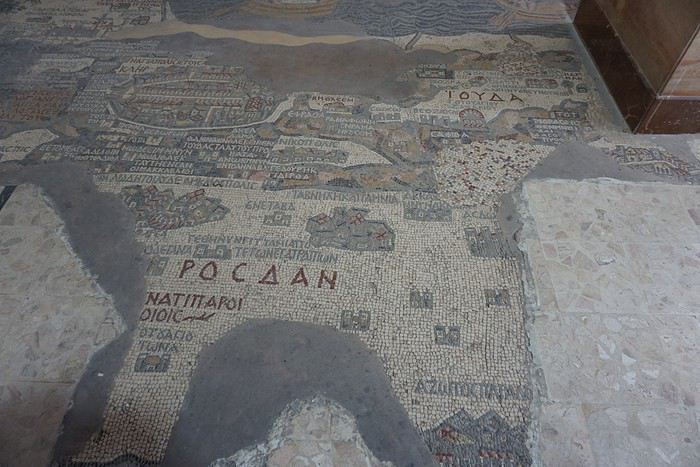
L’objectif de cette étape était de visiter tranquillement la ville et de voir les nombreuses mosaïques sur ses différents sites. Mais aussi de passer une journée au bord de la Mer Morte (objectif : repos dans un cadre sympa), de visiter quelques sites, villes ou villages tout autour et d’aller tenter le canyoning dans le wadi Mujib, nous qui n’avons jamais fait de canyoning ! Etape 2 : Jerash
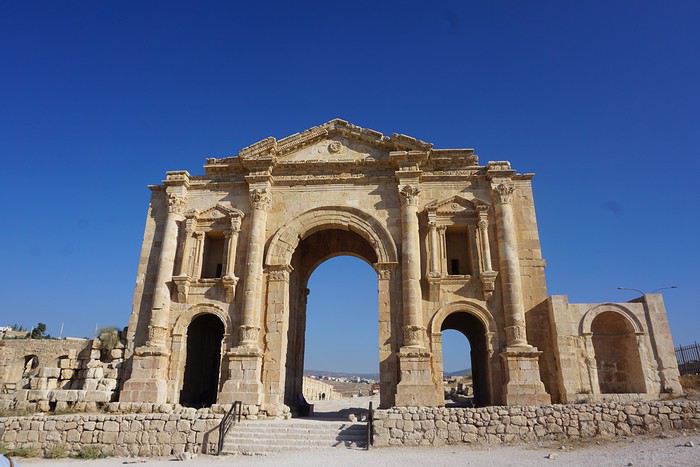
Etape à 100% culturelle avec au programme les châteaux du désert (petit détour pour relier Madaba à Jerash), les sites romains de Jerash, Um Qais et Pella, mais aussi le château médiéval d’Ajlun. Etape 3 : Kerak par la route du roi.
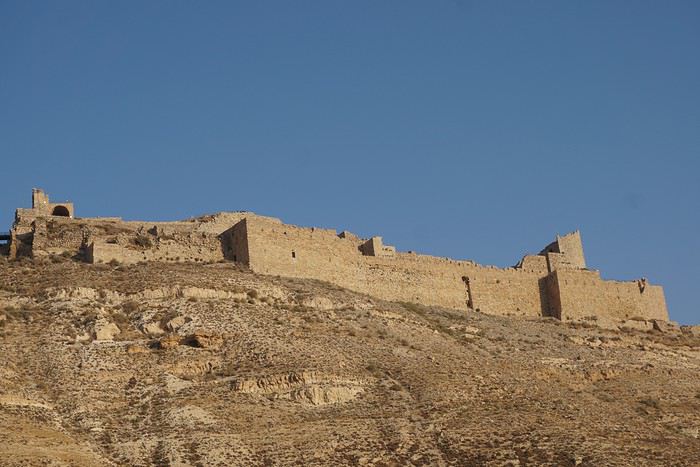
Nous ne passerons qu’une nuit à Kerak. Une demi-journée pour visiter le château, c’est très largement suffisant (même pour nous !) et donc cela va nous laisser du temps pour aller se balader dans des wadis faciles d’accès. Etape 4 : Dana
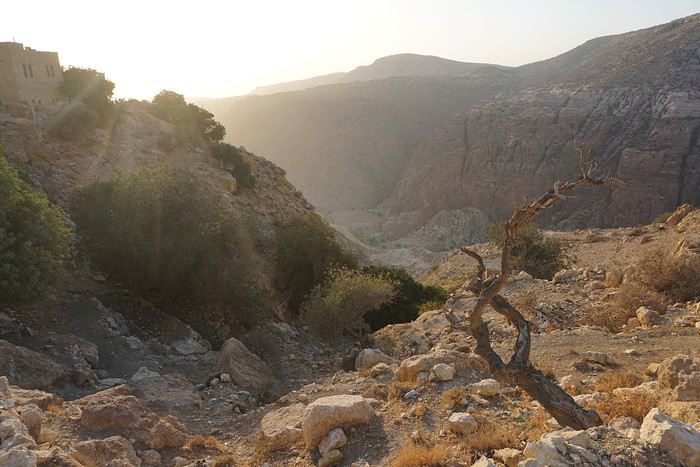
Ici aussi nous ne passerons qu’une nuit alors qu’au départ j’envisageai de passer plusieurs jours dans la réserve. Cela a été a priori un bon choix car si les randonnées y sont probablement très belles, Justine aurait eu beaucoup de mal compte-tenu du dénivelé. Et puis derrière, il y a Pétra et le trek dans le Wadi Rum. Il fallait donc se garder un peu d’énergie. Etape 5 : Pétra
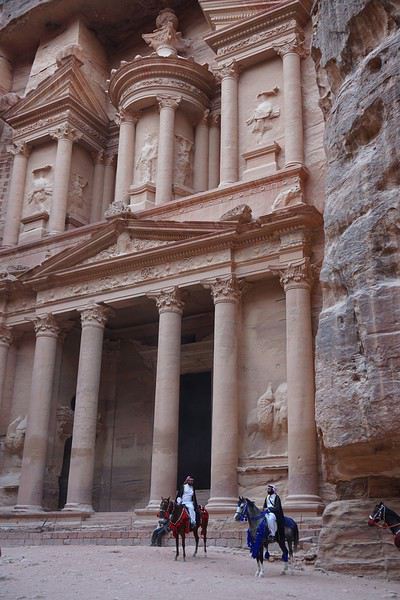
Que dire de cette étape ? Mon projet est de visiter le site en 4 journées complètes sans savoir si on pourra y rentrer 4 jours avec un Jordan Pass de 3 jours à Pétra. Si pas possible, on improvisera ! Etape 6 : Wadi Rum
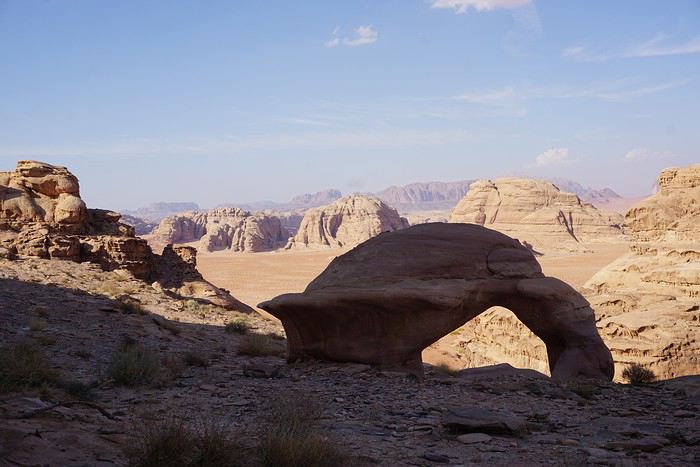
Nous allons y fêter notre anniversaire de mariage. Un trek de 3 jours, des camps itinérants et les nuits à la belle étoile. Et le jour de note anniversaire, le survol du désert au lever du soleil en montgolfière… projet sympa non ? Mais chut, c'est une surprise pour mon épouse ! Etape 7 : Amman
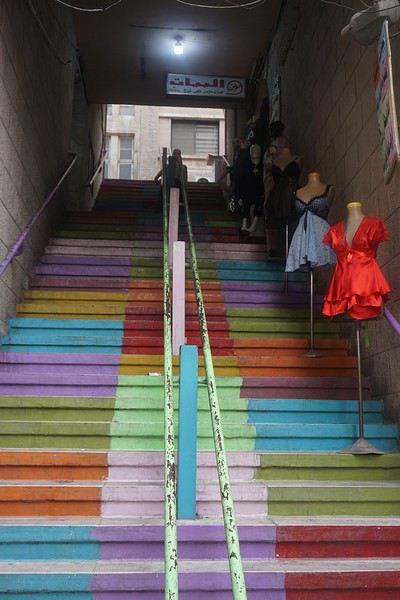
Dernière étape en Jordanie avant de traverser la frontière et terminer notre voyage à Jérusalem Etape 8 : Jérusalem
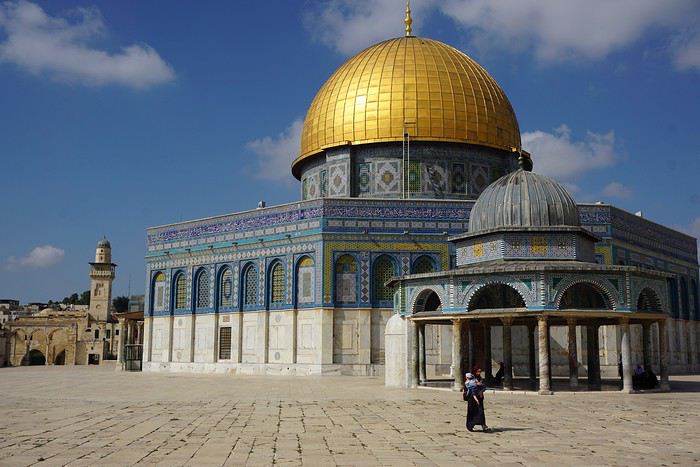
On ne présente plus cette destination : la vieille ville avec ses souks et les 4 quartiers (arabe, juif, chrétien et arménien), le Mont des Oliviers, le Mur des Lamentations, l’Esplanade des Mosquées. Mais aussi le mémorial de la Shoah.
L’objectif de cette étape était de visiter tranquillement la ville et de voir les nombreuses mosaïques sur ses différents sites. Mais aussi de passer une journée au bord de la Mer Morte (objectif : repos dans un cadre sympa), de visiter quelques sites, villes ou villages tout autour et d’aller tenter le canyoning dans le wadi Mujib, nous qui n’avons jamais fait de canyoning ! Etape 2 : Jerash
Etape à 100% culturelle avec au programme les châteaux du désert (petit détour pour relier Madaba à Jerash), les sites romains de Jerash, Um Qais et Pella, mais aussi le château médiéval d’Ajlun. Etape 3 : Kerak par la route du roi.
Nous ne passerons qu’une nuit à Kerak. Une demi-journée pour visiter le château, c’est très largement suffisant (même pour nous !) et donc cela va nous laisser du temps pour aller se balader dans des wadis faciles d’accès. Etape 4 : Dana
Ici aussi nous ne passerons qu’une nuit alors qu’au départ j’envisageai de passer plusieurs jours dans la réserve. Cela a été a priori un bon choix car si les randonnées y sont probablement très belles, Justine aurait eu beaucoup de mal compte-tenu du dénivelé. Et puis derrière, il y a Pétra et le trek dans le Wadi Rum. Il fallait donc se garder un peu d’énergie. Etape 5 : Pétra
Que dire de cette étape ? Mon projet est de visiter le site en 4 journées complètes sans savoir si on pourra y rentrer 4 jours avec un Jordan Pass de 3 jours à Pétra. Si pas possible, on improvisera ! Etape 6 : Wadi Rum
Nous allons y fêter notre anniversaire de mariage. Un trek de 3 jours, des camps itinérants et les nuits à la belle étoile. Et le jour de note anniversaire, le survol du désert au lever du soleil en montgolfière… projet sympa non ? Mais chut, c'est une surprise pour mon épouse ! Etape 7 : Amman
Dernière étape en Jordanie avant de traverser la frontière et terminer notre voyage à Jérusalem Etape 8 : Jérusalem
On ne présente plus cette destination : la vieille ville avec ses souks et les 4 quartiers (arabe, juif, chrétien et arménien), le Mont des Oliviers, le Mur des Lamentations, l’Esplanade des Mosquées. Mais aussi le mémorial de la Shoah.
Beautiful stops and sites discovered in Morocco in March
In early March, full of carefree joy and happy to return to Morocco, we landed in Marrakech under the sun.
We spent just one night in Marrakech at the Hôtel Toulousain, as we did on our previous trip. And we booked our 3 nights for the end of our trip, the second half of March... Ouch! Ouch! Ouch! But we’re not there yet...
Our first goal is to reach Magdaz, a mountain village in the Tessaout Valley, sometimes called the lost valley. We discovered the village of Magdaz on this forum, and we were charmed by the photos and comments from travelers who came before us. The road is easy—it’s dry, and the tarmac takes us right to the village gates at over 2,000 meters above sea level. We arrive in the afternoon and are left speechless by the beauty of the place. A jewel of Berber architecture! Perfectly restored granaries and kasbahs!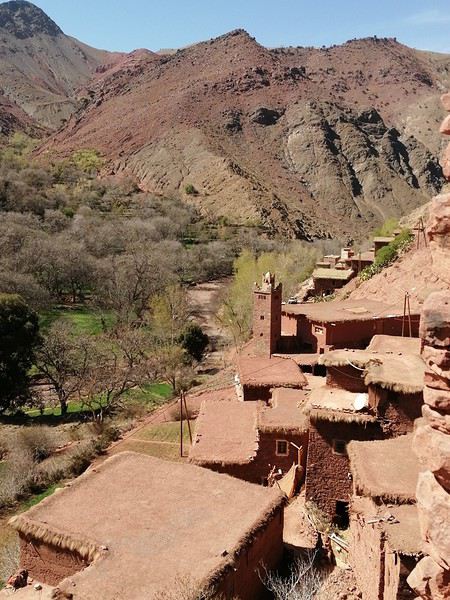
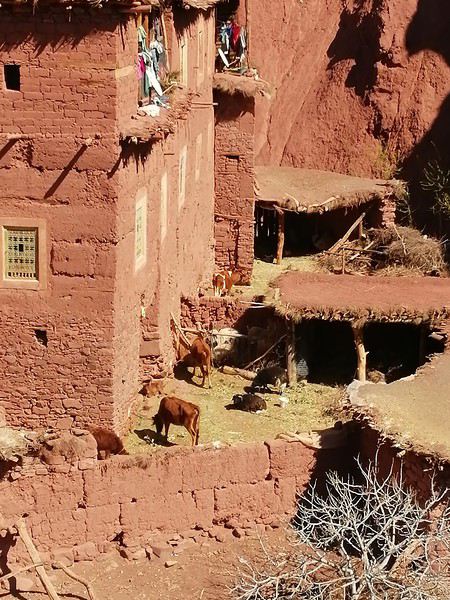
A young man from the village guides us on the visit and opens the doors to the terraces overlooking the village.
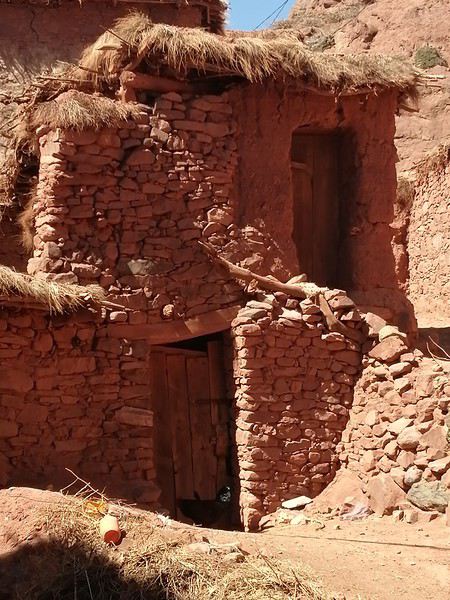 Several magnificent collective granaries have been beautifully restored. The warm colors of the stone capture the light wonderfully. It’s stunning!
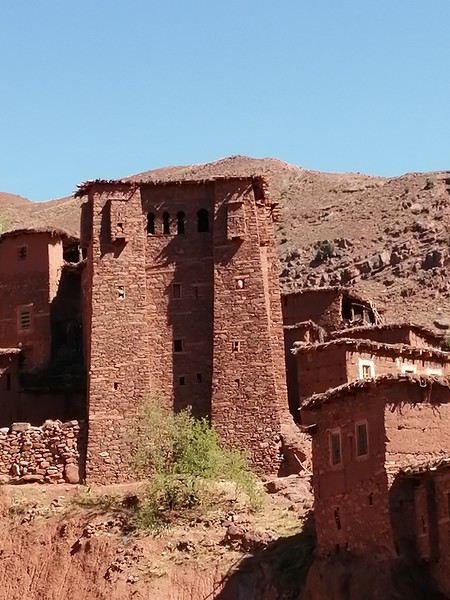
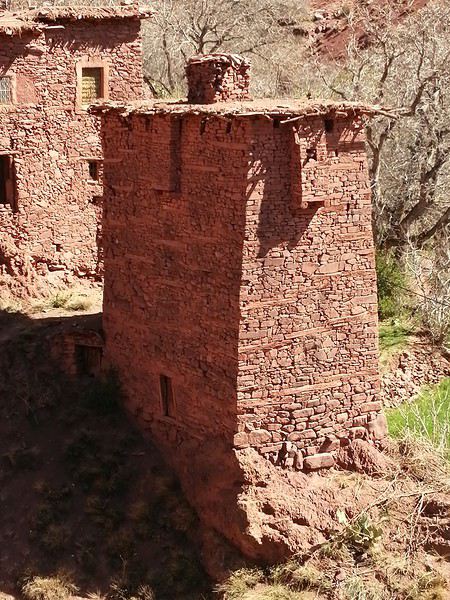
We won’t find anything decent to stay overnight there, so we head back down a bit and settle in at the Assounfou guesthouse. Lovely welcome. The place is in excellent condition and very clean. It’s spacious, but we’re the only ones there. First day full of promise!
Our first goal is to reach Magdaz, a mountain village in the Tessaout Valley, sometimes called the lost valley. We discovered the village of Magdaz on this forum, and we were charmed by the photos and comments from travelers who came before us. The road is easy—it’s dry, and the tarmac takes us right to the village gates at over 2,000 meters above sea level. We arrive in the afternoon and are left speechless by the beauty of the place. A jewel of Berber architecture! Perfectly restored granaries and kasbahs!
A young man from the village guides us on the visit and opens the doors to the terraces overlooking the village.
Several magnificent collective granaries have been beautifully restored. The warm colors of the stone capture the light wonderfully. It’s stunning!
We won’t find anything decent to stay overnight there, so we head back down a bit and settle in at the Assounfou guesthouse. Lovely welcome. The place is in excellent condition and very clean. It’s spacious, but we’re the only ones there. First day full of promise!
Voyage du West Bengal à Varanasi en passant par Bodhgaya English translation pending
Atteints par le virus "Inde" depuis notre premier voyage en 2013 , (seulement😮 ! ), nous y revoilà pour un 8° séjour ( du 14 au 28 janvier 2020).
Cette fois-ci notre périple nous amènera de Calcutta à Varanasi en passant par des petits villages du Westbengal et par Bodhgaya..
Nous prendrons ensuite notre vol de retour de Delhi à Nice .
Je me lance enfin pour rédiger mon premier cahier de voyage en remerciant aux passage tous ceux et celles qui ont alimenté ce forum en postant carnets, photos et commentaires, fort utiles à la préparation d'un voyage. Je demande d'avance un peu d'indulgence concernant ce récit, où quelques fautes vont peut-être s'immiscer par ci par là car, même si je vis en France depuis longtemps, ma langue maternelle reste l'allemand. Vous voilà prévenus 🙂!
Notre séjour débute à Kolkata ou nous resterons 2 jours entiers. Nous logeons dans un petit hôtel de College street . Le personnel est très sympathique et très serviable, notre chambre très propre, que demander de plus? Certes , c'est bruyant côté rue mais l'avantage d'un petit balcon nous permet d'observer tout le trafic d'en bas. Celui -ci ne s'arrête guère même pendant la nuit...Ceci dit, nous dormons très bien, le voyage a été long !
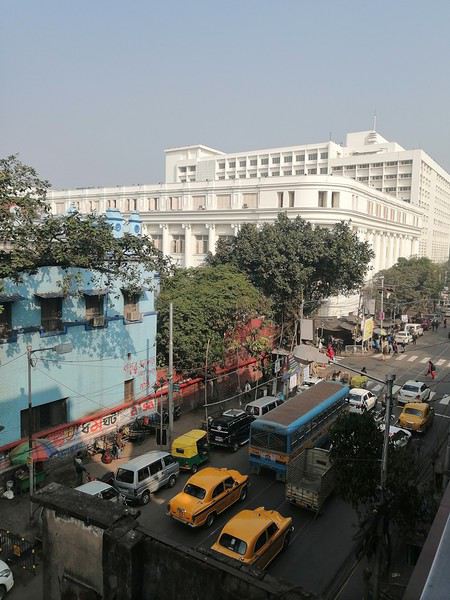
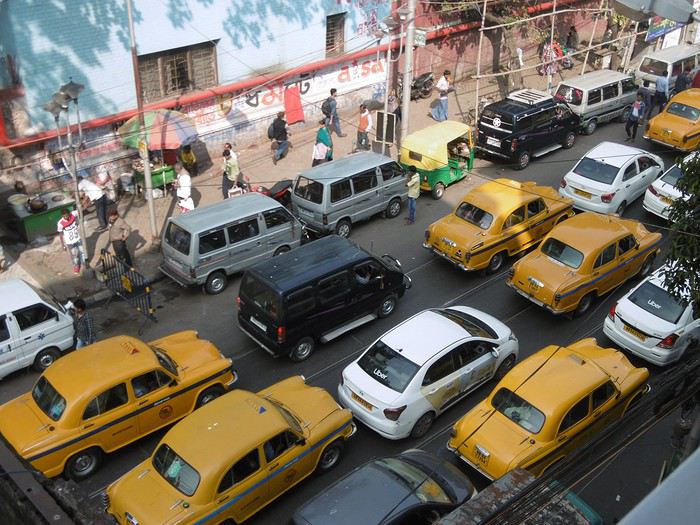
 Vue du balcon de l'hôtel

Je me lance enfin pour rédiger mon premier cahier de voyage en remerciant aux passage tous ceux et celles qui ont alimenté ce forum en postant carnets, photos et commentaires, fort utiles à la préparation d'un voyage. Je demande d'avance un peu d'indulgence concernant ce récit, où quelques fautes vont peut-être s'immiscer par ci par là car, même si je vis en France depuis longtemps, ma langue maternelle reste l'allemand. Vous voilà prévenus 🙂!
Notre séjour débute à Kolkata ou nous resterons 2 jours entiers. Nous logeons dans un petit hôtel de College street . Le personnel est très sympathique et très serviable, notre chambre très propre, que demander de plus? Certes , c'est bruyant côté rue mais l'avantage d'un petit balcon nous permet d'observer tout le trafic d'en bas. Celui -ci ne s'arrête guère même pendant la nuit...Ceci dit, nous dormons très bien, le voyage a été long !
Vue du balcon de l'hôtelVoyager sans agence au Japon et transports English translation pending
Nous aimerions partir au Japon en septembre prochain et si possible sans agence! Nous avons déjà beaucoup voyagé à travers le monde de cette manière mais, nous étions beaucoup plus jeunes et ''ce n'était pas au Japon''.
Mes questions sont d'ordres pratiques, à savoir : Le Japon se visite de manière itinérante, donc refaire les bagages tous les deux ou trois jours et prendre le train ou le bus etc, ! Si l'on se trouve à Tokyo par exemple, comment fait 'on ? un taxi , un bus ou autre mais pour se rendre où et à quel endroit ? Il doit y avoir une multitude de gares ou d'arrêts de bus dans cette immense ville ou l'anglais n'est pas courant ? Ne perdons nous pas trop de temps à chercher ce que l'on doit faire et comment le faire ? Est-ce vraiment pratique pour des personnes de 70 ans , même si l'on est en pleine forme… C'est vraiment la chose qui me turlupine, c'est devoir être sur le trottoir sans vraiment être sur de trouver de l'aide et de se perdre .
Le Japon, ce n'est pas New-York ou Paris voir même Bangkok, c'est vraiment un endroit des plus dépaysant qui ne ressemble à aucun autre endroit dans le monde. Je voulais ajouter que nous sommes très très visite, nous prenons tout notre temps pour chaque endroit donc les voyages en groupe ne sont pas notre tasse de thé ! Bref ...
Merci pour vos réponses
Bien cordialement
Phibul😄
L'improvisation en voyage, de plus en plus difficile English translation pending
Avec la multiplication des Expedia/Booking/Agoda etc., la prolifération des téléphones cellulaires et l'explosion du nombre de touristes, je trouve qu'il devient de plus en plus difficile de voyager sans avoir à tout, tout, tout planifier des mois à l'avance.
Quand je partais en voyage, J'avais l'habitude de réserver quelques nuits au lieu d'arrivée pour me remettre du décalage puis y aller au pif par la suite. Mais depuis quelques années, c'est devenu plus compliqué. Une réceptionniste d'hôtel m'a même déjà dit de réserver par Booking pour la nuit même!
Je me demande si nous ne sommes pas en train de perdre notre sens de l'improvisation, le plaisir de découvrir des lieux sans savoir à quoi nous attendre. Est-ce encore possible de partir en voyage sans avoir tout prévu?
Quand je partais en voyage, J'avais l'habitude de réserver quelques nuits au lieu d'arrivée pour me remettre du décalage puis y aller au pif par la suite. Mais depuis quelques années, c'est devenu plus compliqué. Une réceptionniste d'hôtel m'a même déjà dit de réserver par Booking pour la nuit même!
Je me demande si nous ne sommes pas en train de perdre notre sens de l'improvisation, le plaisir de découvrir des lieux sans savoir à quoi nous attendre. Est-ce encore possible de partir en voyage sans avoir tout prévu?
Two weeks with a friend in southern Kazakhstan
Hello everyone!
I’m back from two weeks in southern Kazakhstan. I went with a friend, and we organized everything ourselves. We came back enchanted by this trip: stunning landscapes, lots of animals seen in the parks, and above all, top-notch hospitality and welcome... All of this makes me really want to go back and explore the other countries in the region. In the meantime, I’m sharing the story of these two weeks of travel... Don’t hesitate if you have any questions. And if you want more practical info and/or see more photos, you can check out my blog: https://smilingaroundtheworld.com/category/kazakhstan/
Day 1: First Kazakh steps in Shymkent
So here we are in Kazakhstan for two weeks. We had an excellent flight with Air Astana, which instantly made it into my top 3 best airlines! From the airport, the service was top-notch, with very friendly staff who went out of their way to ensure we both got vegetarian meals (my order hadn’t been taken into account when booking the tickets online). The flight to Nur-Sultan (the new name for the capital, formerly Astana, renamed last month in honor of the resigning president) was three-quarters empty, and we each got to stretch out over three seats. We were given an incredible travel kit, including a reversible sleep mask with phosphorescent writing: “Do not disturb” or “Wake me for meals.” Awesome! As for the lighting in the plane, I think the interior cycled through every color to simulate evening, early night, pitch-black night, and then dawn. It was even a bit surreal—those lights and everyone’s glowing masks ^^ The flight was a bit early and too short for us to sleep well, but it was still pleasant :-)
Upon arriving in Nur-Sultan, the atmosphere was a bit colder. There was staff everywhere, and we were under heavy surveillance. A camera even filmed us as we entered the terminal. We got our passports stamped and settled in to wait for our second flight. We eventually realized we were waiting in the wrong place... We were still in the international terminal, while our next flight was domestic. We finally found the right spot—saved! We started our trip in Shymkent, in the south of the country. We dropped our bags at the City Hostel, a super modern youth hostel offering double rooms. The decor is industrial-style, with very high ceilings—we loved it. When we arrived, it was too early for check-in, so we just left our luggage and went for a walk around the neighborhood. There was quite a bit of traffic, and the avenues were very wide. Despite that, there was also a lot of greenery and green spaces, which lightened things up a bit.
We had lunch (pizza + smoothie) on the top floor of a shopping mall, then headed to the pre-Russian quarter, a much quieter area with its little streets and individual houses.
Back at the hostel, after checking in, we treated ourselves to a two-hour nap—it felt great! In the late afternoon, we set out to find the Salman Bazaar. It wasn’t easy to organize—we realized Shymkent isn’t a very touristy destination—but we eventually managed with the help of the hostel receptionist, who called us a taxi. This bazaar is huge and has everything you could need for daily life: clothes, food, household products, toys... We did some shopping for dinner, then took another taxi to Independence Park, inaugurated in 2011 for the 20th anniversary of Kazakhstan’s independence. We really liked this park—it’s very wooded, and the late afternoon light was, as always, beautiful and pleasant... In the center, a large monument resembles the center of a yurt.
We then walked back to the hostel via Independence Square and several parks. We wanted to grab a drink along the way but didn’t find anything inspiring—oh well. We had dinner at the hostel and went straight to bed. Tomorrow, we’re getting up early... We’re heading out for two days to explore Aksou-Jabagly National Park. This park is famous for its landscapes at this time of year—it should be in full bloom, especially with tulips. We’ll see!
Days 2 & 3: Canyon, tulips, and wildlife in Aksou-Jabagly Park
Located two hours from Shymkent, Aksou-Jabagly Park is reputed to be one of the most beautiful in the region. We took a taxi from Shymkent, and upon arrival, we were warmly welcomed by Ruslan and his mother. They live at the entrance to the reserve, at the foot of the mountains, in a house surrounded by poplars. The setting is exceptional, and we immediately fell in love with the place. For our first day, we set off to explore the Aksou Canyon. Ruslan arranged a 4x4 with a driver and a ranger. The ranger speaks a few words of English, and with Coralie’s few words of Russian, we should manage! After a “viewpoint” stop, the road turns into a dirt track. It’s rained a lot lately, and the track is sometimes very muddy—at one point, we even had to cross a river. Four-wheel drive was definitely needed! The ranger pointed out some marmots by the side of the path—they were adorable.
We finally arrived at “Inspector’s House No. 1,” which overlooks the canyon. The view is magnificent, with high cliffs, wildflowers, conifers, and the Aksou River winding far below. While the driver chatted with the inspector, we descended to the bottom of the canyon with the ranger. The tulips I’d been hoping for were there—I was so happy! There were red, yellow, and even bicolor ones...
At the bottom of the canyon, we took a little break by the river. “Aksou” means “white waters” in Kazakh—the water does indeed have a very special color, a blue that’s both very light and very intense, like some South American lagoons. It bubbles around the rocks. The climb back up was easier than we feared. Once at the top, we continued along the canyon. The perspective changed as we progressed, and we never got tired of the view... Eagles circled above us.
After about 2 km, the driver picked us up, and we continued to a small kiosk at the foot of the mountains, where we had a picnic. Ruslan’s mother had prepared vegetarian “lunch boxes”—it was delicious and felt good to eat. However, it had gotten noticeably colder, so we put our jackets and scarves back on! After the meal, the driver walked off with a bucket—we figured he was going mushroom picking with Inspector No. 2, who had a house nearby.
We enjoyed the spot a bit longer while the driver gathered mushrooms, and then we headed back toward Ruslan’s place. Or so we thought... The return trip turned out to be quite long—the park wasn’t as deserted as it seemed, and the driver stopped every five minutes to chat with people we passed. At one point, we ran into Inspector No. 2 on horseback—it looked like there was a problem with a car further ahead... The driver and ranger bolted out of the car, headed toward the other vehicle, and we heard raised voices... When they came back, we tried to figure out what had happened, but no luck. We stopped again at Inspector No. 1’s house (are you following?), and they made us get out, telling us Inspector No. 2 needed the car for a few minutes... They left us stranded with Inspector No. 1, who went home, leaving us in the garden :-D We kept busy with the puppies, and I even took a little nap in the sun... Three-quarters of an hour later, we finally left—we didn’t fully understand what happened and never found out!
We got back (almost) without stopping to Ruslan’s house. Our room was ready, and we settled in quickly before dinner. It was already 6:30 PM, even though we were supposed to be back by 4 PM. Mushroom picking really slows things down ^^ Ruslan’s mother had prepared a delicious meal: vegetable soup, raw vegetable salad, and a mushroom, carrot, and potato stew. We loved it!
We spent the rest of the evening planning the rest of our trip while sipping tea. At one point, Ruslan and his mother signaled that there were wild boars right across from us—we could see them clearly! There were three adults and three piglets. We also took a little walk in the garden, watched the sunset, I did some blogging, and Coralie read... A lovely evening, and an equally lovely ten-hour night! The next morning, after a good breakfast, we set off on foot into the park. The trail starts right next to Ruslan’s house—so convenient! Today, we were with another ranger, two Germans (brother and sister), and their English-speaking guide (who didn’t guide much). We walked on a dirt road—there were even more tulips than yesterday, and the snow-capped mountains in the distance were stunning. After 5 km, we reached a small cabin, then continued another kilometer to Kishy Kaindy, a viewpoint overlooking the Jabagly River waterfalls (Jabagly means “year-old foal”). It was spectacular! We stayed a good while admiring this natural wonder. Like yesterday, the ranger didn’t rush us at all—it was really nice. We also saw eagles and an ibex perched on a ridge.
We had a picnic at the cabin before heading back the same way we came. This time, the snow-capped peaks were facing us—so beautiful! We picked up our bags and said goodbye to Ruslan’s mother. She was really happy today because her granddaughter was there. She told us she was a “babushka”—I understood that! Ruslan then drove us to Turar Ryskulov, where we took a shared taxi back to Shymkent.
In Shymkent, we struggled a bit with our Airbnb. We waited half an hour for the person who was supposed to let us in, then discovered the Wi-Fi wasn’t working—but we had a lot of bookings to make that evening. The lady finally lent us a Kazakh SIM card with data, which Coralie put in her phone in “hotspot” mode so I could get some internet too. All of that took nearly two hours. Phew! We then rushed to do some shopping at the supermarket. On the way back, some lights caught my eye—it was a pedestrian street all decorated with a funfair next to it. It was very lively, and we spent a good while strolling and people-watching! The rest of our evening was studious, between preparing dinner and booking our next stops.
Day 4: Turkestan, Yasawi Mausoleum, and Sauran ruins
This morning, after one last stroll in Shymkent, we headed to Turkestan. When we arrived at the bus station, we were told the next bus was in nearly three hours, but there were minibuses leaving when full. The system was well-oiled, and in just fifteen minutes, our minibus was ready to go. We each had a seat (and one for our luggage since there’s no trunk!), and the minibus was quite new—nothing like Madagascar ;-)
The trip went well despite a few driving scares—the driver was going a bit fast for my liking! Along the road, the fields were full of poppies—so pretty. When we arrived, we headed straight to the Edem hotel, where we wouldn’t be staying (we had a train to Almaty at midnight) but where we wanted to leave our luggage for the day. They agreed easily—great! Once we’d dropped off our bags and suitcases, we started our visits.
We began with the architectural gem and largest pilgrimage site in Kazakhstan: the mausoleum of Khodja Ahmad Yasawi, a great Sufi sage. Yasawi’s original tomb was already a pilgrimage site when Tamerlane ordered the construction of a larger mausoleum in 1390. It’s decorated with white and blue tiles and has a turquoise dome (currently under renovation). The main facade, unfinished at Tamerlane’s death, was left in earth with visible scaffolding. Impressive! The site is UNESCO-listed. Inside, the main hall displays a large cauldron, and other small rooms showcase plates, ancient coins, belts... Yasawi’s tomb is visible via two adjacent corridors.
We then strolled through the park, which includes many other mausoleums and tombs. We visited the old baths, the Friday Mosque, and then the history museum. The underground mosque, where Yasawi’s cell is located (where he retreated at the end of his life), was unfortunately closed for renovations.
We then went back to the Edem hotel to have them call us a taxi, and we set off to visit the ancient fortress of Sauran. This Silk Road city, once prosperous, is now reduced to ruins, with thousands of poppies blooming between them. High walls once surrounded a bustling and pleasant city. Many foundations remain visible. The place is vast, quiet, almost deserted, and imbued with a certain melancholy... The deep red poppies swayed in the wind, between the remnants of this city, reminding us how fleeting things are.
Back in Turkestan, we had dinner at the Edem hotel’s restaurant (we had to thank them somehow ;-)) and then rushed to the station to catch our train... 18 hours of travel awaited us to Almaty!
Day 5: From Turkestan to Almaty, 18 hours by train across the Kazakh steppe
We traveled from Turkestan to Almaty by train. We booked our tickets the day before departure, and only six seats were left: three in second class, not together at all, and three in first class, also not together but in the same carriage. We opted for first class! It was more expensive, but for such a long trip, a little comfort wouldn’t hurt... We wondered if we’d manage to switch cabins to be together, but it resolved itself: when we boarded, the conductor/carriage chief immediately noticed we weren’t together. He literally kicked a young man out of his berth so we could travel in the same cabin. We felt bad for the young man, even though he seemed to take it well... we thanked him with dried fruit (and I can confirm he took it well—the next day, he came to chat with us). In any case, we were really happy to have our own little cabin for this long journey, especially since we were the only foreigners and the only women in the carriage.
Eighteen hours by train might seem long, but these long trips while traveling aren’t wasted time—they’re the breathing space of the journey. They’re the essential moments for digesting what we’ve already experienced and preparing for future discoveries. They’re also privileged moments for reflection. Traveling slowly, to the rhythm of the train, means falling asleep in Turkestan’s outskirts, lulled by the train’s rocking and creaking, and waking up in the steppe. It’s feeling the train slow down and stop, stepping onto the platform for a moment, and watching the women sell food to passengers. It’s taking the time to write, read, think. It’s chatting with our neighbors and, despite the language barrier, managing to communicate a little. It’s picnicking at the little table in our cabin, with the landscape rolling by outside, and listening to music. It’s feeling privileged, imagining ourselves on the Orient Express or the Trans-Siberian. Reminding ourselves that one day, one day for real, we’ll take that Trans-Siberian. And smiling, thinking that in the meantime, in a few months, there’ll be the Trans-Canadian...
Days 6 & 7: Almaty, the “little apple”
The former capital of Kazakhstan, Almaty is known as the most Western and lively city in the country. At first, we had a bit of trouble identifying the city center—it’s more spread out and less dense than what we’re used to in Europe—but once we got our bearings, we really enjoyed strolling along the wide avenues lined with cafés and in the few pedestrian streets. The city’s emblem is the apple, which you’ll find in various forms around the city, from benches to statues to fountains. The original apple, from which all the apples we know today descend, is said to come from the mountains of Kazakhstan.
For nature, Almaty is a pretty green city. It has large parks, like Panfilov Park, which houses the Zenkov Cathedral. Some streets are also very tree-lined, so much so that they almost look like gardens. Often, high mountains peek out from behind the streets...
For shopping, traditional boutiques sit alongside big international brands. We really liked the Green Bazaar, a large market that sells everything. The food section was great, with stalls of pickled vegetables, dried fruits, and beautifully stacked fresh fruits... A feast for the eyes and lots of temptations for me!
For culture, Almaty has several museums. We visited two: the Fine Arts Museum and the National Museum. Both are housed in very Soviet-looking buildings on the outside, but the Fine Arts Museum turned out to be quite modern inside, with a pleasant museography. The National Museum, on the other hand, has stayed true to its roots ^^ Just walking through it was an experience in itself. And we did quite a bit of shopping there... The hall is a giant shop with lots of handicrafts—we treated ourselves.
The Arasan Baths are a must in Almaty. They’re said to be among the most beautiful baths in Central Asia... Architecturally, I didn’t find them amazing (nothing like Budapest’s, for example), but wow, did it feel good to relax there after a day of sightseeing! I happily moved between the sauna, hammam, and Russian sauna, with a preference for the latter—less dry than a traditional sauna and less humid than the hammam. You can buy bundles of leaves to slap yourself (or get slapped) with to boost circulation. The prices are very affordable too... On a weekday evening, we paid 1,800 tenge, or 4.5 euros, for an hour. Note that they add 20 minutes for changing, so you really get a full hour in the baths.
For restaurants, we didn’t try many because we preferred to limit our food budget by cooking ourselves. However, we did try and highly recommend Daredzhani, a great Georgian restaurant where we feasted. We didn’t know Georgian cuisine before, but we really liked it—vegetables cooked in various ways, cheese-filled breads, potato and/or egg-filled breads, and very thin fruit pastes made from grapes. We actually ate there twice because it was so good! We also loved Coffee Delia, where you can enjoy delicious pastries in a very cozy setting.
Besides being a pleasant place to live, Almaty is also a great base for exploring the surrounding area, and we were happy to stay eight days to discover more of the region!
Days 7, 8 & 9: Getting green around Almaty: Kok Tobe, Shymbulak, Medeo, and Big Almaty Lake
During our stay in Almaty, we used a rather unusual means of transport several times: the cable car! Here, it’s called a "gondola," and it allowed us to gain some altitude and breathe in the fresh mountain air surrounding Almaty ;-)
First cable car ride: Kok Tobe. The cable car starts in the city center and takes you to the top of a hill overlooking Almaty. At the top, it’s fairground vibes with an upside-down house, a Ferris wheel, rides, and the inevitable eagle trainer... There’s even a little corner dedicated to the Beatles, complete with music and a statue!
Second ride: Shymbulak. This time, you take a bus to Medeo, then three cable cars to the top of the mountain, at 3,200 meters altitude. Shymbulak is the largest ski resort in Central Asia. We went there to hike, but there was still snow and skiers, so we settled for admiring the view... With the blue sky and sun we had, it was gorgeous! We then treated ourselves to tea on the terrace—chalet vibes... At Paul’s, we weren’t completely out of place ;-)
Before taking the bus back, we stopped by Medeo, where there’s a large ice rink. With 10,000 m², it can host a thousand skaters in winter! This season, it’s closed; part of it is used as a go-kart track, and the other as a landing strip for paragliders.
Located an hour’s drive from the city center, Big Almaty Lake reveals itself at the last moment, around a bend, nestled in a setting of mountains and greenery. With the recent cold snap, it’s frozen, and the edges are snowy—a beautiful winter atmosphere! The ice was starting to melt, though—we could hear the water moving underneath, and when Coralie tried to walk on the ice, it collapsed under her feet. Unfortunately, it’s impossible to walk around it—a ranger keeps an eye out and blocks the adventurous (including us ;-)).
Days 10 & 11: Excursions around Almaty: Charyn Canyon, Issyk, and Turgen
Almaty’s tourism office is very active and organizes outings on weekends and holidays. We went to Charyn Canyon and then to Issyk and Turgen. A great way to discover the Almaty area at a modest cost (the outing costs about 6,000 tenge, or 15 euros per person).
Formed over millennia by erosion and wind, Charyn Canyon is reminiscent of the Colorado and the Grand Canyon. The most touristy part we visited is called the Valley of Castles, referring to the rock formations that resemble towers. We first walked along the ridge, where there are many viewpoints, then descended into the canyon. A three-kilometer walk leads to the banks of the Charyn River. The place seems to be a favorite relaxation spot for Kazakh families, who picnic, play ball, sunbathe... There’s also a hotel, bungalows, yurts, and a restaurant. Issyk is famous for its burial mounds and its Golden Man—maybe even a Golden Woman—found there. A small museum displays some artifacts. A little further on is Issyk Lake, once dried up but now reappearing... Whether naturally or not isn’t very clear!
As for Turgen, it’s a natural park known for its gorges and waterfalls. We didn’t have time to explore it in detail, but the bus drove through some beautiful landscapes, and we still walked to Bear Waterfall. It’s not incredible, but it’s still a nice little hike.
Besides the practical side of these organized excursions from Almaty, we appreciated being able to do an activity that Kazakhs do on weekends. During the Issyk/Turgen excursion, we really hit it off with Karina, a young student dragged there on vacation by her mother. She’s currently studying computer science at the best university in Astana and hopes to go to Europe eventually... A brilliant young woman, and a chance for us to chat in English ;-)
Days 12 & 13: The spectacular landscapes of Altyn-Emel Park
The last stop on our Kazakhstan trip was Altyn-Emel Park. This park is quite hard to access, so we opted for a car with a driver for two days—pure luxury!
Our driver’s name is Andrei. We met him at 7 AM outside our apartment on Wednesday morning. He doesn’t speak English, but a young man from the agency we booked through was also there, and we went over the itinerary together before leaving with Andrei.
Our first stop was Tamgaly Tas, two hours from Almaty. It’s a site where you can see 16th-century petroglyphs depicting Buddha. The place is also known for climbing—there were lots of young people harnessed up and/or climbing. It’s right in the middle of the Kazakh countryside, and we had a bit of trouble finding it!
Even with the language barrier, Andrei turned out to be very friendly. He suggested photo stops from time to time, didn’t rush us, and pointed out animals he saw... We even backed up on the road to see and help a tortoise cross!
It took another two and a half hours to reach Bashi, the “gateway” village to Altyn-Emel Park. After a quick stop at the rangers’, we arrived at the hotel. Our guidebook mentioned modest guesthouses, but things are changing... The hotel is large, brand new, and still being expanded. It reminded me of some Chinese hotels in Laos.
We had a quick lunch with Andrei—he explained that he’s a truck driver normally, delivering clothes and fabrics between Kazakhstan, Afghanistan, and Russia. He also showed us photos of his wife and son and told us he’s recently become a grandfather! We then headed to the park, grabbing a ranger on the way. Like in Aksou-Jabagly, he was dressed in full military gear. We first headed toward the Katutau Mountains. The rocks are reddish, sculpted by wind and erosion—the place reminded us a bit of Charyn Canyon. We had some “free time” to explore—we didn’t need to be told twice... Meanwhile, Andrei and the ranger chatted nonstop—it looked like they’d hit it off!
We got back in the car and continued along the track to the Aktau Mountains. Change of scenery! The mountains weren’t red anymore but white... Or so they appeared from afar. When we got closer, we realized they were actually multicolored, striped with yellow, pink, and ochre veins... It was magnificent, even more so with the late afternoon light. We had time to explore on our own again, and we walked with delight in this almost dreamlike landscape. We thought we’d made the right choice coming here ;-) We made one last stop before heading back to see a 700-year-old willow. It’s in an oasis where other tourists were camping—very tempting... I got the coordinates of their guide for next time ;-) The way back was in beautiful light, between sunset and a distant storm. Nature even treated us to a gorgeous sunset!
It was past 8 PM when we got back to the hotel, but our dinner was still waiting for us. We ate with Andrei, chatted a bit with a Polish woman who spoke both Russian and French (we put her to work chatting with Andrei ;-)), and then had a quiet evening with Wi-Fi, a shower, and reading in our room.
The next day, after breakfast, we met up with the same ranger and headed toward the singing dunes. These dunes are supposed to make a sound when you slide down their slopes. I was more than skeptical, but okay! When we arrived, we discovered a beautiful landscape—the main dune is gigantic, and when we reached the top, the view was extraordinary: it was the first time I’d seen a dune in the desert, snow-capped mountains, and a river all in one glance! A group of Chinese tourists was ahead of us on the dune, but they turned back quickly, and we were alone. After studying the terrain, I chose a slope that seemed good, and I started sliding down on my bottom... Quickly, I heard and felt a strong vibration, which turned into a hum. The dune really sings! It’s completely crazy... We did several tests—the most effective was sliding down side by side. But it works as long as there aren’t too many tourists doing it and the dune has time to rebuild between slides... There are about thirty singing dunes in the world. This phenomenon, already described by Marco Polo, comes from the synchronous movement of sand grains, which must be very round and covered with a varnish called “desert glaze”...
Covered in sand but delighted, we headed back to Bashi. The ranger stopped at a small spring so we could wash up, but it was almost dry. Along the way, we also saw the “Oshaktas,” a place where Genghis Khan’s expedition is said to have camped in 1219 during his conquest of Central Asia. The stones were apparently used to support the cauldron where food was prepared. A little further on, the ranger made us stop: there were antelopes!!! We saw one up close and a herd further away.
When we got back to the hotel, I took a quick shower to get rid of the sand—I felt like I had it everywhere! We had a quick lunch and then hit the road back to Almaty. Andrei drove very well, had a nice playlist, and I let myself be lulled while watching the landscape roll by outside...
For our last night in Kazakhstan, we booked a yurt in the hills above Almaty, not far from Medeo. For one night, we pretended to be nomads... The bed was a bit hard, and the air was a bit chilly, but we loved it! And the welcome was kind, the meal very good—only downside: the horse milk and camel milk, still warm... I almost threw up. Well, it was an experience, and all of this beautifully concluded our Kazakh stay!
I’m back from two weeks in southern Kazakhstan. I went with a friend, and we organized everything ourselves. We came back enchanted by this trip: stunning landscapes, lots of animals seen in the parks, and above all, top-notch hospitality and welcome... All of this makes me really want to go back and explore the other countries in the region. In the meantime, I’m sharing the story of these two weeks of travel... Don’t hesitate if you have any questions. And if you want more practical info and/or see more photos, you can check out my blog: https://smilingaroundtheworld.com/category/kazakhstan/
Day 1: First Kazakh steps in Shymkent
So here we are in Kazakhstan for two weeks. We had an excellent flight with Air Astana, which instantly made it into my top 3 best airlines! From the airport, the service was top-notch, with very friendly staff who went out of their way to ensure we both got vegetarian meals (my order hadn’t been taken into account when booking the tickets online). The flight to Nur-Sultan (the new name for the capital, formerly Astana, renamed last month in honor of the resigning president) was three-quarters empty, and we each got to stretch out over three seats. We were given an incredible travel kit, including a reversible sleep mask with phosphorescent writing: “Do not disturb” or “Wake me for meals.” Awesome! As for the lighting in the plane, I think the interior cycled through every color to simulate evening, early night, pitch-black night, and then dawn. It was even a bit surreal—those lights and everyone’s glowing masks ^^ The flight was a bit early and too short for us to sleep well, but it was still pleasant :-)
Upon arriving in Nur-Sultan, the atmosphere was a bit colder. There was staff everywhere, and we were under heavy surveillance. A camera even filmed us as we entered the terminal. We got our passports stamped and settled in to wait for our second flight. We eventually realized we were waiting in the wrong place... We were still in the international terminal, while our next flight was domestic. We finally found the right spot—saved! We started our trip in Shymkent, in the south of the country. We dropped our bags at the City Hostel, a super modern youth hostel offering double rooms. The decor is industrial-style, with very high ceilings—we loved it. When we arrived, it was too early for check-in, so we just left our luggage and went for a walk around the neighborhood. There was quite a bit of traffic, and the avenues were very wide. Despite that, there was also a lot of greenery and green spaces, which lightened things up a bit.
We had lunch (pizza + smoothie) on the top floor of a shopping mall, then headed to the pre-Russian quarter, a much quieter area with its little streets and individual houses.
Back at the hostel, after checking in, we treated ourselves to a two-hour nap—it felt great! In the late afternoon, we set out to find the Salman Bazaar. It wasn’t easy to organize—we realized Shymkent isn’t a very touristy destination—but we eventually managed with the help of the hostel receptionist, who called us a taxi. This bazaar is huge and has everything you could need for daily life: clothes, food, household products, toys... We did some shopping for dinner, then took another taxi to Independence Park, inaugurated in 2011 for the 20th anniversary of Kazakhstan’s independence. We really liked this park—it’s very wooded, and the late afternoon light was, as always, beautiful and pleasant... In the center, a large monument resembles the center of a yurt.
We then walked back to the hostel via Independence Square and several parks. We wanted to grab a drink along the way but didn’t find anything inspiring—oh well. We had dinner at the hostel and went straight to bed. Tomorrow, we’re getting up early... We’re heading out for two days to explore Aksou-Jabagly National Park. This park is famous for its landscapes at this time of year—it should be in full bloom, especially with tulips. We’ll see!
Days 2 & 3: Canyon, tulips, and wildlife in Aksou-Jabagly Park
Located two hours from Shymkent, Aksou-Jabagly Park is reputed to be one of the most beautiful in the region. We took a taxi from Shymkent, and upon arrival, we were warmly welcomed by Ruslan and his mother. They live at the entrance to the reserve, at the foot of the mountains, in a house surrounded by poplars. The setting is exceptional, and we immediately fell in love with the place. For our first day, we set off to explore the Aksou Canyon. Ruslan arranged a 4x4 with a driver and a ranger. The ranger speaks a few words of English, and with Coralie’s few words of Russian, we should manage! After a “viewpoint” stop, the road turns into a dirt track. It’s rained a lot lately, and the track is sometimes very muddy—at one point, we even had to cross a river. Four-wheel drive was definitely needed! The ranger pointed out some marmots by the side of the path—they were adorable.
We finally arrived at “Inspector’s House No. 1,” which overlooks the canyon. The view is magnificent, with high cliffs, wildflowers, conifers, and the Aksou River winding far below. While the driver chatted with the inspector, we descended to the bottom of the canyon with the ranger. The tulips I’d been hoping for were there—I was so happy! There were red, yellow, and even bicolor ones...
At the bottom of the canyon, we took a little break by the river. “Aksou” means “white waters” in Kazakh—the water does indeed have a very special color, a blue that’s both very light and very intense, like some South American lagoons. It bubbles around the rocks. The climb back up was easier than we feared. Once at the top, we continued along the canyon. The perspective changed as we progressed, and we never got tired of the view... Eagles circled above us.
After about 2 km, the driver picked us up, and we continued to a small kiosk at the foot of the mountains, where we had a picnic. Ruslan’s mother had prepared vegetarian “lunch boxes”—it was delicious and felt good to eat. However, it had gotten noticeably colder, so we put our jackets and scarves back on! After the meal, the driver walked off with a bucket—we figured he was going mushroom picking with Inspector No. 2, who had a house nearby.
We enjoyed the spot a bit longer while the driver gathered mushrooms, and then we headed back toward Ruslan’s place. Or so we thought... The return trip turned out to be quite long—the park wasn’t as deserted as it seemed, and the driver stopped every five minutes to chat with people we passed. At one point, we ran into Inspector No. 2 on horseback—it looked like there was a problem with a car further ahead... The driver and ranger bolted out of the car, headed toward the other vehicle, and we heard raised voices... When they came back, we tried to figure out what had happened, but no luck. We stopped again at Inspector No. 1’s house (are you following?), and they made us get out, telling us Inspector No. 2 needed the car for a few minutes... They left us stranded with Inspector No. 1, who went home, leaving us in the garden :-D We kept busy with the puppies, and I even took a little nap in the sun... Three-quarters of an hour later, we finally left—we didn’t fully understand what happened and never found out!
We got back (almost) without stopping to Ruslan’s house. Our room was ready, and we settled in quickly before dinner. It was already 6:30 PM, even though we were supposed to be back by 4 PM. Mushroom picking really slows things down ^^ Ruslan’s mother had prepared a delicious meal: vegetable soup, raw vegetable salad, and a mushroom, carrot, and potato stew. We loved it!
We spent the rest of the evening planning the rest of our trip while sipping tea. At one point, Ruslan and his mother signaled that there were wild boars right across from us—we could see them clearly! There were three adults and three piglets. We also took a little walk in the garden, watched the sunset, I did some blogging, and Coralie read... A lovely evening, and an equally lovely ten-hour night! The next morning, after a good breakfast, we set off on foot into the park. The trail starts right next to Ruslan’s house—so convenient! Today, we were with another ranger, two Germans (brother and sister), and their English-speaking guide (who didn’t guide much). We walked on a dirt road—there were even more tulips than yesterday, and the snow-capped mountains in the distance were stunning. After 5 km, we reached a small cabin, then continued another kilometer to Kishy Kaindy, a viewpoint overlooking the Jabagly River waterfalls (Jabagly means “year-old foal”). It was spectacular! We stayed a good while admiring this natural wonder. Like yesterday, the ranger didn’t rush us at all—it was really nice. We also saw eagles and an ibex perched on a ridge.
We had a picnic at the cabin before heading back the same way we came. This time, the snow-capped peaks were facing us—so beautiful! We picked up our bags and said goodbye to Ruslan’s mother. She was really happy today because her granddaughter was there. She told us she was a “babushka”—I understood that! Ruslan then drove us to Turar Ryskulov, where we took a shared taxi back to Shymkent.
In Shymkent, we struggled a bit with our Airbnb. We waited half an hour for the person who was supposed to let us in, then discovered the Wi-Fi wasn’t working—but we had a lot of bookings to make that evening. The lady finally lent us a Kazakh SIM card with data, which Coralie put in her phone in “hotspot” mode so I could get some internet too. All of that took nearly two hours. Phew! We then rushed to do some shopping at the supermarket. On the way back, some lights caught my eye—it was a pedestrian street all decorated with a funfair next to it. It was very lively, and we spent a good while strolling and people-watching! The rest of our evening was studious, between preparing dinner and booking our next stops.
Day 4: Turkestan, Yasawi Mausoleum, and Sauran ruins
This morning, after one last stroll in Shymkent, we headed to Turkestan. When we arrived at the bus station, we were told the next bus was in nearly three hours, but there were minibuses leaving when full. The system was well-oiled, and in just fifteen minutes, our minibus was ready to go. We each had a seat (and one for our luggage since there’s no trunk!), and the minibus was quite new—nothing like Madagascar ;-)
The trip went well despite a few driving scares—the driver was going a bit fast for my liking! Along the road, the fields were full of poppies—so pretty. When we arrived, we headed straight to the Edem hotel, where we wouldn’t be staying (we had a train to Almaty at midnight) but where we wanted to leave our luggage for the day. They agreed easily—great! Once we’d dropped off our bags and suitcases, we started our visits.
We began with the architectural gem and largest pilgrimage site in Kazakhstan: the mausoleum of Khodja Ahmad Yasawi, a great Sufi sage. Yasawi’s original tomb was already a pilgrimage site when Tamerlane ordered the construction of a larger mausoleum in 1390. It’s decorated with white and blue tiles and has a turquoise dome (currently under renovation). The main facade, unfinished at Tamerlane’s death, was left in earth with visible scaffolding. Impressive! The site is UNESCO-listed. Inside, the main hall displays a large cauldron, and other small rooms showcase plates, ancient coins, belts... Yasawi’s tomb is visible via two adjacent corridors.
We then strolled through the park, which includes many other mausoleums and tombs. We visited the old baths, the Friday Mosque, and then the history museum. The underground mosque, where Yasawi’s cell is located (where he retreated at the end of his life), was unfortunately closed for renovations.
We then went back to the Edem hotel to have them call us a taxi, and we set off to visit the ancient fortress of Sauran. This Silk Road city, once prosperous, is now reduced to ruins, with thousands of poppies blooming between them. High walls once surrounded a bustling and pleasant city. Many foundations remain visible. The place is vast, quiet, almost deserted, and imbued with a certain melancholy... The deep red poppies swayed in the wind, between the remnants of this city, reminding us how fleeting things are.
Back in Turkestan, we had dinner at the Edem hotel’s restaurant (we had to thank them somehow ;-)) and then rushed to the station to catch our train... 18 hours of travel awaited us to Almaty!
Day 5: From Turkestan to Almaty, 18 hours by train across the Kazakh steppe
We traveled from Turkestan to Almaty by train. We booked our tickets the day before departure, and only six seats were left: three in second class, not together at all, and three in first class, also not together but in the same carriage. We opted for first class! It was more expensive, but for such a long trip, a little comfort wouldn’t hurt... We wondered if we’d manage to switch cabins to be together, but it resolved itself: when we boarded, the conductor/carriage chief immediately noticed we weren’t together. He literally kicked a young man out of his berth so we could travel in the same cabin. We felt bad for the young man, even though he seemed to take it well... we thanked him with dried fruit (and I can confirm he took it well—the next day, he came to chat with us). In any case, we were really happy to have our own little cabin for this long journey, especially since we were the only foreigners and the only women in the carriage.
Eighteen hours by train might seem long, but these long trips while traveling aren’t wasted time—they’re the breathing space of the journey. They’re the essential moments for digesting what we’ve already experienced and preparing for future discoveries. They’re also privileged moments for reflection. Traveling slowly, to the rhythm of the train, means falling asleep in Turkestan’s outskirts, lulled by the train’s rocking and creaking, and waking up in the steppe. It’s feeling the train slow down and stop, stepping onto the platform for a moment, and watching the women sell food to passengers. It’s taking the time to write, read, think. It’s chatting with our neighbors and, despite the language barrier, managing to communicate a little. It’s picnicking at the little table in our cabin, with the landscape rolling by outside, and listening to music. It’s feeling privileged, imagining ourselves on the Orient Express or the Trans-Siberian. Reminding ourselves that one day, one day for real, we’ll take that Trans-Siberian. And smiling, thinking that in the meantime, in a few months, there’ll be the Trans-Canadian...
Days 6 & 7: Almaty, the “little apple”
The former capital of Kazakhstan, Almaty is known as the most Western and lively city in the country. At first, we had a bit of trouble identifying the city center—it’s more spread out and less dense than what we’re used to in Europe—but once we got our bearings, we really enjoyed strolling along the wide avenues lined with cafés and in the few pedestrian streets. The city’s emblem is the apple, which you’ll find in various forms around the city, from benches to statues to fountains. The original apple, from which all the apples we know today descend, is said to come from the mountains of Kazakhstan.
For nature, Almaty is a pretty green city. It has large parks, like Panfilov Park, which houses the Zenkov Cathedral. Some streets are also very tree-lined, so much so that they almost look like gardens. Often, high mountains peek out from behind the streets...
For shopping, traditional boutiques sit alongside big international brands. We really liked the Green Bazaar, a large market that sells everything. The food section was great, with stalls of pickled vegetables, dried fruits, and beautifully stacked fresh fruits... A feast for the eyes and lots of temptations for me!
For culture, Almaty has several museums. We visited two: the Fine Arts Museum and the National Museum. Both are housed in very Soviet-looking buildings on the outside, but the Fine Arts Museum turned out to be quite modern inside, with a pleasant museography. The National Museum, on the other hand, has stayed true to its roots ^^ Just walking through it was an experience in itself. And we did quite a bit of shopping there... The hall is a giant shop with lots of handicrafts—we treated ourselves.
The Arasan Baths are a must in Almaty. They’re said to be among the most beautiful baths in Central Asia... Architecturally, I didn’t find them amazing (nothing like Budapest’s, for example), but wow, did it feel good to relax there after a day of sightseeing! I happily moved between the sauna, hammam, and Russian sauna, with a preference for the latter—less dry than a traditional sauna and less humid than the hammam. You can buy bundles of leaves to slap yourself (or get slapped) with to boost circulation. The prices are very affordable too... On a weekday evening, we paid 1,800 tenge, or 4.5 euros, for an hour. Note that they add 20 minutes for changing, so you really get a full hour in the baths.
For restaurants, we didn’t try many because we preferred to limit our food budget by cooking ourselves. However, we did try and highly recommend Daredzhani, a great Georgian restaurant where we feasted. We didn’t know Georgian cuisine before, but we really liked it—vegetables cooked in various ways, cheese-filled breads, potato and/or egg-filled breads, and very thin fruit pastes made from grapes. We actually ate there twice because it was so good! We also loved Coffee Delia, where you can enjoy delicious pastries in a very cozy setting.
Besides being a pleasant place to live, Almaty is also a great base for exploring the surrounding area, and we were happy to stay eight days to discover more of the region!
Days 7, 8 & 9: Getting green around Almaty: Kok Tobe, Shymbulak, Medeo, and Big Almaty Lake
During our stay in Almaty, we used a rather unusual means of transport several times: the cable car! Here, it’s called a "gondola," and it allowed us to gain some altitude and breathe in the fresh mountain air surrounding Almaty ;-)
First cable car ride: Kok Tobe. The cable car starts in the city center and takes you to the top of a hill overlooking Almaty. At the top, it’s fairground vibes with an upside-down house, a Ferris wheel, rides, and the inevitable eagle trainer... There’s even a little corner dedicated to the Beatles, complete with music and a statue!
Second ride: Shymbulak. This time, you take a bus to Medeo, then three cable cars to the top of the mountain, at 3,200 meters altitude. Shymbulak is the largest ski resort in Central Asia. We went there to hike, but there was still snow and skiers, so we settled for admiring the view... With the blue sky and sun we had, it was gorgeous! We then treated ourselves to tea on the terrace—chalet vibes... At Paul’s, we weren’t completely out of place ;-)
Before taking the bus back, we stopped by Medeo, where there’s a large ice rink. With 10,000 m², it can host a thousand skaters in winter! This season, it’s closed; part of it is used as a go-kart track, and the other as a landing strip for paragliders.
Located an hour’s drive from the city center, Big Almaty Lake reveals itself at the last moment, around a bend, nestled in a setting of mountains and greenery. With the recent cold snap, it’s frozen, and the edges are snowy—a beautiful winter atmosphere! The ice was starting to melt, though—we could hear the water moving underneath, and when Coralie tried to walk on the ice, it collapsed under her feet. Unfortunately, it’s impossible to walk around it—a ranger keeps an eye out and blocks the adventurous (including us ;-)).
Days 10 & 11: Excursions around Almaty: Charyn Canyon, Issyk, and Turgen
Almaty’s tourism office is very active and organizes outings on weekends and holidays. We went to Charyn Canyon and then to Issyk and Turgen. A great way to discover the Almaty area at a modest cost (the outing costs about 6,000 tenge, or 15 euros per person).
Formed over millennia by erosion and wind, Charyn Canyon is reminiscent of the Colorado and the Grand Canyon. The most touristy part we visited is called the Valley of Castles, referring to the rock formations that resemble towers. We first walked along the ridge, where there are many viewpoints, then descended into the canyon. A three-kilometer walk leads to the banks of the Charyn River. The place seems to be a favorite relaxation spot for Kazakh families, who picnic, play ball, sunbathe... There’s also a hotel, bungalows, yurts, and a restaurant. Issyk is famous for its burial mounds and its Golden Man—maybe even a Golden Woman—found there. A small museum displays some artifacts. A little further on is Issyk Lake, once dried up but now reappearing... Whether naturally or not isn’t very clear!
As for Turgen, it’s a natural park known for its gorges and waterfalls. We didn’t have time to explore it in detail, but the bus drove through some beautiful landscapes, and we still walked to Bear Waterfall. It’s not incredible, but it’s still a nice little hike.
Besides the practical side of these organized excursions from Almaty, we appreciated being able to do an activity that Kazakhs do on weekends. During the Issyk/Turgen excursion, we really hit it off with Karina, a young student dragged there on vacation by her mother. She’s currently studying computer science at the best university in Astana and hopes to go to Europe eventually... A brilliant young woman, and a chance for us to chat in English ;-)
Days 12 & 13: The spectacular landscapes of Altyn-Emel Park
The last stop on our Kazakhstan trip was Altyn-Emel Park. This park is quite hard to access, so we opted for a car with a driver for two days—pure luxury!
Our driver’s name is Andrei. We met him at 7 AM outside our apartment on Wednesday morning. He doesn’t speak English, but a young man from the agency we booked through was also there, and we went over the itinerary together before leaving with Andrei.
Our first stop was Tamgaly Tas, two hours from Almaty. It’s a site where you can see 16th-century petroglyphs depicting Buddha. The place is also known for climbing—there were lots of young people harnessed up and/or climbing. It’s right in the middle of the Kazakh countryside, and we had a bit of trouble finding it!
Even with the language barrier, Andrei turned out to be very friendly. He suggested photo stops from time to time, didn’t rush us, and pointed out animals he saw... We even backed up on the road to see and help a tortoise cross!
It took another two and a half hours to reach Bashi, the “gateway” village to Altyn-Emel Park. After a quick stop at the rangers’, we arrived at the hotel. Our guidebook mentioned modest guesthouses, but things are changing... The hotel is large, brand new, and still being expanded. It reminded me of some Chinese hotels in Laos.
We had a quick lunch with Andrei—he explained that he’s a truck driver normally, delivering clothes and fabrics between Kazakhstan, Afghanistan, and Russia. He also showed us photos of his wife and son and told us he’s recently become a grandfather! We then headed to the park, grabbing a ranger on the way. Like in Aksou-Jabagly, he was dressed in full military gear. We first headed toward the Katutau Mountains. The rocks are reddish, sculpted by wind and erosion—the place reminded us a bit of Charyn Canyon. We had some “free time” to explore—we didn’t need to be told twice... Meanwhile, Andrei and the ranger chatted nonstop—it looked like they’d hit it off!
We got back in the car and continued along the track to the Aktau Mountains. Change of scenery! The mountains weren’t red anymore but white... Or so they appeared from afar. When we got closer, we realized they were actually multicolored, striped with yellow, pink, and ochre veins... It was magnificent, even more so with the late afternoon light. We had time to explore on our own again, and we walked with delight in this almost dreamlike landscape. We thought we’d made the right choice coming here ;-) We made one last stop before heading back to see a 700-year-old willow. It’s in an oasis where other tourists were camping—very tempting... I got the coordinates of their guide for next time ;-) The way back was in beautiful light, between sunset and a distant storm. Nature even treated us to a gorgeous sunset!
It was past 8 PM when we got back to the hotel, but our dinner was still waiting for us. We ate with Andrei, chatted a bit with a Polish woman who spoke both Russian and French (we put her to work chatting with Andrei ;-)), and then had a quiet evening with Wi-Fi, a shower, and reading in our room.
The next day, after breakfast, we met up with the same ranger and headed toward the singing dunes. These dunes are supposed to make a sound when you slide down their slopes. I was more than skeptical, but okay! When we arrived, we discovered a beautiful landscape—the main dune is gigantic, and when we reached the top, the view was extraordinary: it was the first time I’d seen a dune in the desert, snow-capped mountains, and a river all in one glance! A group of Chinese tourists was ahead of us on the dune, but they turned back quickly, and we were alone. After studying the terrain, I chose a slope that seemed good, and I started sliding down on my bottom... Quickly, I heard and felt a strong vibration, which turned into a hum. The dune really sings! It’s completely crazy... We did several tests—the most effective was sliding down side by side. But it works as long as there aren’t too many tourists doing it and the dune has time to rebuild between slides... There are about thirty singing dunes in the world. This phenomenon, already described by Marco Polo, comes from the synchronous movement of sand grains, which must be very round and covered with a varnish called “desert glaze”...
Covered in sand but delighted, we headed back to Bashi. The ranger stopped at a small spring so we could wash up, but it was almost dry. Along the way, we also saw the “Oshaktas,” a place where Genghis Khan’s expedition is said to have camped in 1219 during his conquest of Central Asia. The stones were apparently used to support the cauldron where food was prepared. A little further on, the ranger made us stop: there were antelopes!!! We saw one up close and a herd further away.
When we got back to the hotel, I took a quick shower to get rid of the sand—I felt like I had it everywhere! We had a quick lunch and then hit the road back to Almaty. Andrei drove very well, had a nice playlist, and I let myself be lulled while watching the landscape roll by outside...
For our last night in Kazakhstan, we booked a yurt in the hills above Almaty, not far from Medeo. For one night, we pretended to be nomads... The bed was a bit hard, and the air was a bit chilly, but we loved it! And the welcome was kind, the meal very good—only downside: the horse milk and camel milk, still warm... I almost threw up. Well, it was an experience, and all of this beautifully concluded our Kazakh stay!
Frais de retrait d'argent en Thaïlande English translation pending
Alors voila ! Je suis actuellement en Thaïlande ! Toutes les banques en thaïlande prennent 220 bath de frais soit environ 6€ ! Et apres votre banques prend aussi ses frais mais ca c est un autre sujet !
Precision au passage j' utilise N26, banque en ligne donc aucun frais à l' étranger... bref
J' ai lu pas mal les forums et vu des temoignages de gens qui disaient qu' il faut se rendre à l' intérieur de la banque et demander du cash pour n' avoir AUCUN FRAIS !
Je confirme ! J écris ce message depuis la banque ! La KUNGSRI bank, je suis rentré, ai demandé a recevoir du cash, ils m' ont demande le passeport ...etc m'ont fait signé quelque papiers, demandé mon hotel ( j ai donne un hotel ou je ne loge meme pas) et effectivement en faisant les comparaison avec le taux de change sur XE.com et mon compte bancaire, il n' y a aucun frais ! Aucun taux n'est appliqué ! DONC BONNE NOUVELLE ! Petite astuce ROUTARD comme on les aime ! J'espère que ça vous aidera ! Et ne vous laissez pas avoir par les banques et leurs frais quand il y a des astuces pour les contourner !
Avec Xe.com vous avez les taux de change mis à jour régulièrement, plutot pratique.
;)
City trip à Los Angeles English translation pending
Bonjour à tous.
Je lance un énième nouveau sujet concernant un citytrip de 6 jours à Los Angeles fin juin 2019.
Mes billets en poche ainsi que mon ESTA depuis fin décembre, je commence à finaliser le premier jet d'un programme afin de préparer au mieux mon (court) séjour à Los Angeles.
C'est mon premier voyage en solo aux Etats-Unis. Et le choix de Los Angeles est loin d'être un hasard car c'est une ville qui me tient tout particulièrement à coeur et comme première escapade aux Etats-Unis, Los Angeles est sortie du lot quasi instinctivement même avant New York. Hahahahaha, je vous voit déjà venir en disant que c'est bien trop court pour découvrir cette ville mais bon faut bien commencer un jour sinon on avance pas et le temps passe à une vitesse folle 😉
Je vais voyage du mercredi 26 juin au mardi 2 juillet 2019. Je vais résumer, ci-dessous, sans entrer dans les détails le programme que je prévoit faire.
Mercredi 26 juin 2019 : Vol aller depuis Bruxelles via Washington avec Brussels Airlines et United.
Jeudi 27 : Venice Beach, Canals et Santa Monica.
Vendredi 28 : Hollywood Bld, Bervely Hills, Observatoire Griffith et/ou Hollywood Lake Park (point photo sur le signe "Hollywood")
Samedi 29 : Paramount Studio et LACMA
Dimanche 30 : Arts District et bon plans shopping souvenir ?
Lundi 1er juillet : Union Station, El Pueblo
Mardi 2 juillet : Vol retour avec escale à Washington
Mercredi 3 juillet : Retour en Belgique vers 7h30
Pour le logement, vu l'étendue, là j'hésite beaucoup à composer comme suit : 3 nuits sur Hollywood (Mama Shelter) OU 3 nuits sur Venice Beach (Samesun - Auberge de jeunesse) 3 nuits dans le Downtown (American Hotel) Voir captures d'écran ci-dessous de ma sélection d'hébergement.
Durant ce séjour, je prévois utiliser principalement Uber et mes jambes comme mode de déplacement.
Voilà en gros comment je compte schématiser mon voyage. Je suis preneur de toutes remarques ou suggestions pratiques et constructives. Evidemment, ce programme peut être adapter mais j'ai essayer de regrouper les points d'intérêts selon la position géographique.
De plus, vos conseils concernant mon choix d'hébergement sont plus que bienvenu car je suis "tiraillé". Et aussi sur les bons plans shopping dans le Downtown.
En tout cas, merci à ceux qui prendront le temps de m'aider. J'attends vos réponses avec impatience.
Je lance un énième nouveau sujet concernant un citytrip de 6 jours à Los Angeles fin juin 2019.
Mes billets en poche ainsi que mon ESTA depuis fin décembre, je commence à finaliser le premier jet d'un programme afin de préparer au mieux mon (court) séjour à Los Angeles.
C'est mon premier voyage en solo aux Etats-Unis. Et le choix de Los Angeles est loin d'être un hasard car c'est une ville qui me tient tout particulièrement à coeur et comme première escapade aux Etats-Unis, Los Angeles est sortie du lot quasi instinctivement même avant New York. Hahahahaha, je vous voit déjà venir en disant que c'est bien trop court pour découvrir cette ville mais bon faut bien commencer un jour sinon on avance pas et le temps passe à une vitesse folle 😉
Je vais voyage du mercredi 26 juin au mardi 2 juillet 2019. Je vais résumer, ci-dessous, sans entrer dans les détails le programme que je prévoit faire.
Mercredi 26 juin 2019 : Vol aller depuis Bruxelles via Washington avec Brussels Airlines et United.
Jeudi 27 : Venice Beach, Canals et Santa Monica.
Vendredi 28 : Hollywood Bld, Bervely Hills, Observatoire Griffith et/ou Hollywood Lake Park (point photo sur le signe "Hollywood")
Samedi 29 : Paramount Studio et LACMA
Dimanche 30 : Arts District et bon plans shopping souvenir ?
Lundi 1er juillet : Union Station, El Pueblo
Mardi 2 juillet : Vol retour avec escale à Washington
Mercredi 3 juillet : Retour en Belgique vers 7h30
Pour le logement, vu l'étendue, là j'hésite beaucoup à composer comme suit : 3 nuits sur Hollywood (Mama Shelter) OU 3 nuits sur Venice Beach (Samesun - Auberge de jeunesse) 3 nuits dans le Downtown (American Hotel) Voir captures d'écran ci-dessous de ma sélection d'hébergement.
Durant ce séjour, je prévois utiliser principalement Uber et mes jambes comme mode de déplacement.
Voilà en gros comment je compte schématiser mon voyage. Je suis preneur de toutes remarques ou suggestions pratiques et constructives. Evidemment, ce programme peut être adapter mais j'ai essayer de regrouper les points d'intérêts selon la position géographique.
De plus, vos conseils concernant mon choix d'hébergement sont plus que bienvenu car je suis "tiraillé". Et aussi sur les bons plans shopping dans le Downtown.
En tout cas, merci à ceux qui prendront le temps de m'aider. J'attends vos réponses avec impatience.
Week-end à Porto faisable pour pas cher? English translation pending
Bonjour
Ayant posé les congés pour fin avril j'aimerais bien y partir à Porto sauf que les prix du billet d'avion est exorbitant Vous croyez que c'est possible de trouver moins cher comme billet ? Les dates du 19 avril au 22 😉
Merci
Ayant posé les congés pour fin avril j'aimerais bien y partir à Porto sauf que les prix du billet d'avion est exorbitant Vous croyez que c'est possible de trouver moins cher comme billet ? Les dates du 19 avril au 22 😉
Merci
Une semaine à Samana English translation pending
Bonjour !
J'ai prévu de partir une semaine en janvier avec ma mère en RD. J'aurais besoin de quelques conseils. Commençons par une courte description :
Nous allons atterrir et repartir de Punta Cana Je souhaite aller le plus vite possible dans la péninsule de Samana (Las Terrenas, Samana, Las Galeras) J'ai l'habitude de me loger en auberge de jeunesse (idéale pour le prix, les rencontres et les activités) Je pense que nous passerons la première nuit ainsi que la dernière à Punta Cana, pour se reposer du vol aller et ne pas louper le vol retour Nous aimons les activités nautiques autant que la randonnée et la plage
Les questions que je me pose :
Le bus (guagua?) est il le meilleur moyen pour aller de Punta Cana à Samana ? L'avion est-il assez abordable et sûr ? Pour une semaine (moins 2 nuits), dans quelle ville de la péninsule de Samana vaut il mieux rester ? Les autres valent-elles vraiment le détour ? L'anglais seras t-il suffisant ou faut-il que je révise mon espagnol ? Le portugais est-il compris ?
Bonne journée à tous!
J'ai prévu de partir une semaine en janvier avec ma mère en RD. J'aurais besoin de quelques conseils. Commençons par une courte description :
Nous allons atterrir et repartir de Punta Cana Je souhaite aller le plus vite possible dans la péninsule de Samana (Las Terrenas, Samana, Las Galeras) J'ai l'habitude de me loger en auberge de jeunesse (idéale pour le prix, les rencontres et les activités) Je pense que nous passerons la première nuit ainsi que la dernière à Punta Cana, pour se reposer du vol aller et ne pas louper le vol retour Nous aimons les activités nautiques autant que la randonnée et la plage
Les questions que je me pose :
Le bus (guagua?) est il le meilleur moyen pour aller de Punta Cana à Samana ? L'avion est-il assez abordable et sûr ? Pour une semaine (moins 2 nuits), dans quelle ville de la péninsule de Samana vaut il mieux rester ? Les autres valent-elles vraiment le détour ? L'anglais seras t-il suffisant ou faut-il que je révise mon espagnol ? Le portugais est-il compris ?
Bonne journée à tous!
Circuit avec agence pour un premier voyage au Québec English translation pending
Hello, est-ce que c'est ce circuit via Connections pour le Canada ? Tellement de circuits possibles et autres agences !
Nous comme comme toujours, c'est surtout nature avec mix ville. https://www.connections.be/…/canada-e…/quebec-100pct--nature
Je part avec mon épouse et ma fille de 9 ans, et nous aimons avant tout les beaux paysages, la nature sauvage, loger peu importe en hôtel ou B&B mais si possible avec petit déjeuner. Nous aimons aussi les balades dans les parc, forêts, les cascades, faire du canoé , ...
Ce circuit est-il bien pensé ou faut demander de l'adapter ?
Sinon, les petits déjeuner sont de l'ordre de quel prix ? Prix des carburants, ... ?
Merci de votre aide et conseil
Nous comme comme toujours, c'est surtout nature avec mix ville. https://www.connections.be/…/canada-e…/quebec-100pct--nature
Je part avec mon épouse et ma fille de 9 ans, et nous aimons avant tout les beaux paysages, la nature sauvage, loger peu importe en hôtel ou B&B mais si possible avec petit déjeuner. Nous aimons aussi les balades dans les parc, forêts, les cascades, faire du canoé , ...
Ce circuit est-il bien pensé ou faut demander de l'adapter ?
Sinon, les petits déjeuner sont de l'ordre de quel prix ? Prix des carburants, ... ?
Merci de votre aide et conseil
Islande avec un bébé de 18 mois English translation pending
Bonjour à tous,
J'envisage de repartir en Islande en juin/juillet 2019. Nous y sommes allés 18 jours en septembre 2016.
La particularité de ce voyage, c'est que maintenant, nous sommes... 3 ! Et oui, notre fille aura 18 mois à cette époque. Du coup, est-ce qu'on peut aller en Islande avec un bébé de cette age ? Nous nous posons la question notamment au niveau hébergement (il faut trouver des hébergement assez grand pour accueillir un lit adulte + un lit bébé), au niveau des sorties, et au niveau de la logistique (il serait plus commode de rester plusieurs jours à un seul endroit au lieu de changer tous les jours de logement...)
Alors, pour ou contre l'Islande avec un enfant d'un an et demi ?
J'envisage de repartir en Islande en juin/juillet 2019. Nous y sommes allés 18 jours en septembre 2016.
La particularité de ce voyage, c'est que maintenant, nous sommes... 3 ! Et oui, notre fille aura 18 mois à cette époque. Du coup, est-ce qu'on peut aller en Islande avec un bébé de cette age ? Nous nous posons la question notamment au niveau hébergement (il faut trouver des hébergement assez grand pour accueillir un lit adulte + un lit bébé), au niveau des sorties, et au niveau de la logistique (il serait plus commode de rester plusieurs jours à un seul endroit au lieu de changer tous les jours de logement...)
Alors, pour ou contre l'Islande avec un enfant d'un an et demi ?
Projet de boucle Denver - Denver English translation pending
Bonjour à tous,
Je me permet d'ouvrir un nouvelle discussion pour me permettre de préparer au mieux mon nouveau projet de roadtrip avec ce coup ci en ligne de mire le fameux Yellowstone ! Pour placer le décor, nous sommes une famille de 4 dont 2 enfants de 15 et 8 ans actuellement. Ce projet est pour Juillet 2019, ou août...mais impérativement sur cette période car mon épouse est enseignante....et de préférence en se calant sur les Frontier Days...avec donc possibilité d'inverser la boucle pour coller à cette fenêtre. Nous avons déjà effectué un circuit dans l'ouest il y a 2 ans incluant les parcs classiques ainsi qu'une bonne découverte de la Californie. L'année dernière nous avons mis le cap sur New York et le Quebec que nous avons beaucoup apprécie également. Apres beaucoup de réflexion et de recherche pour un nouveau projet de voyage, je pense tenir la bonne idée pour l'été prochain. Voici donc une première ébauche de circuit :
Arrivée - Denver J1 - Rocky Mountain - là j’hésite déjà à faire sauter cette étape au profit d'une journée supplémentaire ailleurs ? J2 - Cheyenne - Frontier Days J3 - Cheyenne - Frontier Days J4 - Hot Spring State Park J5 - Hot Spring State Park - là aussi j'hésite sur cette seconde journée J6 - Cody J7 - Yellowstone J8 - Yellowstone J9 - Yellowstone J10 - Yellowstone J11 - Yellowstone J12 - Grand Teton J13 - Grand Teton J14 - Flamming Gorge J15 - Moab J16 - Moab J17 - Moab J18 - Denver Départ
A noter que le premier jour "Arrivée" et dernier jours "Départ", je ne les comptes pas dans le roadtrip. L'objectif est de se focaliser sur Cheyenne pour le festival, Yellowstone et Moab. Le reste est à géométrie variable. On aime les beaux paysages les randos faciles, et visiter également les villes mais pas trop longtemps ;D Quelques contraintes quand même, j'ai pas envie de me faire des étapes de 400Km tous les jours, on aime bien se poser pour plus d'une nuit, et aussi profiter, quitte à en voir moins ;D Merci pour vos précieux conseils comme on les trouves toujours sur ce forum.
Je me permet d'ouvrir un nouvelle discussion pour me permettre de préparer au mieux mon nouveau projet de roadtrip avec ce coup ci en ligne de mire le fameux Yellowstone ! Pour placer le décor, nous sommes une famille de 4 dont 2 enfants de 15 et 8 ans actuellement. Ce projet est pour Juillet 2019, ou août...mais impérativement sur cette période car mon épouse est enseignante....et de préférence en se calant sur les Frontier Days...avec donc possibilité d'inverser la boucle pour coller à cette fenêtre. Nous avons déjà effectué un circuit dans l'ouest il y a 2 ans incluant les parcs classiques ainsi qu'une bonne découverte de la Californie. L'année dernière nous avons mis le cap sur New York et le Quebec que nous avons beaucoup apprécie également. Apres beaucoup de réflexion et de recherche pour un nouveau projet de voyage, je pense tenir la bonne idée pour l'été prochain. Voici donc une première ébauche de circuit :
Arrivée - Denver J1 - Rocky Mountain - là j’hésite déjà à faire sauter cette étape au profit d'une journée supplémentaire ailleurs ? J2 - Cheyenne - Frontier Days J3 - Cheyenne - Frontier Days J4 - Hot Spring State Park J5 - Hot Spring State Park - là aussi j'hésite sur cette seconde journée J6 - Cody J7 - Yellowstone J8 - Yellowstone J9 - Yellowstone J10 - Yellowstone J11 - Yellowstone J12 - Grand Teton J13 - Grand Teton J14 - Flamming Gorge J15 - Moab J16 - Moab J17 - Moab J18 - Denver Départ
A noter que le premier jour "Arrivée" et dernier jours "Départ", je ne les comptes pas dans le roadtrip. L'objectif est de se focaliser sur Cheyenne pour le festival, Yellowstone et Moab. Le reste est à géométrie variable. On aime les beaux paysages les randos faciles, et visiter également les villes mais pas trop longtemps ;D Quelques contraintes quand même, j'ai pas envie de me faire des étapes de 400Km tous les jours, on aime bien se poser pour plus d'une nuit, et aussi profiter, quitte à en voir moins ;D Merci pour vos précieux conseils comme on les trouves toujours sur ce forum.
Itinéraire au sud du Maroc et bonnes adresses English translation pending
Bonjour Hannah, Bonjour à tous, nous préparons un 4ème voyage au Maroc et nous avons beaucoup apprécié vos précieuses informations et vos photos qui montrent bien comment et combien vous aimez ce pays. Si ce n'est pas abuser de votre disponibilité, votre avis sur l'itinéraire que nous avons prévu nous serait très utile.
Dans ce voyage comme dans les précédents, nous avons envie de retrouver la belle hospitalité des marocains. Si vous avez quelques adresses à nous recommander le long de notre chemin - que ce soit pour les repas ou pour les nuits - merci de nous les indiquer, ce seront certainement de bons moments de partage.
Encore un grand merci pour votre aide.
Mario et Marie
Voici le parcours en 19 jours du 4 au 22 Novembre 2018 :
1) arrivée , direction Sud , arrêt à Tifnit , Oued massa , Aglou Plage et nuit à MIRLEFT 2 ) Legzira beach, Sidi Ifni, Sidi Ouarzeg, Guelmim, Tighmert, Tagjijt, nuit à AMTOUDI 3 ) Gorges et greniers d'Amtoudi, RN12 vers Icht, RN107 vers Kerdouss, descente vers Tafraoute , nuit à TAFRAOUTE 4) Gorges d'Ait Mansour, route d'Izerbi, gorges de Tirerkine nuit à TAFRAOUTE 5) Vallée des Ammeln nuit à TAFRAOUTE 6) Djebel l'Kest, Oasis de montagne Targua n'Touchka nuit à TAFRAOUTE 7) Tafroute, Igherm, Taliouine par la R106 nuit à TALIOUINE 8) Aït Ben Haddou , visite du Ksar nuit près de AIT BEN HADDOU 9) Vallée Ounila, Telouet, Tizi N'Tichka, Cascades d'Ouzoud , nuit à OUZOUD 10) Cascades d'Ouzoud Vallée Aït Bougmez (vérifier l'état de la route) Grenier de Sidi Moussa nuit à AGOUTI ou TABANT 11) Aït Bougmez, Bin el Ouidane, Taguelft, Imilchil nuit à IMILCHI 12) Imilchil, Rich, Gorges du Ziz, nuit à MIDELT, 13) Aguelmame Azigza, Oum er Rbia , Azrou nuit à AZROU 14) Fès et environs jusqu'au départ , 5 nuits à FEZ . ( appartement déjà réservé).
Voici le parcours en 19 jours du 4 au 22 Novembre 2018 :
1) arrivée , direction Sud , arrêt à Tifnit , Oued massa , Aglou Plage et nuit à MIRLEFT 2 ) Legzira beach, Sidi Ifni, Sidi Ouarzeg, Guelmim, Tighmert, Tagjijt, nuit à AMTOUDI 3 ) Gorges et greniers d'Amtoudi, RN12 vers Icht, RN107 vers Kerdouss, descente vers Tafraoute , nuit à TAFRAOUTE 4) Gorges d'Ait Mansour, route d'Izerbi, gorges de Tirerkine nuit à TAFRAOUTE 5) Vallée des Ammeln nuit à TAFRAOUTE 6) Djebel l'Kest, Oasis de montagne Targua n'Touchka nuit à TAFRAOUTE 7) Tafroute, Igherm, Taliouine par la R106 nuit à TALIOUINE 8) Aït Ben Haddou , visite du Ksar nuit près de AIT BEN HADDOU 9) Vallée Ounila, Telouet, Tizi N'Tichka, Cascades d'Ouzoud , nuit à OUZOUD 10) Cascades d'Ouzoud Vallée Aït Bougmez (vérifier l'état de la route) Grenier de Sidi Moussa nuit à AGOUTI ou TABANT 11) Aït Bougmez, Bin el Ouidane, Taguelft, Imilchil nuit à IMILCHI 12) Imilchil, Rich, Gorges du Ziz, nuit à MIDELT, 13) Aguelmame Azigza, Oum er Rbia , Azrou nuit à AZROU 14) Fès et environs jusqu'au départ , 5 nuits à FEZ . ( appartement déjà réservé).
Trajet en train au Japon et site HyperDia English translation pending
Bonjour
Je n'arrive pas à faire de simulation sur le site hyperdia . Quelqu'un peut-il m'aider ? Faut-il mettre le nom des gares ? Quand j'appuie sur search en mettant tokyo et kyoto par exemple ça ne donne rien.
Merci d'avance
Road trip de 14 jours dans l'Ouest américain English translation pending
Bonjour à toutes et à tous,
Après avoir consulté de nombreuses fois ce forum en quète d'inspiration, j'ai enfin décidé de m'inscrire afin de partager l'organisation de mon prochain voyage 🙂.
Nous sommes quatre trentenaires, avides de voyage à travers le monde, ayant prévu de réaliser un circuit dans l'Ouest Américain l'année prochaine. Notre arrivée à San Francisco est prévue le 27/04/19 pour un retour de Los Angeles prévu le 10/05/19, soit 14 jours.
Nous n'avons à ce jour réservé que les vols, et je souhaitais obtenir vos précieux conseils afin d'organiser au mieux notre circuit. Voici ce que nous avons prévu (ou du moins ce que nous aimerions faire, dans la limite du réalisable) :
J1 - 27/04 : arrivée à SF à 14h55, installation tranquillement à l'hôtel et balade libre dans SF.
J2 - 28/04 : journée à SF.
J3 - 29/04 : journée à SF.
J4 - 30/04 : départ de SF dans la matinée direction Yosemite.
J5 - 01/05 : journée au Yosemite. Question : avez-vous des lieux ou des spots à ne pas manquer dans le Yosemite ?
J6 - 02/05 : départ de Yosemite le matin avec pour objectif de rejoindre Las Vegas. Question : comme nous serons au Yosemite début Mai, nous pensons que la Tioga road sera fermée pour cause d'enneigement (ou du moins il y aura de fortes chances). Nous aurions aimé nous aventurer vers Mammoth Lakes mais cela s'avère difficile apparemment avec la fermeture de la Tioga Road... Qu'en pensez-vous ? Que proposez-vous comme alternative afin de contourner ? Passer et dormir à Death Valley est-il un incontournable ? Une nuit d'étape est-elle nécessaire ou pouvons-nous rejoindre Las Vegas en une traite ? J'avoue être un peu confu sur l'organisation de cette journée...
J7 - 03/05 : départ de Las Vegas au matin direction Bryce Canyon (+ passage par Zion si nous avons un peu de temps).
J8 - 04/05 : Bryce canyon
J9 - 05/05 : Lake Powell + Antelope canyon (possible de faire ces deux sites en une journée ?)
J10 - 06/05 : Monument Valley
J11 - 07/05 : Grand Canyon
J12 - 08/05 : Départ matinal pour LA. Besoin de dormir entre deux (par exemple à Kingman ?) ou est-il possible de faire le trajet en une journée pour bien profiter de LA le lendemain ?
J13 - 09/05 : Journée à LA.
J14 - 10/05 : vol retour de LA prévu à 11h45.
Je vous remercie par avance pour vos retours & vous souhaite une excellente journée,
Bien à vous,
PA
Après avoir consulté de nombreuses fois ce forum en quète d'inspiration, j'ai enfin décidé de m'inscrire afin de partager l'organisation de mon prochain voyage 🙂.
Nous sommes quatre trentenaires, avides de voyage à travers le monde, ayant prévu de réaliser un circuit dans l'Ouest Américain l'année prochaine. Notre arrivée à San Francisco est prévue le 27/04/19 pour un retour de Los Angeles prévu le 10/05/19, soit 14 jours.
Nous n'avons à ce jour réservé que les vols, et je souhaitais obtenir vos précieux conseils afin d'organiser au mieux notre circuit. Voici ce que nous avons prévu (ou du moins ce que nous aimerions faire, dans la limite du réalisable) :
J1 - 27/04 : arrivée à SF à 14h55, installation tranquillement à l'hôtel et balade libre dans SF.
J2 - 28/04 : journée à SF.
J3 - 29/04 : journée à SF.
J4 - 30/04 : départ de SF dans la matinée direction Yosemite.
J5 - 01/05 : journée au Yosemite. Question : avez-vous des lieux ou des spots à ne pas manquer dans le Yosemite ?
J6 - 02/05 : départ de Yosemite le matin avec pour objectif de rejoindre Las Vegas. Question : comme nous serons au Yosemite début Mai, nous pensons que la Tioga road sera fermée pour cause d'enneigement (ou du moins il y aura de fortes chances). Nous aurions aimé nous aventurer vers Mammoth Lakes mais cela s'avère difficile apparemment avec la fermeture de la Tioga Road... Qu'en pensez-vous ? Que proposez-vous comme alternative afin de contourner ? Passer et dormir à Death Valley est-il un incontournable ? Une nuit d'étape est-elle nécessaire ou pouvons-nous rejoindre Las Vegas en une traite ? J'avoue être un peu confu sur l'organisation de cette journée...
J7 - 03/05 : départ de Las Vegas au matin direction Bryce Canyon (+ passage par Zion si nous avons un peu de temps).
J8 - 04/05 : Bryce canyon
J9 - 05/05 : Lake Powell + Antelope canyon (possible de faire ces deux sites en une journée ?)
J10 - 06/05 : Monument Valley
J11 - 07/05 : Grand Canyon
J12 - 08/05 : Départ matinal pour LA. Besoin de dormir entre deux (par exemple à Kingman ?) ou est-il possible de faire le trajet en une journée pour bien profiter de LA le lendemain ?
J13 - 09/05 : Journée à LA.
J14 - 10/05 : vol retour de LA prévu à 11h45.
Je vous remercie par avance pour vos retours & vous souhaite une excellente journée,
Bien à vous,
PA
Colombie... dépaysement et enchantement English translation pending
Bonjour à tous,
4 mois que nous sommes rentrés de notre tour d'amérique latine.... c'est pas tous les jours facile et un carnet finalement ça permettra de revivre et de temporiser l'envie de repartir ... (ou pas ?).
Nous avons donc passé 1 mois et demi en Colombie en juillet-août 2017 (après Cuba et avant le Pérou). Nous = couple d'une trentaine d'année. Mode de voyage : bus, transport locaux, occasionnellement l'avion. Nous n'avons pas choisi de voiture pour plusieurs raisons : - budgétaire (on est sur un voyage de 6 mois donc forcément...) - fatigue/timing (on a souvent pris des bus de nuit pour les grandes distances et on était toujours assez frais pour attaquer les visites ou chercher un logement après le bus... pas sûr que ça aurait été pareil si on conduisait) - sécurité : pour nous la conduite à Bogota nous a paru FOLLE donc on se sentait pas trop (bon après sur les routes de campagne c'était plus simple).
Après il est vrai que certains trajets sont beaucoup plus court en voiture (on en a parlé avec une famille qui voyageait comme ça) et surtout tu peux aller un peu ou tu veux quand tu veux. Bref un autre style de voyage qui n'était pas le nôtre sur ces 6 mois d'Amérique latine.
La Colombie, on nous en avait beaucoup parlé avant le départ mais peu d'info sur le net et peu de carnet. On a donc navigué à vue (mais j'avais la chance d'avoir un ami d'enfance qui s'y connait TRES bien sur la Colombie et qui se met à organiser des voyages durables et hors des sentiers battus donc je l'ai un peu sollicité pour les endroits qu'il connait bien).
Pour essayer de faire un "bilan" je dirais que c'est un pays qui nous a BEAUCOUP plu. Il est simple et sécurisé de voyager en Colombie. Le pays est un des plus varié que nous ayons vu au cours de nos 6 mois de voyage. Et c'est sans conteste celui où les gens ont été le plus adorable (mais bon on a rencontré que des gens adorable pendant 6 mois alors...) mais le smile et l'échange avec les Colombiens a été exceptionnel.
On a fait le choix de faire BEAUCOUP de choses en Colombie car c'est un pays encore peu visité et on s'est dit que c'était l'occasion d'en profité pour découvrir des choses AUTHENTIQUES. Et on n'a pas regretté.
Itinéraire à la grosse pour vous situer : - Amazonie Colombienne pendant quelques jours (avion et contact local trouvé sur ce forum ou celui du routard je me souviens plus) - Centre de la Colombie : les villages du Boyaca et du Santander - Caraibes : Parc de Tayrona / Guarija / Carthagène - Nord Ouest : Medellin / Guatapé / Jardin - Région du café : autour de Salento - Cali : salsa et excursion sur la côte pacifique - Centre Sud : Popayan / San Augustin / Désert de Tatacoa - Bogota
Je ne vais probablement pas mettre BEAUCOUP de photos parce que ça met du temps à charger. Mais je ferai au mieux pour vous donner l'eau à la bouche ! Quelques astuces : - Airbnb marche très bien dans les grandes villes et nous avons toujours rencontré des colombiens extraordinaires, ouverts à la discussion et disponibles ! Ideal pour manger local et se fondre dans la foule - Ne pas retirer à l'aéroport de Bogota (frais au distributeur) - Uber marche du tonnerre en Colombie ! Et c'est assez sûr et moins cher pour bouger. Comme il y a pas mal de wifi partout (étonnant mais c'est le pays où on a eu le plus de free wifi dans les zones publiques et même aéroport) donc ... - les colombiens ont tous whatsapp : idéal pour communiquer avec eux en amont (guide à Taganga, à Mongui, à la Guarija, ...) - maps.me : application essentielle de tout voyageur pour se repérer en ville et dans les rando ! Nous l'avons utilisé tous les jours (bon j'exagère mais à peine)
Allez hop je commence le récit !
5 jours en Amazonie Colombienne Avion pour Bogota depuis la Havane vers 16h. Arrivée à 19h (1h de décalage en plus, il y a donc 7h de moins qu'en France). Première impression... IL FAIT FROID! Bon tout est relatif mais après Cuba... à 2600m d'altitude on a à peine 20°C donc on le sent! Deuxième impression : ici le code de la route c'est la jungle!! C'est à celui qui s'imposera le plus!
Ce soir on va vite car on reprend l'avion demain a 11h pour Leticia en Amazonie. Du coup on a choisi un bon airbnb pas trop loin de l'aéroport. Bien nous en a pris, Cesar notre hôte est au petit soin : premiers arepas (plats typiques Colombiens) et premières bières!
A Leticia le lendemain on renoue avec la chaleur l'humidité et cette fois BEAUCOUP de moustiques. Nous arrivons vers 13h et nous nous installons dans un hôtel pour la nuit. Ici petite particularité, j'avais contacté depuis la France une française installée en Amazonie depuis 7 ans pour organiser nos 5 jours sur place au plus proche des locaux. On va donc se laisser guider sans considérations logistiques.
Pour les premiers jours nous sommes seulement tous les 2 avec Marine. On commence tranquilou par une découverte de Leticia (la plus grande Ville du département Amazonas de Colombie, au bord du fleuve Amazone). On découvre l'histoire du lieu et de ses indigènes (16 ethnies tout de même) et quelques unes de leur tradition (le petit musée est très bien fait et Marine nous explique tout bien). Puis on découvre les saveurs de l'Amazonie en se balladant dans la ville : de nouveaux fruits (guama mmmm, aguaré bof, d'autres dont j'ai oublié le nom mais qui sont pas mal non plus).
Puis on va faire un tour.... au Brésil ! Car Leticia c'est vraiment une ville frontière : on est en Colombie mais en 10 min de bateau on est au Pérou et en 10 min de tuk tuk (si si ils ont des tuk tuk comme en asie) tu es au Brésil ! L'ambiance est un peu différente (plus musicale et plus le bordel) mais bien sympa. On se fait notre premier coucher de soleil amazonien côté brésilien et on déguste le traditionnel Açaï. Puis Marine nous laisse et on mange en ville avant de rentrer à l'hostel.
Le lendemain on part tôt pour une communauté indigène au Nord de la ville. On va y passer la nuit et observer ainsi leur quotidien et leur environnement. Belle journée avec marche en forêt amazonienne primaire ( José nous montre comment fabriquer des pièges, explique les remèdes, nous montre les arbres à larves blanches comme dans koh lanta berkķkk) visite du village et des potagers qui nourrissent la famille où nous logeons (petite anecdote : au retour de la ballade on s'arrête à la nuit tombée dans un des potagers qui est aussi le terrain d'énormes tarentules qui sortent à cette heure ci. Même avec le guide et nos frontales on n'était pas très serein...), observation de la préparation du pain traditionnel et du mambé (mélange de feuilles de coca et de tabac). Le soir participation à la discussion journalière des hommes durant laquelle on testera aussi le mambé. Moment hors du temps. Nuit en hamac sous moustiquaire, on est réveillé par le froid matinal mais surtout les coqs qui ici hurlent une heure AVANT le lever du soleil ! Vilains!
Le troisième jour nous rentrons sur Leticia pour prendre un bateau taxi rapide qui en 2h sur la rivière Amazone nous emmène dans la deuxième ville du département : Puerto Nariño ! En chemin nous voyons quelques oiseaux et surtout.... nos premiers dauphins de l'Amazone, des roses et des gris!!!!! Trop bon! La ville est très chou et a comme d'habitude un grand terrain de foot. Après avoir déposé nos bagages dans un petit coin de paradis appelé Alto Aguila (lieu de réinsertion de singes et de perroquets) puis déjeuner et visite de la ville et de la fondation Natutama qui explique les écosystèmes spécifiques de la région.
Puis on retrouve au bateau les deux couples français qui vont nous accompagner pendant les derniers jours. On ne perd pas de temps et Obsimar (le guide) nous emmène sur son peque peque voir les dauphins roses et gris par dizaine, moment magique avec l'harmonica d'Obsimar pour les appeler (on se croirait dans Sauvez Willy). Puis direction les lacs de Tarapoto. Baignade bien appréciée par cette chaleur! On ne pense pas aux piranhas et autres bébêtes qu'il peut y avoir la dessous. Tant mieux on en profite. Puis on s'installe pour pêcher à la ligne. Piranha pour moi ! yes ! Magnifique coucher de soleil sur les lacs. La lumière ici est superbe.
De retour à Puerto Nariño nous passons 1h avec une conteuse qui nous raconte des légendes Ticuna (ethnie majoritaire ici). Puis il est l'heure de rentrer à l'hôtel car nous devons passer par l'école des bonnes soeurs qui lâchent des chiens méchants à 21h!! On est limite donc Marine nous dit de nous armer de bouts de bois pour les tenir à distance le cas échéant.... pas très rassurant... et on n'a pas l'air fin comme ça tous les 7! Au final on est dans les temps et on arrive sans encombre. On est tous épuisés donc on part se coucher!
Le 4ème jour le réveil se fait tôt vu le coucher à 22h... ça nous laisse bien le temps de profiter des petits singes qui viennent ici dormir le soir et déjeuner le matin avant de repartir en forêt. Ce sont d'anciens animaux domestiqués. Ils sont ADORABLES mais je doute qu'ils puissent un jour revenir complètement à l'état sauvage.... ici c'est la maison des animaux.... 2 chats, 2 chiens, 2 dindons et 4 perroquets ... le rouge a été maltraité par son ancienne propriétaire et du coup attaque les filles.... on a bien ri (et un peu flippé aussi) de son obstination à nous chasser. Par contre mon homme a kiffé qu'elle lui grimpe dessus dès qu'il le lui demandait! Vers 9h on prend le bateau pour s'enfoncer un peu plus sur la rivière du Loretoyacu afin de rejoindre une famille indigène Ticuna à San Juan del Zoco. En chemin on s'arrête dans la communauté de San Francisco (ticuna aussi). Et croyez le ou pas mais ce San Francisco là aussi a son propre pont! Là on va rencontrer un monsieur qui a son jardin médicinal et nous explique tout ça mais il a surtout des caimans blancs et noirs qu'il fait se reproduire pour repeupler le fleuve et les rivières car leur nombre avait trop baissé. Impressionnant de les voir d'aussi près et de les entendre! Ils peuvent faire jusque 8 mètres ! La vache!!
Malgré la chaleur et le soleil qui tape à fond les garçons ne résistent pas à l'envie de rejoindre les enfants qui tapent la balle sur le terrain de foot du village! Ils sont trempés!!!
Puis marche dans la forêt pendant 2h 3h. On revoit certains arbres du jour 2 et on détaille l'histoire du caoutchouc et des indigènes en chemin. On voit aussi de nouvelles choses comme les arbres dont ils se servaient pour leur vêtements et aujourd'hui comme toile pour peindre le plus souvent. Sur le chemin.... incroyable... on tombe sur un cèpe! Même odeur en plus!!!rhalala ça nous rappelle que cette année on va rater la saison !
Avant la nuit on reprend le bateau pour aller tenter d'observer les caimans dans leur milieu naturel. L'ambiance de nuit est differente et le ciel est MAGNIFIQUE! On les voit de loin (et seulement leurs yeux) donc on ne s'attarde pas trop). Sur le retour on arrête le moteur du bateau, les hommes rament et Eduardo notre guide depuis ce matin nous raconte des contes ticuna. Ambiance amazonienne!
Le lendemain c'est le retour a Leticia.... réveil 5h, on arrive tout juste à Puerto Nariño pour le bateau de 7h30. A 10h nous sommes arrivés et avons récupéré nos affaires... il est temps de se séparer des français. Marine (et son fils) nous accompagne à l'aquarium puis on file déjeuner.... au PEROU!!! En 10 min de bateau nous sommes à Santa Rosa. Déjeuner aux couleurs péruviennes donc, un bon avant goût de notre prochaine destination après la Colombie : bière et surtout Pisco Sour!
Cette fois c'est l'heure! Nous reprenons l'avion pour Bogota. Bye bye l'Amazonie! On se reverra en Bolivie !
(photos à venir) On a beaucoup aimé ces 5 jours avec Marine et son point de vue est très intéressant à partager. Par contre c'était un peu speed. On a beaucoup couru et peut-être que finalement il n'était pas nécessaire d'aller si loin. Passer 2 nuits un peu posés à Puerto Narino aurait aussi été une bonne option et moins contrainte niveau transport bateau. Il y a apparemment à faire dans le coin niveau rando mais on ne regrette vraiment pas la rencontre d'Eduardo et sa famille donc...
4 mois que nous sommes rentrés de notre tour d'amérique latine.... c'est pas tous les jours facile et un carnet finalement ça permettra de revivre et de temporiser l'envie de repartir ... (ou pas ?).
Nous avons donc passé 1 mois et demi en Colombie en juillet-août 2017 (après Cuba et avant le Pérou). Nous = couple d'une trentaine d'année. Mode de voyage : bus, transport locaux, occasionnellement l'avion. Nous n'avons pas choisi de voiture pour plusieurs raisons : - budgétaire (on est sur un voyage de 6 mois donc forcément...) - fatigue/timing (on a souvent pris des bus de nuit pour les grandes distances et on était toujours assez frais pour attaquer les visites ou chercher un logement après le bus... pas sûr que ça aurait été pareil si on conduisait) - sécurité : pour nous la conduite à Bogota nous a paru FOLLE donc on se sentait pas trop (bon après sur les routes de campagne c'était plus simple).
Après il est vrai que certains trajets sont beaucoup plus court en voiture (on en a parlé avec une famille qui voyageait comme ça) et surtout tu peux aller un peu ou tu veux quand tu veux. Bref un autre style de voyage qui n'était pas le nôtre sur ces 6 mois d'Amérique latine.
La Colombie, on nous en avait beaucoup parlé avant le départ mais peu d'info sur le net et peu de carnet. On a donc navigué à vue (mais j'avais la chance d'avoir un ami d'enfance qui s'y connait TRES bien sur la Colombie et qui se met à organiser des voyages durables et hors des sentiers battus donc je l'ai un peu sollicité pour les endroits qu'il connait bien).
Pour essayer de faire un "bilan" je dirais que c'est un pays qui nous a BEAUCOUP plu. Il est simple et sécurisé de voyager en Colombie. Le pays est un des plus varié que nous ayons vu au cours de nos 6 mois de voyage. Et c'est sans conteste celui où les gens ont été le plus adorable (mais bon on a rencontré que des gens adorable pendant 6 mois alors...) mais le smile et l'échange avec les Colombiens a été exceptionnel.
On a fait le choix de faire BEAUCOUP de choses en Colombie car c'est un pays encore peu visité et on s'est dit que c'était l'occasion d'en profité pour découvrir des choses AUTHENTIQUES. Et on n'a pas regretté.
Itinéraire à la grosse pour vous situer : - Amazonie Colombienne pendant quelques jours (avion et contact local trouvé sur ce forum ou celui du routard je me souviens plus) - Centre de la Colombie : les villages du Boyaca et du Santander - Caraibes : Parc de Tayrona / Guarija / Carthagène - Nord Ouest : Medellin / Guatapé / Jardin - Région du café : autour de Salento - Cali : salsa et excursion sur la côte pacifique - Centre Sud : Popayan / San Augustin / Désert de Tatacoa - Bogota
Je ne vais probablement pas mettre BEAUCOUP de photos parce que ça met du temps à charger. Mais je ferai au mieux pour vous donner l'eau à la bouche ! Quelques astuces : - Airbnb marche très bien dans les grandes villes et nous avons toujours rencontré des colombiens extraordinaires, ouverts à la discussion et disponibles ! Ideal pour manger local et se fondre dans la foule - Ne pas retirer à l'aéroport de Bogota (frais au distributeur) - Uber marche du tonnerre en Colombie ! Et c'est assez sûr et moins cher pour bouger. Comme il y a pas mal de wifi partout (étonnant mais c'est le pays où on a eu le plus de free wifi dans les zones publiques et même aéroport) donc ... - les colombiens ont tous whatsapp : idéal pour communiquer avec eux en amont (guide à Taganga, à Mongui, à la Guarija, ...) - maps.me : application essentielle de tout voyageur pour se repérer en ville et dans les rando ! Nous l'avons utilisé tous les jours (bon j'exagère mais à peine)
Allez hop je commence le récit !
5 jours en Amazonie Colombienne Avion pour Bogota depuis la Havane vers 16h. Arrivée à 19h (1h de décalage en plus, il y a donc 7h de moins qu'en France). Première impression... IL FAIT FROID! Bon tout est relatif mais après Cuba... à 2600m d'altitude on a à peine 20°C donc on le sent! Deuxième impression : ici le code de la route c'est la jungle!! C'est à celui qui s'imposera le plus!
Ce soir on va vite car on reprend l'avion demain a 11h pour Leticia en Amazonie. Du coup on a choisi un bon airbnb pas trop loin de l'aéroport. Bien nous en a pris, Cesar notre hôte est au petit soin : premiers arepas (plats typiques Colombiens) et premières bières!
A Leticia le lendemain on renoue avec la chaleur l'humidité et cette fois BEAUCOUP de moustiques. Nous arrivons vers 13h et nous nous installons dans un hôtel pour la nuit. Ici petite particularité, j'avais contacté depuis la France une française installée en Amazonie depuis 7 ans pour organiser nos 5 jours sur place au plus proche des locaux. On va donc se laisser guider sans considérations logistiques.
Pour les premiers jours nous sommes seulement tous les 2 avec Marine. On commence tranquilou par une découverte de Leticia (la plus grande Ville du département Amazonas de Colombie, au bord du fleuve Amazone). On découvre l'histoire du lieu et de ses indigènes (16 ethnies tout de même) et quelques unes de leur tradition (le petit musée est très bien fait et Marine nous explique tout bien). Puis on découvre les saveurs de l'Amazonie en se balladant dans la ville : de nouveaux fruits (guama mmmm, aguaré bof, d'autres dont j'ai oublié le nom mais qui sont pas mal non plus).
Puis on va faire un tour.... au Brésil ! Car Leticia c'est vraiment une ville frontière : on est en Colombie mais en 10 min de bateau on est au Pérou et en 10 min de tuk tuk (si si ils ont des tuk tuk comme en asie) tu es au Brésil ! L'ambiance est un peu différente (plus musicale et plus le bordel) mais bien sympa. On se fait notre premier coucher de soleil amazonien côté brésilien et on déguste le traditionnel Açaï. Puis Marine nous laisse et on mange en ville avant de rentrer à l'hostel.
Le lendemain on part tôt pour une communauté indigène au Nord de la ville. On va y passer la nuit et observer ainsi leur quotidien et leur environnement. Belle journée avec marche en forêt amazonienne primaire ( José nous montre comment fabriquer des pièges, explique les remèdes, nous montre les arbres à larves blanches comme dans koh lanta berkķkk) visite du village et des potagers qui nourrissent la famille où nous logeons (petite anecdote : au retour de la ballade on s'arrête à la nuit tombée dans un des potagers qui est aussi le terrain d'énormes tarentules qui sortent à cette heure ci. Même avec le guide et nos frontales on n'était pas très serein...), observation de la préparation du pain traditionnel et du mambé (mélange de feuilles de coca et de tabac). Le soir participation à la discussion journalière des hommes durant laquelle on testera aussi le mambé. Moment hors du temps. Nuit en hamac sous moustiquaire, on est réveillé par le froid matinal mais surtout les coqs qui ici hurlent une heure AVANT le lever du soleil ! Vilains!
Le troisième jour nous rentrons sur Leticia pour prendre un bateau taxi rapide qui en 2h sur la rivière Amazone nous emmène dans la deuxième ville du département : Puerto Nariño ! En chemin nous voyons quelques oiseaux et surtout.... nos premiers dauphins de l'Amazone, des roses et des gris!!!!! Trop bon! La ville est très chou et a comme d'habitude un grand terrain de foot. Après avoir déposé nos bagages dans un petit coin de paradis appelé Alto Aguila (lieu de réinsertion de singes et de perroquets) puis déjeuner et visite de la ville et de la fondation Natutama qui explique les écosystèmes spécifiques de la région.
Puis on retrouve au bateau les deux couples français qui vont nous accompagner pendant les derniers jours. On ne perd pas de temps et Obsimar (le guide) nous emmène sur son peque peque voir les dauphins roses et gris par dizaine, moment magique avec l'harmonica d'Obsimar pour les appeler (on se croirait dans Sauvez Willy). Puis direction les lacs de Tarapoto. Baignade bien appréciée par cette chaleur! On ne pense pas aux piranhas et autres bébêtes qu'il peut y avoir la dessous. Tant mieux on en profite. Puis on s'installe pour pêcher à la ligne. Piranha pour moi ! yes ! Magnifique coucher de soleil sur les lacs. La lumière ici est superbe.
De retour à Puerto Nariño nous passons 1h avec une conteuse qui nous raconte des légendes Ticuna (ethnie majoritaire ici). Puis il est l'heure de rentrer à l'hôtel car nous devons passer par l'école des bonnes soeurs qui lâchent des chiens méchants à 21h!! On est limite donc Marine nous dit de nous armer de bouts de bois pour les tenir à distance le cas échéant.... pas très rassurant... et on n'a pas l'air fin comme ça tous les 7! Au final on est dans les temps et on arrive sans encombre. On est tous épuisés donc on part se coucher!
Le 4ème jour le réveil se fait tôt vu le coucher à 22h... ça nous laisse bien le temps de profiter des petits singes qui viennent ici dormir le soir et déjeuner le matin avant de repartir en forêt. Ce sont d'anciens animaux domestiqués. Ils sont ADORABLES mais je doute qu'ils puissent un jour revenir complètement à l'état sauvage.... ici c'est la maison des animaux.... 2 chats, 2 chiens, 2 dindons et 4 perroquets ... le rouge a été maltraité par son ancienne propriétaire et du coup attaque les filles.... on a bien ri (et un peu flippé aussi) de son obstination à nous chasser. Par contre mon homme a kiffé qu'elle lui grimpe dessus dès qu'il le lui demandait! Vers 9h on prend le bateau pour s'enfoncer un peu plus sur la rivière du Loretoyacu afin de rejoindre une famille indigène Ticuna à San Juan del Zoco. En chemin on s'arrête dans la communauté de San Francisco (ticuna aussi). Et croyez le ou pas mais ce San Francisco là aussi a son propre pont! Là on va rencontrer un monsieur qui a son jardin médicinal et nous explique tout ça mais il a surtout des caimans blancs et noirs qu'il fait se reproduire pour repeupler le fleuve et les rivières car leur nombre avait trop baissé. Impressionnant de les voir d'aussi près et de les entendre! Ils peuvent faire jusque 8 mètres ! La vache!!
Malgré la chaleur et le soleil qui tape à fond les garçons ne résistent pas à l'envie de rejoindre les enfants qui tapent la balle sur le terrain de foot du village! Ils sont trempés!!!
Puis marche dans la forêt pendant 2h 3h. On revoit certains arbres du jour 2 et on détaille l'histoire du caoutchouc et des indigènes en chemin. On voit aussi de nouvelles choses comme les arbres dont ils se servaient pour leur vêtements et aujourd'hui comme toile pour peindre le plus souvent. Sur le chemin.... incroyable... on tombe sur un cèpe! Même odeur en plus!!!rhalala ça nous rappelle que cette année on va rater la saison !
Avant la nuit on reprend le bateau pour aller tenter d'observer les caimans dans leur milieu naturel. L'ambiance de nuit est differente et le ciel est MAGNIFIQUE! On les voit de loin (et seulement leurs yeux) donc on ne s'attarde pas trop). Sur le retour on arrête le moteur du bateau, les hommes rament et Eduardo notre guide depuis ce matin nous raconte des contes ticuna. Ambiance amazonienne!
Le lendemain c'est le retour a Leticia.... réveil 5h, on arrive tout juste à Puerto Nariño pour le bateau de 7h30. A 10h nous sommes arrivés et avons récupéré nos affaires... il est temps de se séparer des français. Marine (et son fils) nous accompagne à l'aquarium puis on file déjeuner.... au PEROU!!! En 10 min de bateau nous sommes à Santa Rosa. Déjeuner aux couleurs péruviennes donc, un bon avant goût de notre prochaine destination après la Colombie : bière et surtout Pisco Sour!
Cette fois c'est l'heure! Nous reprenons l'avion pour Bogota. Bye bye l'Amazonie! On se reverra en Bolivie !
(photos à venir) On a beaucoup aimé ces 5 jours avec Marine et son point de vue est très intéressant à partager. Par contre c'était un peu speed. On a beaucoup couru et peut-être que finalement il n'était pas nécessaire d'aller si loin. Passer 2 nuits un peu posés à Puerto Narino aurait aussi été une bonne option et moins contrainte niveau transport bateau. Il y a apparemment à faire dans le coin niveau rando mais on ne regrette vraiment pas la rencontre d'Eduardo et sa famille donc...
Huit jours au Maroc avec 3 enfants et départ dans 3 jours English translation pending
Bonjour à tous et à toutes.
Nous venons de réserver un billet d'avion aller retour pour Marrakech. Arrivée le mercredi 21 février 15h40 Retour le vendredi 2 mars à 11h45 Cela nous laisse 8 jours pleins sur place
Nous voyageons en famille avec nos 3 enfants âgés de 11, 13 et 15 ans.
Nous ne connaissons pas le pays
J'ai pas mal de questions...
#1 le trajet
On aimerait partir de Marrakech, aller jusqu'à Merzouga. Revenir à Marrakech. Et si jamais on a le temps, faire un aller retour vers Essaouira. Cela vous semble-t-il réaliste ? Est-ce une bonne façon de découvrir le Maroc pour la première fois ? D'après vous, où faut-il passer les nuits? Qu'est-ce qu'il ne faut absolument pas louper?
#2 les transports
On envisage une location de voiture. Est-ce la meilleure solution? Nous sommes en général attirés par les moyens de transport en commun qui permettent de découvrir le pays et ses habitants. Mais d'habitude nous sommes sur des voyages de 3 ou 4 semaines. Sur 8 jours, qu'est-ce qui est le plus adapté?
#3 les hôtels
Nous allons réserver la première nuit à Marrakech. Est-il facile ensuite de réserver du jour au lendemain? En sachant que nous sommes 5, et qu'il nous faut donc une chambre triple et un une double, ou une chambre familiale avec 5 lits?
#4 le désert
On a dans l'idée que cela va vraiment plaire aux enfants. Et à nous. D'où notre volonté d'aller jusqu'a Merzouga. Un avis? La nuit dans le désert, avec dromadaire? cela vaut le coup? Une idée de bon plan?
Merci d'avance
Lionel
Nous venons de réserver un billet d'avion aller retour pour Marrakech. Arrivée le mercredi 21 février 15h40 Retour le vendredi 2 mars à 11h45 Cela nous laisse 8 jours pleins sur place
Nous voyageons en famille avec nos 3 enfants âgés de 11, 13 et 15 ans.
Nous ne connaissons pas le pays
J'ai pas mal de questions...
#1 le trajet
On aimerait partir de Marrakech, aller jusqu'à Merzouga. Revenir à Marrakech. Et si jamais on a le temps, faire un aller retour vers Essaouira. Cela vous semble-t-il réaliste ? Est-ce une bonne façon de découvrir le Maroc pour la première fois ? D'après vous, où faut-il passer les nuits? Qu'est-ce qu'il ne faut absolument pas louper?
#2 les transports
On envisage une location de voiture. Est-ce la meilleure solution? Nous sommes en général attirés par les moyens de transport en commun qui permettent de découvrir le pays et ses habitants. Mais d'habitude nous sommes sur des voyages de 3 ou 4 semaines. Sur 8 jours, qu'est-ce qui est le plus adapté?
#3 les hôtels
Nous allons réserver la première nuit à Marrakech. Est-il facile ensuite de réserver du jour au lendemain? En sachant que nous sommes 5, et qu'il nous faut donc une chambre triple et un une double, ou une chambre familiale avec 5 lits?
#4 le désert
On a dans l'idée que cela va vraiment plaire aux enfants. Et à nous. D'où notre volonté d'aller jusqu'a Merzouga. Un avis? La nuit dans le désert, avec dromadaire? cela vaut le coup? Une idée de bon plan?
Merci d'avance
Lionel
Hébergement sur Corn Island et Little Corn Island au Nicaragua English translation pending
Bonjour,
Nous aimerions aller sur les îles au mois de mars /avril pour faire du snorkeling. Nous avons déjà fait du snorkeling du roatan et à bonaire, alors on a un peu plus d’attentes....nous aimerions réserver un hébergement près de la plage, simple, joli et confo...des suggestions? Merci ++
Le Yémen par monts et par vaux English translation pending
Ce récit a été rédigé en 1992 à la suite d'un voyage effectué durant trois semaines. je n'ai pas modifié ce que j'avais écrit à l'époque du ressenti de ce circuit réalisé en petit groupe .
"Du haut de la terrasse de l'hôtel Golden Dar, nous dominons l'ensemble de la vieille ville de Sanaa parsemée de dizaines de minarets de mosquées datant quelquefois de treize siècles. Des décorations polychromes entourent les fenêtres et précisent le haut des maisons-tours pour dessiner une fine crénelure.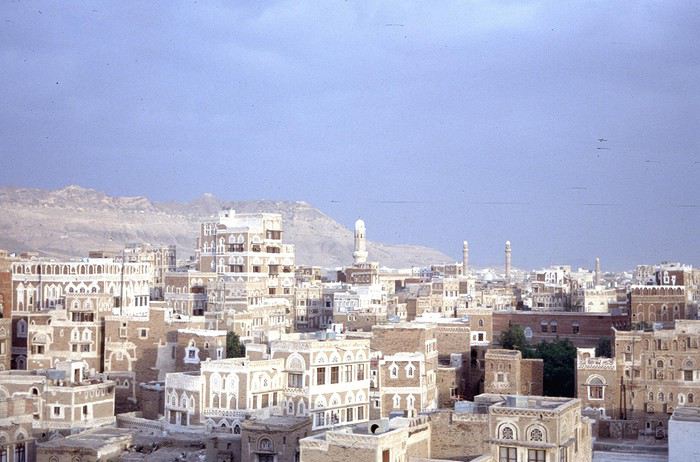 A l'intérieur même de la cité, des jardins potagers aérent cet enchevêtrement de gratte-ciels du moyen age. Des femmes fantomatiques sous leur voile multicolore dans la rue, travaillent nu tête la terre de ces arpents derrière de hauts murs de briques, à l'abri des regards indiscrets des hommes.Ces premières impressions d'une vie héritée d'un passé bimillénaire se transforment à peine lors d'une promenade à l'intérieur des souks.
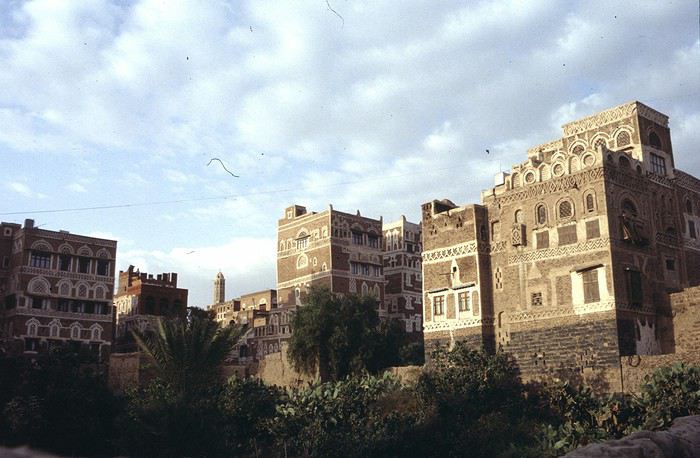 On pense rencontrer l'un des rois mages monté sur un âne, remplissant les sacs d'encens et de myrrhe avant de rejoindre la Judée . Au hasard de nos pérégrinations entre les étals d'épices, de fruits tropicaux, d'écorces de grains de café qui servent à concocter le Qishr, la boisson populaire yéménite, nulle femme ne se promène mais une foule d'hommes enturbannés, vêtus de la fouta- la jupe traditionnelle, armés de la Jambia-poignard recourbé, discute le moindre achat. Chaque rue du souk al Milh (le souk principal de Sanaa) a sa spécialité. A l'une des petites boutiques à la devanture bleue, où des dizaines de bijoux d'or scintillent, nous rêvons de rencontrer sous son voile noir de Bédouins, la reine de Saba de passage à Sanaa. Son royaume de Mare est l'oasis oriental du Yémen irrigué par un gigantesque barrage qui lui survivra quinze siècles .
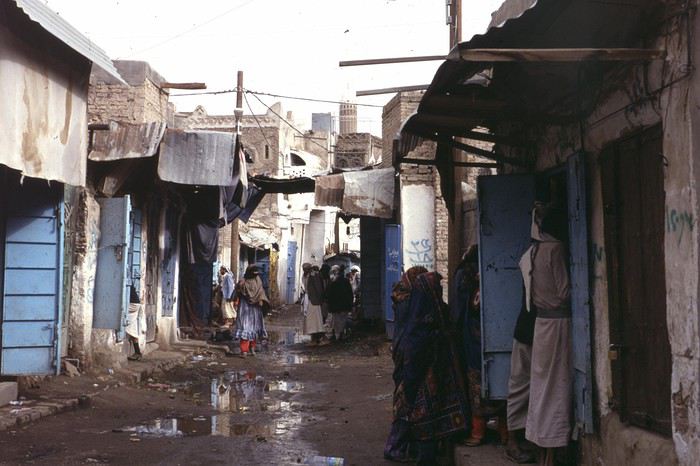 Dans ces ruelles où le tintamarre de la foule est supplanté aux haures de prière par le chant de muezzins qui se renvoient en écho les versets du Coran, les ânes se partagent les détritus avec les chèvres et les poules. Les dromadaires tournent , en sous sol, les meules des moulins à olive ou à grains.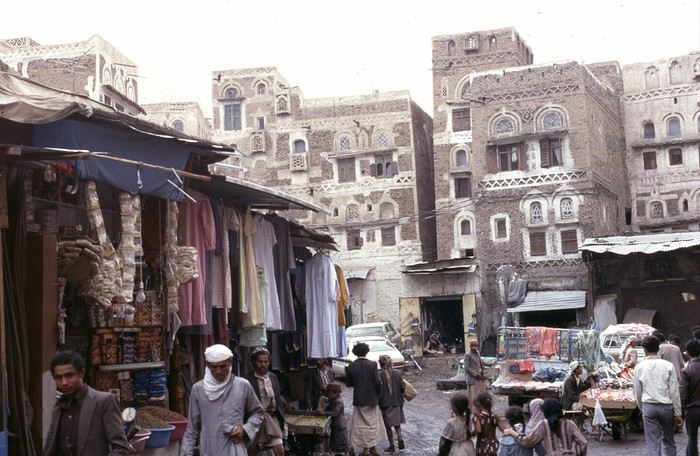
Lorsque nous avons franchi Bab El Yemen, la dernière porte subsistant des remparts ottomans, nous faisons un bond de vingt siècles sans l'Histoire. Les klaxons, les 4X4 remplacent les cris des animaux, les épices font place aux montres à quartz.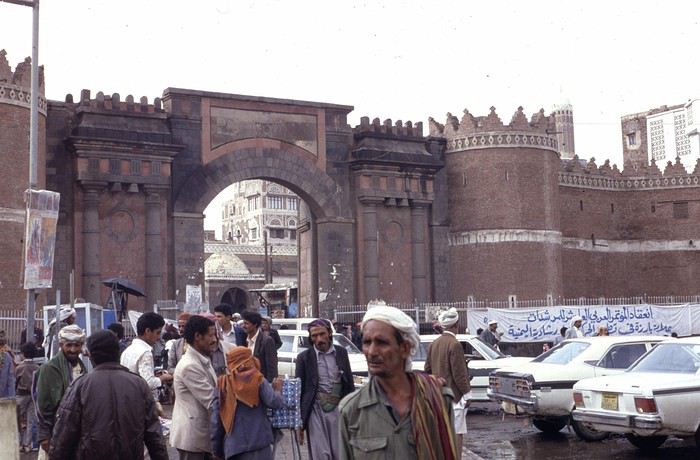 Aux lueurs de l'aube, la ville s'active, mais dès midi elle semble se dissiper dans les brumes qui descendent des montagnes environnantes. Depuis quatre siècles, le Yémen est sous l'emprise d'un phénomène quotidien qui agit sur la vie sociale et économique : le QAT. Cette plante, dont on mâche les feuilles méthodiquement, l'après midi entre amis, absorbe l'énergie des consommateurs dans le but symptomatique de développer leurs qualités intellectuelles et relationnelles. Les agriculteurs ont abandonné la culture du café au profit de celle du qat plus
rentable. Les échoppes du souk, les magasins des quartiers modernes, les bureaux se vident le temps de se façonner, dans la jouegauche, une boule verdâtre de la taille d'une balle de golf. Même les toursites sont victimes de la feuille verte, les guides et chauffeurs abandonnent tout afin d'assouvir leur rituel journalier. Cela remplace notre sieste qui reste moins coûteuse que la consommation de qat qui peut absorber jusqu'à 30 % des revenus.
Aux lueurs de l'aube, la ville s'active, mais dès midi elle semble se dissiper dans les brumes qui descendent des montagnes environnantes. Depuis quatre siècles, le Yémen est sous l'emprise d'un phénomène quotidien qui agit sur la vie sociale et économique : le QAT. Cette plante, dont on mâche les feuilles méthodiquement, l'après midi entre amis, absorbe l'énergie des consommateurs dans le but symptomatique de développer leurs qualités intellectuelles et relationnelles. Les agriculteurs ont abandonné la culture du café au profit de celle du qat plus
rentable. Les échoppes du souk, les magasins des quartiers modernes, les bureaux se vident le temps de se façonner, dans la jouegauche, une boule verdâtre de la taille d'une balle de golf. Même les toursites sont victimes de la feuille verte, les guides et chauffeurs abandonnent tout afin d'assouvir leur rituel journalier. Cela remplace notre sieste qui reste moins coûteuse que la consommation de qat qui peut absorber jusqu'à 30 % des revenus.
A l'intérieur même de la cité, des jardins potagers aérent cet enchevêtrement de gratte-ciels du moyen age. Des femmes fantomatiques sous leur voile multicolore dans la rue, travaillent nu tête la terre de ces arpents derrière de hauts murs de briques, à l'abri des regards indiscrets des hommes.Ces premières impressions d'une vie héritée d'un passé bimillénaire se transforment à peine lors d'une promenade à l'intérieur des souks.
On pense rencontrer l'un des rois mages monté sur un âne, remplissant les sacs d'encens et de myrrhe avant de rejoindre la Judée . Au hasard de nos pérégrinations entre les étals d'épices, de fruits tropicaux, d'écorces de grains de café qui servent à concocter le Qishr, la boisson populaire yéménite, nulle femme ne se promène mais une foule d'hommes enturbannés, vêtus de la fouta- la jupe traditionnelle, armés de la Jambia-poignard recourbé, discute le moindre achat. Chaque rue du souk al Milh (le souk principal de Sanaa) a sa spécialité. A l'une des petites boutiques à la devanture bleue, où des dizaines de bijoux d'or scintillent, nous rêvons de rencontrer sous son voile noir de Bédouins, la reine de Saba de passage à Sanaa. Son royaume de Mare est l'oasis oriental du Yémen irrigué par un gigantesque barrage qui lui survivra quinze siècles . Dans ces ruelles où le tintamarre de la foule est supplanté aux haures de prière par le chant de muezzins qui se renvoient en écho les versets du Coran, les ânes se partagent les détritus avec les chèvres et les poules. Les dromadaires tournent , en sous sol, les meules des moulins à olive ou à grains.Lorsque nous avons franchi Bab El Yemen, la dernière porte subsistant des remparts ottomans, nous faisons un bond de vingt siècles sans l'Histoire. Les klaxons, les 4X4 remplacent les cris des animaux, les épices font place aux montres à quartz.
Aux lueurs de l'aube, la ville s'active, mais dès midi elle semble se dissiper dans les brumes qui descendent des montagnes environnantes. Depuis quatre siècles, le Yémen est sous l'emprise d'un phénomène quotidien qui agit sur la vie sociale et économique : le QAT. Cette plante, dont on mâche les feuilles méthodiquement, l'après midi entre amis, absorbe l'énergie des consommateurs dans le but symptomatique de développer leurs qualités intellectuelles et relationnelles. Les agriculteurs ont abandonné la culture du café au profit de celle du qat plus
rentable. Les échoppes du souk, les magasins des quartiers modernes, les bureaux se vident le temps de se façonner, dans la jouegauche, une boule verdâtre de la taille d'une balle de golf. Même les toursites sont victimes de la feuille verte, les guides et chauffeurs abandonnent tout afin d'assouvir leur rituel journalier. Cela remplace notre sieste qui reste moins coûteuse que la consommation de qat qui peut absorber jusqu'à 30 % des revenus.Phnom Penh vaut-elle le coup d'être visitée? English translation pending
Bonjour à tous, me trouvant actuellement à Ko Chang en Thaïlande et étant proche de la frontière Cambodgienne, je voulais savoir si Phnom Penh valait le coup d’être visitée pour 4 ou 5 jours...? Si oui que me conseilleriez vous? J aimerai plutôt savoir pour Phnom Penh et ses environs car j’ai déjà fait Angkor et Siem Reap... merci d’avance pour vos réponses😊
Sites d'intérêt des îles Salomon English translation pending
Bonjour,
J'envisage de partir 10 à 15 jours aux îles Salomon. Quelqu'un aurait des idées de lieux et sites d'intérêt à découvrir sur l'archipel?
Pour information j'habite en Nouvelle-Calédonie donc c'est pas très loin de chez-moi.
Frédéric
Longs séjours solo au Vénézuela, Costa Rica et Colombie English translation pending
Buenas dias,
Dans le cadre de préparatifs de longs séjours solo Venezuela, au Costa Rica et en Colombie, j’ai besoin de plusieurs conseils. Pas de parano mais une recherche des règles simples à connaître et à observer pour éviter tous soucis inutiles. Vous remerciant d’avance pour vos partages d’expériences et conseils bien avisés.
1/ ARGENT ET CHANGE Pour faire le change au noir, change beaucoup plus intéressant, comment procéder et où aller pour ne pas se faire avoir ou attaquer? Le faire aux frontières? Mais comment se balader avec des enormes liasses de billets au quotidien? On se retrouve avec une valise pour faire ses courses ? Qu’est il encore possible de payer avec Bolivars? C’est accepté où? Dans les magasins, les hotels, taxis ? Ou ils refusent? J’ai le droit de payer avec Bolivar à qui je veux ou cela peut m’être refusé et par qui? Les dollars sont préférables que les euros pour payer? Mais forcemment les prix sont bien plus élevés si on paye en USD et surtout être visés comme touriste? Quels conseils selon quelles situations? Comment faites vous au quotidien?
2/ SECURITE Caracas la nuit c’est uniquement se déplacer d’un quartier à autre quartier en taxi sinon trop risqué? Que faut il absolument éviter pour ne pas se faire braquer ou autre? Quoi ne pas porter comme vêtements ou accessoires de jour ou de nuit? Comment protéger ses biens restés à l’hotel ou dans chambre d’hote? Mettre une alarme sur la porte d’entrée? Faire confiance à la police? Risques de problèmes sécu en faisant videos paysages, nature, mer, animaux avec Gopro ou drone? Se faire accompagner toujours pour éviter soucis? Combien couterait un guide local à la journée pour être accompagné en forêt ou dans un parc national?
3/ VISA SEJOUR Il faut obligatoirement avoir une date de billet de retour avion pour circuler et pour avoir visa tourisme? Sous quelle manière, que présenter? Car ne connaissant pas les dates retour comment procéder? Possible de faire des copies de fictives réservations? Possible de rester 2 mois, sortir du pays puis revenir qq jours après avec nouveau visa touriste?
4/ POSTE & COLIS N’ayant pas d’adresses fixes pour longue période car allant faire souvent de nombreux déplacements est il possible et surtout sécurisé de se faire expédier colis, paquets ou courriers à une poste restante ou à une poste à Caracas? Les services postaux fonctionnent correctement ou c’est l’anarchie? Comment expédier en toute sécurité? Pour envoyer par la poste des échantillons de café, de cacao en France comment faire? Quels services utilisez vous ? La Poste nationale ou privée (ups, fedex....) pour envoyer? Achat d’ enveloppes grandes est facile à trouver ou préférable d’acheter en Colombie?
5/SANTE J’ai fais un rappel et pris tous les vaccins obligatoires pour long séjour, contre la rage aussi. Mais quels sont les risques maladies, moustiques actuels? Quels aliments ou pratiques sont à éviter? Pour aller dans forêts, parcs quelles protections prendre? Quelles sont les affaires du quotidien pour santé, soins et hygiène absolument nécessaires d’acheter en dehors du Vénézuela? Pénurie sur tout?
6/CIGARES Amateur de cigares où faut il seulement les acheter pour gage de fraicheur, de qualité et sérieux? Pas envie de fumer des mauvaises copies pour touristes comme c’est souvent dans la rue ou marchés à Cuba.
Dans le cadre de préparatifs de longs séjours solo Venezuela, au Costa Rica et en Colombie, j’ai besoin de plusieurs conseils. Pas de parano mais une recherche des règles simples à connaître et à observer pour éviter tous soucis inutiles. Vous remerciant d’avance pour vos partages d’expériences et conseils bien avisés.
1/ ARGENT ET CHANGE Pour faire le change au noir, change beaucoup plus intéressant, comment procéder et où aller pour ne pas se faire avoir ou attaquer? Le faire aux frontières? Mais comment se balader avec des enormes liasses de billets au quotidien? On se retrouve avec une valise pour faire ses courses ? Qu’est il encore possible de payer avec Bolivars? C’est accepté où? Dans les magasins, les hotels, taxis ? Ou ils refusent? J’ai le droit de payer avec Bolivar à qui je veux ou cela peut m’être refusé et par qui? Les dollars sont préférables que les euros pour payer? Mais forcemment les prix sont bien plus élevés si on paye en USD et surtout être visés comme touriste? Quels conseils selon quelles situations? Comment faites vous au quotidien?
2/ SECURITE Caracas la nuit c’est uniquement se déplacer d’un quartier à autre quartier en taxi sinon trop risqué? Que faut il absolument éviter pour ne pas se faire braquer ou autre? Quoi ne pas porter comme vêtements ou accessoires de jour ou de nuit? Comment protéger ses biens restés à l’hotel ou dans chambre d’hote? Mettre une alarme sur la porte d’entrée? Faire confiance à la police? Risques de problèmes sécu en faisant videos paysages, nature, mer, animaux avec Gopro ou drone? Se faire accompagner toujours pour éviter soucis? Combien couterait un guide local à la journée pour être accompagné en forêt ou dans un parc national?
3/ VISA SEJOUR Il faut obligatoirement avoir une date de billet de retour avion pour circuler et pour avoir visa tourisme? Sous quelle manière, que présenter? Car ne connaissant pas les dates retour comment procéder? Possible de faire des copies de fictives réservations? Possible de rester 2 mois, sortir du pays puis revenir qq jours après avec nouveau visa touriste?
4/ POSTE & COLIS N’ayant pas d’adresses fixes pour longue période car allant faire souvent de nombreux déplacements est il possible et surtout sécurisé de se faire expédier colis, paquets ou courriers à une poste restante ou à une poste à Caracas? Les services postaux fonctionnent correctement ou c’est l’anarchie? Comment expédier en toute sécurité? Pour envoyer par la poste des échantillons de café, de cacao en France comment faire? Quels services utilisez vous ? La Poste nationale ou privée (ups, fedex....) pour envoyer? Achat d’ enveloppes grandes est facile à trouver ou préférable d’acheter en Colombie?
5/SANTE J’ai fais un rappel et pris tous les vaccins obligatoires pour long séjour, contre la rage aussi. Mais quels sont les risques maladies, moustiques actuels? Quels aliments ou pratiques sont à éviter? Pour aller dans forêts, parcs quelles protections prendre? Quelles sont les affaires du quotidien pour santé, soins et hygiène absolument nécessaires d’acheter en dehors du Vénézuela? Pénurie sur tout?
6/CIGARES Amateur de cigares où faut il seulement les acheter pour gage de fraicheur, de qualité et sérieux? Pas envie de fumer des mauvaises copies pour touristes comme c’est souvent dans la rue ou marchés à Cuba.