Results for "Hua+Hin+|+101+>+193"
2926 results found.
Route Mendoza (Argentine) - Santiago (Chili) English translation pending
Bonjour à tous,
Prévoyant un voyage en Argentine et au Chili pour août 2006, je n'arrive pas à trouver d'information sur l'axe routier reliant Mendoza à Santiago par un col (ou un tunnel) vers les 3000m, à savoir si cet axe est praticable (bus, voiture...) pendant l'hiver, fin août.
Merci par avance si quelqu'un à déjà fait ce parcours au mois d'août et sur les infos qu'il pourrait avoir.
Liaison Patagonie Argentine-Chili English translation pending
Bonjour à tous,
Voilà, j'envisage de partir en Patagonie d'ici 3 mois. J'atterris à Buenos Aires et ensuite je compte descendre vers Ushuaia. Ensuite j'aurais aimé remonter sur Santiago de Chile sans prendre l'avion.
Est ce que l'un d'entre vous a t il déjà réalisé ce trajet ? N'est ce pas trop galère ? Quel moyen de transport dois je prendre ? Il y a t il des bus ?
Je vous remercie d'avance pour tous vos conseils et tuyaux de bons routards !!! :-)
Nicolas
Voilà, j'envisage de partir en Patagonie d'ici 3 mois. J'atterris à Buenos Aires et ensuite je compte descendre vers Ushuaia. Ensuite j'aurais aimé remonter sur Santiago de Chile sans prendre l'avion.
Est ce que l'un d'entre vous a t il déjà réalisé ce trajet ? N'est ce pas trop galère ? Quel moyen de transport dois je prendre ? Il y a t il des bus ?
Je vous remercie d'avance pour tous vos conseils et tuyaux de bons routards !!! :-)
Nicolas
Cambodge en famille English translation pending
Bonjour
Nous sommes en train de nous tater pour aller au Camboge du 22 Avril au 12 mai en famille, soit un petit 3 semaine
Pour vous, quel est le meilleur moyen pour y acceder ?
Je pense arriver à BKK, puis prendre le train devant l'aeroport de Don muang, passer la fontiere par voie terrestre apres .....???
Pour la meteo je m'attends à un climat tres chaud, mais pas encore de mousson
J'aimerai aussi profiter des plages du sud pendant 2 à 3 jours
Avez vous des idées ? des conseilles ? des choses à ne pas manquer ?
Bonne reception
Nous sommes en train de nous tater pour aller au Camboge du 22 Avril au 12 mai en famille, soit un petit 3 semaine
Pour vous, quel est le meilleur moyen pour y acceder ?
Je pense arriver à BKK, puis prendre le train devant l'aeroport de Don muang, passer la fontiere par voie terrestre apres .....???
Pour la meteo je m'attends à un climat tres chaud, mais pas encore de mousson
J'aimerai aussi profiter des plages du sud pendant 2 à 3 jours
Avez vous des idées ? des conseilles ? des choses à ne pas manquer ?
Bonne reception
Thaïlande: logement, treks, circuit English translation pending
Bonjour,
Nous partons pour la première fois en Asie l'été prochain, et plus précisément trois semaines en Juillet. Je ne connais pas du tout le pays, mais j'ai envie de profiter au mieux de mon séjour là-bas.
Qui aurait une suggestion d'itinéraire sachant que: On a un budget correct, mais préfererions les petites guest house aux hôtels un peu trop touristiquesOn aimerait bien faire de treks, mais à la portée d'un randonneur moyenOn aimerait faire des choses vraiment typiquesOn veut finir par une petite semaine farniente, donc à priori dans le sud.
Une autre question: faut-il réserver les billets dès maintenant, où les prix sont très corrects, ou vaut-il mieux attendre le dernier moment? Faut-il réserver le train depuis la France? Un hôtel ou une guest-house à l'arrivée?
Merci d'avance à tous ceux qui pourront me donner des bons plans, de précieux conseils...
Et s'il y a quelqu'un qui séjourne là-bas à ce moment-là, qu'il se manifeste!!!
Nous partons pour la première fois en Asie l'été prochain, et plus précisément trois semaines en Juillet. Je ne connais pas du tout le pays, mais j'ai envie de profiter au mieux de mon séjour là-bas.
Qui aurait une suggestion d'itinéraire sachant que: On a un budget correct, mais préfererions les petites guest house aux hôtels un peu trop touristiquesOn aimerait bien faire de treks, mais à la portée d'un randonneur moyenOn aimerait faire des choses vraiment typiquesOn veut finir par une petite semaine farniente, donc à priori dans le sud.
Une autre question: faut-il réserver les billets dès maintenant, où les prix sont très corrects, ou vaut-il mieux attendre le dernier moment? Faut-il réserver le train depuis la France? Un hôtel ou une guest-house à l'arrivée?
Merci d'avance à tous ceux qui pourront me donner des bons plans, de précieux conseils...
Et s'il y a quelqu'un qui séjourne là-bas à ce moment-là, qu'il se manifeste!!!
Qui connaît à Bangkok l'hôtel REX et le Madarin? English translation pending
je voudrais savoir si ces 2 hotels sont agreable :
L'hotel REX et le madarin
ils m'ont l'air pas cher et pas trop mal pour le prix, le REX est près de la station Thong Lor et le madarin près de la station de Métro sAm yan
http://www.hotels2thailand.com/bangkok-hotels/Rex-Hotel.asp
http://www.hotels2thailand.com/bangkok-hotels/Mandarin-Hotel.asp
Merci
ils m'ont l'air pas cher et pas trop mal pour le prix, le REX est près de la station Thong Lor et le madarin près de la station de Métro sAm yan
http://www.hotels2thailand.com/bangkok-hotels/Rex-Hotel.asp
http://www.hotels2thailand.com/bangkok-hotels/Mandarin-Hotel.asp
Merci
Donne infos sur le nord de la Chine et Pekin English translation pending
😎😎😎😎😎😎Bonjour a tous, je suis chinoise qui parle un peu francais et, si vous avez des questions (ou fait la shopping, louer une chambre, comment se rendre vers une place....)sur les villes du nord ou Pekin, n'hesite pas a me demander, je ferai de mon mieux pour vous aider.
A bientot tous.
A bientot tous.
Iles autour de Ko Samui (Thaïlande) English translation pending
🙂Merci si vous pouvez me donner les bons plans pour faire que mon séjour à KS ne soit pas que sur l'ile. J'y suis déja allé l'an dernier et je ne savais pas trop oû aller et avec quel mode de transport. Je suis tout à fait ok pour séjourner sur d'autres iles alentours pourvu qu'il y est de beaux sites plages et eaux limpides . On pense y aller en mai 06.
Merci de votre réponse MICHELE
Merci de votre réponse MICHELE
Bon "guide" (livre) pour le Tibet English translation pending
quand vous voyagez au Thibet, le mieux est d'oublier son LP a la maison !
par contre, un excellent bouquin : "Mapping the Tibetan world" publie par Kotan publishing
il couvre le TAR mais aussi les contrees tibetaines du qinghai, gansu, sichuan et yunnan, ainsi que celles du bhutan, ladak, zanskar, nepal
ce sont donc 3 bouquins en 1 ! ils listent tout, memes les obscures villages, et est tres recent, indiquant transports, hebergements sans insister sur le must touristique a voir dans le coin. Listing exhaustif plus qu'un guide touristique a la LP
une excellent e carte avec noms en chinois-anglais et tibetain pour les gros bourgs : "World mapping project" chez "Reise know-how", collection allemande, parfait pour moi, autostop, rando-trek sans LP
une excellent e carte avec noms en chinois-anglais et tibetain pour les gros bourgs : "World mapping project" chez "Reise know-how", collection allemande, parfait pour moi, autostop, rando-trek sans LP
Conseils sur station de ski de fond ou raquettes en France English translation pending
Bonjour,
Je souhaiterais aller en sejour neige en france. Je n'ai jamais vu la neige, ni vécu l'hiver. Pourriez - vous me conseiller une station agréable non surpeuplée pour faire cette découverte? Je souhaiterais y faire des balades en raquette ou ski de fond. merci
Je souhaiterais aller en sejour neige en france. Je n'ai jamais vu la neige, ni vécu l'hiver. Pourriez - vous me conseiller une station agréable non surpeuplée pour faire cette découverte? Je souhaiterais y faire des balades en raquette ou ski de fond. merci
Itinéraire, visa et hébergement pour Vietnam et Thaïlande English translation pending
Bonjour à tous,
Mon fils (19 ans) et moi (qlq années de plus) partons pour Hanoi le 27 Décembre. nous partons pour trois semaines et devons faire notre étinéraires de voyage. Y-a-t-il quelqu un qui a des suggestions et combien coûte les places pour dormir là bas? 😄
De plus, avons nous besoin de visa pour le vietnam?😏
avons nous besoin de visa pour la taïland ?😄 car nous passerons deux jour au retour en Taïland (Taipei)
Vos coups de coeurs au Sichuan et au Yunnan en Chine? English translation pending
salut à tous.... sur la route en Asie pour un petit bout de temps, je prévois de passer un mois deux mois entre le sichuan et le yunnan. J serai dans une grosse dizaine de jours a peu pres à mon avis... Avez vous des coins sympas, incontournables ou originaux à me conseiller? Sites, villages, auberges, monasteres, temples, vallées, montagnes, ruisseaux, restos... je prends tous les plans!! 😉 qu'est ce que vous avez aimé ou au contraire pas du tout?
Merci d'avance!
cec
Bangkok: sortir le soir et massage thai? English translation pending
Bonjour a tous,
Je suis admiratif de votre site et de la qualité de ces sujets & réponses.
Alors je pars en asie et vais devoir faire un stop de 2 jours sur Bangkok. Je ne connais rien à cette ville et aimerait avoir des conseils sur 2 choses pour profiter un max.
Le but en tant que célibataire est de 1) sortir et s'amuser un peu donc quel endroit me conseillez vous de la ville? Ensuite de 2) j'aimerais essayer ces fameux massages thailandais que j'entend depuis une vie. J'espère qu'effectivement cela est vrai et si oui event. quelque adrèsses.
Et si ce n'est pas trop demandé un hotel pas loin de ces 2 points.
Je vous remercie d'avance de votre aide et précieux conseils.
A bientot😎 Enrike
Alors je pars en asie et vais devoir faire un stop de 2 jours sur Bangkok. Je ne connais rien à cette ville et aimerait avoir des conseils sur 2 choses pour profiter un max.
Le but en tant que célibataire est de 1) sortir et s'amuser un peu donc quel endroit me conseillez vous de la ville? Ensuite de 2) j'aimerais essayer ces fameux massages thailandais que j'entend depuis une vie. J'espère qu'effectivement cela est vrai et si oui event. quelque adrèsses.
Et si ce n'est pas trop demandé un hotel pas loin de ces 2 points.
Je vous remercie d'avance de votre aide et précieux conseils.
A bientot😎 Enrike
visas disponibles à Bangkok? English translation pending
Salut a tous,
je prepare un voyage avec un copain pour cet ete en asie du sud est. Nous partons de taiwan avec un vol direct pour bangkok.
Nous aimerions visiter le cambodge, le vietnam, le laos et peut etre la birmanie. Savez vous s'il est possible de recuperer tous ces visas facilement a bangkok en un minimum de temps? (nous ne pensons pas avoir le temps d aller a taipei avant notre depart)
Merci pour vos reponses
je prepare un voyage avec un copain pour cet ete en asie du sud est. Nous partons de taiwan avec un vol direct pour bangkok.
Nous aimerions visiter le cambodge, le vietnam, le laos et peut etre la birmanie. Savez vous s'il est possible de recuperer tous ces visas facilement a bangkok en un minimum de temps? (nous ne pensons pas avoir le temps d aller a taipei avant notre depart)
Merci pour vos reponses
Tibet: Le Kham et L'Amdo English translation pending
Bonjour
Je pars cet été pour un périple à travers le Kham et L'amdo (de Chengdu à Xining)
Je suis à la recherche d'une carte détaillée et d'un guide (écrit en français voire en Anglais) étant suffisament précis sur les aspects culturels, historiques et l'architecture Tibetaine.
Merci par avance pour vos recommandations
Je pars cet été pour un périple à travers le Kham et L'amdo (de Chengdu à Xining)
Je suis à la recherche d'une carte détaillée et d'un guide (écrit en français voire en Anglais) étant suffisament précis sur les aspects culturels, historiques et l'architecture Tibetaine.
Merci par avance pour vos recommandations
Transport pour rejoindre Chumphon et informations sur Ko Tao, Ko Samet et Ko Chang English translation pending
bonjour à tous
j'arrive à BKK jeudi 28 vers 16h et je voudrais prendre un train de nuit pour aller à chumphon direction ko tao ko phangan celà pour une petite semaine je repars de BKK samedi 7, quelqu'un peut il me dire s'il y a de l'aéroport un bus ou un " train metro" pour rejoindre la gare rapidement et si n'ayant rien réserver à cette saison j' ai des chances d'avoir un billet ? une semaine c'est très court, je vais à ko tao car j'ai découvert cette merveille une journée à partir de samui, est ce que pour une semaine ko samet et ko chang sont plus rapides d'accès de bKK ( et comment ) et est ce aussi beau et reposant car je n'ai qu'une semaine et peut être ko tao c'est bp de transport
merci à tous de vos précieux renseignements
j'arrive à BKK jeudi 28 vers 16h et je voudrais prendre un train de nuit pour aller à chumphon direction ko tao ko phangan celà pour une petite semaine je repars de BKK samedi 7, quelqu'un peut il me dire s'il y a de l'aéroport un bus ou un " train metro" pour rejoindre la gare rapidement et si n'ayant rien réserver à cette saison j' ai des chances d'avoir un billet ? une semaine c'est très court, je vais à ko tao car j'ai découvert cette merveille une journée à partir de samui, est ce que pour une semaine ko samet et ko chang sont plus rapides d'accès de bKK ( et comment ) et est ce aussi beau et reposant car je n'ai qu'une semaine et peut être ko tao c'est bp de transport
merci à tous de vos précieux renseignements
nuit sur la grande muraille de chine English translation pending
Bonjour à tous,
Je pars en chine en septembre et je compte évidemment aller voir la grande muraille.
Est ce quelqu'un connait un hotel aux alentours de la grande muraille, ce qui me permettrait de voir le coucher du soleil et son lever sur la muraille (ce qui est apparemment inoubliable)?
Merci d'avance pour vos réponses.
Je pars en chine en septembre et je compte évidemment aller voir la grande muraille.
Est ce quelqu'un connait un hotel aux alentours de la grande muraille, ce qui me permettrait de voir le coucher du soleil et son lever sur la muraille (ce qui est apparemment inoubliable)?
Merci d'avance pour vos réponses.
circuit routard en Chine English translation pending
😏 Salut à tous !!!
c'est trop bien ce forum j'ai trouvé plein d'info mais il me manque encore qqls réponses 😊
Alors je fais un bref petit récapitulatif :
Cet été avec quelques amis nous voulons faire un circuit organisé par nous même un peu du type routard. Ce circuit va durer à peu près un mois.
J'aimerais savoir si notre parcours est faisable en un mois? Si nous ne ratons pas des sites importants?
Si il est préférable de prendre l'avion ou le train pour aller d'une ville à l'autre?
J'aimerais aussi savoir si vous connaissez des agences de voyage spécialisées dasn des billet pas trop cher de préfèrence pour la Chine? On hésite aussi entre partir au départ de Paris vers Hongkong ou vers pekin
En tout cas voici un échantillon de notre programme MERCI à TOUS pour vos REPONSES Jour 1 : Paris – Hong Kong Jour 2 : Hong KongQue faire : Passage au "Pic Victoria" et ses villas, au petit port de pêche "d'Aberdeen", à "Repulse Bay" et sa plage de sable blanc, à "Deep water bay", au village "Stanley" Jour 3 : Hong Kong – Shenzen Jour 4 : Shenzen – Guangzhou (Canton)Comment s’y rendre : Train (2h)
Que faire : promenade dans les ruelles de l'île de Shamian et visite du marché de Qingping, ainsi que de la maison de la famille Chen, du "temple des 6 banyans" et du "palais Shentangsun" Jour 5 : Guangzhou – Beijing (Pékin)Comment s’y rendre : Train (24h) Que faire : contempler les paysages à travers les vitres du train Jour 6 : Beijing (Pékin)Que faire : Place Tian An Men, la Cité Interdite Jour 7 : Beijing (Pékin)Que faire : Tombeaux des empereurs Ming, le Temple du Ciel Jour 8 : Beijing (Pékin)Que faire : Excursion à la muraille de Chine. On va essayer de faire une belle randonnée d’une journée dans des coins peu visités et offrant de superbes vues. On essayera de voir un magnifique couché de soleil (selon les conditions météo ...) Jour 9 : Beijing (Pékin)Que faire : le palais d’été, le quartier des Hutong Jour 9 (soir si possible) : Beijing - XianComment s’y rendre : départ en Train (14h) Jour 10 : XianQue faire : Visite de Xian, vieille ville de l'époque Tang où subsistent de nombreux vestiges du passé : les tours de la Cloche et du Tambour, la Grande Mosquée parmi les mieux conservées de Chine, la Grande Pagode de l'Oie Sauvage construite en 648. Jour 11 : XianQue faire : Bingmayong (armée des soldats en terre cuite) et ses sites aux alentours. Jour 12 : Xian – Hua ShanComment s’y rendre : Train (2-3h) plus minibus ou taxi pour rejoindre la montagne
Que faire : Randonnée d’une journée à Hua Shan, l’une des 5 montagnes sacrées de la Chine. On va essayer d’aller au sommet et de voir une vue encore époustouflante (on en voit pendant toute la randonnée) et un coucher de soleil comme il se doit.
La suite : SichuanJiuzhaigou, une réserve naturelle au coeur d’un paysage alpin magnifique, ponctuée de lacs aux couleurs étincelantes Chengdu, pour ses ruelles, ses maisons de thé, son opéra et les pandas géants L’Emei Shan, l’une des 4 montagnes du bouddhisme, parsemée de monastères et de chemins de randonnée La statue du Grand Bouddha (Da Fo), la plus grande du genre au monde (71 m), qui domine majestueusement la ville de Leshan YunnanHutiao Xia (gorge du saut du tigre), une excursion parmi des cascades et des falaises spectaculaires Lijiang, un extraordinaire aperçu de la culture et de l’histoire naxi Dali, l’une des haltes les plus délassantes de Chine, dans un paysage de montagne et proche d’un lac superbe, l’Erhai Hu Kunming, une ville moderne, sa cuisine succulente et ses sites intéressants Hanoi et Baie d’Ha Long (VIETNAM) Retour en Chine vers Macao Retour vers PARIS
c'est trop bien ce forum j'ai trouvé plein d'info mais il me manque encore qqls réponses 😊
Alors je fais un bref petit récapitulatif :
Cet été avec quelques amis nous voulons faire un circuit organisé par nous même un peu du type routard. Ce circuit va durer à peu près un mois.
J'aimerais savoir si notre parcours est faisable en un mois? Si nous ne ratons pas des sites importants?
Si il est préférable de prendre l'avion ou le train pour aller d'une ville à l'autre?
J'aimerais aussi savoir si vous connaissez des agences de voyage spécialisées dasn des billet pas trop cher de préfèrence pour la Chine? On hésite aussi entre partir au départ de Paris vers Hongkong ou vers pekin
En tout cas voici un échantillon de notre programme MERCI à TOUS pour vos REPONSES Jour 1 : Paris – Hong Kong Jour 2 : Hong KongQue faire : Passage au "Pic Victoria" et ses villas, au petit port de pêche "d'Aberdeen", à "Repulse Bay" et sa plage de sable blanc, à "Deep water bay", au village "Stanley" Jour 3 : Hong Kong – Shenzen Jour 4 : Shenzen – Guangzhou (Canton)Comment s’y rendre : Train (2h)
Que faire : promenade dans les ruelles de l'île de Shamian et visite du marché de Qingping, ainsi que de la maison de la famille Chen, du "temple des 6 banyans" et du "palais Shentangsun" Jour 5 : Guangzhou – Beijing (Pékin)Comment s’y rendre : Train (24h) Que faire : contempler les paysages à travers les vitres du train Jour 6 : Beijing (Pékin)Que faire : Place Tian An Men, la Cité Interdite Jour 7 : Beijing (Pékin)Que faire : Tombeaux des empereurs Ming, le Temple du Ciel Jour 8 : Beijing (Pékin)Que faire : Excursion à la muraille de Chine. On va essayer de faire une belle randonnée d’une journée dans des coins peu visités et offrant de superbes vues. On essayera de voir un magnifique couché de soleil (selon les conditions météo ...) Jour 9 : Beijing (Pékin)Que faire : le palais d’été, le quartier des Hutong Jour 9 (soir si possible) : Beijing - XianComment s’y rendre : départ en Train (14h) Jour 10 : XianQue faire : Visite de Xian, vieille ville de l'époque Tang où subsistent de nombreux vestiges du passé : les tours de la Cloche et du Tambour, la Grande Mosquée parmi les mieux conservées de Chine, la Grande Pagode de l'Oie Sauvage construite en 648. Jour 11 : XianQue faire : Bingmayong (armée des soldats en terre cuite) et ses sites aux alentours. Jour 12 : Xian – Hua ShanComment s’y rendre : Train (2-3h) plus minibus ou taxi pour rejoindre la montagne
Que faire : Randonnée d’une journée à Hua Shan, l’une des 5 montagnes sacrées de la Chine. On va essayer d’aller au sommet et de voir une vue encore époustouflante (on en voit pendant toute la randonnée) et un coucher de soleil comme il se doit.
La suite : SichuanJiuzhaigou, une réserve naturelle au coeur d’un paysage alpin magnifique, ponctuée de lacs aux couleurs étincelantes Chengdu, pour ses ruelles, ses maisons de thé, son opéra et les pandas géants L’Emei Shan, l’une des 4 montagnes du bouddhisme, parsemée de monastères et de chemins de randonnée La statue du Grand Bouddha (Da Fo), la plus grande du genre au monde (71 m), qui domine majestueusement la ville de Leshan YunnanHutiao Xia (gorge du saut du tigre), une excursion parmi des cascades et des falaises spectaculaires Lijiang, un extraordinaire aperçu de la culture et de l’histoire naxi Dali, l’une des haltes les plus délassantes de Chine, dans un paysage de montagne et proche d’un lac superbe, l’Erhai Hu Kunming, une ville moderne, sa cuisine succulente et ses sites intéressants Hanoi et Baie d’Ha Long (VIETNAM) Retour en Chine vers Macao Retour vers PARIS
Lijiang - Dali: s'en écarter...? English translation pending
Bonjour,
Dans le cadre du voyage dont je parle ici (http://voyageforum.com/v.f?post=179107;), je vais passer dans la région de Lijiang/Dali.
J'aurais aimé m'écarter à moment donné de ces villes, et me rapprocher de petits villages et de ses populations. J'aimerais savoir si certains d'entre vous ont déjà des idées de lieux, pas trop touristiques voire pas du tout, où il serait possible de nouer, si j'ose dire, des liens avec la population.
J'en profite pour donner un petit lien vers la présentation de ce projet : http://www.dvdmaxx.com/projet/chine/page.php?page=presentation
D'avance merci! Yannick
Dans le cadre du voyage dont je parle ici (http://voyageforum.com/v.f?post=179107;), je vais passer dans la région de Lijiang/Dali.
J'aurais aimé m'écarter à moment donné de ces villes, et me rapprocher de petits villages et de ses populations. J'aimerais savoir si certains d'entre vous ont déjà des idées de lieux, pas trop touristiques voire pas du tout, où il serait possible de nouer, si j'ose dire, des liens avec la population.
J'en profite pour donner un petit lien vers la présentation de ce projet : http://www.dvdmaxx.com/projet/chine/page.php?page=presentation
D'avance merci! Yannick
Transport de l'aéroport de bangkok au centre-ville English translation pending
Bonjour,
je part pour l'asie du sud-est en avril prochain et j'aimerais savoir qu'elle transport est-il préférable de prendre en partant de l'aéroport pour se rendre au centre-ville de bangkok...?
Ce qui est moins compliqué et coûteux? Sécuritaire??😐
Merci!!!🙂
Cath 24
je part pour l'asie du sud-est en avril prochain et j'aimerais savoir qu'elle transport est-il préférable de prendre en partant de l'aéroport pour se rendre au centre-ville de bangkok...?
Ce qui est moins compliqué et coûteux? Sécuritaire??😐
Merci!!!🙂
Cath 24
assurance annulation English translation pending
Bonjour,
Comment puis-je assurer un vol sec (vol régulier Air France) contre le risque d'annulation de mon fait (par exemple, si je ne peux pas partir pour cause de maladie, ou d'évènement grave dans mon entourage proche) ?
Merci pour toute réponse
Xavier
Comment puis-je assurer un vol sec (vol régulier Air France) contre le risque d'annulation de mon fait (par exemple, si je ne peux pas partir pour cause de maladie, ou d'évènement grave dans mon entourage proche) ?
Merci pour toute réponse
Xavier
Transport en Thaïlande English translation pending
Bonjour à tous!
quelqu'un pourrait me dire comment réserver les billets de train en avance pour les trajets BKK/ Chaing Mai et BKK Chumphon? J'ai pas trouvé de site web 🙁 et j'ai peur que ce soit complet si je réserve sur place (on arrive le dimanche et on voudrait partir pour chian mai le mardi soir). Autre question: je voudrai avoir votre avis sur la compagnie aérienne Thaï Airways.
MERCI!!!
BIZ
Groucha😏
quelqu'un pourrait me dire comment réserver les billets de train en avance pour les trajets BKK/ Chaing Mai et BKK Chumphon? J'ai pas trouvé de site web 🙁 et j'ai peur que ce soit complet si je réserve sur place (on arrive le dimanche et on voudrait partir pour chian mai le mardi soir). Autre question: je voudrai avoir votre avis sur la compagnie aérienne Thaï Airways.
MERCI!!!
BIZ
Groucha😏
Région de Xinjiang Urghur (Chine) English translation pending
Bonjour,
je serais en Inde en Mars 2006 et j'aimerais bien passer par la chine pour ralier le kirghizistan en passant par la region du Xinjiang urghur( Par voie terrestre) ou si pas possible directement par cette region, passer par le Tibet. ?????
Connaissez vous les points de passages ainsi que, les formalitées, visas, les cols ouvert..... bref toute les infos de cette partie du monde?
Merci
Sylvain
je serais en Inde en Mars 2006 et j'aimerais bien passer par la chine pour ralier le kirghizistan en passant par la region du Xinjiang urghur( Par voie terrestre) ou si pas possible directement par cette region, passer par le Tibet. ?????
Connaissez vous les points de passages ainsi que, les formalitées, visas, les cols ouvert..... bref toute les infos de cette partie du monde?
Merci
Sylvain
Itinéraire en Thaïlande 35 jours English translation pending
Bonjour,
je viens de m'inscrire sur le forum, et je recherche des infos sur la Thaïlande, j'y serais durant 35 jours répartis entre juillet à mi-août et je cherche un itinéraire, pour infos, j'ai déjà réserver sur place un hôtel à Koh Samui pour la fin du voyage afin de revenir bronzé à mort. Pour le reste pour faire finalement comme tout le monde je souhaite aller à Bangkok, Chiang mai et rai et aller à Kuala Lumpur. Donc si quelqu'un à des idées j'suis preneur, une autre question y a t'il des bons plans là-bas pour ramener de l'électronique ?
Y a t'il encore des pb dans le Sud ?
Toujours des arnaques à la CB lors des treks ?
Voilà merci pour vos réponses
je viens de m'inscrire sur le forum, et je recherche des infos sur la Thaïlande, j'y serais durant 35 jours répartis entre juillet à mi-août et je cherche un itinéraire, pour infos, j'ai déjà réserver sur place un hôtel à Koh Samui pour la fin du voyage afin de revenir bronzé à mort. Pour le reste pour faire finalement comme tout le monde je souhaite aller à Bangkok, Chiang mai et rai et aller à Kuala Lumpur. Donc si quelqu'un à des idées j'suis preneur, une autre question y a t'il des bons plans là-bas pour ramener de l'électronique ?
Y a t'il encore des pb dans le Sud ?
Toujours des arnaques à la CB lors des treks ?
Voilà merci pour vos réponses
Vol Paris-Koh Samui? English translation pending
kkun a til une solution pour aller a koh samui sans passer trop de temps par bangkok??
par la meme occasion sans payer trop cher?😛
Merci @++😏
par la meme occasion sans payer trop cher?😛
Merci @++😏
Budget et coût de la vie pour 3 semaines à Shangai (Chine) English translation pending
Bonjour à tous,
je pars en inde mi mars pour deux mois, et j'ai presque envie de me prendre un aller retour Mumbai/Shangai pendant cette période. J'aurais donc voulu connaitre le cout de la vie la bas pour 3 semaines en sachant que je ne resterai sûrement pas tout le temps à Shangaï, j'irais visiter les environs.
schuss !
😛
je pars en inde mi mars pour deux mois, et j'ai presque envie de me prendre un aller retour Mumbai/Shangai pendant cette période. J'aurais donc voulu connaitre le cout de la vie la bas pour 3 semaines en sachant que je ne resterai sûrement pas tout le temps à Shangaï, j'irais visiter les environs.
schuss !
😛
Wi-Fi in Taiwan and budget-friendly hotels
Hi everyone who’s reading this!
I’m heading to Taiwan soon and would love some up-to-date info on Wi-Fi. From what I’ve gathered, Taiwan offers it for free, but I’ve heard it’s not secure since it’s not protected by a "password." Since I’ve been traveling outside the EU for years without a local SIM card, I only use Wi-Fi in hotels, restaurants, and cafés. For me, that’s more than enough. So, my question is: Do these places secure their Wi-Fi with a "password"? If not, does buying a SIM card or eSIM seem like the only alternative?
Also, if any of you have recommendations for budget-friendly hotels in the main "cities," I’d love to hear them!
Thanks in advance for your replies! !
I’m heading to Taiwan soon and would love some up-to-date info on Wi-Fi. From what I’ve gathered, Taiwan offers it for free, but I’ve heard it’s not secure since it’s not protected by a "password." Since I’ve been traveling outside the EU for years without a local SIM card, I only use Wi-Fi in hotels, restaurants, and cafés. For me, that’s more than enough. So, my question is: Do these places secure their Wi-Fi with a "password"? If not, does buying a SIM card or eSIM seem like the only alternative?
Also, if any of you have recommendations for budget-friendly hotels in the main "cities," I’d love to hear them!
Thanks in advance for your replies! !
Trip Report: Silk Road Journey in China
Hi everyone,
This trip report covers a journey along the Silk Road in China (see detailed description below) undertaken in October 2025. The goal isn’t to recount the trip but to provide information that might help those who want to take a similar journey. Much of the information is valid for any trip to China.
Who we are: a retired couple, aged 63 and 65 (age gives discounts on entry to various sites and museums in China, which is why I won’t list prices here—I don’t know them, but you can easily find them online). We’re used to traveling independently. We speak English, which is the only foreign language spoken in China, though by very few people. I speak and read a little Chinese, which helped, but you can easily get by without it (without any English at all, I think it would be more difficult).
Period: We arrived just after "Golden Week," when all of China is on vacation, and after the summer, when schools are out, so we encountered very few tourists (99.99% of whom were Chinese). Our experience with booking visits in advance (which we didn’t need to do) isn’t representative for those who want to travel in the summer! The October-November period was perfect for our trip—it wasn’t too hot or too cold (one day of snow on the Tibetan Plateau), though it was only a few degrees on the Tibetan part, with altitudes between 2,000 and 3,000 meters. The trees were beautifully colored.
General remarks: Everyone we dealt with was very kind and perfectly honest. If you order a meal without really understanding what to do and the person modifies your order, trust them—the result is what you need. If a taxi driver signals that they’ll wait for you to finish your visit and pick you up afterward, trust them. It means there aren’t many taxis where you are, and it’ll be more convenient. For prices at street vendors, we always found the right ballpark, and sometimes they even added a little extra to please us. A taxi driver treated us to lunch, and an employee drove us back to the hotel after a visit because there were no taxis. If you struggle to buy a ticket online because there’s no counter, someone will come to help. People even spontaneously ask if everything’s okay and if you need anything.
Everywhere we went was very clean, including restrooms (trains, stations, hotels, museums, tourist sites) and streets. The old stereotypes about this no longer apply.
The trip can be challenging for those who have difficulty walking. The distances to cover on foot in stations, to access sites, and within the sites themselves can sometimes be really long.
We used the Lonely Planet guide in English (published at the end of August 2025) a little for preparation, but mostly relied on the internet.
Before leaving: No visa is needed for French citizens for stays under 30 days. You get a stamp on your passport upon arrival and departure, and the formalities themselves are very quick in both directions (excluding any potential queues). Just a photo and fingerprints upon arrival, and welcome to China’s facial recognition system.
Money: All your payments (see below) will go through your Visa card—there will be hundreds, including many payments of 20 cents to a few euros. So, you need an international option that allows unlimited card transactions. Since cash is rarely needed, the allowed number of ATM withdrawals can be low. We made 3 withdrawals totaling 800 € for a month and could have managed with just 2. The exchange rate charged on our Visa card was 12 € for 100 RMB (yuan).
Install the following apps on your smartphone before leaving (otherwise, you’ll only have access to the Chinese versions, if available): - Alipay, which is used to pay everywhere in China (details below). You need to link it to your credit card, then provide proof of identity by uploading a passport photo and completing a facial recognition session. Alipay gives access to Didi (China’s Uber), public transport (metro/bus), and can also translate phrases. - WeChat (Weixin in Chinese, pronounced *weishin*), which is also used for payments but also replaces WhatsApp. Unfortunately, to activate your account, you need someone who already has WeChat to sponsor you (preferably a Chinese person). We asked someone at our first accommodations to do this—no problem. By sharing your WeChat number with accommodations, they can send you messages that are automatically translated, and you can communicate with people thanks to the translation (translation to French is very poor; it’s much better in English, but unfortunately, WeChat detects your phone’s language). Alipay and WeChat are accepted almost everywhere, but some places only accept WeChat. - Amap, the international version of Baidu Maps, which replaces Google Maps (not at all up-to-date in China). The English names of hotels often have little to do with the Chinese names except for a phonetic resemblance. To find them on Amap, it’s best to copy the Chinese name found on your Trip reservation under "show address in Chinese." - A VPN. We had CyberGhost, which didn’t work, but according to other travelers, NordVPN and Windscribe do. Without a VPN, you can’t access Google services, on WhatsApp you can send and receive text but not photos, and you can’t send or receive emails on Gmail addresses. We managed without a VPN by using Firefox as a browser and Bing as a search engine. - Trip, for booking trains and accommodations, and buying some tickets. It’s the equivalent of Booking for accommodations, but Booking has very few listings in China, while Trip has hundreds in every city. Most hotels and trains are exchangeable and refundable until the day before, with no or minimal fees.
You don’t need contactless (NFC) payment on your phone. Either you scan a barcode and enter the amount to pay, or you display a barcode, and they scan it with a scanner, and the amount is deducted directly.
Upon arrival: - Buy a Chinese SIM card: 100 RMB for 300 GB of data and several hours of talk time (we didn’t use it). Set the Chinese number as a reference on Alipay, WeChat, and Amap. - Find someone to sponsor you on WeChat.
Transportation: - **Plane**: China Eastern, Paris-Canton then Canton-Urumqi on the way out, and Xian-Canton then Canton-Paris on the way back. International flights were smooth, but the schedules for the two domestic flights were changed. It was fine on the way out because we had some leeway, but on the way back, we were notified the morning of that our flight was canceled and replaced with one that didn’t allow for the connection. We called and changed to an earlier flight (I think we were lucky to find available seats). - **Train**: Most long distances were covered by high-speed trains (called D or G in China) at 240 or 300 km/h. Second class is perfect—just as comfortable and clean as our TGVs. The only advantage of first class is the wider seats for larger people, but the downside is that seats are often booked in advance and thus less available. You can book trains long in advance on Trip, but they only go on sale in China 15 days before departure, so that’s when you’ll know if you have a ticket. Initially, we booked first class, but there were no seats available on the day, so we ended up booking everything in second class, which was perfect. There’s no paper ticket—if you’ve bought one, you go to the station, show your passport, and enter. You do the same to access the platform 15 minutes before the train, and that’s it. Our train was canceled twice, but no problem—we went to the ticket counter, got a refund, and were offered a replacement. It didn’t delay us by more than an hour (maybe it would be harder in peak season). For prices, check Trip.com, but it’s significantly cheaper than in France. - **Bus**: We took the bus between Xining and Tongren, Tongren to Xiahe, and Hezuo to Lanzhou—about 3 hours each time for 200 km, 6 € per person, and departures were right on time. - **Taxi**: For trips between the station and hotel, or hotel and visits. If you take a Didi via the Alipay app, you activate your location, enter your destination, and it offers several taxis. You accept, and you get the car’s license plate and its real-time position on the map. When you get in, the driver often asks for the last four digits of your phone number to confirm. Otherwise, you go to the taxi stand outside the station. The price per kilometer is around 20 cents, so for a 30 km trip from the station to the hotel, you’ll pay about 6 €. We never tried to save more by taking local buses, but since the metro in Xian costs 25 cents per trip, it’s probably in the same ballpark. Amap provides public transport routes like Google Maps. - **Driver**: We hired a taxi/driver for the day several times for sightseeing. Prices ranged from 350 to 1,000 RMB (the most expensive was arranged through the Sofitel Xining concierge) for trips ranging from a few hours to a full day, sometimes covering over 300 km (see the detailed trip description).
Accommodations: All booked in advance on Trip, but several were changed during the trip. Off-season, there were no issues. We mostly stayed in upscale places, but in China, that means 50 to 60 € per night in the most central or convenient neighborhood. Note: Almost all hotels have a 5/5 rating on Trip, but it seems the Chinese avoid giving lower ratings to be polite. So, you have to read the comments to realize that in France, we might have given a 2 or 3!
Food: At the table, you’re served hot water or a hot infusion, presumably made with purified water. We never got sick from drinking it, but don’t drink tap water. Purified or mineral water is easy to find.
In restaurants, you can manage by pointing to the dish you want from another diner, on the wall where there are photos, or on the menu with pictures. The food in the region isn’t often spicy, and people usually ask or signal before adding the red spicy sauce, so you should be able to handle it if you don’t like chili at all.
The "fake old quarters" in several cities are great places to find all kinds of restaurants (see detailed trip below).
Like Google Maps, Amap can show you nearby restaurants.
Shopping: For dried fruits, buy them in Turfan—you won’t find the same variety and quality even in Xian. Generally, if you like something, buy it. If you wait, you might not find it outside the region where you are.
In Xian, there’s a "Tea City" where you can find all kinds of tea (from cheap to very expensive).
The trip in more detail: I won’t dwell on the beauty or interest of the sites here since that’s a matter of personal taste. However, I will do so for lesser-known places to give an idea to those who might be interested.
For many sites, there are shuttles (sometimes not included in the ticket price but costing around 1 €) that take you to the interesting spots. We always took them—it saves you from walking past countless shops or along uninteresting paths.
- **Urumqi**: We spent only one night there, arriving in the middle of the afternoon and leaving the next morning. We stayed at the Dana Hotel in the bazaar. Given the size of the city, it’s a good option because I don’t think there are many other interesting places. The bazaar is brand new and not at all "typical" (Turfan’s bazaar is infinitely more interesting), but the dining area is very nice.
- **Turfan**: Stayed at the New Dap Hostel, which was great. The neighborhood is nice, not far from the city, and easy to find food. The museum is closed until 2026 (Amap provides museum hours and closures). We took a day trip (for the two of us) with a driver to the Bezeklik Caves, Flaming Mountains, the abandoned city of Gaochang, the Tuyuk Village Museum, and the Emin Minaret for 500 RMB from 9 AM to 8 PM (arranged by the hostel). The landscape during the excursion was quite fabulous. We also visited the Karez Museum and the abandoned city of Jiaohe on our own the next day. At this time of year, the sun sets around 6 PM, and there’s often haze after 5 PM, so for Jiaohe, for example, which takes about 3 hours to visit, it’s best to be there by 1 or 2 PM at the latest.
The Dahua Market area is perfect for dried fruits (including the famous grapes), and you can eat there among locals in their traditional costumes. Next to it, there are buildings full of shops selling made-in-China items—it kept us busy for a good half-day, if not more.
- **Dunhuang**: Stayed in a guesthouse near the dunes—the city center isn’t far but seems quite artificial. Visited the dunes, with a ticket valid for 3 days. Lots of Chinese tourists—very typical and interesting from an ethnological perspective 😊. We got up early one morning to climb the highest dune, just beyond the one everyone goes to. It’s a bit long and tiring, but the view is worth it. Visited the Mogao Caves, buying the ticket on-site (no chance in season without booking in advance). We met two other French people and got a French-speaking guide (by pretending not to understand English). It was really worth it—a group of 4 instead of 20, and they took their time (2 hours) for the visit. We took a day trip to the Yulin Caves (2.5 hours by road and 160 km one way) with a driver for 350 RMB. We liked it a lot, but if the Mogao Caves are enough for you, it’s not very different.
- **Jiayuguan**: Stayed in a city-center hotel. Visited the Wei and Jin tombs (actually just one)—that’s where we were told the taxi should wait to take us back to the city. We went down into a crypt with lots of decorated bricks from the 3rd century. We really liked it, but it’s not as spectacular as the fort if you’re not a fan. Visited the Jiayuguan Fort and, with the same ticket, climbed a small section of the Great Wall 10 km away. Plan at least 3 good hours for all this—there’s plenty to see.
- **Zhangye**: Stayed at The Silk Road Travelers Hostel, rustic but very nice and organizes excursions. Visited the Danxia (colored mountains)—just as spectacular as the photos. You can easily spend 3 hours there, so plan to finish before sunset to avoid the haze (you can always stay longer for the sunset if the weather’s nice). The next day, visited the Mati Si Temple in the cliff. The 10,000 Buddha Caves are under renovation, but the setting and the main temple are well worth the visit (the paths through the cliff tunnels must be hellish in peak season). You can probably organize these two excursions yourself by asking any taxi driver. Also visited the Giant Buddha Temple in the city center—really worth it.
- **Xining**: Stayed in a city-center hotel. Visited the Tibetan Medicine Museum to see the world’s largest thangka (1 km long), made over 40 years by renowned artists. It’s absolutely magnificent, on par with the virtuosity (but over 1 km) of the thangkas painted by famous artists in Xiahe (see below). Hired a female taxi driver for the day to visit Kumbum Monastery (Ta’er Si in Chinese) and the Danxia area in Guide, 50 km beyond the monastery. It’s less spectacular than Zhangye’s Danxia, but we really liked it (including the journey’s landscape). The next day, visited the old Ming-era Qutan Monastery—no visitors, with beautiful murals (half under renovation). Accessible by train to Haidong or Ledu, then a taxi. Xining’s mosque is of no interest, but there’s a pedestrian street with food stalls nearby that’s very nice.
- **Tongren**: Stayed near the main monastery. Visited Longwu Monastery (several hours), with lots of nice shops along the street leading to it. Then visited Wutun Monastery, which is less lively but beautiful and close to thangka workshops. You can go in and watch the painters at work. For a thangka made by a renowned artist, count about a year of work for 1 m² and around 10,000 €.
- **Xiahe**: Stayed in a city-center hotel. Visited Labrang Monastery—very nice but not as much as Tongren’s because many halls were closed. I think it’s better to go in season and take an English-guided tour (but it’s still worth the trip, even off-season).
- **Langmusi**: Took a taxi, but you can also take a bus (though very early in the morning and longer). Particularly beautiful for us because we woke up to bright sunshine and 5 cm of snow everywhere. Visited the two temples (really nice) and did the classic hike in the gorges starting at the Fairy Cave. For those interested, we continued along the canyon path, and after the meadow where marmots are clearly visible in summer, we climbed toward a pass on the left at 3,800 meters. The view of Langmusi and, above all, the vast grasslands and distant mountains was fabulous (3 hours round trip from the temple). You could probably reach the 4,000-meter summit by continuing up the valley instead of turning left, but according to guides, it’s better to count 7 hours round trip (no technical difficulty). You can leave Langmusi by bus, but off-season, you first have to take a taxi to a stop outside the city and wait for the bus. We didn’t try and took a taxi to Hezuo instead.
Note on this region: A high-speed train is under construction from Xining to Langmusi and beyond (never seen such an impressive construction site!). When it’s operational (in one or two years, I think), access to the area will be revolutionized, and perhaps some of the charm will be lost.
- **Hezuo**: Stopped on the way from Langmusi to Lanzhou. Visited the Milarepa Pagoda, entirely destroyed during the Cultural Revolution and since rebuilt. We liked it since we were passing through, but it doesn’t necessarily justify a long detour.
- **Lanzhou**: Reached by one of the many buses from Hezuo. Stayed in the "fake old quarter," which is extremely pleasant, especially in the evening with restaurants, groups of Chinese women dancing to loud music, etc. Visited Bingling Si with a driver, 120 km away—the landscape and site are absolutely magnificent, with no one around at our time of year. Visited the Gansu Museum (where the famous Flying Horse is, but it’s a replica). We bought the ticket on entry, but in season, you probably need to book in advance.
- **Yinchuan**: Stayed in the city center. A city we discovered by chance in the Lonely Planet—worth it if you have time. On the way, we stopped for a few hours in Zhongwei, where there’s an incredible Taoist temple (I’ll let you be surprised). Visited the Western Xia tombs—we took the short option, which visits Tomb 3. We think the others are similar but less impressive. The surrounding landscape and site are quite spectacular. Visited the film sets (really fun if you like Chinese movies), the short but interesting Ningxia Museum, and finally the modern art museum. The architecture is avant-garde, and there are some beautiful works (we like it, but it’s far from the center—hire a driver who waits, or you might have to wait for an employee to offer a ride back).
- **Tianshui**: Stayed in the suburbs, but you should find a hotel near the "fake old quarter" between the Fu Xi Temples and the Taoist temple—it’s a very nice area, and the two temples (especially the Taoist one) are within walking distance. Visited the Maijishan Caves—the ticket includes the shuttle to get there. Took a taxi from Lanzhou for about 10 € in 45 minutes. We found these caves fabulous.
- **Xi’an**: Stayed 500 meters from the Bell Tower at Hantang Inn—very convenient. We’d been before, so we didn’t revisit the Terracotta Army. The calligraphy district is worth it, as is the Muslim Quarter, though it’s very touristy. The area indicated on the Lonely Planet’s walking tour near the old fruit and vegetable market isn’t very interesting. To buy tea, you can go to the Northwest International Tea City, with dozens of shops. We chose one at random, tasted, and bought various teas. There’s everything from cheap to extremely expensive, but you can find reasonable prices even in seemingly luxurious shops. Along the street north of this area, there are large stores with tons of Chinese goods selling dishes, wedding items, etc. We spent hours there. In the city center, there are only malls with more or less international brands.
- **Longmen Grottoes**: Visited as a round trip by high-speed train from Xian—1 hour 15 minutes to Longmen’s high-speed train station, and the site entrance is 15 minutes by taxi.
We didn’t go to Mount Hua Shan, but there’s a high-speed train station nearby, and there were people on the train who were clearly going there. So, you can probably do this excursion in a day from Xian as well.
Conclusion: We hope this report makes you want to go or helps you if you’re already planning to. If you have questions that you can’t find the answer to by searching properly online and we can answer, don’t hesitate.
This trip report covers a journey along the Silk Road in China (see detailed description below) undertaken in October 2025. The goal isn’t to recount the trip but to provide information that might help those who want to take a similar journey. Much of the information is valid for any trip to China.
Who we are: a retired couple, aged 63 and 65 (age gives discounts on entry to various sites and museums in China, which is why I won’t list prices here—I don’t know them, but you can easily find them online). We’re used to traveling independently. We speak English, which is the only foreign language spoken in China, though by very few people. I speak and read a little Chinese, which helped, but you can easily get by without it (without any English at all, I think it would be more difficult).
Period: We arrived just after "Golden Week," when all of China is on vacation, and after the summer, when schools are out, so we encountered very few tourists (99.99% of whom were Chinese). Our experience with booking visits in advance (which we didn’t need to do) isn’t representative for those who want to travel in the summer! The October-November period was perfect for our trip—it wasn’t too hot or too cold (one day of snow on the Tibetan Plateau), though it was only a few degrees on the Tibetan part, with altitudes between 2,000 and 3,000 meters. The trees were beautifully colored.
General remarks: Everyone we dealt with was very kind and perfectly honest. If you order a meal without really understanding what to do and the person modifies your order, trust them—the result is what you need. If a taxi driver signals that they’ll wait for you to finish your visit and pick you up afterward, trust them. It means there aren’t many taxis where you are, and it’ll be more convenient. For prices at street vendors, we always found the right ballpark, and sometimes they even added a little extra to please us. A taxi driver treated us to lunch, and an employee drove us back to the hotel after a visit because there were no taxis. If you struggle to buy a ticket online because there’s no counter, someone will come to help. People even spontaneously ask if everything’s okay and if you need anything.
Everywhere we went was very clean, including restrooms (trains, stations, hotels, museums, tourist sites) and streets. The old stereotypes about this no longer apply.
The trip can be challenging for those who have difficulty walking. The distances to cover on foot in stations, to access sites, and within the sites themselves can sometimes be really long.
We used the Lonely Planet guide in English (published at the end of August 2025) a little for preparation, but mostly relied on the internet.
Before leaving: No visa is needed for French citizens for stays under 30 days. You get a stamp on your passport upon arrival and departure, and the formalities themselves are very quick in both directions (excluding any potential queues). Just a photo and fingerprints upon arrival, and welcome to China’s facial recognition system.
Money: All your payments (see below) will go through your Visa card—there will be hundreds, including many payments of 20 cents to a few euros. So, you need an international option that allows unlimited card transactions. Since cash is rarely needed, the allowed number of ATM withdrawals can be low. We made 3 withdrawals totaling 800 € for a month and could have managed with just 2. The exchange rate charged on our Visa card was 12 € for 100 RMB (yuan).
Install the following apps on your smartphone before leaving (otherwise, you’ll only have access to the Chinese versions, if available): - Alipay, which is used to pay everywhere in China (details below). You need to link it to your credit card, then provide proof of identity by uploading a passport photo and completing a facial recognition session. Alipay gives access to Didi (China’s Uber), public transport (metro/bus), and can also translate phrases. - WeChat (Weixin in Chinese, pronounced *weishin*), which is also used for payments but also replaces WhatsApp. Unfortunately, to activate your account, you need someone who already has WeChat to sponsor you (preferably a Chinese person). We asked someone at our first accommodations to do this—no problem. By sharing your WeChat number with accommodations, they can send you messages that are automatically translated, and you can communicate with people thanks to the translation (translation to French is very poor; it’s much better in English, but unfortunately, WeChat detects your phone’s language). Alipay and WeChat are accepted almost everywhere, but some places only accept WeChat. - Amap, the international version of Baidu Maps, which replaces Google Maps (not at all up-to-date in China). The English names of hotels often have little to do with the Chinese names except for a phonetic resemblance. To find them on Amap, it’s best to copy the Chinese name found on your Trip reservation under "show address in Chinese." - A VPN. We had CyberGhost, which didn’t work, but according to other travelers, NordVPN and Windscribe do. Without a VPN, you can’t access Google services, on WhatsApp you can send and receive text but not photos, and you can’t send or receive emails on Gmail addresses. We managed without a VPN by using Firefox as a browser and Bing as a search engine. - Trip, for booking trains and accommodations, and buying some tickets. It’s the equivalent of Booking for accommodations, but Booking has very few listings in China, while Trip has hundreds in every city. Most hotels and trains are exchangeable and refundable until the day before, with no or minimal fees.
You don’t need contactless (NFC) payment on your phone. Either you scan a barcode and enter the amount to pay, or you display a barcode, and they scan it with a scanner, and the amount is deducted directly.
Upon arrival: - Buy a Chinese SIM card: 100 RMB for 300 GB of data and several hours of talk time (we didn’t use it). Set the Chinese number as a reference on Alipay, WeChat, and Amap. - Find someone to sponsor you on WeChat.
Transportation: - **Plane**: China Eastern, Paris-Canton then Canton-Urumqi on the way out, and Xian-Canton then Canton-Paris on the way back. International flights were smooth, but the schedules for the two domestic flights were changed. It was fine on the way out because we had some leeway, but on the way back, we were notified the morning of that our flight was canceled and replaced with one that didn’t allow for the connection. We called and changed to an earlier flight (I think we were lucky to find available seats). - **Train**: Most long distances were covered by high-speed trains (called D or G in China) at 240 or 300 km/h. Second class is perfect—just as comfortable and clean as our TGVs. The only advantage of first class is the wider seats for larger people, but the downside is that seats are often booked in advance and thus less available. You can book trains long in advance on Trip, but they only go on sale in China 15 days before departure, so that’s when you’ll know if you have a ticket. Initially, we booked first class, but there were no seats available on the day, so we ended up booking everything in second class, which was perfect. There’s no paper ticket—if you’ve bought one, you go to the station, show your passport, and enter. You do the same to access the platform 15 minutes before the train, and that’s it. Our train was canceled twice, but no problem—we went to the ticket counter, got a refund, and were offered a replacement. It didn’t delay us by more than an hour (maybe it would be harder in peak season). For prices, check Trip.com, but it’s significantly cheaper than in France. - **Bus**: We took the bus between Xining and Tongren, Tongren to Xiahe, and Hezuo to Lanzhou—about 3 hours each time for 200 km, 6 € per person, and departures were right on time. - **Taxi**: For trips between the station and hotel, or hotel and visits. If you take a Didi via the Alipay app, you activate your location, enter your destination, and it offers several taxis. You accept, and you get the car’s license plate and its real-time position on the map. When you get in, the driver often asks for the last four digits of your phone number to confirm. Otherwise, you go to the taxi stand outside the station. The price per kilometer is around 20 cents, so for a 30 km trip from the station to the hotel, you’ll pay about 6 €. We never tried to save more by taking local buses, but since the metro in Xian costs 25 cents per trip, it’s probably in the same ballpark. Amap provides public transport routes like Google Maps. - **Driver**: We hired a taxi/driver for the day several times for sightseeing. Prices ranged from 350 to 1,000 RMB (the most expensive was arranged through the Sofitel Xining concierge) for trips ranging from a few hours to a full day, sometimes covering over 300 km (see the detailed trip description).
Accommodations: All booked in advance on Trip, but several were changed during the trip. Off-season, there were no issues. We mostly stayed in upscale places, but in China, that means 50 to 60 € per night in the most central or convenient neighborhood. Note: Almost all hotels have a 5/5 rating on Trip, but it seems the Chinese avoid giving lower ratings to be polite. So, you have to read the comments to realize that in France, we might have given a 2 or 3!
Food: At the table, you’re served hot water or a hot infusion, presumably made with purified water. We never got sick from drinking it, but don’t drink tap water. Purified or mineral water is easy to find.
In restaurants, you can manage by pointing to the dish you want from another diner, on the wall where there are photos, or on the menu with pictures. The food in the region isn’t often spicy, and people usually ask or signal before adding the red spicy sauce, so you should be able to handle it if you don’t like chili at all.
The "fake old quarters" in several cities are great places to find all kinds of restaurants (see detailed trip below).
Like Google Maps, Amap can show you nearby restaurants.
Shopping: For dried fruits, buy them in Turfan—you won’t find the same variety and quality even in Xian. Generally, if you like something, buy it. If you wait, you might not find it outside the region where you are.
In Xian, there’s a "Tea City" where you can find all kinds of tea (from cheap to very expensive).
The trip in more detail: I won’t dwell on the beauty or interest of the sites here since that’s a matter of personal taste. However, I will do so for lesser-known places to give an idea to those who might be interested.
For many sites, there are shuttles (sometimes not included in the ticket price but costing around 1 €) that take you to the interesting spots. We always took them—it saves you from walking past countless shops or along uninteresting paths.
- **Urumqi**: We spent only one night there, arriving in the middle of the afternoon and leaving the next morning. We stayed at the Dana Hotel in the bazaar. Given the size of the city, it’s a good option because I don’t think there are many other interesting places. The bazaar is brand new and not at all "typical" (Turfan’s bazaar is infinitely more interesting), but the dining area is very nice.
- **Turfan**: Stayed at the New Dap Hostel, which was great. The neighborhood is nice, not far from the city, and easy to find food. The museum is closed until 2026 (Amap provides museum hours and closures). We took a day trip (for the two of us) with a driver to the Bezeklik Caves, Flaming Mountains, the abandoned city of Gaochang, the Tuyuk Village Museum, and the Emin Minaret for 500 RMB from 9 AM to 8 PM (arranged by the hostel). The landscape during the excursion was quite fabulous. We also visited the Karez Museum and the abandoned city of Jiaohe on our own the next day. At this time of year, the sun sets around 6 PM, and there’s often haze after 5 PM, so for Jiaohe, for example, which takes about 3 hours to visit, it’s best to be there by 1 or 2 PM at the latest.
The Dahua Market area is perfect for dried fruits (including the famous grapes), and you can eat there among locals in their traditional costumes. Next to it, there are buildings full of shops selling made-in-China items—it kept us busy for a good half-day, if not more.
- **Dunhuang**: Stayed in a guesthouse near the dunes—the city center isn’t far but seems quite artificial. Visited the dunes, with a ticket valid for 3 days. Lots of Chinese tourists—very typical and interesting from an ethnological perspective 😊. We got up early one morning to climb the highest dune, just beyond the one everyone goes to. It’s a bit long and tiring, but the view is worth it. Visited the Mogao Caves, buying the ticket on-site (no chance in season without booking in advance). We met two other French people and got a French-speaking guide (by pretending not to understand English). It was really worth it—a group of 4 instead of 20, and they took their time (2 hours) for the visit. We took a day trip to the Yulin Caves (2.5 hours by road and 160 km one way) with a driver for 350 RMB. We liked it a lot, but if the Mogao Caves are enough for you, it’s not very different.
- **Jiayuguan**: Stayed in a city-center hotel. Visited the Wei and Jin tombs (actually just one)—that’s where we were told the taxi should wait to take us back to the city. We went down into a crypt with lots of decorated bricks from the 3rd century. We really liked it, but it’s not as spectacular as the fort if you’re not a fan. Visited the Jiayuguan Fort and, with the same ticket, climbed a small section of the Great Wall 10 km away. Plan at least 3 good hours for all this—there’s plenty to see.
- **Zhangye**: Stayed at The Silk Road Travelers Hostel, rustic but very nice and organizes excursions. Visited the Danxia (colored mountains)—just as spectacular as the photos. You can easily spend 3 hours there, so plan to finish before sunset to avoid the haze (you can always stay longer for the sunset if the weather’s nice). The next day, visited the Mati Si Temple in the cliff. The 10,000 Buddha Caves are under renovation, but the setting and the main temple are well worth the visit (the paths through the cliff tunnels must be hellish in peak season). You can probably organize these two excursions yourself by asking any taxi driver. Also visited the Giant Buddha Temple in the city center—really worth it.
- **Xining**: Stayed in a city-center hotel. Visited the Tibetan Medicine Museum to see the world’s largest thangka (1 km long), made over 40 years by renowned artists. It’s absolutely magnificent, on par with the virtuosity (but over 1 km) of the thangkas painted by famous artists in Xiahe (see below). Hired a female taxi driver for the day to visit Kumbum Monastery (Ta’er Si in Chinese) and the Danxia area in Guide, 50 km beyond the monastery. It’s less spectacular than Zhangye’s Danxia, but we really liked it (including the journey’s landscape). The next day, visited the old Ming-era Qutan Monastery—no visitors, with beautiful murals (half under renovation). Accessible by train to Haidong or Ledu, then a taxi. Xining’s mosque is of no interest, but there’s a pedestrian street with food stalls nearby that’s very nice.
- **Tongren**: Stayed near the main monastery. Visited Longwu Monastery (several hours), with lots of nice shops along the street leading to it. Then visited Wutun Monastery, which is less lively but beautiful and close to thangka workshops. You can go in and watch the painters at work. For a thangka made by a renowned artist, count about a year of work for 1 m² and around 10,000 €.
- **Xiahe**: Stayed in a city-center hotel. Visited Labrang Monastery—very nice but not as much as Tongren’s because many halls were closed. I think it’s better to go in season and take an English-guided tour (but it’s still worth the trip, even off-season).
- **Langmusi**: Took a taxi, but you can also take a bus (though very early in the morning and longer). Particularly beautiful for us because we woke up to bright sunshine and 5 cm of snow everywhere. Visited the two temples (really nice) and did the classic hike in the gorges starting at the Fairy Cave. For those interested, we continued along the canyon path, and after the meadow where marmots are clearly visible in summer, we climbed toward a pass on the left at 3,800 meters. The view of Langmusi and, above all, the vast grasslands and distant mountains was fabulous (3 hours round trip from the temple). You could probably reach the 4,000-meter summit by continuing up the valley instead of turning left, but according to guides, it’s better to count 7 hours round trip (no technical difficulty). You can leave Langmusi by bus, but off-season, you first have to take a taxi to a stop outside the city and wait for the bus. We didn’t try and took a taxi to Hezuo instead.
Note on this region: A high-speed train is under construction from Xining to Langmusi and beyond (never seen such an impressive construction site!). When it’s operational (in one or two years, I think), access to the area will be revolutionized, and perhaps some of the charm will be lost.
- **Hezuo**: Stopped on the way from Langmusi to Lanzhou. Visited the Milarepa Pagoda, entirely destroyed during the Cultural Revolution and since rebuilt. We liked it since we were passing through, but it doesn’t necessarily justify a long detour.
- **Lanzhou**: Reached by one of the many buses from Hezuo. Stayed in the "fake old quarter," which is extremely pleasant, especially in the evening with restaurants, groups of Chinese women dancing to loud music, etc. Visited Bingling Si with a driver, 120 km away—the landscape and site are absolutely magnificent, with no one around at our time of year. Visited the Gansu Museum (where the famous Flying Horse is, but it’s a replica). We bought the ticket on entry, but in season, you probably need to book in advance.
- **Yinchuan**: Stayed in the city center. A city we discovered by chance in the Lonely Planet—worth it if you have time. On the way, we stopped for a few hours in Zhongwei, where there’s an incredible Taoist temple (I’ll let you be surprised). Visited the Western Xia tombs—we took the short option, which visits Tomb 3. We think the others are similar but less impressive. The surrounding landscape and site are quite spectacular. Visited the film sets (really fun if you like Chinese movies), the short but interesting Ningxia Museum, and finally the modern art museum. The architecture is avant-garde, and there are some beautiful works (we like it, but it’s far from the center—hire a driver who waits, or you might have to wait for an employee to offer a ride back).
- **Tianshui**: Stayed in the suburbs, but you should find a hotel near the "fake old quarter" between the Fu Xi Temples and the Taoist temple—it’s a very nice area, and the two temples (especially the Taoist one) are within walking distance. Visited the Maijishan Caves—the ticket includes the shuttle to get there. Took a taxi from Lanzhou for about 10 € in 45 minutes. We found these caves fabulous.
- **Xi’an**: Stayed 500 meters from the Bell Tower at Hantang Inn—very convenient. We’d been before, so we didn’t revisit the Terracotta Army. The calligraphy district is worth it, as is the Muslim Quarter, though it’s very touristy. The area indicated on the Lonely Planet’s walking tour near the old fruit and vegetable market isn’t very interesting. To buy tea, you can go to the Northwest International Tea City, with dozens of shops. We chose one at random, tasted, and bought various teas. There’s everything from cheap to extremely expensive, but you can find reasonable prices even in seemingly luxurious shops. Along the street north of this area, there are large stores with tons of Chinese goods selling dishes, wedding items, etc. We spent hours there. In the city center, there are only malls with more or less international brands.
- **Longmen Grottoes**: Visited as a round trip by high-speed train from Xian—1 hour 15 minutes to Longmen’s high-speed train station, and the site entrance is 15 minutes by taxi.
We didn’t go to Mount Hua Shan, but there’s a high-speed train station nearby, and there were people on the train who were clearly going there. So, you can probably do this excursion in a day from Xian as well.
Conclusion: We hope this report makes you want to go or helps you if you’re already planning to. If you have questions that you can’t find the answer to by searching properly online and we can answer, don’t hesitate.
USA Road Trip 2023 - Part 1
In January 2023, we started our second road trip across the United States. We stayed from January to mid-March, which gave us plenty of time to visit several cities, attractions, and parks in multiple states.
This travel journal will be split into two parts due to the considerable number of places we visited.
This first journal covers the following states: Ohio, Indiana, Missouri, Oklahoma, Texas, New Mexico, Arizona, Nevada, and California, and takes you through the outbound leg of our road trip.
The second journal will showcase the attractions we visited on the return trip, which mainly follows the famous Highway 1 along the Pacific coast.
So, I invite you to keep reading this first journal, which serves as a long recap to help you discover the various attractions we explored throughout this road trip.
Videos are included throughout the recap. Please click on the image to start the video.
Here are the links to jump to a specific post:
OHIO:
WinterLand - Christmas Lights at Cleveland Public Square Lake View Cemetery - Cleveland - Part 1 Lake View Cemetery - Cleveland - Part 2 Stroll through Columbus Upper Falls to Lower Falls via Buckeye Trail - Hocking Hills State Park – Logan Cedar Falls & Whispering Falls Hiking Trail - Hocking Hills State Park – Logan Ash Cave Hiking Trail - Hocking Hills State Park – Logan Exploring Cincinnati
INDIANA:
Visiting Indianapolis
MISSOURI:
Exploring St. Louis
OKLAHOMA:
Catoosa Blue Whale Discovering Tulsa Exploring Oklahoma City
TEXAS:
Exploring Shamrock Discovering McLean Exploring Amarillo
NEW MEXICO:
Ancestral Sites Trail - Pecos National Historical Park Discovering Santa Fe The Santuario de Chimayó Stroll through Los Cerrillos Walk through the village of Madrid San Francisco de Asis Catholic Church & The Bottle House - Golden Albuquerque Murals 66 Diner - Albuquerque Stroll through Old Town (Albuquerque) Rinconada Canyon Trail - Petroglyph National Monument Mesa Point Trail - Boca Negra Canyon - Petroglyph National Monument Macaw Trail - Boca Negra Canyon - Petroglyph National Monument Cliff Base Trail - Boca Negra Canyon - Petroglyph National Monument Piedras Marcadas Canyon - Petroglyph National Monument Sandstone Bluffs & Ventana Natural Arch - El Malpais National Monument
ARIZONA:
Stewart's Petrified Wood Shop – Holbrook Stroll through Holbrook Discovering Joseph City Exploring Winslow Grand Falls (The "Chocolate Falls") – Leupp Island Trail - Walnut Canyon National Monument Rim Trail - Walnut Canyon National Monument Wukoki Pueblo Trail – Wupatki National Monument Wupatki Pueblo Trail – Wupatki National Monument Doney Mountain Trail – Wupatki National Monument Citadel & Nalakihu Pueblos Trail – Wupatki National Monument Lomaki & Box Canyon Pueblos Trail – Wupatki National Monument Discovering Flagstaff On the way to Sedona Slide Rock State Park – Sedona Midgley Bridge Trail – Wilson Canyon – Sedona Tlaquepaque Arts & Shopping Village Walking Tour - Sedona Chapel of the Holy Cross - Sedona Hiking at Cathedral Rock - Sedona Hiking the Bell Rock Trail - Sedona Hiking the Airport Loop Trail - Sedona Amitabha Stupa and Peace Park - Sedona Hiking the Boynton Canyon Vortex Trail - Sedona Hiking the Devil's Bridge Trail - Sedona Hiking the Birthing Cave Trail - Sedona Bell Rock Inn - Sedona On the roads of Sedona - Part 1 On the roads of Sedona - Part 2 Keyhole Sink Hiking Trail - Kaibab National Forest Discovering Williams Exploring Ash Fork Discovering Kingman Ramada by Wyndham Kingman Davis Camp Park - Bullhead City Discovering Yucca Lake Havasu Boardwalk Tour A duck catches a lobster – Lake Havasu Boardwalk
CALIFORNIA:
Exploring Needles Discovering Goffs Discovering Amboy Visiting the famous Bagdad Cafe - Newberry Springs Exploring Barstow Vehicles from Hell (Mad Max Cars) - Barstow Peggy Sue's 50's Diner - Yermo Liberty Sculpture Park - Yermo Lake Dolores Water Park - Newberry Springs ZZYZX Road - Mojave National Preserve Alien Fresh Jerky - Baker Kelso Dunes Trail - Mojave National Preserve Hole-in-the-Wall Rings Trail - Mojave National Preserve Visiting Mitchell Caverns - Mojave National Preserve Dante's View - Death Valley National Park Zabriskie Point - Death Valley National Park Golden Canyon - Death Valley National Park Artists Drive & Artists Palette - Death Valley National Park Devil's Golf Course - Death Valley National Park Natural Bridge Trail - Death Valley National Park Badwater Basin - Death Valley National Park Harmony Borax Works - Death Valley National Park Devil's Cornfield - Death Valley National Park Mesquite Flat Sand Dunes - Death Valley National Park Mosaic Canyon Trail - Death Valley National Park On the road - Death Valley National Park
NEVADA:
Cleveland Clinic Lou Ruvo Center for Brain Health - Las Vegas Exploring Downtown Las Vegas SlotZilla Zipline - Fremont Street Experience – Downtown Las Vegas Viva Vision Light Show 1 - Fremont Street Experience - Downtown Las Vegas Viva Vision Light Show 2 - Fremont Street Experience - Downtown Las Vegas Viva Vision Light Show 3 - Fremont Street Experience - Downtown Las Vegas Viva Vision Light Show 4 - Fremont Street Experience - Downtown Las Vegas Free Live Music – Fremont Street Experience - Downtown Las Vegas Chucky – Fremont Street Experience - Downtown Las Vegas Las Vegas Strip - Part 1 Las Vegas Strip - Part 2 Las Vegas Strip - Part 3 Las Vegas Strip - Part 4 Las Vegas Strip - Part 5 Tom Devlin's Monster Museum - Boulder City Hoover Dam Lake Mead - Lakeview Overlook - Boulder City Nelson Ghost Town - Searchlight
CALIFORNIA:
Scenic Route through Joshua Tree National Park via the North Entrance Hidden Valley Trail - Joshua Tree National Park Barker Dam Trail - Joshua Tree National Park Cap Rock Trail - Joshua Tree National Park Keys View Trail - Joshua Tree National Park Hall of Horrors Trail - Joshua Tree National Park Skull Rock Trail - Joshua Tree National Park Arch Rock Trail - Joshua Tree National Park Cholla Cactus Garden Trail - Joshua Tree National Park Lone Pine - Owens Valley Miss Alabama & Shark Fin - Alabama Hills - Owens Valley Lone Ranger Canyon - Alabama Hills - Owens Valley Mobius Arch Loop Trail (Heart Arch & Lathe Arch) - Alabama Hills - Owens Valley Eye of the Alabama Hills Arch - Alabama Hills - Owens Valley Boot & Cyclops Arches - Alabama Hills - Owens Valley One Mile Arch, Bowling Ball and Pins & Gunga Din Area - Alabama Hills - Owens Valley Whitney Portal Arch Trailhead - Alabama Hills - Owens Valley Fish Rocks & Trona Pinnacles - Mojave Desert Red Cliffs Trail - Red Rock Canyon State Park Hagen Canyon Nature Trail - Red Rock Canyon State Park Tour of Historic Downtown Tehachapi View of the Tehachapi Loop – Monolith César E. Chávez National Monument – Keene Discovering Bakersfield Kern County Museum – Bakersfield Bravo Farms, Tree House & Petting Zoo - Traver Walking Tour of Kingsburg Exploring Fresno Simonian Farms & Soul Consoling Japanese Internment Tower - Fresno Duncan Ceramic Products (iLoveToCreate) - Fresno Walking Tour of Modesto Wat Dhammararam Buddhist Temple - Stockton Walking Tour of Stockton Discovering Stockton University of the Pacific - Stockton Visiting Lodi Sutter's Fort State Historic Park - Sacramento California State Capitol - Sacramento Walking Tour - Sacramento Walking Tour - Winters Walking Tour - Napa The Chandelier Tree In Drive-Thru Tree Park - Leggett One Log House - Garberville Grandfather Tree - Piercy The Living Chimney Tree - Avenue of the Giants Stephens Grove Loop Trail - Avenue of the Giants Gould Grove Nature Loop Trail - Avenue of the Giants Fleishmann Grove Trail - Avenue of the Giants Mahan Plaque Trail - Avenue of the Giants Founders Grove Nature Loop Trail - Avenue of the Giants Eternal Tree House & Immortal Tree - Avenue of the Giants Drury-Chaney Loop Trail - Avenue of the Giants Walking Tour - Redcrest
COMING UP NEXT:
USA Road Trip 2023 - Part 2
This travel journal will be split into two parts due to the considerable number of places we visited.
This first journal covers the following states: Ohio, Indiana, Missouri, Oklahoma, Texas, New Mexico, Arizona, Nevada, and California, and takes you through the outbound leg of our road trip.
The second journal will showcase the attractions we visited on the return trip, which mainly follows the famous Highway 1 along the Pacific coast.
So, I invite you to keep reading this first journal, which serves as a long recap to help you discover the various attractions we explored throughout this road trip.
Videos are included throughout the recap. Please click on the image to start the video.
Here are the links to jump to a specific post:
OHIO:
WinterLand - Christmas Lights at Cleveland Public Square Lake View Cemetery - Cleveland - Part 1 Lake View Cemetery - Cleveland - Part 2 Stroll through Columbus Upper Falls to Lower Falls via Buckeye Trail - Hocking Hills State Park – Logan Cedar Falls & Whispering Falls Hiking Trail - Hocking Hills State Park – Logan Ash Cave Hiking Trail - Hocking Hills State Park – Logan Exploring Cincinnati
INDIANA:
Visiting Indianapolis
MISSOURI:
Exploring St. Louis
OKLAHOMA:
Catoosa Blue Whale Discovering Tulsa Exploring Oklahoma City
TEXAS:
Exploring Shamrock Discovering McLean Exploring Amarillo
NEW MEXICO:
Ancestral Sites Trail - Pecos National Historical Park Discovering Santa Fe The Santuario de Chimayó Stroll through Los Cerrillos Walk through the village of Madrid San Francisco de Asis Catholic Church & The Bottle House - Golden Albuquerque Murals 66 Diner - Albuquerque Stroll through Old Town (Albuquerque) Rinconada Canyon Trail - Petroglyph National Monument Mesa Point Trail - Boca Negra Canyon - Petroglyph National Monument Macaw Trail - Boca Negra Canyon - Petroglyph National Monument Cliff Base Trail - Boca Negra Canyon - Petroglyph National Monument Piedras Marcadas Canyon - Petroglyph National Monument Sandstone Bluffs & Ventana Natural Arch - El Malpais National Monument
ARIZONA:
Stewart's Petrified Wood Shop – Holbrook Stroll through Holbrook Discovering Joseph City Exploring Winslow Grand Falls (The "Chocolate Falls") – Leupp Island Trail - Walnut Canyon National Monument Rim Trail - Walnut Canyon National Monument Wukoki Pueblo Trail – Wupatki National Monument Wupatki Pueblo Trail – Wupatki National Monument Doney Mountain Trail – Wupatki National Monument Citadel & Nalakihu Pueblos Trail – Wupatki National Monument Lomaki & Box Canyon Pueblos Trail – Wupatki National Monument Discovering Flagstaff On the way to Sedona Slide Rock State Park – Sedona Midgley Bridge Trail – Wilson Canyon – Sedona Tlaquepaque Arts & Shopping Village Walking Tour - Sedona Chapel of the Holy Cross - Sedona Hiking at Cathedral Rock - Sedona Hiking the Bell Rock Trail - Sedona Hiking the Airport Loop Trail - Sedona Amitabha Stupa and Peace Park - Sedona Hiking the Boynton Canyon Vortex Trail - Sedona Hiking the Devil's Bridge Trail - Sedona Hiking the Birthing Cave Trail - Sedona Bell Rock Inn - Sedona On the roads of Sedona - Part 1 On the roads of Sedona - Part 2 Keyhole Sink Hiking Trail - Kaibab National Forest Discovering Williams Exploring Ash Fork Discovering Kingman Ramada by Wyndham Kingman Davis Camp Park - Bullhead City Discovering Yucca Lake Havasu Boardwalk Tour A duck catches a lobster – Lake Havasu Boardwalk
CALIFORNIA:
Exploring Needles Discovering Goffs Discovering Amboy Visiting the famous Bagdad Cafe - Newberry Springs Exploring Barstow Vehicles from Hell (Mad Max Cars) - Barstow Peggy Sue's 50's Diner - Yermo Liberty Sculpture Park - Yermo Lake Dolores Water Park - Newberry Springs ZZYZX Road - Mojave National Preserve Alien Fresh Jerky - Baker Kelso Dunes Trail - Mojave National Preserve Hole-in-the-Wall Rings Trail - Mojave National Preserve Visiting Mitchell Caverns - Mojave National Preserve Dante's View - Death Valley National Park Zabriskie Point - Death Valley National Park Golden Canyon - Death Valley National Park Artists Drive & Artists Palette - Death Valley National Park Devil's Golf Course - Death Valley National Park Natural Bridge Trail - Death Valley National Park Badwater Basin - Death Valley National Park Harmony Borax Works - Death Valley National Park Devil's Cornfield - Death Valley National Park Mesquite Flat Sand Dunes - Death Valley National Park Mosaic Canyon Trail - Death Valley National Park On the road - Death Valley National Park
NEVADA:
Cleveland Clinic Lou Ruvo Center for Brain Health - Las Vegas Exploring Downtown Las Vegas SlotZilla Zipline - Fremont Street Experience – Downtown Las Vegas Viva Vision Light Show 1 - Fremont Street Experience - Downtown Las Vegas Viva Vision Light Show 2 - Fremont Street Experience - Downtown Las Vegas Viva Vision Light Show 3 - Fremont Street Experience - Downtown Las Vegas Viva Vision Light Show 4 - Fremont Street Experience - Downtown Las Vegas Free Live Music – Fremont Street Experience - Downtown Las Vegas Chucky – Fremont Street Experience - Downtown Las Vegas Las Vegas Strip - Part 1 Las Vegas Strip - Part 2 Las Vegas Strip - Part 3 Las Vegas Strip - Part 4 Las Vegas Strip - Part 5 Tom Devlin's Monster Museum - Boulder City Hoover Dam Lake Mead - Lakeview Overlook - Boulder City Nelson Ghost Town - Searchlight
CALIFORNIA:
Scenic Route through Joshua Tree National Park via the North Entrance Hidden Valley Trail - Joshua Tree National Park Barker Dam Trail - Joshua Tree National Park Cap Rock Trail - Joshua Tree National Park Keys View Trail - Joshua Tree National Park Hall of Horrors Trail - Joshua Tree National Park Skull Rock Trail - Joshua Tree National Park Arch Rock Trail - Joshua Tree National Park Cholla Cactus Garden Trail - Joshua Tree National Park Lone Pine - Owens Valley Miss Alabama & Shark Fin - Alabama Hills - Owens Valley Lone Ranger Canyon - Alabama Hills - Owens Valley Mobius Arch Loop Trail (Heart Arch & Lathe Arch) - Alabama Hills - Owens Valley Eye of the Alabama Hills Arch - Alabama Hills - Owens Valley Boot & Cyclops Arches - Alabama Hills - Owens Valley One Mile Arch, Bowling Ball and Pins & Gunga Din Area - Alabama Hills - Owens Valley Whitney Portal Arch Trailhead - Alabama Hills - Owens Valley Fish Rocks & Trona Pinnacles - Mojave Desert Red Cliffs Trail - Red Rock Canyon State Park Hagen Canyon Nature Trail - Red Rock Canyon State Park Tour of Historic Downtown Tehachapi View of the Tehachapi Loop – Monolith César E. Chávez National Monument – Keene Discovering Bakersfield Kern County Museum – Bakersfield Bravo Farms, Tree House & Petting Zoo - Traver Walking Tour of Kingsburg Exploring Fresno Simonian Farms & Soul Consoling Japanese Internment Tower - Fresno Duncan Ceramic Products (iLoveToCreate) - Fresno Walking Tour of Modesto Wat Dhammararam Buddhist Temple - Stockton Walking Tour of Stockton Discovering Stockton University of the Pacific - Stockton Visiting Lodi Sutter's Fort State Historic Park - Sacramento California State Capitol - Sacramento Walking Tour - Sacramento Walking Tour - Winters Walking Tour - Napa The Chandelier Tree In Drive-Thru Tree Park - Leggett One Log House - Garberville Grandfather Tree - Piercy The Living Chimney Tree - Avenue of the Giants Stephens Grove Loop Trail - Avenue of the Giants Gould Grove Nature Loop Trail - Avenue of the Giants Fleishmann Grove Trail - Avenue of the Giants Mahan Plaque Trail - Avenue of the Giants Founders Grove Nature Loop Trail - Avenue of the Giants Eternal Tree House & Immortal Tree - Avenue of the Giants Drury-Chaney Loop Trail - Avenue of the Giants Walking Tour - Redcrest
COMING UP NEXT:
USA Road Trip 2023 - Part 2
Skyscrapers, Markets, Ice Cubes, Tourism, and Waterfalls... Thailand's Excesses
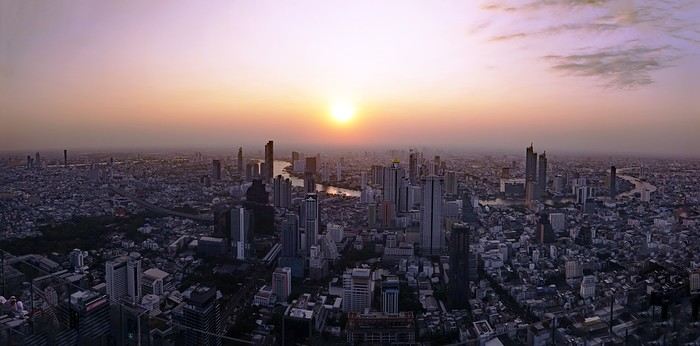
A somewhat lengthy title... I could have simply written: from Bangkok to Chiang Rai, via Chiang Mai, since that was my route. But when poets embellish our travel journals with their verbal flourishes, you’ve got to try not to be too ordinary.
Skyscrapers of excess? You’ll have gathered that from the photo illustrating this journal—though it might change as the trip goes on.
The excess of markets—not so much in their size, though... Chatuchak... But in their sheer number. Day markets, night markets, floating markets, fresh produce markets, fish markets, meat markets, spice markets, fabric markets... and even... amulet markets... For luck, good fortune, protection. Not to mention, sadly, the market for girls—and boys, incidentally. I’ve even heard they’re displayed in windows. I’ve heard about that one, like you have, but I didn’t set foot in it, so I can’t say anything about it. Some even claim there’s a black-market trade in children. Disgusting! It reminded me of the book *The Parcel* by Anosh Irani, which I recommended in another journal. The story is set in India, but I’ve been told it exists in Thailand too. So, the "famous Thai markets" we’re bombarded with in paper and online guides—sure, they amazed me in the first few days, and I don’t regret visiting them. But no matter how big they were, I quickly got my fill since you saw the same things at every stall...
I had a market overdose.
Excess of tourism? I should say *tourists*, since I saw them literally swarming in the streets and those famous markets. I’d forgotten about them. I’d lost the habit, living in an Indian city for so long...
Waterfalls are a bit like markets. At this time of year, they’re not particularly spectacular, but they’re everywhere. There are the ones everyone goes to see. For example, Erawan, which I decided to skip even though it was in my original itinerary—I guessed it’d be a nightmare with the selfie circus. On the other hand, you come across them all over the place, hidden in the mountains and forests, not listed in any guide. Not to mention the ones you can find in temples or even private homes... Yes, really! Thais love waterfalls, so they install them in their gardens—and I even saw one in the middle of the city, right on the street! Sometimes they’re tiny, but very photogenic.
But what do ice cubes have to do with this? Why the excess of ice cubes? Not only are they everywhere by the ton, but they put them in *everything* you drink. You’d think they’d even put them in soup! And it’s not just one or two ice cubes—no! They fill the container to the brim, whatever it is, then pour the liquid on top to fill the gaps. They’ll make you an excellent coffee right in front of you, piping hot, then—bam! An avalanche of ice cubes in the glass. Okay, I’m exaggerating a little. They *do* sometimes ask if you prefer your coffee—or tea—hot. Everything edible, and especially everything drinkable, is refrigerated: vegetables, fruit, hot drinks (I mean, drinks that are *usually* hot), but meat and fish are left out in the open. They just wave a little whisk to shoo away the flies when they get too eager. Mind you, I never put fruit, cheese, eggs, or water in the fridge in France, but I do in India. And I refrigerate meat and fish too... Though sometimes one of those little flies sneaks into the fridge...
You won’t find practical or technical details in this journal, like addresses or prices. Others do that better than me. You also won’t find the names of obscure or unknown places I discovered, or directions to get there.
I don’t really feel like recounting what I saw day by day, following my schedule and route. There might be flashbacks, projections into the future. It’ll depend on my memories, what I felt, what I hated, what comes back to me—and maybe your questions and our exchanges. And for those who’ve never read me before, you’ll have to get used to my parentheses and digressions, maybe on a completely different subject, as my thoughts wander. Stories within stories. There’ll also be long, endless sentences—but still punctuated, so you can follow along. Though I used to curse Proust and his sentences that started on one page and ended on the next, sometimes even further. I’d have to reread them twenty times to follow and understand what he was saying. I hated Proust. But hey, I was 20. Maybe I’d like him now?
See? The digressions are starting already. Forgive me.
You’ll find few photos here. First, the number is limited, and second, photos aren’t the main purpose of either VF or a travel journal. They’re too often used to mask the poverty of the text. And, sorry to say it, but so many of them are just plain ugly! If you really want to see photos, I’ll share some links where you can browse them at your leisure
Tergiversations diverses à propos d'un périple en Polynésie English translation pending
Bonjour 🙂
J'avais ouvert une discussion sur cette destination il y a un an, mais comme mes préoccupations ne sont plus tout à fait les mêmes, je préfère créer un nouveau post... Nous envisageons un voyage en PF pour l'été 2021 (en espérant que la situation s'améliorera d'ici là 😇). A vrai dire j'ai déjà réservé les 4 seules nuits disponibles au Maupiti Lodge début juillet. Maupiti est une priorité pour nous. Nous disposerons d'environ 3 semaines. Les billets ne sont bien sûr pas encore réservés. Donc s'il faut ajouter ou supprimer un jour par ci ou part la, cela ne pose pas vraiment de problème.
L'itinéraire serait le suivant: Arrivée Tahiti / Maupiti / Raiatea & Tahaa / Bora/ Fakarava (ou Fakarava + Tikehau)/ Moorea / Tahiti
En tenant compte de la rotation des vols d'îles en îles, je me heurte à plusieurs ( tout petits) problèmes et j'ai besoin de vos avis...
Rester 5 nuits à Raiatea n'est ce pas un peu trop long ? Ne serait il pas préférable de couper la poire en deux et de passer 2 nuits sur Tahaa, puis 3 (ou 2) nuits à Raiatea ? ou encore 4 nuits uniquement à Raiatea ? Nous aimerions bien avoir de la place au Sunset beach.
Nous envisageons 3 nuits à Bora. Peut être le Mataï ou encore le Blue Heaven... ?
Maintenant concernant Fakarava...Nous ne sommes pas plongeurs et J'ai lu des avis contraires sur cette destination. Certains disent qu'il vaut mieux être plongeurs et d'autres disent que la destination se prête bien aussi au snorkeling. C'est la beauté de cet atoll qui nous attire. Concernant le logement, nous avons pensé au Haivaki Lodge si nous restons 4 nuits . Une autre idée serait de rester 2 nuits à Tetamanu pension et Haïvaki 3 nuits. Qu'en pensez-vous ? ou encore Fakarava 3 nuits et Tikehau 3 nuits.
Nous comptons passer quelques jours à Moorea, probablement aux Tipaniers. 4 nuits sont-elles suffisantes ? Nous prévoyons 2 jours pleins à Tahiti avant le départ.
C'est un peu long et j'en suis désolée... Un grand merci d'avance !
J'avais ouvert une discussion sur cette destination il y a un an, mais comme mes préoccupations ne sont plus tout à fait les mêmes, je préfère créer un nouveau post... Nous envisageons un voyage en PF pour l'été 2021 (en espérant que la situation s'améliorera d'ici là 😇). A vrai dire j'ai déjà réservé les 4 seules nuits disponibles au Maupiti Lodge début juillet. Maupiti est une priorité pour nous. Nous disposerons d'environ 3 semaines. Les billets ne sont bien sûr pas encore réservés. Donc s'il faut ajouter ou supprimer un jour par ci ou part la, cela ne pose pas vraiment de problème.
L'itinéraire serait le suivant: Arrivée Tahiti / Maupiti / Raiatea & Tahaa / Bora/ Fakarava (ou Fakarava + Tikehau)/ Moorea / Tahiti
En tenant compte de la rotation des vols d'îles en îles, je me heurte à plusieurs ( tout petits) problèmes et j'ai besoin de vos avis...
Rester 5 nuits à Raiatea n'est ce pas un peu trop long ? Ne serait il pas préférable de couper la poire en deux et de passer 2 nuits sur Tahaa, puis 3 (ou 2) nuits à Raiatea ? ou encore 4 nuits uniquement à Raiatea ? Nous aimerions bien avoir de la place au Sunset beach.
Nous envisageons 3 nuits à Bora. Peut être le Mataï ou encore le Blue Heaven... ?
Maintenant concernant Fakarava...Nous ne sommes pas plongeurs et J'ai lu des avis contraires sur cette destination. Certains disent qu'il vaut mieux être plongeurs et d'autres disent que la destination se prête bien aussi au snorkeling. C'est la beauté de cet atoll qui nous attire. Concernant le logement, nous avons pensé au Haivaki Lodge si nous restons 4 nuits . Une autre idée serait de rester 2 nuits à Tetamanu pension et Haïvaki 3 nuits. Qu'en pensez-vous ? ou encore Fakarava 3 nuits et Tikehau 3 nuits.
Nous comptons passer quelques jours à Moorea, probablement aux Tipaniers. 4 nuits sont-elles suffisantes ? Nous prévoyons 2 jours pleins à Tahiti avant le départ.
C'est un peu long et j'en suis désolée... Un grand merci d'avance !