last edited Dec 11, 2019
Accommodation in Madagascar
Location Map of Madagascar
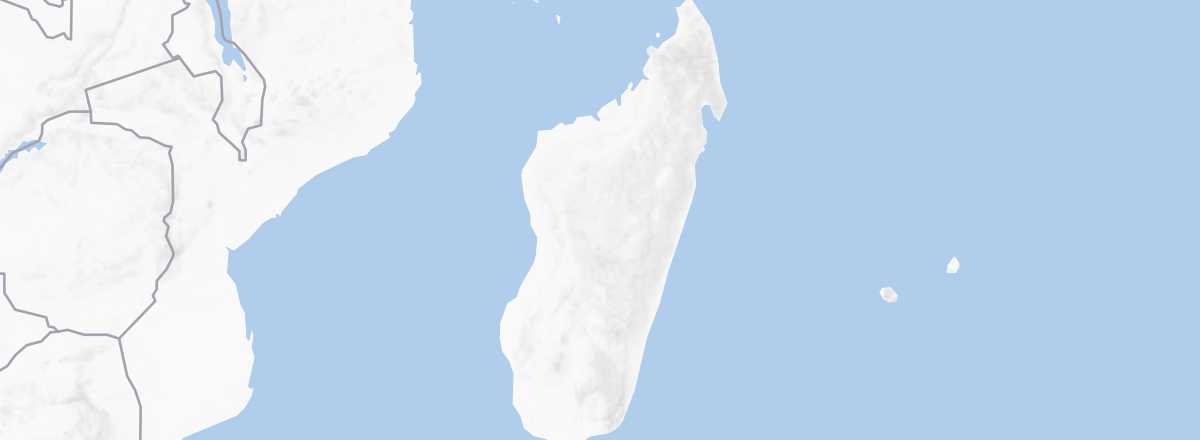 Madagascar
Open the interactive map
Madagascar
Open the interactive map
Overview of the offer
Accommodation is not Madagascar’s strong point. Hotels and other types of mid-range to high-end lodging are rare (except, at a stretch, in the capital and Nosy Be), and basic comfort is the norm once you leave the cities or a few tourist spots. What’s more, the system for classifying establishments by quality level (and the equivalent for restaurants) is far from reliable. And all this at prices that, depending on your choices, can be modest or, conversely, high—but with the common denominator that, in either case, the value for money isn’t always there. Generally, accommodations catering to tourists tend to raise their prices slightly in July–August and from mid-December to mid-January.
In almost all cases, if you venture off the "classic" routes, it’s a good idea to pack a sleeping bag liner for questionable bedding, a mosquito net, plus a few usual essentials like a headlamp, toilet paper, and flip-flops for the bathrooms.
Hotels
Budget
This is the category where you’ll find accommodations for under 10 € for a double in cities and especially in the countryside, where options are, truth be told, extremely limited in most places. At this price, comfort will be more than basic, the place sometimes squalid, and hygiene often (very) borderline. A few essentials are recommended to improve your nights (sleeping bag liner, lamp, etc.).
That said, unless you have no other options or are a die-hard "always the cheapest" traveler, this category isn’t advisable. For just a few euros more, you can often find something better.
Mid-range
This group includes both local establishments and "guesthouses" run by expats used to foreign travelers on independent trips. While quality, comfort, services, and setting can vary from place to place, this remains a good accommodation choice (when available) in Madagascar. Typically, for 15 €–20 for a double, you’re already getting a solid option.
High-end and all-inclusive
Establishments in this category are few and limited to the capital or, occasionally, major cities, plus Saint Mary's Island or Nosy Be, whose long-standing tourist appeal has developed this sector, including all-inclusive options. Budget around 60 €–70 for a double at the high-end entry level and 40 €–50 for "tourist-quality" establishments or bungalows.
Camping
Campsites have tried to develop in recent years near parks and nature reserves, particularly where permanent accommodations were lacking. However, their facilities often remain (very) basic and, unless you’re on an organized tour or renting gear in a few exceptions, you’ll need to bring your own tent and equipment—which can be quite cumbersome. On the plus side, prices are very affordable.
As for wild camping, it’s theoretically possible anywhere the location isn’t fady (forbidden by local custom or society). However, it’s strongly discouraged, primarily for safety reasons. For those who still want to try, it’s best to stay near villages or houses, ask for permission, and leave a small something when departing. That said, whether wild or not, camping isn’t ideal, especially when you see the price of other accommodations.
Homestays
Beyond a few mid- to high-end guesthouse options in Antananarivo and a few other places, homestays in the countryside or during treks are often a necessity due to the lack of other lodging options. You stay with locals, and it’s best to be accompanied by a guide for translation and local customs. It’s customary to leave small gifts or compensation.
Which accommodation to choose?
Given the limited variety and the mixed value of different lodging options, mid-range hotels are the best choice whenever possible. This is where you’ll generally find the best balance of quality, comfort, and price.