last edited Dec 11, 2019
Health and Safety in Nicaragua
Location Map of Nicaragua
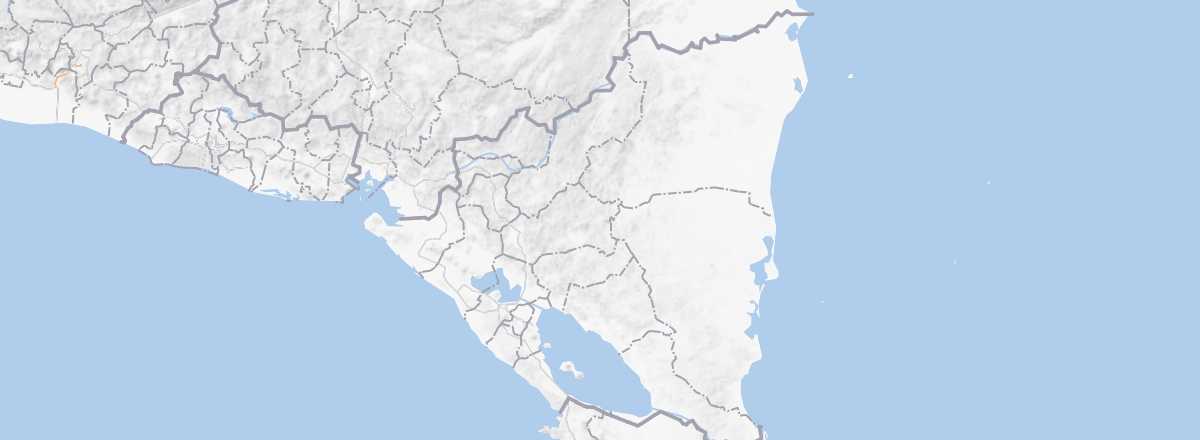 Nicaragua
Open the interactive map
Nicaragua
Open the interactive map
Official Recommendations
In France, both for individuals and professionals, the "travel advice" from the Ministry of Foreign Affairs regarding precautions for each country has legal weight. A similar online travel advice system exists in several countries:
Health
As always, it's best to be up to date with your vaccinations, even if nothing is officially required to enter the country.
Diseases
Nicaragua doesn’t pose too many health problems, though dengue and chikungunya, spread by certain mosquitoes, are present as in many places in this part of the world. As for malaria, it only occurs very locally or sporadically during the rainy season, to the point that few travelers use treatment, preferring prevention. To protect yourself, the best approach is to use a good repellent, cover your arms and legs at dusk when mosquitoes are most active, and bring an impregnated mosquito net if you’re sleeping in a place without air conditioning or airflow.
Hygiene
Good personal and especially food hygiene is essential if you want to "eat local." So avoid tap water, which isn’t potable, and dishes or foods that don’t seem completely fresh—if only to avoid traveler’s diarrhea.
Healthcare Facilities on Site
Medical facilities on site are very limited, and the few rare private "quality" establishments can be expensive. Good travel insurance is therefore recommended.
Safety
Crime and Delinquency
Nicaragua is far less affected by crime than other countries in the region like Guatemala, Mexico, or Honduras, to the point of being considered one of the safest destinations in Central America. That said, you should still take basic precautions for any trip, such as not flaunting wealth, avoiding walking alone at night in isolated areas, etc. Vigilance is also advised in transportation, bus stations, certain outlying neighborhoods of cities, and occasionally in the capital, as well as on Caribbean beaches or during nighttime outings. In case of aggression, it’s best not to resist and to always have "something" to give to your attackers.
Scams and "Tourist" Harassment
Socio-Political Risks
Even if the image lingers in the collective imagination, today’s Nicaragua has nothing to do with what it was during the Sandinista-Contras conflict of the 1980s. Unfortunately, since mid-2018, the country has experienced an authoritarian shift in power and strong repression of popular protests, leading to some unrest.
Climate and Nature
Nature isn’t always calm in Nicaragua. Occasionally, a volcano (like San Cristobal recently) may erupt, or the earth may tremble, as it did in 1972. During the rainy season (May to October), it’s not uncommon for a road to be cut off due to flooding or landslides. Nicaragua is also sometimes in the path of hurricanes, like Mitch in 1998. Additionally, be cautious of dangerous ocean currents on the Pacific side, particularly near San Juan del Sur.
Animals
Beyond stray dogs that may carry rabies (vaccination is useful for long stays in rural areas), watch out—though the risk is low—for creatures like scorpions, spiders, or even snakes, which you might encounter in tall grass, under rocks, or other places they favor. Also note the presence of sand fleas near the coast.
Foreign Consulates on Site
If you encounter problems while traveling abroad, your country’s consular services can assist you. It’s also worth knowing that if you’re a citizen of the European Union and your country isn’t represented, you can contact any other EU member state’s representation.
France
Consulate General: De la Iglesia del Carmen 1 c, 1/2 abajo AP 1227, Managua. Tel.: +505 2264 8970
Other Countries
- Belgium:
- Canada: De Los Pipitos, 25 calle El Nogal, Bolonia, Managua. Tel.: +505 2268 0433.
- Switzerland: There is no Swiss representation in Nicaragua; the country is covered by the Swiss embassy in Costa Rica.