last edited Jan 9, 2020
History of Ecuador
Location Map of Ecuador
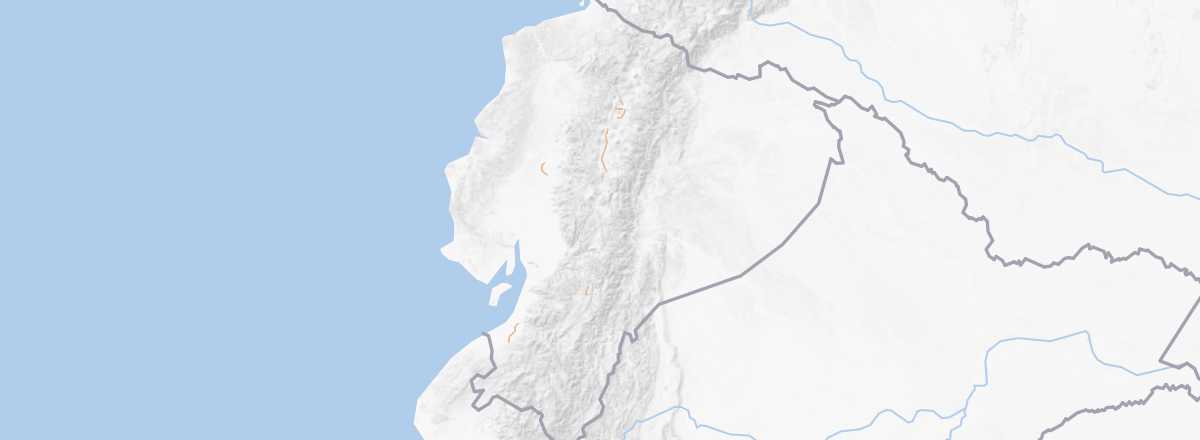 Ecuador
Open the interactive map
Ecuador
Open the interactive map
History of Ecuador
Key Dates
- 6th century: Although the region already had populations, it was around the year 500 that the first organised Amerindian "settlements/states" were created.
- 15th century: The Incas gained dominance over other populations and integrated all peoples under their rule.
- 1532: After a few brief incursions in previous years, the Spanish conquistadors arrived in force under the command of Francisco Pizarro, who defeated the already weakened Incas within months.
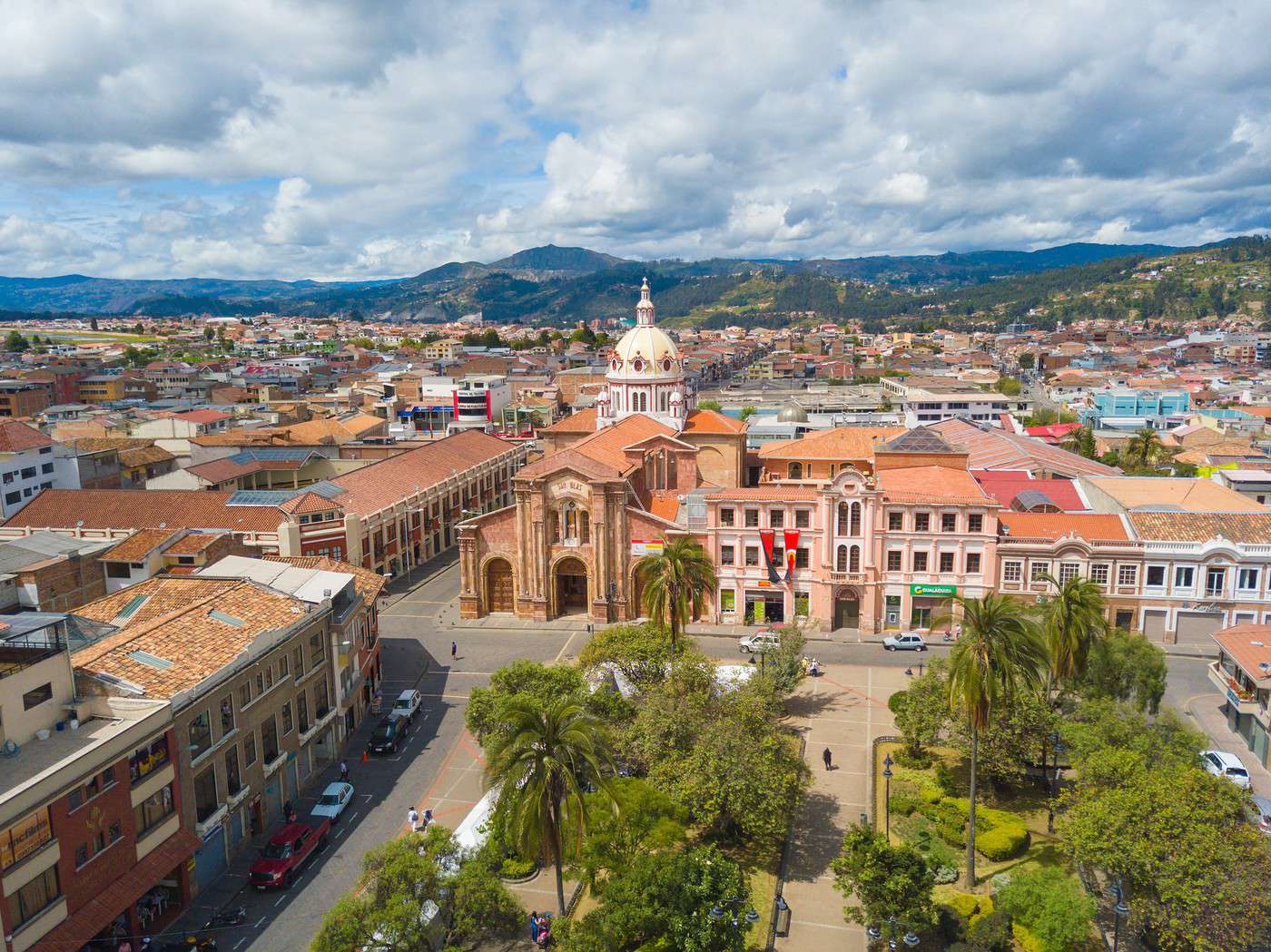
- Late 16th century: The Spanish, in search of El Dorado, explored the country and built the first cities (Quito, Guayaquil, Cuenca...). In 1563, the Royal Audience of Quito (a dependency of the Viceroyalty of Peru) was created, encompassing a large part of the region.
- 17th century: A period of peace and prosperity, thanks in particular to gold mines. Several cities, including Quito, benefited from architectural enhancements.
- 1717: The Royal Audience of Quito was attached to the Viceroyalty of New Granada, whose capital was Bogotá and which lasted (despite some interruptions) until 1819.
- Late 18th century: The country experienced several large-scale Indian revolts, as well as a first popular uprising in 1785 against the economic pressure of Spanish colonial power.
- 1822: After several years of struggle against Spain, Ecuador gained independence, first as part of Gran Colombia (also now independent) and then separately in 1830.
- 1832: Ecuador took possession of the Galapagos archipelago, which became a national park in 1959.
- 1840-1940: For decades, the country experienced alternations between authoritarian civilian governments and military dictatorships, along with numerous internal conflicts.
- Early 20th century: Amid recurring internal tensions, Ecuador's economy revolved around cocoa, of which it was the world's leading producer. Until the exploitation of oil, the country depended mainly on agriculture.
- 1941-1942: A (new) war with Peru resulted in the loss of a large part of Ecuadorian Amazonia, already reduced in the past due to conflicts with Colombia and Brazil.
- 1970s: Economic take-off thanks to oil exploited along the coastal plain and in Amazonia. At the same time—and still—the country experienced a succession of more or less authoritarian regimes that lasted for several more years.
- 1980s: Socio-economic unrest following the crisis the country was experiencing, as well as in the context of the recognition of the rights of indigenous peoples (movement of the Conaie).
- 1998: Three years after the last war (Cenepa War), an end to the multiple border conflicts between Peru and Ecuador that began... in 1830.
- 1999: New socio-economic-political crisis and temporary imposition of a state of emergency. In this context, the military once again forced the then-president to resign a year later.
- 2000: To combat hyperinflation, the country adopted the US dollar as its currency, replacing the Sucre. A national reconciliation plan was implemented, particularly with the "rebels" of Conaie.
- 2006: After new socio-economic tensions and the removal of three presidents in five years, Rafael Correa, a "left-wing nationalist," was elected head of the republic with a programme focused, in particular, on economic and political independence from the United States.
- 2008: A new constitution was adopted, defining Kichwa and Shuar as "semi-official" languages.
- 2013: Despite a 2010 coup attempt, Rafael Correa was re-elected president.
- 2016: A violent earthquake killed several hundred people on the northern coast of the country, in the Pedernales region.