last edited Dec 11, 2019
Health and Safety in French Guiana
Location Map of French Guiana
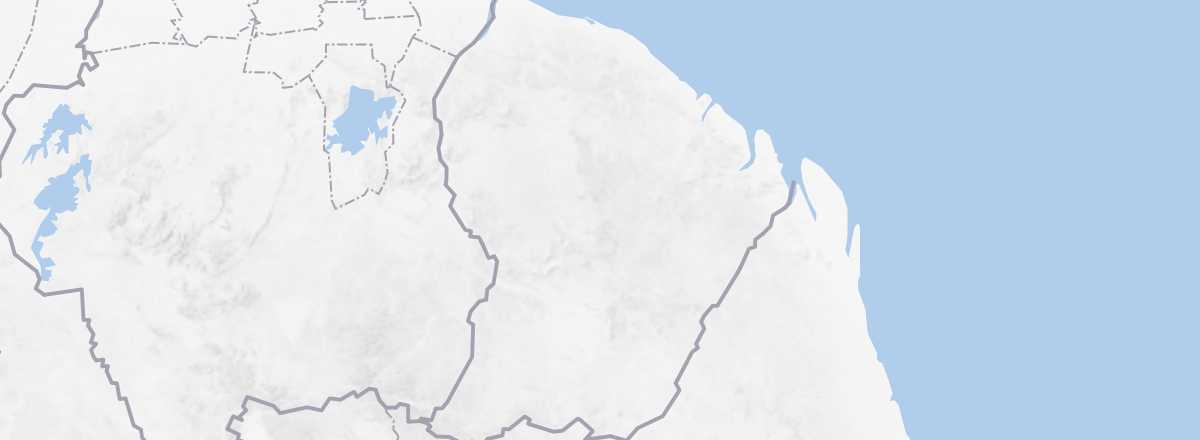 French Guiana
Open the interactive map
French Guiana
Open the interactive map
Official Recommendations
In France, both for individuals and professionals, the "travel advice" from the Ministry of Foreign Affairs regarding precautions for each country has legal value. A similar online travel advice system exists in several countries:
Health
A yellow fever vaccination certificate is (in principle) mandatory for travel to French Guiana. Additionally, vaccines for typhoid and hepatitis A and B are recommended for extended stays in the forest.
Diseases
While French Guiana does not pose major health risks—certainly far fewer than one might imagine—it is still wise to take some basic precautions.
As mentioned, the yellow fever vaccine is mandatory, and typhoid plus hepatitis vaccines are recommended for the interior. Regarding parasitic diseases, dengue, chikungunya, and leishmaniasis are rarely encountered, but malaria is constant along the rivers (though not on the coast) and requires preventive treatment if you plan to venture into the forest. Protect yourself from mosquitoes and other insects with repellents and mosquito nets, especially during the rainy season.
Occasionally, cases of leptospirosis—a disease transmitted through animal waste like rats contaminating soil and water—are reported. Beyond regular handwashing, avoid contaminated or stagnant water and dirty surfaces in public areas.
Hygiene
There are few risks, and tap water is potable in all municipalities. However, remember to stay hydrated and protect yourself from the sun during the hottest periods.
Healthcare Facilities on Site
Safety
Crime and Delinquency
With a bit of common sense and basic precautions (avoiding flaunting wealth, not going out alone at night or in certain neighborhoods, etc.), there are no major risks, even though delinquency is relatively high in the region, particularly in gold-mining areas.
Scams and "Tourist" Harassment
Socio-Political Risks
Climate and Nature
French Guiana experiences no cyclones or significant seismic activity. As for the Amazon rainforest (and treks in general), avoid going alone if possible.
Animals
While French Guiana’s wildlife includes many species, very few are truly "dangerous" to humans. Moreover, forest hikes are usually guided, with local experts available to mitigate risks. Still, take basic precautions: avoid walking barefoot, opt for closed shoes when hiking, steer clear of stagnant water (parasites), and avoid stray dogs, which may carry rabies. Overall, beyond the agouti flea found in grassy areas—which can cause severe itching—mosquitoes (not all of which carry diseases) are generally the biggest nuisance, especially during the rainy season. As always, long clothing and good repellent are recommended.
Foreign Consulates on Site
Only about half a dozen foreign consulates exist in French Guiana, with no North American or European representation except for Great Britain. Suriname and Brazil, however, are represented in Cayenne.
- Consulate of Brazil: 444 chemin Saint-Antoine, 97337 Cayenne. Tel.: 594 296 010.
- Consulate of Suriname: 3 av. Léopold Heder, 97300 Cayenne. Tel.: 594 317 645.