last edited Dec 11, 2019
Types of Trips in the Amazon
Location Map of Amazon Rainforest
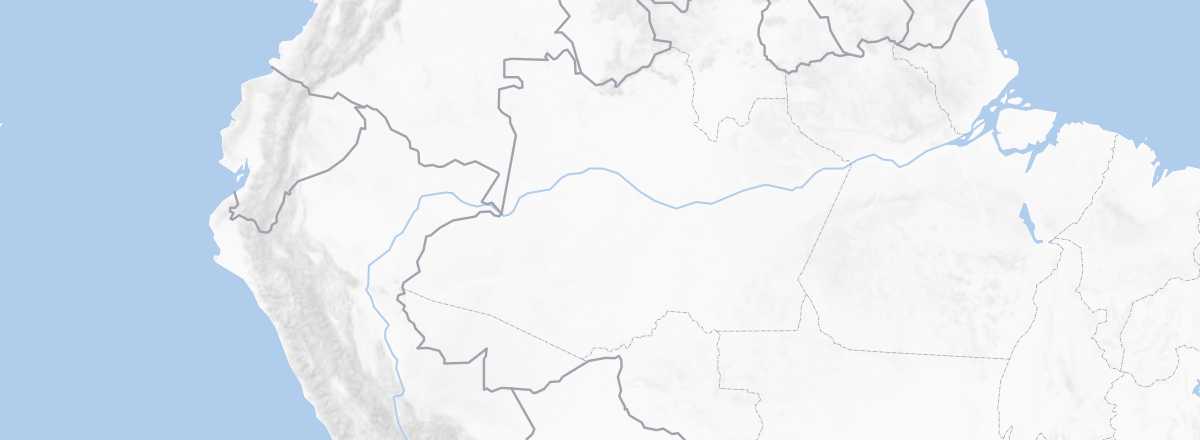 Amazon Rainforest
Open the interactive map
Amazon Rainforest
Open the interactive map
Who is the Amazon for?
Depending on what you want to do, the Amazon is a destination for all types of travellers, from beginners to experienced (or motivated) ones. This is something local and international tour operators highlight in their programmes for this part of the world.
So, the planet's largest forest is "accessible" to everyone as long as you’ve clearly defined what you want to do and how to go about it. Without forgetting—and this is the most important thing—that you need to be aware of your limits at all levels to make an informed choice. For example, before heading into the forest for several days, it might be wise to test yourself on shorter trips first...
What type of trip?
While you can organise some things yourself, it’s clear that you’ll quickly need guidance and logistics to make the most of your trip.
What you can do alone and on a budget
This is limited to using the few existing public transport options between inhabited areas, whether by land or water. However, keep in mind that the rare roads and tracks are not always in good condition and can be cut off at any time—especially during the rainy season. Vehicles are often far from their best, and this requires (a lot of) time in sometimes difficult conditions (bring food, sleeping gear, and patience).
In this case, you’ll only "skim the surface" of the Amazon, even if you’ll live among local communities and see things outside the "tourist circuits", with the added satisfaction of having fully lived and organised your own adventure. As for heading into the forest alone...
What you can do alone for more money
Beyond using flights to get around, this means taking advantage of local opportunities. That is, trying to find someone who’s heading to a specific place (or who can charter their transport), do a particular activity, or meet certain people. Obviously, this requires time, resourcefulness, a bit of money (people won’t usually take you along just to be nice), some discernment to avoid overly risky or dodgy plans (not necessarily recommended for solo women), and above all, adaptability to circumstances (don’t expect special treatment, even if conditions are tough). But in the end, you’re guaranteed exceptional and unique moments.
As for hiring a team for an expedition... while anything is possible (especially with money), it’s best to stay grounded and first see what local agencies offer.
What you can do with organised structures
Of course, nothing stops you from planning the outline of your trip yourself and then filling in the gaps locally with agency offers. And it’s clear that these agencies will make your life easier, save you time if you’re short on it, and potentially even save you money on equipment you don’t have. They’ll also take you to places you wouldn’t go alone and show you things they’ve known and done for a long time. Sometimes, they’ll even adapt to your "level" or your desires. On the downside, all this usually comes at a cost, and it’s best to avoid choosing the wrong provider.
Services and providers
All-inclusive from home
The first possible solution for discovering the Amazon is to book an adventure tour with a tour operator from Europe or North America. In addition to general travel agencies, you can also choose—and this is recommended—specialists in the countries concerned. When it comes to research, you’ll then be back to the "usual" choice of a tour.
On-site
This is what many people choose: contacting a local provider. Note that through these local agencies, you’ll often find the organised groups of European or North American tour operators for whom they act as "ground handlers". Also worth mentioning is that from capitals or cities outside the Amazon, many providers will offer forest tours. But even if this can be interesting, it’s better to wait until you’re actually on-site to make your choice.
In practice, to choose wisely, it’s best to know what’s available beforehand—research online but also, and above all, learn from others’ experiences. Once there, take at least a day to see what’s on offer and compare the services of different providers. And do this even if, upon arrival, you’re bombarded by crowds of touts (who’ll "help" your decision by offering a free ride to your hotel or a "free" city tour), your hotelier, or just about anyone you meet. This is especially true in cities like Manaus in Brazil, a starting point for many agencies. And of course, to choose well, talk to other travellers who’ve just returned.
Possible services
In the Amazon, almost anything is possible at all levels—it’s just a question of money. Depending on the package, you’ll have itinerant or semi-sedentary options, with discoveries of wildlife and flora, hikes of varying lengths in the forest, river navigation, encounters with local communities, and camping (some of which are "luxurious"). There are also more targeted activities like learning fishing, hunting, or construction techniques with locals, gold panning, meeting scientists on a project, etc. A little something for every taste...
Durations
One day
Just a taster that usually takes you not very far to see what the forest looks like, a short canoe trip, the most visible animals, and possibly some locals long used to tourist visits. Not really the recommended option.
2 or 3 days
More interesting, if only because you experience another side of the Amazon at night and live the "bivouac experience". Even if it’s not the big adventure, in a few days you’ll get much more out of the environment by stepping slightly off the beaten track. Generally, this option is recommended for a first Amazonian experience and for those who don’t have a lot of money to spend or much time on-site.
5 to 10 days
Just because of the duration, you can access more remote areas and communities, see and do more things—or better—and fully immerse yourself in forest life.
Two weeks and beyond
Really for Amazon lovers or for genuine expeditions to places and communities still almost untouched. However, this requires a good budget, strong motivation, and often good physical condition.
Prices
The Amazon is quite expensive and can even become very expensive depending on what you’re looking for, the duration, or the desired level of "comfort". Moreover, it’s not easy to define an average price range given the many possibilities. Additionally, not all providers have the same overheads and logistics.
That said, as often happens, the cheapest advertised price won’t always be the most economical in the end due to extras and other setbacks. Indeed, it’s always advisable to know before committing what the rates cover, what possible extras there are (especially regarding equipment), the transport used, the staffing (number and competence), meals, etc. Also, compare like with like. And if applicable, negotiate—especially if you have your own equipment. Don’t be fooled by the "the more participants, the cheaper it is" system; with 20 people, there’s a good chance the animals will hear you coming.
For "classic" discovery trips
That is, with accommodation in bivouacs or local lodgings. Of course, this varies slightly depending on the country; French Guiana is generally the most expensive, while Bolivia is the opposite.
"International" agencies
With large "international" agencies used to receiving groups or individuals, you can generally expect a minimum of 100/120 € per day per person, depending on the options and transport chosen. These are the most expensive but also often the ones with the best staff and equipment, offering services (and comfort) well-suited to "mainstream" demand. In short, they have the means and know their stuff. Downside: it can sometimes feel a bit too much like a well-oiled machine for too many participants...
Local agencies
With local agencies, prices are often 20 to 50% lower than the previous ones. These usually cater to backpackers and locals who can’t afford the "high-end" agencies. Value for money varies widely, and in any case, you’ll have to adapt a bit—don’t expect the same level of care as in the previous category. For starters, don’t count on much French-speaking staff.
"Individual" guide
Finally, the "individual" guide—someone who, with their own resources and ingenuity, will show you their world. Sometimes a local, they might take you, for example, to their family or friends still living in the forest to share their lives. Often off the "official" circuits, they’re known through word of mouth among travellers and allow you to experience truly unique things in very small groups. In a way, they’re part of the "local opportunities" mentioned earlier. With them, expect to pay often less than 50 € per day (negotiable), but also plan to cover part of your own expenses.