last edited Aug 28, 2026
Getting Around Kenya
Location Map of Kenya
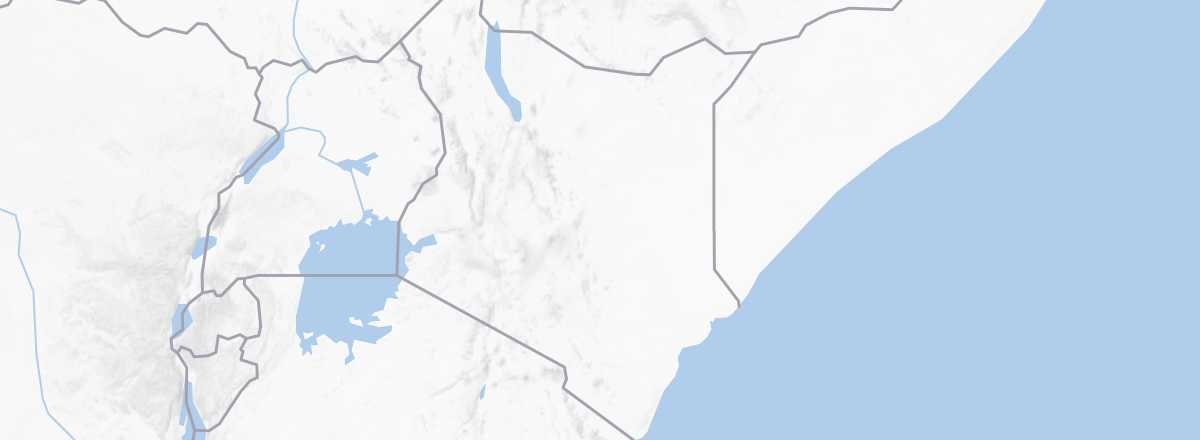 Kenya
Open the interactive map
Kenya
Open the interactive map
Road Network and Traffic
Kenya's road network, apart from a few major routes, is generally in poor condition. Only about 10% of the roads are paved, with the rest consisting of tracks that can be particularly challenging, especially during the rainy season. In short, a 4x4 is quickly essential for getting around Kenya.
In terms of safety, the roads, the number of vehicles, and the drivers all contribute to the danger. Traffic is often chaotic, and special attention must be paid to pedestrians and animals that can appear anywhere on the road. Night driving should be avoided. This means that, if you're driving, vigilance is key. One last thing not to forget: in Kenya, you drive on the left.
Car and Campervan
While having a vehicle always offers freedom, it’s often better to consider hiring a driver who can also share their local knowledge. Given the state of the roads, the nature of traffic, and the various risks or issues you might encounter, inexperienced drivers or those unfamiliar with such conditions should think twice.
Rental
In addition to local agencies, several international companies operate in the country, mainly in the capital or in Mombasa. To rent a vehicle, you must be at least 23 years old and theoretically hold an international driving permit.
Rental prices in Kenya remain quite high, especially with major companies, with differences mainly tied to the type of insurance chosen. Expect at least 40 to 50 € for a small city car and around 100 €/day for a 4x4.
Buses and Shared Vehicles
Buses
The bus network is fairly well developed in Kenya, with faster intercity services to prioritise and slower, less comfortable secondary routes that make multiple stops. Comfort and services depend on the bus category, with the best options typically found on long-distance routes.
Among the many operators, Coast Bus remains one of the oldest and most reputable. Buses are an economical way to travel, allowing travellers to choose the best option without hesitation. Expect roughly 3 or 4 € per 100 km, and around 15 € for the Nairobi-Mombasa route.
Alongside public buses, some agencies offer shuttle services between cities and tourist spots. This is especially common in the Nairobi-northern Tanzania area, where private buses cater mainly to tourists, with prices to match (e.g., 30 US$ for the 280 km between Nairobi and Arusha).
Matatus
Matatus are minibuses that cover short to medium distances on fixed routes. While they are very economical, they can be somewhat risky due to the drivers' reckless behaviour. Like their counterparts in other countries, they leave when full, are always crowded, uncomfortable, and often serve as a supplement to the bus network.
By Bike
Cycling in Kenya is possible, but the state of the roads, long distances, potential risks, and climate are all factors to consider before embarking on such an adventure. It’s also worth noting that cycling is prohibited in most parks and reserves, except for a few like Hell’s Gate, next to Lake Naivasha, where guided bike safaris are offered.
Hitchhiking
Hitchhiking is not recommended in Kenya, nor is it particularly useful given the low cost of local public transport. What’s more, it’s often paid—at the same price as the bus. It’s also prohibited in national parks for obvious safety reasons.
Trains
While international rail projects involving Kenya remain more or less ongoing, the passenger network is currently limited mainly to the Nairobi-Mombasa route, with several daily departures. The journey between the capital and the coast takes roughly six hours. Since the line crosses Tsavo East and Tsavo West National Parks, the scenery can be interesting, and it’s not uncommon to spot animals along the way. Expect to pay around 12 € for the trip in Economy class.
Otherwise, there are a few smaller regional lines, such as the one between Nairobi and Naivasha.
Boats
In Kenya, there is no ferry network connecting cities along the Indian Ocean coast. Passenger maritime transport is limited to Lake Victoria (access to various islands) and the urban crossing in Mombasa.
Domestic Flights
The country has several local airlines (see list), most of which operate small aircraft. Many offer domestic flights between major cities or specialise in "safari flights" or on-demand services. Generally, flying saves time, despite possible cancellations or delays. With the arrival of low-cost carriers like Jambojet or Fly540, prices are quite affordable on major routes, and a Nairobi-Mombasa flight costs around 60-80 € one way.
Note that Nairobi has two airports. While Jomo Kenyatta is the international hub, Wilson Airport handles most domestic traffic. Keep this in mind for connections.
In Town
Taxis
While taxis are plentiful in cities, for safety reasons—especially in Nairobi—it’s best to use only official vehicles recommended by hotels or stationed near tourist or business areas, even if prices seem high. This rule is even more important for night trips. Another option is VRT, with an app for booking and payment.
Other Options
Shared taxis: You can also get around using shared taxis (called "Peugeot"), which carry between 7 and 9 passengers. They’re more expensive but faster than matatus, which you can also use.
Motorcycle taxis: Another very economical way to get around in cities like Mombasa is by tuk-tuk or motorcycle taxi.
On foot: Walking is not recommended for tourists, especially at night or in the capital, where taxis are a better choice.
What to Choose for Getting Around?
The bus is certainly the most economical way to travel between cities. However, you’ll need another form of transport or a tour operator to reach national parks. Renting a vehicle is worth considering for time and freedom, despite the higher cost. While a 4x4 isn’t always necessary depending on the season and destinations, hiring a driver is a good idea to simplify things, especially if you’re not used to Kenya’s unique road conditions.
Distances Between Cities
Distances (km) between major cities in the country:
| Eldoret | Garissa | Kaka. | Kisumu | Malindi | Meru | Momb. | Nairobi | Nakuru | Nyeri | |
|---|---|---|---|---|---|---|---|---|---|---|
| Eldoret | 654 | 105 | 114 | 825 | 385 | 807 | 323 | 169 | 318 | |
| Garissa | 654 | 688 | 663 | 350 | 362 | 464 | 367 | 486 | 401 | |
| Kakamega | 105 | 688 | 48 | 870 | 450 | 857 | 377 | 222 | 383 | |
| Kisumu | 114 | 663 | 48 | 855 | 410 | 815 | 335 | 180 | 343 | |
| Malindi | 825 | 350 | 870 | 855 | 725 | 120 | 495 | 804 | 645 | |
| Meru | 385 | 362 | 450 | 410 | 725 | 647 | 226 | 233 | 134 | |
| Mombasa | 807 | 464 | 857 | 815 | 120 | 647 | 480 | 638 | 640 | |
| Nairobi | 323 | 367 | 377 | 335 | 495 | 226 | 480 | 159 | 153 | |
| Nakuru | 169 | 486 | 222 | 180 | 804 | 233 | 638 | 159 | 166 | |
| Nyeri | 318 | 401 | 383 | 343 | 645 | 134 | 640 | 153 | 166 |