last edited Aug 28, 2026
Getting Around Morocco
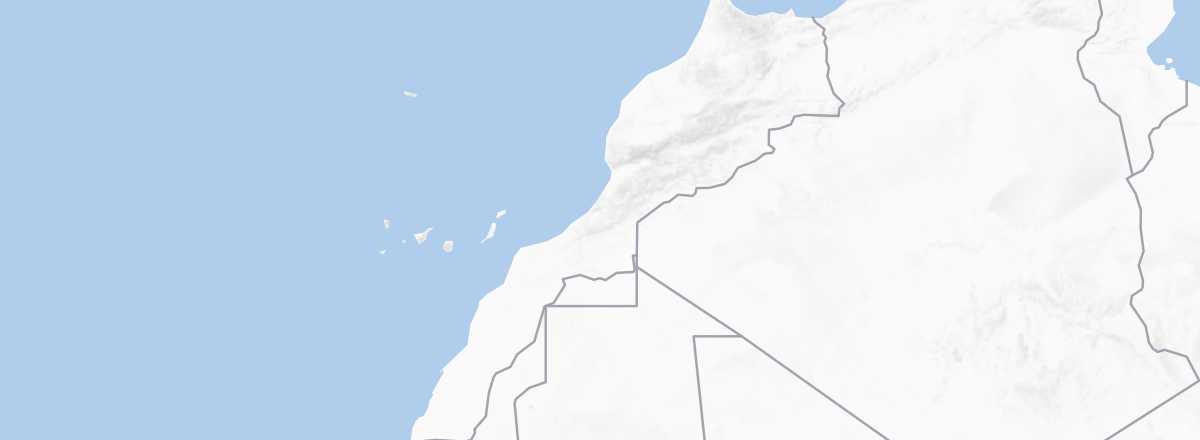
Location Map of Morocco
 Morocco
Open the interactive map
Morocco
Open the interactive map
Road Network and Traffic
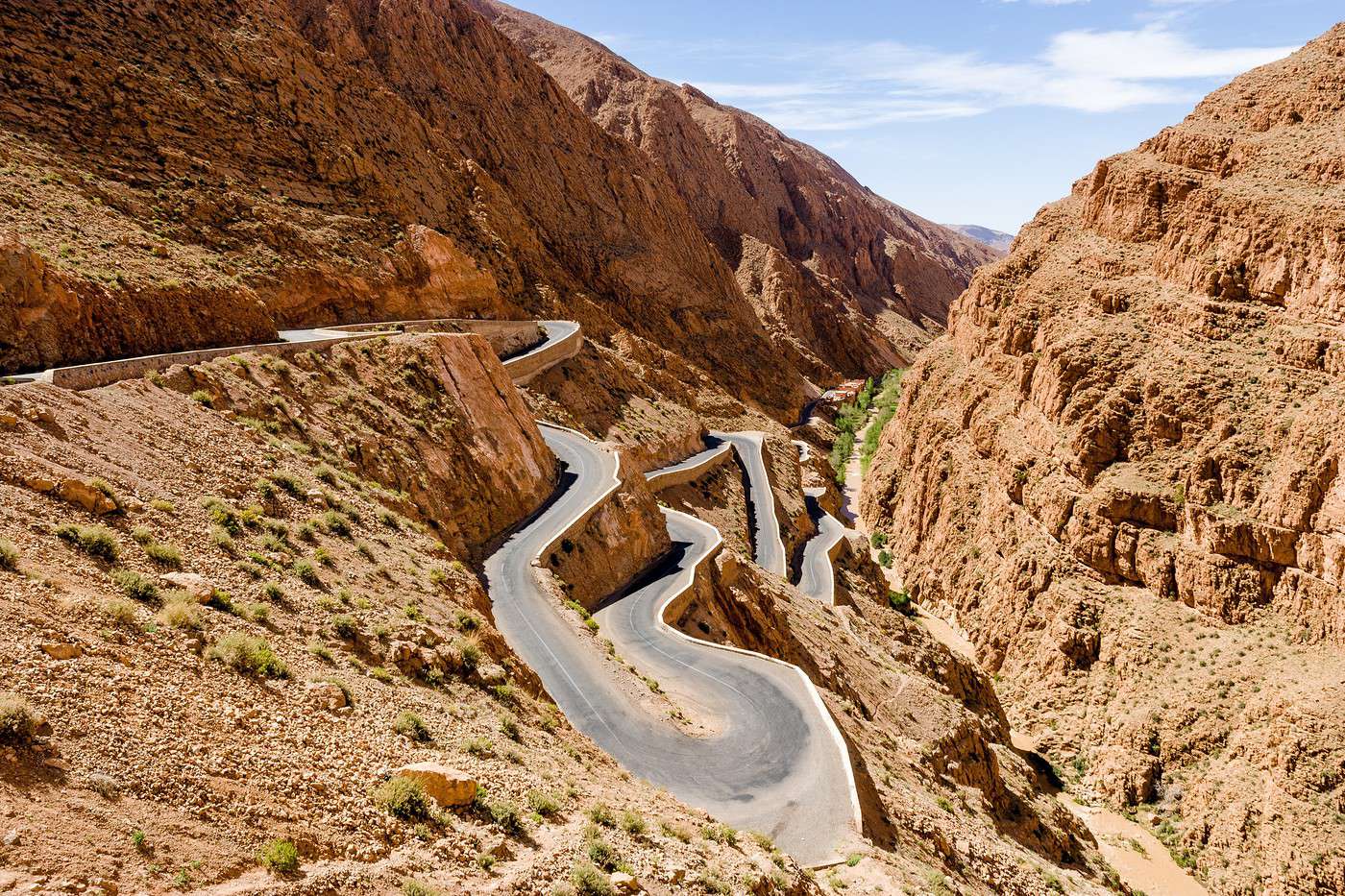
Moroccan roads are generally good on main routes, and the motorway network (toll-based) is expanding rapidly, with nearly 2,000 km. However, there are still many unpaved roads and tracks that aren’t always well-maintained, though a 4x4 isn’t usually necessary for typical tourist trips.
Overall, traffic regulations and the highway code in Morocco are the same as in France, with bilingual Arabic-French signage. Speed limits are 40 km/h in towns, 100 km/h on roads, and 120 km/h on motorways. Gas stations are plentiful in cities but much scarcer elsewhere, so don’t forget to fill up before heading into desert areas.
That said, local driving norms and habits mean you should never let your guard down behind the wheel. Watch out for other drivers, their driving style, and everything on the road—especially at dusk (pedestrians, animals, unlit vehicles). If possible, avoid driving at night.
Weather conditions can also be hazardous. In the mountains, for example, roads may be covered in melting snow or hit by sudden downpours. In the south, be cautious on paved roads and tracks, where shoulders are rarely stable and the paved section is often narrow.
Car and Camper Van
Having your own vehicle is a great way to explore the country. It’s often the best option, offering freedom and sometimes saving time compared to other transport—especially in the south and the Ouarzazate region, where buses are infrequent and slow.
However, be aware that police are very present on Moroccan roads. If you plan to venture into the Sahara, make sure you’re minimally equipped and avoid driving at night.
Personal Vehicle
It’s easy to bring your own vehicle to Morocco with an (inter)national driving licence. The paperwork is straightforward; just check that your insurance covers Morocco. If not, you’ll need to extend your policy or take out temporary insurance.
All documents must be in the driver’s name, and you must leave the country with the same vehicle. This rule prevents the resale of foreign vehicles in Morocco. Like people, vehicles are allowed in the country for a maximum of 3 months for tourism.
Renting a Vehicle
When it comes to rentals, international and Moroccan companies compete, leading to generally good prices and excellent value for money, given the autonomy it provides. Expect around 35 €–45/day for a standard model, depending on options.
Cars are rented by the day with kilometre-based billing, or for three days or a week with unlimited mileage. The minimum age is 21 (sometimes 25). Some companies allow pick-up and drop-off in different cities without extra fees, which can be useful depending on your itinerary. One last thing: many rental contracts prohibit off-road driving unless the vehicle is a 4x4.
Buses and Shared Vehicles
Morocco has an extensive public transport network that works well and lets you explore the country affordably. However, during religious holidays, services can be heavily disrupted as many routes don’t operate.
Buses
The bus network is vast and useful, reaching (almost) everywhere, especially in the north. Buses are economical but not always comfortable, fast, safe, or punctual—depending on the operator or route. That said, more "premium" companies like CTM (the national bus company) or Supratours are improving standards. As expected, routes between major cities offer the best services and most options.
For fares, expect roughly 1 €–2 per hour of travel for local or secondary routes, and 3 €–4 for others. In peak season, on main tourist routes, it’s wise to book your seat in advance. Almost all buses depart from bus stations, which are usually outside city centres. Note that large cities may have multiple stations, and Supratours buses often leave from train stations.
Main long-distance companies:
- Bismillah Assalamah: Based in Casablanca.
- CTM: The national bus company and the largest, with an extensive network between cities.
- Pulman du Sud: A few routes, mainly from Casablanca.
- Satas: A carrier serving some less common routes, especially in the south.
- STCR: Mostly routes from Casablanca.
- Supratours: A subsidiary of Moroccan Railways (ONCF), Supratours mainly complements the rail network for passenger services, especially from Marrakech. It’s also CTM’s main competitor.
Shared Taxis
These are minibuses or large cars called "louages" or "grand taxis" that run between nearby towns, cramming in 6 or 7 passengers. They’re slightly more expensive than buses but usually faster. You’ll find them near bus stations, and they only leave when full. They don’t have meters, so always negotiate the fare beforehand.
Two Wheels
Motorcycle
Enthusiasts will be delighted, especially in southern Morocco, where those who love off-road tracks will find plenty to enjoy.
Bicycle
Cycling in Morocco is possible and much easier in the northern part of the country.
In the south, where stages can be long, plan your water and supplies if you venture off the beaten path. You can also put your bike on a bus for long or tedious stretches. Given the temperatures, it’s best to avoid cycling in summer.
Hitchhiking
Hitchhiking isn’t recommended in Morocco, especially for women. It’s often paid (usually at 50% of the grand taxi rate), which, given public transport prices, isn’t always the best deal. At best, in tourist-heavy areas, you might get a lift from other holidaymakers who’ve rented a car.
Trains
Morocco has a rail network managed by ONCF, totalling 2,100 km, mostly along the northern coast. The three main lines are Tangier-Casablanca, Oujda-Fès-Casablanca, and Casablanca-Marrakech (with plans to extend to Agadir). On these routes, trains are a good option if you’re not self-reliant for transport.
ONCF trains are generally comfortable, fairly punctual, easy to use, reliable, and affordable. A high-speed TGV line between Tangier and Casablanca has been operational since late 2018, cutting travel time from Tangier to Rabat to 1h20 (down from 3h45) and Tangier to Casablanca to 2h10 (down from 5h00).
For fares, expect under 10 € for Casablanca-Marrakech at full price, and around 12 € for Casablanca-Tangier. ONCF also offers 7-, 15-, or 30-day passes for unlimited travel across the network.
Boats
There are no ferry or boat services within the country.
Domestic Flights
RAM (Royal Air Maroc) is the national airline, connecting major cities—around a dozen airports—usually via its hub in Casablanca. However, except for travelling from one end of the country to the other, flying isn’t always the best value for domestic travel.
In Town
Taxis
While walking is pleasant in city centres, don’t hesitate to use "petits taxis," which are plentiful. They’re very affordable and should all now have meters. They operate within cities, while their counterparts, "grands taxis," serve suburban and peri-urban areas. Unlike the intra-city taxis, these are shared and only leave when full, with a fixed price per seat. For all taxis, try to have exact change.
Like many countries, most major Moroccan cities also have ride-hailing services with apps for booking and payment.
Other Options
While urban buses are the cheapest option, they’re often crowded, uncomfortable, slow, and not always easy to use if you’re not familiar with them. In short, they’re not always the best choice.
Otherwise, Casablanca and Rabat/Salé have tram and commuter rail lines, which are great for avoiding traffic. Some cities, like Marrakech, also have horse-drawn carriages (calèches), which, though tourist-oriented, can be a fun (if not always cheap) way to get around, especially with kids.
Choosing Your Transport
As usual, having your own vehicle is ideal for travel. Given rental prices for small cars, it’s worth considering if you’re in a group of two or three. Plus, for a French driver, driving in Morocco isn’t too complicated.
If you’re alone or prefer public transport, a combination of train (in the north) and bus works well. Grand taxis can always fill in when needed. Just remember that some off-main-route trips may take time or be tricky.
For urban travel, walking supplemented by petits taxis is the way to go.
Distances Between Cities
Distances (km) and travel time (if mentioned) by car/bus between major Moroccan cities:
| Aga. | Casa. | Dakh. | Erra. | Essa. | Fès | Marra. | Mekn. | Nador | Ouar. | Oujd. | Rabat | Safi | Tan-T. | Tang. | Tét. | |
|---|---|---|---|---|---|---|---|---|---|---|---|---|---|---|---|---|
| Agadir | 465 | 1200 | 680 | 175 | 755 | 275 | 740 | 1060 | 375 | 1070 | 600 | 295 | 360 | 800 | 825 | |
| Casablanca | 465 | 1635 | 560 | 360 | 295 | 240 | 245 | 600 | 440 | 610 | 90 | 255 | 840 | 340 | 360 | |
| Dakhla | 1200 | 1635 | 1820 | 1350 | 1910 | 1410 | 1860 | 2200 | 1525 | 2220 | 1710 | 1470 | 845 | 1955 | 1970 | |
| Errachidia | 680 | 560 | 1820 | 710 | 340 | 500 | 330 | 525 | 300 | 540 | 465 | 665 | 1030 | 665 | 590 | |
| Essaouira | 175 | 360 | 1350 | 710 | 700 | 180 | 650 | 1000 | 380 | 1020 | 445 | 125 | 530 | 690 | 710 | |
| Fez | 755 | 295 | 1910 | 340 | 700 | 490 | 70 | 315 | 600 | 330 | 200 | 530 | 1090 | 285 | 260 | |
| Marrakech | 275 | 240 | 1410 | 500 | 180 | 490 | 480 | 775 | 205 | 790 | 325 | 150 | 600 | 570 | 595 | |
| Meknes | 740 | 245 | 1860 | 330 | 650 | 70 | 480 | 370 | 560 | 385 | 150 | 480 | 1040 | 260 | 260 | |
| Nador | 1060 | 600 | 2200 | 525 | 1000 | 315 | 775 | 370 | 795 | 135 | 505 | 830 | 1390 | 425 | 370 | |
| Ouarzazate | 375 | 440 | 1525 | 300 | 380 | 600 | 205 | 560 | 795 | 820 | 525 | 355 | 670 | 770 | 790 | |
| Oujda | 1070 | 610 | 2220 | 540 | 1020 | 330 | 790 | 385 | 135 | 820 | 535 | 860 | 1420 | 560 | 480 | |
| Rabat | 600 | 90 | 1710 | 465 | 445 | 200 | 325 | 150 | 505 | 525 | 535 | 325 | 890 | 250 | 270 | |
| Safi | 295 | 255 | 1470 | 665 | 125 | 530 | 150 | 480 | 830 | 355 | 860 | 325 | 650 | 570 | 590 | |
| Tan-Tan | 360 | 840 | 845 | 1030 | 530 | 1090 | 600 | 1040 | 1390 | 670 | 1420 | 890 | 650 | 1110 | 1135 | |
| Tangier | 800 | 340 | 1955 | 665 | 690 | 285 | 570 | 260 | 425 | 770 | 560 | 250 | 570 | 1110 | 60 | |
| Tetouan | 825 | 360 | 1970 | 590 | 710 | 260 | 595 | 260 | 370 | 790 | 480 | 270 | 590 | 1135 | 60 |