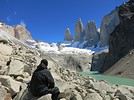
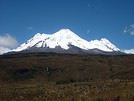
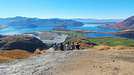
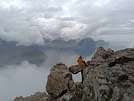
je vous offre mon conseil pour l'ascension du Huyana Potosi, nous avons réussi à gravir cette montagne, il y a seulement quelque jours avec l'agence Altitude 6000.
Ce fut pour virginie et moi la plus belle expérience de notre tour du monde depuis 8 mois déjà ... c'est dire à quel point l'expèrience vaut le détour, la fatigue, la peur, les larmes de joies...
L'équipe d'altitude 6000 est tout simplement excellente, extrement pro ( je suis moi meme guide d'activité de pleine nature en france et j'ai su très vite voir à quel point ils sont compétents!!)
Juan cho le chef de l'agence est une perle et un excellent animateur en dehors de ses compétences d'alpinistes, grimpeur.
ils ont su s'adapter aux groupes afin que la plupart puisse réussir, anna, allemande de 52 ans a terminé l'ascension comme moi qui n'en est que 30. ils savent s'adapter et font en sorte que vous réussisiez.
De plus sur le plan alimentaire, ils vont savoir vous surprendre !!!
Vous paierez un peu plus (1350 bolivianos ) que les autres agences mais nous nous sommes sentis en confiance dés le début et nous ne le regrettons pas !!!!!!!!! Si vous avez un peu l'habitude de marcher, que vous etes à hautes atltitudes déjà depuis au moins une semaine, lancez vous !!!!!!!!!!
ils pourront vous équiper quasi de la téte au pied, y compris duvet chaud, inclus dans le prix... frontale pour la longue marche de nuit...
ils sont situés en haut à gauche de la calle sagarnaga, la rue ultra touristique de la paz ou la plupart des agences sont implantées ...
passez leur le bonjour de notre part et j'espère que vous atteindrez aussi le sommet car c'est une merveille de dominer le monde d'aussi près des étoiles...
Je suis bien contente d'avoir de bonnes nouvelles de Juancho et de son agence Altitud6000, avec qui j'avais gravi le Sajama en 2010 (l'agence venait d'être créée et n'était pas encore rue Sagarnaga). J'avais énormément apprécié son humour, sa gentillesse et sa patience et je pense que c'est vraiment grâce à lui que j'ai pu atteindre le sommet car je n'étais vraiment pas en forme et j'ai failli renoncer au moment du passage des pénitents vers 6200m. Mais il m'a laissé me reposer le temps qu'il fallait pour reprendre des forces, et ce jour là aussi, nous sommes tous arrivés au sommet (Sergio menait l'autre cordée). Alors qu'une autre agence a fait renoncer tout ses clients ce jour-là car elle les trouvait trop lent! (il faut dire que leur guide avait prévu une autre course le lendemain et ne tenait pas à redescendre tard 😐).
Et si je suis contente d'avoir de bonnes nouvelles de Juancho, c'est que j'avais su qu'il avait traversé une mauvaise passe il y a un ou deux ans (séparation d'avec sa compagne et secrétaire de l'agence, et séparation d'avec Oswaldo, l'autre fondateur de l'agence qui l'a quitté), ce qui s'était répercuté sur la qualité de l'agence. Je suis donc bien heureuse que son agence soit à nouveau au top et qu'il donne toute satisfaction à ses clients.
c'est exactement l'esprit que j'ai ressentie, virginie a eu mal au ventre tout le long de l'ascension, en la boustant et avec un rythme globalement bas elle a pu y arriver alors qu'a de nombreux moments, elle a eu envie d'abandonner ...
Quand aux affaires de coeurs de juan cho, il est toujours avec la secretaire de l'agence, peut etre pas la meme 😎.
Dans l'equipe des guides, il y a aussi ismael dit pollo, qui a pris soin de virginie comme une maman !!!
hernan qui est plus jeune et nouveau dans l'agence depuis 3 mois, très pro ...
JUAN CHO formateur diplomé de la fédé international des guides de montagne... très respecté des autres guides !!!!
avec qui j'avais gravi le Sajama en 2010 (l'agence venait d'être créée et n'était pas encore rue Sagarnaga). J'avais énormément apprécié son humour, sa gentillesse et sa patience et je pense que c'est vraiment grâce à lui que j'ai pu atteindre le sommet car je n'étais vraiment pas en forme et j'ai failli renoncer au moment du passage des pénitents vers 6200m.
Peux-tu donner des détails de cette ascension.
Prix en 2010, époque, température, enneigement, temps ...
En bas, il y a des liens vers un certain nombre de récits d'ascension à différentes époque de l'année pour te faire une idée.
En ce qui me concerne, le passage technique ne m'a pas paru difficile (mais je fais de l'escalade et de l'alpinisme) et ne m'a posé aucun problème: il faut par contre savoir cramponner sur du rocher. C'était en fin de saison (vers le 20 août) et la neige/glace commençait bien au-dessus du camp d'altitude (mais c'était nos guides qui s'étaient chargé de faire de l'eau).
Le passage des pénitents était le plus pénible car en glace avec des petits mur allant jusqu'à plus d'un mètre de haut. Heureusement, le passage n'était pas trop long (une centaine de mètre de dénivelée), et ensuite, c'était de la bonne neige dure jusqu'au sommet (très plat: la fin est interminable).
Températures clémentes pour nous (je dirais entre -5 et -10 °) et pas de vent: on a pu profiter largement du sommet (pour la première cordée, dont je faisais partie, plus d'une heure: entre 11heures et midi).
En ce qui concerne le prix: c'était 330$ US. Il y avait également deux autres clients français.
Quant à la caisse, comme je l'ai dit, je n'étais vraiment pas en forme car j'avais été agressée violemment une dizaine de jour avant: j'avais été assommée et étranglée et j'en avais gardé des difficultés pour respirer. C'est pour cela également que j'étais passée par une agence, car le compagnon de cordée avec qui j'avais prévu de faire le sommet en autonomie avait subi la même agression et n'arrivait même plus à respirer à La Paz: il avait quitté l'altiplano et abandonné toute idée d'ascension de sommets.
Ce manque de forme m'a permis d'apprécier d'autant plus la patience de Juancho. Au moment où je n'en pouvais plus dans les pénitents, il a eu la bonne idée de me faire quitter mon passe montagne et mon écharpe qui me serraient bien trop la gorge (et qui étaient inutiles car il ne faisait pas très froid), et il m'a laissé me reposer une bonne vingtaine de minute en me faisant boire et manger, puis il m'a laissé le choix entre continuer ou redescendre. J'ai décidé de continuer et j'ai bien fait puisque à la sortie des pénitents, cela a été beaucoup mieux et finalement nous sommes arrivés au sommet une demi-heure avant l'autre cordée (Sergio et les deux autres clients français).
Voilà pour mon ascension.
Si tu prévois d'en faire une, j'espère que tu réussiras également. Si tu as de l'expérience en alpinisme, tu peux essayer de la faire sans guide mais il faut vraiment être en forme et bien acclimaté (pour se ménager un peu, il es possible d'embaucher des porteurs pour monter une partie du matériel au camp d'altitude). Bonne ascension.
Merci pour ton retour. 330 $ (en 2010), ce n'est pas cher, vu l'éloignement et la longueur de la course, même si elle est peu technique, mais pour deux, avec ma femme, c'est déjà plus considérable! A l'heure actuelle, plus de 700 je suppose.
Par ailleurs, ce prix comprend-il me matériel technique (chaussures, piolets, crampons ...) ? J'ai du matos mais si on peut éviter de tout se trimbaler, ce sera un argument pour y aller confort avec une agence.
Je fais aussi de l'escalade TA et du crapahut rocheux sur les sommets équatoriens mais l'essentiel de mon expérience des glaciers et de l'altitude (> 5000) est très limitée et ancienne, celle de ma femme encore plus.
Je vois bien qu'il n'y a pas de glacier crevassé, de séracs et de risques d'avalanche, mais à cette altitude venteuse, on a vite fait d'être maladroit et de tomber. D'après le topo C2C, au moins, il n'y a pas de passage difficile et exposé, n'est-ce pas?
Quand on se rendra en Bolivie, notre expérience sera plus importante car chaque fois qu'on peut, on fait une ascension, avec un guide assez pédagogue. Par ailleurs, vivant à Quito, on possède déjà une base d'acclimatation comparés à ceux qui vivent au niveau de la mer.
On verra bien!
Sinon, désolé pour ton agression. Si tu veux bien me la raconter en MP. J'ai moi aussi déjà été agressé en Amérique Latine.
J'avais mon propre matériel d'alpinisme, mais je ne pense pas que le prix aurait été très différent. En tout cas, il comprenait toute la logistique pour les 4 jours: transport, nourriture, mules et porteurs, etc. Y compris la baignade dans les sources d'eau chaude le 4e jour (nous avons redormi au camp de base au retour de l'ascension). La seule chose qu'il ne comprenait pas c'était le droit d'entrée au Parc du Sajama (30 bolivianos).
Pour les dangers, effectivement pas de séracs, très peu de crevasses (je n'en ai vu que 3, une assez grande et large que nous avons contournée et 2 petites que nous avons enjambées), et pas le moindre danger d'avalanche (pas de neige fraiche et pentes assez faible).
Le seul vrai problème, ce sont les pénitents qui peuvent comprendre de véritable petits murs de glace (cf. photo jointe, le petit mur fait dans les 1m30) : il est donc possible de riper et de tomber. Pour le passage technique (le petit couloir de mixte à 35/40°) il vaut mieux également ne pas tomber. J'avais noté qu'il y avait un piton en place pour assurer dans la partie rocheuse du haut de ce couloir.
En ce qui concerne notre agression, il n'y a pas grand chose à raconter: tout s'est passé extrêmement vite et je ne me suis rendu compte de pratiquement rien car j'ai tout de suite perdu connaissance (pendant très peu de temps d'ailleurs). Mon compagnon a pu lui se dégager et courir chercher du secours à l'hôtel tout proche. J'ai plus à raconter pour la suite car j'ai essayé de porter plainte, mais il aurait fallu que je reste en Bolivie pour pouvoir le faire officiellement (j'ai pu parlé directement à un procureur). Et avant d'aller en altitude, j'ai été consulter bien sûr pour voir s'il n'y avait pas de risques (d'abord au centre de médecine légale pour faire constater les blessures en cas de séquelles, puis auprès d'un médecin spécialiste de l'altitude). Tout cela a pris quelques jours. Psychologiquement aussi ça a été parfois un peu difficile, d'autant plus que je suis restée dans le même hôtel (ils ont été aux petits soins pour moi) et je repassais donc souvent par l'endroit où nous avions été agressé.
Désolée aussi si pour ton agression. Je ferai peut-être mieux effectivement d'en reparler en MP.
Merci pour toutes ces infos.
On a deux options pour aller en Bolivie.
Soit en août 2015 où on a un mois => Treks et pls ascensions allant crescendo. Soit au début de la belle saison (mai) soit à la fin (octobre), histoire d'avoir moins froid, mais on n'aura que 15 jours. Un peu court peut-être pour une bonne préparation en vue du Sajama!
Je ne sais pas ce que tu en pense.
Août me parait le mieux effectivement, surtout si vous avez un mois pour vous préparer (mais avec votre acclimatation préalable à Quito, 15 jours peuvent être suffisants). Octobre me semble trop tardif: plus on avance en saison, plus le risque de glace et de pénitents est important. Le mois de mai est préférable même si là, la progression peut être rendue plus pénible par de la neige fraîche (mais beaucoup moins de risque de pénitents). Il peut faire également plus froid (mais le ressenti dépend principalement du vent et à ma connaissance, le risque de vent est indépendant de la saison).
Après, en regardant sur Camptocamp, on voit que certaines personnes ont réalisé l'ascension en février, c'est-à-dire complètement hors saison donc tout est possible, car la région est très sèche de toute façon. Et d'une année à l'autre, les conditions peuvent être très différentes le même mois.
C'est rigolo mais je m'y retrouve beaucoup dans ce que vous dites, nous avons églement fait cette ascension et sommes arrivés au sommet avec les guides d'altitud 6000, sans hésiter la plus belle experience de notre tour du monde d'un an. Que d'émotions quand on arrive en haut!
Bref, un message inutile mais bonne continuatioon à vous =)
Actuellement au Perou, je compte me rendre à la Paz d'ici quelques semaines et songe depuis des mois déjà à tenter l'ascension du mont Huayna Potosi. J'ai lu…
Je vais arriver fin juillet à La paz pour 3 semaines entre la Bolivie et le Brésil. Je suis alpiniste expérimenté et je souhaite monter avec ma cops le huayna…
Nous partons 4 semaines en Bolivie avec mon compagnon. Nous envisageons de passer la première semaine en altitude entre La Paz et Copacabana. Je m'interroge…
Je suis actuellement en Bolivie et souhaiterait faire un trek dans le Condoriri et combiner avec l'ascension du Huayna Potosi. Est ce que quelqu'un a déjà fait…
Mi-juillet nous serons en Bolivie et nous voudrions effectuer l'ascension de Huayna Potosi en 2j au départ de La Paz. Quelqu'un a t-il déjà effectuer cette…
Hi,
We’re planning to do the 4-day trek from Mestia to Ushguli without an agency. The descriptions mention that there are accommodations at each stop, but we can’t find any details about them. Has anyone got info or feedback on this route?
We're planning to trek in Peru and Bolivia and would love to find some local agencies.
If you know any, could you share details on prices and, of course, the names of the agencies?
Which trek would you recommend?
Elocine
I'm heading out on a fully self-sufficient trek in Morocco (10 days) from Imilchil to Aghbalou.
Can I find screw-on gas canisters (Coleman, Primus) in Marrakech (any addresses?) or in villages between Imilchil and Aghbalou?
If not, are Butagaz canisters for camping gas (small 230g size) available?
Thanks in advance for your tips!
Hello, I’d like to embark on a little trip in my home country, Switzerland. I’ll start walking from La Cure, heading toward Le Noirmont first, then I’ll improvise my route—but it’ll probably follow the French border... at least as far as Lac de Joux.
I’ll decide day by day how much farther to go after that. My goal is to stay in nature as much as possible, wander around for as long as I can, and restock food in villages or towns along the way.
I’m thinking of mostly camping, but we’ll see if I end up in a hotel or another campsite depending on my route.
I’d love to reach La Chaux-de-Fonds on foot... maybe even Delémont.
The whole thing should take about a week, give or take.
I’ll be bringing my dog, and I’m preparing for this as soon as I’m ready.
Any tips to make sure everything goes smoothly for us? Things I should know—or avoid? What about shepherds with their flocks of sheep? And isn’t hunting season open right now?
I’m not sure if what I’m planning is even doable, which is why I’m asking around.
This’ll be my first time doing something like this—wandering in nature *and* with a dog. I’m really excited for this adventure... and I need it. Thanks!
We’re really keen on ecosystems and want to hike in "natural" ancient forests—not planted woods or areas heavily degraded by human activity. Travel guides (like Lonely Planet) don’t provide much info on this. Could you point us to the most interesting spots?
Thanks in advance for your tips.
We wish you happy holidays and a fantastic 2026, full of discoveries!
Claire and Albert
Hi, this might not be the right section, but I’d like to know if it’s possible to start mountaineering with another person without necessarily hiring a guide. We’ve done quite a bit of hiking but not mountaineering—we’ll just do a half-day glacier course. After that, we were thinking of starting with La Grande Motte and the Pointe de la Traversière, which were recommended to us. Honestly, for things like roping up and knots, I’ll learn at home with lots of videos and a book.
I’d love to know if anyone has done treks in the Rwenzori Mountains and how much it costs on average, what the infrastructure is like, the landscapes, and safety in the area. Thanks so much! I’m really looking forward to your replies.
We’re leaving in 9 days for a two-week trip to Madeira, mainly to hike.
From my research, I’ve found that since last year, access to most trails—and systematically for the most popular ones—is now paid. You have to pay an access fee of 4.50 € per person per classified hike in 2026, and even 10.50 € for the most iconic hike: Pico Arieiro to Pico Ruivo. When paying, you also have to choose a day and a 30-minute time slot for your start time. Of course, this reservation is neither changeable nor refundable, even if the weather that day is terrible.
Personally, given the massive influx of tourists to the island in recent years, I don’t mind paying a fee to help maintain the trails. Similarly, setting a limit on the number of people who can hike them per day is certainly preferable to preserve this priceless heritage.
However, what’s much less fair is that in reality, most of the available spots are reserved: 1/ for Madeira residents (which is normal); 2/ for "economic operators" (meaning local tour operators). For example, if you’re a non-resident (independent tourist), no booking is possible for the Pico Arieiro hike for an early morning start before September! So, unfortunately, we’ll have to skip this hike.
It’s the same issue for Ponta de São Lourenço, the 25 Fontes, Pico Ruivo... in short, all the most popular hikes. Oh well, we’ll skip those too!
So my question is: which hikes do you recommend where we won’t face the huge crowds that the others get? And where we can book the day before for the next day, taking the weather into account?
Finally, a quick accommodation question: we’ve booked the first week in Funchal, but I haven’t decided yet for the second week. Do you have any advice on where to stay in the south or north, preferably avoiding overly concrete-heavy and touristy spots?
I’m reposting about the logistics for Samaria Gorge.
I’d love to get recent info, especially about whether it’s possible to park my car in Omalos, do the hike, and then catch a bus back to my vehicle.
In theory, it’s doable, but when you check the KTEL website, there aren’t any feasible schedules listed. If anyone has recently organized this with reliable, verified details, I’d really appreciate it. Thanks in advance!
Hi there,
We’re flying from Montreal to Lyon this August to go hiking in the French Alps. We’ve rented a car and will be staying at campgrounds. We’re planning to do day hikes and want to stay a few days in one spot, do a few hikes, then move on to our next camping spot. Could you share your favorite spots or any recommendations for places to spend a few days with great hikes?
A few details:
We arrive in early August and leave in early September.
We’re looking for day hikes (or shorter), moderate difficulty, with a cumulative elevation gain of no more than 1000m, and of course, beautiful scenery!
We’d prefer not to drive too much—maybe it’s best not to head too far south and deal with unnecessary heat?
Along the same lines, if you know of any great campgrounds where we can start our hike directly without needing the car, we’d love to hear your suggestions!
Hi there,
I’m planning to go hiking on this island and would like to know the best time to do it. I visited for a few days in November 2018—not for hiking but just to explore—and the weather wasn’t great, especially in the mountains. So, is a star-shaped itinerary doable if I rent a car and maybe use two different accommodations?
I’m not planning to join an organized group—just traveling with one other person and organizing things ourselves—unless you’d recommend a local agency or guide. Finally, even though I’ll be getting maps, a topo guide, and a GPS, I’d really appreciate your top hiking recommendations.
Thanks so much for your tips!
I’m planning to do the Mercantour crossing following the Randoxygène route in mid-July.
I’m used to hiking in the mountains, but I sometimes get vertigo, for example on ridges with drops on both sides. I wanted to check if there are any T4 or T3-T4 sections and find out if there are any very exposed passages—and if so, where—so I can plan an alternative route.
Can anyone give me some info on this?
Thanks!
I’m planning a trip around Cap Corse and the AGRIATES in 2026, from May 8th to 15th (there are still 2 spots left, by the way! Just DM me if you're interested).
I’d love to know which hikes are worth prioritizing in the AGRIATES. We’ll be staying in SALECCIA for two days as our base—what should we focus on from there?
A round trip to IGNHU beach? Any other suggestions?
For Ostricano, I think it’s too far for a round trip...
Thanks for your tips!
Have a great day,
Anie, Toulouse
I’d like to get some info about the GR10 Pyrenees traverse. I need help planning the daily stages and accommodations—my wife isn’t an experienced hiker but walks a lot, so I’d like to schedule shorter walking days and thus a longer overall trip in terms of number of days.
Could anyone give me some help and advice?
Best regards,
New to this forum, I’m planning a pretty big project for 2028.
I’m heading to Nepal to do a trek from Kathmandu all the way to Everest Base Camp (a cool 5,300 m 😄).
This trek is a bit special because even though I’ll be part of a group, I’m going solo (so far, no problem—I’m used to it). But it’s my first real trek, and it’s also a humanitarian one: once I reach base camp, I’ll stay an extra week to help clean up the waste left by tens of thousands of climbers! Since I’m originally from South America, from two countries that share the Andes, I have a deep respect for mountains—they fascinate me. So Everest… it’s kind of the trip of a lifetime!
So, a little question for those who’ve done treks to Everest before… any tips for good mental preparation (I’m already working on the physical side)?
Hi there, I’m planning the Annapurna Circuit for March 2027 and I’m looking for a local agency with a local guide—preferably French-speaking—to arrange this trek for us. Any suggestions? Thanks
Hello!
We’re spending a few days in Toraja country at the end of May. We’d love to do a day trek—taking our time—on a route that’s stunning in terms of scenery, but not a level 5 in difficulty!
Any suggestions you can share, please?
Thanks in advance
I’d like to do the Mare a Mare Sud in May over 4 days. I’ve found quite a few places to stay along the route, but I’m stuck on the start and finish.
I’ll be arriving by plane on Sunday evening and would like to start pretty early on Monday morning. Ideally, accommodation right at the trailhead (Alzu di Gallina) would be amazing, but I can’t find anything. Any tips?
Also, for the transfer from Figari Airport to Porto Vecchio or Alzu di Gallina?
At the end, I’d like to pick up a rental car—any advice on that too?
I’m traveling solo by plane to Catania in May and plan to hike the northern side of Etna, starting from Linguaglossa where I’ll arrive by bus. After that, I’d love some info on how to get up to Piano Provenzana (shuttles or hitchhiking), since it seems there’s no public transport except in the summer. Can you sleep there in a free or cheap refuge, or camp? And how far up can you go without having to hire a guide? Thanks in advance. Bernard.
Hi everyone,
I’m heading to Morocco in August and we’ll start with a stop in Chefchaouen (we’re driving).
My question: can anyone suggest a 5-to-7-day loop hiking route from Chefchaouen in Talassemtane Park, ideally passing by the God’s Bridge? Or a paper guidebook that covers a few options?
We prefer wild camping and guesthouses.
Thanks in advance
Hi there, for those who’ve been recently—is it possible to find other solo travelers in March on the island to share transport or room costs? It doesn’t seem easy to travel on a budget.
If you have any recommendations for simple lodgings or places with dorms, I’d love to hear them.
For those who’ve done multi-day treks while moving around: do you need to bring your own sleeping bag? I’d love to hear about itineraries you’ve done without a guide, just with a map and GPS.
Thanks, and have a great day!
Hi everyone!
We’re planning a 15-day road trip to Scotland this summer, specifically to explore and hike on Lewis and Harris—places we’ve never been before. We’ve visited other islands on previous road trips in Scotland (we usually go in April for a week). This would be our first time in Scotland in the summer and for 15 days. We’re looking at late August to early September.
I’m currently drafting the itinerary. We’d be crossing from Ullapool and were thinking of spending 3 nights on Harris and 4 nights on Lewis.
Does that sound balanced to you? Is it better to keep the same accommodation on Harris and the same on Lewis to explore the area? I’d love to hear about any past experiences you’ve had on these islands.
Thanks!
Hi there, I’m trying to leave for 15 days very soon to São Vicente. I’m either looking to join an agency or figure things out on my own to go hiking on one of these islands or both. From what I’ve seen, it’s not easy to organize with local transport, so it gets expensive. Can I use the services of a small local agency? I’m looking for the simplest way to hike for several days. Also, how do you get from São Vicente to São Nicolau? Thanks in advance and have a great day!
Aichatou
I’ve been wanting to do this for several years, and this year’s the one. Next September, I’ll be trekking in Tusheti (Georgia), from Omalo to Shatili.
Of course, I won’t be renting a vehicle that’d just sit unused. No problem getting to Pshaveli, but from there to Omalo, it’s a dirt road (still the case?)
There must be some form of public transport since there are so many guesthouses, and not all travelers come in a 4x4.
If any of you have been to Omalo, could you confirm that these shared transports exist and how often they run?
we’re planning a trip to Yellowstone and hoping to do a three-day backcountry hike if we get a permit.
if any of you have done this before, could you let me know if it’s possible to find water along the way? And if we can transport it, are we allowed to use a stove?
Hello,
I’ll be in Nepal from March 6th to 29th (we’re flying into Kathmandu via Varanasi and leaving via Delhi).
I’m a bit confused about the regulations requiring a guide.
My wife and I (we’re 63 and 64) aren’t experienced trekkers—we’re more used to walking on terrain with very moderate elevation changes. I’m looking for fairly easy hikes, possibly day trips.
Here are my questions:
- Does the Poon Hill trek from Pokhara require a guide, or is it better to go through a local agency? (I’ve seen a lot of them offering 4-day packages)
- I’d like to do a few multi-day hikes around Jomsom (Kagbeni, Mukitinath, Lupra, Marpha)... Do you need a guide for those, and can you find accommodations easily without booking in advance?
Last question—I’m really hesitant to lug around a sleeping bag or down jacket during our 6 weeks in India. Can you easily find these kinds of items at reasonable prices in Pokhara?
Thanks in advance for any tips you can share!
Yann
I’m a 56-year-old man who’s done several treks in Nepal and elsewhere. Also passionate about photography.
I’m looking for one or more people to form a group for a trek in Nepal. The trek is the Annapurna and Manaslu circuit (24 days), including a stop at Tilicho Lake. I’ve got a great itinerary and the local company seems solid. The price is around $1600.
I’ll be in Nepal from April 5 to May 12, 2026, so the trek would need to happen within those dates.