Two Quebecers Attempting Mount Meru
FR

Translated into English.

Original post
SY
In 2015, for my 50th birthday, my daughter and I went to Kenya and Tanzania for a safari. Ten years later, for my 60th, a new African adventure: returning to Tanzania, this time to attempt the ascent of Mount Meru.

After watching documentaries and films about Everest climbers, I’ve always been drawn to the idea of experiencing something like that. I’m impressed by those who risk their lives just to chase their dreams and push their limits (my partner would say they’re crazy). I’ve never pretended I could climb the roof of the world. My sights were set on Kilimanjaro instead. But when my daughter planned our adventure, she lowered my ambitions by a few meters by choosing Meru—and I get it. We’re both very active, but we’re not seasoned athletes. And our mountains in Quebec, as beautiful as they are, don’t offer the chance to climb very high to test our endurance against the lack of oxygen.

So, to prepare physically, I worked my 60-year-old legs daily by walking and climbing small hills near home. As for altitude sickness, I’ll have to trust my system and my old lungs, but it still stresses me out. The departure is approaching, and there’s no turning back—I tell myself that at worst, I’ll have tried.

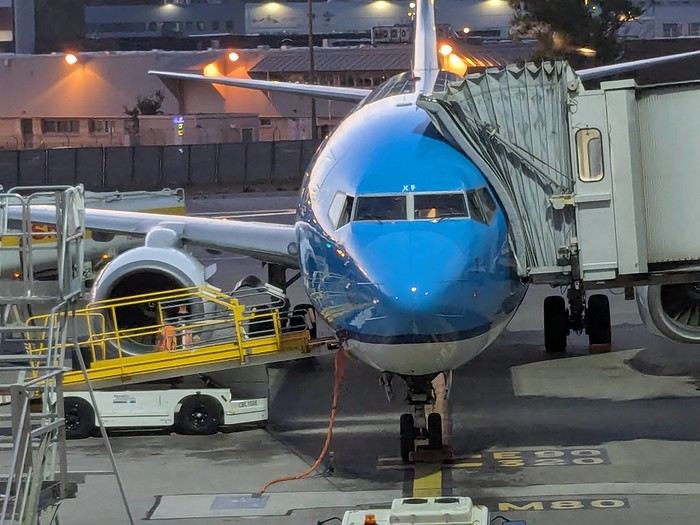
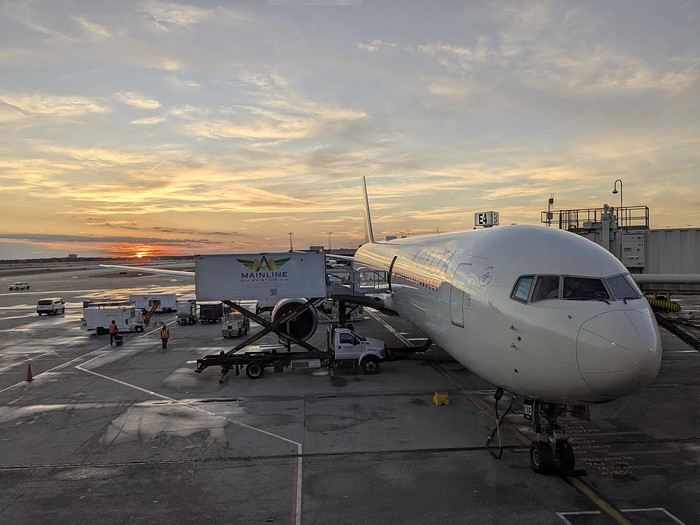
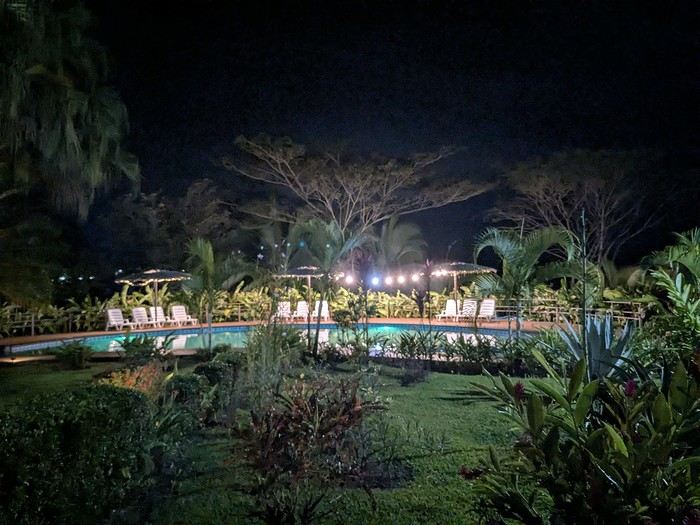
February 2nd, departure day. We leave Montreal on an Air France flight as scheduled. Luckily, because we were worried, our flight times were delayed, and our layover at CDG will be tight. After a 6.5-hour flight to Paris, no messing around—we have just enough time to sit for about thirty minutes before boarding another 8.5-hour flight to Zanzibar, still with Air France. In Zanzibar, we stay on the plane while pale-faced passengers disembark, replaced by sun-kissed travelers (it’s sunny and warm in Zanzibar). We then take a short flight to Kilimanjaro Airport, our final destination. Exhausted but happy to step off the big metal bird, a driver from the agency we chose (Soaring Flamingo) waits to take us to our hotel, the Tulia in Arusha. It’s 2 AM when we finally collapse onto the mattress. Tomorrow, we’ll spend the day recovering from the sleepless flight, relaxing by a murky pool in a beautiful flower-filled courtyard, surrounded by palm trees and the everyday sounds of Africa. At that moment, I feel privileged to share this experience with my daughter, and I think about the mountain that awaits us.

To be continued...
tout petit la planète...
SY Sysy1111 Regular ·
The agency driver picks us up as planned at 9 a.m. The day before, two guides came to Tulia to explain how the ascent would go and remind us of the important things to bring. Disappointment, though—we had requested a French-speaking guide to accompany us in the mountains. The two people in front of us don’t speak French at all. We let them know how disappointed we are, but hey, we manage a little in English, so we won’t let that ruin our adventure.

We head out to pick up our team somewhere in Arusha. The cook, two porters (two more will join them on the mountain), and two guides—surprise—one of whom speaks French. Seeing our disappointment, the guys from yesterday contacted the agency and found us a French-speaking guide. We’re really happy about that. After stopping to stock up on food, we drive to Mount Meru National Park to register our entry, then continue along the winding, dusty road to Momela Gate. Along the way, we spot a herd of zebras, a few giraffes, some buffalo, and Pumbaa’s cousins, warthogs. When we arrive at Momela Gate, the porters prepare the things to bring up the mountain, complete some formalities, a ranger has us sign a form, and we’re given a lunch box for the start of the climb. It’s already past noon when we set off with a group of hikers—about ten of us, plus a few guides and the ranger with a rifle leading the way. After about fifteen minutes, I’m already out of breath and thinking that if we keep this pace, I won’t make it! But just then, one of the guides says something in Swahili to the ranger. He was walking too fast. *Pole pole, poki poki!* We slow down to a more reasonable pace, and that reassures me about my abilities.

The climb is sometimes very rocky, with cracks from the rain, and winding. Porters pass us carrying 20 to 25 kg on their backs or heads—I have so much respect for them. We only have a few things in our backpacks and we’re struggling to keep up. We take frequent breaks to drink, snack a little, and catch our breath. It’s really hot, and I packed too much in my backpack. The beauty of the forest amazes us, but there’s no time to look around or up—we’re not on flat ground! After about 4 hours of walking, we reach Miriakamba Hut at 2,500 meters (we’re already higher than anything we’ve ever climbed), the first camp where we’ll spend the night. We’re assigned a room with two bunk beds in a long barracks. Someone from our team brings us water to freshen up, and later, they invite us to the dining room for tea and popcorn. We put our things away in our little room, and after a decent meal prepared by our cook, we enjoy the spectacular view of Meru, which seems determined to impress us. Then it’s time for bed because tomorrow, our feet will have a few more hours of hard work ahead—they need the rest.
tout petit la planète...
VO VoyageForum Globetrotter ·
Hello,

Could you add some photos to your travel journal, please? Thanks! Have a great day,
MyAtlas Group VoyageForum.com · MyAtlas.com
MU Muriel18 Globetrotter ·
Yeah, photos would be awesome... especially since you see way fewer of the Meru ascent than Kilimanjaro’s ;)
Si tu diffères de moi, mon frère, loin de me léser, tu m'enrichis (Saint Exupéry)
SY Sysy1111 Regular ·
Sorry about the photos—I’m a total dinosaur when it comes to technology. Plus, I’m the type who keeps landscapes in my head and revisits them in my thoughts when I feel like reliving the good (and not-so-good) moments of a trip. So, you can either ignore me and not read this, or use your imagination with my words and climb Mount Meru with us! 😉
tout petit la planète...
DO Dolma Globetrotter ·
you imagine my writings and climbing Meru with us!

That’s exactly what I’m gonna do: read your travel journal hoping it stays a proper journal and discover Meru through your words 🙂.
un chemin et la caresse du vent, alors je pars en voyage...
DJ Djalma Globetrotter ·
Hello,

I’ll be following your travel journal with pleasure. I’d never even thought of Meru before… everyone only talks about Kili, and at the time I was considering climbing it, Kili seemed super crowded. But now with age, if I attempt this ascent, the guides will have to take it *pole pole*! I’ll be following the stages closely… 3 days of climbing with at least 1,000m of elevation gain, I assume? I’ll let you share your story and ask for more details at the end. Name of the agency? Elevation gain and hiking time for each stage, and also the total cost of the trek.
https://www.youtube.com/watch?v=-XCOyB7WStI https://www.youtube.com/watch?v=g2eI67iCbKY
MU Muriel18 Globetrotter ·
Me too, I'm ... even without photos 😅
Si tu diffères de moi, mon frère, loin de me léser, tu m'enrichis (Saint Exupéry)
SY Sysy1111 Regular ·
Fear often holds us back From creating beautiful moments No need for grand journeys To feel those gut sensations Or do something grandiose To feel like a virtuoso When you feel good in your head It’s our fear that looks silly

A few weeks before the trip, while we were preparing, my partner said to me: I don’t understand why you’re going so far and spending all that money. Plus, it’s going to be tough, you’ll suffer, and it might even be dangerous. I didn’t know how to respond to that. I told her again that an adventure like this had always called to me. I’ll admit that sometimes, when I’d go to bed at night, I’d ask myself the same question and feel a bit scared. We’re afraid of the unknown—until it becomes familiar.

This morning, waking up at camp for the second day of ascent, I know why I’m here. Being among these hiking enthusiasts of all ages, feeling a goal to reach, in an environment totally different from home—it’d give my partner a good answer. (Another reason being that I’m warm and she’s in the snow.) Didn’t sleep great last night. The dusty wooden walls of our tiny rooms are far from soundproof, and you can hear every little movement, snore, cough, and more from the rooms on either side. And when someone goes out to use the toilet, the doors creak and slam shut. I don’t blame anyone—I went out twice last night myself. Didn’t see any dangerous animals. But this morning, when we left our barracks to freshen up, a baboon was digging through a trash bin. We locked eyes, it took a few steps toward us, and we took a few steps back.

Breakfast at camp is huge for our traveler stomachs, which are careful not to eat anything that might make us sick. We eat small, as our team liked to remind us. But nothing went to waste because the team ate what we left on the tray. Ready to head out with our group, we lightened our backpacks—we’re learning from our mistakes. The temperature is still pretty warm, and it doesn’t take long before my sweater is soaked. A hiker steps on an ant trail, and they climb up his legs and bite him. We’re told to watch where we step. The landscapes are just as spectacular as yesterday, and the trail just as rugged. But it feels like my legs have learned from yesterday, and we’re making good time. We arrive at Saddle Hut about 4 hours later. After a midday snack, we plan to rest a bit and then head out with our guides to climb Little Meru to help our bodies acclimate to the altitude.

We’ll see if our feet and our heads keep up the pace!
tout petit la planète...
SY Sysy1111 Regular ·
Little Meru, 3,800 meters

We arrived at the summit all smiles after a winding 45-minute climb. For us, Little Meru equals a little victory. My daughter Stéphanie and I had said that if we could at least manage Little Meru, we’d be satisfied. My farmer’s legs are used to walking a lot, but not at this pace and especially not uphill. So far, we haven’t had any issues related to altitude sickness. While climbing this afternoon, we got a closer look at the big Meru, and the scenery is fantastic. Unfortunately, by the time we reached the summit, the clouds rolled in and blocked the slideshow. We descended back to Saddle Hut camp, proud of ourselves, where our tea was waiting. While we ate our snack, we had the chance to observe a family of baboons near the camp. So emotional.

Despite the climb going well so far, I feel nervous about the final ascent planned for tonight. During dinner, our guides came to check on us and give us tips for the night climb. We get along well with them—they’re as playful as we are and full of advice (sometimes funny), like wearing 3 or 4 pairs of pants because it’ll be *very* cold, according to them. We would’ve struggled to move dressed like that. One pair plus windproof pants will do—little do they know they’re dealing with Quebecers used to -20°C winters sometimes! The departure time is set for 1 AM. We head back to our room to prepare our things and get into our sleeping bags by 8 PM. We have 4 hours left to try to sleep. I say *try*, because neither Stéphanie nor I can fall asleep. Maybe too nervous, or because of the malaria and AMS meds.

Midnight arrives. We haven’t slept at all—I even had to use the bathroom twice. Time to get up, get dressed, and have some tea and a few biscuits. As she gets out of bed, Stéphanie panics and tells me she has a vision problem—she’s seeing double. Is this a sign of altitude sickness? The meds? Or just fatigue and stress? I tell her to calm down and breathe, but inside, I’m panicking too. Climbing a mountain with blurry, double vision isn’t ideal. I’m tired, and my legs feel weak. And big Meru is waiting for us, ready to go!
tout petit la planète...
SY Sysy1111 Regular ·
Ready or not, single or double view, here we go! With our headlamps on our tuques, we join our guides who look just as tired as we feel. The night is completely clear and starry, no wind—we couldn’t have asked for better conditions to tackle the last segment of the trek. In fact, since we arrived in Tanzania, not a single drop of rain has fallen on our heads. Despite the fatigue, I pick up the pace pretty quickly, and Stéphanie tells me her vision isn’t great, but it’s better than when she woke up. We catch up to other hikers: two guides with a tourist, and a guide with a dad and his daughter. The latter are slow, and we pass them. However, the first group leaves us in the dust in no time. We reach Rhino Point at 3,800 meters—so far, so good. Then we start a long descent. Psychologically, I hate descending when we’re supposed to be going up; I tell myself we’ll pay for this "easy" stretch later. And that’s when things get tough...

We reach a rocky ridge with a chain anchored in the rock. We use our feet to brace against the rocks as best we can while holding onto the chain. It’s dark, but we can see that the slope below our feet is very steep. We also have to be careful because there’s a kind of frost (ice) on the rocks. Phew! We made it past that tricky part. But I celebrate too soon—there are two more chain segments a little farther ahead. After that, the climb gets steeper, and our pace slows down considerably. Around 4,000 meters, I start having more trouble catching my breath. The breaks to drink become more frequent, but we don’t take long pauses to avoid getting cold, as the wind has picked up. We see the silhouette of the mountain when we look up, and we lose track of time. At one point, Stéphanie spots a peak and asks the guide if we’re close to the summit. He laughs and says, "Not yet." At that moment, I decide to stop looking up for the summit—it’s too discouraging, and it also makes me dizzy.

I’m having more and more trouble breathing, and my legs are killing me. We must be at around 4,300 meters, hard to say. I ask the guide if we’re on schedule and how much farther we have to go to reach the summit. He consults the other guide in Swahili. A few minutes later, he tells me we have about 2 hours of hiking left. That doesn’t work with my energy reserves. I don’t know if I’ll make it. In moments like these, you dig deep for motivation however you can. I thought of my mom, who passed away last year. She never worried about anything and had a great attitude of letting go. And she walked very slowly. Thinking of her, I refocused and repeated to myself: One step at a time, one varicose vein in front of the other (since I have lovely varicose veins on my calves). Stéphanie, meanwhile, gave her backpack to a guide to lighten her load.

The wind blows a little stronger, and my fingers are cold. A rosy line begins to appear on the horizon, a sign that dawn isn’t far off. I’m exhausted. After a break, five steps are enough to knock me out again. But I hold on; we must not be far now. Suddenly, I think I hear voices. Either I’m going crazy, or it’s the hiker who was ahead of us at the start of the climb. After a tricky rock passage, I look up and see the headlamp of the hiker sitting at the summit. And the light at the end of the tunnel! We’ve trudged and conquered Mount Meru! (The next day, our bodies would tell us it was the mountain that won.) My daughter and I hug. I place a small pebble I brought from home in a corner. Underneath, I leave a note my other daughter, who stayed in Quebec, wrote: *I leave my illness on this mountain. Maybe the gods of African summits will intervene in this damned long COVID!*

We reached the summit just as the sun rose at 6:15 AM. The sky is still clear, and we have a splendid view of the snow-capped Kilimanjaro. After the photos you won’t see, we have tea (I never thought I’d be drinking tea at 4,536 meters) and chat with our guides. As everything that goes up must come down, we begin our descent. Little did we know, the hardest part was still ahead...
tout petit la planète...
MU Muriel18 Globetrotter ·
Congrats on this climb (I was exhausted just reading about it! 😏)
Si tu diffères de moi, mon frère, loin de me léser, tu m'enrichis (Saint Exupéry)
DJ Djalma Globetrotter ·
Congrats on this climb! I can gauge the difficulty level... way harder than I initially thought! Over just 3 days of climbing, you're looking at days with over 1,100m of positive elevation gain (on average), and at that altitude, the last day must have been absolutely exhausting. 4 days of ascent would’ve been preferable, but if that’s how it was decided, the guides must’ve had their reasons.

Anyway, hats off to folks who don’t live in the mountains and aren’t used to this kind of challenge—it’s no small feat! Mental strength plays a huge part.

I’ll be following your descent—I’m surprised you say the hardest part is still to come. Personally, I’ve always been really comfortable on descents, whereas going up is no longer my strong suit.

When I was younger at high altitudes, I’d sometimes get altitude sickness while my partner never suffered from it. Once at the top of a high pass or summit, I’d tell her to meet me down below, and I’d take off running with a splitting headache, only feeling truly at ease a few hundred meters lower where I’d wait for her calmly.
https://www.youtube.com/watch?v=-XCOyB7WStI https://www.youtube.com/watch?v=g2eI67iCbKY
SY Sysy1111 Regular ·
Thanks Muriel! Hope you didn’t suffer too much. 🙂
tout petit la planète...
SY Sysy1111 Regular ·
Thanks Jean-Michel! From what I see, you’ve got more trekking experience than I do. Yeah, I think it would’ve been better to do it in 4 days. Plus, we would’ve had more time to admire the nature. Some hikers we met down there told us that the climb up Meru was tougher than Kilimanjaro. But I’d have to go back and do Kili to find out for sure!
tout petit la planète...
SY Sysy1111 Regular ·
We may have gained pride, but we lost our legs. After 30 minutes at the summit, we start the descent. The rocks are icy—you have to be really careful. We pass a few hikers who congratulate us. I find them far from the summit, but they don’t seem bothered. Every movement to place my feet lower hurts more than when I was climbing up. We can’t believe we covered all that distance during the night. We climbed *all* that? I thought I’d get vertigo seeing the steep slopes on the way down, but I didn’t at all.

I feel my breathing returning to normal as we go, but just a small incline is enough to leave me winded. Stéphanie laughs at me when I ask her: "Is it possible I lost pieces of my lungs?" "No way, Dad, that’s not possible!" Anyway, we’re eager to get to camp, even if we don’t have enough eyes to take in the view, including the ash cone. It’s not just my legs hurting anymore—my toes keep jamming into the ends of my boots with every step. After the end of the chains in the rock and the Rhino Point passage, we’re almost there... after endless hairpin turns. Steph, do you remember passing here last night? Not me—I think we must’ve taken a different route for sure! Suddenly, around a bend, Saddle Hut finally appears. It’s 10 a.m. The guides and tourists there congratulate us and high-five us. All I want is to sit down somewhere. Our guide tells us a group is descending to Miriakamba Camp soon and asks if we want to join them. "Yes, but let us catch our breath, please!" After a quick lunch and time to gather our things, we start the descent again for another 3 hours or so. We ended up alone with our guides and took our time, observing trees and birds unknown to us. Back at Miriakamba Hut, I washed up and fell asleep the second I said "Meru" in my bed.

At dinner, our guides came to chat with us and said: "Tomorrow morning, you must give a speech for the whole team before leaving." I thought they were joking, but no. At first, I figured they’d skip the speech, but I realized it was important to them. I dug up my English and thanked the whole team for their dedication in making sure we had a great time. I felt the emotion in the air. From the porters (who work the hardest) to the cook, the server, and the guides—everyone did an amazing job. After that emotional moment (and handing out tips), we set off with the original group of hikers to descend to Momela Gate. We were lucky at the end of the trek, spotting three giraffes we could approach, warthogs, a herd of buffalo, zebras, and baboons. To wrap up our stay in Tanzania, we planned to give our legs—*which really need it*—a rest on a beach in Jambiani, Zanzibar. So, that’s the little story of our big adventure (for me and my daughter). Would I do this kind of trip again? I don’t think so, though I’m really proud of myself for conquering my mini Everest!

Mount Meru, we fought hard It was short but tough Over time, you’ve seen many feet Mine too, you’ve worn out When I thought I’d reached the goal Your peaks turned into statues For the rest of my life, I’ll remember Mount Meru, we fought hard
tout petit la planète...
DO Dolma Globetrotter ·
At Mount Meru You climb With your doubts And your certainties You move forward It hurts You’re scared

And paradoxically You’re happy

Bravo and thanks for sharing this thrilling adventure so well 🙂
un chemin et la caresse du vent, alors je pars en voyage...
SY Sysy1111 Regular ·
Thanks Dolma! Your account of the climb will definitely help me get my head back—it’s still somewhere on that trail.
tout petit la planète...
DJ Djalma Globetrotter ·
Here’s the little story of our big adventure (for me and my daughter). Would I do this kind of trip again? I don’t think so, even though I’m really proud of myself for pulling off my mini Everest!

Well, for a first try, it’s really a success! Maybe the bar was set a little high! I’m not talking about the altitude but the speed of the ascent... In 4 days, you could’ve taken your time, made more stops to soak in the scenery, or rest...

So why not try a new experience somewhere else? Since you’re talking about Everest without actually climbing it, you could get closer with a guide and a porter—you’d go at your own pace without risking altitude sickness. If you get a headache, you stop and spend a day in an idyllic spot surrounded by towering peaks and breathtaking landscapes. For example, the Gokyo Lakes—a stunning place yet unknown or avoided by most trekking enthusiasts who prefer crowding at Everest Base Camp! The Gokyo Valley is gorgeous, and you can gently reach 4,800m by a frozen lake for much of the year, following a beautiful valley dotted with small glacial lakes... The ascent is gradual. Once there, you spend a day to fully acclimatize and make a round trip at your own pace in the morning to Gokyo Peak (5,360m). There, you’re face-to-face with Everest and have a view of all the 8,000m peaks in the Khumbu: Lhotse, Nuptse, Cho Oyu, Makalu, and the massive Ngozumpa Glacier!
https://www.youtube.com/watch?v=-XCOyB7WStI https://www.youtube.com/watch?v=g2eI67iCbKY
SY Sysy1111 Regular ·
Hi Jean-Michel! The trek you mentioned sounds really interesting. But I think for the next few years, my partner and I are going to stick to trips that are accessible for both of us. We’re planning to head up to the northern part of your country once our business is sold, then make our way south to visit some vineyards. And there are still so many places in Canada—and even in Quebec—that we haven’t seen yet. (In the summer, we’re tied up full-time with our vineyard.)

For Meru, the agencies didn’t all agree on how difficult the trek was. Some said it was accessible to any good hiker—which we are—while others claimed you needed to be in great shape with training. But it’s true that an extra day would’ve helped. If we’d slept more at night, we would’ve had more energy in our legs. 🙂
tout petit la planète...
DJ Djalma Globetrotter ·
But it's true that one more day would've helped. If we'd slept more at night, we would've had more energy

True, the conditions weren't optimal!

We're planning to visit the north of your country

I'm not sure where you draw the line when talking about the north of France, but if it matches what we now call the 'Hauts de France,' I think there are better regions—though the people are really friendly.

In the summer, we're busy full-time with our vineyard).

You mean you have vineyards in Quebec?!
https://www.youtube.com/watch?v=-XCOyB7WStI https://www.youtube.com/watch?v=g2eI67iCbKY

Similar discussions

You might also like