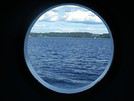
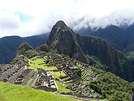
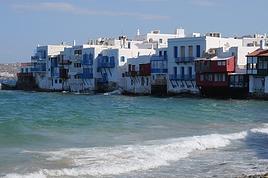
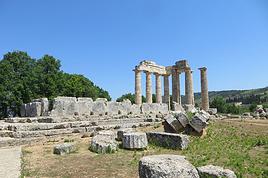
For comfort and safety, we arrived the day before embarkation. The metro from the airport takes us directly, without any transfers, to Piraeus on the blue line for 9 € per person.
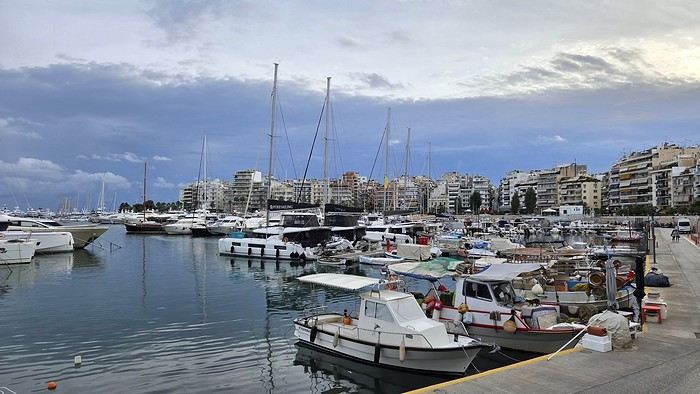
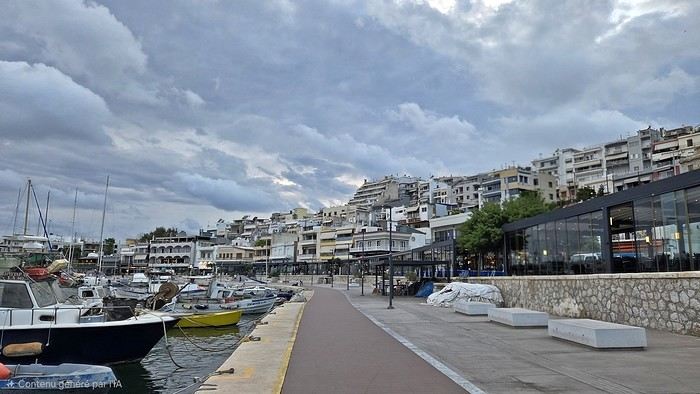
After airports, a stroll along Piraeus’ port is incredibly refreshing and quite pleasant.
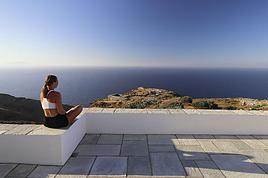
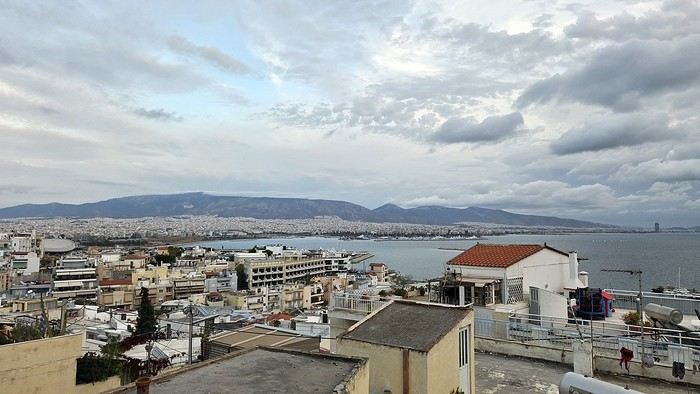
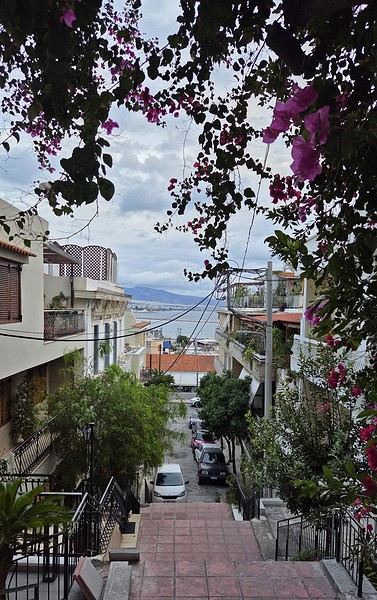
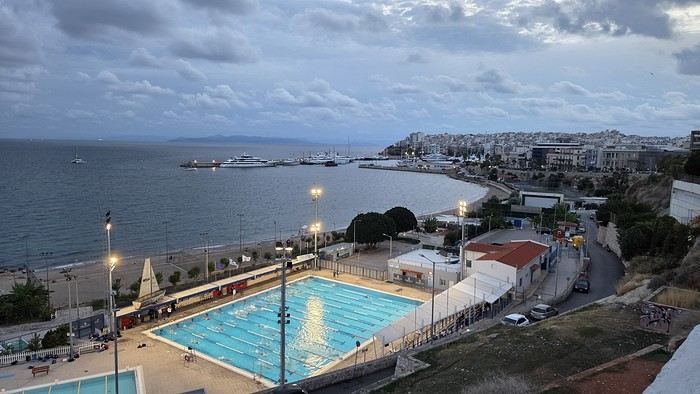
The climb is steep to reach the Kastella district. From this dominant position, the view stretches over the city and the Aegean Sea. I’m not sure if this view of Athens’ vast urban sprawl can be called beautiful…
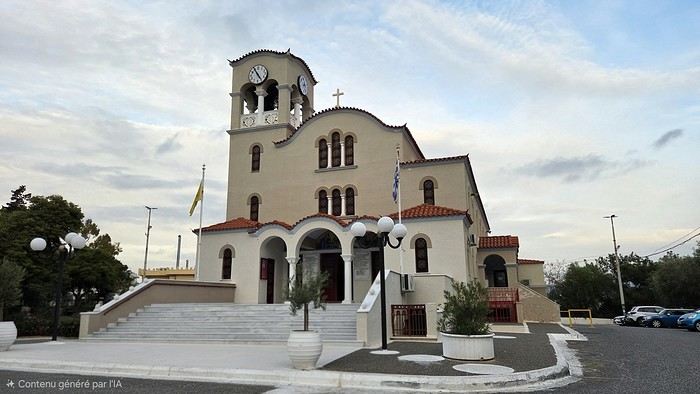
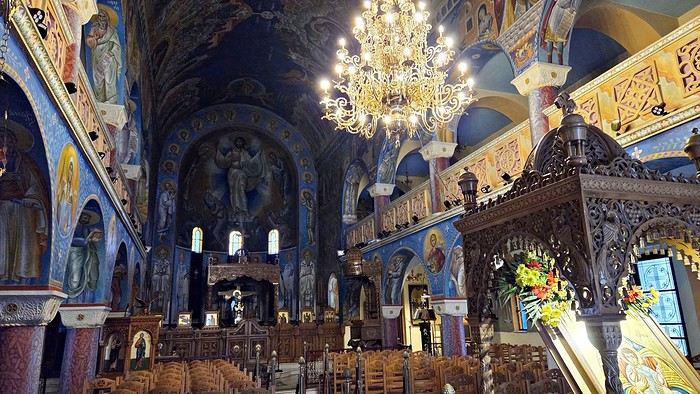
At the top of Profitis Ilias hill stands the lovely little church of the same name.
To reach the small circular port of Mikrolimano, you descend through a series of winding alleys and staircases—a truly charming route.
The restaurants lining the port are excessively expensive, and their cuisine is very standardized. All the authenticity that once reigned here has disappeared. Now, the space is occupied by gleaming, trendy bars and restaurants.
Night falls quickly, but the temperature remains mild. The city is lively, and shops stay open until 9 PM.
Thank you, my cruise friends. Your support means a lot to me and keeps me motivated.
Athens, Saturday, November 1st, 2025 – Boarding
Boarding is scheduled to start at 4 PM, but we were informed that we could drop off our luggage at the cruise terminal as early as 10 AM, allowing us to enjoy our sightseeing freely during the day. We had planned to leave our suitcases at the hotel, but under these circumstances, we prefer to drop them off at the ship.
After a 40-minute delay, the person in charge of collecting the luggage finally showed up at the cruise terminal entrance. We were starting to seriously doubt they’d come and regretted not leaving our suitcases at the hotel. They finally appeared when we least expected it.
The morning was already well underway, but we still set off for a walk in central Athens to fill the few hours before boarding.
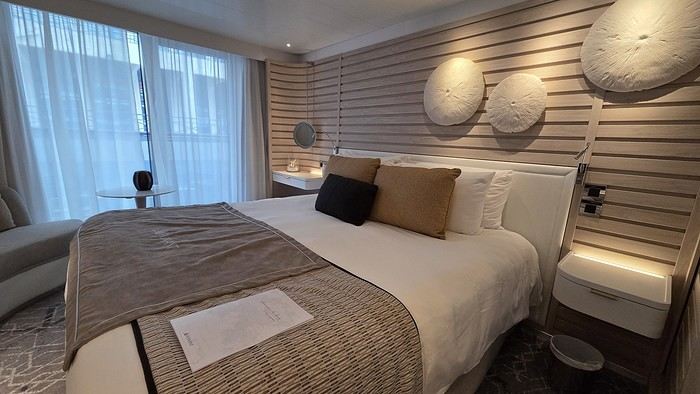
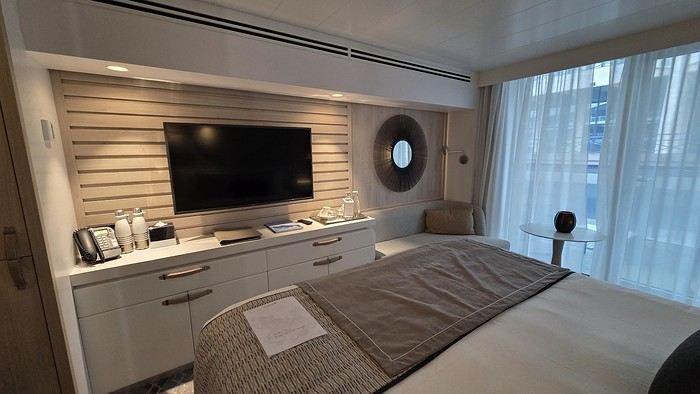
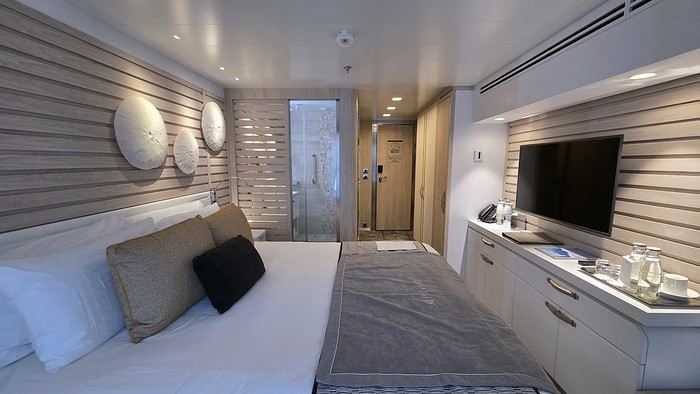
Back at the port around 3:45 PM, boarding had begun, and it went smoothly. Ten minutes later, we discovered our lovely cabin, decorated in soothing light tones. Note the vanity at the far left of the bed with a stool you can’t see, and the tiny corner sofa—very practical.
The cabin isn’t very large since we’re on a small ship (92 cabins and suites, 184 passengers, and 118 crew members), but it’s very functional with plenty of storage. The doors and furniture drawers are covered in soft, smooth leather.
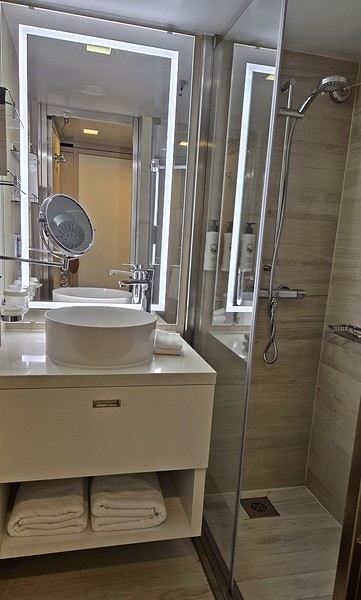
It’s the only company I know of that offers a separate toilet in the cabin, which reduces the bathroom space, but the shower is spacious.
The suitcases were unpacked in record time since we were immediately invited to a glass of Champagne in the Grand Salon—an invitation you never turn down.
This was followed by an information meeting about the excursions for the next two days.
A quick stroll on the deck before dinner to get our bearings, relax, and enjoy the mild weather.
Like Alfred, I find the cabin really cozy, and the separate toilet is a real plus.
I can’t wait to read the rest of your review.
Have a lovely evening! Guylène.
Yes, these cabins are really very pleasant—the decor evokes the sea and beaches with soft, warm sand, and you feel at ease just stepping inside. The space is cleverly designed to be comfortable. I forgot to mention there’s lighting inside the wardrobe when you open the doors.
Another thing, while we’re on the topic of domestic details: there’s no dry-cleaning service on board, but the laundry service is excellent and very fast—clothes come back in barely 24 hours. With our loyalty status, we get it for free, and it’s really nice.
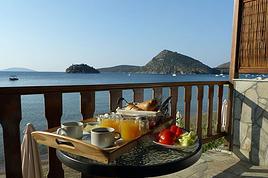
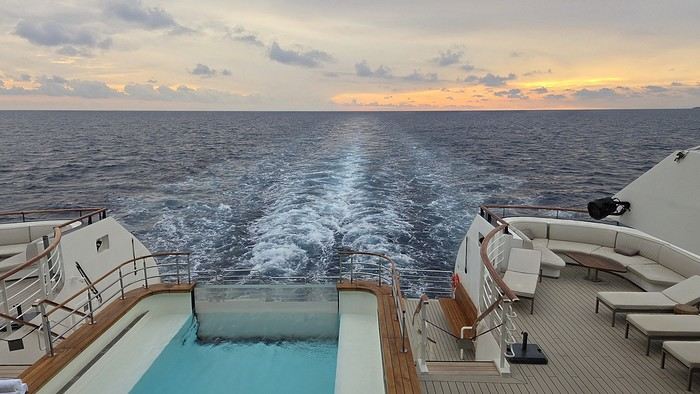
Breakfast is one of those I love best—on the terrace, facing the sea… Pure bliss, like a postcard, but better because we’re *actually* here.
At 9 a.m. sharp, we attend a fascinating lecture tracing the history of Greece, from the Neolithic period (7000 BCE) up to the Roman era of the 3rd century.
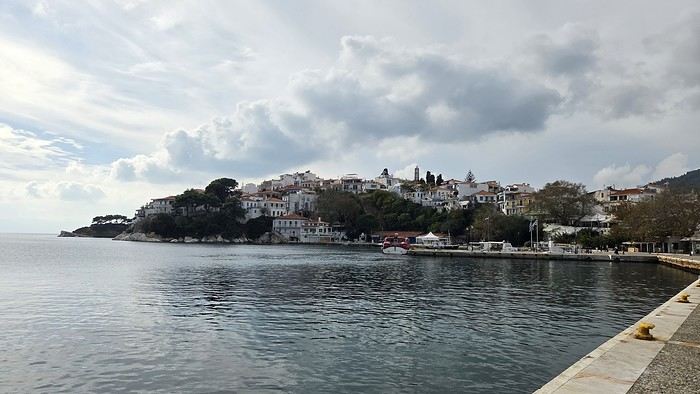
We arrive at the island of Skiathos late in the morning, under a shy sun that seems to be negotiating inch by inch with the clouds for a little brightness. The ship is anchored a short distance from the shore. The place is enchanting, and the view of this little port is stunning.
An early lunch at 11:30, then we meet in the grand salon at 12:40 for departure. From the ship’s marina, we board a tender that takes us ashore.
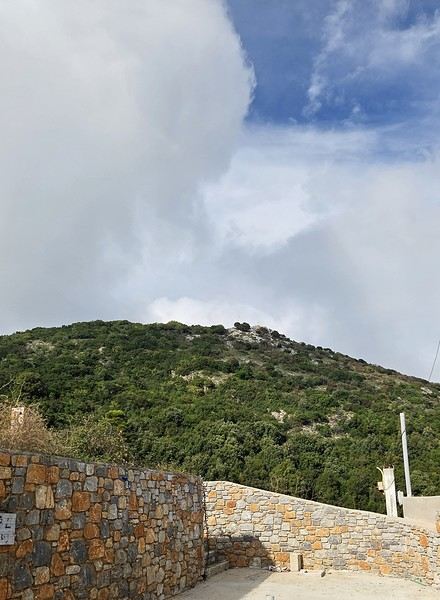
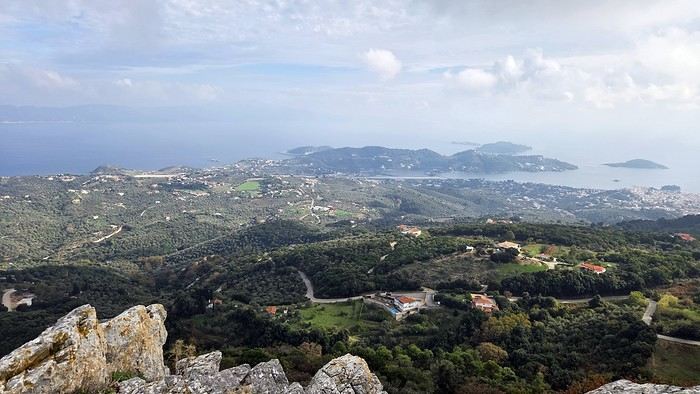
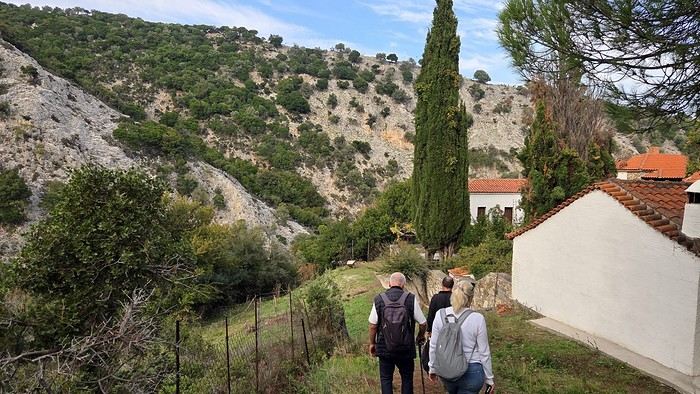
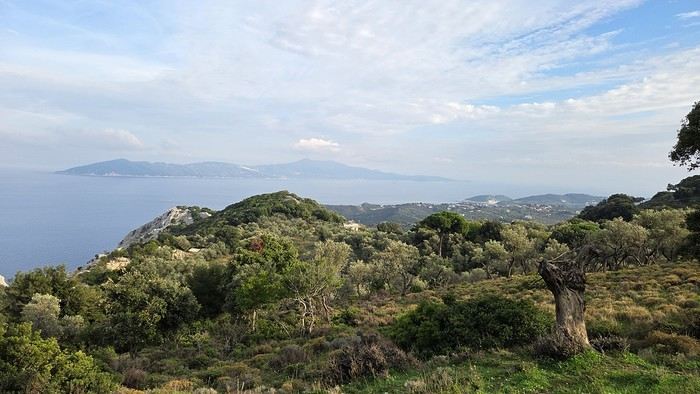
There are only about fifteen of us for this hike in the island’s highlands. Once at the port, a minibus takes us to the starting point. From there, all that’s left is to climb up to the cross… Uh… which isn’t visible in the photo .
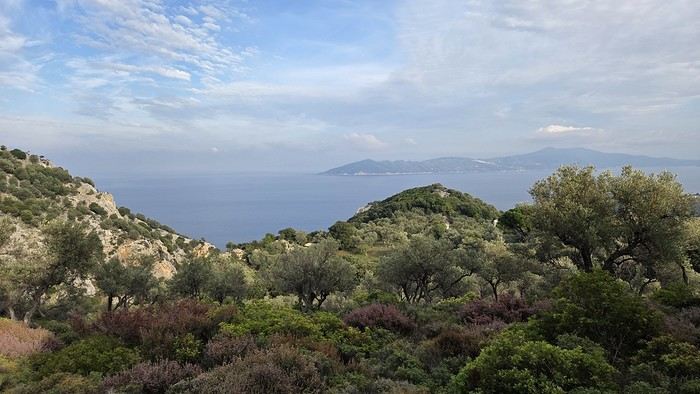
The excursion is in English—our guide being the only one available that day—but it’s not an issue: nature doesn’t need much commentary. The viewpoints speak for themselves.
The rain from the previous days has brought thousands of flowers to the meadows we cross, and the paths are lined with countless little cyclamens. The wild goats, with their elegantly curved horns, are as curious as we are, but the guide keeps them at a safe distance for security.
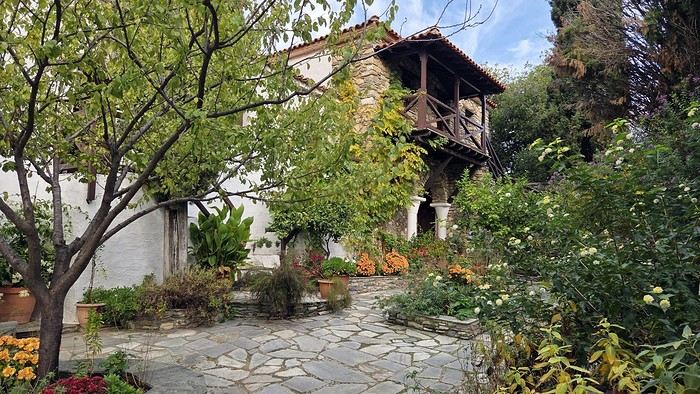
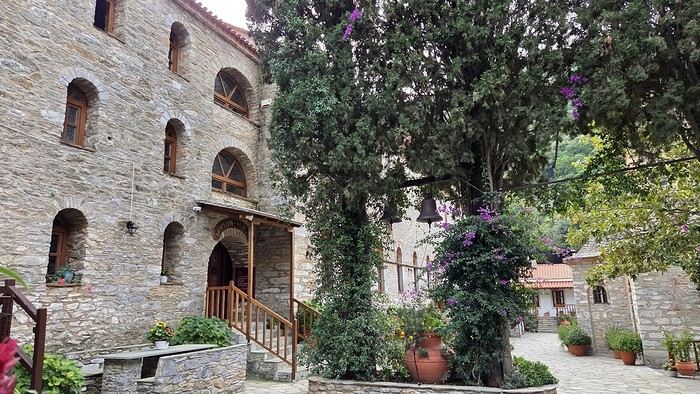
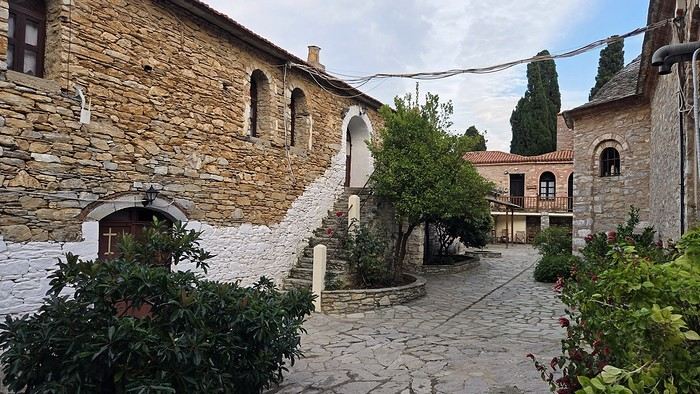
In the heart of the mountain, the stunning and flower-filled Monastery of Charalambos welcomes us for a short break. It’s one of the oldest monasteries on the island. It once housed a small community of monks. Isolated from the rest of Skiathos, the buildings were likely constructed during the Ottoman period.
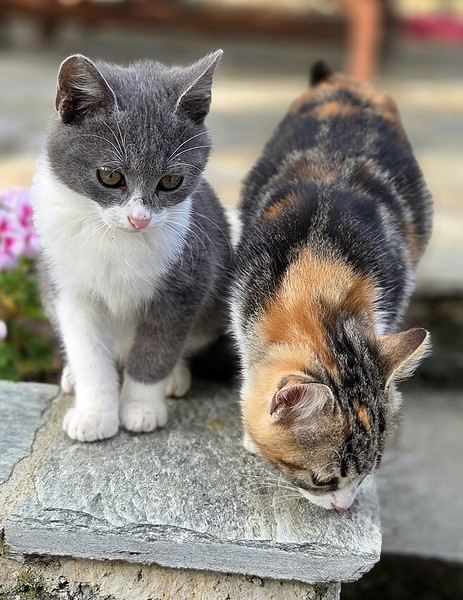
Cats are everywhere here. Our guide tells us he shelters several at his home, right in the middle of nature. According to him, they’re valuable allies in keeping snakes at bay. Who would’ve thought these adorable little furballs also worked in security?
The walk continues, still through a very beautiful landscape. In the distance, the islands of Skopelos and Alonissos.
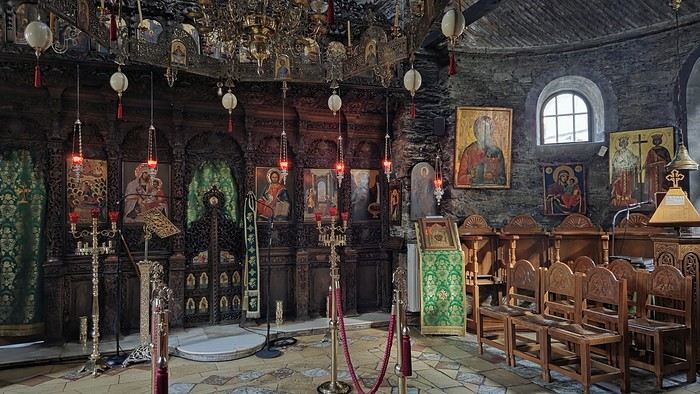
The last steps of this hike through wild, wooded paths lead us to the stunning Evangelistria Monastery. Impressive and understated, it’s the most important monastery on Skiathos. It’s also one of the oldest monasteries in Greece and the only active one on the island. Construction began in 1794 and was completed in 1806. It was founded by a group of monks who left Mount Athos Monastery.
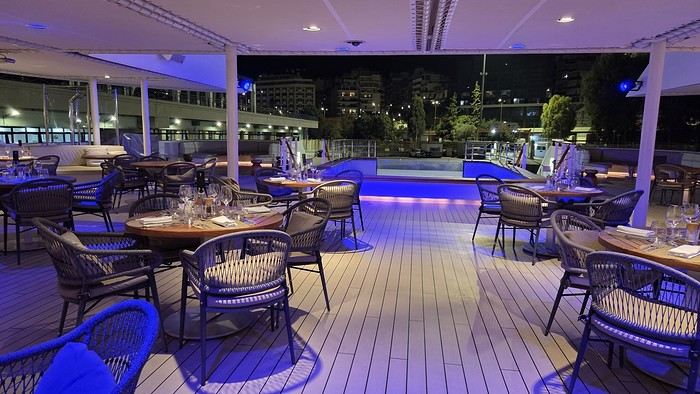
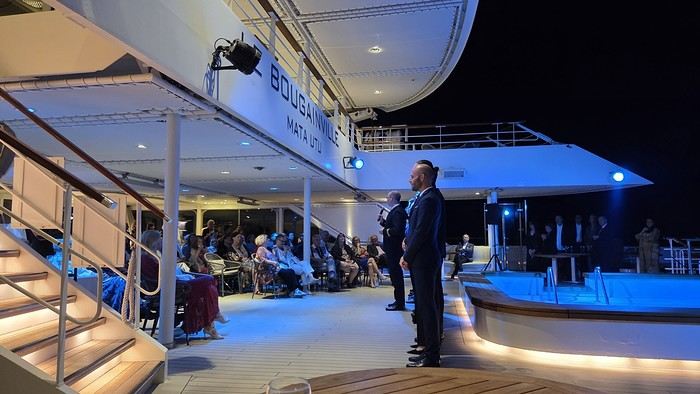
As evening fell, it was time for the Welcome Gala Dinner and the introduction of the ship’s officers and crew. With Ponant, the event is celebrated with "real" Champagne—a nice touch. The mild evening allowed the ceremony to take place on the Bougainville’s aft terrace.
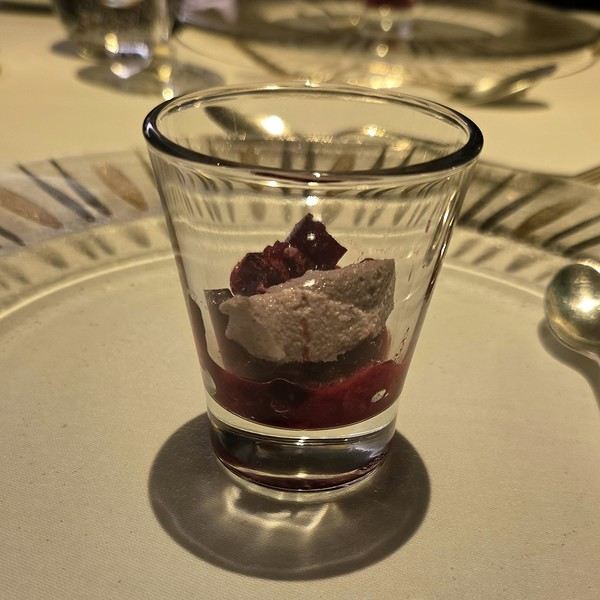
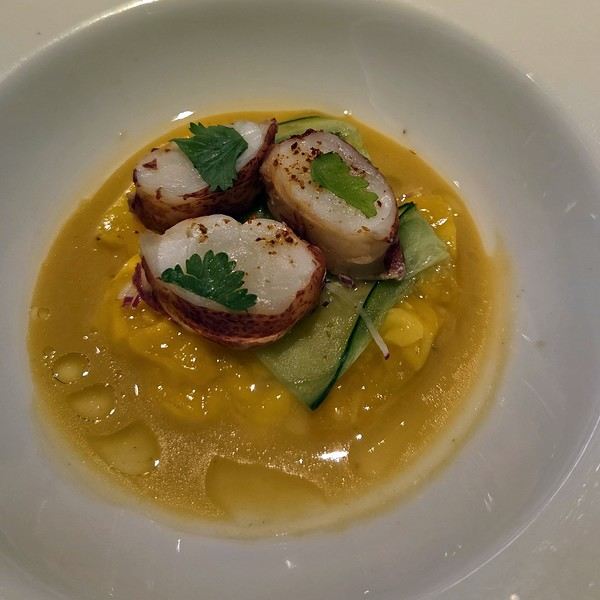
Then came the gala dinner. And the term is absolutely not an exaggeration: the meal was delicious, refined, and perfectly balanced. A true delight from start to finish on a beautifully set table.
Here’s what we enjoyed:
Amuse-bouche: beetroot and raspberry tartare, almond yogurt with hibiscus.
Lobster, mango, and marinated cucumber, passion fruit vinaigrette.
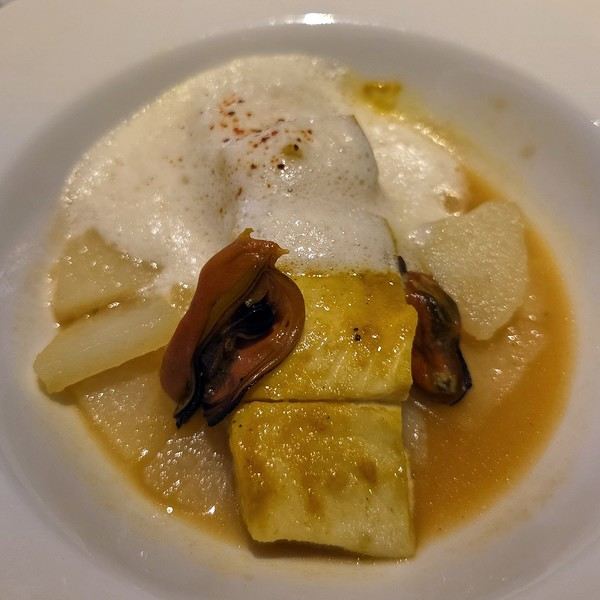
Steamed halibut fillet, saffron broth, and mussels.
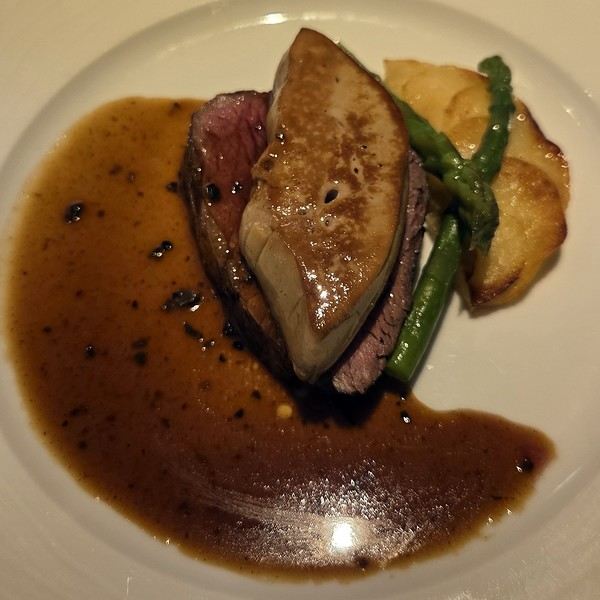
Beef Rossini fillet, Anna potatoes, truffle jus.
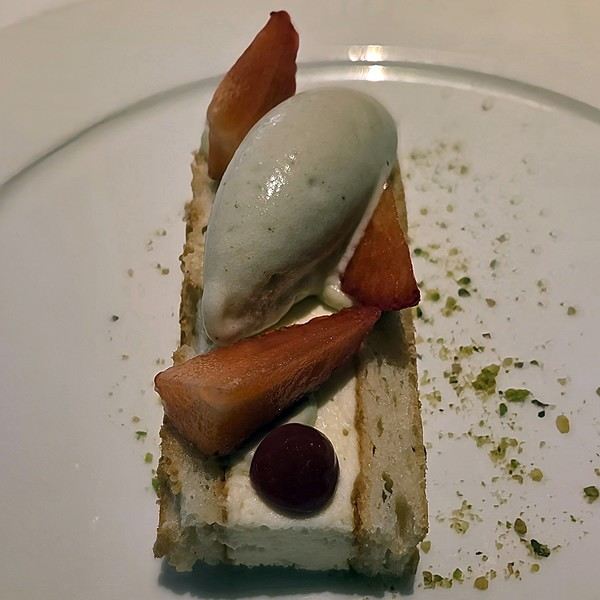
Strawberry shortcake, pistachio ice cream.
And petit fours to finish the meal—I forgot to take a photo. They weren’t spectacular, but very tasty.
The evening ended with a music hall show, a festive way to close out a wonderful day.
Hello!
Thanks for this new travel journal—there aren’t many of them.
All those little ports must have been gorgeous, and the dishes sound mouthwatering! 😛
Norvégian Gém NCL, Horizon CDF, musica MSC, Allure of the seas RCI, sérénade of the seas RCI, Symphony of the seas RCI, Régal PRINCESS, Fantasia MSC, seaside MSC, explorer of the seas RCI
The dishes are making my mouth water! I’d take this cruise just for the French gastronomy (something we struggle to find elsewhere).
However, I’m a big eater—is it possible to order several dishes?
Thanks for sharing, because there are so few reviews on this forum right now!
In my opinion, this is the cruise line with the best food—it’s neither typical ship cuisine nor heavy Americanized food.
I imagine you can ask for multiple dishes; they don’t hesitate to swap a dish if it doesn’t suit you, though I’ve never done that myself. 😉
Hi Catherine,
original itinerary and beautiful stopovers.
I’m disappointed that PONANT still skips the first day 😉
As for meals, it’s true that the food is good, but we were shocked to see they calculate portions so tightly—when there’s only one or two dessert options left, you don’t have much choice. 😕
Isabelle, amoureuse des croisières:
COSTA, MSC, ROYAL CARIBBEAN, CELEBRITY, PRINCESS, NCL, HAL, PONANT, OCEANIA, AZAMARA
A VENIR
CELEBRITY EQUINOX 09/11/2026 Grèce Italie Malte
Thanks Catherine for this review.
I don’t know Ponant yet... I think it’s something to try, even though we’ve been won over by Explora.
Best regards, Claudine
Hi Isa,
I’ll admit the boarding time is a bit late, but you get used to it. It’s also a rest day for some of the crew who are on duty every other day. These aren’t big ships...
You really weren’t lucky—we’ve never had that issue with the desserts.
Hi Claudine,
I think Explora and Ponant, which require similar budgets, offer two different experiences. I believe Explora is closer to high-end luxury hotels, while Ponant focuses on shore excursions and onboard lectures, all while maintaining a relaxed atmosphere. I still need to try Explora to confirm. 😉
Hi Claudine,
I think Explora and Ponant, which require similar budgets, offer two different experiences. I believe Explora is closer to high-end luxury hotels, while Ponant focuses on shore excursions and onboard lectures, all while maintaining a relaxed atmosphere. I still need to try Explora to confirm. 😉
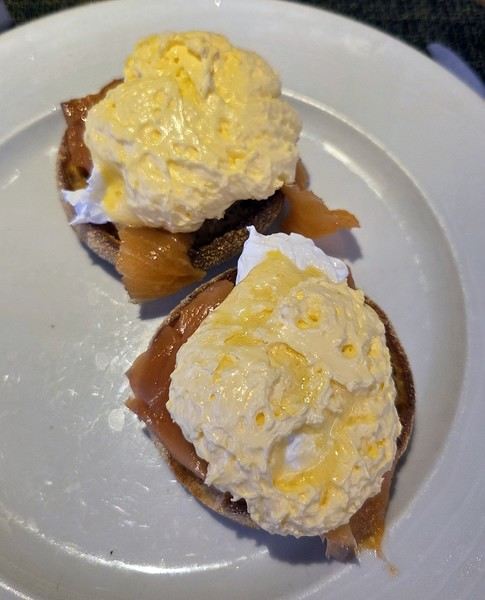
To start the long day ahead on a good note, I ordered eggs Benedict with salmon for breakfast—I imagined it would be really good, Ponant-style... And here’s what arrived: a double portion, two eggs, way too much for me, but cooked to perfection and absolutely delicious.
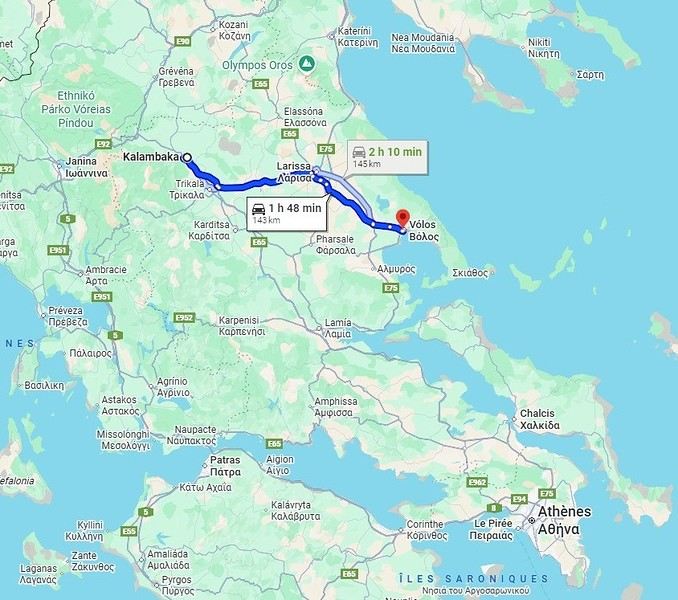
We left at 8:30 AM for the excursion to Meteora. This excursion, like all the others, was included in the cruise price. For each stop, we had to choose between several excursions. Worth noting: only yesterday’s hiking tour was extra, but it was largely covered by the onboard credit we received thanks to our loyalty status.
Meteora is near the town of Kalambaka, in the far north of Greece.
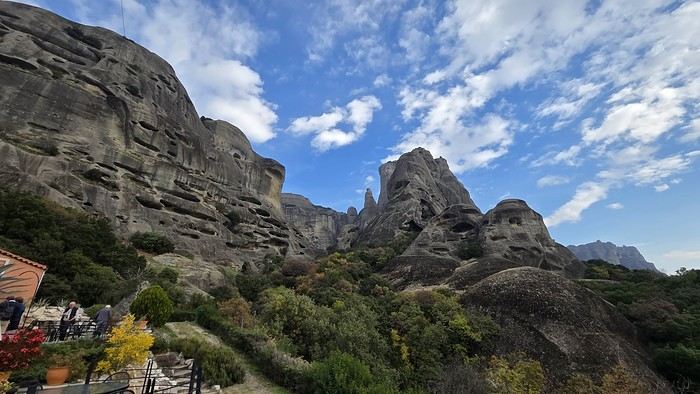
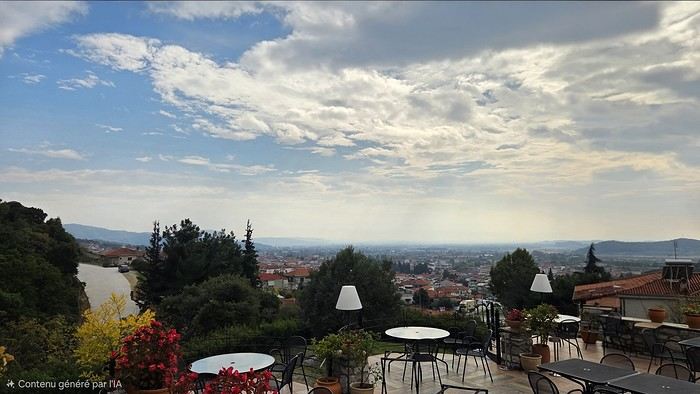
A coffee break was scheduled before starting the Meteora visit. The restaurant where we stopped is perfectly located. At the foot of the rock formations, it offers an impressive view of these extraordinary geological formations on one side, and on the other, the view stretches over the town of Kalambaka.
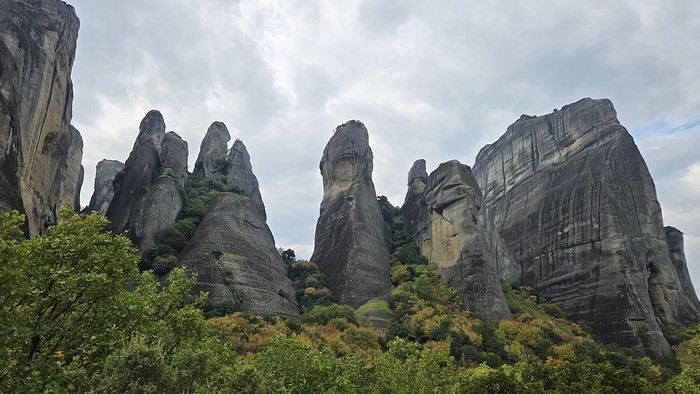
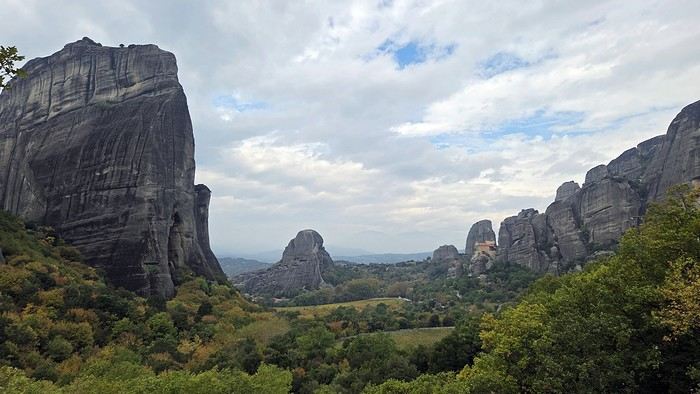
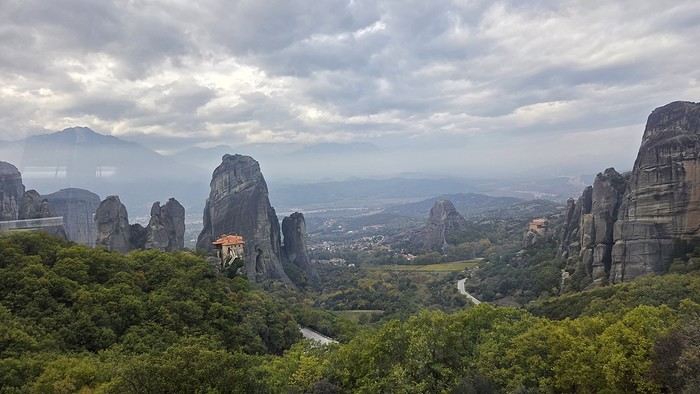
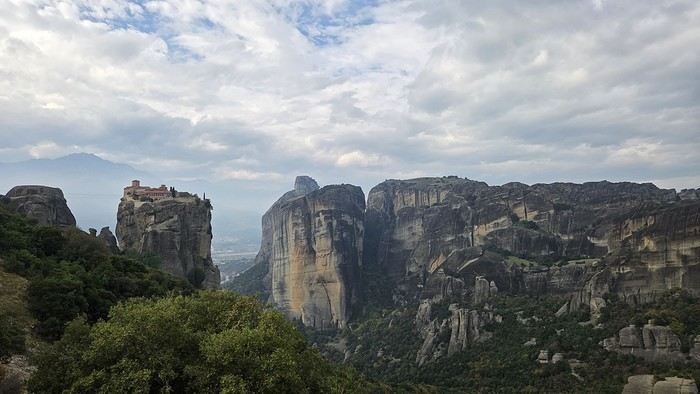
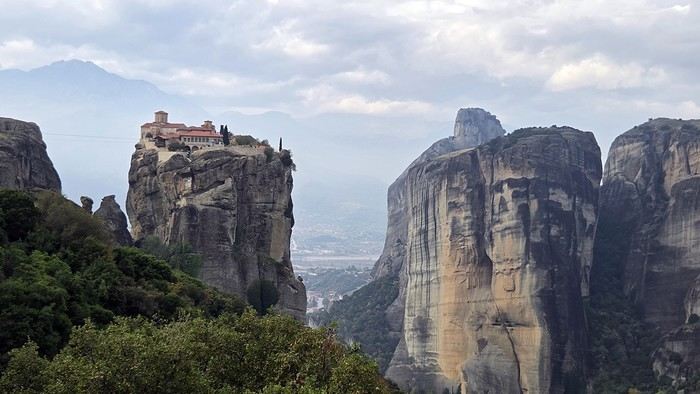
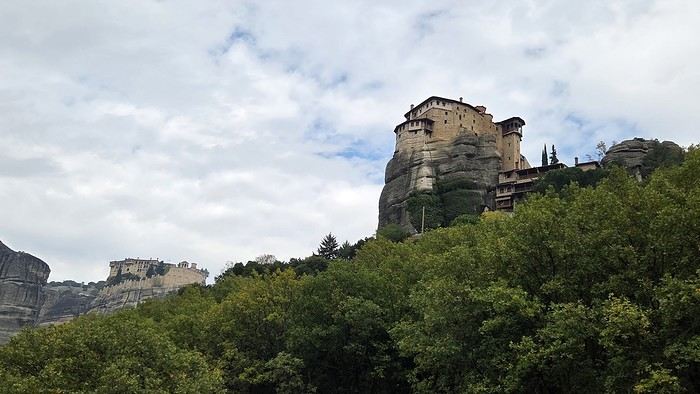
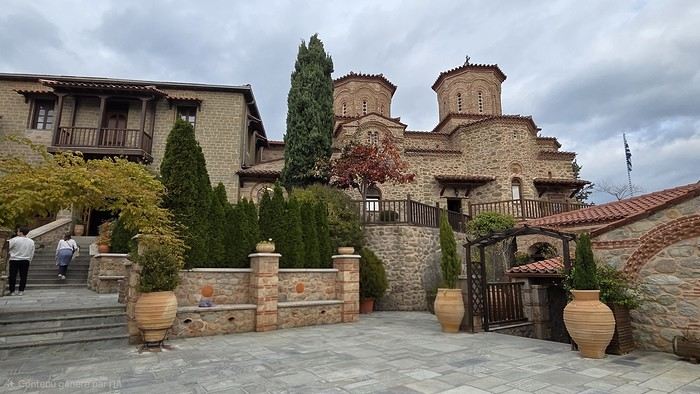
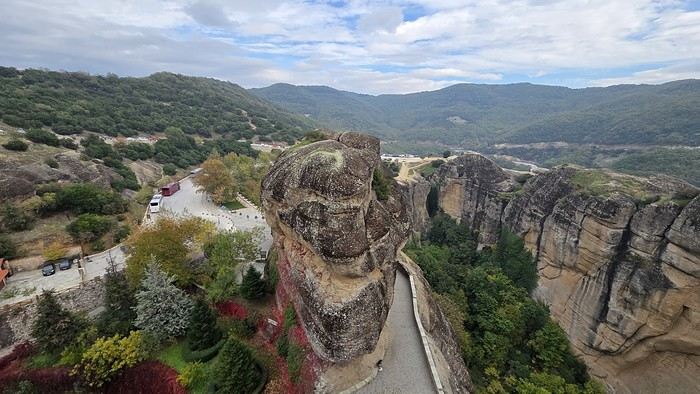
Meteora is a spectacular collection of Orthodox monasteries perched atop rock pillars that can reach up to 400 meters in height.
Meteora’s origins date back nearly 60 million years. The region was once at the bottom of a sea where sediments—pebbles, sand, and clay—accumulated, forming a vast rocky conglomerate. When the Pindus mountain range uplifted and the rock fractured, these deposits emerged from the water. Over millennia, the combined action of wind, water, and temperature variations gradually eroded the surrounding alluvium, leaving behind these impressive rock formations: towering columns, vertical pillars, and steep domes that define Meteora’s landscape today.
The first hermits are believed to have arrived in the Meteora region in the late 9th century. They lived in caves and natural crevices in the rocks. Organized monastic life developed later, particularly in the 14th century.
At the monastic site’s peak in the 15th century, there were up to 24 monasteries perched in the skies. These spiritual citadels were practically inaccessible: you climbed up using long, rather precarious ladders or in impressive baskets suspended by pulleys with a manual winch system. It wasn’t until the 1920s that easier access was created, with staircases carved into the rock.
We were warned that to access Meteora, women must wear a long skirt. Those in pants are required to put a long skirt over their pants or wrap themselves in a scarf to avoid being considered "improper," or risk being denied entry. Once again, it’s a disguise imposed on women by a handful of obscurantist religious figures. 😇
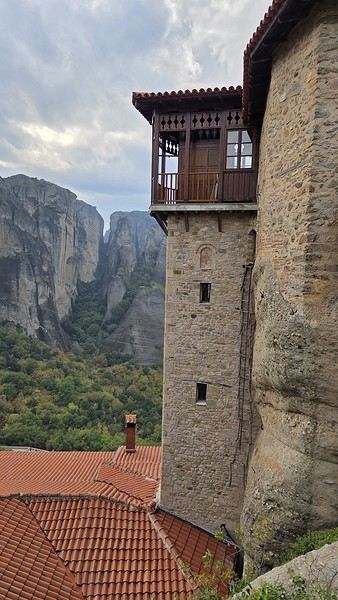
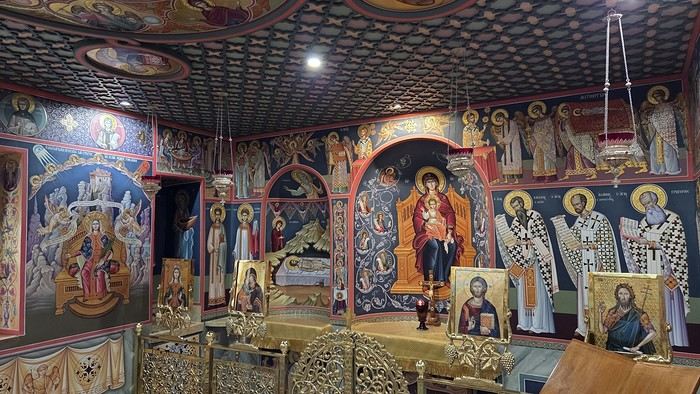
The first Orthodox monastery we visit is Roussano (or Roussanou) Monastery. It’s one of the six still-active monasteries in Meteora. Built in the 16th century, it’s dedicated to Saint Barbara. Its interior houses beautiful post-Byzantine frescoes.
Our second visit is to Saint Stephen’s (Agios Stefanos) Monastery. Founded between the 14th and 16th centuries, it’s now home to a community of nuns.
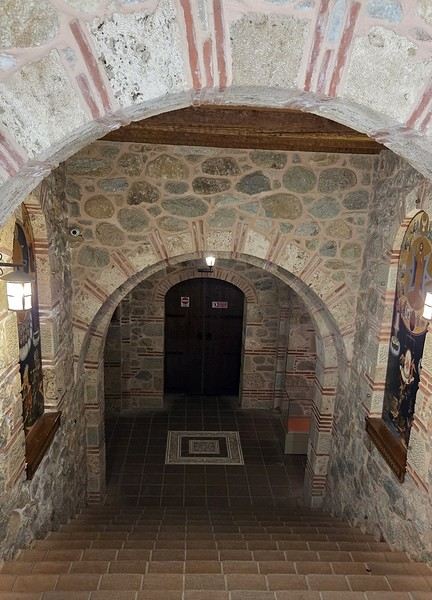
Our very knowledgeable guide gives us lots of spiritual explanations about the stunning frescoes, which are forbidden to photograph. Her presentation is certainly thorough and interesting, but a bit long... And we arrive at the museum doors just as it closes.
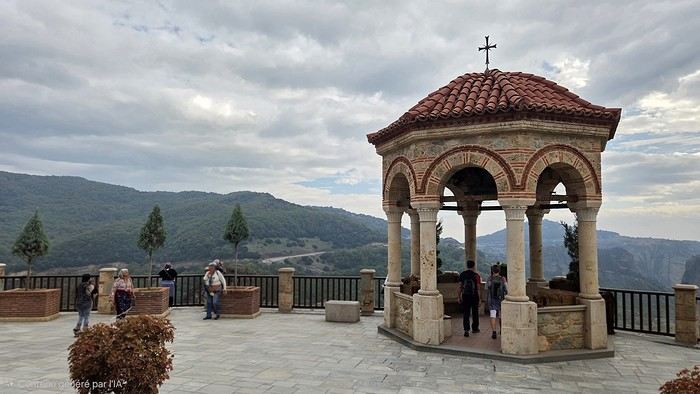
Before rejoining the bus, one last glimpse of the dominant view.
The meal is served at the restaurant that hosted us for the short break before the visits. The lunch of Greek specialties offered is very generous and delicious.
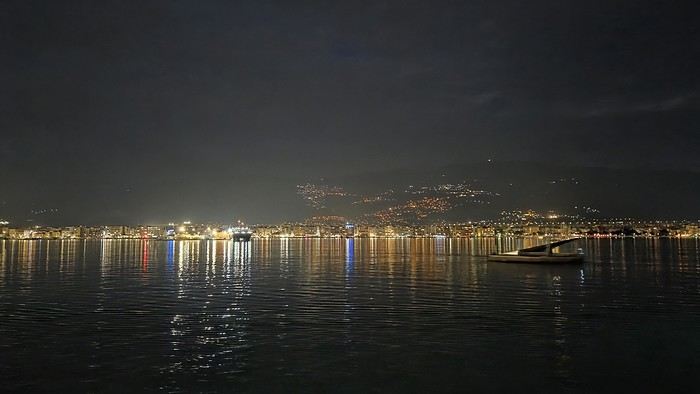
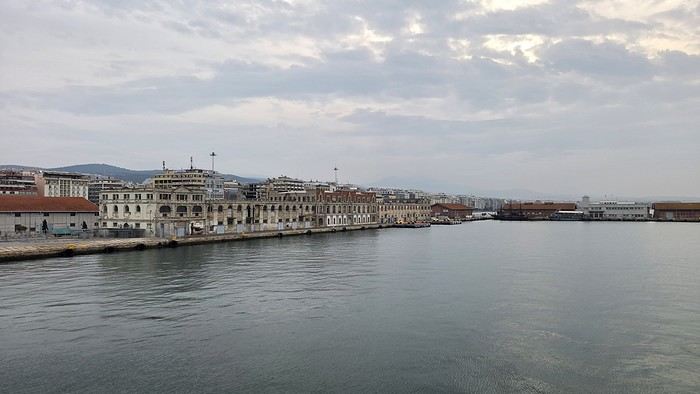
We cross the Thessaly plain again, lulled by a certain drowsiness, to rejoin the ship just before nightfall. When we leave the port of Volos, night has fallen.
From this second evening onward, we’re lucky to get to know two very friendly couples, with whom we’ll spend wonderful evenings in a joyful atmosphere.
Before the great fire of 1917, Thessaloniki was one of the most multicultural cities in the eastern Mediterranean.
Jews, Orthodox Greeks, Muslims, Catholics, and many other minority communities lived together in harmony. The city functioned like a mosaic: neighborhoods, schools, newspapers, and places of worship coexisted in a unified whole.
On August 18, 1917, a small kitchen fire in an Armenian neighborhood spread rapidly. At the time, the city was very dense, with most houses built of wood, and a strong wind was blowing in from the sea.
The fire raged for 32 hours without being slowed, destroying nearly two-thirds of the city center. Around 70,000 people were left homeless. More than 9,500 buildings disappeared: homes, shops, synagogues, schools, newspapers… The city lost much of its Ottoman and Jewish historic center.
The event marked the end of Thessaloniki as a major multicultural metropolis of the Ottoman Empire. Greek authorities decided on a modern reconstruction, led by a French urban planning committee, which gave the city center its current layout.
This fire radically transformed Thessaloniki’s appearance, demographics, and culture.
Our city tour starts on a shared bus with English speakers… But the two-language setup is very well organized. All French speakers board the front of the bus with a French-speaking guide, while English speakers sit at the back with their assigned guide. That way, no double repetitions—it’s much better for everyone.
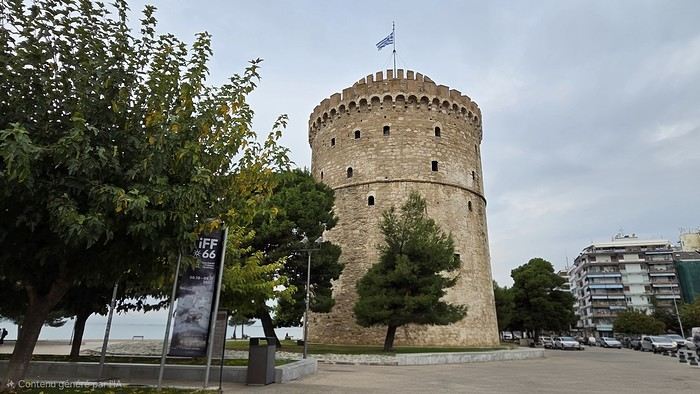
Our first stop is at the base of the White Tower on the waterfront. It’s one of the city’s symbols. Built during the Ottoman era around 1430, likely on the remains of an older Byzantine fortification. It was a defensive tower forming part of the city’s walls and later served as a prison.
The origin of the name "White Tower" comes from its history. In the 19th century, when the tower was still an Ottoman prison, it had a reputation for being so dark and terrifying that it was called the "Red Tower" or the "Bloody Tower," due to the tortures and executions carried out there.
Legend has it that a prisoner was granted his freedom in exchange for a symbolic act: repainting the entire tower white to erase its macabre past. After the whitewashing, locals began calling it the "White Tower."
Today, it’s a museum dedicated to Thessaloniki’s history, with a panoramic view of the waterfront from the terrace. But today, it’s closed.
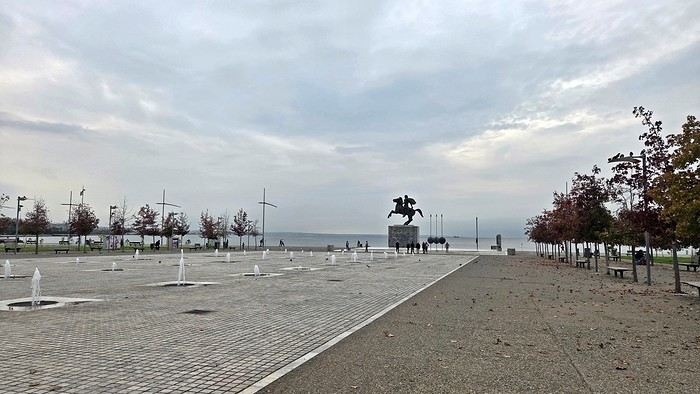
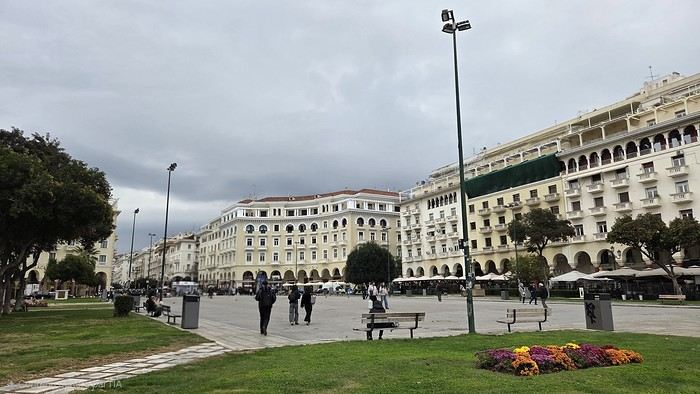
At the far end of this large square, by the sea, stands the Statue of Alexander the Great.
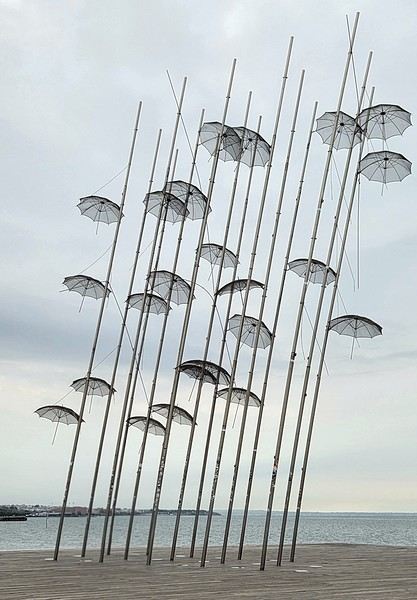
A little further on is the Umbrellas of Thessaloniki, a famous sculpture first exhibited at the Venice Biennale in 1995. It became a symbol of the city when it was installed on the waterfront in 1997. Not everyone has to like it…
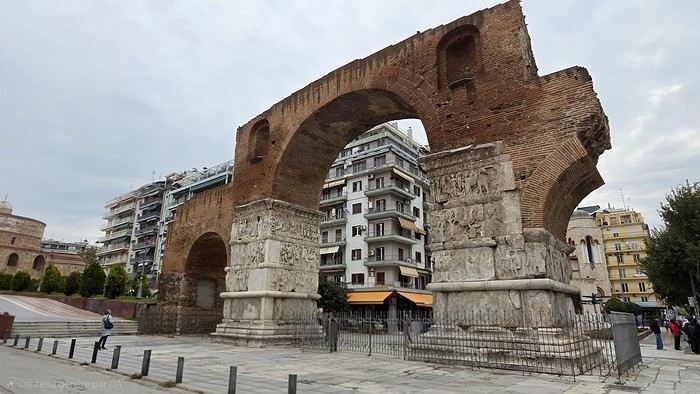
The bus drops us off at the Arch of Galerius, built by the Roman emperor of the same name in the 4th century AD to honor his victory over the Persians. The reliefs on its sides depict the military exploits of Roman troops against the Persians.
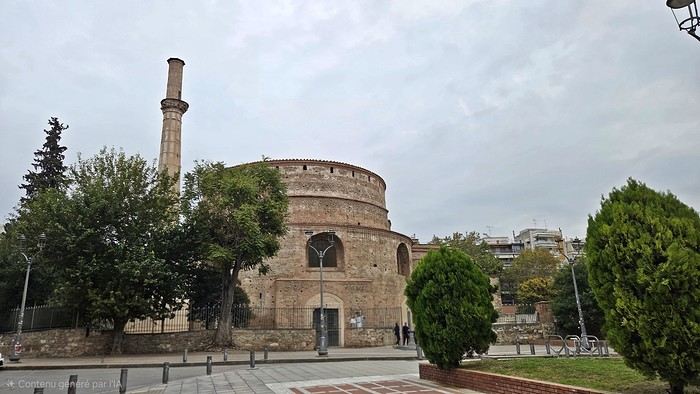
Just a few steps away, above this triumphal arch, stands the Rotunda, which has successively served as a place of worship for three religions. First dedicated to ceremonies honoring the twelve gods of Olympus, it was later converted into a Christian building. During the long Ottoman period, it became a mosque, whose minaret still stands today. After the city’s liberation, the monument regained its Christian purpose before being turned into a museum.
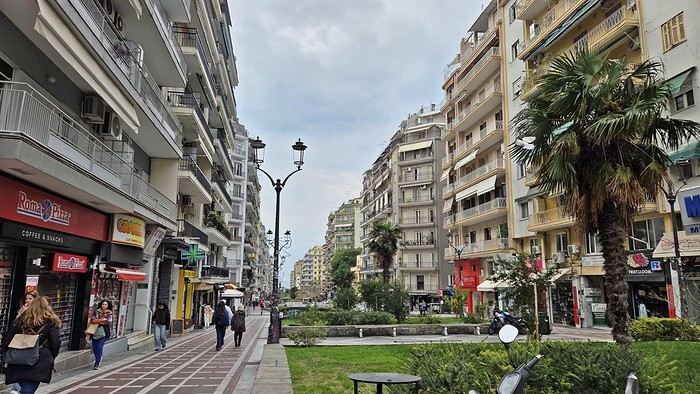
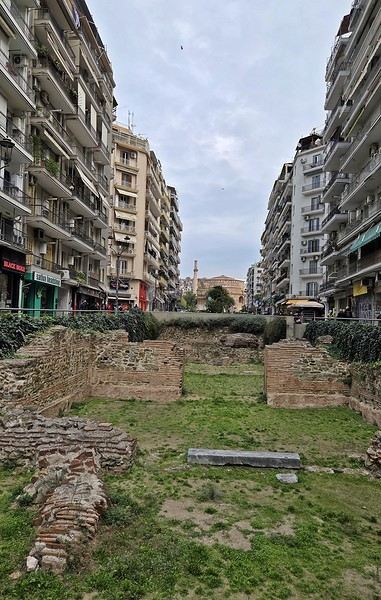
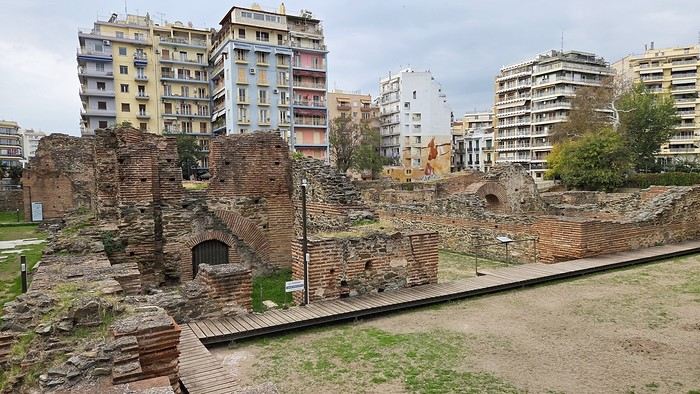
All along the shopping street we walk down, numerous ruins uncovered by excavations bear witness to the city’s rich historical past.
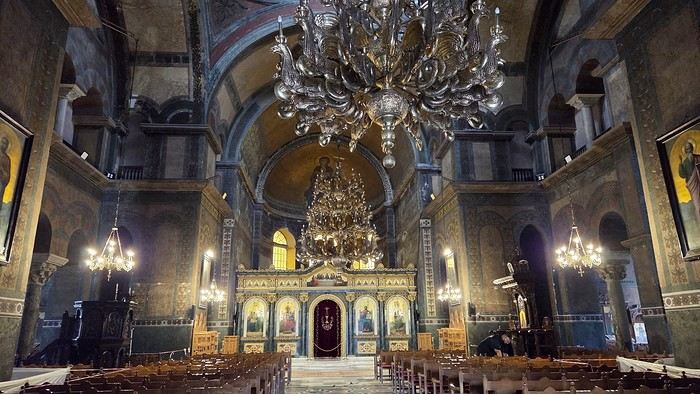
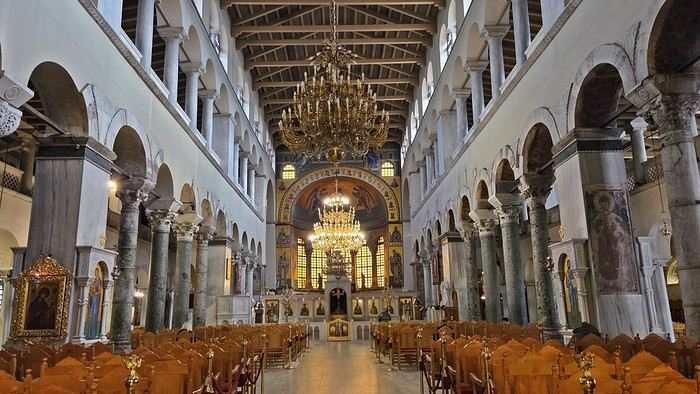
We arrive at the Church of Saint Sophia in Thessaloniki on foot. It’s one of the most important Byzantine churches in Greece. Built in the 8th century (around 780) on the site of an older church likely dating back to the 5th century, it belongs to the architectural style of domed churches inspired by the Hagia Sophia in Constantinople.
Over the centuries, the building’s function changed: originally a Christian basilica, it became a mosque under the Ottoman Empire before being returned to Orthodox worship in the early 20th century. Today, it’s a UNESCO World Heritage Site, along with other early Christian and Byzantine monuments in Thessaloniki. It’s an iconic place where history, spirituality, and Byzantine art blend together.
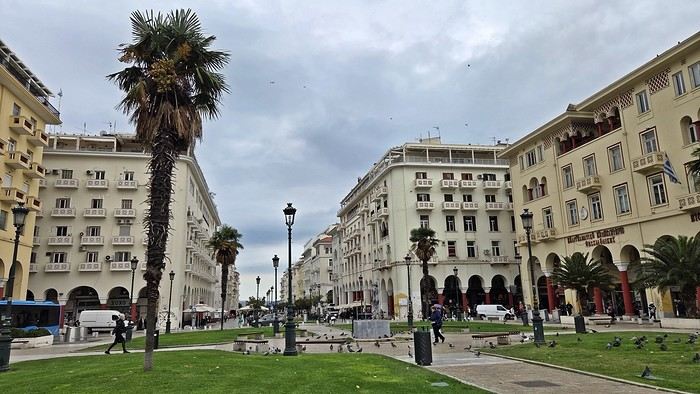
Once again, our very knowledgeable and passionate guide spends a long time discussing the spirituality of the religious frescoes. And time flies… The time we were supposed to spend exploring a market has passed. We head straight through the city’s beautiful neighborhoods, leaving the market behind.
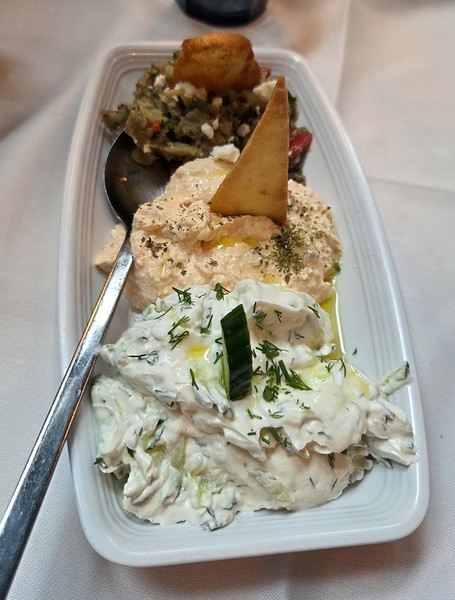
Aperitivo time has arrived, and we need to meet up at the restaurant where we’re waiting for an ouzo tasting accompanied by a multitude of meze. So many, so generous, and delicious! I only have a photo of the first ones—after that, caught up in the atmosphere, I forgot…
Back on the ship, we only have a tiny bit of room left for dessert.
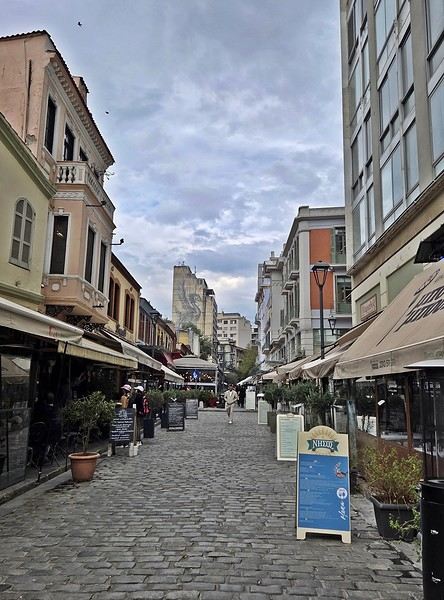
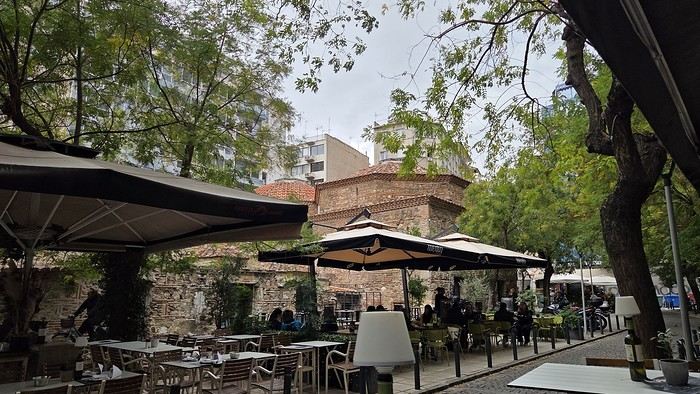
No time for a nap, we're off again to explore the neighborhoods we didn’t get to see this morning.
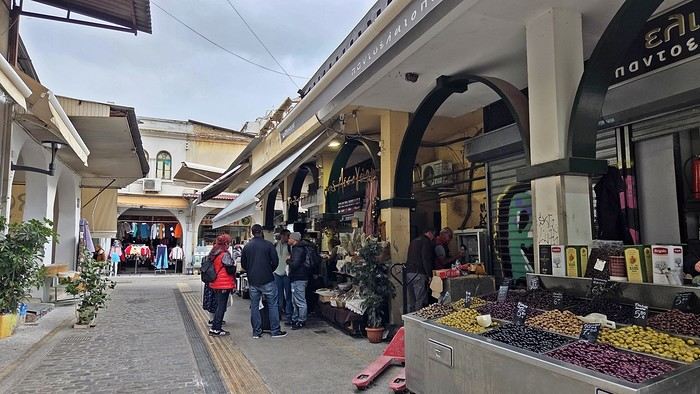
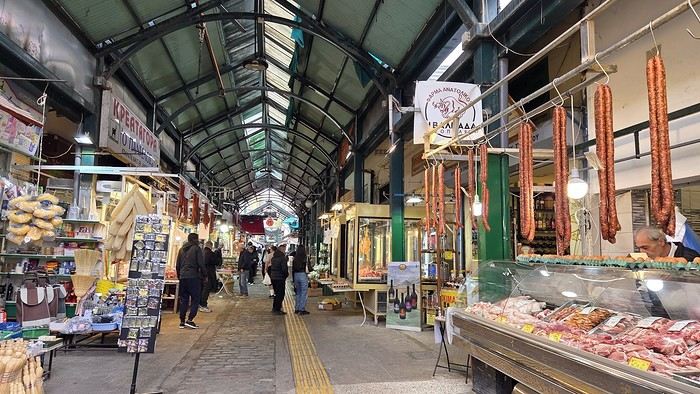
The Modiano Market is currently closed for renovations, but the Kapani Market, located right next door, remains open.
The Kapani Market is one of the city’s central markets. It developed shortly after the Ottoman conquest in 1430 to meet the need for basic supplies. Having survived the great fire of 1917, it’s one of the few historic markets to have escaped the flames. It has retained its layout and the atmosphere of an Ottoman bazaar, with its narrow alleys and shops lined up like in the old bazaars. In the early afternoon, it’s very quiet.
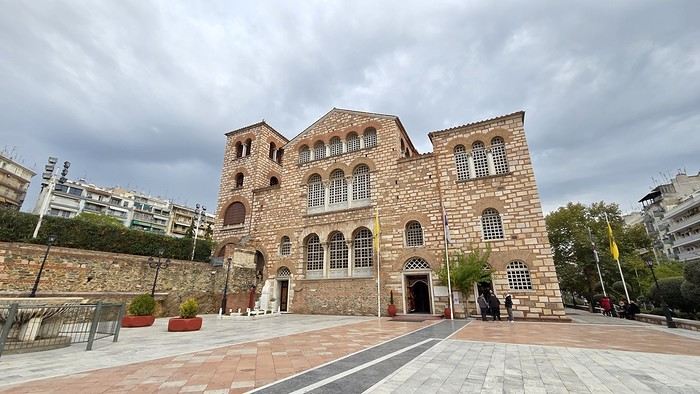
Agios Dimitrios of Thessaloniki is the largest basilica in Greece and one of the city’s most iconic monuments. Dedicated to Saint Dimitrios, the city’s patron saint, it houses the crypt where he was allegedly imprisoned and martyred in the 4th century. Imposing and majestic, it was rebuilt after the 1917 fire. (Maybe St. Dimitrios was on vacation that day?)
It was Victoria Hislop’s novel *The Thread* that had long made me want to visit Thessaloniki.
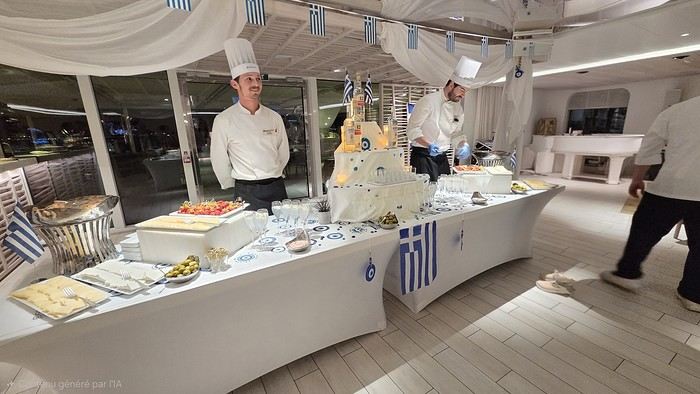
A Greek evening is offered at aperitif time.
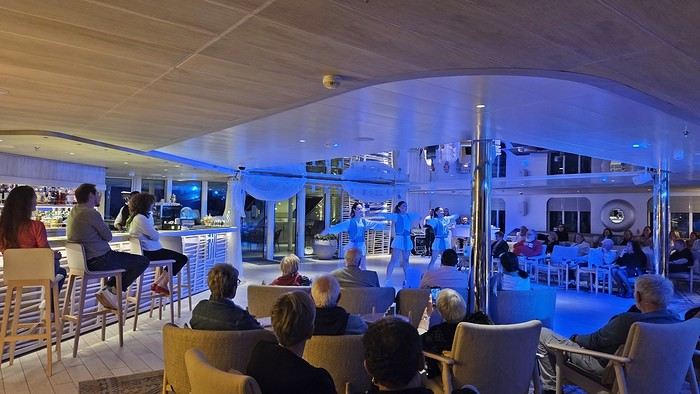
And we end the day with a show on the same theme after dinner.
Thanks, Catherine, for this review—it’s always such a pleasure to read—and your photos of Thessaloniki are stunning.
I took a Ponant cruise from Malta to Naples in the second half of November.
For my husband and me, it was our first time.
Personally, the small cabin size, the ship’s dimensions, and a few other hiccups dampened the enjoyment of the cruise.
That said, there were plenty of positives too...
I’ll be starting a review on VC soon for those who are familiar...
Not everything can always be perfect in the wonderful world of cruising, and we all experience that at some point. The crew, the entertainment teams, or even the dining staff can be more or less efficient—the human factor plays a big role.
I have to admit that the size of the cabin doesn’t bother us, maybe because we spend very little time there.
For our part, we were lucky to be overall very satisfied with our cruise, even if a few details—which I’ll mention in the conclusion—didn’t quite meet our expectations.
You could post your review here; the photos are much better displayed. 😉
Your beautiful photos of Thessaloniki remind me of a long cruise (24 days) I took with HAL a few years ago!
From what I can see, not much has changed.
We took a little train to tour the city and see the various monuments. Below the city center, there was a small beach that was really handy for cooling off before heading back to the ship—it was August, and it was *super* hot.
We saw a beautiful, long beach below the White Tower, but it was quite chilly to want to linger there. 😉
One advantage of HAL is having lovely off-the-beaten-path itineraries, but I wonder what the onboard service quality has become. The last time I traveled with them was early 2019, and the standard had really dropped.
It’s true, HAL does offer some unusual itineraries and longer cruises.
There was a time when this company provided great onboard services, and the quality was up to par. But for a while now (even before Covid), the quality has really dropped—though the prices haven’t. It’s a shame because I used to enjoy traveling with them.
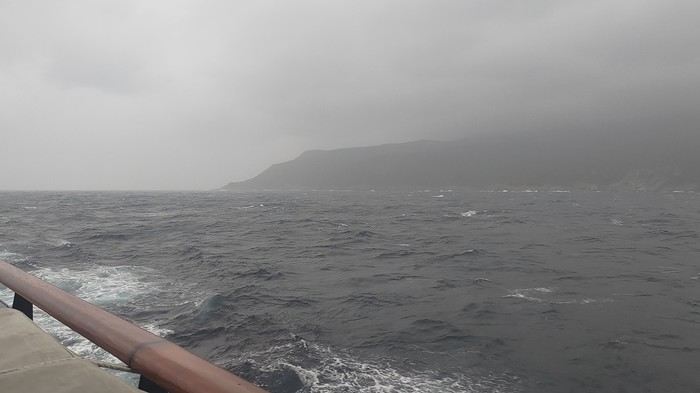
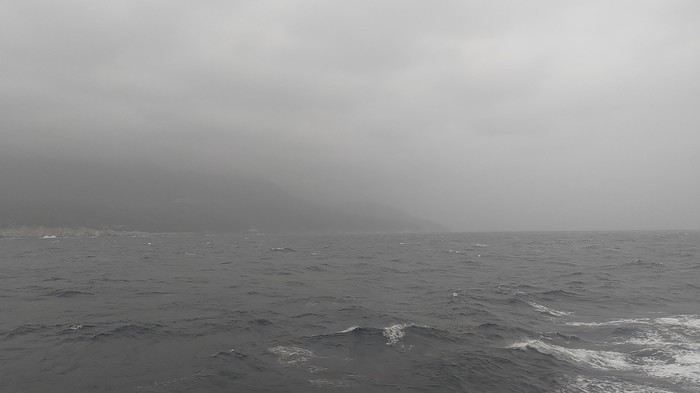
This morning, the navigation around the Mount Athos peninsula was supposed to let us admire the Orthodox monasteries perched on Mount Athos and the landscapes of this legendary peninsula. But the weather didn’t cooperate. The fog and low clouds were so heavy that it felt like we were in the Chilean fjords.
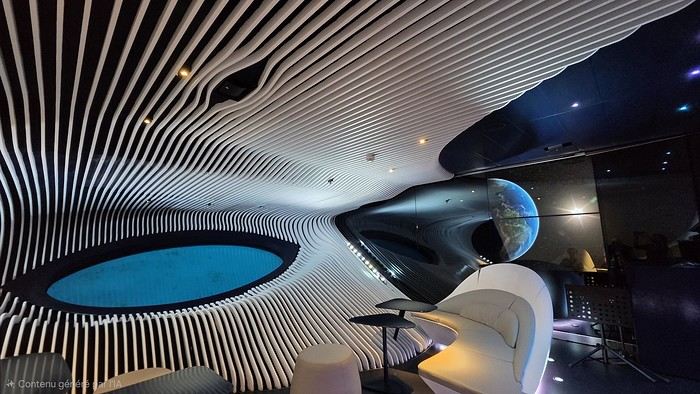
In the morning, we were invited to watch a documentary film in the Blue Eye lounge.
Blue Eye is an underwater lounge located below the waterline, featuring two large portholes offering a plunging view of the marine world. Its decor, inspired by both whale baleen and the eye of a whale, sparks the imagination, blending the universe of the Nautilus with that of spaceships.
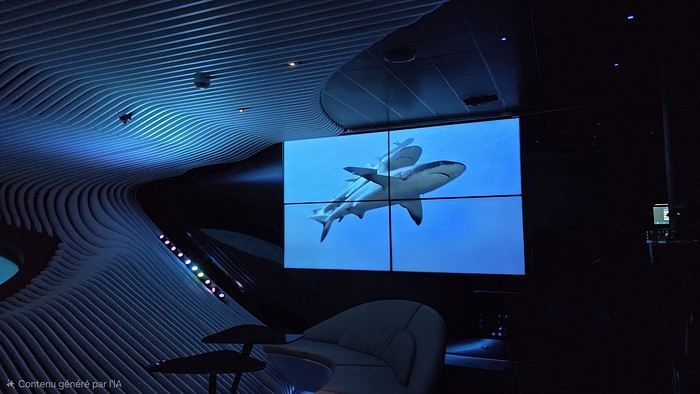
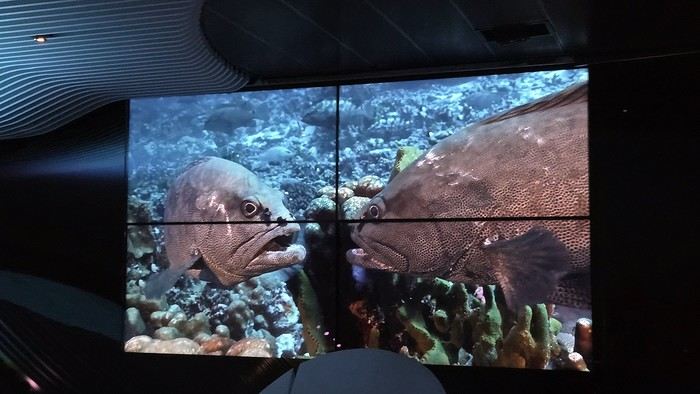
It was in this underwater atmosphere that a stunning documentary titled "700 Sharks" was screened. Packed with breathtaking images, it immerses us in the behavior and hunting techniques of sharks in the Fakarava Pass. Every year, these predators wait for the arrival of groupers, which gather there to reproduce, turning it into a real feast.
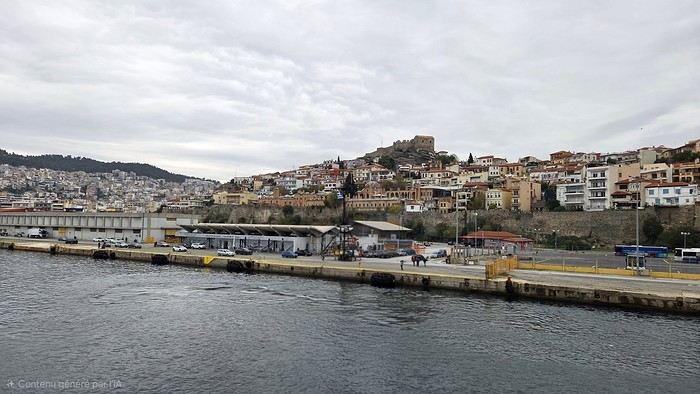
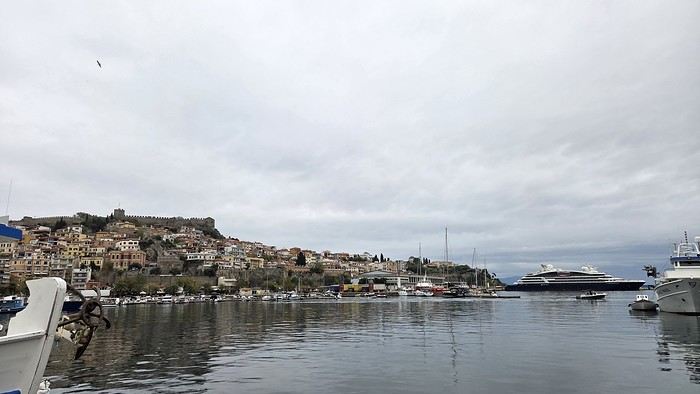
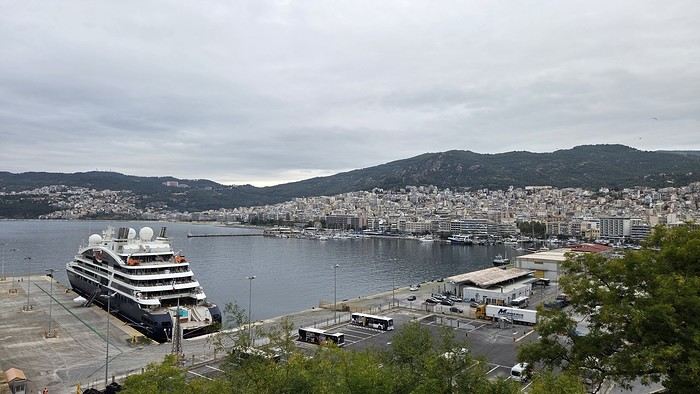
Our arrival in the port of Kavala was once again under a gloomy sky, but fortunately, it wasn’t raining.
Kavala once belonged to the Ottoman Empire and was a city of great importance. It had Muslim buildings, a Turkish population, and Ottoman institutions.
At the beginning of the 20th century, Greece and Turkey carried out population exchanges. These painful events now fuel "roots tourism": Turks, descendants of displaced people, come to Kavala to relive or discover this history.
We booked a walking tour to visit the city of Kavala. The guide wasn’t very engaging—she showed us her kindergarten, the location of her parents’ apartment... But honestly, the interest was pretty limited.
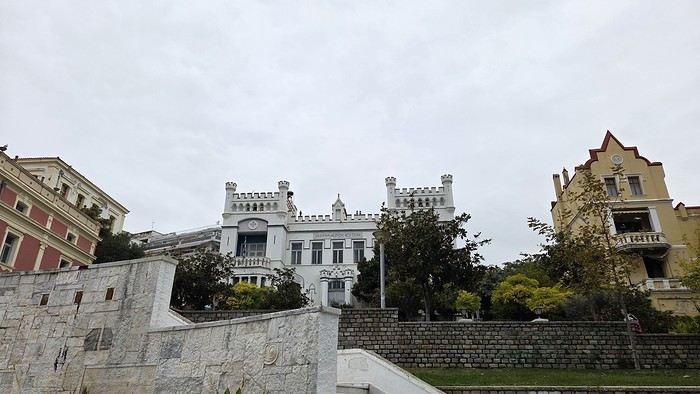
This beautiful building is now Kavala’s town hall; it used to be the home of a Hungarian tobacco merchant.
Next came the visit to the Tobacco Museum to learn all about tobacco cultivation and production in Eastern Macedonia and Thrace. Housed in a former tobacco leaf processing factory, it might be interesting for smokers... For others, the smell isn’t very pleasant, the visit is boring and long. The only upside is that there are restrooms... But the place is so run-down and in such poor condition that it’s better to skip it.
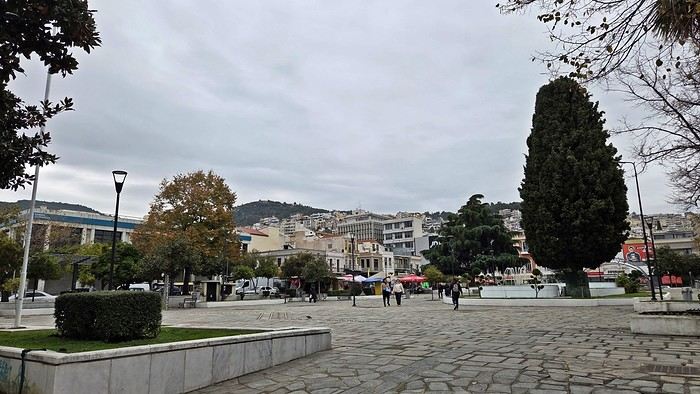
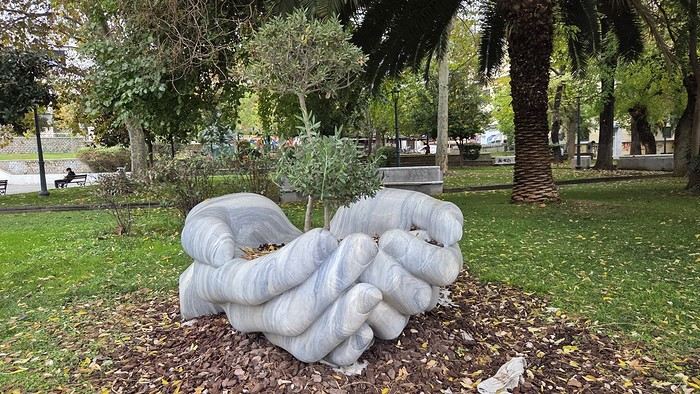
A bit of greenery to clear our lungs.
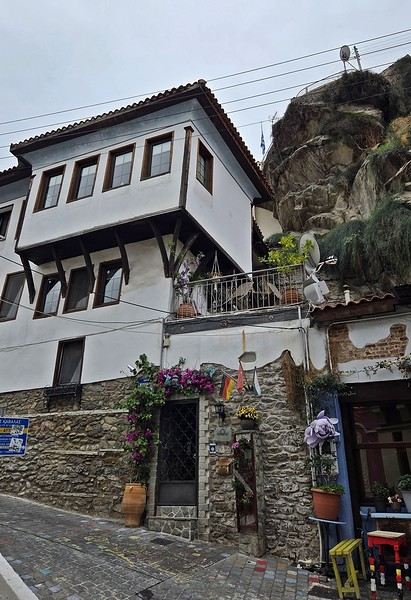
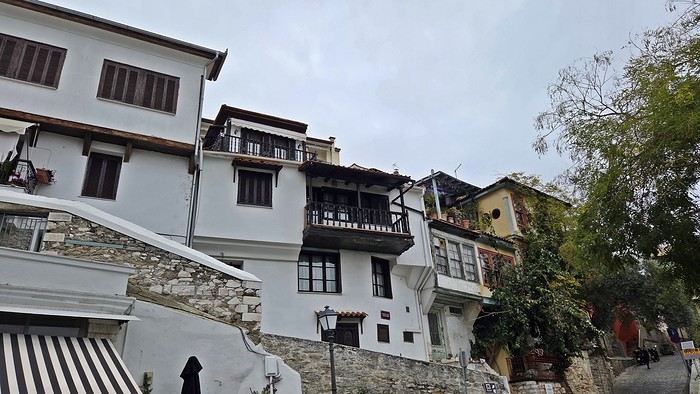
A few picturesque houses stand in this street where the Imaret of Kavala is built, though we only see its outer walls. It was founded in the early 19th century as an Ottoman complex with educational, social, and religious purposes. After falling into disuse, it was transformed into a luxury hotel in 2004, hinting at its beauty inside.
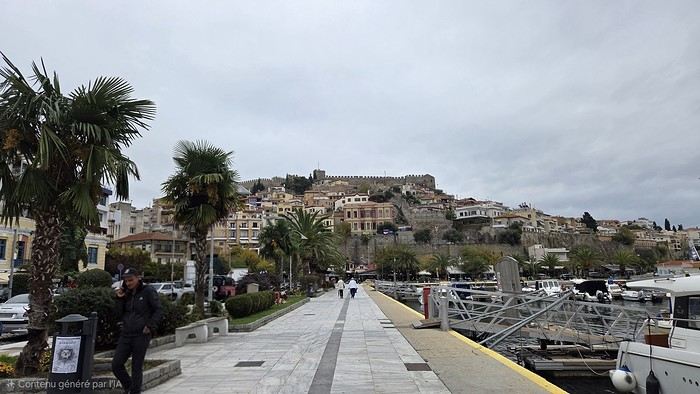
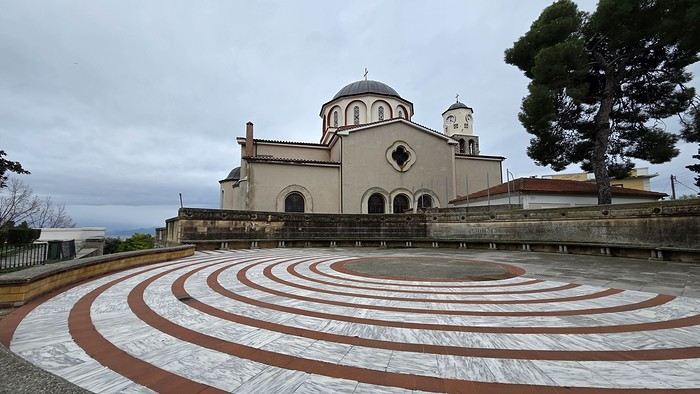
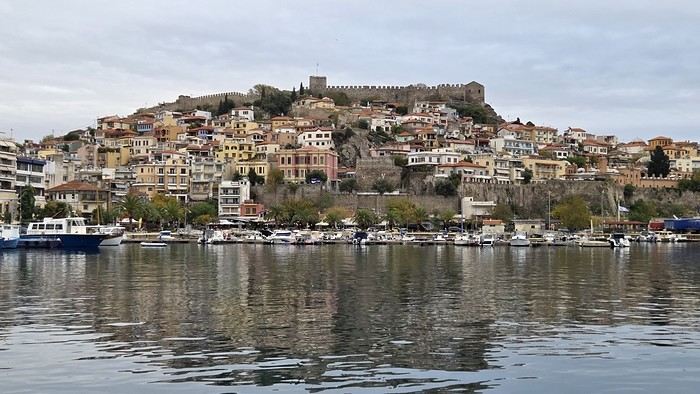
At the top of the hill, there’s a fortress, an Ottoman cemetery, and a church—but all these sites are closed.
The visit ends here, led by a monotonous guide who didn’t tell us anything interesting about this rather charm-free city.
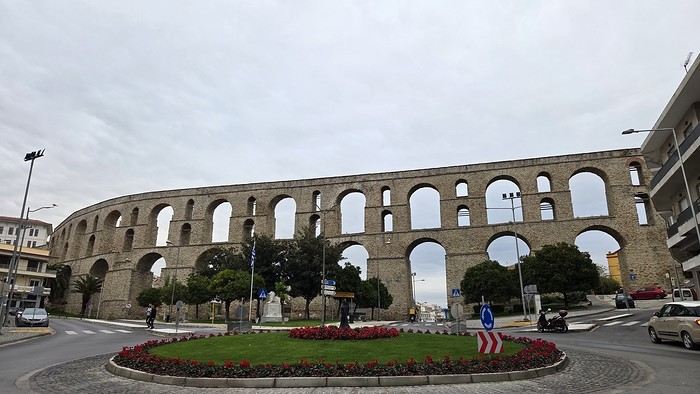
We extend the visit with other Bougainville passengers, wandering through the town’s narrow streets until we reach the aqueduct—the guide didn’t bother showing it to us, even though it was on the itinerary.
We finish with another stroll along the port. Night falls quickly, especially when the sun doesn’t show itself. The stop would’ve been much nicer in the sunshine.
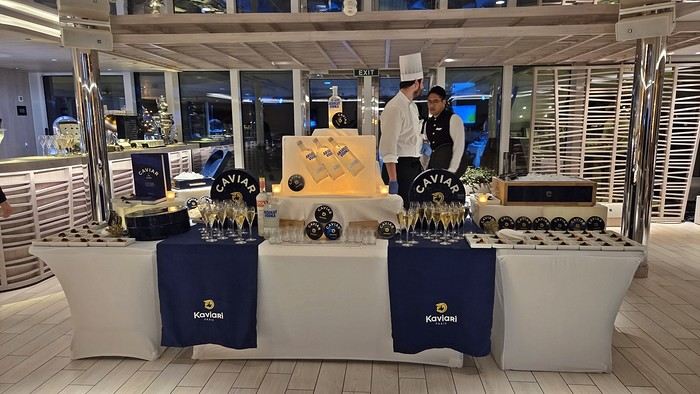
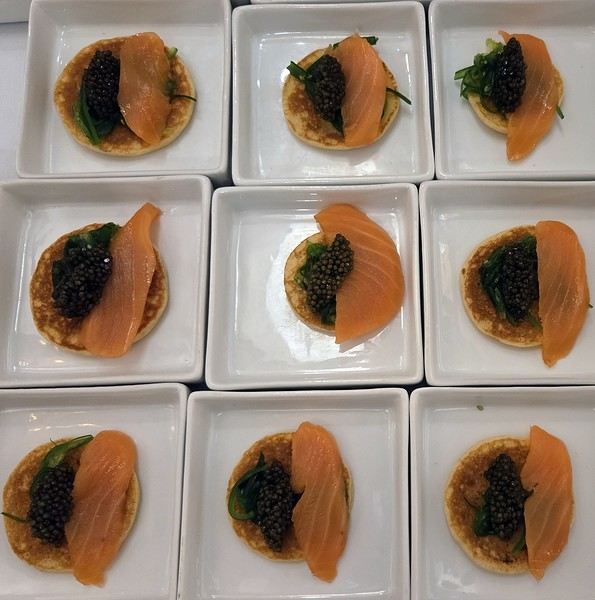
That evening’s activity is a caviar tasting.
Too bad the canapés are topped with salmon—it adds volume but masks the delicacy of the sturgeon eggs.
Hi Catherine,
It sounds like the sun often let you down, but hey, as long as it’s not raining, that’s already not bad!
How do you organize your visits, knowing that with Ponant, you never know the duration or time of the stops?
Because of that, do you often take excursions or do you make half-day or full-day plans?
Isabelle, amoureuse des croisières:
COSTA, MSC, ROYAL CARIBBEAN, CELEBRITY, PRINCESS, NCL, HAL, PONANT, OCEANIA, AZAMARA
A VENIR
CELEBRITY EQUINOX 09/11/2026 Grèce Italie Malte
You're right, we really weren’t lucky with the weather on this cruise. I never would’ve imagined such bad weather before we left. I even regretted not bringing more sweaters... The t-shirts stayed in the suitcase, and the weather was nicer and warmer in Normandy than what we had! 😏
For planning my stops, it’s pretty simple—I always prepare way more activities than we could ever do, and once we’re there, we choose based on the time we have and the weather. We rarely do everything I’d planned. Plus, since we love walking, we almost always go on foot, so no constraints.
On this cruise, which wasn’t an expedition cruise, we had a daily excursion to choose from among several labeled "free," but I consider them more like included in the price. 😉
And you’ll see at the next stop—I completely messed up my choice, which ruined the whole stop. 😠
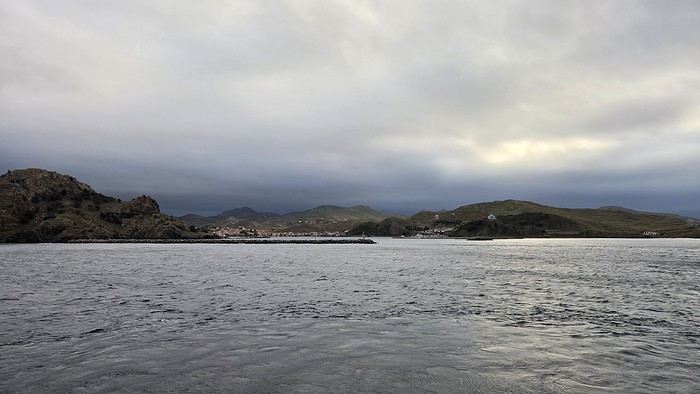
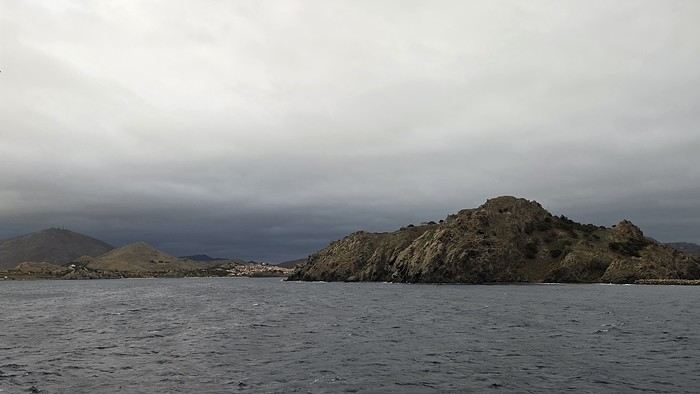
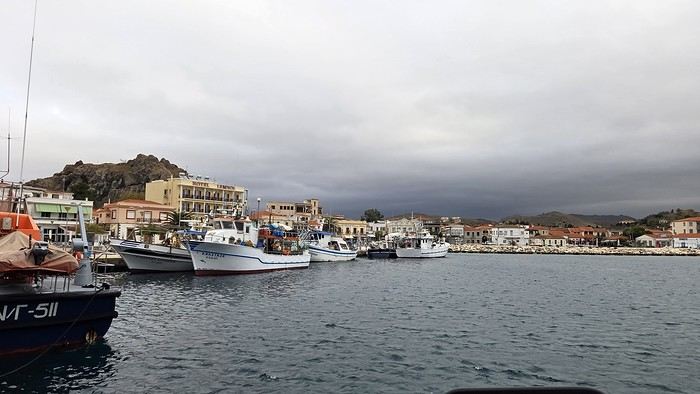
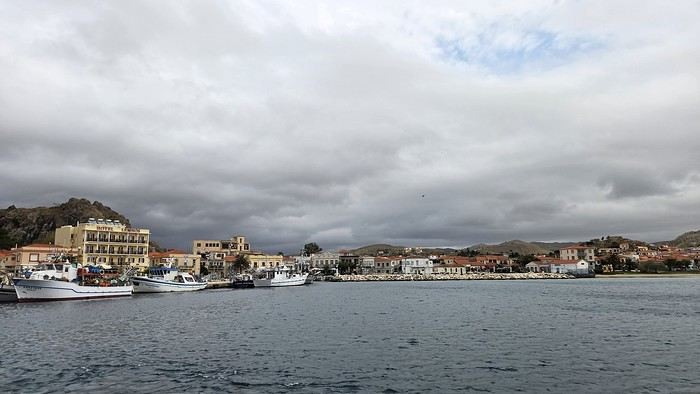
Limnos is an island located in the middle of the northern Aegean Sea, away from the tourist crowds.
The weather today still isn’t on our side. Originally, we were supposed to spend the entire day on this island. A few weeks before the cruise started, we were informed that the stop in Limnos would be shortened to allow more time at the next stop on the island of Hydra.
This is the most disappointing and frustrating stop of this cruise, and it’s my fault. When the day was cut in half, I didn’t think to adjust my plans.
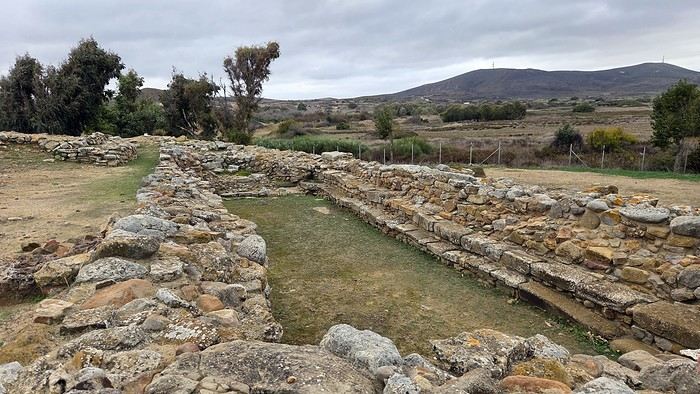
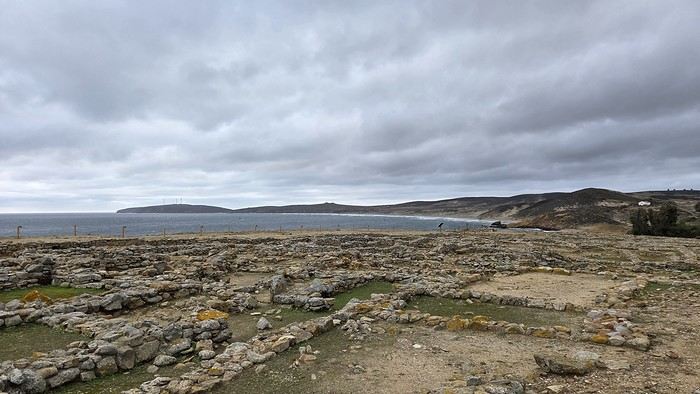
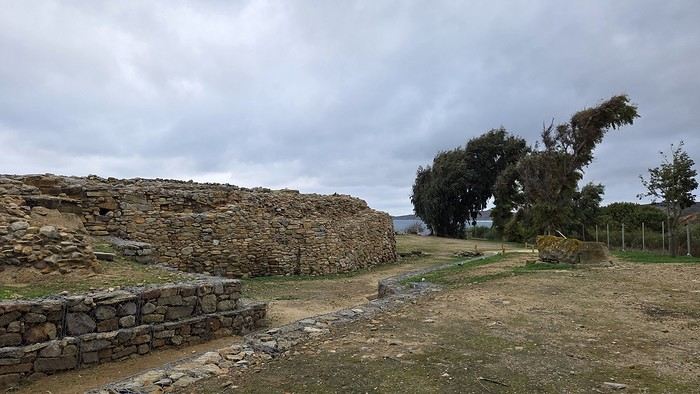
The excursion I chose takes us to the archaeological site of Poliochni on the eastern side of the island. This site is considered one of Europe’s earliest urban centers, sometimes even called "the oldest city in Europe" when referring to the Bronze Age. The discoveries made here span from 3100 BC to 2100 BC.
Houses, paved streets, water drainage systems, wells, and public buildings have been uncovered here.
The site shows that even at the beginning of the Bronze Age, organized societies existed with urban planning, collective life, and governance. It illustrates the earliest metallurgical and commercial exchanges with other regions of the Aegean Sea.
Some communal spaces are considered the oldest traces of civic organization in Europe, like this rectangular building with tiered benches on each side, interpreted as a parliament or assembly for notables. This is, according to some, the oldest trace of civic organization in Europe.
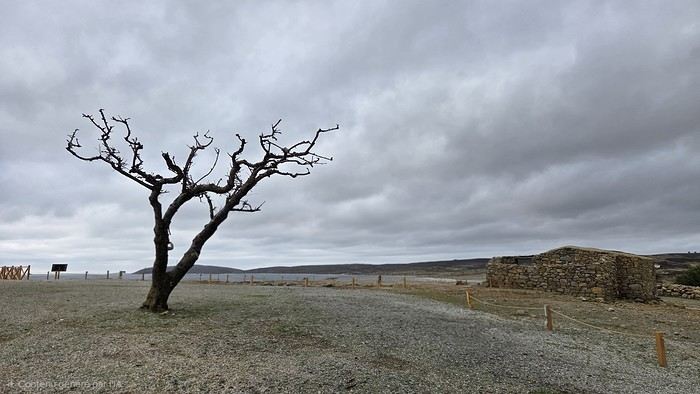
Once again, I’m disappointed that our guide doesn’t have the storytelling skills of a good guide to bring this historically rich visit to life. There’s no depth to the narrative—the guide’s delivery is flat and fails to spark any interest. The visit is boring and, above all, freezing, with a biting wind and gloomy skies.
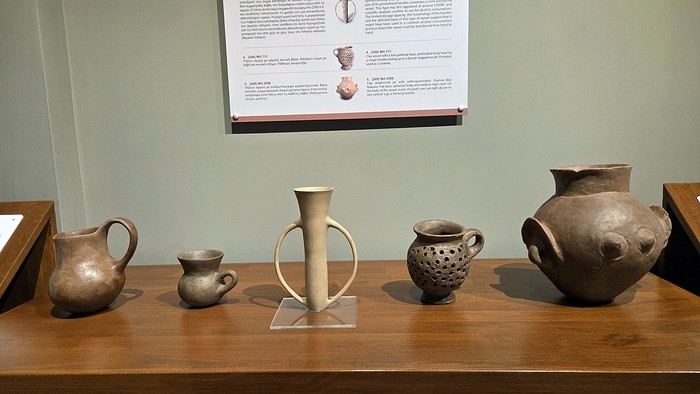
There isn’t much left to see of all this history, and we’re relieved to take shelter in the small museum to cut this tedious visit short.
On the way back, we stop at a winery for a tour and tasting of Limnos island wines. The estate is run by French-speaking producers who trained in the Bordeaux region. The tour consists of quickly walking through large warehouses filled with huge stainless steel vats before arriving at the tasting room.
The wine is loaded with sulfites—undrinkable for me—and the cheese isn’t any more natural or better.
It’s been a pretty dismal morning. Time seems to drag before we get back on the bus. We’re still 40 minutes away from the port, and if we’d been closer, we could’ve walked back earlier.
And to top it off, at the last minute, the stop is shortened even more due to weather conditions. From the bus, we have to head straight back to the ship without even being able to stroll around the small port.
I really regretted this excursion. We would’ve been better off exploring the village and surrounding area where we docked on our own. Plus, the weather was better there.
The afternoon is spent (already) starting to pack our suitcases to free up time tomorrow, which will be our last stop. A one-week cruise goes by so fast!
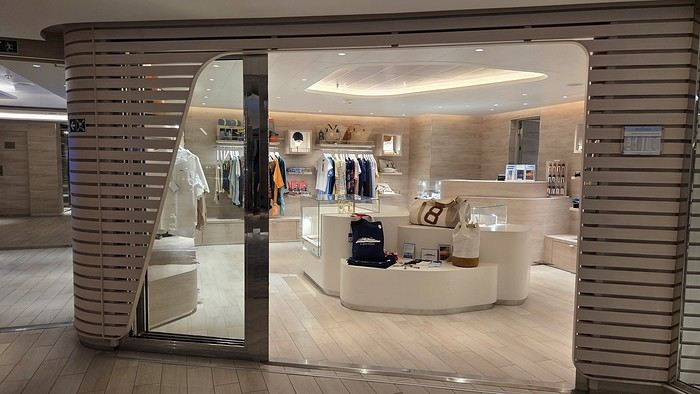
We still have part of our onboard credit left to spend, so the only solution is to head to the ship’s boutique.
The Farewell Gala dinner is tonight, just as delicious as the welcome one.
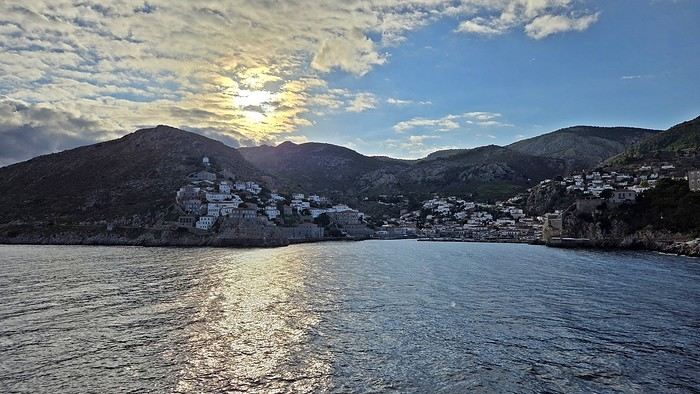
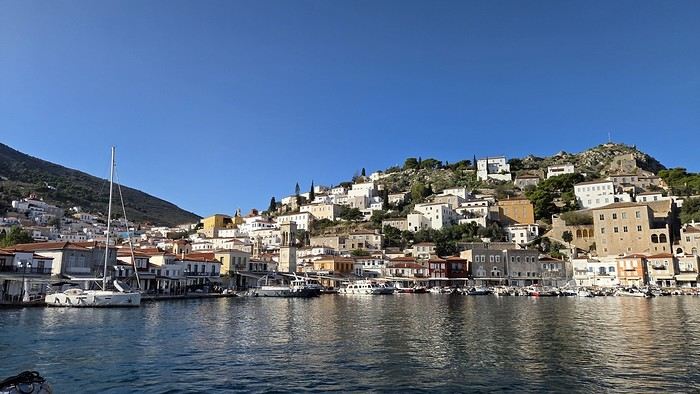
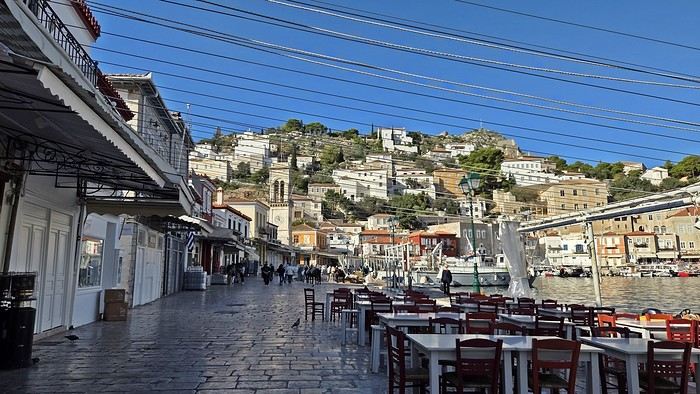
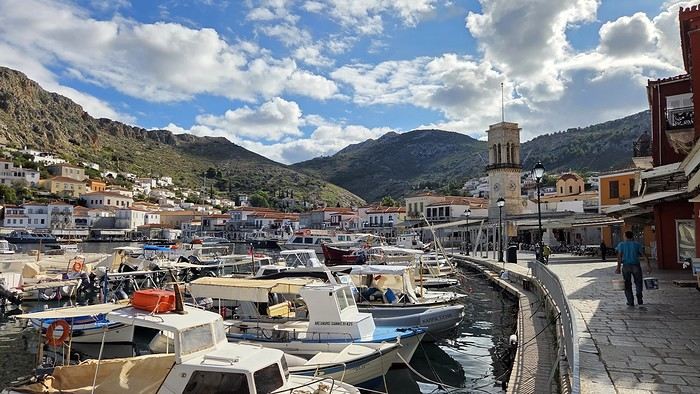
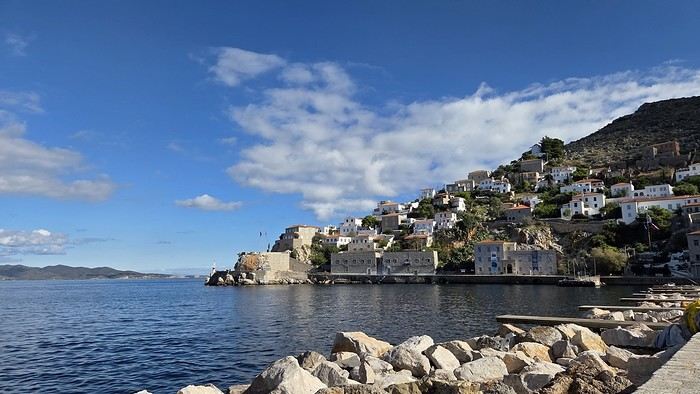
At last!!! We arrive under a magnificent sun, in front of this splendid village clinging to the rocks at the bottom of a cove.
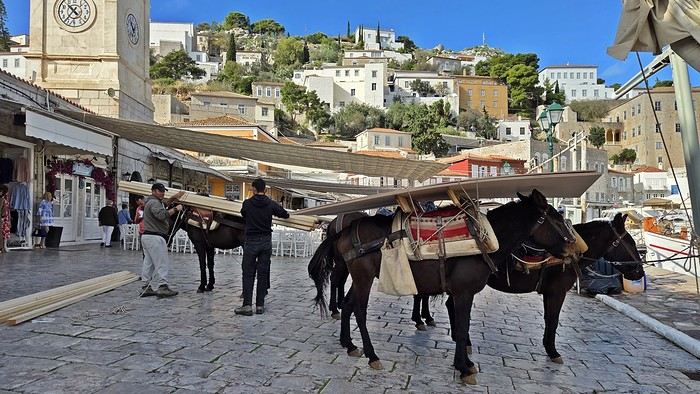
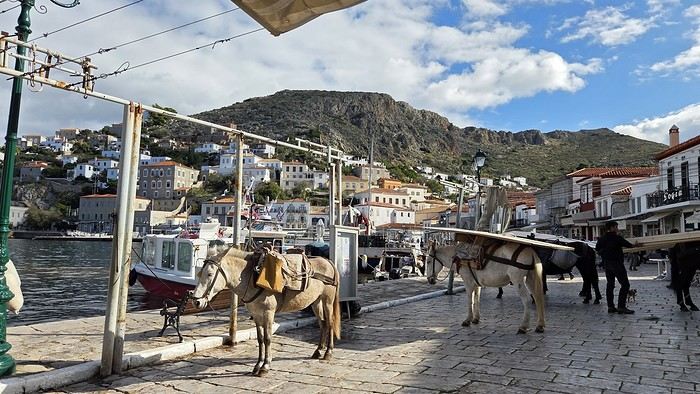
Hydra is an island completely off-limits to cars: you get around exclusively on foot or by water taxi. Wandering around the island, especially through the narrow streets of the town, is an integral part of the visit. The name "Hydra" comes from an ancient Greek term meaning "water," a tribute to the many wells that were once found on its small 49 km² surface.
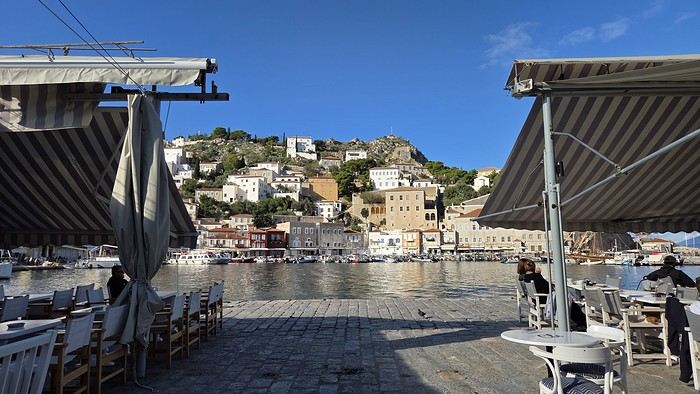
On the port, the large terraces invite you to sit down and fully savor the moment.
But the walk is so beautiful that it beckons you to keep exploring.
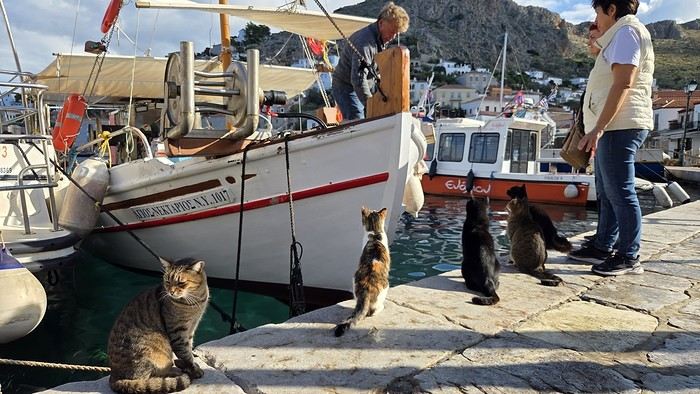
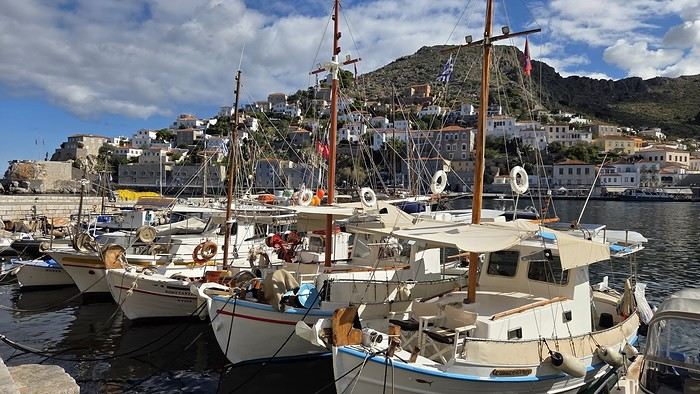
The fisherman’s return isn’t without interest…
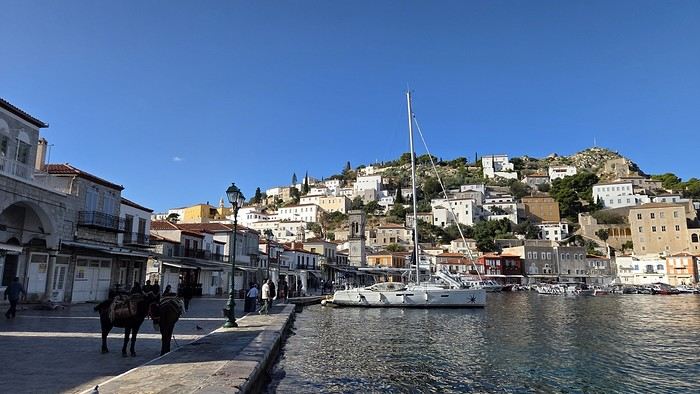
With no motorized vehicles, you’ve got to find an adapted way to transport materials.
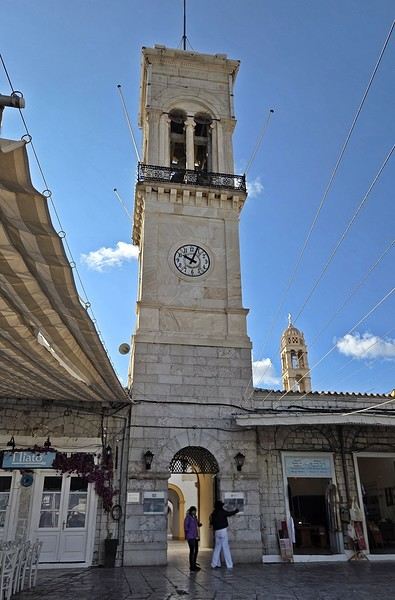
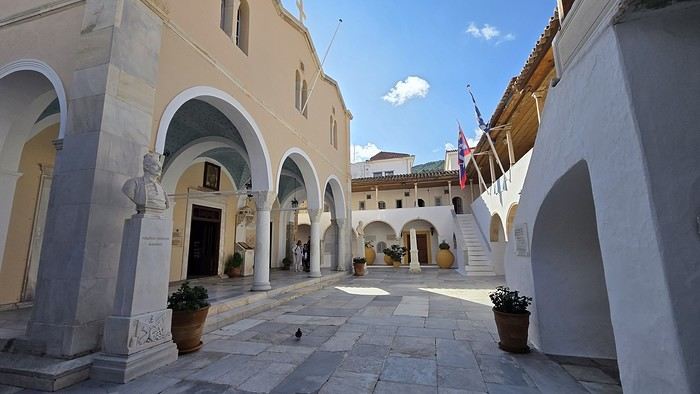
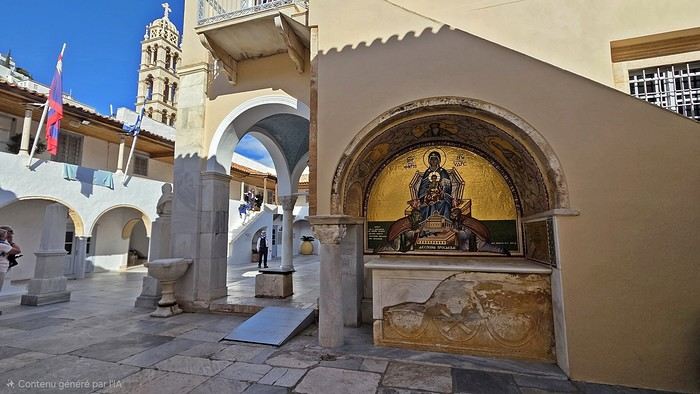
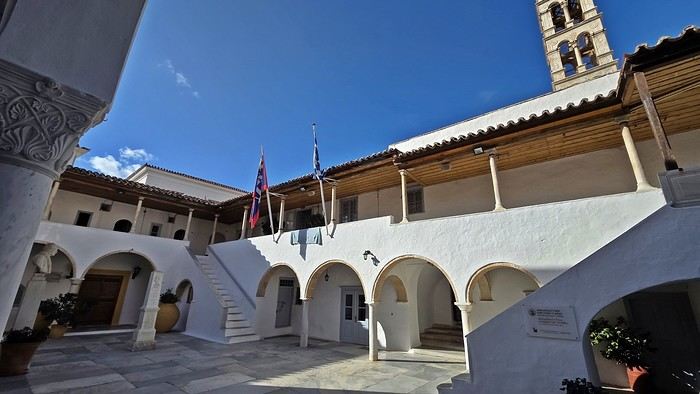
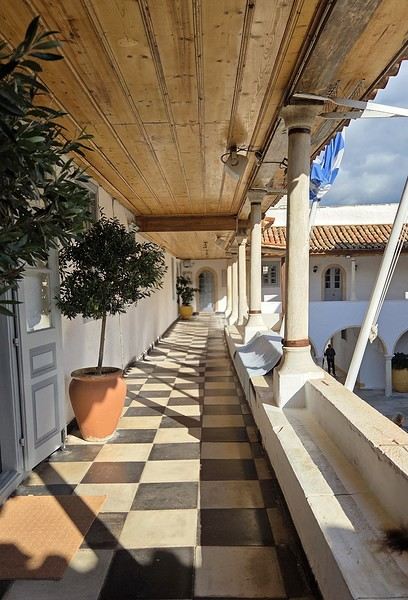
Walking along the harbor, we reach the Komiseos Theotokou Monastery, located just behind the waterfront. You enter it by passing under the clock tower.
The place exudes a peaceful and serene atmosphere.
It’s possible to walk around the church thanks to an ambulatory on the first floor of the surrounding building, which offers a lovely view of the whole complex.
After wandering through the alleys behind the village, we follow the harbor toward Agios Konstantinos (Saint Constantine Church). It’s recent and nothing remarkable, but its elevated location supposedly offers a spectacular panorama of Hydra.
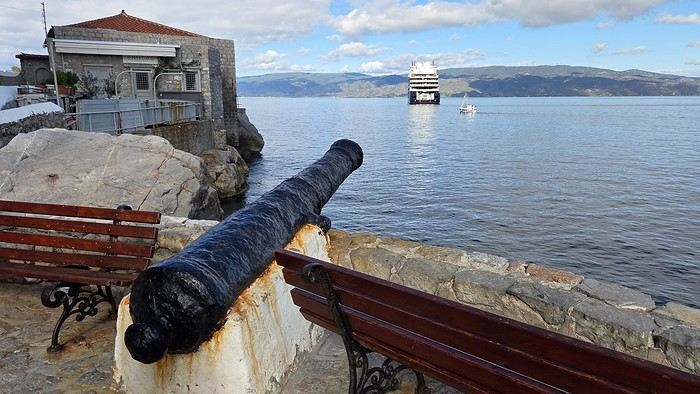
It’s not great to be in the line of fire of the island’s defenses. Let’s hope everything goes well until tonight…
Thanks for the details on preparing for the stops without ever knowing the exact times...
Your last stop with the sunshine and blue skies made all the difference! 😊
Isabelle, amoureuse des croisières:
COSTA, MSC, ROYAL CARIBBEAN, CELEBRITY, PRINCESS, NCL, HAL, PONANT, OCEANIA, AZAMARA
A VENIR
CELEBRITY EQUINOX 09/11/2026 Grèce Italie Malte
The descriptions of the excursions are always interesting.
It’s true that the quality of a guide—whether male or female—is very important during visits.
Have a great day! Guylène
Voici un petit compte rendu de ma croisière à bord du CELEBRITY INFINITY du 14 au 23 février circuit: Athènes / Thessalonique / Thessalonique/ Kusadasi / EN…
Un petit retour de notre croisière de 12 jours début novembre sur le Lirica Le Lirica bateau à taille humaine 2500 passagers pour une croisière à l'ancienne…
Quel bonheur de vous retrouver ici et de reprendre les bonnes habitudes, après tous ces mois d’interruption. J’espère que le récit de ce petit tour en…
Circuit prévu: départ de Venise, Corfou, Mykonos, Santorin, Dubrovnik, Venise. Voici ce que j'ai ressenti durant cette croisière, je vais vous l'expliquer en…
Nous voici de retour de notre croisière Turquie, Iles Grec. petit bateau, comme le souhaitais madame. les excursions a la hauteur de nos attentes. personnel…
Hello!
After a lot of hesitation between different cruise lines (Explora, Oceania, YC, HAL, NCL) and several destinations like Norway, Ireland, and Iceland,
I finally chose NCL’s Star for Iceland.
I had already looked at this itinerary when I went to Scotland in April with CFC, but it was really expensive.
You should know that CFC often offers last-minute deals 45 days before departure (the point when you can no longer cancel or modify).
So, I got a great opportunity and grabbed it.
Departure is on August 23rd.
hi there
Here’s the cruise schedule for 2026.
It’s a great way to get ideas and maybe even meet up with other members.
2 essential rules:
1) never "quote" the calendar when replying—this’ll avoid any confusion
2) follow the format below
DD/MM - username / SHIP IN CAPS / number of days / cruise title / departure port
DON’T FORGET THE SPACES between the / /
REMINDER Despite my requests, few people follow the requested format. Cruises that stray too far from it won’t be listed anymore—sorry!PLEASE respect the templates!
COPY AND PASTE THE FORMAT BELOW AND REPLACE WITH YOUR DETAILS IF YOU’RE STRUGGLING
DD/MM - username / SHIP IN CAPS / number of days / cruise title / departure port
DON’T FORGET THE SPACES between the / /
It takes time to fix mistakes, so THANKS TO EVERYONE for your help!
YOUR TURN 😉
NUMBER OF CRUISES 2026:
JANUARY
FEBRUARY
MARCH
APRIL
MAY
JUNE
JULY
AUGUST
SEPTEMBER
OCTOBER
NOVEMBER
DECEMBER
Hi everyone! I’m used to sailing on a sailboat with two or three people—it’s amazing. But I’d love to try the experience of a cruise. Just to clarify, I’ll be going alone. My first question: are there other solo travelers on these cruises, or is it mostly couples and families?
For a first cruise, I’d prefer a short one (maximum 8 days). Do those exist? And on the smallest boat possible. I live in Marseille, so a departure from Marseille would work, but I’m open to other ports too. If you have a cruise line to recommend and a destination you’ve enjoyed, or if you’ve had a great experience on a more intimate-sized ship, I’d love to hear about it!
If there’s one trip I’ve always wanted to take, it’s a long boat journey far from my daily routine—something like crossing the Atlantic. I first thought about traveling on a cargo ship or similar, as some of these boats used to accept individual passengers, but I’ve read that this has become very rare since COVID. Plus, the options that might work for me are way out of my budget, like Neoline, for example.
A cruise seems like the best solution for me, especially since what I really love is the idea of a long stay on a ship—making stops in different places, exploring them, the change of scenery, and a real break from the daily grind. I’ve never been on a cruise before, so I was thinking of doing a 21-day cruise between a port in mainland France (Marseille) and Pointe-à-Pitre. The departure port doesn’t really matter—Marseille, Le Havre, or even a nearby European city would work.
Since I want to travel solo, I’m really keen on cruises designed for solo travelers. MSC has one from Marseille to Pointe-à-Pitre, lasting 21 days, departing next November (so in a few months). The price is within my budget, just over 1800 €.
I see that other cruises with similar routes and durations are planned for next year, November 2027, but the prices are totally different—around 3500 €, which is clearly out of my budget.
So, my question is: do you think I should wait for a possible price drop for the 2027 cruises (if I understand correctly, prices are adjusted based on how full the ship is and how close the departure date is) or should I book the one in November 2026? I could easily take three weeks off this fall. Also, is it too late to book for November 2026? I’ve read that visas might be required for some stops.
For the rest—accommodation in Guadeloupe and the flight ticket back to France—it’s not a problem; I can sort that out pretty easily.
Hi everyone ...
We’re planning to do the 83-day Cunard cruise ...
departing from Southampton on January 10, 2027 aboard the Queen Anne ...
has anyone done it ... or have any info ... or tips ...
for example ... deck and cabin choices ... drink packages ... excursions ... etc.
... anything good to know about this ship???
Thanks everyone ...
Hi everyone,
I’m staying in a suite on the Pacifica in October and I can’t find any details about the suite benefits beyond the elite restaurant, the butler, and the espresso machine.
What about breakfast and meals served free in the cabin, and the spa?
Costa’s been cutting back on perks for Gold members, and it seems like suites are next.
Thanks for your replies!
We’re doing the next CFC cruise in Norway and we’re looking for the excursion program and their prices.
For those who’ve done this cruise before, could you share this info with us?
I know the company doesn’t release it until 8 weeks before departure. I like to plan ahead and avoid any unpleasant surprises.
Hello,
We’re back from this cruise.
Boarding in Dunkirk: The doors opened around 12 PM. Since we were a bit early, I asked if my husband, who uses a walker, could wait inside instead of outside. I left him with the two suitcases and our two backpacks in the small hall while I parked the car in the reserved CFC parking lot for 10 € per day.
The shuttle that was supposed to take people from the parking lot to the model pavilion was supposed to arrive in 5 minutes, but after 15 minutes, nothing. After waiting 15 minutes, I saw a man walking and asked if I could follow him. In 15 minutes, we arrived, and still no sign of the shuttle—it must have passed us. Arrived at the model pavilion.
My husband had already checked in the suitcases with the help of a CFC staff member. The remaining formalities were completed quickly. We were on board by 12:15 PM. Headed to the buffet on deck 11 and waited in a lounge to access our cabin.
At 2 PM, we discovered our balcony cabin on deck 9 at the rear: spacious with a large balcony compared to MSC/COSTA.
Since we were at the rear, cabin 9202, there was always an issue with elevator number 4: "priority."
Elevator number 2 stops at deck 10... and elevator number 3 was often out of order, leaving only number 1 for those with mobility issues to reach the buffet, especially for people who struggle with stairs. Note: only one child on board and lots of "gray hair."
DAY 2: At sea. Lots of activities offered.
Day 3: GOTHENBURG (Sweden). Sunny, 19°C at 11 AM.
Excursion booked with CFC: Gothenburg and Haga for all.
Interesting visit with a great guide. The HAGA district, in our opinion, is full of cobblestones and nothing special, not suitable for people using a cane or wheelchair. Elevator number 3 was out of order again.
Day 4: Copenhagen. 15°C in the morning, showers in the afternoon.
We didn’t book an excursion since we’d already stopped here with CFC in 2025, and based on advice from this forum, we took the hop-on/hop-off bus right in front of the ship. I still went to see the Little Mermaid again.
No TV, but the elevator was fixed.
DAY 5: At sea. Still no TV.
DAY 6: GDANSK (Poland). 15°C, rain all day.
There’s a shuttle to get to the city center.
We took the excursion: Panorama of Gdansk.
The guide left us at the entrance of the city center for 45 minutes, telling us what to visit. Meet-up for the rest of the tour at 3 PM. The bus left at 3:15 PM to cover 10 km to see St. Mary’s Cathedral. We arrived at 4:16 PM... The guide said there are often traffic jams in that direction. We had 10 minutes on site before heading to see the lighthouse and the Westerplatte monument, where we also had 10 minutes.
Many of us wondered why we didn’t do the tour in the opposite direction since they knew there would be traffic...
I went to reception to complain about the organization. The staff member read me the program: we were supposed to start with the lighthouse, then go to the cathedral and stay for 30 minutes before heading to the center of Gdansk for a short guided walk with some free time to buy souvenirs, etc.
The guide did the complete opposite of what was planned and didn’t even give us a guided tour—just dropped us off in the city...
DAY 7: Bornholm Island (Denmark). 14°C, a few sunny spells.
We saw in the excursions that there was a walking tour of RØNNE. So, like many others, we explored on our own. There was a small orchestra welcoming us at the port and two people with city maps. We took the shuttle to leave the port—it ran every 15 minutes. The tourist office was next to the "shuttle bus." A pleasant visit at our own pace.
DAY 8: KIEL (Germany). 18–23°C, nice weather.
We took the "Kiel for all" excursion. Great guide and interesting visits.
The port is in the city, and in 10 minutes, we were in the city center by following a blue line on the ground from the port. Elevator 3 was stuck again... and the TV was back.
DAY 9: At sea. Elevator 3 works.
DAY 10: At sea. Elevator 3 is out of order again...
DAY 11: Disembarkation in Dunkirk.
Cabins had to be vacated by 7:30 AM. Buffet open until 9 AM.
Elevator number 1 was "reserved," leaving only number 2, which doesn’t go up to deck 11... a problem for people with mobility issues who had to cross the entire deck 11 and try to use one of the four working elevators at the front, which were crowded.
My opinion: Interesting stops.
The onboard staff were always welcoming, smiling, and mostly French-speaking.
Evening shows were better than in March/April 2025—better singers, dancers, and presenters, and the costumes were improved.
I liked the "magician" shows less.
There were three onboard lectures by a very cultured person, but they went off-topic and were too historical for my taste. I didn’t attend the other two; my husband went to the second but not the third.
For this cruise, there was a bridge theme, but we’re not players or interested.
We didn’t take a drink package on board—water, coffee, tea, and herbal teas were available.
We had a water leak in our cabin the night before disembarkation. We reported it, and after the technical staff came (with a translator who didn’t speak English), we were asked to leave the cabin for a while for repairs. We went to a lounge, and after 1.5 hours, I checked in at reception. The repair took longer than expected... we had to change cabins... not ideal the night before disembarkation. No balcony cabins were available, so we got an ocean-view cabin, 6075, with a bathtub (impossible for both of us to use). We packed our suitcases, took a shower in our cabin, and moved to the new one. Noise from chairs until 12:30 AM because the cabin was under a lounge, and constant ventilation noise in the hallway... sleep was hard to come by.
Disembarkation: Well organized. We were helped with transporting the two suitcases and bags to the waiting room while I took the shuttle to get the car.
Guylène
Hi there,
Here’s the 2027 cruise schedule.
It’s a great way to get ideas and maybe even meet up with other members!
2 essential rules:
1) Never "quote" the schedule when replying—this avoids any confusion.
2) Follow this format:
DD/MM - username / SHIP IN CAPS / number of days / cruise title / departure port
DON’T FORGET THE SPACES between the / /
REMINDER Despite my requests, few people follow the requested format. Cruises that stray too far from it won’t be listed anymore—sorry about that. IMPORTANT Please respect the templates!
PLEASE COPY AND PASTE THE FORMAT BELOW AND REPLACE WITH YOUR DETAILS IF YOU’RE HAVING TROUBLE
DD/MM - username / SHIP IN CAPS / number of days / cruise title / departure port
DON’T FORGET THE SPACES between the / /
It takes time to fix mistakes, so THANKS TO EVERYONE for your help!
YOUR TURN 😉
NUMBER OF 2027 CRUISES: 1
JANUARY
14/01 - poupou10 / AZAMARA JOURNEY / 74 days / South America Tour / Miami
FEBRUARY
MARCH
APRIL
MAY
JUNE
JULY
AUGUST
SEPTEMBER
OCTOBER
NOVEMBER
DECEMBER
We’re taking an MSC cruise in May, and after the Cinque Terre, we’ll be stopping in Naples. We’d like to know if it’s possible to walk out of the port quickly and reach a nice area of Naples on foot (we’re two older people). While we’re at it, I’ll ask the same question for Palermo, since we’ll be there the next day. Thanks for your replies.
hi,
I’m leaving Hamburg for Iceland at the end of July. The boat arrives in Reykjavik on Tuesday, August 4th at 8 AM, and I’d like to book a day trip like the Golden Circle or Secret Lagoon… The sites like GetYourGuide and others list departures at 8 AM. If you’ve used these sites with the MSC Preziosa, could you let me know how to go about it?
Thanks! 😉
allyMB007
Hello everyone,
It’s with immense sadness that I learned this morning of the passing of our friend Nathalie (nadu). Many of us knew her through this forum, which she loved so much. She enjoyed reading your travel stories, joining discussions, sharing her cruise reviews, and offering valuable advice—always with kindness, gentleness, and discretion.
For me, Nathalie was so much more than just a cruise enthusiast. She was a friend, a deeply kind person who was always there to listen, despite the many health challenges she faced with tremendous courage. We corresponded regularly, and sometimes we had the chance to visit each other’s homes or attend the cruise show together with our respective husbands.
We shared a common dream: when we both retired, we had planned to finally go on a cruise together. Life had other plans, and that trip will forever remain a journey we never had the chance to take. That thought weighs heavily on my heart today.
I’ll remember her as a gentle, generous woman who was always ready to help others. Her presence on this forum will leave a huge void, just as her friendship has in my life.
I send my sincerest thoughts to her husband, her family, and all those who had the chance to know her.
Fair winds, Nathalie. I like to think you’re now sailing on an infinitely calm sea, under an eternally blue sky. You’ll remain in our thoughts and hearts every time we talk about cruises or set off on a new journey.
Rest in peace, Nathalie.
For those who’d like to send a message of comfort and sympathy to her husband, you can send me a PM, and I’ll pass it along.
THANK YOU
Hello everyone,
So happy to be back on this Forum!
We’re heading off on another cruise—our 7th—after a 5-year break...
We’ll be leaving from Venice on April 26th with stops in Kotor, Mykonos, Santorini, and Ancona.
Could you help me plan the stops by sharing tips, tricks, and advice?
For those who already know me, you know we prefer not to take the cruise line’s excursions but instead organize everything ourselves.
Thanks in advance to everyone, and looking forward to chatting with you all!
hi there, a group of friends and I are going on a cruise at the end of June with CFC in Norway. I’d love to get some info on the different stops we’ll be making. Most of them are one-day stops (from around 10 AM to 8 PM on average). Here are the stops: Andalsnes, Trondheim, Honningsvåg, Alta, Hellesylt, Sandane, Austefjorden.
Thanks in advance to anyone who can share what there is to see or do in these places.
When I get back, I’ll post what we did—it might help others who come after us.
Also, does anyone know if the boat sticks to the arrival time in Dunkirk for catching tickets to head back south? We’ll plan a buffer just in case.
Hi there, The day before boarding the Costa Favolosa for the Norwegian Fjords cruise departing from Hamburg, I'd like to book a hotel. Which one would be the most convenient location-wise relative to the port?
Thanks in advance for your reply.
Hello,
We’ll be sailing on the Renaissance with CFC to southern Norway from July 4 to 11, 2026, departing from Dunkirk (the cruise was booked through "Planète Croisière").
When entering some personal details or pre-selecting options on the CFC website, I’m wondering about the "optional" categories for drinks and WiFi.
I’m actually a bit surprised by these extra charges, as we weren’t used to them on other cruises (Australis in Patagonia; Hurtigruten’s Coastal Express in Norway and Alaska; Rivages du Monde in the Arctic or on the Douro River; a Nile river cruise in Egypt), where we sometimes had access to basic drinks at meals and free WiFi when near land.
Anyway, for those who’ve already taken a CFC cruise on the Renaissance, could you share some advice? Specifically about the most basic drink package, called "Fraîcheur" (238 € for two), which doesn’t seem to be described anywhere. The "Premium" package seems excessive (490 € for two for the week) for light drinkers.
As for WiFi, it’s 10 € per day per person. While I find that price acceptable for parking our car in Dunkirk, it feels overpriced here (especially since it was free on the Nordlys "Coastal Express" just 3 or 4 years ago).
So, I’d love to hear from experienced cruisers who’ve been on this ship!
Looking forward to seeing the excursion prices, which should be available soon! 😐
Hi there,
I’m considering a cruise on this ship in the recently introduced Yacht Club category.
Have any forum members tried it?
What are your thoughts? Positive or negative? Which cabins should we go for—or avoid?
We’re already familiar with the Yacht Clubs on the Splendida, Fantasia, Preziosa, and Divina series.
We weren’t as keen on the one on the Seashore—we found it too big.
Thanks in advance for your feedback!
Best,
Claudine
We're considering a new cruise soon and would like to try the Renaissance.
The uniqueness of the promenade cabins appeals to us, but could anyone give us some insights on the following points:
- Is the glass door sufficiently tinted to prevent outsiders from seeing into the cabin?
- Is the soundproofing good enough to block out conversations on the promenade deck?
Thanks in advance to anyone who can help!
My husband, our two teens, and I are going on a cruise on the COSTA Esmeralda at the beginning of July. We’re thinking of exploring the ports on our own. Do any of you have recent experiences or tips to share? Are there shuttles between the port and the city center? Are they free? Looking forward to hearing from you.
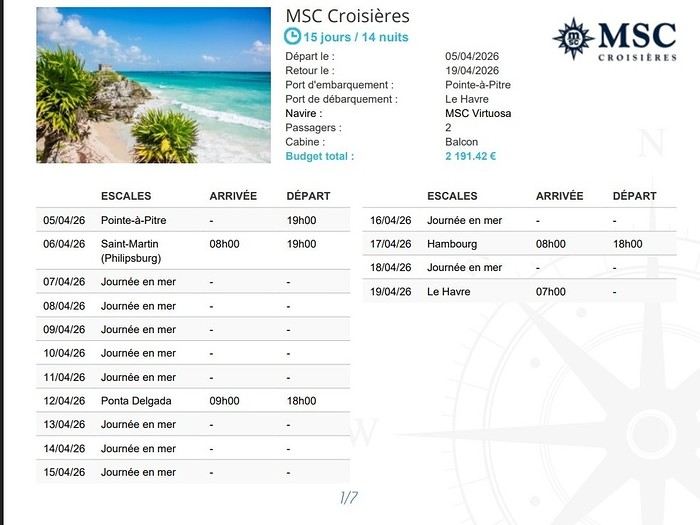
As promised, here’s my review of the cruise I took from the 5th to the 19th on the MSC Virtuosa.
As you know, I had initially booked a cruise with Mein Schiff departing from Dubai (from Dubai to Cape Town). It was a 22-day cruise. Due to the issues in the Persian Gulf, my cruise was canceled by Mein Schiff.
So, we started looking for a Plan B because we really wanted to go. Especially my wife, who had just had a minor procedure and needed some rest. Since she had already taken time off, she was determined to travel. However, we were looking for an affordable Plan B since we weren’t sure when Mein Schiff or the airline would reimburse us.
While browsing online, I found a 15-day cruise departing from Pointe-à-Pitre (including flights, transfers, the cruise, and drinks) for a price of 1,200 € in a Fantastica balcony cabin. We thought, *Why not?*
I should mention that I’m not usually a big fan of MSC. My last experience with them was post-Covid (I took two cruises, one in 2021 and another in 2022), and it was honestly a disaster. We didn’t want to repeat that, but after talking to Catherine, who told me she was very happy with a short Christmas cruise, we decided to give it a try.
I have to say, I was left speechless. Honestly, the cruise was absolutely perfect. There’s nothing to complain about (or just a few minor details). In terms of service and food, I felt like I was on a premium cruise line. I’d even say MSC has nothing to envy from some of those companies. While premium lines like Holland, Celebrity, and Royal are cutting back on services, I think MSC has made huge improvements. Seriously, I wasn’t expecting this at all. You’ll see what I mean as we chat more.
I won’t do a full review like I usually do because there weren’t many stops:
1. We boarded in Pointe-à-Pitre
2. We stopped in Saint-Martin
3. Then it was a direct crossing to the Azores...
This cruise was really about relaxing, even if it’s not the kind of trip we usually take.
First off, I’m not a big fan of "flight and cruise" packages. I asked if we could leave two days early, but they said it wasn’t possible. We had to take the flight, then the bus, and board the ship directly.
It’s not really my thing, but given the price we paid and since we really wanted to relax, we thought, *Why not?*
Here’s the itinerary:
Boarding in Pointe-à-Pitre
Saint-Martin
Five days at sea
The Azores
Four days at sea
Hamburg
One day at sea
Le Havre
But as I mentioned, it wasn’t about the itinerary. It was really about taking a break and unwinding. Honestly, I came back thrilled.
We’re stopping over in Rovinj this coming May, and since we’ve already visited the main sights (port, church, etc.), is there a walk we can do on our own—no boat needed—that would fill a morning?
Thanks to anyone who knows the area…
My wife and I are going on a cruise on the MS Vesteralen on August 4th. The ship stays close to the coast to deliver mail and packages. My wife is a musician and is sensitive to the movement of the boat. Which deck and cabin should we choose?
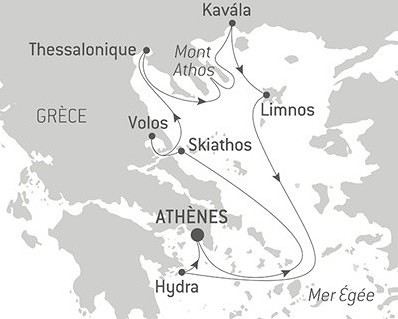

 At 9 a.m. sharp, we attend a fascinating lecture tracing the history of Greece, from the Neolithic period (7000 BCE) up to the Roman era of the 3rd century.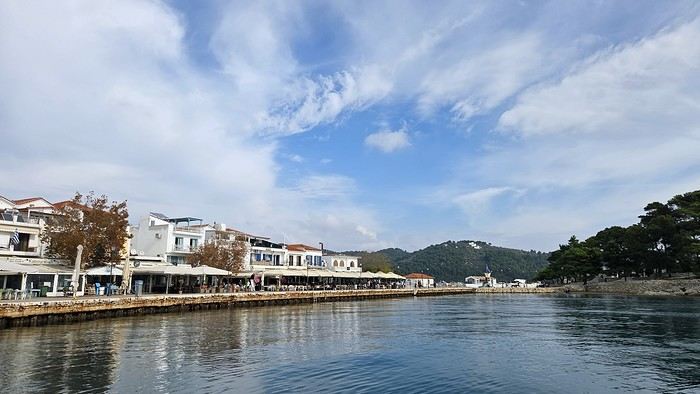

 to be continued…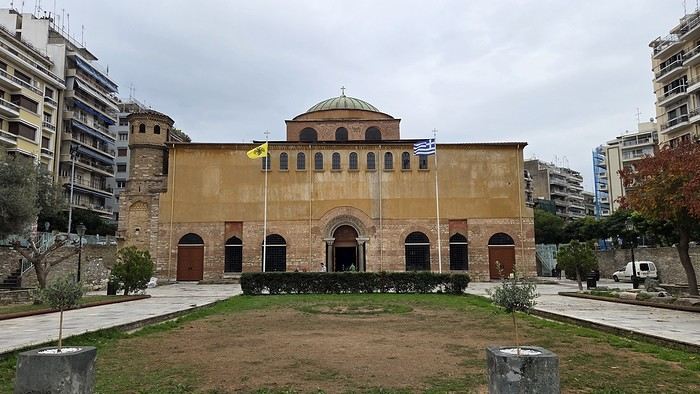


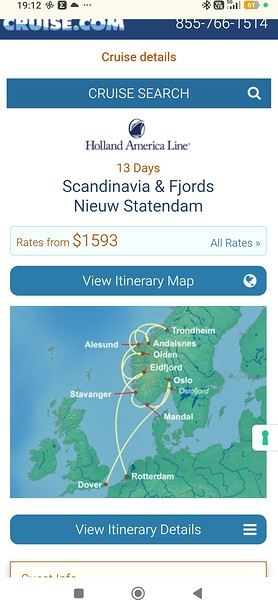
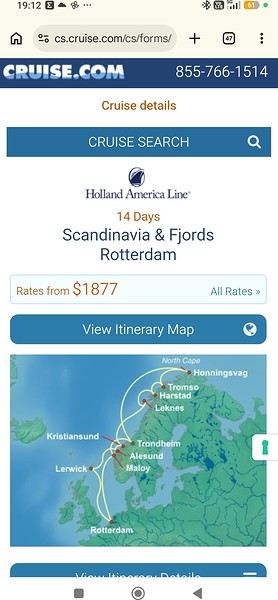 Hi there,
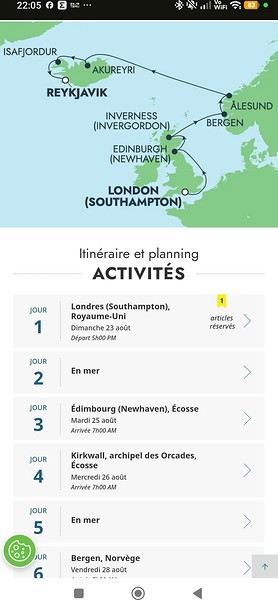
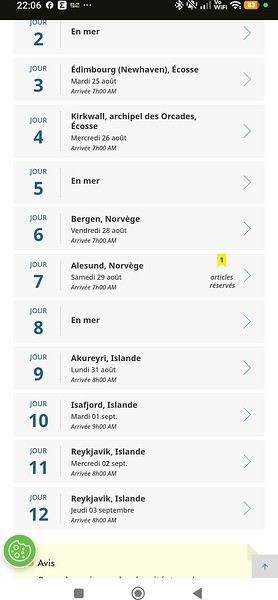
I'm looking at a cruise in the north.
Hi there,
I'm looking at a cruise in the north.