Nous allons passer 12 jours à Hong Kong fin Juin. Au milieu du séjour nous avons 4 jours où mon conjoint travaillera à Hong kong.
Ca nous fait donc 4 jours de libre avant et 4 jours après son boulot pour visiter.
Pour les 5 nuits qui entourent son boulot, on a le choix entre un hotel vers kowlun park et un hotel vers l'aéroport (car mon conjoint travaillera près de l'aéroport). On pensait plutôt choisir kowloon park (car ca a l'air facile de faire le trajet en transport en commun et on avait éliminé de base l'hotel près de l'aéroport car je me disais que les zones aéroportuaires c'est jamais bien mais peut être que je me trompe et que le fait d'etre sur l'ile de lantau a un interet ???).
On pensait aller passer une nuit à Macao (à priori le dimanche soir pour éviter le samedi soir), pour le reste des autres nuits, soit en début soit en fin de séjour est ce que ca a un interet d'aller un peu loin du centre ville du style vers aberdeen ? vers les nouveaux territoires ? ou pensez vous qu'il vaut mieux rester vers le "centre ville et de là rayonner ?).
Faut il réserver tous les hôtels à l'avance ? (on est pas super fan de réserver à l'avance mais il y a des endroits où c'est indispensable, à Hong Kong je ne sais pas). LEs premières nuits on se disait que oui, Macao aussi vu qu'on y passe qu'une nuit, on va pas se prendre la tête à chercher un hébergement, par contre les 4 dernières nuits du séjour est ce indispensable ????
On a vu qu'il y avait de chouettes rando, on aimerait bien s'en faire 1 ou 2 petites mais on a pas encore regardé vers où et donc pas encore regardé si ca conditionne vers où dormir.
Pour les 5 nuits qui entourent son boulot, on a le choix entre un hotel vers kowlun park et un hotel vers l'aéroport (car mon conjoint travaillera près de l'aéroport). On pensait plutôt choisir kowloon park (car ca a l'air facile de faire le trajet en transport en commun et on avait éliminé de base l'hotel près de l'aéroport car je me disais que les zones aéroportuaires c'est jamais bien mais peut être que je me trompe et que le fait d'etre sur l'ile de lantau a un interet ???).
C'est effectivement plus facile d'être basé à Kowloon qu'à Lantau. Le plus pratique reste à mon avis Central mais Kowloon convient également.
Pour visiter Lantau, on peut le faire à la journée au départ de Kowloon ou de Central (métro ou bateau).
Faut il réserver tous les hôtels à l'avance ?
Cela me paraît indispensable à Hong Kong, surtout si il vous faut deux chambres plusieurs nuits de suite. De même si vous allez à Macao (ce qui me paraît moins intéressant mais je reconnais que les casinos fascinent ...).
On a vu qu'il y avait de chouettes rando, on aimerait bien s'en faire 1 ou 2 petites mais on a pas encore regardé vers où et donc pas encore regardé si ca conditionne vers où dormir.
Il y a des centaines de kilomètres de randonnées à Hong Kong, c'est bien balisé. Plusieurs possibilités : dormir sous tente en étape, par exemple sur la plage ou se rendre en métro puis bus ou taxi au début d'une rando et revenir de la même manière en fin de journée. Je l'ai fait dans les nouveaux territoires, c'est possible mais attention à s'assurer que vous finissez votre journée à un endroit desservi par bus ou taxi. Le site de l'office de tourisme de Hong Kong donne à ce sujet des info précieuses (section "grands espaces").
Attention néanmoins, si vous ne supportez pas le chaud, vous risquez de souffrir en rando en juin : les dénivelés peuvent être importants et les parcours peu ombragés, attendez de voir sur place si vous vous adaptez au climat. Dans tous les cas, eau et crème solaire s'imposent, il n'y a pas partout des points de ravitaillement.
Vous serez mieux à Kowloon park. Même si l'aéroport est à Lantau et qu'il y a des choses à y faire, la zone aéroportuaire est sur la côte Nord d'où il n'est pas simple de relier les sites les plus attractifs (Mui Wo et Pui O à l'Est, Tai Po à l'Ouest, ou les plages de Cheung Sha Wan au Sud) à part le Grand Bouddha (il y a un téléphérique direct depuis le métro Tung Chung, non loin de l'aéroport)
Il est facile d'aller faire un tour dans le port à Aberdeen (surtout qu'il y a le métro maintenant).
Vous n'avez aucun intérêt à changer d'hôtel à Hong Kong. La ville est assez concentrée et les transports publics (métro, bus, tramway, taxis) très efficaces et bon marché. Réserver toutes vos nuits d'un coup peut vous donner accès à un tarif spécial et/ou à la possibilité d'upgrader votre chambre, donc regardez si c'est le cas. Il y a aussi pas mal de festivals qui peuvent rendre les réservations aléatoires (d'autant que le 1er Juillet est la date anniversaire de la rétrocession à la Chine et une sorte de fête nationale)
Il y a des randonnées fantastiques à faire un peu partout. La traversée de l'île de Lamma ("family walk") et la "Dragon's back" sont des grands classiques faciles d'accès. Attention à prendre beaucoup d'eau, il devrait faire chaud et humide fin juin. Si vous voulez vous éloigner un peu plus, vous pouvez faire appel à un guide.
Bonjour,
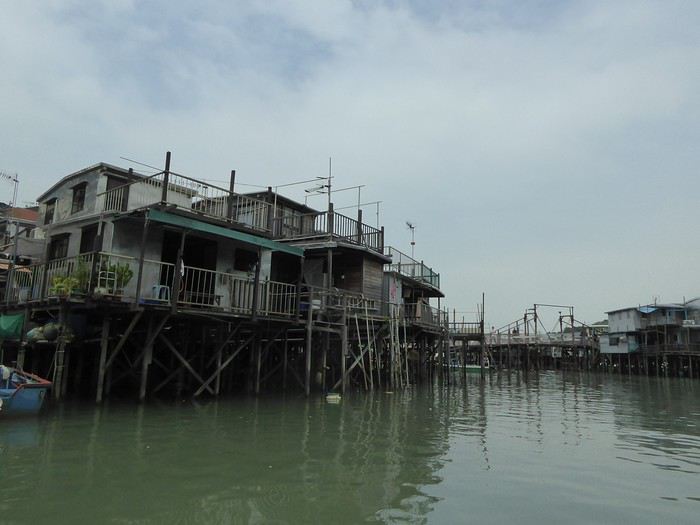
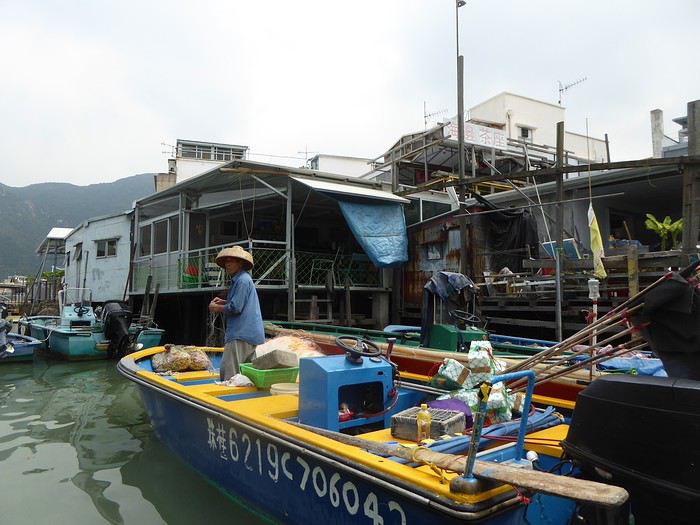
Sur l'île de Lantau, je vous conseille, outre le Bouddha géant, d'aller visiter le village de pêcheurs de Tai O. Après avoir arpenté les petites rues, n'oubliez pas de faire le tour en bateau pour voir les habitations côté pilotis. C'est très dépaysant!
Je serais à Hong Kong dans 3 semaines et ce village j'aimerais bien aller le voir.
Nous logerons sur Nathan road à 10mn à pied du port
Peux t'on faire le grand bouddha et le village le mème jour ? En week end ou en semaine , nous y serons du vendredi au mardi avant de partir pour Seoul.
Quel transport est meilleur marché pour aller sur Lantau ?
Voici comment je calibre ma journée à Lantau :
- aller en métro ;
- bus jusqu'au Bouddha (il y a aussi un téléphérique) ;
- bus Bouddha Tai Ô ;
- bus Bouddha Mui Wo ;
- retour en bateau depuis Mui Wo.
Il y a généralement beaucoup moins de monde dans les transports en prenant le métro à l'aller et le bateau au retour.
Le bateau et le métro sont à des tarifs équivalents.
Prévoyez de la monnaie pour les bus.
Mui Wo n'a que peu d'intérêt ... mais il vous faudra bien quitter l'île, ce qui n'est à ma connaissance (mais à vérifier) pas possible depuis Tai Ô donc vous devez de toute manière reprendre un bus jusqu'à une station de métro ou de bateau.
D'où Mui Wo, et je trouve que c'est assez sympa de faire un des deux trajets sur l'eau.
Si vous choisissez cette option, commencez par regarder les horaires de bateau en arrivant à Mui Wo, vous aurez peut-être le temps de faire un petit tour à la plage, bien qu'elle soit loin d'être magnifique. Celle de Sheung Cha, entre Tai Ô et Mui Wo, a la réputation d'être à couper le souffle, je n'ai personnellement jamais eu le temps de m'y arrêter.
En revanche, Bouddha + Tai Ô avec les transports est tout à fait faisable en une journée, en prenant le temps de regarder tranquillement.
Et aussi : les bus à Lantau sont moins chers en semaine qu'en week-end, la visite en semaine est d'ailleurs plus paisible.
Je corrobore tous les conseils de @detourschine.
Si vous avez les moyens à l'aller, je vous conseille cependant d'essayer de prendre le téléphérique depuis le métro à Tung Chung, les vues sont vraiment impressionnantes sur l'aéroport, le pont pour Macau, et à l'arrivée proche du Buddha. (et les billets pour le téléphérique sont moins chers si vous les achetez en ligne au moins la veille)
Il y a des randonnées fantastiques à faire un peu partout. La traversée de l'île de Lamma ("family walk") et la "Dragon's back" sont des grands classiques faciles d'accès.
Bonjour,
d'abord merci à tous pour vos réponses. Je vois mieux maintenant ce qu'on peut faire comme visite sur l'ile de Lantau (grand bouddah, Tai o). J'ai bien envie de faire une ou 2 randos donc celles que tu cites m'interessent beaucoup. Je vois qu'on peut aller sur l'ile de Lamma en bateau, ensuite comment on va jusqu'au départ de la rando ?
idem comment on rejoint le début de "Dragon's back" ? est ce que ce sont des randos qui font des boucles ou bien arrive t on à un autre endroit ? et du coup même question, comment on en repart ? en bus ?
La randonnée sur Lamma n'est pas une boucle. Elle part d'un petit port, Sok Kwu Wan (j'y étais arrivé depuis Aberdeen, en bateau bien sûr), et arrive au port de Yung Shue Wan (d'où tu peux aller à Central). Facile à suivre...
Il y a beaucoup de restaurants au début et à la fin, presque tous au bord de l'eau, mais je trouve que Yung Shue Wan est plus sympa que Sok Kwu Wan.
Description ici.
Plan là.
Attention à ne pas la commencer trop tard.
Quand la nuit tombe, ce n'est pas éclairé 😛
(c'est du vécu)
Notre fille vient d'être sélectionnée pour les championnats du monde de roller en Chine et nous aimerions bien être du voyage aussi! Mais nous allons devoir…
Souhaiterai organiser un séjour en chine de Xi an jusqu'à Kasghar sur la route de la soir pour deux pour une durée de trois semaines. Pourriez-vous me donner…
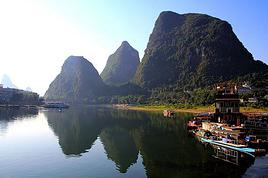
Je suis entrain d'élaborer mon séjour en Chine et je compte m'arrêter 4 jours dans la région de Guilin-Yangshuo. A travers la lecture de plusieurs forums je…
Je suis Alexandra, presque 30 ans, et dans quelques mois je m'apprête à partir en Inde et au Népal, et l'envie de faire un tour au Sichuan pour avoir un aperçu…
Nous partons pour 10 jours en Chine dont 2 jours pleins à Shanghai. Que faut-il privilégier sur Shanghaï pour ce bref séjour? Que faut-il y faire absolument?…
Hi,
July 2026: I’m writing to you from Dali.
First, I got scammed on Booking—AI-retouched photos. No tourists at this hotel (Yishanju Designer Hotel), and the reality was horrible: dirty, with a disgusting breakfast. It’s better to use Trip.com here.
Next, the old town was an infernal cacophony, packed with tourists who shoved past without a care. Some vendors harassed you to buy things. All the stalls sold the same cheap plastic junk or other uninteresting stuff. The beautiful scenery was ruined by vendors lining 100% of the alleys. Impossible to walk, crushing heat, nothing good to eat except fresh fruit. Horrible experience.
Day 2: We went to Cangshan Mountain by cable car—the ride was short and nothing spectacular. We were at 2,600 m.
My plan was to see Erhai Lake. Unfortunately, I followed the advice of an AI chatbot: take the boat at Langkan Dock. The Didi dropped us off in the nearest area, which was full of charming little alleys but packed with Chinese tourists. The three-wheeled yellow cabs zoomed through the narrow streets, forcing you to hug the walls, on top of the scooters and other pedestrians to deal with. Crossing the neighborhood was hellish and suffocating. Once out, we hit the "corniche," which was also packed with Chinese tourists. The lake’s edge was all pebbles, and everyone was standing around taking photos. I was with my 5-year-old son. I would’ve liked to sit down and let him play with stones by the water, but it was clear we didn’t belong. They were even shoving each other for a shot! There were no boats in sight. In short, we’d had enough, and there was nothing interesting there either.
On the way back, we had to cross that maze again under the scorching sun. My son was braver than me—I even had a little dizzy spell from all the chaos. Add to that Dali’s altitude (2,200 m), so altitude insomnia, fatigue, and vulnerability during the day...
The restaurants weren’t inviting—the staff served sticky rice in a little bucket. The dishes were wrapped, and you had to figure it out yourself. After that, they ignored you completely, even if you were the only tourist.
On the 3rd day, it was time to leave for Shaxi. I hope to see beautiful villages. But honestly, I’m exhausted by this atmosphere where everything is complicated, communication is never smooth, noise is everywhere, and the behavior of some Chinese people is abusive...
Silver lining: not a drop of rain in 4 days and blue skies.
I couldn’t visit the villages in southern Yunnan because of rain and storms there...
But I was expecting to see a few more tourists.
We’re planning a 17-day trip to South Korea in October 2026 with my husband and our daughters, who’ll be 9 years old.
I’d love to get your thoughts on our draft itinerary.
First, some key details:
1/ Jeju Island is a must for us. I’ve personally dreamed of going there for years after reading a novel about it.
2/ Our girls are used to road-trip style travel since they were born, so this kind of trip won’t be an issue for them.
3/ We plan to travel by train, except on Jeju where we’ll rent a car (we already have an international driver’s permit).
Itinerary:
Seoul: 1 arrival day at 10 AM + 4 full days
Gyeongju: 2 days
Busan: 3 days
Jeju: 4 days
Seoul: 2 days
Hi there,
My girlfriend (23) and I (24) are heading to Japan for the first time from October 20th to November 6th. Here’s our itinerary:
6 nights in Tokyo
1 night in Hakone (ryokan already booked)
4 nights in Kyoto (hotel already booked)
2 nights in Osaka
4 nights back in Tokyo
I’d like to book hotels for Tokyo (both stays) and Osaka, but I’ve gotten so many different recommendations.
I’ve read that Shinjuku is the place to be for its huge hub, accessibility, and things to do, but I’ve also heard about Shibuya, Asakusa, and Ueno.
I’ve looked at hotels, and first off, I’m surprised by the prices compared to what I’ve seen on forums (I guess inflation’s hit here too… and maybe I’m late to the booking game?). I’m feeling a bit overwhelmed with all the options.
For our first stay in Tokyo, I’d prefer a hotel (not a residence or Airbnb) since we’ll be arriving at night, and it’s our first time in Japan. It’d be great to have a place with a reception, staff who speak at least a little English, and can give us some guidance. For the second stay, we could consider other options if it’s better.
Budget-wise, we can go up to 150–180 € per night, but if we can save some money to spend elsewhere, that’d be amazing!
I’m open to all recommendations, hotel suggestions, or any other tips for Tokyo (first stay), Osaka, and Tokyo (second stay).
Hi there,
I’d like to do this cycling route over 2 or 3 days. I’m struggling to figure out and find a (good) bike rental that lets me start in Onomichi and drop off in Imabari. Can anyone help with great tips for rentals and accommodations along the route? How do I get back to Onomichi afterward?
We’re flying to China in a few days for a four-week trip—our first time in this fascinating country! 🇨🇳
We’ll be sharing our adventure live on our travel journal, with photos and daily updates. Our itinerary, though classic, will let us discover the wonders of this vast country:
I’m starting to look at neighborhoods in Seoul, and I’m leaning toward staying in a hotel in Insa-Dong—I’ve spotted one really close to Unhyeongung.
Is this a good area—nice and convenient for exploring the city?
Otherwise, I’ve also found another hotel in Yongsan-Gu, right near the station of the same name. Is that station useful for getting around Seoul?
Since I’ll be in South Korea for nearly two months, I plan to spend at least a week in Seoul to recover from jet lag (it takes me a while to adjust...). So, I’d love a neighborhood that’s pleasant and a hotel not too far from a subway station.
Hi there,
I’m getting ready for a classic tourist trip to China in May 2026.
The "Terres Lointaines" itinerary looks good to me, and the price is interesting.
Has anyone traveled with them before? Any feedback?
Is there a better option?
Thanks so much for sharing your experiences on this!
Michel
I just booked my hotel in Seoul—it’ll be near Unhyeongung, on Samil-Daero 30-Gil—and I’m wondering if there’s public transport from the airport to this address (bus or subway)? If not, what’s the taxi fare? I read it’s around 50 or 60 €.
I’m traveling to Japan with a young adult with autism (ASD) from July 28 to August 8, following a pretty classic route: Osaka, Hiroshima, Kyoto, and Tokyo. I’m looking for a schedule of the most spectacular fireworks displays during that time. So far, the dates for the major *hanabi* events aren’t available online yet. If anyone has them, I’d really appreciate it if you could share!
We’ll be doing a self-drive trip using public transport in May 2026.
On Day 6, we’ll arrive in Hakone by train from Tokyo in late morning. We’ll spend the night in Hakone before heading to Kyoto.
The main goal of this stop is clearly the view (no hiking) of Mount Fuji, not so much exploring Hakone, where the sights seem limited.
I’ve read on the forum that the view is great from Gotemba, but it also takes a good hour by bus to get there. And, apart from that view, there’s nothing else to see in Gotemba!
So, I’m not sure what to choose. Any thoughts? Or alternatives to suggest?
Maybe some spots in Hakone or Gotemba for a great view?
Hi everyone, I’m Julien!
This summer, from late June to late July, I’m planning a one-month solo trip to Japan—my first time!
I’d love to hear your thoughts and advice on the itinerary I’ve put together to explore this amazing country.
Here are the routes I’m considering:
**Option 1: More mountain and nature-focused**
Tokyo: 8 nights, with day trips to Nikko and maybe the Izu Peninsula
Kawaguchiko (Lake Kawaguchi/Mt. Fuji): 1 night. The place looks stunning, but I’m worried Mt. Fuji might not be visible due to the weather
Kyoto: 6–7 nights (including a trip to Nara)
Osaka: 1–2 nights, where I’d like to drop off my things to make the Kumano Kodo easier
Kumano Kodo: 3 nights—an experience I haven’t seen much elsewhere, but I thought it sounded really interesting
Hiroshima: 2 nights
Miyajima: 1 night
Takayama: 3 days
Kanazawa: 3 days (From what I understand, the Osaka–Takayama–Kanazawa–Tokyo route is convenient for transport)
Tokyo: 1 night (return)
**Option 2: More varied but a bit vague in parts**
Tokyo: 8 nights
Kyoto: 7 nights (+ Nara)
Osaka: 2 nights
Kobe + Himeji: just passing through—I’m not sure if it’s worth a night
Naoshima: 1 night—still pretty unclear for me
Takamatsu: 2 nights. An interesting city, but I’m not sure how long to stay
Shimanami Kaido: biking from Imabari to Onomichi, then heading to Hiroshima
Hiroshima: 2 nights
Miyajima: 1 night
Kyushu road trip (Aso + onsens + Fukuoka): 5 nights (also pretty vague—I could fly from Fukuoka back to Tokyo)
Tokyo: 1 night
**Option 3: More balanced/simplified**
Tokyo: 8 nights
Kawaguchiko: 1 night
Kyoto: 7 nights (+ Nara)
Osaka: 2 nights
Koya-san: 1 night
Kumano Kodo: 3 nights
Takayama: 3 nights
Kanazawa: 3 nights
Tokyo: 1 night
A few key points:
I haven’t made any reservations yet, except for the flight tickets.
I know my plans are too packed and will need to be adjusted.
I’m specifically looking for advice on which stops to cut or shorten.
Hello everyone,
Like Cedric13600, I’ve booked a flight ticket for 30 days / 29 nights in September 2026, from Beijing to Shanghai. We’re a couple in our sixties who love independent road trips.
I’d like to draw inspiration from the following private itinerary suggested by a travel agency:
Day 1: Arrival in Beijing
Day 2 to 4: Beijing
Day 5: Datong
Day 6 & 7: Pingyao
Day 8 to 10: Xi'an
Day 11: Luoyang
Day 12: Dengfeng
flight
Day 13 & 14: Chongqing
flight
Day 15 & 16: Lijiang
Day 17: Dali
Day 18: Kunming
Day 19: Jianshui
Day 20 & 21: Yuanyang
Day 22: Travel via Guilin
Day 23 & 24: Yangshuo
Day 25: Guilin
Day 26 & 27: Zhangjiajie
flight
Day 28 & 29: Shanghai
Day 30: Departure from Shanghai
But to do this itinerary independently:
1. This schedule seems very ambitious to me—what do you think?
2. If it’s too packed, what would you remove as a priority?
Thanks so much in advance for your help.
I’m planning a 5-week trip between Yunnan and Sichuan from mid-October to the end of November 2026:
Arriving in Kunming, I’ll do a loop in the far south of Yunnan via Thonghai, Jhiansu, Zhemi, Yuanyang, Nafa, Jinping, Mengzi, and Shilin (visiting markets, villages, and hiking), then head to northern Yunnan/southern Sichuan on the same theme (passing through Kunming again) via Dongchuan, Huize, Qiaojia, Puge, Xichang, Lanba, Butuo, Huolie, Dimo, Riha, Niuniuba, Meigu, Mabian, and Leshan, before arriving in Chengdu (where I’ll take my return flight to Paris).
This would be a trip with a strong ethnic/rural focus. Since I’ve never traveled in China, I’d love to hear your thoughts on doing this solo. Are there public transport options in the region? What tips do you have for traveling through this area as smoothly and enjoyably as possible? I’ve done quite a bit of backpacking in the mountains of northern Vietnam and really enjoyed using local motorbike drivers. Is something like that available in this region (through local tourist agencies or hotels)?
What should I be cautious about? Are local tourist agencies (or hotels) offering tours and guides reliable? If you know of any specialized sites sharing tips or experiences, or names of local agencies, hotels, etc., please don’t hesitate to share them! :)
In short, all your advice (on any topic that comes to mind!) is very welcome.
Thanks so much!
While researching South Korea, I came across the term "templestay," which refers to a Korean program that lets you stay in a traditional temple to discover Buddhism and Korean culture by living like the temple residents and doing activities like making lanterns.
A templestay isn’t just for foreign tourists—on the booking site, I saw that some temples are more geared toward foreigners, with English-speaking monks.
I was wondering if it’s still worth it, especially in temples where the monks don’t speak English?
I'm 69 years old and heading to China, where most tourist sites are free or discounted for me. However, trip.com either refuses to let me book because the sites are free or doesn’t apply the discount. Does WeChat apply this discount if I book through them? How can I just reserve without paying and pay on-site? Is that possible?
I’d love to get some feedback on our 30-day / 29-night itinerary in China. We’ll be there in September as a family with two kids (6 and 10 years old).
Do you think I should cut a few nights between Wulingyuan (Avatar Mountain) and Yangshuo? I’ve planned 15 nights total there.
We’ll be on a round-the-world trip starting May 2026 and will need to do schoolwork with the kids. Hoping to fit it in during train rides!!
Ever since I started planning this China itinerary, I’ve been discovering completely mind-blowing places I’d never heard of before—30 days feels way too short for China!!!
Here’s our itinerary:
Beijing - 4 nights
Forbidden City
Great Wall of China
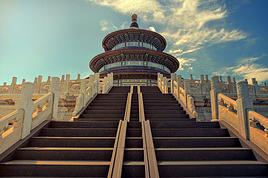
Temple of Heaven
Xi’an - 3 nights
Terracotta Army
Muslim Quarter & Great Mosque
Chengdu - 3 nights
Zoo - Research Base of Giant Panda Breeding
Wenshu Yuan Temple
Hi there,
We just got back from a 2-week trip to China as a couple, and before we left, the budget was the hardest thing to picture concretely. We found plenty of info on visas, apps, transport, and itineraries, but way fewer detailed breakdowns of what you *actually* spend on the ground.
So, we took the time to share our real budget for 14 days. In our case, we spent around 1,800 € per person, with a big chunk of that going toward round-trip flights at about 600 € per person. We were also pretty surprised by how affordable China can be once you’re there—transport is often cheap, and a lot of everyday expenses stay reasonable.
The trickiest part, in the end, was figuring out how to pay while you’re there, since it’s not always obvious if you’re not prepared. But once everything’s set up and you get the hang of it, it’s really smooth.
If this can help other travelers get a better idea before they go, we’ve broken it all down here:
https://aventures-sans-mesaventure.com/budget-2-semaines-de-voyage-en-chine/
Hi everyone,
I’ve been planning several itineraries for a trip to Japan with my wife but would love your insights before we start booking!
In short, we want to go during Golden Week, see late-blooming cherry trees, and have the freedom to get around with a rental car.
Here’s the plan:
18-day itinerary in Japan (April 25 → May 12)
Goal: freedom, late cherry blossoms, culture & nature
---
Days 1–3: Tokyo (April 25–27)
Arrival and adjustment (no car needed yet).
Neighborhoods to visit: Shinjuku, Asakusa, Meiji Jingu, Shibuya, Odaiba.
Suggested activities: Ghibli Museum, Sumida River cruise, izakaya meals.
Late cherry blossoms (yaezakura) possible at Shinjuku Gyoen.
Pick up the rental car on the morning of April 27.
---
Days 4–5: Mount Fuji & Hakone (April 27–28)
Route: Tokyo → Kawaguchiko/Hakone (~2 h).
Activities:
Lake Kawaguchi, Chureito Pagoda (Fuji views + late cherry blossoms)
Onsen baths, Hakone Open-Air Museum.
Stay: ryokan with onsen and views of Mount Fuji.
Activities:
Preserved old town, sake breweries, UNESCO village of Shirakawa-go.
Stay: traditional minshuku (thatched-roof house).
Cherry blossoms are finishing at this altitude — beautiful mountain/nature contrasts.
---
Days 8–10: Kyoto & Nara (May 1–3)
Route: Takayama → Kyoto (~4 h 30).
Activities in Kyoto:
Fushimi Inari (red torii gates), Golden Pavilion, Arashiyama, Gion (geisha district).
Day trip to Nara:
Free-roaming deer in Nara Park, Todai-ji Temple, Kasuga Taisha Shrine.
Stay: Kyoto (3 nights).
---
Day 11: Osaka or Himeji (May 4)
Route: Kyoto → Osaka (~1 h) or Himeji (~1 h 30).
Option 1: Osaka → modern vibe, street food, castle.
Option 2: Himeji → stunning UNESCO-listed castle.
Stay: Osaka.
---
Days 12–13: Kanazawa (May 5–6)
Route: Osaka → Kanazawa (~4 h 30).
hi! Is it easy to use for paying for all the small purchases at the markets? INSTALLATION AND USE WITHOUT ISSUES—do you also need a VPN for China?
Secondly, for using phone and internet, I have Orange—is it reliable, or should I go with Airalo instead?
The info I found on the forum is a bit outdated, so I’m asking again!
1) What budget should I plan for 15 days, given that hotels with breakfast, transfers, and transport are already paid for? I know it depends on the person, but I’d love a rough idea. For meals, we’re thinking simple street food or small local restaurants.
2) I’ve heard that credit cards (we each have a Revolut + 1 Visa Premier) aren’t widely used and that it’s better to have cash. Can you confirm?
3) Are foreign credit cards still not accepted at bank ATMs? Still 7-Eleven or the Post Office? And what about American Express?
I'm planning a 19-day itinerary in Japan this summer.
For a first trip, Kyoto seems like a must. For the rest, I'm torn between:
- Matsumoto, Takayama, Kanazawa for 5 to 6 days
- Kyoto 4 days
- Nara 2 days
- Koyasan 1 day
- Hakone/Mount Fuji 2 to 3 days
- Tokyo 3 days
Or dedicating the first 6 days to Kyushu.
Maybe there’s less traditional Japan in Kyushu compared to the Japanese Alps?
Maybe Kyushu is less crowded?
Thanks for your thoughts!
I’ll be in Hong Kong from December 31 to January 3, 2027.
Any recommendations for things to see or do?
I’ll be staying in the Kowloon district.
I’d love to visit Lantau Island—what’s the best way to get there? And would you recommend buying a skip-the-line ticket for the cable car? Also, is there an entry fee for the Big Buddha?
I’m heading to Taiwan soon and would love some up-to-date info on Wi-Fi.
From what I’ve gathered, Taiwan offers it for free, but I’ve heard it’s not secure since it’s not protected by a "password." Since I’ve been traveling outside the EU for years without a local SIM card, I only use Wi-Fi in hotels, restaurants, and cafés. For me, that’s more than enough. So, my question is: Do these places secure their Wi-Fi with a "password"? If not, does buying a SIM card or eSIM seem like the only alternative?
Also, if any of you have recommendations for budget-friendly hotels in the main "cities," I’d love to hear them!
We’re planning a trip to China for two at the beginning of April and want to spend 2 nights in the Longji Rice Terraces—either in Dazhai, Tiantouzhaï, or Ping'an. I’ve seen that most of the hotels are made of bamboo, and you can hear every little noise. Since my husband is a very light sleeper, he’d really like to be sure he’ll get a good night’s rest. Can you recommend any quiet, well-soundproofed hotels in the area?
I’m reaching out to you because I’m planning our next big trip (Japan is really tempting us for the autumn!) and I have to admit, I’m feeling a bit overwhelmed.
My husband and I have always loved traveling, and at 75, we have no intention of stopping... But I find that everything’s getting so complicated. I try to be "modern" by booking online, but as soon as there’s a problem, we hit a wall.
A friend nearly missed her departure last year because of a visa issue that wasn’t explained properly on a website... and no one to call for help, just automated messages.
It makes me a little nervous to be alone in front of a screen so far away, especially since at our age, we like knowing there’s real support if our health takes a turn while we’re there.
Anyway, I’m tired of seeing my file passed from one person to another without ever having the same contact... Do you know of any small, trustworthy agencies or people who still work the "old-fashioned" way and really look after their clients? I love my independence, but I need a real face behind my project.
Thanks in advance for your advice, and I look forward to reading your replies,
Catherine
I’m planning our trip to Japan from March 21 to April 11, 2026. We’re planning to travel by plane for long distances (Okinawa) and by train for the rest. I’d like to know if renting a car is easy and, most importantly, if driving with road signs written in Japanese isn’t too complicated. For trains, are there any tips to save money?
hi everyone, and first of all, I wish you all a happy new year and good health!
This coming October or November, we’re planning our first trip to Japan. The only downside is we’ll only have two weeks off.
For this first visit, I’m thinking of sticking to the Kyoto and Osaka area… saving Tokyo for another trip. Do you think that’s a good choice for a first-time visit?
I’ve put together a little itinerary below to get some feedback from those in the know. I’m only counting the days we’re actually there, not travel days.
Day 1: Kyoto
Ginkaku-ji – Philosopher’s Path with stops at a few shrines
temples Eikan-dō and Nanzen-ji
visit to the Samurai Ninja Museum in the late afternoon
Day 2: Kyoto
Fushimi Inari (allow 4 hours for the hike through the park)
visit to Sanjūsangen-dō temple
Shōseien garden
participate in a tea ceremony
Day 3: Kyoto
Kiyomizu-dera temple
stroll through the historic district up to Kennin-ji temple
visit Kennin-ji temple
Yasaka-jinja shrine and Gion district in the late afternoon
return to the hotel via Pontochō Street
Day 4: Kyoto
visit Kinkaku-ji and Nijō Castle
visit the Imperial Palace gardens
end the day in the shopping streets (Shibkyogoku and Teramachi, among others)
Day 5: Kyoto
Arashiyama area
Togetsukyo Bridge, walk along the river, visit the Bamboo Forest
explore the area up to Otagi Nenbutsu-ji temple
Day 6: Kyoto
hike from Kibune to Kurama
Day 7: Kyoto
day trip to Nara (full day)
Day 8:
stroll around Kyoto before heading to Osaka
Day 9: Osaka
Katsuo-ji temple, then head to Minoh Falls and hike back via the Minoh Trail
end the day in the Osaka Castle area
Day 10: Osaka
Himeji Castle and an afternoon in Osaka
Day 11: Osaka
Osaka and return to the airport in the late afternoon for the flight home
Do you think this itinerary is doable? Are some days too relaxed or too packed?
I was thinking of adding a trip to Lake Biwa and Uji, but in that case, I’d have to cut some things. Are those places worth dropping some of the planned spots? And if so, which ones would you recommend cutting or shortening?
Thanks in advance—I’m all ears for both positive and negative feedback!
stephane