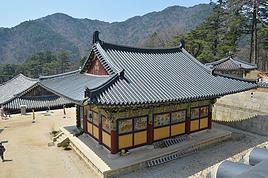
While researching South Korea, I came across the term "templestay," which refers to a Korean program that lets you stay in a traditional temple to discover Buddhism and Korean culture by living like the temple residents and doing activities like making lanterns.
A templestay isn’t just for foreign tourists—on the booking site, I saw that some temples are more geared toward foreigners, with English-speaking monks.
I was wondering if it’s still worth it, especially in temples where the monks don’t speak English?
" Celui qui voyage sans rencontrer l'autre ne voyage pas , il se déplace "
( Alexandra David-Néel )
" Ahora todos quieren ser latinos , no , ey , pero les falta sazon , bateria y reggaeton " ( Bad Bunny )
I’ve never stayed at one, but I’ve often seen them while visiting temples. I’ve chatted in English with monks several times, and the conversations were really interesting. To make the most of your stay, being able to talk with the monks seems like a big plus—it’s way better than relying on a translator.
"Si partir vivre ses rêves remplit l'âme, les partager après les avoir réalisés la grandit"
"Qui veut apprendre à se connaître commence par explorer le monde"
What to say? 🤔 If it can inspire some vocations, we’ll say you’ve got to live with the times 😜
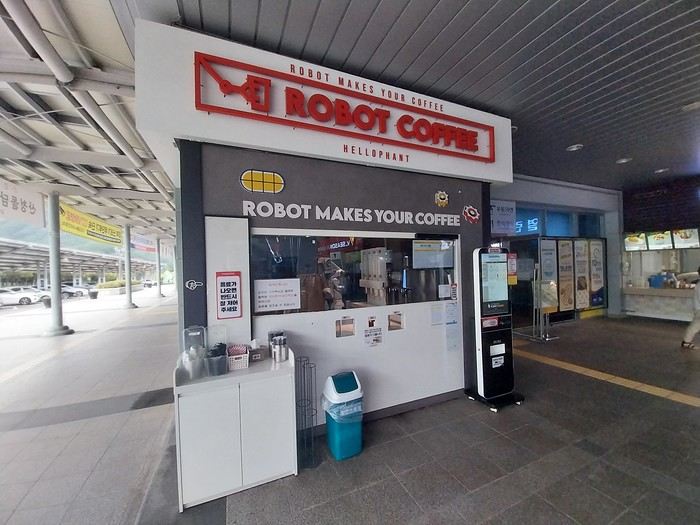
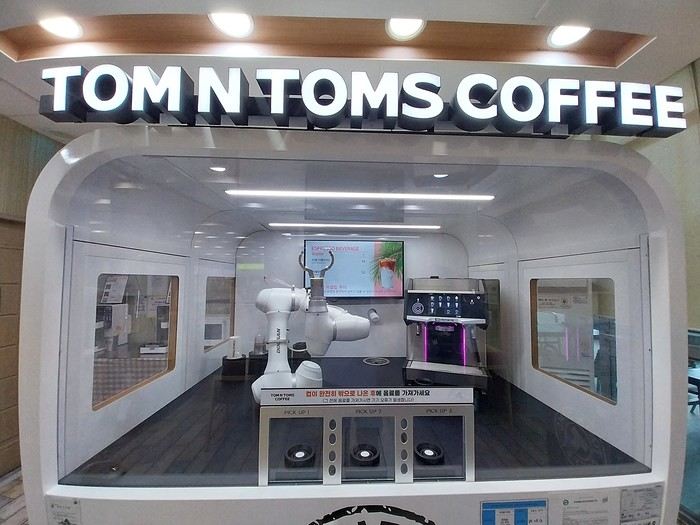
You’ll definitely come across robots during your trip. There are some at Incheon Airport, and restaurants use them to serve dishes at your table. There are also coffee vending machines that shake up our usual habits.
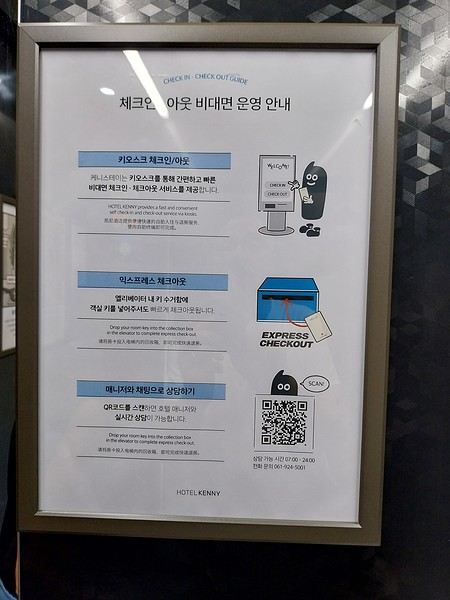
And then there are the staff-free hotels 🤔 No robots here, but it’s fast and efficient. Just don’t have any questions to ask 😜
"Si partir vivre ses rêves remplit l'âme, les partager après les avoir réalisés la grandit"
"Qui veut apprendre à se connaître commence par explorer le monde"
I don’t know about restaurants with robots serving the dishes—I’ll have to try that!
On the other hand, I did see coffee vending machines with robots on one of the platforms at Warsaw train station, but I didn’t see them in action.
Otherwise, for translations (written or spoken), do you use Google Translate? In your photos, I see it’s in English, but I’ve read that it’s not the same everywhere.
" Celui qui voyage sans rencontrer l'autre ne voyage pas , il se déplace "
( Alexandra David-Néel )
" Ahora todos quieren ser latinos , no , ey , pero les falta sazon , bateria y reggaeton " ( Bad Bunny )
I don’t know any restaurants with robots serving the dishes—I’ll have to try one.
This is really taking off, and I recently stumbled upon one in Australia by chance.
Robot Server Cafe Primo Victor Harbor #southaustralia - YouTube
On the other hand, I saw coffee vending machines with robots on one of the platforms at Warsaw train station, but I didn’t see them in action.
I have a video of someone using one, but to respect their privacy, I won’t post it.
Otherwise, for translations (written or spoken), do you use Google Translate? In your photos, I see it’s in English, but I’ve read that it’s not the same everywhere.
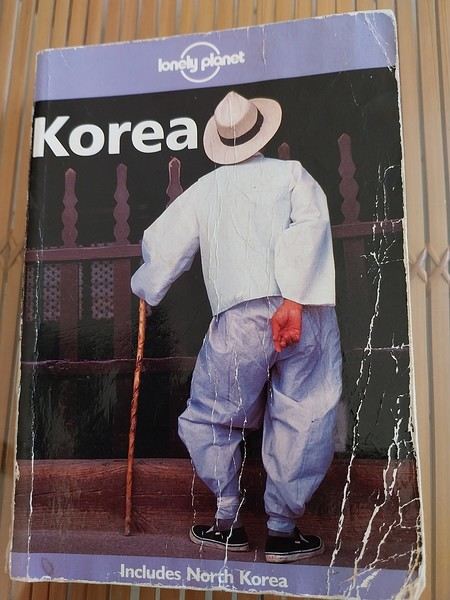
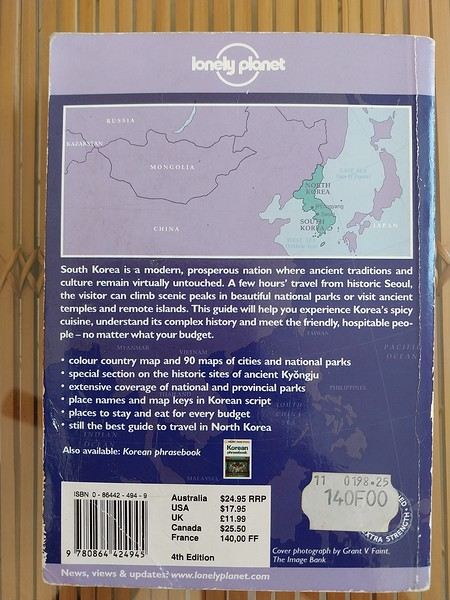
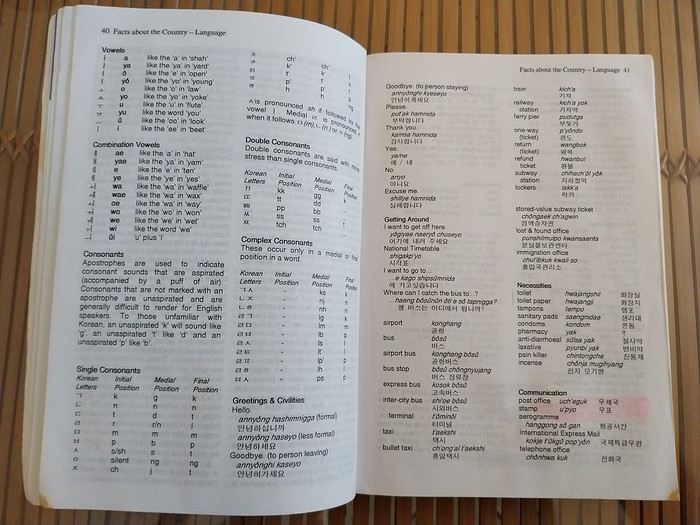
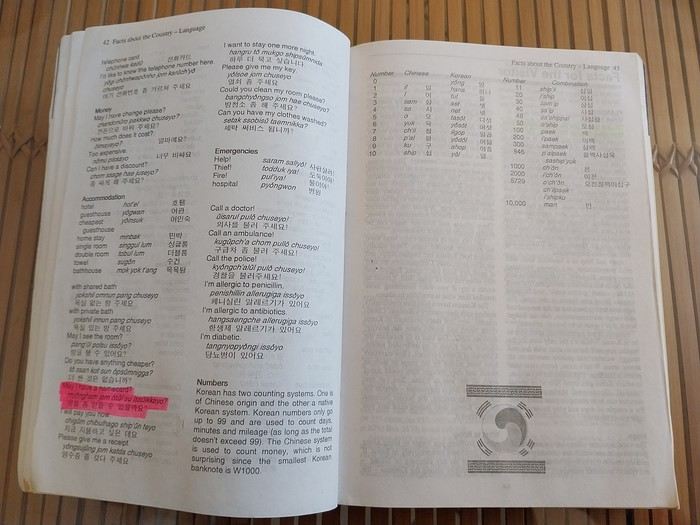
Yes, I use Google Translate. It’s especially useful in some restaurants where the menu is displayed on a big wall. In certain regions, particularly in the Southwest where there are few Western tourists, it’s essential. Even in some hotels, the staff struggled to speak three words of English. You can imagine what my first trip was like back in 1998 😅 I had ordered a Lonely Planet in English for the prep, and it had useful translations 😄
"Si partir vivre ses rêves remplit l'âme, les partager après les avoir réalisés la grandit"
"Qui veut apprendre à se connaître commence par explorer le monde"
Hi there,
I’ve done two Temple stay experiences.
The first one included an afternoon, a night, and a morning. It was great. Meals were in the monks’ dining hall. The night was punctuated by prayers and ceremonies—very moving. Perfect because the tourists had left.
The second stay was over two days with workshops (tea ceremony, cooking, etc.). Explanations were given in English by a Korean participant. Instructive but less moving.
Enriching experiences overall. I highly recommend them.
Anne Marie
You’ve been going to South Korea regularly for almost 30 years! I think there are a lot of Japan enthusiasts, but it seems like there are fewer for Korea. What draws you to South Korea?
I was hesitating between Japan and Korea, and I admit people recommended Japan more. What made me decide in favor of Korea was that, for now, it doesn’t seem to have as many tourists as Japan.
" Celui qui voyage sans rencontrer l'autre ne voyage pas , il se déplace "
( Alexandra David-Néel )
" Ahora todos quieren ser latinos , no , ey , pero les falta sazon , bateria y reggaeton " ( Bad Bunny )
It’s been almost 30 years since you’ve been going to South Korea regularly! I feel like there are a lot of Japan enthusiasts, but fewer for Korea—what draws you to South Korea?
First off, I’ll clarify that I’m not a K-pop fan, even though I enjoy listening to it from time to time, and I’ve never watched a K-drama.
Impressions are always personal and subjective. Yours will be really interesting when you get back.
What I love:
The kindness of Koreans
Their culture
The change of scenery
The cleanliness
The safety
How easy it is to travel, whether by renting a car (which I now do on every trip) or using public transport
The food, even though I’m not a fan of kimchi or spicy dishes
Drinking soju or somaek while chatting with the table next to you
Let’s be honest—the cost of living there is very affordable
How easy it is to book a hotel last-minute if plans change
The ability to improvise once you’re there
The beauty of the landscapes
The countless hikes in national and provincial parks
The country isn’t very big, and distances are short
Domestic flights are very affordable, especially to Jeju
Cherry blossom season
The downsides:
The climate leaves few options if you want to avoid the cold, rain, intense heat, and typhoon risks.
The country is small, and in summary, you can get a good overview by spending 1 week to 10 days in Seoul and the surrounding area, 3 weeks on the East and Southeast coasts, another 3 weeks on the West and Southwest coasts, and 2 weeks in Jeju. So, about 2.5 months total. Not enough for a dozen or twenty trips like in some other countries.
But since I feel so at home in South Korea and I’m curious to discover new spots, I’ve already identified areas to explore on my next trips 🤓
I was hesitating between Japan and Korea, and I admit people recommended Japan more. What made me decide on Korea was that it seems there aren’t as many tourists as in Japan right now.
I discovered South Korea and Japan during the same trip in 1998. Originally, Japan was the main goal. But back then, it was much more expensive than South Korea. So, I started exploring the region with 2 weeks in each. Tourism was so underdeveloped that locals spoke to me in Japanese and Korean because they assumed I had to be an expat. And indeed, the very few foreigners I met were working there. In Seoul—and even more so in small towns—locals wanted to take photos with me. In shops, they often offered me tea and tried to communicate.
Luck also played a part because France had just won its first FIFA World Cup, and the 2002 World Cup was set to take place in those two countries. Thanks to Zidane, who served as my calling card, I had unforgettable encounters and exchanges. For example, one day while waiting for the bus at Seoraksan Park, a police car stopped and asked me in English, "Where are you going?" ==) Sokcho ==) "Okay, I’ll take you." ==) Are you sure? ==) "There’s nothing to do here—it’s so safe that at least I’ll feel useful." And off I went with the police officer, sirens blaring, chatting the whole short trip (about a dozen kilometers). Those 4 weeks were unforgettable, and for years, I didn’t want to go back for fear of being disappointed.
Since then, I’ve returned to Japan twice. And indeed, I was surprised by the crowds and shocked by the disrespectful behavior of some Western and Chinese tourists. In Kyoto, they were in "safari mode," chasing geishas and maikos through the streets 😤 Otherwise, I love Tokyo—it’s a fascinating city. Biking around Lake Kawaguchiko while admiring Mount Fuji, cherry blossom season is amazing, and I like Osaka. Hiroshima moved me deeply, just like the Anne Frank House in Amsterdam, Alcatraz Prison in San Francisco, Pearl Harbor in Hawaii, Ground Zero in New York, and Tuol Sleng in Phnom Penh, Cambodia 😢
I’m planning 🤓 to go back to Japan to explore the Okinawa archipelago, Kyushu, and Hokkaido, dedicating one trip to each region.
"Si partir vivre ses rêves remplit l'âme, les partager après les avoir réalisés la grandit"
"Qui veut apprendre à se connaître commence par explorer le monde"
Thanks Jérôme for this really comprehensive take on Korea!
I don’t think I’ll be disappointed since I have no point of comparison—it’ll be my first trip to Asia. I just hope the weather won’t be too disastrous...
The country is small, but there’s still plenty to do. I bought some travel guides, and they’re all pretty thick.
I’ve started looking into Seoul, and there’s so much that interests me. I could easily spend two weeks there! I love art, and I’ve seen there are several interesting museums for discovering Korean painting, photography, or design. The National Museum of Korea and the War Memorial of Korea are huge and can’t be visited in a single day. Then there are the temples, shrines, different neighborhoods, markets, etc...
Even in two months, I won’t see everything. I still don’t know which part of the country I’ll skip.
For restaurants, I hope I’ll manage to figure out what’s on my plate... Right now, I’m reading the blog of someone in China, and she doesn’t always know what she’s eating.
Anyway, I’ll post a recap when I get back in September, and I might have more questions before my departure.
" Celui qui voyage sans rencontrer l'autre ne voyage pas , il se déplace "
( Alexandra David-Néel )
" Ahora todos quieren ser latinos , no , ey , pero les falta sazon , bateria y reggaeton " ( Bad Bunny )
I think I won’t be disappointed since I have no point of comparison—this will be my first trip to Asia. I just hope the weather won’t be too catastrophic....
In June and July, you know it’s humid with more or less rain depending on the year. August is drier but still very hot with high humidity. Get ready to sweat, but there’s air conditioning everywhere.
The country is small, but there’s still plenty to do. I bought some travel guides, and they’re all pretty thick.
And there are quite a few things to discover that aren’t in the guides. It’s also great to improvise and go where the wind takes you. There are lots of islands in the southwest near Mokpo (I really love this area, off the beaten path for Westerners) and the entire southern part down to Busan. Namhae, in particular, is really nice.
I’ve started looking into Seoul, and there’s so much that interests me—I could stay there for two weeks. I love art, and I’ve seen there are several interesting museums for discovering Korean painting, photography, or design. The National Museum of Korea and the War Memorial of Korea are huge and can’t be visited in a single day. Then there are the temples, shrines, different neighborhoods, markets, etc.
You’re going to love it 👍
Even in two months, I won’t see everything. I still don’t know which part of the country I’ll skip.
You just need to make a list of the cities and sites that attract you. No plan is a good plan 😄
For restaurants, I hope I’ll be able to tell what’s on my plate... Right now, I’m reading a blog by someone in China, and she doesn’t always know what she’s eating.
No surprise in China 😄 I have memories and photos 😭
It’s not always easy in South Korea either. Watch out for spices if you’re sensitive. Some restaurants only serve offal. I like eating at markets—you make discoveries, it’s friendly, and it’s affordable.
Anyway, I’ll write a report when I get back in September, and I might have more questions before I leave.
Don’t hesitate if you need anything.
"Si partir vivre ses rêves remplit l'âme, les partager après les avoir réalisés la grandit"
"Qui veut apprendre à se connaître commence par explorer le monde"
I’m thinking of doing a loop from Seoul to Jeonju, then down south to Busan, and then heading back up to Gyeongju, Andong, and finally either going to Sokcho or returning to Seoul—but this seems really ambitious.
I’m not sure yet how long I’ll stay in each place. I’ve highlighted a lot of temples, but I don’t think I’ll visit all of them.
In travel guides, they mention Jeolla (where Mokpo, which you mentioned, is located) and Chungcheongdo as less touristy destinations. I’d missed Namhae—thanks for the tip!
I’m wondering about the appeal of going to Jeju Island. Is it a paradise, or is it more like an amusement park? It’s become one of South Korea’s "must-sees," and everyone goes there...
I think I’ll actually end up visiting places that aren’t in the travel guides, based on tips I pick up here and there. Earlier, someone mentioned robots—I read that on May 5th, Seoul inaugurated the Galaxy Robot Park, the world’s first robot-themed park. Even though I’m not a fan of robots or theme parks, I kind of want to go because I think it’s a great representation of South Korea’s cutting-edge technology.
As for restaurants, I read in the guides that some still serve bosintang, a soup I’d never heard of and definitely don’t want to try...
" Celui qui voyage sans rencontrer l'autre ne voyage pas , il se déplace "
( Alexandra David-Néel )
" Ahora todos quieren ser latinos , no , ey , pero les falta sazon , bateria y reggaeton " ( Bad Bunny )
I’m thinking of doing a loop from Seoul to Jeonju, the south, Busan, then heading back up to Gyeongju, Andong, and finally either going to Sokcho or returning to Seoul—but that seems really ambitious.
You’re going for two months, right? That’s perfect.
Near Jeonju, Maisan Park (great walks) is really nice, especially the Tapsa Temple. In Gyeongju, you can rent a bike since the city isn’t too big. The surrounding countryside with the rice fields is gorgeous. Andong can be explored in a day. You can spend the day in Hahoe nearby. Sokcho is nice and the gateway to Seoraksan National Park, where you can hike if you like. Check if it’s accessible by bus, but in the north, there’s the Goseong DMZ (my profile photo). If you go, don’t forget your passport—it’s mandatory.
DMZ museum
I’m not sure yet how long I’ll stay in each place. I’ve highlighted a lot of temples, but I don’t think I’ll visit them all.
You’ll need to pick and choose to avoid temple overload.
In travel guides, they list Jeolla (where Mokpo is, which you mentioned) and Chungcheongdo as less touristy destinations.
Haven’t seen those temples. In Mokpo, you can take a day trip to Hongdo and Heuksando islands or obviously stay overnight. You buy the boat ticket just before departure and the same for the return.
Namhae had slipped my mind—thanks for the tip!
This island is bigger, and I really like it. There’s an episode about Namhae here:
Watch *The Delicious Biker* | Official Netflix Site
I’m wondering if Jeju Island is worth it—is it a paradise or an amusement park? It’s become one of Korea’s "must-sees," and everyone goes...
Jeju Island is huge and requires some time, even more if you’re not renting a car. Jeju City can be visited quickly and is mainly the gateway. I find the western part the least interesting. The Osulloc Tea Museum is a perfect example—I don’t like it. Crowded, buses everywhere, nothing interesting to learn, and a massive shop. In the center, Hallasan National Park has great hikes, the southern coast is lovely, and Seogwipo is a good base. The northern coast can be seen quickly, and the east has plenty to do with Ilchulbong and Udo Island, where you can also stay (bike rentals available). I like Jeju, and spending a week to ten days there lets you disconnect from the big cities. There are flights from all major cities.
I think I’ll actually go to places not in travel guides, based on tips I pick up here and there. Earlier, someone mentioned robots—I read that on May 5th, Seoul opened Galaxy Robot Park, the world’s first robot-themed park. Even though I’m not into robots or theme parks, I want to go because I think it’s a great representation of South Korea’s cutting-edge technology.
Your trip length allows for it.
As for restaurants, I read in guides that some still serve bosintang, a soup I didn’t know existed and don’t want to try...
"Si partir vivre ses rêves remplit l'âme, les partager après les avoir réalisés la grandit"
"Qui veut apprendre à se connaître commence par explorer le monde"
Thanks for all these details, especially about Jeju.
For the DMZ, I highlighted Munsan with Imjingak and the Odusan Unification Observatory, and for Panmunjom, the Petit Futé guide says that visits to the JSA and Panmunjom have been suspended since 2023 (I haven’t checked online), so only Munsan is left.
For hikes and nature, it’ll all depend on the weather—especially the rain...
Thanks again for your tips!
" Celui qui voyage sans rencontrer l'autre ne voyage pas , il se déplace "
( Alexandra David-Néel )
" Ahora todos quieren ser latinos , no , ey , pero les falta sazon , bateria y reggaeton " ( Bad Bunny )
"Si partir vivre ses rêves remplit l'âme, les partager après les avoir réalisés la grandit"
"Qui veut apprendre à se connaître commence par explorer le monde"
Je me rends en Mars 10 jours en Corée du Sud, seule. Je vais d'abord rester 5 jours sur Séoul, puis j'aimerais beaucoup tester le Templestay que je trouve…
Je pars du 24 avril au 9 mai en Corée du sud principalement pour y voir la fete des lanternes de lotus mais ensuite pour en découvrir un peu plus. Après…
Next year, we’re celebrating 20 years of marriage (and travel 🙂), and we’re looking for something new, pretty legendary, and something the teens will enjoy too.
The family council has settled on Japan for now. And it’d have to be a summer trip—no choice there.
The catch: I keep reading that August isn’t the right season for southern Japan. It’s hot, humid, and there’s a risk of typhoons… Okay, but what does that *actually* mean in practice? Are there any travelers who’ve been there during this time? Is it *that* unbearable?
We’re pretty familiar with Southeast Asia—last year, we dealt with scorching heat in Vietnam and insane humidity, plus a typhoon we experienced from a distance, and visiting Angkor in the blazing sun. Is it worse than that?
I’m back with my detailed itinerary for 20 days in South Korea—it’s my first trip to the country. Our idea is to experience a more rural and cultural Korea. Here’s the rough plan: Seoul for 4 nights at the start and 1 night at the end, Gurye for 4 nights, Suncheon for 4 nights, Namhae for 4 nights, and Gyeongju for 2 nights. The goal is to pick a base and explore the surrounding areas. What do you think of this itinerary? Anything you’d change?
thanks
hi everyone, we're heading out for a 12-day trek in the Japanese Alps. We're bringing freeze-dried meals like we always do. We just found out that importing meat is banned, even freeze-dried. Is that true? We already bought them. They're commercially made freeze-dried meals. Online, it's not specified that they have to be "commercially made" because you can make your own freeze-dried food. And since we've heard they're really strict in Japan, can anyone confirm this for us? thanks
I haven’t found what I’m looking for despite my searches!
For a 15-day trip next spring, I’d like to buy a card (preferably an eSIM, but a physical SIM is fine too) that also lets me make calls in the country (to contact a hotel, a tourist spot, etc.).
You can easily find options just for data, but I haven’t come across any that include calls, texts, or even MMS.
Could you recommend something?
hi there
I’m planning a trip in September—here’s my rough itinerary. What do you think? Is it easy to rent a car to get around between my stops? Thanks so much!
Philippe
StopNightsFull daysSeoul44Gurye (Jirisan)43Suncheon43Namhae43Gyeongju21Seoul1—
Hi,
July 2026: I’m writing to you from Dali.
First, I got scammed on Booking—AI-retouched photos. No tourists at this hotel (Yishanju Designer Hotel), and the reality was horrible: dirty, with a disgusting breakfast. It’s better to use Trip.com here.
Next, the old town was an infernal cacophony, packed with tourists who shoved past without a care. Some vendors harassed you to buy things. All the stalls sold the same cheap plastic junk or other uninteresting stuff. The beautiful scenery was ruined by vendors lining 100% of the alleys. Impossible to walk, crushing heat, nothing good to eat except fresh fruit. Horrible experience.
Day 2: We went to Cangshan Mountain by cable car—the ride was short and nothing spectacular. We were at 2,600 m.
My plan was to see Erhai Lake. Unfortunately, I followed the advice of an AI chatbot: take the boat at Langkan Dock. The Didi dropped us off in the nearest area, which was full of charming little alleys but packed with Chinese tourists. The three-wheeled yellow cabs zoomed through the narrow streets, forcing you to hug the walls, on top of the scooters and other pedestrians to deal with. Crossing the neighborhood was hellish and suffocating. Once out, we hit the "corniche," which was also packed with Chinese tourists. The lake’s edge was all pebbles, and everyone was standing around taking photos. I was with my 5-year-old son. I would’ve liked to sit down and let him play with stones by the water, but it was clear we didn’t belong. They were even shoving each other for a shot! There were no boats in sight. In short, we’d had enough, and there was nothing interesting there either.
On the way back, we had to cross that maze again under the scorching sun. My son was braver than me—I even had a little dizzy spell from all the chaos. Add to that Dali’s altitude (2,200 m), so altitude insomnia, fatigue, and vulnerability during the day...
The restaurants weren’t inviting—the staff served sticky rice in a little bucket. The dishes were wrapped, and you had to figure it out yourself. After that, they ignored you completely, even if you were the only tourist.
On the 3rd day, it was time to leave for Shaxi. I hope to see beautiful villages. But honestly, I’m exhausted by this atmosphere where everything is complicated, communication is never smooth, noise is everywhere, and the behavior of some Chinese people is abusive...
Silver lining: not a drop of rain in 4 days and blue skies.
I couldn’t visit the villages in southern Yunnan because of rain and storms there...
But I was expecting to see a few more tourists.
We’re planning a 17-day trip to South Korea in October 2026 with my husband and our daughters, who’ll be 9 years old.
I’d love to get your thoughts on our draft itinerary.
First, some key details:
1/ Jeju Island is a must for us. I’ve personally dreamed of going there for years after reading a novel about it.
2/ Our girls are used to road-trip style travel since they were born, so this kind of trip won’t be an issue for them.
3/ We plan to travel by train, except on Jeju where we’ll rent a car (we already have an international driver’s permit).
Itinerary:
Seoul: 1 arrival day at 10 AM + 4 full days
Gyeongju: 2 days
Busan: 3 days
Jeju: 4 days
Seoul: 2 days
Hi there,
My girlfriend (23) and I (24) are heading to Japan for the first time from October 20th to November 6th. Here’s our itinerary:
6 nights in Tokyo
1 night in Hakone (ryokan already booked)
4 nights in Kyoto (hotel already booked)
2 nights in Osaka
4 nights back in Tokyo
I’d like to book hotels for Tokyo (both stays) and Osaka, but I’ve gotten so many different recommendations.
I’ve read that Shinjuku is the place to be for its huge hub, accessibility, and things to do, but I’ve also heard about Shibuya, Asakusa, and Ueno.
I’ve looked at hotels, and first off, I’m surprised by the prices compared to what I’ve seen on forums (I guess inflation’s hit here too… and maybe I’m late to the booking game?). I’m feeling a bit overwhelmed with all the options.
For our first stay in Tokyo, I’d prefer a hotel (not a residence or Airbnb) since we’ll be arriving at night, and it’s our first time in Japan. It’d be great to have a place with a reception, staff who speak at least a little English, and can give us some guidance. For the second stay, we could consider other options if it’s better.
Budget-wise, we can go up to 150–180 € per night, but if we can save some money to spend elsewhere, that’d be amazing!
I’m open to all recommendations, hotel suggestions, or any other tips for Tokyo (first stay), Osaka, and Tokyo (second stay).
Hi there,
I’d like to do this cycling route over 2 or 3 days. I’m struggling to figure out and find a (good) bike rental that lets me start in Onomichi and drop off in Imabari. Can anyone help with great tips for rentals and accommodations along the route? How do I get back to Onomichi afterward?
I’m starting to look at neighborhoods in Seoul, and I’m leaning toward staying in a hotel in Insa-Dong—I’ve spotted one really close to Unhyeongung.
Is this a good area—nice and convenient for exploring the city?
Otherwise, I’ve also found another hotel in Yongsan-Gu, right near the station of the same name. Is that station useful for getting around Seoul?
Since I’ll be in South Korea for nearly two months, I plan to spend at least a week in Seoul to recover from jet lag (it takes me a while to adjust...). So, I’d love a neighborhood that’s pleasant and a hotel not too far from a subway station.
Hi there,
I’m getting ready for a classic tourist trip to China in May 2026.
The "Terres Lointaines" itinerary looks good to me, and the price is interesting.
Has anyone traveled with them before? Any feedback?
Is there a better option?
Thanks so much for sharing your experiences on this!
Michel
I just booked my hotel in Seoul—it’ll be near Unhyeongung, on Samil-Daero 30-Gil—and I’m wondering if there’s public transport from the airport to this address (bus or subway)? If not, what’s the taxi fare? I read it’s around 50 or 60 €.
I’m traveling to Japan with a young adult with autism (ASD) from July 28 to August 8, following a pretty classic route: Osaka, Hiroshima, Kyoto, and Tokyo. I’m looking for a schedule of the most spectacular fireworks displays during that time. So far, the dates for the major *hanabi* events aren’t available online yet. If anyone has them, I’d really appreciate it if you could share!
We’ll be doing a self-drive trip using public transport in May 2026.
On Day 6, we’ll arrive in Hakone by train from Tokyo in late morning. We’ll spend the night in Hakone before heading to Kyoto.
The main goal of this stop is clearly the view (no hiking) of Mount Fuji, not so much exploring Hakone, where the sights seem limited.
I’ve read on the forum that the view is great from Gotemba, but it also takes a good hour by bus to get there. And, apart from that view, there’s nothing else to see in Gotemba!
So, I’m not sure what to choose. Any thoughts? Or alternatives to suggest?
Maybe some spots in Hakone or Gotemba for a great view?
Hi everyone, I’m Julien!
This summer, from late June to late July, I’m planning a one-month solo trip to Japan—my first time!
I’d love to hear your thoughts and advice on the itinerary I’ve put together to explore this amazing country.
Here are the routes I’m considering:
**Option 1: More mountain and nature-focused**
Tokyo: 8 nights, with day trips to Nikko and maybe the Izu Peninsula
Kawaguchiko (Lake Kawaguchi/Mt. Fuji): 1 night. The place looks stunning, but I’m worried Mt. Fuji might not be visible due to the weather
Kyoto: 6–7 nights (including a trip to Nara)
Osaka: 1–2 nights, where I’d like to drop off my things to make the Kumano Kodo easier
Kumano Kodo: 3 nights—an experience I haven’t seen much elsewhere, but I thought it sounded really interesting
Hiroshima: 2 nights
Miyajima: 1 night
Takayama: 3 days
Kanazawa: 3 days (From what I understand, the Osaka–Takayama–Kanazawa–Tokyo route is convenient for transport)
Tokyo: 1 night (return)
**Option 2: More varied but a bit vague in parts**
Tokyo: 8 nights
Kyoto: 7 nights (+ Nara)
Osaka: 2 nights
Kobe + Himeji: just passing through—I’m not sure if it’s worth a night
Naoshima: 1 night—still pretty unclear for me
Takamatsu: 2 nights. An interesting city, but I’m not sure how long to stay
Shimanami Kaido: biking from Imabari to Onomichi, then heading to Hiroshima
Hiroshima: 2 nights
Miyajima: 1 night
Kyushu road trip (Aso + onsens + Fukuoka): 5 nights (also pretty vague—I could fly from Fukuoka back to Tokyo)
Tokyo: 1 night
**Option 3: More balanced/simplified**
Tokyo: 8 nights
Kawaguchiko: 1 night
Kyoto: 7 nights (+ Nara)
Osaka: 2 nights
Koya-san: 1 night
Kumano Kodo: 3 nights
Takayama: 3 nights
Kanazawa: 3 nights
Tokyo: 1 night
A few key points:
I haven’t made any reservations yet, except for the flight tickets.
I know my plans are too packed and will need to be adjusted.
I’m specifically looking for advice on which stops to cut or shorten.
Hello everyone,
Like Cedric13600, I’ve booked a flight ticket for 30 days / 29 nights in September 2026, from Beijing to Shanghai. We’re a couple in our sixties who love independent road trips.
I’d like to draw inspiration from the following private itinerary suggested by a travel agency:
Day 1: Arrival in Beijing
Day 2 to 4: Beijing
Day 5: Datong
Day 6 & 7: Pingyao
Day 8 to 10: Xi'an
Day 11: Luoyang
Day 12: Dengfeng
flight
Day 13 & 14: Chongqing
flight
Day 15 & 16: Lijiang
Day 17: Dali
Day 18: Kunming
Day 19: Jianshui
Day 20 & 21: Yuanyang
Day 22: Travel via Guilin
Day 23 & 24: Yangshuo
Day 25: Guilin
Day 26 & 27: Zhangjiajie
flight
Day 28 & 29: Shanghai
Day 30: Departure from Shanghai
But to do this itinerary independently:
1. This schedule seems very ambitious to me—what do you think?
2. If it’s too packed, what would you remove as a priority?
Thanks so much in advance for your help.
I’m planning a 5-week trip between Yunnan and Sichuan from mid-October to the end of November 2026:
Arriving in Kunming, I’ll do a loop in the far south of Yunnan via Thonghai, Jhiansu, Zhemi, Yuanyang, Nafa, Jinping, Mengzi, and Shilin (visiting markets, villages, and hiking), then head to northern Yunnan/southern Sichuan on the same theme (passing through Kunming again) via Dongchuan, Huize, Qiaojia, Puge, Xichang, Lanba, Butuo, Huolie, Dimo, Riha, Niuniuba, Meigu, Mabian, and Leshan, before arriving in Chengdu (where I’ll take my return flight to Paris).
This would be a trip with a strong ethnic/rural focus. Since I’ve never traveled in China, I’d love to hear your thoughts on doing this solo. Are there public transport options in the region? What tips do you have for traveling through this area as smoothly and enjoyably as possible? I’ve done quite a bit of backpacking in the mountains of northern Vietnam and really enjoyed using local motorbike drivers. Is something like that available in this region (through local tourist agencies or hotels)?
What should I be cautious about? Are local tourist agencies (or hotels) offering tours and guides reliable? If you know of any specialized sites sharing tips or experiences, or names of local agencies, hotels, etc., please don’t hesitate to share them! :)
In short, all your advice (on any topic that comes to mind!) is very welcome.
Thanks so much!
I'm 69 years old and heading to China, where most tourist sites are free or discounted for me. However, trip.com either refuses to let me book because the sites are free or doesn’t apply the discount. Does WeChat apply this discount if I book through them? How can I just reserve without paying and pay on-site? Is that possible?
I’d love to get some feedback on our 30-day / 29-night itinerary in China. We’ll be there in September as a family with two kids (6 and 10 years old).
Do you think I should cut a few nights between Wulingyuan (Avatar Mountain) and Yangshuo? I’ve planned 15 nights total there.
We’ll be on a round-the-world trip starting May 2026 and will need to do schoolwork with the kids. Hoping to fit it in during train rides!!
Ever since I started planning this China itinerary, I’ve been discovering completely mind-blowing places I’d never heard of before—30 days feels way too short for China!!!
Here’s our itinerary:
Beijing - 4 nights
Forbidden City
Great Wall of China
Temple of Heaven
Xi’an - 3 nights
Terracotta Army
Muslim Quarter & Great Mosque
Chengdu - 3 nights
Zoo - Research Base of Giant Panda Breeding
Wenshu Yuan Temple
Hi there,
We just got back from a 2-week trip to China as a couple, and before we left, the budget was the hardest thing to picture concretely. We found plenty of info on visas, apps, transport, and itineraries, but way fewer detailed breakdowns of what you *actually* spend on the ground.
So, we took the time to share our real budget for 14 days. In our case, we spent around 1,800 € per person, with a big chunk of that going toward round-trip flights at about 600 € per person. We were also pretty surprised by how affordable China can be once you’re there—transport is often cheap, and a lot of everyday expenses stay reasonable.
The trickiest part, in the end, was figuring out how to pay while you’re there, since it’s not always obvious if you’re not prepared. But once everything’s set up and you get the hang of it, it’s really smooth.
If this can help other travelers get a better idea before they go, we’ve broken it all down here:
https://aventures-sans-mesaventure.com/budget-2-semaines-de-voyage-en-chine/
Hi everyone,
I’ve been planning several itineraries for a trip to Japan with my wife but would love your insights before we start booking!
In short, we want to go during Golden Week, see late-blooming cherry trees, and have the freedom to get around with a rental car.
Here’s the plan:
18-day itinerary in Japan (April 25 → May 12)
Goal: freedom, late cherry blossoms, culture & nature
---
Days 1–3: Tokyo (April 25–27)
Arrival and adjustment (no car needed yet).
Neighborhoods to visit: Shinjuku, Asakusa, Meiji Jingu, Shibuya, Odaiba.
Suggested activities: Ghibli Museum, Sumida River cruise, izakaya meals.
Late cherry blossoms (yaezakura) possible at Shinjuku Gyoen.
Pick up the rental car on the morning of April 27.
---
Days 4–5: Mount Fuji & Hakone (April 27–28)
Route: Tokyo → Kawaguchiko/Hakone (~2 h).
Activities:
Lake Kawaguchi, Chureito Pagoda (Fuji views + late cherry blossoms)
Onsen baths, Hakone Open-Air Museum.
Stay: ryokan with onsen and views of Mount Fuji.
Activities:
Preserved old town, sake breweries, UNESCO village of Shirakawa-go.
Stay: traditional minshuku (thatched-roof house).
Cherry blossoms are finishing at this altitude — beautiful mountain/nature contrasts.
---
Days 8–10: Kyoto & Nara (May 1–3)
Route: Takayama → Kyoto (~4 h 30).
Activities in Kyoto:
Fushimi Inari (red torii gates), Golden Pavilion, Arashiyama, Gion (geisha district).
Day trip to Nara:
Free-roaming deer in Nara Park, Todai-ji Temple, Kasuga Taisha Shrine.
Stay: Kyoto (3 nights).
---
Day 11: Osaka or Himeji (May 4)
Route: Kyoto → Osaka (~1 h) or Himeji (~1 h 30).
Option 1: Osaka → modern vibe, street food, castle.
Option 2: Himeji → stunning UNESCO-listed castle.
Stay: Osaka.
---
Days 12–13: Kanazawa (May 5–6)
Route: Osaka → Kanazawa (~4 h 30).
hi! Is it easy to use for paying for all the small purchases at the markets? INSTALLATION AND USE WITHOUT ISSUES—do you also need a VPN for China?
Secondly, for using phone and internet, I have Orange—is it reliable, or should I go with Airalo instead?
The info I found on the forum is a bit outdated, so I’m asking again!
1) What budget should I plan for 15 days, given that hotels with breakfast, transfers, and transport are already paid for? I know it depends on the person, but I’d love a rough idea. For meals, we’re thinking simple street food or small local restaurants.
2) I’ve heard that credit cards (we each have a Revolut + 1 Visa Premier) aren’t widely used and that it’s better to have cash. Can you confirm?
3) Are foreign credit cards still not accepted at bank ATMs? Still 7-Eleven or the Post Office? And what about American Express?
I'm planning a 19-day itinerary in Japan this summer.
For a first trip, Kyoto seems like a must. For the rest, I'm torn between:
- Matsumoto, Takayama, Kanazawa for 5 to 6 days
- Kyoto 4 days
- Nara 2 days
- Koyasan 1 day
- Hakone/Mount Fuji 2 to 3 days
- Tokyo 3 days
Or dedicating the first 6 days to Kyushu.
Maybe there’s less traditional Japan in Kyushu compared to the Japanese Alps?
Maybe Kyushu is less crowded?
Thanks for your thoughts!
I’ll be in Hong Kong from December 31 to January 3, 2027.
Any recommendations for things to see or do?
I’ll be staying in the Kowloon district.
I’d love to visit Lantau Island—what’s the best way to get there? And would you recommend buying a skip-the-line ticket for the cable car? Also, is there an entry fee for the Big Buddha?
I’m heading to Taiwan soon and would love some up-to-date info on Wi-Fi.
From what I’ve gathered, Taiwan offers it for free, but I’ve heard it’s not secure since it’s not protected by a "password." Since I’ve been traveling outside the EU for years without a local SIM card, I only use Wi-Fi in hotels, restaurants, and cafés. For me, that’s more than enough. So, my question is: Do these places secure their Wi-Fi with a "password"? If not, does buying a SIM card or eSIM seem like the only alternative?
Also, if any of you have recommendations for budget-friendly hotels in the main "cities," I’d love to hear them!