Bonjour à tous,
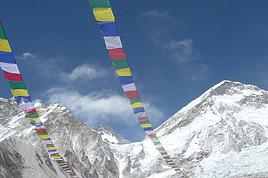
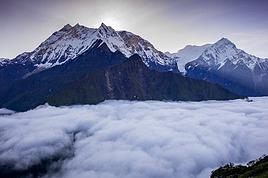
En préparation d'un trek avec ma compagne dans la région du Khumbu (itinéraire pas encore fixé, mais surement proche de celui des 3 hauts cols) pour l'automne prochain, je viens quérir des informations sur le matériel à emporter auprès des personnes qui connaissent les lieux.
Nous souhaiterions partir sans guide ni porteur, dormir selon les jours en lodges ou en tente, et avec une petite autonomie alimentaire pour d'éventuels bivouacs isolés (plats lyos, ptit dej) et le tout biensur le plus léger possible (sans porteur) donc objectif moins de 10kg chacun.
Mes gros points d'intérogations pour l'instant portent sur les conditions climatiques qu'on peu rencontrer la nuit en octobre pour le choix de la tente, en effet pour viser un sac leger, impenssable de s'encombrer d'une TNF VE 25 ou autre tente extrème.
Tente
Déjà titulaire d'une tente Eureka Wabakimi 2 qui a passé l'Islande avec grand succès avec notamment une nuit en bivouac au bord du lac Hvitarnes copieusement ventée, arrosée, grélée. J'aurais pourquoi pas osé faire confiance a nouveau en cette tente si ce n'est son poid trop élevé pour cette altitude, et sa surface au sol (importante et confortable, mais pas pratique pour des emplacements exigus en montagne).
C'est pourquoi, mon choix avais tendance a ce porter sur du vaude pour ce voyage,
- La Hogan Ultralight Argon semble être une tente trés solide pour son poids de seulement 1, 5Kg, mais semble quand même extrêmement petite pour 2 personnes (max 105cm de largeur et min 75cm)
- La Power Taurus Ultralight qui semble solide et qui visuellement met en confiance, structure powerframe qui parait être très efficace face au vent, et un espace intérieur qui est plus vivable à 2 que la Hogan pour environ 2kg.
Le choix d'une tente de ce type est il insuffisant pour les conditions qui peuvent êtres rencontrées?
Sac de couchage
Ne souhaitant pas réinvestir dans des sacs de couchage, nous comptons partir avec nos sacs TNF Blue Kazoo ( -4, -10°), et les pensant certainement un peu juste, rajouter sac a viande sea to summit thermolite, sous vetement thermiques, voir meme la doudoune garni duvet si grand froid. ( ou gourde d'eau chaude pour madame :) )
Matelas
Sachant que les sacs de couchages sont peut etre un peu limite pour les températures qu'on peu rencontrer, je ne souhaite pas être juste aussi sur le matelas de sol.
Pensez vous que des autogonflants de 2, 5 cm d'épaisseur soient suffisants pour compléter le "package" que j'envisage d'emporter et nous permetre de passer des nuits tièdes...?
pour le reste du matériel nous envisageons pour le moment:
- sac a dos 50 et 55+10 qui nous ont permi de faire du 8 ou 9 jours d'autonomies sans aucun problème cet été en islande
- Couverture de survie
- Popote minialiste juste pour les quelques repas isolés
- réchaud à gaz primus express (trouve t-on du gaz à namche bazar ou lukla?)
- trousse de secour + medocs
- petite trousse de toilette + petites serviettes microfibre
- APN + Batteries de rechange
- gourde + quelques plats lyo + cereales
- paire de bâtons de marche
et pour les vetements:
- 2 paires de chaussettes + 1 paire de nuit
- 2 paires de sous vetement
- 1 T shirt mc
- 1 T shirt ml
- 1 collant thermique
- 1 pantalon leger (300g)
- 1 surpantalon leger
- 1 softshell
- 1 veste membranée
- 1 doudoune garnie duvet légère
- gants soie
- casquette, bonnet, cache cou
cette liste vous parait-elle relativement possible par rapport a ce qui peut etre rencontrer la haut?
En préparation d'un trek avec ma compagne dans la région du Khumbu (itinéraire pas encore fixé, mais surement proche de celui des 3 hauts cols)...
C'est quoi ta traversée ? Si c'est la traversée vers le CB du Makalu par West et East cols c'est un parcours glaciaire, donc matériel adapté nécessaire (piolet, crampons, corde, sécurité glacier...). On doit pouvoir s'en tirer avec du light (alu)...
Si c'est autre chose, sans parcours glaciaire, les conditions sont clémentes en octobre et tu trouveras des lodges. L'idée d'un minimum d'autonomie rejoint ma pratique personnelle (rallonger une étape, coin sympa pour bivouac...).
Tu trouveras pas mal d'infos au niveau matériel sur le forum Randonner léger http://www.randonner-leger.org/forum/
Pas de critique majeure sur ta liste :
- le réchaud : en Asie je préfère le pétrole, facilement disponible, et pas de cartouche de gaz qui finira un jour ou l'autre dans la nature...
- autogonflant : j'ai toujours trouvé que le plus mince et court était suffisant, y compris pour des bivouacs hivernaux sur neige. Je suis fidèle à Thermarest. Il y a un nouveau, NeoAir, très léger que je ne connais pas, voir sur les forums ce qu'il vaut.
- peut-être beaucoup de chose dans les habits, en particulier softshell + veste membranée + doudoune légère c'est un peu redondant...
- gants soie, peut-être un peu léger et fragile, je préfère des gants en polaire un peu épais pour les départs au petit matin frisquet...
- tente : je ne connais pas tes modèles. J'ai une 2 places Vango Helium 200, 1.4 kg, utisée pour des bivouacs haute montagne et au Ladakh cet été. Pas très grande, mais c'est le prix à payer pour être léger, OK pour 2 + matériel, j'arrive même à faire fonctionner le réchaud à pétrole dans l'abside...
Pour l'itinéraire, non pas un parcour glaciaire, un tour de la région et des 4 vallées en passant par le Kongma la, le Cho la, et le Renjo la. Donc d'apres les renseignements que j'ai pu tirer ça et la, normalement pas besoin de matériel spécifique.
Pour tes conseil,
- le réchaud, je vais explorer la piste du réchaud pétrole, je ne conais pas trop les modèles ni leur poid.
- Matelas, oui j'ai vu moi aussi le modèle Neo AIR de thermarest qui semble être vraiment alléchant, a peine plus de 400g pour plus de 6 cm d'épaisseur... mais pour l'avoir vu en magasin j'ai un peu peur vu la matière qu'il se montre un peu bruillant sous les oreilles lors des mouvements.... faut que je me renseigne...
- Vetements, nous avons un peu peur de souffrir du froid, surtout le soir si on bivouac.
"particulier softshell + veste membranée + doudoune légère" Lequel serait de trop?
quelle solution privilégier pour les éventuelles intempéries la bas? softshell+ veste impermeable tres légère? ou polaire + gore tex?
- Tente, je fouille... en tout cas ça serais une moins de 2kg
- Duvet, selon votre expérience et les températures nocturnes, un Blue kazoo ( -4, -10 ) avc drap thermolite ou polaire + sous vetement vous parait il suffisant?
- le réchaud, je vais explorer la piste du réchaud pétrole, je ne conais pas trop les modèles ni leur poid.
- Matelas, oui j'ai vu moi aussi le modèle Neo AIR de thermarest qui semble être vraiment alléchant, a peine plus de 400g pour plus de 6 cm d'épaisseur... mais pour l'avoir vu en magasin j'ai un peu peur vu la matière qu'il se montre un peu bruillant sous les oreilles lors des mouvements.... faut que je me renseigne...
- Vetements, nous avons un peu peur de souffrir du froid, surtout le soir si on bivouac.
"particulier softshell + veste membranée + doudoune légère" Lequel serait de trop?
quelle solution privilégier pour les éventuelles intempéries la bas? softshell+ veste impermeable tres légère? ou polaire + gore tex?
- Tente, je fouille... en tout cas ça serais une moins de 2kg
- Duvet, selon votre expérience et les températures nocturnes, un Blue kazoo ( -4, -10 ) avc drap thermolite ou polaire + sous vetement vous parait il suffisant?
Réchauds : c'est vrai que si le bivouac ne doit être qu'occasionnel (disons 1 à 2 cartouches de gaz max) un réchaud léger à gaz sera la solution la plus légère et pratique. Pour les réchauds à pétrole le MSR Whisperlite International est une valeur sure et probablement un des plus légers. Le Primus Gravity II MF semble intéressant car gaz + essence + pétrole, mais le premier modèle était capricieux avec le pétrole, j'espère que c'est corrigé sur le modèle II.
Fringues : je ne connais pas trop les Softshell. Pour le haut j'utilise, y compris en conditions assez froides (raid à skis) :
- chemisette Odlo 130 g (quand il fait chaud)
- T-shirt manche longues 210 g
- Polaire Powerstretch 320 g
- Gilet doudoune valandre Thule 360 g
- Coupe vent léger Lowe Alpine 300 g
Duvet : suffisant, même sans drap
Les 2 fois où je me suis promené au Népal, c'était en Décembre et avec un duvet équivalent. Octobre ou novembre, les conditions sont plutôt clémentes
Suis nouveau sur le forum et Nous désirons faire un voyage avec des amis 6/7 en novembre au népal dans la région de katmandou en treck sur 15 ou 18 jours.pensé…
On me propose l'itinéraire suivant dans la région du Manaslu au Népal. Si par hasard l'un de vous a déjà opté pour ce trek, je serais ravie de pouvoir avoir…
J envisage d effectuer un trek dans la régio de pokhora soit PKA -Phedi - Dhampus - Landruk - Ghandrung - Nayapul soit PKA - Nayapul - Ulteri - Gorepani…
Je pars pour un trek dans la région du Kangchenjunga et suis a la recherche de quelques infos: - y a t il des lodges a toutes les étapes comme dans le kumbu? -…
Je viens d'organiser avec l'association Humanlaya un trek dans la région de Gorkha- Manaslu, ce trek de 10 jours de Kathmandou passe de village en village, il…
Hi,
We’re planning to do the 4-day trek from Mestia to Ushguli without an agency. The descriptions mention that there are accommodations at each stop, but we can’t find any details about them. Has anyone got info or feedback on this route?
We're planning to trek in Peru and Bolivia and would love to find some local agencies.
If you know any, could you share details on prices and, of course, the names of the agencies?
Which trek would you recommend?
Elocine
Je pars en autonomie totale sur un trek au Maroc (10jrs) Imilchil - Aghbalou.
Trouve t-on des cartouches gaz à vis (Coleman, Primus) à Marrakech (adresse) ou villages entre Imilchil - Aghbalou ?
Si non , trouve-t-on des cartouches Butagaz pour camping-gaz (petit volume 230 gr ...)
Merci d' avance pour vos réponses
Hello, I’d like to embark on a little trip in my home country, Switzerland. I’ll start walking from La Cure, heading toward Le Noirmont first, then I’ll improvise my route—but it’ll probably follow the French border... at least as far as Lac de Joux.
I’ll decide day by day how much farther to go after that. My goal is to stay in nature as much as possible, wander around for as long as I can, and restock food in villages or towns along the way.
I’m thinking of mostly camping, but we’ll see if I end up in a hotel or another campsite depending on my route.
I’d love to reach La Chaux-de-Fonds on foot... maybe even Delémont.
The whole thing should take about a week, give or take.
I’ll be bringing my dog, and I’m preparing for this as soon as I’m ready.
Any tips to make sure everything goes smoothly for us? Things I should know—or avoid? What about shepherds with their flocks of sheep? And isn’t hunting season open right now?
I’m not sure if what I’m planning is even doable, which is why I’m asking around.
This’ll be my first time doing something like this—wandering in nature *and* with a dog. I’m really excited for this adventure... and I need it. Thanks!
We’re really keen on ecosystems and want to hike in "natural" ancient forests—not planted woods or areas heavily degraded by human activity. Travel guides (like Lonely Planet) don’t provide much info on this. Could you point us to the most interesting spots?
Thanks in advance for your tips.
We wish you happy holidays and a fantastic 2026, full of discoveries!
Claire and Albert
Hi, this might not be the right section, but I’d like to know if it’s possible to start mountaineering with another person without necessarily hiring a guide. We’ve done quite a bit of hiking but not mountaineering—we’ll just do a half-day glacier course. After that, we were thinking of starting with La Grande Motte and the Pointe de la Traversière, which were recommended to us. Honestly, for things like roping up and knots, I’ll learn at home with lots of videos and a book.
Jaimerais savoir si quelqu'un aurait fait des treks sur le Ruwenzori et combien ça coute en moyenne, les infrastructures, les paysages la sécurité sur les lieux, merci beaucoup. J'attends avec impatience vos réponses.
We’re leaving in 9 days for a two-week trip to Madeira, mainly to hike.
From my research, I’ve found that since last year, access to most trails—and systematically for the most popular ones—is now paid. You have to pay an access fee of 4.50 € per person per classified hike in 2026, and even 10.50 € for the most iconic hike: Pico Arieiro to Pico Ruivo. When paying, you also have to choose a day and a 30-minute time slot for your start time. Of course, this reservation is neither changeable nor refundable, even if the weather that day is terrible.
Personally, given the massive influx of tourists to the island in recent years, I don’t mind paying a fee to help maintain the trails. Similarly, setting a limit on the number of people who can hike them per day is certainly preferable to preserve this priceless heritage.
However, what’s much less fair is that in reality, most of the available spots are reserved: 1/ for Madeira residents (which is normal); 2/ for "economic operators" (meaning local tour operators). For example, if you’re a non-resident (independent tourist), no booking is possible for the Pico Arieiro hike for an early morning start before September! So, unfortunately, we’ll have to skip this hike.
It’s the same issue for Ponta de São Lourenço, the 25 Fontes, Pico Ruivo... in short, all the most popular hikes. Oh well, we’ll skip those too!
So my question is: which hikes do you recommend where we won’t face the huge crowds that the others get? And where we can book the day before for the next day, taking the weather into account?
Finally, a quick accommodation question: we’ve booked the first week in Funchal, but I haven’t decided yet for the second week. Do you have any advice on where to stay in the south or north, preferably avoiding overly concrete-heavy and touristy spots?
I’m reposting about the logistics for Samaria Gorge.
I’d love to get recent info, especially about whether it’s possible to park my car in Omalos, do the hike, and then catch a bus back to my vehicle.
In theory, it’s doable, but when you check the KTEL website, there aren’t any feasible schedules listed. If anyone has recently organized this with reliable, verified details, I’d really appreciate it. Thanks in advance!
Hi there,
We’re flying from Montreal to Lyon this August to go hiking in the French Alps. We’ve rented a car and will be staying at campgrounds. We’re planning to do day hikes and want to stay a few days in one spot, do a few hikes, then move on to our next camping spot. Could you share your favorite spots or any recommendations for places to spend a few days with great hikes?
A few details:
We arrive in early August and leave in early September.
We’re looking for day hikes (or shorter), moderate difficulty, with a cumulative elevation gain of no more than 1000m, and of course, beautiful scenery!
We’d prefer not to drive too much—maybe it’s best not to head too far south and deal with unnecessary heat?
Along the same lines, if you know of any great campgrounds where we can start our hike directly without needing the car, we’d love to hear your suggestions!
Bonjour
Souhaitant faire de la randonnée sur cette île, je voudrais d'abord savoir quelle serait la période la plus favorable sachant que j'avais passé quelques jours en novembre 2018 pas pour cette activité mais plus pour une simple découverte de l'île et le temps n'était pas top notamment en montagne. Donc peut on choisir une organisation en étoile sachant que je louerai un véhicule avec éventuellement 2 points d'hébergement.
Je n'envisage pas d'intégrer une structure mais de partir à 2 et de s'organiser sauf si vous me conseillez une agence locale ou un guide local. Enfin même si je compte me procurer les différents supports, carte et topo guide plus gps je vous remercie de bien vouloir me communiquer les randos à faire en priorité
Merci beaucoup pour vos informations
I’m planning to do the Mercantour crossing following the Randoxygène route in mid-July.
I’m used to hiking in the mountains, but I sometimes get vertigo, for example on ridges with drops on both sides. I wanted to check if there are any T4 or T3-T4 sections and find out if there are any very exposed passages—and if so, where—so I can plan an alternative route.
Can anyone give me some info on this?
Thanks!
I’m planning a trip around Cap Corse and the AGRIATES in 2026, from May 8th to 15th (there are still 2 spots left, by the way! Just DM me if you're interested).
I’d love to know which hikes are worth prioritizing in the AGRIATES. We’ll be staying in SALECCIA for two days as our base—what should we focus on from there?
A round trip to IGNHU beach? Any other suggestions?
For Ostricano, I think it’s too far for a round trip...
Thanks for your tips!
Have a great day,
Anie, Toulouse
I’d like to get some info about the GR10 Pyrenees traverse. I need help planning the daily stages and accommodations—my wife isn’t an experienced hiker but walks a lot, so I’d like to schedule shorter walking days and thus a longer overall trip in terms of number of days.
Could anyone give me some help and advice?
Best regards,
New to this forum, I’m planning a pretty big project for 2028.
I’m heading to Nepal to do a trek from Kathmandu all the way to Everest Base Camp (a cool 5,300 m 😄).
This trek is a bit special because even though I’ll be part of a group, I’m going solo (so far, no problem—I’m used to it). But it’s my first real trek, and it’s also a humanitarian one: once I reach base camp, I’ll stay an extra week to help clean up the waste left by tens of thousands of climbers! Since I’m originally from South America, from two countries that share the Andes, I have a deep respect for mountains—they fascinate me. So Everest… it’s kind of the trip of a lifetime!
So, a little question for those who’ve done treks to Everest before… any tips for good mental preparation (I’m already working on the physical side)?
Hi there, I’m planning the Annapurna Circuit for March 2027 and I’m looking for a local agency with a local guide—preferably French-speaking—to arrange this trek for us. Any suggestions? Thanks
Hello!
We’re spending a few days in Toraja country at the end of May. We’d love to do a day trek—taking our time—on a route that’s stunning in terms of scenery, but not a level 5 in difficulty!
Any suggestions you can share, please?
Thanks in advance
I’d like to do the Mare a Mare Sud in May over 4 days. I’ve found quite a few places to stay along the route, but I’m stuck on the start and finish.
I’ll be arriving by plane on Sunday evening and would like to start pretty early on Monday morning. Ideally, accommodation right at the trailhead (Alzu di Gallina) would be amazing, but I can’t find anything. Any tips?
Also, for the transfer from Figari Airport to Porto Vecchio or Alzu di Gallina?
At the end, I’d like to pick up a rental car—any advice on that too?
I’m traveling solo by plane to Catania in May and plan to hike the northern side of Etna, starting from Linguaglossa where I’ll arrive by bus. After that, I’d love some info on how to get up to Piano Provenzana (shuttles or hitchhiking), since it seems there’s no public transport except in the summer. Can you sleep there in a free or cheap refuge, or camp? And how far up can you go without having to hire a guide? Thanks in advance. Bernard.
Bonjour a tous,
je pars en voyage au Maroc en aout et nous allons commencer par nous arrêter a Chefchaouen(nous sommes en voiture).
Ma question: quelqu'un peut il m'indiquer un itinéraire de rando en boucle d'entre 5 et 7 jours aux départ de Chefchaouen dans le parc de Talassemtane passant si possible par le pont de dieux?Ou un guide papier qui en reunis quelques uns?
Nous privilégions le camping sauvage et les gites.
Merci d'avance
Hi there, for those who’ve been recently—is it possible to find other solo travelers in March on the island to share transport or room costs? It doesn’t seem easy to travel on a budget.
If you have any recommendations for simple lodgings or places with dorms, I’d love to hear them.
For those who’ve done multi-day treks while moving around: do you need to bring your own sleeping bag? I’d love to hear about itineraries you’ve done without a guide, just with a map and GPS.
Thanks, and have a great day!
Hi everyone!
We’re planning a 15-day road trip to Scotland this summer, specifically to explore and hike on Lewis and Harris—places we’ve never been before. We’ve visited other islands on previous road trips in Scotland (we usually go in April for a week). This would be our first time in Scotland in the summer and for 15 days. We’re looking at late August to early September.
I’m currently drafting the itinerary. We’d be crossing from Ullapool and were thinking of spending 3 nights on Harris and 4 nights on Lewis.
Does that sound balanced to you? Is it better to keep the same accommodation on Harris and the same on Lewis to explore the area? I’d love to hear about any past experiences you’ve had on these islands.
Thanks!
Hi there, I’m trying to leave for 15 days very soon to São Vicente. I’m either looking to join an agency or figure things out on my own to go hiking on one of these islands or both. From what I’ve seen, it’s not easy to organize with local transport, so it gets expensive. Can I use the services of a small local agency? I’m looking for the simplest way to hike for several days. Also, how do you get from São Vicente to São Nicolau? Thanks in advance and have a great day!
Aichatou
I’ve been wanting to do this for several years, and this year’s the one. Next September, I’ll be trekking in Tusheti (Georgia), from Omalo to Shatili.
Of course, I won’t be renting a vehicle that’d just sit unused. No problem getting to Pshaveli, but from there to Omalo, it’s a dirt road (still the case?)
There must be some form of public transport since there are so many guesthouses, and not all travelers come in a 4x4.
If any of you have been to Omalo, could you confirm that these shared transports exist and how often they run?
we’re planning a trip to Yellowstone and hoping to do a three-day backcountry hike if we get a permit.
if any of you have done this before, could you let me know if it’s possible to find water along the way? And if we can transport it, are we allowed to use a stove?
Hello,
I’ll be in Nepal from March 6th to 29th (we’re flying into Kathmandu via Varanasi and leaving via Delhi).
I’m a bit confused about the regulations requiring a guide.
My wife and I (we’re 63 and 64) aren’t experienced trekkers—we’re more used to walking on terrain with very moderate elevation changes. I’m looking for fairly easy hikes, possibly day trips.
Here are my questions:
- Does the Poon Hill trek from Pokhara require a guide, or is it better to go through a local agency? (I’ve seen a lot of them offering 4-day packages)
- I’d like to do a few multi-day hikes around Jomsom (Kagbeni, Mukitinath, Lupra, Marpha)... Do you need a guide for those, and can you find accommodations easily without booking in advance?
Last question—I’m really hesitant to lug around a sleeping bag or down jacket during our 6 weeks in India. Can you easily find these kinds of items at reasonable prices in Pokhara?
Thanks in advance for any tips you can share!
Yann
I’m a 56-year-old man who’s done several treks in Nepal and elsewhere. Also passionate about photography.
I’m looking for one or more people to form a group for a trek in Nepal. The trek is the Annapurna and Manaslu circuit (24 days), including a stop at Tilicho Lake. I’ve got a great itinerary and the local company seems solid. The price is around $1600.
I’ll be in Nepal from April 5 to May 12, 2026, so the trek would need to happen within those dates.