Je lis de multiples messages sur l'inconfort des mois de juillet et d'août. Mais quand on n'a pas le choix .... vaut-il mieux choisir la dernière quinzaine de juillet ou la dernière quinzaine d'août ?
Je pencherais pour août, d'après ce que je lis, probablement moins pluvieux, mais les typhons ? Sont-ils fréquents à cette époque et sont-ils dangereux ?
Je vote pour juillet. Août est peut-être un peu moins pluvieux (quoique...), mais vraiment chaud au point d'être très désagréable et surtout la deuxième quinzaine = obon = tu te tapes les congés domestiques et ça va être chargé.
Les typhons sont un poil plus fréquents en août (mais il y en a en juillet aussi...), ils sont dangereux si tu décides d'aller refaire ta toiture dans ta cabane de montagne à côté d'une rivière ou d'aller faire du surf ce jour là (il y a toujours un gars qui va essayer...). Sinon tu te planques en intérieur et il n'y a pas de problèmes.
Merci pour votre réponse ! Concernant les typhons, ça me rassure.
Par contre, je suis plus étonnée pour juillet. N'y a-t-il pas un grand risque de se retrouver avec des journées entières de pluie continue en juillet ? Des averses, ce n'est pas gênant, mais je lis qu'il peut y avoir des journées entières de pluie continue, parfois pendant 4 ou 5 jours ... Sur un voyage de deux semaines, ce serait assez pénible ... Plus que d'avoir très chaud ?
Je préfère un peu de pluie que le cagnard humide et insupportable d'août. Il peut y avoir de la pluie en juillet, bien sûr, mais ce n'est pas le coeur de la saison des pluies non plus...
Personnellement, j'essaierais de partir à une autre période de l'année...
Mais bon, si tu n'as pas le choix, quand même, globalement, je ne vois pas trop de différence entre mi-juillet et mi-août : selon les années, tu peux avoir grosso-modo le même temps, c'est-à-dire très chaud, extrêmement humide (il faut supporter un taux d'humidité qui ne descend jamais sous 90 %... et il ne faut même pas compter sur un peu de fraîcheur le soir ou le matin), et des risques de pluie toujours très élevés. Soit de la pluie sans discontinuer, soit des averses très fortes. Tu peux bien sûr tomber sur un coup de bol, avec moins de chaleur ou d'humidité qu'à l'ordinaire, mais la tendance de l'été c'est bien chaleur + humidité + risques de pluie.
Franchement, à moins que tu n'apprécie ce genre de torpeur tropicale (il y en a que ça ne dérange pas), ça risque sérieusement de pénaliser ta découverte du Japon et de rendre tes balades assez pénibles.
La saison des typhons, c'est tout l'été, mais avec une trajectoire qui passe sur le pays surtout à partir de la mi-aout et en septembre. Cela peut poser problème si tu séjournes à la campagne (possibilité de glissements de terrains, coulées de boue, lignes de chemin de fer ou routes coupées, vite ré-ouvertes toutefois) mais ça ne posera pas de problème en ville. En revanche, tu ne feras rien d'autre que rester dans ta chambre d'hôtel à attendre que ça passe (les rafales de vent peuvent dépasser les 300 km/h). Malgré tout, sur une quinzaine de jours, tu n'auras vraiment pas de bol si tu as plus d'un typhon.
Il reste sinon quelques options pour échapper à une partie de cette météo : aller dans l'île du nord, Hokkaido, moins chaud et surtout moins humide, ou faire une bonne partie de son séjour en montagne où il fera plus frais (mais pas moins humide). Mais s'il s'agit de commencer par découvrir Tokyo et Kyoto, bon courage...
Est-ce que c'est une chaleur différente de ce qu'on connaît au Vietnam à la même époque, par exemple, et qui tourne aussi autour des 90/95 % ? Parce que c'est ce que j'ai connu comme chaleur tropicale. Et c'est vrai que j'avais trouvé ça très pénible, mais pas au point de gâcher ma visite du pays. J'avais eu l'impression, dès la sortie de l'avion, d'entrer dans un sauna géant 🤪. Par contre, il pleuvait finalement assez rarement et le ciel pouvait être bleu.
Est-ce que c'est une chaleur différente de ce qu'on connaît au Vietnam à la même époque, par exemple, et qui tourne aussi autour des 90/95 % ? Parce que c'est ce que j'ai connu comme chaleur tropicale. Et c'est vrai que j'avais trouvé ça très pénible, mais pas au point de gâcher ma visite du pays. J'avais eu l'impression, dès la sortie de l'avion, d'entrer dans un sauna géant 🤪. Par contre, il pleuvait finalement assez rarement et le ciel pouvait être bleu.
Je ne suis jamais allé au Vietnam mais tel que tu le décris c'est bien le même type de climat. Encore une fois et avec de la chance, tu peux tomber sur une période pas trop pluvieuse... ou pas !
Je lis de multiples messages sur l'inconfort des mois de juillet et d'août. Mais quand on n'a pas le choix .... vaut-il mieux choisir la dernière quinzaine de juillet ou la dernière quinzaine d'août ?
Je pencherais pour août, d'après ce que je lis, probablement moins pluvieux, mais les typhons ? Sont-ils fréquents à cette époque et sont-ils dangereux ?
Merci ...
Bonjour,
Il arrive que la saison des pluies (tsuyu) qui va normalement de début juin à mi-juillet se prolonge d'une semaine, avec son cortège de glissements de terrain en zone rurale. En ville, c'est "simplement" un climat chaud et saturé d'humidité. En aout, c'est moins humide et plus chaud.
Personnellement, je préfère quelque degrés Celsius de plus à quelques % d'humidité en plus... mais si la température flirte avec avec les 40°C comme à Tokyo il y a deux ans, trop c'est trop.
Bref, pour moi, il n'y a pas de bonne réponse. J'ai souvent eu pas d'autre choix que le mois d'aout et j'ai fait avec.
PS : j'ai peut-être eu de la chance, mais j'ai toujours échappé aux typhons au Japon.
En cas de journées pluvieuses, j'imagine qu'il y a des choses à voir en intérieur aussi ? Les temples notamment ?
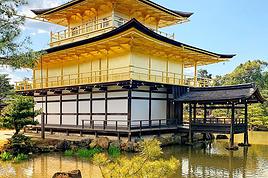
Dans une ville comme Tokyo évidemment, il y a plein de choses à faire en intérieur (expos, musées, magasins en tous genres...). Pour les temples, oui, pourquoi pas, mais souvent les jardins sont autant à voir que l'intérieur des temples (quand bien même l'intérieur des temples se visitent, ce qui n'est par exemple pas le cas du Pavillon d'or à Kyoto...), sans parler évidemment de l'architecture. La visite des temples n'est donc pas forcément une solution à retenir en cas de pluie...
Après si tu n'as pas le choix des dates et que tu as peur de ne pas supporter le climat, tu peux aussi modifier ton programme en l'adaptant au climat estival, comme aller plus au nord du pays ou alors en altitude (autour des alpes japonaises), où les températures diurnes sont un poil plus basses qu'en plaine, et où les températures nocturnes sont autour des 20°C, et sont donc beaucoup plus supportables.
De manière générale c'est dans les terres que l'air est le plus lourd, comme à Kyoto, car il n'y a pas de vent. Lorsque tu te trouves à proximité de la mer ou de l'océan il y a une légère brise marine quasi permanente qui permet de rendre le tout un peu plus supportable, comme à Tokyo.
Oui, c'est une idée, mais j'avoue que pour un premier (et peut-être dernier ..) voyage au Japon, j'envisagerais plutôt de rester sur Tokyo et Kyoto principalement.
La lourdeur du temps ne me fait pas vraiment peur, surtout si on peut dormir dans un hôtel climatisé, c'est le principal pour moi, pouvoir recharger les batteries la nuit ... Mais la pluie et les typhons m'inquiètent plus, je me demande si ça pourrait vraiment gâcher complètement le voyage.
Oui, c'est une idée, mais j'avoue que pour un premier (et peut-être dernier ..) voyage au Japon, j'envisagerais plutôt de rester sur Tokyo et Kyoto principalement.
La lourdeur du temps ne me fait pas vraiment peur, surtout si on peut dormir dans un hôtel climatisé, c'est le principal pour moi, pouvoir recharger les batteries la nuit ... Mais la pluie et les typhons m'inquiètent plus, je me demande si ça pourrait vraiment gâcher complètement le voyage.
Merci pour vos réponses !
Ca peut effectivement te paralyser pendant quelques jours, même si le typhon laisse ensuite place à un beau ciel bleu.
Tu auras quand même moins de risques de typhon en y allant à la mi juillet, période que je te conseille en tous points puisque qu'il fera un peu moins chaud et que les journées seront plus longues qu'en août ou septembre. La saison des pluies sera (quasiment) terminée donc tu devrais trouver un ciel plutôt dégagé.
En règle générale, durant la dernière quinzaine de juillet, le temps commence franchement à devenir très chaud et humide à Tokyo et dans tout ce qui est en dessous de la capitale nippone.
Voici les moyennes pour Tokyo et Kyoto en juillet et août (min, moy, max) :
Tokyo :
Juillet : 21.8/25.0/29.2
Août : 23.0/26.4/30.8
Kyoto :
Juillet : 23.2/26.8/31.5
Août : 24.3/28.2/33.3
Quelle est d'après vous la meilleure période pour visiter le Japon? une bonne météo (j'aimerais éviter les typhons) et si possible hors juillet-aout pour…
J'ai l'intention de partir au Japon d'ici un an ou 2 avec mon copain. Nous aimerions bien voir Tokyo, Kyoto et Okinawa. Pouvez-vous me dire qu'elle est à la…
Hi! I’m on vacation from 10/31 to 11/7 and want to go somewhere sunny. I’m leaving from Toulouse and the flight can’t be more than 5 hours.
Any ideas?
Thanks for your help
We want to do a few safaris, visit villages, the mountains, see tea plantations, etc. But we also want to see turtles. We love snorkeling but aren’t experts—we’re just happy to see colorful fish and coral. We’ve always wanted to see turtles too, so the idea is still to see *something* underwater 😊
Can you tell us which regions to prioritize and which to avoid given the climate at this time of year? Thanks a million!
Hi, I’m taking a 13-day trip from September 27 to October 9 in Prague (4 nights), Vienna (4 nights), and Budapest (3 nights), in that order. What clothes should I pack for this time of year?
Hi,
We're leaving on June 19th for an 8-day road trip in South Iceland. I've heard that even in summer, it's cold and the weather can change several times a day. Should we mainly pack winter gear, like a K-Way, fleece, down jacket, beanie, etc.?
For those who’ve experienced it, what’s the weather like in Shanghai at the end of December?
I’ve heard it’s cold, but coming from France, is the winter milder than in Lyon, for example?
I’m tempted to spend the Christmas holidays in Shanghai and the surrounding areas (Nanjing, Suzhou) with my family—kids are 11 and 2. It’d be a bummer if the little one catches a cold over there.
Generally, is this a good time for simple family visits to the main spots, restaurants in the city, indoor heating, and outdoor walks?
Hi everyone, I’m planning a trip to Mauritius—anyone have advice on when to go? I’m thinking April, May, or June for my stay. Which month would you recommend for the best beach weather, sunbathing, and exploring the island? Thanks!
Hi,
we’re planning to travel through Patagonia (Chile and Argentina) in February and March 2027.
From a seasonal and weather perspective, at that time of year and with hiking as our main activity, is it better to explore Patagonia from south to north or the other way around?
Thanks in advance.
Anne Marie
I’ve planned a three-week itinerary for this summer, from August 9 to 27, in Sri Lanka:
Negombo – 1 night
Sigiriya and the Cultural Triangle – 4 nights
Kandy – 2 nights
Ella – 3 nights
Tangalle – 6 nights
Colombo Airport – 1 night
I know this isn’t the ideal time for the south since the beach conditions aren’t great, but we’ve booked a hotel with a pool and won’t be swimming in the sea. We want to relax after all the travel since we’re bringing our two kids, aged 6 and 8.
I know the east would be better, but (i) I’m struggling to find suitable accommodation, and (ii) it adds a lot of travel time, and my kids can only handle about 3 hours at a stretch.
I looked into Arugam Bay, but it’s a 7-hour trip back to Colombo from there.
I’ve checked every weather site imaginable, but they don’t all agree. Do you think we’ll spend our whole trip in the rain, or is the monsoon in the south mostly limited to the sea, as I’ve read?
I’m worried about ending up in the middle of a natural disaster with my two young kids, given recent events.
hi
After reading quite a few posts and buying a guidebook, I’m still struggling to finalize my suitcase.
Given that we’ll be visiting both islands during our road trip and suitcases aren’t exactly expandable,
I’ve noted that temperatures can be changeable—but should I pack more winter clothes than summer ones?
Thanks for your help
We’ve decided to go to Skopelos for 2 weeks at the end of April. What kind of weather should we expect? Any special things to know about this remote island?
Thanks for your tips
Hi there. On my itinerary from São Luís to Jericoacoara, I’ll be passing through the Lençóis. Is there any point stopping there this time of year? Apparently, the lagoons are dry, but aside from the lagoons, is the surrounding landscape still interesting enough to warrant a 1- or 2-day stop? Thanks in advance for your help.
Hi,
We’ve booked our flight tickets and we’re leaving from October 29th to November 13th for Mauritius.
I just reserved our accommodation in Cap Malheureux.
We’re used to hot and especially very sunny destinations like Oman, Jordan, Uzbekistan...
If you can reassure me about the period—can we expect sunny weather? I’m really dreaming of discovering Le Morne Brabant under beautiful sunshine...
Thanks
Hi everyone,
I need to go to Sri Lanka at the end of January.
I’ve seen that many roads, hotels, and parks were closed after the cyclone, which unfortunately caused a lot of damage.
Does anyone have more information?
Would it be wiser to postpone our trip?
Thanks, Alain.
Hi,
I’m planning a trip to Oman, probably the first half of February to avoid the extreme heat and Ramadan.
But after checking various weather sites and reading accounts, I’m a bit worried about rain, which can apparently be frequent and heavy in February. I’d love to hear from travelers or locals who’ve been there recently.
What would be the ideal month to explore Oman without extreme heat or rain? November?
Also, it’s best to avoid visiting the wadis on weekends—does that mean Saturday and Sunday?
This year, 2026, I can only get away in April and May. I never travel during these months usually, and from what I know, they aren’t the best for India. But in such a big country, there are always spots that are better than others weather-wise.
Which region would you recommend?
Given that I’ve already traveled quite a bit in this country, and in any case, I’ll be discovering places I don’t know yet. No need for a major tourist hotspot or luxury comfort.
Hi everyone,
We’d love to return to India next year for 3 weeks (we visited Rajasthan about fifteen years ago). Unfortunately, we’re tied to traveling in September, and our initial plan was to explore Himachal Pradesh. However, it seems like that might not be the best month for this region.
Could you share your experiences from that time of year in Shimla, Manali, Dharamsala, or even the Spiti Valley—in short, anywhere in Himachal Pradesh? Otherwise, which region of India would you recommend for a September trip?
Thanks so much!
Hi everyone, I’m planning a trip from mid-January to the end of February but I just can’t make up my mind 😕
I’ve looked into a few different options: Brazil, Cambodia, and Ecuador. The last one really appeals to me, but what’s making me hesitate is the risk of our trip being a bit too rainy (literally ),
We’re more drawn to the Andes, exploring colonial cities, typical villages, markets, and a bit of the coast. We’ve already gotten a taste of this in Bolivia, Colombia, and Chile. Plus, we’d love to do part of it by car since we’re used to driving at our own pace and stopping whenever we feel like it. Anyway, time’s running out, and I need to decide so I can finalize a route and book the tickets!!
Can anyone help me make up my mind or decide to postpone it for later? But for this year, I don’t have any other time slot to travel. Thanks for reading this far! !
I’ve planned a trip to Asia for the first half of November.
I’ll arrive in Singapore at the start of November for about 3 days, and I’ll leave from Bangkok in mid-November.
In between, I’d like to gradually head north to visit some less touristy islands on the Thai coast.
Since the weather is a big risk during this period, I’d love to hear your recommendations.
I’m looking for: sunshine, snorkeling, beaches, nature / jungle in places that are easily accessible without too much transport to make the most of my trip.
Hi there,
We’re planning a trip to Chile this coming August and would love to head down to Chiloé. We’ve heard that as we go further south at this time of year, the weather gets pretty rough.
What’s the weather like in Chiloé in late August/early September? What activities can we do? And which ones become really tricky because of the weather?
Thanks in advance for your tips!
Marie
So great to be back on this forum after being away for—I don’t even know what!
I’m planning a trip to Malaysia in July with my 5-year-old son. The thing is, I’m not sure which coast to choose. AI keeps telling me east one minute and west the next. Which spot is least affected by rain during this time?
Hey everyone! 🙂
Just giving you the quick context: A group of friends and I are planning a trip to South Korea (Seoul/Busan) at the end of June/July next year. It falls right in the middle of the monsoon season, but we don’t really have other availability options.😕
I’d love to hear from people who’ve visited the country and these cities during this period—basically, is it not as bad as it sounds, or should we just cancel our tickets (we don’t mind the heat, it’s mostly the rain that scares us).
I know there are plenty of indoor activities, but do you think we’ll still manage to get a few sunny days, or will it be torrential rain for our entire 2-week trip?
The only other country we’ve visited during the rainy season is Brazil (in the northeast) around the same time, and honestly, aside from a few really annoying downpours, we had sunshine most of the time and it was awesome. That said, the climate is totally different, so I’m not sure how relevant the comparison is.
Thanks in advance to anyone who takes the time to read or reply to this post! 🙂
Hi everyone.
Not sure if guidebooks, agencies, and other tour operators are keeping up by changing their visiting hours and offerings.
Personally, I see a promising opportunity here—jumping on this adaptation to extreme climates before others do, since they’re inevitably coming.
From my own travel experience, I’ve met a few guides so far who are starting to adjust, like in Egypt, Kenya, Senegal, and elsewhere.
They avoid crowds and the hottest hours by starting their tours around 6–7 AM, when it’s cooler.
Yeah, you’ve gotta wake up early, but the payoff is so worth it. 😴
If you’ve got any great tips like this, why not discuss them in this thread and share addresses or websites where the people in charge have realized climate change is real and are adapting? 😊
Hi there,
I’m planning a trip to Namibia in 2026.
I’m torn between visiting the Fish River Canyon and the Caprivi Strip / Victoria Falls.
I’d also love your advice on the best time to travel for wildlife viewing and pleasant weather.
I haven’t chosen a tour operator yet... since I’m traveling solo, I’d prefer a small-group escorted trip. Has anyone traveled with a local agency and what’s your feedback or advice?
Thanks so much!
I’m taking a month-long trip to northern Argentina throughout September. Buenos Aires, Iguazu, Salta, Humahuaca, Cafayate, and if time allows, La Rioja. I’m unsure about what clothes to pack. What are the temperatures like in September?
Thanks for your great tips!
Dominerja
hi
It seems that in recent years, January and February in Bohol have seen an increase in rainy periods. Have any of you noticed this?
Thanks in advance for your replies