Voyage en Norvège en hiver (en camping-car)
by Stephpessoa
This discussion is in French, the community’s main language.
Original post
Bonjour à tous,
Besoin de vos conseils et expériences!
Nous projetons de partir en Norvège en camping car fin février début mars.
Je voudrais savoir si quelqu'un l'a déjà fait en hiver, car sur les forums je vois principalement des voyages en été.
Nous comptons monter jusqu'à Tromso par la Suède.
Est ce vraiment réalisable ?
Sachant que nous investissons dans des pneus cloutés
Merci de me faire part de vos expériences
À bientôt
Bonjour
J'ai répondu à votre message privé, mon expérience n'étant qu'estivale...
A noter qu'à Sirkka, pas loin de Kittila, en nous répondant sur un séjour hivernale dans cette station, la personne de l'office de tourisme nous a déconseillés de venir en février: "même nous nous trouvons qu'il fait trop froid".
Alain
Alain
Des photos de voyage: https://www.flickr.com/photos/alainnoel/sets/
Ne nuis pas à ton voisin, ceci bien compris, fais ce qu'il te plaît. (Pierre Louÿs - Les aventures du roi Pausole)
Merci beaucoup pour votre réponse !
Je viens de lire votre message. Je vais continuer à faire des recherches. Ce n'est pas vraiment le froid qui m'inquiète ayant déjà une expérience en Finlande mais plutôt l'accessibilité des routes. Peut être finirai-je par trouver quelqu'un qui l'aura tenter en camping car ou van...
Bonsoir, je suis monté 2 fois au Cap nord en voiture, je dormais dans mon véhicule, la 1ère fois en 2011 c'était en juin, les campings étaient ouverts, mais la 2ème fois en mai 2014, aucun camping ouvert, et dans le nord les grandes routes étaient ouvertes, mais la neige bien présente, alors en février et mars, je pense qu'il doit avoir de la neige, mais avec des pneus clous, cela ne devrait pas poser de problèmes, et à cette époque vous aurez la chance de voir des aurores boréales. Bon voyage
Christophe
Merci 😉 pour cette réponse.
En combien de temps y êtes vous arrivé ? Au départ de?
Le GPS nous ferait passer par la Suède (et Allemagne ) au départ de la région parisienne.
Nous espérions y arriver en 4j. Ce sera intensif je pense mais nous voulons profiter au maximum du nord!
Bonsoir
je suis parti de Grenoble et je suis arrivé au Cap Nord en 5 jours de route, cela faisait 4700 km, et je suis passé par l'Allemagne, le Danemark, le tunnel-Pont pour la Suède, la Finlande et enfin la Norvège, c'est la route la plus rapide, pour redescendre j'ai fait toute la route de la côte norvégienne ( d'ailleurs il n'y a que cette route) et c'est plus long en temps et kilomètres, mais la Norvège est un très beau pays.
Pour mes 2 voyages, je suis passé par la même route pour monter, il n'y a que lors du retour que je suis passé par une autre route.

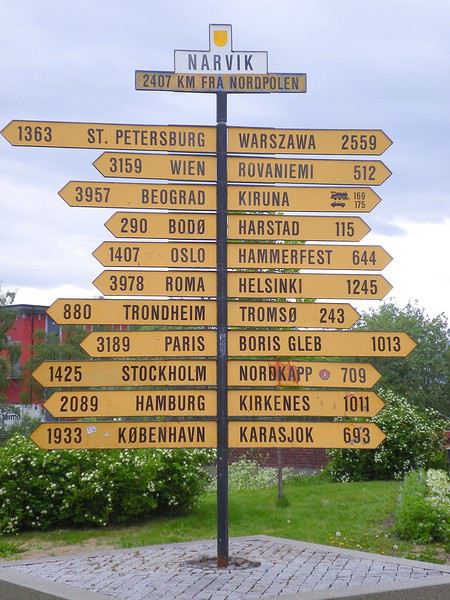
Sur le panneau, je ne sais pas si les distances sont par la route ou à vol d'oiseau ? Si vous avez des questions sur le trajet pour la Norvège, n'hésitez pas à me poser des questions, dans la mesure du possible, je vous répondrai. Cordialement christophe

Sur le panneau, je ne sais pas si les distances sont par la route ou à vol d'oiseau ? Si vous avez des questions sur le trajet pour la Norvège, n'hésitez pas à me poser des questions, dans la mesure du possible, je vous répondrai. Cordialement christophe
Christophe
Waouh super voyage ! Ça me donne envie de partir tout de suite!
Nous aurons un peu moins de km. 3400 d'annoncé. Par l Allemagne jusqu'à puttgarden ou il y a un ferry avec une petite traversée de 45min pour arriver à rodby en Suède. Petite pause à stockholm. Puis luléa. Et on s'arrêtera à tromso. On ne pense pas tenter le cap nord vu la période.
Ce qui fera des tronçons de 1100, 800, 900 et 600 km. On verra si c'est réalisable de cette façon sinon on improvisera, c'est l'avantage du camping car!
Pour le retour je ne sais pas trop encore.
Merci pour vos infos c'est gentil de prendre le temps de me répondre.
Si vous avez des coins incontournables à nous conseiller c'est avec plaisir!
Bonjour
Je pense que ralier ce coin de Norvege en fevrier en 4 jours est plus qu'ambitieux. C'est risquer de rater de beaux paysages et croyez que les 4 voyages que nous avons faits là haut l'ont souvent confirmé.
Pour compléter cela et mes autres messages, je vous invite à regarder les webcams sur ce site, en les faiant défifer sur un an. Vous verrez ainsi que vous ne choisissez pas la prériode la plus facile.
Au Cap nord
fr.webcams.travel/...ullscreen/1369336627
et à vous de choisir fr.webcams.travel/popular/norway
Alain
et à vous de choisir fr.webcams.travel/popular/norway
Alain
Des photos de voyage: https://www.flickr.com/photos/alainnoel/sets/
Ne nuis pas à ton voisin, ceci bien compris, fais ce qu'il te plaît. (Pierre Louÿs - Les aventures du roi Pausole)
Nous comptons monter jusqu'à Tromso par la Suède.
Est ce vraiment réalisable ?
bien sûr que c'est réalisable. C'est peuplé, villages et petites villes. Les gens conduisent au travail, les autobus et les routiers effectuent leurs services, etc. Trivial. Comme partout où il y a de l'hiver, comme par exemple dans les Alpes.
La seule particularité est lors de blizzard avec formation rapide de congère, qui oblige pratiquement à s'arrêter sur le bord et attendre que ça passe et éventuellement que les charrues dégagent la route. Ça arrive mais pas souvent, et dans ce cas retards. Sur le rebord montagneux norvégien il arrive que la route E6 vers la frontière norvégo-suédo-finnoise, entre Skibotn et Galggojavri soit devienne trop une énorme patinoire et fermée le temps du raclage, ou soit mise en convoi.
Conduire en convoi consiste en ceci: une barrière ferme la route et une queue de voitures se forme derrière, un certain nombre de véhicules selon les instructions des employées de l'administration des routes présents, souvent une dizaine de véhicule. Une grosse charrue avec des projecteurs puissants ouvre la route, dégageant donc la neige pour les voitures qui suivent derrière. Parfois une charrue ferme la marche, Les passages en convoi sont occasionnels et peu nombreux dans le nord: entre Tromsø et Alta, au niveau d'un passage en basse montagne et plus au sud entre Mo i Rana et Straumen. C'est habituel tout l'hiver au niveau de passages montageux du sud-ouest norvégien, vers les grands fjords, uniques routes reliant vallées de l'Ouest et de l'Est.
Si le temps est mauvais, la moyenne horaire bien sûr diminue fort car rouler dans le vent et la poudreuse c'est ne voir qu'un mur de neige devant soi avec la lumière des phares s'y réfléchissant pour vous retourner dans les yeux. On a du mal à savoir où est le bord de la route, et quelques mètres suffisent pour perdre les feux arrières de la voiture précédent. Mais là aussi, ce n'est pas très courant, simplement que si c'est ainsi, alors on est fort ralenti. Bref, mieux vaut ne pas être avec un emploi du temps serré.
Tout cela reste de l'ordre de l'occasionnel, mais autant le savoir car ça peut vous tomber dessus.
nous investissons dans des pneus cloutés
les pneus cloutés sont interdits en-dessous du Danemark et sinon les pneus d'hiver sont obligatoire mais pas nécessairement en clous. S'il s'agit de pneus mous, il faut s'assurer qu'ils sont aux normes exigentes nordiques. Tous les ans, on a le cas en Norvège de routiers polonais avec des pneus mous hiver aux normes m**diques, qui patinent, s'enlisent et doivent être tractés. Les pneus hiver mous des principaux fabriquants font l'affaire, mais pas les pneus bon prix chinois. Si vous roulez en pneus mous, vous pouvez donc partir et revenir tel quel sans changer de roues à la frontière danoise.
Mais, en Allemagne la loi exige que la voiture soit en pneus adaptés aux conditions. Et donc s'il y a du gel et/ou des températures négatives, la Polizei peut vous épingler si vous n'êtes pas en pneus d'hiver càd. -- pour l'Allemagne où les clous sont interdits -- en pneus mous. Bref, si vous achetez des pneus clous vous ne pouvez les monter qu'à la frontière danoise, mais s'il y a du gel en Allemagne et vous êtes en pneus d'été, il y a un risque potentiel d'amende ou de glissage et tôle froissée, auquel cas, l'assureur va défausser en insistant que vous n'êtes pas en pneus d'hiver ... En pneus mous tout du long vous êtes aux normes en Allemagne ET en Scandinavie.
Les pneus mous peuvent s'utiliser en été, en étant prudent, car la capacité de freinage par pluie est diminuée. Si vous achetez en clous, vous vous retrouvez avec un jeu de roues inutilisables par la suite. Même en Suisse et en Autriche les clous sont interdits. Par contre c'est légal dans les pays baltes (Lithuanie, Lettonie, Estonie).
Ceci dit, moi, je suis en pneus clous. Mais aussi je suis familier des routes étroites et sinueuses norvégiennes où je roule à 100km/h dans les virages en hiver.
camping-car
comme l'indique Tito38, les campings sont fermés la saison d'hiver. Pensez à une autonomie totale pour éclairage, chauffage et sanitaires. Les tuyauteries doivent être isolées sinon inutilisables et pétés par le gel. Ça arrive vite. Mettez du liquide de refroidissement moteur en dilution 50-50 il ne fait pas grand froid entre Tromsø et la Botnie, mais quelques jours très froids occasionnels ça peut arriver. Le froid est à l'intérieur du plateau lapon plus au nord-est, vers Kautokeino, Karasjok.
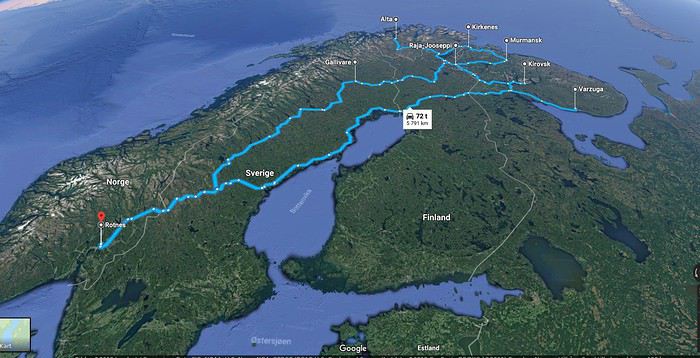
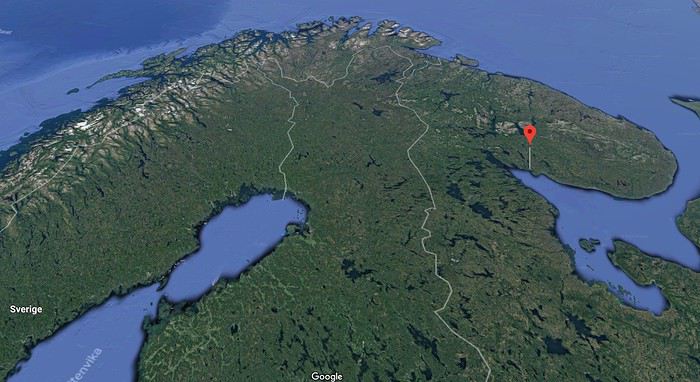
-- d'où je dis tout cela? vivant en Norvège, et par ailleurs appréciant beaucoup la Laponie Orientale, en gros la péninsule de Kola, ainsi que la Carélie septentrionale, il m'est arrivé de prendre dix à quinze jours de vacances en février-mars pour m'y rendre et effectuer de petits circuits. Pas souvent, ça fait de la route. Sur la carte ces trajets entre autres (j'utilise la fonction 3D de Google Cartes, car leurs cartes 2D ont une déformation pour les latittudes nordiques abominable). Cet itinéraire est le même jusqu'en Laponie finlandaise que celui que vous empruntez pour aller à Tromsø. D'où les illustrations qui suivent.
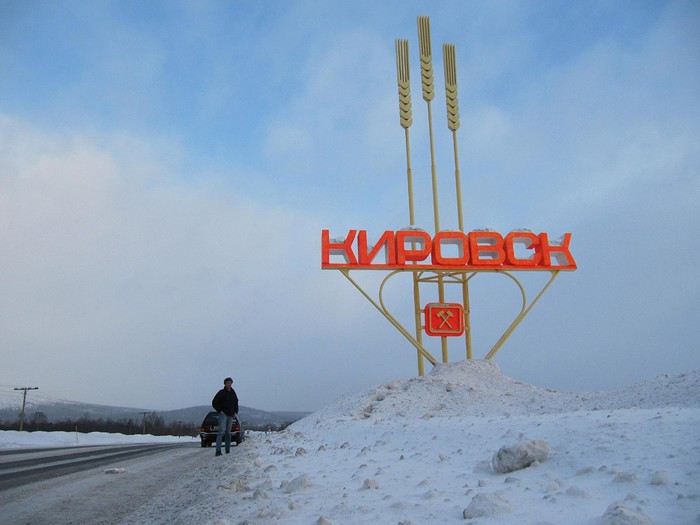
ici je pose auprès du nouveau panneau d'entrée de Kirovsk:
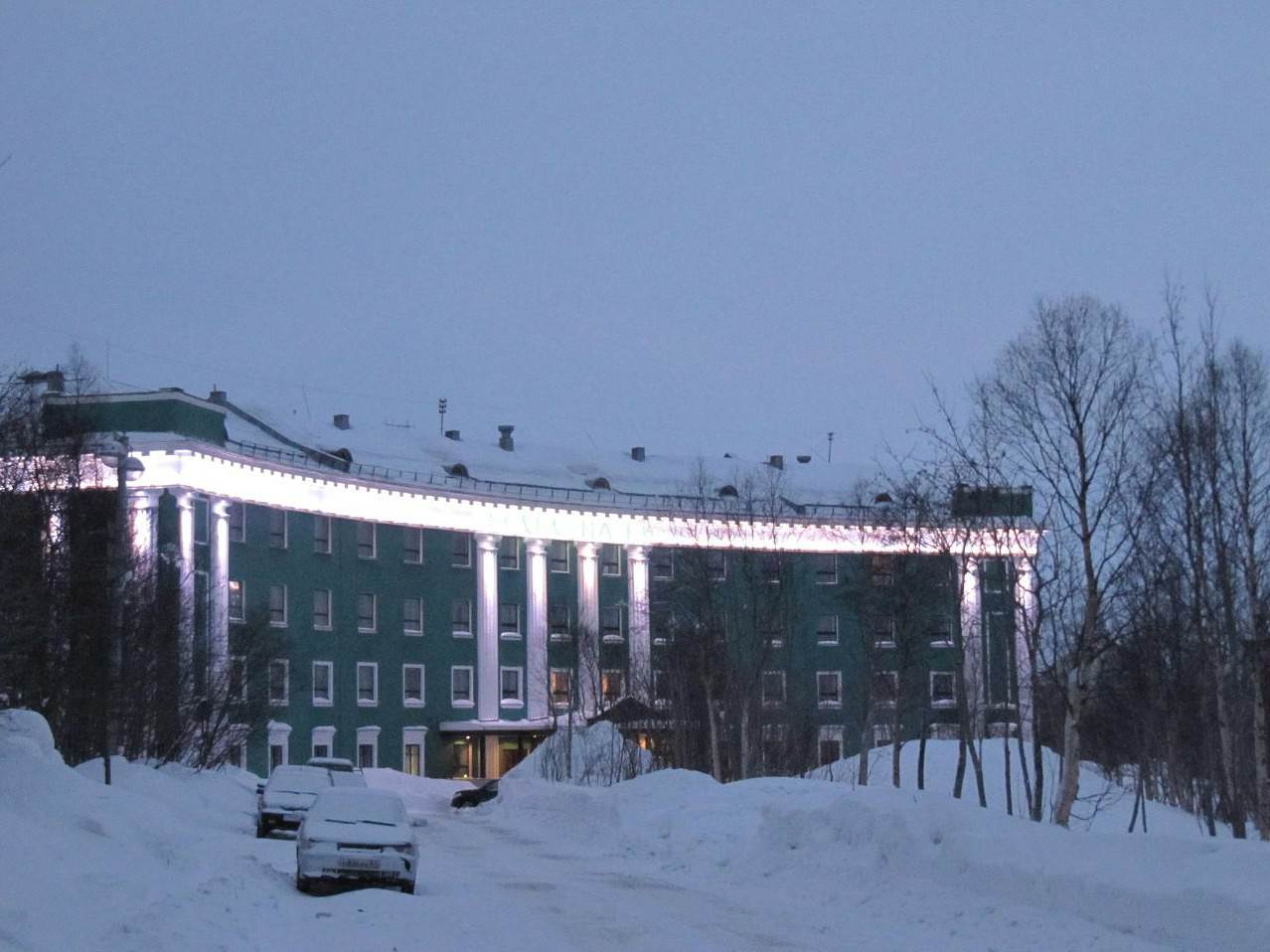
dans le centre une architecture néo-classique impériale des années 30 qui fait fonctionner ma caméra photo. On voit mieux sur celle-ci ma voiture d'il y a quatre ans, et ses plaques norvégiennes:
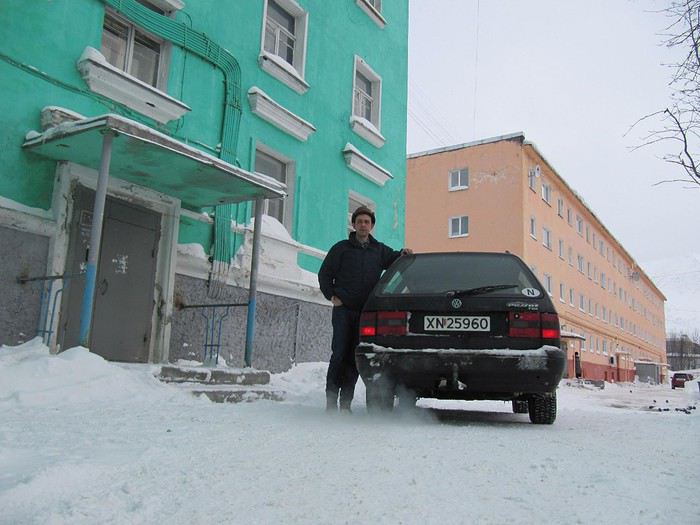
c'était au coin de ces bâtiments:
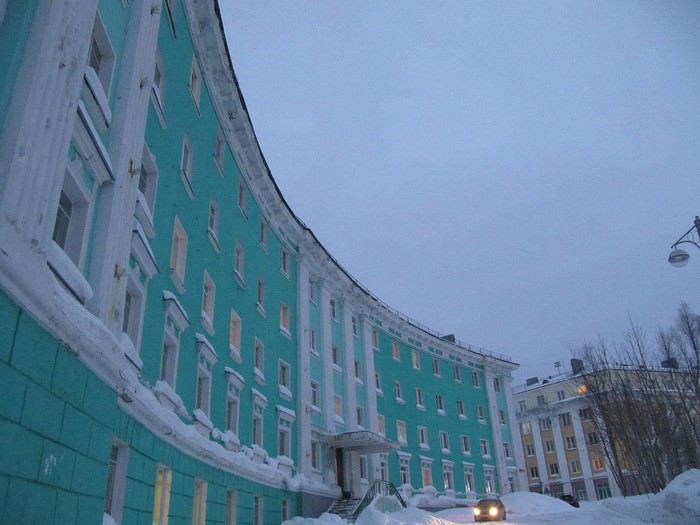
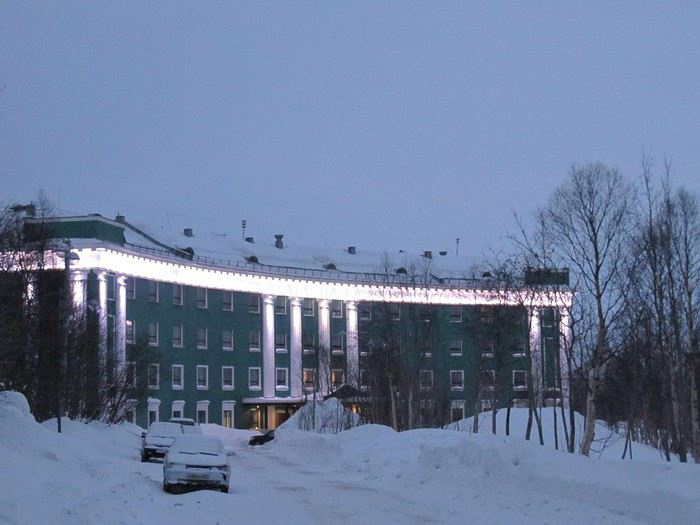
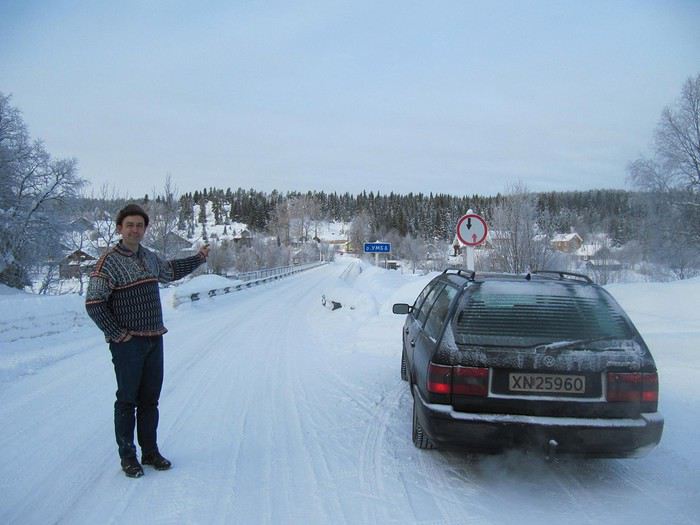
ici, même hiver je pense, càd. 2014, car même Passat que j'avais à l'époque, et on peut bien constater mes plaques norvégiénnes, dans le village de Oumba, Mer Blanche, pointé sur la carte. J'avais pris ce cliché car Oumba est à accès réglémenté par le FSB, c'est un village de relâche pour les sous-mariniers de la flotte arctique russe. Mais comme ils sont très relax, de facto, ils se foutent de la présence d'un ou deux étrangers. Or là je suis aux côtés de mon voiture, laquelle est clairement en plaques norvégiennes, et pas russes, Je me prenais en photo à côté de la voiture au niveau du pont avec la plaque du village (et rivière) pour documenter la chose.
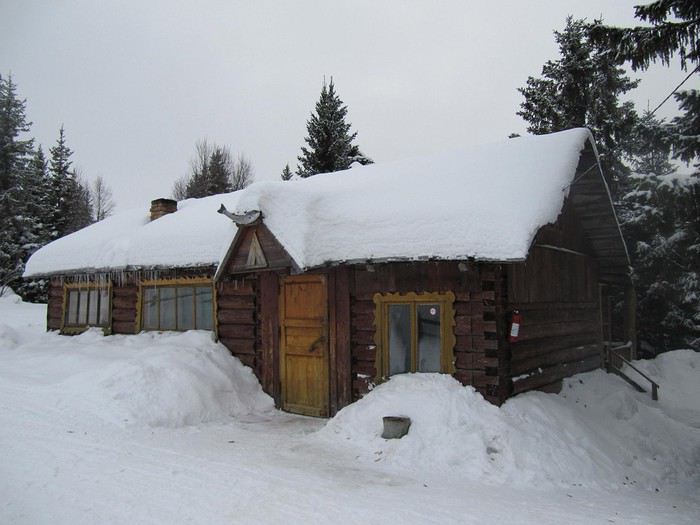
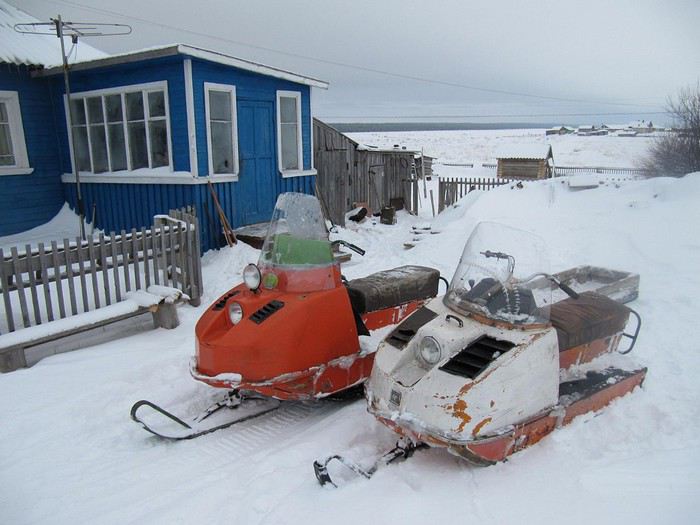
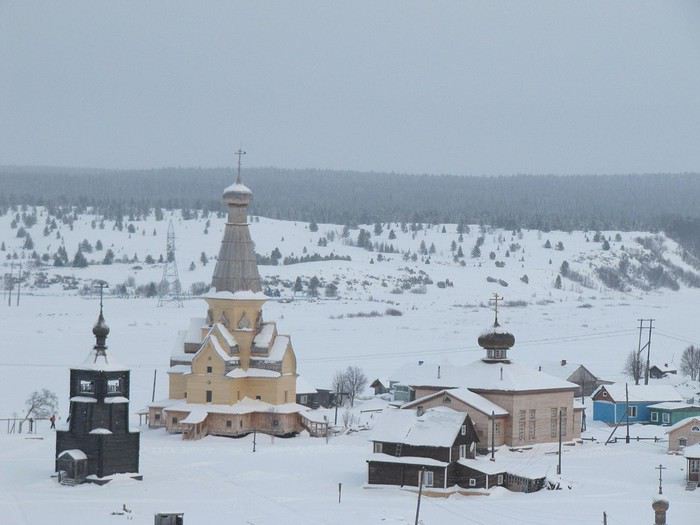
bon tant que j'y suis, une paire de clichés en vrac, c'est la Russie sub-arctique européenne, donc Laponie, et variations architecturales à part, pays similaire à la Laponie en Finlande, et sur le plateau norvégien (pas la côte, qui elle est en montagnes alpines). une cabane que j'avais loué au village de Varzouga, 50 kms après Oumba, et qui possède une grande église en bois datant du 15è s. (mais refaite lorsque le bois à noirci et craquèle de trop), une paire de moto-neige de l'époque soviétique, des Bouran, qu'on trouve encore ici ou là. Pas chiqué mais du costaud:
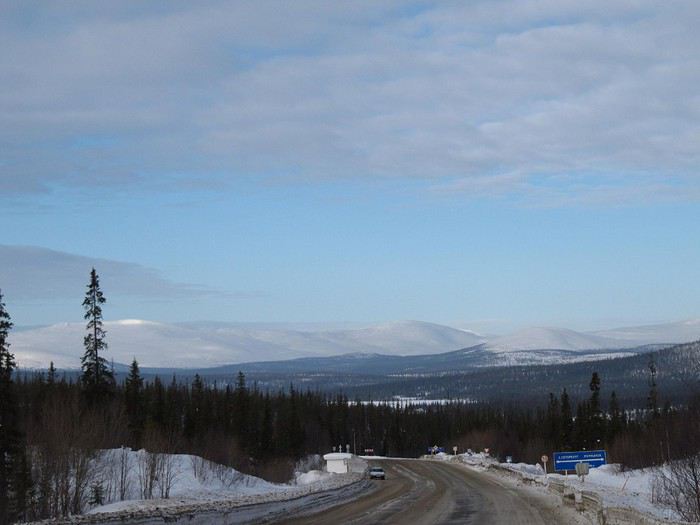
voilà une route et paysage dans cette région de Laponie Orientale /péninsule de Kola. Là c'est la descente vers la route fédérale en venant de Kirovsk. Les routes norvégiennes vers Tromsø sont plus étroites.
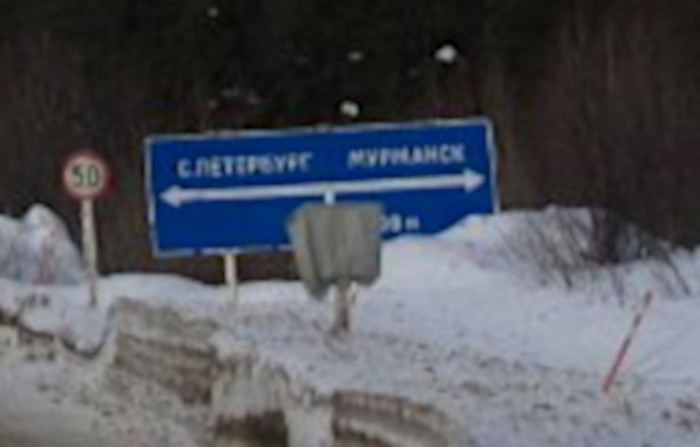
En zoomant le panneau routier en bas en droite on peut constater qu'il indique le carrefour Saint Pétersbourg-Mourmansk (de fait, 200 kms à droite pour Mourmansk, et 1300 kms à gauche pour Saint Pétersbourg):
mais si on roule tout droit vers l'Est au-dessus des montagnes, c'est la Laponie centrale en Finlande.
Bref, ces clichés pour indiquer que pour me rendre dans ces destinations comme tracé sur la première carte, je passe par les 3/4 de la Suède, comme dans votre plan. Dans votre plan vers Tromsø vous bifurquez vers le nord-ouest soit après Gällivare soit après Haparanda/Tornio, alors que dans mon cas vers le nord-est. Depuis Mourmansk, il m'est arrivé aussi d'aller passer la journée entre Kirkenes et Alta, plus au nord de Tromsø.
Ainsi, l'un dans l'autre, tout cela est banal. Rien de particulier. La route en Suède est très ennuyeuse, forêt enneigée à droite, forêt enneigée à gauche, ridelles basses en gros fil métallique séparant les sens de circulation et souvent sur les côtés aussi. Trois couloirs de circulation, plutôt étroits, alternant 1 voie-2 voies/2 voies - 1 voie (pour les dépassements). Très monotone sur 800 kms.
J'ai effectué une paire de fois le trajet Oslo-Rødby-Lille, ça me prenait une vingtaine d'heures (sans dormir). Le trajet Oslo-Mourmansk l'hiver il faut compter deux jours s'il n'y a pas de blizzards en route. Selon d'où vous démarrez en France, il faut compter en camping-car trois jours pour arriver à Tromsø, si vous passez le Ruhrgebiet puis Hambourg aux bons moments, sans queues, c'est à dire de nuit entre samedi et dimanche. Pour la Suède la route E39 vers Gällivare est peut-être un brin moins monotone que la route côtière vers Umeå, Luleå.
--
bon après tout ça, j'ai soif, m'en vais prendre une bière... Bonne route!
bien sûr que c'est réalisable. C'est peuplé, villages et petites villes. Les gens conduisent au travail, les autobus et les routiers effectuent leurs services, etc. Trivial. Comme partout où il y a de l'hiver, comme par exemple dans les Alpes.
La seule particularité est lors de blizzard avec formation rapide de congère, qui oblige pratiquement à s'arrêter sur le bord et attendre que ça passe et éventuellement que les charrues dégagent la route. Ça arrive mais pas souvent, et dans ce cas retards. Sur le rebord montagneux norvégien il arrive que la route E6 vers la frontière norvégo-suédo-finnoise, entre Skibotn et Galggojavri soit devienne trop une énorme patinoire et fermée le temps du raclage, ou soit mise en convoi.
Conduire en convoi consiste en ceci: une barrière ferme la route et une queue de voitures se forme derrière, un certain nombre de véhicules selon les instructions des employées de l'administration des routes présents, souvent une dizaine de véhicule. Une grosse charrue avec des projecteurs puissants ouvre la route, dégageant donc la neige pour les voitures qui suivent derrière. Parfois une charrue ferme la marche, Les passages en convoi sont occasionnels et peu nombreux dans le nord: entre Tromsø et Alta, au niveau d'un passage en basse montagne et plus au sud entre Mo i Rana et Straumen. C'est habituel tout l'hiver au niveau de passages montageux du sud-ouest norvégien, vers les grands fjords, uniques routes reliant vallées de l'Ouest et de l'Est.
Si le temps est mauvais, la moyenne horaire bien sûr diminue fort car rouler dans le vent et la poudreuse c'est ne voir qu'un mur de neige devant soi avec la lumière des phares s'y réfléchissant pour vous retourner dans les yeux. On a du mal à savoir où est le bord de la route, et quelques mètres suffisent pour perdre les feux arrières de la voiture précédent. Mais là aussi, ce n'est pas très courant, simplement que si c'est ainsi, alors on est fort ralenti. Bref, mieux vaut ne pas être avec un emploi du temps serré.
Tout cela reste de l'ordre de l'occasionnel, mais autant le savoir car ça peut vous tomber dessus.
nous investissons dans des pneus cloutés
les pneus cloutés sont interdits en-dessous du Danemark et sinon les pneus d'hiver sont obligatoire mais pas nécessairement en clous. S'il s'agit de pneus mous, il faut s'assurer qu'ils sont aux normes exigentes nordiques. Tous les ans, on a le cas en Norvège de routiers polonais avec des pneus mous hiver aux normes m**diques, qui patinent, s'enlisent et doivent être tractés. Les pneus hiver mous des principaux fabriquants font l'affaire, mais pas les pneus bon prix chinois. Si vous roulez en pneus mous, vous pouvez donc partir et revenir tel quel sans changer de roues à la frontière danoise.
Mais, en Allemagne la loi exige que la voiture soit en pneus adaptés aux conditions. Et donc s'il y a du gel et/ou des températures négatives, la Polizei peut vous épingler si vous n'êtes pas en pneus d'hiver càd. -- pour l'Allemagne où les clous sont interdits -- en pneus mous. Bref, si vous achetez des pneus clous vous ne pouvez les monter qu'à la frontière danoise, mais s'il y a du gel en Allemagne et vous êtes en pneus d'été, il y a un risque potentiel d'amende ou de glissage et tôle froissée, auquel cas, l'assureur va défausser en insistant que vous n'êtes pas en pneus d'hiver ... En pneus mous tout du long vous êtes aux normes en Allemagne ET en Scandinavie.
Les pneus mous peuvent s'utiliser en été, en étant prudent, car la capacité de freinage par pluie est diminuée. Si vous achetez en clous, vous vous retrouvez avec un jeu de roues inutilisables par la suite. Même en Suisse et en Autriche les clous sont interdits. Par contre c'est légal dans les pays baltes (Lithuanie, Lettonie, Estonie).
Ceci dit, moi, je suis en pneus clous. Mais aussi je suis familier des routes étroites et sinueuses norvégiennes où je roule à 100km/h dans les virages en hiver.
camping-car
comme l'indique Tito38, les campings sont fermés la saison d'hiver. Pensez à une autonomie totale pour éclairage, chauffage et sanitaires. Les tuyauteries doivent être isolées sinon inutilisables et pétés par le gel. Ça arrive vite. Mettez du liquide de refroidissement moteur en dilution 50-50 il ne fait pas grand froid entre Tromsø et la Botnie, mais quelques jours très froids occasionnels ça peut arriver. Le froid est à l'intérieur du plateau lapon plus au nord-est, vers Kautokeino, Karasjok.
-- d'où je dis tout cela? vivant en Norvège, et par ailleurs appréciant beaucoup la Laponie Orientale, en gros la péninsule de Kola, ainsi que la Carélie septentrionale, il m'est arrivé de prendre dix à quinze jours de vacances en février-mars pour m'y rendre et effectuer de petits circuits. Pas souvent, ça fait de la route. Sur la carte ces trajets entre autres (j'utilise la fonction 3D de Google Cartes, car leurs cartes 2D ont une déformation pour les latittudes nordiques abominable). Cet itinéraire est le même jusqu'en Laponie finlandaise que celui que vous empruntez pour aller à Tromsø. D'où les illustrations qui suivent.

ici je pose auprès du nouveau panneau d'entrée de Kirovsk:

dans le centre une architecture néo-classique impériale des années 30 qui fait fonctionner ma caméra photo. On voit mieux sur celle-ci ma voiture d'il y a quatre ans, et ses plaques norvégiennes:

c'était au coin de ces bâtiments:


ici, même hiver je pense, càd. 2014, car même Passat que j'avais à l'époque, et on peut bien constater mes plaques norvégiénnes, dans le village de Oumba, Mer Blanche, pointé sur la carte. J'avais pris ce cliché car Oumba est à accès réglémenté par le FSB, c'est un village de relâche pour les sous-mariniers de la flotte arctique russe. Mais comme ils sont très relax, de facto, ils se foutent de la présence d'un ou deux étrangers. Or là je suis aux côtés de mon voiture, laquelle est clairement en plaques norvégiennes, et pas russes, Je me prenais en photo à côté de la voiture au niveau du pont avec la plaque du village (et rivière) pour documenter la chose.


bon tant que j'y suis, une paire de clichés en vrac, c'est la Russie sub-arctique européenne, donc Laponie, et variations architecturales à part, pays similaire à la Laponie en Finlande, et sur le plateau norvégien (pas la côte, qui elle est en montagnes alpines). une cabane que j'avais loué au village de Varzouga, 50 kms après Oumba, et qui possède une grande église en bois datant du 15è s. (mais refaite lorsque le bois à noirci et craquèle de trop), une paire de moto-neige de l'époque soviétique, des Bouran, qu'on trouve encore ici ou là. Pas chiqué mais du costaud:


voilà une route et paysage dans cette région de Laponie Orientale /péninsule de Kola. Là c'est la descente vers la route fédérale en venant de Kirovsk. Les routes norvégiennes vers Tromsø sont plus étroites.

En zoomant le panneau routier en bas en droite on peut constater qu'il indique le carrefour Saint Pétersbourg-Mourmansk (de fait, 200 kms à droite pour Mourmansk, et 1300 kms à gauche pour Saint Pétersbourg):

mais si on roule tout droit vers l'Est au-dessus des montagnes, c'est la Laponie centrale en Finlande.
Bref, ces clichés pour indiquer que pour me rendre dans ces destinations comme tracé sur la première carte, je passe par les 3/4 de la Suède, comme dans votre plan. Dans votre plan vers Tromsø vous bifurquez vers le nord-ouest soit après Gällivare soit après Haparanda/Tornio, alors que dans mon cas vers le nord-est. Depuis Mourmansk, il m'est arrivé aussi d'aller passer la journée entre Kirkenes et Alta, plus au nord de Tromsø.
Ainsi, l'un dans l'autre, tout cela est banal. Rien de particulier. La route en Suède est très ennuyeuse, forêt enneigée à droite, forêt enneigée à gauche, ridelles basses en gros fil métallique séparant les sens de circulation et souvent sur les côtés aussi. Trois couloirs de circulation, plutôt étroits, alternant 1 voie-2 voies/2 voies - 1 voie (pour les dépassements). Très monotone sur 800 kms.
J'ai effectué une paire de fois le trajet Oslo-Rødby-Lille, ça me prenait une vingtaine d'heures (sans dormir). Le trajet Oslo-Mourmansk l'hiver il faut compter deux jours s'il n'y a pas de blizzards en route. Selon d'où vous démarrez en France, il faut compter en camping-car trois jours pour arriver à Tromsø, si vous passez le Ruhrgebiet puis Hambourg aux bons moments, sans queues, c'est à dire de nuit entre samedi et dimanche. Pour la Suède la route E39 vers Gällivare est peut-être un brin moins monotone que la route côtière vers Umeå, Luleå.
--
bon après tout ça, j'ai soif, m'en vais prendre une bière... Bonne route!
Votre camping-car est-il à l'épreuve du gel?
Log in first, then come back to this page.
You might also like
A Scandinavian Tour - Summer 2025
The North Cape by 4x4 in the Snow
D'Oslo à Hambourg, un vélo au pays du véloFR
Aurores boréales en NorvègeFR
Norway: Nomadic holidays between fjords and northern islands
Kattegat Tour and Norway’s Majestic Fjords – 32 Days (Denmark, Sweden, Norway)
Three weeks in Norway (July 2022): fantastic memories despite the rain
More discussions
Hi,
How do you manage to charge your battery using a solar panel while keeping your vehicle in the shade so it doesn’t turn into an oven?
I have a Renault Trafic, unfortunately black, and my cooler, battery, and BougeRV solar panel.
My battery is mainly used for my electric cooler.
https://www.amazon.fr/dp/B0CQ4LFVVR?ref_=ppx_hzsearch_conn_dt_b_fed_asin_title_3
Thanks in advance! Nath
How do you manage to charge your battery using a solar panel while keeping your vehicle in the shade so it doesn’t turn into an oven?
I have a Renault Trafic, unfortunately black, and my cooler, battery, and BougeRV solar panel.
My battery is mainly used for my electric cooler.
https://www.amazon.fr/dp/B0CQ4LFVVR?ref_=ppx_hzsearch_conn_dt_b_fed_asin_title_3
Thanks in advance! Nath
Hi everyone, I don’t think there’s already a thread on this topic,
we’re planning—two or three years from now (I know, it’s a ways off...)—a cross-Canada trip from east to west, meaning Montréal ====> Vancouver, and leaving the RV in Vancouver. First, we’ll spend a few days visiting Québec City, then pick up the RV in Montréal. The trip will likely be around 5 weeks, late August to early September. If you’ve got any route ideas, we’d love to hear them! Banff is probably a must-see stop for us. Thanks in advance!
Didier and Nicole
Hi everyone,
I recently arrived in Uruguay and I'm currently thinking about the best solution for my South America travel project.
I have a 2013 Fiat Ducato camper van that's currently in France. My initial plan was to have it shipped to Uruguay so I could travel across South America for about a year, then sell it here at the end of the trip.
But now that I'm here, I have a lot of questions about selling a French-registered vehicle in South America, particularly in Uruguay.
So, I'd love to hear from anyone who's been in this situation before:
Is it possible to sell a French-registered vehicle in Uruguay without permanently importing it? Is it common to sell your vehicle to other travelers (French, Europeans, or others) who want to continue traveling with it? Are these kinds of transactions relatively straightforward? What administrative procedures should I expect? What are the risks for the seller and the buyer? Are there any South American countries where this kind of sale is easier than in Uruguay? Based on your experience, would it be wiser to sell my van in France and buy a vehicle locally to travel with?
Any advice, experiences, or recommendations are welcome. Thanks in advance for your help !
Is it possible to sell a French-registered vehicle in Uruguay without permanently importing it? Is it common to sell your vehicle to other travelers (French, Europeans, or others) who want to continue traveling with it? Are these kinds of transactions relatively straightforward? What administrative procedures should I expect? What are the risks for the seller and the buyer? Are there any South American countries where this kind of sale is easier than in Uruguay? Based on your experience, would it be wiser to sell my van in France and buy a vehicle locally to travel with?
Any advice, experiences, or recommendations are welcome. Thanks in advance for your help !
Hello,
Today is January 7th, Orthodox Christmas Day.
It’s the perfect occasion to share on VF a religious site that left a lasting impression on us.
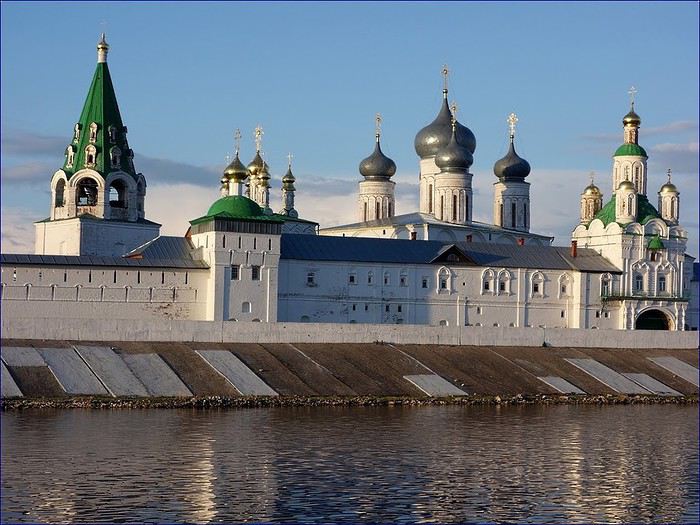
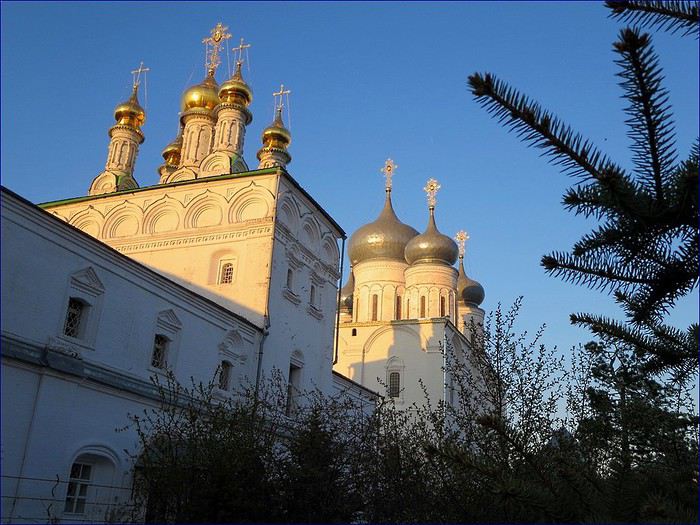
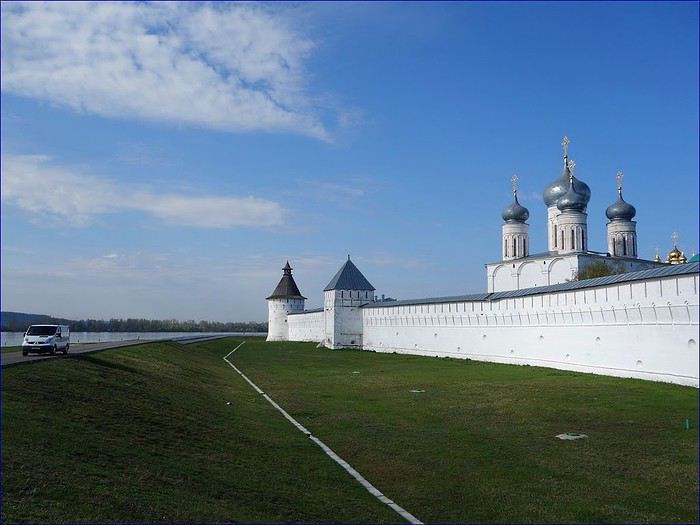
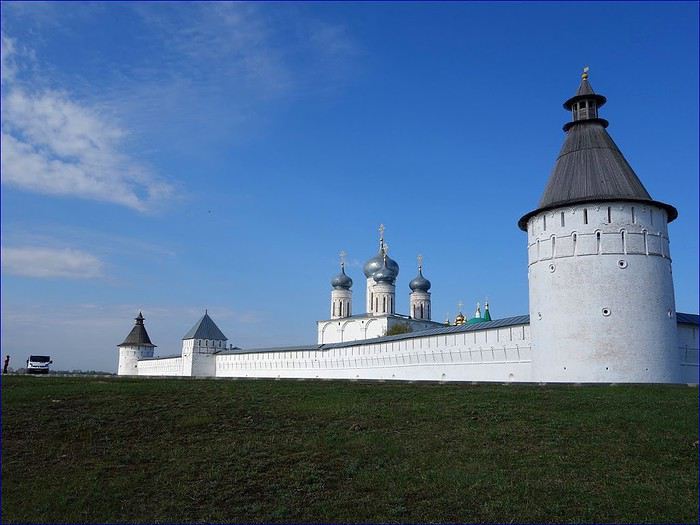
For a long time, we’d admired photos of the Makaryevo Women’s Monastery on Russian websites. They’re always taken from cruise hydrofoils that, in season, depart from Nizhny Novgorod.
This gave us the idea for a crazy challenge: to visit the monastery during a river cruise, with our little plumber’s van that’s become the common thread of our travels!
This challenge seemed impossible to pull off.
The equation was indeed impossible to solve
1. Find a dock 2. Load the van onto a boat 3. Cross the Volga 4. Arrive at sunset 5. Sail past the monastery 6. All with no reliable information. NONE!
Incredibly, every obstacle fell into place one after another! Gifting us unforgettable moments.
The photos follow our exact journey.
1. We arrive on the southern bank of the Volga, searching for a ferry to Makaryevo. First attempt, first failure—we’re way too far east. We find a second ferry, but it serves a different town on the northern bank.

2. We keep going and meet some fishermen. But even they don’t know where to board a vehicle for the monastery.

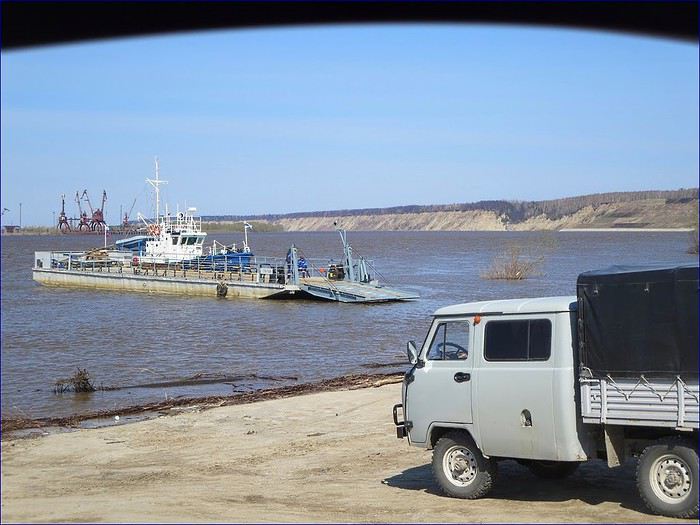
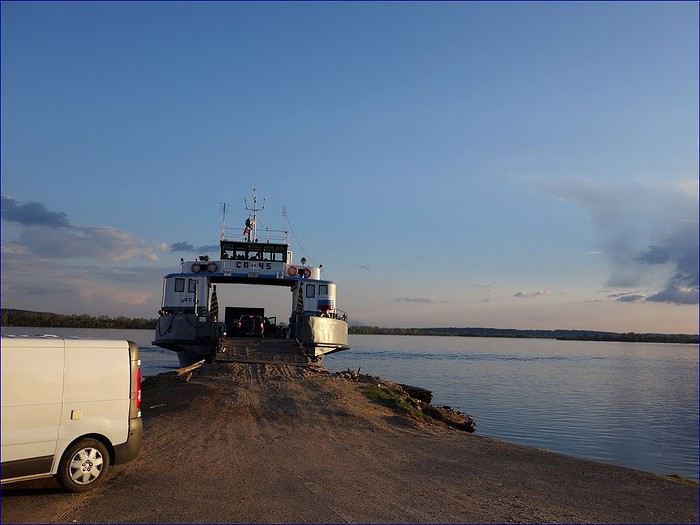
3. After several fruitless searches, a young man who speaks a few words of English points us to a dock where, in summer, boats *might* serve the monastery. Miraculously, at the end of a rough track, we find an old ferry moored. But no one’s on board, and a chain blocks the entrance.
After an hour of waiting, a worker arrives and tells us they *will* cross the Volga tonight,
but the exit ramp at Makaryevo isn’t accessible for our vehicle.
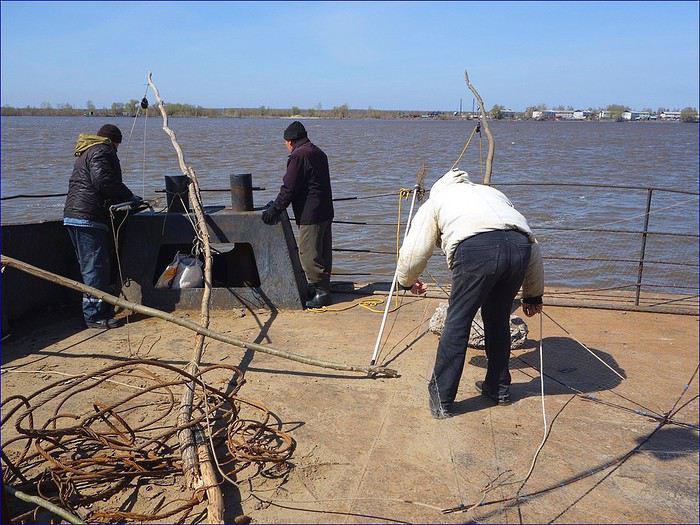
The captain joins him, and seeing our disappointed faces, they confer, discuss,
and load some planks to raise the ramp!
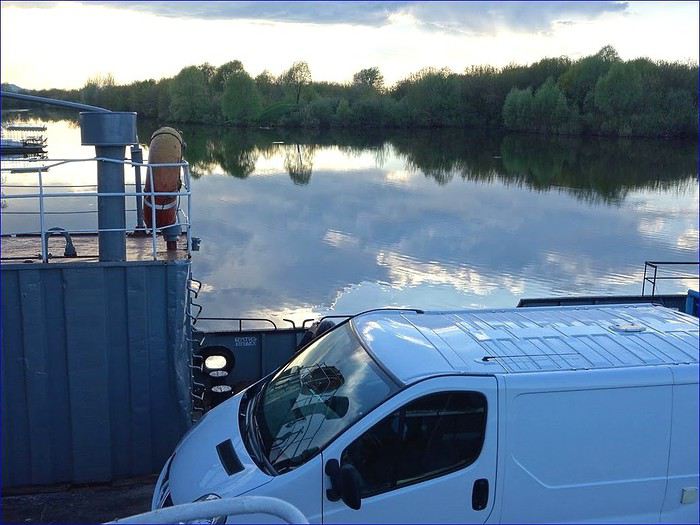
Another miracle!
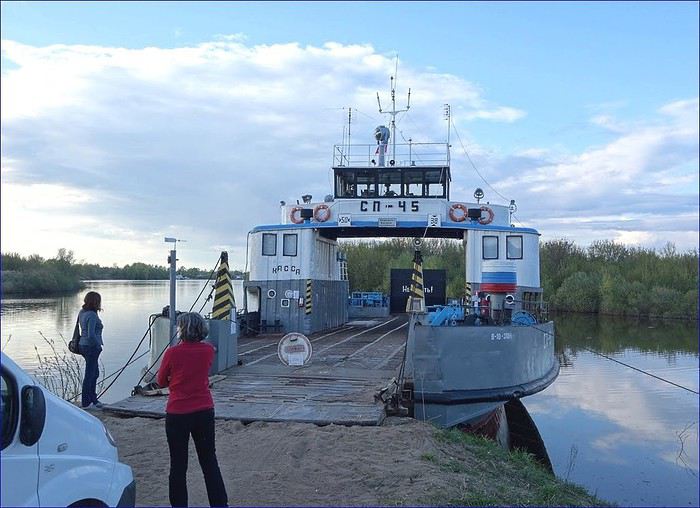
4. We board, with just one passenger accompanying us— the Trafic is the only vehicle on board.

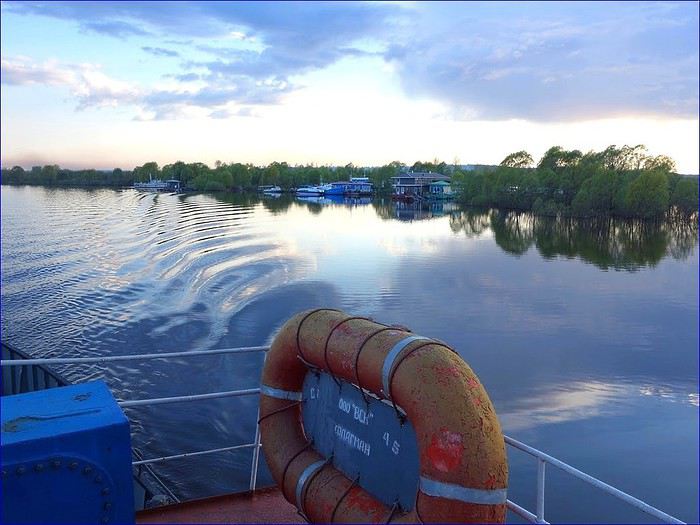
5. The crossing was magical. And longer than expected, since the Volga here is several kilometers wide, and we’re navigating between countless islands!

6. Under a sky that gradually clears, we discover there are homes on the river— invisible from the banks—that form small communities where people get around by boat!

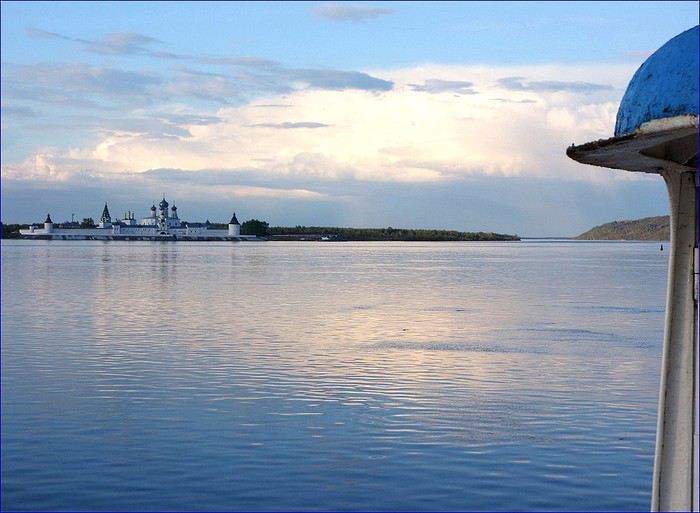
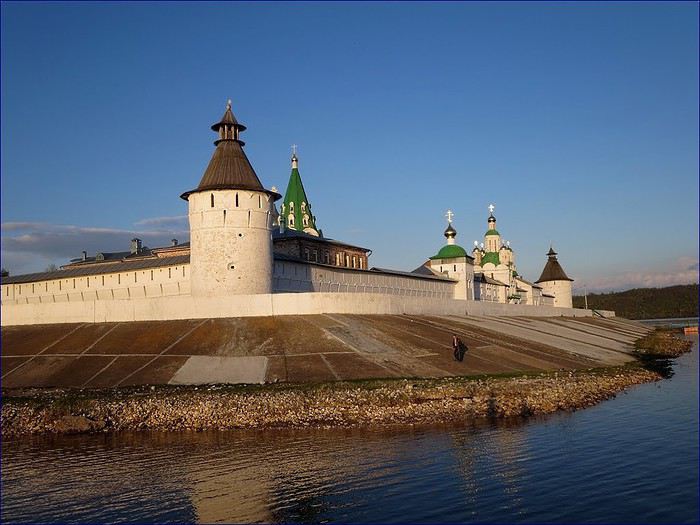
7. Then, suddenly, around a bend in the channel, the monastery appears in the distance on the northern bank.

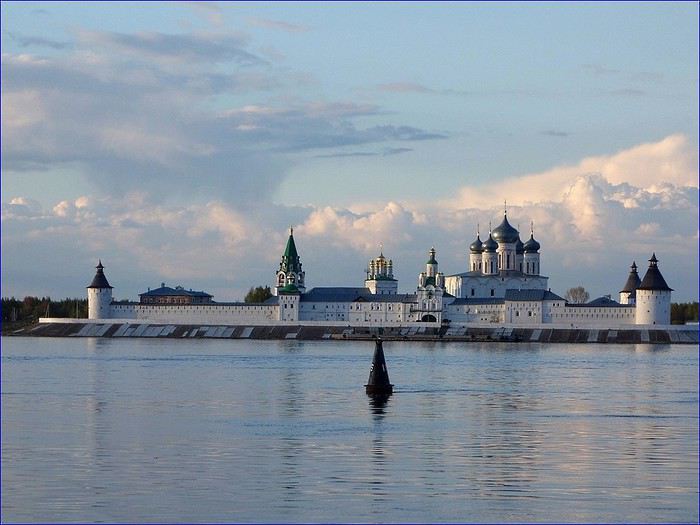
8. At the exact moment our boat rounds the buoy and nears the monastery, the sun breaks through the clouds!

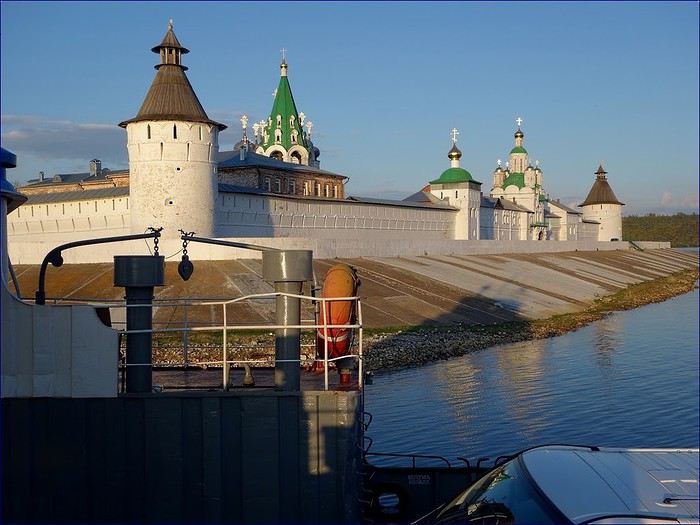
9. A breathtaking sight, with our boat gliding along the monastery walls in absolute silence.

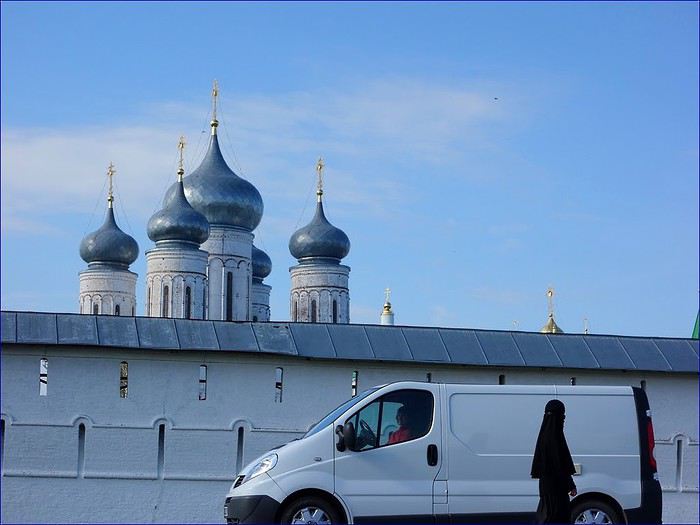
10. The sky, now a deep blue, makes the vibrant colors of the onion domes pop.

11. We sail slowly past the monastery under extraordinary light— something our little compact camera can’t fully capture.

12. As promised, the captain and his crew adjust the exit ramp. You can’t tell from the photo, but even with the planks, it was a close call— the van’s chassis barely cleared the ramp. We thanked them warmly.

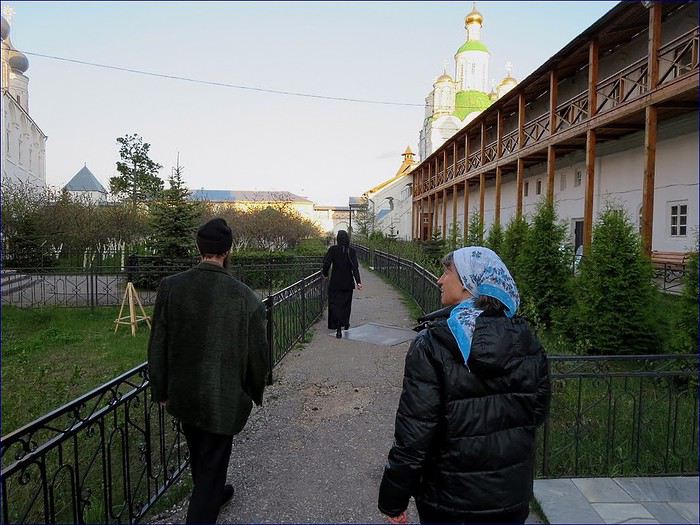
13. By the end of the day, the monastery is, of course, closed. But another miracle happens! It turns out the passenger who crossed with us is the mayor’s wife. When Sylvie told her we were from France, she called her husband, who immediately contacted the Mother Superior. Like in a dream, the monastery opens just for us. A nun and a guard come to meet us and take us through the chapels and gardens!

14. A visit all the more intimate since only the silent nuns, deep in prayer, are present in these sacred spaces.

15. After dinner in our little van, we enjoy the exceptional light illuminating the now-closed monastery. We’re the only visitors, and the site feels like a massive ship anchored on the Volga.

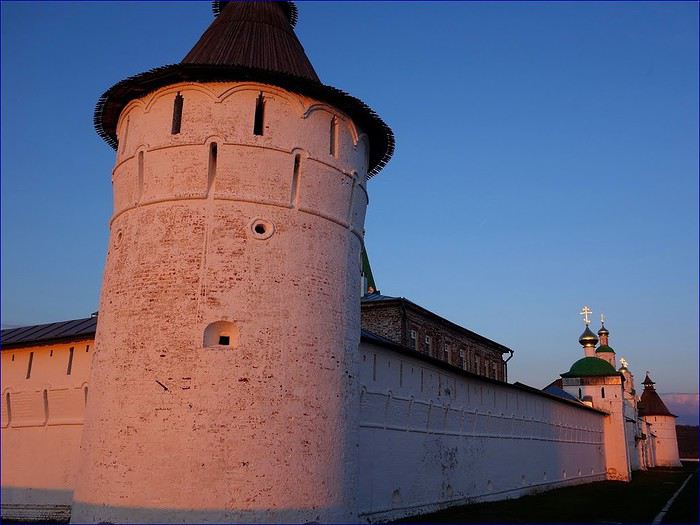
16. The setting sun now bathes the monastery walls in gorgeous pink hues!

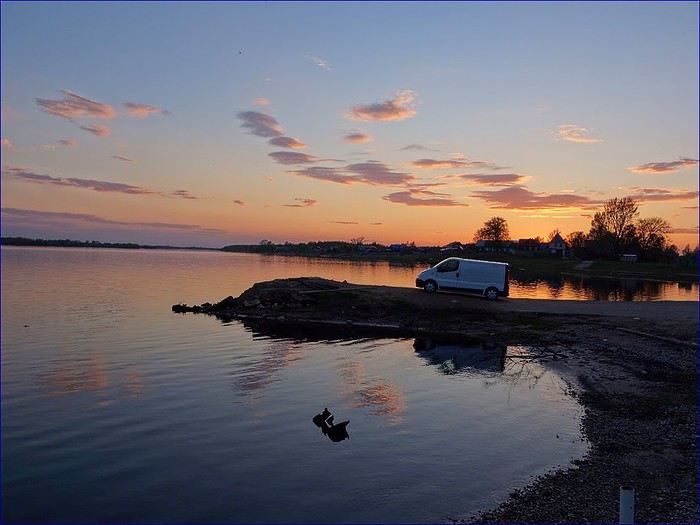
17. Gradually, the legendary Volga itself takes on magical colors! For the night, I’ll just back the van up to level it. It’ll take us a while to fall asleep after such intense moments.

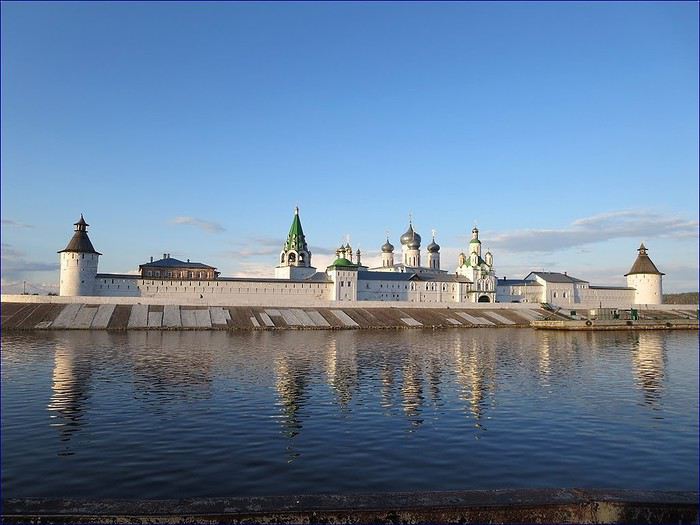
18. Just as inexplicably, the magic continues the next morning! Seeing I’m struggling with my knee, the guard lets us drive slowly along the monastery’s perimeter path. So there we are at dawn, solitary wanderers between the Volga and the monastery walls.

19. The morning light now illuminates the monastery’s eastern façade, which we hadn’t admired yesterday. An exceptional moment.

20. Even more impressive when we realize we’re on the nuns’ prayer path. We cross paths with them—tall, silent, black-clad figures, fully covered.

We leave Makaryevo with regret, following the Volga toward Kostroma on the Golden Ring. That’s about all there is to add.
We’ve already taken three long trips through Russia in our little van. The travel journals are shared in the link in our signature.
Best regards, Sylvie & Bernard
Today is January 7th, Orthodox Christmas Day.
It’s the perfect occasion to share on VF a religious site that left a lasting impression on us.
For a long time, we’d admired photos of the Makaryevo Women’s Monastery on Russian websites. They’re always taken from cruise hydrofoils that, in season, depart from Nizhny Novgorod.
This gave us the idea for a crazy challenge: to visit the monastery during a river cruise, with our little plumber’s van that’s become the common thread of our travels!
This challenge seemed impossible to pull off.
The equation was indeed impossible to solve
1. Find a dock 2. Load the van onto a boat 3. Cross the Volga 4. Arrive at sunset 5. Sail past the monastery 6. All with no reliable information. NONE!
Incredibly, every obstacle fell into place one after another! Gifting us unforgettable moments.
The photos follow our exact journey.
1. We arrive on the southern bank of the Volga, searching for a ferry to Makaryevo. First attempt, first failure—we’re way too far east. We find a second ferry, but it serves a different town on the northern bank.

2. We keep going and meet some fishermen. But even they don’t know where to board a vehicle for the monastery.

3. After several fruitless searches, a young man who speaks a few words of English points us to a dock where, in summer, boats *might* serve the monastery. Miraculously, at the end of a rough track, we find an old ferry moored. But no one’s on board, and a chain blocks the entrance.
After an hour of waiting, a worker arrives and tells us they *will* cross the Volga tonight,
but the exit ramp at Makaryevo isn’t accessible for our vehicle.
The captain joins him, and seeing our disappointed faces, they confer, discuss,
and load some planks to raise the ramp!Another miracle!
4. We board, with just one passenger accompanying us— the Trafic is the only vehicle on board.

5. The crossing was magical. And longer than expected, since the Volga here is several kilometers wide, and we’re navigating between countless islands!

6. Under a sky that gradually clears, we discover there are homes on the river— invisible from the banks—that form small communities where people get around by boat!

7. Then, suddenly, around a bend in the channel, the monastery appears in the distance on the northern bank.

8. At the exact moment our boat rounds the buoy and nears the monastery, the sun breaks through the clouds!

9. A breathtaking sight, with our boat gliding along the monastery walls in absolute silence.

10. The sky, now a deep blue, makes the vibrant colors of the onion domes pop.

11. We sail slowly past the monastery under extraordinary light— something our little compact camera can’t fully capture.

12. As promised, the captain and his crew adjust the exit ramp. You can’t tell from the photo, but even with the planks, it was a close call— the van’s chassis barely cleared the ramp. We thanked them warmly.

13. By the end of the day, the monastery is, of course, closed. But another miracle happens! It turns out the passenger who crossed with us is the mayor’s wife. When Sylvie told her we were from France, she called her husband, who immediately contacted the Mother Superior. Like in a dream, the monastery opens just for us. A nun and a guard come to meet us and take us through the chapels and gardens!

14. A visit all the more intimate since only the silent nuns, deep in prayer, are present in these sacred spaces.

15. After dinner in our little van, we enjoy the exceptional light illuminating the now-closed monastery. We’re the only visitors, and the site feels like a massive ship anchored on the Volga.

16. The setting sun now bathes the monastery walls in gorgeous pink hues!

17. Gradually, the legendary Volga itself takes on magical colors! For the night, I’ll just back the van up to level it. It’ll take us a while to fall asleep after such intense moments.

18. Just as inexplicably, the magic continues the next morning! Seeing I’m struggling with my knee, the guard lets us drive slowly along the monastery’s perimeter path. So there we are at dawn, solitary wanderers between the Volga and the monastery walls.

19. The morning light now illuminates the monastery’s eastern façade, which we hadn’t admired yesterday. An exceptional moment.

20. Even more impressive when we realize we’re on the nuns’ prayer path. We cross paths with them—tall, silent, black-clad figures, fully covered.

We leave Makaryevo with regret, following the Volga toward Kostroma on the Golden Ring. That’s about all there is to add.
We’ve already taken three long trips through Russia in our little van. The travel journals are shared in the link in our signature.
Best regards, Sylvie & Bernard
Hi everyone.
We’re planning a two-month trip to Morocco and Mauritania this fall (2026). We’d like to use this trip to get some bodywork and paint done on our VW T4 camper bus.
Does anyone have recommendations for trustworthy auto body shops (either personally tested or firsthand recommendations)?
Thanks in advance.
"Hey fellow road-trippers! 🚐🔥
After 4 years on the road, I’ve noticed something simple: we’re all looking for the same things. Authentic welcomes, great local eateries, and stops that don’t feel like supermarket parking lots.
But it’s always bugged me to see small producers or local guesthouses getting their margins eaten up by big booking platforms.
That’s why I created TerraNomad.
The concept is straightforward:
The pro (farmer, restaurant, small campsite, guesthouse) pays no commission to be on our map. In return, they offer a special welcome or discount to members.
It’s direct, local, and human. We’re starting in France, then heading together toward Morocco, Spain, and Portugal. Quick question: Does this kind of "no-middleman" network speak to you? I’m opening the first 100 Founding Member spots this Friday night (special launch price at 12 € for the year—just 1 € per month). Can’t wait to read your thoughts and see if you’d be up for this adventure! 🌍✋"
The pro (farmer, restaurant, small campsite, guesthouse) pays no commission to be on our map. In return, they offer a special welcome or discount to members.
It’s direct, local, and human. We’re starting in France, then heading together toward Morocco, Spain, and Portugal. Quick question: Does this kind of "no-middleman" network speak to you? I’m opening the first 100 Founding Member spots this Friday night (special launch price at 12 € for the year—just 1 € per month). Can’t wait to read your thoughts and see if you’d be up for this adventure! 🌍✋"
Is it complicated to rent a car and drive in Morocco? Also, is an international driver’s permit mandatory? Thanks
hi
where can you park a camper van in Trieste to sightsee and sleep?
thanks
Hi there,
Does anyone have a good agency recommendation for renting a camper van in Morocco (Marrakech or Essaouira) for about two weeks in March 2026?
Thanks for your tips!
Hi everyone,
We’re a family of four—two adults with two kids aged 4 and 7—about to embark on a year-long round-the-world trip in a camper van. I’m currently planning the Asia leg, which should last about 6 months. We’ll arrive in Thailand in January, head north, then move on to Laos. Ideally, we’d continue to Vietnam, Cambodia, and then return to Thailand to head south into Malaysia. If the budget allows, we’d love to include China and Japan. The big question after lots of research is: how easy is it to temporarily import a vehicle into these countries? The info I’ve found is outdated (2019–2020), and given how quickly regulations change, I’d love to hear from anyone currently (or recently) traveling in these countries with their vehicle. I’ve read that you need a local guide in Vietnam, local license plates in China, and that importing a vehicle into China is quite complicated—are these rules still in place? More generally, is there a recommended route for this part of the world with a camper van?
Thanks in advance!
We’re a family of four—two adults with two kids aged 4 and 7—about to embark on a year-long round-the-world trip in a camper van. I’m currently planning the Asia leg, which should last about 6 months. We’ll arrive in Thailand in January, head north, then move on to Laos. Ideally, we’d continue to Vietnam, Cambodia, and then return to Thailand to head south into Malaysia. If the budget allows, we’d love to include China and Japan. The big question after lots of research is: how easy is it to temporarily import a vehicle into these countries? The info I’ve found is outdated (2019–2020), and given how quickly regulations change, I’d love to hear from anyone currently (or recently) traveling in these countries with their vehicle. I’ve read that you need a local guide in Vietnam, local license plates in China, and that importing a vehicle into China is quite complicated—are these rules still in place? More generally, is there a recommended route for this part of the world with a camper van?
Thanks in advance!
hello fellow travelers
For my golden years, I'd like to drive to India in my 508. I want to avoid Iran and Pakistan. Instead, I’m thinking of going through Turkey, Georgia, Armenia, Azerbaijan, then taking the ferry from Baku to Türkmenbaşy in Turkmenistan, followed by the Silk Road through Central Asia—Uzbekistan and Kyrgyzstan.
After that, China? I’ve seen that some travelers manage to drive through China with their own vehicle... Then Tibet, Nepal, and India... But things get tricky with the Himalayan crossing. I’ve checked on Google—it looks tough.
Any tips or info on these routes? Thanks
After that, China? I’ve seen that some travelers manage to drive through China with their own vehicle... Then Tibet, Nepal, and India... But things get tricky with the Himalayan crossing. I’ve checked on Google—it looks tough.
Any tips or info on these routes? Thanks
Hi,
It seems that vans and campervans aren't allowed on Hurtigruten ferries?
We have a California van with a bike rack—length: 5.70 m / height: 2.20 m / width: 1.95 m.
We'd like to take the ferry from Trondheim to the Lofoten Islands this coming September.
Thanks for sharing any info!
regions Brittany, Rhône-Alpes, and Massif Central (Auvergne Limousin)
Hi fellow travelers,
We’re planning our first trip to Iceland.
We’re considering renting a 4x4 where we could sleep from time to time.
My question is: What’s the current regulation in Iceland? Which areas allow sleeping in your vehicle, and where is it prohibited (requiring you to stay in campgrounds)?
In June, is it possible to find spots without having booked in advance?
Sergio
Hi there,
We’re traveling in our camper van from Haute-Savoie.
We’ve got 2 weeks in April and want to explore northern Portugal.
We’re thinking of:
- Peneda-Gerês National Park - the Douro Valley - Porto
We love nature, hiking, and culture (and also good food and wine).😉
Do you have an itinerary to suggest?
Thanks in advance for your replies
We’re traveling in our camper van from Haute-Savoie.
We’ve got 2 weeks in April and want to explore northern Portugal.
We’re thinking of:
- Peneda-Gerês National Park - the Douro Valley - Porto
We love nature, hiking, and culture (and also good food and wine).😉
Do you have an itinerary to suggest?
Thanks in advance for your replies
Hi there,
We're planning a full week in Iceland in April. Given the short timeframe to prepare, I’m asking for some help on the forum.
We’re considering renting a camper van to be more independent with our travel. - Is this really a good idea at this time of year due to weather conditions (cold nights, poor road conditions, etc.)? - Can we just "park" anywhere for the night to sleep, or do we absolutely have to go to a campsite? What are the approximate rates for a van with 2 people? Do we need to book in advance? - If this mode of transport is recommended, do you have any good places to rent one?
Iceland is still a big island with lots of points of interest, so I think it’ll be tough to see everything in 8 days. - Are there parts of the island we should prioritize in April? We like hiking (nothing too long—6 or 7 hours is out of the question) and unique landscapes. - Are some sites inaccessible at this time of year? - Is Reykjavik worth stopping for a day or two?
Thanks in advance for your answers!
Jeff
We're planning a full week in Iceland in April. Given the short timeframe to prepare, I’m asking for some help on the forum.
We’re considering renting a camper van to be more independent with our travel. - Is this really a good idea at this time of year due to weather conditions (cold nights, poor road conditions, etc.)? - Can we just "park" anywhere for the night to sleep, or do we absolutely have to go to a campsite? What are the approximate rates for a van with 2 people? Do we need to book in advance? - If this mode of transport is recommended, do you have any good places to rent one?
Iceland is still a big island with lots of points of interest, so I think it’ll be tough to see everything in 8 days. - Are there parts of the island we should prioritize in April? We like hiking (nothing too long—6 or 7 hours is out of the question) and unique landscapes. - Are some sites inaccessible at this time of year? - Is Reykjavik worth stopping for a day or two?
Thanks in advance for your answers!
Jeff
Hi there,
Most of the time when I travel, I tow a trailer with an ATV for my local trips... I’d love to hear from anyone who’s traveled with a trailer and a second vehicle of any kind—especially the downsides of towing a trailer in Norway, aside from ferry costs.
Thanks!
Most of the time when I travel, I tow a trailer with an ATV for my local trips... I’d love to hear from anyone who’s traveled with a trailer and a second vehicle of any kind—especially the downsides of towing a trailer in Norway, aside from ferry costs.
Thanks!
hi,
I’m planning a trip to Albania in a camper van, most likely between May, June, and early July (2027), for about 60 days. On the way down, I’ll go as far as Bari (or Brindisi) and cross by ferry, and on the way back, I’ll go through the former Yugoslavia (or maybe take the return ferry?).
Has anyone been there recently? What are the roads like, the must-see spots, and any general tips you can share?
There’ll probably be two of us traveling together.
Thanks
Hi there,
During our last trip to Greece in 2021, we used Anek Lines' open deck offer, which allowed us to spend the night in our van on an open deck by the sea with access to the ferry's bars, restaurant, and showers (on the Ancona-Igoumenitsa route).
From my initial research, it seems this service no longer exists—can anyone confirm this?
Any alternatives?
Thanks
Hi everyone,
I’m planning to drive my camper van to southern Spain in autumn 2026. Ideally, I’d like to find a ferry leaving from France (Marseille or Toulon, doesn’t matter) that drops me off as far south in Spain as possible. I’ve done some research but haven’t had any luck.
Thanks for your tips!
Vanouk
We’d like to spend 15 days in August visiting Normandy by camper van, starting from Lyon.
Has anyone got an itinerary to suggest for exploring Normandy?
We’d like to go to Calvados to visit: Flower Coast, Honfleur, Cabourg, Deauville, D-Day landing beaches
Mont Saint-Michel
Alabaster Coast, Étretat cliffs, and maybe Rouen Fabienne
We’d like to go to Calvados to visit: Flower Coast, Honfleur, Cabourg, Deauville, D-Day landing beaches
Mont Saint-Michel
Alabaster Coast, Étretat cliffs, and maybe Rouen Fabienne
Hi there,
I have a bit of a crazy dream... I'd love to drop everything and hit the road with my wife and kids in a camper van.
I want to visit villages to learn, immerse ourselves in other cultures, and see different perspectives on the world. To teach my kids different values.
Hi everyone,
I’m planning a campervan road trip and would love some tips from those who know these countries: Slovenia, Bosnia and Herzegovina, Croatia, Montenegro, and Slovenia again. At the moment, nothing’s set in stone, but for example, is it better to visit Slovenia or Bosnia? My preferences lean toward landscapes (rivers, sea, lakes)—basically anywhere there’s water! :) Wild camping, cheap or even free spots, and a *very* tight budget—it’s the discovery, curiosity, and meeting locals that drive me. I’ll visit cities and sites only if access is easy (by bike, for example, or by train from an affordable campsite) and if visitors aren’t treated like cash cows. Just reasonable stuff, really. So, any advice is welcome—like swimming spots or easy hikes along coasts or rivers. I love caves and offbeat visits (salt mines in Poland, La Roque Saint-Christophe in France, etc.). Castles and old ruins? Not really my thing... Thanks for your help! Sylvia
Hi, I’m planning to pick up a camper van in Dubai and drive it back to France... is this even possible? What’s the best route? What are the main challenges? Are there secure parking areas along the way? Is diesel fuel available for the whole trip? ... So many questions... Thanks for your help! See you soon!
I'm planning to drive to the UAE by road, going through Iraq. Has anyone done this and can give me some info? Specifically about the border crossings Turkey/Iraq and Iraq/Kuwait.
Hi there,
I’d love to hear your thoughts on a trip to New Zealand in a campervan. Is it a good idea to mix hotels and a car on the North Island and a campervan on the South Island? Or should I do the whole trip in a campervan—though visiting big cities seems trickier that way.
Other questions: which companies do you recommend, and what are the least tiring or most sensible routes? 😄
Thanks for sharing your experiences and ideas!
Hi there,
We’re planning to tour Scandinavia by camper van—Denmark, Sweden, Finland, and Norway (in that order)—for 5 weeks from late May to late June 2026.
I’ve done it before, but that was way back in 1980 😎 and by hitchhiking!
We’d love to hear from anyone who’s done this trip about the best routes, great tips, must-know advice, and what to do or avoid (ferries, campsites, etc.).
Thanks in advance!
hi there,
We’re heading to southern England this summer in our camper van, including a stop in London.
Does anyone have a good experience with a campsite near London that has easy access to public transport to get into the city center? Ideally, we’d like to leave the camper van at the campsite...
Thanks so much in advance for your help!
We’re heading to southern England this summer in our camper van, including a stop in London.
Does anyone have a good experience with a campsite near London that has easy access to public transport to get into the city center? Ideally, we’d like to leave the camper van at the campsite...
Thanks so much in advance for your help!
Hi everyone,
I’m planning a trip with my camper van in autumn 2026 to head to southern Italy from Genoa by ferry.
Ideally, I’d like to leave from Genoa for southern Italy (like Messina) or another city in the boot.
I’ve done some research online but haven’t had any luck.
Can you help or give me some advice?
Thanks in advance!
Vanouk
Hi there, we’ll be in Portugal from March 9 to April 14, 2026. We’ve booked our first five days in Lisbon for sightseeing. After that, we’d like to rent a campervan (RV), but we’re having trouble finding a good site for the rental. The rental would be for about three weeks. Do you have any suggestions for us? We think it’s best to book the campervan before we arrive. And since we’re not mechanics, we need a vehicle in good condition...
Thanks so much for your suggestions. We’re open to everything—even route ideas and places to visit! Pierrette