Bonjour à tous, je prépare un voyage d'un mois en Argentine au mois de janvier. Je pars seule et ne parle pas espagnol... est-ce possible de se débrouiller en anglais ou en francais??
Merci! 🙂
Avec un petit guide de conversation courante on peut très bien s'én sortir.le mieux est de s'y mettre dès maitenant.Pour l'anglais ou le français on peut de temps à autre trouver un interlocuteur mais c'est loin d'être la règle.Pour l'espagnol il y a aussi des ouvrages avec CD qui permettent d'apprendre l'essentiel, d'ici janvier ça laisse le temps.Bon courage
Bien que les Argentins soient très ouverts sur le monde (et très sympa, serviables, accueillants...), il est relativement difficile de s'en sortir sans connaître un peu d'espagnol !
Pour ma part, deux mois avant mon départ, j'avais pris un livre avec une cassette (à l'époque) genre "apprenez l'Espagnol en 80 leçons". J'en ai fait à peine 20, juste les rudiments : les nombres pour acheter quelque chose, manger, trouver un hôtel... Mais cela a été suffisant. Au retour, nous avons parlé de Maradona (dieu vivant en 1991, cela doit encore être vrai) avec le chauffeur de taxi qui nous conduisait à l'aéroport !
Leçon n° 1 (la grosse erreur que j'ai faite au début) : quand on ne comprend pas, dire "no entiendo ", car après un "no comprendo !" 😉 (le gros faux ami avec le français, je suis tombé dedans), on a le droit au même contenu du texte, remis sous une forme différente et dit à la même vitesse... Mais comme les Argentins sont très serviables, après un "no entiendo", ils se débrouilleront pour que vous puissiez comprendre... Quitte à vous accompagner là où vous voulez vous rendre (ça nous est arrivé plusieurs fois). C'est ainsi qu'à Buenos Aires, un vendeur de glace (helados ;-), à qui nous avions demandé notre chemin, n'a pas hésité à nous montrer le chemin en poussant son chariot rempli de glace.
Bon séjour,
Anne-Marie & Christophe
Site perso (carnets et photos de voyage) : www.amvdd.fr
juste un conseil: évite de prendre le taxi durant la nuit à moins que ce soit un " remis".
Lorsque j'étais là-bas, une argentine m'a raconté qu'elle était montée seule dans un taxi après être sortie en boîte et que le chauffeur a essayé de la violer. ça s'est passé à Cordoba.
La différence entre un taxi et un remis: à part le prix qui est moins cher pour un remis, tu es sûre que le chauffeur est un employé d'une companie. Les taxis que tu prends dans la rue, ça peut être un faux taxi et souvent le compteur est traffiqué.
Il y a 2 façons de contrôler les gens: en leur faisant peur et en les démoralisant. ( Sicko)
Je suis d'accord avec toi, s'agissant de la prudence à faire preuve, surtout pour ce qui concerne les taxis non officiels..
Mieux vaut payer plus et avoir affaire à un pro. De toute façon, le coût de la Vie n'est pas si cher.. Il est préférable de les commander à l'intérieur de l'aéroport..
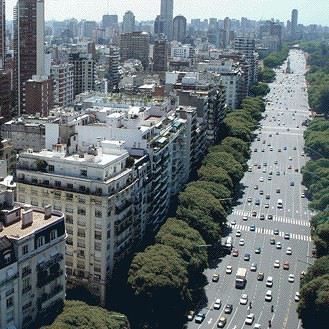
Mais si d'une manière générale, la prudence est de mise en Amérique du Sud, en Argentine, je pense que c'est moins sensible.. On sent qu'à Bs-As, les gens sont tournés vers l'Europe, culturellement (car historiquement encore plus qu'ailleurs). A Bs-As, on se sent comme dans une grande ville européenne..
On sent aussi que les pays que j'ai traversés ont compris que le tourisme représente une ressource très apprécialble. La sécurité est soignée.. La police est présente..
De toute façon, les argentins sont des gens aimables, accueillants, serviables..même. Et ils ont peut-être une tendresse particulière pour la culture francophone.. même si la culture hispanique est forcément très présente.
Les gens sont sensibles à l'effort que l'on fait pour parler espagnol et, "en prime", tu auras sans doute un sourire plus large que d'habitude...
Pour ce qui concerne la pratique de la langue, tu as aussi largement le temps de chercher quelqu'un qui part pendant la même période et qui se débrouille mieux ? A moins que ton désir de partir seule soit un choix délibéré ? Pour ma part, je pense que partager cette découverte voire cette "aventure" est sympa aussi..
De toute façon, à l'arrivée à l'aéroport, comme je l'ai indiqué par ailleurs, existe un kiosque de l'Office du tourisme où l'on trouve des agents qui parlent français.
Bon voyage.. Stéphane
"Y'a pas d'hélice, hélas, c'est là qu'est l'os" (Bourvil dans La Grande Vadrouille)
Les photos de Josy et Stéph sont sur : http://www.vosgaleries.com/
nom de la page : piscotango
Elle demande si elle peut se débrouiller en Argentine sans parler espagnol et tout suite vous lui soumettez des cas de viols et de "sois prudente"..
L'argentine est aussi sécuritaire que la France, suffit de pas aller jouer dans les cités et ou villa miséria dépendant du pays où vous vous trouvez.
Je suis allez 6 mois l'an passé, petit québécois qui ne savait dire "no hablo espagnol" et puis tout à bien été! Evidemment tu devrais prendre un cours, surtout que tu as du temps devant toi. Mais sinon ne pense pas à ce qui pourrait t'arriver, sinon tu sortiras jamais de chez toi!
Au fait je vais être à Buenos Aires jusqu'au 3 Janvier.. p-ê on va se croiser!
Si jamais t'as des questions, hésite pas!
Je n'ai jamais parlé de viols.. Mais effectivement, je ne peux que donner un conseil de prudence minimum.
Et bien sûr, qu'apprendre l'espagnol fait partie de la démarche quand on s'intéresse à l'Amérique du Sud..
Mais bon.. Chacun fait ce qu'il veut..
A bon entendeur... 😉 Stéphane
"Y'a pas d'hélice, hélas, c'est là qu'est l'os" (Bourvil dans La Grande Vadrouille)
Les photos de Josy et Stéph sont sur : http://www.vosgaleries.com/
nom de la page : piscotango
Compte tenu de mes premières expériences, lorsque je ne parlais que 3 mots d'espagnol à Cuba, c'est toujours possible, y compris en Argentine de se débrouiller avec l'anglais et l'espagnol. Je suis tout de même convaincue qu'il serait une bonne chose d'essayer d'apprendre un minimum de phrases pour demander un certain nombre de choses. Au Canada comme en France, il y a surement des éditions qui permettent de travailler certaines phrases. Il y a aussi des sites sur Internet pour travailler un peu l'espagnol.
Tu as 6 mois devant toi pour acquerir qq base du genre: où est la rue machin, bonjour, je voudrais déjeuner;puis je avoir les horaires du bus...je voudrais une place pour aller à...
Ces petits ouvrages sont facilement transportables et te seront utiles en cas d'oubli....un petit dictionnaire de poche également...Pendant des années, je me suis déplacée avec mon dico dans ma poche ou mon sac...
Dans le sud de l'argentine, sur les zones touristiques, les argentins parlent anglais dans les commerces. Par contre le contact avec l'habitant " commun" est difficile sans la langue du pays.
Bon voyage. Si tu as besoin d'aide pour préparer ton voyage, je peux t'aider. Je connais assez bien l'argentine.
Nicole
Asso. Les Enfants d'Atacama (aide à la scolarisation dans les Andes Argentines- Prov. de Jujuy: San Juan de Quillaques; Puesto Sey et Huachichocana
Les sites pour jeter un oeil:
http://pagesperso-orange.fr/fal83http://brondy.free.fr
Bonjour Sandra,
Dépendant ou tu vas, tu devrais être capable de te débrouiller avec un minimum d'Espagnol et l'anglais. Cependant, si tu vas des coins plus reculés et dans des petites auberges chez l'habitant, ça peut être plus compliqué.
Si je peux te donner un conseil, d'ici ton départ, tente d'en apprendre le plus possible. Ça vaut vraiment le coup de faire des efforts car ça va te permettre d'avoir un contact avec les habitants du pays. J'avais fait la gaffe de me fier sur un ami qui parlait bien espagnol quand j'y suis allé et ça m'a vraiment manqué de ne pas avoir eu de discussion ou d'échange avec les gens qui vivaient sur place...
L'Agentine est un pays ou les paysages sont magnifiques, mais les gens aussi et en ne parlant pas espagnol, on passe à côté du partie importante du voyage: le contact avec les gens.
Il te reste encore beaucoup de temps, alors profites-en!
Bonne chance!
Moi je dirais que OUI c'est possible de voyager en Argentine sans parler espagnol.
Ceci dit, ça serait plus rassurant de connaître quelques mots qui sont souvent utilisés dans la vie courante et au pire, tu pourras toujours communiquer avec des gestes (en montrant du doigt) pourquoi pas! 🙂
Bon voyage! 😎
"L'intéressant, ce n'est pas de savoir d'où vient le monde, mais où il va." QUINO (Extrait de la bande dessinée Mafalda)
oui, c'est possible de partir seule en Argentine sans parler español, mais tu vas vraiment y gagner en contacs avec les gens et en partage si tu t'y mets dès maintenant. L'español est facile à comprendre et assez facile à apprendre en étant francophone, mais tout ce que tu peux apprendre avant de partir sera tout ça de plus enrichissant pour ton voyage!
Bon voyage!
"tout le bonheur du monde est sur le dos d'un cheval" proverbe perse
je rajoute mon petit grain de sel à a conversation: oui c'est possible, je pense, mais c'est un peu dommage.... tu vas beaucoup, beaucoup perdre au niveau du contact avec les gens. (une amie ne parlant pas du tout est venue me visiter, et crois moi, meme si elle s'en est sortie en effet, elle a été pas mal frustrée et regrette).
je vis a bs as, et avant de partir je en parlais pas un mot. j'ai acheté une methode (assimil, que je trouve tres bien faite, beaucoup plus fonctionnelle que les autres) j'en ai fait les trois quarts, en trois mois, et je pouvais deja largement parler a mon arrivée...
je te le conseille vraiment, tu vas tellement plus en profiter!
Il y a bien sûr des Argentins qui parlent Anglais, (plus rarement le Français) mais ils ne représentent pas la majorité et sont surtout concentrés dans les grandes villes.
Un francophone, beaucoup plus qu'un Anglophone, peut assez facilement, avec un peu de volonté et d'entrainement apprendre les rudiments d'Espagnol qui lui permetront de se sentir plus à l'aise et donc d'apprécier beaucoup plus son séjour.
Bien qu'en Argentine, on utilisera à mon avis assez peu, voir pas du tout, le terme un peu péjoratif de "gringo" qui désigne parfois, dans certains autres pays d'Amérique du Sud, l'étranger qui ne parle pas la langue, il serait quand même préférable de connaître le vocabulaire minimun qui te permettra de te débrouiller dans la vie courante (transports, restaurants, hôtels, etc...)
A ton âge, je ne parlais pas un seul mot d'Espagnol, aussi, avant de me rendre pour la première fois en Amérique du Sud, j'ai acheté une méthode (bouquin + cassette) et me suis entrainé tout seul quelques mois avant mon départ, j'ai "accroché" de suite et cela m'a bien aidé une fois sur place. De plus, immédiatement enthousiasmé par ce premier séjour en Amérique du Sud (l'Equateur), j'ai continué en "immersion totale" à apprendre la langue au cours de ce voyage et des autres qui ont suivi, à tel point que j'ai réussi à ne communiquer qu'en Espagnol durant tous mes séjours dans cette partie du monde !!!
Alors surtout, ne te décourages pas ! En plus, l'Espagnol parlé (lentement avec un accent assez mélodieux) par les Argentins est vraiment très agréable à entendre !
Salut, moi j'ai passer 1 mois l'an dernier a Buenos Aires et je ne parle pas un mot d'espagnol.
Tu doit d'abord choisir une maison de chambre ou il peuvent te recevoir en anglais ou en français.
A partir de la tu te fait des ami(es) qui parle 2 ou 3 langues et le tour est jouer.
De plus quand j'étais seul il y a toujours le langage des signes, un sourd et muet se débrouille très bien sans entendre ni dire un mot. Alors a toi de jouer.
Remarque : j'ai passer un tres bon et beau mois sans aucun regret.
Bon voyage et ne t'inquiète pas tu va trouver comment faire. A+
J'ai découvert que l'espagnol parlé en Argentine est assez différent de celui parlé ailleurs en Amérique Latine. Il y a même un guide de conversation qui vient de paraître, juste pour l'Argentine http://alturl.com/qqg8a
🙂 A part quelques singularités de prononciation (le ll et le y sont prononcés un peu comme notre ch) et quelques mots qui changent, et mise à part l'argot portègne, le lunfardo, très peu usité quand même, ne t'inquiète pas, une personne qui parle espagnol est très bien comprise par l'argentin..
Le français est très bien accueilli en Argentine et avec sympathie.. De même que l'effort pour parler espagnol est très bien apprécié..
Buen viaje !
😎
"Y'a pas d'hélice, hélas, c'est là qu'est l'os" (Bourvil dans La Grande Vadrouille)
Les photos de Josy et Stéph sont sur : http://www.vosgaleries.com/
nom de la page : piscotango
J'ajoute quand même que l'usage du voseo (vos au lieu de tú) et d'une conjugaison particulière à la 2e personne du singulier, au présent, peuvent dérouter l'hispanophone au début d'un séjour en Argentine. Surtout que le voseo y est employé partout, y compris dans les magasins, les publicités ou les documents administratifs.
Je pars 3 semaines seul en argentine en décembre (sauf à BA ou je rejoins un ami argentin qui parle anglais); est-il possible d'apprécier son voyage sans…
Ma question est dans le titre. Je souhaite découvrir ce magnifique pays qu'est l'argentine, j'ai déjà effectuer des voyages sac à dos en Europe de L'Est ou en…
Voilà ma question est simple, je ne parle pas espagnole, je parle une langue latine (enfin deux avec le français) c'est l'italien. Je compte passer 3 semaines…
Je vais visiter Buenos Aires en mars prochain pour une semaine et je ne parle pas espagnol. Est-il possible de communiquer en français ou en anglais aisément…
Hi everyone,
We're planning a trip to southern Chile in November. Here's our tentative itinerary:
Day 1: Arrival in Santiago, then a flight the next day to Balmaceda where we'll pick up a rental car to reach Coyhaique.
Day 3: Walk in the Coyhaique National Reserve, then continue to Puerto Chacabuco. Return to Coyhaique for the second night.
Day 4: Drive to Villa Cerro Castillo for a hike in the national park. Continue to Puerto Tranquilo and stay there for 3 nights.
Day 5: Boat tour on Laguna San Rafael.
Day 6: Day trip to Monte San Valentin Glacier.
Day 7: Excursion to the Marble Chapels, then drive to Puerto Guadal. We'll stay there for 3 nights.
Day 8: Walk along Lago Carrera and return to Puerto Guadal.
Day 9: Rio Baker Valley and, if possible, a glacier excursion.
Day 10: Drive to Cochrane and hike in Tamango National Reserve. We'll stay 2 nights in Cochrane.
Day 11: Walk in the Chacabuco Valley.
Day 12: Drive to Caleta Tortel. We'll stay there for 2 nights.
Day 13: Cruise in the Rio Baker delta.
Day 14: Return to Cochrane.
Day 15: Return to Balmaceda in two stages.
Day 16: Continue the return journey.
Day 17: Return the rental car and head back to Santiago.
After this, we're also planning to explore northern Santiago. I'll post about that part once I have a clearer idea of the route.
What do you think of this itinerary? Is it doable in 17 days?
Thanks in advance for your tips and recommendations.
martine
Hi everyone! So happy to be back on this forum—it’s packed with such useful info! 🙂 My husband and I are planning a 2.5-week self-drive trip to Colombia at the end of the year, including some domestic flights. My first question is: is it possible, easy, and safe to do a road trip in Colombia?
Below is our draft itinerary (with questions at each stop):
29/11: France → Colombia. Overnight in Bogotá.
30/11: Exploring Bogotá: La Candelaria and Montserrate.
01/12: Gold Museum (closed on Mondays). Drive to Zipaquirá (1.5 hrs) to visit the Salt Cathedral. Then drive to Villa de Leyva (3 hrs). Explore the town. Overnight in Villa de Leyva.
02/12: Return to Bogotá via Laguna de Guatavita (5 hrs). Is it worth the detour? Overnight in Bogotá.
03/12: Flight to Pereira. Drive to Salento. Overnight in Salento.
04/12: Cocora Valley (hike among the wax palms) followed by a drive around the area. Are there any waterfalls or other sights nearby?
05/12: Visit a coffee finca—any recommendations? Then explore the surroundings: Filandia, Manizales, waterfalls? Hot springs? Which ones?
06/12: Flight to Medellín.
07/12: Exploring Medellín: Centro, Plaza Botero, Comuna 13. How do you visit Comuna 13? Is it easy to get around Medellín? Metro? Buses?
08/12: Drive to Guatapé (2 hrs). Visit the town, stroll around the lake, then El Peñol. Overnight in Guatapé.
09/12: Return to Medellín.
10/12: Flight to Santa Marta. Drive to a hotel near Tayrona Park.
11/12: Tayrona—El Zaino entrance.
12/12: Tayrona—Palangana entrance, then Bahia Concha and Santa Marta. What do you think?
13/12: Drive to Minca (45 mins). Can we reach the village by car? Pozo Azul and Marinka waterfalls. Overnight in Minca (or back in Tayrona?).
14/12: Drive to Puerto Nao (5 hrs). Stop in Ciénaga on the way + boat tour in Nueva Venecia and/or Buena Vista? Not enough time? Overnight in Puerto Nao.
15/12: Exploring Cartagena: Centro, Getsemaní, the walls + La Boquilla if we have time.
16/12: La Boquilla (is it really worth it?) if we didn’t have time yesterday, then back to the beach.
17/12: Return to France.
So, what do you think? Is this doable, or should we tweak it? Thanks in advance for your invaluable feedback and tips! 🙂
Hi there, I’ll be in Brazil from December 10th to the end of February.
I’ve sketched out a rough itinerary but I’m not sure how to arrange it—considering the climate, year-end holidays, and Carnival.
Basically, I’m thinking of the Amazon, the Northeast coast with Lençóis Maranhenses National Park (but skipping Chapada Diamantina),
Ouro Preto, Paraty, and Ilha Grande—but no Rio visit.
Is this doable in 3 months?
Which direction should I take for this itinerary?
Thanks in advance!
Hi everyone, does anyone know the agency Ventura Travel Agency (not ventura travel)? After lots of research and quotes, it’s the only one offering Uyuni at a reasonable price while meeting all the criteria: transfer to the border, private-room accommodation, and a very fair rate. Other agencies or guides either offer shared rooms, no border transfer, or prices that are way too high. But I’d love to hear some reviews about this agency. Thanks in advance!
Hi everyone,
We're planning a trip to Chile to visit the Atacama Desert and then head toward Putre, Lauca, Salar de Surire, etc.
Which would be the better time to go, April or November?
Is an SUV enough?
Looking forward to your tips!
Hi everyone, French travelers in Chile—what credit cards do you use for your various car rentals in the country? I’m traveling in September and was planning to switch my regular debit card (a VISA PREMIER in deferred debit mode) for the deposit guarantee.
My rentals are with Figal in Punta Arenas, Econautos in Arica, and Chilean Rent a Car in Temuco, and all of them want the deposit on a credit card. For me, deferred debit *should* work, but I’ve read comments saying the opposite.
How’s it actually working on the ground with these rental companies right now? Will a deferred debit card work, or not at all?
In France, banks don’t issue credit cards, right—or am I mistaken?
Hi everyone, is it still possible to travel in Ecuador outside the Amazon region? If so, do you have a reliable agency to recommend? All your recent experiences from the past few months would be greatly appreciated. Thanks so much
Hi,
We’re heading to Buenos Aires for 3 days in November and would like to do a guided tour of a few neighborhoods. There are "free" tours, but none in French. Does anyone have a guide to recommend so we can really get to know the city beyond just the architecture?
Thanks
Hi there,
I’m desperately looking for info on the schedules and routes of (shared) boats to visit the islands of Lake Titicaca.
From what I’ve found, there’s a *combi* (bus) that leaves from Puno to go to Llachon. Where do you catch it? What are the schedules and frequency? Does it take about 1 hour?
Then in Llachon, you can take a boat to Amantani (45 min). Same question—where do you check for frequency and schedule?
After that, from Amantani, boats go to Taquile and then Uros. Do you have enough time to visit the islands between two boats? Frequency and schedule?
The goal is to do this tour independently (no agency) over 2 days. Thanks for any tips you might have!
I just got back from a trip to Bolivia and wow—what a wake-up call. It’s not the easiest country, but it’s absolutely stunning.
I started with Isla del Sol, perfect for easing into the altitude at a relaxed pace. Try to stay in the northern part of the island—it’s quieter and the views are insane. And the trout there? Unreal. Quick tip: bring cash in small bills; they almost never have change, and cards are rarely accepted.
Next up, La Paz. The city’s pretty wild, built in every direction. I did a few hikes in the area, including the famous Charquini Lagoon (the blue lake) at over 5,000 m—let’s just say I struggled 😅 but it was so beautiful it was totally worth it.
After that, I headed to Sajama. It’s cool, especially for the hot springs, and I stayed in Tomarapi. But honestly, if you’re short on time, you can skip it without too many regrets.
The highlight of the trip: the Salar. I did it starting from Tupiza, and I *highly* recommend going Tupiza → Uyuni. Way less crowded at the start and the landscapes are super varied. For the tour, I used SplitYourGuide to find a group, and it worked out great. Super handy for splitting costs and meeting people.
I wrapped up in Sucre—this city is gorgeous, all white, with such a chill vibe. And the salteñas + ice cream? Next level 😋
Bottom line: Bolivia’s a bit rough around the edges, sometimes exhausting (shoutout to the altitude), but it’s 1000% worth it.
If you’ve got questions or need tips, I’m happy to help!
Martin
I was planning to go to Réunion and stay in half-board accommodation with non-professionals, but it seems that’s not really the custom there—or maybe my budget isn’t big enough.
So, since I’ve already traveled around Ecuador and Peru, I’m now looking at Argentina, especially for its mountains (like the ones in Réunion that tempted me, even though—frustratingly—I could only admire them from below).
I plan to get around by bus and don’t know in advance where I’ll sleep, so I won’t book ahead. If I like a place, I might stay for several days.
I know that in Chile, it’s easy to find half-board accommodation, but what about in Argentina?
I’d like to stay with locals in half-board without it being a professional setup. I’m not sure if this is common practice there. It’s up to me to find someone willing to host me.
What do you think?
What would be a fair price (keeping in mind that 40 to 50 € is the max I can spend on accommodation, breakfast, and dinner)?
Hi everyone,
We’re heading to Patagonia for three weeks in November, starting from Coyhaique in Chile.
We won’t have a car, and I’m struggling to find information about transportation options for a few parts of the itinerary we’d like to do:
1) From Perito Moreno (the town, near Los Antiguos), we’d like to travel down Ruta 40 to visit Perito Moreno National Park and then cross into Chile via the Paso Roballos (at the latitude of Bajo Caracoles) to reach the road to Cochrane. Without a car, it seems we’ll need to use private agencies to get to the national park—do you have any recommendations or suggestions? Also, does anyone know if it’s possible to cross into Chile via Paso Roballos (from Bajo Caracoles) without a rental car? That is, without having to go all the way down to El Chaltén or back up toward Perito Moreno/Los Antiguos, etc.?
2) The second stretch that seems a bit tricky (though still easier, in theory) is from Caleta Tortel to Villa O’Higgins on the Chilean side. Do we have to go back through Cochrane, or are there ways to get directly from Tortel to Villa O’Higgins?
3) Finally, we’d like to hike into Argentina (El Chaltén) from O’Higgins. Any recommendations for this? Do we need to go through an agency? What’s the estimated duration of the trek?
As you’ve probably gathered, we want to visit some off-the-beaten-path spots but don’t have a car, so we’re looking for the best possible compromises.
Thanks so much in advance for all your suggestions!
Thomas
Hi,
we’re planning a round trip from San Pedro de Atacama, Chile, to Salta, Argentina, in two months. On the way there, we’ll take the northern route via Susques, Route 27, then 52. But for the return, we were thinking of taking the southern route via San Antonio de los Cobres, Route 51, then 23. Is it similar to the northern route in terms of road surface? How busy is it, and are there gas stations? Basically, should we be worried about doing it in an SUV that’s supposedly 4x4 but has regular road tires and no second spare wheel, obviously...
I’ve seen that we can stop over in San Antonio de los Cobres.
Thanks for your feedback.
Raf.
Hi,
we’ll be in Calama at the end of March 2026, and I’m looking for a reliable car rental there for a 7-day road trip to Salta, Argentina. But I’m struggling with the car rental agencies in Calama because the reviews can be scary. I saw Gyg, which has great ratings, but I’m a bit wary (5/5 from 59 reviews—either the guy’s amazing or it’s fake...), but I can’t find any recent reviews on VF in general.
For Punta Arenas, I booked with Dachelet and didn’t have any issues with email exchanges.
Thanks in advance.
Raf.
I’m planning the trip of my dreams for next November—Chile!
I’d love to get your thoughts on my potential itinerary. I know it’s a big investment in terms of both time and money, so every bit of feedback, suggestion, or info helps immensely. Thank you in advance!!
1-Flight to Santiago
2-Explore Santiago
3-Explore Santiago
4-Bus from STG to Valpo (2h) + visit Valparaíso + night in Viña
5-Visit Valparaíso + bus back to STG (2h)
6-Flight to Calama + bus to San Pedro + explore and acclimate in San Pedro + car rental in the afternoon (+Chaxa?)
7-(Very early) Valle del Arcoíris + Laguna Cejar + Valle de la Luna
Good evening,
We’d love to go in November to enjoy some beautiful beaches for about two weeks, preferably around Bahia, as November/December seems like a great time.
We’ve already traveled to Brazil several times and know the south of Rio as well as the region between São Luís and Fortaleza, and Chapada Diamantina...
What advice would you give us: the south with Itaparica, Morro de São Paulo, Boipeba, Barra Grande—or all four? Or maybe the north?
Thanks in advance for your help
Hi everyone, it’s been a while since I last posted!
First time in South America for me, my wife, and our 7-year-old son. I’ve put together this itinerary and would love to hear your thoughts:
Bogotá 28/07 – 30/07: Arrival. Which neighborhood and outings would you recommend?
Flight to
2 Filandia 30/07 – 03/08: (255 €). Waterfalls and horseback riding,
Cocora Valley,
Hiking,
Nearby villages.
Flight to
3 Tayrona 03/08 – 07/08: Hotel La Casablanca
Hike with Tierra Nevada and the Kogui village (any feedback?). Return by inner tube for the little one.
Short night hike.
Second hike to La Piscina, etc., return by 🐎.
4 Cartagena 07/08 – 10/08: Air-conditioned bus.
Staying in Getsemaní? Mangroves & the Castle, exploring the city.
5 Bogotá 10/08 – 12/08
Feel free to share your feedback!
Have a great day!
Hi,
During an upcoming trip to Peru, we’ll have one day to explore around Arequipa (excluding Colca Canyon) with a car and driver.
We’ve got a few options:
- Toro Muerto petroglyphs and dinosaur footprints at Querulpa
- Ruta del Sillar and Quebrada de Culebrillas
We’re a group of 6 friends with an average age of 70, all mobile, and we’re planning a trip to Peru in September/October 2026. Below is an idea of what we’re looking for: a French-speaking guide, accommodation in 3-star hotels or homestays with comfort.
Duration: 16 to 20 days on-site.
Visit the main sites with immersion in the culture and way of life.
Which francophone agency in Peru would you recommend? Thanks
Hi there!
I’m putting together my itinerary for Brazil, looking for beautiful natural spots with wildlife, flora, and great hikes...
I’ve come across the Cananeia / Super Agui / Ilha do Mel region and the PETAR / Intervales / Alto Ribeira area.
Has anyone here been to these places? If so, do you have any recommendations for accommodations and activities?
Thanks in advance!
Best,
Olivier 🌍
I’ll be in ARICA in northern Chile at the end of May 2026 and want to get to TACNA.
Are there taxis, buses, or collectivos that run the border crossing route?
After that, bus to AREQUIPA (Peru): any bus company you’d recommend?
Hi there,
We’re spending 3 weeks in Brazil, arriving in São Paulo—a couple plus a teen—and we’ll have a rental car.
We especially love nature: hiking, wildlife watching, birds, etc.
We’re planning to wrap up with a week around Paraty and Ilha Grande.
We’re not really into visiting big cities like São Paulo or Rio unless you think we’d be missing out big time.
So we’ve got 2 weeks to explore the south/southwest region of São Paulo.
What do you recommend?
National parks? Off-the-beaten-path nature spots? Iguazu Falls?
Hi there,
Do you have any recommendations for comfortable accommodation in Leyva and Barichara? We're also looking for a guide to explore the areas around these two towns (parks, waterfalls, etc.).
Thanks for your tips!
I visited Colombia in January 2016 and I’m heading back from August 6th to 17th with the same airline to see how things have changed. Starting August 18th, I’ll continue with independent exploration. I prefer slow travel and enjoying places at my own pace.
Any tips—especially for getting around or must-see spots—are welcome!
Thu Aug 06. Fly Montreal to Bogotá 20:55-04:05+1 Air Canada
Fri Aug 07. Bogotá
Sat Aug 08. Bogotá
Sun Aug 09. Bogotá
Mon Aug 10. Fly Bogotá to Medellín
Tue Aug 11. Medellín - Explore Guatapé
Wed Aug 12. Comuna 8 & Hill of Values - PM Fly to Pereira
Thu Aug 13. Montenegro
Fri Aug 14. Salento - Cocora Valley
Sat Aug 15. Fly to Cartagena
Sun Aug 16. Explore Cartagena
Mon Aug 17. Explore Cartagena
Tue Aug 18. Fly Cartagena to Cali 12:20-14:55 Latam
Wed Aug 19. Cali
Thu Aug 20. Cali
Fri Aug 21. Cali
Sat Aug 22. Bus Cali to Popayán 09:00-13:00
Sun Aug 23. Popayán
Mon Aug 24. Popayán
Tue Aug 25. Popayán - Day trip to Silvia (Market Day)
Wed Aug 26. Overland Popayán to Tierradentro by public transportation 4h, 100km
Thu Aug 27. Tierradentro
Fri Aug 28. Tierradentro
Sat Aug 29. Overland Tierradentro to Garzón via La Plata
Sun Aug 30. Bus Garzón to San Agustín 10:30-13:00
Mon Aug 31. San Agustín
Tue Sep 01. San Agustín
Wed Sep 02. San Agustín
Thu Sep 03. San Agustín
Fri Sep 04. Overland San Agustín to Tatacoa Desert via Neiva
Sat Sep 05. Tatacoa Desert
Sun Sep 06. Fly to Bogotá via Neiva 16:00-17:00 Latam
Mon Sep 07. Bogotá
Tue Sep 08. Fly Bogotá to Montreal 09:00-16:30 Air Canada
Hi there,
Three years ago during a trip to Java (no, I didn’t post in the wrong forum!), I came across the address of former miners who had switched to “tourism” and organized nighttime ascents of the Kawah Ijen volcano and descents into the crater.
So I was thinking—maybe there are miners on the salt flats too, either former or still active, who do the same thing. If you’ve had an experience like this, I’d love any tips you can share.
Thanks in advance.
Hi there, since there isn’t much recent info on how to get to MP, I’d love to know if there have been any improvements to the "route" to Hydroelectrica. Is it feasible to drive there in February? And is it still possible to walk all the way to Aguas Calientes? I think I read somewhere that it’s no longer allowed??
Do you think I can buy Machu Picchu entrance tickets last-minute at that time of year, given the weather?
A group of friends and I are heading to Brazil in March 2019 and we’d love to attend the Carnival parade. I could really use your help because I’m struggling to find reviews for online ticket sellers for Carnival.
I came across rio-carnival—is this a reliable agency?
Do you have other agencies to recommend or experiences to share?
Any advice is welcome.
Everything You Need to Know About Argentina’s Currency Exchange Maze (2026 Edition)
Hi fellow travelers,
Packing your bags for Buenos Aires? Watch out—here, money is a science almost as complex as the dance steps in a tango!
As of March 2026, the situation has shifted dramatically: the "Blue" (parallel) rate is now neck-and-neck with the official rate. To save you from losing your hard-earned euros in bureaucratic mazes or "disastrous" exchange rates, I’ve laced up my reporter boots and hit the famous Calle Florida for you.
In my latest video (and the accompanying article), I take you behind the scenes of currency exchange:
Arbolitos and Cuevas: Who are they, and can you still trust them?
The Rate Showdown: Why Banco Nación is currently the worst place for your savings.
Western Union: Why it’s often your best ally right now.
Cash or Card? The little secret to getting an instant 10–15% discount at restaurants or hotels.
The Bill Trap: Why your 500 € notes or stained dollars might stay in your wallet.
Argentina changes fast—*very* fast (by the end of March, today’s advice might already be old news!). So don’t leave without checking the market’s pulse.