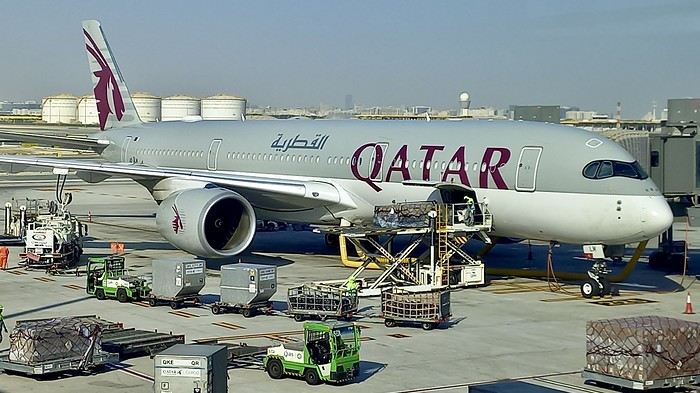
Right now, with the war raging in Iran and affecting all the neighboring countries of the Persian Gulf, many airports are completely closed to all traffic.
Several airlines like Qatar Airways, Emirates, and others have almost completely halted their operations.
Whether in the Middle East or Africa, many travelers are stranded—maybe for a long time... A heartfelt thought for them and the struggles this will cause.
Four months ago, I was in Kenya with a flight booked through Qatar Airways... I can’t even imagine how I’d react if I were stuck there now. ??
Wishing all these travelers courage, patience, and success in making it back home.
The cruise sector has seen a remarkable rebound since the pandemic, with 2024 attendance 20% higher than in 2019—outpacing air traffic growth, which was limited to 10%.
This performance is driven by an early recovery in the U.S. starting in 2021, competitive pricing, and enhanced onboard offerings. Cruise companies have invested in innovation, with a notable increase in patents related to passenger health (14%) and onboard services (50%).
These efforts have attracted a younger clientele, with millennials now making up 34% of passengers. This recovery model could inspire the airline industry to accelerate its own rebound.
Hi,
I’m reaching out to the community because I can’t find the answer to my question.
I’d like to book a flight from Barcelona to Singapore, then from Singapore to Bali with Singapore Airlines.
When transferring from Singapore to Bali, does the airline handle the baggage transfer between the two flights?
Or do we have to collect our luggage, go through security again, check in, etc.?
Hi,
We’d like to travel to Guadeloupe as a family (5 adults) for Christmas 2025. We’re leaving on the first Saturday of the school holidays and returning on January 1st—we can’t leave outside of the holiday period. Could you give me a rough idea of what a reasonable price is for that time? Is booking as soon as reservations open a good deal, or should we wait?
Thanks for your help.
Isabelle
Emirates just put out a statement, and for those of us struggling, it’s total nonsense. No concrete dates because they’re clueless, all dependent on military strikes. Don’t get your hopes up.
Good news for passengers stranded in the Gulf, though. Emirates expects its network to return to normal in the coming days. However, the resumption of commercial flights is still subject to airspace availability and meeting all operational conditions, Emirates said in a statement. The airline added that it transported around 30,000 passengers from Dubai on Thursday. By March 7, Emirates will operate 106 daily return flights to 83 destinations, covering nearly 60% of its network.
The Dubai-based national airline was forced to cancel thousands of flights following Iran’s retaliatory strikes, which led the UAE to close its airspace and caused minor structural damage to its Dubai hub.
The end of a golden age
For years, travel forums embodied the spirit of mutual aid on the web. Travelers generously shared their experiences, tips, and secret spots. This collective generosity seemed endless. But behind this altruistic facade lay a more complex reality.
The silent infiltration of forums
Free travel forums have gradually become marketing hunting grounds. Under the guise of "experienced travelers," professionals in tourism, affiliates seeking commissions, or aspiring influencers testing monetization strategies now lurk.
These fake profiles master the community’s codes. They build credibility by answering dozens of basic questions before subtly slipping in their paid recommendations. A "favorite" hotel mentioned insistently, an "essential" guidebook systematically cited, an "extraordinary" local agency that keeps coming up in conversations.
New travelers can no longer tell the difference between selfless advice and disguised promotion. This informational pollution has gradually eroded the trust that gave these platforms their value.
The rise of paid Travel Planners
Faced with this decline, a new profession has emerged: the independent Travel Planner. These professionals fully embrace their commercial status and charge for personalized advice.
The model is transparent: you pay for real expertise, tailor-made itineraries, and guaranteed availability. Some offer packages for 150-300 € to plan a two-week trip entirely. Others charge by the hour.
This professionalization marks a turning point. Travel advice is leaving the realm of volunteerism and entering the world of paid services. Paradoxically, this acknowledged monetization can restore a form of trust: you know what you’re paying for.
The irruption of artificial intelligence
But now, a third option is emerging: generative AI. ChatGPT, Claude, Gemini, and others can now generate travel itineraries in seconds, for free, with no commercial agenda.
AI promises neutral, synthetic, endlessly customizable information. It compiles thousands of sources in real time, suggests alternatives, and adapts recommendations to your budget and time constraints. It doesn’t sell anything, earns no commissions, and has no hotels to promote.
But this apparent neutrality hides its own limitations. AI feeds on existing data, often from the same polluted forums or marketing content. It can invent restaurants that don’t exist, mix up tourist seasons, or ignore recent local realities. It has never walked a city’s streets, negotiated with a tuk-tuk driver, or felt the atmosphere of a neighborhood at nightfall.
The forgotten alternative: authentic local experts
In this landscape saturated with dubious information, imperfect AI, and monetized services, one often-overlooked option remains: consulting real local professionals.
Not the agencies at the top of Google’s first page—often the most expensive and generic. But small local businesses, independent guides established for years, still-free municipal tourism offices, and cultural associations organizing themed tours.
These players offer what neither AI nor forums can: embodied, up-to-date, contextualized knowledge of the area. They know the newly opened restaurant, the museum temporarily closed for renovations, the impromptu weekend festival, or the alternative route to avoid construction.
Finding them takes extra effort. You have to search in the local language, look beyond the first page of results, check regional institutional websites, and join community Facebook groups. But this approach is often rewarded with free or low-cost advice of unmatched precision.
Toward an ecology of travel advice
The future of travel advice likely won’t be binary but hybrid. AI can rough out itineraries, propose logistical options, and compare alternatives. Travel Planners can refine, personalize, and reassure anxious travelers. Local experts can enrich, correct, and ground advice in on-the-ground reality.
But for this ecosystem to work, we’ll need to develop new discernment. Learn to spot fake profiles on forums. Systematically verify AI suggestions. Assess the real value of a Travel Planner before paying. And, above all, rediscover the habit of contacting those who live there directly.
Travel has always been a school of discernment. It teaches us to distinguish the authentic from the fake, sincere advice from commercial manipulation. In the digital age, this skill becomes more crucial than ever.
Because ultimately, the real question isn’t which information source to prioritize, but how to cultivate our own ability to evaluate, cross-check, and ultimately make informed choices. The best travel guide may still be our critical thinking.
Travel bookings to the United States are seeing a significant drop in France for summer 2025, with over a 30% decrease in the spring and around -11% for summer departures.
Several reasons explain this disengagement:
an unfavorable exchange rate at the start of the year,
very high prices on the ground (accommodation, dining),
negative experiences with immigration,
as well as a political and social context perceived as off-putting (civil rights, safety, tense social climate).
Tourism professionals also note difficulties for Florida and some Southern states, while destinations like New York and Orlando are faring better.
The recent drop in the dollar and airfares could, however, encourage last-minute departures, and tourism stakeholders are betting on a gradual recovery starting this autumn, with major events planned for 2026 like the World Cup or the 250th anniversary of the United States.
According to a monthly travel sales barometer, bookings to the United States dropped by 32% in April 2025 compared to the previous year, pushing the country down to 18th place among the most popular destinations, from 11th place the year before.
This decline is part of an overall drop in travel sales, with a 7.6% decrease across all destinations.
Despite airfare promotions and a favorable exchange rate for French travelers, the U.S. is struggling to attract visitors, possibly due to political considerations.
Meanwhile, destinations like Italy (+12%) and Tunisia (+3.7%) saw an increase in bookings.
Hello,
As a senior woman, I’m planning a 3-week solo trip (late April or early May) to explore the country by public transport, visiting the main cities (Khiva, Bukhara, and Samarkand), the Ferghana Valley, and if possible, the Aral Sea.
I’m reaching out to the community to see if there are flights arriving in Urgench and returning from Tashkent—or the other way around?
Thanks in advance to anyone with insights! 😉
I’m planning to take Air France from Paris to Trujillo with my 2 bikes in boxes. I have a layover in Lima and a change to LATAM Airlines for Trujillo.
On the way back, it’s Santa Cruz in Bolivia via Lima (LATAM Airlines) and then Air France to Paris. During the layovers in Lima, do I need to collect my luggage and the bike boxes and re-check them for the second flight? It’s really hard to get through to Air France for this kind of question.
The 2024 AirHelp Score ranking highlights Air France (22nd), Air Corsica (48th), and Air Caraïbes (89th) among the world's airlines. Air France has improved with a score of 7.17, thanks to strong customer satisfaction (8.1) and punctuality (7.1), but needs to work on complaint handling (6.3). Air Corsica makes a notable debut, marked by solid punctuality (7.7) but weak claims processing (4.4). Meanwhile, Air Caraïbes has taken a sharp dive, penalized by a steep drop in complaint management (2.9). The global podium is dominated by Brussels Airlines, Qatar Airways, and United Airlines. Read more...
According to the NGO Transport and Environment, Trenitalia tops the ranking of European railway companies, followed by Switzerland’s SBB and the Czech RegioJet. SNCF comes in 5th place, praised for its night trains and passenger experience but penalized by frequent delays and the perceived poor quality of its subsidiary Ouigo. In last place, Eurostar is criticized for its high fares and limited service. The NGO is calling for reforms and investments to make train travel more attractive in Europe. Read more...
Hi,
So glad the site’s back up—I’ve always found great off-the-beaten-path tips here!
This time, we’re planning a trip to Uzbekistan. Since time is a bit tight, we wanted to fly from Tashkent to Urgench, but we can’t find any direct flights between the two. Do we need to book from France, and if so, which site should we use? We’re thinking of going around mid-April.
Thanks in advance for your help!
Céline
We’re planning a trip to Santa Cruz de la Sierra with our pets. We’ve seen a lot of really negative reviews about BOA and AirEuropa, but it looks like the options are limited.
So, I’m looking for recent firsthand experiences with these two airlines—especially if you’ve traveled with animals.
A new step for visitors starting September 2025
Laos is modernizing its border entry procedures. From September 1, 2025, the Laos Immigration Police Department will pilot a new online arrival registration system for foreign passport holders.
This new procedure is similar to Thailand’s recent switch to a digital arrival card system (introduced in May 2025). Just like in Thailand, travelers heading to Laos will still need a valid visa—either an e-visa obtained online in advance or a visa on arrival (VOA) at eligible checkpoints—but they can now skip the paper immigration forms at the border.
According to a recent study, Bangkok ranks first among the top 100 global destinations for remote workers in 2025. The Thai capital stands out for its excellent value for money, solid infrastructure, and high satisfaction levels among digital nomads.
Dubai, London, Tokyo, and Nakhon Ratchasima (in Thailand) complete the top 5, each catering to different priorities (safety, connectivity, cultural vibrancy). The study also highlights the cost-of-living gaps between cities: from Weligama (Sri Lanka), very affordable, to New York, the most expensive.
Social media engagement and visitor return rates are also becoming key indicators for assessing a destination’s appeal to nomads.
"Les rencontres voyageurs" is a must-attend event for all travel enthusiasts, at the heart of France’s most beautiful gatherings.
Whether you're a seasoned traveler or a beginner looking for your first adventures, these meet-ups aim to bring people together, inspire, and share knowledge.
They offer a unique opportunity to chat with inspiring travelers, discover their authentic stories, their favorite spots around the world, and their practical tips for traveling peacefully and enrichingly 😉
"Les rencontres voyageurs" also feature conferences and masterclasses led by industry experts, covering a variety of topics such as responsible travel, content creation, and optimizing itineraries.
These sessions, both practical and inspiring, are designed to expand your knowledge and fuel your projects. On top of that, there are fun and educational activities, including the famous traveler quiz, encouraging exchanges and conviviality. Finally, visitors can explore an exhibition of travel vehicles, vans, 4x4s, nomadic equipment, and chat with professionals about van conversions, mobility, and innovations dedicated to vanlife.
A complete, immersive experience that’s all about discovery.
As summer 2025 approaches, a survey reveals that 50% of French people plan to go on vacation for at least a week, while 27% are still undecided and 23% don’t plan to go away at all.
The average budget for these vacations is 1 820 €, but 39% of vacationers are considering cutting back, mainly by limiting non-essential expenses like restaurants, shopping, or certain activities.
France remains the top destination for 68% of vacationers, followed by Europe (26%), especially among 18-34-year-olds, and non-European destinations (13%).
Among the new trends, "workation" (working from a vacation spot) appeals to 24% of vacationers, a figure that rises to 45% among 18-34-year-olds.
Alternative options like Wwoofing (working on farms in exchange for accommodation) interest 26% of young people aged 18-34.
Practices like Couchsurfing attract 13% of young travelers.
Finally, 19% of respondents see home exchanges as an interesting option, though few have tried it yet.
I would’ve preferred to post this in the "Travel News" section, but it’s not open to new discussions. Still, this is definitely sensitive news directly related to travel.
"With growth twice as fast as the global economy, tourism has a heavy impact on climate balance. In this regard, aviation poses a specific challenge."
(From Le Parisien with AFP)
I’m heading to the United States for the first time, flying from Paris to Austin with a layover in Atlanta.
I arrive at 8:55 PM and leave again at 10:30 PM.
Air France told me I don’t need to collect my checked bags, but I keep reading that I *do* have to pick them up after immigration and customs—and that doing all that in 1 hour 30 minutes is basically impossible.
I’m traveling with my son, and our English isn’t great.
It’s making me a little anxious because the flight I need to catch is the last one of the day, and if I miss it, I’ll have to wait until the next morning.
Since it came into force, Regulation 261/2004 of the European Parliament and Council, which defines air passenger rights, has faced fierce resistance from airlines, backed by IATA (the association representing almost all passenger airlines).
Beyond the airlines' often abusive—and even frequently bad-faith—resistance to passenger rights, IATA has been lobbying EU institutions for years, with the Council paying close attention for a long time.
As a result, the Council and the Commission have been proposing revisions to Regulation 261/2004 for years that are particularly unfavorable to passengers. The latest attempt nearly eliminated the right to compensation for delays of 3 hours or more upon arrival at the final destination.
However, since this is a regulation of both the European Parliament AND the Council, the two bodies had to agree.
But the European Parliament has always stood firm, consistently responding that passenger rights must be preserved.
After 11 years of struggle, it seems likely that we’re finally nearing the end of the match between the European Commission, the Council (the 27 heads of state or government), and the European Parliament.
Indeed, the Commission and the European Parliament have agreed on a text that will be debated again on Monday, July 6, 2026, with a vote scheduled for July 7, 2026. It’s very likely that this text, which would come into force in a year, will be adopted.
The main changes would be as follows:
- Families with children will no longer be forced to pay to sit together on planes;
- A flight will be considered canceled (not just delayed) if it departs more than one hour late;
- Right to compensation for arrival at the final destination if the delay exceeds 3 hours (no longer "3 hours OR more"). The arrival time will be when the plane, having reached its parking spot, engages its parking brakes (no longer when the aircraft door opens);
- Airlines can no longer refuse boarding or charge extra on the return flight for a passenger who didn’t take the outbound flight;
- If a flight is canceled, the airline must, at the same time as informing passengers of the event, offer the choice between a refund and re-routing, and inform them of their rights to assistance and, if applicable, compensation;
- The airline must, without undue delay, inform passengers of the reason;
- In the case of a connecting flight, if the connection is missed and the delay at the final destination entitles the passenger to compensation, the responsible airline will be liable. This is very different from the current situation, where, under the KLM ruling, any airline operating a segment of the flight is liable for compensation. This promises more disputes that the Court of Justice of the European Union will have to resolve if two separate airlines operating segments of a connecting flight are both responsible for the delay. See this case for an example: https://retardimportantavion.wordpress.com/2026/04/18/swiss-international-air-lines-la-mauvaise-foi/
Moreover, this case demonstrates in advance another potential dispute: It could be argued that it wasn’t a missed connection since the flight was canceled before the first leg even departed.
- Within 96 hours of a flight that could entitle passengers to compensation, the airline must contact them to inform them of their rights and explain the next steps.
- Passengers must claim their right to compensation within 9 months. This is very different from the current situation, as Regulation 261/2004 sets no time limit. Currently, national law applies—in France, the limit is 5 years. The airline must respond within 30 days. If the airline refuses compensation on the grounds of "extraordinary circumstances," it must specify which type of case it refers to from the list in the annex of the new regulation. If the case isn’t on the list, the airline must explain what the event was, why it qualifies as extraordinary circumstances with "clear, substantial, and concise" explanations, and why it’s directly linked to the reason given. It must also declare what "reasonable measures" were taken to mitigate the issue. This is, of course, a huge change in the regulation, with the clear goal of preventing airlines from declaring just anything as "extraordinary circumstances" to avoid compensation.
- If, within 3 hours of a last-minute canceled or delayed flight, the airline hasn’t offered re-routing under comparable transport conditions and as soon as possible—whether on one of its own flights or another airline’s—the passenger will have the right to arrange their own re-routing and demand a refund for the new ticket, up to 400% of the original ticket price. This is a significant improvement that would have likely prevented the case described here: https://retardimportantavion.wordpress.com/2024/01/12/reacheminement-catastrophique-droit-indemnisation-meme-circonstances-extraordinaires-2/
- If a flight is canceled due to "extraordinary circumstances," the airline will only be required to offer up to 3 nights in a hotel. This is a major change, as there’s currently no limit. Expect disputes if the extraordinary circumstances end while the passenger hasn’t been re-routed.
- The price of a flight, as first displayed, must obligatorily include a cabin bag. This doesn’t prevent the airline from offering a price reduction if the passenger waives the cabin bag. This will put an end to abnormal practices, such as (just one example) Condor charging extra for a cabin bag on long-haul flights like Frankfurt (Germany)–Puerto Plata (Dominican Republic)–Santo Domingo (Dominican Republic)–Frankfurt.
- Free correction of a passenger’s name if requested 48 hours before departure. Note: This can’t be used to replace one passenger with another—just to correct a typo, e.g., Dupont instead of Dpont.
- Airlines’ websites and apps must include information on how to file a claim.
It’s clear that, despite a few details, these changes are very positive for upholding passenger rights. It remains to be seen whether this text will be definitively adopted on July 7, 2026, as is very likely, and, more importantly, whether IATA will encourage airlines to loyally respect these new rules or persist in their old habits.
we have flights with Swiss and Lufthansa for January; our flights are still in our booking file. But after reading that the Cambodian ambassador in Paris advised against transiting through Bangkok (which is our case), I reached out to the airlines to potentially change our ticket via Singapore. However, both companies have canceled all flights to Cambodia, regardless of the day or airport. We’ll have our contact on the ground call us on Monday to figure out what to do, especially since no insurance covers war, conflict, etc. If anyone else is in the same situation with an upcoming departure, we can exchange tips
I’m looking at tickets for Thailand, and China Southern has some great prices.
When I check reviews on TripAdvisor, though, there are some really bad ones—but as usual, people only leave reviews when they’re unhappy. So I’d love to hear how this airline generally is?
We bought round-trip tickets from Mulhouse/Basel to Maun (Botswana) in January 2023 through Option Way.
Turkish Airlines issued the entire round-trip tickets. The flight plan was:
31 August 2023: TK 926 from Basel/Mulhouse to Istanbul and TK38 from Istanbul to Johannesburg
1 September 2023: Airlink (4Z)300 from Johannesburg to Maun.
11 September 2023: Airlink (4Z)301 from Maun to Johannesburg and TK43 from Johannesburg to Istanbul
12 September 2023: TK1923 from Istanbul to Basel/Mulhouse.
On 1 September, on the outbound trip, Turkish Airlines flight TK38 from Istanbul to Johannesburg arrived 1 hour and 30 minutes late due to airport congestion. As a result, we missed our connection with Airlink flight (4Z) 300 from Johannesburg to Botswana (even though the initial layover time was sufficient for the connection). Upon arrival at Johannesburg Airport, a Turkish Airlines agent greeted us, booked us a room near the airport, and rebooked us on the same flight for the following day, 2 September.
On 2 September, after numerous difficulties checking in at the Airlink counter in Johannesburg, we finally reached our final destination with a 24-hour delay. We lost our first day of vacation in Botswana, including the activities that were planned for that day.
On 11 September, during our return trip and almost certainly due to the rescheduling of the outbound flight, the Airlink check-in counter in Maun did not recognize our tickets issued by Turkish Airlines. After many searches and phone calls, we had to buy new tickets for the Maun/Johannesburg flight 4Z301. This cost us 9,306 Botswana pula (643 €).
Upon arrival in Johannesburg, the Turkish Airlines check-in counter again had trouble identifying us for flight TK43 from Johannesburg to Istanbul.
It’s clear that the root of our check-in problems stemmed from the renumbering of our tickets when the Turkish Airlines representative rebooked us on the Airlink (4Z)300 flight for 2 September. During this process, all subsequent flight tickets must have been canceled.
Since our return, I’ve requested the following from Turkish Airlines:
· Compensation under the European Regulation EC 261/2004 of 11 February 2004 for flight delays, amounting to 600 € per passenger. We meet all the conditions: departure from a Franco/Swiss airport, arrival at the final destination more than 4 hours late, and a distance greater than 3,500 kilometers. Turkish Airlines has not provided evidence that they did everything possible to avoid this delay.
· Reimbursement for the Airlink Maun/Johannesburg tickets on 11 September, which we had to pay again to Airlink even though we had already paid for them through our agent, Option Way.
Turkish Airlines refuses compensation on the grounds that they complied with all regulations.
Turkish Airlines and Airlink are passing the buck when it comes to reimbursing the tickets we paid for twice.
For Turkish Airlines, claims can only be made through their website, and each time a different agent responds.
I’ve contacted our insurance, legal protection, the travel ombudsman... without success. Currently, the case is with a lawyer working for "Air Indemnité," but I have little hope.
Obviously, I won’t be flying with Turkish Airlines again—they seem to have a habit of not respecting schedules or customer satisfaction.
A good lesson for planning very long layovers.
When I run searches on Skyscanner, I see that only Lufthansa has flights to Seoul with just one stop. Air France doesn’t show up, even though I thought the French airline served Seoul?
I can’t even log into the Air France website—it keeps glitching.
Dear community members,
For years, we’ve shared our stories, tips, and travel mishaps here. That’s the strength of our forum. However, we’ve noticed a trend: more and more travelers find themselves stuck with critical questions that need an immediate answer.
Sometimes, a post on the forum takes a few hours or even days to get the right response. When you’re traveling, you don’t always have that time—nor do you when you come across a great deal that’s only available for a few hours for booking. Some questions also go unanswered.
Why a WhatsApp group?
To complement our discussions here, we’ve decided to launch a WhatsApp support group. The idea is simple: provide an instant communication channel for those who need reliable info, right away.
Locals with real-time access to information can answer your questions.
What you’ll find there:
Answers to your specific destination questions: Unsure about a document? Ask your question live.
On-the-ground alerts: Last-minute updates on border openings or transport conditions.
No promotional content: we focus on your questions
How to join us?
The group is open to all forum members. Whether you’re in the middle of planning or already on the road with your backpack, this thread is here to help keep you safe.
Join the WhatsApp support thread here
Note: We’ll of course continue exchanging long stories and in-depth advice on the forum, but for urgent or technical/logistical questions, we’ll see you on WhatsApp!
Hi,
I'm taking flight tickets from Puerto Montt via Arica.. There's a long wait at Santiago airport. It's with Sky Airline. Do I need to collect my checked luggage and check in again, or not? The wait is almost 8 hours! Thanks for the reply! !
hi, I forgot the first of my partner’s 2 last names on the Ryanair booking (for example, his name is Durand Dupond but I only put Dupond). Do you think I need to change the reservation? It costs 110 €, so I’d rather avoid it—we’re traveling in Europe and leaving in 2 days. Thanks so much!