10 jours dans le Pamir tadjik
by Cocottte
This discussion is in French, the community’s main language.
Original post
Je réfléchis à passer 10 jours au Tadjikistan fin septembre. 10 jours c’est pas bien long, et je rêve de faire un tour dans le Pamir, voire dans le Wakhan. Bref, pensez-vous qu’en 10 jours il soit possible de faire un tour genre Dushanbe – Roushan – Karakul – Mughrab – Khorog – Roushan – Dushanbe en prenant des transports locaux, ou c’est irréaliste ?
"On voyage pour changer, non de lieu, mais d'idées." Hippolyte Taine
Mes photos: http://clairette-82.myportfolio.com/projects
Possible oui mais pas souhaitable, tu perdras tout ton temps en transport. Au maximum j'irais sur Geivev (Rushan) Khorog vallee Wakhan et j'oublierais Murghab Karakol. Meme ainsi c'est deja tres court, tu devrais contracter un vehicule prive a Khorog pour la vallee de Wakhan.
Ou alors pas du tout les Pamirs et vers les monts Fan, ...
Bonjour,
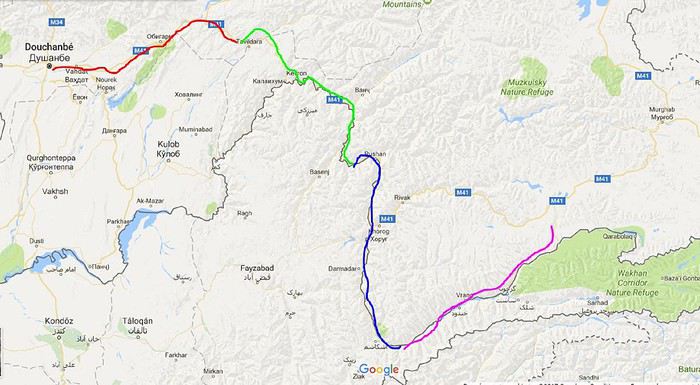
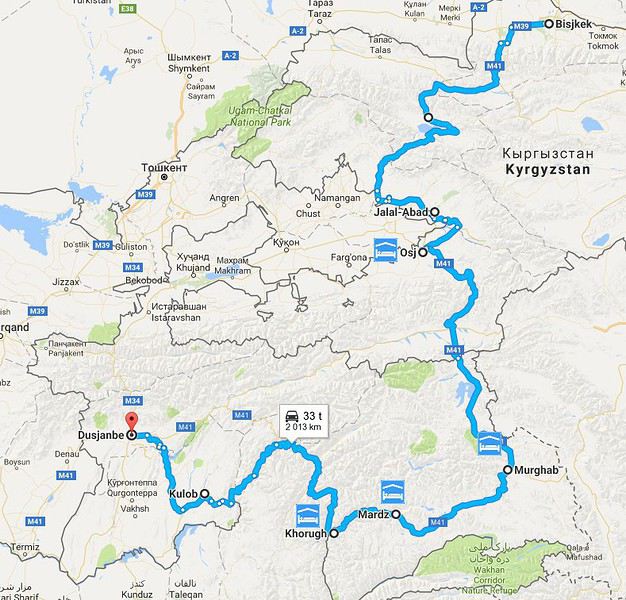
pour info, cet été 2016, j'ai avec mon véhicule personnel ( donc pas d'attente au niveau transport ) fait le parcours ci-dessous en 4 jours, sans vraiment traîner mais pas au pas de course non plus.
Cela peut te donner une idée ...( les couleurs correspondent , en gros, aux étapes )

Qui boit l'eau d'une terre étrangère doit en suivre les coutumes (proverbe Mongol)
Merci à tous les deux pour votre réponse.
Pas de monts fan cette fois, si je suis dans ce coin là alors que la route du Pamir est praticable, je veux vraiment en profiter! Et je rejoins une amie, c'est l'occasion.
Effectivement, il semblerait sur la carte que le corridor du wakhan serait relié à la route du Pamir vers Bouloukoul, j'imagine donc qu'une "petite" boucle dans ce coin là serait possible, quitte à affréter un véhicule privé. ( Dushanbe - Khorog - Wakhan - Alitchour - Route du Pamir - Khorog - Dushanbe)
Pour le "grand" tour via Murgab et Karakoul, je continue à méditer....
🙂
Effectivement, il semblerait sur la carte que le corridor du wakhan serait relié à la route du Pamir vers Bouloukoul, j'imagine donc qu'une "petite" boucle dans ce coin là serait possible, quitte à affréter un véhicule privé. ( Dushanbe - Khorog - Wakhan - Alitchour - Route du Pamir - Khorog - Dushanbe)
Pour le "grand" tour via Murgab et Karakoul, je continue à méditer....
🙂
"On voyage pour changer, non de lieu, mais d'idées." Hippolyte Taine
Mes photos: http://clairette-82.myportfolio.com/projects
Oui aucun transport public de la vallee de Wakhan vers Bulunkul, si tu veux faire cela en 10 jours tu dois contracter un 4x4 prive a Khorog.
la route entre Wakhan et la M41 (Langar - Alichur) est une piste avec un tronçon en mauvais état, et très peu de trafic -> sur ce trajet, pas de marshrutka, il faut affréter un 4x4 et c'est pas donné (le carburant n'est pas spécialement bon marché au Tadjikistan). Il y a par contre des marshrutkas Khorog - Ishkashim, et quelques taxis partagés Ishkahim - Langar. Il y a aussi des marshrutka entre Khorog et Langar, et moins souvent au départ d'Alichur car les véhicules partent pleins de Khorog et Murgab.
La vallée de Bartang (Rushan - Karakul) est souvent coupée en début d'été (glissements de terrain et crues). En septembre plus de chances pour que ça passe, mais là encore uniquement en affrétant un 4x4.
Le trajet Alichur - Murgab - Karakul a son charme aussi, ça fait plus hauts plateaux semi-arides. Mais si c'est pour être à la bourre et stresser en route, à voir...
La vallée de Bartang (Rushan - Karakul) est souvent coupée en début d'été (glissements de terrain et crues). En septembre plus de chances pour que ça passe, mais là encore uniquement en affrétant un 4x4.
Le trajet Alichur - Murgab - Karakul a son charme aussi, ça fait plus hauts plateaux semi-arides. Mais si c'est pour être à la bourre et stresser en route, à voir...
Merci beaucoup pour ces informations très précises ! Du coup, quel trajet nous conseillerais-tu pour une dizaine de jours à cette période ? En mode plus économique que dispendieux….
"On voyage pour changer, non de lieu, mais d'idées." Hippolyte Taine
Mes photos: http://clairette-82.myportfolio.com/projects
j'aurais du mal à donner des conseils plus précis : je voyageais là-bas avec un vélo et du temps, c'est assez différent... En plus je vois que mes doigts ont fourché sur le clavier quand je parlais des marshrutkas entre Khorog et Langar : je voulais dire entre Khorog et Murgab via la M41...
Bonjour,
pour info, cet été 2016, j'ai avec mon véhicule personnel ( donc pas d'attente au niveau transport ) fait le parcours ci-dessous en 4 jours, sans vraiment traîner mais pas au pas de course non plus.
Cela peut te donner une idée ...( les couleurs correspondent , en gros, aux étapes )
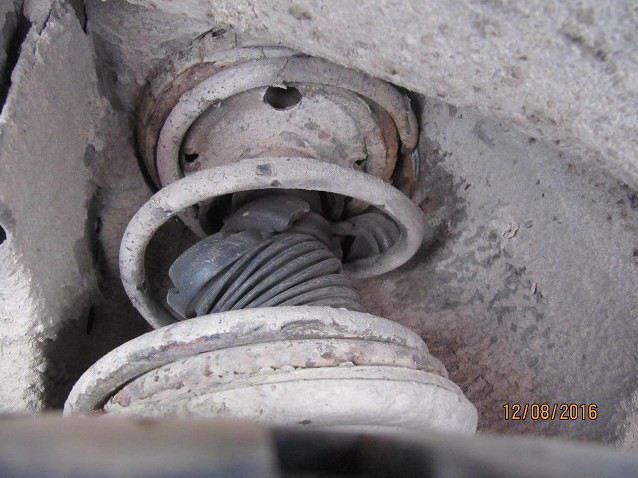
bonjour, j'ai une question sur l'état du tronçon Duchambé-Kalaïkhum :-) j'ai effectué ce trajet l'été dernier aussi, dans le sens Bichkek->Duchambé, avec mon Forester 2001, càd. un 4x4 passe-partout mais pas la capacité d'amortissage/suspension et solidité d'un vrai tout-terrain genre Patrol ou Pajero.

un peu après la frontière kyrgyze-tadjike, j'avais pété les suspensions arrières (petit vol plané après une crête de côte, en assez bon état et 60/70 kms à la montée mais avec route brisée par une déchirure du terrain juste après...)

il aurait fallu rester plus de temps que je ne pouvais à Khorog pour me faire expédier des pièces, et donc j'avais discuté avec quelques personnes de la route en meilleur état après Kalaïkhum, et la route longeant l'Afghanistan le long de la rivière vers Kulob m'était conseillée. Néanmoins à Kalaïkhum j'entamais pour voir la montée sur la M41 mais faisait demi-tour après une dizaine de kms, la route étant uniformément du très gros caillou et petite pierre d'éboulis. Même avec mes suspensions en état, j'aurais hésité avec mon Forester, aurais préféré être avec un Patrol. Dans ton itinéraire c'est ce qui correspond aux derniers kilomètres de descente avant le poste militaire au-dessus de Kalaïkhum.
Question: l'état de la route est-il similaire sur l'essentiel du trajet montagneux auparavant ?

bonjour, j'ai une question sur l'état du tronçon Duchambé-Kalaïkhum :-) j'ai effectué ce trajet l'été dernier aussi, dans le sens Bichkek->Duchambé, avec mon Forester 2001, càd. un 4x4 passe-partout mais pas la capacité d'amortissage/suspension et solidité d'un vrai tout-terrain genre Patrol ou Pajero.

un peu après la frontière kyrgyze-tadjike, j'avais pété les suspensions arrières (petit vol plané après une crête de côte, en assez bon état et 60/70 kms à la montée mais avec route brisée par une déchirure du terrain juste après...)

il aurait fallu rester plus de temps que je ne pouvais à Khorog pour me faire expédier des pièces, et donc j'avais discuté avec quelques personnes de la route en meilleur état après Kalaïkhum, et la route longeant l'Afghanistan le long de la rivière vers Kulob m'était conseillée. Néanmoins à Kalaïkhum j'entamais pour voir la montée sur la M41 mais faisait demi-tour après une dizaine de kms, la route étant uniformément du très gros caillou et petite pierre d'éboulis. Même avec mes suspensions en état, j'aurais hésité avec mon Forester, aurais préféré être avec un Patrol. Dans ton itinéraire c'est ce qui correspond aux derniers kilomètres de descente avant le poste militaire au-dessus de Kalaïkhum.
Question: l'état de la route est-il similaire sur l'essentiel du trajet montagneux auparavant ?
La seule section encore tres mauvaise entre Kulob et Kalaikhum en 2016 est sur le chantier la ou ilscetaient en train de construire la nouvelle route asphaltee, dans la grande descente vers la vallee. Je ne sais pas si ce sera fini en 2017.
Je réfléchis à passer 10 jours au Tadjikistan fin septembre. 10 jours c’est pas bien long, et je rêve de faire un tour dans le Pamir, voire dans le Wakhan. Bref, pensez-vous qu’en 10 jours il soit possible de faire un tour genre Dushanbe – Roushan – Karakul – Mughrab – Khorog – Roushan – Dushanbe en prenant des transports locaux, ou c’est irréaliste ?
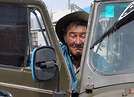
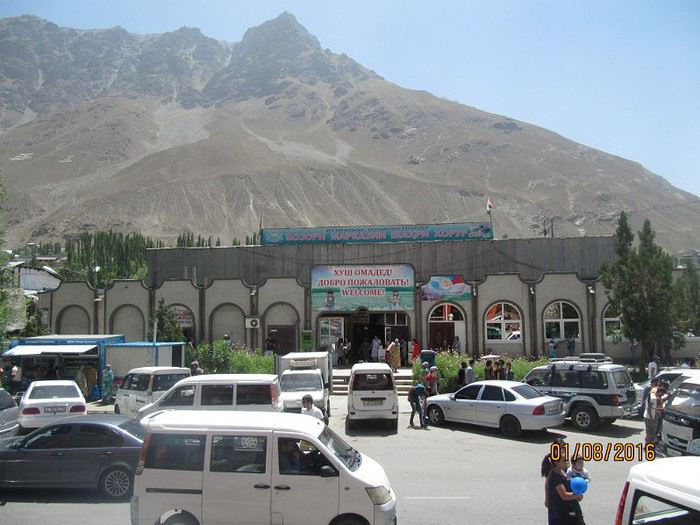
pour compléter un peu les informations avisées déjà fournies par tous: Transport en commun , sauf dans le long du corridor de Wakhan, ce sont des petites marchroutki chinoises, comme par exemple ici, devant une entrée du bazar de Khorog:

ces petits minibus transportent les gens du coin de A à B, et donc pas de possibilités pour s'arrêter contempler les paysages.
On trouve des chauffeurs qui louent leur 4x4 dans les localités de la région, mais il vaut mieux avoir du temps pour trouver un groupe auquel se joindre, sans ëtre trop à bord pour le confort. L'été dernier lorsque je faisais étape dans un appart' auberge de Bichkek, tout le monde m'a sollicité lorsqu'ils ont su que j'étais avec ma propre voiture. Ceci dit fin septembre est la fin de saison et donc il ne devrait pas y avoir foule. Cependant 10 jours me semblent court si on n'a pas un plan de voiturage pré-établi, car il faut prendre langue sur place et en cours de route avec les locaux. Il existe un gros bizness de tours operators dans ce coin, d'après ce que j'ai constaté au long de la route et aux étapes. Idéalement il faut causer russe. Sinon, pour donner une ídée, un voyagiste allemand travaillant avec des tadjikes sur place, qui vend des circuits mais aussi de la location de 4x4 avec chauffeur, pour 1$us/km:
http://www.alaya-travels.com/jeep-and-driver-rentals.html
un jeune couple, un belge et une kazakhe, d'Almaty, maintiennent depuis quelques années un site anglo regroupant des infos sur toute la région Asie Centrale, tenu à jour, et avec un forum. Ils ont un contact tadjike pour la location de 4x4 avec chauffeur, à 0,7$us le km +15$/jour pour le chauffeur:
http://caravanistan.com/tour/rent-car-driver-pamir-highway/
sinon (en russe de préférence, mais anglais devrait faire) une association de chauffeurs du Pamir, SAFAR, avait un site qui est pour l'instant vide: http://www.pamir-drive.tj/ mais ils ont un compte Facebook: https://www.facebook.com/Safar.tj/ et une nouvelle page simplement pour rediriger sur une app Android ou Apple permettant de réserver une voiture rapidement: http://safar.tj/ l'été dernier l'adresse courriel du directeur de SAFAR, Cherali Bakhtalieff, était encore fonctionnelle: assafar_at_yandex.ru
pour compléter un peu les informations avisées déjà fournies par tous: Transport en commun , sauf dans le long du corridor de Wakhan, ce sont des petites marchroutki chinoises, comme par exemple ici, devant une entrée du bazar de Khorog:

ces petits minibus transportent les gens du coin de A à B, et donc pas de possibilités pour s'arrêter contempler les paysages.
On trouve des chauffeurs qui louent leur 4x4 dans les localités de la région, mais il vaut mieux avoir du temps pour trouver un groupe auquel se joindre, sans ëtre trop à bord pour le confort. L'été dernier lorsque je faisais étape dans un appart' auberge de Bichkek, tout le monde m'a sollicité lorsqu'ils ont su que j'étais avec ma propre voiture. Ceci dit fin septembre est la fin de saison et donc il ne devrait pas y avoir foule. Cependant 10 jours me semblent court si on n'a pas un plan de voiturage pré-établi, car il faut prendre langue sur place et en cours de route avec les locaux. Il existe un gros bizness de tours operators dans ce coin, d'après ce que j'ai constaté au long de la route et aux étapes. Idéalement il faut causer russe. Sinon, pour donner une ídée, un voyagiste allemand travaillant avec des tadjikes sur place, qui vend des circuits mais aussi de la location de 4x4 avec chauffeur, pour 1$us/km:
http://www.alaya-travels.com/jeep-and-driver-rentals.html
un jeune couple, un belge et une kazakhe, d'Almaty, maintiennent depuis quelques années un site anglo regroupant des infos sur toute la région Asie Centrale, tenu à jour, et avec un forum. Ils ont un contact tadjike pour la location de 4x4 avec chauffeur, à 0,7$us le km +15$/jour pour le chauffeur:
http://caravanistan.com/tour/rent-car-driver-pamir-highway/
sinon (en russe de préférence, mais anglais devrait faire) une association de chauffeurs du Pamir, SAFAR, avait un site qui est pour l'instant vide: http://www.pamir-drive.tj/ mais ils ont un compte Facebook: https://www.facebook.com/Safar.tj/ et une nouvelle page simplement pour rediriger sur une app Android ou Apple permettant de réserver une voiture rapidement: http://safar.tj/ l'été dernier l'adresse courriel du directeur de SAFAR, Cherali Bakhtalieff, était encore fonctionnelle: assafar_at_yandex.ru
Bonjour,
A vrai dire je suis assez embêté pour te répondre, mon véhicule est super équipé pour ce genre de périple et je ne fais pratiquement pas attention à l'état de la piste. De plus étant habitué aux mauvaises pistes de montagne ( j'habite en haute-savoie) , lorsque celles-ci sont à peu près "roulantes" les quelques pierres ici ou là ne me marque pas vraiment.
Donc je dirai que la partie que tu as tentée, sur quelques km, ne m'a pas semblé plus ou moins praticable que les reste du parcours.
Qui boit l'eau d'une terre étrangère doit en suivre les coutumes (proverbe Mongol)
La seule section encore tres mauvaise entre Kulob et Kalaikhum en 2016 est sur le chantier la ou ilscetaient en train de construire la nouvelle route asphaltee, dans la grande descente vers la vallee. Je ne sais pas si ce sera fini en 2017.
pas sûr de saisir, se réfère-t-on à la même route? 🙂 Entre Kalaïkhum et Kulob j'avais roulé sur la route le long de la rivière frontalière. C'est la route nord sur le M41 via Tavidara, entre KalaïKhum et Douchambé qui m'est inconnue.
Bonjour,
A vrai dire je suis assez embêté pour te répondre, mon véhicule est super équipé pour ce genre de périple et je ne fais pratiquement pas attention à l'état de la piste. De plus étant habitué aux mauvaises pistes de montagne ( j'habite en haute-savoie) , lorsque celles-ci sont à peu près "roulantes" les quelques pierres ici ou là ne me marque pas vraiment.
Donc je dirai que la partie que tu as tentée, sur quelques km, ne m'a pas semblé plus ou moins praticable que les reste du parcours.
ok, merci. Tu dois être en quelque chose comme Pajero/Patrol/LandCruiser/etc renforcé monté sur grosses roues 🙂
C'est la route nord sur le M41 via Tavidara, entre KalaïKhum et Douchambé qui m'est inconnue.
entre Kalaïkhum et la vallée de Vakhsh (route A372), la M41 est une piste plutôt caillouteuse côté sud du col ; côté nord, petits cailloux + quelques tronçons boueux + nombreux passages de petits gués faciles + 2 gués moins faciles (selon période de l'année et conditions météo, il y a de temps en temps des glissements de terrain). Mais c'est une belle "route".
Actuellement la route entre Kalaikhum et Rasht est fermée pour cause d'avalanche et d'éboulement.
Au mois de novembre 2016, toute une partie de la route de Vanj à Kulob était presque terminée, ils dynamitaient le col juste avant Kulob. Ensuite c'est une autoroute jusqu'à Douchanbé.
Attention: les visas ne sont plus donnés à votre arrivée à l'aéroport, uniquement via evisa.tj même si les ambassades vous disent que c'est possible. Expérience faite au mois de mars 2017.
Peace & ride
Bonjour à tous ! Billets achetés, je serai au Tadjikistan entre le 23 septembre et le 4 octobre !
Et finalement révision des plans, je pense que j’aurai surtout besoin de nature et balades à ce moment-là, et mon amie aussi, donc on ne va pas partir sur les routes pour traverser le Badakchan dans tous les sens !
L’idée serait plutôt de se rendre dans une vallée, hébergement chez l’habitant, balades à la journée ou sur 2 jours, toujours avec transports locaux dans la mesure du possible.
Je pense aller jusqu’à Rouchan et de là me rendre dans la vallée du Geisev et /ou à Khorog et de là dans la vallée du Shokh Dara ou prendre un petit bout de la route du Pamir.
Je veux bien vos conseils si vous vous êtes rendus dans ces coins là ….
Merci !
Et finalement révision des plans, je pense que j’aurai surtout besoin de nature et balades à ce moment-là, et mon amie aussi, donc on ne va pas partir sur les routes pour traverser le Badakchan dans tous les sens !
L’idée serait plutôt de se rendre dans une vallée, hébergement chez l’habitant, balades à la journée ou sur 2 jours, toujours avec transports locaux dans la mesure du possible.
Je pense aller jusqu’à Rouchan et de là me rendre dans la vallée du Geisev et /ou à Khorog et de là dans la vallée du Shokh Dara ou prendre un petit bout de la route du Pamir.
Je veux bien vos conseils si vous vous êtes rendus dans ces coins là ….
Merci !
"On voyage pour changer, non de lieu, mais d'idées." Hippolyte Taine
Mes photos: http://clairette-82.myportfolio.com/projects
Geisev oui bonne idee.
Vallee de Chokhdara, la premiere partie n'est pas tres interessante mais plus haut oui cela devient tres beau.
Log in first, then come back to this page.
You might also like
More discussions
Hi there, 🙂
I’m thinking of taking a trip to these two countries in 2026 (late spring to early summer).
I’d arrive in Almaty and leave from Bishkek, and I’d be driving myself.
I plan to spend 1 week in Kazakhstan and 2 in Kyrgyzstan. The itinerary isn’t set yet.
My preliminary questions are about formalities, hassle levels, and the car.
From what I understand, no visa is needed, the passport must be valid for 6 months after entry, and there’s no longer a requirement to register with the authorities at each stop. In short, once you’re in, no administrative headaches.
Except for permits needed to drive in certain regions?
---/---
About crossing between the two countries:
- On foot - In a rental car
Quick? Easy?
---/---
Are both countries safe? (Meaning you don’t have to stay on guard all the time.) Are the cops corrupt? (A little, a lot, passionately, not at all?)
---/---
Is it better to rent a car for both countries or rent a vehicle in each country?
A 4x4 or something else?
Is accommodation plentiful enough that I can skip a rooftop tent, or is it better to rent a 4x4 with one?
I’ll definitely have more questions later...😉
Thanks for your answers !
I’m thinking of taking a trip to these two countries in 2026 (late spring to early summer).
I’d arrive in Almaty and leave from Bishkek, and I’d be driving myself.
I plan to spend 1 week in Kazakhstan and 2 in Kyrgyzstan. The itinerary isn’t set yet.
My preliminary questions are about formalities, hassle levels, and the car.
From what I understand, no visa is needed, the passport must be valid for 6 months after entry, and there’s no longer a requirement to register with the authorities at each stop. In short, once you’re in, no administrative headaches.
Except for permits needed to drive in certain regions?
---/---
About crossing between the two countries:
- On foot - In a rental car
Quick? Easy?
---/---
Are both countries safe? (Meaning you don’t have to stay on guard all the time.) Are the cops corrupt? (A little, a lot, passionately, not at all?)
---/---
Is it better to rent a car for both countries or rent a vehicle in each country?
A 4x4 or something else?
Is accommodation plentiful enough that I can skip a rooftop tent, or is it better to rent a 4x4 with one?
I’ll definitely have more questions later...😉
Thanks for your answers !
Bonjour à tous,
Mon compagnon et moi préparons un voyage de 3 semaines au Kazakhstan au mois d'août et nous aimerions avoir vos avis pour affiner notre itinéraire.
Nous pensons consacrer une première partie du voyage à la région d'Almaty, avec notamment les sites suivants :
Singing Barkhan (dune chantante)
Altyn-Emel National Park
Charyn Canyon National Park
Ozora Ushchel'ya Reki Kensu (lacs de la vallée de la rivière Kensu)
éventuellement le parc national d'Ile-Alatau
Dans un second temps, nous aimerions découvrir la région de Mangystau, autour d'Aktau, avec notamment :
Airakty
Tuzbair Salt Lake
Kyzylkup ("Tiramisu")
Gora Bokty
Bozzhyra
Three Brothers Peaks
Nous envisageons de louer un 4x4 dans chacune de ces régions et nous avons plusieurs questions :
Auriez-vous des loueurs de 4x4 fiables à recommander, aussi bien dans la région d'Almaty que dans celle d'Aktau/Mangystau ?
J'ai lu que la région de Mangystau peut être extrêmement chaude en août. Pensez-vous qu'il vaut vraiment mieux commencer par Almaty puis terminer par Aktau pour esperer avoir des temperatures plus cléments (moins extremes😛)? Dans notre cas, faire l'inverse serait plus simple au niveau des vols internationaux et du vol intérieur, et aussi nettement moins cher.
Concernant les lieux listés ci-dessus, y a-t-il selon vous des incontournables à ajouter ou au contraire certains sites qui valent moins le détour ?
Plus généralement, avez-vous des conseils pratiques pour un voyage de 3 semaines au Kazakhstan en août (état des pistes, autonomie en carburant, réservations, météo, sécurité, etc.) ?
Merci beaucoup pour vos retours et vos conseils ! Ps : Nous avons l'habitude de voyager en autonomie et de conduire des 4x4 dans des conditions parfois exigeantes (Namibie, Tanzanie, Bolivie – Sud Lipez, Chili, etc.) et nous sommes également de bons marcheurs, habitués aux treks en autonomie (Patagonie, Huayhuash, Three Peaks au Népal, entre autres). Nous précisons cela simplement pour situer notre niveau d’autonomie sur ce type de voyage.
Singing Barkhan (dune chantante)
Altyn-Emel National Park
Charyn Canyon National Park
Ozora Ushchel'ya Reki Kensu (lacs de la vallée de la rivière Kensu)
éventuellement le parc national d'Ile-Alatau
Dans un second temps, nous aimerions découvrir la région de Mangystau, autour d'Aktau, avec notamment :
Airakty
Tuzbair Salt Lake
Kyzylkup ("Tiramisu")
Gora Bokty
Bozzhyra
Three Brothers Peaks
Nous envisageons de louer un 4x4 dans chacune de ces régions et nous avons plusieurs questions :
Auriez-vous des loueurs de 4x4 fiables à recommander, aussi bien dans la région d'Almaty que dans celle d'Aktau/Mangystau ?
J'ai lu que la région de Mangystau peut être extrêmement chaude en août. Pensez-vous qu'il vaut vraiment mieux commencer par Almaty puis terminer par Aktau pour esperer avoir des temperatures plus cléments (moins extremes😛)? Dans notre cas, faire l'inverse serait plus simple au niveau des vols internationaux et du vol intérieur, et aussi nettement moins cher.
Concernant les lieux listés ci-dessus, y a-t-il selon vous des incontournables à ajouter ou au contraire certains sites qui valent moins le détour ?
Plus généralement, avez-vous des conseils pratiques pour un voyage de 3 semaines au Kazakhstan en août (état des pistes, autonomie en carburant, réservations, météo, sécurité, etc.) ?
Merci beaucoup pour vos retours et vos conseils ! Ps : Nous avons l'habitude de voyager en autonomie et de conduire des 4x4 dans des conditions parfois exigeantes (Namibie, Tanzanie, Bolivie – Sud Lipez, Chili, etc.) et nous sommes également de bons marcheurs, habitués aux treks en autonomie (Patagonie, Huayhuash, Three Peaks au Népal, entre autres). Nous précisons cela simplement pour situer notre niveau d’autonomie sur ce type de voyage.
Estonians have become real pests at the Narva border control.
EER is the Estonian public radio and television service. They have a website, err.ee, with a section in Russian. The other day, on 26.06.2026, in Narva, a Swedish citizen was asked if she had any foreign currency. She mentioned $1,800 USD and 4,400 RUB. However, she was searched, and 21,000 SEK were found in her underwear (!) Here’s what the article says: "They eventually discovered 21,000 Swedish kronor" Maybe the stash seemed suspicious... She tried to backpedal, meaning to return to Estonia with the Swedish kronor, but was fined 280 €:
https://rus.err.ee/1610037940/tamozhenniki-v-narve-oshtrafovali-grazhdanku-shvecii-pytavshujusja-pronesti-v-nizhnem-bele-krony
Earlier this year, on 10.03.2026, a German citizen had 1,820 € found in the lining of her coat. She was denied entry and also fined 480 €.
https://rus.err.ee/1609962977/grazhdanka-germanii-pytalas-provezti-nalichnye-cherez-granicu-v-narve-no-byla-oshtrafovana
Bottom line: if you need to carry cash to exchange, only take USD—and make sure it’s brand new...
EER is the Estonian public radio and television service. They have a website, err.ee, with a section in Russian. The other day, on 26.06.2026, in Narva, a Swedish citizen was asked if she had any foreign currency. She mentioned $1,800 USD and 4,400 RUB. However, she was searched, and 21,000 SEK were found in her underwear (!) Here’s what the article says: "They eventually discovered 21,000 Swedish kronor" Maybe the stash seemed suspicious... She tried to backpedal, meaning to return to Estonia with the Swedish kronor, but was fined 280 €:
https://rus.err.ee/1610037940/tamozhenniki-v-narve-oshtrafovali-grazhdanku-shvecii-pytavshujusja-pronesti-v-nizhnem-bele-krony
Earlier this year, on 10.03.2026, a German citizen had 1,820 € found in the lining of her coat. She was denied entry and also fined 480 €.
https://rus.err.ee/1609962977/grazhdanka-germanii-pytalas-provezti-nalichnye-cherez-granicu-v-narve-no-byla-oshtrafovana
Bottom line: if you need to carry cash to exchange, only take USD—and make sure it’s brand new...
Since last year, the unification of the Russian visa with Belarus has been in effect.
For reference, EU citizens haven’t needed a visa for Belarus for two years. However, it wasn’t possible to travel to Russia. Only Belarusian and Russian citizens could move freely within the union.
With the unified system, if you enter one of the two countries with a visa from either, you can now travel between them freely.
In the case of a Russian visa, it must be a paper visa glued into your passport—not an electronic visa.
This opens up the possibility of traveling to Russia from Lithuania via Minsk, for example, starting from Vilnius.
It also allows for travel circuits that would otherwise be difficult, despite the proximity of the cities.
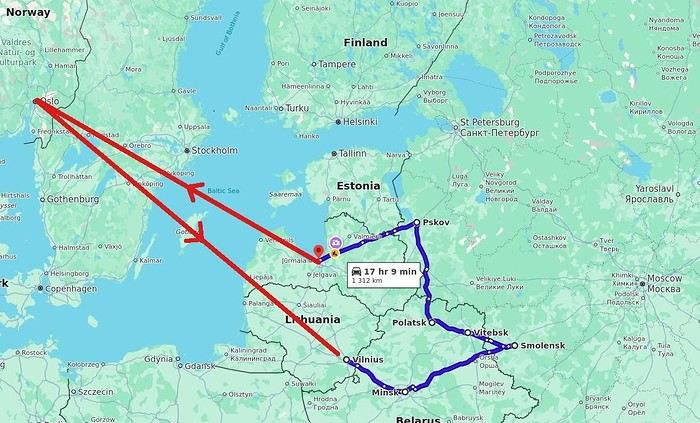
So, I’m leaving on June 12th for Vilnius. A one-hour flight for around thirty euros with a carry-on bag, and from Vilnius Airport, there’s a bus to Minsk. My planned route for now is Vilnius-Minsk-Smolensk-Vitebsk-Polotsk-Pskov-Riga.

This crosses the Belarus-Russia border three times: from Minsk to Smolensk, then from Smolensk to Vitebsk, and finally from Polotsk to Pskov.
The region of this itinerary was, a thousand years ago, essentially that of the Krivichs, a local Slavic political entity. The term comes from "blood," *krew* in Polish, *krov* in Russian—basically "blood brothers." In Latvian, the word for Russians is *krievu*, by the way. Historically, the region corresponds to some of the old Russian principalities. Later, what marks Belarusian regions in general is, after the Great Schism of 1054, the division between Catholic and Orthodox zones, particularly as the Polish-Lithuanian Commonwealth expanded and contracted. In architecture, this corresponds to variations in Baroque styles, for example.
Vitebsk is known in France as the birthplace of Chagall. Born Russian, he first trained at the art school in Vitebsk, which was also attended by Malevich and Lissitzky, before completing his studies in Saint Petersburg, then moving to Berlin and later Paris. In Paris, Chagall met Cendrars, who had spent three years in Russia before and spoke enough Russian to help the newcomer get by a bit.
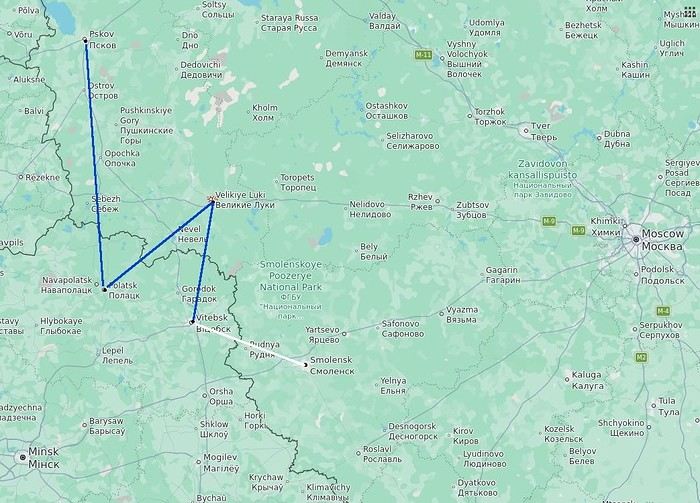
Back to the practical travel aspects: a local Pskov newspaper mentions that the Russian and Belarusian governments have a project for a Pskov-Polotsk train line. Previously, there were also plans for lines between Veliky Luki and Vitebsk, and Polotsk. A recently launched railway is Smolensk-Vitebsk, shown in white on the map, with projected lines in blue. https://pln-pskov.ru/society/583817.html https://pln-pskov.ru/society/578335.html
These will likely be "Hirondelle"—that is, *Lastochka*—the fast, spacious regional trains in Russia. Currently, all of this is done by bus, so the train is a very appealing and comfortable option. We’ll see how it goes.

With the unified system, if you enter one of the two countries with a visa from either, you can now travel between them freely.
In the case of a Russian visa, it must be a paper visa glued into your passport—not an electronic visa.
This opens up the possibility of traveling to Russia from Lithuania via Minsk, for example, starting from Vilnius.
It also allows for travel circuits that would otherwise be difficult, despite the proximity of the cities.
So, I’m leaving on June 12th for Vilnius. A one-hour flight for around thirty euros with a carry-on bag, and from Vilnius Airport, there’s a bus to Minsk. My planned route for now is Vilnius-Minsk-Smolensk-Vitebsk-Polotsk-Pskov-Riga.

This crosses the Belarus-Russia border three times: from Minsk to Smolensk, then from Smolensk to Vitebsk, and finally from Polotsk to Pskov.
The region of this itinerary was, a thousand years ago, essentially that of the Krivichs, a local Slavic political entity. The term comes from "blood," *krew* in Polish, *krov* in Russian—basically "blood brothers." In Latvian, the word for Russians is *krievu*, by the way. Historically, the region corresponds to some of the old Russian principalities. Later, what marks Belarusian regions in general is, after the Great Schism of 1054, the division between Catholic and Orthodox zones, particularly as the Polish-Lithuanian Commonwealth expanded and contracted. In architecture, this corresponds to variations in Baroque styles, for example.
Vitebsk is known in France as the birthplace of Chagall. Born Russian, he first trained at the art school in Vitebsk, which was also attended by Malevich and Lissitzky, before completing his studies in Saint Petersburg, then moving to Berlin and later Paris. In Paris, Chagall met Cendrars, who had spent three years in Russia before and spoke enough Russian to help the newcomer get by a bit.
Back to the practical travel aspects: a local Pskov newspaper mentions that the Russian and Belarusian governments have a project for a Pskov-Polotsk train line. Previously, there were also plans for lines between Veliky Luki and Vitebsk, and Polotsk. A recently launched railway is Smolensk-Vitebsk, shown in white on the map, with projected lines in blue. https://pln-pskov.ru/society/583817.html https://pln-pskov.ru/society/578335.html
These will likely be "Hirondelle"—that is, *Lastochka*—the fast, spacious regional trains in Russia. Currently, all of this is done by bus, so the train is a very appealing and comfortable option. We’ll see how it goes.

Hello,
Summer 2026 hasn’t even arrived yet, and I’m already thinking about summer 2027! We’re a family with two kids, who will be 9.5 and 4.5 years old next summer (turning 5 at the end of October 2027, actually). We’d love to spend 19 nights in Uzbekistan and Kyrgyzstan—a part of the world that’s completely new to us. We enjoy traveling, do it often, and the kids are used to it (though we still need a bit of organization and comfort!). Here’s the rough outline of our itinerary: Day 1 - Arrival in Tashkent (ideally in the late afternoon). Head to the train station (by taxi?) to take the overnight sleeper train to Urgench (1 night). Day 2 - Khiva (2 nights): Taxi transfer from the station to the city. Visit Itchan Kala, the walls, and sunset. Day 4 - Head to Bukhara (3 nights) by train (about 6 hours). Visit the historic center, domes, and workshops. Day 7 - On to Samarkand (2 nights), but this time with a private driver. Visit Registan, the necropolis, and local crafts. Day 9 - Head to Osh (1 night) in Kyrgyzstan with the private driver, who’ll drop us at the border. Long transition day (including border crossing). If it’s not too late, visit Osh’s market (otherwise, the next morning). Day 10 - Pick up our rental car (4x4 without a driver this time) and drive to Toktogul (2 nights) and the Suusamyr Valley. Day 12 - Head to the Kochkor region (350 km - 4 nights): Tash Rabat, Song-Kul Lake (yurt stay), and Aigliers. Day 16 - Depart for Karakol/Issyk-Kul (250 km - 4 nights): Jeti-Oguz, Altyn Arashan, beaches, and hot springs. Day 20: Fly home. TOTAL = 19 nights What do you think? Budget-wise:
Flight tickets: 3000 € Uzbekistan logistics (accommodation ideally with a pool for the kids and vehicle): 1600 € Kyrgyzstan logistics (accommodation and 4x4 vehicle like a Pajero/Land Cruiser): 1600 € Living & food: 800 € TOTAL: 7000 €
Does this seem reasonable? Not overestimated or underestimated? Thanks for any feedback or tips from your own experiences.
Summer 2026 hasn’t even arrived yet, and I’m already thinking about summer 2027! We’re a family with two kids, who will be 9.5 and 4.5 years old next summer (turning 5 at the end of October 2027, actually). We’d love to spend 19 nights in Uzbekistan and Kyrgyzstan—a part of the world that’s completely new to us. We enjoy traveling, do it often, and the kids are used to it (though we still need a bit of organization and comfort!). Here’s the rough outline of our itinerary: Day 1 - Arrival in Tashkent (ideally in the late afternoon). Head to the train station (by taxi?) to take the overnight sleeper train to Urgench (1 night). Day 2 - Khiva (2 nights): Taxi transfer from the station to the city. Visit Itchan Kala, the walls, and sunset. Day 4 - Head to Bukhara (3 nights) by train (about 6 hours). Visit the historic center, domes, and workshops. Day 7 - On to Samarkand (2 nights), but this time with a private driver. Visit Registan, the necropolis, and local crafts. Day 9 - Head to Osh (1 night) in Kyrgyzstan with the private driver, who’ll drop us at the border. Long transition day (including border crossing). If it’s not too late, visit Osh’s market (otherwise, the next morning). Day 10 - Pick up our rental car (4x4 without a driver this time) and drive to Toktogul (2 nights) and the Suusamyr Valley. Day 12 - Head to the Kochkor region (350 km - 4 nights): Tash Rabat, Song-Kul Lake (yurt stay), and Aigliers. Day 16 - Depart for Karakol/Issyk-Kul (250 km - 4 nights): Jeti-Oguz, Altyn Arashan, beaches, and hot springs. Day 20: Fly home. TOTAL = 19 nights What do you think? Budget-wise:
Flight tickets: 3000 € Uzbekistan logistics (accommodation ideally with a pool for the kids and vehicle): 1600 € Kyrgyzstan logistics (accommodation and 4x4 vehicle like a Pajero/Land Cruiser): 1600 € Living & food: 800 € TOTAL: 7000 €
Does this seem reasonable? Not overestimated or underestimated? Thanks for any feedback or tips from your own experiences.
Hi there,
I’ve never bought a SIM card abroad or even used prepaid cards in France...
So I’m wondering how it all works?
You buy a SIM card and pop it into your phone. Okay, so far so good... 😏
But after that?
I can’t find the price of prepaid cards or how they work with MegaCom.
If someone could give me a step-by-step guide... 😊
Thanks! 🙂
I’ve never bought a SIM card abroad or even used prepaid cards in France...
So I’m wondering how it all works?
You buy a SIM card and pop it into your phone. Okay, so far so good... 😏
But after that?
I can’t find the price of prepaid cards or how they work with MegaCom.
If someone could give me a step-by-step guide... 😊
Thanks! 🙂
Hi there! 🙂
I’m not planning to bring all my meals for the 3 weeks of travel, but I’d like to spice up my picnic lunches and a few dinners in this country that’s not exactly known for its cuisine...
I’ve seen that fruits and vegetables are easy to find. Bread is also no problem.
I’m a bit unsure about the local cheese, but I’ll manage.
Actually, it’s what I’d put in my sandwiches that I’d like to pack: cured sausage, pâtés.
Are these foods allowed through customs?
Also, I’m thinking that bringing 3-4 freeze-dried meals could be a good option. I’ve never bought any before. Which brands are the most flavorful?
I’ve also noticed that real coffee is rare. (Meaning Kyrgyz people drink Nescafé. Sacrilege!) Can I easily find coffee there to make my own?
Finally, which supermarket chain is the best? (Meaning the one with the most variety and, above all, quality!)
Last question: where can I buy a gas stove in Bishkek? (I’ve heard that local gas canisters aren’t compatible with the stove I already own)
Thanks!
I’m not planning to bring all my meals for the 3 weeks of travel, but I’d like to spice up my picnic lunches and a few dinners in this country that’s not exactly known for its cuisine...
I’ve seen that fruits and vegetables are easy to find. Bread is also no problem.
I’m a bit unsure about the local cheese, but I’ll manage.
Actually, it’s what I’d put in my sandwiches that I’d like to pack: cured sausage, pâtés.
Are these foods allowed through customs?
Also, I’m thinking that bringing 3-4 freeze-dried meals could be a good option. I’ve never bought any before. Which brands are the most flavorful?
I’ve also noticed that real coffee is rare. (Meaning Kyrgyz people drink Nescafé. Sacrilege!) Can I easily find coffee there to make my own?
Finally, which supermarket chain is the best? (Meaning the one with the most variety and, above all, quality!)
Last question: where can I buy a gas stove in Bishkek? (I’ve heard that local gas canisters aren’t compatible with the stove I already own)
Thanks!
I was lucky enough to spend two stays in Tajikistan between October and November 2025. I met Fayziddin, who’s a French-speaking guide and very knowledgeable—he really knows how to share his love for his country and his valley. He’ll welcome you to his village and, in the future, to a hostel that’s currently under construction. I can’t recommend him enough!
Hi there,
We’re planning to explore Uzbekistan this summer (with the weather constraints that come with it). Our itinerary includes the three classic cities plus a few side trips here and there. We still have one week left that we’d like to dedicate to hiking. We were thinking of heading to Kyrgyzstan, but I’m open to other suggestions if we stay in Uzbekistan. Thanks!
Hi everyone!
I wanted to share my experience from the trip I had this summer in Mongolia, in case it helps anyone get their bearings—I also relied a lot on forums myself.
We went as a couple with a French-speaking guide, Hacha, for a 17-day trek through the steppes and the Gobi Desert.
The experience was amazing—the landscapes are truly diverse and stunning. We started with a quick visit to Ulaanbaatar, then headed into the steppes for half the trip, including the Orkhon Valley, before moving on to the desert, which isn’t just sand but has incredibly varied scenery.
We traveled with Hacha, who has been a guide for 27 years and knows Mongolia inside out. She was accompanied by her daughter (with our consent). Hacha teaches French the rest of the year and speaks it perfectly. Her kindness and humor were much appreciated, and she’s become a friend. She prepared delicious homemade meals throughout the trip, adapted to European tastes since she’s used to it. We also had a driver who was really friendly and professional.
I injured myself on the way there with a sprained ankle, and Hacha immediately adjusted the pace and some activities to accommodate my injury, as well as booking more comfortable lodgings for the first few nights. She didn’t tell us it cost her extra, and we only found out later—we chose to pay a supplement, but she never asked for anything. Hacha was very fair with money, and her rates seem a bit lower than what we’d found elsewhere. She also tailors the program to the budget we gave her, and we had the option to adjust accommodations to fit our budget.
As for lodging, we stayed in tourist yurt camps (more comfortable with restaurants, showers, etc.), guest yurts, nights with nomadic families, and a few nights in tents. Our most memorable experience was two nights with nomads who welcomed us warmly, even though it was only the second time they’d hosted tourists. They shared their traditions with us, and the location was beautiful—right by a lake.
Hacha also adapted to our last-minute requests. For example, I mentioned wanting to see a shaman, which was tricky since it wasn’t planned in advance (my fault for not bringing it up earlier), but she used her contacts to see if there was a possibility. Unfortunately, no shamans were available, but we spontaneously stopped by the family of a young shaman during one of our trips. She wasn’t there, but we got to hear her parents’ stories and ask questions about the rituals to become a shaman and their experiences. It was a rare and unique moment I won’t forget!
We’ll definitely return to Mongolia as a family to explore less touristy regions (though we weren’t really bothered by tourism), as Hacha offers other off-the-beaten-path itineraries, including one that visits a turquoise lake surrounded by sand dunes—which sounds incredible, according to her.
I highly recommend Mongolia to anyone looking for an authentic trip that pushes you slightly out of your comfort zone while still feeling safe and enjoying breathtakingly diverse landscapes. And I 100% recommend Hacha—she created a personalized trip based on our requests and adapted to our needs and wishes on the spot!
I wanted to share my experience from the trip I had this summer in Mongolia, in case it helps anyone get their bearings—I also relied a lot on forums myself.
We went as a couple with a French-speaking guide, Hacha, for a 17-day trek through the steppes and the Gobi Desert.
The experience was amazing—the landscapes are truly diverse and stunning. We started with a quick visit to Ulaanbaatar, then headed into the steppes for half the trip, including the Orkhon Valley, before moving on to the desert, which isn’t just sand but has incredibly varied scenery.
We traveled with Hacha, who has been a guide for 27 years and knows Mongolia inside out. She was accompanied by her daughter (with our consent). Hacha teaches French the rest of the year and speaks it perfectly. Her kindness and humor were much appreciated, and she’s become a friend. She prepared delicious homemade meals throughout the trip, adapted to European tastes since she’s used to it. We also had a driver who was really friendly and professional.
I injured myself on the way there with a sprained ankle, and Hacha immediately adjusted the pace and some activities to accommodate my injury, as well as booking more comfortable lodgings for the first few nights. She didn’t tell us it cost her extra, and we only found out later—we chose to pay a supplement, but she never asked for anything. Hacha was very fair with money, and her rates seem a bit lower than what we’d found elsewhere. She also tailors the program to the budget we gave her, and we had the option to adjust accommodations to fit our budget.
As for lodging, we stayed in tourist yurt camps (more comfortable with restaurants, showers, etc.), guest yurts, nights with nomadic families, and a few nights in tents. Our most memorable experience was two nights with nomads who welcomed us warmly, even though it was only the second time they’d hosted tourists. They shared their traditions with us, and the location was beautiful—right by a lake.
Hacha also adapted to our last-minute requests. For example, I mentioned wanting to see a shaman, which was tricky since it wasn’t planned in advance (my fault for not bringing it up earlier), but she used her contacts to see if there was a possibility. Unfortunately, no shamans were available, but we spontaneously stopped by the family of a young shaman during one of our trips. She wasn’t there, but we got to hear her parents’ stories and ask questions about the rituals to become a shaman and their experiences. It was a rare and unique moment I won’t forget!
We’ll definitely return to Mongolia as a family to explore less touristy regions (though we weren’t really bothered by tourism), as Hacha offers other off-the-beaten-path itineraries, including one that visits a turquoise lake surrounded by sand dunes—which sounds incredible, according to her.
I highly recommend Mongolia to anyone looking for an authentic trip that pushes you slightly out of your comfort zone while still feeling safe and enjoying breathtakingly diverse landscapes. And I 100% recommend Hacha—she created a personalized trip based on our requests and adapted to our needs and wishes on the spot!
Hi there,
After making good use of the tips on this site, I’m now adding my own contribution.
We’ve just returned from 25 days exploring Mongolia.
A trip that took us from the capital to the Gobi Desert, from the ancient capital Karakhorum to the Orkhon Valley, and also off the beaten path to places close to nature and nomadic life, all thanks to our guide Hacha.
I’m used to traveling as a couple or solo, in "backpacker" mode, and I rarely—or only occasionally—hire a guide. But this time, I have to admit that choosing a guide-interpreter and a driver was an excellent idea.
We set off as a group of four to share the costs. I’d spoken with Hacha, a Mongolian who used to work at the French Alliance, speaks perfect French, and has been organizing trips for over 25 years.
Needless to say, she knows her job inside out and has built strong relationships with nomadic families over the years. Since she only works with small groups, she can steer clear of the main tourist spots. With her help, we were able to personalize our itinerary—and even adjust it as we went along. For example, we’d planned to attend the Naadam festival in a small town, but we found out there was another festival two days later that wasn’t on the schedule. So we tweaked our route to catch both, and we didn’t regret it.
Anyway, if you’d like more details or Hacha’s contact info, feel free to reach out.
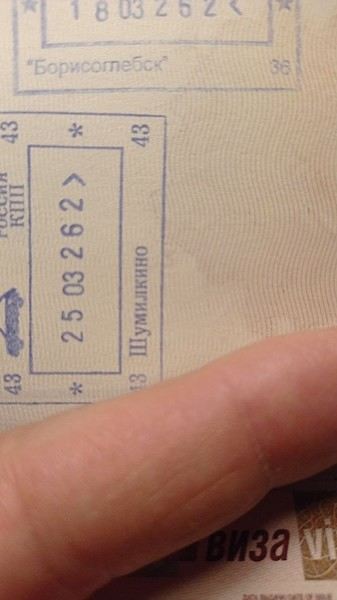
I took a few days to get some fresh air outside the Schengen-NATO prison. Between March 18, 2026, and March 25, 2026, as shown by the passport stamps:

Borisoglebsk is the Russian border checkpoint after Kirkenes, on the road to Murmansk.
Kirkenes is a tiny town with a correspondingly small airport. Nothing has changed there: the minibuses to Murmansk wait on the right as you exit the airport. They’re synchronized with the two daily flights from Oslo—the SAS around 11:00 AM and Norwegian around 11:30 AM. They stop in Kirkenes at the corner of the Scandic for an hour, where other passengers can board, then head straight to the nearby border.
This is the least hassle Frontex/Schengen border. The Norwegian agent quickly scans your passport, and that’s it. No customs, since Norway is Schengen but not in the EU. On the Russian side, there’s a passport check and a quick customs inspection. All in all, crossing both the Norwegian and Russian checkpoints takes about 15 minutes.
A paper visa is required; e-visas aren’t accepted.
Two companies run the route: Avto Ekspress and Borodin: https://ae51.ru/routes/kirkenes-murmansk/ https://borodinbus.com/
The one-way fare is 5,500 ₽. You can either buy it online in rubles with a MIR card or make a formal reservation and pay in NOK cash to the driver. I took Borodin, and the price in NOK was much more expensive than in ₽.
=========================
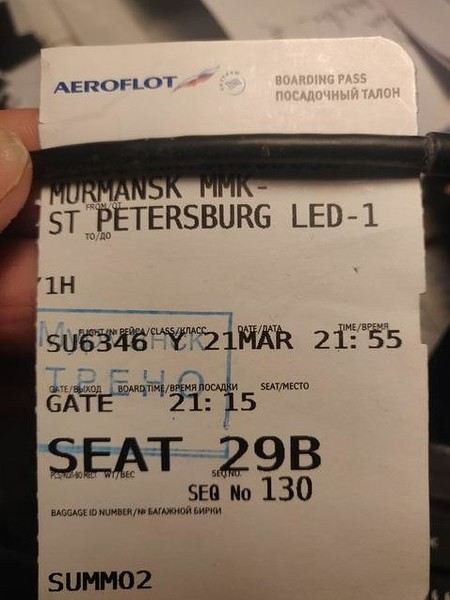
On March 25, I left from Pskov via the Estonian border post at Luhaama. I spent three days in Murmansk, flew to St. Petersburg (SPB), stayed there for two days, then took an evening train to Pskov.
Since the end of February—and reportedly until the end of May—the Estonians have restricted the opening hours of the two border crossings near Pskov: Koidula (Pechory on the Russian side) and Luhaama (Izborsk on the Russian side). They’re closed at night between 7:00 PM and 7:00 AM. Right now, there’s a bus from Pskov at 7:00 AM to the border. It drops you off at the end of the road where truckers—many Kazakh and Serbian—are parked on the side. You finish the rest on foot to the barrier, where there’s a quick initial check for Ukrainian stamps in passports. Then you walk to the customs building, followed by passport control at the kiosk for motorists. After that, it’s a 500-meter walk to the Estonian checkpoint. At the moment, things seem calmer. Passport control is quick. The usual silly questions in English: "Where were you? Where are you going?" I just gave my most clueless smile: "Sorry, I don’t understand." Yeah, right—I don’t speak English, especially not at an Estonian border with a French passport. If they’re in a mood, though... A very quick bag inspection. Once you exit the Estonian post, walk to the bus stop sign by the road where another coach takes you to Riga.
The catch: in my case, last Wednesday, there were two passengers (Russians) with old Ukrainian stamps in their passports. The bus from the Estonian post to Riga was supposed to leave around 9:30 AM. We ended up leaving around noon after the two were grilled by the FSB. Since it was a weekday outside of holidays, the bus was half-empty. The fuller the bus and the more people with Ukrainian stamps, the worse the nightmare. Don’t book a same-day flight from Riga. I had a flight at 6:00 PM, so it worked out.
=============
The Kirkenes-Murmansk route is still clearly the easiest and fastest. But it’s not the most convenient since it’s way up north.
Next, I’d say the Gdansk-Kaliningrad route in the middle of the week. Avoid weekends and holiday departures/returns.
Avoid the Narva-Ivangorod route during Christmas, Easter, May 9, and *all* summer.
==============
About flights from Murmansk to St. Petersburg: prices are good. I bought my ticket the day before departure on Rossiya for 7,500 ₽, including 10 kg of luggage + a handbag.

It’s the tail end of the northern lights season, and there were still crowds of Chinese tourists.

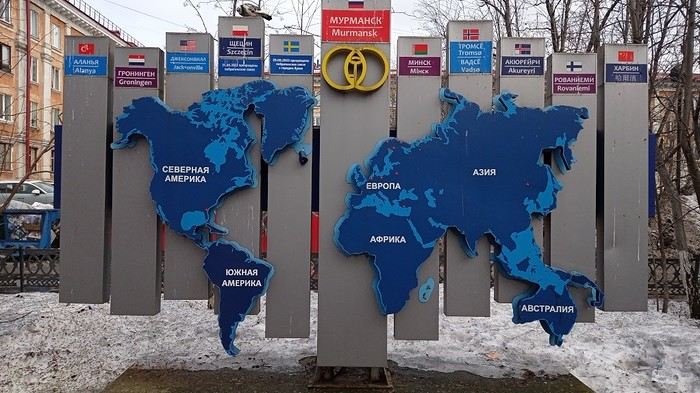
By the way, Murmansk is twinned with Harbin:

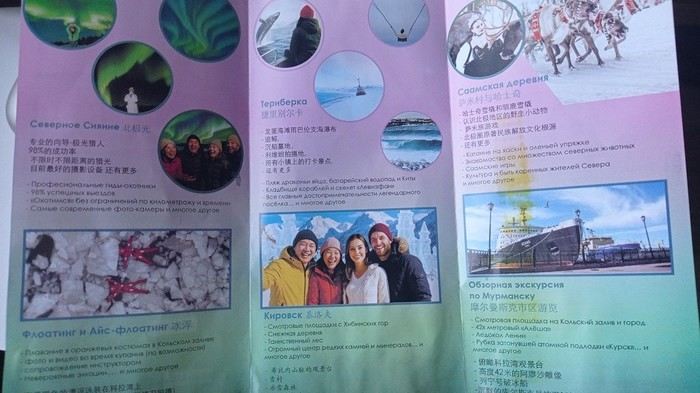
Chinese tourists are the largest foreign group, followed by Indians, then a mix of others from the Far East, Turks, Arabs, etc. Brochures are bilingual—Russian and Chinese:

============================
But let’s talk practical stuff. --
My domestic SIM card was restricted for SMS and internet for 24 hours. After that, if you want to keep using SMS, don’t turn off your phone—restarting triggers another 24-hour purgatory.
My Russian SIM cards (Megafon, MTS, Beeline) were activated as soon as I logged into their respective apps with my credentials.
Internet --
Telegram is heavily slowed down by authorities. To use it, you need to connect through proxy servers, which you load into the latest version of the app. Traffic is then rerouted internally within Telegram to servers outside Russia (Germany, Poland, Sweden, etc.). You can find these proxies on various channels. One is ChatVPN—check their website too.
For general internet use, like browsing the web, VPNs that work right now use the VLESS protocol. You can find several on Telegram by searching "VPN." A few free days, then payment in rubles or crypto.
Rozkomnadzor’s team are experts at this, so things can change. It’s a constant cat-and-mouse game.
Pskov is a special case. The city is near Estonia and has a large military base. Depending on NATO drone swarms launched from the Baltics, Wi-Fi can be completely suspended except for the most essential mobile apps. The drone swarms use the 4G network, and the powerful electronic jamming and drone suppression systems cause periods without Wi-Fi—including in hotels. Wired connections aren’t affected.

Borisoglebsk is the Russian border checkpoint after Kirkenes, on the road to Murmansk.
Kirkenes is a tiny town with a correspondingly small airport. Nothing has changed there: the minibuses to Murmansk wait on the right as you exit the airport. They’re synchronized with the two daily flights from Oslo—the SAS around 11:00 AM and Norwegian around 11:30 AM. They stop in Kirkenes at the corner of the Scandic for an hour, where other passengers can board, then head straight to the nearby border.
This is the least hassle Frontex/Schengen border. The Norwegian agent quickly scans your passport, and that’s it. No customs, since Norway is Schengen but not in the EU. On the Russian side, there’s a passport check and a quick customs inspection. All in all, crossing both the Norwegian and Russian checkpoints takes about 15 minutes.
A paper visa is required; e-visas aren’t accepted.
Two companies run the route: Avto Ekspress and Borodin: https://ae51.ru/routes/kirkenes-murmansk/ https://borodinbus.com/
The one-way fare is 5,500 ₽. You can either buy it online in rubles with a MIR card or make a formal reservation and pay in NOK cash to the driver. I took Borodin, and the price in NOK was much more expensive than in ₽.
=========================
On March 25, I left from Pskov via the Estonian border post at Luhaama. I spent three days in Murmansk, flew to St. Petersburg (SPB), stayed there for two days, then took an evening train to Pskov.
Since the end of February—and reportedly until the end of May—the Estonians have restricted the opening hours of the two border crossings near Pskov: Koidula (Pechory on the Russian side) and Luhaama (Izborsk on the Russian side). They’re closed at night between 7:00 PM and 7:00 AM. Right now, there’s a bus from Pskov at 7:00 AM to the border. It drops you off at the end of the road where truckers—many Kazakh and Serbian—are parked on the side. You finish the rest on foot to the barrier, where there’s a quick initial check for Ukrainian stamps in passports. Then you walk to the customs building, followed by passport control at the kiosk for motorists. After that, it’s a 500-meter walk to the Estonian checkpoint. At the moment, things seem calmer. Passport control is quick. The usual silly questions in English: "Where were you? Where are you going?" I just gave my most clueless smile: "Sorry, I don’t understand." Yeah, right—I don’t speak English, especially not at an Estonian border with a French passport. If they’re in a mood, though... A very quick bag inspection. Once you exit the Estonian post, walk to the bus stop sign by the road where another coach takes you to Riga.
The catch: in my case, last Wednesday, there were two passengers (Russians) with old Ukrainian stamps in their passports. The bus from the Estonian post to Riga was supposed to leave around 9:30 AM. We ended up leaving around noon after the two were grilled by the FSB. Since it was a weekday outside of holidays, the bus was half-empty. The fuller the bus and the more people with Ukrainian stamps, the worse the nightmare. Don’t book a same-day flight from Riga. I had a flight at 6:00 PM, so it worked out.
=============
The Kirkenes-Murmansk route is still clearly the easiest and fastest. But it’s not the most convenient since it’s way up north.
Next, I’d say the Gdansk-Kaliningrad route in the middle of the week. Avoid weekends and holiday departures/returns.
Avoid the Narva-Ivangorod route during Christmas, Easter, May 9, and *all* summer.
==============
About flights from Murmansk to St. Petersburg: prices are good. I bought my ticket the day before departure on Rossiya for 7,500 ₽, including 10 kg of luggage + a handbag.

It’s the tail end of the northern lights season, and there were still crowds of Chinese tourists.

By the way, Murmansk is twinned with Harbin:

Chinese tourists are the largest foreign group, followed by Indians, then a mix of others from the Far East, Turks, Arabs, etc. Brochures are bilingual—Russian and Chinese:

============================
But let’s talk practical stuff. --
My domestic SIM card was restricted for SMS and internet for 24 hours. After that, if you want to keep using SMS, don’t turn off your phone—restarting triggers another 24-hour purgatory.
My Russian SIM cards (Megafon, MTS, Beeline) were activated as soon as I logged into their respective apps with my credentials.
Internet --
Telegram is heavily slowed down by authorities. To use it, you need to connect through proxy servers, which you load into the latest version of the app. Traffic is then rerouted internally within Telegram to servers outside Russia (Germany, Poland, Sweden, etc.). You can find these proxies on various channels. One is ChatVPN—check their website too.
For general internet use, like browsing the web, VPNs that work right now use the VLESS protocol. You can find several on Telegram by searching "VPN." A few free days, then payment in rubles or crypto.
Rozkomnadzor’s team are experts at this, so things can change. It’s a constant cat-and-mouse game.
Pskov is a special case. The city is near Estonia and has a large military base. Depending on NATO drone swarms launched from the Baltics, Wi-Fi can be completely suspended except for the most essential mobile apps. The drone swarms use the 4G network, and the powerful electronic jamming and drone suppression systems cause periods without Wi-Fi—including in hotels. Wired connections aren’t affected.
Hi there,
I’m planning to visit Kazakhstan and Kyrgyzstan in early June, assuming the war doesn’t spread ??? Could anyone give me some info about the eastern border after visiting Charyn Canyon? First, is it possible to head east using public transport, or should I book a tour from Almaty and stay in the east to continue on to Kyrgyzstan toward Karakol? (I mean, not return to Almaty with the tour.) It’s a bit of a vague question, but those who’ve been there will know what I’m talking about;
Thanks!
Patrice
I’m planning to visit Kazakhstan and Kyrgyzstan in early June, assuming the war doesn’t spread ??? Could anyone give me some info about the eastern border after visiting Charyn Canyon? First, is it possible to head east using public transport, or should I book a tour from Almaty and stay in the east to continue on to Kyrgyzstan toward Karakol? (I mean, not return to Almaty with the tour.) It’s a bit of a vague question, but those who’ve been there will know what I’m talking about;
Thanks!
Patrice
Hello,
New year, new questions...😛
Since the Chinese highway isn’t finished yet (opening postponed year after year), I’m wondering what condition this track is in come June?
I’m a bit worried that the snowmelt might completely soak the track—or even that the snow might still be clinging to the mountainside near the pass...
Thanks 🙂
New year, new questions...😛
Since the Chinese highway isn’t finished yet (opening postponed year after year), I’m wondering what condition this track is in come June?
I’m a bit worried that the snowmelt might completely soak the track—or even that the snow might still be clinging to the mountainside near the pass...
Thanks 🙂
Hi,
Does anyone know if the travel agency "NOUVINI" in Tashkent still exists???
Or do you have another agency to recommend???
Thanks in advance!
Best regards,
Jean Pierre
Hi there,
We’re a group of 4 people who prefer to travel independently but also want to use local guides at different stages of our trip.
My question is: should we plan to hire a different guide for each stage, or just one guide for all the different legs? We’re planning to travel between stages either by taxi or public transport (train, plane…).
Our itinerary is pretty classic (3 weeks):
Visit Tashkent
Tashkent – Ferghana Valley (by train)
Explore the valley and return to Tashkent with a guide and taxi
Tashkent – Nukus (flight)
Nukus – Khiva by taxi + guide for Khiva visit
Khiva – Bukhara by taxi + guide for Bukhara visit
Bukhara – Lake Aydar Kul – Samarkand by taxi + guide for Samarkand
Samarkand – Tashkent (by train).
Is the cost reasonable for the transfers between stages? Also, I’m open to any suggestions or tips (recommended guides, etc.).
Thanks!
Bernard
Hi there,
I’d like to spend 2–3 days in the Korgaljyn area in May to photograph flamingos and other birds.
I’ll be in Astana and I’m looking for a tour that includes accommodation so I can stay for 2 days.
I’ve found the buses from Astana and info about the park’s facilities, but no accommodation or guided outings.
Has anyone done this?
Thanks for your help
Hi,
Did you attend the show at the Nadir Divan Begi Madrasa in Bukhara? What are the details for booking? Thanks in advance.
Have a great day and happy travels!
Danielle
Hi,
Planning a solo trip to Kyrgyzstan in May. Any tips or info?
Thanks
Planning a solo trip to Kyrgyzstan in May. Any tips or info?
Thanks
Hi everyone, happy to be back on VF!
I’ll be in Uzbekistan this coming April and will of course visit the three classics—Samarkand, Bukhara, and Khiva. However, I’d also love to get out of these cities to explore the Uzbek countryside and experience its nature. Mountains, steppes, etc. Ideally, with some great hikes passing through villages. Any spots you’d recommend? Thanks in advance
Hi,
We were wondering if anyone has recently experienced the Tashkent / Fergana Valley route by bus or taxi?
We’re landing in Tashkent at 10:30 PM with our international flight. To head to Fergana the next day, the only trains available are very early in the morning or very late in the evening (arriving at 11:30 PM in Fergana). So, we’d like to avoid that mode of transport if possible to spend half a day in Tashkent and relax a bit.
Thanks
Hi there,
We’re heading to Saint Petersburg from June 30 to July 7, 2026, and we’ll be arriving late (9 PM) at our hotel on June 30. Unfortunately, the hotel can’t pick us up from the train station. Is it easy to get a taxi at Saint Petersburg coach station?
Thanks for your help!
Hi,
We’d like to know if it’s easy to visit the Sarmych-Sai gorges from Bukhara as a day trip. Do homestays and hotels offer this?
Thanks
Hello,
We’re a senior couple planning to spend around 3 weeks in Uzbekistan, either starting at the end of March or mid-April. We’ll begin in Khiva (Urgench) and finish in Tashkent (via Termez). We prefer traveling independently as much as possible, at our own pace, and are considering hiring drivers for specific legs of our journey.
Here’s our rough itinerary:
4 nights in Khiva
4 in Bukhara
5 or 6 in Samarkand (we’d like to do a day trip to the Seven Lakes in Tajikistan)
2 in Termez
Then Tashkent and the Fergana Valley
2 in Tashkent
Does this seem balanced? Any suggestions? We’re not planning to go as far as the Aral Sea or stay in a yurt camp.
Is the weather favorable at the end of March (risk of rain)? Or would mid-April be better?
What’s the typical cost for a driver’s services?
Thank you in advance for any tips that could help us with our plans.
Andrea
Hi,
I just read the various discussions about the photo tax that’s being asked for in Uzbekistan, but that info is from 2016/2017. I’m leaving next week for Tashkent/Samarkand/Bukhara/Khiva, and I’ve been told a 50 USD tax is required for photos. I really get the feeling this is a "forced sale" and an exorbitant amount. Have any of you paid this tax recently? Thanks
Hi,
In two weeks, we’re arriving in Tashkent around 1 a.m. I don’t think my hotel accepts Mastercard—is it better to bring dollars to pay, or will I be able to withdraw some som there?
Same question: I don’t think I’ll be able to buy an eSIM at 1 a.m., but has anyone seen it done that late?
Thanks.
In two weeks, we’re arriving in Tashkent around 1 a.m. I don’t think my hotel accepts Mastercard—is it better to bring dollars to pay, or will I be able to withdraw some som there?
Same question: I don’t think I’ll be able to buy an eSIM at 1 a.m., but has anyone seen it done that late?
Thanks.
Hi everyone,
I’m landing at Urgench Airport at 7:10 AM and I’d like to get to Nukus, but I’m not sure how. There’s supposedly a bus (no. 748?), but I can’t find its schedule or departure point (airport, city center?). If any of you have done this route before, I’d love some info.
Have a great day
Hi there,
We're planning a trip from Astana to Dushanbe. By train across Kazakhstan, then using public transport in Kyrgyzstan (circling Lake Issyk-Kul) and Tajikistan, taking the northern route in the latter (from Khujand to Dushanbe).
Have any of you been to these regions recently, and what do you think about the safety aspect?
Thanks in advance! :)
Hi there,
After a long absence, I’m back on this forum where I used to post under the username NealMorse (mostly about off-the-beaten-path spots in the American West...).
I’m planning a trip to Uzbekistan—details still up in the air (8–10 days)—but I’d love to combine it with a stop in Kazakhstan at Mangystau (5–7 days).
One of my main reasons for traveling is to seek out and photograph deserts, especially dramatic landscapes. Mangystau fits the bill perfectly!
Has anyone here got any tips for this trip, especially how to connect the two countries? Thanks in advance
I’m planning a trip to Uzbekistan—details still up in the air (8–10 days)—but I’d love to combine it with a stop in Kazakhstan at Mangystau (5–7 days).
One of my main reasons for traveling is to seek out and photograph deserts, especially dramatic landscapes. Mangystau fits the bill perfectly!
Has anyone here got any tips for this trip, especially how to connect the two countries? Thanks in advance
Hi there, we’re heading to Uzbekistan to explore the cities of Khiva, Bukhara, Samarkand, and Tashkent. Do you have any contact details for French- or English-speaking guides?
Thanks
EH