je m'envole pour l'inde dans 2 semaines et demi, arrivée à bombay et descente vers le sud. voilà; avec les attentats qui ont eu lieu recemment et ceux d'il y a moins de deux mois, je m'interroge...est ce que c risqué...oui je pense, mais voilà j'aimerais votre avis sur la chose. merci sincèrement, manou.
Attentats récents en Inde
by Manouchka
This discussion is in French, the community’s main language.
Original post
Salut salut,
je m'envole pour l'inde dans 2 semaines et demi, arrivée à bombay et descente vers le sud. voilà; avec les attentats qui ont eu lieu recemment et ceux d'il y a moins de deux mois, je m'interroge...est ce que c risqué...oui je pense, mais voilà j'aimerais votre avis sur la chose. merci sincèrement, manou.
on en avait parlé à l'époque :
http://voyageforum.com/v.f?post=649113;
Lorsqu'il y a eu les bombes dans le RER à Paris, les bombes dans le métro de Londres, les bombes dans les trains en Espagne, la vie ne s'est pas arrêté; les quartiers éloignés même de quelques dizaines mètres n'ont eu connaissance que bien plus tard, par les médias ou des passants ( alors pour des villes éloignés de centaines de kilomètres....)........................................Connus pour leur détermination et leur fierté de leur ville, les habitants, ont, pour la plupart, mercredi, repris comme chaque jour le chemin du travail, de l'école ou de l'université........
entre bombay et le sud de l'inde c'est la même distance qu'entre Amsterdam et Rome, crois tu vraiment que tu vas entendre qq chose???? tu es sur nantes bordeaux, as tu entendu qq choses lors des attentas de Londres ou de madrid, des mouvements de panique dans la foulle nantaise ou bordelaise? les risuqes d'attentats sont toujours là mais je pense plus en europe ou aux etats unis qu'en Inde et puis dis toi que chaque année la mousson et les cyclones font 100 fois plus de morts que les attentats
http://voyageforum.com/v.f?post=649113;
Lorsqu'il y a eu les bombes dans le RER à Paris, les bombes dans le métro de Londres, les bombes dans les trains en Espagne, la vie ne s'est pas arrêté; les quartiers éloignés même de quelques dizaines mètres n'ont eu connaissance que bien plus tard, par les médias ou des passants ( alors pour des villes éloignés de centaines de kilomètres....)........................................Connus pour leur détermination et leur fierté de leur ville, les habitants, ont, pour la plupart, mercredi, repris comme chaque jour le chemin du travail, de l'école ou de l'université........
entre bombay et le sud de l'inde c'est la même distance qu'entre Amsterdam et Rome, crois tu vraiment que tu vas entendre qq chose???? tu es sur nantes bordeaux, as tu entendu qq choses lors des attentas de Londres ou de madrid, des mouvements de panique dans la foulle nantaise ou bordelaise? les risuqes d'attentats sont toujours là mais je pense plus en europe ou aux etats unis qu'en Inde et puis dis toi que chaque année la mousson et les cyclones font 100 fois plus de morts que les attentats
Chacun a raison de son propre point de vue, mais il n'est pas impossible que tout le monde ait tort.
Je ne sais pas si Manou à peur d'entendre des attentats ? Je pense qu'elle a simplement peur de se trouver dedans . Des attentats, il y en a partout et leur principe est la surprise, donc imprevisible . Il est inutile de s'inquieter pour d'hypothetiques catastrophes, si non, tu ne sors plus de chez toi . La peur n'evite pas le danger et comme dit luksak il y a d'autres façons de mourir bien plus realistes .
Je parlai de Montorsier, pardon, confusion 😛
Comme à l'accoutumée, Montorsier est la voix de la sagesse.
J'ajouterai ceci: les islamistes qui ont commis les horreurs de Bombay, quelques mois après les accords historiques entre l'Inde et les USA, visaient la capitale économique de l'Inde, tout comme ceux qui abattirent le World Trade Center visaient la capitale économique américaine et mondiale. Bombay, pour l'Inde, c'est à la fois New York et Hollywood. Capitale du business, seule ville indienne dotée de gratte-ciel, Bombay est tout un symbole d'une l'Inde qui bouge, qui évolue, qui gagne, et aussi qui s'occidentalise. Siège de Bollywood, elle est aussi le phare d'une culture populaire panindienne officielle, dont l'un des leitmotivs est l'exhortation à la tolérance interreligieuse. Et n'oublions pas, à ce sujet, que Bombay s'est relevée des terribles massacres interreligieux de 1993.
On ne risque donc pas grand chose dans des villes de province qui n'ont ni la notoriété, ni l'importance réelle ou symbolique de Bombay-Mumbai. Même à Bombay, ce qu'on appelle "Mumbai 7/11" par référence au "New York 9/11", a mis la police et les services secrets indiens sur les dents, et ils doivent être capables de déjouer d'éventuelles nouvelles tentatives, comme l'ont fait récemment les Anglais et les Allemands.
De plus ces attentats ont eu lieu, comme ceux de Madrid, dans des trains de banlieue bondés de travailleurs et d'employés, que les touristes étrangers ne fréquentent guère. On cherchait probablement à faire monter la haine au sein du petit peuple, qui, lorsqu'on le manipule habilement, est toujours le plus prompt à s'armer de machettes et de bidons d'essence pour assouvir sa vengeance sur la communauté d'en face. Ca n'a pas marché, et ça c'est peut-être l'échec des terroristes. Leur réussite a cependant été de compromettre la détente indo-pakistanaise. Il est trop tôt pour savoir si le 7/11 aura une influence sur les élections. Il en a eu quelque peu sur les sondages.
3 semaines après ce 7/11, à Madras, 4° ville indienne, très dynamique économiquement mais qui n'a pas la signification symbolique de Bombay, personne ne s'inquiétait, et les contrôles à l'aéroport étaient ceux de toujours, ni plus, ni moins.
L'Inde est un petit continent. Un Barcelonais s'inquièterait-il outre mesure pour ses fesses après un attentat commis à Francfort-sur-le-Main, capitale financière de l'Union Européenne?
Bon Voyage. Si tu vois des grenades, loin d'être sanglantes, elles ne seront que préssées dans ton verre, et tu en boiras le délicieux jus vermillon avec délectation. Et de tes lèvres humectées de nectar, tu nous enverras peut-être des Bombaysers...
J'ajouterai ceci: les islamistes qui ont commis les horreurs de Bombay, quelques mois après les accords historiques entre l'Inde et les USA, visaient la capitale économique de l'Inde, tout comme ceux qui abattirent le World Trade Center visaient la capitale économique américaine et mondiale. Bombay, pour l'Inde, c'est à la fois New York et Hollywood. Capitale du business, seule ville indienne dotée de gratte-ciel, Bombay est tout un symbole d'une l'Inde qui bouge, qui évolue, qui gagne, et aussi qui s'occidentalise. Siège de Bollywood, elle est aussi le phare d'une culture populaire panindienne officielle, dont l'un des leitmotivs est l'exhortation à la tolérance interreligieuse. Et n'oublions pas, à ce sujet, que Bombay s'est relevée des terribles massacres interreligieux de 1993.
On ne risque donc pas grand chose dans des villes de province qui n'ont ni la notoriété, ni l'importance réelle ou symbolique de Bombay-Mumbai. Même à Bombay, ce qu'on appelle "Mumbai 7/11" par référence au "New York 9/11", a mis la police et les services secrets indiens sur les dents, et ils doivent être capables de déjouer d'éventuelles nouvelles tentatives, comme l'ont fait récemment les Anglais et les Allemands.
De plus ces attentats ont eu lieu, comme ceux de Madrid, dans des trains de banlieue bondés de travailleurs et d'employés, que les touristes étrangers ne fréquentent guère. On cherchait probablement à faire monter la haine au sein du petit peuple, qui, lorsqu'on le manipule habilement, est toujours le plus prompt à s'armer de machettes et de bidons d'essence pour assouvir sa vengeance sur la communauté d'en face. Ca n'a pas marché, et ça c'est peut-être l'échec des terroristes. Leur réussite a cependant été de compromettre la détente indo-pakistanaise. Il est trop tôt pour savoir si le 7/11 aura une influence sur les élections. Il en a eu quelque peu sur les sondages.
3 semaines après ce 7/11, à Madras, 4° ville indienne, très dynamique économiquement mais qui n'a pas la signification symbolique de Bombay, personne ne s'inquiétait, et les contrôles à l'aéroport étaient ceux de toujours, ni plus, ni moins.
L'Inde est un petit continent. Un Barcelonais s'inquièterait-il outre mesure pour ses fesses après un attentat commis à Francfort-sur-le-Main, capitale financière de l'Union Européenne?
Bon Voyage. Si tu vois des grenades, loin d'être sanglantes, elles ne seront que préssées dans ton verre, et tu en boiras le délicieux jus vermillon avec délectation. Et de tes lèvres humectées de nectar, tu nous enverras peut-être des Bombaysers...
Si tu ouvres tes yeux d'enfant, le voyage commence au seuil de ta maison
La ville de Malegaon située à environ 300 km au nord, également dans l’état du Maharashtra, vient d’être la cible d’une attaque terroriste, il y a deux jours.
Les bombes auraient été attachés à des vélos dans le marché bondé près de la mosquée, au moment où les fidèles en sortaient, le jour de la fête de Shab e Bara'at. C'est un genre de provocation sanglante bien connu en Inde.
Le couvre feu a été décrété à Malegaon. L’état du Maharashtra est en alerte rouge. La situation reste tendue et la police essaye de maintenir l’ordre.
Bombay est hyper surveillée. Bombay ne s'est pas enflammée. On frappe donc ailleurs.
L'attentat vise cette fois les Musulmans. Attentat "vengeur" conçu pour provoquer de nouvelles violences?
Cette ville est tout un symbole en pays marathe, et n'a sûrement pas été choisie au hasard. Siège d'une fac de médecine musulmane et d'une madrassa féminine, peuplée à 75% de Musulmans, cette cité a déjà été le théatre d'affrontements interreligieux, à tel point qu'Hindous et Musulmans y sont séparés par un cours d'eau.
Elle est aussi située sur l'axe autoroutier stratégique Bombay-Agra. De là à y voir une progression symbolique vers Delhi la capitale de l'Inde, il n'y a qu'un pas que je ne saurais toutefois franchir. Ce qui me parait relativement inquiétant est qu'elle fait partie d'un district dont le chef-lieu, Nashik, est l'un des plus importants centres de pèlerinage hindou de toute l'Inde. Nashik se trouve à égale distance de Bombay et Malegaon. Prochaine cible?
Cette ville est tout un symbole en pays marathe, et n'a sûrement pas été choisie au hasard. Siège d'une fac de médecine musulmane et d'une madrassa féminine, peuplée à 75% de Musulmans, cette cité a déjà été le théatre d'affrontements interreligieux, à tel point qu'Hindous et Musulmans y sont séparés par un cours d'eau.
Elle est aussi située sur l'axe autoroutier stratégique Bombay-Agra. De là à y voir une progression symbolique vers Delhi la capitale de l'Inde, il n'y a qu'un pas que je ne saurais toutefois franchir. Ce qui me parait relativement inquiétant est qu'elle fait partie d'un district dont le chef-lieu, Nashik, est l'un des plus importants centres de pèlerinage hindou de toute l'Inde. Nashik se trouve à égale distance de Bombay et Malegaon. Prochaine cible?
Si tu ouvres tes yeux d'enfant, le voyage commence au seuil de ta maison
Si tu vois des grenades, loin d'être sanglantes, elles ne seront que préssées dans ton verre, et tu en boiras le délicieux jus vermillon avec délectation. Et de tes lèvres humectées de nectar, tu nous enverras peut-être des Bombaysers...
superbe !!!! 🙂
superbe !!!! 🙂
Chacun a raison de son propre point de vue, mais il n'est pas impossible que tout le monde ait tort.
Salut,
J'etais en Inde en juillet lors des attentats de bombay . Mais j'etais a Pondicherry . Ce n'est pas ca qui m'a empeche d'aller a Mumbay .
En plus, les attentas touchaient la 1ere classe et les trains de la ville, et non pas les nationaux . Et la plupart des touristes comme moi, utilisent la classe sleeper .
" Service rendu sans joie n'aide personne : pas plus l'obligé que celui qui se dévoue " , Gandhi
Attentat de Bombay du 7 juillet 2006 :
Autopsie d’un attentat :
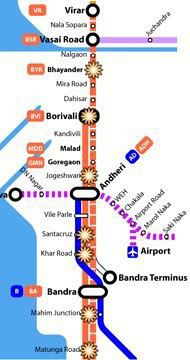
Le 7 juillet 2006, de 18h 24 à 18h35 (heure de pointe), 10 bombes ont explosé dans les compartiments mixtes de wagons de 1ère classe, dans de nombreuses gares ou très près, en divers points du Réseau Suburbain Ouest de Bombay, sur une distance de 25km, entre Mira Road et Matunga. Les bombes ont explosé à 18h24 (Santacruz, Khar Road et Bandra), 18h25 (Jogeshwari), 18h26 (Mahim Junction), 18h29 (Mira Road & Bhayandar). 18h30 (Matunga Road & Mahim Junction), 18h35 (Borivali). Dans cette dernière gare, une bombe a été désamorcée par la police (le chiffre 11 est donc important). Le Western Suburban Network, axe vital de la cité, transporte quotidiennement 4, 5 millions de Mumbaikars. Artère vitale, il relie la banlieue nord au quartier des affaires. (voir image attachée)
L’explosif employé était le RDX (cyclotrimethylenetrinitramine), communément considéré comme l’explosif militaire le plus puissant qui soit. Il a probablement été placé dans des sacs ou dans ces boites ou les Indiens mettent leur repas de midi ; le tout posé sur les compartiments à bagages situés au dessus des passagers. Il y avait au moins 5kg d’explosifs par explosion. Selon la police, au moins 20 terroristes se trouvaient dans les trains (2 par explosion), plus 6 personnes assurant la logistique à l’extérieur. Ils auraient choisi les wagons de 1ère classe parce qu’ils sont plus faciles d’accès, surtout quand on est chargé de 5kgs d’explosifs.
207 personnes ont été tuées et 714 blessées. On ne dénombre pas d’étrangers parmi eux. Cette fois c’est bien « Monsieur Tout Le Monde » qui est touché.
Le réseau suburbain, échine dorsale de la ville est également son talon d’Achille, car les trains surpeuplés sont une cible de choix.
L’absence criante de système de sécurité basique, comme des caméras dans les gares, fait scandale dans la presse. Sur le Réseau Suburbain Ouest, après 3 ans de lenteur bureaucratique, on commençait à peine à les installer en juillet, au moment même des attentats. Cela n’aura coûté qu’un crore (10 millions de roupies, soit 166.000 euros). Le manque de coordination entre les services de renseignements ferroviaires et ceux de l’Etat a également été pointé du doigt.
Une indemnité d’un lakh (100.000 roupies soit 1666 euros) a été promise par le Premier Ministre du Maharastra aux proches des victimes. Les Chemins de Fer Indiens ont annoncé, quant à eux, 5 lakhs d’indemnité et fait une promesse d’emploi.
Anecdotes :
Mauvais Anniversaire : Le matin de son 59ème anniversaire, l’ingénieur des chemins de fer Namdev Bhagat a quitté le domicile familial en promettant à sa femme et ses deux filles de revenir tôt pour les emmener faire des achats. Sa femme l’a attendu plus d’une heure le soir à la gare de Malad et a fini par se résigner à rentrer à la maison. Ce n’est qu’à 23h que la police de Mahim l’a prévenue que son mari avait péri dans l’explosion. Son corps ne portant aucune blessure, l’on suppose qu’il a succombé à un infarctus.
On se sauve comme on peut : Porgo Nadar, 33 ans, qui se rendait à Malad a soudain entendu un grand bruit. Un instant après il a senti ses jambes saigner. Il est tombé du train et a perdu connaissance pendant quelques minutes. Quand il s’est réveillé, il a couru hors de la gare et des gens l’ont aidé à se rendre à l’hôpital débordé par des cas plus sérieux que le sien. Lakshman Parab, 33 ans, était dans le « Borivali Fast » quand le train quittait Bandra. Lors de l’xplosion, Lakshman a reçu des éclats de métal dans la figure, et s’est mis à saigner abondamment. Il a réussi à sauter du train, et quelqu’un qui se rendait à l’Hôpital Bhabha l’y a emmené. On lui a mis des bandages mais on ne lui a pas retiré les éclats de métal immédiatement.
1ère fois en 1ère classe : Kirtibhai Shah, 65 ans, avait acheté le premier billet de 1ère classe de sa vie grâce à son fils Bijal. S'il était monté en seconde, comme à l’accoutumée, il serait encore en vie. Son corps était dans un tel état que ses proches n’ont pas pu le ramener à la maison. S.O.S. Boucherie : Daksha Modi, 45 ans, employée de l’Indian Bank, se trouvait dans un train qui a explosé en quittant la gare de Mahim. En recherchant son beau frère, qui voyageait dans le compartiment voisin, elle n’a trouvé que bras démembrés, yeux exorbités et intestins pendants. Des tas de gens étaient coincés sous le toit effondré et sous les sièges. Oubliant sa tragédie personnelle, elle s’est précipitée à leur aide. Beaucoup de restes humains ont été reconnus par les familles grâce à une chaussure ou un autre objet personnel, les visages étant souvent brûlés, et les morceaux de corps ayant perdu leurs vêtements.
Capitale de l’entraide et du système D:
Même si l’on pouvait craindre une explosion de haine vengeresse une semaine après les émeutes interreligieuses de Bhiwandi, de très nombreux Mumbaikars ont porté secours aux passagers, leur fournissant eau et nourriture, ont aidé les secouristes à transporter les blessés, les agents à réguler la circulation, et les familles à reconnaître les restes de leurs proches. Des enfants ont fait preuve d’un civisme peu ordinaire en nourrissant et en abreuvant des personnes affamées et assoiffées. Des particuliers, de l’automobiliste au cycliste, et même des taxis, ont ramené gratuitement des centaines de milliers de personnes dans leurs banlieues. Beaucoup ont pédalé gracieusement sur plus de 15km, de Matunga à Borivali. En l’absence de la Police Ferroviaire, les riverains des gares ont spontanément protégé les corps et les biens des victimes. Dans les hôpitaux, de bons samaritains ont apporté à manger aux proches des victimes et leur ont tenu compagnie. Des volontaires ont convoyé des blessés par tous les moyens en payant le transport. Des jeunes ont ridiculisé les agents de la circulation en guidant les automobilistes vers les rues les moins embouteillées. L’on a aussi vu des gens brandir des écriteaux annonçant : « N’importe qui peut venir passer la nuit chez nous. Gratuit. ». Ce jour là, la religion n’avait plus aucune importance. Quand la police est parvenue sur les lieux des attentats : beaucoup de blessés étaient déjà à l’hôpital et leurs familles averties.
Liste des précédents attentats à Bombay :
Bombay, surnommée « Maximum City », victime de sa gloire (son dynamisme, son pouvoir économique, son image mythique) est devenue une cible de choix pour les terroristes. Elle les attire aussi parce qu’elle est très « médiatique » et que la sensibilité interreligieuse y est à fleur de peau.La ville n’avait pas besoin d’un nouvel attentat après les émeutes interreligieuses de Bhiwandi (à 40km) et les inondations, survenues une semaine plus tôt.
Voici une liste des attentats déjà commis dans cette ville depuis 1993:
13 mars 1993 : 13 explosions visant notamment la Bourse, des hotels, des banques, et Air India. Elles arrivaient à la suite de longues émeutes interreligieuses, commanditées par le parrain Dawood Ibrahim. 257 morts, 1400 blessés. Jugement en instance.
jan/fév 1998 : explosions dans des trains à Kanjumag, Goregaon & Malad 4 morts, 30 blessés. 11 personnes emprisonnées.
2 décembre 2002 : explosion dans un bus à Ghatkopar 4 morts, 49 blessés. 8 accusés acquittés faute de preuves.
6 décembre 2002 : explosion dans les conduits de la climatisation d’un resto de la gare de Bombay. 25 blessés.
28 janvier 2003 : explosion visant la communauté gujarati près de la gare de Vile Parle. La bombe était sur un vélo, un jour où les magasins étaient fermés. 1 mort, 25 blessés.
14 mars 2003 : explosion dans un compartiment féminin de 1ère classe d’un train, entre le terminus de Chhatrapati Shivaji et la gare de Karjat. 12 morts, 70 blessés. Œuvre du Students’ Islamic Movement of India.
25 août 2003 : explosions à la Porte de l’Inde et au Bazar Zaaveri, à l’heure du déjeuner. Les bombes étaient dans des taxis. 52 morts, 100 blessés.
"Signes avant-coureurs" des attentats de 2006 en divers points de l’Etat du Maharastra:
6 janvier 2006 : 20 détonateurs saisis sur 3 jeunes cachemiris à Bombay 30 janvier 2006 : 950g de poudre et 2 révolvers saisis sur 2 personnes au terminus de Kurla.
9 mai 2006 : 13kg de RDX, 2000 cartouches et 10 AK-56 saisis à Aurangabad.
12 mai 2006 : des armes, 200 cartouches et 50 grenades saisies à Manmad.
14 mai 2006 : 30kg de RDX, 3 AK-47 et 1000 cartouches saisis à Malegaon
1er juin 2006 : Attaque du Quartier Général du RSS (Rashtriya Swayamsevak Sangh – Union des Volontaires Nationaux - mouvement nationaliste hindou) de Nagpur. 6, 5kg de RDX, 12 grenades et 3 AK-56 saisis.
(Sources: India Today n° du 24 juillet 2006 & Wikipédia)
Autopsie d’un attentat :
Le 7 juillet 2006, de 18h 24 à 18h35 (heure de pointe), 10 bombes ont explosé dans les compartiments mixtes de wagons de 1ère classe, dans de nombreuses gares ou très près, en divers points du Réseau Suburbain Ouest de Bombay, sur une distance de 25km, entre Mira Road et Matunga. Les bombes ont explosé à 18h24 (Santacruz, Khar Road et Bandra), 18h25 (Jogeshwari), 18h26 (Mahim Junction), 18h29 (Mira Road & Bhayandar). 18h30 (Matunga Road & Mahim Junction), 18h35 (Borivali). Dans cette dernière gare, une bombe a été désamorcée par la police (le chiffre 11 est donc important). Le Western Suburban Network, axe vital de la cité, transporte quotidiennement 4, 5 millions de Mumbaikars. Artère vitale, il relie la banlieue nord au quartier des affaires. (voir image attachée)
L’explosif employé était le RDX (cyclotrimethylenetrinitramine), communément considéré comme l’explosif militaire le plus puissant qui soit. Il a probablement été placé dans des sacs ou dans ces boites ou les Indiens mettent leur repas de midi ; le tout posé sur les compartiments à bagages situés au dessus des passagers. Il y avait au moins 5kg d’explosifs par explosion. Selon la police, au moins 20 terroristes se trouvaient dans les trains (2 par explosion), plus 6 personnes assurant la logistique à l’extérieur. Ils auraient choisi les wagons de 1ère classe parce qu’ils sont plus faciles d’accès, surtout quand on est chargé de 5kgs d’explosifs.
207 personnes ont été tuées et 714 blessées. On ne dénombre pas d’étrangers parmi eux. Cette fois c’est bien « Monsieur Tout Le Monde » qui est touché.
Le réseau suburbain, échine dorsale de la ville est également son talon d’Achille, car les trains surpeuplés sont une cible de choix.
L’absence criante de système de sécurité basique, comme des caméras dans les gares, fait scandale dans la presse. Sur le Réseau Suburbain Ouest, après 3 ans de lenteur bureaucratique, on commençait à peine à les installer en juillet, au moment même des attentats. Cela n’aura coûté qu’un crore (10 millions de roupies, soit 166.000 euros). Le manque de coordination entre les services de renseignements ferroviaires et ceux de l’Etat a également été pointé du doigt.
Une indemnité d’un lakh (100.000 roupies soit 1666 euros) a été promise par le Premier Ministre du Maharastra aux proches des victimes. Les Chemins de Fer Indiens ont annoncé, quant à eux, 5 lakhs d’indemnité et fait une promesse d’emploi.
Anecdotes :
Mauvais Anniversaire : Le matin de son 59ème anniversaire, l’ingénieur des chemins de fer Namdev Bhagat a quitté le domicile familial en promettant à sa femme et ses deux filles de revenir tôt pour les emmener faire des achats. Sa femme l’a attendu plus d’une heure le soir à la gare de Malad et a fini par se résigner à rentrer à la maison. Ce n’est qu’à 23h que la police de Mahim l’a prévenue que son mari avait péri dans l’explosion. Son corps ne portant aucune blessure, l’on suppose qu’il a succombé à un infarctus.
On se sauve comme on peut : Porgo Nadar, 33 ans, qui se rendait à Malad a soudain entendu un grand bruit. Un instant après il a senti ses jambes saigner. Il est tombé du train et a perdu connaissance pendant quelques minutes. Quand il s’est réveillé, il a couru hors de la gare et des gens l’ont aidé à se rendre à l’hôpital débordé par des cas plus sérieux que le sien. Lakshman Parab, 33 ans, était dans le « Borivali Fast » quand le train quittait Bandra. Lors de l’xplosion, Lakshman a reçu des éclats de métal dans la figure, et s’est mis à saigner abondamment. Il a réussi à sauter du train, et quelqu’un qui se rendait à l’Hôpital Bhabha l’y a emmené. On lui a mis des bandages mais on ne lui a pas retiré les éclats de métal immédiatement.
1ère fois en 1ère classe : Kirtibhai Shah, 65 ans, avait acheté le premier billet de 1ère classe de sa vie grâce à son fils Bijal. S'il était monté en seconde, comme à l’accoutumée, il serait encore en vie. Son corps était dans un tel état que ses proches n’ont pas pu le ramener à la maison. S.O.S. Boucherie : Daksha Modi, 45 ans, employée de l’Indian Bank, se trouvait dans un train qui a explosé en quittant la gare de Mahim. En recherchant son beau frère, qui voyageait dans le compartiment voisin, elle n’a trouvé que bras démembrés, yeux exorbités et intestins pendants. Des tas de gens étaient coincés sous le toit effondré et sous les sièges. Oubliant sa tragédie personnelle, elle s’est précipitée à leur aide. Beaucoup de restes humains ont été reconnus par les familles grâce à une chaussure ou un autre objet personnel, les visages étant souvent brûlés, et les morceaux de corps ayant perdu leurs vêtements.
Capitale de l’entraide et du système D:
Même si l’on pouvait craindre une explosion de haine vengeresse une semaine après les émeutes interreligieuses de Bhiwandi, de très nombreux Mumbaikars ont porté secours aux passagers, leur fournissant eau et nourriture, ont aidé les secouristes à transporter les blessés, les agents à réguler la circulation, et les familles à reconnaître les restes de leurs proches. Des enfants ont fait preuve d’un civisme peu ordinaire en nourrissant et en abreuvant des personnes affamées et assoiffées. Des particuliers, de l’automobiliste au cycliste, et même des taxis, ont ramené gratuitement des centaines de milliers de personnes dans leurs banlieues. Beaucoup ont pédalé gracieusement sur plus de 15km, de Matunga à Borivali. En l’absence de la Police Ferroviaire, les riverains des gares ont spontanément protégé les corps et les biens des victimes. Dans les hôpitaux, de bons samaritains ont apporté à manger aux proches des victimes et leur ont tenu compagnie. Des volontaires ont convoyé des blessés par tous les moyens en payant le transport. Des jeunes ont ridiculisé les agents de la circulation en guidant les automobilistes vers les rues les moins embouteillées. L’on a aussi vu des gens brandir des écriteaux annonçant : « N’importe qui peut venir passer la nuit chez nous. Gratuit. ». Ce jour là, la religion n’avait plus aucune importance. Quand la police est parvenue sur les lieux des attentats : beaucoup de blessés étaient déjà à l’hôpital et leurs familles averties.
Liste des précédents attentats à Bombay :
Bombay, surnommée « Maximum City », victime de sa gloire (son dynamisme, son pouvoir économique, son image mythique) est devenue une cible de choix pour les terroristes. Elle les attire aussi parce qu’elle est très « médiatique » et que la sensibilité interreligieuse y est à fleur de peau.La ville n’avait pas besoin d’un nouvel attentat après les émeutes interreligieuses de Bhiwandi (à 40km) et les inondations, survenues une semaine plus tôt.
Voici une liste des attentats déjà commis dans cette ville depuis 1993:
13 mars 1993 : 13 explosions visant notamment la Bourse, des hotels, des banques, et Air India. Elles arrivaient à la suite de longues émeutes interreligieuses, commanditées par le parrain Dawood Ibrahim. 257 morts, 1400 blessés. Jugement en instance.
jan/fév 1998 : explosions dans des trains à Kanjumag, Goregaon & Malad 4 morts, 30 blessés. 11 personnes emprisonnées.
2 décembre 2002 : explosion dans un bus à Ghatkopar 4 morts, 49 blessés. 8 accusés acquittés faute de preuves.
6 décembre 2002 : explosion dans les conduits de la climatisation d’un resto de la gare de Bombay. 25 blessés.
28 janvier 2003 : explosion visant la communauté gujarati près de la gare de Vile Parle. La bombe était sur un vélo, un jour où les magasins étaient fermés. 1 mort, 25 blessés.
14 mars 2003 : explosion dans un compartiment féminin de 1ère classe d’un train, entre le terminus de Chhatrapati Shivaji et la gare de Karjat. 12 morts, 70 blessés. Œuvre du Students’ Islamic Movement of India.
25 août 2003 : explosions à la Porte de l’Inde et au Bazar Zaaveri, à l’heure du déjeuner. Les bombes étaient dans des taxis. 52 morts, 100 blessés.
"Signes avant-coureurs" des attentats de 2006 en divers points de l’Etat du Maharastra:
6 janvier 2006 : 20 détonateurs saisis sur 3 jeunes cachemiris à Bombay 30 janvier 2006 : 950g de poudre et 2 révolvers saisis sur 2 personnes au terminus de Kurla.
9 mai 2006 : 13kg de RDX, 2000 cartouches et 10 AK-56 saisis à Aurangabad.
12 mai 2006 : des armes, 200 cartouches et 50 grenades saisies à Manmad.
14 mai 2006 : 30kg de RDX, 3 AK-47 et 1000 cartouches saisis à Malegaon
1er juin 2006 : Attaque du Quartier Général du RSS (Rashtriya Swayamsevak Sangh – Union des Volontaires Nationaux - mouvement nationaliste hindou) de Nagpur. 6, 5kg de RDX, 12 grenades et 3 AK-56 saisis.
(Sources: India Today n° du 24 juillet 2006 & Wikipédia)
Si tu ouvres tes yeux d'enfant, le voyage commence au seuil de ta maison
c'est un peu "saignant" tes anecdotes ! 😐
Chacun a raison de son propre point de vue, mais il n'est pas impossible que tout le monde ait tort.
Les attentats devaient l'être encore plus... 🤪 🏴☠️
Si tu ouvres tes yeux d'enfant, le voyage commence au seuil de ta maison
Bon, Nalesnik - je vois que ton message date du 14 septembre ... 2006.
Deux ans pile. Encore et encore des morts...
Attentats meutriers a Delhi, 14 sept 2008
Au moins 18 personnes ont été tuées samedi dans cinq attentats à la bombe quasi-simultanés dans plusieurs quartiers commerçants de la capitale indienne New Delhi, des actions revendiquées par un groupe islamiste indien déjà responsable d'attentats en juillet. Toutes les explosions criminelles sont survenues en l'espace de 45 minutes, à partir de 18h30, heure locale. Le groupe des Moudjahidine indiens a revendiqué dans un courrier électronique ces attentats, selon l'agence officielle Press Trust of India. Cette cellule islamiste indienne avait également revendiqué la série d'attentats à la bombe en juillet à Ahmedabad, dans l'ouest de l'Inde, qui avaient fait 45 morts. Deux de ces explosions ont secoué le coeur de New Delhi, Connaught Place, une majestueuse place circulaire composée de deux anneaux couverts d'arcades aux centaines de commerces. Là, deux autres engins explosifs ont été mis au jour et désamorcés à temps, selon la police. Un autre quartier commerçant, également prisé des touristes et des résidents étrangers, Greater Kailash a été frappé par deux déflagrations et la police cherchait des survivants dans un amas de motocyclettes et de vitres brisées de magasins et de véhicules. D'après un expert en explosifs, les bombes étaient bourrées de billes en acier "pour faire le plus de mal possible".
Attentats meutriers a Delhi, 14 sept 2008
Au moins 18 personnes ont été tuées samedi dans cinq attentats à la bombe quasi-simultanés dans plusieurs quartiers commerçants de la capitale indienne New Delhi, des actions revendiquées par un groupe islamiste indien déjà responsable d'attentats en juillet. Toutes les explosions criminelles sont survenues en l'espace de 45 minutes, à partir de 18h30, heure locale. Le groupe des Moudjahidine indiens a revendiqué dans un courrier électronique ces attentats, selon l'agence officielle Press Trust of India. Cette cellule islamiste indienne avait également revendiqué la série d'attentats à la bombe en juillet à Ahmedabad, dans l'ouest de l'Inde, qui avaient fait 45 morts. Deux de ces explosions ont secoué le coeur de New Delhi, Connaught Place, une majestueuse place circulaire composée de deux anneaux couverts d'arcades aux centaines de commerces. Là, deux autres engins explosifs ont été mis au jour et désamorcés à temps, selon la police. Un autre quartier commerçant, également prisé des touristes et des résidents étrangers, Greater Kailash a été frappé par deux déflagrations et la police cherchait des survivants dans un amas de motocyclettes et de vitres brisées de magasins et de véhicules. D'après un expert en explosifs, les bombes étaient bourrées de billes en acier "pour faire le plus de mal possible".
... merci marcomarco de parler de ces attentats sur le forum, car, comme d'habitude, les media français ne font que le minimum sur cette info... moi-même, je l'ai appris en regardant CNN-IBN (la CNN indienne, qui diffuse en streaming sur le net...), puis en lisant les éditions en ligne du Times Of India ou The Hindu...
parce que sur les sites des journaux français, il faut bien chercher ! peut-être une petite brève, bien après les résultats du foot, et l'affaire tapie...
(pour ce qui est de la boîte à blaireaux, ça fait bien longtemps que je ne me suis assis devant......)
😠😠😠
😠😠😠
Bonjour
21 morts, d'après CNN.
Grand silence sur les sites d'info français...
Comme d'habitude, les médias français ont mis en filigramme cette info. Je l'ai appris sur france info hier soir.
Maintenant, je préfère m'informer via internet où les journaux car les infos à la TV c'est tout sauf de l'information. il préfère nous bassiner pendant 20 minutes de la venue du Pape en France que de parler de qui fait malheureusement l'actualité.
Ma galerie de photos
https://www.flickr.com/photos/31509204@N06/albums
J'ai vu un apparté de 10 secondes au journal de 20h ce week-end, et je n'ai pas pensé à regarder les journaux indiens en ligne, car en écoutant distraitement ces 10 secondes, on n'avait pas l'impression de quelque chose de très important. C'est ça la désinformation!
Si tu ouvres tes yeux d'enfant, le voyage commence au seuil de ta maison
Je suis à Pahar Ganj depuis hier, nous sommes arrivés deux heures avant les bombes. 3 lieux ont été visés : Le parc au centre de Connaught Place, le marché de Karol Bagh et un lieu dans Kailash, une bombe a été désamorcée à l'India Gate. Aujourd'hui, il n'y a pas de tension dans les rues, d'ailleurs, c'est la cloture du festival de Ganesh et les chars ont quand même défilé avec moults pétards ( !!) . Le bilan est quand même lourd 23 morts et une centaine de blessés. Les infos ici tournent à fond sur le sujet . Les attentats sont revendiqués par les Mujahidins Indiens. Voilà pour ce que je sais.
Cordialement sous la chaleur caniculaire de Delhi.
Isa
Et dire que dans un film indien tout récent intitulé Black & White, le héros, un universitaire musulman spécialiste de la culture hindoue, déjouait un projet d'attentat au centre de Delhi, monté par un groupe de jeunes islamistes, dont il arrivait à retourner le chef...
Ne dit-on pas que les artistes prêchent dans le désert...?
Si tu ouvres tes yeux d'enfant, le voyage commence au seuil de ta maison
Et dire que dans un film indien tout récent intitulé Black & White, le héros, un universitaire musulman spécialiste de la culture hindoue, déjouait un projet d'attentat au centre de Delhi, monté par un groupe de jeunes islamistes, dont il arrivait à retourner le chef...
Ne dit-on pas que les artistes prêchent dans le désert...?
pire...ici parfois ils ont droit au lynchage orquestré avec grand pompe.
Bon, la vie continue...pour ceux qui l'ont encore
Om Shanti, Shanti

Ne dit-on pas que les artistes prêchent dans le désert...?
pire...ici parfois ils ont droit au lynchage orquestré avec grand pompe.
Bon, la vie continue...pour ceux qui l'ont encore
Om Shanti, Shanti
Tout ça me fait penser qu'un nouveau film bollywood, Mumbai Meri Jaan (Bombay Ma Vie), raconte l'histoire de personnages ordinaires au moment des attentats de Bombay dont on parlait au tout début de cette discussion.
La présence d'acteurs tels qu'Irfan Khan (The Namesake) et Soha Ali Khan (Rang de Basanti) laisse espérer que le film soit bon.
Si tu ouvres tes yeux d'enfant, le voyage commence au seuil de ta maison
27 septembre 2008 - 17:26
Inde: un attentat à New Delhi tue deux enfants et fait 18 blessés New Delhi - Deux enfants ont été tués et 18 personnes blessées dans un attentat à la bombe sur un marché bondé du sud de la capitale indienne New Delhi. L'attaque, qui n'a pas été revendiquée, intervient deux semaines après des attentats islamistes dans cette ville.
L'explosion s'est produite en début d'après-midi devant un magasin d'électronique du marché de Mehrauli, dans le sud de cette mégalopole de 14 millions d'âmes. Les commerces étaient pleins à craquer à l'approche de fêtes musulmanes et hindoues.
"Deux hommes casqués et vêtus de jeans et de T-shirts noirs sont arrivés sur une motocyclette et ont jeté un sac contenant une bombe", a expliqué le commissaire adjoint de la police municipale.
"Un garçonnet âgé de 10 ans a voulu leur rendre le sac, mais les motocyclistes se sont enfuis et le paquet a explosé, tuant l'enfant sur le coup", a-t-il dit. Une petite fille a aussi perdu la vie, selon un autre responsable de la police. Parmi les 18 blessés, trois se trouvent dans un état grave.
L'Inde est le théâtre depuis novembre 2007 d'une vague d'attentats perpétrés par les Moudjahidine indiens, un groupe islamiste local, qui ont fait au total quelque 150 morts, dont 24 il y a exactement deux semaines dans des quartiers touristiques et commerçants de New Delhi.
PS Encore cette semaine les militaires avait tué qqs personnes dans le quartier musulman. En les connaissant, il est( peu probable que les victimes etaient des "terroristes" ...
Inde: un attentat à New Delhi tue deux enfants et fait 18 blessés New Delhi - Deux enfants ont été tués et 18 personnes blessées dans un attentat à la bombe sur un marché bondé du sud de la capitale indienne New Delhi. L'attaque, qui n'a pas été revendiquée, intervient deux semaines après des attentats islamistes dans cette ville.
L'explosion s'est produite en début d'après-midi devant un magasin d'électronique du marché de Mehrauli, dans le sud de cette mégalopole de 14 millions d'âmes. Les commerces étaient pleins à craquer à l'approche de fêtes musulmanes et hindoues.
"Deux hommes casqués et vêtus de jeans et de T-shirts noirs sont arrivés sur une motocyclette et ont jeté un sac contenant une bombe", a expliqué le commissaire adjoint de la police municipale.
"Un garçonnet âgé de 10 ans a voulu leur rendre le sac, mais les motocyclistes se sont enfuis et le paquet a explosé, tuant l'enfant sur le coup", a-t-il dit. Une petite fille a aussi perdu la vie, selon un autre responsable de la police. Parmi les 18 blessés, trois se trouvent dans un état grave.
L'Inde est le théâtre depuis novembre 2007 d'une vague d'attentats perpétrés par les Moudjahidine indiens, un groupe islamiste local, qui ont fait au total quelque 150 morts, dont 24 il y a exactement deux semaines dans des quartiers touristiques et commerçants de New Delhi.
PS Encore cette semaine les militaires avait tué qqs personnes dans le quartier musulman. En les connaissant, il est( peu probable que les victimes etaient des "terroristes" ...
Terrible mois de septembre pour New-Delhi!
J'avoue que tous ces événements m ont donné a réfléchir... Je devais partir le 12 octobre pour New-Delhi et les 5 (!) attentats simultanés a la mi-septembre ont presque eu raison de moi.
Ce dernier ne me rassure pas plus.
Pourtant l'envie est plus forte...
J'ai quand même préféré annuler les billets... pour en reprendre d'autres mais direction le sud.(Atterrissage a madras et direction le Kerala) L atmosphère y semble plus calme même si on est a l abri de rien...ça me parait être un meilleur compromis.
J'espère bien que cette initiation me donnera encore plus envie d'y retourner pour visiter le nord mais en des temps plus sereins...
J'avoue que tous ces événements m ont donné a réfléchir... Je devais partir le 12 octobre pour New-Delhi et les 5 (!) attentats simultanés a la mi-septembre ont presque eu raison de moi.
Ce dernier ne me rassure pas plus.
Pourtant l'envie est plus forte...
J'ai quand même préféré annuler les billets... pour en reprendre d'autres mais direction le sud.(Atterrissage a madras et direction le Kerala) L atmosphère y semble plus calme même si on est a l abri de rien...ça me parait être un meilleur compromis.
J'espère bien que cette initiation me donnera encore plus envie d'y retourner pour visiter le nord mais en des temps plus sereins...
moi, j'arrive a Delhi le 15 novembre. Un jour il faudra mourir quand meme, on n'est pas eternel.
Biern sur, chaqu'un va dire "j'espere que ..." etc. En Inde ce mot n'a pas la meme signification et je partage leur avis.
Sinon, il y a des attentats un peu partout : Delhi, Mumbai, Varanasi, meme Bangalore.
Il y a aussi des trains et des bus qui tombent dans le precipice, il y a des camions qui roulent comme des fous, il y a des cobras dans l'herbe, des leopards - meme en ville la nuit. Il y a des requins juste pres de la plage, des centrales nuclaires a 2 km de l'hotel (miam, les poissons et crevettes !)
Y a de quoi avoir peur ...
salut
avez vous remarqué que ça pète de partout en ce moment Islamabad hôtel Mariott, Lahore, New Delhi, Damas aujourd'hui, kaboul toutes les semaines, Bagdad la semaine dernière En Inde, depuis plusieurs mois, bcp plus fréquent qu'auparavant. c'est préoccupant
heu à mon avis tu risques plus t'as life sur la route en inde que de sauté sur bombe !
http://mimagangotry.spaces.live.com/
un peu de pub de mon site perso ...rien a vendre juste signer des pétitions !
salut bonne route .
Myriam
tchélo pakistan!!!!
http://mimagangotry.spaces.live.com/
salut
je ne faisais pas référence à nous mais aux locaux que ce soit au Pakistan et en Inde.
Log in first, then come back to this page.
You might also like
More discussions
Bonjour à tous et toutes!
J‘envisage une petite visite à Pokhara vers mi février 2027 (ce sera ma 4ème fois au Népal …. en plus de 40 ans !). Je voudrais réserver une chambre à l‘avance plutôt que de chercher en arrivant. J‘ai cherché un peu sur Bxxking.com et je vois bcp d‘offres. J‘ai l‘habitude de vérifier un peu les abords des endroits proposés, histoire de ne pas tomber dans des environs peu ragoutants et / ou éloignés de tout.
Donc, je vois pas mal d‘offre aux abords du lac (Lake Side ?) mais à chaque fois que je vérifie à quoi ca ressemble je trouve que les rues sont très peu attirantes. C‘est assez genre chantier et constructions à droite et à gauche… Rien à voir avec Bhaktapour (par example) ou même Thamel, ou les rues me semblent bcp plus agréables.
Qqn pourrait me conseiller ?
Aussi, je n‘ai pas l‘impression que Pokhara vaille vraiment une visite de plusieurs jours. Le lac, d‘accord, mais une fois qu‘on l‘a vu : quoi d‘autre ?
Hi there,
After a false start in March 2026 due to my Qatar flights being canceled, I’m rescheduling a trip to Kerala for November. Back in March, I’d booked and paid for the 2-day/1-night trek: Tiger Trail in Periyar National Park. Then I read some terrible reviews about the park. On VF, the reviews are old and don’t mention the Tiger Trail. So, before I book again (I’ve got time), has anyone done it recently and can share their experience and impressions? I’m specifically talking about the Tiger Trail, not the park’s jeep/boat activities, which seem more like an amusement park. Thanks
Hi everyone,
I’m heading to Assam and I’d like to know what type of electrical adapter I need—is it M or D, or both?
Thanks
Hello,
I’m heading to Sri Lanka for 3 weeks in July with my two 11-year-old kids, and I’m wondering about how to organize the trip. We’re used to traveling on the go, staying 1 to 2 or 3 nights per place depending on how we feel.
Do you recommend planning the itinerary and booking accommodations in advance to save time once we’re there? Or is it pretty easy to organize everything as we go without any issues?
Same question for activities: Should we book safaris and tours ahead of time, or can we arrange them easily on the spot? Is there a risk of not getting a spot, for example, to visit a park since we’ll be there in July?
We’ll be using local transport (train, VTC via PickMe, tuk-tuk) to get from one place to another.
In short: Are there any must-book things we should reserve now? So far, I only have the flight tickets!
Thanks in advance for your help! 😊
I’m heading to Sri Lanka for 3 weeks in July with my two 11-year-old kids, and I’m wondering about how to organize the trip. We’re used to traveling on the go, staying 1 to 2 or 3 nights per place depending on how we feel.
Do you recommend planning the itinerary and booking accommodations in advance to save time once we’re there? Or is it pretty easy to organize everything as we go without any issues?
Same question for activities: Should we book safaris and tours ahead of time, or can we arrange them easily on the spot? Is there a risk of not getting a spot, for example, to visit a park since we’ll be there in July?
We’ll be using local transport (train, VTC via PickMe, tuk-tuk) to get from one place to another.
In short: Are there any must-book things we should reserve now? So far, I only have the flight tickets!
Thanks in advance for your help! 😊
Hi there, I think you're on the right track—you plan the itinerary and book the rooms in advance, and that’s it.
Not only do you save time, but you also know where you’ll be staying each night. Choosing well on Booking (or elsewhere) is actually a pleasure!
For safaris, given the number of jeeps with drivers available, it’s unlikely you’ll be turned away... the real issue is more about the concentration of jeeps around the animals.
I travel like you do—train, bus, tuk-tuk, and sometimes taxi. Ride-hailing apps like PickMe and other VTCs are mostly in big cities.
For the mountain train, due to severe flooding, service was interrupted on the line between Kandy and Ella. Check ahead, because reservations for this train are very complicated, if not impossible.
For the Colombo/Kandy train, you reserve your seats by buying the ticket before boarding. In the south, no need to book in advance for trains.
In Sri Lanka, there’s always a solution for getting around—just ask your hosts. They have trusted contacts at their fingertips. But still, compare prices—😏 smart move!
I stick to booking my nights and keep pre-planned activities to a minimum.
For reservations you can’t skip, it’s the beach stays you’ll want to secure.
Hi there,
I’m trying to find out if it’s still possible to travel from Mumbai to Goa by ferry or any other sea route. My search results aren’t very clear, and if it *is* possible, I can’t figure out where to book... If anyone has any info, I’d really appreciate it—thanks in advance!
Have a great day,
Virginie
I’m trying to find out if it’s still possible to travel from Mumbai to Goa by ferry or any other sea route. My search results aren’t very clear, and if it *is* possible, I can’t figure out where to book... If anyone has any info, I’d really appreciate it—thanks in advance!
Have a great day,
Virginie
It seems there’s a ferry from Nagapattinam to Jaffna in India. Has anyone here taken this ferry before? My main question is how to get to Nagapattinam—by train, bus? And from which town further south, of course.
Thanks, friends!
Gaston
Gaston
Hi there.
We’re spending a month in Sri Lanka in March, and we’ll have one week left after leaving Polonnaruwa.
We’re torn between spending it in the Jaffna region or on the east coast between Batticaloa and Trincomalee.
We’re divers, so the east coast appeals to us for snorkeling, beaches, and lagoons—but it seems like late March might not be the best time for that coast. What do you think?
As for Jaffna, the culture of the region, its more authentic feel since it’s less touristy, and the offshore islands all appeal to us too—but it seems far from the rest of the country and harder to access.
We have to choose because we won’t be able to visit both sides, and I’d love to hear your thoughts.
Thanks, Marie
Hi there,
We just got back from a 2-week trip to Sri Lanka as a couple, and while planning the trip, we found plenty of info on the itinerary, places to see, and transportation, but much fewer clear reports on the actual budget to expect once there. Yet, that was an important point for us because we like to plan ahead a little before traveling.
So, we took the time to break down our complete budget after the trip. In our case, we spent around **930 € per person** for 2 weeks, being careful without depriving ourselves, mixing guesthouses, more comfortable hotels, quite a few activities, and even a private driver for part of the stay.
What we found interesting when crunching the numbers is that in Sri Lanka, it’s not necessarily meals or short trips that blow the budget, but rather flights, certain accommodations, cultural activities, and all those little expenses we sometimes forget, like tips.
If this can help other travelers get a better idea, we’ve put everything together on our blog with our experience, a detailed breakdown of expenses, and practical info on money while there, withdrawals, and tipping:
https://aventures-sans-mesaventure.com/budget-sri-lanka-pour-un-voyage-de-2-semaines/
Happy travels and enjoy your adventure! !
Hi everyone,
We’re a group of 5 heading to the Everest Base Camp trek in early April. We won’t have a porter or guide—we’re used to hiking independently and have already done the Langtang trek and the Annapurna Circuit (back in 2003!).
I’d love to know if it’s necessary to book lodges in advance or if we’ll easily find availability during this busy season. Also, will we find lodges all along the route between the main stopover villages, or only in those villages? I remember there were plenty everywhere on the Annapurna Circuit. We want to stay as flexible as possible.
Thanks for your feedback!
We’re a group of 5 heading to the Everest Base Camp trek in early April. We won’t have a porter or guide—we’re used to hiking independently and have already done the Langtang trek and the Annapurna Circuit (back in 2003!).
I’d love to know if it’s necessary to book lodges in advance or if we’ll easily find availability during this busy season. Also, will we find lodges all along the route between the main stopover villages, or only in those villages? I remember there were plenty everywhere on the Annapurna Circuit. We want to stay as flexible as possible.
Thanks for your feedback!
Hi there,
We’re heading to India in March 2026 and had planned to visit the parts of the Meenakshi Temple that are open to non-Hindus. However, the temple is currently undergoing major renovations—with all the towers covered in scaffolding—which might really take away from the experience and our stop in Madurai.
After some frustrating and vague online searches, and before we reshuffle our itinerary, I’d love to know—if possible—the most accurate expected completion date for the renovation work.
Thanks in advance.
We’re heading to India in March 2026 and had planned to visit the parts of the Meenakshi Temple that are open to non-Hindus. However, the temple is currently undergoing major renovations—with all the towers covered in scaffolding—which might really take away from the experience and our stop in Madurai.
After some frustrating and vague online searches, and before we reshuffle our itinerary, I’d love to know—if possible—the most accurate expected completion date for the renovation work.
Thanks in advance.
Hi there,
We’re planning a trip to Nepal and would love to do a helicopter tour to Everest with Namche Heli Service. Has anyone here used this agency? I can’t seem to find any reviews online. Thanks in advance!
Kloki
We’re planning a trip to Nepal and would love to do a helicopter tour to Everest with Namche Heli Service. Has anyone here used this agency? I can’t seem to find any reviews online. Thanks in advance!
Kloki
Hey fellow travelers,
I’m spending two weeks studying Hindi in the mornings in Delhi, in the Hauz Khas neighborhood. What spots should I check out in this area? Any cafés to chill at? How do I get to other parts of Delhi? By rickshaw? Is it easy to negotiate the price upfront?
Thanks in advance. 😊 Marlène
I’m spending two weeks studying Hindi in the mornings in Delhi, in the Hauz Khas neighborhood. What spots should I check out in this area? Any cafés to chill at? How do I get to other parts of Delhi? By rickshaw? Is it easy to negotiate the price upfront?
Thanks in advance. 😊 Marlène
Hi,
I’m leaving this Saturday for Northern India from 15/02 to 27/02. I’m planning to visit New Delhi, Agra, Chand Baori, Jaipur, Ranthambore, Bundi, Udaipur, and Jodhpur.
What’s the best way to get around? I was thinking of doing everything by train. Maybe taking the bus for some stretches?
As for renting a car with a driver, it seems expensive, so I’ve pretty much ruled that out. Unless someone’s got space for the same dates?
Thanks for your insights!
What’s the best way to get around? I was thinking of doing everything by train. Maybe taking the bus for some stretches?
As for renting a car with a driver, it seems expensive, so I’ve pretty much ruled that out. Unless someone’s got space for the same dates?
Thanks for your insights!
Hi everyone,
We’re heading out in March for this trek. We’re used to hiking and long-distance treks, but this’ll be our first time in Nepal.
QUESTION: People from Nepal are telling us it’s MANDATORY to have guides! Is this true, or is it just agencies trying to get work for their staff?
The Lonely Planet says: "In April 2023, the government announced that every trekker would need to hire the services of a porter or a licensed guide to obtain the TIMS permit. The law isn’t enforced, and by 2025, there were no longer any obligations for teahouse treks."
What do you think? What’s your experience? Thanks for your feedback.
We’re heading out in March for this trek. We’re used to hiking and long-distance treks, but this’ll be our first time in Nepal.
QUESTION: People from Nepal are telling us it’s MANDATORY to have guides! Is this true, or is it just agencies trying to get work for their staff?
The Lonely Planet says: "In April 2023, the government announced that every trekker would need to hire the services of a porter or a licensed guide to obtain the TIMS permit. The law isn’t enforced, and by 2025, there were no longer any obligations for teahouse treks."
What do you think? What’s your experience? Thanks for your feedback.
Hi,
I’d like to arrive in India at New Delhi Airport with some cash. I was wondering if the exchange rates at the airport are any good or if it’s best to avoid them (and exchange in the city instead?).
Thanks for your help.
NAMASTE NEPAL! PRACTICAL INFO AND EXPERIENCE FEEDBACK
Stay from March 25 to April 16, 2025
· Flight tickets Air India (via Delhi) (via Skyscanner) = 1130 € per person · Planned budget (and respected without too many restrictions and while buying a few small gifts) = 2000 € for the stay for two. Buses, taxis, and entrance fees to various sites represent a budget to consider. Meals are cheap. Drinks like beer/Coke, however, are not cheap and cost the equivalent of a meal. · Exchange rate of the rupee during our stay = 0.0064 € (the exchange rate is almost identical everywhere, including at the airport). · At the airport, purchase of two SIM cards (phone) = 1000 NPR x 2 for 28 days. · Kathmandu: we had booked the hotel upon arrival: Kathmandu Boutique Hotel (+977 015 357 446 – email: booking@kathmanduboutiquehotel.com), very well located in a quiet alley off the street, south of Thamel, a 10-minute walk from Durbar Square. A hotel like Nepal knows how to do, where tall people will have to duck. Night + breakfast = 18 € for two. Very warm welcome, great location, excellent value for money. · Bhaktapur: we had also booked a hotel for the end of our stay because the chance of the year 2025 made the Nepali New Year and Bisket Jatra particularly festive in Bhaktapur: Manju Baha Hotel School (+977 976 7234014 – email: manjubahahotel@gmail.com) located in an old monastery. "A social enterprise transforming an old monastery into a charming hotel, offering professional hospitality training to underprivileged Nepali youth." Night + breakfast = 32 € for two. Beautifully decorated room. Very warm welcome. Don’t miss the Changunarayan site (near Bhaktapur), it’s amazing. And if you’re lucky enough to be in Bhaktapur in mid-April for 3 days, there’s the Bisket Jatra festivities (Newari festival), joyful, noisy, fun, and wild… · Pokhara (hotel recommended by the Kathmandu hotel): Hotel Green Tara, Lakeside, 10th street, set back, quiet (Tel. +977 61 462698 – email: greentara_67@hotmail.com) · Trek permit (Lower Mustang, no need for an agency or guide, permits checked at Ghasa and Jomsom) = 2000 NPR per person (2 ID photos) · Bus Kathmandu/Pokhara and return = 2000 NPR per person · Bus Pokhara/Jomsom, 2 one-way tickets = 2800 NPR. · Taxi: negotiation with a driver we recommend, Vicky (+977 984 075 599). You explain what you want, negotiate the price, and he waits for you during the visit. Very charming, we used him several times. For example: departure from our hotel at 10 AM -> Boudhanath/Pashupatinath/Patan return at 5 PM to the hotel = 6500 NPR – Swayambhunath (round trip) = 1200 NPR · Site prices: https://ntb.gov.np/plan-your-trip/before-you-come/heritage-site-entry-fees o Visitor Pass for Kathmandu Durbar Square (for the duration of the stay, show your visa) = 1000 NPR per person (1 ID photo) o Bhaktapur Durbar Square (old town) = 1800 NPR per person o Patan = 1000 NPR per person o Swayambhu Stupa = 200 NPR per person o Boudha Stupa = 200 NPR per person o Pashupatinath Temple = 1000 NPR per person (interesting to take a guide) o Changunarayan Temple (6 km north of Bhaktapur) = 400 NPR per person o Mountain Museum in Pokhara = 750 NPR per person · E-cigarettes: e-cigarettes are banned in India and confiscated whether they’re in carry-on or checked luggage. On the way there, we had kept them in our carry-on, they were confiscated in Delhi. On the way back, learning from our previous experience, we put them in our checked luggage. Someone came to get us to take them out of our bags and confiscate them… You can find e-cigarettes and products in Kathmandu.
* * *
I’m 74 years old. I went to Nepal in 1982, 1983, and the last time in 1986. I wanted to introduce this beautiful and endearing country to my husband, and it was… now or never. So we decided it was now.
I knew the trek starting from Pokhara: Naudanda/Birethanti/Ghorepani/Tatopani/Kalopani. There was no way I was going to do that trek, especially the 1000-meter staircase to reach Ghorepani… You have to stay humble with age.
Back then, the road didn’t exist. I didn’t consider, with the construction of this road (NH48) along the western bank of the Kali Gandaki, doing a trek along a windy and dusty road. Was there an alternative hiking trail on the eastern bank? No one answered my question on VoyageForum, so I did my research online. And I found this site: "Andrées de Ruiter and Prem Rai - Trekking the Annapurna Circuit, including the new NATT trails that avoid the road - A guide to one of the most beautiful trekking regions in Nepal and the world (2011) - NATT = New Annapurna Trekking Trail".
Phew! A solution was emerging. This circuit from 2011 wasn’t fully marked. The idea was to go from Jomsom to Tatopani, so we needed to make sure the path was well-marked all the way, which we did, and the path exists, marked in red and white!
So, with the walking times information, we built our 8-day circuit:
· Jomsom/Thinigaon · Thinigaon/Chimang · Chimang/Saura · Saura/Kokhetanti · Rest day or, if in good shape: loop to Sekong Lake · Kokhetanti/Jhipra Deurali · Jhipra Deurali/Kopchepani · Kopchepani/Tatopani
It’s a senior trek, after all. So the walking times noted on the sites indicated 3 hours or even 4 hours for the two longest stages. That pace suited us fine.
On March 29, we left Kathmandu (1400m), after visiting the must-see sites, by bus to Pokhara: 200 km and 8.5 hours on a chaotic road under construction. I had a memory of Pokhara where it was the first city where you could see the Himalayan range, especially Machhapuchhare. But the pollution is such, the dust raised by traffic and construction, that no horizon is visible except the first hills around Pokhara.
We stayed 24 hours in Pokhara (820m), and on March 31, we left our luggage at the hotel and set off with our lightest backpacks: change of clothes, toiletries, first aid kit, anti-chafing cream, water bottle, sleeping bag liner, and light shoes for the stages.
We took the bus to Jomsom: 160 km/7.5 hours including stops for bathroom breaks, tea, and lunch. The road is nothing but a chaos of potholes, landslides, construction, dust, rebuilding, and mudslides. In Ghasa, the bus stops, and we’re told we’re at a checkpoint and that the two foreigners in the bus, my husband and I, need to have our permits checked, which takes a few minutes. The driving is rock-and-roll, surprising, and courteous. The drivers have their codes, and on these improbable roads, they’re virtuosos.
We could have chosen the plane, but several reasons dissuaded us: if there’s too much wind, the planes don’t take off; personally, I wasn’t reassured about landing in Jomsom, and this transport has a cost.
We arrived around 2 PM in Jomsom (2720m), and despite the early wake-up, the nearly 8 hours on the bus, and the altitude, we decided to head straight to Thinigaon (2840m). At the Jomsom checkpoint, they told us it was a 30-minute walk. Great! Except we took an hour and a half on an uphill road, bent over to fight a strong wind. But the Himalayan range is there! The Dhaulagiri, the Nilgiri, the Annapurnas as a reward.
In Thinigaon, we found a room at the "Nilgiri View Hotel" run by a didi (big sister in Nepali). From the lodge’s roof, she proudly showed us the different peaks surrounding the village and told us, worried, that it hadn’t snowed here for 3 years. She said there are very few tourists, that the season is rather in September/October/November. It seems there’s not a soul in this village, yet mules pass through the narrow street paved with large flat stones, their bells ringing. We dine at 6 PM and go to bed… Room = 1200 NPR and dinner, breakfast, and drinks = 2560 NPR.
On April 1, we set off at 9 AM, not for Chimang as planned but for Marpha! The didi from the Thinigaon lodge had said it was a 3-hour walk. The first part of this stage is attractive, the mountains are magnificent and imposing, the landscape is superb, there’s no one around, a feeling of being "alone in the world." We follow Dhumbra Tal, this small green lake. The path is a rocky track that climbs steeply. Then, around a hill, we start the big descent that joins the Kali Gandaki. We face the wind head-on, and the violent gusts take our breath away, throw us off balance, and envelop us in dust. We see the road on the other side of the Kali Gandaki. We arrive in the village of Chhairo at 2 PM, completely exhausted and with blistered feet, after 5 hours of walking instead of the planned 3.5 hours.
We’re welcomed by the village nurse, who tells us there’s a lodge in the village. Chhairo is a Tibetan village, a 20-minute walk from Marpha (according to the locals, multiply by 2 or even 3 for us…). We’re going to revise our trek plan and, first of all, spend the night in Chhairo.
The lodge is quite pleasant, and Karma, the hostess, is very friendly. She asks about our plans and suggests we stay in Chhairo the next day, from where we can visit Marpha and also Chimang, a 1-hour walk away, in light mode, meaning without backpacks. She invites us to participate in a village ceremony the next evening.
We immediately accept the proposal, as our feet need rest and the welcome is so warm… Dinner and bed!
We reworked our trek plan, which was too ambitious for our untrained bodies and, let’s face it… no longer in our first youth. In the initial plan, we thought there wouldn’t be too much elevation gain following the Kali Gandaki, but checking the map, we realize there might be significant elevation changes between Sauru and Sirkung. So we plan:
· Tomorrow: visit Marpha (2670m) and Chimang (2744m) · April 3: bus from Chhairo (2700m) to Kalopani (2530m) and continue on foot to Ghasa (2010m) · April 4: Ghasa/Pairataplo (1940m) · April 5: Pairatapla/Gadpar (1580m) · April 6: Gadpar/Narchyang (1510m) · April 7: Narchyang/Tatopani (1190m) · April 8: return to Pokhara.
Normally, it’s all downhill…
April 2, a rest day then… We set off in the morning to explore Marpha. We have to take a temporary bridge because the suspension bridge is closed due to road construction. We join the road and arrive in Marpha, a village famous for its apple orchards, brandy, cider, and apple juice production. This village is magnificent with its stone houses and monastery clinging to the hillside. The road construction spared it. There are people, but very few Western tourists.
We have lunch in Marpha and go back through Chhairo to take the path to Chimang. We cross a fragrant pine forest and find the rocky path; the landscape is splendid. We walk quietly, passing peaceful buffaloes and cows, and arrive at the foot of a stone staircase… 275 steps (which we counted on the way back) leading us to the village of Chimang. Chimang is an isolated Newari village that seems a bit desolate. Despite the slopes, there are crops on every little bit of land. Thankfully, we changed our initial program because there’s no lodge in this village, contrary to what we saw on a map… We wander through the village, which seems very deserted, have coffee in a house from another world, and then head back to Chhairo.
A rest day? = 5 hours of walking!!
Dinner and village ceremony. From what we understand, this ceremony is in honor of the Dalai Lama. Men, women, and children in traditional costumes gather twice a month; they dance, make, and offer small sweet cakes with Tibetan tea (made from tea, yak butter—often rancid—water, and salt). Surprising for first-timers…
Around 10 PM, we leave the ceremony; tomorrow morning, we need to be on the roadside by 7 AM to catch the bus to Kalopani…
This village of Chhairo is very pleasant and welcoming, no tourists, just two motorcyclists who arrived in the evening, one of whom participated in the ceremony and discreetly poured his Tibetan tea outside.
Lodge: "Norsang Tibetan Guesthouse and Restaurant". Total bill for 2 nights, 2 dinners, 2 breakfasts, and drinks = 8000 NPR.
April 3: bus from Chhairo to Kalopani, about 1.5 hours for the 20 km (200 NPR per person). We descend on the right bank of the Kali Gandaki. We find the red and white markings to resume the trek toward Ghasa. We’re in a fragrant pine forest, the Dhaulagiri on one side and the Annapurnas on the other, magnificent, and the path is pleasant and easy. We get a bit lost in this forest, always looking for the markings. Near Lete, two trekkers pass us, and we meet them again a little further on with two very young children, to whom we give the 2 hard-boiled eggs I didn’t eat this morning. They accepted them without hesitation.
We arrive in a village and ask for directions to Ghasa. The young girls point the way. But we come across a forest being logged, trees cut in all directions. We turn back and ask for confirmation. They confirm… But the two young girls catch up with us and clear the way. We have to step over, go around, and cross the felled trees, with no indication at all. Through this pick-up sticks of felled trees, the girls lead us to the top of a stone staircase, indicating that was the path. It’s the only place where we saw rhododendrons in bloom.
We descend the staircase. At the bottom, to the left, there’s a bridge to go toward Choyo, and to the right, a path to Ghasa. We take the right path and join the road. We should normally find the red and white markings, but we don’t… So we continue on the western bank road of the Kali Gandaki.
A little before the village of Misi, we see fumaroles on the opposite bank that seem to come from the ground. We don’t understand. We stopped to eat in the village of Misi (noodle soup = 600 NPR), but it’s hard to communicate with the elderly people running the guesthouse.
We continued on the road, not finding the marked path parallel to the road. Landslides, both on the left and right banks, seem to have taken over the marked routes. It’s a place where the Kali Gandaki gorge narrows, and on the opposite bank, the mountain smokes more and more, and we now hear the crackling of fire. Across from us, the mountain is burning… Our initial plan had us passing on that burning bank right now…
We arrive in Ghasa at 3:30 PM, a 6.5-hour stage but with a 1-hour stop at noon. We’re at the "Florida Guesthouse and Restaurant." From our room, we see the mountain smoking on the other side of the river, and at night, we see the flames. In this village, posters show Himalayan eagles and vultures that seem to be protected species. Indeed, we saw (and heard) 3 eagles circling today.
April 4 – Today, heading to Pairothapla or Kopchepani depending on our feet, accommodation options, and simply our desires.
No more smoke on the mountain this morning. It’s chilly, 7:45 AM, the sky is clear, just a smell of smoke outside.
Price of the lodge = 1000 NPR for the night + 3580 NPR for meals.
We cross Ghasa, which stretches over more than a kilometer. We have a drink at the last guesthouse in the village, and the didi, when she learns our destination, tells us to be careful because the villages we’re going to aren’t safe. Should we distribute our rupees in different pockets? Nah, we kept going.
At the exit of Ghasa, we find the red and white markings and take the suspension bridge to cross the boiling waters of the Kali Gandaki. The passage is impressive because the river is tumultuous. Lots of climbs and even more descents. We’re back on the eastern bank. It’s hot! On the narrow path, we meet a group of buffaloes. Who has the right of way? We decide to stick as close as possible to the rock wall and move forward calmly. The buffaloes look at us, chewing placidly, with no intention of jumping on us. Phew!
After a 5-hour stage (including stops), we arrive in Pairothapla, with hot feet and firm thighs, and decide we won’t go any further. It’s a good thing because there’s a lodge, the most basic so far, but with a great welcome. We have a meal and a short nap. The buffaloes we met on the way belong to this house. They come to drink at the fountain by the path.
Our host, very pleasant, doesn’t know what to do to please us and is very attentive. He wants to chat. He has two children, a 4-year-old girl and a 7-year-old boy. Where do they go to school? Do they go? He tells us that the fires in the mountain are caused by people, but for what reason? We won’t find out, but it’s illegal. From here, we can still see smoke rising in the distance. The wife is a bit less friendly. Corn kernels dry on a woven straw mat on the ground, and the mom sorts them.
From where we are, we overlook the valley and see the road under construction winding along the mountainside on the other bank.
Dinner on the terrace of the house overlooking the path, windbreaker and fleece on: dal bhat chicken for me and chicken curry for my husband: "organic" products, at least local production. There are small vegetable gardens everywhere with all sorts of vegetables.
April 5 – While we’re having breakfast on the terrace of our lodge, 5 porters, straps on their foreheads, heavily loaded, pass by on the path. A few minutes later, a group of 9 people appears. It must be said that since the beginning of our journey, we’ve met very few hikers. Two backpackers in Chhairo, the two hikers near Lete, two female hikers passed us before Pairothapla, a solo female hiker passed us…
The lodge in Pairothapla is called "Bimala Lodge & Thakali Kitchen" – Price for night + 4 meals + 2 breakfasts = 3000 NPR.
The descent toward the Kali Gandaki involves climbs whose steps we didn’t count. Clearly, the landslides on the mountain cause changes to the official ACAP trek marked in red and white, and the marking updates can’t keep up with the pace of these landslides. It’s almost always by chance that we find the markings. Fortunately, we can follow the power line that guides us somewhat.
Drink stop in Kopchepani, the legs are fine, but the feet don’t like being tightly enclosed. A group of trekkers with porters passes on the path. We met buffaloes that we kindly let pass; the path was wide enough, but it was a staircase going up, and we didn’t want to take any risks.
Across, a view of the magnificent Rupse Waterfall on the other bank of the Kali Gandaki, at the bottom, lots of vehicles and people.
Arrival in Gadpar after crossing a rather unwelcoming small village and cultivated gardens between dry stone walls, each better built than the last.
First lodge spotted, first lodge adopted to answer the call of our feet, and a very warm welcome from the owner. Since we hadn’t eaten at noon, we had Tibetan bread/jam. 6-hour stage including 1 hour of stops. Night + dinner + breakfast + drinks = 5060 NPR
April 6 – Today, heading to Narchyang.
For several days, we’ve seen banana trees with their bunches of fruit and even a prickly pear with large fruits ripening.
This stage is quite peaceful and pleasant. We take a suspension bridge to cross a tributary of the Kali Gandaki. While we’re resting for a moment before crossing the bridge, a couple of porters, a man and a woman, arrive and start across the bridge with their wood load in a basket held by a strap on their forehead, making them bend. We set off too… lighter than them.
On the other side of the bridge… a stone staircase, and it climbs steeply. The porter couple didn’t take this staircase; they went right on the path.
At the top of the staircase, we arrive in Narchyang after a 4-hour stage. A magnificent waterfall overlooks the village. We get lost in this fairly large village looking for a lodge. After wandering around for a while, we ask for directions, and an 84-year-old man takes us through the whole village and accompanies us to a very nice lodge run by a woman.
We chat with our hostess, who asks where we’re from and where we’re going. We explain that we want to reach Tatopani the next day and then return to Pokhara. She tells us there are 4x4s going directly to Pokhara and that it would probably be easier than taking a bus that might be full in Tatopani. After a quick consultation, we decide to return to Pokhara the next day by 4x4. She finds us a 4x4 with 2 seats left, departure at 8 AM – 5 hours on the road and 1500 NPR per person. A charming didi who does everything to be pleasant and helpful.
Narchyang community lodge = night + snacks + dinner + breakfast = 3000 NPR.
There you go, our trek ends tomorrow. Many necessary changes and adaptations to our initial trek, but no regrets, it was superb and a great experience that, for my part, I won’t be able to repeat. Always this encounter with the endearing, welcoming, curious, and very kind Nepali people. It was now or never, and we did it!
* * *
In conclusion, 3 full weeks in Nepal is a duration that allows visiting Kathmandu, Patan, and Bhaktapur, enjoying the various sites, and soaking in the atmosphere and urban Nepali life.
The trek, even revised and corrected, allowed us to get close to the impressive Annapurna and Dhaulagiri peaks. One or two acclimatization days might be necessary to get the body in tune with this magical and extraordinary land.
Stay from March 25 to April 16, 2025
· Flight tickets Air India (via Delhi) (via Skyscanner) = 1130 € per person · Planned budget (and respected without too many restrictions and while buying a few small gifts) = 2000 € for the stay for two. Buses, taxis, and entrance fees to various sites represent a budget to consider. Meals are cheap. Drinks like beer/Coke, however, are not cheap and cost the equivalent of a meal. · Exchange rate of the rupee during our stay = 0.0064 € (the exchange rate is almost identical everywhere, including at the airport). · At the airport, purchase of two SIM cards (phone) = 1000 NPR x 2 for 28 days. · Kathmandu: we had booked the hotel upon arrival: Kathmandu Boutique Hotel (+977 015 357 446 – email: booking@kathmanduboutiquehotel.com), very well located in a quiet alley off the street, south of Thamel, a 10-minute walk from Durbar Square. A hotel like Nepal knows how to do, where tall people will have to duck. Night + breakfast = 18 € for two. Very warm welcome, great location, excellent value for money. · Bhaktapur: we had also booked a hotel for the end of our stay because the chance of the year 2025 made the Nepali New Year and Bisket Jatra particularly festive in Bhaktapur: Manju Baha Hotel School (+977 976 7234014 – email: manjubahahotel@gmail.com) located in an old monastery. "A social enterprise transforming an old monastery into a charming hotel, offering professional hospitality training to underprivileged Nepali youth." Night + breakfast = 32 € for two. Beautifully decorated room. Very warm welcome. Don’t miss the Changunarayan site (near Bhaktapur), it’s amazing. And if you’re lucky enough to be in Bhaktapur in mid-April for 3 days, there’s the Bisket Jatra festivities (Newari festival), joyful, noisy, fun, and wild… · Pokhara (hotel recommended by the Kathmandu hotel): Hotel Green Tara, Lakeside, 10th street, set back, quiet (Tel. +977 61 462698 – email: greentara_67@hotmail.com) · Trek permit (Lower Mustang, no need for an agency or guide, permits checked at Ghasa and Jomsom) = 2000 NPR per person (2 ID photos) · Bus Kathmandu/Pokhara and return = 2000 NPR per person · Bus Pokhara/Jomsom, 2 one-way tickets = 2800 NPR. · Taxi: negotiation with a driver we recommend, Vicky (+977 984 075 599). You explain what you want, negotiate the price, and he waits for you during the visit. Very charming, we used him several times. For example: departure from our hotel at 10 AM -> Boudhanath/Pashupatinath/Patan return at 5 PM to the hotel = 6500 NPR – Swayambhunath (round trip) = 1200 NPR · Site prices: https://ntb.gov.np/plan-your-trip/before-you-come/heritage-site-entry-fees o Visitor Pass for Kathmandu Durbar Square (for the duration of the stay, show your visa) = 1000 NPR per person (1 ID photo) o Bhaktapur Durbar Square (old town) = 1800 NPR per person o Patan = 1000 NPR per person o Swayambhu Stupa = 200 NPR per person o Boudha Stupa = 200 NPR per person o Pashupatinath Temple = 1000 NPR per person (interesting to take a guide) o Changunarayan Temple (6 km north of Bhaktapur) = 400 NPR per person o Mountain Museum in Pokhara = 750 NPR per person · E-cigarettes: e-cigarettes are banned in India and confiscated whether they’re in carry-on or checked luggage. On the way there, we had kept them in our carry-on, they were confiscated in Delhi. On the way back, learning from our previous experience, we put them in our checked luggage. Someone came to get us to take them out of our bags and confiscate them… You can find e-cigarettes and products in Kathmandu.
* * *
I’m 74 years old. I went to Nepal in 1982, 1983, and the last time in 1986. I wanted to introduce this beautiful and endearing country to my husband, and it was… now or never. So we decided it was now.
I knew the trek starting from Pokhara: Naudanda/Birethanti/Ghorepani/Tatopani/Kalopani. There was no way I was going to do that trek, especially the 1000-meter staircase to reach Ghorepani… You have to stay humble with age.
Back then, the road didn’t exist. I didn’t consider, with the construction of this road (NH48) along the western bank of the Kali Gandaki, doing a trek along a windy and dusty road. Was there an alternative hiking trail on the eastern bank? No one answered my question on VoyageForum, so I did my research online. And I found this site: "Andrées de Ruiter and Prem Rai - Trekking the Annapurna Circuit, including the new NATT trails that avoid the road - A guide to one of the most beautiful trekking regions in Nepal and the world (2011) - NATT = New Annapurna Trekking Trail".
Phew! A solution was emerging. This circuit from 2011 wasn’t fully marked. The idea was to go from Jomsom to Tatopani, so we needed to make sure the path was well-marked all the way, which we did, and the path exists, marked in red and white!
So, with the walking times information, we built our 8-day circuit:
· Jomsom/Thinigaon · Thinigaon/Chimang · Chimang/Saura · Saura/Kokhetanti · Rest day or, if in good shape: loop to Sekong Lake · Kokhetanti/Jhipra Deurali · Jhipra Deurali/Kopchepani · Kopchepani/Tatopani
It’s a senior trek, after all. So the walking times noted on the sites indicated 3 hours or even 4 hours for the two longest stages. That pace suited us fine.
On March 29, we left Kathmandu (1400m), after visiting the must-see sites, by bus to Pokhara: 200 km and 8.5 hours on a chaotic road under construction. I had a memory of Pokhara where it was the first city where you could see the Himalayan range, especially Machhapuchhare. But the pollution is such, the dust raised by traffic and construction, that no horizon is visible except the first hills around Pokhara.
We stayed 24 hours in Pokhara (820m), and on March 31, we left our luggage at the hotel and set off with our lightest backpacks: change of clothes, toiletries, first aid kit, anti-chafing cream, water bottle, sleeping bag liner, and light shoes for the stages.
We took the bus to Jomsom: 160 km/7.5 hours including stops for bathroom breaks, tea, and lunch. The road is nothing but a chaos of potholes, landslides, construction, dust, rebuilding, and mudslides. In Ghasa, the bus stops, and we’re told we’re at a checkpoint and that the two foreigners in the bus, my husband and I, need to have our permits checked, which takes a few minutes. The driving is rock-and-roll, surprising, and courteous. The drivers have their codes, and on these improbable roads, they’re virtuosos.
We could have chosen the plane, but several reasons dissuaded us: if there’s too much wind, the planes don’t take off; personally, I wasn’t reassured about landing in Jomsom, and this transport has a cost.
We arrived around 2 PM in Jomsom (2720m), and despite the early wake-up, the nearly 8 hours on the bus, and the altitude, we decided to head straight to Thinigaon (2840m). At the Jomsom checkpoint, they told us it was a 30-minute walk. Great! Except we took an hour and a half on an uphill road, bent over to fight a strong wind. But the Himalayan range is there! The Dhaulagiri, the Nilgiri, the Annapurnas as a reward.
In Thinigaon, we found a room at the "Nilgiri View Hotel" run by a didi (big sister in Nepali). From the lodge’s roof, she proudly showed us the different peaks surrounding the village and told us, worried, that it hadn’t snowed here for 3 years. She said there are very few tourists, that the season is rather in September/October/November. It seems there’s not a soul in this village, yet mules pass through the narrow street paved with large flat stones, their bells ringing. We dine at 6 PM and go to bed… Room = 1200 NPR and dinner, breakfast, and drinks = 2560 NPR.
On April 1, we set off at 9 AM, not for Chimang as planned but for Marpha! The didi from the Thinigaon lodge had said it was a 3-hour walk. The first part of this stage is attractive, the mountains are magnificent and imposing, the landscape is superb, there’s no one around, a feeling of being "alone in the world." We follow Dhumbra Tal, this small green lake. The path is a rocky track that climbs steeply. Then, around a hill, we start the big descent that joins the Kali Gandaki. We face the wind head-on, and the violent gusts take our breath away, throw us off balance, and envelop us in dust. We see the road on the other side of the Kali Gandaki. We arrive in the village of Chhairo at 2 PM, completely exhausted and with blistered feet, after 5 hours of walking instead of the planned 3.5 hours.
We’re welcomed by the village nurse, who tells us there’s a lodge in the village. Chhairo is a Tibetan village, a 20-minute walk from Marpha (according to the locals, multiply by 2 or even 3 for us…). We’re going to revise our trek plan and, first of all, spend the night in Chhairo.
The lodge is quite pleasant, and Karma, the hostess, is very friendly. She asks about our plans and suggests we stay in Chhairo the next day, from where we can visit Marpha and also Chimang, a 1-hour walk away, in light mode, meaning without backpacks. She invites us to participate in a village ceremony the next evening.
We immediately accept the proposal, as our feet need rest and the welcome is so warm… Dinner and bed!
We reworked our trek plan, which was too ambitious for our untrained bodies and, let’s face it… no longer in our first youth. In the initial plan, we thought there wouldn’t be too much elevation gain following the Kali Gandaki, but checking the map, we realize there might be significant elevation changes between Sauru and Sirkung. So we plan:
· Tomorrow: visit Marpha (2670m) and Chimang (2744m) · April 3: bus from Chhairo (2700m) to Kalopani (2530m) and continue on foot to Ghasa (2010m) · April 4: Ghasa/Pairataplo (1940m) · April 5: Pairatapla/Gadpar (1580m) · April 6: Gadpar/Narchyang (1510m) · April 7: Narchyang/Tatopani (1190m) · April 8: return to Pokhara.
Normally, it’s all downhill…
April 2, a rest day then… We set off in the morning to explore Marpha. We have to take a temporary bridge because the suspension bridge is closed due to road construction. We join the road and arrive in Marpha, a village famous for its apple orchards, brandy, cider, and apple juice production. This village is magnificent with its stone houses and monastery clinging to the hillside. The road construction spared it. There are people, but very few Western tourists.
We have lunch in Marpha and go back through Chhairo to take the path to Chimang. We cross a fragrant pine forest and find the rocky path; the landscape is splendid. We walk quietly, passing peaceful buffaloes and cows, and arrive at the foot of a stone staircase… 275 steps (which we counted on the way back) leading us to the village of Chimang. Chimang is an isolated Newari village that seems a bit desolate. Despite the slopes, there are crops on every little bit of land. Thankfully, we changed our initial program because there’s no lodge in this village, contrary to what we saw on a map… We wander through the village, which seems very deserted, have coffee in a house from another world, and then head back to Chhairo.
A rest day? = 5 hours of walking!!
Dinner and village ceremony. From what we understand, this ceremony is in honor of the Dalai Lama. Men, women, and children in traditional costumes gather twice a month; they dance, make, and offer small sweet cakes with Tibetan tea (made from tea, yak butter—often rancid—water, and salt). Surprising for first-timers…
Around 10 PM, we leave the ceremony; tomorrow morning, we need to be on the roadside by 7 AM to catch the bus to Kalopani…
This village of Chhairo is very pleasant and welcoming, no tourists, just two motorcyclists who arrived in the evening, one of whom participated in the ceremony and discreetly poured his Tibetan tea outside.
Lodge: "Norsang Tibetan Guesthouse and Restaurant". Total bill for 2 nights, 2 dinners, 2 breakfasts, and drinks = 8000 NPR.
April 3: bus from Chhairo to Kalopani, about 1.5 hours for the 20 km (200 NPR per person). We descend on the right bank of the Kali Gandaki. We find the red and white markings to resume the trek toward Ghasa. We’re in a fragrant pine forest, the Dhaulagiri on one side and the Annapurnas on the other, magnificent, and the path is pleasant and easy. We get a bit lost in this forest, always looking for the markings. Near Lete, two trekkers pass us, and we meet them again a little further on with two very young children, to whom we give the 2 hard-boiled eggs I didn’t eat this morning. They accepted them without hesitation.
We arrive in a village and ask for directions to Ghasa. The young girls point the way. But we come across a forest being logged, trees cut in all directions. We turn back and ask for confirmation. They confirm… But the two young girls catch up with us and clear the way. We have to step over, go around, and cross the felled trees, with no indication at all. Through this pick-up sticks of felled trees, the girls lead us to the top of a stone staircase, indicating that was the path. It’s the only place where we saw rhododendrons in bloom.
We descend the staircase. At the bottom, to the left, there’s a bridge to go toward Choyo, and to the right, a path to Ghasa. We take the right path and join the road. We should normally find the red and white markings, but we don’t… So we continue on the western bank road of the Kali Gandaki.
A little before the village of Misi, we see fumaroles on the opposite bank that seem to come from the ground. We don’t understand. We stopped to eat in the village of Misi (noodle soup = 600 NPR), but it’s hard to communicate with the elderly people running the guesthouse.
We continued on the road, not finding the marked path parallel to the road. Landslides, both on the left and right banks, seem to have taken over the marked routes. It’s a place where the Kali Gandaki gorge narrows, and on the opposite bank, the mountain smokes more and more, and we now hear the crackling of fire. Across from us, the mountain is burning… Our initial plan had us passing on that burning bank right now…
We arrive in Ghasa at 3:30 PM, a 6.5-hour stage but with a 1-hour stop at noon. We’re at the "Florida Guesthouse and Restaurant." From our room, we see the mountain smoking on the other side of the river, and at night, we see the flames. In this village, posters show Himalayan eagles and vultures that seem to be protected species. Indeed, we saw (and heard) 3 eagles circling today.
April 4 – Today, heading to Pairothapla or Kopchepani depending on our feet, accommodation options, and simply our desires.
No more smoke on the mountain this morning. It’s chilly, 7:45 AM, the sky is clear, just a smell of smoke outside.
Price of the lodge = 1000 NPR for the night + 3580 NPR for meals.
We cross Ghasa, which stretches over more than a kilometer. We have a drink at the last guesthouse in the village, and the didi, when she learns our destination, tells us to be careful because the villages we’re going to aren’t safe. Should we distribute our rupees in different pockets? Nah, we kept going.
At the exit of Ghasa, we find the red and white markings and take the suspension bridge to cross the boiling waters of the Kali Gandaki. The passage is impressive because the river is tumultuous. Lots of climbs and even more descents. We’re back on the eastern bank. It’s hot! On the narrow path, we meet a group of buffaloes. Who has the right of way? We decide to stick as close as possible to the rock wall and move forward calmly. The buffaloes look at us, chewing placidly, with no intention of jumping on us. Phew!
After a 5-hour stage (including stops), we arrive in Pairothapla, with hot feet and firm thighs, and decide we won’t go any further. It’s a good thing because there’s a lodge, the most basic so far, but with a great welcome. We have a meal and a short nap. The buffaloes we met on the way belong to this house. They come to drink at the fountain by the path.
Our host, very pleasant, doesn’t know what to do to please us and is very attentive. He wants to chat. He has two children, a 4-year-old girl and a 7-year-old boy. Where do they go to school? Do they go? He tells us that the fires in the mountain are caused by people, but for what reason? We won’t find out, but it’s illegal. From here, we can still see smoke rising in the distance. The wife is a bit less friendly. Corn kernels dry on a woven straw mat on the ground, and the mom sorts them.
From where we are, we overlook the valley and see the road under construction winding along the mountainside on the other bank.
Dinner on the terrace of the house overlooking the path, windbreaker and fleece on: dal bhat chicken for me and chicken curry for my husband: "organic" products, at least local production. There are small vegetable gardens everywhere with all sorts of vegetables.
April 5 – While we’re having breakfast on the terrace of our lodge, 5 porters, straps on their foreheads, heavily loaded, pass by on the path. A few minutes later, a group of 9 people appears. It must be said that since the beginning of our journey, we’ve met very few hikers. Two backpackers in Chhairo, the two hikers near Lete, two female hikers passed us before Pairothapla, a solo female hiker passed us…
The lodge in Pairothapla is called "Bimala Lodge & Thakali Kitchen" – Price for night + 4 meals + 2 breakfasts = 3000 NPR.
The descent toward the Kali Gandaki involves climbs whose steps we didn’t count. Clearly, the landslides on the mountain cause changes to the official ACAP trek marked in red and white, and the marking updates can’t keep up with the pace of these landslides. It’s almost always by chance that we find the markings. Fortunately, we can follow the power line that guides us somewhat.
Drink stop in Kopchepani, the legs are fine, but the feet don’t like being tightly enclosed. A group of trekkers with porters passes on the path. We met buffaloes that we kindly let pass; the path was wide enough, but it was a staircase going up, and we didn’t want to take any risks.
Across, a view of the magnificent Rupse Waterfall on the other bank of the Kali Gandaki, at the bottom, lots of vehicles and people.
Arrival in Gadpar after crossing a rather unwelcoming small village and cultivated gardens between dry stone walls, each better built than the last.
First lodge spotted, first lodge adopted to answer the call of our feet, and a very warm welcome from the owner. Since we hadn’t eaten at noon, we had Tibetan bread/jam. 6-hour stage including 1 hour of stops. Night + dinner + breakfast + drinks = 5060 NPR
April 6 – Today, heading to Narchyang.
For several days, we’ve seen banana trees with their bunches of fruit and even a prickly pear with large fruits ripening.
This stage is quite peaceful and pleasant. We take a suspension bridge to cross a tributary of the Kali Gandaki. While we’re resting for a moment before crossing the bridge, a couple of porters, a man and a woman, arrive and start across the bridge with their wood load in a basket held by a strap on their forehead, making them bend. We set off too… lighter than them.
On the other side of the bridge… a stone staircase, and it climbs steeply. The porter couple didn’t take this staircase; they went right on the path.
At the top of the staircase, we arrive in Narchyang after a 4-hour stage. A magnificent waterfall overlooks the village. We get lost in this fairly large village looking for a lodge. After wandering around for a while, we ask for directions, and an 84-year-old man takes us through the whole village and accompanies us to a very nice lodge run by a woman.
We chat with our hostess, who asks where we’re from and where we’re going. We explain that we want to reach Tatopani the next day and then return to Pokhara. She tells us there are 4x4s going directly to Pokhara and that it would probably be easier than taking a bus that might be full in Tatopani. After a quick consultation, we decide to return to Pokhara the next day by 4x4. She finds us a 4x4 with 2 seats left, departure at 8 AM – 5 hours on the road and 1500 NPR per person. A charming didi who does everything to be pleasant and helpful.
Narchyang community lodge = night + snacks + dinner + breakfast = 3000 NPR.
There you go, our trek ends tomorrow. Many necessary changes and adaptations to our initial trek, but no regrets, it was superb and a great experience that, for my part, I won’t be able to repeat. Always this encounter with the endearing, welcoming, curious, and very kind Nepali people. It was now or never, and we did it!
* * *
In conclusion, 3 full weeks in Nepal is a duration that allows visiting Kathmandu, Patan, and Bhaktapur, enjoying the various sites, and soaking in the atmosphere and urban Nepali life.
The trek, even revised and corrected, allowed us to get close to the impressive Annapurna and Dhaulagiri peaks. One or two acclimatization days might be necessary to get the body in tune with this magical and extraordinary land.
Hi there,
My partner and I are heading to Nepal for 15 days in March—she’s a schoolteacher. We’ll be trekking to Everest Base Camp and then doing the loop via the Gokyo Lakes.
We’d love to set up a fundraiser to donate to a school in Namche, along with visiting the school. It’s something that really matters to us. But it’s been tough to get in touch with a school—any ideas on how to go about this? Thanks!
My partner and I are heading to Nepal for 15 days in March—she’s a schoolteacher. We’ll be trekking to Everest Base Camp and then doing the loop via the Gokyo Lakes.
We’d love to set up a fundraiser to donate to a school in Namche, along with visiting the school. It’s something that really matters to us. But it’s been tough to get in touch with a school—any ideas on how to go about this? Thanks!
Hello my fellow globetrotters, could anyone tell me how to find the French colonial cemetery in Pondicherry? It seems tricky to locate.
Thanks so much for your help! Take care, pace yourselves, and travel far.
Cheers, Régine
Thanks so much for your help! Take care, pace yourselves, and travel far.
Cheers, Régine
I'm looking for a small, not-too-touristy restaurant in Fort Kochi. Do you know one not too far from Jacob Road?
Thanks
Hi there,
My wife and I are getting ready for this tour from March 27 to April 8.
I’d love to know if anyone’s traveled with Salaun Holidays before? How many people are usually in a group? How much cash should we bring?
We’re also unsure about what clothes to pack..... plus sheets and pillowcases?
And if you’ve got any tips to avoid being too bothered by beggars and touts.
Any advice you’ve got would be really helpful.
Thanks in advance!
Hi there,
I’d like to travel to Rajasthan and the Ganges Valley—it’s my first time going on a long-haul trip, and I’m thinking of booking with BTtours from Belgium (or Salaün in France). Has anyone here traveled with this agency before and can share their experience? I was planning to go around November, but some people tell me it might still be pretty cold (around 8°C)—is that true?
Also, what’s the best way to get money there? Can you enter India with cash on you?
Thanks for your help!
Also, what’s the best way to get money there? Can you enter India with cash on you?
Thanks for your help!
hi everyone,
I’m planning a trip to Northern India (Rajasthan, Ganges Valley with Varanasi (Benares)).
My travel agency is offering me two tour operators: Asia with the "Saris and Saddhus" circuit, and Salaun with the "Northern India and the Ganges Valley" circuit. I’ve already traveled to Sri Lanka and Southern India with Asia. The trips went really well.
I don’t know Salaun Holidays. Their circuit seems more comprehensive, with a day of relaxation (16 days on site). Travel with Air France.
Has any member of this forum done the "Northern India and the Ganges Valley" circuit with Salaun? Can I get your feedback on the tour operator Salaun Holidays?
Thanks so much
I’m planning a trip to Northern India (Rajasthan, Ganges Valley with Varanasi (Benares)).
My travel agency is offering me two tour operators: Asia with the "Saris and Saddhus" circuit, and Salaun with the "Northern India and the Ganges Valley" circuit. I’ve already traveled to Sri Lanka and Southern India with Asia. The trips went really well.
I don’t know Salaun Holidays. Their circuit seems more comprehensive, with a day of relaxation (16 days on site). Travel with Air France.
Has any member of this forum done the "Northern India and the Ganges Valley" circuit with Salaun? Can I get your feedback on the tour operator Salaun Holidays?
Thanks so much
Hi there.
We’re heading to India at the end of December for a month.
I planned an itinerary: Delhi, Nawalgarh, Sikar, Jodhpur, Udaipur, Chittaurgarh, Bundi, Jaipur, Bharatpur, and back to Delhi.
Our driver told us it’s not possible because there are no roads.
He’s suggesting the usual tourist circuit, which we don’t want to do.
What do you think of my route?
Any tips?
Thanks, community!
Hello,
We’re a group of 4 looking for a driver and car for our stay in Kerala from November 22 to December 12, 2025. We’ve already planned an itinerary starting from Cochin.
We’ve traveled with a driver before during our trip to Rajasthan.
Thanks for your replies!
Yves
Hi everyone,
we’re heading to Tamil Nadu and Kerala at the start of the year for 30 days. We did Rajasthan 12 years ago, but things change fast.
I’ve read that to get a SIM card, you have to buy it at a shop and then go to the operator to get a number; you’d also need an Indian mobile number. Has anyone here had recent experience with this?
For buses and trains, do you need to book them well in advance?
Any tips are welcome—thanks in advance!
Happy holidays to all,
Philippe
Hi everyone! 🙂
My partner (who’s a teacher—hence the summer holidays) and I are heading to Eastern India for 23 days in July. This is my 5th trip to India, but her first.
We fly into Delhi on July 7th and leave from Delhi on the 23rd (since our flight to Kolkata arrived late at night, and I wanted to show Agra and Varanasi to my partner).
We love getting off the beaten track and meeting people, so we’ll mostly be taking the train.
Here’s what we’re planning:
- **DELHI**: 1 night on the way (short because the plane is supposed to land at 01:55), then we take the train at 13:00 - **GWALIOR**: 3 nights, including a day trip to **AGRA** by train to see the Taj Mahal and the Red Fort (I find Agra too touristy to stay overnight). Otherwise, in Gwalior, the Fort, the temples, the Man Mandir Palace, and the Jai Vilas Palace if we have time. - **ORCHHA**: 2 nights... *maybe skip this to spend more time in VARANASI?* - **VARANASI**: overnight train + 3 nights, the Ghats, temples... maybe a day trip to **SARNATH**. - **KOLKATA**: overnight train + 3 nights. Maybe a countryside excursion to the ashram in Channa. *- Here we’re hesitating over 2 nights: either 2 nights in **SHANTINIKETAN** with a visit to **CHANNA** on the way, or a 2-day excursion to the **SUNDARBAN** nature park. But is it worth it in July during the monsoon?* - **PURI**: overnight train + 4 nights. *We’re planning to do everything from Puri, as it seems nicer than staying in BHUBANESWAR. What do you think?* Visit **KONARK** and **CHILIKA LAKE**. *Is it worth visiting Chilika Lake this season? Another question: can you swim in Puri, or is it too dangerous (waves)?* - Train to **BHUBANESWAR**, then a flight from BHUBANESWAR to **DELHI**, - 2 nights in **DELHI**, visiting Jama Masjid, and *either Humayun’s Tomb, Safdarjung’s Tomb, or Qutb Minar.*
Back to Paris. Total: 23 nights.
What do you think of these choices? What about the options we’re still unsure about *(in bold/italics)*? Thanks so much! 🙂
We fly into Delhi on July 7th and leave from Delhi on the 23rd (since our flight to Kolkata arrived late at night, and I wanted to show Agra and Varanasi to my partner).
We love getting off the beaten track and meeting people, so we’ll mostly be taking the train.
Here’s what we’re planning:
- **DELHI**: 1 night on the way (short because the plane is supposed to land at 01:55), then we take the train at 13:00 - **GWALIOR**: 3 nights, including a day trip to **AGRA** by train to see the Taj Mahal and the Red Fort (I find Agra too touristy to stay overnight). Otherwise, in Gwalior, the Fort, the temples, the Man Mandir Palace, and the Jai Vilas Palace if we have time. - **ORCHHA**: 2 nights... *maybe skip this to spend more time in VARANASI?* - **VARANASI**: overnight train + 3 nights, the Ghats, temples... maybe a day trip to **SARNATH**. - **KOLKATA**: overnight train + 3 nights. Maybe a countryside excursion to the ashram in Channa. *- Here we’re hesitating over 2 nights: either 2 nights in **SHANTINIKETAN** with a visit to **CHANNA** on the way, or a 2-day excursion to the **SUNDARBAN** nature park. But is it worth it in July during the monsoon?* - **PURI**: overnight train + 4 nights. *We’re planning to do everything from Puri, as it seems nicer than staying in BHUBANESWAR. What do you think?* Visit **KONARK** and **CHILIKA LAKE**. *Is it worth visiting Chilika Lake this season? Another question: can you swim in Puri, or is it too dangerous (waves)?* - Train to **BHUBANESWAR**, then a flight from BHUBANESWAR to **DELHI**, - 2 nights in **DELHI**, visiting Jama Masjid, and *either Humayun’s Tomb, Safdarjung’s Tomb, or Qutb Minar.*
Back to Paris. Total: 23 nights.
What do you think of these choices? What about the options we’re still unsure about *(in bold/italics)*? Thanks so much! 🙂
hi everyone, I’m putting together an itinerary for Sri Lanka in September 2026, so I’m focusing on the east side of the island because of the monsoon on the west coast:
Day 1 Kandy: botanical garden, fruit and vegetable market, traditional dance show
Day 2 Kandy-Ella train
Day 3-4 Kumana NP or Lunugamvehera Block 6+5
Day 5-6 Komari / Pottuvi lagoon safari
Day 7 head up the east coast along the beaches to reach Wasgamuwa NP
Day 8 Wasgamuwa NP early morning safari, then Polonnaruwa (temple and palace)
Day 9-10 Sigiriya Lion’s Rock and Dambulla, cave temple
Day 11-12 Wilpattu NP early morning safari, then late afternoon
Day 13-14 Kalpitiya, snorkeling and chilling
Day 15 return to Colombo
Thanks for sharing your thoughts on whether this route is doable—we’ll be traveling with a driver-guide.
Feel free to mention any great tips or good homestay experiences you’ve had, since we prefer those.
Hi everyone, Kerala experts (especially Marien!)
In January, I’m planning another trip to Kerala. We’ll arrive in Kochi and travel up the coast by train to Gokarna.
So I’m reaching out to ask if it’s worth stopping for a few days in any of the following spots (not all, of course—just one or two that are really worth it...). From what I’ve seen, few Western tourists stop along this coast, given how little info there is about it:
Mahe, Thalassery, Taliparamba, Nileshwar, Bekal, Kasaragod
I’m not mentioning Kannur because we’ve already been there, specifically Thottada Beach, and we’re familiar with the southern destinations (Trivandrum, Kovalam, etc.).
Thanks for your replies!
Anne
Hello,
My husband and I usually spend a month in January/February in southern India. We end our trip in Gokarna and fly back from Vasco de Gama Airport in Dabolim. So, it might make sense to spend a few days in a nice, quiet spot in southern Goa. Do you have any recommendations?
Thanks