Ceux qui considere le Lonely Planet comme La bible feraient bien de jeter leur froc aux orties.
Je m'explique : je suis actuellement a Dali (Salvador du meme nom aurait apprécié le coté surréaliste du lieux - mais je m'égare) et tout a l'heure j'ai mis plus d'une heure a trouver le lieu de départ du télésiege qui permet d'accéder au temple de Zhonghe sur les flancs de la montagne Cang.
Le LP (mais aussi le Routard - qui pour ce qui concerne les lieux incontournables en Chine est bien meilleur a mon avis) me renseigne de marcher 1 Km en prolongement de Renmin Lu 😠 Ne suivez pas ce conseil et allez plutot jusqu'a la Yinxian Lu a environ 200 metres au Nord de la Porte de l'Ouest (sur la gauche de la démesurée Dian Zang) ensuite c'est plus ou moins tout droit sur effectivement 1 Km.
s'Il n'y avait que cela il n'y aurait pas de quoi fouetter un chat mais au fur et a mesure de ma progression je constate de nombreuses erreurs et autres manquements auxquels le célebre guide autrefois appelé "A travel survival kit" ne nous avait pas abitué.
Le plan des villes n'est en général pas assez large et l'arrivée dans une ville assez difficile a comprendre.
Quelques exemples :
page 282 sur le plan des gorges du Saut du Tigre il renseigne Zhongdian a 50 Km alors qu'il y en a pas loin de 100
page 303 sur un plan du Southeast Yunnan il renseigne Simao a 150 Km et Jinghong a 200 Km (50 Km entre les deux villes !!) alors qu'il serait mieux d'indiquer 360 et 500 Km
page 312 a Jianshui il renseigne la gare des bus a 3 Km alors que 1 Km aurait été plus juste. Toujours a Jianshui les emplacements des gares de bus locales sont mal positionnés. Dans le commentaire, dire qu'aller a Tuanshan est compliqué et qu'il vaut mieux prendre un taxi releve du manque de professionalisme de celui qui a écrit ces ligne; bien sur que c'est plus facile de prendre un taxi mais ou est le voyage si l'on adopte une telle attitude.
pas de plan de Yuanyang et de sa région et la aussi l'incitation a prendre un taxi pour un prix abusif de 400/450 Yuan alors que la moitié et encore serait plus juste
page 321, présenté Puzhehei comme un équivalent de Yangshuo c'est vraiment se foutre de la gueule de ses lecteurs car en plus d'un prix exhorbitant (160 Yuan d'entrée) j'ai vraiment eu l'impression d'avoir été pris pour un touriste débile et avaleur de couleuvres.
Bon j'arrete la car je suis pas payé pour ce genre de boulot; d'ici un mois je mettrai un message donnant des infos pratiques de mes deux mois danc cette superbe partie de la Chine
Je voulais simplement dire que cette version 2007 du LP devait etre prise avec de sérieuses pincettes mais qu'elle restait malgré tout assez intéressante car elle présente des sites que d'autres ne mentionnent meme pas
Un petit commentaire totalement surréaliste c'est de signaler la puissance du seche mains dans le KFC de Baise (Guangxi) 🤪
Un voyageur averti en vaut deux
"Nous ne sommes plus une communauté d'être humains qui se parlent mais un conglomérat de grappes de consommateurs en niches, séparés les uns des autres par des obsessions diverses et innombrables. Nous sommes de l'ère de la désintégration." Marc Moulin (1942-2008) in Humoeurs
J'allais justement acheter le LP car en général il est bien fait... Je sais qu'un nouveau sort le 1er mai 2009, p e que la nouvelle version corrige ces inexactitudes ??
Quel guide conseillerais tu au final ? Car le Routard bof bof usuellement...
oulala pakontan raggamuffin
j ai utilise le LP 2007 et le routard 2007 en 2007 en chine, on n a probablement pas ete voir les memes choses et j ai aussi trouve des erreurs ds le LP, plutot plus que j en avais l habitude avec LP dans d autres pays (surtout a cause du rythme chinois de demolition-reconstructions, donc du caractere obsolete des infos), mais plutot moins d'erreurs que ds le routard
jeter le LP aux orties ou considerer le LP comme La bible, tu fais pas ds le pastel.
vivement le boulot que tu te reposes et que tu te detendes
ca serait sympa pour eux (et pour les futurs touristes) que tu leur envoies tes commentaires, peut etre qu ils feront comme ils ont deja fait, a savoir un credit pour le prochain guide que tu souhaites acheter.
En chine, (et pas que la bas), ils disent qu'une cure de citronelle detend et aide a faire passer les petites aigreurs
bon retour
ayant l'intention d'aller au Yunnan cet été pour 1 mois, , pouvez vous m'expliquer si cela vaut le coup ou non d' aller à Puhzehei (et combien de temps y passer) et me faire part de votre expérience?. y A -t-il des endroits particuliers à ne pas manquer?
merci
Le LP en anglais uniquement sur le sud-ouest est plus précis,
Il permet de découvrir des endroits non cités dans le LP Chine
plus exact je ne sais pas j'ai pas eu le tps de regarder
De toute façon les chinois ont une propension à tout déplacer en ce moment
Siya
D'abord signaler que les "modérateurs" du forum ont changé mon titre et l'on "francisé" ce qui pourrait laisser croire à certains que le guide "China's Southwest" existe en français. Ce qui à ma connaissance n'est pas le cas.
Mes revenons à nos moutons vu que j'ai du temps à perdre et des oeufs à peler.
Commençons par le début :
indiquer comme "portes d'entrée" à la Chine du Sud-Ouest Beijing et Shanghai c'est comme de dire à un Chinois qui voudrait visiter l'Andalousie qu'il peut y arriver via Berlin ou Londres. Bref la meilleure porte d'entrée c'est Hong Kong ou alors arriver à Kunming en venant de Bangkok par exemple.
Disons Hong Kong : comment "getting there and away" surtout sortir de Hong Kong. Il ne renseigne même pas les bateaux. J'ai par 3 fois quitté HK pour la Chine en bateau + bus (Canton, Kaiping et Zhaoqing) et c'est assez facile, on est directement au coeur de la Chine. En rentrant vers Hong Kong cela m'a pris trois heures de la gare de Shenzhen-Ouest pour rejoindre Tsim Sha Tsui. Bref ne pas privilégier les bateaux est une erreur d'autant plus que les formalités douanières sont très rapides contrairement à Shenzhen. On peut aussi arriver en Chine via Macao et Zuhai (la gare des bus de Zuhai est juste derrière la frontière). Bon évidemment si votre première étape est Guilin/Yangshuo péparez-vous à une longue étape - pas/plus ma tasse de thé.
Le Guizhou :
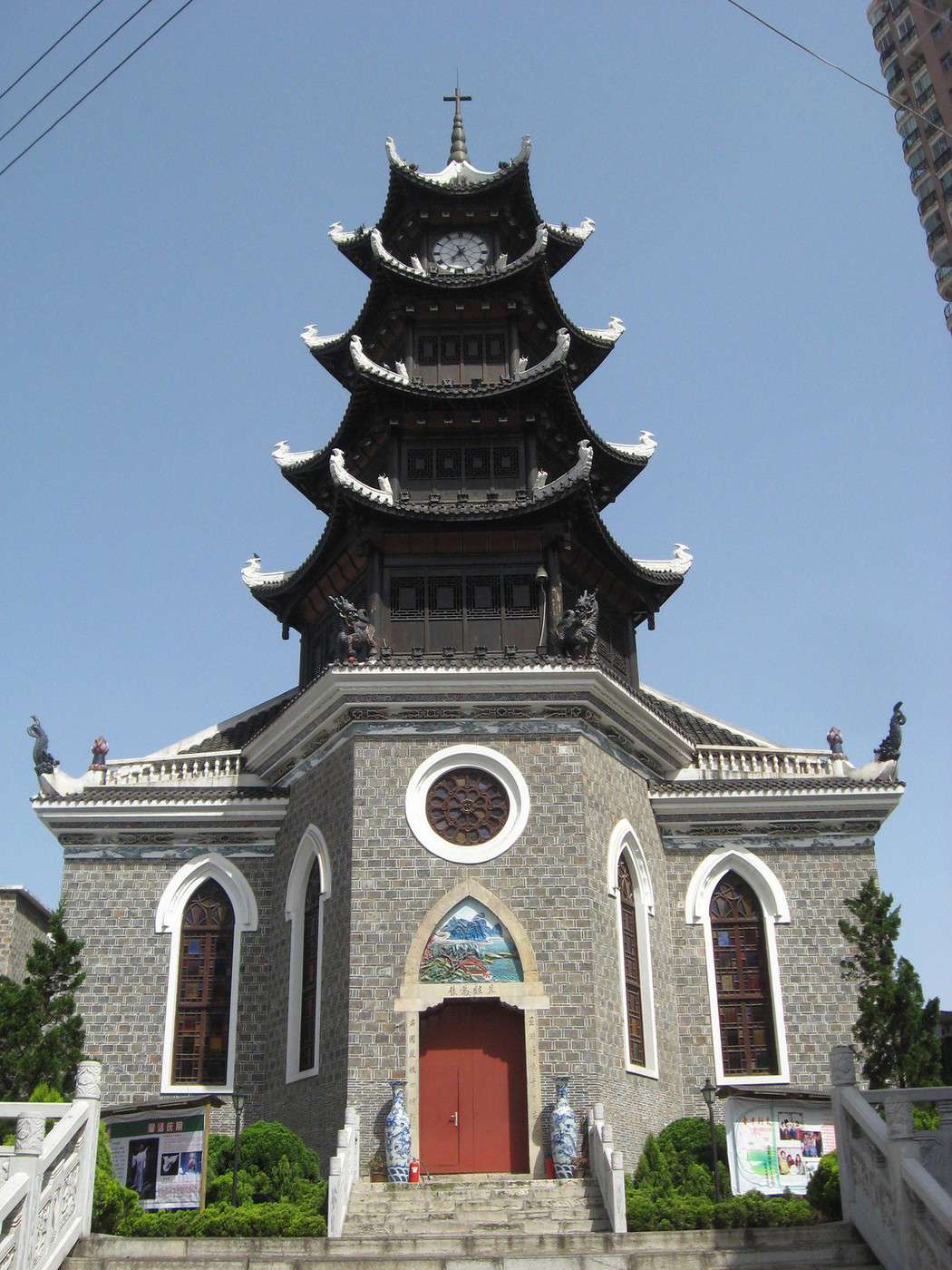
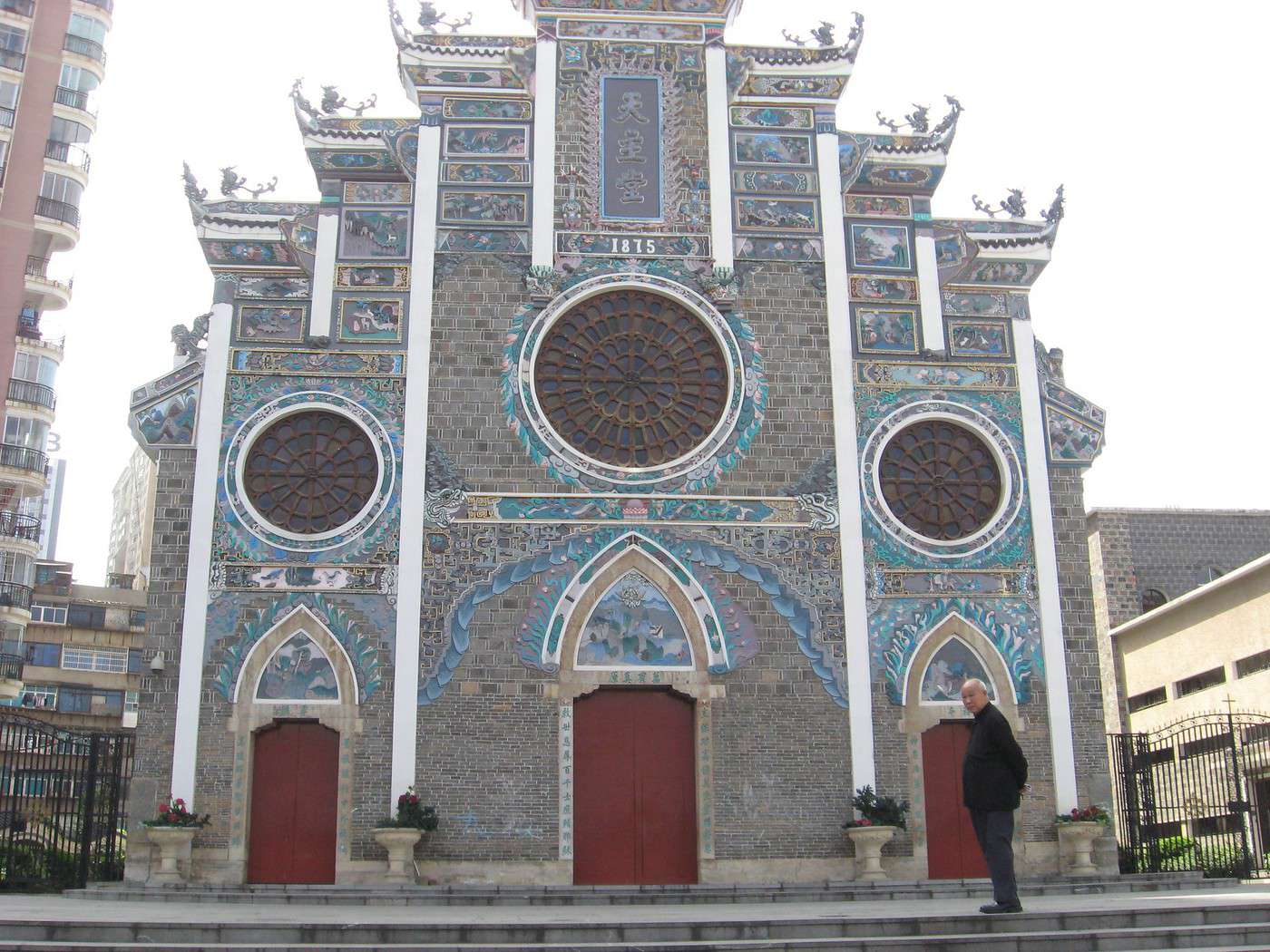
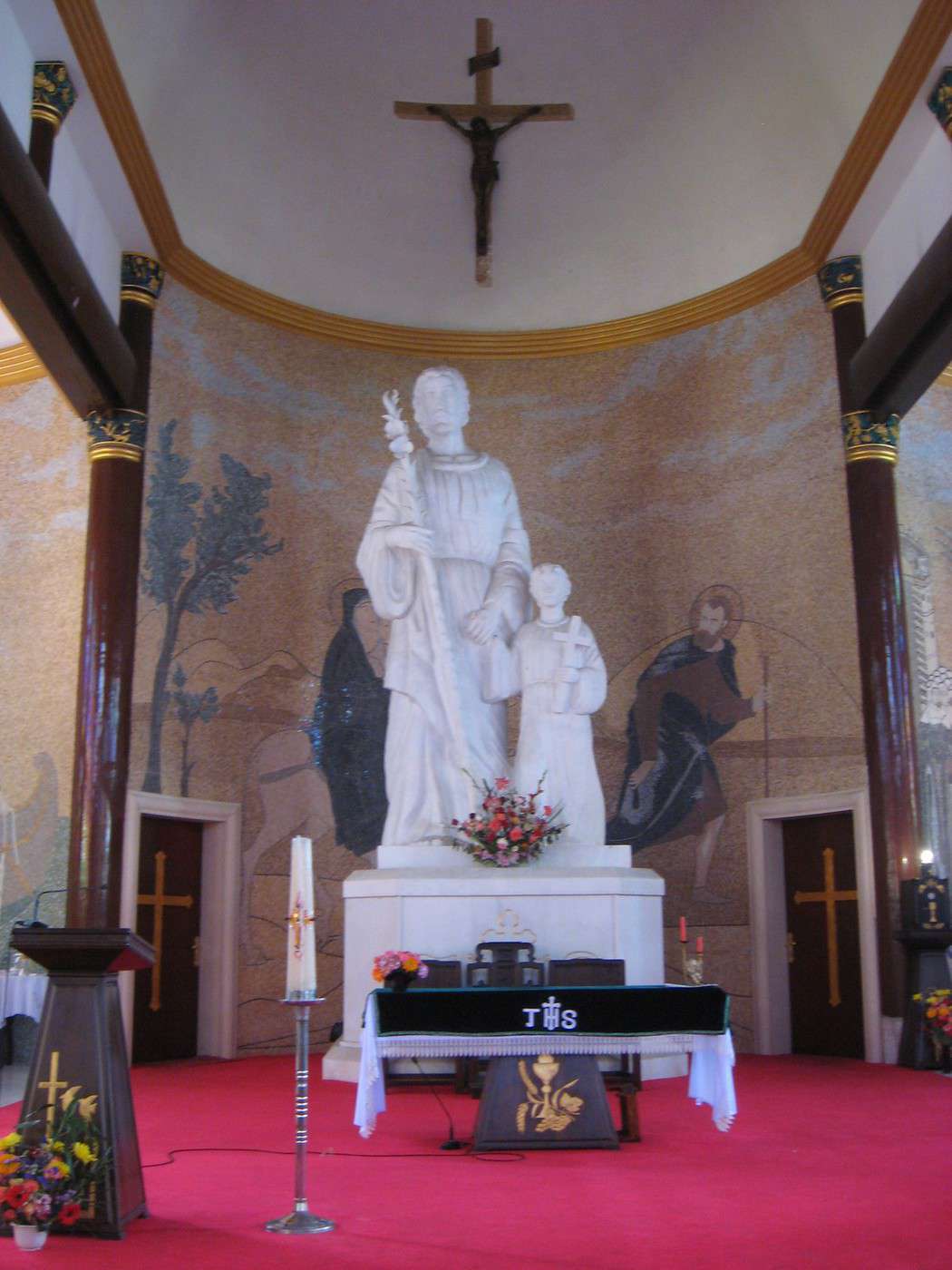
Guiyang : mauvaise échelle du plan; de la gare des bus (N°42 sur le plan) à la gare des trains il y a 3Km (c'est marqué sur des panneaux, en anglais) le plan laisse croire à 2, 2 kilomètres ! Aucune mention de 2 hôtels près de la gare dont le Mingzhu Fandian (d'accord les coups de sirène des trains font partie du tintamarre ambiant). Il ne renseigne même pas la magnifique église catholique sino-gothique fraîchement restaurée (photos 1 à 3) (elle est située dans le plan en haut et au milieu du cadre C2)
Une petite parenthèse pour signaler aussi des expressions difficilement compréhensible par de non-anglo-saxons : tippy-toe view (vue sur des orteils de tentes indiennes !?), "strolling willy-nilly around", ou aussi des infos totalement inutiles - j'ai déjà parlé du sèche-mains du KFC de Baise mais il y aussi ceci : "water heaters, which, if they've been turned on, ensure a hot shower" !? pour la télé c'est pareil, il faut l'allumer sinon l'écran reste noir !?
Xingyi : échelle pas correcte; il faut multiplier par trois celle indiquée (200m = 600m). C'est pas le bus 5 qui va aux gorges de la Maling mais le 4. Le bus 1 ne va pas aux Ten thousand peaks hills mais bien un bus local à prendre dans une station de bus bien cachée dans une cour sur Dongfeng Jie. Dans la rubrique "getting there and away" on mentionne un vol sur Shenzhen distante de près de 1.000Km en ... 35' (je savais pas que la Chine faisait voler des Concordes entre Xingyi et Shenzhen 🤪)
Guangxi :
à Yangshuo ne même pas mentionner le Marias' café !! ne mentionner Lèyè que par cette laconique ligne : "If you have more time continue on north to the karst landscape of Lèyè county" alors que cette région possède l'une des plus profondes dolines/tiankeng au monde, des grottes en veux-tu en voilà et une gigantesque arche naturelle accessible après 2h45 de canot sur la rivière Buliu cf http://www.chinaculture.org/gb/en_curiosity/2004-08/10/content_58840.htm
Hunnan (enfin juste 2 pages !) même pas la traductio en caractères chinois de Huaihua et localisation très approximative (ça ou ne rien dire c'est pareil, je préfère encore ne rien dire) dans cette ville de la gare des bus pour Fenghuang
Yunnan (le gros morceau) : généralités/climat, on ne dit pas quand il pleut dans cette province !!
Kunming : - la bus station (pour aller à Shilin) n'est pas bien située, elle se trouve sur le côté (gauche) de la gare (quand on regarde la gare). Il y a bien une petite gare en face de celle des bus longue distance (bien localisée elle) mais peu de bus pour la province. pour aller à Xi Shan il faut prendre un bus entre le terminus du N°5 et la gare des bus d'où démarre le bus N°6 (une préposée au terminus du N° 5 a un petit papier photocopié où il est inscrit la marche à suivre - on se croirait revenu au bon vieux temps des jeux de pistes chez les Scouts)
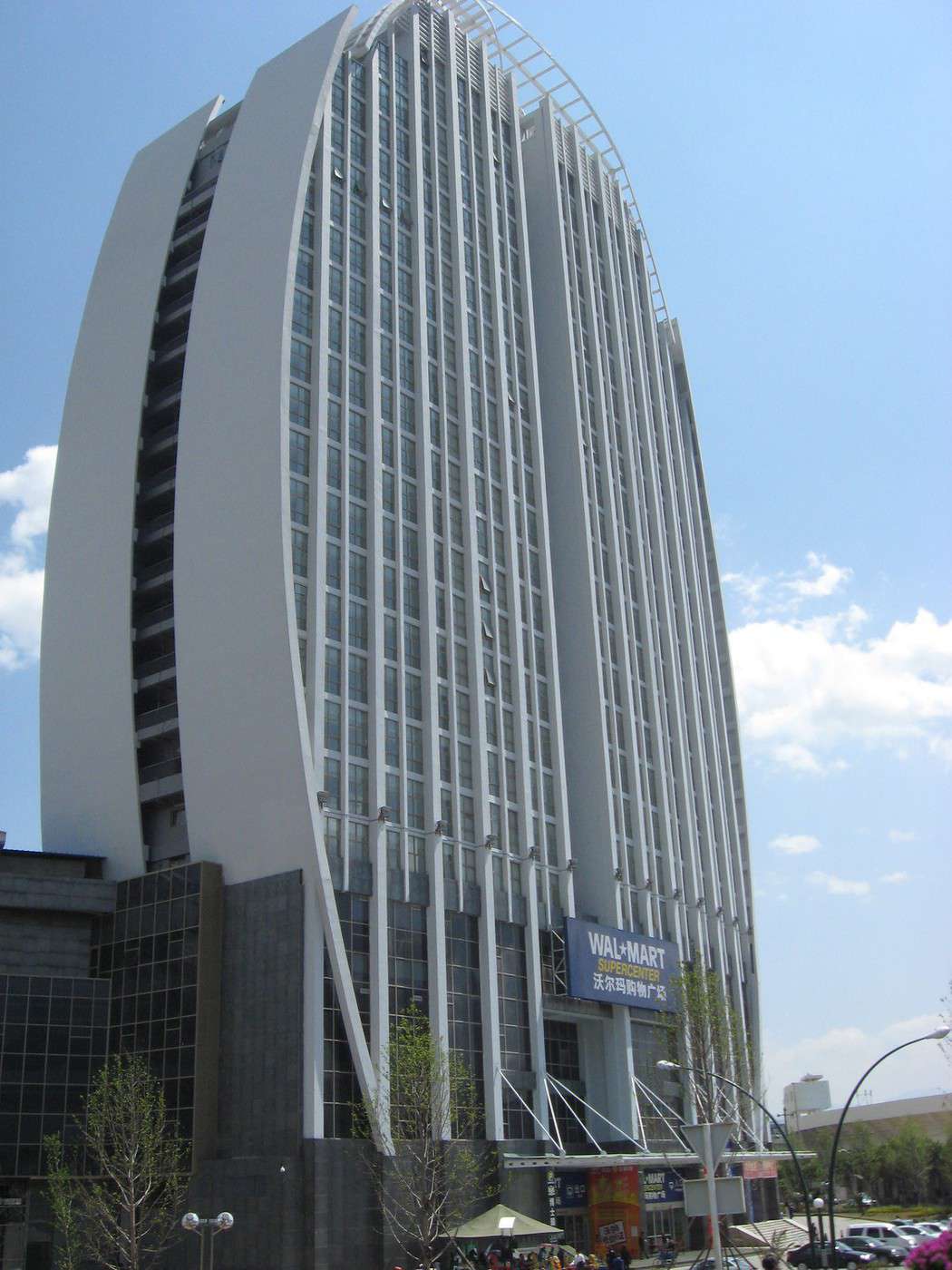
Xiaguan (New Dali) : le carrefour avec Taian Lu (emprunté par le bus N°8 en venant de Dali) et Jianshe Lu n'est vas un rond-point mais un carrefour en baïonnette. Avant d'arriver à ce carrefour vous avez sur votre gauche une tour assez originale avec un super marché au rez-de-chaussée (photo 4)
Si vous voulez aller de Dali/Xiaguan à Lincang (bus à 6h20, 7.50 et 9.00) prenez le bus N°8 depuis Dali jusqu'à son terminus à Xiaguan; la gare des bus pour Lincang (entre'autre) est à 200 mètres plus loin de l'autre côté de l'avenue.
Dali : le plan mentionne des routes qui n'existe pas comme celle en haut à gauche du plan et qui semble être une grand' route et bien elle n'existe pas. Le guide ne renseigne pas que celle qui est à l'extrémité droite du plan est la grand route de Kunming à Lijiang; il ne localise même pas la porte centrale de la ville sur Wenxian Lu, y'a bien une sorte de carré mais qui ne "parle" pas à celui qui lit le plan et qui s'imagine être déjà à la porte Sud ! Il positionne le Yunnan Café & Bar sur Huguo Lu alors que c'est sur Renmin Lu - il en vante les pizzas mais comme l'auteur principal du guide est Anglais (j'espère qu'il n'y a pas d'Anglais qui me lisent) il doit s'imaginer que les pizzas ont été inventées par les Hawaiens 🤪.
Lijiang : le pompon il n'y a qu'un petit morceau de la vieille ville; allez vous y retrouver avec un demi plan !
Zhongdian : même remarque il n'y a même pas la vieille ville ou à peine un morceau!!
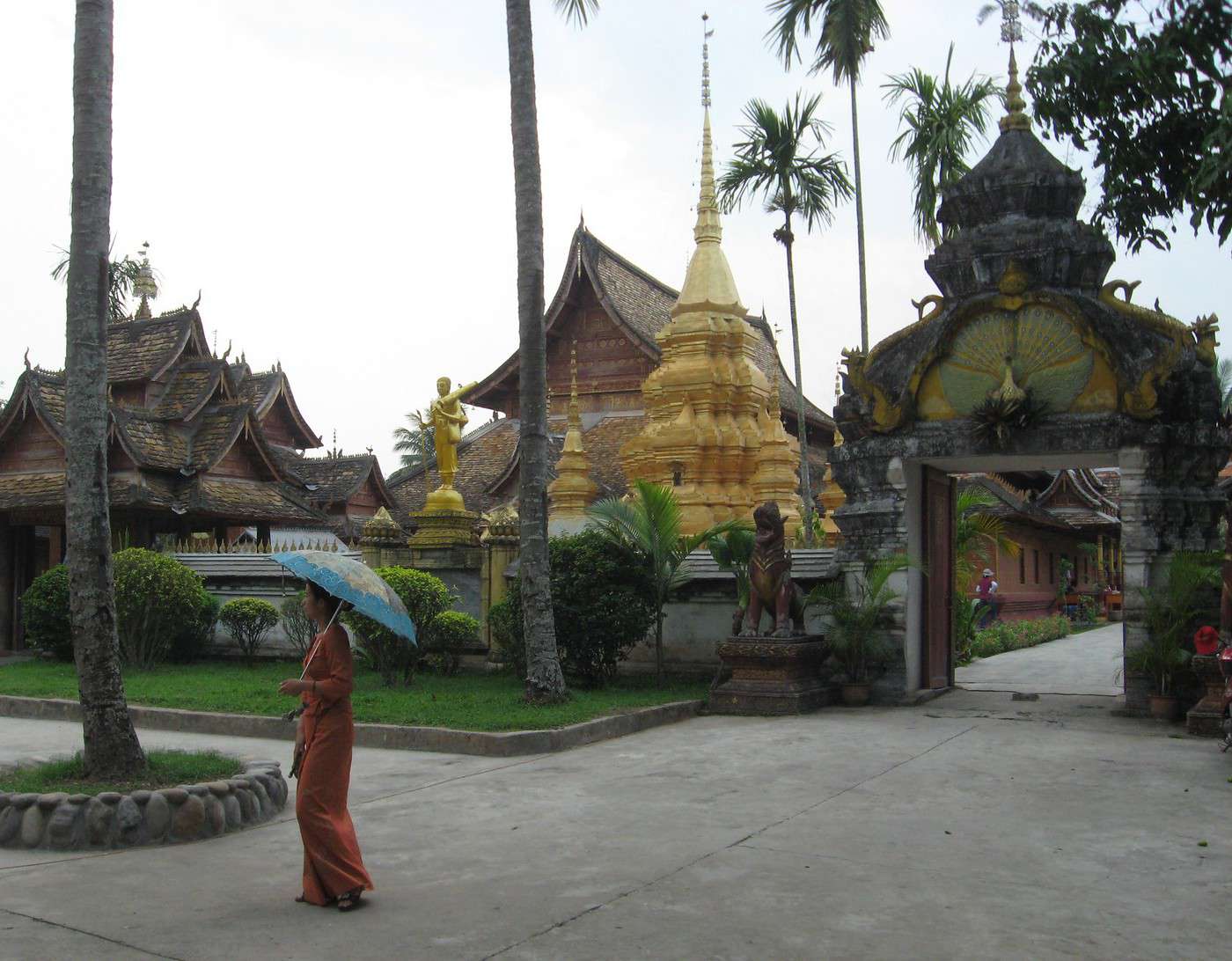
Dans le Xishuangbanna, à Ganlanba il ne mentionne même pas le très intéressant temple bouddhiste (photo 5)
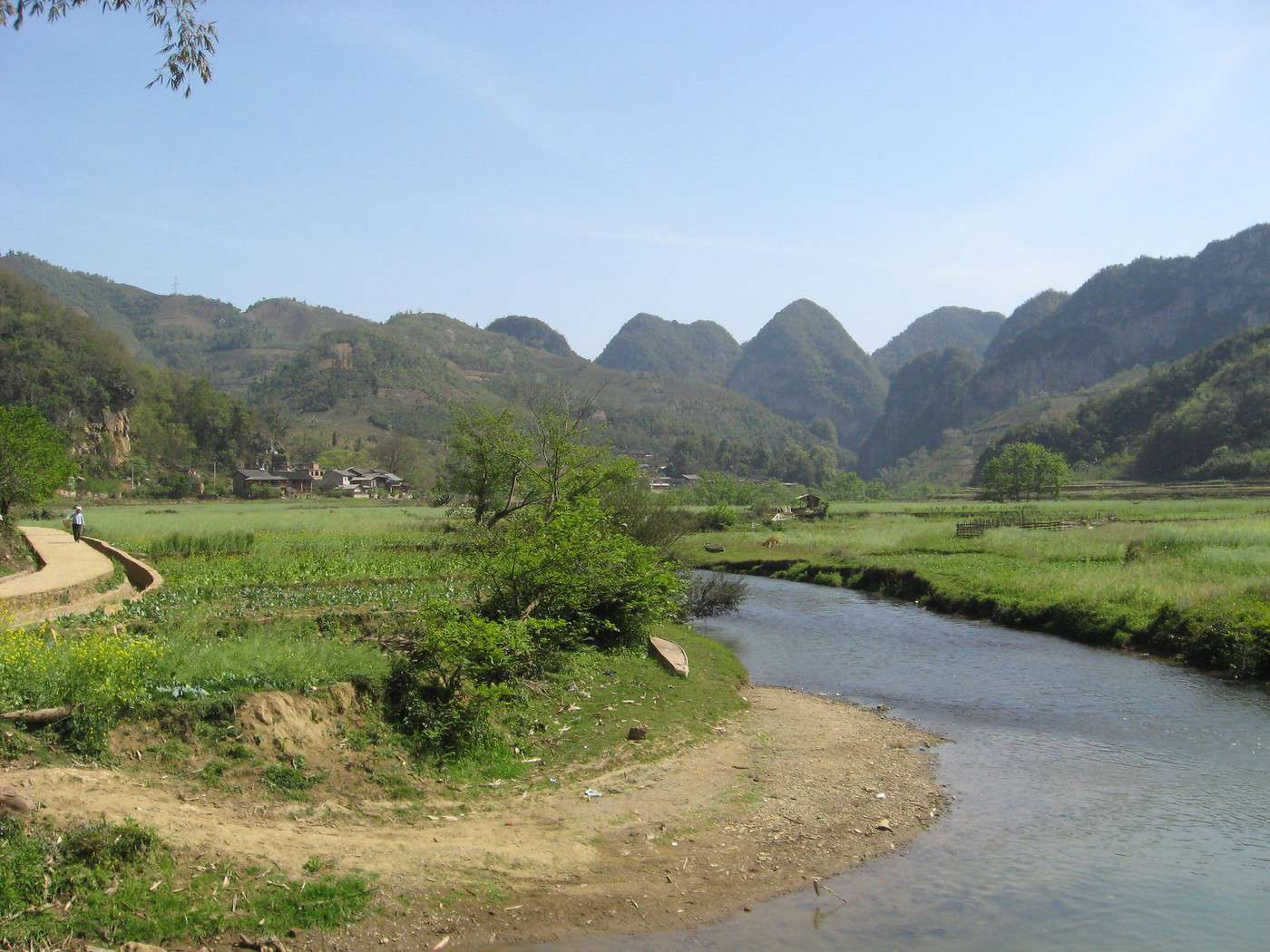
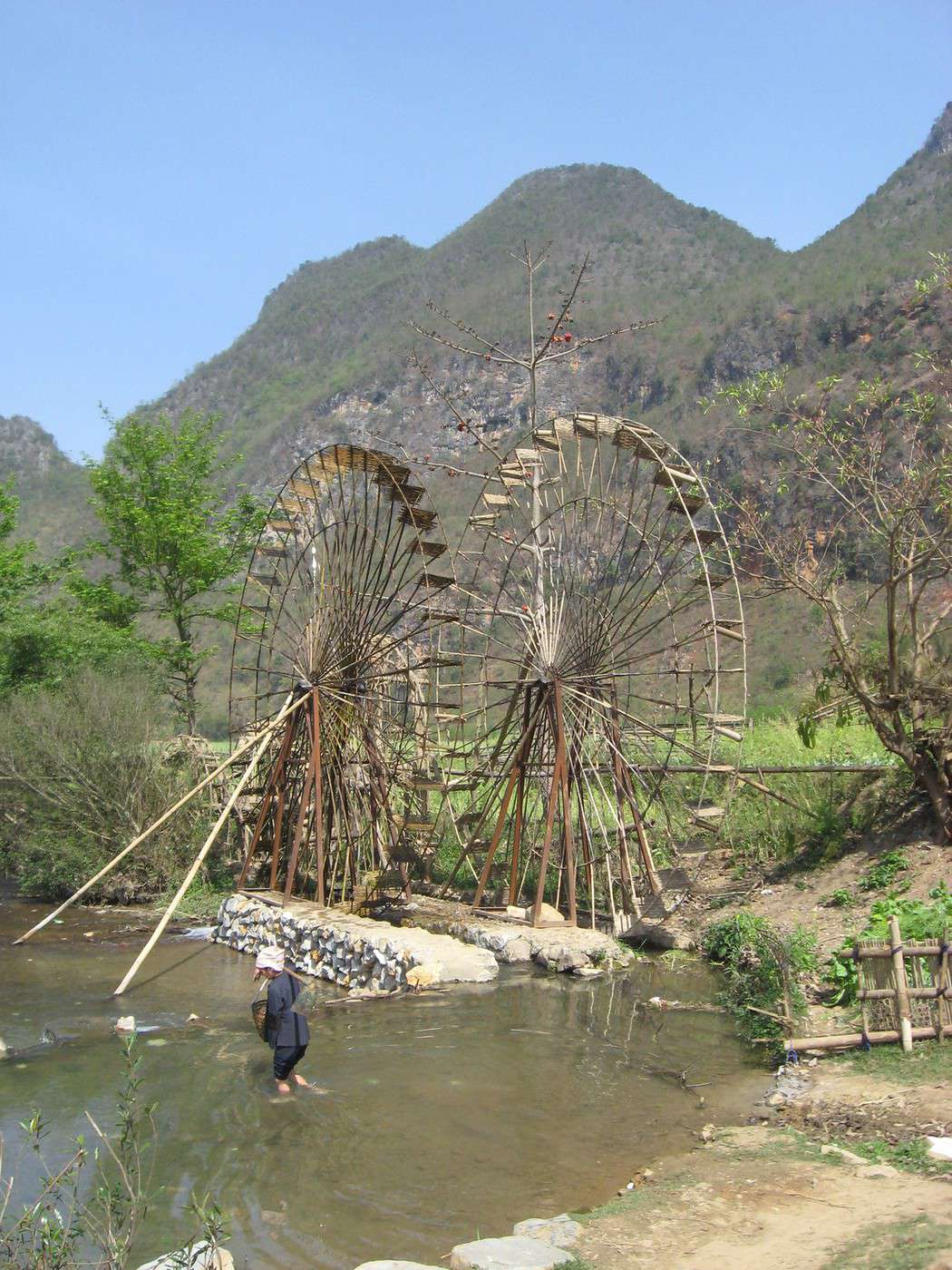
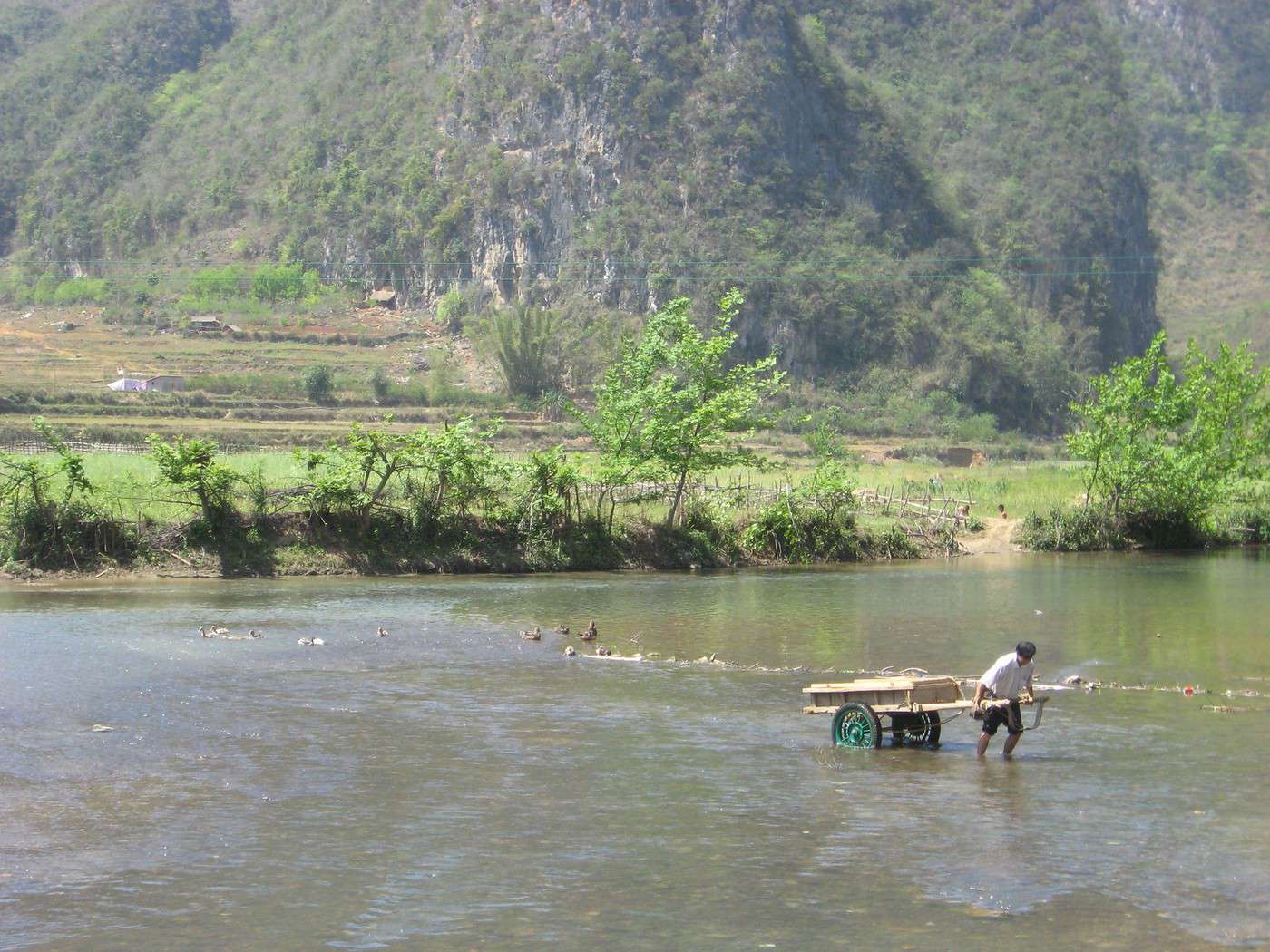
Je dois cependant reconnaître que leurs informations sur Bamei m'ont convaincu à y aller et que je n'ai pas été déçu par ce qui reste probablement le plus beau moment de mon voyage (photo 6 à 8)
D'autre infos ??? A vot' bon coeur 😉
"Nous ne sommes plus une communauté d'être humains qui se parlent mais un conglomérat de grappes de consommateurs en niches, séparés les uns des autres par des obsessions diverses et innombrables. Nous sommes de l'ère de la désintégration." Marc Moulin (1942-2008) in Humoeurs
J'avoue que je voyage depuis des années avec le lp, mais j'ai été très décu par celui sur la Chine en ce qui concerne le Yunnan ou le Guangxi... Encore pire, je voyageais avec le gros "China", que j'avais trouvé pourtant pas si mal pour Beijing, Xian ou la région de Shanghai, mais pour le Yunan y a pas mal de trucs à la limite de l'amateurisme ! Quasi rien sur Deqin, 5 lignes tout au plus, Zhongdian aucun plan non plus de la vieille ville, j'ai mis pas mal de temps à comprendre ne serait ce qu'ou elle etait, Lijiang meme chose, un tout petit plan... Yuanyang, y a en tout et pour tout une vingtaine de lignes... C'est jamais très grave parce que ça fait naturellement partie du voyage de se renseigner, mais bon la parfois c'était vraiment nimporte quoi ! J'essaierai le Rough Guide je pense la prochaine fois (parce que le routard faut quand meme pas pousser, je peux définitivement pas !).
je partage ton avis sur le guizhou. Les indications des hotels sont inprecises. Il manque trop d'information sur les chutes de huangguoshu.
Pour Kaili, aucunes indications sur l'impossibilité d'aller en bus de kaili à guilin sauf a revenir a guiyang ou d'aller a duyung et chercher une place dans le train (deja difficile de guiyang)
Les indications sur les villages autour de Kaili trop rapides et imprecises.
A titre perso, je prefere la descente en radeau de bambou à la descente en bateau une vraie arnaque a touriste avec nourriture inmangeable sans oublier que le guide essaie de te fourguer des visites à 2 fois le prix
Nous avons été surpris par une vague de chaleur à 40° à Xi'An tout en visitant le site des Guerriers en Terre Cuite. Malgré toutes les précautions peut être…
Alors que je me promenais tranquillement ce week end à People Square, j'ai été pour la première fois confronté à l'arnaque de la cérémonie du thé. J'espère…
Nous venons de quitter Datong ce matin. Nous sommes allés visiter les grottes de Yungang, le tarif est actuellement de 100 yuans par pers (bientôt 130 mais…
Nous venons de passer deux mois en Chine a la rencontre de journaliste, artiste, economiste... pour dresser une vue generale de la Chine de 2005 autour de…
Bonjour à tous
Pour simplifier la logistique, j'envisage de louer une voiture pour passer 5/6 jours dans les alpes japonaises avant d'aller à Kyoto en solo.
La conduite est-elle compliquée voire risquée dans cette région.?
Merci pour vos retours
Tara
We’re arriving as a group of three in Tokyo on Saturday, October 17th, then heading straight to Kyoto by direct train.
On Sunday and Monday, we’ll explore Kyoto, and in the evening, we’ll take a train to Osaka to spend the night.
On Tuesday, we’ll pick up a rental car at Itami Airport for a 6-day/5-night road trip around Shikoku:
- 2 nights in the Iya Valley
- Thursday morning, we’ll head to Matsuyama for 2 nights.
- Saturday, we’ll visit Mima (town, a few temples + overnight stay) and return on Sunday to drop off the car in Osaka.
We’ll leave very early on Monday the 26th by plane for Aomori in northern Honshu, where we’ll pick up another rental car at the airport for a 5-day/4-night trip:
- Day 1: Tsugaru Peninsula (Takayam Inari, Cape Tappi, Kanita); overnight in Kanita
- Day 2: Ferry transfer to the Mutsu Peninsula (cliffs, Lake Usori); overnight in Shimofuro
- Day 3: Head to the Hakkoda Mountains and onsens galore; overnight TBD
- Day 4: Return the car in Aomori by noon and explore the city before taking the train to Tokyo in the evening
We’ll spend Friday night in Tokyo, wander around on Saturday, and head home on Sunday.
Thoughts on the road feasibility of this trip? We’ll be there right in the middle of Koyo season, so it’ll be busy...
I know it’s a lot of driving, but there are two of us who can take turns. We’re not afraid of driving, even in the mountains and on the left side! Just wondering, are we going to be rushing, or is this manageable? AI says it’s all good, but it’s not the one driving...
Any tips for booking accommodations in the Iya Valley? Not many places have email addresses or websites (I know Booking.com exists, but not all listings are on there... and given the season, I think it’s better to book ahead!). Same question applies for northern Honshu.
For the rental car, I’m thinking of going with Alamo since at least it’s in French and straightforward, but are there any direct rental companies with user-friendly websites (Toyota Rentacar, ugh... 🏴☠️)?
Another question: With so many trains, is it even necessary to book them in advance? Can we just go to the ticket counter and grab seats on the spot?
For paying for the rental car, do we need a credit or debit card?
I saw there are several "authentic" villages about 90/100 km from Beijing.
Including: Lingshui, Liuliqu, Sangyu, Miaoying, and Cuandixia.
Has anyone visited any of them? I was thinking of choosing Cuandixia—what do you think?
Thanks in advance.
Hi everyone!
It seems there’s a flea market in Tianjin that’s way more interesting than the one in Beijing. I’ve been searching online but can’t find the right one… The one I’m looking for is called gu wan shi chang (my PC won’t display the Chinese characters…). Does anyone have the address and has anyone been there before? The one in Beijing has lost a lot of its charm over the past 10 years, so I wanted to find another. Thanks!
Hi,
My departure is coming up soon—two months backpacking in Taiwan, so much to discover! I’d love to hear about your travel experiences.
My main interests are meeting people, understanding how things work, hiking, and nature in general. I’ve also done a lot of reading about Taiwan’s complex situation.
I do stone sculpture.
I also want to visit Orchid Island for its history.
Marie
I’m looking for advice from seasoned travelers about a roughly one-month trip to Japan.
From late October to late November 2026.
We often travel in Southeast Asia but have never been to Japan.
Based on what I’ve read, I’d love to hear your thoughts on:
- Is traveling day-to-day, without booking hotels or trains in advance, possible in Japan?
(I’ve read many travel journals and blogs that say everything was booked way in advance… but that’s not how we usually travel.)
- Will the Japan Rail Pass be worth it for us?
(According to an old simulator, I’m looking at around 400 € for trains compared to 570 € for the JRP.)
Here’s our rough itinerary (which may change):
- Arrival Osaka: 3 nights with Nara
- Hiroshima and Miyajima Island: 3 nights
- Kurashiki or Naoshima: 2 nights
- Himeji: 1 night
- Kyoto: 4 nights
- Kanazawa: 2 nights
- Takayama and Shirakawa-go: 3 nights
- Around Mount Fuji: 3 nights
- Tokyo with Nikko: 6 nights (no theme parks)
Departure from Tokyo
Here are some tips from our 6-week trip (summer 2026) to China, Vietnam, and Cambodia. We traveled as a family of four with two kids aged 15 and 12.
I hope these notes help other travelers!
CHINA
General
You’ll need to download and set up a few apps:
- Alipay and WeChat for payments (I didn’t withdraw a single bill the entire trip)
- Didi for taxis
- Amap = Chinese Maps (works great, especially for subways)
- A translation app (we used Papago, but it sometimes gave weird results)
- Google Lens for translating menus or signs—super handy.
- HelloRide for bikes
- Gemini and ChatGPT for everything: understanding daily life, enhancing visits, checking the weather, finding things.
- HomeExchange if you want to lower travel costs (few listings in Asia except in big cities, often expats)
- Trip.com is very useful, even essential, for trains, domestic flights, and hotels. Like Booking.com, the more you book with them, the more perks you get. So I’d even suggest checking flight tickets on this site, even if it’s a bit pricier. However, buying train tickets is complicated because (1) they only open 15 days in advance, and (2) they sell out fast. Trip.com just promises to buy them as soon as they’re available but doesn’t always succeed. It’s stressful and might force you to change your plans, especially if you’re aiming for a sleeper car and there are no seats left. Watch out for station names—many cities have multiple stations, including a high-speed rail one outside the city.
For internet, we got the Asia plan from Holafly. It worked but seemed much slower than Chinese internet. I regretted not buying a Chinese SIM card because without internet in China, everything is VERY complicated (money, transport, etc.).
For the firewall, we used ExpressVPN, but it wasn’t always reliable. A bit disappointing. Ask ChatGPT for tips with screenshots to improve the settings.
Since we only had one SIM card with internet, we couldn’t rent shared bikes. If I were to do it again, I’d get a SIM for each person, even the kids, because distances in cities are huge. We walked *a lot*. Same goes for buses—it’s tricky with just one internet connection. Better to have a phone per person with internet.
Book your visits as far in advance as possible—they often sell out.
Watch out for power banks: if they don’t explicitly say "3C," they’ll confiscate it. Even if there’s a little airplane logo.
Shanghai
In the evening, the streets leading to the Bund from the metro were so crowded that police were out in force blocking roads. Arrive early. We went around the north side.
Suzhou
Be careful—there are two stations (common in China), and the high-speed rail one is 45–50 minutes from the old town.
The Humble Administrator’s Garden was *packed*—we don’t recommend it. It turned into a marathon day from Shanghai (almost 4 hours from our hotel to the garden).
Beijing
Forbidden City: Don’t go—I know it’s a shame, but it’s too crowded. I couldn’t buy tickets on the official site because of the kids’ passports. We ended up with a guided tour, the only way to get in (tickets sell out fast). The visit was disappointing—bad guide *and* massive crowds. You’ll queue a lot to enter and see certain areas. You’ll be checked often, so pack your bags carefully.
Great Wall at Mutianyu: Crowded. Two hours by bus, and even though we arrived early, people were already leaving! I really think the best option is to leave your big bags in Beijing and stay overnight near the Wall. That way, you’ll have it to yourself a bit more. For transport: get off at Tiananmen Square metro and look for buses with official guides in bright yellow-green vests. No need to buy tickets online—they made me cancel mine to rebook on the spot. Buses leave when full. Note: the cable car and chairlift are separate—if you want to go up one side and down the other, you’ll need different tickets. The endless queue for the toboggan ride put us off.
Quick tip: Incredible swimming spot in Beijing—on the north shore of Houhai Lake, you can swim by crossing the barrier. We did it twice with about ten other people. Bring a swimsuit!
Shapotou Desert
Amazing, but it gets *very* hot in the afternoon. We had a tent (not an air-conditioned bungalow), which was unbearable during the day. We hung out in the restaurant.
The paid activities are fun, except the camels—they look sad. The real highlight is the evening and sunset. The only downside: you can’t explore the desert alone or far—they don’t rent 4x4s, for example.
We stayed at "The Desert Camping Hotel of the Proprietress of Shapotou." They were lovely.
Zhongwei
Gaomiao Temple and its underground: Fun and short—you’ll see quirky Buddhist hell paintings.
Xi’an
Terracotta Army: We took a Didi because for four people, a car was almost the same price as four shuttle tickets. It was packed—chaotic to see properly.
We visited the halls in order: 3, 2, then 1—a good choice.
Hua Shan Mountains: Left before sunrise to arrive when the ticket office opened (7 AM, I think). We were shocked to see so many people already coming down.
45 minutes by bus to the west cable car, then 15 minutes up.
We did the west, south, east, central, then north peaks (in that order) before taking the other cable car down (you can buy the ticket at the top). A beautiful day.
In the city, check out...
Chengdu
Panda Research Center: Like Hua Shan, plan to arrive when the ticket office opens. Already *tons* of people, and it moves fast to see the big pandas before their nap. Have them drop you at the west entrance (not south), or you’ll have to walk uphill.
Leshan Giant Buddha: Interesting. The trip is a bit long (metro, then train, then city bus, then shuttle on-site). We didn’t take the boat option but walked. In the end, you only spend a few minutes at the Buddha’s feet, but it’s a nice day out.
Hotel tip: Panda Enjoy Home Hotel Apartments (Chengdu East Railway Station Dongda Road Branch). The view is insane, and the neighborhood is super convenient and nice. 646 CNY for 2 nights.
Swimming: The municipal pool is an interesting experience, but don’t expect to swim—no one does. Everyone just splashes around where they can stand. The hours are a bit odd, with a break in the late afternoon.
Kunming
The bike path along Dian Lake is pretty and often well-protected from cars. But like everywhere in China, it’s *packed*. Not much to say about visits—the flower market is a wholesale market, not very interesting. The ethnic minorities museum closed right in front of us.
All the big malls are good for shopping.
Dali
We thought we could bike around the lake in two days. Wrong on two counts: First, the lake’s edge is blocked to traffic and reserved for bikes (or tourist mini-buses). So you’re stuck on the main road, which never gives you a view of the lake, with all the trucks and cars. Doing 120 km like that wouldn’t make sense, in our opinion. The rice fields around are nice but not as impressive as elsewhere, so Dali isn’t worth it for that.
The old town, all restored, is pretty but *packed*—thousands of people, especially in the evening.
Hekou (Vietnam border)
Comfortable train from Kunming. In the parking lot, a bus (not well-marked, but Didi is an option) takes you to the border in 15–20 minutes. Short wait at both border posts. Fun to see the two lampposts near the border line: the Chinese one is new, modern, with a surveillance camera (of course), while the Vietnamese one is old and a bit rusty.
VIETNAM
General:
- You’ll need the Grab app for taxis
- Very disappointed with 12Go—it doesn’t show all buses, never connects you with the company, and refuses refunds. Try booking directly with companies like FUTA Bus instead.
- Credit cards are often accepted (supermarkets and modern stores), otherwise, you’ll need cash
Lao Cai
2 km between the border and the train station.
The sleeper bus to Hanoi with Sao Viet is well-organized—it works.
Hanoi
Ho Chi Minh Mausoleum closes early (10:30 AM, I think).
Women’s Museum: Very good, not too long
Temple of Literature: Beautiful, fairly quick
This is where you should buy souvenirs, clothes, and knockoffs—the prices are reasonable, and the sellers are nicer than elsewhere. We recommend Cho Dong Xuan.
Tu Long Bay
We did 2 days, 1 night (so really 24 hours on the boat) with Parfum d’Automne (French-speaking agency), which put us on a Cycad Cruise boat. Cost: 300 € per person—expensive, but it was amazing, super luxurious, and the buffet meals were delicious. We don’t regret the splurge. The only downside: no swimming in the bay (but there’s a pool on the boat). To swim, you’d need a 3-day, 2-night trip to an area not protected by the maritime park.
Phong Nha
If you didn’t do the northern mountains due to time or weather (like us), Phong Nha is a great stop for a motorbike ride. It’s beautiful, especially the mountains west of the city toward the caves.
There are two (small) swimming spots at the Botanic Garden—a pleasant 45-minute walk without stops.
Hotel tip: Sunbeam Village (very friendly, pool, breakfast by the river, motorbike rentals)
Da Nang
Hotel tip: Meridians by Hsuite—you’ll have the beach almost to yourself. You’ll still need to walk 15–20 minutes to the hyper-touristy area if you want to rent surfboards (150–200k VND per hour).
The beach is beautiful, and the water is 30°C—great for a break on a long trip, especially since all transport goes through Da Nang.
Hoi An
45 minutes from Da Nang, so it’s easy to visit in a day, especially since the city isn’t that big and it’s *very* hot.
Cooking class: MS Hanh cooking class—great (the market tour is a bit useless). We don’t recommend the "basket boat" tour—it’s a bit sad on a big brown pond with elderly guides.
Ho Chi Minh City
Ben Thanh Market is a nightmare: starting prices are exorbitant, and the vendors are aggressive. Don’t go.
The War Remnants Museum can be really tough for kids.
Can Tho
Avoid this city. We made the mistake of going to see the floating market—don’t.
Chau Doc
No Grab in the city, but regular taxis.
One day is enough if you go early to the forest and the mountain in the late afternoon.
250k VND per person for the forest and its canals (45 minutes by motorbike)
The sunset at Victoria Nui Sam can be magnificent if the clouds cooperate.
Cheap and good restaurant: Quan Nem Nuong Sau Hiep
Hotel tip: Homestay Khoa (2,250,000 VND for 3 nights)—adorable hostess, full of tips, clean rooms.
The speedboat to Cambodia is more comfortable than a bus. Book with Hangchau a few days in advance—payment in cash on the day (1,640,000 đ).
CAMBODIA
General:
- Issues with the "Bakong Tourists" app—we had to go to a big bank to load money onto it. We barely used it afterward.
Phnom Penh
For us, a day and a half is enough if you want to spend more time elsewhere.
Markets close early (around 6 PM) and are less interesting than in Hanoi, for example.
The Royal Palace has a break from 11 AM to 2 PM, but there aren’t many people in the afternoon.
Siem Reap
Trip with Capitol company—the bus is basic but cheap. Departs at 10:15 AM, 7-hour ride.
Angkor entrance fee: 62 USD per person for a 3-day pass. Tickets are picked up at Angkor Enterprise.
Renting two 125cc motorbikes: 10 USD each, plus 7 USD for gas.
By bike, it took me 25 minutes to reach Angkor Wat’s pools. A basic city bike rental was 1 USD per hour.
Short circuit by motorbike (in reverse): 7 hours with stops everywhere.
Grand tour by tuk-tuk: Only 5 temples, 4.5 hours.
If you want to see lots of monkeys, they’re grouped west of Bayon.
For the temples, we asked Gemini (AI) at each stop to point out details that might interest kids (who can get bored with the repetition). It gave fun facts and things to look for—great for the little ones.
Hotel tip: The Five Senses, run by a Frenchman, Bruno, who knows Cambodia inside out and organizes tours.
Restaurant tip: Wild (only spring rolls, but *so* many varieties—delicious and cheap)
Watch out: 1 hour to the airport, 50 km from the city.
Show tip: The Phare Circus
I booked my trip from May 5 to 26, 2027. I’m starting to plan my itinerary and look for hotels (I know it’s early!). While I’ve found some in Seoul and Busan, I’m noticing that elsewhere—like Yeosu—most hotels aren’t available (on Booking.com, for example, almost all are unavailable). AI tells me not to worry because hotels in South Korea only open bookings 6 months in advance, so it’s normal to see most of them unavailable on booking sites.
Could you confirm this for me and, of course, reassure me (!)? Thanks so much.
philippe
We’re back from a one-month trip to China and wanted to share our itinerary. Hopefully, this can give future travelers some ideas for exploring this beautiful country.
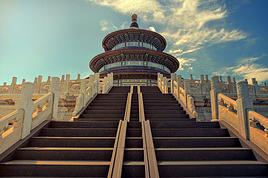
Beijing → Temple of Heaven / Forbidden City
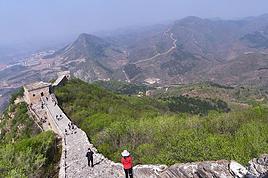
Jinshanling → Great Wall
Zhangjiajie → Tianmen Mountain and Heaven’s Gate
Wulingyuan → Avatar Mountains / sandstone pillars
Fenghuang → riverside houses
Ping’an → terraced rice fields
Tiantouzhai → village / rice terraces
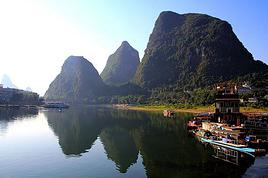
Yangshuo → Li River / karst mountains
Shanghai → skyline with the Oriental Pearl Tower
Our travel journal is available on our travel journal, written day by day. You’ll find lots of photos and some travel tips there.
I’m starting to look at neighborhoods in Seoul, and I’m leaning toward staying in a hotel in Insa-Dong—I’ve spotted one really close to Unhyeongung.
Is this a good area—nice and convenient for exploring the city?
Otherwise, I’ve also found another hotel in Yongsan-Gu, right near the station of the same name. Is that station useful for getting around Seoul?
Since I’ll be in South Korea for nearly two months, I plan to spend at least a week in Seoul to recover from jet lag (it takes me a while to adjust...). So, I’d love a neighborhood that’s pleasant and a hotel not too far from a subway station.
Hi there,
I’d like to do this cycling route over 2 or 3 days. I’m struggling to figure out and find a (good) bike rental that lets me start in Onomichi and drop off in Imabari. Can anyone help with great tips for rentals and accommodations along the route? How do I get back to Onomichi afterward?
Next year, we’re celebrating 20 years of marriage (and travel 🙂), and we’re looking for something new, pretty legendary, and something the teens will enjoy too.
The family council has settled on Japan for now. And it’d have to be a summer trip—no choice there.
The catch: I keep reading that August isn’t the right season for southern Japan. It’s hot, humid, and there’s a risk of typhoons… Okay, but what does that *actually* mean in practice? Are there any travelers who’ve been there during this time? Is it *that* unbearable?
We’re pretty familiar with Southeast Asia—last year, we dealt with scorching heat in Vietnam and insane humidity, plus a typhoon we experienced from a distance, and visiting Angkor in the blazing sun. Is it worse than that?
I’m back with my detailed itinerary for 20 days in South Korea—it’s my first trip to the country. Our idea is to experience a more rural and cultural Korea. Here’s the rough plan: Seoul for 4 nights at the start and 1 night at the end, Gurye for 4 nights, Suncheon for 4 nights, Namhae for 4 nights, and Gyeongju for 2 nights. The goal is to pick a base and explore the surrounding areas. What do you think of this itinerary? Anything you’d change?
thanks
hi everyone, we're heading out for a 12-day trek in the Japanese Alps. We're bringing freeze-dried meals like we always do. We just found out that importing meat is banned, even freeze-dried. Is that true? We already bought them. They're commercially made freeze-dried meals. Online, it's not specified that they have to be "commercially made" because you can make your own freeze-dried food. And since we've heard they're really strict in Japan, can anyone confirm this for us? thanks
I haven’t found what I’m looking for despite my searches!
For a 15-day trip next spring, I’d like to buy a card (preferably an eSIM, but a physical SIM is fine too) that also lets me make calls in the country (to contact a hotel, a tourist spot, etc.).
You can easily find options just for data, but I haven’t come across any that include calls, texts, or even MMS.
Could you recommend something?
hi there
I’m planning a trip in September—here’s my rough itinerary. What do you think? Is it easy to rent a car to get around between my stops? Thanks so much!
Philippe
StopNightsFull daysSeoul44Gurye (Jirisan)43Suncheon43Namhae43Gyeongju21Seoul1—
Hi,
July 2026: I’m writing to you from Dali.
First, I got scammed on Booking—AI-retouched photos. No tourists at this hotel (Yishanju Designer Hotel), and the reality was horrible: dirty, with a disgusting breakfast. It’s better to use Trip.com here.
Next, the old town was an infernal cacophony, packed with tourists who shoved past without a care. Some vendors harassed you to buy things. All the stalls sold the same cheap plastic junk or other uninteresting stuff. The beautiful scenery was ruined by vendors lining 100% of the alleys. Impossible to walk, crushing heat, nothing good to eat except fresh fruit. Horrible experience.
Day 2: We went to Cangshan Mountain by cable car—the ride was short and nothing spectacular. We were at 2,600 m.
My plan was to see Erhai Lake. Unfortunately, I followed the advice of an AI chatbot: take the boat at Langkan Dock. The Didi dropped us off in the nearest area, which was full of charming little alleys but packed with Chinese tourists. The three-wheeled yellow cabs zoomed through the narrow streets, forcing you to hug the walls, on top of the scooters and other pedestrians to deal with. Crossing the neighborhood was hellish and suffocating. Once out, we hit the "corniche," which was also packed with Chinese tourists. The lake’s edge was all pebbles, and everyone was standing around taking photos. I was with my 5-year-old son. I would’ve liked to sit down and let him play with stones by the water, but it was clear we didn’t belong. They were even shoving each other for a shot! There were no boats in sight. In short, we’d had enough, and there was nothing interesting there either.
On the way back, we had to cross that maze again under the scorching sun. My son was braver than me—I even had a little dizzy spell from all the chaos. Add to that Dali’s altitude (2,200 m), so altitude insomnia, fatigue, and vulnerability during the day...
The restaurants weren’t inviting—the staff served sticky rice in a little bucket. The dishes were wrapped, and you had to figure it out yourself. After that, they ignored you completely, even if you were the only tourist.
On the 3rd day, it was time to leave for Shaxi. I hope to see beautiful villages. But honestly, I’m exhausted by this atmosphere where everything is complicated, communication is never smooth, noise is everywhere, and the behavior of some Chinese people is abusive...
Silver lining: not a drop of rain in 4 days and blue skies.
I couldn’t visit the villages in southern Yunnan because of rain and storms there...
But I was expecting to see a few more tourists.
We’re planning a 17-day trip to South Korea in October 2026 with my husband and our daughters, who’ll be 9 years old.
I’d love to get your thoughts on our draft itinerary.
First, some key details:
1/ Jeju Island is a must for us. I’ve personally dreamed of going there for years after reading a novel about it.
2/ Our girls are used to road-trip style travel since they were born, so this kind of trip won’t be an issue for them.
3/ We plan to travel by train, except on Jeju where we’ll rent a car (we already have an international driver’s permit).
Itinerary:
Seoul: 1 arrival day at 10 AM + 4 full days
Gyeongju: 2 days
Busan: 3 days
Jeju: 4 days
Seoul: 2 days
Hi there,
My girlfriend (23) and I (24) are heading to Japan for the first time from October 20th to November 6th. Here’s our itinerary:
6 nights in Tokyo
1 night in Hakone (ryokan already booked)
4 nights in Kyoto (hotel already booked)
2 nights in Osaka
4 nights back in Tokyo
I’d like to book hotels for Tokyo (both stays) and Osaka, but I’ve gotten so many different recommendations.
I’ve read that Shinjuku is the place to be for its huge hub, accessibility, and things to do, but I’ve also heard about Shibuya, Asakusa, and Ueno.
I’ve looked at hotels, and first off, I’m surprised by the prices compared to what I’ve seen on forums (I guess inflation’s hit here too… and maybe I’m late to the booking game?). I’m feeling a bit overwhelmed with all the options.
For our first stay in Tokyo, I’d prefer a hotel (not a residence or Airbnb) since we’ll be arriving at night, and it’s our first time in Japan. It’d be great to have a place with a reception, staff who speak at least a little English, and can give us some guidance. For the second stay, we could consider other options if it’s better.
Budget-wise, we can go up to 150–180 € per night, but if we can save some money to spend elsewhere, that’d be amazing!
I’m open to all recommendations, hotel suggestions, or any other tips for Tokyo (first stay), Osaka, and Tokyo (second stay).
Hi there,
I’m getting ready for a classic tourist trip to China in May 2026.
The "Terres Lointaines" itinerary looks good to me, and the price is interesting.
Has anyone traveled with them before? Any feedback?
Is there a better option?
Thanks so much for sharing your experiences on this!
Michel
I just booked my hotel in Seoul—it’ll be near Unhyeongung, on Samil-Daero 30-Gil—and I’m wondering if there’s public transport from the airport to this address (bus or subway)? If not, what’s the taxi fare? I read it’s around 50 or 60 €.
I’m traveling to Japan with a young adult with autism (ASD) from July 28 to August 8, following a pretty classic route: Osaka, Hiroshima, Kyoto, and Tokyo. I’m looking for a schedule of the most spectacular fireworks displays during that time. So far, the dates for the major *hanabi* events aren’t available online yet. If anyone has them, I’d really appreciate it if you could share!
We’ll be doing a self-drive trip using public transport in May 2026.
On Day 6, we’ll arrive in Hakone by train from Tokyo in late morning. We’ll spend the night in Hakone before heading to Kyoto.
The main goal of this stop is clearly the view (no hiking) of Mount Fuji, not so much exploring Hakone, where the sights seem limited.
I’ve read on the forum that the view is great from Gotemba, but it also takes a good hour by bus to get there. And, apart from that view, there’s nothing else to see in Gotemba!
So, I’m not sure what to choose. Any thoughts? Or alternatives to suggest?
Maybe some spots in Hakone or Gotemba for a great view?