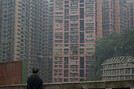
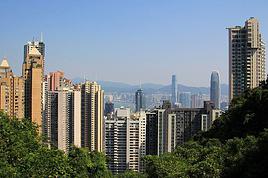
Honk hong...
Petit compte rendu...
Que dire de Honk Hong, de la vie de ses habitants?
Passer quelques jours a HK en touriste, travailler à HK dans un milieu expatrié et habiter chez des "locaux", voila trois façons différentes de voir la ville...ou plutot trois villes différentes.
Premièrement, il faut dire que la ville à énormément changé depuis 2006, la première fois que je suis venu. Chaque année j'ai pu prendre la mesure du changement:la ville devien de plus en plus chinoise et de moins en moins anglaise...
Au premier abord, la ville fascine:des centres commerciaux partout, des transports publics efficaces, une propreté absolue et bien sur les buldings et la nature...car il ne faut pas l oublier; la ville (les villes) de Honk hong est verte...très verte.
Mais, à y regarder de plus près, on a pas l inpression de vivre dans une ville, mais dans une galerie marchande....Il y a au moins un centre commercial par quartier et ils sont tous reliés entre eux par des galeries et des ponts couverts...si bien qu il est possible de traverser la ville d'un côté à l'autre sans mettre le nez dehors, en passanrt des stations de métro aux centres commerciaux...
Serais-ce cela la vie du futur????
Peut-être mais, il ne faut pas oublier la particularité du Honk-Hong post 97: c'est devenu un immense centre commercial pour Chinois enrichis du continent, sous la houlette bienveillante du Parti qui, ici aussi, orchestre tout!
Alors, quel avenir pour Honk Hong? Difficille à dire, mais, en 5 ans, j ai constaté que la plupart des petits commerces familliaux font place à des echoppes asceptisées de grands groupes, idem pour ce qui est des restos; il s agit de plus en plus de chaines de fast foods, américains, japonais ou chinois.
Ayant visiter Hong Kong l'an passée, je suis d'accord avec toi. C'est tellement une ville commerciale, mais du même coup, ce n'est pas non plus désagréable.
même par jour de pluie, tu es pratiquemment garanti de rester au sec tellement tout est connecter ensemble :) . Pour les touristes qui veulent peut-etre une ambiance moins commerciales, il faut absolument marcher sur les rues en dehors du centre ou tout simplement prendre un des ferry pour aller soit a Peng Chau, Cheng chau ou n'importe quel iles de hong kkong. la différence est assez frappante :)
En même temps, on peut tout à fait être dans Hong Kong et ignorer les centres commerciaux ; à mon avis, c'est même ce qu'il faut faire tant ces centre commerciaux ressemblent à ceux que l'on rencontre aux États-Unis. Il reste beaucoup de quartiers sympa "à l'extérieur", des marchés, des petits restos de rue, des bars un peu partout et plein de belles balades à faire.
Ou plutôt Hong Kong... Ce que t'écris se rapproche plus du cantonais, mais là c'est un problème d'orthographe alors ^^
Premièrement, il faut dire que la ville à énormément changé depuis 2006, la première fois que je suis venu. Chaque année j'ai pu prendre la mesure du changement:la ville devien de plus en plus chinoise et de moins en moins anglaise...
Pas tellement en fait, puisque la tendance était déjà amorcée en 2006. Conséquence de la rétrocession bien sûr.
Au premier abord, la ville fascine:des centres commerciaux partout, des transports publics efficaces, une propreté absolue et bien sur les buldings et la nature...car il ne faut pas l oublier; la ville (les villes) de Honk hong est verte...très verte.
Déjà il n'y a pas des centres commerciaux partout. C'est moins pire que la densité des malls à Jakarta par exemple. Et il est loin d'y en avoir à chaque coin de rue.
Ensuite, ça fait partie de la fascination ? Boarf... ^^ Ceux qui sont vraiment grands sont du genre Galeries Lafayette, et il y en a plus qui sont plus petits et ceux-là sont beaucoup plus discrets, à l'intérieur d'immeubles. Enfin bon, pas l'impression qu'il y ait tellement de centres commerciaux (enfin il est vrai que je traîne le plus souvent sur l'île d'HK).
Mais, à y regarder de plus près, on a pas l inpression de vivre dans une ville, mais dans une galerie marchande....Il y a au moins un centre commercial par quartier et ils sont tous reliés entre eux par des galeries et des ponts couverts...si bien qu il est possible de traverser la ville d'un côté à l'autre sans mettre le nez dehors, en passanrt des stations de métro aux centres commerciaux...
Serais-ce cela la vie du futur????
Hein ? Tous reliés entre eux ? Euh... Là j'veux bien que tu me donnes des exemples... A moins que ce ne soit sur Kowloon ? Je ne connais qu'un seul set de ponts couverts, de North Point à Central. Ca fait pas beaucoup pour la distance 😏
Peut-être mais, il ne faut pas oublier la particularité du Honk-Hong post 97: c'est devenu un immense centre commercial pour Chinois enrichis du continent, sous la houlette bienveillante du Parti qui, ici aussi, orchestre tout!
Pas tout non ! Si c'était le cas, comment expliques-tu la relative liberté d'expression qui existe à HK par rapport à la Chine continentale ? Ensuite je ne dirais pas immense, j'entendais pas beaucoup plus de mandarin que de cantonais dans les rues, métros, bus...
Alors, quel avenir pour Honk Hong? Difficille à dire, mais, en 5 ans, j ai constaté que la plupart des petits commerces familliaux font place à des echoppes asceptisées de grands groupes, idem pour ce qui est des restos; il s agit de plus en plus de chaines de fast foods, américains, japonais ou chinois.
La plupart nan alors là pas d'accord du tout. D'année en année, je retrouve quasiment les mêmes petites boutiques de vêtements, etc, dans Wan Chai ou North Point, il y a peu (ou pas) de grandes enseignes, même à Causeway Bay, il y a tout un coin de petits commerces !
Quant aux restaurants là aussi tu m'étonnes beaucoup. Les Mac Do sont très peu nombreux, les restos de rue, les restos chinois, tout ça, ça reste.
Si tu traînes à Central, c'est normal que tu voies ça. Je vois que tu parles aussi de bars... Franchement on se croirait en Europe, ce qui n'est pas étonnant étant donné que le quartier est assez fréquenté par les Européens !! Mais pour le reste de l'île de HK en tout cas, c'est totalement faux. Le seul "fast food" qui se développe, ce sont les express de Maxim's pour les dim sum, mais c'est vraiment tout ce qui saute aux yeux !
Enfin bon je serais curieuse de savoir dans quels coins tu traînes ! Et depuis combien de temps ! Se permettre de comparer le présent au passé pour prévoir le futur ne se fait pas avec 5 ans de voyages ponctuels à HK... 5 ans à vivre là-bas, ok peut-être. Mais là franchement tes descriptions sont faites de clichés ou de généralisations qui ont l'air incomplets... A moins que ça ait tellement changé depuis janvier 😐
j habite a kowloon...a hang hau...
et la ya que des centres commerciaux (encore aujourd hui, je m y suis perdu)
(et je connais bien la chine et le problème chinois: j ai fait mes etudes a pékin et ensuit j y ai vécu 5 ans)
hang hau fait parie des villes "nouvelles " sur les nouveaux territoires, une de ces villes chapignons poussées dans les années 90.
a ce sujet, voir les deux films de la cinéaste HK Ann HUI Onn Wah (tournes à Tin SHui Wai, surnommé la Cité de la misère qui détient des records en matière de chomage, de suicides et de violences conjugaleset activités des triades )qui font ressortirl echec de la politique sociale de HK come une série d 'erreurs d aiguillages.
il le faut pas non plus oublier que tout (ou presque) le potentiel industriel de HK à été absorbé par Shenzen
et que dans beaucoup de cités dortoires de HK, la paix sociale s'achète à (gros) coup de subventions. ici il s agit d une politique totalement chinoise...similaire à celle qui à cours au Tibet et au Xinjiang.
a ce sujet, on peut citer DAVID ATTALI (the honk hong fixer)
ici, le traitemment de l humain est pragmatique. Les normes ne correspondent pas à nos standarts occidentaux, mais ils permettent de loger des gens et sont infiniment mieux que les premiers logements construits a la hate pour loger les flots successifs de migrants. Il ne faut pas oublier qu 'a Honk Hong, 40% des gens vivent dans ces logements sociaux. le gouvernement s'est fait critiquer et les association caritative se sont inversties pour tenter de sauver la ville.
le site du fixeur est:thehongkonkfixer.wordpress.com
Je comprends ta réaction, il y a tellement de petits commerces et de boutiques traditionnelles qu il est difficile d'accepter de voir Hong Kong comme une ville se faisant dévorer lentement par les centres commerciaux.
Malheureusement certain quartiers se transforment aux profit des grandes enseignes et un nouveau visage est en train d'apparaitre.
Je vais te donner un exemple très concret: le petit magasin de poulet/poisson séchés, crabes verts ligotés et autres produits locaux qui jalonnait ma route lorsque je me rendais a time square tout les matins. Il a tout bonnement disparu pour faire place a un magasin flambant neuf de montres Swatch.
Je ne m'en suis pas rendu compte tout de suite. Petit a petit les grandes enseignes auront la part belle et que cette mixité ancien/neufs, commerce traditionnelle/centre commerciaux ne devrait pas résister éternellement dans les quartiers les plus commerciaux de Hong Kong.
Heureusement que Hong Kong est le paradis du centre commercial pour ravitailler les continentaux en divers produit à prix abordables : vin, cosmétique, informatique, produits divers, etc. Dès que quelqu'un va a Hong Kong c'est la même chose : "qu'est ce que vous voulez que je vous ramène ?"
A mon avis, c'est la ville la plus fascinante que j'ai vu. J'adore en de nombreux points ! Foret de building, foret d'arbre, mélange des langues, on est à 3/4 en Chine à 1/4 en Europe, et puis le soir venu toutes ses lumières... Point de départ pour l'Asie du Sud Est aussi, un territoire à explorer.
Carnets de voyage sur la Chine et Asie sur mon blog
Je m'immisce...
Ayant eu la chance de connaître HK avant la rétrocession, j'y retourne à la fin de cette année.
Mon inquiétude est que cela fasse trop chinois, càd clinquant, doré et de mauvais goût (quand on voit ce qu'ils ont fait de Lhassa).
Qu'en est-il réellement ?
Tu peux détailler ce que tu entends par clinquant machin machin ?
Ben sinon les chinois aiment montrer qu'ils ont de l'argent etc, tu pourras jamais leur éviter ça, rétrocession ou pas.
Mais ne va surtout pas traîner là où tout le monde te dirait d'aller, à savoir Kowloon. C'est un des endroits les plus chiants avec la plus grosse densité de magasins de luxe (j'exagère un peu, mais globalement c'est ça...). A choisir, va sur l'île de HK. Je trouve ça beaucoup plus populaire.
Oui mais tu vois, ce sont des cas particuliers, à Paris aussi il y a des petits commerces qui disparaissent et qui laissent place à un Carrefour city ou tout ce que tu peux trouver de pire au monde. Mais ce n'est pas global comme le décrie lucq dans son premier message. Ben oui, y a un turnover des shops, mais c'est inévitable, ça arrive partout. De là à dire que ça disparaît complètement, que c'est en train de devenir ci ou ça, c'est du grand n'importe quoi. Surtout pour quelqu'un qui ne connaît HK que depuis 5 ans ce serait étonnant d'avoir autant de recul 😮
Tu peux détailler ce que tu entends par clinquant machin machin ?
Je ne parlais pas des gens, mais de leur façon de décorer, rouge et doré, comme les machins que l'on voit pendouiller aux rétroviseurs des voitures du 13e.
Bon, pas grave, je verrai bien effectivement.
J'avais bien aimé Kowloon, mais c'était il y a 25 ans, il n'y avait pas beaucoup de magasins de luxe. Cette fois-ci, je serai à Causeway Bay.
Je ne parlais pas non plus des gens, mais les "décorations extérieures" sont le résultat de leur mentalité 😉
Enfin c'est moins pire qu'à Singapore.
Je ne vois pas du tout ce que sont ces petits trucs rouge et or aux rétroviseurs...rétro central ? rouge = bonheur, or = richesse... ce sont des couleurs importantes pour les gens.
Mais à moins de tomber en plein nouvel an chinois, je pense pas que t'aies ce genre de "fastes". C'est assez bizarre ce que tu décris quand même :S
Ouaich vive Causeway bay et alentours :D Pour kowloon, j'ai vu ça sur le blog d'un expat et sur les aperçus que j'en ai eus ces dernières années...
je parle d'une évolution globale au monde chinois en général.
Bien-sur, HK gardera tojuours sa particularité de ville de l empire britannque (quoi que les choses bougent si vite en chine)
mais il ne faut pas s'y tromper, ou se limiter aux apparences, les "grandes marques internationales, les grands noms, etc"sont pour la plupart des franchises qui appartiennent à de gros investisseurs chinois.
Ici en chine, plus personne ne crois encore aveuglément au parti et au gouvernement, et les gros investisseurs pas plus que les autres. Mais, le parti, le gouvernement , c'est l argent...et comme ces gens chérissent l'argent par dessus tout, pour pouvoir en gagner tranquillement, il promeuvent, a gros coups de millions, la vision du gouvernement: promouvoir une consommation effrenée afn d'acheter la paix sociale, uniformiser le pays...
C est une, c est équation gagnante, pour le moment...Shenzen (zone economique speciale) produit, HK consomme...et vend (encore une fois, ce n est pas le gouvernement local qui vend, mais le gouverneur chinois et son équipe de businessmens) son image aux Chinois enrichis...et c est un concept qui gagne....
Depuis 2009, kasghar au xinjiang, suit le même chemin; c'est devenu une Zone Economique Spéciale...et que de changement en 3 ans: vielle ville rasée, constructions d'immeses barres d immeubles, afflux massifs de Hans (pareil a HK) enormes shoppings malls. et aussi, même recette qu'a HK, grosse clientèle internationale (locale) venue faire du business et depenser son argent: Kasaks, Russes, Pakistanis, Ousbeks, et européens.
HK est (ou était) un ilot de cosmoplitisme égaré au beau milieu du pays de la conformité...une verrue, si on peut dire...
depuis la rétrocession, HK se sinise petit à petit. D'une ville quasi autosuffisante, elle est passée depuis à une dépendance totale vis à vis de la chine...comme le Tibet et le Xinjiang...et comme le tibet et le xinjiang, la ville à un lourd passé "historique" et , rassure toi, le parti saura bien le lui faire payer.
Honk Kong n'est plus Honk Kong, Hong Kong c'est vla Chine. HK est devenue une marque déposé...sans copyright
par contre, au niveau politique, HK jouit encore de droits bien plus avancés que le reste de la chine (pour combien de temps encore, c'est toute la question, car le gvt de pekin vient de promouvoir une loi qui lui donne plus de poids en matière de justice)...et c est la toute la différence avec le reste de la chine...et c est ce qui fait peur au parti, et c est ce qui met HK dans son colimateur...
alors consommer, oui mais réfléchir non!
je viens de rentrer à Pekin. et que de différence entre la chine de 2010 et celle de 2011! on voit bien que la "campagne des JO et de l'expo" est finie. Les gens sont retombés dans l'apathie...ils sont en attente;
finalement, pour eux, les "jo et l expo" cela n aura et qu une campagne de plus. il ya eu le grand bond en avant, la revolution culturelle, les 4 modernisations et puis les Jo et l expo...dont les traces commencent à s estomper peu à peu car maintenant on est entré dans la campagne "contrer les 3 forces négatives" le séparatisme, l extremisme religieux et le terrorisme!
ainsi donc la vie se poursuit, pareille à elle-même...
et puis, les slogans , ce ne sont que des slogans bien-sur, qui avaient disparu durant les Jo et l'expo réapparaissent un peu partout : construire un communisme harmonieux (durant cette période, le mot communisme avait ete remplacé par "société")
maintenant, tout le monde est en attente d'un évenement (mais lequel et quand?) qui mettra a bas le carcan qui bloque tout...
Je prévois de prendre le Transsibérien en Mars prochain et je me demandais si quelqu'un savait à quelle fréquence le train passe dans les gares en hiver? Y a…
Nous partons 5 semaines en Chine, arrivée prévue mi-juillet à Kunming. Nous prenons diectement un train pour Dali. Et là aucune idée de la suite... Des…
Je compte partir en Chine en Février/Mars 2011 pour y voir une amie. Mon vol doit arriver vers 15:15 à l'aéroport de Guangzhou mais mon amie me dit que ça…
We’re arriving as a group of three in Tokyo on Saturday, October 17th, then heading straight to Kyoto by direct train.
On Sunday and Monday, we’ll explore Kyoto, and in the evening, we’ll take a train to Osaka to spend the night.
On Tuesday, we’ll pick up a rental car at Itami Airport for a 6-day/5-night road trip around Shikoku:
- 2 nights in the Iya Valley
- Thursday morning, we’ll head to Matsuyama for 2 nights.
- Saturday, we’ll visit Mima (town, a few temples + overnight stay) and return on Sunday to drop off the car in Osaka.
We’ll leave very early on Monday the 26th by plane for Aomori in northern Honshu, where we’ll pick up another rental car at the airport for a 5-day/4-night trip:
- Day 1: Tsugaru Peninsula (Takayam Inari, Cape Tappi, Kanita); overnight in Kanita
- Day 2: Ferry transfer to the Mutsu Peninsula (cliffs, Lake Usori); overnight in Shimofuro
- Day 3: Head to the Hakkoda Mountains and onsens galore; overnight TBD
- Day 4: Return the car in Aomori by noon and explore the city before taking the train to Tokyo in the evening
We’ll spend Friday night in Tokyo, wander around on Saturday, and head home on Sunday.
Thoughts on the road feasibility of this trip? We’ll be there right in the middle of Koyo season, so it’ll be busy...
I know it’s a lot of driving, but there are two of us who can take turns. We’re not afraid of driving, even in the mountains and on the left side! Just wondering, are we going to be rushing, or is this manageable? AI says it’s all good, but it’s not the one driving...
Any tips for booking accommodations in the Iya Valley? Not many places have email addresses or websites (I know Booking.com exists, but not all listings are on there... and given the season, I think it’s better to book ahead!). Same question applies for northern Honshu.
For the rental car, I’m thinking of going with Alamo since at least it’s in French and straightforward, but are there any direct rental companies with user-friendly websites (Toyota Rentacar, ugh... 🏴☠️)?
Another question: With so many trains, is it even necessary to book them in advance? Can we just go to the ticket counter and grab seats on the spot?
For paying for the rental car, do we need a credit or debit card?
I’m starting to look at neighborhoods in Seoul, and I’m leaning toward staying in a hotel in Insa-Dong—I’ve spotted one really close to Unhyeongung.
Is this a good area—nice and convenient for exploring the city?
Otherwise, I’ve also found another hotel in Yongsan-Gu, right near the station of the same name. Is that station useful for getting around Seoul?
Since I’ll be in South Korea for nearly two months, I plan to spend at least a week in Seoul to recover from jet lag (it takes me a while to adjust...). So, I’d love a neighborhood that’s pleasant and a hotel not too far from a subway station.
Hi,
My departure is coming up soon—two months backpacking in Taiwan, so much to discover! I’d love to hear about your travel experiences.
My main interests are meeting people, understanding how things work, hiking, and nature in general. I’ve also done a lot of reading about Taiwan’s complex situation.
I do stone sculpture.
I also want to visit Orchid Island for its history.
Marie
We’re back from a one-month trip to China and wanted to share our itinerary. Hopefully, this can give future travelers some ideas for exploring this beautiful country.
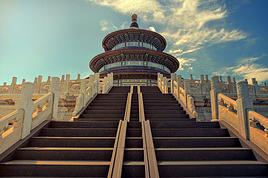
Beijing → Temple of Heaven / Forbidden City
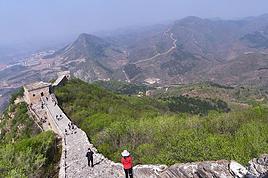
Jinshanling → Great Wall
Zhangjiajie → Tianmen Mountain and Heaven’s Gate
Wulingyuan → Avatar Mountains / sandstone pillars
Fenghuang → riverside houses
Ping’an → terraced rice fields
Tiantouzhai → village / rice terraces
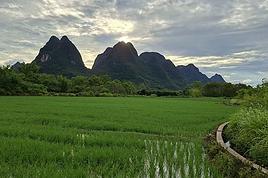
Yangshuo → Li River / karst mountains
Shanghai → skyline with the Oriental Pearl Tower
Our travel journal is available on our travel journal, written day by day. You’ll find lots of photos and some travel tips there.
I could really use your help to finalize our trip to Japan.
We’re heading there for three weeks with my partner, starting November 10th. Our plan was to visit Tokyo, Kyoto, and a few stops in between (nothing too original so far…).
However, we’re more into nature and hiking, so even though we do want to explore Tokyo and Kyoto, we’d like to maximize nature stops between the two. Initially, we’d considered places like Kamikochi, but I understand it’s not accessible this late in the season.
Hi there,
I’d like to do this cycling route over 2 or 3 days. I’m struggling to figure out and find a (good) bike rental that lets me start in Onomichi and drop off in Imabari. Can anyone help with great tips for rentals and accommodations along the route? How do I get back to Onomichi afterward?
Next year, we’re celebrating 20 years of marriage (and travel 🙂), and we’re looking for something new, pretty legendary, and something the teens will enjoy too.
The family council has settled on Japan for now. And it’d have to be a summer trip—no choice there.
The catch: I keep reading that August isn’t the right season for southern Japan. It’s hot, humid, and there’s a risk of typhoons… Okay, but what does that *actually* mean in practice? Are there any travelers who’ve been there during this time? Is it *that* unbearable?
We’re pretty familiar with Southeast Asia—last year, we dealt with scorching heat in Vietnam and insane humidity, plus a typhoon we experienced from a distance, and visiting Angkor in the blazing sun. Is it worse than that?
I’m back with my detailed itinerary for 20 days in South Korea—it’s my first trip to the country. Our idea is to experience a more rural and cultural Korea. Here’s the rough plan: Seoul for 4 nights at the start and 1 night at the end, Gurye for 4 nights, Suncheon for 4 nights, Namhae for 4 nights, and Gyeongju for 2 nights. The goal is to pick a base and explore the surrounding areas. What do you think of this itinerary? Anything you’d change?
thanks
hi everyone, we're heading out for a 12-day trek in the Japanese Alps. We're bringing freeze-dried meals like we always do. We just found out that importing meat is banned, even freeze-dried. Is that true? We already bought them. They're commercially made freeze-dried meals. Online, it's not specified that they have to be "commercially made" because you can make your own freeze-dried food. And since we've heard they're really strict in Japan, can anyone confirm this for us? thanks
I haven’t found what I’m looking for despite my searches!
For a 15-day trip next spring, I’d like to buy a card (preferably an eSIM, but a physical SIM is fine too) that also lets me make calls in the country (to contact a hotel, a tourist spot, etc.).
You can easily find options just for data, but I haven’t come across any that include calls, texts, or even MMS.
Could you recommend something?
hi there
I’m planning a trip in September—here’s my rough itinerary. What do you think? Is it easy to rent a car to get around between my stops? Thanks so much!
Philippe
StopNightsFull daysSeoul44Gurye (Jirisan)43Suncheon43Namhae43Gyeongju21Seoul1—
Hi,
July 2026: I’m writing to you from Dali.
First, I got scammed on Booking—AI-retouched photos. No tourists at this hotel (Yishanju Designer Hotel), and the reality was horrible: dirty, with a disgusting breakfast. It’s better to use Trip.com here.
Next, the old town was an infernal cacophony, packed with tourists who shoved past without a care. Some vendors harassed you to buy things. All the stalls sold the same cheap plastic junk or other uninteresting stuff. The beautiful scenery was ruined by vendors lining 100% of the alleys. Impossible to walk, crushing heat, nothing good to eat except fresh fruit. Horrible experience.
Day 2: We went to Cangshan Mountain by cable car—the ride was short and nothing spectacular. We were at 2,600 m.
My plan was to see Erhai Lake. Unfortunately, I followed the advice of an AI chatbot: take the boat at Langkan Dock. The Didi dropped us off in the nearest area, which was full of charming little alleys but packed with Chinese tourists. The three-wheeled yellow cabs zoomed through the narrow streets, forcing you to hug the walls, on top of the scooters and other pedestrians to deal with. Crossing the neighborhood was hellish and suffocating. Once out, we hit the "corniche," which was also packed with Chinese tourists. The lake’s edge was all pebbles, and everyone was standing around taking photos. I was with my 5-year-old son. I would’ve liked to sit down and let him play with stones by the water, but it was clear we didn’t belong. They were even shoving each other for a shot! There were no boats in sight. In short, we’d had enough, and there was nothing interesting there either.
On the way back, we had to cross that maze again under the scorching sun. My son was braver than me—I even had a little dizzy spell from all the chaos. Add to that Dali’s altitude (2,200 m), so altitude insomnia, fatigue, and vulnerability during the day...
The restaurants weren’t inviting—the staff served sticky rice in a little bucket. The dishes were wrapped, and you had to figure it out yourself. After that, they ignored you completely, even if you were the only tourist.
On the 3rd day, it was time to leave for Shaxi. I hope to see beautiful villages. But honestly, I’m exhausted by this atmosphere where everything is complicated, communication is never smooth, noise is everywhere, and the behavior of some Chinese people is abusive...
Silver lining: not a drop of rain in 4 days and blue skies.
I couldn’t visit the villages in southern Yunnan because of rain and storms there...
But I was expecting to see a few more tourists.
We’re planning a 17-day trip to South Korea in October 2026 with my husband and our daughters, who’ll be 9 years old.
I’d love to get your thoughts on our draft itinerary.
First, some key details:
1/ Jeju Island is a must for us. I’ve personally dreamed of going there for years after reading a novel about it.
2/ Our girls are used to road-trip style travel since they were born, so this kind of trip won’t be an issue for them.
3/ We plan to travel by train, except on Jeju where we’ll rent a car (we already have an international driver’s permit).
Itinerary:
Seoul: 1 arrival day at 10 AM + 4 full days
Gyeongju: 2 days
Busan: 3 days
Jeju: 4 days
Seoul: 2 days
Hi there,
My girlfriend (23) and I (24) are heading to Japan for the first time from October 20th to November 6th. Here’s our itinerary:
6 nights in Tokyo
1 night in Hakone (ryokan already booked)
4 nights in Kyoto (hotel already booked)
2 nights in Osaka
4 nights back in Tokyo
I’d like to book hotels for Tokyo (both stays) and Osaka, but I’ve gotten so many different recommendations.
I’ve read that Shinjuku is the place to be for its huge hub, accessibility, and things to do, but I’ve also heard about Shibuya, Asakusa, and Ueno.
I’ve looked at hotels, and first off, I’m surprised by the prices compared to what I’ve seen on forums (I guess inflation’s hit here too… and maybe I’m late to the booking game?). I’m feeling a bit overwhelmed with all the options.
For our first stay in Tokyo, I’d prefer a hotel (not a residence or Airbnb) since we’ll be arriving at night, and it’s our first time in Japan. It’d be great to have a place with a reception, staff who speak at least a little English, and can give us some guidance. For the second stay, we could consider other options if it’s better.
Budget-wise, we can go up to 150–180 € per night, but if we can save some money to spend elsewhere, that’d be amazing!
I’m open to all recommendations, hotel suggestions, or any other tips for Tokyo (first stay), Osaka, and Tokyo (second stay).
Hi there,
I’m getting ready for a classic tourist trip to China in May 2026.
The "Terres Lointaines" itinerary looks good to me, and the price is interesting.
Has anyone traveled with them before? Any feedback?
Is there a better option?
Thanks so much for sharing your experiences on this!
Michel
I just booked my hotel in Seoul—it’ll be near Unhyeongung, on Samil-Daero 30-Gil—and I’m wondering if there’s public transport from the airport to this address (bus or subway)? If not, what’s the taxi fare? I read it’s around 50 or 60 €.
I’m traveling to Japan with a young adult with autism (ASD) from July 28 to August 8, following a pretty classic route: Osaka, Hiroshima, Kyoto, and Tokyo. I’m looking for a schedule of the most spectacular fireworks displays during that time. So far, the dates for the major *hanabi* events aren’t available online yet. If anyone has them, I’d really appreciate it if you could share!
We’ll be doing a self-drive trip using public transport in May 2026.
On Day 6, we’ll arrive in Hakone by train from Tokyo in late morning. We’ll spend the night in Hakone before heading to Kyoto.
The main goal of this stop is clearly the view (no hiking) of Mount Fuji, not so much exploring Hakone, where the sights seem limited.
I’ve read on the forum that the view is great from Gotemba, but it also takes a good hour by bus to get there. And, apart from that view, there’s nothing else to see in Gotemba!
So, I’m not sure what to choose. Any thoughts? Or alternatives to suggest?
Maybe some spots in Hakone or Gotemba for a great view?
Hi everyone, I’m Julien!
This summer, from late June to late July, I’m planning a one-month solo trip to Japan—my first time!
I’d love to hear your thoughts and advice on the itinerary I’ve put together to explore this amazing country.
Here are the routes I’m considering:
**Option 1: More mountain and nature-focused**
Tokyo: 8 nights, with day trips to Nikko and maybe the Izu Peninsula
Kawaguchiko (Lake Kawaguchi/Mt. Fuji): 1 night. The place looks stunning, but I’m worried Mt. Fuji might not be visible due to the weather
Kyoto: 6–7 nights (including a trip to Nara)
Osaka: 1–2 nights, where I’d like to drop off my things to make the Kumano Kodo easier
Kumano Kodo: 3 nights—an experience I haven’t seen much elsewhere, but I thought it sounded really interesting
Hiroshima: 2 nights
Miyajima: 1 night
Takayama: 3 days
Kanazawa: 3 days (From what I understand, the Osaka–Takayama–Kanazawa–Tokyo route is convenient for transport)
Tokyo: 1 night (return)
**Option 2: More varied but a bit vague in parts**
Tokyo: 8 nights
Kyoto: 7 nights (+ Nara)
Osaka: 2 nights
Kobe + Himeji: just passing through—I’m not sure if it’s worth a night
Naoshima: 1 night—still pretty unclear for me
Takamatsu: 2 nights. An interesting city, but I’m not sure how long to stay
Shimanami Kaido: biking from Imabari to Onomichi, then heading to Hiroshima
Hiroshima: 2 nights
Miyajima: 1 night
Kyushu road trip (Aso + onsens + Fukuoka): 5 nights (also pretty vague—I could fly from Fukuoka back to Tokyo)
Tokyo: 1 night
**Option 3: More balanced/simplified**
Tokyo: 8 nights
Kawaguchiko: 1 night
Kyoto: 7 nights (+ Nara)
Osaka: 2 nights
Koya-san: 1 night
Kumano Kodo: 3 nights
Takayama: 3 nights
Kanazawa: 3 nights
Tokyo: 1 night
A few key points:
I haven’t made any reservations yet, except for the flight tickets.
I know my plans are too packed and will need to be adjusted.
I’m specifically looking for advice on which stops to cut or shorten.
Hello everyone,
Like Cedric13600, I’ve booked a flight ticket for 30 days / 29 nights in September 2026, from Beijing to Shanghai. We’re a couple in our sixties who love independent road trips.
I’d like to draw inspiration from the following private itinerary suggested by a travel agency:
Day 1: Arrival in Beijing
Day 2 to 4: Beijing
Day 5: Datong
Day 6 & 7: Pingyao
Day 8 to 10: Xi'an
Day 11: Luoyang
Day 12: Dengfeng
flight
Day 13 & 14: Chongqing
flight
Day 15 & 16: Lijiang
Day 17: Dali
Day 18: Kunming
Day 19: Jianshui
Day 20 & 21: Yuanyang
Day 22: Travel via Guilin
Day 23 & 24: Yangshuo
Day 25: Guilin
Day 26 & 27: Zhangjiajie
flight
Day 28 & 29: Shanghai
Day 30: Departure from Shanghai
But to do this itinerary independently:
1. This schedule seems very ambitious to me—what do you think?
2. If it’s too packed, what would you remove as a priority?
Thanks so much in advance for your help.
I’m planning a 5-week trip between Yunnan and Sichuan from mid-October to the end of November 2026:
Arriving in Kunming, I’ll do a loop in the far south of Yunnan via Thonghai, Jhiansu, Zhemi, Yuanyang, Nafa, Jinping, Mengzi, and Shilin (visiting markets, villages, and hiking), then head to northern Yunnan/southern Sichuan on the same theme (passing through Kunming again) via Dongchuan, Huize, Qiaojia, Puge, Xichang, Lanba, Butuo, Huolie, Dimo, Riha, Niuniuba, Meigu, Mabian, and Leshan, before arriving in Chengdu (where I’ll take my return flight to Paris).
This would be a trip with a strong ethnic/rural focus. Since I’ve never traveled in China, I’d love to hear your thoughts on doing this solo. Are there public transport options in the region? What tips do you have for traveling through this area as smoothly and enjoyably as possible? I’ve done quite a bit of backpacking in the mountains of northern Vietnam and really enjoyed using local motorbike drivers. Is something like that available in this region (through local tourist agencies or hotels)?
What should I be cautious about? Are local tourist agencies (or hotels) offering tours and guides reliable? If you know of any specialized sites sharing tips or experiences, or names of local agencies, hotels, etc., please don’t hesitate to share them! :)
In short, all your advice (on any topic that comes to mind!) is very welcome.
Thanks so much!
While researching South Korea, I came across the term "templestay," which refers to a Korean program that lets you stay in a traditional temple to discover Buddhism and Korean culture by living like the temple residents and doing activities like making lanterns.
A templestay isn’t just for foreign tourists—on the booking site, I saw that some temples are more geared toward foreigners, with English-speaking monks.
I was wondering if it’s still worth it, especially in temples where the monks don’t speak English?
I'm 69 years old and heading to China, where most tourist sites are free or discounted for me. However, trip.com either refuses to let me book because the sites are free or doesn’t apply the discount. Does WeChat apply this discount if I book through them? How can I just reserve without paying and pay on-site? Is that possible?
I’d love to get some feedback on our 30-day / 29-night itinerary in China. We’ll be there in September as a family with two kids (6 and 10 years old).
Do you think I should cut a few nights between Wulingyuan (Avatar Mountain) and Yangshuo? I’ve planned 15 nights total there.
We’ll be on a round-the-world trip starting May 2026 and will need to do schoolwork with the kids. Hoping to fit it in during train rides!!
Ever since I started planning this China itinerary, I’ve been discovering completely mind-blowing places I’d never heard of before—30 days feels way too short for China!!!
Here’s our itinerary:
Beijing - 4 nights
Forbidden City
Great Wall of China
Temple of Heaven
Xi’an - 3 nights
Terracotta Army
Muslim Quarter & Great Mosque
Chengdu - 3 nights
Zoo - Research Base of Giant Panda Breeding
Wenshu Yuan Temple
Hi there,
We just got back from a 2-week trip to China as a couple, and before we left, the budget was the hardest thing to picture concretely. We found plenty of info on visas, apps, transport, and itineraries, but way fewer detailed breakdowns of what you *actually* spend on the ground.
So, we took the time to share our real budget for 14 days. In our case, we spent around 1,800 € per person, with a big chunk of that going toward round-trip flights at about 600 € per person. We were also pretty surprised by how affordable China can be once you’re there—transport is often cheap, and a lot of everyday expenses stay reasonable.
The trickiest part, in the end, was figuring out how to pay while you’re there, since it’s not always obvious if you’re not prepared. But once everything’s set up and you get the hang of it, it’s really smooth.
If this can help other travelers get a better idea before they go, we’ve broken it all down here:
https://aventures-sans-mesaventure.com/budget-2-semaines-de-voyage-en-chine/
Hi everyone,
I’ve been planning several itineraries for a trip to Japan with my wife but would love your insights before we start booking!
In short, we want to go during Golden Week, see late-blooming cherry trees, and have the freedom to get around with a rental car.
Here’s the plan:
18-day itinerary in Japan (April 25 → May 12)
Goal: freedom, late cherry blossoms, culture & nature
---
Days 1–3: Tokyo (April 25–27)
Arrival and adjustment (no car needed yet).
Neighborhoods to visit: Shinjuku, Asakusa, Meiji Jingu, Shibuya, Odaiba.
Suggested activities: Ghibli Museum, Sumida River cruise, izakaya meals.
Late cherry blossoms (yaezakura) possible at Shinjuku Gyoen.
Pick up the rental car on the morning of April 27.
---
Days 4–5: Mount Fuji & Hakone (April 27–28)
Route: Tokyo → Kawaguchiko/Hakone (~2 h).
Activities:
Lake Kawaguchi, Chureito Pagoda (Fuji views + late cherry blossoms)
Onsen baths, Hakone Open-Air Museum.
Stay: ryokan with onsen and views of Mount Fuji.
Activities:
Preserved old town, sake breweries, UNESCO village of Shirakawa-go.
Stay: traditional minshuku (thatched-roof house).
Cherry blossoms are finishing at this altitude — beautiful mountain/nature contrasts.
---
Days 8–10: Kyoto & Nara (May 1–3)
Route: Takayama → Kyoto (~4 h 30).
Activities in Kyoto:
Fushimi Inari (red torii gates), Golden Pavilion, Arashiyama, Gion (geisha district).
Day trip to Nara:
Free-roaming deer in Nara Park, Todai-ji Temple, Kasuga Taisha Shrine.
Stay: Kyoto (3 nights).
---
Day 11: Osaka or Himeji (May 4)
Route: Kyoto → Osaka (~1 h) or Himeji (~1 h 30).
Option 1: Osaka → modern vibe, street food, castle.
Option 2: Himeji → stunning UNESCO-listed castle.
Stay: Osaka.
---
Days 12–13: Kanazawa (May 5–6)
Route: Osaka → Kanazawa (~4 h 30).