J'ai tellement de choses à demander et je ne sais pas où commencer.
Je vais commencer par dire pourquoi je poste ce sujet ici aujourd'hui :
Je suis un jeune homme de 20 ans, vivant en France et qui ne supporte plus la vie actuelle (société en générale) et son quotidien "Boulot, manger, dodo" et cette dépendance pour l'argent qu'on est obligé d'avoir.
Depuis déjà maintenant 6 ans je m'intéresse à la survie dans les milieux hostiles, comment survivre, quelles sont les plantes comestibles et toxiques etc. Jusqu'en 2010 je ne m'intéressais qu'à survivre dans une foret de France par exemple.
Mais des faits ont fait que j'ai compris qu'ici, c'était impossible.
Aujourd'hui si je suis là, c'est parce que je vais partir d'ici peu (Janvier ou février 2013).
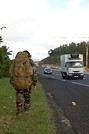
Je souhaite (et je le ferai quoi qu'il en soit) partir vagabonder sur les routes, les forêts et autres paysages de la Thaïlande, du Vietnam, du Laos et du Cambodge.
Je compte me rendre en Asie du sud est et vivre au jour le jour, avec un peu d'économie mis de coté avant de partir.
Mes questions sont nombreuses, mais je vais poser les plus essentielles à ce qui me tiens à cœur.
Étant donné que je ne veux pas travailler (Si je ne veux pas suivre ce train train que l'humanité a en France ce n'est pas pour le faire autre part.) je veux partir là bas et voyager de régions en régions. Et en me débrouillant.
Ne pas vouloir travailler est un fait, mais si pour manger ou être hébergé une nuit ou deux, je serai heureux de travailler/rendre service à la personne concernée sur place.
Voici quelques questions :
- Puis je camper où je veux? Est ce que le camping sauvage est interdit?
Je sais que de nombreux posts relate cette question mais moi je ne veux pas louer de bungalow!
- Comment puis-je régler le problème des différentes monnaies?
Oui, Vietnam, Thaïlande, Laos et Cambodge, chacun on leur propre monnaie et je ne me voie pas changer mon argent à chaque fois sauf si c'est la seule meilleure option. y'a-t-il une carte que je peux me procurer et qui me permettrait de retirer dans tous ces pays?
- La vagabondage est-t-il puni par la lois?
Je compte évidemment prendre un passeport pour mon départ là bas, mais comme je compte rester là bas y vivre (partout et nulle part) il y a bien un moment ou il va être périmé. Ou bien puis-je le changer/l'actualiser sur place?
- La violence : Y'a-t-il des risques/précautions que je doive prendre là bas puisqu'il m'arrivera souvent de marcher/dormir seul.
- Ai-je le droit de porter un couteau/machette sur moi?
Étant donner que je compte parcourir les routes et les différents sentiers de l'Asie, je veux être prêt à me défendre. Je ne compte pas me laisser tuer non plus!
Ce sont pour le moment les questions essentielles que j'aimerais en trouver la réponse, les autres viendront probablement avec votre réponses.
J'ai déjà fait un voyage de ce type, en Martinique, et cela s'est bien passé. Je ne suis pas un amateur, ni un professionnel mais je suis quelqu'un de solide et de très bonne condition physique.
J'attends vos réponses avec impatience.
Sunaame.
PS : Je sais déjà que ce post va en révolter plus d'un (à propos de ma vision des choses concernant la société et le travail) mais ceci est mon rêve depuis maintenant trop longtemps. Je ne veux pas attendre d'avoir 30 ans pour Vivre.
Mon destin n'est pas d'amasser de l'argent. Ni de devoir payer pour vivre.
"Les rêves ne se réalisent que pour ceux qui ont la force d'y croire."
C'est une idée merci, je ne connaissais pas cet homme. Après, c'est différent, lui a eu besoin d'argent, de popularité pour pouvoir être emmené sur cette ile.
Et là pas de problème de carte Visa j'imagine oui, mais c'est tout de même pas mon objectif.
salut Sunaame.
j'aurais moi aussi étais intéressé que quelques personnes expérimentées en voyage (et dans cette région d'Asie) répondent. mais ce n'est peut être pas le bon forum!
en tout cas essais tout de même d'assez bien préparer ton voyage. et essai donc de savoir le plus justement possible ce que tu désire vraiment. ce questionnement te permettra peut être d'un peu plus préciser et éclaircir ton projet.
c'est en tout cas un projet voyage original et courageux.
en espérant pour toi plus de réponses.
bonne route...
Tout d'abord je te dis "bravo" pour ton choix de vie...Vivre sans thunes, au plus près de la nature...Peu de gens sont capables de faire ça dans un monde occidentalisé.
J'invite les vieux routards dont ça fait une quarantaine d'années qu'ils voyagent dans cette région, d'apporter leur contribution à ton post, mais à mon avis, en ce qui concerne la Thailande, t'arrives 30 ans trop tard; mon impression générale est que depuis 1999, lors de la propagande du gouvernement "Amazing Thailand" la Thailande privilégie le tourisme qui rapporte de l'argent au pays, plutôt que des "globetrotters" comme toi...
De plus, les questions que je me pose à ton sujet sont: combien de temps tu va rester là-bas, de combien d'argent tu disposes et comment vas-tu faire pour les visas? par exemple...
Afin de ne pas attirer des critiques gratuites sur mes dires je préfère développer mon sentiment et l'expérience d'un ami qui s'est tenté à l'expérience en 1997 en message privé.
Sawadee krap
Vis ton rêve mais ouvre aussi les yeux,
1° jet (pour la Thaïlande) :
Rêve :
Des nomades il y en a en, ils ont extrêmement bien tolérés
Si cela peut te donner une piste :
Ouvre les yeux :
Puis-je faire l’effort d’apprendre les bases de la langue Thaïlandaise pour la communication ?
Travailler, tu n'auras pas le droit en tant que touriste.
S’il m’arrive un gros pépin de santé, je fais comment financièrement ?
- Puis je camper où je veux? Est ce que le camping sauvage est interdit?
Je sais que de nombreux posts relate cette question mais moi je ne veux pas louer de bungalow!
Interdit de camper - camping sauvage interdit, mais tu peux dormir sur les trottoirs de Bangkok sans problèmes
- Comment puis-je régler le problème des différentes monnaies?
Oui, Vietnam, Thaïlande, Laos et Cambodge, chacun on leur propre monnaie et je ne me voie pas changer mon argent à chaque fois sauf si c'est la seule meilleure option. y'a-t-il une carte que je peux me procurer et qui me permettrait de retirer dans tous ces pays?
Carte de crédit, mais bon, le mieux pour survivre, c'est de transporter de la poudre du Vietnam en Thailande
- La vagabondage est-t-il puni par la lois?
Je compte évidemment prendre un passeport pour mon départ là bas, mais comme je compte rester là bas y vivre (partout et nulle part) il y a bien un moment ou il va être périmé. Ou bien puis-je le changer/l'actualiser sur place?
Pas de soucis, les services d'immigration thailandais sont réputés pour leurs amabilité. En cas d'overstay, ils vont même t'offrir quelques nuits au Hilton.
- La violence : Y'a-t-il des risques/précautions que je doive prendre là bas puisqu'il m'arrivera souvent de marcher/dormir seul.
- Ai-je le droit de porter un couteau/machette sur moi?
Non, un couteau ou un machette, c'est pour les tarlouses, tu pourras pourras facilement trouver un flingue.
Surtout n'hésites pas si t'as d'autres questions de ce genre.
Prévois suffisamment d'argent pour la durée de ton séjour car si tu ne souhaites pas travailler tu devras sans doute mendier. Pas sûr que ça passe bien auprès des autochtones un blanc qui mendie. Ni qu'ils comprennent vraiment ton concept de voyage. Après pour le change, soit tu as une carte de crédit qui te permet de ne pas avoir plein de liquide sur toi à devoir changer à chaque frontière, soit tu as plein de liquide que tu changes à chaque frontière. Pas beaucoup d'autres choix.
Sois sûr que tes vaccins sont à jour et que tu as des traitements anti-palu etc. Parce que la vie en forêt, c'est pas les moustiques qui doivent manquer.
interdit de camper - camping sauvage interdit, Tu as des textes qui confirment ton affirmation ?
Je me permets de répondre à la place de Mr100000v en publiant le lien du Touring Club Suisse (référence en matière de réglementations à l'étranger) http://www.voyages-tcs.ch/...hailand.onglet5.html
Cordialement
Sawadee krap,
Merci pour les précisions.
Je me posais la question car il m’arrive souvent lors de mes déplacements de justement voir du camping « sauvage » de la part des Thaïlandais, bon ce n’est pas un secret de dire que ceux-ci sont assez allergiques aux obligations (voir le nombre impressionnant de PV qu'ils se prennent a longueur d'année pour le non port du casque)
Et j’avais fait une photo où, une tente était dressée à qq mètres du panneau « camping interdit »
😏
Je crois aussi que tu as interet a te renseigner sur les pays ou tu te rends, les autorites locales risquent de te poser plus de problemes que les bestioles ou autres brigands croises sur les routes.
Il va falloir etre barde question papiers et cash (pour les pots de vien), parce que tu auars du mal a te fondre dans la masse.
A ta place, je tenterais ca sur un territoire Europeen ou Francais, ca te fera moins de tracasseries...
Waouw... Autant de réponse en si peu de temps... Je suis surpris ^^
Déjà merci pour toutes vos réponses.
Je vais tenter de répondre à quelques unes.
Mon projet s'est, depuis, d'avantage concrétisé. Je partirai bel et bien en Février 2013.
Avec mon père (qui est très proche de la nature et de ce mode de vie lui aussi, voir encore plus que moi) et qui en a aussi assez de cette vie monotone.
- Je partirai avec des économies avoisinant les 5 000 euro.
- Effectivement, je prendrai la carte de crédit pour chaque pays.
- Je partirai TRES léger. Seulement un petit sac avec le strict nécessaire et achèterai le reste sur place au besoin.
- Je prendrai en priorité des médicaments ici acheté en France.
Je compte m'organiser de cette façon pour l'histoire des visa :
J'arriverai donc en premier en Thaïlande avec un visa le plus long possible. Admettons 3 mois. Puis arrivé à la fin de ces 3 mois je changerai de pays (Vietnam/camboge/laos.. etc). Dans l'autre pays je resterai aussi le maximum avant de changer à nouveau. Ainsi de suite jusqu'à avoir dépassé les 3 mois nécessaire pour revenir en Thaïlande par exemple.
La Thaïlande, comme les autres pays voisins est une étape, je ne compte pas m'installer forcément là bas. Je vais découvrir beaucoup de chose donc je verrai bien où l'envie me viens de m'installer plus longtemps.
Je rajoute la Birmanie à mon voyage. (Depuis peu la guerre à cessé la bas et je voudrai donc aussi m'y rendre.)
- --> @Pjkl : Les pays français c'est la merde totale.. Avec leurs lois, leur vie chère etc.. Je veux justement m'éloigner de tout ça..
Je partirai avec des économies avoisinant les 5 000 euro. ..
- Effectivement, je prendrai la carte de crédit pour chaque pays. J'arriverai donc en premier en Thaïlande avec un visa le plus long possible...
Bonjour,
Voilà, je vais te donner mon impression et j'espère que d'autres internautes préciseront mes dire ou donneront une autre alternative la mieux adaptée à ta situation:
Exemple Thailande: Il y a deux moyens d'avoir le visa pour la thailande, soit on l'obtient sur place et les conditions sont les suivantes: par avion, validité 30 jours, ...par voie terrestre ou bâteau 14 jours.......ou bien en payant en avance un visa au consulat ou ambassade de Thailande avec les conditions suivantes: Visas pour touristes (par entrée)
1 entrée correspond à 60 jours dans le pays : validité 3 mois (c'est à dire que le visa est valable depuis que les autorités l'émettent et valable 90 jours....durant ces 90 jours tu peux usufruir de 60 jours de séjour sur place)....
Maximum 3 entrées : validité 6 mois (Attention : sortie de Thaïlande obligatoire tous les 60 jours après votre entrée !!!)
Ce qui veut dire qu'en tout et pour tout tu ne pourras pas séjourner plus de 6 mois sur territoire thailandais! Autre bémol que ce soit le visa à l'arrivée ou le visa à l'ambassade, il est impératif d'avoir un billet d'avion de sortie ou preuve d'un moyen de transport que vous allez sortir de Thailande avant l'échéance du Visa. En d'autres termes, il te sera difficile de vivre le jour le jour comme tu le pensait...Et comme cette règlementation est applicable, selon mes connaissances, à tous les pays que tu visiteras, ça voudra dire qu'il te faut autant de billets d'avions pour chaque pays! (tes 5000€ vont fondre comme neige!) Ah et très important, la plupart des pays demandent que le passeport soit valable au moins 6 mois après la date de sortie du territoire! Ce qui voudra dire que tu sera en infraction si ton passeport est échu! c'est bonjour la taule! ou bien tu t'en sort en payant des pots-de-vin...à toi de voir si tu rentres dans le "système" de corruption!
En ce qui concerne l'utilisation de la carte de crédit en Thailande, par exemple, saches que les distributeurs thailandais, outre la taxe de prélèvement que te facturera la France, te ponctionnent 150 baht par retrait! saches que tu ne peux pas retirer la somme que tu veux! Il est usuel qu'un bancomat en Thailande te permettes de retirer au maximum 10000 baht, soit 256€
Exemple Birmanie: Il n'y a pas de distributeurs à billets décimés dans le pays; cela se fait par échange de dollars uniquement à la Banque pour obtenir la monnaie locale....Et ils ont une loi stupide, les dollars doivent être neufs! pas de pli, pas de froissure, ils ne doivent pas être maculés de stylo ou autre chose....ils doivent être neufs et bien repassés !....Penses-tu qu'avec ton périple tu pourra "sauvegarder des dollars non pliés" ?
Voilà mes premières impressions, j'espère que d'autres internautes étailleront mes dires et ajouteront d'autres commentaires ....
Je ne prendrai aucun billet de retour. Je pense que l'on peut très bien bouger comme l'on veut tant que notre visa est valable. Et bouger dans tous ces pays, ça me laisse déjà pas mal de temps. Je ferai juste bien attention de respecter les délais.
Quelqu'un de ma famille qui a fait un peu ça (en bien plus confortable) passait de la thailande au laos sans problème. Ils leurs tamponnait leur visa, avec un nouveau délais de séjour et c'était bon.
Quelqu'un de ma famille qui a fait un peu ça (en bien plus confortable) passait de la thailande au laos sans problème. Ils leurs tamponnait leur visa, avec un nouveau délais de séjour et c'était bon.
Sans prouver qu'elle allait repartir du pays (comme par exemple une réservation de billet d'avion retour?) Cela m'étonne de la part d'un "touriste"... Un étranger ayant une résidence dans l'un de ces pays, à la limite je le veux bien, mais un touriste, m'étonnerait!....ça date de quand son voyage? Tu dis bien que cette personne a traversé la frontière Thailande-Laos et inversément par voie terrestre? (car si elle avait fait ça en avion...bein t'as ta preuve de sortie! mdr!)
Déjà pour entrer en Thailande avec un aller simple....ça m'étonnerai que tu puisses déjà obtenir en avance ton visa "touriste" à l'ambassade, d'après ce que je sais! Et je cite le consulat de Thailande à Genève:
Visas « A L’ARRIVEE »
POUR TOURISTES EXCLUSIVEMENT, billet d’avion aller-retour confirmé
Et pour le Viêt Nam et la Birmanie, tu vas faire comment?
Téléphone-voir à l'ambassade Thailandaise à Paris et demandes-leur si tu peux rentrer comme "touriste" avec un aller simple et racontes-nous ce qu'ils te diront, je suis curieux! leur téléphone est: 01 56 26 50 50 "Du lundi au vendredi
9h30 - 12h / 14h30 - 17h30"
Personnellement j'ai traversé la frontière Thaïlande - Laos par voie terrestre (le pont de Nong Khai) sans preuve de sortie du Laos. J'avais bien un billet de retour au départ de Bangkok pour plus tard mais aucune preuve de sortie prévue du Laos. On ne m'a rien demandé donc je n'ai pas eu à justifier de ma future sortie du Laos ou de la Thaïlande. C'était en juillet 2010.
Si je comprends bien, vous aviez admettons un billet d'avion europe-thailande... admettons que vous aviez un billet valable trois mois et un visa "TR"" de deux mois pour la thailande...donc vous entrez sur territoire thailandais admettons le 31 mai vous faites vos 59 jours et au 59ème vous rentrez sur territoire laotien (sans justificatif d'entrée au laos)....admettons que 3 jours plus tard, c'est à dire 3 juillet par exemple, vous faites le trajet retour et on vous donne un visa 15 jours, c'est bien ça?..Remaquez, vous avez le droit de sortir du pays (de thailande) sans forcément que ça corresponde au moyen de transport et à la date marquée sur le papier blanc attaché au passeport....du moment que vous justifiez un vol retour, et dans le cas du jeun'homme, il va en aller simple....
Est-ce que le laos vous a demandé un justificatif (preuve du thailande-europe ou bien un vol par exemple udon thani-bangkok) de sortie ?
Est-ce que, à votre retour en Thailande, les thailandais vous a demandé de montrer votre billet d'avion?
D'après ce que j'ai entendu, le Laos, s'en fout un peu si vous avez ou non un billet d'avion qui vous rentre en Europe ou si vous continuez par bus en Thailande ou les autres pays limitrophes, tant que vous payez votre visa....
Tandis que la Thailande.... J'attends avec impatience vos précisions pour me donner votre avis, si oui ou non le royaume de Siam vous a demandé quelque chose....
Il se peut que non, car maintenant que je me rappelle, j'avais fait un visarun en birmanie et au retour en Thailande, j'ai juste du mettre que mon billet d'avion, le retour, était inclus dans les 15 jours... (en remplissant la fameuse feuille blanche qu'on attache au passeport)
Pensez-vous que ça vaut la peine pour ce jeun'homme d'aller dans un pays limitrophe, rester que 15 jours en thailande...et retourner dans un pays limitrophe?
Maintenant j'ai un doute et faudrait qu'un spécialiste des passages en douane y réponde...Est-ce que les thailandais contrôlent les billets des "touristes" si le visa TR a été délivré par un consulat ou ambassade de Thailande?
Je suis parti à la base de Singapour où je réside. J'avais un billet A/R Singapour-Bangkok. Je n'ai plus les dates exactes en tête mais en gros aller le 1er juillet et retour le 12 juillet. Mon billet de train pour le Laos m'attendait à mon hôtel à Bangkok. Aucun titre de transport en ma possession pour quitter le Laos. Donc pas de visa pour la Thaïlande. Juste le petit coup de tampon dans le passeport.
Je suis arrivé à Bangkok par avion où on ne m'a rien demandé à part mon passeport. En arrivant au Laos, par le train donc, disons le 2 juillet j'ai eu droit au visa on arrival et on ne m'a rien demandé quant à mon billet de sortie du Laos que je n'avais de toute façon pas. J'avais juste mon billet de retour Bangkok-Singapour mais on ne me l'a pas demandé non plus. On m'a juste fait payer une amende d'1 dollar US car je n'avais pas de photo d'identité. Au Laos, j'ai acheté un billet d'avion Luang Prabang - Bangkok, aller simple. De retour à Bangkok disons le 10 juillet, on ne m'a rien demandé quant à mon titre de retour vers quelque destination que ce soit. Le 12 juillet, j'ai quitté Bangkok pour Singapour. Dans tous les cas, sur le "papier blanc attaché au passeport" pour l'immigration, quand on me demande mon pays de résidence, j'écris "Singapour". Je ne sais pas si ça joue. Mon permis de travail pour Singapour étant aussi dans mon passeport, je ne sais pas si les officiers de l'immigration le regarde où si ça joue dans le fait qu'on me demande si je repars, où et quand. Dans toute l'Asie-Pacifique, le seul pays où on m'a un peu questionné sur le pourquoi de mon séjour, quand je repartais où, si j'avais les preuves etc, c'est l'Australie.
Pour revenir au Laos, je ne sais pas quelles sont les règles en vigueur de manière officielle ni même officieuse. J'ai ptêt eu du bol et ça n'arrive qu'une fois sur un million. Si tel est le cas, à choisir, j'aurais préféré gagner au Loto. Du coup je ne recommande rien à personne car je ne me permettrais pas d'établir de règles générales à-partir d'un cas. Même si les officiers de l'immigration à l'arrivée au Laos n'avaient pas l'air trop regardant non plus pour les autres arrivant qui ressemblaient à des Occidentaux.
Dans tous les cas, faire des aller-retour tous les 15 jours Thaïlande-ailleurs, je ne pense pas que ce soit une bonne idée même si tout se passe bien d'un point de vue administratif car c'est une grosse perte de temps d'un point de vue transport.
Je ne penses pas faire des allers-retours tous les 15jours non, je vais aller jusqu'au bout de chaque délais de chaque pays.
Mais de toute façon, c'est l'aventure qui me pousse, je suis conscient de rencontrer des problèmes sur mon chemin. Mais ça fait parti de ce que je veux faire.
Sunnaame. Je tiens tout d'abord à te féliciter comme d'autres l'ont fait avant moi.
Je suis également ravi que tu ais poser le sujet de manière si complet , étant moi même un amoureux du voyage sans astreintes ni obligations , passionné des paysages et sentiers éloignes du bruit , de la pression et des contraintes de la vie occidentales.
j'ai déjà parcouru l’Asie du sud ( Inde Népal Birmanie Thaïlande Laos Vietnam ) et
comte y retourner a peu près a la même période que toi, janvier - septembre. J'ai été marquer par cette magnifique région du globe qui révèle toute sa magie non pas dans l'enfer du tourisme de masse mais dans le calme des rencontres, de la marche, d'une douce errance qui nous laisse prendre le temps de pénétrer dans le décor que certains ne font que survoler.
Le vagabondage, la marche a pied, je trouve personnellement que c'est justement le pied. Mais je me dois de te mettre en garde , un tel voyage n'est pas dépourvu de dangers.
Les populations restent en général relativement accueillantes et se montrent particulièrement hospitalières pourvu que l'on soit au courant de leurs us et coutumes. En effet il faut éviter de les froisser car suite a un malentendu la situation peut rapidement basculer et pas forcement en notre faveur.
Attend toi a maigrir, les régions les plus hostiles ne recèlent pas de supermarchés pour se reapprovisioner en eau et nourriture. De tels voyages sont asse risqués ( j'avoue etre quelque peu extrémiste en la matière)
Pour ce qui est du camping sauvage, je te conseillerais de t'armer d'un hamac plus sécurisant vis a vis des animaux et plus discret vis a vis de détrousseurs ou même des autorités. Cela va en campagne mais en ville , n'hésite pas a prendre une chambre.
Personnellement je fais mes voyages a pied armé d'un couteau qui me sert a la débrouille et rassure en toute circonstances même si je n'ai jamais eu a le sortir pour me défendre.
5000 euros pour ton voyage me semble plus que convenable , il ne faut pas oublier que la vie n'est pas cher dans ces pays pour peu que l'on fasse une croix sur le confort, mais si j'ai bien compris c'est également dans cet état d'esprit que tu voyage.
Attention au choc tout de même , la pauvreté la saleté les infections de la peau etc... Tu change radicalement de vie et les premiers jours l'envie de faire demi tour sera tenasse. Avec de a volonté tu peu dépasser cela et ouvrir tes yeux et voir ce qu'il y a de plus beau , la magie ambiante.
Voila pour certains points pratique . On se croisera peut être sur certaines routes d’Asie .
Hello everyone! I’m heading off solo in February and wanted to share my rough itinerary with you. Does this sound doable?
PS: I’m not really into beaches.
D1 Departure on February 17, 2027
D2 Arrival in Kuala Lumpur – stroll through Chinatown and visit the Petronas Towers
D3: Kuala Lumpur – Chow Kit Market, Batu Caves, Little India, Bukit Bintang downtown area
D4: Early morning bus to Malacca. Explore Malacca in the afternoon and evening
D5: Another 2–3 hours in Malacca in the morning, then bus back to Kuala Lumpur. Merdeka Square area. Stay in Chinatown
D6: Bus trip to Kuala Tahan. Night tour
D7: Morning – canopy walk and Bukit Terisek hike. Afternoon – off to Lata Berkoh
D8 & D9: 2-day jungle trek in Taman Negara National Park
D10: Head to Cameron Highlands
D11: Morning hike through the plantations. Afternoon still to be decided
D12: Morning – excursion to Mossy Forest and Sungei Plantation. Afternoon bus to Ipoh
D13: Morning – Mirror Lake / Sam Poh Temple area. Afternoon – explore downtown Ipoh
D14: Morning train to Penang. Afternoon – wander around Georgetown
D15: Morning – Penang Hill and Keh Loh Temple. Afternoon – Georgetown
D16: Bus to Butterfly Garden and Spice Garden. Late afternoon – Burmese and Thai temples
D17: Morning flight to Singapore. Afternoon – Chinatown and Marina Bay tour
D18: Morning – Gardens by the Bay area. Afternoon – Boat Quay, Clarke Quay, Kampong Glam
D19: Morning – The Ridges area and Botanical Garden. Afternoon – Little India, then back to Chinatown before 11:15 PM return flight
D20: Morning arrival
Hi everyone,
I’ll be in western Malaysia for 20 days in January and February.
I’m coming from southern Thailand to Ipoh for the Thaipusam festivities.
Then it’s off to Pangkor Island.
I’ll finish up in Malacca for the Chinese New Year celebrations before heading to Singapore.
I’ve got a 6-day gap.
I was thinking of going to K.Lipis for the jungle train and heading to Dabong, but the caves might not be open.
Any suggestions around K.L.?
Day treks?
A stopover between K.L. and Malacca?
Thanks
Hi, I’ve read that these two volcanoes are super popular and that there are *tons* of people for sunrise, especially in July. I’m looking for firsthand accounts from anyone who’s done it later, around 9–10 a.m.
Thanks for your help!
Laëtitia
I’m heading to Cambodia at the end of December 2026 – January 2027 for 3-4 weeks. Since I’ve already visited Cambodia twice, my itinerary is a bit different this time—I’d love to explore Botum Sakor Park, Chi Pat, the Tatai region, and the Cardamom Mountains. I’m traveling solo. If you have any tips on transportation, excursions, treks, sights, or accommodations in the area, I’d really appreciate it. Thanks for your feedback!
Has anyone traveled with the Laos travel agency ADV ?
I’m planning a trip to Laos and have received several quotes. Among them, this agency’s seem very reasonable, and so far, the interactions have been positive.
I’ve found a few positive reviews online, but I’d love to hear from travelers who’ve actually booked with them: how’s the organization, guide quality, accommodations, on-the-ground responsiveness, etc.
Thanks for sharing your experiences!
First stop on our discovery of the peninsula: Amphawa. It’s our first night in Thailand (we arrived at Suvarnabhumi at 8:50 AM).
Our initial plan was to explore the area before heading further south. The Mae Klong Railway Market is tempting... but what else is there to do????
We’ll be there on a Wednesday, and from what I’ve read on the forum, some say there’s absolutely nothing to do during the week—no floating market, barely any shops open, no restaurants, etc.
Others, though, say the place is actually more charming without the weekend crowds.
Could you share your thoughts? Missing the floating market is one thing, but if it’s really a ghost town on Wednesdays, I might just drop our bags somewhere else.
Amphawa seemed like a good first stop, just 1.5 hours from the airport, but I’d still like to settle somewhere a bit lively for our first evening.
We’ll be there at the end of October.
Thanks!
Hi,
I wanted to visit the plantations in the morning with GetYourGuide or by just showing up.
How much time should I really plan for?
I’d like to catch either the 3 PM or 5 PM bus back to KL.
Thanks
Hi,
I wanted to get some info about the cable car and the bridge—I see lots of different options...
How much time should we allow for these two activities? If we arrive around 4 PM, will we have enough time to visit without rushing?
Thanks
Hi there,
I didn’t plan to return to Thailand this year, but my health conditions mean it’ll be the best place for me to stay between two trips to India. The tourism setup there is so well-organized that it’s the most "comfortable" country for a short visit. Thailand feels too sanitized for my taste, and there’s too much religion, Buddha, and the King, but it’s still the best option given how my health has been evolving. I’d considered two weeks in ThaTon for hiking, but I got too sick from the burn-offs during my trips to the mountains around Chiang Rai. So I’m not sure where to go this year. Definitely not the sea, touristy spots, or the mountains with burn-offs...
Hi,
On September 1st, we're heading to Kalimantan for six weeks, probably from Pontianak to the Derawan Islands.
I've scoured this site, which is usually my go-to 😉, and others like VoyageForum, but recent info is pretty scarce.
I'd love any tips on places you've visited—our itinerary is still a work in progress.
We're two couples traveling with backpacks, using buses, boats, guesthouses, and homestays.
Thanks in advance!
Hi fellow travelers,
First trip to Vietnam.
We’ll be arriving in Ho Chi Minh City during Tet.
Is it complicated to find accommodation and get around during this period?
Any tips would be welcome.
Thanks for your replies.
Hi! I’d like to split my trip into two parts: 15 days in Phuket and 15 days in Krabi. Do you know if I can rent a car and drop it off in Krabi when I fly back to France?
Thanks for your feedback!
Have a great Sunday!
Martine
Hello,
After 1 night in Khao Sok, I’d like to find a 2 Days 1 Night package on the lake.
After reading a lot, I decided to "break the bank" and treat ourselves to a private tour—mainly to avoid the crowds.
But after contacting several operators, they offer "private tours" that are very expensive (around 700 €), yet in the details, the boats can only leave from the pier at 10 AM like everyone else. (I was hoping to leave much earlier.) The morning program is the same for everyone too (private or not). They drop us off at noon at our floating hotel (I’d chosen Phupha Waree). Free afternoon (swimming or kayaking in front of the hotel). We head back by boat for a 1-hour sunset ride. And the next morning, we leave the hotel at 8 AM to be at the pier by 9:30 AM at the latest—end of the trip.
So basically, we’re paying a lot for a private tour just to do the same thing as everyone else at the same time.
Or maybe I just had bad luck in my search.
I contacted Panida Ladi, who’s very popular on forums. We’d agreed on a private tour that matched my request (departure from the pier at 8 AM, very personalized itinerary). We settled on the itinerary and price, she asked for a Wise transfer for a 30% deposit, confirmed receipt of the deposit. Then 30 minutes later, she messaged me to say she was canceling everything because it was impossible to do the requested tour—and promised a quick refund of my deposit.
So here’s my question: Who’s done a *real* private tour on this lake? Who can recommend a reliable agency? Is it even really possible to do a private tour here?
I’m searching for a real gem for my 3rd stay in Koh Lanta: a lovely, high-quality hotel right by an easily accessible beach in a lively spot.
If you know of anything that fits what I’m looking for and want to share, don’t hesitate!
Hi, is anyone there in Flores right now? According to some websites, everything is closed and the situation is tough. But our guide says it's fine. Who should we believe? We're supposed to leave on September 2nd. Thanks to anyone in Flores at the moment!
Hi dear community,
I'm planning to visit Cambodia this winter, right after Christmas, for my first solo trip and my first trip to Asia. For two weeks (yes, I know it's short, but I really can't do more...). I have two main desires: Siem Reap and the countryside, the villages, the Mekong...
What do you think of this itinerary? Arrival in Siem Reap, departure from Phnom Penh.
SR: 5 days (1 day for arrival, 3 for the temples, 1 for the lake and its villages)
Kratie (stop on the way to Mondolkiri): 3 days (1 day of travel, 2 days there)
Mondolkiri/Sen Monorom: 4 days (1 day of travel, 1 day there, 2 days of treks)
PP: 3 days (1 day of travel, 2 days of sightseeing)
I think I need to cut one day somewhere if I travel from Saturday to Saturday or Sunday to Sunday. In Kratie, maybe? Or in PP? And I'll miss the boat trip that everyone recommends (SR-Battambang), but I don't see where to fit it in. Unless I do a PP-PP loop starting in the east, skip Kratie or just stay one night, then SR, then PP.
In my timing, Mondolkiri seems closer than Ratanakiri, which also tempted me a lot! Will it be too complicated alone? I'm thinking of using local guides or a small local agency for a nature and village getaway.
I've read that Siem Reap is very crowded between Christmas and New Year's. I could also do the circuit in the opposite direction. But I thought it would be easier to get familiar with the country by arriving in a touristy area—I might be wrong...
Thanks for your advice and opinions!
Hi everyone.
I’m planning my trip, and based on all the posts I’ve read, this country is amazing.
Of course, I’ve got a ton of questions for you.
Here’s a possible itinerary: Vientiane - Vang Vieng - Phonsavan - Sam Neua - Nong Khiaw + villages - Phongsali - Luang Namtha and the area - Udomxai - Huay Xai - Luang Prabang and back to Vientiane.
What do you think?
We’re planning to prioritize local transport—is it possible to do this loop?
We’d also love to go kayaking, but I’m not sure if the season’s right or where the best spot is.
For trekking—I read that Phongsali is the most authentic spot to visit villages and see wildlife. Do you know of a reliable agency and a guesthouse with reasonable prices?
Is it worth taking a slow boat for a stretch on the Mekong, and if so, which route?
For accommodations, is it better to book through Booking.com and Agoda or look when we arrive?
Are mosquitoes bad in Laos, and should we take malaria prophylaxis?
What’s the average daily budget (accommodation, food, visits)?
Is renting scooters a good option for exploring towns, and if so, which ones?
From what I’ve read, it’s best to carry cash—euros or dollars? Is it risky to walk around with that much cash?
I’ve still got tons of questions. Thanks to anyone who can help, and I’m open to all tips, info, etc.
Thanks again
Hi there,
I’m planning a family trip (my wife and I, both 47, and our two sons, aged 5 and 12) to Malaysia for the last week of June and the first two weeks of July 2027.
We used to love road trips as a couple, then as a trio, but since our second child arrived, we’ve taken a break with "camping village" style trips.
Now feels like the right time to get back to our old habits, while adjusting the pace for the kids.
We’re craving Asia. We’ve been lucky enough to visit Thailand, Indonesia (Bali and Lombok), and Sri Lanka before.
Friends have raved about Malaysia, so we’re definitely tempted.
For those who know and love Malaysia, what would be a good itinerary starting from Kuala Lumpur, with a maximum of 3-4 stops? We’d like a mix of culture, nature, and relaxation (just to clarify, we’re not big beach fans). All of this without rushing, of course.
Hello,
We’re a family of four with two teens aged 16 and 18. We’re heading to Thailand this summer. We’ll arrive in Bangkok and plan to take a flight to Luang Prabang.
I’ve seen there are some great visits and excursions to do (temples, markets, waterfalls) and maybe even venture a bit north to places like Nong Khiaw, Muang Xay, Muang Ngoy, or Oudom Xay.
But I’ve also heard about the Bokeo region with the Gibbon Experience.
Since we won’t be able to do everything, I’d love to hear about your experiences, impressions, and advice on the two options I’m considering, especially since we’ll be meeting family in Chiang Mai, Thailand, afterward.
Option 1: A loop from Luang Prabang heading slightly north, then a flight from Luang Prabang to Chiang Mai.
Option 2: A few days in Luang Prabang, exploring within a few dozen kilometers around, then heading to Bokeo province for the 2-day/1-night Gibbon Experience. For this option, I saw on Rome2Rio that it’s possible to book a ferry trip on the Mekong from Luang Prabang to Huay Xay—they mention about 8 hours. But is that realistic? What type of boat is it?
Then, to get to Chiang Mai, there aren’t many options—bus or minivan—but how does crossing the border work?
Finally, for those of you who’ve been to Laos in August, what was the weather like?
We’ve already visited Thailand, Vietnam, and Cambodia during the same period over the past four years and weren’t really bothered by bad weather.
I’m starting a discussion about guides in the Mekong Delta because we’ve just finished our trip in this region and had a hard time finding a French-speaking guide. We had Thanh—she speaks French really well and travels all over the delta region, including Ho Chi Minh City. She’s super friendly and flexible. I recommend her wholeheartedly. If it can help someone...
Feel free to contact us for her number.
Hi everyone,
I couldn’t find any recent info on Kuching.
Can anyone recommend a hotel or guesthouse for under 100 RM that’s nice and affordable? No dorms, please.
Also, does it rain a lot in November, and is it still worth visiting Semenggoh or Bako?
We’ll be arriving in Phnom Penh this coming January and we’re thinking of starting our trip with a stop in Kampong Cham, then Kratie.
After Kratie, we’re considering heading toward Siem Reap with a stop in Kampong Thom.
That said, I’m not really sure how long the Kratie–Kampong Thom journey might take or how complicated it is.
Does this stop on the way to Siem Reap seem like a good idea to you?
If we don’t visit the Sambor Prei Kuk site, are there still any walks or sights worth checking out in Kampong Thom?
Silly question—backpack or hard-shell suitcase for the Sepilok, Kinabatangan, Tioman, KL trip?
I’m struggling to fit all my son’s and my stuff into the 70L backpack... and I’m thinking a suitcase would be easier, but I’m not sure if it’ll work for getting around.
After a stay on Koh Phayam this coming November, I’d like to spend 2 or 3 days on Koh Phra Thong before heading further south.
Do you think it’s doable to leave Koh Phayam early enough to catch the 10 AM boat from Khura Buri to Koh Phra Thong? The next one isn’t until 4 PM, which would cost me a whole day.
I’m planning a trip to Indonesia, specifically Sulawesi and Java, in September for 10 days.
I don’t know this part of the world at all—any advice is welcome!
I’ll be traveling solo and would also love tips on meeting other travelers or locals.
Hello everyone,
Not long ago, I used to travel as a couple, but my husband has since passed away, and I’ve decided to set off again. The trip I took to Cambodia in January 2025 did me a world of good.
I’m now considering Thailand, a destination we never included in our plans because even 15 years ago, people said it was too touristy. Still, I’m thinking about the itinerary below, but I don’t feel up to arranging buses, trains, or guides on my own while I’m there. I’m looking for one or more drivers and have been in touch with an agency, but their offers are just copy-paste group tours that I don’t want.
So, if you have any contacts, experiences, or advice, I’d be so grateful if you’d share them with me. Here’s my rough plan:
Arrival in Bangkok
Ayutthaya (2 nights)
Kanchanaburi (2 or 3 nights)
Sangkhlaburi/Sai Yok (3 nights)
Sukhothai (2 nights)
Lampang (I’ve planned 3 nights, but that might be a bit much—it depends on what time I arrive in the city)
Chiang Mai
Chiang Dao
Pai
Chiang Rai
I was thinking about the Mae Hong Son loop—thoughts?
What do you think about staying overnight at the Golden Triangle?
When I look online, of course, I can find agencies that organize tours to national parks, etc.
I’m retired but in great physical shape. I’d rather go hiking than sit in hot springs with crowds of tourists who’ve all arranged meet-ups. I don’t want to spend a day at an elephant camp, and I don’t want to visit Karen villages.
I’d love to hear your advice.
Thank you all,
Hi everyone,
Could you share your thoughts on my 3-week itinerary?
We’re a small group (family + friends) of 12 people, planning to leave around January 21, 2027.
Here’s my itinerary:
3 nights in Bangkok
4 nights in Chiang Mai
3 nights on Koh Samui
3 nights on Koh Phangan
4 nights in Krabi
4 nights in Phuket
I’m also open to any great tips you might have...
Thanks, everyone! Alain.
Hi there,
We’re planning a 3-week family trip next summer with our three kids, who’ll be 8, 8, and 7 years old.
After some research, we’re leaning toward Malaysia to combine nature/forests and paradise beaches. The idea is to introduce our kids to the country’s culture, nature, and wildlife.
We want a great trip but without splurging on luxury options like high-end lodges and resorts. We’re looking for comfort with a touch of authenticity—basically, a good middle ground.
I’ve started putting together an itinerary and would love your expert advice and tips to help us build this amazing trip with our little ones.
Day 1: Departure from France
Day 2: Kuala Lumpur
Stay at a hotel near the airport or KL Sentral.
Just one night.
Day 3: Morning flight to Sandakan (Borneo).
Stay in Sepilok
Day 4: Sepilok:
* Orangutan Center
* Malayan Sun Bear Center
* Rainforest Discovery Centre
Day 5: Depart for Kinabatangan.
Boat safari in the late afternoon.
Day 6: Sunrise safari.
Jungle walk.
Evening safari.
Day 7: Final safari.
Return to Sandakan.
Flight to Kuala Lumpur, then to Kota Bharu (or overnight transit depending on schedules).
Day 8: Transfer to the port.
Boat to the Perhentian Islands.
Days 9 to 13: Perhentian Besar
5 full days.
* Snorkeling
* Hiking
* Turtle watching
* Wild beaches
* Relaxation
Day 14: Return to the mainland.
Bus or private car to Taman Negara.