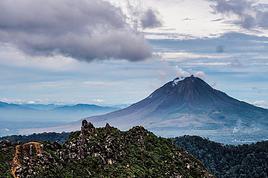
Eruption du Volcan Merapi - 30 octobre 2010 (Indonésie)
by Michelzen
This discussion is in French, the community’s main language.
Original post
Evoque sur le sujet du tsunami du 26/10 c'est assez eloigne geographiquement de celui -ci
Ce 30 octobre 3eme eruption du Merapi en quelques jours
http://www.google.com/...4FrRHQ?docId=4980249
Bon voyage et surtout voyagez zen!
Michel France (85)
salut Michel
on en parle ici
on en parle ici
salut Michel
on en parle ici
.... pas une tres bonne idée* de lier les 2 evenements qui sont tellement eloignés ( +/-1500km) et très differents - Un Tsunami est un evenement bref et destructif, rarement les repliques des seismes en provoquent un autre a court terme mm si il y a un après très douloureux - L'eruption du Merapi, qui est un volcan en activité permanente, pourrait par contre etre un evenement majeur car c'est un peu son "habitude" de prevenir par de petites eruptions et seismes ... locaux mais pas a +/-1500 km et son cycle d'activité éruptive est assez bien connu !
* ça risque d'entrainer des questions dont la reponse est de fait par la distance et que ceux qui s'interessent au volcanisme ne trouve pas avec la fonction "rechercher" le titre n'indexant pas Merapi.
.... pas une tres bonne idée* de lier les 2 evenements qui sont tellement eloignés ( +/-1500km) et très differents - Un Tsunami est un evenement bref et destructif, rarement les repliques des seismes en provoquent un autre a court terme mm si il y a un après très douloureux - L'eruption du Merapi, qui est un volcan en activité permanente, pourrait par contre etre un evenement majeur car c'est un peu son "habitude" de prevenir par de petites eruptions et seismes ... locaux mais pas a +/-1500 km et son cycle d'activité éruptive est assez bien connu !
* ça risque d'entrainer des questions dont la reponse est de fait par la distance et que ceux qui s'interessent au volcanisme ne trouve pas avec la fonction "rechercher" le titre n'indexant pas Merapi.
Bon voyage et surtout voyagez zen!
Michel France (85)
Hello! La carte google indique le Mérapi sur Sumatra ???😊😊 Alors que le volcan se trouve a 40Km au nord est de Jogya !!!
raph
Tout ce qui ne me tue pas, me rends plus fort Ni dieux, ni maitres
.... pas une tres bonne idée* de lier les 2 evenements qui sont tellement eloignés ( +/-1500km) et très differents
Salut Michel, Tout dépend du point de vu. Si on parle de la souffrance des indonésiens qui doivent faire face a des catastrophes naturelles successives, il me semble qu'on puisse lier les 2 évènements 😕 De plus les évènements sont liés en tant que phénomènes liés a la tectonique des plaques particulière a la région, même s'il n'y a pas de causalité directe entre les 2 évènements 😛

Voir ICI pour plus de détails 😉
Salut Michel, Tout dépend du point de vu. Si on parle de la souffrance des indonésiens qui doivent faire face a des catastrophes naturelles successives, il me semble qu'on puisse lier les 2 évènements 😕 De plus les évènements sont liés en tant que phénomènes liés a la tectonique des plaques particulière a la région, même s'il n'y a pas de causalité directe entre les 2 évènements 😛

Voir ICI pour plus de détails 😉
Khun maa jak nai krap?
"être loin d'ailleurs, c'est être ici" (P. Geluk)
Je pense tout de mm que sur un forum de voyage il ne faut pas mettre le trouble dans l'esprit de ceux qui partent vues les distances
... apres tout est possible mais dans ce cas il fallait modifier le titre du sujet sur le Tsunami du 26
Pour ma part peu importe le Merapi je l'ai vu ... enfin en vol en arrivant Yogjakarta mais dans les nuages de la ville (mai 2009) mais si demain on est face a une eruption majeure je suis desolé mais personne n'ira chercher des infos sur un sujet Tsunami


Bon voyage et surtout voyagez zen!
Michel France (85)
Ne confondons tout de même pas compassion et information même si les 2 ne sont pas incompatibles. Il peut paraitre un peu indécent de savoir si les événements tragiques qui se passent en Indonésie puissent nuire au voyage touristique de certains alors que tant de gens souffrent sur place 😕
Khun maa jak nai krap?
"être loin d'ailleurs, c'est être ici" (P. Geluk)
Pour ma part peu importe le Merapi je l'ai vu ...
"Veni, vidi, vivi" "Je suis venu, j'ai vu, j'ai vaincu"....
Aïe aïe aïe!!!!!!🏴☠️
Merci pour la photo... Même plus la peine d'y aller 😕😕😕 . Téléchargez!
"Veni, vidi, vivi" "Je suis venu, j'ai vu, j'ai vaincu"....
Aïe aïe aïe!!!!!!🏴☠️
Merci pour la photo... Même plus la peine d'y aller 😕😕😕 . Téléchargez!
"The world is my oyster"
Hello! La carte google indique le Mérapi sur Sumatra ???😊😊 Alors que le volcan se trouve a 40Km au nord est de Jogya !!!
Salut il y a bien un MERAPI sur Sumatra, rassure toi! L autre est a 25 KM au nord de Yogya si l on considere le kraton comme le centre de la ville...
En tout cas, pour les infos c est tres tres contradictoire.
Un jour (samedi), les Vulcanologues proposent aux autorites d evacuer non plus dans les 10 km mais dans un rayon de 20 km. Sur le terrain, le perimetre de securite est toujours ue souriciere. Le lendemain, ce conseil ne semble plus a l ordre du jour.
Le dimanche matin, "petite eruption". Le dimanche apres-mid, la plus grosse, plus puissante que celles du mardi soir et du jeudi, BOUM, une vraie bombe... Curieusement, elle est minimisee dans la presse, on evoque seulement celle du matin...
Bref, il est tres difficile d y voir clair. D apres ce que j ai compris avec mon modeste cerveau, l apparition de la lave sur les flancs du volcan signifierait une chute de pression et donc un amenuisement des risques d explosion massive (comparable a celle de 1930)... Le probleme, la lave se fait tjrs attendre.
Lundi matin, 11 H, eruption a l instant, pas plus d infos pour le moment.
Voila... et les risques de seisme signifiant? Un(e) specialiste??
Merci pour la rectification, je l'ignorais !😉
raph
Tout ce qui ne me tue pas, me rends plus fort Ni dieux, ni maitres
Bonjour,
Aucune erreur, il y a effectivement un volcan MERAPI sur l'Ile de SUMATRA.
Cordialement
La vie n'est pas un long fleuve tranquille
Re Bonjour,
Rectification : il s'agit du volcan MARAPI sur Sumatra et non MERAPI mais même les journalistes peuvent se tromper.
Cordialement
La vie n'est pas un long fleuve tranquille
Ne confondons tout de même pas compassion et information même si les 2 ne sont pas incompatibles. Il peut paraitre un peu indécent de savoir si les événements tragiques qui se passent en Indonésie puissent nuire au voyage touristique de certains alors que tant de gens souffrent sur place 😕
Desolé mais je ne vois pas en quoi donner des infos a ceux qui voyagent ou vont voyager peut etre indécent sur un forum de voyage ! Donc inutile d'alimenter une nouvelle polémique sur le sujet
PS: J'ai toujours du respect pour les populations locales dailleurs tu ne trouveras pas un seul post de ma part allant dans un autre sens ! PS2: je n'ai pas vu beaucoup de posts sur le probleme des populations proches du "volcan de boue de Sidoarjo" (pas loin de Surabaya) complèment occulté par tout le monde .. j'ai vu aussi ... a mon grand regret ! http://fr.wikipedia.org/..._de_boue_de_Sidoarjo
Desolé mais je ne vois pas en quoi donner des infos a ceux qui voyagent ou vont voyager peut etre indécent sur un forum de voyage ! Donc inutile d'alimenter une nouvelle polémique sur le sujet
PS: J'ai toujours du respect pour les populations locales dailleurs tu ne trouveras pas un seul post de ma part allant dans un autre sens ! PS2: je n'ai pas vu beaucoup de posts sur le probleme des populations proches du "volcan de boue de Sidoarjo" (pas loin de Surabaya) complèment occulté par tout le monde .. j'ai vu aussi ... a mon grand regret ! http://fr.wikipedia.org/..._de_boue_de_Sidoarjo
Bon voyage et surtout voyagez zen!
Michel France (85)
... Voila... et les risques de seisme signifiant? Un(e) specialiste??
Je suppose que tu connais le site indonesien relatif aux questions de volcanisme (visiblement HS au moment ou je post) http://portal.vsi.esdm.go.id/ Le Merapi alterne visiblement tous les +/-15 ans une eruption importante avec les "petites" qui sont frequentes ... si on considere que la derniere "importante" est celle de 1994 cela fait penser a beaucoup que l'edition 2010 pourrait etre importante mais il ya eu pas mal d'evenements entres ces dates qui pourraient boulverser le cycle infernal ! maintenant la méga eruption qui detruit tout sur des dizaines de Km ??????????? ... il faut garder en memoire que le Merapi est l'un des volcans actifs les plus dangereux du Monde entre autre a cause de sa localisation proche de villes importantes ... et que culturelement il sera difficile de déplacer preventivement les polulations ... au cas ou
Bon voyage et surtout voyagez zen!
Michel France (85)
PS: J'ai toujours du respect pour les populations locales dailleurs tu ne trouveras pas un seul post de ma part allant dans un autre sens !
Je n'ai rien sous-entendu de tel, cela ne s'adressait pas a toi, et il n'y a nulle polémique a y trouver, cela faisait référence a un commentaire de Muhammad sur un autre post 😉
Khun maa jak nai krap?
"être loin d'ailleurs, c'est être ici" (P. Geluk)
je parlais aussi d'une façon generale
... et pour donner de l'info le Merapi serait a nouveau ce lundi 1er nov entré en eruption ( voir +/- tous le medias) je commence a penser qua ça ne sera pas qu'une petite colère ! et espere que les autorités pourront faire du preventif ... mot qui ne doit pas avoir la mm signification ou mm une traduction en Indonesie un media parmi beaucoup, on voit bien que maintenant on situe mieux géographiquement les evenements l'eruption et le tsunami du 26 comme a l'autre bout du pays ! http://www.journalmetro.com/monde/article/678610--nouvelle-eruption-volcanique-en-indonesie
Bon voyage et surtout voyagez zen!
Michel France (85)
Salut!
MARAPI, MERAPI, BERAPI, le volcan a Sumatra est connu sous ces 3 appelations... Les deux premieres signifient MONTAGNE DE FEU, la troisieme signifie QUI BRULE, QUI EST ENFLAMMEE...
...
MICHEL, merci, je ne connaissais pas ce site... esperons que le scenario catastrophe soit remis a plus tard!!!
PS/ superbes photos ici http://www.telegraph.co.uk/news/picturegalleries/worldnews/8102549/Indonesia-volcano-in-pictures-Mount-Merapi-erupts-again.html?image= + le site de BIG PICTRE
salut
merci pour les photos Fred.
Malaysia et air asia ont annulé les vols sur Solo et Jogja.
Des experts pensent que l'éruption pourrait durer des semaines. le Krakatau connait aussi un regain d'activité
Infos sur Kompas et Jakarta post
...MICHEL, merci, je ne connaissais pas ce site... esperons que le scenario catastrophe soit remis a plus tard!!!
Pour ceux qui préfèrent en français 😄 c'est le meilleur site en langue française a etre a jour avec l'actualité (en fait pour le Merapi il va reprendre les infos du VSI avec un decalage de quelques heures) http://www.activolcans.info/ la page actu Merapi http://www.activolcans.info/actualite-volcans/02112010-4191.php
"esperons que le scenario catastrophe soit remis a plus tard" ... oui mais pour le moment les autorités semblent moderement optimistes ... alors realité ou sur-enchère pour pousser le populations a reagir aux evacuations demandées ?
Un article qui montre que rien n'est facile sur place avec, en filigramme, le poids culturel, ... le "gardien des clés" du volcan Merapi ne quittait pas son domicile alors pourquoi "ecouter" les autorités ? le pauvre homme a payé de sa vie le 26 lors de la 1ere vague d'eruptions http://www.courrierinternational.com/article/2010/11/02/le-volcan-qui-a-mange-son-gardien
Pour ceux qui préfèrent en français 😄 c'est le meilleur site en langue française a etre a jour avec l'actualité (en fait pour le Merapi il va reprendre les infos du VSI avec un decalage de quelques heures) http://www.activolcans.info/ la page actu Merapi http://www.activolcans.info/actualite-volcans/02112010-4191.php
"esperons que le scenario catastrophe soit remis a plus tard" ... oui mais pour le moment les autorités semblent moderement optimistes ... alors realité ou sur-enchère pour pousser le populations a reagir aux evacuations demandées ?
Un article qui montre que rien n'est facile sur place avec, en filigramme, le poids culturel, ... le "gardien des clés" du volcan Merapi ne quittait pas son domicile alors pourquoi "ecouter" les autorités ? le pauvre homme a payé de sa vie le 26 lors de la 1ere vague d'eruptions http://www.courrierinternational.com/article/2010/11/02/le-volcan-qui-a-mange-son-gardien
Bon voyage et surtout voyagez zen!
Michel France (85)
Lu dans le KEDAULATAN RAKYAT d aujourd hui: en realite, contrairement a ce que j ai dit dans un autre post, la puissance des explosions ne cesse de decroitre depuis celle du 26 octobre. La lave commence a couler sur les fancs du Merapi (depuis mardi soir), ce qui a priori indiquerait une entree dans la phase eruptive finale. Neanmoins, le statut d alerte reste maximal. Des nuees ardentes peuvent a nouveau se produir. Les experts precisent, que de plus, le Merapi peut tres bien entrer a nouveau en activite dans les prochains jours malgre son apparente perte de puissance. Tout depend de la quantite de Magma encore prete a sortir, du mouvement de celui-ci, etc...
De plus, des lahars, sortes de coulees de boues, sont a craindre si des pluies torrentielles viennet a s abbattre sur le sommet du volcan, ce qui est tout a fait possible au vu du climat incertain... Vu que les refugies ont pour certains premturement quitte les camps et que a vie economique reprend sur les flancs u volcn malgre les mises en garde des volcanologues, ces lahars purraien tres bien faire de nouvelles et tres nombreuses victimes... Esperons que...
Une progressivité dans le cycle éruptif n'est pas obligatoirement une mauvaise chose c'est d'une part un état qui permet une certaine prévention et des evacuations de populations et surtout "peut éviter" en dégonflant la presion magmatique, une mega eruption explosive!
Le risque potentiel en ce moment etant, un peu comme en 2006, d'un seisme important proche qui avait a cette époque ravivé l'activité eruptive du Merapi comme celle du volcan de boue de Sidoarjo, tout ça en quelques jours/semaines en mai
... en 2006 le seisme avait été beaucoup plus meurtier ( +/-6000 morts) que l'éruption du Merapi (quelques 10 aines)
Bon voyage et surtout voyagez zen!
Michel France (85)
salut
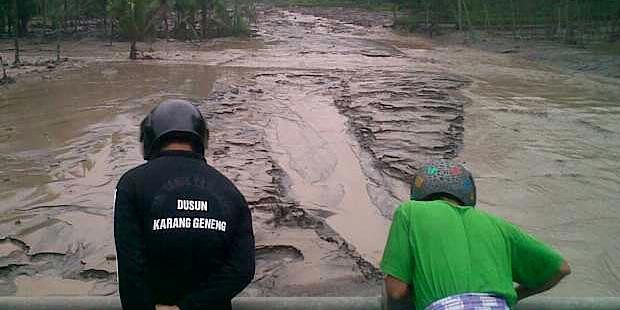
esperons que la pression diminue progressivement et que les gens puissent rentrer chez eux. aujourd"hui il y a eu des coulées de boue et de lave froide à Umbulharjo dans le district de Sleman (photo). La pluie n'arrange rien. Jakarta fait face à bcp d'inondations en ce moment
Tout depend de la quantite de Magma encore prete a sortir, du mouvement de celui-ci, etc... d'après les vulcanologues, il y aurait 7,5 millions de m3 de magma dans le dôme...
d'après les vulcanologues, il y aurait 7,5 millions de m3 de magma dans le dôme...
En baignoires ca fait combien??? ... Nouvelles grosses eruptions hier et ce matin...
... Nouvelles grosses eruptions hier et ce matin...
Oui ça continue !!! >>>> la zone interdite a ete portée hier de 10 a 15 km du cratère avec tous les problèmes associés, c'est de + en + pres de Yoga ! et aucune info n'est reellement optimiste a lire http://www.msnbc.msn.com/id/40003339/ns/world_news-asiapacific/
Bon voyage et surtout voyagez zen!
Michel France (85)
oui et il y a eu de grosses éruptions entre 23h00 et 0h15 avec de lourdes pluies de cendres. zone d'évacuation portée à 20 kms.
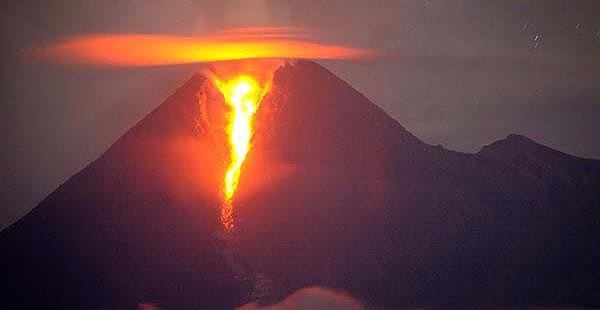
le Merapi vers 23h. photo Kompas.com
12 morts de plus, 50 blesses au moins... un AWAN PANAS ("nuage chaud" / nuee ardente) a touche un village a 13 KM du cratere!!
...
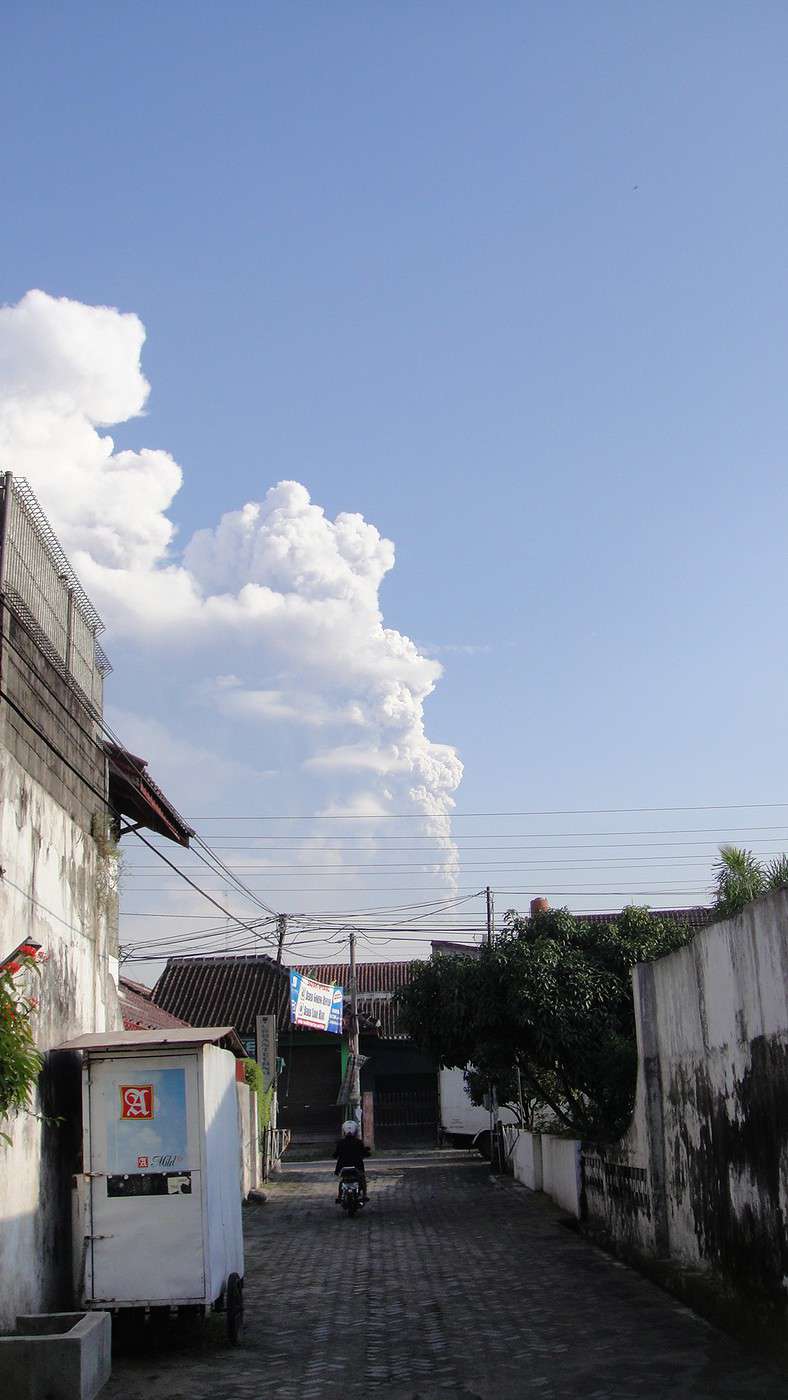
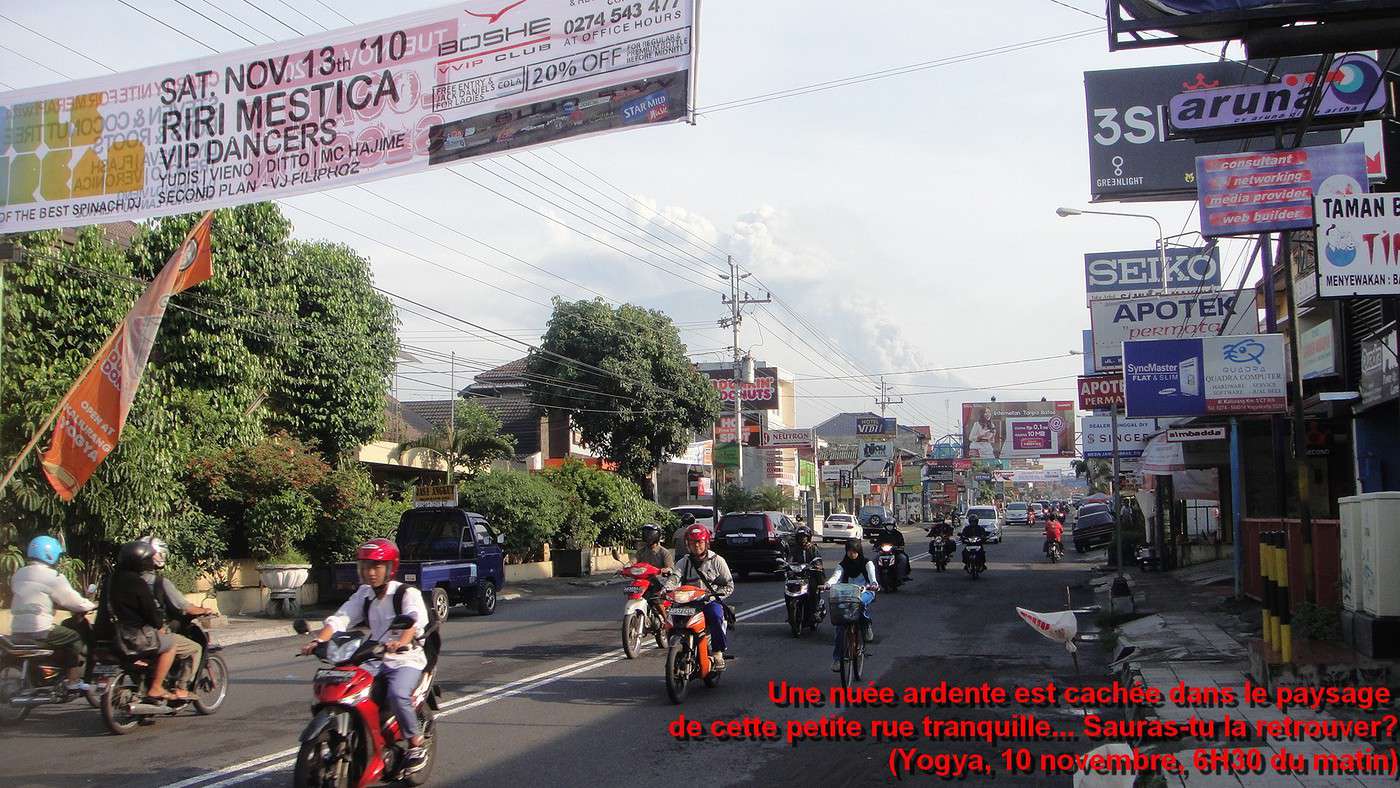
Yogya sous une belle couche de poussiere blanche!
Un des derniers article sur le sujet
http://www.radio-canada.ca/nouvelles/International/2010/11/04/008-merapi-volcan-explosion.shtml
a lire ce qui suit, on espère tjrs que les scientifiques se trompent!
Les scientifiques perplexes Plusieurs scientifiques sont pantois devant le comportement erratique du volcan depuis les derniers jours. M. Surano, un volcanologue du gouvernement indonésien, n'avait jamais vu l'aiguille du sismographe qui suit le mont Merapi s'agiter avec autant d'intensité. Nous n'avons aucune idée de ce à quoi nous attendre! M. Surano, volcanologue pour le gouvernement indonésien Les experts craignent que le nouveau dôme de lave qui se forme dans la bouche du cratère s'effondre, ce qui pourrait déclencher un déferlement de cendres et de gaz d'une température allant jusqu'à 1000 degrés Celsius.
>>> a suivre !
a lire ce qui suit, on espère tjrs que les scientifiques se trompent!
Les scientifiques perplexes Plusieurs scientifiques sont pantois devant le comportement erratique du volcan depuis les derniers jours. M. Surano, un volcanologue du gouvernement indonésien, n'avait jamais vu l'aiguille du sismographe qui suit le mont Merapi s'agiter avec autant d'intensité. Nous n'avons aucune idée de ce à quoi nous attendre! M. Surano, volcanologue pour le gouvernement indonésien Les experts craignent que le nouveau dôme de lave qui se forme dans la bouche du cratère s'effondre, ce qui pourrait déclencher un déferlement de cendres et de gaz d'une température allant jusqu'à 1000 degrés Celsius.
>>> a suivre !
Bon voyage et surtout voyagez zen!
Michel France (85)
les nouvelles ne sont pas encourageantes. le Merapi est imprévisible....on espère toujours
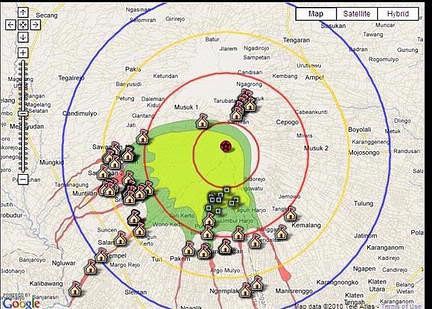
ci joint un croquis, Jogja est au sud et doit se trouver juste en dessous du 2ème cercle.
Bilan de ce matin depasse, 50 nouveaux morts, des dizaines de disparus, des villages comme SELO (d ou les gens partent pour grimper le Merapi) detruits... et il y a deux heures les grondements du Merapi audibles depuis le nord de yogya, a 25 km du cratere!!!!!!!
Bonjour,
Merci à Muhammad de m'avoir signalé le sujet.
Vous qui êtes sur place, est-ce que vous êtes confiant du système d'alerte mis en place par les autorités ?
J'ai une amie qui vit à Jogja. Elle se demande si elle doit revenir chez ses parents qui vivent plus au sud.
Je dois reconnaître que son témoignage de la dernière nuit impressionne (le son du Merapi, les pluie de cendres sur le toit, ect...)
Des photos d'Asie : Pictures of Asia
Bonjour,
La situation actuellement à Yogyakarta après la dernière éruption du Merapi (la plus violente de toutes) :
- hier une pluie de de cendres est tombée sur la ville pendant toute la journée, on pouvait sentir l'odeur du souffre au nord, mais les pluies de fin de journée ont rendu l'air plus respirable et nettoyé en partie les routes qui sont, de ce fait, moins glissantes. - tout le monde porte un masque dans la rue (on en vend un peu partout, les vendeurs aux feux rouges allant jusqu'à les faire payer 3000 Rp) mais les habitants continuent de vivre comme si tout était normal, tout est ouvert. - la télé diffuse sans discontinuer des images assez impressionnantes des environs du volcan qui sont recouverts d'une "neige" mortelle. - le périmètre de sécurité a été établi dans un rayon de 20 km, on compte plus de 150 000 réfugiés. Beaucoup sont à Maguwoharjo, d'autres dans le stade de foot de Yogya. Tous se plaignent du manque de moyens mis en place par le gouvernement (pas assez de couvertures, pas de lait pour les enfants...) et s'inquiètent pour leur maisons, leurs cultures et leurs bétails jusqu'à parfois risquer leur vie pour tenter d'assurer la suite. - l'aéroport est fermé aujourd'hui, il le sera encore demain. Le personnel d'Air Asia sur place espère le voir réouvrir lundi. - le site archéologique de Borobudur était fermé aujourd'hui, la visibilité est très mauvaise et préserver les vieilles pierres de l'acidité de la cendre est la priorité.
Pour vous faire une idée de l'ambiance en ville, voici une vidéo tournée hier matin dans les rues de Yogya : http://www.tripteaser.fr/blog/pluie-de-cendres-volcaniques-a-yogakarta-dans-la-matinee/.
Bon courage à ceux qui sont sur place.
La situation actuellement à Yogyakarta après la dernière éruption du Merapi (la plus violente de toutes) :
- hier une pluie de de cendres est tombée sur la ville pendant toute la journée, on pouvait sentir l'odeur du souffre au nord, mais les pluies de fin de journée ont rendu l'air plus respirable et nettoyé en partie les routes qui sont, de ce fait, moins glissantes. - tout le monde porte un masque dans la rue (on en vend un peu partout, les vendeurs aux feux rouges allant jusqu'à les faire payer 3000 Rp) mais les habitants continuent de vivre comme si tout était normal, tout est ouvert. - la télé diffuse sans discontinuer des images assez impressionnantes des environs du volcan qui sont recouverts d'une "neige" mortelle. - le périmètre de sécurité a été établi dans un rayon de 20 km, on compte plus de 150 000 réfugiés. Beaucoup sont à Maguwoharjo, d'autres dans le stade de foot de Yogya. Tous se plaignent du manque de moyens mis en place par le gouvernement (pas assez de couvertures, pas de lait pour les enfants...) et s'inquiètent pour leur maisons, leurs cultures et leurs bétails jusqu'à parfois risquer leur vie pour tenter d'assurer la suite. - l'aéroport est fermé aujourd'hui, il le sera encore demain. Le personnel d'Air Asia sur place espère le voir réouvrir lundi. - le site archéologique de Borobudur était fermé aujourd'hui, la visibilité est très mauvaise et préserver les vieilles pierres de l'acidité de la cendre est la priorité.
Pour vous faire une idée de l'ambiance en ville, voici une vidéo tournée hier matin dans les rues de Yogya : http://www.tripteaser.fr/blog/pluie-de-cendres-volcaniques-a-yogakarta-dans-la-matinee/.
Bon courage à ceux qui sont sur place.
Salut,
ce sont maintenant des experts francais qui surveillent le Merapi avec les volcanologues indos, je pense qu on peut donc respirer😎
Blague a part il est conseille (Par les autorites francaises) aux gens (Aux francais donc par extension aux humains en general) qui le peuvent de quitter la ville ou d aller au sud, et conseil perso de ne pas croire les sms qui circulent et qui font etat pour demain d une explosion dangereuse dans un rayon de 60 km ou d un seisme mercredi matin!!! Ce sont bien sur des fables.
Donc pour resumer, oui, bon systeme d obervation, mitige en ce qui concerne les infos au public et grande grande prudence etant donne qu on ne sait pas ce qui nous pend au nez avec cette foutue cocotte minute de 3000 m au-dessus de la tete, car caractere imprevisible des eruptions.
A noter derniere eruption a 11h ce matin heure locale audible jusqu a Prambanan!
Bonjour et merci pour vos informations journalieres car je me précipite tous les matins pour les lire.
Bon courage aux javanais.
Le voyage est un retour vers l'essentiel. proverbe Tibétain.
Mado et Lulu
bonsoir
poussées de laves incandescentes dans 3 directions sud sud ouest sud est à 16h15. alerte maximale et périmètre de 20 kms maintenues. au delà des blessés directs dus aux brûlures, il doit y avoir des gens et des enfants malades de problèmes respiratoires.....
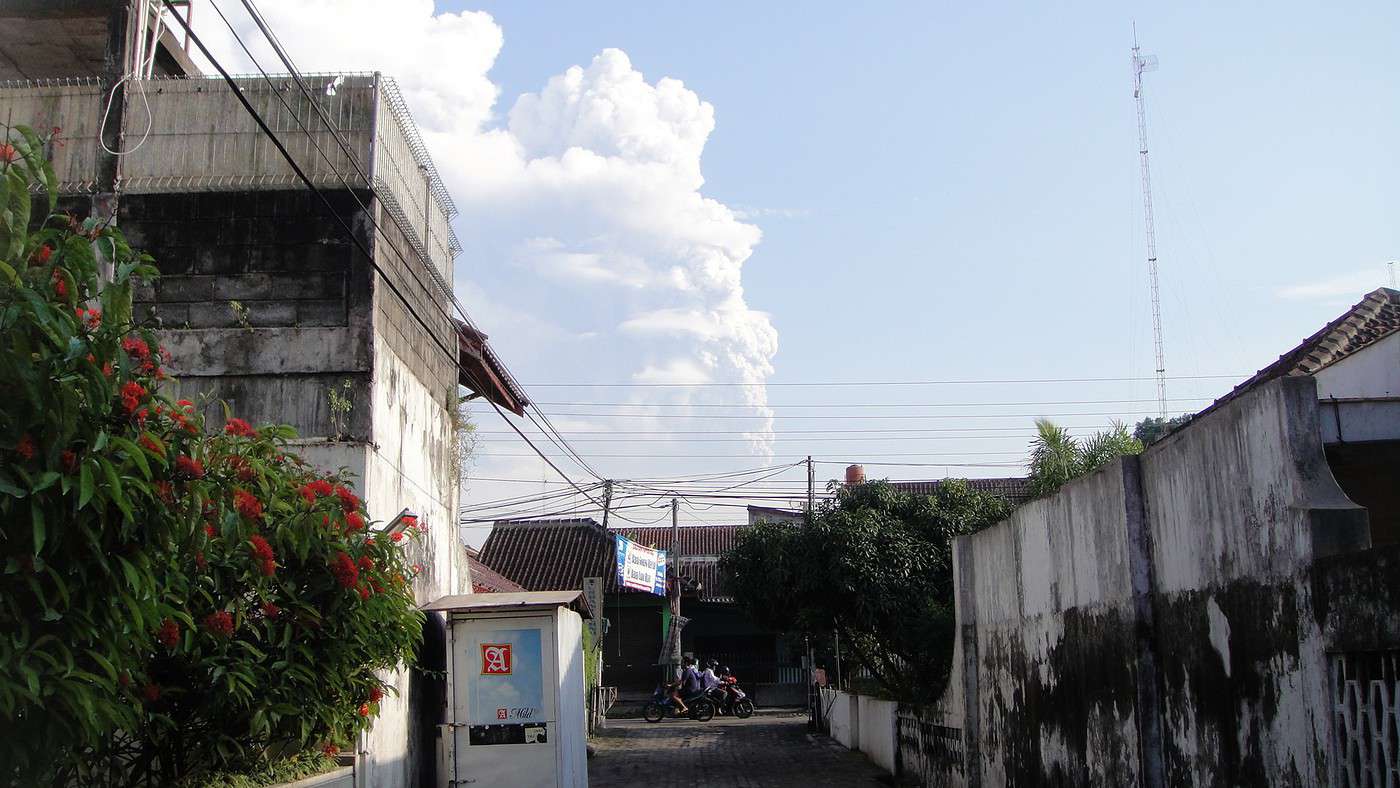
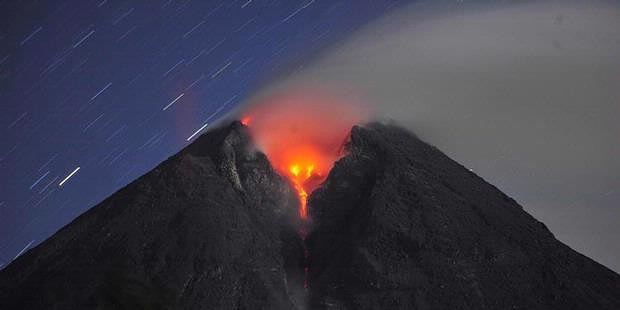
ci dessous le Merapi dimanche 07.11
poussées de laves incandescentes dans 3 directions sud sud ouest sud est à 16h15. alerte maximale et périmètre de 20 kms maintenues. au delà des blessés directs dus aux brûlures, il doit y avoir des gens et des enfants malades de problèmes respiratoires.....
ci dessous le Merapi dimanche 07.11
... conseil perso de ne pas croire les sms qui circulent et qui font etat pour demain d une explosion dangereuse dans un rayon de 60 km ou d un seisme mercredi matin!!! Ce sont bien sur des fables!
... moderne le volcan un forfait sms illimité ! on evitra pas avec les moyens modernes ce genre de plaisanterie de mauvais gout! ... pour etre plus serieux je pense que la notion de seisme a telle date ... a tout de mm un fondement, pas obligatoirement scientifique, mais cela correspond +/- aux conditions de l'eruption de 2006 ou le seisme proche de Yoga avait eu lieu une dizaine de jours apres la phase eruptive principale !
PS quelqu'un de local a t il des infos sur l'interaction éruption Merapi et celle du Volcan de Boue de Sidoarjo (pres de Surabaya)
... moderne le volcan un forfait sms illimité ! on evitra pas avec les moyens modernes ce genre de plaisanterie de mauvais gout! ... pour etre plus serieux je pense que la notion de seisme a telle date ... a tout de mm un fondement, pas obligatoirement scientifique, mais cela correspond +/- aux conditions de l'eruption de 2006 ou le seisme proche de Yoga avait eu lieu une dizaine de jours apres la phase eruptive principale !
PS quelqu'un de local a t il des infos sur l'interaction éruption Merapi et celle du Volcan de Boue de Sidoarjo (pres de Surabaya)
Bon voyage et surtout voyagez zen!
Michel France (85)
Tu ne crois pas si bien dire a propos des seismes: Dimanche soir seisme 3,8 a Wonosari --> Pas de casse mais grondements audibles en provenance du coeur du MERAPI PURBA, un volcan eteint depuis des millenaires et situe au sud est de Yogya a quelques heeu... 15 - 20 km du Kraton (c est une estimation perso hein)???!!!!
Et cet apres midi (mardi): un 5,6 centre a Bantul... pas de casse mais ca rappelle tristement 2006. Avec un orage violent sur Yogya ce soir et les menaces de coulees de boues dans les rivieres (Kali Code) franchement ce soir personne n a envie de rigoler.
Pourtant, ces derniers jours, mis a part les quartiers etudiants desertes et les campus fermes, la vie poursuivait un cours normal.
Cote volcan: activite en baisse (nuees ardentes mais portee limitee)... mais les specialistes invitent a rester sur le qui vive car le cycle eruptif pourrait reprendre de plus belle!
Perimetre de securite a 20 km. Bilan alourdi a 153 morts et toujours des disparus. Presque 300 000 refugies.
Sinon, un ami a attire mon attention sur la catastrophe ecologique que cela representait cette eruption: des hectares et des hectares de forets de coniferes rasees, des vallees superbes (Kali Kuning) comblees... c est terrible.
Merci tes infos ... mm loin de Yoga je suis d'assez pres ce qui se passe avec une pensée particulière pour les populations locales, mais l'homme est totalement impuissant dans ce genre de situations que les indonesiens connaissent bien en esperant qu'ils pourront gérer un maximum de preventif !
La derniere depeche AFP est assez claire sur la situation et l'effet de panique que peut générer un seisme avec en memoire 2006
http://www.google.com/...d0d781517e8dfd5d.511
... je crois maintenant qu'il faut éviter, comme simple touriste, au moins pour un moment, la region Yoga / Merapi, pas particulièrement par peur, quoique les infos sont loins d'etre rassurantes, mais surtout parce que les autorités ont assez de problèmes a gérer avec les populations locales. ... le MAE recommande aux "voyageurs" français de ne pas se rendre dans la region de Yoga et ceux qui y sont residents de signaler leur presence a l'Ambassade de France
Pour ceux qui sont interessés, un site qui repertorie l'activité sismique de par le monde ... c'est absolument fou ces dernieres 72h dans cette zone http://www.iris.edu/seismon/
... je crois maintenant qu'il faut éviter, comme simple touriste, au moins pour un moment, la region Yoga / Merapi, pas particulièrement par peur, quoique les infos sont loins d'etre rassurantes, mais surtout parce que les autorités ont assez de problèmes a gérer avec les populations locales. ... le MAE recommande aux "voyageurs" français de ne pas se rendre dans la region de Yoga et ceux qui y sont residents de signaler leur presence a l'Ambassade de France
Pour ceux qui sont interessés, un site qui repertorie l'activité sismique de par le monde ... c'est absolument fou ces dernieres 72h dans cette zone http://www.iris.edu/seismon/
Bon voyage et surtout voyagez zen!
Michel France (85)
Bon, petite eruption ce matin, vers l ouest. Voir les photos.
Pour les experts (source DETIK NEWS), la periode la plus dangereuse du cycle eruptif du Merapi est passee et les chances d une big big explosion s amenuisent. Cependant, il existe encore une chance infime et n importe quel seisme pourrait raviver la colere du volcan, ne l oublions pas.
Aussi, mon message de ce matin comportera un avertissement n ayant rien, rien, mais rien a voir avec le volcan. Vous qui voyagez en Indonesie mefiez vous comme de la peste de la circulation. Peu apres la photo prise depuis le pont j ai ete percute par un pousse pousse qui roulait a contre sens. J etais occupe a regarder a gauche pour traverser entre les files de mobylettes, bus et autres bagnoles. Pas de casse, j ai ravale ma colere et retenu les insultes que j avais au bord des levres car le monsieur avait vraiment l air miserable. Mais c est le 4eme accrochage dont je suis temoin en 4 jours. Et combien de fois ai-je assiste a des situations a la limite de l accident grave!!!? Gare! Le pieton a TOUJOURS tort, jusqu au moment ou il est par terre eclate sur la chaussee. La on se dit tout de meme qu il etait dans son bon droit. Mais ca lui fait une belle jambe (cassee, ou pire). Aussi, pour traverser, avancez vous sur la chaussee precautionneusement. Regardez a gauche, a droite, a gauche, a droite. Restez hyper concentres. Ayez sous le coude, au besoin, un ami affuble d un strabisme divergent lui permettant tel Jean Paul Sartre de garder un oeil sur deux directions a la fois. Ne vous engagez que si aucune voiture n est a l horizon car seules les mobylettes sont tres mobiles et susceptibles de s ecarter si vous forcez legerement le passage. Mais ne les surprenez pas! Restez debout au milieu de la route si vous le voulez, mais ne reculez pas vivement d un bond en arriere, car la vous courrez a l accident.
Voila, J avais envie de dire cela depuis un moment. Pardonnez ce leger hors sujet. J espere qu il contribuera a vous eviter la douloureuse epreuve d un accident en Indonesie.
Bonne journee.
salut Fred
merci pour les photos je repense aux propos de ton pote sur la catastrophe écologique que cela entraine une galerie de photos en ligne sur Kompas avec les commentaires http://lipsus.kompas.com/merapimeletus
on espère que le plus dur est passé.
sur la circulation. c'est tout à fait vrai. c'est le plus gros qui passe. j'ai expérimenté à Jakarta et comme tu dis, quand on s'engage sur la chaussée il faut avoir des mouvements bien tranchés afin que les mobylettes puissent anticiper
merci pour les photos je repense aux propos de ton pote sur la catastrophe écologique que cela entraine une galerie de photos en ligne sur Kompas avec les commentaires http://lipsus.kompas.com/merapimeletus
on espère que le plus dur est passé.
sur la circulation. c'est tout à fait vrai. c'est le plus gros qui passe. j'ai expérimenté à Jakarta et comme tu dis, quand on s'engage sur la chaussée il faut avoir des mouvements bien tranchés afin que les mobylettes puissent anticiper
Bon RAS, l accalmie se poursuit, les gens oublient un peu vite que le perimetre de securite est toujours de 20 km et que le niveau d alerte est au maximum et retournent deja chez eux lorsque bien sur leur village est encore habitable. Selon les experts (Surono) l activite du Merapi est toujours intense (meme si en baisse constante) et les risques d eruption ou de reprise du cycle eruptif ne sont pas a exclure. De plus risques importants de lahars.
Voila. On espere que tout ca ne sera bientot plus qu un souvenir...
Bonne journee.
Bon RAS, l accalmie se poursuit, les gens oublient un peu vite que le perimetre de securite est toujours de 20 km et que le niveau d alerte est au maximum et retournent deja chez eux lorsque bien sur leur village est encore habitable. Selon les experts (Surono) l activite du Merapi est toujours intense (meme si en baisse constante) et les risques d eruption ou de reprise du cycle eruptif ne sont pas a exclure. De plus risques importants de lahars.
Voila. On espere que tout ca ne sera bientot plus qu un souvenir...
Bonne journee.
Esperons que ce sujet va vite finir au fin fond des oubliettes du forum mm si ça restera une eruption importante a ce que j'a lu ça et la !
Bon voyage et surtout voyagez zen!
Michel France (85)
Bonjour!
Merci pour ces informations sur ce magnifique pays que j'ai hate un jour de découvrir en espérant que les catastrophes pour ces pauvres gens s'arrete ...
Je suis tomber sur ce site : http://baliholidayinfo.com/fr/content/batur-gunung-ferme-aux-alpinistes
Une phrase inquiétante : ''Il ya tellement d'activités volcaniques à travers l'archipel pour le moment. Comme les tremblements de terre se produisent de plus en plus plus les chances de volcans dormants généralement à venir à la vie.''
Connaissez-vous ce site?
Je suis tomber sur ce site : http://baliholidayinfo.com/fr/content/batur-gunung-ferme-aux-alpinistes
Une phrase inquiétante : ''Il ya tellement d'activités volcaniques à travers l'archipel pour le moment. Comme les tremblements de terre se produisent de plus en plus plus les chances de volcans dormants généralement à venir à la vie.''
Connaissez-vous ce site?
Je ne connais pas ce site et son texte en français n'est pas tres bon (la version anglaise est plus comprehensible)
... en en fait, il explique que du fait de l'activité sismique importante en Indonesie, ce qui est vrai, des volcans pourraient se "reveiller "et donc préventivement on en a interdit l'acces aux touristes .... l'article en lien parllait du Batur a Bali !
Logique d'interdire l'acces aux touriste apres etre alarmiste ne sert pas a grand chose pour ce genre de phénomène
Bon voyage et surtout voyagez zen!
Michel France (85)
Oui tu as 18 volcans en alerte, ou 19... L activite souterraine est intense en ce moment... 3 seismes depuis dimanche soir ici a Yogya, certes celui d hier etait a peine perceptible... Quant a Sumatra, hum, c est siderant la-bas... Michel a poste un site qui repertorie tous les seismes un peu plus haut, va jeter un oeil, c est enorme... Cependant je te rassure tout ne va pas deboucher sur des catastrophes de l ampleur de celle du Merapi ou des iles Mentawai.
A propos du Merapi toujours cette incertitude (son cycle eruptif va t il s essoufler ou reprendre de plus belle???). Hier il a rejete des nuees ardentes pendant 45 minutes sans seisme volcanique prealable, une premiere d apres ce que j ai compris. Ces memes nuees ardentes pourraient atteindre des distances record en cas de nouvelle eruption car les alentours du sommet sont tels une autoroute, sans plus aucun obstacle pour ralentir leur progression. Quant aux lahars ils atteignent 18 km du cratere. de nombreux villages sont ensevelis, le parc naturel magnifique aux alentours du volcan n est plus qu un souvenir, tout est brule, ecrase, une misere. 2 leopards ont ete vus a Pakem, une petite bourgade a 15 km de Yogya. descendus de la montagne car assoifes, perdus.
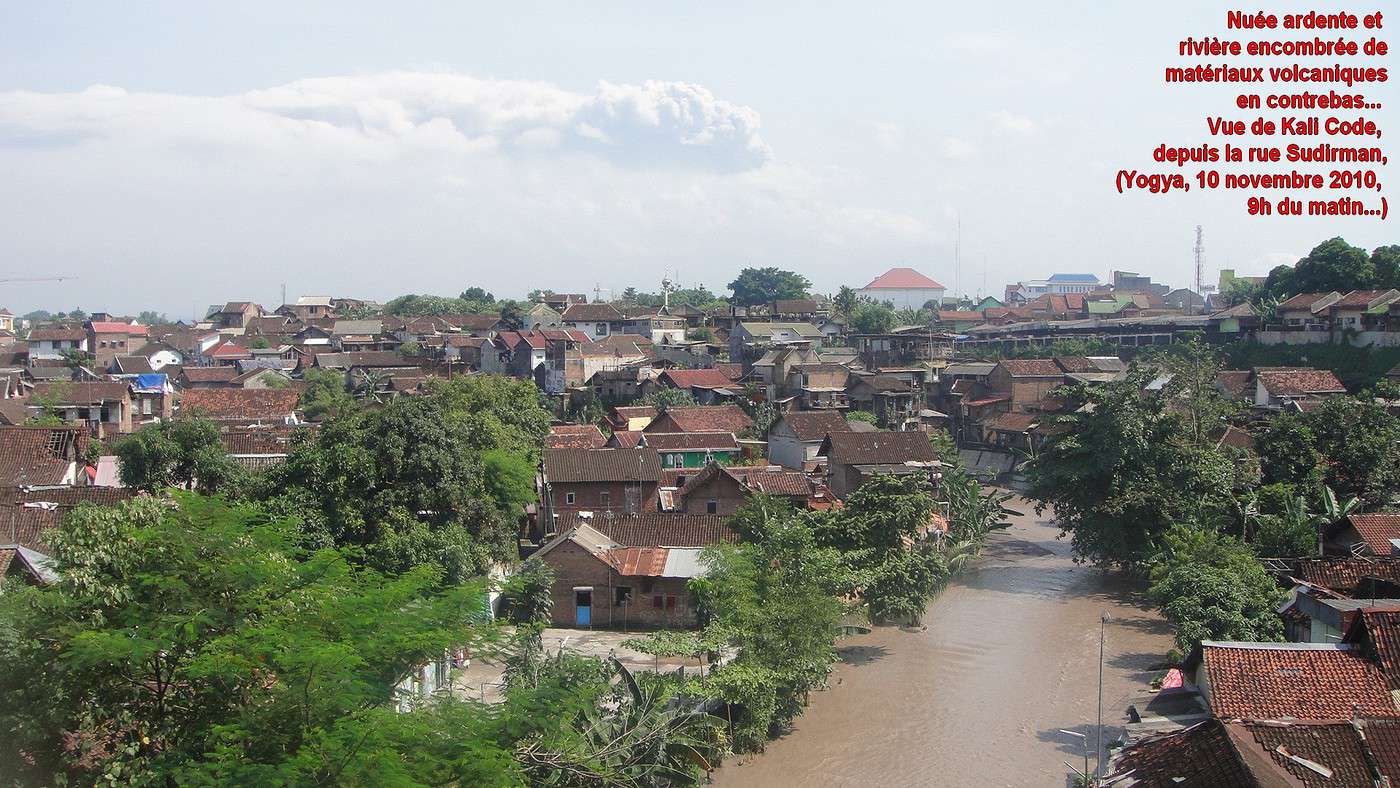
Quant aux gens de Kali Code, a Yogya meme, ils ont deja les pieds dans l eau depuis cette nuit.
... A propos du Merapi toujours cette incertitude (son cycle eruptif va t il s essoufler ou reprendre de plus belle???). Hier il a rejete des nuees ardentes pendant 45 minutes sans seisme volcanique prealable, une premiere d apres ce que j ai compris. .
Effectivement il fait rester prudent, ce type de volcan ne s'arrete pas comme ça d'un seul coup, en avril/mai 2006 l'eruption a durée plusieurs mois avec un seisme tres meutrier la quelques km de Yoga le 27 mai ... les indonesiens connaissent tres bien le Merapi comme tous les volcans actifs il est sous surveillence renforcée et son cycle de "fonctionnement éruptif" parfaitement connu, maintenant si il se comporte differement ça peut devenir tres dangereux car les modeles preventifs, déjà difficiles a mettre en oeuvre habituellement, seront devenus caducques. la depeche AFP la plus recente sur cette eruption http://www.google.com/hostednews/afp/article/ALeqM5gGLwp1w5XS8iOs7C_hWc6E2AnPbA?docId=CNG.c77105c6fa63fd85139bd9009d81b1b3.171
Bon voyage et surtout voyagez zen!
Michel France (85)
Log in first, then come back to this page.
You might also like
More discussions
Bonjour à tous
Je n ai pas trouvé d infos récentes sur Kuching
Est ce quelqu un peut recommander un hotel ou une guesthouse à moins de 100 RM bien et pas cher? pas de dortoir merci
Est ce qu en novembre il pleut beaucoup et aller à Semenggoh ou Bako vaut le coup ou pas?
Hi,
On September 1st, we're heading to Kalimantan for six weeks, probably from Pontianak to the Derawan Islands.
I've scoured this site, which is usually my go-to 😉, and others like VoyageForum, but recent info is pretty scarce.
I'd love any tips on places you've visited—our itinerary is still a work in progress.
We're two couples traveling with backpacks, using buses, boats, guesthouses, and homestays.
Thanks in advance!
Hi everyone,
Could you share your thoughts on my 3-week itinerary?
We’re a small group (family + friends) of 12 people, planning to leave around January 21, 2027.
Here’s my itinerary:
3 nights in Bangkok
4 nights in Chiang Mai
3 nights on Koh Samui
3 nights on Koh Phangan
4 nights in Krabi
4 nights in Phuket
I’m also open to any great tips you might have...
Thanks, everyone! Alain.
Hi,
From Malacca to get to Jerantut, is it better to go back to KL and take a bus from there, or take a bus to Tampin and then a train? Any feedback on the "Jungle Train"? (duration, price, comfort, etc.). Thanks
Hi there,
We’re planning a 3-week family trip next summer with our three kids, who’ll be 8, 8, and 7 years old.
After some research, we’re leaning toward Malaysia to combine nature/forests and paradise beaches. The idea is to introduce our kids to the country’s culture, nature, and wildlife.
We want a great trip but without splurging on luxury options like high-end lodges and resorts. We’re looking for comfort with a touch of authenticity—basically, a good middle ground.
I’ve started putting together an itinerary and would love your expert advice and tips to help us build this amazing trip with our little ones.
Day 1: Departure from France
Day 2: Kuala Lumpur Stay at a hotel near the airport or KL Sentral. Just one night.
Day 3: Morning flight to Sandakan (Borneo). Stay in Sepilok
Day 4: Sepilok: * Orangutan Center * Malayan Sun Bear Center * Rainforest Discovery Centre
Day 5: Depart for Kinabatangan. Boat safari in the late afternoon.
Day 6: Sunrise safari. Jungle walk. Evening safari.
Day 7: Final safari. Return to Sandakan.
Flight to Kuala Lumpur, then to Kota Bharu (or overnight transit depending on schedules).
Day 8: Transfer to the port. Boat to the Perhentian Islands.
Days 9 to 13: Perhentian Besar 5 full days. * Snorkeling * Hiking * Turtle watching * Wild beaches * Relaxation
Day 14: Return to the mainland. Bus or private car to Taman Negara.

Days 15 and 16: Taman Negara.
Day 17: Return to Kuala Lumpur.
Day 18: Visit the Petronas Towers or Batu Caves
Day 19: Free day.
Day 20: Return flight.
Thanks in advance, everyone!
Baptiste
After some research, we’re leaning toward Malaysia to combine nature/forests and paradise beaches. The idea is to introduce our kids to the country’s culture, nature, and wildlife.
We want a great trip but without splurging on luxury options like high-end lodges and resorts. We’re looking for comfort with a touch of authenticity—basically, a good middle ground.
I’ve started putting together an itinerary and would love your expert advice and tips to help us build this amazing trip with our little ones.
Day 1: Departure from France
Day 2: Kuala Lumpur Stay at a hotel near the airport or KL Sentral. Just one night.
Day 3: Morning flight to Sandakan (Borneo). Stay in Sepilok
Day 4: Sepilok: * Orangutan Center * Malayan Sun Bear Center * Rainforest Discovery Centre
Day 5: Depart for Kinabatangan. Boat safari in the late afternoon.
Day 6: Sunrise safari. Jungle walk. Evening safari.
Day 7: Final safari. Return to Sandakan.
Flight to Kuala Lumpur, then to Kota Bharu (or overnight transit depending on schedules).
Day 8: Transfer to the port. Boat to the Perhentian Islands.
Days 9 to 13: Perhentian Besar 5 full days. * Snorkeling * Hiking * Turtle watching * Wild beaches * Relaxation
Day 14: Return to the mainland. Bus or private car to Taman Negara.
Days 15 and 16: Taman Negara.
Day 17: Return to Kuala Lumpur.
Day 18: Visit the Petronas Towers or Batu Caves
Day 19: Free day.
Day 20: Return flight.
Thanks in advance, everyone!
Baptiste
Hi there,
I’m planning a family trip (my wife and I, both 47, and our two sons, aged 5 and 12) to Malaysia for the last week of June and the first two weeks of July 2027.
We used to love road trips as a couple, then as a trio, but since our second child arrived, we’ve taken a break with "camping village" style trips.
Now feels like the right time to get back to our old habits, while adjusting the pace for the kids.
We’re craving Asia. We’ve been lucky enough to visit Thailand, Indonesia (Bali and Lombok), and Sri Lanka before.
Friends have raved about Malaysia, so we’re definitely tempted.
For those who know and love Malaysia, what would be a good itinerary starting from Kuala Lumpur, with a maximum of 3-4 stops? We’d like a mix of culture, nature, and relaxation (just to clarify, we’re not big beach fans). All of this without rushing, of course.
Thanks in advance for your tips!
For those who know and love Malaysia, what would be a good itinerary starting from Kuala Lumpur, with a maximum of 3-4 stops? We’d like a mix of culture, nature, and relaxation (just to clarify, we’re not big beach fans). All of this without rushing, of course.
Thanks in advance for your tips!
Hi everyone,
We’re heading to Flores and then Bali at the end of September.
We’ve already visited both but this time, once we’re in Labuan Bajo, we’d like to take a boat to the Komodo Islands to see the famous Komodo dragons.
I don’t want to sleep on the boat—just a day trip would be perfect.
Does anyone know a reliable and friendly provider to recommend?
Thanks in advance, and have a great summer!
Time to hit the road again!
Summer seems to be the best time weather-wise for Bali. And since summer’s when we can take a long trip, let’s go for Bali... even though we know it’ll be *packed* with people! So we’ll steer clear of the island’s south...
Our current plan (19 days on the ground, 7 stops): - 4 Nights (3 days) in Ubud 2 days for rice terraces / activities (Tegallalang, Campuhan Ridge, Monkey Forest, Bird Park, coffee plantation, market (?), dance "pestacle," cooking class and/or spa) 1 day with a driver for the Temples (Pura Gunung Kawi, Tirta Empul Spring, Pura Mengening, Goa Gajah...) - 2 nights in Sidemen (1 day for Pura Kehen + Batur Caldera + Pura Besakih and 1 day to relax in the rice terraces) - 3 nights on Gili Meno (Rest and beaches) from Padangbai - 2 nights in Amed (1 day from Padangbai with the Abang rice terrace and Tirta Gangga baths, and the next day a boat tour in Amed) - 4 nights in Pemuteran (1 day for transfer and rest, 1 day to visit Kawah Ijen, and 2 days of snorkeling at Menjangan Island) - 2 nights in Munduk (1 day with the Dayang rice terrace and the 3-waterfall hike, 1 day at Pura Ulun Danu Bratan) - 2 nights in Jatiluwih (1 day in the rice terraces, and on the last day, we’ll stop by Pura Taman Ayun in Mengwi and Pura Tanah Lot before catching our red-eye flight).
Accommodations in homestays or hotels. Transportation to be arranged on-site with the lodgings (?) Boat to Gili Meno to book in advance (?) Kawah Ijen excursion to plan ahead (?)—check with the homestay (?)
Thanks for your thoughts/comments to help us explore this destination...
Summer seems to be the best time weather-wise for Bali. And since summer’s when we can take a long trip, let’s go for Bali... even though we know it’ll be *packed* with people! So we’ll steer clear of the island’s south...
Our current plan (19 days on the ground, 7 stops): - 4 Nights (3 days) in Ubud 2 days for rice terraces / activities (Tegallalang, Campuhan Ridge, Monkey Forest, Bird Park, coffee plantation, market (?), dance "pestacle," cooking class and/or spa) 1 day with a driver for the Temples (Pura Gunung Kawi, Tirta Empul Spring, Pura Mengening, Goa Gajah...) - 2 nights in Sidemen (1 day for Pura Kehen + Batur Caldera + Pura Besakih and 1 day to relax in the rice terraces) - 3 nights on Gili Meno (Rest and beaches) from Padangbai - 2 nights in Amed (1 day from Padangbai with the Abang rice terrace and Tirta Gangga baths, and the next day a boat tour in Amed) - 4 nights in Pemuteran (1 day for transfer and rest, 1 day to visit Kawah Ijen, and 2 days of snorkeling at Menjangan Island) - 2 nights in Munduk (1 day with the Dayang rice terrace and the 3-waterfall hike, 1 day at Pura Ulun Danu Bratan) - 2 nights in Jatiluwih (1 day in the rice terraces, and on the last day, we’ll stop by Pura Taman Ayun in Mengwi and Pura Tanah Lot before catching our red-eye flight).
Accommodations in homestays or hotels. Transportation to be arranged on-site with the lodgings (?) Boat to Gili Meno to book in advance (?) Kawah Ijen excursion to plan ahead (?)—check with the homestay (?)
Thanks for your thoughts/comments to help us explore this destination...
Hello,
After reading and researching, we're planning the following stops in Cambodia in January 2027: - Phnom Penh - Kampong Cham - Kratie - Siem Reap - Battambang - Kampot (round trip)
I'm wondering about the direction of these stops, which could also influence our international flights. Either a round trip from Phnom Penh in the order above. Or landing in Siem Reap with the following order:
- Battambang (round trip) - Siem Reap / Angkor - Kratie - Kampong Cham - Phnom Penh - Kampot (round trip)
This second option would save us the Battambang - PP - Kampot trip but means doing a round trip to Battambang from Siem Reap and placing the "highlight of the trip" (Angkor) at the beginning of our stay.
What do you think?
Thanks in advance for your help.
Have a great Sunday
After reading and researching, we're planning the following stops in Cambodia in January 2027: - Phnom Penh - Kampong Cham - Kratie - Siem Reap - Battambang - Kampot (round trip)
I'm wondering about the direction of these stops, which could also influence our international flights. Either a round trip from Phnom Penh in the order above. Or landing in Siem Reap with the following order:
- Battambang (round trip) - Siem Reap / Angkor - Kratie - Kampong Cham - Phnom Penh - Kampot (round trip)
This second option would save us the Battambang - PP - Kampot trip but means doing a round trip to Battambang from Siem Reap and placing the "highlight of the trip" (Angkor) at the beginning of our stay.
What do you think?
Thanks in advance for your help.
Have a great Sunday
Hi there,
We’ll be arriving in Phnom Penh this coming January and we’re thinking of starting our trip with a stop in Kampong Cham, then Kratie.
After Kratie, we’re considering heading toward Siem Reap with a stop in Kampong Thom.
That said, I’m not really sure how long the Kratie–Kampong Thom journey might take or how complicated it is.
Does this stop on the way to Siem Reap seem like a good idea to you? If we don’t visit the Sambor Prei Kuk site, are there still any walks or sights worth checking out in Kampong Thom?
Thanks in advance for your help.
We’ll be arriving in Phnom Penh this coming January and we’re thinking of starting our trip with a stop in Kampong Cham, then Kratie.
After Kratie, we’re considering heading toward Siem Reap with a stop in Kampong Thom.
That said, I’m not really sure how long the Kratie–Kampong Thom journey might take or how complicated it is.
Does this stop on the way to Siem Reap seem like a good idea to you? If we don’t visit the Sambor Prei Kuk site, are there still any walks or sights worth checking out in Kampong Thom?
Thanks in advance for your help.
Hi there,
We’ll be arriving in Phnom Penh this coming January and we’re thinking of starting our trip with a stop in Kampong Cham, then Kratie.
After Kratie, we’re considering heading toward Siem Reap with a stop in Kampong Thom.
However, I’m not quite sure how long the Kratie–Kampong Thom journey might take or how complicated it is.
Does this stop on the way to Siem Reap seem like a good idea to you? If we don’t visit the Sambor Prei Kuk site, are there still some walks and/or things to see in Kampong Thom?
Thanks in advance for your help.
We’ll be arriving in Phnom Penh this coming January and we’re thinking of starting our trip with a stop in Kampong Cham, then Kratie.
After Kratie, we’re considering heading toward Siem Reap with a stop in Kampong Thom.
However, I’m not quite sure how long the Kratie–Kampong Thom journey might take or how complicated it is.
Does this stop on the way to Siem Reap seem like a good idea to you? If we don’t visit the Sambor Prei Kuk site, are there still some walks and/or things to see in Kampong Thom?
Thanks in advance for your help.
Hi there,
We’re planning to travel from Chiang Rai to Luang Prabang next November.
We’d like to take a slow boat from Chiang Khong—or rather from Huay Xai in Laos—with an overnight stop in Pakbeng.
Could you let us know if the boat still leaves Huay Xai in the late morning? If so, what time roughly, and what’s the price for the trip?
Thanks for your help!
Alod
Hello everyone,
We (3 adults: 68, 65, and 25 years old) are just back from a short trip to the Philippines, and I’d like to share a little summary of our journey. First of all, I’d like to thank everyone who contributes to this forum about this destination and answers the questions of those who aren’t familiar with it. I should also mention that my comments are personal and don’t reflect anyone else’s opinions. Since I don’t have any literary or photographic talent, I’ll stick to the facts and share a few details about the sights, hotels, and restaurants.
Preparations: We chose this destination in December and quickly booked our flight tickets (540 € with Turkish Airlines) for a departure on February 16 and return on March 5, 2019. We then contacted two French-speaking tour operators based in Manila, asking them to put together an itinerary based on our wishes (places to visit, type of accommodation) and our budget. We wanted to see the rice terraces in northern Luzon, the hanging coffins in Sagada, before flying to the Visayas (Bohol, Siquijor, etc.), and the Taal Volcano, while limiting our nights in Manila as much as possible. In the end, we opted for Alize, whose itinerary and quote matched our request almost perfectly. Our exchanges helped us refine our circuit.
International flights: The round-trip flights went smoothly. Turkish Airlines, while not at the level of Asian or Gulf airlines, does the job just fine.
Day 1: We landed on time (6:15 PM) on Monday, February 16, at Terminal 3. We exchanged our euros (near the car rental counters), and I can confirm the exchange rate was very good. On the way to the St. Giles Hotel (decent and affordable for a transit night), we got our first glimpse of Manila’s dense traffic. The Makati district, where our hotel was located, offers a wide choice of restaurants, so we grabbed a quick bite to recover from the trip.
Day 2: This day was dedicated to transferring to Banaue. Fortunately, we had a comfortable van and an excellent driver for this journey, which took all day (8 to 9 hours with stops). We got a taste of driving in the Philippines—and it’s terrifying. You wouldn’t want to drive on these roads. The first thing that struck us was the relatively good condition of the roads and the cleanliness (a change from other Southeast Asian countries). This impression lasted throughout our trip. Around 6 PM, we checked into our room at the Banaue Hotel (large, charm-free, but with a beautiful view of the rice terraces).
Day 3: With the help of a local guide, we took a jeepney to Batad. And then—wow! The rice terraces form an amphitheater overlooking the small village. Under the sun, it’s simply spectacular and breathtaking! Even though we’re familiar with rice terraces (Sapa, Bali, Thailand, etc.), we were dazzled by so much beauty. We spent the day walking along the terrace walls. This place is timeless and fully deserves its UNESCO World Heritage status. However, we returned to the hotel exhausted (due to our ages and lack of exercise). We had dinner with our driver at the Las Vegas restaurant in the center of Banaue. The meal was decent, cheap, and the Filipino owner played the guitar to accompany our dinner.
Day 4: Today, our driver took us to Sagada. The mountain road offered spectacular landscapes (about 1.5 to 2 hours). Along the way, we stopped in Bontoc to visit the small but interesting anthropological museum. It features old photos and various objects from the Ifugao tribes, as well as a reconstruction of primitive dwellings. We then went on a short hike in Sagada with a very friendly local guide who explained the region’s funeral rites. The walk started at the communal cemetery before reaching “Echo Valley,” where we saw the first coffins hanging on the cliff. We continued to the “Underground River” and a small waterfall, ending our journey in the “Lumiang Cave” burial cave. All in all, this day was very interesting. On the way back, we made a few photo stops. In the evening, on our driver’s recommendation, we ate at the “Bistro,” a French enclave in the center of Banaue (good pizza, roasted quail, homemade fries).
Day 5: Today was a transfer day. To limit fatigue and nights in Manila, our tour operator arranged a flight from Clark to Tagbilaran (Bohol), saving us 2 to 3 hours of driving. But to catch our flight, we had to leave very early: 5:30 AM. Our kind driver dropped us off on time at the airport. To use it, we had to pay a 150 PHP tax per person. The Philippine Airlines flight (15 minutes) left early and was far from full. Upon arrival, we were taken to the Loboc River Hotel, on the banks of the river of the same name. A very charming lodge lost in a tropical garden. We stayed in a stilt cottage overlooking the river. We relaxed a bit in the lovely pool. This place is really great—the staff is charming, and the food is excellent for a reasonable price.
Day 6: This day was dedicated to exploring Bohol. The program was classic, starting with the tarsier sanctuary. We saw a few specimens in a small garden, each pointed out by a staff member. It was both good and disappointing because the animals were in pseudo-freedom in a small enclosure. Then we went to the “Chocolate Hills” and climbed 240 steps to admire the panoramic view of the hills—but by 10 AM, it was crowded. On the way back, we stopped at the butterfly garden, which was uninteresting: tiny, with few butterflies. We consoled ourselves by photographing beautiful flowers. To please our teen, we stopped at the Loboc Eco Tourism Adventure Park and crossed the river lying down, suspended from a steel cable (300 PHP). Finally, we had the traditional lunch-cruise on the Loboc River. It was a factory-like experience, and the meal was unremarkable. The only good thing was the singer on each boat and the lush vegetation. Afterward, we visited colonial churches and the cathedral, remnants of the Spanish presence, before returning to the hotel for a well-deserved dip in the pool. Note that for those interested, there’s an arena near the hotel where cockfights are held every Sunday—something Filipinos are passionate (if not obsessed) about.
Day 8: Very early departure for the port. We boarded a *banca* in search of dolphins. After about an hour of sailing, we were lucky enough to spot around a hundred dolphins. Our boat then headed to the small and charming island of Pamilacan. After a walk through the little village, we came across locals traditionally building a boat. They told us it takes about a month to finish their outrigger boat. Then we had to choose our snorkeling spot between the coral garden, the fish park, and the turtle enclosure. Note that a fee is charged for each spot: 150 PHP per place and per person. It felt a bit like we were being ripped off, especially since the spots weren’t amazing—we’d see much better on Apo for much less. We had lunch on the island at one of the many small eateries (350 PHP per person).
Days 9 and 10: On our return, we were taken to the Bohol Sea Resort on Panglao Island, where we stayed for 2 nights. It’s a small, recent establishment in a quiet corner of the island. It’s relaxing—maybe a bit too much. It has a nice pool and access to Danao Beach, but the view is blocked by a flotilla of boats. We didn’t try their diving school. The meals were good. If we had to do it again, we’d skip this stop to spend more time in Negros.
Days 11 and 12: We took a fast ferry (Ocean Jet) from Tagbilaran port to Dumaguete and were taken to the Thalatta Resort, about 20 km away near Zamboanguita. We stayed there for 2 nights. Let’s just say it was our favorite. It’s a small place facing Apo Island. The rooms are simple, and the pool, nestled in a magnificent tropical garden, is fantastic. The staff is friendly, and the meals are very good. The hotel has its own diving center (snorkeling gear provided) and its own boats. We booked the Apo Island excursion: 1,350 PHP per person, including lunch. It was incredible: magnificent corals, colorful fish, and turtles of all sizes. The crew was endlessly kind and didn’t hesitate to dive to guide us to the best spots. In short, a perfect day. This site is ranked among the top 5 diving spots in the Philippines. Since we were lucky enough to be there on a Wednesday morning, we explored the surprising Malapay Market, a 10-minute walk from our hotel. You’ll find numerous stalls selling vegetables, fruits, live or dried fish, and handicrafts. Enclosures are set up for selling livestock (calves, zebu, pigs). There are also restaurants. We were lucky to see two pigs roasted traditionally on a spit. There are few Europeans, and the people are warm. A great moment. We left this beautiful place with regret because we didn’t have time to visit the island or go swimming with whale sharks.
Days 12 to 15: From Dumaguete port, we took a short crossing (1 hour with Ocean Jet) to Siquijor Island to reach the Coco Grove Beach Resort. A beautiful hotel nestled in a spacious tropical garden. Several restaurants and bars, 4 pools. Despite the size of the place, it remains intimate. You can snorkel (corals and fish) right in front of the beautiful beach. We stayed in a very pleasant duplex suite. For those interested, there’s a spa and a diving center. You can also take the Apo Island excursion (offered at 1,950 PHP). We spent our days relaxing between the pool and the beach. In the evening, the sunsets over Negros and Apo were stunning. We booked an island tour with a comfortable tricycle from the hotel (1,500 PHP). The circuit was classic and allowed us to go around the island. We discovered beaches, the famous 400-year-old ficus tree with its enormous roots, and its equally famous foot bath with its cleaning fish. Then we visited the St. Isidore Convent before heading to the Cambugahay waterfalls and their four pools. The setting is idyllic, and the water is surprisingly good—we had a lot of fun swimming. We had dinner at a restaurant overlooking the island, where you can see Apo, Cebu, and Negros. In the end, Siquijor turned out to be a real little tropical paradise. Since the hotel restaurants were expensive, we dined at nearby establishments: Fuego (clean, good—excellent raw fish—and quiet), Chekesch (louder), and the very pleasant Baha Bar, which brews its own beer and offers more refined cuisine.
Days 15 to 16: We left at dawn to return to Dumaguete and its airport by ferry. We had breakfast at the Coco Grande Hotel, an annex of the previous one. The Philippine Airlines flight went smoothly. A driver took us to the town of Taal. We stayed at Paradores Del Castillo, right in the heart of the old town. It’s a charming old house with only 6 rooms. The various rooms are decorated with antiques—a real little museum. The garden is pleasant and opens onto the town. It’s an old early 19th-century house converted into a hotel, beautifully arranged with 6 rooms in the heart of the city. The restaurant in the garden is very pleasant and offers a panoramic view. We visited an old Spanish house before heading to the beautiful Basilica of St. Martin of Tours, one of the most beautiful religious buildings in the Philippines. A mass was in progress, allowing us to gauge the Filipinos’ fervor before we could visit. When we left, it was dark, and we could admire the illuminated building. We ended our evening by exploring the night market with its many fruit and skewer stalls. A nice surprise. In the morning, we were taken to the shores of Taal Lake, an ancient caldera where a second volcano has formed in the middle of the lake, which in turn contains another lake. We boarded a *banca* to reach the island in the middle of the lake. This was followed by an uphill walk, made difficult by the high temperature (36°C) and the dust on the path. The dust was worsened by the many horses carrying (or bringing back) the less courageous. To illustrate the difficulty of the climb, the trail is marked by the Stations of the Cross and its 14 stations. We were panting while our guide trotted far ahead. Our effort was rewarded when we reached the summit and its viewpoints over the inner lake and the surroundings. The wisps of smoke seen here and there confirmed we were on an active volcano. Inside the lake, there are supposedly 45 small volcanoes, one of which emerged during its last eruption in 1911. On the way back, we had lunch by the lake before returning to Manila and the Bayleaf Hotel, whose main merit is its location in the Intramuros district. In the late afternoon, we walked along the walls of the old city. We had dinner on the hotel’s panoramic terrace overlooking the city and the bay.
Day 17: Last day! Our tour operator joined us for a tour of the Intramuros district. He enriched the visit with comments on the history, geopolitics, and economy of the Philippines. We visited the Manila Cathedral, destroyed 7 times in the past (6 earthquakes and the 1945 bombing). It’s beautiful, and its stained glass is magnificent. We couldn’t enter the San Agustin Church, the oldest Catholic building in Manila. We passed by the memorial to the Battle of Manila, which claimed over 100,000 lives. We visited the area around Casa Manila, which was closed on Monday, and had a drink at Barbara’s cabaret, located in a historic house. A very enriching morning. Then we went to the Mall of Asia, the world’s largest shopping mall, to buy some souvenirs (Kultura store) before being taken to the airport. We exchanged our last pesos at the buying rate right after check-in. The return flight went smoothly. We regretted not being able to use the facilities of Istanbul’s new airport, as its opening was delayed by another month.
Finances: In the end, we spent 1,640 € for the international flights, 4,200 € for the stay (hotels, visits, various transports) with the agency (whose professionalism we can only praise), and about 700 € for meals, tips, and souvenirs.
Summary: Luckily, we had beautiful weather throughout our stay, with temperatures between 26 and 35°C. Discovering the Philippines was a wonderful experience. The diversity of the landscapes, the kindness of the Filipinos, the cleanliness, and the truly delicious fruits (especially pineapples and mangoes). We were never harassed, unlike in many touristy countries. On the other hand, the food, though generally cheap, wasn’t exceptional. Since this country is so vast, we might return in the near future.
Though I’m not a specialist on this destination, I’m happy to answer your questions based on my experience.
We (3 adults: 68, 65, and 25 years old) are just back from a short trip to the Philippines, and I’d like to share a little summary of our journey. First of all, I’d like to thank everyone who contributes to this forum about this destination and answers the questions of those who aren’t familiar with it. I should also mention that my comments are personal and don’t reflect anyone else’s opinions. Since I don’t have any literary or photographic talent, I’ll stick to the facts and share a few details about the sights, hotels, and restaurants.
Preparations: We chose this destination in December and quickly booked our flight tickets (540 € with Turkish Airlines) for a departure on February 16 and return on March 5, 2019. We then contacted two French-speaking tour operators based in Manila, asking them to put together an itinerary based on our wishes (places to visit, type of accommodation) and our budget. We wanted to see the rice terraces in northern Luzon, the hanging coffins in Sagada, before flying to the Visayas (Bohol, Siquijor, etc.), and the Taal Volcano, while limiting our nights in Manila as much as possible. In the end, we opted for Alize, whose itinerary and quote matched our request almost perfectly. Our exchanges helped us refine our circuit.
International flights: The round-trip flights went smoothly. Turkish Airlines, while not at the level of Asian or Gulf airlines, does the job just fine.
Day 1: We landed on time (6:15 PM) on Monday, February 16, at Terminal 3. We exchanged our euros (near the car rental counters), and I can confirm the exchange rate was very good. On the way to the St. Giles Hotel (decent and affordable for a transit night), we got our first glimpse of Manila’s dense traffic. The Makati district, where our hotel was located, offers a wide choice of restaurants, so we grabbed a quick bite to recover from the trip.
Day 2: This day was dedicated to transferring to Banaue. Fortunately, we had a comfortable van and an excellent driver for this journey, which took all day (8 to 9 hours with stops). We got a taste of driving in the Philippines—and it’s terrifying. You wouldn’t want to drive on these roads. The first thing that struck us was the relatively good condition of the roads and the cleanliness (a change from other Southeast Asian countries). This impression lasted throughout our trip. Around 6 PM, we checked into our room at the Banaue Hotel (large, charm-free, but with a beautiful view of the rice terraces).
Day 3: With the help of a local guide, we took a jeepney to Batad. And then—wow! The rice terraces form an amphitheater overlooking the small village. Under the sun, it’s simply spectacular and breathtaking! Even though we’re familiar with rice terraces (Sapa, Bali, Thailand, etc.), we were dazzled by so much beauty. We spent the day walking along the terrace walls. This place is timeless and fully deserves its UNESCO World Heritage status. However, we returned to the hotel exhausted (due to our ages and lack of exercise). We had dinner with our driver at the Las Vegas restaurant in the center of Banaue. The meal was decent, cheap, and the Filipino owner played the guitar to accompany our dinner.
Day 4: Today, our driver took us to Sagada. The mountain road offered spectacular landscapes (about 1.5 to 2 hours). Along the way, we stopped in Bontoc to visit the small but interesting anthropological museum. It features old photos and various objects from the Ifugao tribes, as well as a reconstruction of primitive dwellings. We then went on a short hike in Sagada with a very friendly local guide who explained the region’s funeral rites. The walk started at the communal cemetery before reaching “Echo Valley,” where we saw the first coffins hanging on the cliff. We continued to the “Underground River” and a small waterfall, ending our journey in the “Lumiang Cave” burial cave. All in all, this day was very interesting. On the way back, we made a few photo stops. In the evening, on our driver’s recommendation, we ate at the “Bistro,” a French enclave in the center of Banaue (good pizza, roasted quail, homemade fries).
Day 5: Today was a transfer day. To limit fatigue and nights in Manila, our tour operator arranged a flight from Clark to Tagbilaran (Bohol), saving us 2 to 3 hours of driving. But to catch our flight, we had to leave very early: 5:30 AM. Our kind driver dropped us off on time at the airport. To use it, we had to pay a 150 PHP tax per person. The Philippine Airlines flight (15 minutes) left early and was far from full. Upon arrival, we were taken to the Loboc River Hotel, on the banks of the river of the same name. A very charming lodge lost in a tropical garden. We stayed in a stilt cottage overlooking the river. We relaxed a bit in the lovely pool. This place is really great—the staff is charming, and the food is excellent for a reasonable price.
Day 6: This day was dedicated to exploring Bohol. The program was classic, starting with the tarsier sanctuary. We saw a few specimens in a small garden, each pointed out by a staff member. It was both good and disappointing because the animals were in pseudo-freedom in a small enclosure. Then we went to the “Chocolate Hills” and climbed 240 steps to admire the panoramic view of the hills—but by 10 AM, it was crowded. On the way back, we stopped at the butterfly garden, which was uninteresting: tiny, with few butterflies. We consoled ourselves by photographing beautiful flowers. To please our teen, we stopped at the Loboc Eco Tourism Adventure Park and crossed the river lying down, suspended from a steel cable (300 PHP). Finally, we had the traditional lunch-cruise on the Loboc River. It was a factory-like experience, and the meal was unremarkable. The only good thing was the singer on each boat and the lush vegetation. Afterward, we visited colonial churches and the cathedral, remnants of the Spanish presence, before returning to the hotel for a well-deserved dip in the pool. Note that for those interested, there’s an arena near the hotel where cockfights are held every Sunday—something Filipinos are passionate (if not obsessed) about.
Day 8: Very early departure for the port. We boarded a *banca* in search of dolphins. After about an hour of sailing, we were lucky enough to spot around a hundred dolphins. Our boat then headed to the small and charming island of Pamilacan. After a walk through the little village, we came across locals traditionally building a boat. They told us it takes about a month to finish their outrigger boat. Then we had to choose our snorkeling spot between the coral garden, the fish park, and the turtle enclosure. Note that a fee is charged for each spot: 150 PHP per place and per person. It felt a bit like we were being ripped off, especially since the spots weren’t amazing—we’d see much better on Apo for much less. We had lunch on the island at one of the many small eateries (350 PHP per person).
Days 9 and 10: On our return, we were taken to the Bohol Sea Resort on Panglao Island, where we stayed for 2 nights. It’s a small, recent establishment in a quiet corner of the island. It’s relaxing—maybe a bit too much. It has a nice pool and access to Danao Beach, but the view is blocked by a flotilla of boats. We didn’t try their diving school. The meals were good. If we had to do it again, we’d skip this stop to spend more time in Negros.
Days 11 and 12: We took a fast ferry (Ocean Jet) from Tagbilaran port to Dumaguete and were taken to the Thalatta Resort, about 20 km away near Zamboanguita. We stayed there for 2 nights. Let’s just say it was our favorite. It’s a small place facing Apo Island. The rooms are simple, and the pool, nestled in a magnificent tropical garden, is fantastic. The staff is friendly, and the meals are very good. The hotel has its own diving center (snorkeling gear provided) and its own boats. We booked the Apo Island excursion: 1,350 PHP per person, including lunch. It was incredible: magnificent corals, colorful fish, and turtles of all sizes. The crew was endlessly kind and didn’t hesitate to dive to guide us to the best spots. In short, a perfect day. This site is ranked among the top 5 diving spots in the Philippines. Since we were lucky enough to be there on a Wednesday morning, we explored the surprising Malapay Market, a 10-minute walk from our hotel. You’ll find numerous stalls selling vegetables, fruits, live or dried fish, and handicrafts. Enclosures are set up for selling livestock (calves, zebu, pigs). There are also restaurants. We were lucky to see two pigs roasted traditionally on a spit. There are few Europeans, and the people are warm. A great moment. We left this beautiful place with regret because we didn’t have time to visit the island or go swimming with whale sharks.
Days 12 to 15: From Dumaguete port, we took a short crossing (1 hour with Ocean Jet) to Siquijor Island to reach the Coco Grove Beach Resort. A beautiful hotel nestled in a spacious tropical garden. Several restaurants and bars, 4 pools. Despite the size of the place, it remains intimate. You can snorkel (corals and fish) right in front of the beautiful beach. We stayed in a very pleasant duplex suite. For those interested, there’s a spa and a diving center. You can also take the Apo Island excursion (offered at 1,950 PHP). We spent our days relaxing between the pool and the beach. In the evening, the sunsets over Negros and Apo were stunning. We booked an island tour with a comfortable tricycle from the hotel (1,500 PHP). The circuit was classic and allowed us to go around the island. We discovered beaches, the famous 400-year-old ficus tree with its enormous roots, and its equally famous foot bath with its cleaning fish. Then we visited the St. Isidore Convent before heading to the Cambugahay waterfalls and their four pools. The setting is idyllic, and the water is surprisingly good—we had a lot of fun swimming. We had dinner at a restaurant overlooking the island, where you can see Apo, Cebu, and Negros. In the end, Siquijor turned out to be a real little tropical paradise. Since the hotel restaurants were expensive, we dined at nearby establishments: Fuego (clean, good—excellent raw fish—and quiet), Chekesch (louder), and the very pleasant Baha Bar, which brews its own beer and offers more refined cuisine.
Days 15 to 16: We left at dawn to return to Dumaguete and its airport by ferry. We had breakfast at the Coco Grande Hotel, an annex of the previous one. The Philippine Airlines flight went smoothly. A driver took us to the town of Taal. We stayed at Paradores Del Castillo, right in the heart of the old town. It’s a charming old house with only 6 rooms. The various rooms are decorated with antiques—a real little museum. The garden is pleasant and opens onto the town. It’s an old early 19th-century house converted into a hotel, beautifully arranged with 6 rooms in the heart of the city. The restaurant in the garden is very pleasant and offers a panoramic view. We visited an old Spanish house before heading to the beautiful Basilica of St. Martin of Tours, one of the most beautiful religious buildings in the Philippines. A mass was in progress, allowing us to gauge the Filipinos’ fervor before we could visit. When we left, it was dark, and we could admire the illuminated building. We ended our evening by exploring the night market with its many fruit and skewer stalls. A nice surprise. In the morning, we were taken to the shores of Taal Lake, an ancient caldera where a second volcano has formed in the middle of the lake, which in turn contains another lake. We boarded a *banca* to reach the island in the middle of the lake. This was followed by an uphill walk, made difficult by the high temperature (36°C) and the dust on the path. The dust was worsened by the many horses carrying (or bringing back) the less courageous. To illustrate the difficulty of the climb, the trail is marked by the Stations of the Cross and its 14 stations. We were panting while our guide trotted far ahead. Our effort was rewarded when we reached the summit and its viewpoints over the inner lake and the surroundings. The wisps of smoke seen here and there confirmed we were on an active volcano. Inside the lake, there are supposedly 45 small volcanoes, one of which emerged during its last eruption in 1911. On the way back, we had lunch by the lake before returning to Manila and the Bayleaf Hotel, whose main merit is its location in the Intramuros district. In the late afternoon, we walked along the walls of the old city. We had dinner on the hotel’s panoramic terrace overlooking the city and the bay.
Day 17: Last day! Our tour operator joined us for a tour of the Intramuros district. He enriched the visit with comments on the history, geopolitics, and economy of the Philippines. We visited the Manila Cathedral, destroyed 7 times in the past (6 earthquakes and the 1945 bombing). It’s beautiful, and its stained glass is magnificent. We couldn’t enter the San Agustin Church, the oldest Catholic building in Manila. We passed by the memorial to the Battle of Manila, which claimed over 100,000 lives. We visited the area around Casa Manila, which was closed on Monday, and had a drink at Barbara’s cabaret, located in a historic house. A very enriching morning. Then we went to the Mall of Asia, the world’s largest shopping mall, to buy some souvenirs (Kultura store) before being taken to the airport. We exchanged our last pesos at the buying rate right after check-in. The return flight went smoothly. We regretted not being able to use the facilities of Istanbul’s new airport, as its opening was delayed by another month.
Finances: In the end, we spent 1,640 € for the international flights, 4,200 € for the stay (hotels, visits, various transports) with the agency (whose professionalism we can only praise), and about 700 € for meals, tips, and souvenirs.
Summary: Luckily, we had beautiful weather throughout our stay, with temperatures between 26 and 35°C. Discovering the Philippines was a wonderful experience. The diversity of the landscapes, the kindness of the Filipinos, the cleanliness, and the truly delicious fruits (especially pineapples and mangoes). We were never harassed, unlike in many touristy countries. On the other hand, the food, though generally cheap, wasn’t exceptional. Since this country is so vast, we might return in the near future.
Though I’m not a specialist on this destination, I’m happy to answer your questions based on my experience.
So, my flight tickets have just been booked for a trip to Cambodia from November 4th to 27th, 2025.
I’ll be traveling solo and want to explore this amazing country while getting a bit off the beaten path.
I’m arriving in Phnom Penh and also departing from Phnom Penh.
My goal is to travel as much as possible by bus and scooter.
What itinerary would you recommend?
What are the must-do things?
I’m open to all tips and info.
Thanks in advance for your help and responses.
We got back enchanted from a 6-week trip to Cambodia!
Our itinerary: Kampot - Kampong Chhnang - Battambang - Siem Reap - Kampong Cham - Sen Monorom (Mondulkiri) - Banlung (Ratanakiri) - Kratie - Kampong Thom - Phnom Penh.
We traveled by bus, minivan, boat (between Battambang and Siem Reap), overnight bus, scooter, tuk-tuk, and rickshaw for shorter distances. We stayed in guesthouses, homestays, and even in the jungle during a trek.
While the Angkor temples are fabulous, it’s the people you should visit Cambodia for—the "Land of Smiles" truly lives up to its nickname! Tourists gather in Angkor but are quite rare elsewhere, even though the country is easy to travel around.
I won’t describe our trip in detail but instead highlight a few favorite moments.
From Kampot, don’t hesitate to head out around 6 AM to see the fishermen return and their wives selling their catch (just 10 minutes away by the coast). Guaranteed picturesque!
In Battambang, known for its food scene, we discovered a cooking class with Smokin’ Pot (authentic Khmer cooking class). They pick you up from your guesthouse to shop for ingredients (we made fish amok and beef lok lak) at their village market, then cook and eat together. A private class—just the two of us! They also send the recipes via WhatsApp as a PDF. +855 12 821 400
In Siem Reap, I can recommend a francophone tuk-tuk driver who was very attentive to our wishes. We visited tourist spots but also more remote villages and local grilled-pork restaurants with him. He’s a wealth of information about local life, and chatting with him was a real pleasure—we left with regret! You can reach him on WhatsApp: Vung Hem, +855 96 614 0146.
We did a 2-day, 1-night trek in Mondulkiri. Don’t expect a super dense jungle—it looks more like a forest similar to ours. But Nara, our Bunong ethnic guide, made the experience adventurous and ultimately very immersive! WhatsApp +855 86 630 489
Bee Bee’s Chalets homestay: If you pass through Banlung in Ratanakiri, we *loved* this family and their budget-friendly bungalows. Playing Uno, enjoying Nita’s cooking (ask for her fish amok—amazing!), it was a true homestay experience! Contact Nita on WhatsApp: +855 88 818 5525.
In Kratie, rent a scooter and follow the Mekong north for 40 km at your own pace. Being so close to the locals was a treat! Same goes for heading south if you have time.
Kampong Thom: Head 25 km out to visit the pre-Angkorian temples of Sambor Prei Kuk. Around a hundred monuments spread across three sites… and hardly anyone there!
A few practical tips: Though prices are often listed in dollars, you can always pay in riels (1 USD = 4000 riels), which is what we preferred. PassApp: An app to book tuk-tuks or rickshaws (and most importantly, know the price upfront). Virak Buntham: A bus company connecting several cities, bookable online.
Feel free to ask me questions about places, accommodations, etc.—I’d be happy to answer!
A few practical tips: Though prices are often listed in dollars, you can always pay in riels (1 USD = 4000 riels), which is what we preferred. PassApp: An app to book tuk-tuks or rickshaws (and most importantly, know the price upfront). Virak Buntham: A bus company connecting several cities, bookable online.
Feel free to ask me questions about places, accommodations, etc.—I’d be happy to answer!
Hi everyone,
We’re planning our second trip to Thailand (2 weeks on-site, late April/early May) as a family with our 5- and 7-year-olds.
On our first trip, we visited Bangkok, Ayutthaya, the River Kwai, Koh Lipe, Koh Phi Phi, and Khao Lak. We especially loved Koh Phi Phi for its limestone cliffs and lush vegetation, as well as Koh Lipe for its crystal-clear waters and snorkeling.
This time, I’m thinking of spending 7 days on the islands. I was considering Koh Tao and Koh Phangan. We’d like some scenery, snorkeling right from the beach, and a bit of atmosphere—but not too much (just enough to grab dinner in the evening).
For the other part of the trip, we’re torn between Chiang Mai and Khao Sok. One or the other… or both? We don’t want to rush, but we’re really nature-focused, so we won’t be hitting too many temples…
Thanks in advance for your tips and experiences!
We’re planning our second trip to Thailand (2 weeks on-site, late April/early May) as a family with our 5- and 7-year-olds.
On our first trip, we visited Bangkok, Ayutthaya, the River Kwai, Koh Lipe, Koh Phi Phi, and Khao Lak. We especially loved Koh Phi Phi for its limestone cliffs and lush vegetation, as well as Koh Lipe for its crystal-clear waters and snorkeling.
This time, I’m thinking of spending 7 days on the islands. I was considering Koh Tao and Koh Phangan. We’d like some scenery, snorkeling right from the beach, and a bit of atmosphere—but not too much (just enough to grab dinner in the evening).
For the other part of the trip, we’re torn between Chiang Mai and Khao Sok. One or the other… or both? We don’t want to rush, but we’re really nature-focused, so we won’t be hitting too many temples…
Thanks in advance for your tips and experiences!
Hi everyone, I’m looking to do a 15-day Muay Thai training course. Any great places to recommend? Thanks
Hi there, I’ll be on vacation in Malaysia in November and plan to spend 5 days in Penang. After that, I’d like to visit some temples and places in Butterworth or nearby, and also explore the city. Since I usually get around on foot, which neighborhood would be best for me—meaning within a 30-minute walk of attractions, street food stalls, bus lines, etc.? Thanks in advance for your help!
Françoise
Hello, it’s been a while since I last asked for your help on this forum—I’ve really missed it! I hope you’re all doing well, whether you're new or returning members.
I’m planning a trip from February 6 to 18, 2027, with my sister (we’re 47 and 50—time flies!). I’ve got my eye on a flight from Paris that lands in Bangkok on February 7 at 3 PM, with a return flight from Bangkok on February 18 at noon.
My sister has never been to this destination, and it’ll be her first time in Asia. Her priorities: beaches, sunshine, and cocktails by the shore. For me, I love that too, but I also enjoy exploring, nature, forests, and a bit of comfort (mixing guesthouses and higher-end hotels with pools). A little evening entertainment would be great, but not too much—good cocktails in a nice atmosphere rather than a rave party ;-). And I can’t help but dream of taking her on a little trek through a tropical forest (guaranteed memories and laughs, though she might curse me at the time) and showing her some karst landscapes.
I’ve been to Thailand before, but it was 15 years ago...
The idea is to give her a taste of Bangkok for 1 or 2 nights, a few days on an island (but which one...?), a tropical forest excursion with 1 or 2 nights on-site (Khao Sok?), and then back to Bangkok.
For the "main" island, even after reading the *Guide du Routard*, I’m still undecided. It’s hard to find a place that ticks all the boxes without feeling as crowded as the French Riviera in August: Koh Lanta? Khao Lak (though it’s not an island)? Koh Tao (I could maybe get my PADI certification, but I’m afraid she’d get bored, and it might be better to save that for a solo trip)? Koh Yao Yai (I worry we’d be bored in the evenings)? What a dilemma!
Thank you if you’ve read this far! Feel free to share any advice—it’ll all be warmly welcomed.
Here’s a rough outline of the itinerary (I’d rather skip a night in Bangkok if needed):
· Saturday, February 6, 2027: departure (overnight flight) · Sunday, February 7, 2027: arrival at 3 PM, probably at the hotel by 6 PM, evening in Bangkok (overnight in Bangkok) · Monday, February 8, 2027: day in Bangkok (Wat Pho and a floating market?) (overnight in Bangkok) · Tuesday, February 9, 2027: travel to Koh Lanta or another island (flight to Phuket or Krabi?) (overnight on island "x") · Wednesday, February 10, 2027: beach and walks (overnight on island "x") · Thursday, February 11, 2027: beach and walks (overnight on island "x") · Friday, February 12, 2027: beach and walks (overnight on island "x") · Saturday, February 13, 2027: beach and walks (overnight on island "x") · Sunday, February 14, 2027: beach and walks (overnight on island "x") · Monday, February 15, 2027: travel to Khao Sok—nighttime excursion to Khao Sok (overnight in Khao Sok) · Tuesday, February 16, 2027: exploration and hike in Khao Sok (overnight in Khao Sok) · Wednesday, February 17, 2027: return trip to Bangkok (overnight in Bangkok) · Thursday, February 18, 2027: return flight to Paris at noon
I’m planning a trip from February 6 to 18, 2027, with my sister (we’re 47 and 50—time flies!). I’ve got my eye on a flight from Paris that lands in Bangkok on February 7 at 3 PM, with a return flight from Bangkok on February 18 at noon.
My sister has never been to this destination, and it’ll be her first time in Asia. Her priorities: beaches, sunshine, and cocktails by the shore. For me, I love that too, but I also enjoy exploring, nature, forests, and a bit of comfort (mixing guesthouses and higher-end hotels with pools). A little evening entertainment would be great, but not too much—good cocktails in a nice atmosphere rather than a rave party ;-). And I can’t help but dream of taking her on a little trek through a tropical forest (guaranteed memories and laughs, though she might curse me at the time) and showing her some karst landscapes.
I’ve been to Thailand before, but it was 15 years ago...
The idea is to give her a taste of Bangkok for 1 or 2 nights, a few days on an island (but which one...?), a tropical forest excursion with 1 or 2 nights on-site (Khao Sok?), and then back to Bangkok.
For the "main" island, even after reading the *Guide du Routard*, I’m still undecided. It’s hard to find a place that ticks all the boxes without feeling as crowded as the French Riviera in August: Koh Lanta? Khao Lak (though it’s not an island)? Koh Tao (I could maybe get my PADI certification, but I’m afraid she’d get bored, and it might be better to save that for a solo trip)? Koh Yao Yai (I worry we’d be bored in the evenings)? What a dilemma!
Thank you if you’ve read this far! Feel free to share any advice—it’ll all be warmly welcomed.
Here’s a rough outline of the itinerary (I’d rather skip a night in Bangkok if needed):
· Saturday, February 6, 2027: departure (overnight flight) · Sunday, February 7, 2027: arrival at 3 PM, probably at the hotel by 6 PM, evening in Bangkok (overnight in Bangkok) · Monday, February 8, 2027: day in Bangkok (Wat Pho and a floating market?) (overnight in Bangkok) · Tuesday, February 9, 2027: travel to Koh Lanta or another island (flight to Phuket or Krabi?) (overnight on island "x") · Wednesday, February 10, 2027: beach and walks (overnight on island "x") · Thursday, February 11, 2027: beach and walks (overnight on island "x") · Friday, February 12, 2027: beach and walks (overnight on island "x") · Saturday, February 13, 2027: beach and walks (overnight on island "x") · Sunday, February 14, 2027: beach and walks (overnight on island "x") · Monday, February 15, 2027: travel to Khao Sok—nighttime excursion to Khao Sok (overnight in Khao Sok) · Tuesday, February 16, 2027: exploration and hike in Khao Sok (overnight in Khao Sok) · Wednesday, February 17, 2027: return trip to Bangkok (overnight in Bangkok) · Thursday, February 18, 2027: return flight to Paris at noon
Hi,
To save time, we sometimes take long-distance taxis for certain trips in Asia.
We're considering doing the PP - Sen Monorom route by private taxi. Does anyone have an idea of the price for such a distance (380 km)?
Thanks in advance for your tips.
To save time, we sometimes take long-distance taxis for certain trips in Asia.
We're considering doing the PP - Sen Monorom route by private taxi. Does anyone have an idea of the price for such a distance (380 km)?
Thanks in advance for your tips.
Hi there,
I’m planning a trip to Cambodia and was set on visiting the Ratanakiri region, which seemed to match what we love most in terms of landscapes: forests, jungle, greenery...
However, as I started looking into the area, I read that deforestation there is massive, and some of the info on the topic is years old—the situation hasn’t improved since, unfortunately.
So my question is: is Ratanakiri still worth visiting, and does it justify the long travel time and distance to get there?
I’ve seen that jungle treks are possible, but from experience, I know guides sometimes hesitate to venture deep into the forest and stick to shorter walks along the edges of parks.
Thanks in advance for your feedback.
I’m planning a trip to Cambodia and was set on visiting the Ratanakiri region, which seemed to match what we love most in terms of landscapes: forests, jungle, greenery...
However, as I started looking into the area, I read that deforestation there is massive, and some of the info on the topic is years old—the situation hasn’t improved since, unfortunately.
So my question is: is Ratanakiri still worth visiting, and does it justify the long travel time and distance to get there?
I’ve seen that jungle treks are possible, but from experience, I know guides sometimes hesitate to venture deep into the forest and stick to shorter walks along the edges of parks.
Thanks in advance for your feedback.
Hi there,
I’ve found so many tips and reviews on this forum, so it’s my turn to contribute a little.
We spent just over two weeks with our family, with the following itinerary:
- Hanoi: 5 days
- Halong Bay: 3 days and 2 nights
- Tam Coc: 3 days
- Mai Chau: 2 days
- Sapa: 3 days
We got around by bike, scooter, Grab, and bus.
Our main accommodations were homestays and hotels in Hanoi.
We visited lots of museums, temples, and neighborhoods in Hanoi.
We did a 2-day, 1-night trek in Sapa with May, a Hmong local, without going through an agency.
A few small regrets: the weather was overcast, and we couldn’t make it to Fansipan, but nothing major 😅. We also couldn’t find transport to get from Sapa to Mu Cang Chai.
Other than that, this trip will stay in our memories for the kindness of the Vietnamese people, the connections we made, the food (street food, homestays...), the coffee 😋, the landscapes, and how easy it was to get around...
Our goal was to take our time and focus only on a small part of northern Vietnam.
If you need any tips or recommendations, don’t hesitate to ask.
Looking forward to hearing from you.
Cédric.
Hi there, we’re landing at Hanoi Airport and would like to head straight to Cao Bang without going into Hanoi. Does anyone know if there are buses that go directly from the airport to Cao Bang (especially in the early afternoon)? Thanks in advance!
Hi everyone,
I’m currently working on a 30-day itinerary for May/June 2027.
10 days in eastern Java (Malang, Bromo, waterfalls, Meru Beriti Park, Banyuwangi, and Ijen), a short transit in Ubud for a few days, then Flores before heading back to Jakarta.
We’ll spend 15 days in Flores (the classic route: Moni, Bajawa, Riung, Ruteng, ending in Labuan Bajo).
I’d love some firsthand feedback on flights to Maumere or Ende from Bali Denpasar. I know there are no direct routes and that you have to connect through Labuan Bajo or Timor (I think), which isn’t an issue in itself.
But I’ve read here and there that flights to these destinations can be delayed—or worse, canceled—and that it’s better to fly in and out of Labuan Bajo, which isn’t exactly ideal...
Thanks for any tips or experiences you can share!
hi everyone,
I want to travel in the north for 3 weeks in September-October 2026 to meet ethnic minorities, photograph mountain rice terraces and their harvest, and revisit Halong Bay—but maybe Lan Ha Bay instead. Can you recommend one or more local agencies?
Thanks, and happy holidays!
Hello,
We’re a couple looking for a driver for 10 days to explore Northern Vietnam in April.
Best regards,
Hi there,
I need some expert advice on these two destinations for a 15-day trip. We land in KL and plan to stay for 2 days before heading to Borneo and finishing with an island for snorkeling. For those who’ve been, what are your must-sees? We were thinking of spending the last 3 days on the Perhentian Islands, unless you’ve got another island to recommend near Borneo. Thanks for your tips and help!
I’d love to get some feedback on our itinerary—it’s probably pretty basic! This is our second trip to Asia and our first to Indonesia. We have three kids aged 20, 18, and 12. We land in Jakarta at 4 PM, spend 3 nights/2 days there, then take the train to Yogyakarta for 3 nights/2 days, followed by the train to Surabaya for 2 nights/1 day, then the train to Bromo for 1 day/1 night, a private driver to Ijen for 2 nights/2 days, then on to Bali (Ubud) for 4 nights/3 days, followed by Gili Air for 3 nights/2 days, Senggigi (Lombok) for 2 nights, and finally 5 nights in Kuta. I’m considering cutting the 2 nights in Senggigi to just keep Kuta and extend it to 7 nights. In Lombok, I’m not sure how to get around since I’m not comfortable with scooters... Your thoughts on all of this, and any advice, are more than welcome—don’t hesitate!
For those wondering why cities like Jakarta and Surabaya: we don’t often get the chance to visit big Asian cities, so we wanted to include that discovery in our trip. The trains between Jakarta and Yogyakarta, Surabaya and Probolinggo are booked. The return flight from Lombok to Jakarta is also set. Accommodations are booked but flexible (same for the trains).
Thanks!
For those wondering why cities like Jakarta and Surabaya: we don’t often get the chance to visit big Asian cities, so we wanted to include that discovery in our trip. The trains between Jakarta and Yogyakarta, Surabaya and Probolinggo are booked. The return flight from Lombok to Jakarta is also set. Accommodations are booked but flexible (same for the trains).
Thanks!
Hi everyone,
I’m looking for addresses for guesthouses or, even better, houseboats or rafting houses on the River Kwai, between Kanchanaburi and Sangkhlaburi, to spend a few weeks contemplating this beautiful river.
Thanks for your suggestions!
Premaria
Hi there,
we’re currently in Mai Chau and tomorrow we’re hitting the road back to Hanoi to head up toward Bac Ha and Sapa.
We haven’t really had a set plan since we arrived—we’ve already done the Halong Bay on land and by sea.
I’ve got 2 free days before heading to Bac Ha and Sapa.
Any tips?
Thanks, and looking forward to hearing from you.