Depuis le temps que je voulais ecrire ca, c'est fait! On part quand?
LE VIETNAM DU NORD-OUEST
(Hanoi-Mai Chau-Sonla-DBP-Lai Chau-Phong Tho-Sapa)
HANOI-HOA BINH-MAI CHAU
A Hoa Binh, faire un petit détour et grimpez la colline à gauche du barrage, où se dresse la gigantesque statue d’Ho Chi Minh. Vue magnifique sur toute la région
La route ne commence à être belle qu’après Hoa Binh
MAI CHAU
A la sortie de Mai Chau, prenez la petite route à droite, direction Ban Lac ; une expérience à ne pas manquer SAUF EN WEEK END où c’est le zoo avec les touristes étrangers + les Viets + les groupes d’étudiants (pour dormir, bonjour !). Ce n’est plus ce que c’était hélas. C’est devenue l’usine à groupes et il serait grand temps que le Chef du Village ou autres responsables interdise l’entrée du village aux voitures (visiblement, les touristes sont trop fainéants pour marcher 50 m avec un sac !!!!!!!). Ceci dit, c’est quand même à faire, d’autant plus que c’est près de Hanoi donc parfait pour une excursion de 2-3 jours.
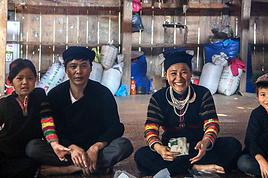
Bang La est un très charmant petit village thai avec une vue imprenable sur les magnifiques montagnes cernant la grande rizière centrale. Chaque maison sur pilotis est une maison d’hôte très bien organisée, avec douches communes –eau chaude- restaurant en terrasse, et paillasse (sur un plancher en bambou, donc on y dort très bien), excellents petits repas préparés par la maîtresse de maison, et pas de télé/téléphone/Internet/ karaoké. Très sympa pour 60 000 dongs par personne, incluant petit déjeuner complet (autres –copieux- repas : 60 000 dongs). Le soir, il y a toujours un TO qui a organisé une séance de danses locales ; vous faites pas partie du groupe, mais allez-y quand même, personne ne vous jettera ; jolis costumes, jolies danses, et TRES jolies danseuses :
Je vous recommande la maison No. 6 dont la patronne est une excellente cuisinière ; quant au patron…un coin de la grande salle commune est couvert de ses photos avec toute sortes de médailles : un vieux de la vieille qui s’est tapé la Guerre d’Indochine et du Vietnam du côté Viet (hélas : il ne veut pas parler; lorsque j'ai commencé, il m'a sorti : « Français moi pas connaître », alors qu’il le connaît sûrement fort bien).
Possibilité de trekking super dans les montagnes avoisinantes. Vous voulez voir comment on faisait des briques au Moyen Age ? Traverser la rizière et le petit pont et prenez le chemin de droite ; au bout de 1 km, vous verrez 2 immenses tours en brique ; c’est là (attention, il y en a une petite briqueterie avant, mais c’est pas celle-là) ; passionnant à voir ! Si vs êtes en forme, continuer le chemin, ca finit par grimper dur de montagnes en montagnes en longeant un petit torrent ; je pense que c’est la fameuse piste de 18 km qui mène à des villages Dzao, mais je n’en suis pas sûr ; il y aurait des guides, mais les guides, c’est pas pour moi, donc demander à la maison d’hôte. Ne manquez pas le petit marché de Mai Chau le matin, c’est marrant.
Pour les fortunés, je signale l’ouverture d’un hôtel de luxe ($100-150) à l’entrée de Mai Chau, avec piscine etc. (le proprio est autrichien et fait des sous à Bangkok)
MAI CHAU-SONLA
La route traverse le plateau de Moc Chau ; on se croirait dans le Jura ; c’est le « grenier à vaches » du Nord Vietnam ; il parait que le lait est très bon, hélas, pas de lait frais, et tous les vendeurs de lait pasteurisé en boite (berk !) du bord de route sont tout étonnés qu’on en demande !
A une trentaine de kilomètres avant d’arriver �� Sonla, arrêtez-vous au petit aéroport de Hat Lot (100 m à gauche de la route) pour un cours d’histoire.
Pour comprendre Dien Bien Phu, il faut savoir ce qui s’est passé à Hat Lot, plus connu du temps des français sous le nom de Na San, une cuvette entourée de montagnes de 5 km sur 2. En 1952, le Général Salan, alors Commandant en Chef en remplacement de de Lattre mourant, apprend que les divisions vietminh font route vers le Laos. Connaissant la région comme sa poche pour l’avoir sillonnée à cheval dans les années trente comme jeune lieutenant en charge de dresser des cartes, il décide de construire un point fortifié à Na San, pensant que Giap ne résisterait pas à « refaire le coup de Cao Bang » de 1950, c’est-à-dire massacrer les colonnes françaises. Pendant 2 mois, une noria de Dakotas –un toutes les 10 minutes- apporte plus de 3000 tonnes de matériel installés par près de 15 000 hommes, le plus grand pont aérien depuis la guerre de Corée. Comme prévu, le 30 novembre 1952, Giap attaque avec ses meilleures divisions…et se retire le 3 décembre en laissant plus de 500 morts sur le terrain. La raison du succès français : le terrain d’aviation intact permettant le ravitaillement et l’évacuation des blessés, Giap ne pouvant arrêter le trafic faute d’artillerie lourde.
En 1954, pour la même raison des Viets approchant le Nord Laos, Navarre a simplement voulu « refaire le coup de Na San » (sans écouter Salan qui lui avait dit qu’il ne pourrait pas tenir Dien Bien Phu sans tenir Na San). Seulement voilà, Giap, lui, avait appris sa leçon : pas de victoire sans détruire l’aéroport, donc sans artillerie lourde, ce qui explique qu’il ait attendu d’avoir tout en place pour attaquer Dien Bien, et qu’il ait commencé par rendre la piste d’atterrissage impraticable.
A Sonla, l’hôtel Cong Doan Trade Union Hotel, recommandé par tous les guides, est un affreux bazar en béton avec des chambres tristes à mourir et le restau encore plus (par contre, on y mange très bien), le tout pour 240 000 et 300 000 dongs !!! (par contre, il y a à la réception une petite mignonne qui parle bien anglais). Allez plutôt dormir au petit hôtel moderne en face ; pas un traite mot d’anglais mais petites chambres sympas à 8-12 dollars.
Le pénitencier, la honte du colonialisme français avec l’ile de Poulo Condor (maintenant Phu Quoc) est intéressant à voir, surtout le petit musée avec les lettres du Gouverneur du Tonkin expliquant comment il fallait traiter les prisonniers; la seule chose qui manque, c’est des explications sur la façon dont le Vietminh traitait les siens là-dedans (opposants politiques viets au communisme) ; on peut pas tout avoir, n’est-ce-pas ? Et pourtant, il ya beaucoup à dire sur le sujet !
A faire : la Tour radio : prenez le chemin juste à gauche du Trade Union, et tapez-vous les 715 marches (je les ai comptées) taillées dans le roc. La vue à 360 degrés de toute la région est absolument magnifique (attention aux pieds en bas des marches : il est jonché de seringues et d’ampoules de novocaïne 3 mg ; apparemment, les flics locaux ne savent pas que c’est la shooting gallery de Sonla, à moins que …….)
SON LA - DIEN BIEN PHU
Je vous signale que les Viets ne comprennent pas le mot « Dien Bien Phu », qui est le nom du canton « phu » en vietnamien). Le nom exact de la ville est Dien Bien.
Avec la route de Cao Bang à Ha Giang, la route Sola-DBP est la plus épouvantable que j’ai faite au Vietnam : sur plus de 100 km, une nouvelle route tranchant à travers les montagnes est en construction, l’un des plus gros chantiers actuels du pays. On passe sans arrêt de l’ancienne petite route goudronnée avec virages « non-stop » à la nouvelle route –en terre et bourrée de gros matériel. Compter la journée entière pour faire Sonla-Dien Bien (en octobre 2007, j’ai mis 11 heures incluant la visite suivante) :
A faire absolument : le QG de Giap
A une dizaine de kilomètres avant Dien Bien, prenez à gauche au village de Na Nhan (2 larges panneaux bleus signalent en vietnamien le grand barrage et lac de retenue à 4 km de là). Une très belle route en lacets longeant en partie le lac vous conduit au village de Muong Phong (20 km de Na Nhan), prés duquel est enfoui le QG de Giap pendant la bataille. Visite très intéressante guidée par quelques adorables gamines thaïes gazouillant en anglais. Après la visite, continuer la route et vous traversez 25 km de très beaux paysages montagneux parsemés de petits villages thaïs pour arriver à Dien Bien. Un bien agréable -et instructif- petit détour.
DIEN BIEN PHU
A voir pour se rendre compte de l’insondable connerie militaire ; comme l’a dit Bigeard, qui ne mâchait pas ses mots, au général Cogny, « C’est pas une cuvette, c’est un pot de chambre » : Les fameuses collines, c’est des buttes dont la plus haute, Eliane 2, doit pas faire 50 m de haut ; il faut pas être Napoléon pour comprendre, en voyant les hautes montagnes couvertes de jungle à quelques kilomètres, que c’était le vrai piège à cons. On se demande comment les français (enfin c’est beaucoup dire, il y avait plus de 10 races y compris des tahitiens et des malgaches !!!!) ont pu tenir 51 jours de bombardement jour et nuit !
Il reste rien à part le PC de de Castries et Eliane 2 à gauche du cimetière Viet, où les Viets ont reconstitué les tranchées…en béton (même les sacs de sable sont en béton !!!) ; en haut, un gigantesque cratère, une mine posée par les viets et qui a explosé la nuit ; regardez-le bien et imaginez les soldats français subissant ça en pleine nuit, suivi d’une attaque par des milliers de bodoi!
Très beau cimetière viet, mais le français…. à pleurer -d’ailleurs, j’ai failli ! Une toute petite stèle, et payée par un ancien légionnaire, les gouvernements français se foutant complètement des 150 000 morts pour rien.
Je ne connais que l’hôtel Muong Thanh(le Routard signale des ours en cage, ils ont disparu). Piscine. Chambres de 12 000 à 400 000 dongs. Les moins chères, très sympas, dans la maison en bois originelle, sont douches communes uniquement, et les plus chères ont une caractéristique rigolote : ce sont de grandes chambres en L, le lit dans la grande branche et la télé dans la petite…. donc on regarde la télé d’abord et après on se couche !!! Excellente cuisine, mais le service…un poème ! Hôtel gouvernemental, tout le monde s’en fout ! Par contre, gènes obligent (DBP est en plein pays thaï), les nanas du salon de massage sont TRES entreprenantes ; y’avait pas 5 minutes que j’étais dans ma chambre que l’une a rappliqué : super belle mais bourrée de drogue jusqu’au trognon, donc, hélas, je l’ai virée
DIEN BIEN-LAI CHAU (MUANG SAY)
Le bordel des noms de villes dans le coin, c’est étonnant ! Le vrai nom de la ville, c’est Muang Say, Lai Chau, c’est le nom de la province ; ce sont les français qui ont baptisé la ville Lai Chau ; comme elle doit disparaitre sous un barrage (terribles inondations dont une a tout détruit), les Viets ont décidé de transporter la capitale du coin à ce qui était avant Tam Duong, et de donner au village de Lai Chau, car il y en a un, le nom de Tam Duong. Fallait y penser ! DONC, le Lai Chau des français, celui où s’arrêter absolument, c’est Muang Say, Lai Chau, c’est Tam Duong, et Tam Duong, c’est Lai Chau ; see what I mean, man ? En plus, confondez pas, un peu plus loin, y’a un Muang Cha !!!!!!!!!
Super hôtel avec bouffe divine servie sur terrasse : le Lan Anh : www.lanahotel.com, hotelananh@yahoo.com. (attention, ils en ont un autre à Phong To, donc bien précisez Lai Chau). Belles chambres pour tous les prix dans des maisons en bois.
A faire absolument : Déo Van Long
Traverser le pont suspendu situé au milieu du ville (juste avant le Lan Anh), tourner à droite et suivre la route jusqu’aux berges de la rivière Da (1, 5 km). Des pirogues à moteur vous emmènent de l’autre coté, où est situé le village, pour 5000 dongs. On peut aussi y accéder en voiture par le nouveau pont construit à la sortie de la ville, mais la traversée en bateau est préférable pour se rendre compte de la puissance du fleuve…et de l’habileté diabolique des bateliers. Il ne reste rien du palais du maître des lieux, Deo Van Long (quelques ruines au coin de ce qui est maintenant l’école, à la sortie gauche du village), un tyran sanguinaire (bien qu’ayant fait le Lycée avec Vincent Auriol). On dit, ce qui est possible connaissant le personnage, que, lorsqu’il a évacué Lai Chau en 1953, il a fait tuer tous ses serviteurs pour ne pas qu’ils le trahissent et empoisonner les concubines qu’il ne voulait pas emmener. En tout cas, c’est grâce à lui, soutenu à fond par la France, que les tribus entourant Dien Bien, pressurées depuis des décennies, ont, pour se venger, laissé passer les troupes de Giap au lieu de les harceler, ce qui aurait probablement empêché sa victoire.
Une expédition que je me suis promis de faire : Muong Thé.Réservé aux aventuriers : une route magnifique –elle longe toute la Rivière Da- mais épouvantable de 92 km conduit au village thaï de Muong Té, un des postes les plus reculés du Vietnam. C’est vraiment le bout du monde, garanti sans touristes….. Petit hôtel d’état avec restau. Si ça vous tente, la frontière chinoise est à 7 jours de jungle montagneuse…à cheval. Idéal pour les Robinsons !
MUANG SAY (LAI CHAU)-PHONG THO
PS: on dit que la route passant par Sinh Lo est magnifique, mais que les gens n'y sont pas sympas du tout, Commentaires please!
Attention: sur certaines cartes, et pour les Thais locaux, Phong Tho s’appelle aussi Paso, nom de la partie thaïe de la ville située de l’autre coté du pont.
Petite ville d’étape quasi obligatoire vu l’état actuel des routes. A 2 ou 3 kilomètres avant d’arriver à Phong To, une petite route prend à droite direction le charmant village thaï de Muang Tho, ancienne « capitale » de Deo Van Anh, le cousin de Deo Van Long (j’ai oublié de vous dire, l’ancêtre de toute cette belle famille était le terrible pirate chef des fameux Pavillons Noirs qui ont donné tant de mal aux français au 19e ; pas des Viets, des chinois !) ; lui, le Van Anh, il s’est pas cassé la tête pour prendre le pouvoir : il a assassiné le roi local –qui était son oncle- et épousé sa femme !!!!!. Il est célèbre pour ses 83 enfants. Son palais est maintenant l’école (allez-y ; les élèves, beaucoup en costume des tribus locales, doivent voir 10 touristes par an et vous font fête pas possible). En face, 2 pitons calcaires ; sur le plus pointu, un invraisemblable blockhaus français a donné bien du mal aux Vietminh ; Deo Van Anh l’a fait sauter quand il a évacué la région, mais on comprend pourquoi le vieux pirate s’était installé là ; imprenable, le fortin! Traverser le pont et grimper le chemin à droite pour avoir une très belle vue du village. Dommage qu’il n’y ait pas encore d’hôtel, j’y serais bien resté 2-3 jours. Continuer la route, très chouette, elle longe la rivière, et vous arrivez à Paso après 15 km ; à gauche sur le grand pont et à gauche pour l’hôtel.
Lan Anh Hotel (mêmes propriétaires que celui de Lai Chau). Sur les bords de la rivière. Elégantes chambres dans de grandes maisons en bois, avec lit à baldaquin (douches seulement). Trois grandes et belles terrasses (bar, coin télé, et restaurant). Grande carte de plats vietnamiens délicieux, et service sans reproche (vu que la propriétaire, une belle garce bien conservée de 40-45 ans qui doit être impitoyable, a l’œil ouvert en permanence).
PHONG THO-SAPA
Phong Tho est à 94 km de Sapa. Route goudronnée traversant la grande plaine de Tam Duong –enfin, Lai Chau, vous me suivez ? S’arrêter pour déjeuner dans un des nombreux restaus de cette ville moche à se tirer une balle d’AK 47. Après déjeuner, une grande ligne droite et, ensuite, 20 km de route en lacets ; ça grimpe dur. Magnifiques paysages. Les derniers kilomètres avant le haut du col et un peu après sont en réfection complète –souvent à une voie-, donc, calculez bien votre coup ; en octobre 2007, il m’a fallu plus d’une heure pour les faire.
SAPA 2 conseils :
Les H’mongs sont, avec les Sherpas, les meilleurs marcheurs de montagne du monde. Faites bien comprendre à votre guide que vous êtes là pour admirer les paysages et prendre des photos, pas pour faire un marathon, sinon, ils marchent –et grimpent- à leur vitesse normale et…amusez-vous bien !
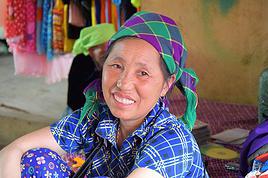
Ils détestent qu’on les appelle Miao, nom donné par les français –« chat » en viet- à cause de leur faculté de grimper tout droit comme des chats.
Je vais pas vous faire une salade sur Sapa et Bac Ha, tout a été dit et redis
PS : tout le monde va de Hanoi à Sapa en train de nuit, et tout le monde à tort ! La route est magnifique et se fait sans problème dans la journée (10-11h), et les petites Dzao, avec leurs cheveux qui leur descendent parfois jusqu’aux mollets, elles sont très mignonnes en costume national
Méfiez-vous de la vie, car les ratés ne vous rateront pas!
Un grand merci pour toutes tes interventions et partages. 🙂
Juste une rectification à propos de Poulo Condore : c'est l'ancien nom de l'archipel des îles Con Dao et non Phu Quoc.
Question pour Abalone (ou un autre qui a la reponse) dont la reponse interessera surement beaucoup d'entre nous: j'arrive a Muang Tho, j'adore, mais pas d'hotel. Comment je fais pour trouver une chambre chez l'habitant s'il n'y a aucune pancarte "Room for Rent" et combien on doit payer?
Méfiez-vous de la vie, car les ratés ne vous rateront pas!
j'arrive a Muang Tho, j'adore, mais pas d'hotel. Comment je fais pour trouver une chambre chez l'habitant s'il n'y a aucune pancarte "Room for Rent" et combien on doit payer?
On s'y perd un peu dans tes explications avec les noms propres:
Nous, viêtnamiens🙂, on n'écrit pas Muang mais Muong (avec les crochets sur le u et o). Quand tu écris Muang Tho, est-ce qu'il s'agit de Muong So? Et Sinh Lo? c'est bien Sin Hô? Phong Thô, ce n'est pas Paso, qui se trouve à 27 km de Phong Thô et qui se trouve à l'endroit où la rivière Nâm Na se divise en 2 branches et la nationale 12 se divise en 2 branches, l'une d'elle est le 4D qui va vers Phong Thô.
Si jamais tu te trouves dans les villages et que tu es obligé d'y dormir la nuit, tu dois aller voir le chef du village, le personnage le plus important et tu seras bien accueilli.
Cela dit, ce doit être un cas extrême. Dans cette région, il y a beaucoup de trafiquants de drogues et la police veille! 20 ans de prison pour le trafiquant ou le consommateur s'il se fait attraper. Au problème de la drogue, il y a des vols d'enfants pendant la nuit et qui vont être envoyés vers la Chine. Donc, c'est une région qui n'est pas sécurisée comme dans les delta.
Lucky that we have a home/Our Home is Nha May Man/Passing rain and dry seasons/In a full-of-love atmosphere/Besides my new family/I have brothers and sisters/The sun shines over the skies/Let's stay here, with all of us,
Ça a l'air intéressant. Juste deux questions: combien de temps conseillez-vous pour faire le tour complet ? quel fourchette de prix, pour un voyage individuel ? Moto ou 4 x 4/mini bus ? avec chauffeur et guide bilingue ou chauffeur seulement ? Est-ce possible si le touriste ne pige pas un mot de vietnamien et s'il n'y a pas au moins une langue commune entre le touriste et ses accompagnateurs (chauffeur, guide) ?
Merci d'avance.
Pour bien voir la region, 8 jours minimum sans compter le trekking a Sapa
Faisable en moto, mais dur dur!
Je ne comprends jamais de guide, car j'ai eu la chance de tomber sur un chauffeur fabuleux en 2006 et je pars toujours avec lui. Il parle 3 mots d'anglais et rien en francais, mais il sait ou aller, tu lui baragouine 3 mots de viet et lui 3 mots d'anglais et tout se passe tres bien. Tu pars avec un bon bouquin sur le Vietnam et, dans les hotels, tu rencontres plein de touristes en instance de depart qui t'expliquerons tout. Les guides, ca double le prix de la jeep! Voir mon site "Chauffeur au Vietnam du Nord". Un tuyau; j'ai 2 membres (je deteste le terme "VFistes", va falloir qu'on trouve quelque chose de plus elegant!) qui, apres avoir arrange le voyage avec Minh, ont poste un site "Recherche...pour partager Jeep..."; en 3 jours, ils ont trouve un autre couple)
Méfiez-vous de la vie, car les ratés ne vous rateront pas!
Merci pour les explications. Attention toutefois, tous les touristes n'ont pas votre connaissance du Vietnam. Si c'est un premier voyage au VN, je les vois mal s'aventurer avec seulement un chauffeur dans ses contrées, sans aucune possibilité de communiquer. L'accent français ou vietnamien en anglais font vite naître les incompréhensions! Ajoutez à cela une méconnaissance de la culture du pays, bonjour les problèmes. En cas de problèmes (comme des innondations, des éboulements, un accident, une maladie) comment vont-ils se débrouiller ? J'ai entendu souvent "c'est incroyable, personne ne parle anglais ici, impossible de se faire comprendre" et les énervement arrivent vite.
Et puis, un guide avec qui vous pouvez communiquer, échanger, discuter, c'est bien dans ces coins perdus, ça permet de mieux comprendre les gens qu'on rencontre, au-delà des sourires et des échanges commerciaux.
Vous n'avez pas répondu sur la gamme de prix : combien faut-il compter ? 100 $, 250 $, 500 $ ou plus, pour une semaine avec chauffeur et voiture, puisque c'est ce que vous préconisez ? Histoire qu'on aille pas imaginer que ce sont des prix Sinh Café ;-)
En ce qui concerne la langue, je suis pas d'accord avec toi. Les Viets sont beaucoup plus malins que les thais et comprennent pratiquement tout ce que tu veux. En plus, le Viet, c'est pas sorcier, et c'est incroyable le vocabulaire qu'on peut apprendre juste en lisant les pancartes dans les rues ce que tu ne peux pas faire en Thailande-. Je ne dis pas que les guides ne sont pas utiles, mais a quel prix! En plus, si tu tombes sur un pas bon, il va tout faire pour foncer au maxi pour retrouver les copains le soir; j'ai rencontre un couple de suisses super sympas qui ont ete oblige d'appeler l'agence a Hanoi pour faire cesser le manege. A chaque etape, tu rencontres un tas de monde, y compris les guides, avec qui tu peux bavarder si tu es curieux du pays et de la region
Le prix depend du circuit! si c'est facile (Hanoi-Mai Chau-Tam Coc-Hanoi, c'est $50 par jour); maintenant, pour des routes pourries et des cols de 25 km de long, c'est plus cher (ne pas oubliez les 25% d'infaltion en 1 an et le baril de pertrole a $130 grace a tous les magouilleurs internationaux qui parient sur la hausse sur les prix; la honte! Et personne ne fait rien!). Cela depend aussi du programme; si tu restes 4 jours a faire du trekking a Sapa pendant que le chauffeur se tape le carton avec les copains, c'est moins cher que si tu taille la route tpous les jours (d'ou l'avantage de negicier directement avec un cahuffeur: les agences, elles te font payer a la journee meme si le chauffeur dort, le chauffeur, su tu lui explique qu'il n'a rien a faire a Sapa pendant 3j, il te donnera un meilleur prix. Mon dernier voyage (le Nord Est, voir le site) m'a coute $750 pour 12 jours de conduite journaliere, et, vu les routes, c'etait un cadeau!
Méfiez-vous de la vie, car les ratés ne vous rateront pas!
j'ai rencontre un couple de suisses super sympas qui ont ete oblige d'appeler l'agence a Hanoi pour faire cesser le manege.
Dommage qu'on ne se soit pas rencontrés, je t'aurais donné un autre son de cloche, et tu aurais pu écrire : 50 % des Suisses rencontrés sont contents des services du guide et chauffeur. 😏
Toujours dangereux de faire d'un exemple une généralité.
Pour ceux qui voudraient aller à Sapa et faire du trecking sur place, inutile de prendre un guide à Hanoi. Les agences sont très nombreuses à Sapa, on peut en faire le tour pour comparer les offres et choisir celles qui sont le plus en accord avec qui on est et ce qu'on cherche. On peut aussi de déplacer seuls, c'est assez touristique pour ne pas être paumés loin de tout, contrairement au circuit proposé dans cette discussion.
Personnellement, j'ai été contente des guides rencontrés à Sapa, francophone ou anglophone, pour des tours "classiques" faciles autour de Sapa ou un peu plus loin. Sans eux, j'aurais passé à côté de pas mal de choses, par méconnaissance de la langue.
Dans le grand Nord, le personnage clé est toutefois le chauffeur, qui doit connaître la route, la conduite sur routes boueuses et avoir une voiture adaptée. Pas tous les chauffeurs habitués à la conduite en ville sont capables de passer dans les chemins détrempés. J'ai eu affaire à un vieux routard, un vrai de vrai, au volant d'une vieille 4x4 de 10 ans d'âge, un peu tape cul, mais qui passait partout, ce qui n'était pas le cas d'autres mini-bus plus récents. Rien ne vaut l'expérience!
Merci pour votre récit plein de détails et de vie !
Quelques rectifications :
Phong Thô (ou Muong So - Muong = terre)
Pa So et le village Thaï, au bord de la Nam So (Nam = rivière) ne font qu'un. Pa So est le quartier "commerçant" de la ville, situé à 1, 5 km (et non à 15 km, erreur de frappe, je pense) du "quartier" paysan. Il est possible qu'il existe un autre Pa So...
Deo Vàn Ân
Il n'a pas pris le pouvoir tel que vous le racontez. Il était un des fils de Deo Vàn Toa, roi de Phong Thô. Il était un chef féodal (Chao Pen Khan). C'était un homme intelligent, plein de bon sens, aimé de la population et qui aimait faire la fête ! Il a une nombreuse descendance.
Toutefois, une histoire proche, avec assassinat de chef, substitution d'identité et mariage avec la fille de l'assassiné a été rapportée par Lucien Bodard dans la "guerre d'Indochine", à propos de Deo Van Tri, père de Deo Van Long. Nulle autre trace de cette histoire à ma connaissance.
Deo Van Tri était le lieutenant de Luu Vinh Phuoc, chef des "Pavillons Noirs".
Par ailleurs vous avez voyagé en grand curieux documenté, et votre récit est très intéressant !
Vous avez raison 2 fois.
1) Paso est bien de l'autre cote du pont par rapport a Phong To, comme je l'ai ecrit, mais j'ai ete contredit. Par contre, je ne parle pas de Muong So, mais d'un autre village qui est bien a 18km de Phont To (j'ai ecrit Muong To, mais il parait que ce n'est pas ca; de toute facon, c'est bien a 18km a droite du pont en partant de Pa So
2) C'est bien du pere de Deo Van Long qu'il s'agit. Je ne pense pas que Bodard raconte une histoire, ce n'etait pas son genre. J'ai ecrit cela sans verifier ma doc
Merci du compliment. Avez-vous lu mon site sur le Nord Est?
Méfiez-vous de la vie, car les ratés ne vous rateront pas!
Je viens de lire le compte-rendu de votre périple dans le nord-est Vietnam que je ne connais pas encore. Je ne manquerai pas de m'y référer lors d'une prochaine visite dans le nord. Merci !
La première fois que j'ai fait ce tour complet, c'était début 1990, j'avais une autorisation spéciale. Entre Dien Bien et Lai Chau, j'ai remonté la piste durant 3 jours à pieds en croisant et recroisant une cie de "bo doi" en exercice camouflés comme la guerre (faut dire, le conflit avec les Chinois n'était pas si loin !). Le Cdt d'unité m'a invité à boire le thé, il était halluciné de voir un blanc dans le coin. Les gars rigolaient, c'était iréel.
SNIF !... Que de souvenirs... Merci Larsay de m'avoir permit de me remémorer cela !
Tout d'abord bonsoir je suis tombé par hasard sur le sujet et merci pour les descriptions et toutes les informations.
En fait je chercher l'histoire de deo van long car apparemment je suis un descendant (je m'appelle DEO).
Et jorais aimer me renseigner sur mes origine si vous savez ou je pourez me procurez des document, infos ou autres..
Merci d'avance
Etant a Bangkok, je ne peux pas vous etre tres utile mais, etant donne que DVL etait ds le meme lycee que Vincent Auriol a Paris et qu'il a ete l'allie des francais jusqu'en 1954 (plus vraisemblablement refugie en France apres DBP), ce ne doit pas etre les archives qui manquent en France! Essayez le service des archives de l'Armee + chercher un bouquin sur les Pavillons Noirs du temps de la conquete, leur chef etait l'ancetre de la famille. Je vais me mettre a la recherche de renseignements a temps perdu, on ne sait jamais
Méfiez-vous de la vie, car les ratés ne vous rateront pas!
Dirigeant de la Fédération Thaï autonome du Nord-Ouest du Tonkin de 1908 à 1954. Petit-fils de Deo Van Sinh - ou Cam Sinh - et troisième fils de Deo Van Tri, il est le descendant d'une noble ligne héréditaire féodale puisant ses racines dans la province de Yunnan.
Si la politique française au Tonkin, de 1910 à 1940 encourage la centralisation et l’annamitisation des pouvoirs au détriment de l’idée de l’unité Thaï, Déo Van Long peut, à partir de mars 1945, reprendre l’idéal de son père et rétablir la fédération Thaï autour de la province de Laïchau.
En raison des ses relations étroites avec la politique française, il est contraint de quitter sa province en hélicoptère lors de la guerre d'Indochine. Durant la bataille de Dien Bien Phu, il demeure à Hanoï. La même année, il émigre en France. Il décède en 1975 à Toulouse.
Verifiez la Depeche de Toulouse de 1975!
Verifiez Deo Van Sinh et Deo Van Tri sur Google ET yahoo.fr
Méfiez-vous de la vie, car les ratés ne vous rateront pas!
White Tai or Tai Don
Map of White Tai Concentrations in Northern Vietnam Introduction
The White Tai of northern Vietnam number between 250, 000 - 400, 000. They have been living in northern Vietnam for over 1, 200 years, having migrated from Yunnan province in southern China. Descending from the Tai family tree, they are related to the Thai of Thailand and the Lao of Laos and closely related to the tribal Black Tai or Tai Dam. Animism or the worship of spirits dominates their world view, mixed with ancestor worship derived from their proximity to the Chinese and Vietnamese. To this foundational belief system, some 30% of the White Tai add Buddhism on top. Another 1% would consider themselves Christian. They are known to be a very polite, hospitable people who are taught from an early age to respect those of higher rank. They are generally rice farmers and are well known for their intricate, colorful, and picturesque weaving and unique dance repertoire. Origin and Migration into Vietnam
Map of White Tai Migration Points in Northern Vietnam
Daic speakers have apparently been living in Northern Vietnam for over 3000 years. When the Han Chinese advanced southward into Northern Vietnam around 2000 years ago, many Tai speakers appear to have migrated west to Yunnan province of China. This gave rise to the Southwestern Tai sub-family, which includes the Black, White, and Red Tai, Lao, Lue, and Thai. The Tay and Nung of northeast Vietnam who are also part of the Daic group never migrated to Yunnan, choosing instead to stay in northeast Vietnam. Following the establishment of the Tibeto-Burman kingdom of Nanzhao in 732 AD, there appears to have been a significant migration of what are referred to as the Southwestern Tai groups southward out of Yunnan and into Sip Song Chu Tai. This is an area near the Chinese-Vietnamese border known as Chiang Saen. From northwestern Vietnam, the Chiang Saen speaking Tai migrated into northeastern Laos and northern Thailand and then into Central Thailand. Tai speakers within this sub-group include the Thai, Lao Song Dam, Tai Dam, and Lanna Tai of Thailand, the White Tai, Black Tai, and Red Tai of Laos, and the White Tai and Black Tai of Vietnam. This would make the White Tai of northwest Vietnam more closely related to the Lanna Tai (northern Thai) and Central Thai of Thailand than to the Tay and Nung of northeast Vietnam. Northern White Tai of Vietnam
White Tai moved who moved into Northern Vietnam around the 6th or 7th century are the ancestors of the White Tai found today living in Yen Bai, Son La, Hoa Binh, Thanh Hoa, and Nghe An provinces. They first settled in the vicinity of Bac Ha district in Lao Cai province. Here they established Muang Pak Ha. From this settlement, they established new settlements in Muang Lo (Nhgia Lo) in Yen Bai province across the Red river. Later they established the settlements of Muang Pua in Bac Yen district and Muang Tak in Phu Yen district in Son La province. From here, some White Tai crossed the Black river and established the settlement of Muang Sang (Muang Xang) in Moc Chau district.
When the White Tai were first establishing Muang Pak Ha, another group crossed the Chinese border into Northern Vietnam into what is now Lai Chau province. This group established settlements in Muong Te, Phong Tho, and Lai Chau districts of Lai Chau province.
Around the 14th century, some White Tai migrated from Muang Lo to Mai Chau district. This group and those farther south are regarded some as a distinct sub-group of the White Tai, which we will refer to as Southern White Tai.
In the 14th and 15th centuries, the Black Tai rulers, with their seat of power in Muang Muai (Thuan Chau), controlled around 100 muang extending from Hoa Binh in the south to southwestern Yunnan in the north. This included not only Black Tai muang or communities, but White Tai muang as well. This region was known as Sip Son Chu Tai (or Sip Song Chau Tai, translated 12 Rulers). This played an important role in forging a Tai culture in the north that was distinct from the Tai culture in the south (Mai Chau on southward).
In the late 18th century, the Burmese invaded the area around Muang Thanh (Dien Bien) and Muang Muai (Thuan Chau). In 1782 Rama I of Siam established suzerainty over parts of Sip Song Chu Tai and over the next century the Siamese rulers came to consider the Tai of Sip Song Chu Tai as their vassals. Over the decades following 1834, the Tai of this region payed tribute both to the Siamese Chakri dynasty rulers of Bangkok and to the Vietnamese Nguyen dynasty rulers of Hue. Among the Tai themselves, the White Tai rulers of Muang So (Phong Tho) and Muang Lay were dominant during this period.
In the 1880's, the White Tai ruler of Muang Lay, Cam Oum, allied himself with Chinese bandits who were plundering and causing considerable chaos in the area. During the years 1884 to 1887 two Siamese military expeditions made an effort to put down these depredations and reassert Siamese suzerainty. The Siamese operated out of Muang Thanh (Dien Bien) and maintained close relations with the Black Tai there.
Soon after, a French expedition led by Auguste Pavie entered the area and in 1889, the White Tai ruler of Muang Lay was forced to sign a treaty acknowledging French suzerainty over Sip Song Chu Tai. In the eyes of the local people, this act proclaimed this ruler's dominant position over other White Tai rivals as well as the Black Tai to the south. Four years later, the French forced Siam to sign a treaty that, among other things, ceded Sip Song Chu Tai to the French who already controlled lowland Vietnam by this time.
When the Japanese occupied French Indochina during World War II, the Tai found themselves somewhat autonomous. However, by the end of the war, Vietnamese communists were establishing their presence among the Black Tai of Son La province. When the French sought to reestablish control over the Sip Song Chu Tai area, they did so through the White Tai ruler of Muang Lay, Deo Van Long. In return for his support, the French established an autonomous Tai Federation with Deo Van Long as president and its capital in Muang Lay.
After defeating the French in Hoa Binh in early 1952, the communists began an offensive in the highlands of northwest Vietnam. Through to 1954, when the communists defeated the French at Dien Bien Phu, conditions in the Sip Song Chu Tai area was extremely unstable. There was considerable loss of life among the Tai. Having a close relationship with the French, the White Tai in Lai Chau province suffered the most with thousands dying during the conflict.
During the French colonial period beginning in the 1890’s, the French had a policy of Vietnamizing the ethnic minorities, gradually reducing the authority of the tribal rulers. This policy even included the successors of the White Tai ruler of Lai Chau, Deo Van Tri. His son, Deo Van Long, had been sent to Hanoi and posted to minor positions in the Tonkin Delta. But in 1940, in order to use the Tai leaders as opium brokers, the French reversed their policy and sent Deo Van Long back to Lai Chau as territorial administrator. He and other Tai leaders negotiated with their Meo mountain neighbors for the purchase of opium and sent the increased harvest to the Opium Monopoly in Saigon for refining and sale. After 1940, these feudal chiefs forced Hmong farmers to expand their opium harvest. During the 15 years leading up to 1954, the Tai feudal leaders cheated and underpaid the Hmong, who had no other outlet for their opium. As as result, the Hmong allied themselves with the Viet Minh in the decisive battle at Dien Bien Phu of 1954.
Following the communist victory in the north in 1955, the North Vietnamese government established the Tai-Meo Autonomous Zone. They made a Black Tai head of the region and established its capital in Tuan Chau district in the vicinity of the old Muang Muoi. Since then, a new administrative structure was incorporated with the old region divided into provinces with an administrative center in each province.
Méfiez-vous de la vie, car les ratés ne vous rateront pas!
Savez-vous quelque chose au sujet du barrage de Son La ? Est-il maintenant en cours de construction ? Quelles seront les districts submergés ? Celui de Phong Thô, et la ville elle-même, le seront-ils ?
J'ai lu qu'il devrait être fonctionnel à partir de 2012. Est-ce exact ?
Tous mes remerciements anticipés !
Le barrage n'est pas a Sonla, mais a Lai Chau (muang lay), au nord de DBP. Muang lay est un gros bourg regulierement devastee par de terribles inondations. Ca fait des annees qu'on en parle et c'est pas pour demain (ni pour 2012!). Phong To est bien plus au nord et ne sera pas touche. S'ilse fait un jour, Muang lay sera sous les eaux, comme Tignes
Méfiez-vous de la vie, car les ratés ne vous rateront pas!
Merci. Ce que vous me dîtes correspond à l'info que j'avais avant de prendre connaissance du projet du barrage de Son La sur des sites et par un anthropologue qui connaît bien la région. Qui dit vrai ?
Ma grand-mère était de la région, elle était Thai Blanche et est née à Ban Bo, à coté de Lai Chau. Ma mère se souvient un peu des Deo, car c'était de la famille éloignée à priori. On prévoit un voyage l'année prochaine dans la région avant que tout finisse sous les eaux.
Merci beaucoup pour ce site qui semble très intéressant.
Mais pourquoi, uniquement les Thaï Blancs et pas les noirs et autres ?
Je suis aussi à la recherche de sites francophones sur les autres minorités : AKHAS, Lantenes, Kmous, etc
Pour le H'mongs différents sites fournissent déja de l'information.Merci d'avance
Il y a de nombreuses communautes H'mong en France. La premiere -je m'en souviens tres bien- est arrivee en 1955 et a ete installee par le gouvernement dans un village tres haut perche dans le massif de la Meige. Il y en a aussi en Lozere (y compris dans le village ou habite Jean Larteguy, qui les connait bien), dans l'Ardeche et dans les Cevennes. Partout, etant gentils, polis, tres hospitaliers et tres travailleurs, ils ont ete immediatement adoptes par la population locale, qui, pourtant, notamment dans les montagnes du Sud-Est, depuis les affaires des Camisards et des Cathares, n'aiment pas trop que des etrangers viennent s'installer dans leur coin.
Si on considere que la Guyane francais fait partie de la France (?????), il y en a beaucoup la-bas, a qui le Gvt a donne des terres; ils y ont developpe des rizieres et des potagers, et sont maintenant la communaute la plus riche du pays, evidemment jalousee par les Guyanais, qui ont bien ete incapables d'en faire autant.
Tout cela n'est pas etonnant lorsque l'on sait que les H'mongs etaient il y a tres longtemps d'extraordinaires agriculteurs, et quand on voit le travail de Titan qu'ils ont accompli au Nord Vietnam avec leurs terrasses sur des pentes invraisemblables, et a perte de vue. Ca fait 4 jours que je sillonne les montagnes des H'mongs Fleurs, au nord de Bac Ha, en moto (rapport dans quelques jours 😉), j'en suis epoustoufle !
Méfiez-vous de la vie, car les ratés ne vous rateront pas!
C'est marrant que vous soyez à Bac Ha: on y était il y a un an et demi !!! Le marché aux bestiaux de Can Cau au bout de la route est assez coloré !!!
Sinon, update sur les travaux à Muong Lay, ex-Lai Chau: le barrage est très en retard, ils font actuellement les ouvrages d'art. Les nouvelles routes ne sont pas ouvertes, et les villages pas encore tous déplacés. Muong Lay est donc un ramassis poussiéreux et personne ne fait attention, car tout va etre détruit. L'hotel Lan Anh I est en piteux état, et le service est pitoyable.
Bonjour Larsay
Je compte partir au Viet Nam NO et NE en juillet/aout pour 21 jours, ce sera mon 4ème
séjour depuis 1992 et le dernier en 2003, d’après la dernière discussion sur un compte rendu de voyage cela semble changé.
Première question quels sont les risques météo? pluie en fin de journée? risque fort d'etre immobilisé par les pluies?'en ce moment j'ai lu qu'il pleuvait bcp à Mai chau et région de Ha Giang? température à attendre?
Voici mon trajet projeté
Hanoi (1 journée car je connais déja)
Hanoi Mai chau
Mai Chau-Son La
Son La-DBP
DBP-Sin Ho- Lai Chau
Lai Chau-Sapa
Sapa-Y Linh Ho-Lao Chai-Ta Van -Giang Ta Chai
Giang Ta Chai-Sapa-Bac Ha
Bac Ha -Coc Ly- Bac Ha
Bac Ha -Ha giang
Ha Giang-Dog Van
Dong Van-Meo Vac-Ha Giang
Ha Giang-Ba Be
BaBe -Kayak
Ba be -Cao Bang-quang Uyen
Quang Uyen-Ban Gioc-Quang Uyen
Quang Uyen- Lang Son
Lang Son-Hanoi
En 1992 j'ai raté DBP et le regrette je suis passionné comme vous d'histoire miliaire
ayant fait mon service dans les Rima en 1965 presque tous les cadres avaient fait
l'Indo et leurs récits faisaient rever, mon adjoint était viet etc...j'ai fait ma prépa para
avec le 1er REP etc...je ne me fais pas d'illusions pour DBP, mais rève de la RC4 , en
92 j'ai pu acheter à Ha Noi des livres comme (la RC4 du colonel Dang Van Viet) livres écrits par nos ennemis de l'époque, une autre version !!
J(ai lu et relu vos différents posts pour établir ce circuit, j'aurai un véhicule avec chauffeur et guide.
Meme si je descends au Metropole à Ha noi par nostalgie, + de la moitié des nuits seront chez l'habitant.
J'ai lu et relu ton blog Kimtwo m'a dooné son impression sur le temps mais m'a conseillé de s'adresser à vous.
Avez vous des points à me conseiller, ou des "pièges" dans lesquels ne pas tomber.
je ne parle pas ici des "arnaques" qui font grand bruit, je voyage dans cette région du monde depuis plus de 20 ans.La Thaïlande en 1980!
J'ai lu qu'a Lang Son vous aviez trouvé des vestiges?
Merci de votre aide, par ex retrouver la region ou le 1 er Rep a dégusté, il me faudrait relire tous les bouquins la dessus
Bonsoir
Eric
ayant fait une partie de ces étapes, voici mes commentaires:
Hanoi Mai chau
La route est jolie, mais le stop à Mai Chau dans le faux village Thai est à éviter... par contre, plus au nord, il y a le Lac artificiel de la rivière noire, et c'est très sympa !
Mai Chau-Son La
En fait, on peut même faire Hanoi Son La en une journée...
Son La-DBP
Rapide maintenant avec la nouvelle route. Laisse du temps pour faire plein de visites en chemin (Giap, Son La, etc...)
DBP-Sin Ho- Lai Chau
Celle là, pour le coup, c'est long... Bien sûr, vous parlez du Nouveau Lai Chau (Tam Duong).
et c'est dommage de rater Phong Tho et Muong So (reperes Google Maps) qui sont authentiques, alors que le New Lai Chau, c'est un faux Las Vegas paumé avec un super Casino, Zoo, et une 2x2 voies qui débouche sur un chemin 🏴☠️
Lai Chau-Sapa
Assez Court du coup
Sapa-Y Linh Ho-Lao Chai-Ta Van -Giang Ta Chai
Giang Ta Chai-Sapa-Bac Ha
Ca vaut le coup de monter à Can Cau, jour de marché aux bestiaux.
Juillet et août sont des mois chauds (35-40), avec qualques violents, mais brefs orages. C'est normal qu'il pleuve actuellement, c'est la saison (voir les dernières semaines de DBP !!!!)
J'ai beaucoup ajouté sur mes notes de voyages, donc en voici la dernière version, avec tout ce qu'il faut de notes historiques sur la Guerre d'Indo (à ce sujet, lire le passionnant "Marie Casse-croûte" de Jean Axelrod ; le héros qui "remonte" Cao Bang, c'est lui.
http://hiduong.com/vietnam/notes.html
Ha Giang-Dog Van
Dong Van-Meo Vac-Ha Giang
Ha Giang-Ba Be
BaBe -Kayak
Pas bon ! Il faut faire :
HG- (permis)-Dong Van
Dong Van-Méo Vac-Bao Lac
Bao Lac-Babe en prenant avant Thin Tuc la route que je signale dans mes notes
Pas de kayak à Babe (du moins je n'en ai jamais vu), c'est le bateau à moteur pour faire la grotte et les chutes ; ça prend la journée.
Bien entendu, entre Babe et Cao Bang, s'arrêter au piton de Mattéi à Ban Khau
Vs avez le chemin pour aller aux forts de Langson
Le meiux est de se retrouver quand vs êtes à Hanoi, on parlera des détails
Méfiez-vous de la vie, car les ratés ne vous rateront pas!
Bonjour,
J'ai ete voir votre site sur les Thais blancs, c'est tres interessant. Je suis passionne par l'ethnologie de l'Asie du Sud-Est. Les films en super-8 sont des films de famille? C'est rare et precieux.
Un historien de l'EFEO, Philippe Lefailler, mettait l'an dernier la derniere main a un manuscrit sur l'histoire des populations autour de la riviere noire, avec notamment de tres longs developpements sur les seigneurs Thai blancs et leur relations avec les Francais et les Viets. Je ne sais pas si le livre est deja sorti.
Voici un lien internet avec des donnees sur les Tai (ou Thai) blancs :
http://www.joshuaproject.net/people-profile.php?rog3=VM&rop3=114317
Et un article date de 2003 sur l'evolution du tissage a Mai Chau, la celebre ville vitrine des Thai blancs.
http://www.tribaltextiles.info/articles/change_revival_Mai_Chau.htm
Le site Tribaltextiles.info est un des meilleurs et une mine d'infos sur les ethnies de la region.
Pour les histoires de "rois" des Thais, les français, et le Vietminh, rien de mieux que les 2 permeirs bouquins de Lucien Bodard sur la Guerre d'Indo ("L'enlsiement " et "L'humiliation"), à part, pour les détails "techniques", le bouquin du Lt Cl David "Guerre d'Indochine" - Les Maquis autochtones face au Vietminh" chez Lavauzelle (mais c'est une thèse avec des I II, III A B C donc ça ne se lit pas comme un Bodard ou un Lartéguy)
Méfiez-vous de la vie, car les ratés ne vous rateront pas!
Bonjour,
J'ai ete voir votre site sur les Thais blancs, c'est tres interessant. Je suis passionne par l'ethnologie de l'Asie du Sud-Est. Les films en super-8 sont des films de famille? C'est rare et precieux.
Bonjour,
en fait nous compilons tout ce qui traine: fonds de greniers, histoires de nos grands-parents, les familles à travers le monde regorgent d'informations ! Et encore, sur le site, il n'y a pas tout, faute de temps... notre groupe sur Facebook est plus chargé en média...
Un historien de l'EFEO, Philippe Lefailler, mettait l'an dernier la derniere main a un manuscrit sur l'histoire des populations autour de la riviere noire, avec notamment de tres longs developpements sur les seigneurs Thai blancs et leur relations avec les Francais et les Viets. Je ne sais pas si le livre est deja sorti.
Oui, Philippe nous a transmis la version 0.9xx du livre, en BAT. C'est un très bel ouvrage qui décrit bien la vie autour de la Rivière Noire. De nombreux descendants des Dèo on pu lire cet ouvrage !
Et un article date de 2003 sur l'evolution du tissage a Mai Chau, la celebre ville vitrine des Thai blancs.
http://www.tribaltextiles.info/...revival_Mai_Chau.htm
Le site Tribaltextiles.info est un des meilleurs et une mine d'infos sur les ethnies de la region.
Merci à Vous et à Larsay pour vos conseils je vais réétudier notre itinéraire en fonction de vos conseils, pour les marchés pas facile à combiner en fonction des jours de ces marchés. de plus il y a aussi la météo qui pourra modifier les parcours.
Encore Merci
Eric
Je ne cesse de recevoir des messages au sujet du Nord Est, pour lequel j'ai envoye plusieurs pages sur Cao Bang/Ha Giang/Dong Van/Meo Vac, et les lacs Babe.…
Enfin un petit moment pour vous saluer et surtout vous dire que nous passons des moments extraordinaires Apres 2 jours a la baie d halong, deux jours a sapa,…
Le Vietnam pays magique multiculturel aux paysages diversifiés et époustouflants. Voilà ce que je vous invite à partager sans aborder s'il vous plaît ce qui…
Nous partons au vietnam en juin 2012, pour 15 jours, par nos propres moyens, sans agence. AR Hanoi/Paris. Les "grandes étapes" de notre séjour: - le grand nord…
Je suis à la recherche de l'adresse et e-mail d'un grand magasin spécialisé dans la vente vidéo (appareils-photos, TV, caméras, etc) à Saïgon / HCMV, je crois…
Hi,
On September 1st, we're heading to Kalimantan for six weeks, probably from Pontianak to the Derawan Islands.
I've scoured this site, which is usually my go-to 😉, and others like VoyageForum, but recent info is pretty scarce.
I'd love any tips on places you've visited—our itinerary is still a work in progress.
We're two couples traveling with backpacks, using buses, boats, guesthouses, and homestays.
Thanks in advance!
Bonjour je souhaite diviser mon séjour en 2 parties soit 15 jours à phuket et 15 jours sur krabi. Savez-vous si je peux louer une voiture et la rendre a krabi lors de mon retour en France
Merci de vos retours
Bon dimanche
Martine
Je cherche la perle rare pour mon 3eme séjour sur Koh Lanta : un bel hotel qualitatif au bord d' une plage facile d'accès dans un endroit animé.
Si vous connaissez quelque chose qui s'apparente à ma recherche et que vous souhaitez partager n' hésitez pas.
Hi, is anyone there in Flores right now? According to some websites, everything is closed and the situation is tough. But our guide says it's fine. Who should we believe? We're supposed to leave on September 2nd. Thanks to anyone in Flores at the moment!
Bonjour précieuse communauté,
J'envisage de me rendre au Cambodge cet hiver, juste après Noël, pour un premier voyage seule, et mon premier voyage en Asie. Pour deux semaines (oui, je sais, c'est peu, mais je ne peux vraiment pas plus...). J'ai deux grandes envies: Siem Reap, et la campagne, les villages, le Mekong...
Que pensez-vous de cet itinéraire? Arrivée à Siem Reap, départ de Phnom Penh
SR: 5 jours (1 jour pour l'arrivée, 3 pour les temples, 1 pour le lac et ses villages)
Kratie (étape sur la route du Mondolkiri): 3 jours (1 jour de trajet, 2 jours sur place)
Mondolkiri/Sen Monorom: 4 jours (1 jour de trajet, 1 jour sur place, 2 jours de treks)
PP: 3 jours (1 jour de trajet, 2 jours de visite)
Je pense qu'il faut que j'enlève un jour quelque part, si je pars du samedi au samedi, ou du dimanche au dimanche. A Kratie, peut-être? à PP? et je rate le trajet en bateau que tout le monde conseille (SR-Battambang), mais je ne vois pas où le caser. Sauf à faire un PP-PP en commençant par l'est, laisser tomber Kratie ou vraiment juste une nuit, puis SR, puis PP).
Dans mon timing, j'ai l'impression que le Mondolkiri est plus proche que le Ratanakiri, qui me tentait aussi beaucoup! Est-ce que cela restera pas trop compliqué toute seule? Je pense faire appel à des guides locaux, ou une petite agence locale, pour faire une escapade dans la nature et les villages.
Je lis qu'il y a beaucoup de monde à SR entre Noël et Nouvel An, je peux aussi faire le circuit dans l'autre sens. Mais je trouvais plus facile de me familiariser avec le pays en arrivant en territoire touristique, je me trompe peut-être...
Merci pour vos conseils et avis!
Hi fellow travelers,
First trip to Vietnam.
We’ll be arriving in Ho Chi Minh City during Tet.
Is it complicated to find accommodation and get around during this period?
Any tips would be welcome.
Thanks for your replies.
Hi everyone.
I’m planning my trip, and based on all the posts I’ve read, this country is amazing.
Of course, I’ve got a ton of questions for you.
Here’s a possible itinerary: Vientiane - Vang Vieng - Phonsavan - Sam Neua - Nong Khiaw + villages - Phongsali - Luang Namtha and the area - Udomxai - Huay Xai - Luang Prabang and back to Vientiane.
What do you think?
We’re planning to prioritize local transport—is it possible to do this loop?
We’d also love to go kayaking, but I’m not sure if the season’s right or where the best spot is.
For trekking—I read that Phongsali is the most authentic spot to visit villages and see wildlife. Do you know of a reliable agency and a guesthouse with reasonable prices?
Is it worth taking a slow boat for a stretch on the Mekong, and if so, which route?
For accommodations, is it better to book through Booking.com and Agoda or look when we arrive?
Are mosquitoes bad in Laos, and should we take malaria prophylaxis?
What’s the average daily budget (accommodation, food, visits)?
Is renting scooters a good option for exploring towns, and if so, which ones?
From what I’ve read, it’s best to carry cash—euros or dollars? Is it risky to walk around with that much cash?
I’ve still got tons of questions. Thanks to anyone who can help, and I’m open to all tips, info, etc.
Thanks again
Hi there,
I’m planning a trip to Vietnam in February, specifically Da Nang and Hoi An.
Does anyone know a French-speaking guide in the area?
Thanks for your help
Hi there,
I’m planning a family trip (my wife and I, both 47, and our two sons, aged 5 and 12) to Malaysia for the last week of June and the first two weeks of July 2027.
We used to love road trips as a couple, then as a trio, but since our second child arrived, we’ve taken a break with "camping village" style trips.
Now feels like the right time to get back to our old habits, while adjusting the pace for the kids.
We’re craving Asia. We’ve been lucky enough to visit Thailand, Indonesia (Bali and Lombok), and Sri Lanka before.
Friends have raved about Malaysia, so we’re definitely tempted.
For those who know and love Malaysia, what would be a good itinerary starting from Kuala Lumpur, with a maximum of 3-4 stops? We’d like a mix of culture, nature, and relaxation (just to clarify, we’re not big beach fans). All of this without rushing, of course.
Hello,
We’re a family of four with two teens aged 16 and 18. We’re heading to Thailand this summer. We’ll arrive in Bangkok and plan to take a flight to Luang Prabang.
I’ve seen there are some great visits and excursions to do (temples, markets, waterfalls) and maybe even venture a bit north to places like Nong Khiaw, Muang Xay, Muang Ngoy, or Oudom Xay.
But I’ve also heard about the Bokeo region with the Gibbon Experience.
Since we won’t be able to do everything, I’d love to hear about your experiences, impressions, and advice on the two options I’m considering, especially since we’ll be meeting family in Chiang Mai, Thailand, afterward.
Option 1: A loop from Luang Prabang heading slightly north, then a flight from Luang Prabang to Chiang Mai.
Option 2: A few days in Luang Prabang, exploring within a few dozen kilometers around, then heading to Bokeo province for the 2-day/1-night Gibbon Experience. For this option, I saw on Rome2Rio that it’s possible to book a ferry trip on the Mekong from Luang Prabang to Huay Xay—they mention about 8 hours. But is that realistic? What type of boat is it?
Then, to get to Chiang Mai, there aren’t many options—bus or minivan—but how does crossing the border work?
Finally, for those of you who’ve been to Laos in August, what was the weather like?
We’ve already visited Thailand, Vietnam, and Cambodia during the same period over the past four years and weren’t really bothered by bad weather.
I’m starting a discussion about guides in the Mekong Delta because we’ve just finished our trip in this region and had a hard time finding a French-speaking guide. We had Thanh—she speaks French really well and travels all over the delta region, including Ho Chi Minh City. She’s super friendly and flexible. I recommend her wholeheartedly. If it can help someone...
Feel free to contact us for her number.
Hi everyone,
I couldn’t find any recent info on Kuching.
Can anyone recommend a hotel or guesthouse for under 100 RM that’s nice and affordable? No dorms, please.
Also, does it rain a lot in November, and is it still worth visiting Semenggoh or Bako?
We’ll be arriving in Phnom Penh this coming January and we’re thinking of starting our trip with a stop in Kampong Cham, then Kratie.
After Kratie, we’re considering heading toward Siem Reap with a stop in Kampong Thom.
That said, I’m not really sure how long the Kratie–Kampong Thom journey might take or how complicated it is.
Does this stop on the way to Siem Reap seem like a good idea to you?
If we don’t visit the Sambor Prei Kuk site, are there still any walks or sights worth checking out in Kampong Thom?
Silly question—backpack or hard-shell suitcase for the Sepilok, Kinabatangan, Tioman, KL trip?
I’m struggling to fit all my son’s and my stuff into the 70L backpack... and I’m thinking a suitcase would be easier, but I’m not sure if it’ll work for getting around.
Hi there,
I didn’t plan to return to Thailand this year, but my health conditions mean it’ll be the best place for me to stay between two trips to India. The tourism setup there is so well-organized that it’s the most "comfortable" country for a short visit. Thailand feels too sanitized for my taste, and there’s too much religion, Buddha, and the King, but it’s still the best option given how my health has been evolving. I’d considered two weeks in ThaTon for hiking, but I got too sick from the burn-offs during my trips to the mountains around Chiang Rai. So I’m not sure where to go this year. Definitely not the sea, touristy spots, or the mountains with burn-offs...
After a stay on Koh Phayam this coming November, I’d like to spend 2 or 3 days on Koh Phra Thong before heading further south.
Do you think it’s doable to leave Koh Phayam early enough to catch the 10 AM boat from Khura Buri to Koh Phra Thong? The next one isn’t until 4 PM, which would cost me a whole day.
I’m planning a trip to Indonesia, specifically Sulawesi and Java, in September for 10 days.
I don’t know this part of the world at all—any advice is welcome!
I’ll be traveling solo and would also love tips on meeting other travelers or locals.
Hello everyone,
Not long ago, I used to travel as a couple, but my husband has since passed away, and I’ve decided to set off again. The trip I took to Cambodia in January 2025 did me a world of good.
I’m now considering Thailand, a destination we never included in our plans because even 15 years ago, people said it was too touristy. Still, I’m thinking about the itinerary below, but I don’t feel up to arranging buses, trains, or guides on my own while I’m there. I’m looking for one or more drivers and have been in touch with an agency, but their offers are just copy-paste group tours that I don’t want.
So, if you have any contacts, experiences, or advice, I’d be so grateful if you’d share them with me. Here’s my rough plan:
Arrival in Bangkok
Ayutthaya (2 nights)
Kanchanaburi (2 or 3 nights)
Sangkhlaburi/Sai Yok (3 nights)
Sukhothai (2 nights)
Lampang (I’ve planned 3 nights, but that might be a bit much—it depends on what time I arrive in the city)
Chiang Mai
Chiang Dao
Pai
Chiang Rai
I was thinking about the Mae Hong Son loop—thoughts?
What do you think about staying overnight at the Golden Triangle?
When I look online, of course, I can find agencies that organize tours to national parks, etc.
I’m retired but in great physical shape. I’d rather go hiking than sit in hot springs with crowds of tourists who’ve all arranged meet-ups. I don’t want to spend a day at an elephant camp, and I don’t want to visit Karen villages.
I’d love to hear your advice.
Thank you all,
Hi everyone,
Could you share your thoughts on my 3-week itinerary?
We’re a small group (family + friends) of 12 people, planning to leave around January 21, 2027.
Here’s my itinerary:
3 nights in Bangkok
4 nights in Chiang Mai
3 nights on Koh Samui
3 nights on Koh Phangan
4 nights in Krabi
4 nights in Phuket
I’m also open to any great tips you might have...
Thanks, everyone! Alain.
Hi,
From Malacca to get to Jerantut, is it better to go back to KL and take a bus from there, or take a bus to Tampin and then a train? Any feedback on the "Jungle Train"? (duration, price, comfort, etc.). Thanks
Hi there,
We’re planning a 3-week family trip next summer with our three kids, who’ll be 8, 8, and 7 years old.
After some research, we’re leaning toward Malaysia to combine nature/forests and paradise beaches. The idea is to introduce our kids to the country’s culture, nature, and wildlife.
We want a great trip but without splurging on luxury options like high-end lodges and resorts. We’re looking for comfort with a touch of authenticity—basically, a good middle ground.
I’ve started putting together an itinerary and would love your expert advice and tips to help us build this amazing trip with our little ones.
Day 1: Departure from France
Day 2: Kuala Lumpur
Stay at a hotel near the airport or KL Sentral.
Just one night.
Day 3: Morning flight to Sandakan (Borneo).
Stay in Sepilok
Day 4: Sepilok:
* Orangutan Center
* Malayan Sun Bear Center
* Rainforest Discovery Centre
Day 5: Depart for Kinabatangan.
Boat safari in the late afternoon.
Day 6: Sunrise safari.
Jungle walk.
Evening safari.
Day 7: Final safari.
Return to Sandakan.
Flight to Kuala Lumpur, then to Kota Bharu (or overnight transit depending on schedules).
Day 8: Transfer to the port.
Boat to the Perhentian Islands.
Days 9 to 13: Perhentian Besar
5 full days.
* Snorkeling
* Hiking
* Turtle watching
* Wild beaches
* Relaxation
Day 14: Return to the mainland.
Bus or private car to Taman Negara.
Hi everyone,
We’re heading to Flores and then Bali at the end of September.
We’ve already visited both but this time, once we’re in Labuan Bajo, we’d like to take a boat to the Komodo Islands to see the famous Komodo dragons.
I don’t want to sleep on the boat—just a day trip would be perfect.
Does anyone know a reliable and friendly provider to recommend?
Thanks in advance, and have a great summer!
Summer seems to be the best time weather-wise for Bali.
And since summer’s when we can take a long trip, let’s go for Bali... even though we know it’ll be *packed* with people!
So we’ll steer clear of the island’s south...
Our current plan (19 days on the ground, 7 stops):
- 4 Nights (3 days) in Ubud
2 days for rice terraces / activities (Tegallalang, Campuhan Ridge, Monkey Forest, Bird Park, coffee plantation, market (?), dance "pestacle," cooking class and/or spa)
1 day with a driver for the Temples (Pura Gunung Kawi, Tirta Empul Spring, Pura Mengening, Goa Gajah...)
- 2 nights in Sidemen (1 day for Pura Kehen + Batur Caldera + Pura Besakih and 1 day to relax in the rice terraces)
- 3 nights on Gili Meno (Rest and beaches) from Padangbai
- 2 nights in Amed (1 day from Padangbai with the Abang rice terrace and Tirta Gangga baths, and the next day a boat tour in Amed)
- 4 nights in Pemuteran (1 day for transfer and rest, 1 day to visit Kawah Ijen, and 2 days of snorkeling at Menjangan Island)
- 2 nights in Munduk (1 day with the Dayang rice terrace and the 3-waterfall hike, 1 day at Pura Ulun Danu Bratan)
- 2 nights in Jatiluwih (1 day in the rice terraces, and on the last day, we’ll stop by Pura Taman Ayun in Mengwi and Pura Tanah Lot before catching our red-eye flight).
Accommodations in homestays or hotels.
Transportation to be arranged on-site with the lodgings (?)
Boat to Gili Meno to book in advance (?)
Kawah Ijen excursion to plan ahead (?)—check with the homestay (?)
Thanks for your thoughts/comments to help us explore this destination...
After reading and researching, we're planning the following stops in Cambodia in January 2027:
- Phnom Penh
- Kampong Cham
- Kratie
- Siem Reap
- Battambang
- Kampot (round trip)
I'm wondering about the direction of these stops, which could also influence our international flights.
Either a round trip from Phnom Penh in the order above.
Or landing in Siem Reap with the following order:
This second option would save us the Battambang - PP - Kampot trip but means doing a round trip to Battambang from Siem Reap and placing the "highlight of the trip" (Angkor) at the beginning of our stay.
We’ll be arriving in Phnom Penh this coming January and we’re thinking of starting our trip with a stop in Kampong Cham, then Kratie.
After Kratie, we’re considering heading toward Siem Reap with a stop in Kampong Thom.
However, I’m not quite sure how long the Kratie–Kampong Thom journey might take or how complicated it is.
Does this stop on the way to Siem Reap seem like a good idea to you?
If we don’t visit the Sambor Prei Kuk site, are there still some walks and/or things to see in Kampong Thom?
Hi there,
We’re planning to travel from Chiang Rai to Luang Prabang next November.
We’d like to take a slow boat from Chiang Khong—or rather from Huay Xai in Laos—with an overnight stop in Pakbeng.
Could you let us know if the boat still leaves Huay Xai in the late morning? If so, what time roughly, and what’s the price for the trip?
Thanks for your help!
Alod
We (3 adults: 68, 65, and 25 years old) are just back from a short trip to the Philippines, and I’d like to share a little summary of our journey. First of all, I’d like to thank everyone who contributes to this forum about this destination and answers the questions of those who aren’t familiar with it. I should also mention that my comments are personal and don’t reflect anyone else’s opinions. Since I don’t have any literary or photographic talent, I’ll stick to the facts and share a few details about the sights, hotels, and restaurants.
Preparations:
We chose this destination in December and quickly booked our flight tickets (540 € with Turkish Airlines) for a departure on February 16 and return on March 5, 2019. We then contacted two French-speaking tour operators based in Manila, asking them to put together an itinerary based on our wishes (places to visit, type of accommodation) and our budget. We wanted to see the rice terraces in northern Luzon, the hanging coffins in Sagada, before flying to the Visayas (Bohol, Siquijor, etc.), and the Taal Volcano, while limiting our nights in Manila as much as possible. In the end, we opted for Alize, whose itinerary and quote matched our request almost perfectly. Our exchanges helped us refine our circuit.
International flights:
The round-trip flights went smoothly. Turkish Airlines, while not at the level of Asian or Gulf airlines, does the job just fine.
Day 1:
We landed on time (6:15 PM) on Monday, February 16, at Terminal 3. We exchanged our euros (near the car rental counters), and I can confirm the exchange rate was very good. On the way to the St. Giles Hotel (decent and affordable for a transit night), we got our first glimpse of Manila’s dense traffic. The Makati district, where our hotel was located, offers a wide choice of restaurants, so we grabbed a quick bite to recover from the trip.
Day 2:
This day was dedicated to transferring to Banaue. Fortunately, we had a comfortable van and an excellent driver for this journey, which took all day (8 to 9 hours with stops). We got a taste of driving in the Philippines—and it’s terrifying. You wouldn’t want to drive on these roads. The first thing that struck us was the relatively good condition of the roads and the cleanliness (a change from other Southeast Asian countries). This impression lasted throughout our trip. Around 6 PM, we checked into our room at the Banaue Hotel (large, charm-free, but with a beautiful view of the rice terraces).
Day 3:
With the help of a local guide, we took a jeepney to Batad. And then—wow! The rice terraces form an amphitheater overlooking the small village. Under the sun, it’s simply spectacular and breathtaking! Even though we’re familiar with rice terraces (Sapa, Bali, Thailand, etc.), we were dazzled by so much beauty. We spent the day walking along the terrace walls. This place is timeless and fully deserves its UNESCO World Heritage status. However, we returned to the hotel exhausted (due to our ages and lack of exercise). We had dinner with our driver at the Las Vegas restaurant in the center of Banaue. The meal was decent, cheap, and the Filipino owner played the guitar to accompany our dinner.
Day 4:
Today, our driver took us to Sagada. The mountain road offered spectacular landscapes (about 1.5 to 2 hours). Along the way, we stopped in Bontoc to visit the small but interesting anthropological museum. It features old photos and various objects from the Ifugao tribes, as well as a reconstruction of primitive dwellings.
We then went on a short hike in Sagada with a very friendly local guide who explained the region’s funeral rites. The walk started at the communal cemetery before reaching “Echo Valley,” where we saw the first coffins hanging on the cliff. We continued to the “Underground River” and a small waterfall, ending our journey in the “Lumiang Cave” burial cave. All in all, this day was very interesting. On the way back, we made a few photo stops.
In the evening, on our driver’s recommendation, we ate at the “Bistro,” a French enclave in the center of Banaue (good pizza, roasted quail, homemade fries).
Day 5:
Today was a transfer day. To limit fatigue and nights in Manila, our tour operator arranged a flight from Clark to Tagbilaran (Bohol), saving us 2 to 3 hours of driving. But to catch our flight, we had to leave very early: 5:30 AM. Our kind driver dropped us off on time at the airport. To use it, we had to pay a 150 PHP tax per person. The Philippine Airlines flight (15 minutes) left early and was far from full. Upon arrival, we were taken to the Loboc River Hotel, on the banks of the river of the same name. A very charming lodge lost in a tropical garden. We stayed in a stilt cottage overlooking the river. We relaxed a bit in the lovely pool. This place is really great—the staff is charming, and the food is excellent for a reasonable price.
Day 6:
This day was dedicated to exploring Bohol. The program was classic, starting with the tarsier sanctuary. We saw a few specimens in a small garden, each pointed out by a staff member. It was both good and disappointing because the animals were in pseudo-freedom in a small enclosure. Then we went to the “Chocolate Hills” and climbed 240 steps to admire the panoramic view of the hills—but by 10 AM, it was crowded. On the way back, we stopped at the butterfly garden, which was uninteresting: tiny, with few butterflies. We consoled ourselves by photographing beautiful flowers. To please our teen, we stopped at the Loboc Eco Tourism Adventure Park and crossed the river lying down, suspended from a steel cable (300 PHP). Finally, we had the traditional lunch-cruise on the Loboc River. It was a factory-like experience, and the meal was unremarkable. The only good thing was the singer on each boat and the lush vegetation. Afterward, we visited colonial churches and the cathedral, remnants of the Spanish presence, before returning to the hotel for a well-deserved dip in the pool. Note that for those interested, there’s an arena near the hotel where cockfights are held every Sunday—something Filipinos are passionate (if not obsessed) about.
Day 8:
Very early departure for the port. We boarded a *banca* in search of dolphins. After about an hour of sailing, we were lucky enough to spot around a hundred dolphins. Our boat then headed to the small and charming island of Pamilacan. After a walk through the little village, we came across locals traditionally building a boat. They told us it takes about a month to finish their outrigger boat. Then we had to choose our snorkeling spot between the coral garden, the fish park, and the turtle enclosure. Note that a fee is charged for each spot: 150 PHP per place and per person. It felt a bit like we were being ripped off, especially since the spots weren’t amazing—we’d see much better on Apo for much less. We had lunch on the island at one of the many small eateries (350 PHP per person).
Days 9 and 10:
On our return, we were taken to the Bohol Sea Resort on Panglao Island, where we stayed for 2 nights. It’s a small, recent establishment in a quiet corner of the island. It’s relaxing—maybe a bit too much. It has a nice pool and access to Danao Beach, but the view is blocked by a flotilla of boats. We didn’t try their diving school. The meals were good. If we had to do it again, we’d skip this stop to spend more time in Negros.
Days 11 and 12:
We took a fast ferry (Ocean Jet) from Tagbilaran port to Dumaguete and were taken to the Thalatta Resort, about 20 km away near Zamboanguita. We stayed there for 2 nights. Let’s just say it was our favorite. It’s a small place facing Apo Island. The rooms are simple, and the pool, nestled in a magnificent tropical garden, is fantastic. The staff is friendly, and the meals are very good. The hotel has its own diving center (snorkeling gear provided) and its own boats. We booked the Apo Island excursion: 1,350 PHP per person, including lunch. It was incredible: magnificent corals, colorful fish, and turtles of all sizes. The crew was endlessly kind and didn’t hesitate to dive to guide us to the best spots. In short, a perfect day. This site is ranked among the top 5 diving spots in the Philippines.
Since we were lucky enough to be there on a Wednesday morning, we explored the surprising Malapay Market, a 10-minute walk from our hotel. You’ll find numerous stalls selling vegetables, fruits, live or dried fish, and handicrafts. Enclosures are set up for selling livestock (calves, zebu, pigs). There are also restaurants. We were lucky to see two pigs roasted traditionally on a spit. There are few Europeans, and the people are warm. A great moment.
We left this beautiful place with regret because we didn’t have time to visit the island or go swimming with whale sharks.
Days 12 to 15:
From Dumaguete port, we took a short crossing (1 hour with Ocean Jet) to Siquijor Island to reach the Coco Grove Beach Resort. A beautiful hotel nestled in a spacious tropical garden. Several restaurants and bars, 4 pools. Despite the size of the place, it remains intimate. You can snorkel (corals and fish) right in front of the beautiful beach. We stayed in a very pleasant duplex suite. For those interested, there’s a spa and a diving center. You can also take the Apo Island excursion (offered at 1,950 PHP).
We spent our days relaxing between the pool and the beach. In the evening, the sunsets over Negros and Apo were stunning.
We booked an island tour with a comfortable tricycle from the hotel (1,500 PHP). The circuit was classic and allowed us to go around the island. We discovered beaches, the famous 400-year-old ficus tree with its enormous roots, and its equally famous foot bath with its cleaning fish. Then we visited the St. Isidore Convent before heading to the Cambugahay waterfalls and their four pools. The setting is idyllic, and the water is surprisingly good—we had a lot of fun swimming. We had dinner at a restaurant overlooking the island, where you can see Apo, Cebu, and Negros. In the end, Siquijor turned out to be a real little tropical paradise.
Since the hotel restaurants were expensive, we dined at nearby establishments: Fuego (clean, good—excellent raw fish—and quiet), Chekesch (louder), and the very pleasant Baha Bar, which brews its own beer and offers more refined cuisine.
Days 15 to 16:
We left at dawn to return to Dumaguete and its airport by ferry. We had breakfast at the Coco Grande Hotel, an annex of the previous one. The Philippine Airlines flight went smoothly. A driver took us to the town of Taal. We stayed at Paradores Del Castillo, right in the heart of the old town. It’s a charming old house with only 6 rooms. The various rooms are decorated with antiques—a real little museum. The garden is pleasant and opens onto the town.
It’s an old early 19th-century house converted into a hotel, beautifully arranged with 6 rooms in the heart of the city. The restaurant in the garden is very pleasant and offers a panoramic view.
We visited an old Spanish house before heading to the beautiful Basilica of St. Martin of Tours, one of the most beautiful religious buildings in the Philippines. A mass was in progress, allowing us to gauge the Filipinos’ fervor before we could visit. When we left, it was dark, and we could admire the illuminated building. We ended our evening by exploring the night market with its many fruit and skewer stalls. A nice surprise.
In the morning, we were taken to the shores of Taal Lake, an ancient caldera where a second volcano has formed in the middle of the lake, which in turn contains another lake. We boarded a *banca* to reach the island in the middle of the lake. This was followed by an uphill walk, made difficult by the high temperature (36°C) and the dust on the path. The dust was worsened by the many horses carrying (or bringing back) the less courageous. To illustrate the difficulty of the climb, the trail is marked by the Stations of the Cross and its 14 stations. We were panting while our guide trotted far ahead. Our effort was rewarded when we reached the summit and its viewpoints over the inner lake and the surroundings. The wisps of smoke seen here and there confirmed we were on an active volcano. Inside the lake, there are supposedly 45 small volcanoes, one of which emerged during its last eruption in 1911.
On the way back, we had lunch by the lake before returning to Manila and the Bayleaf Hotel, whose main merit is its location in the Intramuros district. In the late afternoon, we walked along the walls of the old city.
We had dinner on the hotel’s panoramic terrace overlooking the city and the bay.
Day 17:
Last day! Our tour operator joined us for a tour of the Intramuros district. He enriched the visit with comments on the history, geopolitics, and economy of the Philippines. We visited the Manila Cathedral, destroyed 7 times in the past (6 earthquakes and the 1945 bombing). It’s beautiful, and its stained glass is magnificent. We couldn’t enter the San Agustin Church, the oldest Catholic building in Manila. We passed by the memorial to the Battle of Manila, which claimed over 100,000 lives. We visited the area around Casa Manila, which was closed on Monday, and had a drink at Barbara’s cabaret, located in a historic house. A very enriching morning.
Then we went to the Mall of Asia, the world’s largest shopping mall, to buy some souvenirs (Kultura store) before being taken to the airport. We exchanged our last pesos at the buying rate right after check-in.
The return flight went smoothly. We regretted not being able to use the facilities of Istanbul’s new airport, as its opening was delayed by another month.
Finances:
In the end, we spent 1,640 € for the international flights, 4,200 € for the stay (hotels, visits, various transports) with the agency (whose professionalism we can only praise), and about 700 € for meals, tips, and souvenirs.
Summary:
Luckily, we had beautiful weather throughout our stay, with temperatures between 26 and 35°C. Discovering the Philippines was a wonderful experience. The diversity of the landscapes, the kindness of the Filipinos, the cleanliness, and the truly delicious fruits (especially pineapples and mangoes). We were never harassed, unlike in many touristy countries. On the other hand, the food, though generally cheap, wasn’t exceptional.
Since this country is so vast, we might return in the near future.
Though I’m not a specialist on this destination, I’m happy to answer your questions based on my experience.
So, my flight tickets have just been booked for a trip to Cambodia from November 4th to 27th, 2025.
I’ll be traveling solo and want to explore this amazing country while getting a bit off the beaten path.
I’m arriving in Phnom Penh and also departing from Phnom Penh.
My goal is to travel as much as possible by bus and scooter.
What itinerary would you recommend?
What are the must-do things?
I’m open to all tips and info.
Thanks in advance for your help and responses.
We got back enchanted from a 6-week trip to Cambodia!
Our itinerary: Kampot - Kampong Chhnang - Battambang - Siem Reap - Kampong Cham - Sen Monorom (Mondulkiri) - Banlung (Ratanakiri) - Kratie - Kampong Thom - Phnom Penh.
We traveled by bus, minivan, boat (between Battambang and Siem Reap), overnight bus, scooter, tuk-tuk, and rickshaw for shorter distances. We stayed in guesthouses, homestays, and even in the jungle during a trek.
While the Angkor temples are fabulous, it’s the people you should visit Cambodia for—the "Land of Smiles" truly lives up to its nickname! Tourists gather in Angkor but are quite rare elsewhere, even though the country is easy to travel around.
I won’t describe our trip in detail but instead highlight a few favorite moments.
From Kampot, don’t hesitate to head out around 6 AM to see the fishermen return and their wives selling their catch (just 10 minutes away by the coast). Guaranteed picturesque!
In Battambang, known for its food scene, we discovered a cooking class with Smokin’ Pot (authentic Khmer cooking class). They pick you up from your guesthouse to shop for ingredients (we made fish amok and beef lok lak) at their village market, then cook and eat together. A private class—just the two of us! They also send the recipes via WhatsApp as a PDF. +855 12 821 400
In Siem Reap, I can recommend a francophone tuk-tuk driver who was very attentive to our wishes. We visited tourist spots but also more remote villages and local grilled-pork restaurants with him. He’s a wealth of information about local life, and chatting with him was a real pleasure—we left with regret! You can reach him on WhatsApp: Vung Hem, +855 96 614 0146.
We did a 2-day, 1-night trek in Mondulkiri. Don’t expect a super dense jungle—it looks more like a forest similar to ours. But Nara, our Bunong ethnic guide, made the experience adventurous and ultimately very immersive! WhatsApp +855 86 630 489
Bee Bee’s Chalets homestay: If you pass through Banlung in Ratanakiri, we *loved* this family and their budget-friendly bungalows. Playing Uno, enjoying Nita’s cooking (ask for her fish amok—amazing!), it was a true homestay experience! Contact Nita on WhatsApp: +855 88 818 5525.
In Kratie, rent a scooter and follow the Mekong north for 40 km at your own pace. Being so close to the locals was a treat! Same goes for heading south if you have time.
Kampong Thom: Head 25 km out to visit the pre-Angkorian temples of Sambor Prei Kuk. Around a hundred monuments spread across three sites… and hardly anyone there!
A few practical tips:
Though prices are often listed in dollars, you can always pay in riels (1 USD = 4000 riels), which is what we preferred.
PassApp: An app to book tuk-tuks or rickshaws (and most importantly, know the price upfront).
Virak Buntham: A bus company connecting several cities, bookable online.
Feel free to ask me questions about places, accommodations, etc.—I’d be happy to answer!