Après avoir posté hier un message concernant la "valeur" du riz et qui a disparu dans les 10 minutes .... j'y reviens !(tétu le monsieur) 😛
Il n'y a aucune provocation, juste une remarque apres avoir (je vais abreger) vu nombres de personnes laisser une quantité de riz incroyable dans leur assiette, que ce soit en plat principal ou en accompagnement ...
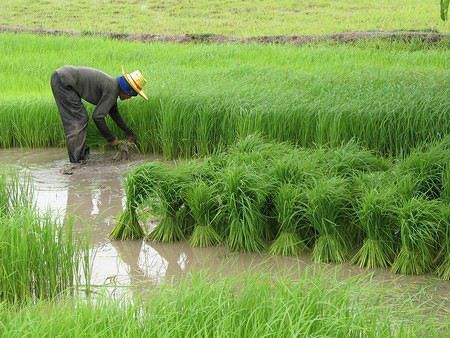
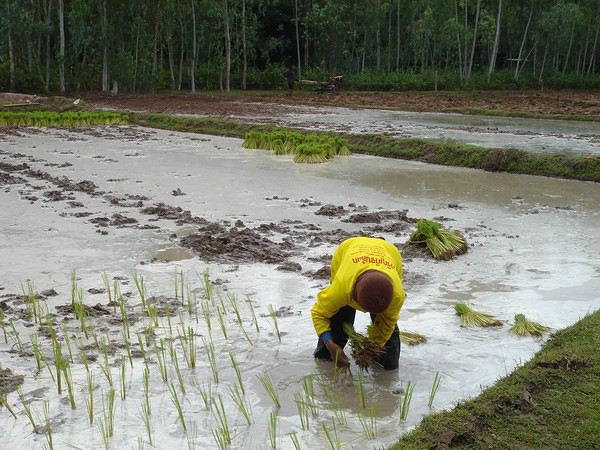
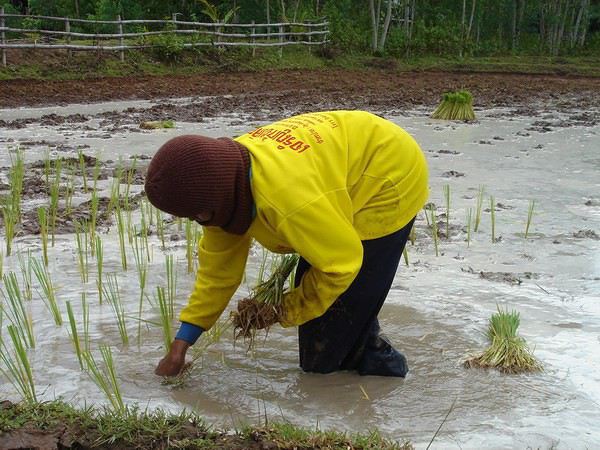
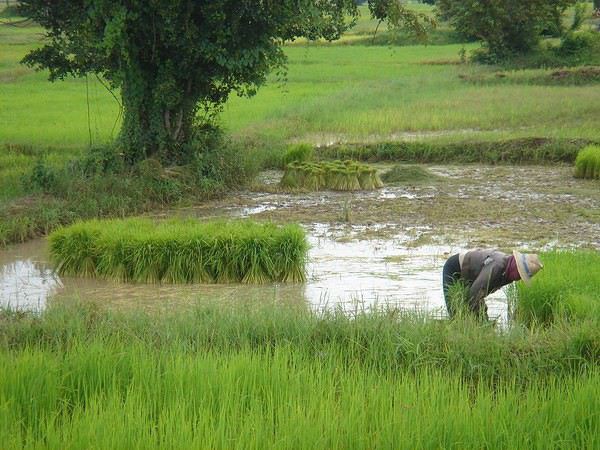
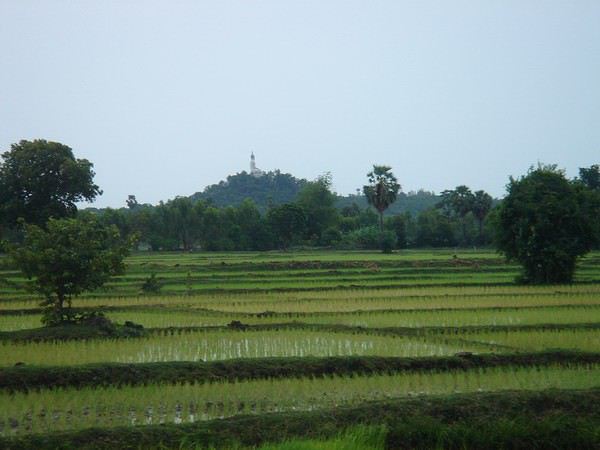
Je trouve dommage de ne pas se rendre compte du travail que doivent fournir les paysans pour obtnenir ce veéritable "or blanc", des heures de fatigue, le dos courbé sous le soleil, les pieds dans l'eau, un travail titanesque et fatiguant que nous sommes bien peu à imaginer 😕
Alors, la prochaine fois, lorsque vous mangerez votre riz, n'en laisser pas trainer dans votre assiette et comme disent les Thais à leurs enfants dès leur plus jeune age:
"chaque grain de riz = une goutte de sueur" !! N'oublions pas que le riz nourri une grande partie de la planète, alors un peu de respect SVP 😉 !!
Je suis surpris que tu n'aies pas plus d'intervention sur ton post, suggestion change le titre du genre une histoire de cul (ture) a Patta… je suis persuadé que tu auras beaucoup plus d'intervention.
Juste, moi avant de venir en Thailande et de voir comment ils font dans les champs, je n'avais absolument pas conscience de la somme de travaille que représente la culture du riz. J'ai vu (à la tele) des repiqueuses automatiques mais jamais en utilisation dans les champs, ça demande une main d'œuvre énorme, et il me semble que la Thailande est l'un des seuls pays exportateur de cet "or blanc", les autres dont la France cultive pour la consommation intérieure.
Il m'est arrivé de laisser dans l'autocuiseur du riz et d'avoir le malheur de dire à ma femme, "ce n'est pas grave, met le à la poubelle", et bien je ne vous raconte pas la réaction ! 🏴☠️
bonjour; pour se rendre compte par une vision "occidentale", revoyez le film "Riz amer" avec Sylvana Mangano et Vittorio Gassman
http://pserve.club.fr/filmsR.htm#RizAmer
qui retrace la vie dans les rizières du sud de l'Italie; je connais une vieille Italienne qui a connu cela, ce n'était pas de tout repos!
De toute façon, jetter du riz ou autre nourriture, c'est toujours "amer"
Pensez y dans les formules "tout compris"(Rep Dom etc...) ne chargez pas vos assiettes à la fourche!
Le travail des paysans dans les rizieres est tres penible.
D'un autre cote, l'"or blanc" finit tres souvent dans la gamelle du chien ou dans le poulailler...
super sujet je trouve, au contraire, çà change des questions que l'on retrouve un peu trop souvent, et en plus, çà fait réfléchir car moi aussi, je l'avoue je jette souvent le fond de ma "gamelle".... 😊 ben je crois que je vais y repenser à 2 fois desormais et essayer de repenser à ces paysans qui cultive un or blanc comme tu dis si bien (leur or blanc)et qui doivent finir dans un piteu état !!
merci Sid, une fois de plus tu nous fait penser à une "autre" thailande et j'encourage ceux qui savent (cad pas moi !) de nous parler un peu plus souvent de toout les a cotés de leur pays 🙂
Ben, c'est ma fois vraie ! Pour le chien, fin de la chaîne alimentaire, en tout cas pour ma part, mais il reste la satisfaction de ne pas avoir gacher. Quant au poulailler, le sort des occupants, terminant dans la casserole, consolera de la pénibilité du travail des champs. 😉
comme vous dites, si çà va aux poules, c'est pas gacher mais quand même !!!
malgré tout pour ma part, j'ai souvent vu durant mon dernier voyage les gens jetter directement dans un grand sac poubelle, j'imagine pas qu'ensuite, ils ayent ouvrir le sac pur faire une distribution et au nombre de grains qui partent, j'imagine que çà pourait nourrir un paquet de monde sur terre ...
Ben, c'est ce que je dis, en plus clair, car tu donnes l'air de te fâcher, au chien, ce n'est pas gâché et à la poule, c'est un bon investissement car tu manges les poules et quel réconfort après la fatigue des champs !
Je dois avouer que bien que peu fatigué par le travail des champs, je me régale du poulet nourri au riz avec grand plaisir ! 😛
... si çà va aux poules, c'est pas gacher mais quand même !!!
non, non, je me fache pas du tout phenixthai 🙂, je venais juste de lire le post de l'autre zouzou au dessus et c'est vrai que je suis un peu "nerve", maintenangt je te rejoins mais si dans les campagnes et chez les particuliers, ils font çà, je voulait dire que dans les villes et dans les restaurants, c'est loin d'etre le cas ; je ne remet pas en cause les thailandais qui je pense respecte mais les étrangers que ce soit chez eux, dans leur propre pays ou bien parce que c'est pas cher, redemande lorsqu'ils sont en thailande par exemple du "rab" pour ensuite le laisser dans l'assiette !
🙂C'est pas correct de regarder le plat des autres, en outre beaucoup de restos reprennent le riz et le recyclent en un khao path que beaucoup de touristes mangent par la suite.Donc, je pars du principe que celui qui laisse son assiette pleine contribue à la richesse et patrimoine du restaurateur.Ceci dit, je n'en mange pas, je n'aime pas la cuisine asiatique.Si des âmes sensibles souhaitent plus d'infos, je vous dévoilerais la manière de cuisiner que les farangs ignorent, et gens qui féquentent les restos à Paris, Bruxelles et autres.😉
🙂Quand on a vécu comme, avec les asiatiques.......on en sait des choses que beaucoup d'occidentaux ignorent. En outre, le recyclage dans nos sociétés existe depuis 10 ans mais en Asie, il existe depuis le début de la civilisation😉
alors là, toi qui a tant vécu là bas, je serais heureuse que tu m'en dise un peu plus parceque jusqu'à présent j'ai pas bien vu de vrai recyclage (à moins que tu parles du riz que l'on donne aux animaux 🙂) ?
D'ailleurs à propos de riz, combien de sortes en existe il en thailande en dehors du riz normal et du riz gluant ?
🙂Je m'y attendais.....Ici, ce sont les imbéciles de contribuables qui payent des sacs dictés par les dictatures des villes, et ce sont ces mêmes imbéciles qui trient; ex: sac bleu por les conserves et boîtes plastiques; sacs blancs pour les ordures.Eh oui, cela fait moins de travail, donc moins d'emplois et plus de personnes qui glandent aux crochets de la société.Par contre, je crains que tu n'as pas rencontré un camion poubelle en Thaïlande au lever du jour et en fin de journée: là, ils font le tri.
Concernant le riz, je n'en vends pas et n'en cultive pas: donc je ne peux pas t'aider..mais il y a une grande variétés; il suffit de surfer: internet t'ouvrira les portes.
Pour revenir à ton vrai recyclage: donne moi la définition du faux recyclage: je t'en dirais plus par un exemple frappant😉
je pense malgré tout que ces imbeciles (dont je fais partie (merci) font tout de même mieux de s'en préoccuper que de laisser tout en étaT.... et pour mieux te repondre, figures toi que j'adore me promener lorsque tout le monde dort, donc il m'arrive de voir des choses aussi interessantes que toi, il suffit parfois d'avoir un oeil curieux et ce que je vois, c'est que l'asie en géneral est sale (je parle au sens des papiers et surtout plastiques et que si personne ne s'en inquiète, on (ils )court àla catastrophe, c'est deja ce qui se passe au cambodge ou la salete à augmenter ces dernières annes d'une manire considérable, c'est bien dommage, mais si nous les europeens ne sommes pas capable avec nos "conaissances" de montre un chemin, ben alors......
mais on s'éloigne de la conversation du debut et moi je veux savoir, et pas par internet les differents sortes de riz et comment les identifies si il ya la possibiltee de la faire évidement
Bien😏 ...il n'y a pas de boulot plus usant🙁...il y a aussi l'alcool de riz(c'est peut etre plus "porteur", mais c'est plus difficile a donner aux poules!😄).OUI, il y a plein de qualites de riz, de camargue...(j'rigole), le probleme :il faut les toucher, les sentir;etc...etc C'est vraiment une question de culture et cela ne peut se transmettre dans un forum!AH culture quand tu nous tiens!JE reviendrai sur l'histoire des poubelles au Cambodge...merci les ptits chiffonniers!😛Sidartha jusqu'a 🙁c'est pour toi, la suite c'est pour les derniers intervenants.
Sans etre chauvin et c, est un secret pour personne le riz Thai en general et le<< Hom mali >>en particulier est le meilleur riz au monde ..par sa stucture, son gout et son parfum exeptionnel a la cuisson, il est facilement reconnaissable sans meme aucun element de comparaison .
En effet le << hom mali >> est la meilleure qualite de riz en thailande et est cultive exclusivement dans certaines provinces d, I-ssan .....Son terroir est adapte a cette culture noble et ancestrale qu, est le Hom mali ..L, ensoleillement exeptionnel ainsi que la pluviometrie et la qualite de son terrain en font un riz d, exeption .
Les plaines centrales du royaume n, arrivent encore pas a reproduire un riz d, une telle qualite ....
Ni aucun pays au monde, d, ailleurs ...On pourrait faire un parrallele avec le meilleur grand vin de bordeaux qui ne peut etre produit que dans les vignobles bordelais ...😛😊et nulle part ailleurs ....
Ceci dit le HM est coupe a l, exportation ..vous ne le trouverez pas a 100% ...mais a 10, 20, 30 % coupe a du riz thai des plaines centrales ....Seul les producteurs possedent du 100%qu.ils gardent pour leur consommation personnelle, ..du caviar comme les connaisseurs disent souvent .....
Les cuisiniers de sa majeste le roi s, approvisionnent directement dans les provinces du sud de l, I-ssan ..gage de qualite et de reconnaissance ...
Le repiquage est un travail extremement penible et fait par les femmes ....ceci donne un riz exeptionnel, une meilleure production qualitative et quantitative ....cette tecnique de production se perd de plus en plus sachant que le salire journalier pour une repiqueuse est de 130 baths pour 10 heures de travail courbe, les pieds dans l, eau a patauger avec les insectes, parfois les serpents et les sangsues ...
N'hésitez pas à ouvrir le site, à le lire en entier et à participer;
merci pour eux.
Bien😏 ...il n'y a pas de boulot plus usant🙁...il y a aussi l'alcool de riz(c'est peut etre plus "porteur", mais c'est plus difficile a donner aux poules!😄).OUI, il y a plein de qualites de riz, de camargue...(j'rigole), le probleme :il faut les toucher, les sentir;etc...etc C'est vraiment une question de culture et cela ne peut se transmettre dans un forum!AH culture quand tu nous tiens!JE reviendrai sur l'histoire des poubelles au Cambodge...merci les ptits chiffonniers!😛Sidartha jusqu'a 🙁c'est pour toi, la suite c'est pour les derniers intervenants.
OUI voir ca au 21ème siecle! un scandale pour l'humanite, bravo a POUR UN SOURIRE D'ENFANT.Et helas ce n'est pas qu'a P-P, c'est dans tout le Cambodge...bravo a l'ADOS, a l'ELEPHANTBLANC...a tous: vous pouvez aussi aller les voir sur le net.on m'a "conseille " (merci pour le site bien sur je vais l'ouvrir ) de ne pas trop le dire mais la, je ne peux pas faire autrement:Enfance Cambodgienne:50000morts/an!
🙂Vu que le sujet dévie sur la condition humaine, pas celle de Malraux: le plus grand spoliateur français de tous les temps; je me permets de vous annoncer que les enfants en Thaïlande et à l'ex Indochine ne crèvent pas de faim, par contre au Cambodge, beaucoup de"parents" criminels abandonnent leurs enfants, les vendent..Perso: chapeau aux organismes qui aident ces petits et honte au gouvernement mafieusi de tuer sa descendance.Notons, selon un rapport de l'Unicef: plus de 5 millions d'enfants crèvent de faim et meurent par an.La plupart en Afrique, il serait temps que les gouvernements, parents prennent des mesures de ne plus assassiner ses enfants.Mais tout le monde s'en fout, moi aussi, à la différence je ne pillule pas comme un lapin et n'attend pas que le monde m'aide😉
Je suis surpris que tu n'aies pas plus d'intervention sur ton post, suggestion change le titre du genre une histoire de cul (ture) a Patta… je suis persuadé que tu auras beaucoup plus d'intervention.
Salut phenixthai😉, moi aussi j'étais surpris mais bon... tout vient à qui sait attendre et je suis content que d'aiutres s'interesssent au sujet !!
Pour se faire un idée de la vie des paysans cambodgiens et du travail que représente la culture du riz, on peut voir l'excellent film de Riity Panh : "les gens de la rizière". http://www.allocine.fr/film/fichefilm.html?cfilm=10124
De memoire, il y a (avait...) a peu pres 10 000 varietes de riz en Thailande... Et maintenant, seule une dizaine de varietes sont cultivees a moyenne ou grande echelle.
La plupart des varietes ont ete sauvegardees dans des banques genetiques.
Les riz que je connais: Riz blanc normal (khao suay). Il existe differentes varietes mais je n'ai jamais fait attention a les differencier (longueur du grain, forme du grain, ...) Riz blanc au jasmin (khao suay hom mali) Il se differencie du riz blanc normal par l'odeur pendant/apres la cuisson. Contacter Notingtong pour une description detaillee 😉 Riz gluant normal (khao nieow). Avant la cuisson, il se differencie du riz blanc par des grains plutot petit et tres blanc (le riz blanc a des grains plutot translucides) Riz gluant violet (khai nieow sii muang??) Ben... il est violet, donc facile a reconnaitre!
Pour compliquer la chose, il existe aussi differentes qualites de riz. La principale difference est la longueur du grain. Pour une meme sorte de riz, plus le grain est long, meilleure est la qualite. Si le riz a beaucoup de grains casses, la qualite est tres mauvaise.
Tu peux aller dans n'importe quel marche de Thailande pour voir un marchand de riz. Il a plusieurs sacs avec les differentes sortes et qualites de riz.
La pire c, est la variete chinoise genetiquement modifie qui bientot envahira nos assiettes, .....
Mais en attendant mon cher Gautama, voicidu Hom mali , et celui la il est exeptionnel et sans engrais chimique..
Cultive essentiellement dans les provinces du sud de L I-ssan il fait parti des meilleurs riz qu, on peut manger en Thailande ..malheureusement il est coupe a l, exportation !!!! 😕
c'est vrai qu'il est tres bon ce Hom Mali, apres il ya le Gao Thom Thuong Hang qui n'est pas mauvais non plus (toujours avec cette petite touche de jamsin....
Mais tu peux arriver à trouver du Hom Mali qui n'est pas oucpé si tu l'échètes en gros (au moins 10 kgs) dans certains magazins qui ne passent pas par les fameux frères "Tang" 😉
Alors la je ne suis pas sur ..Tout le riz hom mali qui est mis en sac est systematiquement coupe en divers pourcentages .Et d, autant plus a l, exportation les freres Tang tres connus comme chinois par les Thais sont les rois de la coupe ..mais bon reste a verifier sur les sacs le pourcentage doit etre note ...
Meme sur les lieux de production ou sont les cooperatives le riz des plaines centrales y est aussi achemine en vue d, etre melange au hom mali avant d, etre mis en sac ....
Actuellement sur place le hom mali 100% est achete directement aux paysans apres la recolte car introuvable en Sac dans les super et hyper en thailande ...Mais je ne suis pas formel et je me renseigne des ce soir ....
Pour les fr_ères Tang, je sais bien, c'est pour cela que j'ai souligné que je ne parlais pas d'eux évidement !!!Non, non, je t'assure (enfin, je mettrai pas ma main à couper non plus 😉), j'en ai encore quelques 15 kilos et ma moitié (aussi "chiante" que conaisseuse - et oui, c'est une passionnée du riz - comme peut etre la tienne ...a bien retrouvé le même gout, mais j'attends avec imaptience ta petite enquête du jour 😛
L'année dernière le kilo de riz était acheté 7 Bahts (environ 0, 14 centimes d'Euros le kilo 🤪) à la famille de ma copine (pour cette année je ne sais pas car la famille de ma copine ne fait qu'une seule récolte par année 😉) pour un riz de qualité (je ne sais pas si c'est du Hom mali🙁): pas d'engrais chimique (que du naturel en provenance des buffles🙂) et plusieurs repiquage pendant la saison, donc du Bio.
Bref une misère pour un travail arrassant et long: il y a plusieurs repiquage pendant la pousse du riz (du moins pour les gens qui ne font qu'une récolte par année). Malgré un travail plus qu'honète, les paysans (je parle des petits paysans pas des grandes exploitations industrielles) arrivent tout juste à vivre de leur travail.
Ce qui est scandaleux, c'est le prix du kilo de riz que l'on retrouve chez nous en grande surface: très cher pour d'après ma copine une qualité qui laisse à désirer (en effet le riz est coupé avec plusieurs variétées).
Il n'y a pas longtemps je vois en rayon une marque de riz bien connue (allé je balance: celle avec le taureau🙂) qui proposait un riz (soit disant) Issan de très bonne qualité (avec d'ailleur un prix gonflé à l'Hélium). Résultat lorsque le paquet à été ouvert ma copine m'a montrée les différentes variétées qui composaient le paquet en séparant les grains sur la table et elle m'a dit qu'en Thaïlande ce genre de mélange était en fait de qualitée médiocre.
L'année dernière le kilo de riz était acheté 7 Bahts (environ 0, 14 centimes d'Euros le kilo 🤪 malgré un travail plus qu'honète, les paysans (je parle des petits paysans pas des grandes exploitations industrielles) arrivent tout juste à vivre de leur travail.
C'est bien ce que je voulais démontrer au début de mon "post", RECOONAITRE le travail incroyable qu'il faut pour faire un kilo de riz ..... qu'il soit cher en France, c'est presque normal et je vais même te dire, (quitte à en faire bondir plus d'un !!!! ) je pense qu'il n'est pas assez cher si tu le compare aux pâtes et que si justement les prix étaient plus haut, alors peut etre que les gens se rendraient mieux compte de ce qu'ils ont et du labeur qu'il a fallu pour récolter ces grains dans leur assiette ....😉
D'accord avec toi.
Ce qui est scandaleux c'est, comme dans la majorité des cas et pas seulement pour le riz, le producteur ne récupère pas grand chose du prix de vente et comme toujours l'argent va dans des poches qui ne le méritent pas.
D'accord avec toi.
Ce qui est scandaleux c'est, comme dans la majorité des cas et pas seulement pour le riz, le producteur ne récupère pas grand chose du prix de vente et comme toujours l'argent va dans des poches qui ne le méritent pas.
Et il faut souligner qu'ils ne touchent rien en subvention ou prime de qui que ce soit, c'est pas comme chez nous .🙁
Le prix paye au paysan (7 bath/kg) correspond au riz decortique (khao san) ou au riz non decortique (khao bleuak)?
Aux Philippines, le prix "paysan" est toujours non-decortique et tourne aux alentours de 600 peso pour un sac de 48kg (a peu pres 10 bath/kg).
Et avec un sac de riz non-decortique, on a 30-32 kg de riz decortique...
Le probleme de faire payer le riz a un prix eleve est que la majorite des gens (aux Philippines en tout cas) ne pourront plus se payer le riz... Dans les familles de paysans qui ne cultivent pas le riz, l'achat de riz est 50% du budget total de la famille...
non, je ne sais pas du tout pour toi que tu manges du khao niao 3 fois par jour...
mais je sais que pour moi...c est matin - midi et soir...c est ma maman qui m ' a transmis cette tradition...à + 80 ans aujourd hui elle continue toujours sur le meme rythme ...matin-midi-et soir...
Le probleme de faire payer le riz a un prix eleve est que la majorite des gens (aux Philippines en tout cas) ne pourront plus se payer le riz... Dans les familles de paysans qui ne cultivent pas le riz, l'achat de riz est 50% du budget total de la famille...
Je suis d'accord, élever le prix du riz pénaliserait les plus pauvres.
Mais chez nous est-il normal de rétribuer grassement l'importateur, le distributeur, le marketing alors que celui-ci qui fournit le plus gros du travail (le paysan) ne reçoit pratiquement rien. Entre un prix de vente à 2 Euros le Kilo en grande surface et l'achat au paysan à 0, 15 centime d'Euros le kilo, ce qui représente un coéficient multiplicateur de 1333 (je suis concient qu'au passage il faut payer le transport, le conditionnement....mais si cela coute aussi cher alors pourquoi importer et ne pas produire chez nous...), il y a quand même une marge pour que le paysan puisse au moins récupérer un peu plus du moins pour le riz destiné à l'exportation vers l'Europe sans que les populations locales ne soient lésées.
J'ai l'impression que dans notre société le système est biaisé: ce ne sont pas les gens qui travaillent (j'entend par là qui fournissent des efforts et on un métier pénible) qui sont rémunérés à leur juste valeur. Au contraire ce sont les gens qui ont le plus de facilité (par exemple les intermédiaires dont la plus grosse partie de leur travail consite à négocier au téléphone pour acheter ou revendre à d'autres intermédiaires) qui s'engraissent sur le dos des autres.
Au passage ces gens ont réussis à inventer un nouveau concept: vendre du vent, ce fait de faire passer une marchandise virtuellement (car celle-ci ne bouge pas de place, elle reste à bord des camions ou des bateaux de transports) d'intermédiaire en intermédiaire avec à chaque fois un petit bénéfice au passage.
Par contre les lésés dans l'histoire (le producteur et les consommateurs) eux ne disent jamais rien. Il faut dire aussi qu'on les a bien formaté depuis pas mal d'années à accepter cet état de fait.
bonjour; dans un Paris store en banlieue, j'achète du Hom mali Gao thom thuong hang; faut-il bien le laver avant la cuisson? car en cuisson vapeur, , il reste parfois un peu collant.Est-ce l'autocuisseur pas top, la qualité du riz médiocre, ou moi qui cuisine avec des moufles?
Bonne journée
ps; Lau m'a envoyé des photos; régal!!
Certains recommandent de ne pas le laver afin qu'il garde toute sa saveur, personellement, je le passe juste une fos sous l'eau rapidement et il n'est jamais collant .
Aprés attention de ne pas mettre trop d'eau (ou pas assez) ....😉
Je suis plus que d'accord avec toi, je ne laisse jamais rien dans mon assiette en Thaïlande et en France non plus! Ne pas gaspiller la nourriture ça s'aprend dès tout petit. Trop de gens doivent faire des efforts inimaginables pour pouvoir manger, il me parait donc normal entant que "riche" de ne pas gaspiller.
Dans le lonely planet, chapitre bouffe et boisson, ils disent qu il faut toujours laisser un peu dans l assiette principale et l assiette perso, sinon on peut penser que l on n a pas eu assez. Un peu comme au Maghreb.
Voyageurasie m'a ôté le mot de la bouche 🙂
Mais plus important, ton frigo est-il suffisamment grand pour contenir plusieurs caisses de Chang?
Là est la question existentielle 😉
Tu as du oublier une virgule dans le coef multiplicateur: c'est 13, 33 😛. Je pense que le prix au kg est pour le riz non-decortique, ce qui donnerait un prix a peu pres de 0.3 euro/kg pour du riz decortique.
Je suis le premier a preferer que l'argent aille dans les poches des paysans thais.
Mais je ne pense pas que les intermediaires se fassent beaucoup d'argent: c'est un sacre boulot de passer d'un sac de 50 kg de riz en Isaan a un paquet de 250 g. de taureau xxx a Carrouf Valentigney 😉
Un bon moyen d'eviter les multinationales et quelques intermediaires : aller dans les epiceries asiatiques et acheter le riz au kg.
En coef. multiplicateur, j'ai vu pire: une noix de coco en France a 2 euros. Aux Philippines, elle est achete au paysan producteur... 0.05 euro. C'est x40! et sans reconditionnement!!! Uniquement du transport (un peu) et les marges des intermediaires (beaucoup!) 🙁
Hello everyone! I’m heading off solo in February and wanted to share my rough itinerary with you. Does this sound doable?
PS: I’m not really into beaches.
D1 Departure on February 17, 2027
D2 Arrival in Kuala Lumpur – stroll through Chinatown and visit the Petronas Towers
D3: Kuala Lumpur – Chow Kit Market, Batu Caves, Little India, Bukit Bintang downtown area
D4: Early morning bus to Malacca. Explore Malacca in the afternoon and evening
D5: Another 2–3 hours in Malacca in the morning, then bus back to Kuala Lumpur. Merdeka Square area. Stay in Chinatown
D6: Bus trip to Kuala Tahan. Night tour
D7: Morning – canopy walk and Bukit Terisek hike. Afternoon – off to Lata Berkoh
D8 & D9: 2-day jungle trek in Taman Negara National Park
D10: Head to Cameron Highlands
D11: Morning hike through the plantations. Afternoon still to be decided
D12: Morning – excursion to Mossy Forest and Sungei Plantation. Afternoon bus to Ipoh
D13: Morning – Mirror Lake / Sam Poh Temple area. Afternoon – explore downtown Ipoh
D14: Morning train to Penang. Afternoon – wander around Georgetown
D15: Morning – Penang Hill and Keh Loh Temple. Afternoon – Georgetown
D16: Bus to Butterfly Garden and Spice Garden. Late afternoon – Burmese and Thai temples
D17: Morning flight to Singapore. Afternoon – Chinatown and Marina Bay tour
D18: Morning – Gardens by the Bay area. Afternoon – Boat Quay, Clarke Quay, Kampong Glam
D19: Morning – The Ridges area and Botanical Garden. Afternoon – Little India, then back to Chinatown before 11:15 PM return flight
D20: Morning arrival
Hi everyone,
I’ll be in western Malaysia for 20 days in January and February.
I’m coming from southern Thailand to Ipoh for the Thaipusam festivities.
Then it’s off to Pangkor Island.
I’ll finish up in Malacca for the Chinese New Year celebrations before heading to Singapore.
I’ve got a 6-day gap.
I was thinking of going to K.Lipis for the jungle train and heading to Dabong, but the caves might not be open.
Any suggestions around K.L.?
Day treks?
A stopover between K.L. and Malacca?
Thanks
Hi, I’ve read that these two volcanoes are super popular and that there are *tons* of people for sunrise, especially in July. I’m looking for firsthand accounts from anyone who’s done it later, around 9–10 a.m.
Thanks for your help!
Laëtitia
I’m heading to Cambodia at the end of December 2026 – January 2027 for 3-4 weeks. Since I’ve already visited Cambodia twice, my itinerary is a bit different this time—I’d love to explore Botum Sakor Park, Chi Pat, the Tatai region, and the Cardamom Mountains. I’m traveling solo. If you have any tips on transportation, excursions, treks, sights, or accommodations in the area, I’d really appreciate it. Thanks for your feedback!
Has anyone traveled with the Laos travel agency ADV ?
I’m planning a trip to Laos and have received several quotes. Among them, this agency’s seem very reasonable, and so far, the interactions have been positive.
I’ve found a few positive reviews online, but I’d love to hear from travelers who’ve actually booked with them: how’s the organization, guide quality, accommodations, on-the-ground responsiveness, etc.
Thanks for sharing your experiences!
First stop on our discovery of the peninsula: Amphawa. It’s our first night in Thailand (we arrived at Suvarnabhumi at 8:50 AM).
Our initial plan was to explore the area before heading further south. The Mae Klong Railway Market is tempting... but what else is there to do????
We’ll be there on a Wednesday, and from what I’ve read on the forum, some say there’s absolutely nothing to do during the week—no floating market, barely any shops open, no restaurants, etc.
Others, though, say the place is actually more charming without the weekend crowds.
Could you share your thoughts? Missing the floating market is one thing, but if it’s really a ghost town on Wednesdays, I might just drop our bags somewhere else.
Amphawa seemed like a good first stop, just 1.5 hours from the airport, but I’d still like to settle somewhere a bit lively for our first evening.
We’ll be there at the end of October.
Thanks!
Hi,
I wanted to visit the plantations in the morning with GetYourGuide or by just showing up.
How much time should I really plan for?
I’d like to catch either the 3 PM or 5 PM bus back to KL.
Thanks
Hi,
I wanted to get some info about the cable car and the bridge—I see lots of different options...
How much time should we allow for these two activities? If we arrive around 4 PM, will we have enough time to visit without rushing?
Thanks
Hi there,
I didn’t plan to return to Thailand this year, but my health conditions mean it’ll be the best place for me to stay between two trips to India. The tourism setup there is so well-organized that it’s the most "comfortable" country for a short visit. Thailand feels too sanitized for my taste, and there’s too much religion, Buddha, and the King, but it’s still the best option given how my health has been evolving. I’d considered two weeks in ThaTon for hiking, but I got too sick from the burn-offs during my trips to the mountains around Chiang Rai. So I’m not sure where to go this year. Definitely not the sea, touristy spots, or the mountains with burn-offs...
Hi,
On September 1st, we're heading to Kalimantan for six weeks, probably from Pontianak to the Derawan Islands.
I've scoured this site, which is usually my go-to 😉, and others like VoyageForum, but recent info is pretty scarce.
I'd love any tips on places you've visited—our itinerary is still a work in progress.
We're two couples traveling with backpacks, using buses, boats, guesthouses, and homestays.
Thanks in advance!
Hi fellow travelers,
First trip to Vietnam.
We’ll be arriving in Ho Chi Minh City during Tet.
Is it complicated to find accommodation and get around during this period?
Any tips would be welcome.
Thanks for your replies.
Hi! I’d like to split my trip into two parts: 15 days in Phuket and 15 days in Krabi. Do you know if I can rent a car and drop it off in Krabi when I fly back to France?
Thanks for your feedback!
Have a great Sunday!
Martine
Hello,
After 1 night in Khao Sok, I’d like to find a 2 Days 1 Night package on the lake.
After reading a lot, I decided to "break the bank" and treat ourselves to a private tour—mainly to avoid the crowds.
But after contacting several operators, they offer "private tours" that are very expensive (around 700 €), yet in the details, the boats can only leave from the pier at 10 AM like everyone else. (I was hoping to leave much earlier.) The morning program is the same for everyone too (private or not). They drop us off at noon at our floating hotel (I’d chosen Phupha Waree). Free afternoon (swimming or kayaking in front of the hotel). We head back by boat for a 1-hour sunset ride. And the next morning, we leave the hotel at 8 AM to be at the pier by 9:30 AM at the latest—end of the trip.
So basically, we’re paying a lot for a private tour just to do the same thing as everyone else at the same time.
Or maybe I just had bad luck in my search.
I contacted Panida Ladi, who’s very popular on forums. We’d agreed on a private tour that matched my request (departure from the pier at 8 AM, very personalized itinerary). We settled on the itinerary and price, she asked for a Wise transfer for a 30% deposit, confirmed receipt of the deposit. Then 30 minutes later, she messaged me to say she was canceling everything because it was impossible to do the requested tour—and promised a quick refund of my deposit.
So here’s my question: Who’s done a *real* private tour on this lake? Who can recommend a reliable agency? Is it even really possible to do a private tour here?
I’m searching for a real gem for my 3rd stay in Koh Lanta: a lovely, high-quality hotel right by an easily accessible beach in a lively spot.
If you know of anything that fits what I’m looking for and want to share, don’t hesitate!
Hi, is anyone there in Flores right now? According to some websites, everything is closed and the situation is tough. But our guide says it's fine. Who should we believe? We're supposed to leave on September 2nd. Thanks to anyone in Flores at the moment!
Hi dear community,
I'm planning to visit Cambodia this winter, right after Christmas, for my first solo trip and my first trip to Asia. For two weeks (yes, I know it's short, but I really can't do more...). I have two main desires: Siem Reap and the countryside, the villages, the Mekong...
What do you think of this itinerary? Arrival in Siem Reap, departure from Phnom Penh.
SR: 5 days (1 day for arrival, 3 for the temples, 1 for the lake and its villages)
Kratie (stop on the way to Mondolkiri): 3 days (1 day of travel, 2 days there)
Mondolkiri/Sen Monorom: 4 days (1 day of travel, 1 day there, 2 days of treks)
PP: 3 days (1 day of travel, 2 days of sightseeing)
I think I need to cut one day somewhere if I travel from Saturday to Saturday or Sunday to Sunday. In Kratie, maybe? Or in PP? And I'll miss the boat trip that everyone recommends (SR-Battambang), but I don't see where to fit it in. Unless I do a PP-PP loop starting in the east, skip Kratie or just stay one night, then SR, then PP.
In my timing, Mondolkiri seems closer than Ratanakiri, which also tempted me a lot! Will it be too complicated alone? I'm thinking of using local guides or a small local agency for a nature and village getaway.
I've read that Siem Reap is very crowded between Christmas and New Year's. I could also do the circuit in the opposite direction. But I thought it would be easier to get familiar with the country by arriving in a touristy area—I might be wrong...
Thanks for your advice and opinions!
Hi everyone.
I’m planning my trip, and based on all the posts I’ve read, this country is amazing.
Of course, I’ve got a ton of questions for you.
Here’s a possible itinerary: Vientiane - Vang Vieng - Phonsavan - Sam Neua - Nong Khiaw + villages - Phongsali - Luang Namtha and the area - Udomxai - Huay Xai - Luang Prabang and back to Vientiane.
What do you think?
We’re planning to prioritize local transport—is it possible to do this loop?
We’d also love to go kayaking, but I’m not sure if the season’s right or where the best spot is.
For trekking—I read that Phongsali is the most authentic spot to visit villages and see wildlife. Do you know of a reliable agency and a guesthouse with reasonable prices?
Is it worth taking a slow boat for a stretch on the Mekong, and if so, which route?
For accommodations, is it better to book through Booking.com and Agoda or look when we arrive?
Are mosquitoes bad in Laos, and should we take malaria prophylaxis?
What’s the average daily budget (accommodation, food, visits)?
Is renting scooters a good option for exploring towns, and if so, which ones?
From what I’ve read, it’s best to carry cash—euros or dollars? Is it risky to walk around with that much cash?
I’ve still got tons of questions. Thanks to anyone who can help, and I’m open to all tips, info, etc.
Thanks again
Hi there,
I’m planning a family trip (my wife and I, both 47, and our two sons, aged 5 and 12) to Malaysia for the last week of June and the first two weeks of July 2027.
We used to love road trips as a couple, then as a trio, but since our second child arrived, we’ve taken a break with "camping village" style trips.
Now feels like the right time to get back to our old habits, while adjusting the pace for the kids.
We’re craving Asia. We’ve been lucky enough to visit Thailand, Indonesia (Bali and Lombok), and Sri Lanka before.
Friends have raved about Malaysia, so we’re definitely tempted.
For those who know and love Malaysia, what would be a good itinerary starting from Kuala Lumpur, with a maximum of 3-4 stops? We’d like a mix of culture, nature, and relaxation (just to clarify, we’re not big beach fans). All of this without rushing, of course.
Hello,
We’re a family of four with two teens aged 16 and 18. We’re heading to Thailand this summer. We’ll arrive in Bangkok and plan to take a flight to Luang Prabang.
I’ve seen there are some great visits and excursions to do (temples, markets, waterfalls) and maybe even venture a bit north to places like Nong Khiaw, Muang Xay, Muang Ngoy, or Oudom Xay.
But I’ve also heard about the Bokeo region with the Gibbon Experience.
Since we won’t be able to do everything, I’d love to hear about your experiences, impressions, and advice on the two options I’m considering, especially since we’ll be meeting family in Chiang Mai, Thailand, afterward.
Option 1: A loop from Luang Prabang heading slightly north, then a flight from Luang Prabang to Chiang Mai.
Option 2: A few days in Luang Prabang, exploring within a few dozen kilometers around, then heading to Bokeo province for the 2-day/1-night Gibbon Experience. For this option, I saw on Rome2Rio that it’s possible to book a ferry trip on the Mekong from Luang Prabang to Huay Xay—they mention about 8 hours. But is that realistic? What type of boat is it?
Then, to get to Chiang Mai, there aren’t many options—bus or minivan—but how does crossing the border work?
Finally, for those of you who’ve been to Laos in August, what was the weather like?
We’ve already visited Thailand, Vietnam, and Cambodia during the same period over the past four years and weren’t really bothered by bad weather.
I’m starting a discussion about guides in the Mekong Delta because we’ve just finished our trip in this region and had a hard time finding a French-speaking guide. We had Thanh—she speaks French really well and travels all over the delta region, including Ho Chi Minh City. She’s super friendly and flexible. I recommend her wholeheartedly. If it can help someone...
Feel free to contact us for her number.
Hi everyone,
I couldn’t find any recent info on Kuching.
Can anyone recommend a hotel or guesthouse for under 100 RM that’s nice and affordable? No dorms, please.
Also, does it rain a lot in November, and is it still worth visiting Semenggoh or Bako?
We’ll be arriving in Phnom Penh this coming January and we’re thinking of starting our trip with a stop in Kampong Cham, then Kratie.
After Kratie, we’re considering heading toward Siem Reap with a stop in Kampong Thom.
That said, I’m not really sure how long the Kratie–Kampong Thom journey might take or how complicated it is.
Does this stop on the way to Siem Reap seem like a good idea to you?
If we don’t visit the Sambor Prei Kuk site, are there still any walks or sights worth checking out in Kampong Thom?
Silly question—backpack or hard-shell suitcase for the Sepilok, Kinabatangan, Tioman, KL trip?
I’m struggling to fit all my son’s and my stuff into the 70L backpack... and I’m thinking a suitcase would be easier, but I’m not sure if it’ll work for getting around.
After a stay on Koh Phayam this coming November, I’d like to spend 2 or 3 days on Koh Phra Thong before heading further south.
Do you think it’s doable to leave Koh Phayam early enough to catch the 10 AM boat from Khura Buri to Koh Phra Thong? The next one isn’t until 4 PM, which would cost me a whole day.
I’m planning a trip to Indonesia, specifically Sulawesi and Java, in September for 10 days.
I don’t know this part of the world at all—any advice is welcome!
I’ll be traveling solo and would also love tips on meeting other travelers or locals.
Hello everyone,
Not long ago, I used to travel as a couple, but my husband has since passed away, and I’ve decided to set off again. The trip I took to Cambodia in January 2025 did me a world of good.
I’m now considering Thailand, a destination we never included in our plans because even 15 years ago, people said it was too touristy. Still, I’m thinking about the itinerary below, but I don’t feel up to arranging buses, trains, or guides on my own while I’m there. I’m looking for one or more drivers and have been in touch with an agency, but their offers are just copy-paste group tours that I don’t want.
So, if you have any contacts, experiences, or advice, I’d be so grateful if you’d share them with me. Here’s my rough plan:
Arrival in Bangkok
Ayutthaya (2 nights)
Kanchanaburi (2 or 3 nights)
Sangkhlaburi/Sai Yok (3 nights)
Sukhothai (2 nights)
Lampang (I’ve planned 3 nights, but that might be a bit much—it depends on what time I arrive in the city)
Chiang Mai
Chiang Dao
Pai
Chiang Rai
I was thinking about the Mae Hong Son loop—thoughts?
What do you think about staying overnight at the Golden Triangle?
When I look online, of course, I can find agencies that organize tours to national parks, etc.
I’m retired but in great physical shape. I’d rather go hiking than sit in hot springs with crowds of tourists who’ve all arranged meet-ups. I don’t want to spend a day at an elephant camp, and I don’t want to visit Karen villages.
I’d love to hear your advice.
Thank you all,
Hi everyone,
Could you share your thoughts on my 3-week itinerary?
We’re a small group (family + friends) of 12 people, planning to leave around January 21, 2027.
Here’s my itinerary:
3 nights in Bangkok
4 nights in Chiang Mai
3 nights on Koh Samui
3 nights on Koh Phangan
4 nights in Krabi
4 nights in Phuket
I’m also open to any great tips you might have...
Thanks, everyone! Alain.
Hi there,
We’re planning a 3-week family trip next summer with our three kids, who’ll be 8, 8, and 7 years old.
After some research, we’re leaning toward Malaysia to combine nature/forests and paradise beaches. The idea is to introduce our kids to the country’s culture, nature, and wildlife.
We want a great trip but without splurging on luxury options like high-end lodges and resorts. We’re looking for comfort with a touch of authenticity—basically, a good middle ground.
I’ve started putting together an itinerary and would love your expert advice and tips to help us build this amazing trip with our little ones.
Day 1: Departure from France
Day 2: Kuala Lumpur
Stay at a hotel near the airport or KL Sentral.
Just one night.
Day 3: Morning flight to Sandakan (Borneo).
Stay in Sepilok
Day 4: Sepilok:
* Orangutan Center
* Malayan Sun Bear Center
* Rainforest Discovery Centre
Day 5: Depart for Kinabatangan.
Boat safari in the late afternoon.
Day 6: Sunrise safari.
Jungle walk.
Evening safari.
Day 7: Final safari.
Return to Sandakan.
Flight to Kuala Lumpur, then to Kota Bharu (or overnight transit depending on schedules).
Day 8: Transfer to the port.
Boat to the Perhentian Islands.
Days 9 to 13: Perhentian Besar
5 full days.
* Snorkeling
* Hiking
* Turtle watching
* Wild beaches
* Relaxation
Day 14: Return to the mainland.
Bus or private car to Taman Negara.