Nous souhaiterions obtenir des informations et vos expériences concernant un itinéraire de 2 semaines sur l'ile de Sumatra.
Arrivée à Singapour le 25 Aout avec comme idée de se rendre à Bali ensuite depuis Sumatra.
2 semaines pour Sumatra c'est pas long mais faisable.
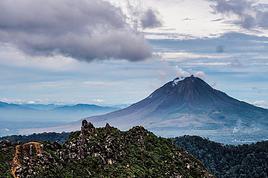
Vous pourriez commencer par le Parc national de Gunung Leuser et sa réserve d'orang-outang, puis filer vers le Lac Toba en faisant un saut au volcan Sibayak (Berastagi), ensuite descendre sur le pays Minangkabau et visiter Bukittinggi, la vallée Harau et le village de Nagari Sungai Pinang (ou je vis!).
Puis prendre votre avion a Padang pour rejoindre Bali
Salut Anne tu pourras peut être m'aider ! Le programme que tu propose est celui que j'ai prévu de faire dans 3 semaines , mais je n'arrive pas à trouver un vol panang -> bali à moins de 250 euros la seule alternative que j'ai trouver est avec air asia panang - > kuala lumpour puis kuala -> bali pour 130 euros ! As tu d'autre infos pour les vols ?
Merci d'avance !
Bonjour, je me demandais qu'elle étais la meilleure periode de l'année pour voyager a Sumatra.Nous sommes une famille 2 adultes et 2 ado, et nous atterrirons a Bangkok, ensuite Medam, traversé de Sumatra et tranquilement nous rendre jusqu'a Bali. Ensuite retour sur Bangkok. Nous prendrons 2 mois pour faire notre trajet.
Bonjour, si vous avez besoin d'infos sur Sumatra, j'ai un blog avec mon itinéraire, de bonnes adresses et des tarifs de prestations datant d'Août 2012. Cela peut vous aider à penser votre itinéraire http://sumatrablogdotcom.com/
bonne lecture,
Bonjour, si vous avez besoin d'infos sur Sumatra, j'ai un blog avec mon itinéraire, de bonnes adresses et des tarifs de prestations datant d'Août 2012. Cela peut vous aider à penser votre itinéraire http://sumatrablogdotcom.com/
bonne lecture,
Salut,
Je suis Bernard, un bon pote à Jhoni , chez qui je passe du temps presque chaque année. J'y étais encore en septembre dernier. Je me rappelle maintenant qu'il m'a parlé de vous et que vous comptiez faire un blog sur votre périple de Sumatra. C'est chose faite je vois et bravo car le résultat est là, très sympa, complet et bien documenté. Et puis vraiment gentil de votre part la mention spéciale que vous faites à Jhoni pour le recommander comme guide. Bien sûr qu'il sera sensible à cela , je n'en doute pas. Je vais lui en parler dans mon prochain message.
Et vous un voyage à l'horizon pour les vacances prochaines ? Peut être des idées qui vous trottent dans la tête ?
Je suis momentanément en France pour diverses raisons mais je commence à réfléchir pour un nouveau départ dans le courant de cette année et comme je suis presque libre comme l'air ( du moins sans contrainte professionnelle car je suis retraité ) je compte voyager plusieurs mois en Asie. Quand on aime, on ne compte pas....
Bonjour, si vous avez besoin d'infos sur Sumatra, j'ai un blog avec mon itinéraire, de bonnes adresses et des tarifs de prestations datant d'Août 2012. Cela peut vous aider à penser votre itinéraire http://sumatrablogdotcom.com/
bonne lecture,
Salut,
Je suis Bernard, un bon pote à Jhoni , chez qui je passe du temps presque chaque année. J'y étais encore en septembre dernier. Je me rappelle maintenant qu'il m'a parlé de vous et que vous comptiez faire un blog sur votre périple de Sumatra. C'est chose faite je vois et bravo car le résultat est là, très sympa, complet et bien documenté. Et puis vraiment gentil de votre part la mention spéciale que vous faites à Jhoni pour le recommander comme guide. Bien sûr qu'il sera sensible à cela , je n'en doute pas. Je vais lui en parler dans mon prochain message.
Et vous un voyage à l'horizon pour les vacances prochaines ? Peut être des idées qui vous trottent dans la tête ?
Je suis momentanément en France pour diverses raisons mais je commence à réfléchir pour un nouveau départ dans le courant de cette année et comme je suis presque libre comme l'air ( du moins sans contrainte professionnelle car je suis retraité ) je compte voyager plusieurs mois en Asie. Quand on aime, on ne compte pas....
A vous lire j'espère,
Bernard ( Tetrodon pour le forum ) 😏
Bonjour Bernard,
C'est exact, Jhoni et Corine nous ont parlé de vous l'été dernier, vous êtes un habitué de Sumatra et vous deviez vous rendre dans les Mentawai. J'espère que le voyage a été une super expérience, en tout cas de notre côté ce séjour à Sumatra nous a laissé d'excellents souvenirs.
Je suis en train de terminer ce blog afin de faire un peu de pub à cette magnifique île et puis aux supers endroits et aux supers personnalités que nous avons rencontré. Jhoni en a été une, c'est quelqu'un d'exceptionnel, super marrant et très humain. J'aimerais bien que d'autres touristes tombent sur lui parce que franchement c'est la crème de la crème en matière de guide!
De notre côté, depuis cet été nous sommes allées trekker dans l'Atlas marocain (au Toubkal) en Janvier dernier, c'était particulièrement sportif et très agréable de se rendre dans cette région hors saison. Afin de nous attaquer à de plus hauts sommets et comme je me suis mise à l'escalade, nous allons nous entraîner cet été dans les gorges du Verdon.
Et nous planifions un long voyage d'un an mi-2014 afin de découvrir le reste de l'Asie, grimper de beaux sommets et faire l'Amérique du Sud. Nous voulons aussi retourner en Indonésie pour voir Sulawesi et peut être refaire un tour aux Mentawai.
N'hésitez pas à nous tenir au courant de vos périples et à nous faire part des plus beaux endroits que vous découvrez.
2 semaines pour Sumatra c'est pas long mais faisable.
Vous pourriez commencer par le Parc national de Gunung Leuser et sa réserve d'orang-outang, puis filer vers le Lac Toba en faisant un saut au volcan Sibayak (Berastagi), ensuite descendre sur le pays Minangkabau et visiter Bukittinggi, la vallée Harau et le village de Nagari Sungai Pinang (ou je vis!).
Bonsoir Anne,
Je pars à Sumatra dans un mois et je n'en suis qu'à la phase itinéraire.Pensez-vous vraiment que l'itinéraire dont vous parlez ci dessus soit réalisable en 2 semaines?
Lectrice silencieuse de ce forum, il m'a été d'une grande aide pour préparer mon voyage à Sumatra d'où je reviens tout juste. J'y étais avec mon mari durant les trois premières semaines de juin et je me dit qu'un petit résumé de ce que j'ai fais/vu pour en aider d'autres.
A titre indicatif : 1 euro = 12 000 roupies indonésiennes.
Medan : nous sommes descendus à l’hôtel DELI RIVER : propre, calme et de bons conseils.
La ville n'est pas particulièrement intéressante : la grande mosquée est impressionnante à voir aussi bien de l'extérieur que de l'intérieur mais c'est tout. C'est grand, anarchique, chaotique et assez pollué.
Tangkahan : nous sommes restés une nuit au JUNGLE LODGE. C'est propre mais il n'y a pas d'eau chaude et l'électricité n'est "allumée" que de 18 à 22h.
Pour passer la journée avec les éléphants (les laver, les nourrir, nager avec eux et partir en balade 1 heure) cela coûte 50 euros par personne. Ca vaut VRAIMENT le coup. Il y a peine 6 éléphants pour 2 touristes chacun. En dehors des éléphants, on peut descendre la rivière en tubing (sur d'immenses chambres à air) : très fun et visiter une chute d'eau. C'est tout. On évitera de s'y baigner : on a pu y aperçevoir une famille de varans de Komodo...
Le "restaurant" de l'hôtel a une mini-carte où tous les plats se ressemblent. Aussi, impossible d'avoir une simple assiette de fruits : il faut la "commander" un peu avant.
Bukit Lawang : c'est un tout petit village (avec un mini-marché où se balader) collé à une rivière avec des ponts suspendus et à la jungle. On est restés 2 nuits à l'ECOLODGE. Chambre propre et spacieuse, déco typique et wc+douche à ciel ouvert (toujours pas d'eau chaude). Resto très sympa et cuisine indonésienne typique (attention les épices !)
On s'est trouvés un guide officiel pour aller à la recherche d'orangs-outans. Hyper-pro et cool, notre guide nous a permis d'en trouver et d'en nourrir plusieurs (magique !) en a peine 3 heures de trek + descente de la rivière pour revenir à l'hôtel (30mn) + collation. Tarif : 25 euros par personne.
Lac Toba : depuis Parapat on prend un bateau pour Tuktuk sur l'île de Samosir (sur le lac Toba donc). On est descendus chez Carolina Cottage et c'était moyen. Pleins de bêtes dans la chambre, eau chaude qui vient par petits coups... Le resto n'est pas terrible non plus tant dans le service que dans la cuisine. Avant, ce devait être l'un des hôtels les plus chics mais en 2-3 ans il s'est fait dépasser par d'autres nouveaux établissements plus propres et plus sérieux dans le service. Exemple tout bête : au resto, il faut se lever pour chercher la carte et aller commander à la caisse sinon vous pouvez attendre TRES longtemps.
Les hôtels Tabo (excellents massages à l'aloe vera) et Samosir Villas avaient l'air plus sympas. Surtout, ils disposaient de piscines parce que franchement il faut être courageux pour se baigner. L'eau est propre, claire mais on voit très bien les poissons de 30 à 50cm qui y nagent...
Les villages de Tomok et Ambarita valent un rapide coup d'oeil le temps d'une balade. La location de scooter coûte trois fois rien (2 euros la journée max) et cest comme ça que tout le monde se déplace !
Retour à Medan pour rejoindre Padang en avion (par la route il faut compter 16 heures).
Padang : nous sommes descendus à l’hôtel Aerowisata. On comptait y rester une petite semaine pour visiter les alentours mais autant être honnêtes : le tremblement de terre de 2012 leur a fait mal. La ville est un immense bordel et les plages sont difficilement accessibles et désertes dans le sens où elles sont quasiment laissées à l'abandon. Aucune infrastructure n'est présente. On est restés 2 jours le temps de trouver un billet pour finir notre séjour dans le sud de Bali.
Pour le guide Lonely Planet : tous les prix sont incorrects et c'est pareil pour les descriptions des hôtels, restos etc. Le guide date de 2009 mais tout vieillit mal sur l'île.
Pour les transports : nous ne sommes pas de grands baroudeurs avec mon mari, alors le car où tout le monde fume, où le chauffeur s'arrête toutes les 2 heures (pause de 45mn à chaque fois) et où on voyage avec les poules et les cochons, très peu pour nous. On a choisi de "louer" une voiture et son chauffeur (et éventuellement 2 ou 3 autres voyageurs). A titre d'exemple : Medan-Tangkahan (4-5 heures de route) coûte 12 euros. Pleins de compagnies desservent facilement les villes principales.
Pour les moustiquaires, mieux vaut prendre la sienne. La plupart des hôtels en ont mais il y a souvent de gros trous...
Pour les moustiques, on avait de l'encens à moustiques qui furent assez efficaces (un encens = 8 heures donc pratique pour une nuit !), de l'insect' écran et un traitement contre le palu. Je ne me suis fait piquer qu'une seule fois : à Bukit Lawang dans la jungle : 21 piqures réparties sur les 2 jambes, malgré le port d'un pantalon en coton... Préférez quelque chose d'épais. L'HE de lavande ne soulage pas ces piqures-là pour info.
40% des DAB et des hôtels/restos ne prennent pas la carte VISA. Aucun d'entre eux n'est accessible à Tangkahan, Bukit Lawang, Lac Toba. Pensez ABSOLUMENT à retirer des sous avant de vous y rendre. Les chauffeurs s'arrêtent volontiers aux DAB.
Pour ceux qui comptent louer un véhicule, la conduite se fait à droite et le réseau routier est correct mais pas idéal pour les longs trajets. Surtout, il n'y a que très peu de panneaux indicatifs et beaucoup de circulation (mobilettes, vans, minibus, cars, deux-roues). Pour rejoindre la jungle, il faut compter plusieurs heures de pistes caillouteuses difficilement praticables quand on a pas l'habitude.
Ayant largement bénéficié des différents avis formulés dans ce forum, je vous dois à mon tour un retour sur notre périple à Sumatra de cet été.
Nous sommes partis à deux du 19 août au 9 septembre et nous avons visité :
- la région de Bukittinggi
- l’île de Siberut
- l’ïle de Nias
- la région du lac Toba.
Voici succinctement ce que nous pouvons transmettre pour de futurs voyageurs les prix sont en KR (kilo roupies soit environ 0,07 €) :
Voyage aller Paris Kuala Lumpur sur Quatar Airways, puis vol KL Padang et nuit chez Brigitte’s House (correct).
1. Bukittinggi
On y est parvenu en mini-van privé réservé par Brigittes House (2,5 heures, 45 KR/personne) à partir de Padang.
A Padang, 1ère nuit à l’hôtel Asia (250 KR, correct) puis 2ème nuit au Orchid (150 KR basique).
1er jour excursion en voiture avec une agence (400 KR), avec notamment descente à pied depuis Puncak Lawang jusqu’au lac Maninjau (jungle, sangsues, très sympa). Déjeuner chez Arlen’s Paradise Hôtel (très bien, je recommande d’y passer une nuit).
2ème jour aller en moto-taxis à la vallée d’Harau. Nuit chez Abdi guest house (super, à faire absolument, très bel endroit, guest-house de charme, bonne cuisine, pas de bruit la nuit, le top)
3ème jour rando autour de la Harau Valley : superbe. nuit chez Abdi.
4ème jour, excursion en moto-taxi pour voir les sites Minagbaku, le lac xx, puis retour à Bakitingi.
5ème jour : retour sur Padang en taxi collectif réservé par notre hôtel.
2. Siberut
Notre séjour « chez l’habitant » était organisé par Anne et Ricky de Authentic Sumatra (4 nuits plus deux nuits de ferry).
Expérience formidable : nous étions tous les deux dans une Uwa située à une heure de pirogue + une heure de marche à pied dans la boue du port. Notre Uwa hébergeait un jeune couple avec ses trois enfants, la maman et les grands-parents de notre hôte. Absolument adorables, vivant « normalement » avec juste quelques compléments d’activité pour nous par rapport à leur quotidien. Beaucoup de passages des habitants des Uma voisines. Notre hôte, bien que ne sachant ni lire ni écrire, parlait assez bien l’anglais ce qui facilitait le contact.
Le confort était rudimentaire (toilette dans la rivière, WC dans la nature) mais tout à fait supportable. La nourriture apportée par notre guide était très bonne (mais nous avons quand même goûté le sagou et les vers récoltés dans les palmiers).
Le ferry a été plus sportif : à l’aller vieux bateau en bois balloté par les vagues (ce qui m’a valu un bon mal de mer), au retour ferry plus moderne, où nous avons pu négocier des couchettes dans une cabine d’équipage climatisée (alors que notre guide nous avait réservé des couchettes dans le dortoir en classe economy, bondé et surchauffé).
Le prix demandé par Authentic Sumatra est assez élevé, mais nous ne regrettons pas cette dépense.
3. Ile de Nias
De Padang, nous avons repris l’avion pour Medan (nuit au Ibunda, 250KR, très bien), puis le lendemain matin avion pour Gunung Sitolu, sur Nias. A l’aéroport nous avons négocié un taxi pour nous emmener à Sorake Beach (3,5 heures, 400 KR).
Deux nuits passées dans une guest house basique, mais correcte (Danielle Key Hole GH, 100KR/nuit).
Une journée d’excursion en moto-taxi pour aller voir les 5 villages traditionnels du coin (300 KR). Très intéressant et absolument pas comparable aux autres villages de Sumatra. Le reste du temps passé à regarder les surfeurs, à essayer de se baigner, à se promener.
Retour sur Sumatra via un taxi partagé (300 KR), puis un fast boat (3,5 heures 200KR/personne), puis nuit à Sibolga (Hôtel Wisata India 250 KR très bien).
4. Lac Toba
De Sibolga, taxi privé pour se rendre à Parapat (5 heures, 600 KR), puis ferry pour TukTuk (une demi-heure, 10KR), puis Liberta Guest House (absolument super : très joli bungalow, chambre bien décorée, salle de bains impeccable, nourriture excellente, accès au lac pour se baigner, patron M. Moon parfaitement fiable et correct pour les réservations de bus et un prix incroyablement bas : 70KR, sans petit-déjeuner… le coup de cœur du Lonely Planet est parfaitement justifié).
Deux nuits sur Tuk Tuk, avec location d’une moto pour aller explorer les restes des constructions traditionnels des villages alentours.
Puis retour en mini-van collectif sur Medan (200KR) et vol le lendemain sur KL.
Le voyage nous est revenu tout compris à 3600€ pour deux pour trois semaines.
Nous avons eu pas mal de pluie, souvent le soir cela nous a vraiment gêné à deux reprises lors de notre excursion en moto-taxi sur Nias et quand nous avons loué notre moto à Tuk Tuk.
Il y avait globalement très peu de touristes. Nous n’avons eu aucun aléa transport, aucun problème sanitaire. C’était notre 3ème voyage en Indonésie (Java Bali il y a dixa ans et Flores Sulawesi il y a cinq ans).
Nous revenons de 3 semaines passées à Sumatra. Les transports sont pénibles mais les arrêts exceptionnels.
Nous sommes arrivés depuis la Malaisie par le ferry Melaka-Dumai. Nous nous sommes tout de suite dirigé au Nord vers Parapat, départ des bâteaux vers Samosir (île au milieu du Lac Toba) en bus de nuit. Les paysages sont superbes et la culture Batak est riche et relativement préservée. Cette étape a été une bonne introduction pour découvrir l'Indonésie et ses diversités ethniques. Nous avons passés 5 jours mais 3 jours sont je pense suffisant.
Nous nous sommes ensuite rendu vers Bukit Lawang pour voir les fameux Orang Outan. Un incontournable !
Nous avons opté pour un trek de deux jours avec une nuit dans un camp dans la jungle. C'était très sympa mais un jour suffit.
Nous sommes descendu vers Padang pour essayer de trouver un Guide pour vivre avec les Mentawaïs. Chose faite, nous avons passé 6 jours dans la jungle dans 3 familles, c'était super, l'une des plus riches expériences de notre voyage.
Pour plus d'info, n'Hésitez pas à faire un tour sur notre blog.
Voici les liens des articles concernant ces 3 étapes :
Le-nord-de-Sumatra-: De-samosir au lac-toba
Immersion chez les hommes-fleurs
Hello everyone! I’m heading off solo in February and wanted to share my rough itinerary with you. Does this sound doable?
PS: I’m not really into beaches.
D1 Departure on February 17, 2027
D2 Arrival in Kuala Lumpur – stroll through Chinatown and visit the Petronas Towers
D3: Kuala Lumpur – Chow Kit Market, Batu Caves, Little India, Bukit Bintang downtown area
D4: Early morning bus to Malacca. Explore Malacca in the afternoon and evening
D5: Another 2–3 hours in Malacca in the morning, then bus back to Kuala Lumpur. Merdeka Square area. Stay in Chinatown
D6: Bus trip to Kuala Tahan. Night tour
D7: Morning – canopy walk and Bukit Terisek hike. Afternoon – off to Lata Berkoh
D8 & D9: 2-day jungle trek in Taman Negara National Park
D10: Head to Cameron Highlands
D11: Morning hike through the plantations. Afternoon still to be decided
D12: Morning – excursion to Mossy Forest and Sungei Plantation. Afternoon bus to Ipoh
D13: Morning – Mirror Lake / Sam Poh Temple area. Afternoon – explore downtown Ipoh
D14: Morning train to Penang. Afternoon – wander around Georgetown
D15: Morning – Penang Hill and Keh Loh Temple. Afternoon – Georgetown
D16: Bus to Butterfly Garden and Spice Garden. Late afternoon – Burmese and Thai temples
D17: Morning flight to Singapore. Afternoon – Chinatown and Marina Bay tour
D18: Morning – Gardens by the Bay area. Afternoon – Boat Quay, Clarke Quay, Kampong Glam
D19: Morning – The Ridges area and Botanical Garden. Afternoon – Little India, then back to Chinatown before 11:15 PM return flight
D20: Morning arrival
Hi everyone,
I’ll be in western Malaysia for 20 days in January and February.
I’m coming from southern Thailand to Ipoh for the Thaipusam festivities.
Then it’s off to Pangkor Island.
I’ll finish up in Malacca for the Chinese New Year celebrations before heading to Singapore.
I’ve got a 6-day gap.
I was thinking of going to K.Lipis for the jungle train and heading to Dabong, but the caves might not be open.
Any suggestions around K.L.?
Day treks?
A stopover between K.L. and Malacca?
Thanks
Hi, I’ve read that these two volcanoes are super popular and that there are *tons* of people for sunrise, especially in July. I’m looking for firsthand accounts from anyone who’s done it later, around 9–10 a.m.
Thanks for your help!
Laëtitia
I’m heading to Cambodia at the end of December 2026 – January 2027 for 3-4 weeks. Since I’ve already visited Cambodia twice, my itinerary is a bit different this time—I’d love to explore Botum Sakor Park, Chi Pat, the Tatai region, and the Cardamom Mountains. I’m traveling solo. If you have any tips on transportation, excursions, treks, sights, or accommodations in the area, I’d really appreciate it. Thanks for your feedback!
Has anyone traveled with the Laos travel agency ADV ?
I’m planning a trip to Laos and have received several quotes. Among them, this agency’s seem very reasonable, and so far, the interactions have been positive.
I’ve found a few positive reviews online, but I’d love to hear from travelers who’ve actually booked with them: how’s the organization, guide quality, accommodations, on-the-ground responsiveness, etc.
Thanks for sharing your experiences!
First stop on our discovery of the peninsula: Amphawa. It’s our first night in Thailand (we arrived at Suvarnabhumi at 8:50 AM).
Our initial plan was to explore the area before heading further south. The Mae Klong Railway Market is tempting... but what else is there to do????
We’ll be there on a Wednesday, and from what I’ve read on the forum, some say there’s absolutely nothing to do during the week—no floating market, barely any shops open, no restaurants, etc.
Others, though, say the place is actually more charming without the weekend crowds.
Could you share your thoughts? Missing the floating market is one thing, but if it’s really a ghost town on Wednesdays, I might just drop our bags somewhere else.
Amphawa seemed like a good first stop, just 1.5 hours from the airport, but I’d still like to settle somewhere a bit lively for our first evening.
We’ll be there at the end of October.
Thanks!
Hi,
I wanted to visit the plantations in the morning with GetYourGuide or by just showing up.
How much time should I really plan for?
I’d like to catch either the 3 PM or 5 PM bus back to KL.
Thanks
Hi,
I wanted to get some info about the cable car and the bridge—I see lots of different options...
How much time should we allow for these two activities? If we arrive around 4 PM, will we have enough time to visit without rushing?
Thanks
Hi there,
I didn’t plan to return to Thailand this year, but my health conditions mean it’ll be the best place for me to stay between two trips to India. The tourism setup there is so well-organized that it’s the most "comfortable" country for a short visit. Thailand feels too sanitized for my taste, and there’s too much religion, Buddha, and the King, but it’s still the best option given how my health has been evolving. I’d considered two weeks in ThaTon for hiking, but I got too sick from the burn-offs during my trips to the mountains around Chiang Rai. So I’m not sure where to go this year. Definitely not the sea, touristy spots, or the mountains with burn-offs...
Hi,
On September 1st, we're heading to Kalimantan for six weeks, probably from Pontianak to the Derawan Islands.
I've scoured this site, which is usually my go-to 😉, and others like VoyageForum, but recent info is pretty scarce.
I'd love any tips on places you've visited—our itinerary is still a work in progress.
We're two couples traveling with backpacks, using buses, boats, guesthouses, and homestays.
Thanks in advance!
Hi fellow travelers,
First trip to Vietnam.
We’ll be arriving in Ho Chi Minh City during Tet.
Is it complicated to find accommodation and get around during this period?
Any tips would be welcome.
Thanks for your replies.
Hi! I’d like to split my trip into two parts: 15 days in Phuket and 15 days in Krabi. Do you know if I can rent a car and drop it off in Krabi when I fly back to France?
Thanks for your feedback!
Have a great Sunday!
Martine
Hello,
After 1 night in Khao Sok, I’d like to find a 2 Days 1 Night package on the lake.
After reading a lot, I decided to "break the bank" and treat ourselves to a private tour—mainly to avoid the crowds.
But after contacting several operators, they offer "private tours" that are very expensive (around 700 €), yet in the details, the boats can only leave from the pier at 10 AM like everyone else. (I was hoping to leave much earlier.) The morning program is the same for everyone too (private or not). They drop us off at noon at our floating hotel (I’d chosen Phupha Waree). Free afternoon (swimming or kayaking in front of the hotel). We head back by boat for a 1-hour sunset ride. And the next morning, we leave the hotel at 8 AM to be at the pier by 9:30 AM at the latest—end of the trip.
So basically, we’re paying a lot for a private tour just to do the same thing as everyone else at the same time.
Or maybe I just had bad luck in my search.
I contacted Panida Ladi, who’s very popular on forums. We’d agreed on a private tour that matched my request (departure from the pier at 8 AM, very personalized itinerary). We settled on the itinerary and price, she asked for a Wise transfer for a 30% deposit, confirmed receipt of the deposit. Then 30 minutes later, she messaged me to say she was canceling everything because it was impossible to do the requested tour—and promised a quick refund of my deposit.
So here’s my question: Who’s done a *real* private tour on this lake? Who can recommend a reliable agency? Is it even really possible to do a private tour here?
I’m searching for a real gem for my 3rd stay in Koh Lanta: a lovely, high-quality hotel right by an easily accessible beach in a lively spot.
If you know of anything that fits what I’m looking for and want to share, don’t hesitate!
Hi, is anyone there in Flores right now? According to some websites, everything is closed and the situation is tough. But our guide says it's fine. Who should we believe? We're supposed to leave on September 2nd. Thanks to anyone in Flores at the moment!
Hi dear community,
I'm planning to visit Cambodia this winter, right after Christmas, for my first solo trip and my first trip to Asia. For two weeks (yes, I know it's short, but I really can't do more...). I have two main desires: Siem Reap and the countryside, the villages, the Mekong...
What do you think of this itinerary? Arrival in Siem Reap, departure from Phnom Penh.
SR: 5 days (1 day for arrival, 3 for the temples, 1 for the lake and its villages)
Kratie (stop on the way to Mondolkiri): 3 days (1 day of travel, 2 days there)
Mondolkiri/Sen Monorom: 4 days (1 day of travel, 1 day there, 2 days of treks)
PP: 3 days (1 day of travel, 2 days of sightseeing)
I think I need to cut one day somewhere if I travel from Saturday to Saturday or Sunday to Sunday. In Kratie, maybe? Or in PP? And I'll miss the boat trip that everyone recommends (SR-Battambang), but I don't see where to fit it in. Unless I do a PP-PP loop starting in the east, skip Kratie or just stay one night, then SR, then PP.
In my timing, Mondolkiri seems closer than Ratanakiri, which also tempted me a lot! Will it be too complicated alone? I'm thinking of using local guides or a small local agency for a nature and village getaway.
I've read that Siem Reap is very crowded between Christmas and New Year's. I could also do the circuit in the opposite direction. But I thought it would be easier to get familiar with the country by arriving in a touristy area—I might be wrong...
Thanks for your advice and opinions!
Hi everyone.
I’m planning my trip, and based on all the posts I’ve read, this country is amazing.
Of course, I’ve got a ton of questions for you.
Here’s a possible itinerary: Vientiane - Vang Vieng - Phonsavan - Sam Neua - Nong Khiaw + villages - Phongsali - Luang Namtha and the area - Udomxai - Huay Xai - Luang Prabang and back to Vientiane.
What do you think?
We’re planning to prioritize local transport—is it possible to do this loop?
We’d also love to go kayaking, but I’m not sure if the season’s right or where the best spot is.
For trekking—I read that Phongsali is the most authentic spot to visit villages and see wildlife. Do you know of a reliable agency and a guesthouse with reasonable prices?
Is it worth taking a slow boat for a stretch on the Mekong, and if so, which route?
For accommodations, is it better to book through Booking.com and Agoda or look when we arrive?
Are mosquitoes bad in Laos, and should we take malaria prophylaxis?
What’s the average daily budget (accommodation, food, visits)?
Is renting scooters a good option for exploring towns, and if so, which ones?
From what I’ve read, it’s best to carry cash—euros or dollars? Is it risky to walk around with that much cash?
I’ve still got tons of questions. Thanks to anyone who can help, and I’m open to all tips, info, etc.
Thanks again
Hi there,
I’m planning a family trip (my wife and I, both 47, and our two sons, aged 5 and 12) to Malaysia for the last week of June and the first two weeks of July 2027.
We used to love road trips as a couple, then as a trio, but since our second child arrived, we’ve taken a break with "camping village" style trips.
Now feels like the right time to get back to our old habits, while adjusting the pace for the kids.
We’re craving Asia. We’ve been lucky enough to visit Thailand, Indonesia (Bali and Lombok), and Sri Lanka before.
Friends have raved about Malaysia, so we’re definitely tempted.
For those who know and love Malaysia, what would be a good itinerary starting from Kuala Lumpur, with a maximum of 3-4 stops? We’d like a mix of culture, nature, and relaxation (just to clarify, we’re not big beach fans). All of this without rushing, of course.
Hello,
We’re a family of four with two teens aged 16 and 18. We’re heading to Thailand this summer. We’ll arrive in Bangkok and plan to take a flight to Luang Prabang.
I’ve seen there are some great visits and excursions to do (temples, markets, waterfalls) and maybe even venture a bit north to places like Nong Khiaw, Muang Xay, Muang Ngoy, or Oudom Xay.
But I’ve also heard about the Bokeo region with the Gibbon Experience.
Since we won’t be able to do everything, I’d love to hear about your experiences, impressions, and advice on the two options I’m considering, especially since we’ll be meeting family in Chiang Mai, Thailand, afterward.
Option 1: A loop from Luang Prabang heading slightly north, then a flight from Luang Prabang to Chiang Mai.
Option 2: A few days in Luang Prabang, exploring within a few dozen kilometers around, then heading to Bokeo province for the 2-day/1-night Gibbon Experience. For this option, I saw on Rome2Rio that it’s possible to book a ferry trip on the Mekong from Luang Prabang to Huay Xay—they mention about 8 hours. But is that realistic? What type of boat is it?
Then, to get to Chiang Mai, there aren’t many options—bus or minivan—but how does crossing the border work?
Finally, for those of you who’ve been to Laos in August, what was the weather like?
We’ve already visited Thailand, Vietnam, and Cambodia during the same period over the past four years and weren’t really bothered by bad weather.
I’m starting a discussion about guides in the Mekong Delta because we’ve just finished our trip in this region and had a hard time finding a French-speaking guide. We had Thanh—she speaks French really well and travels all over the delta region, including Ho Chi Minh City. She’s super friendly and flexible. I recommend her wholeheartedly. If it can help someone...
Feel free to contact us for her number.
Hi everyone,
I couldn’t find any recent info on Kuching.
Can anyone recommend a hotel or guesthouse for under 100 RM that’s nice and affordable? No dorms, please.
Also, does it rain a lot in November, and is it still worth visiting Semenggoh or Bako?
We’ll be arriving in Phnom Penh this coming January and we’re thinking of starting our trip with a stop in Kampong Cham, then Kratie.
After Kratie, we’re considering heading toward Siem Reap with a stop in Kampong Thom.
That said, I’m not really sure how long the Kratie–Kampong Thom journey might take or how complicated it is.
Does this stop on the way to Siem Reap seem like a good idea to you?
If we don’t visit the Sambor Prei Kuk site, are there still any walks or sights worth checking out in Kampong Thom?
Silly question—backpack or hard-shell suitcase for the Sepilok, Kinabatangan, Tioman, KL trip?
I’m struggling to fit all my son’s and my stuff into the 70L backpack... and I’m thinking a suitcase would be easier, but I’m not sure if it’ll work for getting around.
After a stay on Koh Phayam this coming November, I’d like to spend 2 or 3 days on Koh Phra Thong before heading further south.
Do you think it’s doable to leave Koh Phayam early enough to catch the 10 AM boat from Khura Buri to Koh Phra Thong? The next one isn’t until 4 PM, which would cost me a whole day.
I’m planning a trip to Indonesia, specifically Sulawesi and Java, in September for 10 days.
I don’t know this part of the world at all—any advice is welcome!
I’ll be traveling solo and would also love tips on meeting other travelers or locals.
Hello everyone,
Not long ago, I used to travel as a couple, but my husband has since passed away, and I’ve decided to set off again. The trip I took to Cambodia in January 2025 did me a world of good.
I’m now considering Thailand, a destination we never included in our plans because even 15 years ago, people said it was too touristy. Still, I’m thinking about the itinerary below, but I don’t feel up to arranging buses, trains, or guides on my own while I’m there. I’m looking for one or more drivers and have been in touch with an agency, but their offers are just copy-paste group tours that I don’t want.
So, if you have any contacts, experiences, or advice, I’d be so grateful if you’d share them with me. Here’s my rough plan:
Arrival in Bangkok
Ayutthaya (2 nights)
Kanchanaburi (2 or 3 nights)
Sangkhlaburi/Sai Yok (3 nights)
Sukhothai (2 nights)
Lampang (I’ve planned 3 nights, but that might be a bit much—it depends on what time I arrive in the city)
Chiang Mai
Chiang Dao
Pai
Chiang Rai
I was thinking about the Mae Hong Son loop—thoughts?
What do you think about staying overnight at the Golden Triangle?
When I look online, of course, I can find agencies that organize tours to national parks, etc.
I’m retired but in great physical shape. I’d rather go hiking than sit in hot springs with crowds of tourists who’ve all arranged meet-ups. I don’t want to spend a day at an elephant camp, and I don’t want to visit Karen villages.
I’d love to hear your advice.
Thank you all,
Hi everyone,
Could you share your thoughts on my 3-week itinerary?
We’re a small group (family + friends) of 12 people, planning to leave around January 21, 2027.
Here’s my itinerary:
3 nights in Bangkok
4 nights in Chiang Mai
3 nights on Koh Samui
3 nights on Koh Phangan
4 nights in Krabi
4 nights in Phuket
I’m also open to any great tips you might have...
Thanks, everyone! Alain.
Hi there,
We’re planning a 3-week family trip next summer with our three kids, who’ll be 8, 8, and 7 years old.
After some research, we’re leaning toward Malaysia to combine nature/forests and paradise beaches. The idea is to introduce our kids to the country’s culture, nature, and wildlife.
We want a great trip but without splurging on luxury options like high-end lodges and resorts. We’re looking for comfort with a touch of authenticity—basically, a good middle ground.
I’ve started putting together an itinerary and would love your expert advice and tips to help us build this amazing trip with our little ones.
Day 1: Departure from France
Day 2: Kuala Lumpur
Stay at a hotel near the airport or KL Sentral.
Just one night.
Day 3: Morning flight to Sandakan (Borneo).
Stay in Sepilok
Day 4: Sepilok:
* Orangutan Center
* Malayan Sun Bear Center
* Rainforest Discovery Centre
Day 5: Depart for Kinabatangan.
Boat safari in the late afternoon.
Day 6: Sunrise safari.
Jungle walk.
Evening safari.
Day 7: Final safari.
Return to Sandakan.
Flight to Kuala Lumpur, then to Kota Bharu (or overnight transit depending on schedules).
Day 8: Transfer to the port.
Boat to the Perhentian Islands.
Days 9 to 13: Perhentian Besar
5 full days.
* Snorkeling
* Hiking
* Turtle watching
* Wild beaches
* Relaxation
Day 14: Return to the mainland.
Bus or private car to Taman Negara.