Itinéraire, logement et transports en Inde
by Christellel
This discussion is in French, the community’s main language.
Original post
Allo tout le monde...
Mon copain est moi partons en Inde en Novembre prochain.
3 semaines (dont 1 déjà programmée: boulot pour mon copain, voyage d'affaire, farnianté pour moi, à Pune).
Mais voilà... Nous avons donc prévu d'explorer ce merveilleux pays pour 15 jours supplémentaires.
Problèmes : Nous n'avons que nos billets d'avions. Aucune idées des circuits a faire... Que nous conseillez vous pour un séjour inoubliable.
Vos commentaires sur les logements, les moyens de transports, les lieux a visiter... et tout et tout... seront les bienvenues
Merci beaucoup...
Christelle et Sylvain
Je suppose que tu arrives par Bombay, alors voici ce que je te propose:
Tu laisses partir ton homme travailler (c'est bien fait pour lui 😛) et toi tu restes une semaine à Bombay pour faire des courses. En effet, l'intérêt de venir en Inde, c'est aussi de faire des affaires. Ainsi, en regarnissant votre garde robes, vous ferez d'énormes économies sur votre budjet fringues... Et avec ça vous pourrez vous payer une bonne partie du billet d'avion pour votre prochain voyage 😉 Je ne me souviens plus quel est le coût de la vie au Canada, il me semble qu'il est équivalent à celui de la France, alors je te donne un exemple pour te convaincre: un tee-shirt de qualité coute environ 2.5 $ canadiens... (après marchandage, bien sûr 😏). Il y a aussi l'artisanat local qui pourra peut-être t'intéresser.
Seuls inconvénients à ma proposition: Tu restes seule quelques jours sans ton copain, mais ça t'évite de t'ennuyer la journée (à moins que tu ne soit vraiment une adepte du farniente 😉) mais ça tu peux l'éviter en t'organisant de telle sorte que ces quelques jours soient programmés pendant la période dans laquelle tu voyages avec ton copain Si les jours de boulot de ton copain sont au début du séjour, tu voyageras pour la suite avec une valise supplémentaireSi tu es intéressée par ce que je te propose, je t'orienterai vers les magasins que nous avons écumé et sur l'hôtel dans lequel nous sommes descendus
Pour le reste du voyage, il y a Goa qui se trouve à vol d'oiseau à environ 340 km, qui est une destination prisée par les touristes, mais pour laquelle je ne pourrai pas te conseiller, vu que je ne suis pas allé jusque là (attention, il se peut qu'une telle distance représente en Inde plus de 12 heures de train ou de bus !)
« Le paradis n'est pas sur la terre, mais il y en a des morceaux » Jules Renard
Le conseil de Laurentis est excellent, car
les fringues, indiennes ou occidentales (même les grandes marques) sont incroyablement bon marché en Inde, étant toutes fabriquées dans le pays. Tu pars avec de quoi de fringuer pour 48h, et tu achètes tout le reste sur place. Si tu ne te contôles pas, tu risques d'avoir un excédent de bagages à ton retour
21 jours en Inde, c'est relativement court. Il faut se concentrer sur la région où l'on réside plutôt que de se crever à faire des distances équivalant à un Londres-Nice ou plus, en comptant que le temps de parcours (à moins de prendre les lignes aériennes intérieures) est multiplié par 3 ou 4 par rapport à chez nous.
Pune (prononce Pouna), annexe de Bombay et de Bollywood, est déjà réputée pour sa vie nocturne et ses commerces, son université (l'Oxford de l'Orient), et l'Ashram de Bhagvan Rajneesh (l'Osho Meditation Resort) où l'on joue au "zennis" (tennis zen), ainsi que le temple grotte de Pataleshwara, la forteresse de Shanidar Wada, le musée des populations tribales locales, le lieu de détention du Mahatma Gandhi, et le jardin botanique, lieu de prédilection nocturne des autochtones.
Bombay (Mumbai), accessible par autoroute, (si tu y vas), c'est à la fois New York et Hollywood dans un contexte indien, donc un gros morceau à explorer. Toutes les ethnies de l'Inde, avec leurs langues et leurs alphabets se côtoient à Bombay. Et si tu te mets en tête de visiter les studios de Bollywood, ou de te faire embaucher comme figurante...
Si tu veux vraiment explorer quelques sites du Maharastra, tu as, pas trop loin de Pune et de Bombay:
AU SUD à 24km de Pune, le Fort du Lion (Sinhagad) la station d'Altitude de Mahabaleshwar, où l'on mange les meilleures fraises d'Inde... à partir de février
AU NORD pour le dépaysement, Nasik lieu mythique de l'exil de Sita et Rama, haut lieu de l'hindouisme, fourmillant de pèlerins et de temples. Fort peu hanté par les touristes. Aurangabad où se trouve le "Taj Mahal du pauvre", construit par Aurangzeb pour son épouse défunte Rabiaub-Daurani. On produit à Aurangabad le "himroo", étoffe mélant la soie, le coton et les fils d'argent, pour les châles et les saris. 0n peut visiter des ateliers de tisserands.On peut aussi te proposer des saris en soi paithanis (fabriqués à 50km, à Paithan), beaucoup plus chers. le cratère météoritique de Lonar (2km de diamètre et 170m de profondeur!!! Au nord, d'Aurangabad, les célèbres grottes d'Ellore, classées par l'Unesco, fleurons de l'architecture rupestre. 34 grottes: 17 hindoues, 12 bouddhiques, 5 jaïns. Le temple Kailasa (grotte 16) est le plus formidable. Un petit peu plus au nord, les grottes d'Ajanta...
Avec le circuit nord, Pune, Bombay, et ton temps de repos, tu meubleras bien tes 3 semaines, sauf si tu es une mangeuse de sites et de kms.
Il faut aussi considérer que si c'est ton premier voyage en Inde, tu seras dépaysée où que tu ailles.
Si tu es une adepte du farniente, alors, tu ne voudras pas te crever à faire trop de distance en train, ou en taxi à une moyenne de 40km/h et les frayeurs des routes indiennes... Farniente (en italien fare niente = ne rien faire) pour toi, ça veut dire plage? Hotel + piscine? Zen + méditation? Shopping?
Si tu veux vraiment explorer quelques sites du Maharastra, tu as, pas trop loin de Pune et de Bombay:
AU SUD à 24km de Pune, le Fort du Lion (Sinhagad) la station d'Altitude de Mahabaleshwar, où l'on mange les meilleures fraises d'Inde... à partir de février
AU NORD pour le dépaysement, Nasik lieu mythique de l'exil de Sita et Rama, haut lieu de l'hindouisme, fourmillant de pèlerins et de temples. Fort peu hanté par les touristes. Aurangabad où se trouve le "Taj Mahal du pauvre", construit par Aurangzeb pour son épouse défunte Rabiaub-Daurani. On produit à Aurangabad le "himroo", étoffe mélant la soie, le coton et les fils d'argent, pour les châles et les saris. 0n peut visiter des ateliers de tisserands.On peut aussi te proposer des saris en soi paithanis (fabriqués à 50km, à Paithan), beaucoup plus chers. le cratère météoritique de Lonar (2km de diamètre et 170m de profondeur!!! Au nord, d'Aurangabad, les célèbres grottes d'Ellore, classées par l'Unesco, fleurons de l'architecture rupestre. 34 grottes: 17 hindoues, 12 bouddhiques, 5 jaïns. Le temple Kailasa (grotte 16) est le plus formidable. Un petit peu plus au nord, les grottes d'Ajanta...
Avec le circuit nord, Pune, Bombay, et ton temps de repos, tu meubleras bien tes 3 semaines, sauf si tu es une mangeuse de sites et de kms.
Il faut aussi considérer que si c'est ton premier voyage en Inde, tu seras dépaysée où que tu ailles.
Si tu es une adepte du farniente, alors, tu ne voudras pas te crever à faire trop de distance en train, ou en taxi à une moyenne de 40km/h et les frayeurs des routes indiennes... Farniente (en italien fare niente = ne rien faire) pour toi, ça veut dire plage? Hotel + piscine? Zen + méditation? Shopping?
Si tu ouvres tes yeux d'enfant, le voyage commence au seuil de ta maison
Merci beaucoup pour vos humbles conseils.
Nous arriverons effectivement par Mumbai, mais descendrons directement
à Pune pour 1 semaine.
Je pensais profiter de l'hotel, la piscine, les massages, et la ville en elle même durant cette semaine.
Pour la suite, Nous partirons a l'aventure...😉
Probablement entre Trains, Bus, Sac a dos et juste notre itinéraire de base... (pas encore établit) sans grands plans d'avances...
Si vous avez donc des bonnes adresses pour des guesthouses et petits hôtels sympas. Pour des restos, des sites inratables.... C'est bon a prendre😛
Merci beaucoup.
Christelle
Attention aux bus!
La règle de la conduite est simple en Inde: ça passe ou ça casse. Et c'est le plus gros qui passe: le camion et le bus ont priorité sur le minibus qui a priorité sur la voiture qui a priorité sur l'autorickshaw, qui a priorité sur la moto qui a priorité sur le vélo qui a priorité sur le piéton qui a priorité sur le chien, le singe, le paon, le chat et l'écureuil. Le char à zébus doit bien se situer quelque part dans cette hiérarchie routière, mais je n'ai pas encore bien compris où.
Un bus (ou un camion) indien est un "roi de la route", ce qui signifie qu'il conduit comme un fou échappé de l'asile, en claxonnant sans arrêt à un volume insupportable pour exiger que tout ce qui est plus petit que lui se pousse, si nécessaire dans le bas côté. Quand aux vaches sacrées, elles sont généralement effrayées par le klaxon, et s'écartent, évitant au "road king" de ralentir. Si vous prenez le bus, asseyez vous à l'arrière, le plus loin possible du klaxon, et des éventuels chocs frontaux. Si vous êtes sujets au mal de voiture, je vous laisse imaginer.
Evitez les bus de nuit.
La nuit, la plupart des conducteurs de bus qui n'ont pas le temps de dormir, se maintiennent en éveil grâce à un stupéfiant nommé le "bang" lequel ne leur garantit pas une concentration optimale. C'est à ce moment là que les tragiques accidents de bus sont les plus fréquents, lorsqu'ils quittent la route, ou heurtent un poids lourd dans le dos (car les camions n'ont pas de phares arrière), ou de plein fouet lors d'une manoeuvre de dépassement hardie
Un chauffeur indien n'aime pas attendre ne serait-ce que 10 secondes, le temps que la visibilité se fasse ni que la route se libère. Donc quand il est gros, il n'hésite pas à, passer en escomptant que les autres se poussent, et parfois c'est la cata. Pour le reste (chocs contre plus petits que lui), il est blindé, au sens propre et figuré.
Conclusion: sur la route, vive le taxi, mais mieux vaut surveiller d'un oeil certains chauffeurs, et ne pas hésiter à modérer leurs ardeurs routières.
La règle de la conduite est simple en Inde: ça passe ou ça casse. Et c'est le plus gros qui passe: le camion et le bus ont priorité sur le minibus qui a priorité sur la voiture qui a priorité sur l'autorickshaw, qui a priorité sur la moto qui a priorité sur le vélo qui a priorité sur le piéton qui a priorité sur le chien, le singe, le paon, le chat et l'écureuil. Le char à zébus doit bien se situer quelque part dans cette hiérarchie routière, mais je n'ai pas encore bien compris où.
Un bus (ou un camion) indien est un "roi de la route", ce qui signifie qu'il conduit comme un fou échappé de l'asile, en claxonnant sans arrêt à un volume insupportable pour exiger que tout ce qui est plus petit que lui se pousse, si nécessaire dans le bas côté. Quand aux vaches sacrées, elles sont généralement effrayées par le klaxon, et s'écartent, évitant au "road king" de ralentir. Si vous prenez le bus, asseyez vous à l'arrière, le plus loin possible du klaxon, et des éventuels chocs frontaux. Si vous êtes sujets au mal de voiture, je vous laisse imaginer.
Evitez les bus de nuit.
La nuit, la plupart des conducteurs de bus qui n'ont pas le temps de dormir, se maintiennent en éveil grâce à un stupéfiant nommé le "bang" lequel ne leur garantit pas une concentration optimale. C'est à ce moment là que les tragiques accidents de bus sont les plus fréquents, lorsqu'ils quittent la route, ou heurtent un poids lourd dans le dos (car les camions n'ont pas de phares arrière), ou de plein fouet lors d'une manoeuvre de dépassement hardie
Un chauffeur indien n'aime pas attendre ne serait-ce que 10 secondes, le temps que la visibilité se fasse ni que la route se libère. Donc quand il est gros, il n'hésite pas à, passer en escomptant que les autres se poussent, et parfois c'est la cata. Pour le reste (chocs contre plus petits que lui), il est blindé, au sens propre et figuré.
Conclusion: sur la route, vive le taxi, mais mieux vaut surveiller d'un oeil certains chauffeurs, et ne pas hésiter à modérer leurs ardeurs routières.
Si tu ouvres tes yeux d'enfant, le voyage commence au seuil de ta maison
J'avais déjà lu l'histoire des bus indiens... 😎 De vrais fous du volant...
Quoi qu'il en soit, nous n'y échaperons pas, mais le jour seulement 😛
Notre itinéraire prend forme... 1ére semaine : Pune et ses alentours (boulot pour mon copain)😉 2ème semaine : direction Delhi, probablement en avion. Exploration des environs durant quelques jours (jusqu'au mercredi ou jeudi). Et puis là... ben on ne sait pas trop... Région de Goa... histoire la mer et les palmiers... (max 2 jours) Reste 1 semaine a combler...
Bref, vous allez faire comme les Indiens riches qui sautent de Londres à Paris, puis à Monte Carlo, Rome, Venise, et Vienne avant de repartir à Bombay.
Vous ne verrez donc du Maharastra que Pune, qui est une très belle ville, un peu abîmée depuis qu'elle est devenue une annexe de Bombay. Avec le climat qui règne dans cet Etat, suite aux nouveaux attentats, ça n'est peut-être pas si mal.
Delhi (un gros morceau), Agra. peut-être.. et volte face vers Goa... En choisissant une telle formule, vous prenez les lignes aériennes intérieures je suppose. Je vous rappelle que la vitesse moyenne sur les routes indiennes est de 40km/h. 2 jours à Goa, c'est vraiment pour la plage. Le patrimoine portugais attendra...
Si vous voulez vraiment passer peu de temps dans chaque lieu, explorez le Kérala la dernière semaine avec le marathon suivant: Cochin, les plages de Kovalam, et les Backwaters, sans oublier un spectacle de Kathakali...
Puis retour vers les glaces du Saint Laurent, taberrrrnacle!!!
Delhi (un gros morceau), Agra. peut-être.. et volte face vers Goa... En choisissant une telle formule, vous prenez les lignes aériennes intérieures je suppose. Je vous rappelle que la vitesse moyenne sur les routes indiennes est de 40km/h. 2 jours à Goa, c'est vraiment pour la plage. Le patrimoine portugais attendra...
Si vous voulez vraiment passer peu de temps dans chaque lieu, explorez le Kérala la dernière semaine avec le marathon suivant: Cochin, les plages de Kovalam, et les Backwaters, sans oublier un spectacle de Kathakali...
Puis retour vers les glaces du Saint Laurent, taberrrrnacle!!!
Si tu ouvres tes yeux d'enfant, le voyage commence au seuil de ta maison
Nous allons probablement prendre le temps nécessaire pour explorer les alentours de Delhi... Agra également biensur!😉
Quand nous estimerons avoir vu le principal, alors nous nous envolerons vers d'autres sieux...😛 Lesquels?? cela reste a déterminer...
Je parlais de Goa parce que je vois ce nom dans tous les guides touristiques, cela dit, si ce n'est vraiment que de la plage... bof.. il y aura certainement mieux a faire en Inde que lézarder sur le sable fin...😊
Nous ne tenons pas en place lors de nos voyages. Le farniente n'était que facultatif.
Si vous avez de bonnes adresses, a tout point de vue, sur Delhi, je vous écoute de bon coeur...😉
Merci beaucoup...
PS: message perso a Nalesnik : ne dis pas 'taberrrrnacle', mais utilise plutot Tabarnak!!! ça paraitra mieux... 😉
Goa n'est pas célèbre que pour ses plages. Ancien comptoir portugais, elle fourmille de magnifiques vestiges architecturaux de la longue présence portugaise, à telle enseigne qu'elle rivalisa de beauté avec Lisbonne. Il n'est que de voir la place qu'elle tient dans les guides proportionellement à sa petite taille.
Goa (comme Pondichéry) c'est une identité particulière, avec l'héritage portugais (visible même dans les patronymes), avec sa langue, le konkani, avec la religion catholique...
Je ne suis pas allé à Delhi, comme tu peux le lire dans mon profil. Je ne pourrais donc parler quer de généralités. Essaye de demander de ma part à un autre membre, Satya, que tu trouveras dans le bottin des membres. Il connait beaucoup de bonnes adresses dans presque toute l'Inde.
Si tu ouvres tes yeux d'enfant, le voyage commence au seuil de ta maison
Merci beaucoup de ce support touristique...
Continuez à nous communiquer vos commentaires et vos suggestions sur les places à voir, peu importe l'endroit en Inde, toutes les propositions seront a étudier.😉
En général, c'est dans les mégalopoles que tu cites que le choc culturel dont souffrent certains Occidentaux est le plus meurtrier.
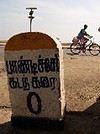
Pondichéry, à côté, c'est l'Inde sur un plateau, ou sur un airbag, comme tu préfères.
De quelle langue parles-tu? Tu veux aller à Pondichéry pour apprendre le tamoul?
Pour le prix de l'avion, regarde ce site: www.soundartravels.com
Pour avoir une idée des prix indiens, regarde cette page écrite par une VFiste distinguée: http://amelotour.over-blog.com/article-1251375.html
En Inde du sud, voilà ce que j'ai personnellement constaté:
Pour le budget, tout dépend de ton standing.
Dans un bouiboui au bord de la route, tu manges pour 0, 3 euros. Tu prends un masala tea ou un south indian coffee pour 8 eurocents en moyenne. Les restos végétariens de base que les familles indiennes fréquentent offrent des plats très copieux pour 0, 8 euros. Le plat le plus cher chez Saravana Bhavan, la chaîne de restos la plus propre et la plus populaire de l'Inde du Sud, coûte environ 2 euros. Dans un resto non végétarien, tu t'en mets plein la lampe pour 3 euros. Dans un resto français de Pondichéry, comme le Satsanga, on mange à la carte pour 6 euros. C'est du luxe. Au resto très select de l'Hotel Park Sheraton de Madras, on a un buffet illimité à midi pour 10 euros. C'est pour les riches.
Je ne saurais trop te conseiller de t'acheter le guide Lonely Planet de l'Inde, qui existe en français et en anglais. Tu pourras faire un budget prévisionnel plus précis quand tu auras choisi la région que tu visiteras.
Bon courage & bon voyage.
Pondichéry, à côté, c'est l'Inde sur un plateau, ou sur un airbag, comme tu préfères.
De quelle langue parles-tu? Tu veux aller à Pondichéry pour apprendre le tamoul?
Pour le prix de l'avion, regarde ce site: www.soundartravels.com
Pour avoir une idée des prix indiens, regarde cette page écrite par une VFiste distinguée: http://amelotour.over-blog.com/article-1251375.html
En Inde du sud, voilà ce que j'ai personnellement constaté:
Pour le budget, tout dépend de ton standing.
Dans un bouiboui au bord de la route, tu manges pour 0, 3 euros. Tu prends un masala tea ou un south indian coffee pour 8 eurocents en moyenne. Les restos végétariens de base que les familles indiennes fréquentent offrent des plats très copieux pour 0, 8 euros. Le plat le plus cher chez Saravana Bhavan, la chaîne de restos la plus propre et la plus populaire de l'Inde du Sud, coûte environ 2 euros. Dans un resto non végétarien, tu t'en mets plein la lampe pour 3 euros. Dans un resto français de Pondichéry, comme le Satsanga, on mange à la carte pour 6 euros. C'est du luxe. Au resto très select de l'Hotel Park Sheraton de Madras, on a un buffet illimité à midi pour 10 euros. C'est pour les riches.
Je ne saurais trop te conseiller de t'acheter le guide Lonely Planet de l'Inde, qui existe en français et en anglais. Tu pourras faire un budget prévisionnel plus précis quand tu auras choisi la région que tu visiteras.
Bon courage & bon voyage.
Si tu ouvres tes yeux d'enfant, le voyage commence au seuil de ta maison
Enfaite non je crois pas que j'apprendrais le tamoul en 1 mois voir moins car je ne sais pas combien de temps je pourrais rester la bas ... je me demandais d'ailleurs si c'était possible de partir avec une tente, ca reviendrai moins cher, il doit surement y avoir des coins sympatique, ou peut etre des auberges de jeunesses ? je comptais aller a Pondichery pour trouver quelqu'un qui parle français au cas ou j'aurais un problème parce que l'anglais je maîtrise les bases mais j'ai des grosses lacunes..
je compte partir plus en exploratrice qu'en touriste. Je n'ai pas envi de me retrouver avec un groupe ou un truc du genre, voila
merci
Pas de tente: le camping n'existe pas en Inde, et le camping sauvage n'est guère toléré.
Pas besoin d'auberges de jeunesse. Il y a des guest houses très bon marché (4 ou 5 euros la nuit), comme celle de la Sri Aurobindo Society à Pondichéry...
Tu trouveras en effet des gens parlant français à Pondy, mais pas à tous les coins de rue. La langue que tu évoquais était donc le français (pour être rassurée), et non le tamoul (pour découvrir) ...
Il est urgent que tu te munisses d'un guide Lonely Planet Inde du Sud pour te rendre compte des infrastructures hotelières de l'Inde, et des fourchettes de prix pratiquées.
Tu peux aussi tout de suite te plonger dans l'ambiance en allant dans le quartier tamoul de Paris, entre Gare du Nord et La Chapelle. Mange à la cantine végétarienne Krishna Bhavan (rue Cail), et tu auras une idée des menus que l'on te proposera en Inde du Sud, même au petit déjeuner.
Pas besoin d'auberges de jeunesse. Il y a des guest houses très bon marché (4 ou 5 euros la nuit), comme celle de la Sri Aurobindo Society à Pondichéry...
Tu trouveras en effet des gens parlant français à Pondy, mais pas à tous les coins de rue. La langue que tu évoquais était donc le français (pour être rassurée), et non le tamoul (pour découvrir) ...
Il est urgent que tu te munisses d'un guide Lonely Planet Inde du Sud pour te rendre compte des infrastructures hotelières de l'Inde, et des fourchettes de prix pratiquées.
Tu peux aussi tout de suite te plonger dans l'ambiance en allant dans le quartier tamoul de Paris, entre Gare du Nord et La Chapelle. Mange à la cantine végétarienne Krishna Bhavan (rue Cail), et tu auras une idée des menus que l'on te proposera en Inde du Sud, même au petit déjeuner.
Si tu ouvres tes yeux d'enfant, le voyage commence au seuil de ta maison
Log in first, then come back to this page.
You might also like
The Hippie Trail to India in the 60s and 70s
En Inde du Sud juste avant le confinementFR
From Delhi to Agra and the extraordinary stay in Chhattisgarh
A lovely wander at the mercy of the wind in this amazing Rajasthan
Ladakh, deux sexagénaires à l'assaut d'un 6 000FR
Un voyage du West Bengal à VaranasiFR
More discussions
Hi everyone!
I’m planning a short visit to Pokhara around mid-February 2027 (it’ll be my 4th time in Nepal 😊, over 40 years!). I’d like to book a room in advance rather than looking when I arrive. I’ve checked a bit on Bxxking.com and see lots of options. I’m used to scoping out the surroundings of places listed, just to avoid ending up in areas that are either unappealing or far from everything.
So, I see quite a few offers around the lake (Lakeside?), but every time I check what it looks like, the streets seem really uninviting. It’s kind of like a construction site with buildings everywhere… Nothing like Bhaktapur (for example) or even Thamel, where the streets seem way more pleasant.
Could anyone give me some advice?
Also, I don’t really get the impression that Pokhara is worth a visit of several days. The lake, sure, but once you’ve seen it—what else is there?
I’m planning a short visit to Pokhara around mid-February 2027 (it’ll be my 4th time in Nepal 😊, over 40 years!). I’d like to book a room in advance rather than looking when I arrive. I’ve checked a bit on Bxxking.com and see lots of options. I’m used to scoping out the surroundings of places listed, just to avoid ending up in areas that are either unappealing or far from everything.
So, I see quite a few offers around the lake (Lakeside?), but every time I check what it looks like, the streets seem really uninviting. It’s kind of like a construction site with buildings everywhere… Nothing like Bhaktapur (for example) or even Thamel, where the streets seem way more pleasant.
Could anyone give me some advice?
Also, I don’t really get the impression that Pokhara is worth a visit of several days. The lake, sure, but once you’ve seen it—what else is there?
Hi there,
After a false start in March 2026 due to my Qatar flights being canceled, I’m rescheduling a trip to Kerala for November. Back in March, I’d booked and paid for the 2-day/1-night trek: Tiger Trail in Periyar National Park. Then I read some terrible reviews about the park. On VF, the reviews are old and don’t mention the Tiger Trail. So, before I book again (I’ve got time), has anyone done it recently and can share their experience and impressions? I’m specifically talking about the Tiger Trail, not the park’s jeep/boat activities, which seem more like an amusement park. Thanks
Hi everyone,
I’m heading to Assam and I’d like to know what type of electrical adapter I need—is it M or D, or both?
Thanks
Hello,
I’m heading to Sri Lanka for 3 weeks in July with my two 11-year-old kids, and I’m wondering about how to organize the trip. We’re used to traveling on the go, staying 1 to 2 or 3 nights per place depending on how we feel.
Do you recommend planning the itinerary and booking accommodations in advance to save time once we’re there? Or is it pretty easy to organize everything as we go without any issues?
Same question for activities: Should we book safaris and tours ahead of time, or can we arrange them easily on the spot? Is there a risk of not getting a spot, for example, to visit a park since we’ll be there in July?
We’ll be using local transport (train, VTC via PickMe, tuk-tuk) to get from one place to another.
In short: Are there any must-book things we should reserve now? So far, I only have the flight tickets!
Thanks in advance for your help! 😊
I’m heading to Sri Lanka for 3 weeks in July with my two 11-year-old kids, and I’m wondering about how to organize the trip. We’re used to traveling on the go, staying 1 to 2 or 3 nights per place depending on how we feel.
Do you recommend planning the itinerary and booking accommodations in advance to save time once we’re there? Or is it pretty easy to organize everything as we go without any issues?
Same question for activities: Should we book safaris and tours ahead of time, or can we arrange them easily on the spot? Is there a risk of not getting a spot, for example, to visit a park since we’ll be there in July?
We’ll be using local transport (train, VTC via PickMe, tuk-tuk) to get from one place to another.
In short: Are there any must-book things we should reserve now? So far, I only have the flight tickets!
Thanks in advance for your help! 😊
Hi there, I think you're on the right track—you plan the itinerary and book the rooms in advance, and that’s it.
Not only do you save time, but you also know where you’ll be staying each night. Choosing well on Booking (or elsewhere) is actually a pleasure!
For safaris, given the number of jeeps with drivers available, it’s unlikely you’ll be turned away... the real issue is more about the concentration of jeeps around the animals.
I travel like you do—train, bus, tuk-tuk, and sometimes taxi. Ride-hailing apps like PickMe and other VTCs are mostly in big cities.
For the mountain train, due to severe flooding, service was interrupted on the line between Kandy and Ella. Check ahead, because reservations for this train are very complicated, if not impossible.
For the Colombo/Kandy train, you reserve your seats by buying the ticket before boarding. In the south, no need to book in advance for trains.
In Sri Lanka, there’s always a solution for getting around—just ask your hosts. They have trusted contacts at their fingertips. But still, compare prices—😏 smart move!
I stick to booking my nights and keep pre-planned activities to a minimum.
For reservations you can’t skip, it’s the beach stays you’ll want to secure.
Hi there,
I’m trying to find out if it’s still possible to travel from Mumbai to Goa by ferry or any other sea route. My search results aren’t very clear, and if it *is* possible, I can’t figure out where to book... If anyone has any info, I’d really appreciate it—thanks in advance!
Have a great day,
Virginie
I’m trying to find out if it’s still possible to travel from Mumbai to Goa by ferry or any other sea route. My search results aren’t very clear, and if it *is* possible, I can’t figure out where to book... If anyone has any info, I’d really appreciate it—thanks in advance!
Have a great day,
Virginie
It seems there’s a ferry from Nagapattinam to Jaffna in India. Has anyone here taken this ferry before? My main question is how to get to Nagapattinam—by train, bus? And from which town further south, of course.
Thanks, friends!
Gaston
Gaston
Hi there.
We’re spending a month in Sri Lanka in March, and we’ll have one week left after leaving Polonnaruwa.
We’re torn between spending it in the Jaffna region or on the east coast between Batticaloa and Trincomalee.
We’re divers, so the east coast appeals to us for snorkeling, beaches, and lagoons—but it seems like late March might not be the best time for that coast. What do you think?
As for Jaffna, the culture of the region, its more authentic feel since it’s less touristy, and the offshore islands all appeal to us too—but it seems far from the rest of the country and harder to access.
We have to choose because we won’t be able to visit both sides, and I’d love to hear your thoughts.
Thanks, Marie
Hi there,
We just got back from a 2-week trip to Sri Lanka as a couple, and while planning the trip, we found plenty of info on the itinerary, places to see, and transportation, but much fewer clear reports on the actual budget to expect once there. Yet, that was an important point for us because we like to plan ahead a little before traveling.
So, we took the time to break down our complete budget after the trip. In our case, we spent around **930 € per person** for 2 weeks, being careful without depriving ourselves, mixing guesthouses, more comfortable hotels, quite a few activities, and even a private driver for part of the stay.
What we found interesting when crunching the numbers is that in Sri Lanka, it’s not necessarily meals or short trips that blow the budget, but rather flights, certain accommodations, cultural activities, and all those little expenses we sometimes forget, like tips.
If this can help other travelers get a better idea, we’ve put everything together on our blog with our experience, a detailed breakdown of expenses, and practical info on money while there, withdrawals, and tipping:
https://aventures-sans-mesaventure.com/budget-sri-lanka-pour-un-voyage-de-2-semaines/
Happy travels and enjoy your adventure! !
Hi everyone,
We’re a group of 5 heading to the Everest Base Camp trek in early April. We won’t have a porter or guide—we’re used to hiking independently and have already done the Langtang trek and the Annapurna Circuit (back in 2003!).
I’d love to know if it’s necessary to book lodges in advance or if we’ll easily find availability during this busy season. Also, will we find lodges all along the route between the main stopover villages, or only in those villages? I remember there were plenty everywhere on the Annapurna Circuit. We want to stay as flexible as possible.
Thanks for your feedback!
We’re a group of 5 heading to the Everest Base Camp trek in early April. We won’t have a porter or guide—we’re used to hiking independently and have already done the Langtang trek and the Annapurna Circuit (back in 2003!).
I’d love to know if it’s necessary to book lodges in advance or if we’ll easily find availability during this busy season. Also, will we find lodges all along the route between the main stopover villages, or only in those villages? I remember there were plenty everywhere on the Annapurna Circuit. We want to stay as flexible as possible.
Thanks for your feedback!
Hi there,
We’re heading to India in March 2026 and had planned to visit the parts of the Meenakshi Temple that are open to non-Hindus. However, the temple is currently undergoing major renovations—with all the towers covered in scaffolding—which might really take away from the experience and our stop in Madurai.
After some frustrating and vague online searches, and before we reshuffle our itinerary, I’d love to know—if possible—the most accurate expected completion date for the renovation work.
Thanks in advance.
We’re heading to India in March 2026 and had planned to visit the parts of the Meenakshi Temple that are open to non-Hindus. However, the temple is currently undergoing major renovations—with all the towers covered in scaffolding—which might really take away from the experience and our stop in Madurai.
After some frustrating and vague online searches, and before we reshuffle our itinerary, I’d love to know—if possible—the most accurate expected completion date for the renovation work.
Thanks in advance.
Hi there,
We’re planning a trip to Nepal and would love to do a helicopter tour to Everest with Namche Heli Service. Has anyone here used this agency? I can’t seem to find any reviews online. Thanks in advance!
Kloki
We’re planning a trip to Nepal and would love to do a helicopter tour to Everest with Namche Heli Service. Has anyone here used this agency? I can’t seem to find any reviews online. Thanks in advance!
Kloki
Hey fellow travelers,
I’m spending two weeks studying Hindi in the mornings in Delhi, in the Hauz Khas neighborhood. What spots should I check out in this area? Any cafés to chill at? How do I get to other parts of Delhi? By rickshaw? Is it easy to negotiate the price upfront?
Thanks in advance. 😊 Marlène
I’m spending two weeks studying Hindi in the mornings in Delhi, in the Hauz Khas neighborhood. What spots should I check out in this area? Any cafés to chill at? How do I get to other parts of Delhi? By rickshaw? Is it easy to negotiate the price upfront?
Thanks in advance. 😊 Marlène
Hi,
I’m leaving this Saturday for Northern India from 15/02 to 27/02. I’m planning to visit New Delhi, Agra, Chand Baori, Jaipur, Ranthambore, Bundi, Udaipur, and Jodhpur.
What’s the best way to get around? I was thinking of doing everything by train. Maybe taking the bus for some stretches?
As for renting a car with a driver, it seems expensive, so I’ve pretty much ruled that out. Unless someone’s got space for the same dates?
Thanks for your insights!
What’s the best way to get around? I was thinking of doing everything by train. Maybe taking the bus for some stretches?
As for renting a car with a driver, it seems expensive, so I’ve pretty much ruled that out. Unless someone’s got space for the same dates?
Thanks for your insights!
Hi everyone,
We’re heading out in March for this trek. We’re used to hiking and long-distance treks, but this’ll be our first time in Nepal.
QUESTION: People from Nepal are telling us it’s MANDATORY to have guides! Is this true, or is it just agencies trying to get work for their staff?
The Lonely Planet says: "In April 2023, the government announced that every trekker would need to hire the services of a porter or a licensed guide to obtain the TIMS permit. The law isn’t enforced, and by 2025, there were no longer any obligations for teahouse treks."
What do you think? What’s your experience? Thanks for your feedback.
We’re heading out in March for this trek. We’re used to hiking and long-distance treks, but this’ll be our first time in Nepal.
QUESTION: People from Nepal are telling us it’s MANDATORY to have guides! Is this true, or is it just agencies trying to get work for their staff?
The Lonely Planet says: "In April 2023, the government announced that every trekker would need to hire the services of a porter or a licensed guide to obtain the TIMS permit. The law isn’t enforced, and by 2025, there were no longer any obligations for teahouse treks."
What do you think? What’s your experience? Thanks for your feedback.
Hi,
I’d like to arrive in India at New Delhi Airport with some cash. I was wondering if the exchange rates at the airport are any good or if it’s best to avoid them (and exchange in the city instead?).
Thanks for your help.
NAMASTE NEPAL! PRACTICAL INFO AND EXPERIENCE FEEDBACK
Stay from March 25 to April 16, 2025
· Flight tickets Air India (via Delhi) (via Skyscanner) = 1130 € per person · Planned budget (and respected without too many restrictions and while buying a few small gifts) = 2000 € for the stay for two. Buses, taxis, and entrance fees to various sites represent a budget to consider. Meals are cheap. Drinks like beer/Coke, however, are not cheap and cost the equivalent of a meal. · Exchange rate of the rupee during our stay = 0.0064 € (the exchange rate is almost identical everywhere, including at the airport). · At the airport, purchase of two SIM cards (phone) = 1000 NPR x 2 for 28 days. · Kathmandu: we had booked the hotel upon arrival: Kathmandu Boutique Hotel (+977 015 357 446 – email: booking@kathmanduboutiquehotel.com), very well located in a quiet alley off the street, south of Thamel, a 10-minute walk from Durbar Square. A hotel like Nepal knows how to do, where tall people will have to duck. Night + breakfast = 18 € for two. Very warm welcome, great location, excellent value for money. · Bhaktapur: we had also booked a hotel for the end of our stay because the chance of the year 2025 made the Nepali New Year and Bisket Jatra particularly festive in Bhaktapur: Manju Baha Hotel School (+977 976 7234014 – email: manjubahahotel@gmail.com) located in an old monastery. "A social enterprise transforming an old monastery into a charming hotel, offering professional hospitality training to underprivileged Nepali youth." Night + breakfast = 32 € for two. Beautifully decorated room. Very warm welcome. Don’t miss the Changunarayan site (near Bhaktapur), it’s amazing. And if you’re lucky enough to be in Bhaktapur in mid-April for 3 days, there’s the Bisket Jatra festivities (Newari festival), joyful, noisy, fun, and wild… · Pokhara (hotel recommended by the Kathmandu hotel): Hotel Green Tara, Lakeside, 10th street, set back, quiet (Tel. +977 61 462698 – email: greentara_67@hotmail.com) · Trek permit (Lower Mustang, no need for an agency or guide, permits checked at Ghasa and Jomsom) = 2000 NPR per person (2 ID photos) · Bus Kathmandu/Pokhara and return = 2000 NPR per person · Bus Pokhara/Jomsom, 2 one-way tickets = 2800 NPR. · Taxi: negotiation with a driver we recommend, Vicky (+977 984 075 599). You explain what you want, negotiate the price, and he waits for you during the visit. Very charming, we used him several times. For example: departure from our hotel at 10 AM -> Boudhanath/Pashupatinath/Patan return at 5 PM to the hotel = 6500 NPR – Swayambhunath (round trip) = 1200 NPR · Site prices: https://ntb.gov.np/plan-your-trip/before-you-come/heritage-site-entry-fees o Visitor Pass for Kathmandu Durbar Square (for the duration of the stay, show your visa) = 1000 NPR per person (1 ID photo) o Bhaktapur Durbar Square (old town) = 1800 NPR per person o Patan = 1000 NPR per person o Swayambhu Stupa = 200 NPR per person o Boudha Stupa = 200 NPR per person o Pashupatinath Temple = 1000 NPR per person (interesting to take a guide) o Changunarayan Temple (6 km north of Bhaktapur) = 400 NPR per person o Mountain Museum in Pokhara = 750 NPR per person · E-cigarettes: e-cigarettes are banned in India and confiscated whether they’re in carry-on or checked luggage. On the way there, we had kept them in our carry-on, they were confiscated in Delhi. On the way back, learning from our previous experience, we put them in our checked luggage. Someone came to get us to take them out of our bags and confiscate them… You can find e-cigarettes and products in Kathmandu.
* * *
I’m 74 years old. I went to Nepal in 1982, 1983, and the last time in 1986. I wanted to introduce this beautiful and endearing country to my husband, and it was… now or never. So we decided it was now.
I knew the trek starting from Pokhara: Naudanda/Birethanti/Ghorepani/Tatopani/Kalopani. There was no way I was going to do that trek, especially the 1000-meter staircase to reach Ghorepani… You have to stay humble with age.
Back then, the road didn’t exist. I didn’t consider, with the construction of this road (NH48) along the western bank of the Kali Gandaki, doing a trek along a windy and dusty road. Was there an alternative hiking trail on the eastern bank? No one answered my question on VoyageForum, so I did my research online. And I found this site: "Andrées de Ruiter and Prem Rai - Trekking the Annapurna Circuit, including the new NATT trails that avoid the road - A guide to one of the most beautiful trekking regions in Nepal and the world (2011) - NATT = New Annapurna Trekking Trail".
Phew! A solution was emerging. This circuit from 2011 wasn’t fully marked. The idea was to go from Jomsom to Tatopani, so we needed to make sure the path was well-marked all the way, which we did, and the path exists, marked in red and white!
So, with the walking times information, we built our 8-day circuit:
· Jomsom/Thinigaon · Thinigaon/Chimang · Chimang/Saura · Saura/Kokhetanti · Rest day or, if in good shape: loop to Sekong Lake · Kokhetanti/Jhipra Deurali · Jhipra Deurali/Kopchepani · Kopchepani/Tatopani
It’s a senior trek, after all. So the walking times noted on the sites indicated 3 hours or even 4 hours for the two longest stages. That pace suited us fine.
On March 29, we left Kathmandu (1400m), after visiting the must-see sites, by bus to Pokhara: 200 km and 8.5 hours on a chaotic road under construction. I had a memory of Pokhara where it was the first city where you could see the Himalayan range, especially Machhapuchhare. But the pollution is such, the dust raised by traffic and construction, that no horizon is visible except the first hills around Pokhara.
We stayed 24 hours in Pokhara (820m), and on March 31, we left our luggage at the hotel and set off with our lightest backpacks: change of clothes, toiletries, first aid kit, anti-chafing cream, water bottle, sleeping bag liner, and light shoes for the stages.
We took the bus to Jomsom: 160 km/7.5 hours including stops for bathroom breaks, tea, and lunch. The road is nothing but a chaos of potholes, landslides, construction, dust, rebuilding, and mudslides. In Ghasa, the bus stops, and we’re told we’re at a checkpoint and that the two foreigners in the bus, my husband and I, need to have our permits checked, which takes a few minutes. The driving is rock-and-roll, surprising, and courteous. The drivers have their codes, and on these improbable roads, they’re virtuosos.
We could have chosen the plane, but several reasons dissuaded us: if there’s too much wind, the planes don’t take off; personally, I wasn’t reassured about landing in Jomsom, and this transport has a cost.
We arrived around 2 PM in Jomsom (2720m), and despite the early wake-up, the nearly 8 hours on the bus, and the altitude, we decided to head straight to Thinigaon (2840m). At the Jomsom checkpoint, they told us it was a 30-minute walk. Great! Except we took an hour and a half on an uphill road, bent over to fight a strong wind. But the Himalayan range is there! The Dhaulagiri, the Nilgiri, the Annapurnas as a reward.
In Thinigaon, we found a room at the "Nilgiri View Hotel" run by a didi (big sister in Nepali). From the lodge’s roof, she proudly showed us the different peaks surrounding the village and told us, worried, that it hadn’t snowed here for 3 years. She said there are very few tourists, that the season is rather in September/October/November. It seems there’s not a soul in this village, yet mules pass through the narrow street paved with large flat stones, their bells ringing. We dine at 6 PM and go to bed… Room = 1200 NPR and dinner, breakfast, and drinks = 2560 NPR.
On April 1, we set off at 9 AM, not for Chimang as planned but for Marpha! The didi from the Thinigaon lodge had said it was a 3-hour walk. The first part of this stage is attractive, the mountains are magnificent and imposing, the landscape is superb, there’s no one around, a feeling of being "alone in the world." We follow Dhumbra Tal, this small green lake. The path is a rocky track that climbs steeply. Then, around a hill, we start the big descent that joins the Kali Gandaki. We face the wind head-on, and the violent gusts take our breath away, throw us off balance, and envelop us in dust. We see the road on the other side of the Kali Gandaki. We arrive in the village of Chhairo at 2 PM, completely exhausted and with blistered feet, after 5 hours of walking instead of the planned 3.5 hours.
We’re welcomed by the village nurse, who tells us there’s a lodge in the village. Chhairo is a Tibetan village, a 20-minute walk from Marpha (according to the locals, multiply by 2 or even 3 for us…). We’re going to revise our trek plan and, first of all, spend the night in Chhairo.
The lodge is quite pleasant, and Karma, the hostess, is very friendly. She asks about our plans and suggests we stay in Chhairo the next day, from where we can visit Marpha and also Chimang, a 1-hour walk away, in light mode, meaning without backpacks. She invites us to participate in a village ceremony the next evening.
We immediately accept the proposal, as our feet need rest and the welcome is so warm… Dinner and bed!
We reworked our trek plan, which was too ambitious for our untrained bodies and, let’s face it… no longer in our first youth. In the initial plan, we thought there wouldn’t be too much elevation gain following the Kali Gandaki, but checking the map, we realize there might be significant elevation changes between Sauru and Sirkung. So we plan:
· Tomorrow: visit Marpha (2670m) and Chimang (2744m) · April 3: bus from Chhairo (2700m) to Kalopani (2530m) and continue on foot to Ghasa (2010m) · April 4: Ghasa/Pairataplo (1940m) · April 5: Pairatapla/Gadpar (1580m) · April 6: Gadpar/Narchyang (1510m) · April 7: Narchyang/Tatopani (1190m) · April 8: return to Pokhara.
Normally, it’s all downhill…
April 2, a rest day then… We set off in the morning to explore Marpha. We have to take a temporary bridge because the suspension bridge is closed due to road construction. We join the road and arrive in Marpha, a village famous for its apple orchards, brandy, cider, and apple juice production. This village is magnificent with its stone houses and monastery clinging to the hillside. The road construction spared it. There are people, but very few Western tourists.
We have lunch in Marpha and go back through Chhairo to take the path to Chimang. We cross a fragrant pine forest and find the rocky path; the landscape is splendid. We walk quietly, passing peaceful buffaloes and cows, and arrive at the foot of a stone staircase… 275 steps (which we counted on the way back) leading us to the village of Chimang. Chimang is an isolated Newari village that seems a bit desolate. Despite the slopes, there are crops on every little bit of land. Thankfully, we changed our initial program because there’s no lodge in this village, contrary to what we saw on a map… We wander through the village, which seems very deserted, have coffee in a house from another world, and then head back to Chhairo.
A rest day? = 5 hours of walking!!
Dinner and village ceremony. From what we understand, this ceremony is in honor of the Dalai Lama. Men, women, and children in traditional costumes gather twice a month; they dance, make, and offer small sweet cakes with Tibetan tea (made from tea, yak butter—often rancid—water, and salt). Surprising for first-timers…
Around 10 PM, we leave the ceremony; tomorrow morning, we need to be on the roadside by 7 AM to catch the bus to Kalopani…
This village of Chhairo is very pleasant and welcoming, no tourists, just two motorcyclists who arrived in the evening, one of whom participated in the ceremony and discreetly poured his Tibetan tea outside.
Lodge: "Norsang Tibetan Guesthouse and Restaurant". Total bill for 2 nights, 2 dinners, 2 breakfasts, and drinks = 8000 NPR.
April 3: bus from Chhairo to Kalopani, about 1.5 hours for the 20 km (200 NPR per person). We descend on the right bank of the Kali Gandaki. We find the red and white markings to resume the trek toward Ghasa. We’re in a fragrant pine forest, the Dhaulagiri on one side and the Annapurnas on the other, magnificent, and the path is pleasant and easy. We get a bit lost in this forest, always looking for the markings. Near Lete, two trekkers pass us, and we meet them again a little further on with two very young children, to whom we give the 2 hard-boiled eggs I didn’t eat this morning. They accepted them without hesitation.
We arrive in a village and ask for directions to Ghasa. The young girls point the way. But we come across a forest being logged, trees cut in all directions. We turn back and ask for confirmation. They confirm… But the two young girls catch up with us and clear the way. We have to step over, go around, and cross the felled trees, with no indication at all. Through this pick-up sticks of felled trees, the girls lead us to the top of a stone staircase, indicating that was the path. It’s the only place where we saw rhododendrons in bloom.
We descend the staircase. At the bottom, to the left, there’s a bridge to go toward Choyo, and to the right, a path to Ghasa. We take the right path and join the road. We should normally find the red and white markings, but we don’t… So we continue on the western bank road of the Kali Gandaki.
A little before the village of Misi, we see fumaroles on the opposite bank that seem to come from the ground. We don’t understand. We stopped to eat in the village of Misi (noodle soup = 600 NPR), but it’s hard to communicate with the elderly people running the guesthouse.
We continued on the road, not finding the marked path parallel to the road. Landslides, both on the left and right banks, seem to have taken over the marked routes. It’s a place where the Kali Gandaki gorge narrows, and on the opposite bank, the mountain smokes more and more, and we now hear the crackling of fire. Across from us, the mountain is burning… Our initial plan had us passing on that burning bank right now…
We arrive in Ghasa at 3:30 PM, a 6.5-hour stage but with a 1-hour stop at noon. We’re at the "Florida Guesthouse and Restaurant." From our room, we see the mountain smoking on the other side of the river, and at night, we see the flames. In this village, posters show Himalayan eagles and vultures that seem to be protected species. Indeed, we saw (and heard) 3 eagles circling today.
April 4 – Today, heading to Pairothapla or Kopchepani depending on our feet, accommodation options, and simply our desires.
No more smoke on the mountain this morning. It’s chilly, 7:45 AM, the sky is clear, just a smell of smoke outside.
Price of the lodge = 1000 NPR for the night + 3580 NPR for meals.
We cross Ghasa, which stretches over more than a kilometer. We have a drink at the last guesthouse in the village, and the didi, when she learns our destination, tells us to be careful because the villages we’re going to aren’t safe. Should we distribute our rupees in different pockets? Nah, we kept going.
At the exit of Ghasa, we find the red and white markings and take the suspension bridge to cross the boiling waters of the Kali Gandaki. The passage is impressive because the river is tumultuous. Lots of climbs and even more descents. We’re back on the eastern bank. It’s hot! On the narrow path, we meet a group of buffaloes. Who has the right of way? We decide to stick as close as possible to the rock wall and move forward calmly. The buffaloes look at us, chewing placidly, with no intention of jumping on us. Phew!
After a 5-hour stage (including stops), we arrive in Pairothapla, with hot feet and firm thighs, and decide we won’t go any further. It’s a good thing because there’s a lodge, the most basic so far, but with a great welcome. We have a meal and a short nap. The buffaloes we met on the way belong to this house. They come to drink at the fountain by the path.
Our host, very pleasant, doesn’t know what to do to please us and is very attentive. He wants to chat. He has two children, a 4-year-old girl and a 7-year-old boy. Where do they go to school? Do they go? He tells us that the fires in the mountain are caused by people, but for what reason? We won’t find out, but it’s illegal. From here, we can still see smoke rising in the distance. The wife is a bit less friendly. Corn kernels dry on a woven straw mat on the ground, and the mom sorts them.
From where we are, we overlook the valley and see the road under construction winding along the mountainside on the other bank.
Dinner on the terrace of the house overlooking the path, windbreaker and fleece on: dal bhat chicken for me and chicken curry for my husband: "organic" products, at least local production. There are small vegetable gardens everywhere with all sorts of vegetables.
April 5 – While we’re having breakfast on the terrace of our lodge, 5 porters, straps on their foreheads, heavily loaded, pass by on the path. A few minutes later, a group of 9 people appears. It must be said that since the beginning of our journey, we’ve met very few hikers. Two backpackers in Chhairo, the two hikers near Lete, two female hikers passed us before Pairothapla, a solo female hiker passed us…
The lodge in Pairothapla is called "Bimala Lodge & Thakali Kitchen" – Price for night + 4 meals + 2 breakfasts = 3000 NPR.
The descent toward the Kali Gandaki involves climbs whose steps we didn’t count. Clearly, the landslides on the mountain cause changes to the official ACAP trek marked in red and white, and the marking updates can’t keep up with the pace of these landslides. It’s almost always by chance that we find the markings. Fortunately, we can follow the power line that guides us somewhat.
Drink stop in Kopchepani, the legs are fine, but the feet don’t like being tightly enclosed. A group of trekkers with porters passes on the path. We met buffaloes that we kindly let pass; the path was wide enough, but it was a staircase going up, and we didn’t want to take any risks.
Across, a view of the magnificent Rupse Waterfall on the other bank of the Kali Gandaki, at the bottom, lots of vehicles and people.
Arrival in Gadpar after crossing a rather unwelcoming small village and cultivated gardens between dry stone walls, each better built than the last.
First lodge spotted, first lodge adopted to answer the call of our feet, and a very warm welcome from the owner. Since we hadn’t eaten at noon, we had Tibetan bread/jam. 6-hour stage including 1 hour of stops. Night + dinner + breakfast + drinks = 5060 NPR
April 6 – Today, heading to Narchyang.
For several days, we’ve seen banana trees with their bunches of fruit and even a prickly pear with large fruits ripening.
This stage is quite peaceful and pleasant. We take a suspension bridge to cross a tributary of the Kali Gandaki. While we’re resting for a moment before crossing the bridge, a couple of porters, a man and a woman, arrive and start across the bridge with their wood load in a basket held by a strap on their forehead, making them bend. We set off too… lighter than them.
On the other side of the bridge… a stone staircase, and it climbs steeply. The porter couple didn’t take this staircase; they went right on the path.
At the top of the staircase, we arrive in Narchyang after a 4-hour stage. A magnificent waterfall overlooks the village. We get lost in this fairly large village looking for a lodge. After wandering around for a while, we ask for directions, and an 84-year-old man takes us through the whole village and accompanies us to a very nice lodge run by a woman.
We chat with our hostess, who asks where we’re from and where we’re going. We explain that we want to reach Tatopani the next day and then return to Pokhara. She tells us there are 4x4s going directly to Pokhara and that it would probably be easier than taking a bus that might be full in Tatopani. After a quick consultation, we decide to return to Pokhara the next day by 4x4. She finds us a 4x4 with 2 seats left, departure at 8 AM – 5 hours on the road and 1500 NPR per person. A charming didi who does everything to be pleasant and helpful.
Narchyang community lodge = night + snacks + dinner + breakfast = 3000 NPR.
There you go, our trek ends tomorrow. Many necessary changes and adaptations to our initial trek, but no regrets, it was superb and a great experience that, for my part, I won’t be able to repeat. Always this encounter with the endearing, welcoming, curious, and very kind Nepali people. It was now or never, and we did it!
* * *
In conclusion, 3 full weeks in Nepal is a duration that allows visiting Kathmandu, Patan, and Bhaktapur, enjoying the various sites, and soaking in the atmosphere and urban Nepali life.
The trek, even revised and corrected, allowed us to get close to the impressive Annapurna and Dhaulagiri peaks. One or two acclimatization days might be necessary to get the body in tune with this magical and extraordinary land.

Stay from March 25 to April 16, 2025
· Flight tickets Air India (via Delhi) (via Skyscanner) = 1130 € per person · Planned budget (and respected without too many restrictions and while buying a few small gifts) = 2000 € for the stay for two. Buses, taxis, and entrance fees to various sites represent a budget to consider. Meals are cheap. Drinks like beer/Coke, however, are not cheap and cost the equivalent of a meal. · Exchange rate of the rupee during our stay = 0.0064 € (the exchange rate is almost identical everywhere, including at the airport). · At the airport, purchase of two SIM cards (phone) = 1000 NPR x 2 for 28 days. · Kathmandu: we had booked the hotel upon arrival: Kathmandu Boutique Hotel (+977 015 357 446 – email: booking@kathmanduboutiquehotel.com), very well located in a quiet alley off the street, south of Thamel, a 10-minute walk from Durbar Square. A hotel like Nepal knows how to do, where tall people will have to duck. Night + breakfast = 18 € for two. Very warm welcome, great location, excellent value for money. · Bhaktapur: we had also booked a hotel for the end of our stay because the chance of the year 2025 made the Nepali New Year and Bisket Jatra particularly festive in Bhaktapur: Manju Baha Hotel School (+977 976 7234014 – email: manjubahahotel@gmail.com) located in an old monastery. "A social enterprise transforming an old monastery into a charming hotel, offering professional hospitality training to underprivileged Nepali youth." Night + breakfast = 32 € for two. Beautifully decorated room. Very warm welcome. Don’t miss the Changunarayan site (near Bhaktapur), it’s amazing. And if you’re lucky enough to be in Bhaktapur in mid-April for 3 days, there’s the Bisket Jatra festivities (Newari festival), joyful, noisy, fun, and wild… · Pokhara (hotel recommended by the Kathmandu hotel): Hotel Green Tara, Lakeside, 10th street, set back, quiet (Tel. +977 61 462698 – email: greentara_67@hotmail.com) · Trek permit (Lower Mustang, no need for an agency or guide, permits checked at Ghasa and Jomsom) = 2000 NPR per person (2 ID photos) · Bus Kathmandu/Pokhara and return = 2000 NPR per person · Bus Pokhara/Jomsom, 2 one-way tickets = 2800 NPR. · Taxi: negotiation with a driver we recommend, Vicky (+977 984 075 599). You explain what you want, negotiate the price, and he waits for you during the visit. Very charming, we used him several times. For example: departure from our hotel at 10 AM -> Boudhanath/Pashupatinath/Patan return at 5 PM to the hotel = 6500 NPR – Swayambhunath (round trip) = 1200 NPR · Site prices: https://ntb.gov.np/plan-your-trip/before-you-come/heritage-site-entry-fees o Visitor Pass for Kathmandu Durbar Square (for the duration of the stay, show your visa) = 1000 NPR per person (1 ID photo) o Bhaktapur Durbar Square (old town) = 1800 NPR per person o Patan = 1000 NPR per person o Swayambhu Stupa = 200 NPR per person o Boudha Stupa = 200 NPR per person o Pashupatinath Temple = 1000 NPR per person (interesting to take a guide) o Changunarayan Temple (6 km north of Bhaktapur) = 400 NPR per person o Mountain Museum in Pokhara = 750 NPR per person · E-cigarettes: e-cigarettes are banned in India and confiscated whether they’re in carry-on or checked luggage. On the way there, we had kept them in our carry-on, they were confiscated in Delhi. On the way back, learning from our previous experience, we put them in our checked luggage. Someone came to get us to take them out of our bags and confiscate them… You can find e-cigarettes and products in Kathmandu.
* * *
I’m 74 years old. I went to Nepal in 1982, 1983, and the last time in 1986. I wanted to introduce this beautiful and endearing country to my husband, and it was… now or never. So we decided it was now.
I knew the trek starting from Pokhara: Naudanda/Birethanti/Ghorepani/Tatopani/Kalopani. There was no way I was going to do that trek, especially the 1000-meter staircase to reach Ghorepani… You have to stay humble with age.
Back then, the road didn’t exist. I didn’t consider, with the construction of this road (NH48) along the western bank of the Kali Gandaki, doing a trek along a windy and dusty road. Was there an alternative hiking trail on the eastern bank? No one answered my question on VoyageForum, so I did my research online. And I found this site: "Andrées de Ruiter and Prem Rai - Trekking the Annapurna Circuit, including the new NATT trails that avoid the road - A guide to one of the most beautiful trekking regions in Nepal and the world (2011) - NATT = New Annapurna Trekking Trail".
Phew! A solution was emerging. This circuit from 2011 wasn’t fully marked. The idea was to go from Jomsom to Tatopani, so we needed to make sure the path was well-marked all the way, which we did, and the path exists, marked in red and white!
So, with the walking times information, we built our 8-day circuit:
· Jomsom/Thinigaon · Thinigaon/Chimang · Chimang/Saura · Saura/Kokhetanti · Rest day or, if in good shape: loop to Sekong Lake · Kokhetanti/Jhipra Deurali · Jhipra Deurali/Kopchepani · Kopchepani/Tatopani
It’s a senior trek, after all. So the walking times noted on the sites indicated 3 hours or even 4 hours for the two longest stages. That pace suited us fine.
On March 29, we left Kathmandu (1400m), after visiting the must-see sites, by bus to Pokhara: 200 km and 8.5 hours on a chaotic road under construction. I had a memory of Pokhara where it was the first city where you could see the Himalayan range, especially Machhapuchhare. But the pollution is such, the dust raised by traffic and construction, that no horizon is visible except the first hills around Pokhara.
We stayed 24 hours in Pokhara (820m), and on March 31, we left our luggage at the hotel and set off with our lightest backpacks: change of clothes, toiletries, first aid kit, anti-chafing cream, water bottle, sleeping bag liner, and light shoes for the stages.
We took the bus to Jomsom: 160 km/7.5 hours including stops for bathroom breaks, tea, and lunch. The road is nothing but a chaos of potholes, landslides, construction, dust, rebuilding, and mudslides. In Ghasa, the bus stops, and we’re told we’re at a checkpoint and that the two foreigners in the bus, my husband and I, need to have our permits checked, which takes a few minutes. The driving is rock-and-roll, surprising, and courteous. The drivers have their codes, and on these improbable roads, they’re virtuosos.
We could have chosen the plane, but several reasons dissuaded us: if there’s too much wind, the planes don’t take off; personally, I wasn’t reassured about landing in Jomsom, and this transport has a cost.
We arrived around 2 PM in Jomsom (2720m), and despite the early wake-up, the nearly 8 hours on the bus, and the altitude, we decided to head straight to Thinigaon (2840m). At the Jomsom checkpoint, they told us it was a 30-minute walk. Great! Except we took an hour and a half on an uphill road, bent over to fight a strong wind. But the Himalayan range is there! The Dhaulagiri, the Nilgiri, the Annapurnas as a reward.
In Thinigaon, we found a room at the "Nilgiri View Hotel" run by a didi (big sister in Nepali). From the lodge’s roof, she proudly showed us the different peaks surrounding the village and told us, worried, that it hadn’t snowed here for 3 years. She said there are very few tourists, that the season is rather in September/October/November. It seems there’s not a soul in this village, yet mules pass through the narrow street paved with large flat stones, their bells ringing. We dine at 6 PM and go to bed… Room = 1200 NPR and dinner, breakfast, and drinks = 2560 NPR.
On April 1, we set off at 9 AM, not for Chimang as planned but for Marpha! The didi from the Thinigaon lodge had said it was a 3-hour walk. The first part of this stage is attractive, the mountains are magnificent and imposing, the landscape is superb, there’s no one around, a feeling of being "alone in the world." We follow Dhumbra Tal, this small green lake. The path is a rocky track that climbs steeply. Then, around a hill, we start the big descent that joins the Kali Gandaki. We face the wind head-on, and the violent gusts take our breath away, throw us off balance, and envelop us in dust. We see the road on the other side of the Kali Gandaki. We arrive in the village of Chhairo at 2 PM, completely exhausted and with blistered feet, after 5 hours of walking instead of the planned 3.5 hours.
We’re welcomed by the village nurse, who tells us there’s a lodge in the village. Chhairo is a Tibetan village, a 20-minute walk from Marpha (according to the locals, multiply by 2 or even 3 for us…). We’re going to revise our trek plan and, first of all, spend the night in Chhairo.
The lodge is quite pleasant, and Karma, the hostess, is very friendly. She asks about our plans and suggests we stay in Chhairo the next day, from where we can visit Marpha and also Chimang, a 1-hour walk away, in light mode, meaning without backpacks. She invites us to participate in a village ceremony the next evening.
We immediately accept the proposal, as our feet need rest and the welcome is so warm… Dinner and bed!
We reworked our trek plan, which was too ambitious for our untrained bodies and, let’s face it… no longer in our first youth. In the initial plan, we thought there wouldn’t be too much elevation gain following the Kali Gandaki, but checking the map, we realize there might be significant elevation changes between Sauru and Sirkung. So we plan:
· Tomorrow: visit Marpha (2670m) and Chimang (2744m) · April 3: bus from Chhairo (2700m) to Kalopani (2530m) and continue on foot to Ghasa (2010m) · April 4: Ghasa/Pairataplo (1940m) · April 5: Pairatapla/Gadpar (1580m) · April 6: Gadpar/Narchyang (1510m) · April 7: Narchyang/Tatopani (1190m) · April 8: return to Pokhara.
Normally, it’s all downhill…
April 2, a rest day then… We set off in the morning to explore Marpha. We have to take a temporary bridge because the suspension bridge is closed due to road construction. We join the road and arrive in Marpha, a village famous for its apple orchards, brandy, cider, and apple juice production. This village is magnificent with its stone houses and monastery clinging to the hillside. The road construction spared it. There are people, but very few Western tourists.
We have lunch in Marpha and go back through Chhairo to take the path to Chimang. We cross a fragrant pine forest and find the rocky path; the landscape is splendid. We walk quietly, passing peaceful buffaloes and cows, and arrive at the foot of a stone staircase… 275 steps (which we counted on the way back) leading us to the village of Chimang. Chimang is an isolated Newari village that seems a bit desolate. Despite the slopes, there are crops on every little bit of land. Thankfully, we changed our initial program because there’s no lodge in this village, contrary to what we saw on a map… We wander through the village, which seems very deserted, have coffee in a house from another world, and then head back to Chhairo.
A rest day? = 5 hours of walking!!
Dinner and village ceremony. From what we understand, this ceremony is in honor of the Dalai Lama. Men, women, and children in traditional costumes gather twice a month; they dance, make, and offer small sweet cakes with Tibetan tea (made from tea, yak butter—often rancid—water, and salt). Surprising for first-timers…
Around 10 PM, we leave the ceremony; tomorrow morning, we need to be on the roadside by 7 AM to catch the bus to Kalopani…
This village of Chhairo is very pleasant and welcoming, no tourists, just two motorcyclists who arrived in the evening, one of whom participated in the ceremony and discreetly poured his Tibetan tea outside.
Lodge: "Norsang Tibetan Guesthouse and Restaurant". Total bill for 2 nights, 2 dinners, 2 breakfasts, and drinks = 8000 NPR.
April 3: bus from Chhairo to Kalopani, about 1.5 hours for the 20 km (200 NPR per person). We descend on the right bank of the Kali Gandaki. We find the red and white markings to resume the trek toward Ghasa. We’re in a fragrant pine forest, the Dhaulagiri on one side and the Annapurnas on the other, magnificent, and the path is pleasant and easy. We get a bit lost in this forest, always looking for the markings. Near Lete, two trekkers pass us, and we meet them again a little further on with two very young children, to whom we give the 2 hard-boiled eggs I didn’t eat this morning. They accepted them without hesitation.
We arrive in a village and ask for directions to Ghasa. The young girls point the way. But we come across a forest being logged, trees cut in all directions. We turn back and ask for confirmation. They confirm… But the two young girls catch up with us and clear the way. We have to step over, go around, and cross the felled trees, with no indication at all. Through this pick-up sticks of felled trees, the girls lead us to the top of a stone staircase, indicating that was the path. It’s the only place where we saw rhododendrons in bloom.
We descend the staircase. At the bottom, to the left, there’s a bridge to go toward Choyo, and to the right, a path to Ghasa. We take the right path and join the road. We should normally find the red and white markings, but we don’t… So we continue on the western bank road of the Kali Gandaki.
A little before the village of Misi, we see fumaroles on the opposite bank that seem to come from the ground. We don’t understand. We stopped to eat in the village of Misi (noodle soup = 600 NPR), but it’s hard to communicate with the elderly people running the guesthouse.
We continued on the road, not finding the marked path parallel to the road. Landslides, both on the left and right banks, seem to have taken over the marked routes. It’s a place where the Kali Gandaki gorge narrows, and on the opposite bank, the mountain smokes more and more, and we now hear the crackling of fire. Across from us, the mountain is burning… Our initial plan had us passing on that burning bank right now…
We arrive in Ghasa at 3:30 PM, a 6.5-hour stage but with a 1-hour stop at noon. We’re at the "Florida Guesthouse and Restaurant." From our room, we see the mountain smoking on the other side of the river, and at night, we see the flames. In this village, posters show Himalayan eagles and vultures that seem to be protected species. Indeed, we saw (and heard) 3 eagles circling today.
April 4 – Today, heading to Pairothapla or Kopchepani depending on our feet, accommodation options, and simply our desires.
No more smoke on the mountain this morning. It’s chilly, 7:45 AM, the sky is clear, just a smell of smoke outside.
Price of the lodge = 1000 NPR for the night + 3580 NPR for meals.
We cross Ghasa, which stretches over more than a kilometer. We have a drink at the last guesthouse in the village, and the didi, when she learns our destination, tells us to be careful because the villages we’re going to aren’t safe. Should we distribute our rupees in different pockets? Nah, we kept going.
At the exit of Ghasa, we find the red and white markings and take the suspension bridge to cross the boiling waters of the Kali Gandaki. The passage is impressive because the river is tumultuous. Lots of climbs and even more descents. We’re back on the eastern bank. It’s hot! On the narrow path, we meet a group of buffaloes. Who has the right of way? We decide to stick as close as possible to the rock wall and move forward calmly. The buffaloes look at us, chewing placidly, with no intention of jumping on us. Phew!
After a 5-hour stage (including stops), we arrive in Pairothapla, with hot feet and firm thighs, and decide we won’t go any further. It’s a good thing because there’s a lodge, the most basic so far, but with a great welcome. We have a meal and a short nap. The buffaloes we met on the way belong to this house. They come to drink at the fountain by the path.
Our host, very pleasant, doesn’t know what to do to please us and is very attentive. He wants to chat. He has two children, a 4-year-old girl and a 7-year-old boy. Where do they go to school? Do they go? He tells us that the fires in the mountain are caused by people, but for what reason? We won’t find out, but it’s illegal. From here, we can still see smoke rising in the distance. The wife is a bit less friendly. Corn kernels dry on a woven straw mat on the ground, and the mom sorts them.
From where we are, we overlook the valley and see the road under construction winding along the mountainside on the other bank.
Dinner on the terrace of the house overlooking the path, windbreaker and fleece on: dal bhat chicken for me and chicken curry for my husband: "organic" products, at least local production. There are small vegetable gardens everywhere with all sorts of vegetables.
April 5 – While we’re having breakfast on the terrace of our lodge, 5 porters, straps on their foreheads, heavily loaded, pass by on the path. A few minutes later, a group of 9 people appears. It must be said that since the beginning of our journey, we’ve met very few hikers. Two backpackers in Chhairo, the two hikers near Lete, two female hikers passed us before Pairothapla, a solo female hiker passed us…
The lodge in Pairothapla is called "Bimala Lodge & Thakali Kitchen" – Price for night + 4 meals + 2 breakfasts = 3000 NPR.
The descent toward the Kali Gandaki involves climbs whose steps we didn’t count. Clearly, the landslides on the mountain cause changes to the official ACAP trek marked in red and white, and the marking updates can’t keep up with the pace of these landslides. It’s almost always by chance that we find the markings. Fortunately, we can follow the power line that guides us somewhat.
Drink stop in Kopchepani, the legs are fine, but the feet don’t like being tightly enclosed. A group of trekkers with porters passes on the path. We met buffaloes that we kindly let pass; the path was wide enough, but it was a staircase going up, and we didn’t want to take any risks.
Across, a view of the magnificent Rupse Waterfall on the other bank of the Kali Gandaki, at the bottom, lots of vehicles and people.
Arrival in Gadpar after crossing a rather unwelcoming small village and cultivated gardens between dry stone walls, each better built than the last.
First lodge spotted, first lodge adopted to answer the call of our feet, and a very warm welcome from the owner. Since we hadn’t eaten at noon, we had Tibetan bread/jam. 6-hour stage including 1 hour of stops. Night + dinner + breakfast + drinks = 5060 NPR
April 6 – Today, heading to Narchyang.
For several days, we’ve seen banana trees with their bunches of fruit and even a prickly pear with large fruits ripening.
This stage is quite peaceful and pleasant. We take a suspension bridge to cross a tributary of the Kali Gandaki. While we’re resting for a moment before crossing the bridge, a couple of porters, a man and a woman, arrive and start across the bridge with their wood load in a basket held by a strap on their forehead, making them bend. We set off too… lighter than them.
On the other side of the bridge… a stone staircase, and it climbs steeply. The porter couple didn’t take this staircase; they went right on the path.
At the top of the staircase, we arrive in Narchyang after a 4-hour stage. A magnificent waterfall overlooks the village. We get lost in this fairly large village looking for a lodge. After wandering around for a while, we ask for directions, and an 84-year-old man takes us through the whole village and accompanies us to a very nice lodge run by a woman.
We chat with our hostess, who asks where we’re from and where we’re going. We explain that we want to reach Tatopani the next day and then return to Pokhara. She tells us there are 4x4s going directly to Pokhara and that it would probably be easier than taking a bus that might be full in Tatopani. After a quick consultation, we decide to return to Pokhara the next day by 4x4. She finds us a 4x4 with 2 seats left, departure at 8 AM – 5 hours on the road and 1500 NPR per person. A charming didi who does everything to be pleasant and helpful.
Narchyang community lodge = night + snacks + dinner + breakfast = 3000 NPR.
There you go, our trek ends tomorrow. Many necessary changes and adaptations to our initial trek, but no regrets, it was superb and a great experience that, for my part, I won’t be able to repeat. Always this encounter with the endearing, welcoming, curious, and very kind Nepali people. It was now or never, and we did it!
* * *
In conclusion, 3 full weeks in Nepal is a duration that allows visiting Kathmandu, Patan, and Bhaktapur, enjoying the various sites, and soaking in the atmosphere and urban Nepali life.
The trek, even revised and corrected, allowed us to get close to the impressive Annapurna and Dhaulagiri peaks. One or two acclimatization days might be necessary to get the body in tune with this magical and extraordinary land.
Hi there,
My partner and I are heading to Nepal for 15 days in March—she’s a schoolteacher. We’ll be trekking to Everest Base Camp and then doing the loop via the Gokyo Lakes.
We’d love to set up a fundraiser to donate to a school in Namche, along with visiting the school. It’s something that really matters to us. But it’s been tough to get in touch with a school—any ideas on how to go about this? Thanks!
My partner and I are heading to Nepal for 15 days in March—she’s a schoolteacher. We’ll be trekking to Everest Base Camp and then doing the loop via the Gokyo Lakes.
We’d love to set up a fundraiser to donate to a school in Namche, along with visiting the school. It’s something that really matters to us. But it’s been tough to get in touch with a school—any ideas on how to go about this? Thanks!
Hello my fellow globetrotters, could anyone tell me how to find the French colonial cemetery in Pondicherry? It seems tricky to locate.
Thanks so much for your help! Take care, pace yourselves, and travel far.
Cheers, Régine
Thanks so much for your help! Take care, pace yourselves, and travel far.
Cheers, Régine
I'm looking for a small, not-too-touristy restaurant in Fort Kochi. Do you know one not too far from Jacob Road?
Thanks
Hi there,
My wife and I are getting ready for this tour from March 27 to April 8.
I’d love to know if anyone’s traveled with Salaun Holidays before? How many people are usually in a group? How much cash should we bring?
We’re also unsure about what clothes to pack..... plus sheets and pillowcases?
And if you’ve got any tips to avoid being too bothered by beggars and touts.
Any advice you’ve got would be really helpful.
Thanks in advance!
Hi there,
I’d like to travel to Rajasthan and the Ganges Valley—it’s my first time going on a long-haul trip, and I’m thinking of booking with BTtours from Belgium (or Salaün in France). Has anyone here traveled with this agency before and can share their experience? I was planning to go around November, but some people tell me it might still be pretty cold (around 8°C)—is that true?
Also, what’s the best way to get money there? Can you enter India with cash on you?
Thanks for your help!
Also, what’s the best way to get money there? Can you enter India with cash on you?
Thanks for your help!
hi everyone,
I’m planning a trip to Northern India (Rajasthan, Ganges Valley with Varanasi (Benares)).
My travel agency is offering me two tour operators: Asia with the "Saris and Saddhus" circuit, and Salaun with the "Northern India and the Ganges Valley" circuit. I’ve already traveled to Sri Lanka and Southern India with Asia. The trips went really well.
I don’t know Salaun Holidays. Their circuit seems more comprehensive, with a day of relaxation (16 days on site). Travel with Air France.
Has any member of this forum done the "Northern India and the Ganges Valley" circuit with Salaun? Can I get your feedback on the tour operator Salaun Holidays?
Thanks so much
I’m planning a trip to Northern India (Rajasthan, Ganges Valley with Varanasi (Benares)).
My travel agency is offering me two tour operators: Asia with the "Saris and Saddhus" circuit, and Salaun with the "Northern India and the Ganges Valley" circuit. I’ve already traveled to Sri Lanka and Southern India with Asia. The trips went really well.
I don’t know Salaun Holidays. Their circuit seems more comprehensive, with a day of relaxation (16 days on site). Travel with Air France.
Has any member of this forum done the "Northern India and the Ganges Valley" circuit with Salaun? Can I get your feedback on the tour operator Salaun Holidays?
Thanks so much
Hi there.
We’re heading to India at the end of December for a month.
I planned an itinerary: Delhi, Nawalgarh, Sikar, Jodhpur, Udaipur, Chittaurgarh, Bundi, Jaipur, Bharatpur, and back to Delhi.
Our driver told us it’s not possible because there are no roads.
He’s suggesting the usual tourist circuit, which we don’t want to do.
What do you think of my route?
Any tips?
Thanks, community!
Hello,
We’re a group of 4 looking for a driver and car for our stay in Kerala from November 22 to December 12, 2025. We’ve already planned an itinerary starting from Cochin.
We’ve traveled with a driver before during our trip to Rajasthan.
Thanks for your replies!
Yves
Hi everyone,
we’re heading to Tamil Nadu and Kerala at the start of the year for 30 days. We did Rajasthan 12 years ago, but things change fast.
I’ve read that to get a SIM card, you have to buy it at a shop and then go to the operator to get a number; you’d also need an Indian mobile number. Has anyone here had recent experience with this?
For buses and trains, do you need to book them well in advance?
Any tips are welcome—thanks in advance!
Happy holidays to all,
Philippe
Hi everyone! 🙂
My partner (who’s a teacher—hence the summer holidays) and I are heading to Eastern India for 23 days in July. This is my 5th trip to India, but her first.
We fly into Delhi on July 7th and leave from Delhi on the 23rd (since our flight to Kolkata arrived late at night, and I wanted to show Agra and Varanasi to my partner).
We love getting off the beaten track and meeting people, so we’ll mostly be taking the train.
Here’s what we’re planning:
- **DELHI**: 1 night on the way (short because the plane is supposed to land at 01:55), then we take the train at 13:00 - **GWALIOR**: 3 nights, including a day trip to **AGRA** by train to see the Taj Mahal and the Red Fort (I find Agra too touristy to stay overnight). Otherwise, in Gwalior, the Fort, the temples, the Man Mandir Palace, and the Jai Vilas Palace if we have time. - **ORCHHA**: 2 nights... *maybe skip this to spend more time in VARANASI?* - **VARANASI**: overnight train + 3 nights, the Ghats, temples... maybe a day trip to **SARNATH**. - **KOLKATA**: overnight train + 3 nights. Maybe a countryside excursion to the ashram in Channa. *- Here we’re hesitating over 2 nights: either 2 nights in **SHANTINIKETAN** with a visit to **CHANNA** on the way, or a 2-day excursion to the **SUNDARBAN** nature park. But is it worth it in July during the monsoon?* - **PURI**: overnight train + 4 nights. *We’re planning to do everything from Puri, as it seems nicer than staying in BHUBANESWAR. What do you think?* Visit **KONARK** and **CHILIKA LAKE**. *Is it worth visiting Chilika Lake this season? Another question: can you swim in Puri, or is it too dangerous (waves)?* - Train to **BHUBANESWAR**, then a flight from BHUBANESWAR to **DELHI**, - 2 nights in **DELHI**, visiting Jama Masjid, and *either Humayun’s Tomb, Safdarjung’s Tomb, or Qutb Minar.*
Back to Paris. Total: 23 nights.
What do you think of these choices? What about the options we’re still unsure about *(in bold/italics)*? Thanks so much! 🙂
We fly into Delhi on July 7th and leave from Delhi on the 23rd (since our flight to Kolkata arrived late at night, and I wanted to show Agra and Varanasi to my partner).
We love getting off the beaten track and meeting people, so we’ll mostly be taking the train.
Here’s what we’re planning:
- **DELHI**: 1 night on the way (short because the plane is supposed to land at 01:55), then we take the train at 13:00 - **GWALIOR**: 3 nights, including a day trip to **AGRA** by train to see the Taj Mahal and the Red Fort (I find Agra too touristy to stay overnight). Otherwise, in Gwalior, the Fort, the temples, the Man Mandir Palace, and the Jai Vilas Palace if we have time. - **ORCHHA**: 2 nights... *maybe skip this to spend more time in VARANASI?* - **VARANASI**: overnight train + 3 nights, the Ghats, temples... maybe a day trip to **SARNATH**. - **KOLKATA**: overnight train + 3 nights. Maybe a countryside excursion to the ashram in Channa. *- Here we’re hesitating over 2 nights: either 2 nights in **SHANTINIKETAN** with a visit to **CHANNA** on the way, or a 2-day excursion to the **SUNDARBAN** nature park. But is it worth it in July during the monsoon?* - **PURI**: overnight train + 4 nights. *We’re planning to do everything from Puri, as it seems nicer than staying in BHUBANESWAR. What do you think?* Visit **KONARK** and **CHILIKA LAKE**. *Is it worth visiting Chilika Lake this season? Another question: can you swim in Puri, or is it too dangerous (waves)?* - Train to **BHUBANESWAR**, then a flight from BHUBANESWAR to **DELHI**, - 2 nights in **DELHI**, visiting Jama Masjid, and *either Humayun’s Tomb, Safdarjung’s Tomb, or Qutb Minar.*
Back to Paris. Total: 23 nights.
What do you think of these choices? What about the options we’re still unsure about *(in bold/italics)*? Thanks so much! 🙂
hi everyone, I’m putting together an itinerary for Sri Lanka in September 2026, so I’m focusing on the east side of the island because of the monsoon on the west coast:
Day 1 Kandy: botanical garden, fruit and vegetable market, traditional dance show
Day 2 Kandy-Ella train
Day 3-4 Kumana NP or Lunugamvehera Block 6+5
Day 5-6 Komari / Pottuvi lagoon safari
Day 7 head up the east coast along the beaches to reach Wasgamuwa NP
Day 8 Wasgamuwa NP early morning safari, then Polonnaruwa (temple and palace)
Day 9-10 Sigiriya Lion’s Rock and Dambulla, cave temple
Day 11-12 Wilpattu NP early morning safari, then late afternoon
Day 13-14 Kalpitiya, snorkeling and chilling
Day 15 return to Colombo
Thanks for sharing your thoughts on whether this route is doable—we’ll be traveling with a driver-guide.
Feel free to mention any great tips or good homestay experiences you’ve had, since we prefer those.
Hi everyone, Kerala experts (especially Marien!)
In January, I’m planning another trip to Kerala. We’ll arrive in Kochi and travel up the coast by train to Gokarna.
So I’m reaching out to ask if it’s worth stopping for a few days in any of the following spots (not all, of course—just one or two that are really worth it...). From what I’ve seen, few Western tourists stop along this coast, given how little info there is about it:
Mahe, Thalassery, Taliparamba, Nileshwar, Bekal, Kasaragod
I’m not mentioning Kannur because we’ve already been there, specifically Thottada Beach, and we’re familiar with the southern destinations (Trivandrum, Kovalam, etc.).
Thanks for your replies!
Anne
Hello,
My husband and I usually spend a month in January/February in southern India. We end our trip in Gokarna and fly back from Vasco de Gama Airport in Dabolim. So, it might make sense to spend a few days in a nice, quiet spot in southern Goa. Do you have any recommendations?
Thanks