Masai Mara and Melting Pot Safari... So disappointed!
FR

Translated into English.

Original post
CH
Hello everyone,

I imagine many of you have been captivated by the Masai Mara park and/or your safari experience with Tony Crocetta/Melting Pot Safari. Still, I’d like to share my perspective. First, I’m an avid traveler, especially in love with Africa, which my partner and I have explored a bit (Zambia, South Africa, Botswana, Kenya, Zimbabwe, Namibia...). That said, I want to express my deep disappointment with both the Masai Mara and Tony Crocetta’s camp, Melting Pot Safari, where we stayed last year.

First, about the park: it’s stunning, no doubt. But what a highly touristy place! I can’t find the words to describe the horror of being among 30 4x4 vehicles lined up in front of a lioness hunt, let alone encircling her right after her kill while her prey is still alive in her jaws... no respect for wildlife. The same goes for surrounding a young leopard playing with its small prey, a moment when I counted over 50 vehicles, most with their engines running... sickening. I turned away, both my gaze and my camera. What a disaster to see this natural wonder of Africa turned into a tourist hotspot.

Yes, I loved this place on Earth, but no, I won’t "promote" it anywhere or to anyone.

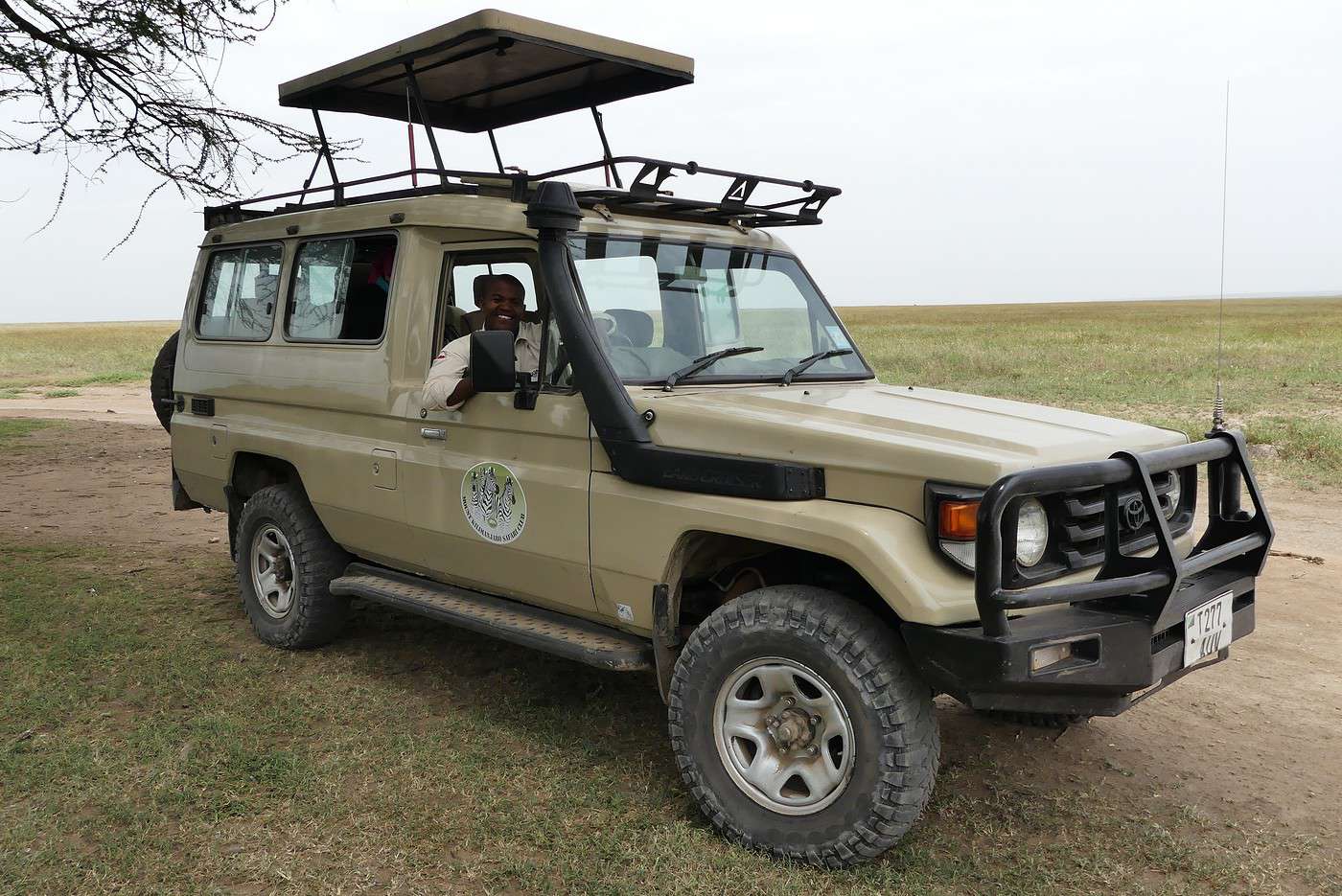
Next, I also wanted to share my dissatisfaction with Tony Crocetta’s famous camp, Melting Pot Safari: where to begin? We booked a private vehicle for four with two friends, and I have no complaints about the vehicle itself (though it obviously came at a cost). The windows and the vehicle weren’t very photo-friendly, but let’s move on. The trip between the sisters’ guesthouse (which was fine) and the camp went smoothly, except we arrived a bit too late. Result: "We’ll leave for the safari an hour later today because the driver has to respect his rest hours." Perfect—with park formalities, we only spent about an hour in the park that evening. The safari got off to a great start... During our 12-day stay, we saw some amazing things. Tony wasn’t at the camp—I don’t know what the atmosphere is like when he’s there, but it was rather cold during our trip. Sylvie, his wife, barely looked at us, never asking how our day, night, or game drive went (I think she spoke to us once during the stay, plus the day we arrived, of course). We felt invisible... (if I were mean, I’d say the money had already been deposited into Melting Pot’s bank account.) The evening meals, if I may say so, were a joke: not enough dessert (aside from fruit, but the few elaborate desserts—like 10 for 18 guests) for everyone, barely enough meat or sides. If you were unlucky like us and ended up with a group of 15 people who decided to skip the starter, you’d better hurry to get your main course, or there might not be any left—and no refills... We always ate our fill, but sometimes we had to serve ourselves in advance. Finally, I want to correct something about the quality of the meals: seriously, this buffet was really mediocre and far from the culinary standards I’d read about in my pre-trip research (see their Facebook page). Anyway, let’s move past the food—after all, the avocados were sublime, and we’re not there primarily to eat.

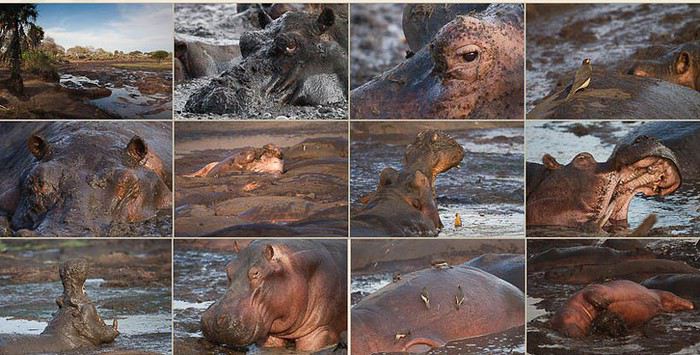
About the tent: the river views were beautiful, and the beds were very comfortable. No running water, individual showers outside the tent, and dry toilets—but it’s Africa, so we weren’t shocked. However, I’m disappointed that for this "modest" price, I wasn’t warned there’d be no soap (and no, I don’t travel with my own soap—and for the price, a little bar in the tent wouldn’t be a luxury). But let’s move on—the hippo views were fantastic. Oh, and to preserve the Masai Mara’s water (which makes sense) and for hygiene reasons, underwear isn’t washed by the camp staff—fair enough. But then what’s that little sign next to the bed? Oh right, for a hefty sum, underwear suddenly becomes "washable"...

Finally, my biggest gripe is about the essential part: the game drives. In France, they sell you a dream with a "photo safari" (what’s the difference, really? A room with a few more electrical outlets?). They promise guides especially suited for photography (not a given, sorry) and vehicles that can get close to animals and go off-road... but here’s the catch: the guides are bound by park laws and hounded by rangers looking to fine rule-breakers. Result: as soon as a white ranger vehicle is spotted, we have to abandon our spot for a wild chase through the grass. Fun once... The next day, we learned that another group’s guide got caught and had to pay $100 for breaking the rules—a sum he casually asked the travelers in his vehicle to cover... because of course, Melting Pot lures tourists with dreams, the poor rangers try to get close, all while breaking park laws... and they break those laws for Crocetta’s company, which, of course, won’t dip into its profits to pay the fines. Basically, it’s "keep the clients happy, but don’t get fined—or the fines are on you or you’ll have to ask the clients directly." Nice boss! Anyway, there were long discussions about this last year, especially among the guests in the fined vehicle. My partner and I found these practices unacceptable, and we were deeply disappointed by this attitude.

I know many people adore this park and/or this company—maybe you were luckier... or maybe you’re less demanding than we are when it comes to respecting rules, nature, and clients. But after traveling through much of southern Africa, I can tell you we personally came back frustrated from this experience and aren’t eager to return... You’ve been warned.
Dream, live, share...
SO Solene40 Globetrotter ·
Well, thanks for this realistic review, Claire. It really doesn’t make me want to go 😅. You didn’t mention the price you paid, but given the astronomical cost in general, we can imagine how hard the "pill" was to swallow 🤪. I’m just wondering why you posted this so long after. Have a good evening, Christelle
Le monde est comme un miroir, si tu lui souris, il te sourit aussi!
CH Chiarafont Regular ·
Because I never took the time to do it, quite simply! And a year later, I was thinking again about my need for Africa and unfortunately also remembering the things that went wrong for this trip... I'm such a travel-loving adventurer that I enjoy sharing my experiences and discovering those of others, other travel journals... Africa is pure bliss but also a real budget challenge, so if my post can be helpful to someone... but I understand if you'd rather form your own opinion! This is just mine :)

For info, we took the Simba Safari in the Masai Mara for 4 people for 12 nights, which came to a little over 3,200 € per person (including the Nairobi-Masai Mara trip as well as the night at Roussel Guesthouse on arrival and departure). See you soon! Claire
Dream, live, share...
PY Pygmalion19 Veteran ·
Hi Claire,

Thanks for the contradictory feedback—though it’s not the only one. Other travelers have had the same experience as you in the Masai Mara, but others haven’t. Personally, I think you’re right about the crowds, having seen the same thing in Ndutu and the Serengeti (Tanzania). As for the vibe at MPS, it’s hard to respond to your point, but it’s good to clarify that off-roading isn’t acceptable since it only increases the disturbance. This rule applies to MPS too, so they don’t get a free pass. If there’s a clear violation, it’s unfair that the game drivers end up paying the price.
pygmalion
PY Pygmalion19 Veteran ·
PS – I also notice that not everything in my experience was negative 😉. A few good memories all the same?
pygmalion
RJ Rjulie95 Globetrotter ·
Hi Claire,

Without wanting to stir up controversy, I have a completely opposite opinion to yours, and I’d like to share my perspective on what I experienced with them. I should mention that everyone (except self-drivers) goes off-road in the Masai Mara.

Regarding the fine, two situations came up during my stay:

Once, it was the clients who specifically asked the guide to stay when he wanted to leave, so they willingly paid the fine (which seems logical to me). Another time, the guide didn’t see the rangers, and MPS paid the fine, not the clients.

I’ll share my overall impressions once my travel journal is finished.
"Je suis africain, non pas parce que je suis né en Afrique, mais parce que l'Afrique est née en moi." Kwame Nkrumah.

"J'ai appris que le courage n'est pas l'absence de peur, mais la capacité de la vaincre." Nelson Mandela

https://www.en-voyages.fr
SY Sylvie56 Veteran ·
First of all, thanks to Chiarafont—her account really helps understand how this type of camp works. After that, everyone chooses based on their own tastes. We don’t all travel the same way. Personally, when I go to Africa, it’s not to spend every evening with a group of French people.......

The welcome from the "Lady of the place" reminds me of those Parisian hoteliers/restaurant owners who aren’t always the friendliest with tourists😉

Rjulie95 says: "everyone goes off-road in the Masai Mara" and that’s exactly the problem!!!!!!! Given how crowded the park is, it’s destroying it. How can people claim to care about conservation and still take part in that....... I just don’t get it. In the region, the Mara Triangle has set very strict rules and enforces them—it’s the only smart way, in my opinion, to have even a small hope of preserving the wildlife in that area. Sadly, it’s probably too late. You can always tell your guide you don’t want to go off-road. I don’t see the point in taking tons of photos of an animal harassed by dozens of vehicles. It’s also possible to visit Kenya in other ways than just going to the Masai Mara....
https://www.routard.com/forums/t/safari-au-kenya-en-quatuor-octobre-2025/481554/25?u=karen56 https://voyageforum.com/forum/kenya-hors-sentiers-battus-d9781073/ https://www.routard.com/forums/t/evasion-au-kenya-entre-deux-confinements/276792
RO Rotsaka Globetrotter ·
I completely agree about the off-track issue. It shocks me all the more because this is a major and extremely touristy park.

I haven’t visited the most crowded parks, but just once I saw a guy leave the vehicle in Kidepo to look for a lion after a kill. He didn’t find it but just scared off a flock of vultures that were waiting. Stupid and disruptive. I don’t understand it either.

That said, regarding the camp, it’s just one opinion, and we shouldn’t draw definitive conclusions from it. Maybe the owner was having a bad day, etc. In short, things can go really well with one person and terribly the next week...
BL Blesl Veteran ·
Good evening Claire,

Your disappointment shines through in every line—I’m so sorry for you and your husband.

For the overbooked Masai Mara, it’s still possible to find some solitude: ask the driver not to use the radio or phone and make your own observations, even if it means missing out on a few spectacular scenes. If that’s not enough, you could skip the Masai Mara reserves and do your safari in the "motherland," the Serengeti on the Tanzanian side...

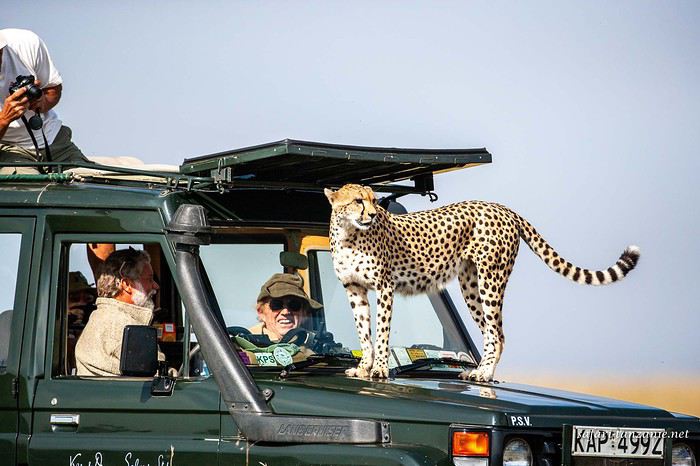
The sheer number of vehicles, if the drivers aren’t novices (and very few are), isn’t usually a problem for hunts—it’s even quite common for cheetahs to use the hood of a 4x4 as an observation post. That said, widespread off-roading is definitely a scourge for the soil, flora, and fauna. It should really be reserved for professional photographers and videographers. But drivers want to satisfy their safari-goers as much as possible, not just to guarantee a good tip—it’s up to us to curb their enthusiasm and not allow off-roading. Personally, I’d just regret that rangers don’t put the same effort into stopping cattle and zebu herds from grazing in the Mara reserves. The fact that these herds belong to their relatives, friends, or even themselves isn’t unrelated to their leniency, which is actually harmful to wildlife—depriving herbivores of food and pushing predators out of their territories or even poisoning them.

With MPS, we’ve had four entirely satisfying Kenyan safaris between 2007 and 2015. I recommend MPS whenever someone asks for my opinion. The vehicles’ adaptability for photography always seemed good to me—far better, in my opinion, than what open vehicles in Southern Africa allow. Based on my (admittedly limited) experience, MPS’s game-drive schedules are much better than what far more expensive lodges and camps offer. In particular, MPS’s pre-sunrise departures aren’t often practiced elsewhere. In that sense, reading Régis’s excellent travel journal is great advertising for MPS.

It’s very likely that if Tony had been there in person, the atmosphere would’ve been better and your experience less negative. Tony’s not just a friend—he’s very open and warm with everyone. You could try contacting him directly to share your constructive feedback. Logistics issues should be easy to fix.

I hope you and your husband still managed to add to your amazing photo gallery.

Have a good evening,

BL

safari photo en Tanzanie et ailleurs https://safari-tanzanie.fr WILIPI photographie animalière
CH Chiarafont Regular ·
Thanks to everyone for your feedback. I don’t know if I was just unlucky, but my disappointment was indeed huge.

Yes, I’m really upset about the off-roading in this park in particular. You can’t claim to be passionate about wildlife and then behave like that: surrounding a lioness just 20 seconds after she caught her prey? To me, that’s unthinkable. Honestly, the way the park operates disgusted me—it’s nothing more than a tourist factory. That makes the disappointment even worse when you know how magical the setting is! But because of that, I’ve sworn never to promote this park, which has gone way off track in my opinion...

I don’t know what it’s like on the other side of the border since I’ve never seen the Serengeti. But from what rangers and some guides have told me, certain big cats (cheetahs in particular) have changed their hunting hours because they’re so disturbed by safari vehicles! What a disaster for the animal world and the ecosystem... I won’t play that game, especially since the Serengeti is another (very expensive) world, from what I’ve heard...

True, the game drive hours with MPS are quite flexible, and I should’ve mentioned that—it’s actually a really nice perk. My review wasn’t even that thorough because I forgot to say there was no fire at the camp, which for me in Africa is nearly intolerable (especially for a camp of that size). And yes, they *do* have the infrastructure to make one—after I complained one evening, they lit one that night! But it was quickly forgotten for the next 10 nights, which is just sad (in the truest sense of the word)... Anyway, moving on.

Thanks Blesl, we came back with some nice photos, but far fewer than we’d hoped—though it’s well known that game drives are still just games...

I found it frustrating that Melting Pot Safari/Tony Crocetta uses closed vehicles, because it means photographers on the “wrong” side during a scene have little (or no) lateral movement, or have to shoot from above... with the bad angle that comes with it. What a shame for a photo safari that claims to be a specialist. A fully open 4x4 offers so many more possibilities.

I think in the end, a French-speaking camp full of photographers with egos bigger than their skills wasn’t really for me. A “wild” national park with lines of 4x4s wasn’t either...

It’s heartbreaking because the beauty and purity of Africa are truly unique in the world...
Dream, live, share...
RJ Rjulie95 Globetrotter ·
I even forgot to mention there was no campfire, which for me in Africa is almost unbearable (especially for a camp of that size). And yes, they had the infrastructure to do it since, after I complained one evening to a camp staff member, they made one that night! Quickly forgotten for the next 10 nights though—it’s truly disheartening (in the literal sense of the word)... Anyway, moving on.

Earlier, you mentioned biodiversity protection being supposedly ruined by "this tourist factory," but you find it abnormal that there wasn’t a campfire just for your personal comfort—wouldn’t that be a bit contradictory?

What I saw in this park, I’ve encountered in other African parks I’ve visited with high animal concentrations.
"Je suis africain, non pas parce que je suis né en Afrique, mais parce que l'Afrique est née en moi." Kwame Nkrumah.

"J'ai appris que le courage n'est pas l'absence de peur, mais la capacité de la vaincre." Nelson Mandela

https://www.en-voyages.fr
CH Chiarafont Regular ·
Fire seems to be an integral part of the African world, and as it's generally practiced on these lands (until proven otherwise), it's not particularly harmful to wildlife...

As for tourist factories, you can explore parks that have a deep respect for wildlife and where you won’t feel like you're in Disneyland (it’s well known that Kenya is *the* tourist hotspot for safaris—ask anyone on the street, and most will say Kenya and Tanzania without ever having set foot in Africa!). I’m talking about Zambia (North Luangwa NP, South Luangwa NP... stunning!), Zimbabwe (Hwange NP, the gorgeous Mana Pools, of course)... Even in more tourist-heavy parks like Chobe NP (Botswana) or KTP (South Africa), you’ll feel less like a tourist in the middle of a crowd. Just to be clear, I’m not judging—I know I’m a tourist too—but you *can* have a full safari experience without leaving too big a footprint on wildlife and while doing your best to preserve it...

I *highly* recommend the parks I mentioned (and there are others!), you’ll have an incredible experience!
Dream, live, share...
BL Blesl Veteran ·
Hi Claire,

I also really enjoy a good boma, even if the combustion does have a negative carbon footprint (I’ll skip over the microparticles—things aren’t yet critical in the parks and reserves, though they already are in big cities like Nairobi).

About your near-hatred of the Masai Mara, you explained the *why* well, but I think your experience could’ve been totally different with a more attentive and resourceful driver, a better camp atmosphere, more attention from the hostess, Tony or Simon being around, and more pleasant co-safarists—less full of themselves, less "superior" (especially since, looking at your photos on Instagram, it’s clear you were more than up to the task, even way better than that, but some idiots act like they own the place just because they’re "regulars" and pleased with themselves, even though there’s really no reason to be—thankfully, that species isn’t on the IUCN Red List, right?).

But I get it—no point rehashing the past, just like you won’t be going back to the Masai Mara...

Still, I’ve got a few points to soften your stance for the group.

If the Masai Mara is the favorite (photo) hunting ground for so many wildlife photographers and BBC filmmakers, there’s a very good reason: a concentration of big cats like nowhere else, even if the best years might be behind us. And this decline is more due to unfavorable climate conditions and, above all, the "encroachment" of the park by surrounding populations than to tourism excesses—even if those are very real—like overcrowding and not respecting reserve rules. Plus, the chances of seeing wildebeest crossings are better than in the Serengeti.

Last point, totally unbiased (Tony, same as usual—10% to the Cayman account), MPS isn’t cheap, but you’re not factoring in the value for money of their photo safaris. Sure, at the neighboring Governor’s Camp, you’d have had a decent buffet, and definitely no obnoxious French "Tartarin photographers" acting all arrogant, but instead well-mannered Anglo-Saxons (though I *did* manage to find one Neanderthal among them—rare, a once-in-20-years specimen) who are just as, if not more, interested in wildlife than in photography. But for a price four to six times higher and game-drive hours two to three times more limited.

One last thing—since we’re among friends and you won’t tell anyone—I’ll let you in on the safari lover’s paradise for those seeking tranquility. A national park covering over 4,000 km² with fewer visitors in a year than the Serengeti gets in a day! The world’s largest concentration of hippos! Crocodile dens! The biggest buffalo herds in the world! Entire days without seeing more than one or two other vehicles—or sometimes none at all! The Brits say it’s the best-kept secret in the safari world. So, shhh—don’t breathe a word to anyone about Katavi National Park (best visited in late summer), okay? Of course, every paradise has its downsides: it’s hot, *very* hot, *extremely* hot. And while there are roan antelopes, they’re very elusive. No cheetahs either. And worst of all, the beer is sometimes lukewarm. Oh, and last but not least, the prices aren’t exactly budget-friendly. But still...

Hope your post-safari days are going well!

BL

safari photo en Tanzanie et ailleurs https://safari-tanzanie.fr WILIPI photographie animalière
JE Jety34 Veteran ·
Good evening Bernard and everyone,

The Masai Mara is indeed being encroached upon by local herders who graze their livestock there, but it's important to know that this park—or rather, this reserve—isn't "National" but belongs to the local Maasai tribes, who believe they have the right to venture beyond its boundaries. This isn’t new; during my first two visits, I noticed this happening near the entrances back in 1974 and 1980—already! No clusters of 4x4s around the predators, no off-roading either, and only 2 or 3 lodges, barely more in the neighboring Serengeti and Ngorongoro. How many are there today—100, even more? We returned in 2018 under ideal conditions: Yolande for photography and me for contemplation (permission to leave the trails and wild camping = an amazing stay). However, we noticed that while the wildlife was still rich, it had significantly decreased. Birds weren’t very numerous due to the disappearance of insects, and tracks were everywhere. Yet, that still wasn’t enough for people—they encouraged their drivers to go off-trail to get as close as possible to the animals. On top of that, there were no longer any signs for orientation, likely to discourage "independent" visitors from exploring this sanctuary. The worst part was the intense poaching of cheetah cubs, captured to satisfy a stupid trend that’s turned them into pets in Gulf countries and elsewhere. Rangers struggle to stop this trafficking, but maybe they spend more time chasing off-trail rule-breakers instead???

We’re preparing a short report with a few photos from our trip for two, with a driver, an amazing Maasai tracker, and our photographer guide—to fuel the discussion, of course, and maybe make poor Claire a little envious. I get it; when the price is high, the organizer can’t afford to make mistakes.

Best regards, Jacky & Yolande.

"Do less to see more!"
Yol + D'Jack
RO Rotsaka Globetrotter ·
Thank you for this account and its historical depth, which sheds light on how things have evolved.

Regarding the herders' question, I share your views. I don’t know the details for the Masai Mara, but I’m much more familiar with Tanzania. I’d just add that the parks are still mostly on or in the middle of lands where herders graze their animals. Since they’re pastoralists, they move around and work with several ruminant species, so their environmental footprint is extremely low—even beneficial. Pastoral areas are actually much richer than agricultural ones. Plus, the Maasai and other local herders have lived alongside wildlife for centuries. Outside the parks, Maasai herders know how to coexist with animals just fine.

So I’m certain that most of the problems we see stem from, first, mass tourism reaching levels that will inevitably impact animals and ecosystems; second, non-tourism human pressures on the environment, like the expansion of farmland and settlements around park edges (which disrupt some domestic and wild migrations); and third, climate change altering previously stable balances. This should be addressed, for example, by limiting visitor numbers or easing pressure on certain areas with stricter measures. We also need to rethink the behavior of operators and tourists themselves, and ensure population growth doesn’t weigh as heavily on wild areas.

Herders are often blamed too easily and cheaply, since they’re the ones suffering from all this—their way of life and even their lands are slipping away.

When you see that in our own countries, we can’t even live with a few bears and wolves, and national parks usually allow human activities—including pastoralism—inside, it seems pretty unfair to say that herders in Kenya should just clear out of the parks for the sake of tourists.
BL Blesl Veteran ·
Good evening Din,

Here’s my take as a non-specialist who’s not well-informed:

Thank you for this account and its historical depth, which sheds light on how things have evolved.

Regarding the herders, I share your thoughts. I don’t know the Masai Mara situation in detail, but I’m much more familiar with Tanzania. I’ll just add that the parks are still largely located on or in the middle of lands where pastoralists graze their animals. Since they’re herders, they move around and manage multiple ruminant species, their environmental footprint is extremely low. In fact, the opposite is true—pastoral zones are far richer than agricultural areas. Plus, the Maasai and other local herders have lived alongside wildlife for centuries. Outside the parks, Maasai herders know how to coexist with animals.

You’re right—this is how things worked for hundreds of years: nomadic herders didn’t hunt, except occasionally to prove their courage or protect their livestock. They lived in perfect harmony with wildlife. The Maasai, rather than burying their dead, would even offer the remains to the savanna’s predators. And after coating them in fat—more eco-friendly than that, you’d die—well, no, that’s already been done... But that was before. Now, nomadism has been reduced to almost nothing by authorities, transhumance lands have been banned, and the Maasai have been driven out—including from Serengeti National Park—either forcibly or effectively settled. Other territories bordering the park were later off-limits to them, and until recently, vast areas were leased as hunting concessions to wealthy (are there any other kind?) Emiratis.

At the same time, their population has still benefited somewhat from medical advances and has grown sharply, but on much smaller plots of land. Their livestock numbers have increased and are less affected by epidemics. And even more so with rising living standards, which have allowed them to buy what they’ve always wanted: cows. Every dollar earned as a driver, tracker, or even ranger is quickly converted into cows... Sometimes, even the little land they were given as (very meager) compensation for the land grabs they suffered is sold to farmers, and the proceeds? You guessed it—converted into cows...

I’m certain that most of the problems we see stem from, on one hand, mass tourism reaching proportions that will inevitably impact animals and ecosystems, and on the other, non-tourism-related human pressures on the environment—like the expansion of agricultural and residential areas around parks (which disrupt domestic and wild transhumance), and climate change altering previously established balances...

I think tourism is more protective than destructive in this case. Without tourism and its hard-currency revenue, we can fear that wildlife conservation would drop to the bottom of government priorities. No more salaries for rangers, no more bans on exploiting park resources, etc.

This should be reconsidered, for example, by limiting visitor numbers or reducing pressure on certain areas with stricter measures. Also by reviewing the behavior of operators and tourists themselves. And by ensuring demographic pressure doesn’t weigh so heavily on wild areas.

A tall order, as the General would say!

Ideally, only scientists and a few other relevant professionals (who’d better behave!) should have access to these endangered paradises. But that’s unrealistic, at least for now. The truth is, if there are no more tourists, the parks and reserves will disappear quickly. Demographic pressure is growing exponentially, and only a significant rise in living standards will eventually slow it down. Tourism contributes to that rise. We’ve noticed that most of our drivers have only “a few” kids—two or three... Coincidence? I don’t think so.

Herders are being scapegoated and blamed too easily, since they’re ultimately the ones suffering from all this and seeing their way of life and lands slip away.

You’re right again—they’re victims, but even so, their current actions are often objectively harmful to wildlife, despite their best intentions. *Volens, nolens*, as they say... As for farmers, they’re monopolizing water resources, and not just for greenhouses...

When we see that even here, we can’t live with a few bears and wolves, and that national parks generally allow human activities—including pastoralism—within their boundaries, it seems unfair to say that herders should just leave Kenya’s parks for the sake of tourists.

You’re always right. It’s not about demonizing or blaming pastoral herders for all the problems—they were the first victims of the national park system, often brutally excluded from lands they’d used for centuries. But we have to acknowledge that the conditions and implications of their presence have changed, and we need to account for that. How can we do that while protecting their legitimate interests? Good question...

At our modest level, we can demand that our drivers strictly follow park rules: speed limits, no off-roading, respecting time spent near wildlife and distance requirements (a rule sometimes broken by the tourists themselves).

Food for thought, have a good evening.

BL

PS: I’m partly basing this on what we heard from one of the “relevant professionals” that Jack and Yolande know well. MDH has spent several months a year in the Masai Mara for the past thirty years and has observed significant degradation in the reserves, which he attributes to increasingly frequent and deep incursions by herds. This leads to grass resource depletion, disease transmission (rinderpest for livestock, rabies and distemper for carnivores), and the destruction of proven or potential predators, often through poisoning.
safari photo en Tanzanie et ailleurs https://safari-tanzanie.fr WILIPI photographie animalière
SY Sylvie56 Veteran ·
I share Jety34 and Rotsaka’s views.

Bernard says: I think tourism is more protective than destructive in this case. Without tourism and its inflow of hard currency, we might fear that wildlife protection would drop to the bottom of government priorities. No more salaries for rangers, no more bans on exploiting wildlife and other park resources, etc.

In the case of the Masai Mara, I completely disagree. Over the past few years, the number of camps has multiplied, and the number of tourists has become excessive. This reserve (which isn’t a national park) is poorly managed—just compare the Masai Mara with the Mara Triangle...

You’re always right. It’s not about demonizing or blaming pastoral herders for all the problems—they were the first victims of the national park system, often brutally excluded from lands they’d used for centuries. But we must recognize that the conditions and implications of their presence have changed, and we need to take that into account. How can we do this while protecting their legitimate interests? Good question...

In my opinion, we have no right to decide or intervene—it’s up to the local communities to find their own solutions. Foreign investors should just be reasonable and avoid setting up where they’re already too numerous... but business is business... Of course, we can support (mainly financially) projects led by local actors. For example, I’m thinking of the "Ewaso Lions" program in Samburu. Samburu warriors themselves educate their communities on the importance of wildlife protection and provide tools to avoid conflicts with wild animals. Educating the younger generations, especially girls, will hopefully help address the tough challenges these communities will continue to face: population growth, climate change, deforestation, drought...

At our modest level, we can demand that our drivers strictly follow park rules—speed limits, no off-roading, respecting time spent near wildlife and distance requirements.

Exactly—we’re back to the initial observations: Rjulie95 told us that "everyone goes off-road" and that it’s normal at Melting Pot Safari. How can a camp that once, if I recall correctly, promoted the protection of certain big cats not require its guides to follow the reserve’s basic rules? Isn’t this a conflict of interest?...

More broadly, it seems important that tour operators don’t mislead safari-goers into thinking they’ll see the same scenes in 10–15 days as in a Nat Geo documentary or take the same photos as professional photographers who spend months on location and have artistic skills most amateurs won’t ever have (and that’s fine!). No, just because you can afford nice gear and fancy destinations doesn’t mean you’ll take high-quality shots. That’s okay—it’s still a great personal memory, but it doesn’t justify going off-road. When I’m on safari, I’m passionate too, but I prefer choosing parks or reserves where sightings might be a little harder but where wildlife isn’t under tourism pressure. Fortunately, in Kenya (and elsewhere in Africa), these places are still plentiful. Teaching guests patience and respect for the environment should be a good guide’s top priority. In my humble opinion, if you love the Masai Mara even a little and want to protect it for future generations, you should discourage visitors from going there now (I know that’s not great for some people’s business... but it would also reduce the number of Maasai cows, since, if I understood Bernard’s reasoning—backed by MDH—they’re responsible for the reserve’s destruction... 😉)
https://www.routard.com/forums/t/safari-au-kenya-en-quatuor-octobre-2025/481554/25?u=karen56 https://voyageforum.com/forum/kenya-hors-sentiers-battus-d9781073/ https://www.routard.com/forums/t/evasion-au-kenya-entre-deux-confinements/276792
RO Rotsaka Globetrotter ·
Hello, I share some of the points and what you’re saying. While it can be a bit exaggerated at times, there’s truth in much of what you’ve highlighted.

On the topic of tourism: it’s clear that tourism also plays a role in protecting the environment and wildlife. That said, between no tourism and too much tourism, there’s a huge gap. It seems to me—and I could be wrong—that with what’s happening in the most visited parks (overcrowding and inappropriate practices), we’ve crossed into excess, which ultimately leads to lasting changes in biotopes, especially for wildlife. On top of that, there’s a "zooification" of these regions and the idea of safaris where people chase after "iconic" species rather than seeking to discover and protect nature. You *have* to see the Big Five, the river crossings, a kill… You *have* to see the big cats… It’s a vicious cycle that everyone contributes to, since both tourists and safari operators reinforce this increasingly narrow view of nature centered around flagship species.

Given this, personally, I’d maybe charge more for fewer people to enter these parks, reserving certain zones for professionals. Otherwise, limit the areas accessible to the general public at a still-reasonable price and restrict larger zones from mass tourism. In the end, the revenue would stay the same, and nature would be far less impacted. Plus, there should be stricter enforcement of rules and fewer exceptions granted—because with overcrowding, some exceptions are becoming the norm. But here, I’m probably being a bit exaggerated myself, and honestly, I don’t have a ready-made solution.

As De Gaulle said, "A vast program"—indeed, a vast program.

That said, while MDH attributes the problems mainly to herds, I don’t think that’s entirely objective, and I don’t find it fair. The Maasai I know, who live around the parks, are knowledgeable and respectful of wildlife. They live among it and regularly lose cows to predators. Yet, I’ve never heard of poisoning or other deliberate practices to destroy wildlife in these areas. On one hand, they’re pushed out by the parks, and on the other, they’re increasingly squeezed by farmers taking over more land. I’m not sure which objectively harmful practices you’re referring to. In the parks, I don’t know of any places overgrazed by herders. I also remember pastoralists who were forced to stay around Queen Elizabeth National Park in Uganda when their livestock was dying, even though the park had plenty of forage. It’s possible they were responsible for the lion killings that happened around that time, though no one was caught. Diseases already existed when herds were even more in contact with wildlife, and I wouldn’t want to remind anyone that rinderpest was brought to Ethiopia by Italian colonists.

What might need revisiting is this vision of animal protection that excludes humans from parks—a vision that doesn’t exist in our own countries but is easily imposed elsewhere through private actors, NGOs, and international institutions. This happened in Kidepo, where the Ik people were excluded and ended up lost in the surrounding mountains, far from their lands and cosmology. It’s happening with pastoral communities, Maasai and others, who often end up as the losers in a tourism industry they barely benefit from. Some might call this neocolonialism in this rather "detached" approach to conservation, and it’s a heated debate.

Farmers don’t just strain water resources—they privatize land, blocking both wild and domestic animal migration by closing off transhumance corridors and cultivating areas that were once pastoral and open to everyone. They also destroy the biodiversity of pastoral lands through monoculture and pesticide use, which isn’t the case with pastoralists. This land privatization is often the main reason for conflicts between herders and farmers in many African countries.

I don’t think we’ll be able to protect nature in the long run if we don’t also consider the interests of local people (and not just to be rangers or dancers in a cultural boma…). The coexistence of the Maasai with wildlife is real and still alive in several areas around the parks.

Okay, I’m straying from the topic and getting off track.

But I think tourism needs to regulate itself, too, and shouldn’t just ask others—especially pastoralists—to tighten their belts so it can keep racing toward ever more tourists.
JE Jety34 Veteran ·
Good evening Din,

Thank you for your insightful response about the issues related to wildlife and herders, and for sharing my comments, which are merely observations of helplessness.

This phenomenon is even more dramatic in a country like Ethiopia, where the population has encroached on all the parks, even the most iconic ones in the country, funded by UNESCO, such as Simien, Balé, Gambella, and others where a few endemic species still survive. You can feel that the battle for wildlife is already lost, and yet, there are no hordes of tourists here!

If authorities limit the number of entries by increasing prices, only the wealthy will be able to visit these sanctuaries—this isn’t really acceptable!

In your last sentence, I would’ve replaced the word "tourists" with "animals."

Best regards, Jacky.

"Do less to see better!"
Yol + D'Jack
RO Rotsaka Globetrotter ·
Too many tourists, too much encroachment by the surrounding population... Not enough animals anymore...

Nothing really exciting.

But sometimes, if I want a little boost of optimism or not too much pessimism, I like reading the annual reports from African Parks, a foundation that manages about fifteen parks in generally difficult areas and contexts. And from what I see, they’re getting some pretty decent results.

https://www.africanparks.org/sites/default/files/uploads/resources/2019-07/AFRICAN%20PARKS%20-%202018%20Annual%20Report%20-%20Digital%20-%20French%20-%20Final%20V3.pdf
BL Blesl Veteran ·
Hi Sylvie,

Interesting discussion, even if it’s a bit off the original main topic, MPS.

I align with Jety34 and Rotsaka’s perspectives.

Bernard says:

I believe tourism is more protective than destructive in this case. Without tourism and its hard-currency revenue, we might fear that wildlife protection would drop to the bottom of government priorities. No more salaries for rangers, no more bans on exploiting wildlife and other park resources, etc.

In the case of the Masai Mara, I completely disagree. In recent years, the number of camps has multiplied, and the number of tourists has become excessive. This reserve (which isn’t a national park) is poorly managed—just compare the Masai Mara to the Mara Triangle....

I stand by my point: if there were no tourists, there’d be no reserves left in the Masai Mara (including its offshoots and the Mara Triangle). From what I understand, the reserve is managed by the Maasai—unless I’m mistaken. Poorly managed? The deep incursions of livestock herds seem like clear evidence of that mismanagement. Good management would also mean limiting the number of new lodges and tourists, and ideally, partially or fully replacing "Western" tourists (and their equivalents, including Chinese 😉) with African tourists, along with smart (and creative, which I’ll come back to) enforcement of the rules.

You’re always right. It’s not about demonizing or blaming pastoral herders for all the problems—they were the first victims of the national park system, often brutally excluded from lands they’d used for centuries. But we must acknowledge that the conditions and implications of their presence have changed, and we need to account for that. How can we do so while protecting their legitimate interests? Good question...

In my opinion, we have no role in deciding or acting—it’s up to the local communities to find their own solutions. Foreign investors should just be reasonable and avoid setting up where they’re already too numerous... but business is business.... Of course, we can support (mainly financially) projects led by local actors. For example, I’m thinking of the "Ewaso Lions" program in Samburu. Samburu warriors themselves educate their communities about the importance of wildlife protection and provide tools to avoid conflicts with wild animals. Educating new generations, especially girls, will hopefully help address the tough challenges these communities will continue to face: population growth, climate change, deforestation, drought....

I haven’t made any proposals yet, but I 150% agree with you—the main answer lies in involvement, information, and education, *especially for girls*. Even though climate change is already here and will only marginally benefit from better education in Kenya (since the main culprits of ecological disaster aren’t in Africa), despite all the wood and charcoal fires lit there...

At our modest level, we can demand that our drivers strictly follow park rules: speed limits, no off-roading, respecting time spent near wildlife and distance requirements.

Exactly—we’re back to the initial observations: Rjulie95 told us that "everyone goes off-road" and that it’s normal at Melting Pot Safari. How can a camp that once, I believe, promoted the protection of certain big cats not require its guides to follow the reserve’s basic rules? Doesn’t that sound like a conflict of interest?...

How do you *know* for sure that the camp’s management doesn’t ask guides to follow the reserve’s basic rules? There’s no conflict of interest—in fact, it’s in their interest to pay minimal fines and maintain good relations with reserve authorities.

More broadly, it seems important that tour operators don’t mislead safari-goers into thinking they’ll see the same scenes in 10–15 days as in a Nat Geo documentary or take the same photos as professional photographers who spend months on location and have artistic skills most amateurs will never have (and thankfully so). No, just because you can afford nice gear and beautiful destinations doesn’t mean you’ll take high-quality shots. That’s fine—it’s still a great personal memory—but it doesn’t justify going off-road.

I 150% agree with you here too, even though, fortunately, not all tour operators take that demagogic and misleading approach—I know from experience.

When I’m on safari, I’m passionate too, but I prefer choosing parks or reserves where sightings might be a bit harder but where wildlife isn’t under tourism pressure. In Kenya (and elsewhere in Africa), thankfully, these places are still plentiful. Teaching guests patience and respect for the environment should be a good guide’s top priority.

Couldn’t agree more. How could anyone disagree?

In my humble opinion, if you love the Masai Mara even a little and want to protect it for future generations, you should discourage current visitors from going (I know it’s not great for some people’s business... but it would also reduce the number of Maasai cows, since—if I understood Bernard’s reasoning correctly, with MDH’s backing—*they’re* responsible for destroying the reserve... 😉)

Not at all. I recommend the Masai Mara to anyone interested in big cats who I think will understand the reserve’s delicate situation and act accordingly. If I didn’t know you were acting in good faith, I’d call this a straw man argument. After all, I’ve never said or written that cows are responsible for destroying the reserve. I’ve said—and I stand by it—that they contribute to the decline of large wildlife. Also, the phrasing "with MDH’s alleged backing" is awkward—it could make it seem like you might think I’m attributing an opinion to Michel Denis-Huot that isn’t his. I know Michel and Christine a bit—actually, more than a bit. We’ve met in Kenya and France at exhibitions like Montier, Le Havre, Latitudes Animales in Drancy, and at each other’s homes. We’ve shared meals in Samburu, Masai Mara, Montier, Drancy, and at our place. If you know them, you know Michel isn’t someone whose positions you’d dare misrepresent, right?

Best,

BL
safari photo en Tanzanie et ailleurs https://safari-tanzanie.fr WILIPI photographie animalière
BL Blesl Veteran ·
Hi Din,

Please excuse my use of *tu*—it’s a habit from my vet days, and *vous* doesn’t come naturally to me. I can switch to *vous* with you if you prefer.

Hello, I share some of the points and what you’re saying. While it may be a bit exaggerated at times, much of what you mention rings true.

Thanks. You’re right—on such a complex topic, any statement of just a few sentences can only be an oversimplification.

On the question of tourism: it’s clear that tourism also helps protect the environment and wildlife. That said, between no tourism and too much tourism, there’s a vast difference. It seems to me—and I could be wrong—that with what’s happening in the most visited parks (overcrowding and inappropriate practices), we’ve crossed into "too much," which ultimately leads to lasting changes in habitats and, in particular, wildlife. On top of that, there’s a "zooification" of these regions and the idea of a safari, where people chase after "flagship" species rather than seeking to discover and protect nature. You *have* to see the Big Five, the crossing, a kill... You *have* to see the big cats... It’s a vicious cycle that everyone contributes to, since both tourists and safari operators encourage this increasingly narrow view of nature focused on a few iconic species.

We’ve long known that any observer alters what they observe. And mass tourism has massive effects on the biosphere. In wildlife safaris, these truisms reach extremes: soil and flora degradation from vehicles, shrinking wild spaces due to excessive camps and lodges, water resource depletion (pools, showers), wildlife disturbances, and even indirect harm (aborted cheetah hunts, which, when repeated, can be fatal) or direct harm (like cheetah cubs run over in the Mara).

Given all this, personally, I’d maybe charge more for fewer people to enter these parks, reserving certain areas for professionals. Otherwise, I’d limit the zones accessible to the largest number of people at a still-reasonable price and ban mass tourism from larger areas. In the end, revenue would stay the same, and nature would be far less impacted. Plus, there’d be better rule enforcement and fewer exceptions granted—because with overcrowding, some exceptions become the norm. But here, I’m probably being overly simplistic, and honestly, I don’t have a ready-made solution.

Ah, now we’re getting to the heart of the matter. My turn to oversimplify. I certainly don’t have the expertise or knowledge to propose *The* Solution... But ideas? I’ve got those, even if they’re a bit out there...

Raising prices is one. Tanzania is known for a more elitist safari policy than Kenya, with higher fees and more expensive accommodations for equivalent (or even lower) quality. Botswana takes it even further. Is it enough? No! Beyond the unpleasantness of money-based selection, there’s a risk of reducing the resources needed to maintain parks and reserves if safari numbers drop too sharply. And there’s also the risk that attendance won’t drop much—or at all—because of the very wealthy and/or the arrival of non-Western "new rich"...

Impose time quotas? Limit safari-goers to 1 or 2 days in parks while keeping fees at the level of a multi-day stay. That’s what’s been decided for Ngorongoro Crater, where time is limited to 6 hours (in theory, at least).

For rule enforcement: apply fines without exceptions, set them at a dissuasive level ($500), and make the safari-goer—not the agency—pay. That way, drivers will have maximum pressure to comply. And for those who can afford it, for whom $500 is pocket change—like some safari-goers in camps charging $1500 per night per person? A safari license with points! 1, 3, or 6 points depending on the severity of the infraction. Too many points? No safari for a set period...

A vast program, as De Gaulle said—indeed, a vast program.

Still, while MDH attributes most problems to herds, I don’t think he’s entirely objective, and I don’t find that fair. The Maasai I know, who live around the parks, are knowledgeable and respectful of wildlife. They live among it and regularly lose cows to predators. That said, I’ve never heard of poisoning or other deliberate wildlife destruction practices in these areas.

Michel Denis-Huot is convinced that lion poisonings have happened (are happening?) in Masai Mara. He has well-established contacts with some Maasai.

On one hand, they’re pushed out by the parks, and on the other, they’re increasingly subjected to the arrival of farmers taking over more and more land. I don’t know which objectively harmful practices on their part you’re referring to. In the parks, I don’t know of any overgrazed areas by herders. I also remember pastoralists who had to stay around Queen Elizabeth in Uganda when their livestock was dying, while the park had plenty of forage. It’s possible they were responsible for the lion killings that happened around that time, even if no one was caught.

Indeed, the choice between starving with your family and livestock or harming wildlife comes down to necessity. It’s up to those who can to spare these populations from such choices by helping them—both in the short term and long term, especially through education, as Sylvie mentioned.

Diseases already existed when herds were even more in contact with wildlife, and I wouldn’t want to remind anyone that rinderpest was brought by Italian colonists to Ethiopia.

I’m a vet. But more people mean more dogs, more livestock. And *many* more people mean *many* more dogs, *many* more livestock...

What might need revisiting is this vision of animal protection that excludes humans from parks—a vision that doesn’t exist where we’re from, yet we easily impose it elsewhere through private actors, NGOs, and international institutions... This happened in Kidepo, where the Ik were excluded and ended up lost in the surrounding mountains, far from their lands and cosmology... It’s happening with pastoral populations, Maasai and others, who often end up as the losers in a tourism industry they barely benefit from. Some might call this neocolonialism in this rather "out of touch" approach to conservation—and it’s a heated debate.

I fear that coexistence between wildlife and local populations is no longer possible due to their rapid population growth and lifestyle changes (with new needs for disruptive infrastructure like roads, railways, and dams).

Farmers don’t just strain water resources—they privatize land, blocking both wild and domestic animal movements by closing off migration corridors and cultivating areas that were once pastoral and belonged to everyone. They also destroy the biodiversity of pastoral lands through monoculture and pesticide use, which herders don’t do. This land privatization is often the main reason for conflicts between herders and farmers in many African countries.

Wildlife indeed needs space—*a lot* of space—without artificial obstacles, barriers, or borders. The 52,000 km² of the Selous reserve are too little for elephants, which is why

a corridor linking it to Mozambique was allocated to them: the Selous Niassa Wildlife Protection Corridor, expanding their already vast territory by 42,000 km² (plus the corridor’s 17,000 km²).

This is one reason I doubt the long-term usefulness of "private reserves" spanning just a few dozen—or even a few hundred—km².

I don’t think we’ll be able to protect nature in the long run if we don’t also align it with the interests of local people (and not just to be rangers or dancers in a cultural boma...). The Maasai’s coexistence with wildlife is real and still alive in several areas around the parks.

You’re absolutely right.

But I also think tourism needs to regulate itself and shouldn’t just ask others—especially herders—to tighten their belts so it can keep racing toward ever more tourists.

Same here...

And The Arusha Manifesto by Mwalimu Julius Nyerere remains more relevant than ever:

"The survival of wildlife is a matter of grave concern to all of us in Africa. These wild creatures amid the wild places they inhabit are not only important as a source of wonder and inspiration but are an integral part of our natural resources and of our future livelihood and well-being. In accepting the trusteeship of our wildlife we solemnly declare that we will do everything in our power to make sure that our children’s grandchildren will be able to enjoy this rich and precious inheritance. The conservation of wildlife and wild places calls for specialist knowledge, trained manpower, and money, and we look to other nations to cooperate with us in this important task—the success or failure of which not only affects the continent of Africa but the rest of the world as well."

Best,

BL
safari photo en Tanzanie et ailleurs https://safari-tanzanie.fr WILIPI photographie animalière
MU Muriel18 Globetrotter ·
Hi Claire

I don’t have any opinion on Melting Pot Safari ... but thank you for the photos you posted on Instagram—they’re absolutely stunning!

And a big thanks to Bernard (Blesl) for sharing the link in one of his posts, because I’m not on Instagram and wouldn’t have thought to check it out otherwise. Muriel
Si tu diffères de moi, mon frère, loin de me léser, tu m'enrichis (Saint Exupéry)
BL Blesl Veteran ·
Hi Muriel,

Thanks for your (indirect, nobody's perfect) thanks, but it’s my pleasure. A real pleasure to share Claire and Sébastien’s amazing photos on Instagram.

And if we could also admire the best shots from their *Martian* trip, that would still be a pleasure!

Have a great day!

BL
safari photo en Tanzanie et ailleurs https://safari-tanzanie.fr WILIPI photographie animalière
TO Tonycrocetta ·
Hello Claire, Straight from the Masai Mara where, whatever you might think, life is good. I don’t usually frequent forums, and if I’m posting here today, it’s because I was "alerted" to this thread by some of my loyal safari-loving friends, whom I thank for the info. The feelings you describe about your stay with Melting Pot Safaris, and it’s absolutely your right to express them, are frankly atypical—even isolated—given the usual feedback we’ve received over the 13 years we’ve been in business. We’re more used to emails and messages that are downright glowing, often to excess, so you’ll understand why I was so surprised. I reread your posts twice in a row, imagining we were the victims of some conspiracy hatched by who knows what competitor. After the most thorough investigation possible (unfortunately, I couldn’t obtain certain details more than a year after your stay ended, but they aren’t the most important), I’m now able to respond personally. I want to make it clear that I’m responding to you specifically—I could share my experience on some of the issues mentioned in this post, which are linked to the Masai Mara and its management, but they have nothing to do with your original comments. So, you’ll grant me the democratic right to reply, which I hope will be as cordial and honest as possible, without dodging any of the negative points you raised in your three posts on this thread you started.

You’re exaggerating! You’re caricaturing things, presenting them your way—sometimes it’s justified, sometimes biased, incomplete, or inaccurate. The internet users who come across this can form their own opinion... by hearing the other side of the story.

"... such a highly touristy place!"

Yes, Claire, you’re right—the Masai Mara is highly touristy, that’s undeniable. But "touristy" shouldn’t be a dirty word used in the pejorative sense I sense in your writing. We’re all tourists—you, me, the traveling visitors on this forum—unless we were lucky enough to be the adventurers or explorers of the last century. This park is far too crowded, I’ll admit that and regret it every day during high season. The reserve’s managing authorities don’t limit the number of lodges, vehicles, or beds. That’s why, on the side but I’m sure you’ll be interested to know, we’ve decided to limit ourselves to 11 tents and a maximum of 20 safari-goers, even though we have the demand and clients to add 4 or 5 more tents without any issue. The trend is even moving toward upgrading and removing one or two tents. For info, you booked your special Mara safari for the first half of September 2018, from the 2nd to the 14th precisely, during the park’s peak season (along with August), due to the wildebeest migration and European holidays. That explains it. At other times, like January, March, April, June, and October, the crowds can be divided by 10... and it’s not even the rainy season (though it can rain year-round in the Mara). The Masai Mara is a victim of its own success, just like the Eiffel Tower and the Louvre... or, more relevant here: Ngorongoro Crater, Ndutu in the Tanzanian Serengeti, the Namibian dunes of Sossusvlei, South Africa’s Kruger, Victoria Falls in Zimbabwe, Uganda’s Kibale National Park where I once found myself with 24 visitors instead of the usual 8 in the middle of a chimpanzee family, or Chobe National Park in Botswana where it’s nearly impossible to photograph a herd of elephants crossing the river without boats or other 4x4s in the background. The world today is like that: fewer and fewer wild places for more and more visitors...

"I counted more than 50 vehicles"

Goodness! If your profile didn’t say you’re from Lyon, I’d have thought you were from the south. Unfortunately, some guides do whatever they want and surround animals, getting too close. The guide who was with you—I’m saying this after investigating, as you’ll remember—remembers that incident well and tried in vain to get the offending guides to leave, which you surely recall. It’s true, not everything is perfect in the Mara—who can deny that? Again, choosing a less crowded time doesn’t solve everything but does limit these kinds of horrors. For my part, I avoid certain areas like the plague when I know this might happen.

"We had booked a vehicle for 4 with two friends"

I’ll point out, though you already know, that your two friends—one of whom is also a mutual friend—never complained about their safari or anything related to our operation. He was even so satisfied with his first stay with us in January 2018 that he decided to return to show the Mara to his daughter... 8 months after his first trip, in the same year. It was actually your safari, and it was he who suggested you join them to make a group of 4. His daughter, who was in your vehicle, can’t wait to come back to the Mara.

"The windows and the vehicle itself aren’t well-adapted for photography"

That’s your opinion, and you’re entitled to it. For info, all our vehicles are Land Cruisers—certainly the best 4x4 for difficult terrain. They’re bought new and converted into safari mode with the best observation and photography conditions in mind (double opening roofs, panoramic and enlarged windows, extended cabins, etc.). If Land Cruisers weren’t "well-adapted," I think we’d have known about it by now. Many wildlife and landscape photography professionals have passed through our operation and bush camp for over 13 years now—I’ve never heard any of them complain about the shooting conditions. On the contrary, they praise them. That said, a window will always be too narrow... even though at MPS, they’re panoramic or, for the smaller front ones, designed to allow two telephoto lenses to pass through!

"we’ll leave for safari 1 hour later today because the driver has to respect his rest hours"

Well, yes, Claire, we’ve established rules and schedules to respect the work of our drivers/guides—because it *is* work. To reach the Mara from Nairobi, it takes an average of 5.5 hours of actual driving. Driving in Kenya can be dangerous, as you must have noticed: the matatus, trucks, speed bumps, potholes, the chaotic track of the last two hours—sometimes three if it’s rained—just before reaching the Mara. These conditions are grueling for our drivers; they deserve and have the right to necessary rest time. Besides, to remind you, we didn’t deceive you—here are the conditions you tacitly accepted when booking one of our safaris (you can check, it’s in your description/quote): "Photo safaris mean you’ll spend many hours in the 4x4. Keep in mind that, while it’s a vacation or leisure for you, it’s work time for our drivers/guides! Driving on rough, chaotic tracks is hard work that can affect your safety. Schedules are regulated. You’ll leave at 6:30 AM at dawn, as per Kenyan park and reserve regulations. The morning safari must return between 12:00 and 12:30 PM at the latest so we can organize meals (between 1:00 and 2:00 PM). The afternoon safari starts between 3:30 and 4:00 PM. You must be back at camp between 6:30 and 7:00 PM at the latest. In any case, drivers must have at least 3.5 hours of rest between the two daily safaris."

You spent 12 full days at our camp. Drivers/guides drive up to 9 hours a day on average! 9 hours every day for 12 days in your case! They all take naps during the hottest hours—otherwise, they wouldn’t last through a long season. I think that one hour you missed so much is negligible compared to the time you spent in the field. It’s certainly not pettiness on MPS’s part or an attempt to shortchange you—it’s about respect for a key player in your safari.

"The atmosphere was rather cold during our trip." "Sylvie, his wife, barely looked at us"

You must remember that my wife was present at your table during the first lunch and even across from you on the second or third day—it’s been a year, she’s not entirely sure. Are you really sure she’s the reason for the cold atmosphere you describe, which I’m hearing about for the very first time in MPS’s 13-year history? Clearly, there was no chemistry between you. You constantly compared the Mara negatively to your South African trips—almost everything seemed negative to you. Let’s just say, without going into details I’d rather not reveal here, that you "cooled" her enthusiasm. Similarly, you shut down your French-speaking driver/guide—known for his 20+ years of professionalism, humor, and French wit—by the second day. The atmosphere isn’t something MPS creates: we provide a structure and motivated, attentive staff—the rest depends on the safari-goers.

"The evening meals are, if I may say so, a big joke"

Again, this is the opposite of the general opinion you yourself mention. You question the quality and quantity of the meals. You’re entitled to your opinion—maybe your palate is more refined than the average safari-goer’s. Still, we’re quite the characters—limiting desserts to 10 when we have 18 guests! I’m not great at math, but if that were the case, we’d have 8 complaints like yours every night. There are always two desserts offered in the evening, plus fruit salad, which is standard at both lunch and dinner.

"If, like us, you’re unlucky enough to end up with a group of 15 people..."

If I understand correctly, every meal would be some kind of competition where the fastest could eat, and the last would only get crumbs. Okay, I’ll let you in on a secret: sometimes we get a huge, ill-mannered glutton who fills their plate to the brim... and doesn’t even finish it. Yes, it happens sometimes, like at any buffet in the world. That said, 15 people at once—we’d never seen that before! We have two solutions: either throw the oaf into the Mara River as crocodile food to teach them some manners... or implement Plan B! You must have noticed we have a steward, Samuel, who also serves and keeps an eye on food quantities. One of our two chefs is always on duty until the end of meals to address any shortages... and if there’s extra, there’s extra. You just have to ask. I’m still relieved you wrote that you ate your fill and didn’t lack anything... Phew! I’ll pass on your compliments to Samuel tonight.

"... I wasn’t told there was no soap"

Claire, when I read your post, I was in South Africa, in the Madikwe Reserve. I was staying at a very nice eco-lodge. So, I checked for soap! Goodness, I searched everywhere—under the bed, under the rug—but no soap in sight! Well, there wasn’t running water either. What’s soap without running water? Should I have screamed my dismay to the world, vilified the management, started a long rant on a specialized forum? Well, do you know what I did? No? I simply went to wash my hands at the outdoor tap. You must have noticed that 8 water points (aluminum containers painted green with a tap) are scattered around our camp—3 or 4 (depending on which side you were staying) are immediately available near your tent, and another at the entrance to the mess tent. They all have liquid soap. Here’s what’s written in the operating and safety regulations—a laminated A2 document you had in your tent, which we ask you to read carefully on arrival: "In each tent, a bottle of mineral water (now a thermos to reduce plastic), which you’ll refill yourself, a thermos or flask of disinfected water for brushing teeth and basic morning hygiene is provided. A water container outside is available upon request. Ask the steward to set it up if you’d like to use it." Claire, sincerely, if you needed soap, you just had to ask the camp steward. To be honest, you’re the first in the 11 years the camp has existed to mention this "soap problem"! That said, on this specific point, there’s definitely room for improvement. I ordered hand sanitizer bottles today—they’ll be available in all tents as soon as the supply arrives from Nairobi in two or three days. Yes, in fact, you just have to ask.

"for hygiene reasons, underwear isn’t cleaned" "Oh, but for a hefty sum, underwear suddenly becomes "cleanable"..."

This statement is false. Here’s exactly what’s written in the laminated internal regulations you had in your tent—I can send it to you or post it here if needed: "Clothing cleaning: To further improve our welcome quality, we offer the possibility of having your clothes cleaned at our camp. However, before using this (paid) service, keep this in mind: the camp doesn’t have a washing machine—your clothes will be hand-washed. It’s hard work! Water is difficult and expensive to bring to the camp. Also, think about the amount of detergent used... which will inevitably end up in the environment! Use this service sparingly."

To be thorough: The Maasai staff at the camp, all men, find it degrading to wash underwear. I can’t and won’t impose that on them. MPS doesn’t make money from the clothing cleaning service. What you pay goes entirely to a young woman who comes to the camp for that purpose. In the past, we offered this service for free, but some thoughtless guests took advantage by having their entire bag washed just before leaving. Finally, what you call a hefty sum is just a few cents in shillings or a few euros—the rate is much lower than a French laundry service. You should also know that in Southern Africa, lodges and camps generally refuse to clean underwear.

"they sell you a dream with a special photo safari (what changes in the end? A room with a few more electrical outlets?)"

No, Claire, we don’t sell dreams—dreams can’t be sold or bought! We sell photo or observation safaris with logistics, equipment, and services adapted for that. We organize photo workshops led by pro photographers, vehicles converted for the occasion, experienced guides, and extended hours that take advantage of the beautiful warm light early and late in the day. We ensure everything runs smoothly, though nothing is ever perfect—I spend my time solving problems daily. It’s this high standard of quality we strive for every day that makes us successful: we’re fully booked sometimes a year in advance, and for certain periods, almost systematically—give or take a few—5 to 6 months before each season. We sell safaris and nothing else, and if our 450 annual safari-goers associate them with a bit of dreaming, I can only be happy about that!

"guides particularly suited for photography (not obvious, my apologies)"

Again, you’re entitled to your opinion. I don’t claim to have trained our 6 Melting Pot guides—they don’t need me to understand photographers’ expectations, at all levels. In fact, training has come from each of their experiences over time. Remember what I wrote earlier: many wildlife professionals or semi-pros—some among the most renowned—come and return regularly to our operation. Maybe I’m not a great bush camp manager—that’s certain—but wildlife photography is my thing—trust me on that. Or, if you’d like, specify your criteria.

"vehicles that can get close to animals and go off-road..."

This statement is false, even misleading! Where did you read that? Show me where it’s mentioned! Here’s what’s written in the descriptive/quote document you approved when booking—check page 8, and it was also highlighted in red in the laminated document: "Only the vehicle driver can judge whether it’s appropriate to drive off-road. This should remain occasional. Don’t pressure them: they could be expelled from the park, pay a heavy fine, lose their license, and thus their job!"

All our drivers are autonomous and responsible. The one who guided you at the time was even completely freelance. They decide, not the safari-goers, and certainly not me. They’re the only ones in charge. I know off-road driving is a sensitive issue—I’m not dodging it—I’ll come back to it if you and other internet users want to know my precise position, which is also MPS’s. Everyone knows off-road driving is forbidden in the Mara... except that for a few hundred euros, you can buy an off-road permit, and then it’s not forbidden. But driving off-road never means destroying vegetation. You, who are a fan of South Africa and Botswana, I hope you’re just as outraged as I am when 4x4 vehicles in private or regional reserves crush dozens of "mopane" trees in dense bush to reach a leopard. At least that’s not the case in the Mara. I’m not saying it’s worse. I’m not saying it’s better. I’m saying nothing is perfect in the safari world. And to close this chapter for now, it’s not off-road driving that will destroy the Mara—believe me, it’s marginal—it’s the countless domestic herds grazing more and more of the reserve, slash-and-burn farming, poaching, drought, pesticides, poisoning of lions, vultures, hyenas, jackals, and others...

"because of course, Melting Pot lures tourists by selling them a dream, while the poor rangers try to get close, all while being on guard since they’re breaking park laws... and they break park laws for the pretty eyes of the Crocetta company"

The way you present "the Crocetta company" pejoratively is particularly condescending, hurtful, and offensive. You’re also misinformed—the family business you describe doesn’t exist! MPS was founded 13 years ago by my Kenyan guide and friend of nearly 20 years, Simon Chebon, and myself. 13 years later, we’re still the only two directors. Our wives have no decision-making roles. My wife helps with secretarial work and warmly welcomes (yes, really!) new safari-goers. She’s independent and involved in education programs in neighboring Maasai schools, built a library in the Mararianta village, and runs a native tree-planting program—over 1,300 to date. Please excuse us for creating a company that employs 46 people, all Kenyan, and supports probably 5 to 6 times more. And, incidentally, the Chebon and Crocetta families.

"Basically, it’s ‘keep the clients happy, but don’t take any risks—otherwise, it’s on you or you deal directly with the clients,’ nice boss"

What you’re writing here is false and defamatory. How did you come to this conclusion? Where or from whom did you get this idea? Ah yes, "other safari-goers from another vehicle who talked to their guide who casually said..." Know that if such behavior came to my ears, the guide would be severely sanctioned, even fired. MPS, whether you like it or not, pays its guides’ fines—whether official tickets (which are rare) or more often the bribes demanded by some rangers. I know, however, that sometimes there can be "arrangements" within a vehicle—this happens when safari-goers take advantage of their guide’s kindness. And if off-road driving bothered you so much, why did you accept it? Maybe, obviously, like all safari-goers who come to the Mara, to get shots in better conditions or that simply wouldn’t exist without it.

"there was no fire at the camp, which for me in Africa is nearly intolerable"

Claire, know that the Masai Mara ecosystem is mostly grassy plains—endless savannas. The rare gallery forests have been "pillaged" of their deadwood for decades—it’s now very scarce. Gone are the days when big lodges sent staff to collect truckloads of wood to burn in a few days. There are almost no insects in the Mara—the widespread use of pesticides on crops bordering the reserve, uncontrolled slash-and-burn farming, and the overuse of this deadwood are to blame. The Maasai now have to buy charcoal made far from their region to cook their food. Occasionally, we do have a campfire during a goat party or after dinner for digestifs—you just have to ask (without complaining, I assure you it’s really not necessary), but you understand we can’t do it every night. Kenya isn’t Southern Africa—the savanna and the bush aren’t quite the same.

"I found it a shame to have closed vehicles at Melting Pot Safari/Tony Crocetta, because it forces photographers on the ‘wrong’ side during a scene to have little (or no) lateral movement, or to shoot from above... with the wrong angle. Too bad for a photo safari that claims to be a specialist. A fully open 4x4 offers so many more possibilities."

Again, you’re comparing and projecting your Southern African experiences onto the Mara. I completely disagree. In the Mara, it can rain year-round, even in the dry season—sometimes torrential downpours that turn the savanna into a lagoon. A certain friend, Blesl, a forum regular, can confirm this. When that happens, the game drive is over—plasticized tarps with windows don’t allow for anything but waiting out the storm. Besides, our safaris and vehicles are itinerant—we offer Amboseli, Samburu, or the Rift Valley lakes, for example. In Kenya, it’s not allowed to drive outside parks with the kind of vehicles you know from Southern Africa. And if we had chosen the option like Governor’s Camp, which we respect, each safari-goer would have to add 350 € to the total price to pay for Nairobi/Mara/Nairobi plane transfers. Finally, from experience, I consider our "closed" vehicles much better suited for demanding photography—though, again, nothing is ever perfect, and constraints always exist.

"I think in the end, a French-speaking camp full of photographers with egos bigger than their heads..."

The 15 safari-goers who were with you last year will be happy to hear that—you see, I haven’t finished my investigation (not easy from here), and I’ll call them one by one to get their feelings about their safari, which ran parallel to yours. That said, I must be honest—we sometimes get, though not 15 at once, a few "photographers" with oversized egos, whose melon size is directly proportional to their telephoto lens length. I doubt this is unique to the Masai Mara or our camp—I encounter them in Botswana, Zambia, and Zimbabwe too.

My post is already quite long—I could say more, but I think I’ve been thorough and precise. Sincerely, Claire, I regret your feelings! This is the first time we’ve received such a barrage of criticism.

You’ve shared your opinion—I’ll share mine... You had the chance to spend 12 days in one of the planet’s most beautiful wildlife reserves—and you missed out on your safari. It’s a shame because the conditions you experienced were exactly the same as what we offer year-round—except maybe for the park’s excessive crowds during your visit, the time of the great migration that attracts visitors from all over the world.

The "failure" of your safari, according to you, if we summarize, is due to: Too many tourists; too many vehicles; average food quality; insufficient quantity; not enough desserts; not-so-great guides; unsuitable and closed vehicles; windows too narrow; co-safari-goers with oversized egos, ill-mannered and condescending; one extra hour of game drive on the first day; a free clothing cleaning service that also accepts underwear; a crooked and despotic boss with his staff; the boss’s wife more attentive to you and more concerned about your sleep quality; a campfire every night... or soap in your tent! Look closely—you’ll find plenty more, I have no doubt. If you look for flaws, you’ll always find them—they’re in every detail. Beware, the devil is sometimes hiding there.

No, Claire, allow me to say—and don’t take offense, it’s just my opinion, which is as valid as yours, and we’re debating cordially—your ruined safari isn’t due to your long, non-exhaustive list. What you missed most was a mindset and a philosophy. For the soap, I could always do something—but for that...

Despite our differences, I assure you of my full sympathy. I’m not a great traveler like you—I doubt we’ll meet again in the Masai Mara, but maybe we’ll cross paths in your favorite Southern African countries, where I also travel. The safari world is smaller than you think. I sincerely wish you beautiful travels, great photos, and the positive vibes that come with them. African greetings.
Tony
MA Masterpo Globetrotter ·
I’m coming across this thread just as the two reviews—easily described as contradictory—have been shared. As far as I’m concerned, that initial negative impression faded, though it still leaves me with one lingering question: how can a feeling differ so much from reality, especially when that reality is described with such talent and humor?

The mysteries of the human soul, I guess...
RJ Rjulie95 Globetrotter ·
Hi Masterpo,

Having stayed at this camp, I was really surprised reading this review—I had a completely opposite experience and one that matched what I’d been told :)
"Je suis africain, non pas parce que je suis né en Afrique, mais parce que l'Afrique est née en moi." Kwame Nkrumah.

"J'ai appris que le courage n'est pas l'absence de peur, mais la capacité de la vaincre." Nelson Mandela

https://www.en-voyages.fr
GE Gerarddelux ·
I'm really torn! Indeed, while Chiarafont's post is truly interesting for all the factual elements it contains (not to mention that this person and her husband have impressive experience with safaris and a photo portfolio that's well worth a look), Tony Crocetta's response—long and detailed—is quite convincing. Fortunately, amid this controversy with a somewhat commercial undertone, there are several very insightful contributions that broaden the debate far beyond just considerations about safari organizers. And that's what makes this thread more interesting than many others and why it's worth reading carefully—there are a lot of substantive points that go beyond the anecdotal and the purely touristic.

Personally, I've opted for safaris in southern Tanzania, where there are very few people and no specialized photographer camps (where the arms race and inflated egos seem to reign... not to mention the "who can pee the farthest" contest when it comes to zoom power or real—or self-proclaimed—photographic skill). The most vehicles I've seen at the same spot (just once, thankfully) was six, and only one other time was it four. The rest of the time, we were the only vehicle, and we'd leave if another one showed up. Of course, these safaris are a bit more expensive, but not *that* much more when you consider everything, since the extra cost is partly due to reaching these remote camps by bush plane. Anyway, I was wondering if I should check out Kenya someday; reading this thread has confirmed that I'm right to hold off. Reading between the lines, you learn a lot about the on-the-ground reality (maybe not with Tony Crocetta, but certainly with other camps). In 12 days, we're heading back to Ruaha and Selous—at least there, we won’t have to line up to observe wildlife in peace and for as long as we want.
ER EricClaude ·
Hello everyone, This post perfectly illustrates, for me, the paradox of our current society. We Western citizens want to satisfy our desire for elsewhere, other cultures, other landscapes, but we’d like our mass tourism to leave the cultures and landscapes we visit completely unchanged—even though (and it’s redundant to say) we’re a mass of people heading to these very places where we find that "elsewhere."

Naturally, a crowd flocking en masse to the same spots can’t help but leave traces during and after their visit. It’s regrettable, but that’s how it is, and nothing can change the consequences of these mass movements.

It’s time to rethink our society and change how we experience tourism.

Have a great day, everyone.

Hello everyone, .. I really wanted to express my complete disappointment with the Masai Mara and Tony Crocetta’s Melting Pot Safari, where we went last year. First, about the park: it’s stunning, no doubt about it. But what a highly touristy place! I can’t find the words to describe the horror of being among 30 4x4 vehicles lined up in front of a lioness’s hunt, let alone encircling her right after her kill while her prey is still alive in her jaws... no respect for wildlife. The same goes for surrounding a young leopard playing with its small prey, a moment when I counted over 50 vehicles, most of them leaving their engines running... disgusting. I turned away, both my gaze and my camera. What a disaster that this park, a natural wonder of Africa, has been turned into a tourist hotspot.

Yes, I loved this place on the planet, but no, I won’t "promote" it anywhere or to anyone.

Next, I also wanted to share my dissatisfaction with Tony Crocetta’s famous Melting Pot Safari camp: where to begin? We had booked a private vehicle for four with two friends, and I have no complaints about the vehicle itself (though it obviously came at a cost). The windows and the vehicle weren’t very well suited for photography, but let’s move on. The trip between the sisters’ guesthouse (which wasn’t bad, by the way) and the camp went smoothly, except that we arrived a bit too late. The result? "We’ll leave for the safari an hour later today because the driver has to respect his rest hours." Perfect. With the park formalities, we only spent about an hour in the park that evening. The safari was off to a great start... During our 12-day stay, we saw some amazing things. Tony wasn’t at the camp—I don’t know what the atmosphere is like when he’s there, but it was pretty cold during our trip. Sylvie, his wife, barely looked at us, never even asking how our day, night, or game drive went (I think she spoke to us once during the whole stay, plus the day we arrived, of course). We were invisible... (if I were mean, I’d say the money had already been deposited into Melting Pot’s bank account). The evening meals, if you’ll allow me to say so, were a joke: not enough dessert (except for fruit, but the few elaborate desserts—like 10 for 18 guests) for everyone, barely enough meat or sides. If you were unlucky enough, like us, to be with a group of 15 people who decided to skip the starter, you’d better hurry to get your main course, or there might not be any left. And since there was no refill... we always ate enough, but sometimes we had to serve ourselves in advance. I also want to correct something about the quality of the meals: seriously, this buffet was really mediocre and far from the culinary standards we’d read about in my online research before leaving (see their Facebook page). Anyway, let’s move on from the food—after all, the avocados were sublime, and we’re not there primarily to eat. About the tent: the views of the river were beautiful, and the beds were very comfortable. No running water, individual showers outside the room, and dry toilets—but it’s Africa, so we weren’t shocked by that. What I do regret is that for this "modest" price, we weren’t told there would be no soap (and no, I don’t travel with my own soap, and for that price, a little bar of soap in the tent wouldn’t have been a luxury). But let’s move on—the view of the hippos was fantastic. Oh, and we had to conserve water in the Masai Mara (which makes sense), and for hygiene reasons, underwear wasn’t washed by the camp staff, which I also find normal. But then, what’s that little sign next to the bed? Oh right—suddenly, for a hefty sum, underwear *can* be washed...
My biggest complaint is about the game drives. In France, they sell us a dream with a "photo safari" (what’s the difference, really? A room with a few more electrical outlets?). Guides supposedly tailored for photography (not obvious, my apologies), vehicles that can get close to animals and go off-road... but here’s the catch: the guides are subject to the park’s laws and are tracked by rangers looking to fine rule-breakers. The result? As soon as a white ranger vehicle is spotted, we have to abandon our spot for a wild chase through the grass. Fun once... The next day, we learned that the guide of another group’s 4x4 had been caught and had to pay a "modest" $100 fine for breaking the rules—a sum he casually asked the travelers in his vehicle to cover... because of course, Melting Pot lures tourists with dreams, while the poor rangers try to get close, all while being on guard since they’re breaking park laws... and they break those laws for the sake of Crocetta’s business, which, of course, won’t dip into its own pockets to pay the guides’ fines. Basically, it’s "keep the clients happy, but don’t get fined—if you do, it’s on you or you’ll have to ask the clients directly." Nice boss! Anyway, there were long discussions about this last year, especially among the passengers in the fined vehicle. My partner and I found these practices unacceptable, and we were more than disappointed by this attitude.

I know many people adore this park and/or this company—maybe you were luckier... or maybe you’re less demanding than we are when it comes to respecting rules, nature, and clients. But after traveling through much of Southern Africa, I can tell you we personally came back frustrated from this experience and aren’t eager to return... You’ve been warned...
SP Spiderweb ·
Hello, Could you be more specific about the vehicles and how easy it is to take photos? Do you have any photos of the vehicles used by MPS that you could share with us? Thanks!
RJ Rjulie95 Globetrotter ·
Hi Bernard,

In my travel journal, you’ll find photos of the cars—without the photographers and with a 😉
"Je suis africain, non pas parce que je suis né en Afrique, mais parce que l'Afrique est née en moi." Kwame Nkrumah.

"J'ai appris que le courage n'est pas l'absence de peur, mais la capacité de la vaincre." Nelson Mandela

https://www.en-voyages.fr
SP Spiderweb ·
Thanks, but I can’t find a tab about the Masai Mara in Kenya. I only see Tanzania, where I’ve been, and the vehicles there had open roofs that were really comfortable for taking photos...
RJ Rjulie95 Globetrotter ·
But did you read my travel journal? The cars are equivalent to those in Tanzania. https://voyageforum.com/v.f?post=9708890;#9708890
"Je suis africain, non pas parce que je suis né en Afrique, mais parce que l'Afrique est née en moi." Kwame Nkrumah.

"J'ai appris que le courage n'est pas l'absence de peur, mais la capacité de la vaincre." Nelson Mandela

https://www.en-voyages.fr
SP Spiderweb ·
Sorry, I logged into "en-voyages" by mistake... Attached is a photo of the Land Cruiser we used in Tanzania. Super practical...
RJ Rjulie95 Globetrotter ·
No worries, the advantage with MPS vehicles is that the rear windows are larger because the car is longer. Otherwise, it's the same :)
"Je suis africain, non pas parce que je suis né en Afrique, mais parce que l'Afrique est née en moi." Kwame Nkrumah.

"J'ai appris que le courage n'est pas l'absence de peur, mais la capacité de la vaincre." Nelson Mandela

https://www.en-voyages.fr
SP Spiderweb ·
Okay But I still don’t quite understand "chiarafont"’s comments about the difficulties of photographing from the vehicles! ("I found it a shame that Melting Pot Safari/Tony Crocetta uses closed vehicles, as it limits photographers who end up on the 'wrong' side of a scene—they have little (or no) lateral movement, or have to shoot from above with a bad angle. Such a shame for a photo safari that claims to be a specialist. A fully open 4x4 offers so many more possibilities.")

Thanks. A photo of Tanzanian cranes....
ZE Zezettedez Regular ·
hi especially since Asians are only just starting to arrive some countries are trying "high cost, low impact" but it's probably too late after handing out countless concessions to tour operators of all kinds maybe it's doable if they start from the beginning when the country opens up...
ZE Zezettedez Regular ·
hi one solution to be more "relaxed" in any wildlife park is to do it independently in a rental car, possibly with a Maasai guide when it comes to the Mara. It’s expensive, for sure, but at least when you see a cluster of vehicles, you can head off in another direction. Do you really have to "chase" the Big Five at all costs? I’m not familiar with MPS—is it run by a French person?
RJ Rjulie95 Globetrotter ·
As Tony mentioned earlier. It’s run equally by Tony and Simon, who is Kenyan.
"Je suis africain, non pas parce que je suis né en Afrique, mais parce que l'Afrique est née en moi." Kwame Nkrumah.

"J'ai appris que le courage n'est pas l'absence de peur, mais la capacité de la vaincre." Nelson Mandela

https://www.en-voyages.fr
RJ Rjulie95 Globetrotter ·
The only downside is that when you take a photo of yourself, you kinda "squish" the shot a bit because of the angle, but for capturing birds in flight, it’s absolutely amazing.
"Je suis africain, non pas parce que je suis né en Afrique, mais parce que l'Afrique est née en moi." Kwame Nkrumah.

"J'ai appris que le courage n'est pas l'absence de peur, mais la capacité de la vaincre." Nelson Mandela

https://www.en-voyages.fr
SP Spiderweb ·
Hmm! I'm not expert enough to appreciate that subtle angle shift of a few degrees!

Thanks Régis I booked with MPS for 2020....
RJ Rjulie95 Globetrotter ·
All that's left is to wait, that's the hardest part 😉
"Je suis africain, non pas parce que je suis né en Afrique, mais parce que l'Afrique est née en moi." Kwame Nkrumah.

"J'ai appris que le courage n'est pas l'absence de peur, mais la capacité de la vaincre." Nelson Mandela

https://www.en-voyages.fr
MI Michel85200 Globetrotter ·
Hello, I’m a regular on the forum but completely new to this part of Africa. Interested in a possible trip to your "neck of the woods." I followed this thread with interest. I found your reply really helpful and, all in all, very educational. Personally, though, I trust Régis’s opinion. Best regards,
michel85200
RJ Rjulie95 Globetrotter ·
Well, personally, I trust Régis’s opinion. Best regards

I’m honored 😏
"Je suis africain, non pas parce que je suis né en Afrique, mais parce que l'Afrique est née en moi." Kwame Nkrumah.

"J'ai appris que le courage n'est pas l'absence de peur, mais la capacité de la vaincre." Nelson Mandela

https://www.en-voyages.fr
SP Spiderweb ·
Me too. End of my posts on these topics!
KI Kimtwo Globetrotter ·
Thanks for your detailed report—I’m not in love with Africa at all, but of course I’m interested in it like any other place worth visiting. - .... - I completely agree with your criticisms.... I wouldn’t have enjoyed that spectacle either (is it really one?? or just visual cruelty???), and while I can understand that sometimes there are crowds gathered in front of a beautiful spot or a rarity.... (I live in Vietnam, so magical or rare places aren’t in short supply.. nor is the American West, which I’ve crisscrossed in every direction.....) I really wouldn’t have liked the lineup of cars at all...... -

Thanks again—have a great day—.... and good luck on your next trip... somewhere more appealing....

Best regards - Kimtwo..
Le vent et les turbulences sont l'oeuvre de Dieu, mais la voile et le gouvernail nous appartiennent..

Voyager c'est aller de soi à soi, en passant par les autres (proverbe touareg)
JA Jauss ·
Hi Claire, I just read your post/rant about the Masai Mara and, more generally, safaris in Kenya with great interest. We’re actually in the middle of planning a solo trip (just the two of us) to Kenya, like we usually do. We book our flight ticket and the first few nights at a hotel in the arrival city, usually the capital, and then we move around using public transport, taxis, or even a rental car when it’s common. Since we’re pretty familiar with—and especially fond of—Africa, we were thinking of spending a month enjoying Kenya, particularly its amazing reserves that everyone raves about. We started exploring Africa about ten years ago with Tanzania and the Serengeti-Ngorongoro-Lake Manyara trilogy from Arusha... we’re thinking of doing something similar in Kenya, obviously visiting several reserves.

My initial research from France, using the internet and other modern tools, has left me really puzzled, and your post, unfortunately, doesn’t make me feel any more optimistic. Back in the day, we weren’t exactly alone in the Serengeti—especially during our breaks with 5 or 10 4x4 vehicles to observe a sleepy leopard in a tree or a lion napping—but with the Masai Mara, it seems to be the absolute worst.

Even before reading your post, the sheer number of agencies of all kinds I saw online and in the Lonely Planet made me fear the worst, and you’ve just confirmed my initial impression. As for the price, I’m struggling to find any 4- or 5-night circuit for less than 1500 € per person... the last offer I got about three days ago was around 3300 € per person for 12/13 nights.

Before I keep digging from afar, it’d be great to get your feedback. First, I’d love to know if you think there are quieter, less crowded reserves outside the usual big names. I didn’t see much in the Lonely Planet... and on top of that, there’s the fear of scams, so my feeling is that for anything off the beaten path, word of mouth is the only way to go.

Another question: during your trip, did you visit Kenya outside the reserves, and how did you find the rest of your journey, aside from your—let’s say—less-than-happy experience in the Masai Mara? If you have any other details that could help us out, we’d love to hear them. Thanks in advance for your reply! Best regards,

Dominique
ZE Zezettedez Regular ·
hey kimtwo not a fan of Africa, have you been there? it’s a continent like Asia and isn’t limited to the Masai Mara or even Kenya plus, there’s safari and then there’s safari when you decide to join a tour operator, you have to accept the downsides, like being in a vehicle with others, knowing the vehicles are radio-linked, and that as soon as an animal is spotted, it’s a free-for-all for the photo of the century there’s a way to do it differently as an individual, but it’s more expensive, and you can’t blame people who’ll only go once and have been sold the dream of seeing the Big Five that’s where the fierce competition between guides comes from, because in the evening, tourists compare what they’ve seen so this image of Africa is awful, but it’s not all there is you’re in Vietnam, and I think you get the same impression, except it’s not around animals that people crowd...
ZE Zezettedez Regular ·
hi dominique I’m not clear but I read your message Here everyone only talks about the Masai Mara but there are lots of other very famous reserves Tsavo, Nakuru, Amboseli, and others maybe less so Shaba, Mount Meru, Mount Kenya, Sibiloi, Marsabit If you’ve got the means, renting a 4x4 with probably a driver at least for the north, not going during European holidays, and camping lets you do what you want—turn around if there’s a crowd of vehicles And then there’s Mombasa and its Portuguese past The problem in safari countries is that if you use public transport, at some point you’ll have to go through a tour operator for the national parks, and you end up with the same issues valerie
ZE Zezettedez Regular ·
hey claire when you're a "seasoned traveler," you don’t go with tour operators—especially French ones—or else you accept the lack of privacy with fellow countrymen you don’t necessarily want to run into at the other end of the world. valerie

Similar discussions

You might also like