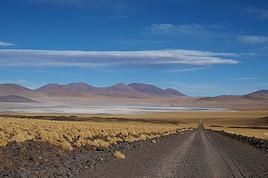
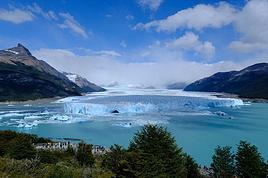
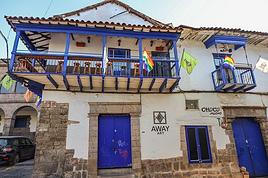
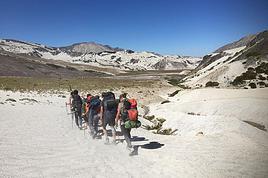
Euh, pas si rare que ça... On a fait cette expérience à San Pedro de Atacama en Mars 2001 (trois soirs et trois fois trois gros orages vers les 5h du soir). Avec les rues en terre du village, c'était la gadoue partout !
Bon, à Antofogasta, ça doit être plus rare qu'à San Pedro.
Je n'ai pas trouvé de sites Internet indiquant les hauteurs de précipitation dans le désert d'Atacama
Anne-Marie & Christophe
Site perso (carnets et photos de voyage) : www.amvdd.fr
ici, cela fait 5ans qu'il n'y a pas eu de pluie mais ce n'est pas la raison de ce post.
J'ai pas trouve les endroits encore mais voila un exemple pour ceux que cela interesse :
Une fois par 10 ou 12 ans, selon les quelques gouttes de pluie qui l'abreuvent, le désert d'Atacama se pare d'innombrables fleurs mauves... jaunes... blanches... Jean a eu la chance de traverser le désert justement à ce moment magique de floraison. http://wwwalk.org/PHOTO_PAGES/PHOTOS_PAGES03/03p0009.html.
Mais tu es fou!!!! La route pour Calama, enfin je connais pas beaucoup car g fait Santiago Calama en avion, ais si tu vas ensuite en vélo sur San pedro de atacama, tu risque de mourrir... Y'a pas un village entre les deux villes, la route monte... A mon avis, part pas seul (le téléphone portable ne passe pas!!!) prends bcp bcp d'eau ...
Bon courage et évite de rouler l'aprem car il fait trop chaud!!!!
Phénomène rare que j'aurais bien voulu voir la lune dernière, parce que j'en avais entendu parler dans le recueil de petites histoires de Sépulvéda qui s'appelle justement "Les roses de l'Atacama", et qui décrit exactement la chose, rarissime, et magnifique.
Je crois que malhereusement, le spectacle ne dure que quelques jours. Juin, c'est dans longtemps. Peut être que finalement, tu devrais aller à San Pedro cette semaine pour ton visa, au lieu de BA. Je t'avais dit que c'était une sacré expé, mais renseigne toi sur les bus, on ne sait jamais. Si tu vas à BA, passe le bonjour à RG, et je te souhaite meilleur temps qu'ici, àTucumán!
Non, c'est jouable! Il y a cent bornes. Une journée en vélo. J'ai moi-même failli le faire, mais finalement, j'ai opté pour le stop. Il ne fait pas si chaud en vélo, car il y a le vent relatif. De plus, cette route est entre 2500 et 4000 tout le trajet, donc plus froide. Evidemment, prendre beaucoup d'eau et de bouffe, mais ne pas oublier que la route est relativement fréquentée (un trafic toutes les dix-quinze minutes environ), donc si il y a vraiment un problème, il y a des gens.
Rembourseb: si tu passes à Calama, vas visiter la mine de cuivre de Chuiquicamata, c'est réellement impressionnant et très intéressant.
Ci-dessous, un extrait de la page de mon voyage:
Je renoue donc avec le stop, et me dirige vers Calama, la grande ville la plus proche, a 100 km a vol d'oiseau, et a 101 km par la route (ici, les routes sinuent peu). De la, re-stop, pour aller visiter la plus grande mine de cuivre a ciel ouvert du monde, la mine de Chuquicamata. La visite est courte mais aussi impressionnante que passionnante. A voir cet enorme trou beant dans la Terre, cette plaie supurant l'acide sulfurique et les vapeurs de soufre, la premiere question qui vient a l'esprit est: "est-ce bien raisonnable?", puis "a-t-on besoin de tout ce cuivre?" puis "et d'ailleurs, a quoi sert le cuivre?". Evidemment, les applications sont aussi variees, que nombreuses, que necessaires. Mais desormais, quand j'acheterai un truc a base de cuivre, je saurai quel en est le prix ecologique de son extraction et de son traitement. Voici maintenant quelques chiffres, qui font peur:
La mine produit chaque annee presque une megatonne de cuivre, soit 12% de la production mondiale, et environ 30% de la production chilienne (Le Chili produit a lui tout seul presque la moitie du cuivre mondial). L'extraction, malgre le cout exorbitant de la main d'oeuvre (1600$ en moyenne, tres bien payee et affluant de tout le Chili pour venir travailler ici, 7000 employes), d'exploitation (500 Mw.h de consommation electrique, et 14% de la consommation nationale de carburant, 83 camions de 330 ou 360 tonnes coutant chacun 3 millions de dollars, dont les six pneus de trois metres de diametre coutent 30 000 dollar piece, et qu'il faut changer tous les six mois), permet a la compagnie de degager chaque annee plus de 3 milliards de benefices. Pour une livre de cuivre vendue 1.54$, le cout total d'extraction est de 43 cents.
La mine mesure 4.5 km de long, 3 de large et 850m de profondeur. Les 83 camions remontent 24h/24 la terre a la surface. Tout autour de la mine, de veritables montagnes artificelles ont vu le jour depuis l'ouverture du site il y a plus d'un siecle. Pour creuser ce trou, il a fallu deplacer toute la terre qui est a l'interieur, logique, non? Cours de college: volume d'un cone? Prenons un rayon moyen de 1.8 km, on a V = 1/3xpixR2xh = 2.88, soit presque 3 kilometres cubes. Rellement impressionant. Ces camions font donc des allees et venues incessantes, 24h/24 7j/7, dans un chaos apparent de trajectoires. Mais tout est controle par systeme GPS temps reel (suivi de flotte), et les 10 points critiques du reseau (croisements ou autres) sont passes en toute securite grace a ce systeme d'information. La base de donnees topographique est integree dans ce systeme, mais, du fait de ses continuelles modifications (extraction et mouvements sismiques), elle est actualisee toutes les deux semaines. Ici, l'espace est represente a nouveau par la technologie la plus avancee, finie la geantropie et ses idees de subjectivite. Lorsque des vies humaines sont en jeu, on revient a l'exhaustivite, l'objectivite et la fiabilite de l'information, devrait-elle meme en perdre toute poesie. Mais quelle poesie dans cette plaie? Il faut au moins un Neruda pour reussir a sortir du poetique de ce materiau hostile et de ce lieu infame. "J'ai vu le cuivre a Chuquicamata..." et je ne connais pas la suite. Les conditions sanitaires du lieu sont des plus defavorables, dixit un expert en environnemant mandate pour proposer une solution d'amelioration de la qualite de l'air au fond du gouffre, et qui a eu la bonte de me prendre en stop et de me conter tout ca, chose que je n'aurais jamais apprise si j'avais voyage en bus.
Le lendemain, retour en stop a San Pedro Atacama, et tentative de stop pour aller jusqu'en Argentine. Ce fut le debut d'une autre aventure, a suivre...
Ben bon courage pour le vélo, car j'ai fait juste 40km en janver dernier (c'est vrai c'était le pleinété, je te l'accorde!!!) entre San pedro de atacama et la vallée de la Lune, et c'était trop mortel, car mine de rien, ça monte doucement, mais force ça tue!! Même avec ma copine, c'était pas facile, surtout pour elle mais moi aussi... Plus jamais...
Ensuite, c'est vrai qu'on a pas fait CHUQUICAMATA, mais on a été sur Iquiue, eau de l'ocean troooooooop froide (je suis habitué aux Antilles, à 28°) et n a été sur le village fantome de Humberstone... C'était très sympa, mais vu que ma copine est chilienne, ça facilite les négociations de taxi et autres...
Surtout que j'y retourne dans 3 semaines pour y passer 12 jours, mais on va sur Bariloche, en Argentine, tu connais? Cest près d'un lac en montagne je crois...
ouiai je suis bien rentre dimanche, merci.... il ne pleuvait pas trop......
et pour finir je suis quand meme a buenos aires..... j ai pris contact avec l ami RG, et je vais le voir..... et ici il fait frais, moins qu a tucuman car il y a du soleil!
On peut avoir quelques information sur les pluies dans le desert d'atacama sur le site de la meteo chilienne, en espagnol bien sur, a l'adresse suivante : www.meteochile.cl
Je prévois un second voyage entre le nord du Chili et le NOA (en 2016) mais je souhaite impérativement éviter la saison des pluies. Lors de notre premier…
Comment est la pluie en février mars en patzgonie? Pluie fine continue ou grosses averses? Cape de randonnée? Problème vent force 4 ou 5? Merci pour votre…
Climats et météo › Pérou / Bolivie / Chili · 3 replies
Je commence doucement à préparer un voyage en Amérique du Sud d'une durée de 8 mois au Pérou, Chili et Bolivie. Ma question a déjà été posée à plusieurs…
Je suis un peu perdu dans cette masse di'nformation concernant le climat de la Cordillère des Andes. Je voudrai aller du pérou à Ushuaîa à vélo l'an prochain,…
Je compte me rendre au Chili. Novembre est il un bon mois (je ne sais pas encore si je vais vers le sud, le Nord ou le centre)? Est ce la haute saison? Il me…
Hi! I’m on vacation from 10/31 to 11/7 and want to go somewhere sunny. I’m leaving from Toulouse and the flight can’t be more than 5 hours.
Any ideas?
Thanks for your help
We want to do a few safaris, visit villages, the mountains, see tea plantations, etc. But we also want to see turtles. We love snorkeling but aren’t experts—we’re just happy to see colorful fish and coral. We’ve always wanted to see turtles too, so the idea is still to see *something* underwater 😊
Can you tell us which regions to prioritize and which to avoid given the climate at this time of year? Thanks a million!
Hi,
We're leaving on June 19th for an 8-day road trip in South Iceland. I've heard that even in summer, it's cold and the weather can change several times a day. Should we mainly pack winter gear, like a K-Way, fleece, down jacket, beanie, etc.?
For those who’ve experienced it, what’s the weather like in Shanghai at the end of December?
I’ve heard it’s cold, but coming from France, is the winter milder than in Lyon, for example?
I’m tempted to spend the Christmas holidays in Shanghai and the surrounding areas (Nanjing, Suzhou) with my family—kids are 11 and 2. It’d be a bummer if the little one catches a cold over there.
Generally, is this a good time for simple family visits to the main spots, restaurants in the city, indoor heating, and outdoor walks?
Hi everyone, I’m planning a trip to Mauritius—anyone have advice on when to go? I’m thinking April, May, or June for my stay. Which month would you recommend for the best beach weather, sunbathing, and exploring the island? Thanks!
Hi,
we’re planning to travel through Patagonia (Chile and Argentina) in February and March 2027.
From a seasonal and weather perspective, at that time of year and with hiking as our main activity, is it better to explore Patagonia from south to north or the other way around?
Thanks in advance.
Anne Marie
I’ve planned a three-week itinerary for this summer, from August 9 to 27, in Sri Lanka:
Negombo – 1 night
Sigiriya and the Cultural Triangle – 4 nights
Kandy – 2 nights
Ella – 3 nights
Tangalle – 6 nights
Colombo Airport – 1 night
I know this isn’t the ideal time for the south since the beach conditions aren’t great, but we’ve booked a hotel with a pool and won’t be swimming in the sea. We want to relax after all the travel since we’re bringing our two kids, aged 6 and 8.
I know the east would be better, but (i) I’m struggling to find suitable accommodation, and (ii) it adds a lot of travel time, and my kids can only handle about 3 hours at a stretch.
I looked into Arugam Bay, but it’s a 7-hour trip back to Colombo from there.
I’ve checked every weather site imaginable, but they don’t all agree. Do you think we’ll spend our whole trip in the rain, or is the monsoon in the south mostly limited to the sea, as I’ve read?
I’m worried about ending up in the middle of a natural disaster with my two young kids, given recent events.
hi
After reading quite a few posts and buying a guidebook, I’m still struggling to finalize my suitcase.
Given that we’ll be visiting both islands during our road trip and suitcases aren’t exactly expandable,
I’ve noted that temperatures can be changeable—but should I pack more winter clothes than summer ones?
Thanks for your help
We’ve decided to go to Skopelos for 2 weeks at the end of April. What kind of weather should we expect? Any special things to know about this remote island?
Thanks for your tips
Hi there. On my itinerary from São Luís to Jericoacoara, I’ll be passing through the Lençóis. Is there any point stopping there this time of year? Apparently, the lagoons are dry, but aside from the lagoons, is the surrounding landscape still interesting enough to warrant a 1- or 2-day stop? Thanks in advance for your help.
Hi,
We’ve booked our flight tickets and we’re leaving from October 29th to November 13th for Mauritius.
I just reserved our accommodation in Cap Malheureux.
We’re used to hot and especially very sunny destinations like Oman, Jordan, Uzbekistan...
If you can reassure me about the period—can we expect sunny weather? I’m really dreaming of discovering Le Morne Brabant under beautiful sunshine...
Thanks
Hi everyone,
I need to go to Sri Lanka at the end of January.
I’ve seen that many roads, hotels, and parks were closed after the cyclone, which unfortunately caused a lot of damage.
Does anyone have more information?
Would it be wiser to postpone our trip?
Thanks, Alain.
Hi,
I’m planning a trip to Oman, probably the first half of February to avoid the extreme heat and Ramadan.
But after checking various weather sites and reading accounts, I’m a bit worried about rain, which can apparently be frequent and heavy in February. I’d love to hear from travelers or locals who’ve been there recently.
What would be the ideal month to explore Oman without extreme heat or rain? November?
Also, it’s best to avoid visiting the wadis on weekends—does that mean Saturday and Sunday?
This year, 2026, I can only get away in April and May. I never travel during these months usually, and from what I know, they aren’t the best for India. But in such a big country, there are always spots that are better than others weather-wise.
Which region would you recommend?
Given that I’ve already traveled quite a bit in this country, and in any case, I’ll be discovering places I don’t know yet. No need for a major tourist hotspot or luxury comfort.
Hi everyone,
We’d love to return to India next year for 3 weeks (we visited Rajasthan about fifteen years ago). Unfortunately, we’re tied to traveling in September, and our initial plan was to explore Himachal Pradesh. However, it seems like that might not be the best month for this region.
Could you share your experiences from that time of year in Shimla, Manali, Dharamsala, or even the Spiti Valley—in short, anywhere in Himachal Pradesh? Otherwise, which region of India would you recommend for a September trip?
Thanks so much!
Hi everyone, I’m planning a trip from mid-January to the end of February but I just can’t make up my mind 😕
I’ve looked into a few different options: Brazil, Cambodia, and Ecuador. The last one really appeals to me, but what’s making me hesitate is the risk of our trip being a bit too rainy (literally ),
We’re more drawn to the Andes, exploring colonial cities, typical villages, markets, and a bit of the coast. We’ve already gotten a taste of this in Bolivia, Colombia, and Chile. Plus, we’d love to do part of it by car since we’re used to driving at our own pace and stopping whenever we feel like it. Anyway, time’s running out, and I need to decide so I can finalize a route and book the tickets!!
Can anyone help me make up my mind or decide to postpone it for later? But for this year, I don’t have any other time slot to travel. Thanks for reading this far! !
I’ve planned a trip to Asia for the first half of November.
I’ll arrive in Singapore at the start of November for about 3 days, and I’ll leave from Bangkok in mid-November.
In between, I’d like to gradually head north to visit some less touristy islands on the Thai coast.
Since the weather is a big risk during this period, I’d love to hear your recommendations.
I’m looking for: sunshine, snorkeling, beaches, nature / jungle in places that are easily accessible without too much transport to make the most of my trip.
Hi there,
We’re planning a trip to Chile this coming August and would love to head down to Chiloé. We’ve heard that as we go further south at this time of year, the weather gets pretty rough.
What’s the weather like in Chiloé in late August/early September? What activities can we do? And which ones become really tricky because of the weather?
Thanks in advance for your tips!
Marie
So great to be back on this forum after being away for—I don’t even know what!
I’m planning a trip to Malaysia in July with my 5-year-old son. The thing is, I’m not sure which coast to choose. AI keeps telling me east one minute and west the next. Which spot is least affected by rain during this time?
Hey everyone! 🙂
Just giving you the quick context: A group of friends and I are planning a trip to South Korea (Seoul/Busan) at the end of June/July next year. It falls right in the middle of the monsoon season, but we don’t really have other availability options.😕
I’d love to hear from people who’ve visited the country and these cities during this period—basically, is it not as bad as it sounds, or should we just cancel our tickets (we don’t mind the heat, it’s mostly the rain that scares us).
I know there are plenty of indoor activities, but do you think we’ll still manage to get a few sunny days, or will it be torrential rain for our entire 2-week trip?
The only other country we’ve visited during the rainy season is Brazil (in the northeast) around the same time, and honestly, aside from a few really annoying downpours, we had sunshine most of the time and it was awesome. That said, the climate is totally different, so I’m not sure how relevant the comparison is.
Thanks in advance to anyone who takes the time to read or reply to this post! 🙂
Hi everyone.
Not sure if guidebooks, agencies, and other tour operators are keeping up by changing their visiting hours and offerings.
Personally, I see a promising opportunity here—jumping on this adaptation to extreme climates before others do, since they’re inevitably coming.
From my own travel experience, I’ve met a few guides so far who are starting to adjust, like in Egypt, Kenya, Senegal, and elsewhere.
They avoid crowds and the hottest hours by starting their tours around 6–7 AM, when it’s cooler.
Yeah, you’ve gotta wake up early, but the payoff is so worth it. 😴
If you’ve got any great tips like this, why not discuss them in this thread and share addresses or websites where the people in charge have realized climate change is real and are adapting? 😊
Hi there,
I’m planning a trip to Namibia in 2026.
I’m torn between visiting the Fish River Canyon and the Caprivi Strip / Victoria Falls.
I’d also love your advice on the best time to travel for wildlife viewing and pleasant weather.
I haven’t chosen a tour operator yet... since I’m traveling solo, I’d prefer a small-group escorted trip. Has anyone traveled with a local agency and what’s your feedback or advice?
Thanks so much!
I’m taking a month-long trip to northern Argentina throughout September. Buenos Aires, Iguazu, Salta, Humahuaca, Cafayate, and if time allows, La Rioja. I’m unsure about what clothes to pack. What are the temperatures like in September?
Thanks for your great tips!
Dominerja
hi
It seems that in recent years, January and February in Bohol have seen an increase in rainy periods. Have any of you noticed this?
Thanks in advance for your replies
Hello, We’re heading to Finnish Lapland near Rovaniemi as a family at the end of February with two kids (8 and 14 years old). We’ve got direct flights with Luxairstours. The itinerary is already set, but I’m wondering if anyone has traveled with Luxair before and knows exactly what kind of clothes they provide on the second day? The agency just told me it’s a heavy-duty cold-weather suit. I’m thinking we should get Sorel Caribou boots, maybe second-hand. Here’s what I’ve already planned:
- Thermolactyl leggings and tights from Damart for the whole family as a base layer.
- A first layer of Damart socks + Nordic Stocks socks in 70% merino wool for all four of us.
- Loose fleece layers, including some Polartec.
- Ski pants for hikes.
- For my son and me, a The North Face Himalayan down parka with a hood.
- A ski parka for my husband and my 14-year-old daughter (she *really* wants a Roxy one—I hope it’ll be warm enough).
- For myself, for the flight and the first day at Santa’s village, I’ve packed The North Face winter hiking pants, a long-sleeve merino wool top from Decathlon (thin), a fleece, and my big parka.
I’m wondering if I should just pack fleece joggers or sweatpants for the kids and my husband, at least for the first and last days, to be comfortable on the plane?
I’m also planning to buy balaclavas and neck warmers in addition to our beanies, as well as mittens for all of us. I really need advice because I have no idea—I’ve never been skiing! Also, for a 4-night, 5-day trip, should I pack a second set of base layers, like from Odlo?
Of course, I’ll be leaving cotton clothes out of the suitcase.
As you can tell, I’m someone who gets cold easily—especially my feet, hands, and ears—so that’s my biggest worry. I *don’t* want to be cold, even at -20°C during dog sledding, snowmobiling, or aurora hunting when we might be standing still. We won’t be in the city, and the kids will likely spend most of their time outside, as they usually do.