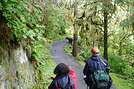
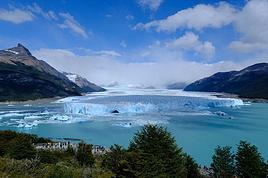
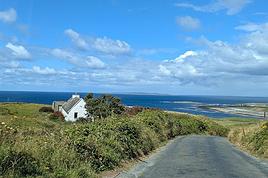
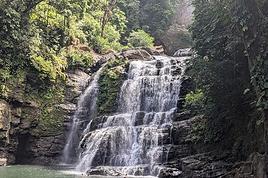
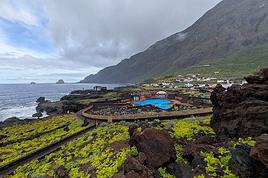
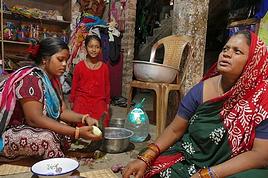
C'est sur l'invitation d'un nouvel ami rencontré l'année dernière en Asie du Sud-est que nous avons visité l'Amérique du Sud. En effet, il m'envoie un courriel qui nous convie à une croisière qui part de Buenos Aires et se termine à Valparaiso en contournant le Cap Horn. Nous n'aurions jamais pensé faire cette partie du globe.Ce fut le point de départ pour l'organisation de notre premier voyage en Amérique du Sud: 11 semaines de Buenos Aires jusqu'à Lima. Ci-dessous, quelques commentaires qui, j'espère, pourront aider certains futurs voyageurs.
1ère étape: BUENOS AIRES
Merci à Hergé qui nous a aidés dans nos préparatifs et nous a accueillis à l'aéroport. Impressions très positives sur cette très grande ville. Hôtel dans le Recoleta: tout près du fameux cimetière (à voir) et de nombreux restaurants. On mange très bien à BA. Du boeuf partout. Très bon mais portion énorme et pas beaucoup de légumes. Il y a aussi d'autres types de cuisine. Le vin argentin est excellent.
Il y a des librairies à tous les coins de rue. La plus belle? L'Atenao Splendid. Un théâtre datant de 1910 transformé en librairie.
Et bien sûr, il y a du tango partout. Au Café Tortoni, dans les rues de San Telmo, ...🙂
Grâce au taux de change non officiel, Buenos Aires offre un excellent rapport qualité-prix.Note sur la sécurité: C'est à cause des commentaires lus avant le voyage que j'avais choisi notre hôtel dans un quartier "sécuritaire", le Recoleta. Même sur place, les hôteliers et les commerçants m'invitaient à bien dissimuler ma caméra que je portais au cou. De plus, pendant notre séjour d'une semaine, un ami a été victime d'une tentative de vol et un couple d'amis de deux tentatives. Même scénario: on sent qu'on se fait asperger d'un liquide. Une dame s'approche et explique que la cause est un arbre!? Puis, dans sa grande "générosité", elle s'invite à nettoyer vos vêtements. Heureusement, pas naïfs, ils ont repoussé la dame très rapidement.
Excursion à Iguazu
À voir! De magnifiques chutes situées dans un parc avec des sentiers qui permettent de voir les chutes sous différents angles. Bien différent du côté commercial des chutes Niagara. Hélas, nous n’avons pas fait le côté brésilien. Les coûts du visa étant trop élevés. Aller-retour en avion, 3 nuits d'hôtel (plus dispendieux et moins bien qu'à BA- 2 nuits auraient été suffisantes).
C'était le Dazzler Recoleta. Je ne pourrais pas le qualifier de "central" car BA est une très grande ville avec plusieurs quartiers intéressants à découvrir. Mais pour les choses à voir dans le Recoleta, il était bien situé.
Au retour des chutes d'Iguazu, nous avons opté pour un quartier différent: le Micro Centro. Superbe hôtel à 55$ dollars seulement. Visites du Teatro Colon (magnifique salle de concert semblable à La Scala de Milan) et du zoo de BA (quartier Palermo).
2e partie de notre voyage: LA CROISIÈRE
Samedi 31 janvier 2015, nous embarquons sur le Golden Princess pour une croisière de deux semaines. Depuis que nous voyageons (c.-à-d., au siècle dernier dans les années 70), ce sera notre 2e croisière. Chambre avec balcon. Petite mais très confortable. Très bons restaurants. Et, pour notre plus grand bonheur, du tango à tous les jours 🙂
Première escale à Montevideo (Uruguay), puis Puerto Madryn (Argentine). Notre troisième arrêt, le plus beau de la croisière: les Falkland Islands (pour les Anglais) et Islas Malvinas (pour les Argentins)!!
C'est avec émerveillement que nous nous sommes approché des centaines et des centaines de manchots royaux.
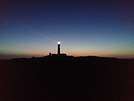
On reprend le Golden Princess direction Ushuaia et Cap Horn. Nous sommes "au bout du monde!.
Par la suite, l'immense glacier Italia et arrêt à Puerto Montt (Chili) pour visiter le village de Frutillar et son volcan Orsono.
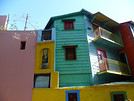
Valparaiso, le port coloré du Chili, compte de nombreuses collines qu'on accède grâce à des funiculaires. Les maisons sont très colorées et on peut y admirer de merveilleuses murales.
Notre hôtel (Ibis) était très bien situé. Avec une sympathique guide de TourforTips, nous avons marché quelques quartiers de Valparaiso et visité la maison du poète Pablo Neruda. La station balnéaire Vina del Mar est à quelques minutes en bus mais pour nous, ne valait pas le détour.
Pour nous rendre dans la vallée de Colchagua, nous avons loué une voiture. La route de 3 heures nous amène dans les vignobles chiliens. Nous dormons 3 nuits à l'Hostal Cruz del Val à Santa Cruz. Une très jolie petite auberge; lit confortable et excellent petit déjeuner. Nous avons participé à des dégustations de Malbec, Carménère et de Cabernet Sauvignon chez 3 vignobles: Montgras, Lapostelle et Viu Manent où nous avons dégusté un excellent repas sur une terrasse entourée de vignes.
Nous retournons la voiture à Santiago, la capitale du Chili. Le Santa Lucia est un vieil hôtel mais propre, très bien situé et avec un excellent personnel. Nous profitons de deux différentes visites guidées de TourforTips. Entre autres, le
Palacio de la Moneda où Salvatore Allende s'est suicidé selon la version "officielle". Mais plusieurs croient qu'il a été assassiné lors du coup d'État de Pinochet. C'est encore un sujet délicat au Chili.
Le 21 février, nous prenons le bus par une route sinueuse qui nous amènera à Mendoza en Argentine.
À la frontière, nous ne sommes pas les seuls. Une bonne dizaine d'autobus. Plus de trois heures d'attente 🙁 Mais la route en valait la peine.
Mendoza, capitale des vins argentins. À l'entrée de la ville, des centaines et des centaines de rangées parallèles de vignes qui se prolongent à perte de vue. Dimanche, les vignobles n'ouvrent pas leurs portes. On doit attendre jusqu'à demain.
L'hôtel nous réserve un taxi pour la journée. Grâce à un ami, nous avons droit à une visite privée du domaine Trevente. Puis, notre chauffeur nous amène au restaurant Cava de Cano où, dans un salon privé, nous avons dégusté un repas de roi.
En après-midi, nous visitons un 2e vignoble: Belasco de Baquedano et son Salon des Arômes.
Sympa votre carnet.
J'aime beaucoup la photo du passage par le col del Christo libertador entre Santiago et Mendoza.
J'espère pouvoir l'emprunter l'an prochain, mais hélas pour nous ce sera en hiver austral, donc plutôt aléatoire.
J'apprécie de découvrir le Chili et l'argentine en été austral.
Merci Josiane pour votre commentaire. Je poursuis avec le nord de l'Argentine. C'est en avion que nous quittons Mendoza, la capitale du vin, pour nous rendre à Jujuy. À l'aéroport, nous attend notre sympathique chauffeur Rafaël qui travaille avec Nicole (tout aussi sympathique) de l'Association des Enfants d'Atacama. Ce fut un réel plaisir et toute une aventure de parcourir le nord de l'Argentine avec Rafaël. Ce fut la partie préférée de notre voyage en Amérique du Sud. MERCI Rafaël! MERCI Nicole!
Pumamarca, Jujuy, Abra el Acay, Salinas Grandes et concert à l'école de Puesto Sey
Quand vous êtes allés à l'abra del acay, êtes vous passés par San antonio de los cobres? Ou bien la ruta 40 qui passe par la poma a-t-elle été améliorée?
J'aime beaucoup la photo du baiser du bébé lama et de sa maman!!!
Et celle du nandou qui vous surveille du coin de l'oeil avec la patte levée prêt à courir est vraiment sympa!
La 3ème photo avec les lacets, c'est la route qui vient du paso de jama?
Et l'école puesto sey dans laquelle les enfants jouent du sikku, est-ce celle de Susquez? Comment faire pour la visiter?
Ou étiez-vous pour la 5ème photo dans laquelle les nuages et le ciel se reflètent dans un lac? Etait-ce les salinas grandes inondées qui produisaient cet effet?
Abra del Acay: Nous descendions de San Antonio pour nous diriger vers Cachi. Paysages magnifiques mais la route était dangereuse. A quelques endroits, des bouts de chemin en pierres. Puis, une heure plus tard, une route complètement effondrée. Nous voilà obligés de faire marche arrière en fin de journée alors que le soleil commence à disparaître derrière les montagnes. Retour à San Antonio où nous avons trouvé une agréable auberge. Le lendemain, c'est par Salta que nous avons descendu à Cafayate
3e photo: Vous avez raison. Cuesto del Lian est un tronçon de la route nationale 52 entre Pumamarca et Salinas Grandes.
École de Puesto Sey: je vous invite à communiquer avec Nicole (Nicobry) qui est membre de Voyage Forum.
5e photo: Vous avez encore visé juste 🙂 . Il s'agit des Salinas Grandes. Sur certaines parties, les grandes flaques d'eau m'ont permis de prendre cette photo mais nous avons pu également marcher sur le salar car il n'était pas inondé complètement.
J'ai la même photo ou presque sur mon carnet. Nous avons emprunté le paso de jama en revenant de SPA, la première fois.
Il s'agit des Salinas Grandes. Sur certaines parties, les grandes flaques d'eau m'ont permis de prendre cette photo
C'est quelque chose que j'aurais aimé voir: un salar inondé. Quand nous y sommes allés, c'était à la fin de l'hiver et de la saison sèche. Donc que ce soient les salinas grandes ou le salar d'Uyuni tout était en sel et c'est tout!!!
École de Puesto Sey: je vous invite à communiquer avec Nicole (Nicobry) qui est membre de Voyage Forum.
J'ai déjà eu l'occasion de lire les messages de Nicobry. Je ne savais pas que l'école qu'elle parrainait s'appelait puesto sey.
Nous repasserons probablement par le paso de jama l'an prochain vers fin juillet 2016 ou peut -être par le paso de sico. Tout dépendra des chutes de neige.
Abra del Acay: Nous descendions de San Antonio pour nous diriger vers Cachi. Paysages magnifiques mais la route était dangereuse. A quelques endroits, des bouts de chemin en pierres. Puis, une heure plus tard, une route complètement effondrée. Nous voilà obligés de faire marche arrière en fin de journée alors que le soleil commence à disparaître derrière les montagnes. Retour à San Antonio où nous avons trouvé une agréable auberge. Le lendemain, c'est par Salta que nous avons descendu à Cafayate
Voici le lien vers les cartes que j'ai mises sur mon post en 2012 et clairement on voit bien que l'état de la ruta 40 après l'abra del acay est très mauvais (traits en pointillés sur les cartes). Du coup, comme cette fois ci, j'essaierai d'aller à l'abra del acay, ça m'intéressait de savoir s'ils avaient arrangé les choses. Je constate que ce n'est pas le cas. Désolée qu'on ne vous l'ai pas dit avant votre voyage.
Vous avez donc dormi à la hostería de las nubes ou ailleurs à San antonio de los cobres?
Merci pour ce reportage qui réactualise mes souvenirs. J'attends la suite.
Donc, on rebrousse chemin vers San Antonio et le lendemain, nouveau départ vers Cafayate sur une route plus sécuritaire. En route, entre San Antonio et Salta), un arrêt à Tastil, un site archéologique pré-Inca.
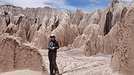
Puis, la route des vins de Salta. Encore de magnifiques payasages de la Quebrada de las Conchas, avec des roches déformées, des failles d'effondrement (Garganta del Diablo et l'Anfiteatro) et des dizaines de perroquets.
Arrivée à CAFAYATE
Les vignobles sont moins intéressants que ceux visités à Mendoza ou au Chili. Par contre, le Musée du Vin est à visiter. Entre autres, on y souligne l'importance de la nuit sur la vigne. En effet, l'écart des températures à Cafayate peut atteindre 22 degrés.
Bonjour Diamina
On se permetde répondre à la place de Nicole, car elle a beaucoup de travail en ce moment à préparer la fête des enfants d'Atacama qui aura lieu le 5 novembre.
Non l'école de puesto Sey n'est pas celle de Susques.
Elle se trouve sur la 40 à mi chemin entre Susques et San Antonio de los Cobrès.
Pour la visiter il vaut mieux contacter Nicobry,
pour notre part nous allons la rejoindre dans quelques jours pour la fête des écoles.
Cordialement
Dites à Nicobry que je serai sur cette route entre juillet et aout 2016. J'ai déjà pris mes billets pour un aller retour sur Santiago de Chile, mais je n'ai pas encore les dates définitives de mon circuit qui passe par SPA, san antonio de los cobres, Tolar grande.....
Je tacherai de la contacter plus tard quand j'en saurai plus.
Hi everyone! So happy to be back on this forum—it’s packed with such useful info! 🙂 My husband and I are planning a 2.5-week self-drive trip to Colombia at the end of the year, including some domestic flights. My first question is: is it possible, easy, and safe to do a road trip in Colombia?
Below is our draft itinerary (with questions at each stop):
29/11: France → Colombia. Overnight in Bogotá.
30/11: Exploring Bogotá: La Candelaria and Montserrate.
01/12: Gold Museum (closed on Mondays). Drive to Zipaquirá (1.5 hrs) to visit the Salt Cathedral. Then drive to Villa de Leyva (3 hrs). Explore the town. Overnight in Villa de Leyva.
02/12: Return to Bogotá via Laguna de Guatavita (5 hrs). Is it worth the detour? Overnight in Bogotá.
03/12: Flight to Pereira. Drive to Salento. Overnight in Salento.
04/12: Cocora Valley (hike among the wax palms) followed by a drive around the area. Are there any waterfalls or other sights nearby?
05/12: Visit a coffee finca—any recommendations? Then explore the surroundings: Filandia, Manizales, waterfalls? Hot springs? Which ones?
06/12: Flight to Medellín.
07/12: Exploring Medellín: Centro, Plaza Botero, Comuna 13. How do you visit Comuna 13? Is it easy to get around Medellín? Metro? Buses?
08/12: Drive to Guatapé (2 hrs). Visit the town, stroll around the lake, then El Peñol. Overnight in Guatapé.
09/12: Return to Medellín.
10/12: Flight to Santa Marta. Drive to a hotel near Tayrona Park.
11/12: Tayrona—El Zaino entrance.
12/12: Tayrona—Palangana entrance, then Bahia Concha and Santa Marta. What do you think?
13/12: Drive to Minca (45 mins). Can we reach the village by car? Pozo Azul and Marinka waterfalls. Overnight in Minca (or back in Tayrona?).
14/12: Drive to Puerto Nao (5 hrs). Stop in Ciénaga on the way + boat tour in Nueva Venecia and/or Buena Vista? Not enough time? Overnight in Puerto Nao.
15/12: Exploring Cartagena: Centro, Getsemaní, the walls + La Boquilla if we have time.
16/12: La Boquilla (is it really worth it?) if we didn’t have time yesterday, then back to the beach.
17/12: Return to France.
So, what do you think? Is this doable, or should we tweak it? Thanks in advance for your invaluable feedback and tips! 🙂
Hi there, I’m looking for recent info on a boat trip with sleeping accommodations from Belém to Santarém. I don’t want a "luxury cruise for wealthy tourists"—just a bed with a minimum of comfort seems great to me🙂. I didn’t find any up-to-date details with Amazon Star. Do you have any companies, guides, or prices for this route to recommend?
I’d love to hear tips and feedback on this trip, especially since I’m traveling solo. I’d like to get a sense of what to expect and ensure some basic safety with transportation.
Thanks.
Hi everyone,
We’re planning 40 days in Uruguay and Argentina in February and March, trying to avoid as much rain as possible.
We’re thinking of starting in Buenos Aires, then heading to Bariloche, and from there flying to Córdoba, Mendoza, or Salta. Maybe by bus or renting a car to explore each region.
Do you have any suggestions or tips for us? We love picturesque, historic cities and landscapes. As seasoned travelers, we’re used to planning our trips ourselves.
Thanks in advance!
We’ve planned our road trip in Chile, and the only thing left is to book the TABSA ferry from Punta Arenas to Puerto Williams.
Problem: the ferry that leaves Punta Arenas at 1 AM isn’t available for booking, no matter the day or month. All the other departures can be booked, though.
On top of that, Tabsa isn’t responding to any messages.
We’re planning to explore Peru’s main highlights and were wondering if anyone could share insights on the quality and comfort of overnight buses. If so, which bus company should we trust?
Hi,
My wife and I are heading to Brazil from November 6th to December 2nd. We’ll be stopping in São Paulo, Paraty, Ilha Grande, Rio, and Salvador de Bahia.
Could you recommend some nice, non-luxury places to stay in each of these spots?
Also, any suggestions for places to visit would be great.
Thanks in advance for your help!
Marc
Hi there.
I already posted a message asking for advice about our upcoming trip to Chile.
Details: Getting around by bus or train.
Starting from Valparaiso, heading north, passing through cities and places to visit, then returning to Santiago via a different route.
Avoid the beaches...
Thanks
Hello,
my wife and I will be in Cusco for a week in March 2027.
I’d like to organize the visit to the site on our own, combining the Sacred Valley and Machu Picchu.
We’d leave Cusco on Day 1 to arrive at the site in the morning, then stay in Aguas Calientes or Ollantaytambo, and on Day 2 return to Cusco while visiting the Sacred Valley.
Is this doable?
Looking forward to hearing from you.
Cédric.
Hello,
We’re spending 3 weeks in Rio between February 20 and March 15, 2027, to visit our son and daughter-in-law. We’re thinking of one or two "escapes" from Rio—3-day trips to get away from the city (so not too far, max 3–4 hours by car or bus). We’re all ears for suggestions! We love beautiful nature and authentic experiences, not so much the touristy spots... even though those spots are often in beautiful places, we’d rather avoid them.
Thanks for your insights!
Catherine
Hi there,
I’m planning a trip with my partner (no kids this time—thanks, Grandma!) for two weeks to celebrate her 40th birthday. I’ve been thinking about Chile. We’re looking at leaving around September 18, 2027, starting in the south and returning in early April.
Here’s what I had in mind:
8 nights in a van in the Lake District and the start of the Carretera Austral (up to the Chaitén area). We’re set to arrive in Puerto Montt around 2:00 PM. We don’t want to go too far south since we’re planning to explore the heart of Patagonia (Chile and Argentina) with the kids when they’re older. The idea is to spend 3 nights discovering the lakes (up to Cochamó) and 3 nights in Pumalín Park. I’ve also added two transition nights.
7 nights in the Atacama to experience another side of Chile (San Pedro), taking a domestic flight from Puerto Montt to Calama in the early afternoon. We’ll depart for France in the early evening from Santiago.
IMPORTANT NOTICE for those planning to take a bus to another city, state, or destination from Salvador!
Starting January 20, 2026, the intercity bus station Rodoviária is changing its address!
The Rodoviária is leaving the Iguatemi area and will now be located in ÁGUAS CLARAS (about twenty kilometers from downtown Salvador).
A brand-new station (the most modern in Brazil) has just been set up there, accessible by car/taxi/Uber/metro.
Allow for much more transfer time (especially during rush hours), so leave early if you're heading to Chapada Diamantina or other Brazilian cities by bus.
Remember, there are also private transfers (even French-speaking ones) that can take you directly from your hotel in Salvador to your hotel in Chapada. Sure, it’ll be more expensive, but you’ll save on transfer time and comfort.
Tropical greetings from Salvador,
@ivanbahiaguide
Loyal member of the French-Speaking Brazil Forums for over 15 years already 😊 🇧🇷
Hello,
We’re thinking of spending 1 month in Chile, maybe doing a loop?
From 12/23 to 01/22.
What are the must-see sights, given we’re more interested in the country’s cultural side than the beaches?
Thanks
Hi everyone,
We're planning a trip to southern Chile in November. Here's our tentative itinerary:
Day 1: Arrival in Santiago, then a flight the next day to Balmaceda where we'll pick up a rental car to reach Coyhaique.
Day 3: Walk in the Coyhaique National Reserve, then continue to Puerto Chacabuco. Return to Coyhaique for the second night.
Day 4: Drive to Villa Cerro Castillo for a hike in the national park. Continue to Puerto Tranquilo and stay there for 3 nights.
Day 5: Boat tour on Laguna San Rafael.
Day 6: Day trip to Monte San Valentin Glacier.
Day 7: Excursion to the Marble Chapels, then drive to Puerto Guadal. We'll stay there for 3 nights.
Day 8: Walk along Lago Carrera and return to Puerto Guadal.
Day 9: Rio Baker Valley and, if possible, a glacier excursion.
Day 10: Drive to Cochrane and hike in Tamango National Reserve. We'll stay 2 nights in Cochrane.
Day 11: Walk in the Chacabuco Valley.
Day 12: Drive to Caleta Tortel. We'll stay there for 2 nights.
Day 13: Cruise in the Rio Baker delta.
Day 14: Return to Cochrane.
Day 15: Return to Balmaceda in two stages.
Day 16: Continue the return journey.
Day 17: Return the rental car and head back to Santiago.
After this, we're also planning to explore northern Santiago. I'll post about that part once I have a clearer idea of the route.
What do you think of this itinerary? Is it doable in 17 days?
Thanks in advance for your tips and recommendations.
martine
Hi there, I’ll be in Brazil from December 10th to the end of February.
I’ve sketched out a rough itinerary but I’m not sure how to arrange it—considering the climate, year-end holidays, and Carnival.
Basically, I’m thinking of the Amazon, the Northeast coast with Lençóis Maranhenses National Park (but skipping Chapada Diamantina),
Ouro Preto, Paraty, and Ilha Grande—but no Rio visit.
Is this doable in 3 months?
Which direction should I take for this itinerary?
Thanks in advance!
Hi everyone, does anyone know the agency Ventura Travel Agency (not ventura travel)? After lots of research and quotes, it’s the only one offering Uyuni at a reasonable price while meeting all the criteria: transfer to the border, private-room accommodation, and a very fair rate. Other agencies or guides either offer shared rooms, no border transfer, or prices that are way too high. But I’d love to hear some reviews about this agency. Thanks in advance!
Hi everyone,
We're planning a trip to Chile to visit the Atacama Desert and then head toward Putre, Lauca, Salar de Surire, etc.
Which would be the better time to go, April or November?
Is an SUV enough?
Looking forward to your tips!
Hi everyone, French travelers in Chile—what credit cards do you use for your various car rentals in the country? I’m traveling in September and was planning to switch my regular debit card (a VISA PREMIER in deferred debit mode) for the deposit guarantee.
My rentals are with Figal in Punta Arenas, Econautos in Arica, and Chilean Rent a Car in Temuco, and all of them want the deposit on a credit card. For me, deferred debit *should* work, but I’ve read comments saying the opposite.
How’s it actually working on the ground with these rental companies right now? Will a deferred debit card work, or not at all?
In France, banks don’t issue credit cards, right—or am I mistaken?
Hi everyone, is it still possible to travel in Ecuador outside the Amazon region? If so, do you have a reliable agency to recommend? All your recent experiences from the past few months would be greatly appreciated. Thanks so much
Hi,
We’re heading to Buenos Aires for 3 days in November and would like to do a guided tour of a few neighborhoods. There are "free" tours, but none in French. Does anyone have a guide to recommend so we can really get to know the city beyond just the architecture?
Thanks
Hi there,
I’m desperately looking for info on the schedules and routes of (shared) boats to visit the islands of Lake Titicaca.
From what I’ve found, there’s a *combi* (bus) that leaves from Puno to go to Llachon. Where do you catch it? What are the schedules and frequency? Does it take about 1 hour?
Then in Llachon, you can take a boat to Amantani (45 min). Same question—where do you check for frequency and schedule?
After that, from Amantani, boats go to Taquile and then Uros. Do you have enough time to visit the islands between two boats? Frequency and schedule?
The goal is to do this tour independently (no agency) over 2 days. Thanks for any tips you might have!
I just got back from a trip to Bolivia and wow—what a wake-up call. It’s not the easiest country, but it’s absolutely stunning.
I started with Isla del Sol, perfect for easing into the altitude at a relaxed pace. Try to stay in the northern part of the island—it’s quieter and the views are insane. And the trout there? Unreal. Quick tip: bring cash in small bills; they almost never have change, and cards are rarely accepted.
Next up, La Paz. The city’s pretty wild, built in every direction. I did a few hikes in the area, including the famous Charquini Lagoon (the blue lake) at over 5,000 m—let’s just say I struggled 😅 but it was so beautiful it was totally worth it.
After that, I headed to Sajama. It’s cool, especially for the hot springs, and I stayed in Tomarapi. But honestly, if you’re short on time, you can skip it without too many regrets.
The highlight of the trip: the Salar. I did it starting from Tupiza, and I *highly* recommend going Tupiza → Uyuni. Way less crowded at the start and the landscapes are super varied. For the tour, I used SplitYourGuide to find a group, and it worked out great. Super handy for splitting costs and meeting people.
I wrapped up in Sucre—this city is gorgeous, all white, with such a chill vibe. And the salteñas + ice cream? Next level 😋
Bottom line: Bolivia’s a bit rough around the edges, sometimes exhausting (shoutout to the altitude), but it’s 1000% worth it.
If you’ve got questions or need tips, I’m happy to help!
Martin
I was planning to go to Réunion and stay in half-board accommodation with non-professionals, but it seems that’s not really the custom there—or maybe my budget isn’t big enough.
So, since I’ve already traveled around Ecuador and Peru, I’m now looking at Argentina, especially for its mountains (like the ones in Réunion that tempted me, even though—frustratingly—I could only admire them from below).
I plan to get around by bus and don’t know in advance where I’ll sleep, so I won’t book ahead. If I like a place, I might stay for several days.
I know that in Chile, it’s easy to find half-board accommodation, but what about in Argentina?
I’d like to stay with locals in half-board without it being a professional setup. I’m not sure if this is common practice there. It’s up to me to find someone willing to host me.
What do you think?
What would be a fair price (keeping in mind that 40 to 50 € is the max I can spend on accommodation, breakfast, and dinner)?
Hi everyone,
We’re heading to Patagonia for three weeks in November, starting from Coyhaique in Chile.
We won’t have a car, and I’m struggling to find information about transportation options for a few parts of the itinerary we’d like to do:
1) From Perito Moreno (the town, near Los Antiguos), we’d like to travel down Ruta 40 to visit Perito Moreno National Park and then cross into Chile via the Paso Roballos (at the latitude of Bajo Caracoles) to reach the road to Cochrane. Without a car, it seems we’ll need to use private agencies to get to the national park—do you have any recommendations or suggestions? Also, does anyone know if it’s possible to cross into Chile via Paso Roballos (from Bajo Caracoles) without a rental car? That is, without having to go all the way down to El Chaltén or back up toward Perito Moreno/Los Antiguos, etc.?
2) The second stretch that seems a bit tricky (though still easier, in theory) is from Caleta Tortel to Villa O’Higgins on the Chilean side. Do we have to go back through Cochrane, or are there ways to get directly from Tortel to Villa O’Higgins?
3) Finally, we’d like to hike into Argentina (El Chaltén) from O’Higgins. Any recommendations for this? Do we need to go through an agency? What’s the estimated duration of the trek?
As you’ve probably gathered, we want to visit some off-the-beaten-path spots but don’t have a car, so we’re looking for the best possible compromises.
Thanks so much in advance for all your suggestions!
Thomas
Hi,
we’re planning a round trip from San Pedro de Atacama, Chile, to Salta, Argentina, in two months. On the way there, we’ll take the northern route via Susques, Route 27, then 52. But for the return, we were thinking of taking the southern route via San Antonio de los Cobres, Route 51, then 23. Is it similar to the northern route in terms of road surface? How busy is it, and are there gas stations? Basically, should we be worried about doing it in an SUV that’s supposedly 4x4 but has regular road tires and no second spare wheel, obviously...
I’ve seen that we can stop over in San Antonio de los Cobres.
Thanks for your feedback.
Raf.
Hi,
we’ll be in Calama at the end of March 2026, and I’m looking for a reliable car rental there for a 7-day road trip to Salta, Argentina. But I’m struggling with the car rental agencies in Calama because the reviews can be scary. I saw Gyg, which has great ratings, but I’m a bit wary (5/5 from 59 reviews—either the guy’s amazing or it’s fake...), but I can’t find any recent reviews on VF in general.
For Punta Arenas, I booked with Dachelet and didn’t have any issues with email exchanges.
Thanks in advance.
Raf.
I’m planning the trip of my dreams for next November—Chile!
I’d love to get your thoughts on my potential itinerary. I know it’s a big investment in terms of both time and money, so every bit of feedback, suggestion, or info helps immensely. Thank you in advance!!
1-Flight to Santiago
2-Explore Santiago
3-Explore Santiago
4-Bus from STG to Valpo (2h) + visit Valparaíso + night in Viña
5-Visit Valparaíso + bus back to STG (2h)
6-Flight to Calama + bus to San Pedro + explore and acclimate in San Pedro + car rental in the afternoon (+Chaxa?)
7-(Very early) Valle del Arcoíris + Laguna Cejar + Valle de la Luna
Good evening,
We’d love to go in November to enjoy some beautiful beaches for about two weeks, preferably around Bahia, as November/December seems like a great time.
We’ve already traveled to Brazil several times and know the south of Rio as well as the region between São Luís and Fortaleza, and Chapada Diamantina...
What advice would you give us: the south with Itaparica, Morro de São Paulo, Boipeba, Barra Grande—or all four? Or maybe the north?
Thanks in advance for your help