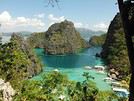
Ainsi que nous le faisons toujours, petit compte-rendu de notre periple a Borneo, Sarawak.
Borneo, cote Malaisie est separe en 2 etats, le Sabah au nord, le Sarawak au sud qui represente la province la plus etendue de Malaisie.
Des evenements recents, d'ordre terroristes ont rendu delicat un voyage au nord pour l'instant. Sans tomber dans la peur irraisonnee, le Sabah est deconseille.
Ce qui nous a frappe par rapport a la Malaisie peninsulaire :
La polulation est essentiellement compose de dayak (pleuples multiples de tribus multipkes, originaires de Borneo). Cet etat a ete independant jusqu'en 1958, puis fut ratache a la Malaisie. Les malays de souche y sont minoritaires. On y voit aussi des indiens et des chinois (baba nonya). 116 langues distinctes sont parlees a Borneo.
La religion musulmane ne semble pas aussi implantee que sur la peninsule, bien qu'elle soit religion d'etat comme partout en Malaisie.
Le degres d'humidite (zones forestieres) allie a la chaleur d'un mois d'aout est vraiment eleve et la pas de Cameron Highlands pour se mettre au frais.
La connaissance des dayak de leur environnement, de leur faune et de leur flore est a peine croyable, meme pour les plus jeunes qui ont quitte leurs long houses tribales depuis des annees.
Une (tres, mais alors tres), bonne adresse a Kuching :
Le Basaga holyday residence a l'ecart du centre ville ( 30 mns de marche, 5 mns en taxi ou en navette offerte 2 fois par jour par l'hotel).
Un reve ! Superbe maison neo coloniale, meublee avec raffinement, chambres fraiches et spacieuses, piscine formidable propre et calme, restaurant delicieux, plats varies et tres copieux. Tres bon rapport qualite prix. Et un super guide (Brandon) qui concocte les excursions les moins couteuses (7.50 euros pour un night safari) et les plus passionnantes qui soient.
Kuching la ville :
Calme en bordure de riviere, avec un centre-ville anime. Un choix d'epices incroyable dans les echopes, et d'inombrables petits restaux ou se regaler de Laksa ( noodle servies avec des crevettes fraiches et du lait de coco, agrementees de citron vert, un delice !).
Promenade sur la riviere a la demande (7 euros l'heure, peu mentionnees dans les guides et pourtant tres agreables).
Semmenggoh :
Centre de rehabilitation des orang-outangs.
Le must. 26 specimens vivent dans cette foret protegee dont une petite portion est ouverte au public. Les rangers sont extraordinaires et entretiennent des liens etonnants avec eux. Nous en avons vu un carresser les bras d'un gros male en lui chantant une sorte de berceuse.A pleurer.
Nous en avons vu 12 dont 3 bebes accroches au ventre maternel pendant le nourrissage du matin.
Rien a dire de plus, c'est indescriptible, juste merveilleux.
Ce n'est pas un zoo, les animaux sont libres et se presentent quand ils le souhaitent.
Ne jamais utiliser de flash ou de trepieds que nos grands cousins chevelus considerent commedes explosions et des fusils, ce qui les terrorise. Etre absolument silencieux et en cas de tentative de vol, (rare mais c'est arrive), leur donner tout ce qu'on a sans resister. Ils sont 10 fois plus forts que nous. Et bien sur, n'avoir aucune nourriture ni parfum sur soi.
De plus le prix d'entree est derisoire et pour le meme prix, on peut egallement voir de magnifiques alligators (en zone protegee).
La plupart des tours chargent une 15 aine d'euros cette excursion depuis Kutching. On peut aussi s'y rendre en taxi, en bus pour environ 5 euros.
La foret-reserve de Bako :
Paysages grandioses, mangroves, jungle compacte, chutes et surtout les animaux.
Singe probicus, silver leaf, semnithopitheque obscurs, macaques, insectes, serpents, et j'en passe...
Tout ceci a l'etat sauvage et fermement protege. Un regal.
Un campement est possible (basique) avec un seul restau self (tres correcte).
Conseil : ne pas y aller en independant mais avec un guide car vous passeriez a cote de tout.
Les guides sont des locaux issus des tribus, leur savoir est encyclopedique, les ecouter est captivant et ils sauront comme personne vous denicher les animaux que vous ne verriez pas vous meme. Nous sommes passe par Borneoadventures. Cher mais ca les vaut vraiment. Ils furent les pionniers et sont unaniment respectes.
Le Sarawal cultural village :
Presentations des tribus majeures, habitats, danses, musique, interractions diverses et un tres beau spectacle a la fin.
A faire, vraiment.
En tour organise c'est a peu pres 30 euros en general par personne la demie journee. (Borneoadventures est prohibitif pour cette excursion et ne fourni rien de plus que les autres).
En resume, on a adore. On y retourne en aout prochain pour cette fois un sejour dans la jungle grace aux contacts qu'on s'est fait aupres des guides et qui nous ont simplement invite dans leurs villages natals loin des hordes de touristes. Il va de soit que nous les retribueront.
Borneo nous reconnecte tout simplement avec l'essentiel, ce qui vivra apres nous et a vecut avant nous.
Cette destination mythique ne peut qu'envouter tous les amoureux de la nature.
Ceci bien sur n'etant pas exaustif, et uniquement le reflet de notre ressenti.
" Veux tu vivre heureux ? Voyages avec 2 sacs. L'un pour donner, l'autre pour recevoir."
Johann Wolfang Von Goethe
bonjour merci de ce récit...pour ce qui est des Dayaks c'est une bonne chose de mentionner leur connaissance de leur environnement et effectivement ils connaissent parfaitement bien la forêt tropicale.
A noter qu'à l'intérieur de Bornéo certaines communautés ont été christianisées comme les communautés Kelabit.
Merci pour ce retour d'informations précis et détaillés. 😎😎😎
Bravo. Continue
J'ai visité Kuching en 1995 et cela me fait vraiment plaisir de voir que Kuching &... soit toujours aussi agréables et captivant. J'avais été frapé par la propreté de la ville, et l'incroyable diversité culturelle, religieuse... Je partage tes opinions, merci pour tes tuyaux !
Pour compléter tes infos, les vols "intérieurs" Kuala Lumpur - Kuching sont bon marchés, je viens de trouver à l'instant un vol AR de KL Kuching sur Airasia pour 209 MRinggit l'aller le 5sep et, 152MR pour le retour le 24 sept soit moins de 100€ l'AR avec les bagages. (je dis cela pour ceux qui passe par KL sur la Malaisie péninsulaire et qui croit qu'aller à Kuching (Sarawak Bornéo) est hors de prix vu l'éloignement. Non les vols intérieurs Malaisien sont bons marchés 🙂). Il y a meme encore moins cher en choisissant bien l'heure de départ du vol et d'arriver et si on si prend à l'avance. Voyageurs si passer par KL vous n'avez plus aucune excuse pour ne pas faire un tour sur le Sarawak et visiter la belle et propre ville de Kuching. 😉
“Twenty years from now you will be more disappointed by the things that you didn’t do than by the ones you did do. So throw off the bowlines. Sail away from the safe harbour. Catch the trade winds in your sails. Explore. Dream. Discover.” (M. Twain)
Pour les vols, tout a fait !
Nous sommes venu depuis Kuala Lampur, puis reparti de Kuching a Kota Barhu pour les Perhensians.
Retour ensuite de Kota Barhu vers Kuala Lampur. Ces vols internes n'excedent pas 2 h et sont nombreux chaque jour.
Le tout avec airasia pour environ 150 euros par personne.
En aout qui n'est pas la periode ideale pour la peninsule, (mais qui l'est pour Borneo et Perhensian), il est tres facile et peu cher de groupper ces 2 destinations de reve.
Bien d'accord aussi pour la proprete de Kuching et la diversite culturelle et religieuse.
Bien que nous ayons egalement ressenti cela a Penang et cette merveille de Malacca.
Allez rien que pour le plaisir...
Borneo :
Nos cousins chevelus et puis Le gateau Kek lapis, le laksa et Bako.
Perhensians...
La question est Jf23, qu'attends tu pour y retourner ?
" Veux tu vivre heureux ? Voyages avec 2 sacs. L'un pour donner, l'autre pour recevoir."
Johann Wolfang Von Goethe
Et j'oubliais...
En dehors de l'extreme gentillesse et generosite des habitants du Sarawak, il y a une chose a noter.
De la mamie edentee aux commercants, des enfants curieux aux guides en passant par les taxis et simples quidams, tout le monde vous sourient spontanement.
C'est ca aussi le Sarawak.
" Veux tu vivre heureux ? Voyages avec 2 sacs. L'un pour donner, l'autre pour recevoir."
Johann Wolfang Von Goethe
Merci pour ce compte rendu détaillé de votre séjour.
Vous décrivez bien l' ambiance de cet endroit magnifique.
La population est d'une gentillesse exemplaire, les paysages à couper le souffle la nature intacte.
Les touristes y sont encore peu nombreux.
Un petit paradis!
Le monde est un livre, ceux qui ne voyagent pas n'en lisent qu' une page ( Saint Augustin )
Merci Sunhae pour ces superbes photos qui font réver 😉. Qques infos supplémentaires:
Pour le Parc National de Bako (la foret-reserve) :
Même impressions générales que toi, j'y étais allé en indépendant, par bus régulier et j' avais dormi 2 ou 3 nuits dans le parc meme. Dortoir du parc basique, mais très bon marché et quasi vide. Il me semble qu'il y avait aussi la possibilité de trouver un guide sur place, en demandant aux rangers, mais comme il y avait aussi de nombreuses planches explicatives en anglais, je n'avais pas pris de guide me promenant seul dans les chemins balisés du parc. (aucune chance de se perdre, il y a une carte, et les chemins sont vraiment bien balisés, souvent sur ponton en bois). Je veux bien croire que les guides locaux fournissent bien d'autres détails que les seuls planches explicatives du parc, (mais j'apprécie aussi pouvoir visiter seul loin d'un groupe, et à l'epoque je maitrisais mal l'anglais à l'écoute).
Comment aller à Bako National Parc:
From Kuching, take a taxi or Petra Jaya Bus No. 6 to Kampung Bako (Bako Village). The journey takes approximately 45 minutes. Boats can be chartered at the National Parks Boat Ticketing Counter next to the jetty for the 30-minute boat ride to the Park HQ whilst registering your arrival at the Park Arrival Booth. Check with the National Parks Booking Office in Kuching for the latest boat fares. Local tour operators also organise guided trips to Bako.
The number 1 bus operated by Rapid Kuching Transport leaves every hour from bus station number 1 or (more conveniently for us) at a stop on the North of town opposite the Riverside Majestic Hotel.
The hour long journey to Kampung Bako will cost you a mere RM3.50 ($1.10) where you will be dropped at the boat jetty. Here you pay your National Park Entrance Fee (RM20) and organise your boat to take you from the village to the National Park Beach or Jetty. Many visitors come to the park, just for the day. However, you’ll be very limited as to what you can see due to the diversity of the habitat, and that the fact that you have to do this by foot, meaning you can’t discover the charms of this place quickly. The boat costs RM47 each way for up to five passengers, so if you can find enough people to share with the cost reduces to RM10 each. The journey takes just 20 minutes and depending on the tide when you arrive, you will either be dropped at the purpose built jetty nestled among the mangrove trees or on the beach shoreline with a short wade to dry land.
The boats you book are numbered and you arrange your return time with the boatman when you book. Don’t worry too much about being committed to this as you can get the helpful staff at the National Park to call and change your collection time as we did.
et aussi une foule d'infos pratiques sur l'hostel du Parc National de Bako:
You need to book accommodation in advance before arriving at the national parks. The accommodation is limited, so no walk up services are available. This can be done either on line via a web form request or at the Sarawak National Parks Office next door to the tourist information office in the Old Courthouse Building in Kuching. If you are arriving at the weekend, be aware that the booking office is closed on Saturdays and Sundays.
Kuching: J'avais trouvé la visite du musée de la ville de Kuching intéressante (musée gratuit en 1995).
“Twenty years from now you will be more disappointed by the things that you didn’t do than by the ones you did do. So throw off the bowlines. Sail away from the safe harbour. Catch the trade winds in your sails. Explore. Dream. Discover.” (M. Twain)
Le musee national de Kuching est reste gratuit.
Il presente des specimens d'animaux empailles ou conserves dans du formol etonnants et qui datent du temps des premiers naturalistes.
Cependant le musee va demenager (toujours dans le centre) et en attendant toutes les collections sont un peu entassees a la va vite dans un local de transit poussiereux. Bref c'est toujours aussi interressant mais pas vraiment mis en valeur.
Attention aussi a l'heure de fermeture, 16 h. Derniere entree autorisee 15 h 30, ce qui est tot.
Aussi il y a une autre chose qui est vraiment sympa a Kuching, c'est le fait que l'on puisse tout faire a pieds hormis le musee du chat qui est assez excentre (assez kitch mais ca devrait ravir les amoureux des matous... comme moi).
J'insiste aussi sur le fait qu'en aout, il y fait tres chaud.
Il reste la solution des intermedes en bord de la riviere qui traverse la ville et qui raffraichissent entre 2 temples ou site.
Les taxis sont peu chers mais ne se baladent pas partout comme dans d'autres villes. Pour les trouver il faut aller devant l'entree des grands hotels, Novotel, Margherita etc...
Ps a Jf23 : j'aime beaucoup ta citation de Mark Twain !
" Veux tu vivre heureux ? Voyages avec 2 sacs. L'un pour donner, l'autre pour recevoir."
Johann Wolfang Von Goethe
Bonjour,
Merci pour le compte rendu de voyage... Et la photo des savoureux kek lapis multicolores, illustration de la variété des pâtisseries asiatiques.
Heu... ben ecoute les kek lapis ne nous ont pas transporte...
On est peut-etre pas tombe sur le bon faiseur.
Par contre il faut reconnaitre qu'ils se donnent du mal. Pas un patissier occidental ne se risquerait a un process de fabrication aussi long et fastidieux.
5 ms de cuisson pour chaque tranche, le tout multiplie par le nombre de couleur. Soit de 4 a 6 h de boulot pour un seul lapis.
Et puis c'est vraiment decoratif !
En tout cas c'est tres apprecie. A l'aeroport de Kuching, tout le monde avait sa boite sous le bras a ramener sur la peninsule.
" Veux tu vivre heureux ? Voyages avec 2 sacs. L'un pour donner, l'autre pour recevoir."
Johann Wolfang Von Goethe
Heu... ben ecoute les kek lapis ne nous ont pas transporte...
[...]
En tout cas c'est tres apprecie. A l'aeroport de Kuching, tout le monde avait sa boite sous le bras a ramener sur la peninsule.
Les conseils de la vendeuse m'ont peut-être permis de faire un bon choix.
Ramener un kek lapis du Sarawak, c'est rapporter un symbole artisanal et festif... sans sirop de glucose-fructose ni additifs chimiques. Le goût de l'authentique😉
Et les colorants, tu crois que c'est du naturel ?😉
Si oui chapeau bas mais j'ai des doutes...
Bon allez promis en aout, on retente une degustation, ne serait ce que pour supporter l'artisanat local.
Tu as raison, c'est pas tellement le gout qui compte, c'est tout le symbole et le travail qu'il y a derriere.
Moyennant une petite seance de sport pour chaque lapis ca devrait le faire ! Parce que c'est quand meme bourre de beurre comme douceur.
" Veux tu vivre heureux ? Voyages avec 2 sacs. L'un pour donner, l'autre pour recevoir."
Johann Wolfang Von Goethe
Et les colorants, tu crois que c'est du naturel ?😉
Pas vraiment. D'où le smiley 😉 après "authentique". Mais j'ai l'impression que c'est dans la nature asiatique : colorant rouge, jus vert fluo (pas de l'avocat), jus d'oranges fraiches pressées (+ sucre de canne)... Il faut que cela soit beau à voir et/ou agréable au goût.
Plus naturel, il y a la tartelette portugaise de Malacca, assez proche de l'egg tart.
Tu fais erreur. J'essaie juste d'être un gastronome profitant de ses voyages pour engloutir un maximum de cuisines locales quand je les trouve appétissantes. Je n'ai que quelques notions de base en pâtisserie.
J'ai lu attentivement votre post sur votre voyage à Bornéo. Je vous remercie pour ce debrief très intéressant !
Avec une amie nous serons à Bornéo fin mars. Nous souhaiterions, après Kuching, la réserve des Orangs Outans et Bako, faire un trek de 3 jours/2 nuits dans la jungle en dormant chez l'habitant. Or, nous n'arrivons pas à trouver un séjour hors des sentiers battus courus pour les groupes de touristes. Vous dites dans votre message que vous avez des contacts de guides indépendants. Serait-il possible de me les communiquer de manière à solliciter leurs services ?
Je vous remercie d'avance pour votre aide.
Alors pour votre voyage out off the traks, pas de probleme.
Je vous recommande de contacter Borneo adventures. Tous leurs guides travaillent aussi en independant, a leur compte et peuvent vous organiser un trek non loin de leurs village respectifs, et hors fonctionnement de l'agence.
Demander juste a etre mis en contact avec l'un d'eux. Ils sont tous extremement fiables et devoues.
Bon trip et attention aux sangsues, en mars malheureusement, je crois savoir que la rencontre est assez frequente !
" Veux tu vivre heureux ? Voyages avec 2 sacs. L'un pour donner, l'autre pour recevoir."
Johann Wolfang Von Goethe
Concernant les sangsues, je confirme : elles sont bien présentes en ce moment.
J'ai fait, il y a quelques jours, le parc de Lambir Hills National Park près de Miri et deux sangsues (ou litch en Malais) collées aux jambes.
Surtout, ne pas essayer de les enlever (car la tête reste et, là, risque d'infection), attendre qu'elles aient finit leur "repas" et elles tomberont d'elles mêmes.
Sinon, mettre des sur-chaussettes à lacer au dessus du pantalon.
En soi, rien de dramatisant sauf, peut-être pour certains, la vue de celles-ci 🤪
merci pour cette excellent compte-rendu. J'ai déjà bien noté l'adresse du B&B!
J'ai quelques questions supplémentaires. Nous projetons d'y aller 6 ou 7 jours fin juillet.
J'ai fait des demandes de devis pour un tour car avec les enfants nous apprécions d'avoir une guide francophone. J'ai déjà reçu un devis mais c'est un peu prohibitif comme tarif. Est-ce que vous pensez au'on peut remplir ces 6 jours par nous-même et avec l'aide de la personne du B&B?
Que pensez-vous de la durée de 6/7 jours?
Je vois que le sujet des sangsues a été abordé pour mars, y en aurait-il moins en été?
Vous mettez des photos des perhentians. Vous étiez où? Un hôtel à recommander?
Bon allez j'arrête! 😏 Merci d'avance de votre aide
Sandra
Tres tres sincerement je pense que vous n'avez pas du tout besoin d'un tour organise. Les excursions proposees a partir de cet hotel sont bien suffisantes et moins cheres pour les memes prestations proposees ailleurs.
Le probleme va etre de trouver des guides francophones... une denree rare.
Pour les sangsues en juillet pas d'inquietude, elles ne sont genantes que pendant la mousson. Nous n'en avons pas vu une seule et pourtant on a pas mal baroudes.
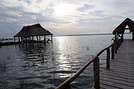
Pour ce qui est des Perhensians, nous etions sur la plus petite. Plus calme, plus familiale comparee a la grande qui est plus axee, beach party et groupes de jeunes en vacances.
De toutes facon vous allez de l'une a l'autre des iles en 5 mns de bateau, a tout moment et a la demande. Un bateau est pret pour la traversee tous les 100 metres, ca coute a peu pres 2 euros.
Nous etions chez Mama chalet. Pas luxueux mais tres sympa, a 1 metre de l'eau cristalline et vraiment pas ruineux. Mama c'est un peu la pionniere du tourisme dans les iles. Malgres son age respectable, elle est influente et peut repondre a toutes vos attentes et question. Nous avons adorre toute la famille jusqu'aux petits derniers qui marchent encore a 4 pattes...les serveurs, les femmes de chambre tous plus souriants et devoues les uns que les autres. Faites vite, c'est tres demande en ete.
Voila !
" Veux tu vivre heureux ? Voyages avec 2 sacs. L'un pour donner, l'autre pour recevoir."
Johann Wolfang Von Goethe
Votre réponse me ravit 😏
Je vais pouvoir avancer dans mes préparatifs, ça faisait des semaines que j'attendais les devis!
Pour les guides francophones il y a bornéo à la carte. Mais c'est pas grave je traduirai et ça permettra aux enfants de faire des progrès en anglais!
Je vais aussi étudier le mama's chalet. Je ne m'y étais pas trop attardée parce que certains commentaires disaient que les chambres n'étaient pas faites pendant le séjour et qu'il y a bcp de bateaux sur la plage. Mais vous avez l'air content et il y a aussi de très bons commentaires.
Merci encore mille fois, j'ai beaucoup avancé grâce à vous!
Pour le mama chalet, c'est vrai que le nettoyage des chambres n'est pas fait pendant le sejour.
Mais les bateaux alors la c'est faux. Il y a quelques bateaux devant mais pas plus que devant les autres hotels.
C'est calme et l'ambiance est chaleureuse.
Nous avons vu beaucoup de personnes qui mecontents d'autres hebergement venaient voir si il restait de la place... malheureusement, en pleine saison...
Pour nous le sejour a ete agreable et d'un tres bon rapport qualite prix.
Bonnes vacances
Mama c'est elle :
Devant le Mama chalet
" Veux tu vivre heureux ? Voyages avec 2 sacs. L'un pour donner, l'autre pour recevoir."
Johann Wolfang Von Goethe
Hôtels en forfait tout-inclus › Malaisie · 1 reply
Je suis rentré il y a 4 jours maintenant d'un séjour de 10 jours à l'Hyatt de Kuantan. Resort luxueux très côté sur la côte Est notamment pour sa restauration…
Hôtels en forfait tout-inclus › Malaisie · 28 replies
Nous voilà revenus de Langkawi où nous avons passé 10 jours inoubliables! L'hôtel Holiday Villa est d'un confort moyen avec de grandes chambres et balcon privé…
Je reviens d’un séjour de 3 semaines en Malaisie. Aout. On était 2 familles avec 5 enfants. Quel voyage! Que de contrastes, des gens charmants et un mélange…
Photographie et vidéo en voyage › Malaisie · 8 replies
Voici un petit résumé du mois passé en Malaisie! Trois semaines au Sarawak à découvrir la beauté des parcs! Et d'une semaine sur l'Ile de Tioman pour profiter…
Hello, it’s been a while since I last asked for your help on this forum—I’ve really missed it! I hope you’re all doing well, whether you're new or returning members.
I’m planning a trip from February 6 to 18, 2027, with my sister (we’re 47 and 50—time flies!). I’ve got my eye on a flight from Paris that lands in Bangkok on February 7 at 3 PM, with a return flight from Bangkok on February 18 at noon.
My sister has never been to this destination, and it’ll be her first time in Asia. Her priorities: beaches, sunshine, and cocktails by the shore. For me, I love that too, but I also enjoy exploring, nature, forests, and a bit of comfort (mixing guesthouses and higher-end hotels with pools). A little evening entertainment would be great, but not too much—good cocktails in a nice atmosphere rather than a rave party ;-). And I can’t help but dream of taking her on a little trek through a tropical forest (guaranteed memories and laughs, though she might curse me at the time) and showing her some karst landscapes.
I’ve been to Thailand before, but it was 15 years ago...
The idea is to give her a taste of Bangkok for 1 or 2 nights, a few days on an island (but which one...?), a tropical forest excursion with 1 or 2 nights on-site (Khao Sok?), and then back to Bangkok.
For the "main" island, even after reading the *Guide du Routard*, I’m still undecided. It’s hard to find a place that ticks all the boxes without feeling as crowded as the French Riviera in August: Koh Lanta? Khao Lak (though it’s not an island)? Koh Tao (I could maybe get my PADI certification, but I’m afraid she’d get bored, and it might be better to save that for a solo trip)? Koh Yao Yai (I worry we’d be bored in the evenings)? What a dilemma!
Thank you if you’ve read this far! Feel free to share any advice—it’ll all be warmly welcomed.
Here’s a rough outline of the itinerary (I’d rather skip a night in Bangkok if needed):
· Saturday, February 6, 2027: departure (overnight flight)
· Sunday, February 7, 2027: arrival at 3 PM, probably at the hotel by 6 PM, evening in Bangkok (overnight in Bangkok)
· Monday, February 8, 2027: day in Bangkok (Wat Pho and a floating market?) (overnight in Bangkok)
· Tuesday, February 9, 2027: travel to Koh Lanta or another island (flight to Phuket or Krabi?) (overnight on island "x")
· Wednesday, February 10, 2027: beach and walks (overnight on island "x")
· Thursday, February 11, 2027: beach and walks (overnight on island "x")
· Friday, February 12, 2027: beach and walks (overnight on island "x")
· Saturday, February 13, 2027: beach and walks (overnight on island "x")
· Sunday, February 14, 2027: beach and walks (overnight on island "x")
· Monday, February 15, 2027: travel to Khao Sok—nighttime excursion to Khao Sok (overnight in Khao Sok)
· Tuesday, February 16, 2027: exploration and hike in Khao Sok (overnight in Khao Sok)
· Wednesday, February 17, 2027: return trip to Bangkok (overnight in Bangkok)
· Thursday, February 18, 2027: return flight to Paris at noon
Hi there,
We’re planning a 3-week family trip next summer with our three kids, who’ll be 8, 8, and 7 years old.
After some research, we’re leaning toward Malaysia to combine nature/forests and paradise beaches. The idea is to introduce our kids to the country’s culture, nature, and wildlife.
We want a great trip but without splurging on luxury options like high-end lodges and resorts. We’re looking for comfort with a touch of authenticity—basically, a good middle ground.
I’ve started putting together an itinerary and would love your expert advice and tips to help us build this amazing trip with our little ones.
Day 1: Departure from France
Day 2: Kuala Lumpur
Stay at a hotel near the airport or KL Sentral.
Just one night.
Day 3: Morning flight to Sandakan (Borneo).
Stay in Sepilok
Day 4: Sepilok:
* Orangutan Center
* Malayan Sun Bear Center
* Rainforest Discovery Centre
Day 5: Depart for Kinabatangan.
Boat safari in the late afternoon.
Day 6: Sunrise safari.
Jungle walk.
Evening safari.
Day 7: Final safari.
Return to Sandakan.
Flight to Kuala Lumpur, then to Kota Bharu (or overnight transit depending on schedules).
Day 8: Transfer to the port.
Boat to the Perhentian Islands.
Days 9 to 13: Perhentian Besar
5 full days.
* Snorkeling
* Hiking
* Turtle watching
* Wild beaches
* Relaxation
Day 14: Return to the mainland.
Bus or private car to Taman Negara.
I’m planning a trip to Cambodia and was set on visiting the Ratanakiri region, which seemed to match what we love most in terms of landscapes: forests, jungle, greenery...
However, as I started looking into the area, I read that deforestation there is massive, and some of the info on the topic is years old—the situation hasn’t improved since, unfortunately.
So my question is: is Ratanakiri still worth visiting, and does it justify the long travel time and distance to get there?
I’ve seen that jungle treks are possible, but from experience, I know guides sometimes hesitate to venture deep into the forest and stick to shorter walks along the edges of parks.
Hi there,
I’ve found so many tips and reviews on this forum, so it’s my turn to contribute a little.
We spent just over two weeks with our family, with the following itinerary:
- Hanoi: 5 days
- Halong Bay: 3 days and 2 nights
- Tam Coc: 3 days
- Mai Chau: 2 days
- Sapa: 3 days
We got around by bike, scooter, Grab, and bus.
Our main accommodations were homestays and hotels in Hanoi.
We visited lots of museums, temples, and neighborhoods in Hanoi.
We did a 2-day, 1-night trek in Sapa with May, a Hmong local, without going through an agency.
A few small regrets: the weather was overcast, and we couldn’t make it to Fansipan, but nothing major 😅. We also couldn’t find transport to get from Sapa to Mu Cang Chai.
Other than that, this trip will stay in our memories for the kindness of the Vietnamese people, the connections we made, the food (street food, homestays...), the coffee 😋, the landscapes, and how easy it was to get around...
Our goal was to take our time and focus only on a small part of northern Vietnam.
If you need any tips or recommendations, don’t hesitate to ask.
Looking forward to hearing from you.
Cédric.
Hi there, we’re landing at Hanoi Airport and would like to head straight to Cao Bang without going into Hanoi. Does anyone know if there are buses that go directly from the airport to Cao Bang (especially in the early afternoon)? Thanks in advance!
Hi everyone,
I’m currently working on a 30-day itinerary for May/June 2027.
10 days in eastern Java (Malang, Bromo, waterfalls, Meru Beriti Park, Banyuwangi, and Ijen), a short transit in Ubud for a few days, then Flores before heading back to Jakarta.
We’ll spend 15 days in Flores (the classic route: Moni, Bajawa, Riung, Ruteng, ending in Labuan Bajo).
I’d love some firsthand feedback on flights to Maumere or Ende from Bali Denpasar. I know there are no direct routes and that you have to connect through Labuan Bajo or Timor (I think), which isn’t an issue in itself.
But I’ve read here and there that flights to these destinations can be delayed—or worse, canceled—and that it’s better to fly in and out of Labuan Bajo, which isn’t exactly ideal...
Thanks for any tips or experiences you can share!
hi everyone,
I want to travel in the north for 3 weeks in September-October 2026 to meet ethnic minorities, photograph mountain rice terraces and their harvest, and revisit Halong Bay—but maybe Lan Ha Bay instead. Can you recommend one or more local agencies?
Thanks, and happy holidays!
I need some expert advice on these two destinations for a 15-day trip. We land in KL and plan to stay for 2 days before heading to Borneo and finishing with an island for snorkeling.
For those who’ve been, what are your must-sees?
We were thinking of spending the last 3 days on the Perhentian Islands, unless you’ve got another island to recommend near Borneo.
Thanks for your tips and help!
Hi everyone,
Could you share your thoughts on my 3-week itinerary?
We’re a small group (family + friends) of 12 people, planning to leave around January 21, 2027.
Here’s my itinerary:
3 nights in Bangkok
4 nights in Chiang Mai
3 nights on Koh Samui
3 nights on Koh Phangan
4 nights in Krabi
4 nights in Phuket
I’m also open to any great tips you might have...
Thanks, everyone! Alain.
I’d love to get some feedback on our itinerary—it’s probably pretty basic! This is our second trip to Asia and our first to Indonesia. We have three kids aged 20, 18, and 12. We land in Jakarta at 4 PM, spend 3 nights/2 days there, then take the train to Yogyakarta for 3 nights/2 days, followed by the train to Surabaya for 2 nights/1 day, then the train to Bromo for 1 day/1 night, a private driver to Ijen for 2 nights/2 days, then on to Bali (Ubud) for 4 nights/3 days, followed by Gili Air for 3 nights/2 days, Senggigi (Lombok) for 2 nights, and finally 5 nights in Kuta. I’m considering cutting the 2 nights in Senggigi to just keep Kuta and extend it to 7 nights. In Lombok, I’m not sure how to get around since I’m not comfortable with scooters... Your thoughts on all of this, and any advice, are more than welcome—don’t hesitate!
For those wondering why cities like Jakarta and Surabaya: we don’t often get the chance to visit big Asian cities, so we wanted to include that discovery in our trip. The trains between Jakarta and Yogyakarta, Surabaya and Probolinggo are booked. The return flight from Lombok to Jakarta is also set. Accommodations are booked but flexible (same for the trains).
Hi! I’m planning a 15-day trip to Malaysia. The idea is to visit KL for 2 or 3 days, then Borneo, and I’m wondering what to do with the rest of the time. I’d like to finish with the Perhentian Islands... What do you think? Any tips or advice would be great—I’d really appreciate it!
Hi everyone,
I’m looking for addresses for guesthouses or, even better, houseboats or rafting houses on the River Kwai, between Kanchanaburi and Sangkhlaburi, to spend a few weeks contemplating this beautiful river.
Thanks for your suggestions!
Premaria
Hi there,
we’re currently in Mai Chau and tomorrow we’re hitting the road back to Hanoi to head up toward Bac Ha and Sapa.
We haven’t really had a set plan since we arrived—we’ve already done the Halong Bay on land and by sea.
I’ve got 2 free days before heading to Bac Ha and Sapa.
Any tips?
Thanks, and looking forward to hearing from you.
Hi fellow travelers,
First trip to Vietnam.
We’ll be arriving in Ho Chi Minh City during Tet.
Is it complicated to find accommodation and get around during this period?
Any tips would be welcome.
Thanks for your replies.
Silly question—backpack or hard-shell suitcase for the Sepilok, Kinabatangan, Tioman, KL trip?
I’m struggling to fit all my son’s and my stuff into the 70L backpack... and I’m thinking a suitcase would be easier, but I’m not sure if it’ll work for getting around.
Hi there,
I didn’t plan to return to Thailand this year, but my health conditions mean it’ll be the best place for me to stay between two trips to India. The tourism setup there is so well-organized that it’s the most "comfortable" country for a short visit. Thailand feels too sanitized for my taste, and there’s too much religion, Buddha, and the King, but it’s still the best option given how my health has been evolving. I’d considered two weeks in ThaTon for hiking, but I got too sick from the burn-offs during my trips to the mountains around Chiang Rai. So I’m not sure where to go this year. Definitely not the sea, touristy spots, or the mountains with burn-offs...
Hello.
In 1996, we crossed Vietnam from Saigon to Hanoi by motorbike—Minsk bikes we bought in Saigon. I haven’t been back since, and it seems like a lot has changed.
- We’re heading to the south (well, the north and center) with the family in July-August (3 people).
- Is the road network more developed now? Back then, there was only National Route 1 from south to north. I’m thinking of renting a car this time (no motorbike with the family—though in ’96, they had a Jawa sidecar for sale, and we hesitated… maybe it’s for the best).
- Is Halong Bay really something to avoid because of overtourism? Even back then, it was pretty crowded. Is there a less touristy alternative?
- We’ll be traveling from Hanoi down to Danang (the only city we didn’t stop in back in ’96). Even though it’s a bit overhyped in a Chinese-tourist kind of way (from what I’ve read), we’re only going for the beach—pure relaxation for 7 days. The beaches are stunning, and I know the South China Sea is warm like coffee.
- Then, we’ll visit Hoi An, where I stopped in ’96. It was already popular with backpackers back then, but no glowing boats or all the touristy fuss!
- After that, Hue, where I have great memories—it’s a beautiful city.
- And also the nature around Ninh Binh, followed by 2-3 days in Hanoi.
That’s the plan. I’d love to hear any tips to avoid mass tourism, and if anyone’s done this before:
- Is it possible to rent a car in Danang and drop it off in Hanoi?
Hey everyone,
I’m over in East Borneo in mid-July.
I’m struggling to wrap up the end of my itinerary, even though it’s pretty straightforward (long but simple).
Last year, we did Malaysia (KL and the mainland + around Kuching).
Day 1 – Arrive in Kota Kinabalu early, stroll around town and hit the must-sees.
Day 2 – Excursion to Tunku Abdul Rahman Park, snorkeling at 3 islands.
Day 3 – Hike around Mount Kinabalu without summiting (450 per person, no way).
Day 4 – Poring Hot Springs + evening flight to Sandakan.
Day 5-6-7 – Kinabatangan River (still looking for the right guide).
Day 8 – Sepilok for the orangutans, the Sun Bear Centre, and Rainforest Discovery Centre.
Day 9 – Selingan, turtle island.
Day 10 – Head to Semporna.
Day 11-12-13-14 – Sipadan, Mabul, Kapalai.
Day 15 – Bohey Dulang.
Day 16 to Day 25: I’M STUCK.
I looked into Danum Valley, but for 3 days/2 nights, they’re quoting 650 € per person—come on, that’s ridiculous.
I checked out a detour into Indonesia (still East Borneo), but I’m having trouble deciding what would be amazing.
I read about Sangalaki + Kakaban (2 islands, 1 base) / Mahakam Delta - Kutai (orangutans and river) / Sungai Boh (Dayak Kayan) – jungle & culture.
But honestly, I’m struggling to finalize this itinerary.
If we venture that way, we’d head back to KK from Balikpapan.
For a 4-month stay in Egypt, I had ENORMOUS problems. The regulations are very bureaucratic and extremely nitpicky there. For a 4-month stay in the Philippines, I was wondering if the procedures are just as complicated? I’m bringing my cell phone with an eSIM. Should I choose a plan from Canada for use in the Philippines, or should I get a plan only once I arrive? After 30 days, do I renew with the Canadian provider I chose before leaving, or do I switch to a local company? Do I need to register my phone with the authorities in the Philippines? (That was the case in Egypt.) For the 3rd and 4th months, will it be just as simple—renewing with a Canadian or local provider—or should I expect problems?
Hello,
I’ll be in Malaysia with my wife, mainly in Langkawi and Penang for Christmas and New Year’s at the end of 2026.
If you’ve had the experience—and since I’ve read (though it’s not very clear) that these two islands get quite crowded during this period—would you recommend booking accommodation well in advance, or is it easy to find something on the spot?
Hotels or Airbnb?
Do you have any great tips for accommodation or any practical info to share?
We’ll be staying 5 to 7 days on each island.
Thanks in advance for your replies
Hi there. To make the most of Lake Toba, is it better to find accommodation on the lake’s shores (which one?) or on Samosir Island? Thanks for your tips!
Hi there,
We’re heading to Vietnam as a family on July 8th for a little over 3 weeks (north and center). We’ve only booked the first 3 nights in Hanoi, and nothing else after that. We like to decide things on the spot and go with the flow, without rushing everywhere. But I’m still a bit unsure: when heading down to the center (Hue), is it better to book the overnight trains in advance? We don’t want to take any flights while we’re there—just use the overnight train for the long trips. But I’m worried we won’t get seats if we buy the tickets on the spot, say, 2 days before. What do the experts here think? And which website can we use to book the tickets? Thanks in advance for your tips!
Hi everyone!
I’m heading back to Thailand in July 2026 with a stopover in Cambodia to visit the Angkor site.
After Angkor, I’ve booked a stay on Ko Chang island. Does anyone know if there are direct transport options from Cambodia to Ko Chang without having to go back through Bangkok? That would be amazing!!
I think there are, but I’d need more details!!
I went to Thailand in February 2025 and don’t remember having to apply for a visa—is that still the case now? And for Cambodia too?
Thanks so much!!!
Laurence from Bayonne
Hi,
After our trip to China, we want to spend a week in the Philippines for some beach time and snorkeling.
We're looking for the best spot to settle in—nice beaches, great marine life, and short transfer times.
Thanks for your suggestions!
Does anyone know of a private transfer or taxi company that organizes transfers from the Sukhothai area to Chiang Mai?
Our routes are Sukhothai-Lampang, Lampang-Chom Thong, and Chom Thong-Chiang Mai.
My searches on Google Maps, 12Go, and others haven’t turned up much...
For our Bangkok-Sukhothai trips, I use a company I’ve already tried, but they don’t have a fleet available from Sukhothai and have to go through third-party companies—which, understandably, take their commission. This nearly doubles the prices...
There are four of us, and we’re not traveling light, so a minibus isn’t an option. ;-)
Hello,
While traveling in Thailand, I’m looking for a Buddhist kumlai reed bracelet.
Does anyone know where I can find one?
In Bangkok, I visited a few temples but didn’t see any in the nearby shops.
If you have any ideas, I’d love to hear them! Have a great day! :-)