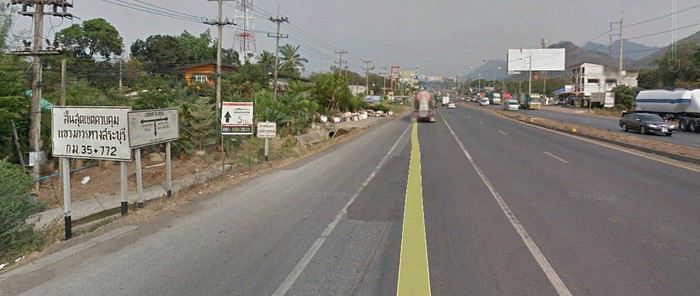
Je voyage en Asie du Sud est de novembre à mars cet année avec ma compagne et mon frère, et nous prévoyons de louer une voiture pour parcourir l’isaan pour une durée de 3semaines environ. On a déjà visité le pays 3semaines l'année dernière mais en restant sur les sentiers battus (BKK Sukhothai CM et koh chang principalement).
J’ai 26 ans et je conduis depuis mes 18 ans en France (2 et 4 roues) je suis de nature prudent et patient mais n’ai ni l’experience de la conduite en Asie ni celle de la conduite à gauche.
Nous pensions atterir à Bangkok, y rester 2 jours avant de louer une voiture à Suvarnabhumi et la rendre a Chiang Mai après les 3 semaines.
Je lis souvent que sans expérience de la conduite en Thaïlande c’est une très mauvaise idée mais si on ne se lance pas comment l’acquerir ?
Qu’en pensez vous ? Est ce une bonne idée de louer à BKK où la circulation est réputée particulièrement archaïque ? Ou est ce que je devrai par exemple monter en 1er lieu à Chiang Mai et la louer la bas pour faire le chemin dans l’autre sens?
Oui tout est en ordre j’ai eu de la chance ça n’a pris que 9 semaines 😎, je compte louer avec hertz ou budget et prendre ce qu’il faut comme assurances, via l’agence et acs voyage.
Vous avez raison, louer une voiture est le meilleur moyen de visiter le pays.
Pour en avoir loué une au moins une dizaine de fois je peux vous faire part de mon expérience.
Toujours passer par une grande agence comme Budget, Avis….. Ne pas lésiner sur l'assurance (rachat de franchise par exemple). Payer avec une carte gold ou premier pour avoir des garanties supplémentaires.
Le GPS est indispensable mais il y a des erreurs dans la cartographie.
Les locaux ne conduisent pas comme en France, c'est à vous de vous adapter et d'anticiper leurs réactions ( dépassement par la droite, par la gauche, création d'une 3ème voie là ou il n'y en a que 2....).
En cas d'accrochage, on laisse les véhicules sur place et on appelle l'assurance qui envoie un représentant pour faire le constat.
Toujours rester calme au volant.
Ok merci pour cette réponse ! Je pense sauter le pas mais j’avoue surtout m’inquieter que la sortie de BKK depuis l’aéroport en tant que 1ère experience des routes thaï soit un peu intense, avec les possibles erreurs de GPS duent aux routes à deux étages etc.
Une fois dans l’est ça devrait aller! D’autres retour concernant la sortie de Bangkok notamment ?
Bonjour,
Pourquoi ne pas louer plus localement?...Quant à conduire en Thaïlande, faut aimer...mais il est vrai que dès que vous sortez des grands axes, le trafic est clairsemé.
Bonjour Charlie, pour des raisons pratiques (location à 1sens) et sécuritaires (couverture civiles etc).
Nous voulons vraiment pas nous cantonner aux grands axes et grandes villes comme nous l’avons fait dans le nord. Surtout dans l’est D’après les retours que nous en avons ce serait dommage! :)
Bonjour Charlie, pour des raisons pratiques (location à 1sens) et sécuritaires (couverture civiles etc).
Pas bien compris votre réponse mais j'ai dû mal m'exprimer: si vous craignez (et à juste titre) l'intense circulation aux alentours de Bangkok, pourquoi ne pas aller en transports en commun dans une grande ville de l'Issan, par exemple jusqu'à Korat, et y louer un véhicule que vous rendrez ailleurs?
D’après les retours que nous en avons ce serait dommage! :)
J'ai toujours loué au départ de l'aéroport de Bangkok (Bkk) et la circulation est facile, vous n'avez pas besoin d'entrer dans Bangkok.
Attention en prenant votre véhicule à l'aéroport, il fait très sombre et on ne vous explique rien, à vous de découvrir (volant à droite, clignotants, gps …)
Nous pensions atterir à Bangkok, y rester 2 jours avant de louer une voiture à Suvarnabhumi et la rendre a Chiang Mai après les 3 semaines
Merci d’avance pour vos avis!
Bonjour
Chiang Mai c est le Nord, l Isaan c est le Nord Est
Pour repondre a votre question mais ce n est que mon avis... Pourquoi pas rejoindre l isaan en bus, en train ou en avion jusqu a Udon Thani par exemple . Louer une voiture sur place toutes les grandes enseignes y sont presentes et la rendre a Udon Thani apres votre periple.
Puis retour a Bangkok
Bonne preparation
J’ai 26 ans et je conduis depuis mes 18 ans en France (2 et 4 roues) je suis de nature prudent et patient mais n’ai ni l’experience de la conduite en Asie ni celle de la conduite à gauche.
Les statistiques disent que les routes thaïlandaises sont parmi les plus dangereuses du monde, les conducteurs expatriés confirment souvent, je confirme. Ce ne sont donc pas les meilleures conditions pour decouvrir la conduite a gauche et tu risques d etre un peu tendu sur les premieres minutes mais ça se fait. Comme deja dit, il faut prendre plein de precautions, anticiper meme l inconcevable, mais plus tu es dans la brousse, plus tu peux te permettre de conduire doucement sans mettre en rage les autres conducteurs
je prends toujours une carte sim avec des donnees mobiles a l aeroport en arrivant, la couverture reseau est bonne avec AIS 12call jusque dans le fond de la brousse isan, je pense que les autre doivent se defendre aussi
j utilise ensuite mon smartphone avec googlemaps, waze comme GPS et systeme carto. je me garde sous la main here et mapsme comme GPS hors ligne en cas de pb reseau (tellement rare que je ne me souviens pas que ca me soit arrive une seule fois en thailande, ou j ai cumule probablement pres d une annee de conduite. Quand on me parle pas ou qu'on écrit pas le thai, il arrive que la barrière de la langue soit difficile à contourner, Google Maps est le moins pire à ce niveau là avec bcp de point d interet references dans notre alphabet avec des transcriptions qui ressemblent a celle qu on trouve au bord de la route, meme au trou du cul de l isan
Je ne sais pas si tu es un habitué de ça, donc je vais te donner des recommandations comme pour un débutant: prevois un systeme pour brancher ton smartphone, la combinaison data mobile plus ecran plus son plus GPS consomme énormément d'électricité et mettra ta batterie à plat en moins de 2. Il faut prevoir a la fois un chargeur 12V Suffisamment puissant et un Cable capable de débiter une grosse intensité. Il faut aussi prévoir un support capable de tenir ton smartphone pour qu il soit lisible sans gener ta conduite.
La sortie de Bangkok sera sans doute la plus délicate, à la fois parce que la conduite qui est plus frénétique et plus anarchiques qu'ailleurs, et parce que les travaux sont constants Et que les cartes ne sont pas toujours à jour. Là-dessus aussi, Google Maps est ce qui se fait de moins pire selon mon expérience.
J'ai adoré et j'adore encore improviser Sur l'itineraire en Thaïlande: C'est le pays le plus facile que je connaisse pour ce genre d'exercice. Même au fin fond de la brousse, il est toujours extrêmement facile et rapide de trouver un hébergement, Facile et rapide de trouver des nourritures delicieuses.
Je rejoins les recommandations qui t'ont été faites: Privilégie les grosses boites de loc internationales, Et s il n y a qu un pays où tu casses ta tirelire pour t'offrir une meilleure couverture assurance, fait le en Thaïlande.
Je comprends et je cautionne le one way, Qui limitera le nombre de kilomètres parcourus et les risques, donc le temps perdu.
Si tu as une cette façon de voyager en improvisant, En gardant au maximum la possibilité de t'arrêterAutant de temps qu'il le faut Si tu découvres une bonne surprise, ou quelque chose , ou surtout quelqu un que tu sens bien au coin d'une route. Pour regarder cette possibilité, il faut toujours prévoir un itinéraire pas trop ambitieux, Genre un itinéraire faisable en 10 jours Si tu as un mois. Au pire, tu rajoutes une petite boucle en arrivant s'il te reste quelques jours à tuer. Ça ne m'est pratiquement jamais arrivé, En particulier en Thaïlande.
En Isan, il y a peu d'attractions touristiques répertoriées, et peu d'attractions touristiques tout court. Si tu t'arrêtes à ça, tu pourrais être déçu. En Thaïlande, j'ai eu la chance Bien plus qu'ailleurs dans d'autres pays De faire des rencontres magiques, Avec des gens qui avaient la patience et la générosité De partager.
Je comptais rendre la voiture à CM pour une bonne raison, on a un vol pour vientiane pour la suite du voyage au départ de BKK mais on voulait refaire quelques jours dans le nord avant de repartir en train de nuit/bus pour BKK.
Effectivement j’ai pensé à louer directement à Udon Thani mais on compte faite une grande boucle depuis BKK en s’arrêtant par exemple à ayuthaya qu’on avait délaissé au profit de sukhothai l’an passé, au parc de Khao Yai pour citer que les points les plus proches de BKK. Jusqu’à Khorat, Ubon Ratchathani et remonter par sakhon nakhon le long de la frontière cambodgienne.
@Renaud vous pensez que c’est un peu ambitieux comme itinéraire ?
Je pensais acheter une carte d’asie Du sud est à mettre dans mon petit gps TomTom branchable sur allume cigare.(le prix de la loc d’un gps chez hertz vaut un tiers du prix du véhicule)
Vous pensez que ça sera insuffisant ? La compagnie a l’air sérieuse sur ses mises à jour etc mais comparé à google maps ça risque d’etre un peu light. J’ai aussi maps.me à jour en cas de besoin.
J’entends bien pour la difficulté et le stress engendré par la conduite en Thaïlande surtout au début et au départ de BKK.
Mais c’est Vrai que si c’est le prix pour avoir 3semaines de liberté totale dans l’est et une immersion incomparable avec notre premier voyage en Thaïlande ou finalement nous avons voyagé d’un point touristique à un autre en croisant dans certaines villes beaucoup plus de chinois et d’europeens/australiens que de thaï.
On vise pas vraiment d’attractions touristiques en Isan à part le Phanom Rung et quelques autres, on veut surtout avoir une expérience de la Thaïlande comme certains « vieux briscards » de l’asie Nous l’on décrite et dont on a pas pleinement ressentis l’authenticité dans le nord et à koh chang.
On se laisse la possibilité de modifier/tronquer/adapter l’itineraire A l’infini pas seulement en Thaïlande d’ailleurs mais tout au long des 4mois en Asie, j’ai bon espoir que lisan sera une super expérience du coup !
Merci encore pour vos réponses et encouragements! 😎
on compte faite une grande boucle depuis BKK en s’arrêtant par exemple à ayuthaya
Donc le premier trajet en voiture de location, c'est Suvarnabhumi/Ayutthaya?...Sérieux?...Vous allez maîtriser de suite une boîte auto, très répandue dans le pays, initiales en anglais, des règles de conduite inexistantes, un trafic intense sur highway , voies multiples, énormes trucks à touche-touche, vans zigzaguant et bus longue distance doublant en 3è position, contre-allées prises à toute blinde, 2 roues sur les bas-côtés en sens inverse, vaches sur la voie, U-turn, nids de poule fréquents, j'en passe et des encore plus amusants?
C'est juste mon conseil: j'oublierais de suite une 1ère prise de contact avec la conduite "à la thaï" sur ce trajet. Et franchement, traverser Khao Yai et ses routes de montagne avec animaux sauvages possibles après chaque virage...
Par ailleurs, le véhicule personnel a évidemment de gros avantages, mais si vous allez d'un site à un autre (Ayutthaya, Khao Yai, Phanom Rung...), l'intérêt est d'emblée limité puisqu'il y a tout ce qu'il faut sur place pour se déplacer en transports en commun.
D'ailleurs, si vous cherchez le contact authentique avec l'indigène, dans une gare routière, vous devriez en croiser quelques-uns.
@Renaud vous pensez que c’est un peu ambitieux comme itinéraire ?
Si j'ai bien compris, la seule contrainte incontournable et de rejoindre chiang mai a temps pour ton vol vers le Laos, or tu peux ralier chiang mai depuis n importe ou en isan en moins de 24h.
Dans ce sens et si tu penses faire comme j aime, c est a dire en etant ouvert a chaque moment a un changement d itineraire et de planning, , ca me parrait tout a fait jouable.
Je pensais acheter une carte d’asie Du sud est à mettre dans mon petit gps TomTom branchable sur allume cigare. (le prix de la loc d’un gps chez hertz vaut un tiers du prix du véhicule)
Vous pensez que ça sera insuffisant ? La compagnie a l’air sérieuse sur ses mises à jour etc mais comparé à google maps ça risque d’etre un peu light. J’ai aussi maps.me à jour en cas de besoin.
j ai eu sous la main deux solutions GPS pour la thailand: un tomtom et papago version smartphone pour la thailande. les 2 etaient des kilometres en dessous de googlemaps, beaucoup, mais immensément moins a jour (non pas que googlemaps soit excemp de defauts). les 2 etaient egalement bcp moins efficaces et utilisables pour des recherches avec notre alphabet, ce qui est redhibitoire si tu ne sais pas utiliser l alphabet thai.
On vise pas vraiment d’attractions touristiques en Isan à part le Phanom Rung et quelques autres, on veut surtout avoir une expérience de la Thaïlande comme certains « vieux briscards » de l’asie Nous l’on décrite et dont on a pas pleinement ressentis l’authenticité dans le nord et à koh chang.
mes plus belles experiences/rencontres ont eu lieu quand j avais le temps de me poser qq part. Quand tu ne restes que 24 ou 48h qq part, les choses restent fatalement superficielles, meme si tu tombes sur qqun de tres genereux et ouvert.
ca m est arrive d avoir 4 mois (et meme plus, j etais en mi temps annualisé=6 mois de vacances). une des annees ou j avais ca, mon point de chute etait la thailande (AR paris bangkok, retour apres 6 mois) j avais prevu de me baladerde la birmanie au vietnam et en malaisie, j ai fini par passerun total cumule de plus de 4 mois en thailande au gre de quelques escapades, et du max que me laissait les regles de visa pour la thailande a l epoque. j ai raconte une partie de l histoire la:
https://voyageforum.com/v.f?post=9175000;a=9175000
et la
https://voyageforum.com/v.f?post=5838718;a=5838718
tu peux utiliser ces 4 mois pour decouvrir plusieurs pays, ou choisir de rester dans un seul pays, pour te laisser une chance d aller au dela de la superficialite grace au temps, grace a d'eventuels progres pour surmonter la barriere de la langue...
A posteriori, j ai un peu assouvi ma boulimie de pays et de nouveaux horizons donc ca joue certainement dans mon avis aujourd hui, mais avec le recul donc, mes souvenirs les plus magiques et inoubliables viennent tres majoritairement des coups ou j ai fait le choix de la duree au detriment du papillonnage, du nombre de km et de pays
Dans le sens ou il n y a pas d "attractions touristiques", en ISAN, je n ai pas trouve d experiences intenses et ponctuelles, mais c est un endroit ou j ai nombre de mes meilleures
experiences de voyage parce que j ai su (et eu la chance de pouvoir) laisser le temps au temps
mais chacun doit decouvrir sa facon de voyager, son cheminement, ses preferences...
Bjr, Phanom en transport en commun ??????Vous l'avez fait ? Depuis où ?Avec qui ?Perso en 5 fois ce site, jamais vu + de 5 farangs tous venus en bagnoles;taxi , famille etc...à oui l'année dernière il y avait un squellette sur un banc avec une pancarte;Please, Buriram..Quant à la rencontre de thais aux alentours des gares;oui de la pouillerie...A+
Quant à la rencontre de thais aux alentours des gares;oui de la pouillerie...A+
Il est vrai que parcourir les 30 bornes qui séparent la gare routière de Nang Rong du parc historique représente un sacré challenge...On se croirait dans Pékin-Express.
Par ailleurs, je fréquente quelques indigènes qui empruntent régulièrement les bus du pays, ou qui habitent à proximité de certains terminaux. Votre remarque, quoique pas franchement inattendue, est très désobligeante et pour ce qui me concerne, j'en resterai là.
Souffrez que les prochaines "réflexions" que vous pourriez m'adresser restent sans réponse de ma part.
Désolé de vous avoir offensé, vous parliez de transport en commun jusqu'a Phanom;ok ben non mais bien sur que l'on peut s'en approcher.Quant aux autoctones près des gares, je ne pensais pas aux habitants mais aux loustics comme chez nous qui trainaillent .Failli être victimes 2 fois.Bon incompréhension d'analyse , pas grave A+
@Charlie effectivement j’y avais pensé pour le trajet BKK Ayutthaya, je me souviens que c’est Très proche de BKK et que la circulation est très dense.
Pour la boîte auto je maîtrise puisque je roule avec depuis 3ans, pour le reste effectivement à part l’anglais qui est impeccable pour ma copilote et moi ce sera pas toujours évident.
Je pense qu’en cas de panique comme en France on peut se ranger sur la voie de gauche derrière un poid lourd et rouler plus tranquillement ou au moins avoir le temps d’analyser et d’anticiper un peu plus facilement non?
J’ai cité khao yai et Phanom Rung comme points importants de l’est, ca Veut pas dire qu’on ira d’un point à un autre par des highway et que ce sera l’essence de notre trip bien au contraire.
L’idee étant plutôt de sortir des grands axes et de prendre son temps, l’interet Du véhicule de loc étant pour nous de pouvoir s’arreter dans un village ou un temple quand l’envie nous en prend, chose à mon avis clairement impossible en transport en communs...
J’entends bien vos mises en garde mais si on voulait d’un séjour sur les sentiers battus on se contenterai de Phuket Koh Samui et Chiang Mai.
@Renaud
le vol pour le Laos est au départ de BKK donc même Chiang Mai peut être supprimée de l’equation Si on est avide de quelques jours supplémentaires dans l’est.
Pour le GPS du coup merci du précieux conseil avant de dépenser 50e en carte d’asie Pour mon TomTom je vais plutôt investir dans une SIM locale et un bon adaptateur allume cigare! Je note les ref que vous donniez plus haut.
J’ai le même genre de dilemme puisque je travaille en restauration et que mon restaurant est fermé entre 2 et 4mois par ans me donnant autant de congés ce qui permet de voyager avec un budget agréable et sans se tracasser plus que ça.
Effectivement on se voyait bien traverser chaque pays de part en part de BKK au Laos puis par la frontière terrestre du Cambodge et remonter le Viêt Nam de Ho Chi Minh à Hanoï... on a quelques obligations comme les amis qui nous rejoignent en janvier au Cambodge mais le vol retour n’etant Pas encore booké la flexibilité est grande!
Je vais prendre le temps de lire votre récit et aussi, j’ai entendu dire que la Thaïlande prenait des mesures contre les « visa trip » donc pas sur qu’il soit encore si évident de rester 4mois sans PVT ou autre.
De plus ça n’est que notre 2e voyage en Asie et nul doute que lors du 3e on modifiera certains paramètres pour découvrir d’autres aspects ou affiner notre façon de voyager.
Si vous pouvez pousser jusqu'a CHIANG KHAN au bord du Mékong, j'ai beaucoup aimé, il n'y a personne hormis le week end, très paisible. J'ai fait Loei également et ses alentours et Udon Thani.
Effectivement on se voyait bien traverser chaque pays de part en part de BKK au Laos puis par la frontière terrestre du Cambodge et remonter le Viêt Nam de Ho Chi Minh à Hanoï... on a quelques obligations comme les amis qui nous rejoignent en janvier au Cambodge mais le vol retour n’etant Pas encore booké la flexibilité est grande!
Je vais prendre le temps de lire votre récit et aussi, j’ai entendu dire que la Thaïlande prenait des mesures contre les « visa trip » donc pas sur qu’il soit encore si évident de rester 4mois sans PVT ou autre.
je ne suis pas expert dans ce domaine, et j ai cru comprendre que c est plus tendu que quand je passais bcp de tps en thailande, mais sur le principe, ils faisaient deja et font toujours la chasse aux Farang Kee Nok, voyageurs sans le sou qui trainent trop longtemps, et ils disent bienvenue a ceux qui ont l'air d'avoir du fric, d autre part si tu t approches des limites ca aide si des ton entree tu peux deja montrer un billet de sortie, ou que tu sais que tu vas devoir payer une extension de visa a 1900bahts(je ne sais pas si c est encore le prix), c est bcp mieux que de dire "je ne sais pas quand je repars"
Pour le GPS du coup merci du précieux conseil avant de dépenser 50e en carte d’asie Pour mon TomTom je vais plutôt investir dans une SIM locale et un bon adaptateur allume cigare! Je note les ref que vous donniez plus haut.
si tu n utilises pas ca tous les jours, familiarise toi avec ca en france avant de partir (prise 12V-USB assez puissante pour ton smartphone en fonction guidage, cable assez costaud pour ton smartphone en fonction guidage, ET ne neglige pas le systeme de fixation qui ne doit pas laisser pas tomber ton smartphone au premier nid de poule , tu auras besoin de te concentrer sur la route et la circulation sur les premiers kilometres
pour la carte sim locale, l'"investissement" pour une carte pour un mois sera de l ordre de 400 nahts soit 10 euros. Si tu es un gros consommateur de data, il y a des offres mobiles qui comprennent du wifi, AIS a des bornes dans tous les aeroports, gares routieres et ferroviaires, supermarches, et parfois les stations service, avec des debits parfois impressionnants (je me souviens d avoir mesure un debit wifi de presque 100Mega a suvarnabhumi en arrivant, apres un wifi anemique au depart de roissy
je ne suis pas expert dans ce domaine, et j ai cru comprendre que c est plus tendu que quand je passais bcp de tps en thailande, mais sur le principe, ils faisaient deja et font toujours la chasse aux Farang Kee Nok, voyageurs sans le sou qui trainent trop longtemps, et ils disent bienvenue a ceux qui ont l'air d'avoir du fric, d autre part si tu t approches des limites ca aide si des ton entree tu peux deja montrer un billet de sortie, ou que tu sais que tu vas devoir payer une extension de visa a 1900bahts(je ne sais pas si c est encore le prix), c est bcp mieux que de dire "je ne sais pas quand je repars"
Oui c’était l’idée du vol Vientiane paraît il qu’ils sont tatillon au départ de Roissy et parfois a l’arrivée aussi si on a pas de preuve de sortie. Sinon on serait sortis par voie terrestre.
pour la carte sim locale, l'"investissement" pour une carte pour un mois sera de l ordre de 400 nahts soit 10 euros. Si tu es un gros consommateur de data, il y a des offres mobiles qui comprennent du wifi, AIS a des bornes dans tous les aeroports, gares routieres et ferroviaires, supermarches, et parfois les stations service, avec des debits parfois impressionnants (je me souviens d avoir mesure un debit wifi de presque 100Mega a suvarnabhumi en arrivant, apres un wifi anemique au depart de roissy
c’est bon à savoir, on trouve ça dans les 7eleven ?
c’est bon à savoir, on trouve ça dans les 7eleven ?
si tu veux dire le wifi, jamais essaye dans un 7/11, j e tentais plutot le coup dans des lieux publics ou on peut s assoir, restos, marchés, galerie marchande...
En Isan, il y a peu d'attractions touristiques répertoriées, et peu d'attractions touristiques tout court. Si tu t'arrêtes à ça, tu pourrais être déçu. En Thaïlande, j'ai eu la chance Bien plus qu'ailleurs dans d'autres pays De faire des rencontres magiques, Avec des gens qui avaient la patience et la générosité De partager
Bonjour Renaud
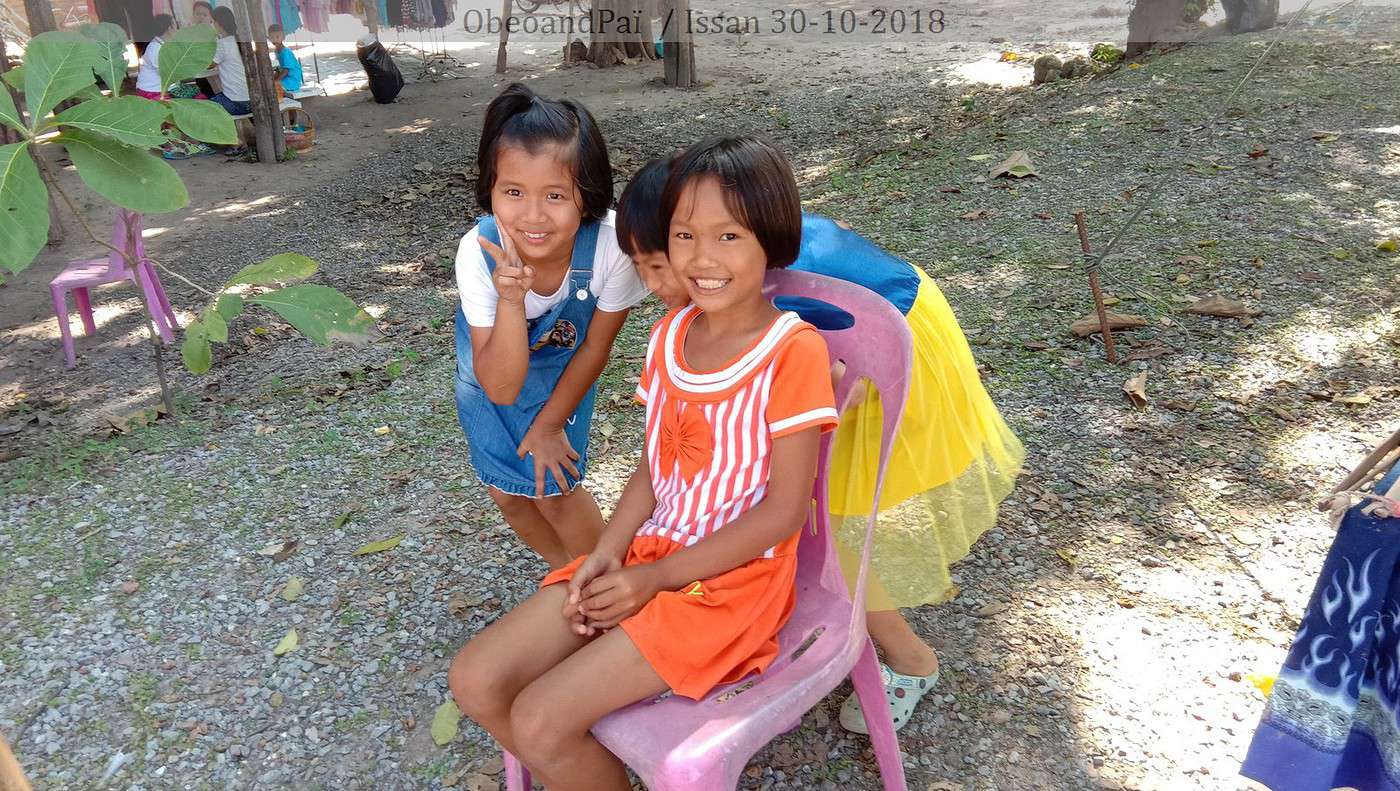
un ami, pour quelques jours a la maison voulait faire des photos de la coupe du riz
Mauvaise pioche, trop tôt de pas beaucoup
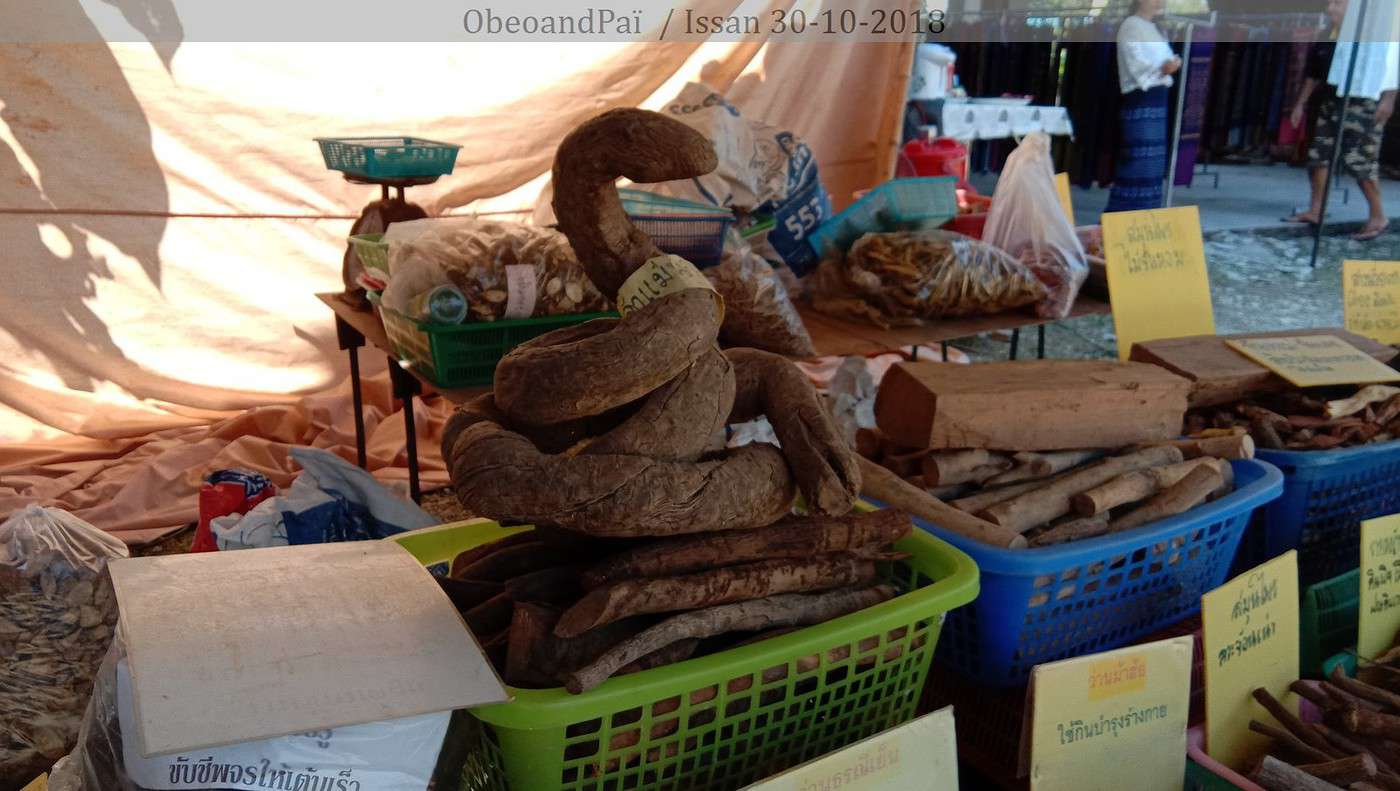
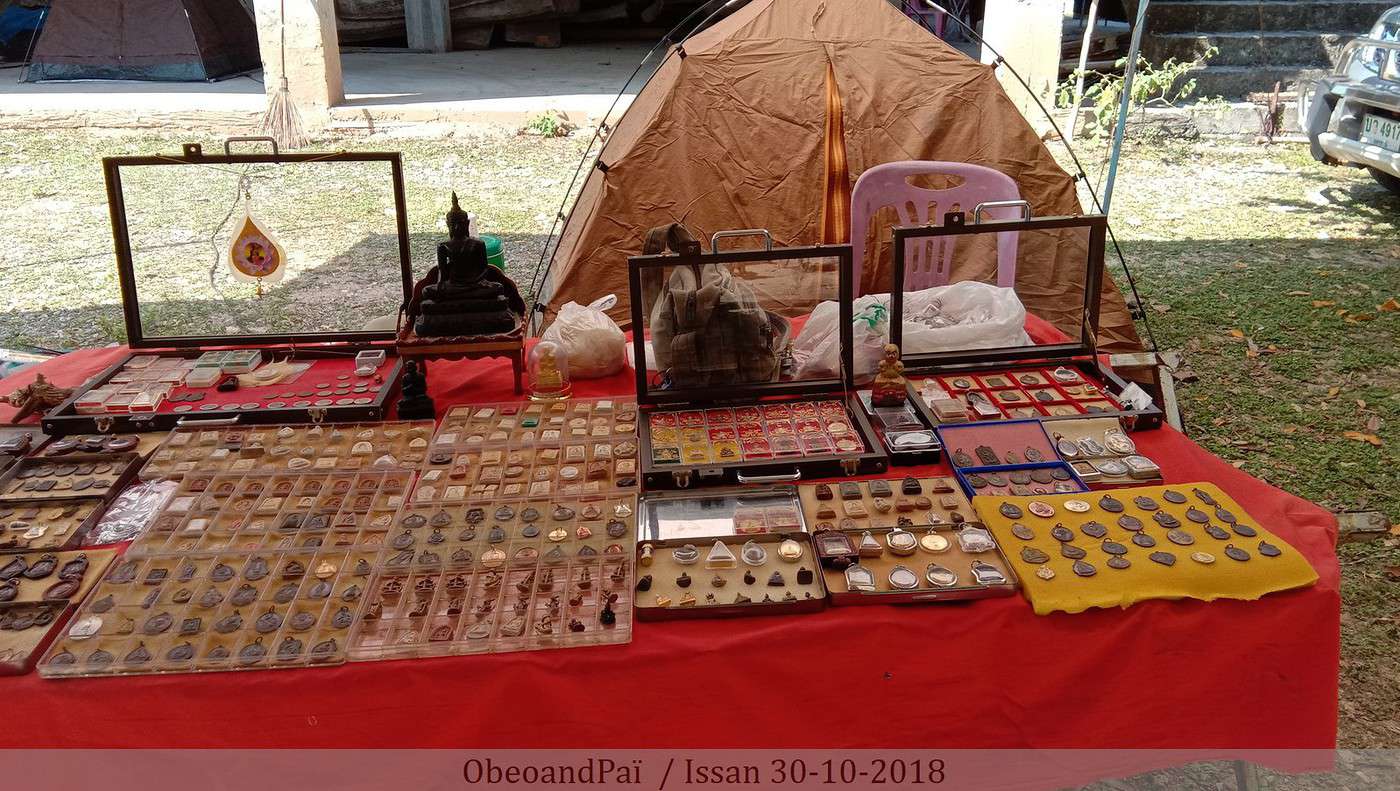
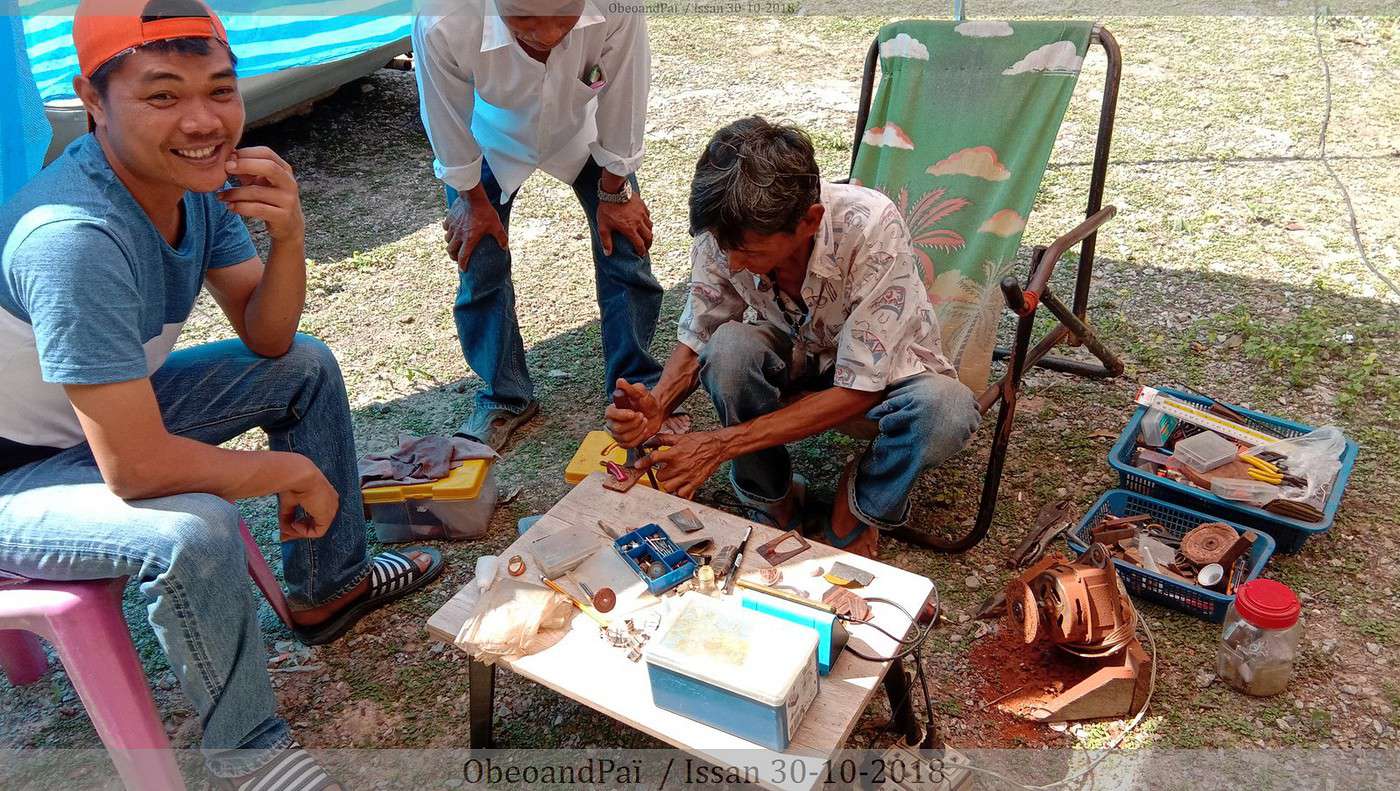
Par contre en 4 heures au hasard des petites routes des bribes d'Amazing Issan:
illustration:
Un Tamboon dans un petit Wat,
Stand d'apothicaire
Artisan qui ajustera votre amulette dans le pendentif de votre choix
boissons et repas offert (un don au Wat, non obligatoire, sera le bienvenu)
le tout avec la gentillesse et les sourires légendaires
au retour, dans un petit bled, option grand spectacle avec l'interpellation "musclée" d'un dealer par la brigade des stups
et en final,
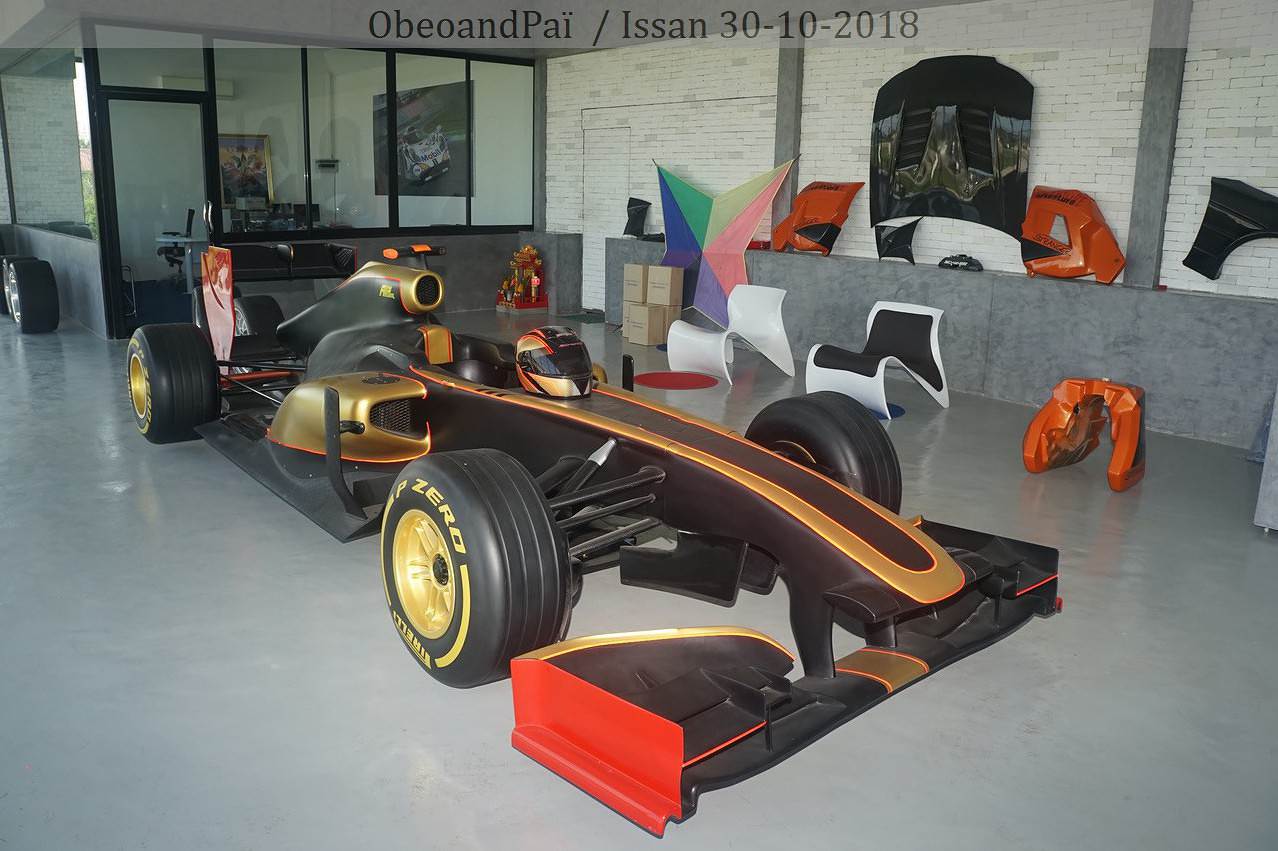
visite non prévue d'un artisan fabricant de répliques de voitures de grand tourisme (Ferrari, Aston-Martin, etc)
et de caisses de monoplaces, étonnant non ?
@Charlie effectivement j’y avais pensé pour le trajet BKK Ayutthaya, je me souviens que c’est Très proche de BKK et que la circulation est très dense.
Raison pour laquelle je vous suggérais de vous dégager d'abord et de louer plus loin. Autant la circulation est tranquille sur la majorité du réseau, autant il vaut mieux éviter les axes principaux, et notamment à proximité de la capitale.
Pour la boîte auto je maîtrise puisque je roule avec depuis 3ans
C'est déjà ça.
Je pense qu’en cas de panique comme en France on peut se ranger sur la voie de gauche derrière un poid lourd et rouler plus tranquillement ou au moins avoir le temps d’analyser et d’anticiper un peu plus facilement non?
Excellente idée: les distances de sécurité sont inconnues dans le pays et vous retrouver sans aucune visibilité est la dernière chose à faire. De plus les entrées par la gauche sont fréquentes et pas spécialement indiquées.
J’entends bien vos mises en garde
On vient souvent sur VF déjà décidé. Je ne fais donc que donner mon avis en sachant qu'il sera probablement ignoré.
mais si on voulait d’un séjour sur les sentiers battus on se contenterai de Phuket Koh Samui et Chiang Mai.
L'Issan est intéressant comme peut l'être l'arrière-pays en France. C'est assez curieux que cette région semble passer de son statut de "trou à farangs réfugiés économiques" à "vraie région authentique". Je ne sais pas quel fantasme motive les voyageurs car le reste du pays est tout aussi intéressant: louez une voiture à Samui, vous vous dégagerez vite du ghetto touristique et vous y découvrirez la vie "à la thaï" . Marchez quelques rues dans Bangkok, et vous serez de suite plongé dans la vie locale, et sans plus aucun Occidental (ce dernier point étant la preuve que vous serez alors passé du statut de petit touriste à celui de grand voyageur).
Pour le GPS
Personnellement, c'est smartphone, Google et Simcard TRUE. Jamais rencontré de problème.
j’ai entendu dire que la Thaïlande prenait des mesures contre les « visa trip » donc pas sur qu’il soit encore si évident de rester 4mois sans PVT ou autre.
Pas de mesure particulière ou nouvelle depuis les dernières modifs de visa. Les vagues de contrôle ne sont pas nouvelles et seuls les étrangers en situation irrégulière sont en difficulté.
Selon vos dates, renseignez-vous sur les fêtes locales: il y a peu de sujets de distraction dans ces campagnes et ce sont toujours des événements très courus.
Je ne me sens pas offensé, mais rien ne m'horripile plus qu'un farang qui dénigre la population qui l'accueille.
je ne pensais pas aux habitants mais aux loustics comme chez nous qui trainaillent .
Au temps pour moi. Il me semblait évident que j'évoquais la popularité du réseau des bus interprovinciaux chez les locaux, pas les pickpockets et autres parasites qui évoluent toujours là où la foule se concentre.
@Charlie
Je ne sais pas ce qui motive votre irascibilité ni quelle est la source de votre amertume mais sachez que non, si on vient poser des questions c’est justement qu’on est pas sûrs de nous.
De plus nous ne sommes encore pas tous désabusés et blasés de nos expériences de voyages, je me demande ce qu’il vous en coûte de laisser un peu rêver les jeunes.
La encore, j’ai connu une Belgique que je me plaisais a comparer à la France pour son ouverture d’esprit et sa sympathie. A croire que les exceptions confirment certaines règles.
Je ne fais qu'évoquer les réalités du terrain. Simples. Basiques. Vous en tirez le profil psychologique que vous voulez, de mon côté, je ne participe pas sur ce registre. Ce n'est pas une irascibilité ou une amertume supposées qui importent, mais ces réalités de terrain.
Je reste donc à votre disposition si vous souhaitez quelques compléments d'information pour réaliser vos rêves en Issan. Je ne les ai à aucun moment découragés, et chacun est libre de présenter ou fantasmer cette région comme il l'entend.
Pour d'autres lecteurs profanes et désireux de prendre la route dans le pays, ceci pourra toujours servir:
www.chiangmailocator.com/...affic-accidents-p169
Curieux de voir le compte-rendu de ces 3 semaines en voiture en Isaan et les étapes qui auront été effectuées encore que, avec un début à BKK et une arrivée à Chiang-mai, on a un beau gros morceau hors d'Isaan.
J’ecrirai un compte rendu soit pendant les 4mois si je trouve le temps soit au retour.
Cela pourrait vous intéresser car nous avons abandonné Chiang Mai pour nous concentrer exclusivement sur l’isaan.
Voiture louée du 11/11 au 3/12 au départ de Bangkok et retour à Bangkok également!
Ayutthaya abandonné aussi pour éviter de prendre des risques inconsidérés sur la route en début de voyage, puis on avait adoré sukhothai qui était plutot tranquille, on y avait croisé surtout des jeunes thaï en sortie scolaires et quelques farang donc on ne regrette pas de faire l’impasse!
Si vous voulez perdre vos repères , orientez votre voyage sur le Laos, Myanmar, Vietnam et bien d'autres destinations.
Le dépaysement sera garanti.
L'Isaan c'est comme toute la Thaïlande avec des centaines de 7.11
L'intérêt de l'Issan, c'est probablement de pouvoir se dire, après l'avoir visité : qu'est-ce que c'est mieux, le reste de la Thailande !
Certains étrangers s'y sont trainés parce que réfugiés économiques voire sociologiques, mais qui d'autre s'y risquerait ?
Certains étrangers s'y sont trainés parce que réfugiés économiques voire sociologiques, mais qui d'autre s'y risquerait ?
Bonsoir
Moi par exemple et je ne suis ni refugie economique, voir sociologique et ce depuis plus de 10 ans.
J ai une tres bonne retraite, une belle maison avec piscine , 2 voitures, que du bonheur mais je respecte ton point de vue...pas de probleme
L'intérêt de l'Issan, c'est probablement de pouvoir se dire, après l'avoir visité : qu'est-ce que c'est mieux, le reste de la Thailande !
Certains étrangers s'y sont trainés parce que réfugiés économiques voire sociologiques, mais qui d'autre s'y risquerait ?
:)
On rappelera quand même que le nord-est avec les 20 provinces qui le composent est geographiquement la partie la plus importante du pays.
On y trouve la province la plus visitée du pays par le tourisme domestique, des sourires parfois rares mais sincères, une culture de l'auto-dérision à faire pâlir un ch'ti.
Et la main d'oeuvre land of smile pour vos voyages hors sentiers battus.
Je ne suis ni réfugié sociologique ou économique. Cela fait 7 ans que je m'y ballade ainsi que dans le reste de la Thaïlande et les pays avoisinants.
Je ne suis pas d'accord avec votre jugement bien que je le comprenne. Sillonnant la Thaïlande, je peux vous dire que l'on rencontre un peu partout les expatriés que vous citez. Et j'en vois très peu dans ma région. Si je devais faire mienne votre réflexion, je l'appliquerai à Pattaya où en quelques heures j'en vois plus qu'en une année en Issan. Et même carrément des épaves. Sans pour cela généraliser sur la population de Pattaya.
A titre d'info, la deuxième ville la plus riche de Thaïlande est en Issan, c'est Khon Kaen.
Où je vous rejoins, c'est que je ne comprends pas bien la motivation de certains touristes à vouloir y venir après un ou deux voyages en Thaïlande.
L'Issan a une image qui a sans doute existé dans le passé et qui reflète de moins en moins la réalité.
Et pourtant, il y a là-bas plus d'un malheureux, souffrant d'un ennui mortel après avoir été bien forcé d'y suivre sa petite femme.
Mais je n'en resterai pas là et probablement que dans les prochaines années j'irai sur place m'en faire ma propre idée.
Si je n'y meurs pas de désoeuvrement, peut-être même que je viendrai ici faire mon petit rapport. Peut-être...
C'est assez curieux que cette région semble passer de son statut de "trou à farangs réfugiés économiques" à "vraie région authentique".
Comment se faire de nouveaux amis en 10 leçons.🙂
On pourrait lire mon message de diverses manières, selon l'état d'esprit:
-Je ne cherche pas à me faire des amis.
-tous les farangs installés en Issan ne sont pas des réfugiés économiques.
-le statut de l'Issan a évolué positivement.
-l'Issan n'est pas encore gravement perturbé par le consumérisme touristique.
Cela dit, je ne vois pas de raison de le dissimuler (ou d'éviter le sujet): l'amélioration du niveau de vie est le 1er critère d'expatriation pour la Thaïlande (et pour les PEVD en général), et la plupart des farangs vivent en Issan avec une compagne indigène (et notamment s'il est y est propriétaire terrienne).
Traverser l issan peut être parfois décevant, de long passage un peu monotone entre quelques point d intérêt plus ou moins grandiose.
On peut passer à quelques kilomètres d un point d interet non répertorié ou d une fête très etonante.
Y vivre et participer à la vie locale est certainement une passion qui se merite mais souvent les retours y sont genereux. Même si selon l environnement ça peut être assez dur
Merci d'avoir précisé que vous n'y avez jamais mis les pieds.🙂
Je vous en prie : la vérité sort toujours de la bouche des innocents.
De plus, je vous précise que même si je n'ai jamais encore mis les pieds sur la lune je sais parfaitement que je m'y ennuierais considérablement. Plus qu'en Isaan, je crois.
Bonsoir
Moi par exemple et je ne suis ni refugie economique, voir sociologique et ce depuis plus de 10 ans.
J ai une tres bonne retraite, une belle maison avec piscine , 2 voitures, que du bonheur mais je respecte ton point de vue...pas de probleme
Oui, justement, tu n'es pas l'exemple auquel je pensais.
Je constate aussi qu'on a visité le même temple...🙂
Hello everyone! I’m heading off solo in February and wanted to share my rough itinerary with you. Does this sound doable?
PS: I’m not really into beaches.
D1 Departure on February 17, 2027
D2 Arrival in Kuala Lumpur – stroll through Chinatown and visit the Petronas Towers
D3: Kuala Lumpur – Chow Kit Market, Batu Caves, Little India, Bukit Bintang downtown area
D4: Early morning bus to Malacca. Explore Malacca in the afternoon and evening
D5: Another 2–3 hours in Malacca in the morning, then bus back to Kuala Lumpur. Merdeka Square area. Stay in Chinatown
D6: Bus trip to Kuala Tahan. Night tour
D7: Morning – canopy walk and Bukit Terisek hike. Afternoon – off to Lata Berkoh
D8 & D9: 2-day jungle trek in Taman Negara National Park
D10: Head to Cameron Highlands
D11: Morning hike through the plantations. Afternoon still to be decided
D12: Morning – excursion to Mossy Forest and Sungei Plantation. Afternoon bus to Ipoh
D13: Morning – Mirror Lake / Sam Poh Temple area. Afternoon – explore downtown Ipoh
D14: Morning train to Penang. Afternoon – wander around Georgetown
D15: Morning – Penang Hill and Keh Loh Temple. Afternoon – Georgetown
D16: Bus to Butterfly Garden and Spice Garden. Late afternoon – Burmese and Thai temples
D17: Morning flight to Singapore. Afternoon – Chinatown and Marina Bay tour
D18: Morning – Gardens by the Bay area. Afternoon – Boat Quay, Clarke Quay, Kampong Glam
D19: Morning – The Ridges area and Botanical Garden. Afternoon – Little India, then back to Chinatown before 11:15 PM return flight
D20: Morning arrival
Has anyone traveled with the Laos travel agency ADV ?
I’m planning a trip to Laos and have received several quotes. Among them, this agency’s seem very reasonable, and so far, the interactions have been positive.
I’ve found a few positive reviews online, but I’d love to hear from travelers who’ve actually booked with them: how’s the organization, guide quality, accommodations, on-the-ground responsiveness, etc.
Thanks for sharing your experiences!
First stop on our discovery of the peninsula: Amphawa. It’s our first night in Thailand (we arrived at Suvarnabhumi at 8:50 AM).
Our initial plan was to explore the area before heading further south. The Mae Klong Railway Market is tempting... but what else is there to do????
We’ll be there on a Wednesday, and from what I’ve read on the forum, some say there’s absolutely nothing to do during the week—no floating market, barely any shops open, no restaurants, etc.
Others, though, say the place is actually more charming without the weekend crowds.
Could you share your thoughts? Missing the floating market is one thing, but if it’s really a ghost town on Wednesdays, I might just drop our bags somewhere else.
Amphawa seemed like a good first stop, just 1.5 hours from the airport, but I’d still like to settle somewhere a bit lively for our first evening.
We’ll be there at the end of October.
Thanks!
Hi,
I wanted to visit the plantations in the morning with GetYourGuide or by just showing up.
How much time should I really plan for?
I’d like to catch either the 3 PM or 5 PM bus back to KL.
Thanks
Hi,
I wanted to get some info about the cable car and the bridge—I see lots of different options...
How much time should we allow for these two activities? If we arrive around 4 PM, will we have enough time to visit without rushing?
Thanks
Hi there,
I didn’t plan to return to Thailand this year, but my health conditions mean it’ll be the best place for me to stay between two trips to India. The tourism setup there is so well-organized that it’s the most "comfortable" country for a short visit. Thailand feels too sanitized for my taste, and there’s too much religion, Buddha, and the King, but it’s still the best option given how my health has been evolving. I’d considered two weeks in ThaTon for hiking, but I got too sick from the burn-offs during my trips to the mountains around Chiang Rai. So I’m not sure where to go this year. Definitely not the sea, touristy spots, or the mountains with burn-offs...
Hi,
On September 1st, we're heading to Kalimantan for six weeks, probably from Pontianak to the Derawan Islands.
I've scoured this site, which is usually my go-to 😉, and others like VoyageForum, but recent info is pretty scarce.
I'd love any tips on places you've visited—our itinerary is still a work in progress.
We're two couples traveling with backpacks, using buses, boats, guesthouses, and homestays.
Thanks in advance!
Hi fellow travelers,
First trip to Vietnam.
We’ll be arriving in Ho Chi Minh City during Tet.
Is it complicated to find accommodation and get around during this period?
Any tips would be welcome.
Thanks for your replies.
Hi! I’d like to split my trip into two parts: 15 days in Phuket and 15 days in Krabi. Do you know if I can rent a car and drop it off in Krabi when I fly back to France?
Thanks for your feedback!
Have a great Sunday!
Martine
Hello,
After 1 night in Khao Sok, I’d like to find a 2 Days 1 Night package on the lake.
After reading a lot, I decided to "break the bank" and treat ourselves to a private tour—mainly to avoid the crowds.
But after contacting several operators, they offer "private tours" that are very expensive (around 700 €), yet in the details, the boats can only leave from the pier at 10 AM like everyone else. (I was hoping to leave much earlier.) The morning program is the same for everyone too (private or not). They drop us off at noon at our floating hotel (I’d chosen Phupha Waree). Free afternoon (swimming or kayaking in front of the hotel). We head back by boat for a 1-hour sunset ride. And the next morning, we leave the hotel at 8 AM to be at the pier by 9:30 AM at the latest—end of the trip.
So basically, we’re paying a lot for a private tour just to do the same thing as everyone else at the same time.
Or maybe I just had bad luck in my search.
I contacted Panida Ladi, who’s very popular on forums. We’d agreed on a private tour that matched my request (departure from the pier at 8 AM, very personalized itinerary). We settled on the itinerary and price, she asked for a Wise transfer for a 30% deposit, confirmed receipt of the deposit. Then 30 minutes later, she messaged me to say she was canceling everything because it was impossible to do the requested tour—and promised a quick refund of my deposit.
So here’s my question: Who’s done a *real* private tour on this lake? Who can recommend a reliable agency? Is it even really possible to do a private tour here?
I’m searching for a real gem for my 3rd stay in Koh Lanta: a lovely, high-quality hotel right by an easily accessible beach in a lively spot.
If you know of anything that fits what I’m looking for and want to share, don’t hesitate!
Hi, is anyone there in Flores right now? According to some websites, everything is closed and the situation is tough. But our guide says it's fine. Who should we believe? We're supposed to leave on September 2nd. Thanks to anyone in Flores at the moment!
Hi dear community,
I'm planning to visit Cambodia this winter, right after Christmas, for my first solo trip and my first trip to Asia. For two weeks (yes, I know it's short, but I really can't do more...). I have two main desires: Siem Reap and the countryside, the villages, the Mekong...
What do you think of this itinerary? Arrival in Siem Reap, departure from Phnom Penh.
SR: 5 days (1 day for arrival, 3 for the temples, 1 for the lake and its villages)
Kratie (stop on the way to Mondolkiri): 3 days (1 day of travel, 2 days there)
Mondolkiri/Sen Monorom: 4 days (1 day of travel, 1 day there, 2 days of treks)
PP: 3 days (1 day of travel, 2 days of sightseeing)
I think I need to cut one day somewhere if I travel from Saturday to Saturday or Sunday to Sunday. In Kratie, maybe? Or in PP? And I'll miss the boat trip that everyone recommends (SR-Battambang), but I don't see where to fit it in. Unless I do a PP-PP loop starting in the east, skip Kratie or just stay one night, then SR, then PP.
In my timing, Mondolkiri seems closer than Ratanakiri, which also tempted me a lot! Will it be too complicated alone? I'm thinking of using local guides or a small local agency for a nature and village getaway.
I've read that Siem Reap is very crowded between Christmas and New Year's. I could also do the circuit in the opposite direction. But I thought it would be easier to get familiar with the country by arriving in a touristy area—I might be wrong...
Thanks for your advice and opinions!
Hi everyone.
I’m planning my trip, and based on all the posts I’ve read, this country is amazing.
Of course, I’ve got a ton of questions for you.
Here’s a possible itinerary: Vientiane - Vang Vieng - Phonsavan - Sam Neua - Nong Khiaw + villages - Phongsali - Luang Namtha and the area - Udomxai - Huay Xai - Luang Prabang and back to Vientiane.
What do you think?
We’re planning to prioritize local transport—is it possible to do this loop?
We’d also love to go kayaking, but I’m not sure if the season’s right or where the best spot is.
For trekking—I read that Phongsali is the most authentic spot to visit villages and see wildlife. Do you know of a reliable agency and a guesthouse with reasonable prices?
Is it worth taking a slow boat for a stretch on the Mekong, and if so, which route?
For accommodations, is it better to book through Booking.com and Agoda or look when we arrive?
Are mosquitoes bad in Laos, and should we take malaria prophylaxis?
What’s the average daily budget (accommodation, food, visits)?
Is renting scooters a good option for exploring towns, and if so, which ones?
From what I’ve read, it’s best to carry cash—euros or dollars? Is it risky to walk around with that much cash?
I’ve still got tons of questions. Thanks to anyone who can help, and I’m open to all tips, info, etc.
Thanks again
Hi there,
I’m planning a trip to Vietnam in February, specifically Da Nang and Hoi An.
Does anyone know a French-speaking guide in the area?
Thanks for your help
Hi there,
I’m planning a family trip (my wife and I, both 47, and our two sons, aged 5 and 12) to Malaysia for the last week of June and the first two weeks of July 2027.
We used to love road trips as a couple, then as a trio, but since our second child arrived, we’ve taken a break with "camping village" style trips.
Now feels like the right time to get back to our old habits, while adjusting the pace for the kids.
We’re craving Asia. We’ve been lucky enough to visit Thailand, Indonesia (Bali and Lombok), and Sri Lanka before.
Friends have raved about Malaysia, so we’re definitely tempted.
For those who know and love Malaysia, what would be a good itinerary starting from Kuala Lumpur, with a maximum of 3-4 stops? We’d like a mix of culture, nature, and relaxation (just to clarify, we’re not big beach fans). All of this without rushing, of course.
Hello,
We’re a family of four with two teens aged 16 and 18. We’re heading to Thailand this summer. We’ll arrive in Bangkok and plan to take a flight to Luang Prabang.
I’ve seen there are some great visits and excursions to do (temples, markets, waterfalls) and maybe even venture a bit north to places like Nong Khiaw, Muang Xay, Muang Ngoy, or Oudom Xay.
But I’ve also heard about the Bokeo region with the Gibbon Experience.
Since we won’t be able to do everything, I’d love to hear about your experiences, impressions, and advice on the two options I’m considering, especially since we’ll be meeting family in Chiang Mai, Thailand, afterward.
Option 1: A loop from Luang Prabang heading slightly north, then a flight from Luang Prabang to Chiang Mai.
Option 2: A few days in Luang Prabang, exploring within a few dozen kilometers around, then heading to Bokeo province for the 2-day/1-night Gibbon Experience. For this option, I saw on Rome2Rio that it’s possible to book a ferry trip on the Mekong from Luang Prabang to Huay Xay—they mention about 8 hours. But is that realistic? What type of boat is it?
Then, to get to Chiang Mai, there aren’t many options—bus or minivan—but how does crossing the border work?
Finally, for those of you who’ve been to Laos in August, what was the weather like?
We’ve already visited Thailand, Vietnam, and Cambodia during the same period over the past four years and weren’t really bothered by bad weather.
I’m starting a discussion about guides in the Mekong Delta because we’ve just finished our trip in this region and had a hard time finding a French-speaking guide. We had Thanh—she speaks French really well and travels all over the delta region, including Ho Chi Minh City. She’s super friendly and flexible. I recommend her wholeheartedly. If it can help someone...
Feel free to contact us for her number.
Hi everyone,
I couldn’t find any recent info on Kuching.
Can anyone recommend a hotel or guesthouse for under 100 RM that’s nice and affordable? No dorms, please.
Also, does it rain a lot in November, and is it still worth visiting Semenggoh or Bako?
We’ll be arriving in Phnom Penh this coming January and we’re thinking of starting our trip with a stop in Kampong Cham, then Kratie.
After Kratie, we’re considering heading toward Siem Reap with a stop in Kampong Thom.
That said, I’m not really sure how long the Kratie–Kampong Thom journey might take or how complicated it is.
Does this stop on the way to Siem Reap seem like a good idea to you?
If we don’t visit the Sambor Prei Kuk site, are there still any walks or sights worth checking out in Kampong Thom?
Silly question—backpack or hard-shell suitcase for the Sepilok, Kinabatangan, Tioman, KL trip?
I’m struggling to fit all my son’s and my stuff into the 70L backpack... and I’m thinking a suitcase would be easier, but I’m not sure if it’ll work for getting around.
After a stay on Koh Phayam this coming November, I’d like to spend 2 or 3 days on Koh Phra Thong before heading further south.
Do you think it’s doable to leave Koh Phayam early enough to catch the 10 AM boat from Khura Buri to Koh Phra Thong? The next one isn’t until 4 PM, which would cost me a whole day.
I’m planning a trip to Indonesia, specifically Sulawesi and Java, in September for 10 days.
I don’t know this part of the world at all—any advice is welcome!
I’ll be traveling solo and would also love tips on meeting other travelers or locals.
Hello everyone,
Not long ago, I used to travel as a couple, but my husband has since passed away, and I’ve decided to set off again. The trip I took to Cambodia in January 2025 did me a world of good.
I’m now considering Thailand, a destination we never included in our plans because even 15 years ago, people said it was too touristy. Still, I’m thinking about the itinerary below, but I don’t feel up to arranging buses, trains, or guides on my own while I’m there. I’m looking for one or more drivers and have been in touch with an agency, but their offers are just copy-paste group tours that I don’t want.
So, if you have any contacts, experiences, or advice, I’d be so grateful if you’d share them with me. Here’s my rough plan:
Arrival in Bangkok
Ayutthaya (2 nights)
Kanchanaburi (2 or 3 nights)
Sangkhlaburi/Sai Yok (3 nights)
Sukhothai (2 nights)
Lampang (I’ve planned 3 nights, but that might be a bit much—it depends on what time I arrive in the city)
Chiang Mai
Chiang Dao
Pai
Chiang Rai
I was thinking about the Mae Hong Son loop—thoughts?
What do you think about staying overnight at the Golden Triangle?
When I look online, of course, I can find agencies that organize tours to national parks, etc.
I’m retired but in great physical shape. I’d rather go hiking than sit in hot springs with crowds of tourists who’ve all arranged meet-ups. I don’t want to spend a day at an elephant camp, and I don’t want to visit Karen villages.
I’d love to hear your advice.
Thank you all,
Hi everyone,
Could you share your thoughts on my 3-week itinerary?
We’re a small group (family + friends) of 12 people, planning to leave around January 21, 2027.
Here’s my itinerary:
3 nights in Bangkok
4 nights in Chiang Mai
3 nights on Koh Samui
3 nights on Koh Phangan
4 nights in Krabi
4 nights in Phuket
I’m also open to any great tips you might have...
Thanks, everyone! Alain.
Hi there,
We’re planning a 3-week family trip next summer with our three kids, who’ll be 8, 8, and 7 years old.
After some research, we’re leaning toward Malaysia to combine nature/forests and paradise beaches. The idea is to introduce our kids to the country’s culture, nature, and wildlife.
We want a great trip but without splurging on luxury options like high-end lodges and resorts. We’re looking for comfort with a touch of authenticity—basically, a good middle ground.
I’ve started putting together an itinerary and would love your expert advice and tips to help us build this amazing trip with our little ones.
Day 1: Departure from France
Day 2: Kuala Lumpur
Stay at a hotel near the airport or KL Sentral.
Just one night.
Day 3: Morning flight to Sandakan (Borneo).
Stay in Sepilok
Day 4: Sepilok:
* Orangutan Center
* Malayan Sun Bear Center
* Rainforest Discovery Centre
Day 5: Depart for Kinabatangan.
Boat safari in the late afternoon.
Day 6: Sunrise safari.
Jungle walk.
Evening safari.
Day 7: Final safari.
Return to Sandakan.
Flight to Kuala Lumpur, then to Kota Bharu (or overnight transit depending on schedules).
Day 8: Transfer to the port.
Boat to the Perhentian Islands.
Days 9 to 13: Perhentian Besar
5 full days.
* Snorkeling
* Hiking
* Turtle watching
* Wild beaches
* Relaxation
Day 14: Return to the mainland.
Bus or private car to Taman Negara.
Summer seems to be the best time weather-wise for Bali.
And since summer’s when we can take a long trip, let’s go for Bali... even though we know it’ll be *packed* with people!
So we’ll steer clear of the island’s south...
Our current plan (19 days on the ground, 7 stops):
- 4 Nights (3 days) in Ubud
2 days for rice terraces / activities (Tegallalang, Campuhan Ridge, Monkey Forest, Bird Park, coffee plantation, market (?), dance "pestacle," cooking class and/or spa)
1 day with a driver for the Temples (Pura Gunung Kawi, Tirta Empul Spring, Pura Mengening, Goa Gajah...)
- 2 nights in Sidemen (1 day for Pura Kehen + Batur Caldera + Pura Besakih and 1 day to relax in the rice terraces)
- 3 nights on Gili Meno (Rest and beaches) from Padangbai
- 2 nights in Amed (1 day from Padangbai with the Abang rice terrace and Tirta Gangga baths, and the next day a boat tour in Amed)
- 4 nights in Pemuteran (1 day for transfer and rest, 1 day to visit Kawah Ijen, and 2 days of snorkeling at Menjangan Island)
- 2 nights in Munduk (1 day with the Dayang rice terrace and the 3-waterfall hike, 1 day at Pura Ulun Danu Bratan)
- 2 nights in Jatiluwih (1 day in the rice terraces, and on the last day, we’ll stop by Pura Taman Ayun in Mengwi and Pura Tanah Lot before catching our red-eye flight).
Accommodations in homestays or hotels.
Transportation to be arranged on-site with the lodgings (?)
Boat to Gili Meno to book in advance (?)
Kawah Ijen excursion to plan ahead (?)—check with the homestay (?)
Thanks for your thoughts/comments to help us explore this destination...
After reading and researching, we're planning the following stops in Cambodia in January 2027:
- Phnom Penh
- Kampong Cham
- Kratie
- Siem Reap
- Battambang
- Kampot (round trip)
I'm wondering about the direction of these stops, which could also influence our international flights.
Either a round trip from Phnom Penh in the order above.
Or landing in Siem Reap with the following order:
This second option would save us the Battambang - PP - Kampot trip but means doing a round trip to Battambang from Siem Reap and placing the "highlight of the trip" (Angkor) at the beginning of our stay.