The *Routard Très Futé* Guide to Santo Antao (General Info)I’ll warn you—this is gonna be long, but you’ll get your money’s worth, and since it’s free, make the most of it, « aproveches ». You won’t find anything this « accurate » anywhere else online or in bookstores. Read all the answers carefully to prepare for your trip to Santo Antao. I used the word « trip » for a reason. Guy, have a nice trip there, and be kind enough to give me some feedback afterward. Cheers
The Aluguers
They’re the only downside—these aluguers. You need to understand that they actually include two types of transport.
The first are colectivos, in the Peruvian sense of the term.
These are pickups, 4x4 or not, with bench sides and sometimes a canopy in the back. They’re based in and serve a specific locality, transporting people to and from it. They’re either independent or tied to the local *mercearia* (grocery store) because they also transport goods for the shop. Sometimes, if the drivable track doesn’t reach the village, there’s a parking area with a closed shelter or a grilled cage to protect the goods from theft while waiting for the next leg by donkey.
Their schedules are based on ferry times. So, they often leave early in the morning to be at the first ferry at 8 AM at the Porto-Novo bus station. At the station, you’ll find them in the parking lot to the right as you come down the stairs. Often, they have their name and the village they serve written on the door. Hard to mix up. Anyway, if you arrive all fresh and pale, just follow and ask the Cape Verdeans—they’ll point you to a pickup that already has people inside. Sometimes you gotta move fast during peak season because it gets busy.
The driver isn’t one of those shouting with signs at the bottom of the stairs. They charge a more than decent fare. For example, 700 CV Escudos for Tarrafal, 200 CV Escudos for Janela. You pay when you arrive, and they won’t even think about overcharging you—this isn’t Addis Ababa. On the anti-crush bar of the truck bed, they put their red-lettered license plate and sometimes their nickname.
The others are independents and a pain in the neck.
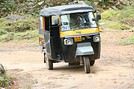
These are the taxis—they charge per ride. They’re Korean minibuses or 4x4 pickups. There’s supposed to be a union-set fare. It’s on the back of the card they wave at you as you come down the stairs. Ask to see it just to check. You won’t be disappointed.
The one-way fare to Tarrafal that the regular colectivo charges you 700 CV Escudos for will cost you 10,000 CV Escudos with them. And everything’s like that. In Ponta do Sol, there are sometimes a dozen of them waiting at the sort of deserted shopping arcade, ready to pounce on tourists. Spend half a day wandering around PdoS, and they’ll recognize your face, but no—every time, they’ll hassle you again asking if you want a ride. Worse, they cruise all the streets, constantly bothering you.
Here’s the trick for Ponta do Sol. I’ll tell you. Early in the morning—that is, around 7 AM or earlier—there are real aluguer-colectivos. To find them, ask people in restaurants or *mercearias*. Not in hotels because they’re in cahoots with their buddies. Like, « What time are you leaving tomorrow morning? » then « Where are you going? By aluguer? », and you say, « Of course, Madame. » And you can be sure that the next morning, right when you finish breakfast, there’ll be an aluguer minibus waiting at the hotel door. You won’t even have time to catch your breath before they’ll want to take your backpack. To finish the trick, the colectivo for 100 escudos will take you to Ribeira Grande in a few minutes. You’ll get off at the entrance of the city by the gas stations, and you’ll see a line of colectivos going in all directions. You’ll hop on for a handful of other escudos.
So, for example, instead of paying 2,000 CV Escudos to go to Espongeiros, it’ll cost you about 500 CV Escudos for the same travel time. Same for Vila das Pombas—less than 400 CV Escudos instead of 1,000 CV Escudos. And you’ll have chatted with some super nice people.
Still, if you’re not a real backpacker or don’t want the hassle, at least check the tires of the aluguer that’s driving you. You’ll struggle to find one that isn’t patched up multiple times. If you’re okay with taking the paved road to Corda in a vehicle where a tire is likely to blow before the end of the month, that’s your call. I like living dangerously sometimes, but at least let it be worth the trip.
At the bus station exit, I have to mention: there are the normal city taxis—regular blue cars—they wait right along the sidewalk. You can also find aluguers from hotels in Ponta do Sol, Porto-Novo, or elsewhere. They’ve just dropped off clients who are heading back to Mindelo, so they’ll take you for free if you plan to stay at their hotels.
Otherwise, if you’re really the loaded tourist, just take any good-looking one—you’re sure not to get stranded.
Finally, at the exit of PN’s city center, there are always a few struggling aluguers waiting on the seaside to take you wherever you want.
Lodging or Accommodations
Hotels and Residencials
Mindelo
Expect around 50 € for a room in the city center, except for the two upscale places, MindelHotel and Don Paco. Backpackers can find something for 20 €, like Chave de Oro, but with shared bathrooms and no air conditioning.
Santo Antao
It’s about 40 € in Ponta do Sol for a good mid-range place, otherwise plenty for 20 € with breakfast (which is light) and a private bathroom. Backpackers can also find places for 1,500 or 1,800 CV Escudos, like at Leila Leite’s. For the rest, see the other article on localities. But you’ll only find them on the coast.
Pensão and Mercearia
Inland, except for Curral das Vacas-Cha de Morte, there aren’t many options along the route besides basic (but decent) pensions for Cape Verdeans and *mercearias* that might have one or two rooms.
So, it’s wise, if you’ve planned your trip well and are traveling in season, to call ahead for a reservation. Otherwise, it’s outside with the mosquito hostel.
Expect to pay between 1,500 and 2,000 CV Escudos for dinner and lunch included. I said lunch because it’ll often be an omelet with traditional corn and beans. Shared family bathroom, not always with electricity or running water.
Homestays
It’s similar to a *mercearia*, but it’s family-run. So, you’re under the same conditions as the people hosting you. They’ll feed you first. So, don’t stuff yourself and don’t eat everything because it’s also their food in the dish. They’re poor but not destitute. It’ll always be clean, even if it’s just packed earth. For water, see the dedicated paragraph. For drinks, the lady will ask if you want coffee or « chà ». It’s mint or another herbal tea. Take it—it’s better than coffee in the evening, and the kettle is for them too. The head of the family, who handles the money and your stay, will ask for 1,500 CV Escudos. Don’t haggle, or don’t say you’re coming from me. I don’t know you.
Camping
It’s the mosquito hostel. There are all kinds. The site admin at www.MindeloInfo.com (very helpful, by the way) claims there aren’t any on the island. Either he’s never taken the ferry—I’m joking—or he only stayed in Ponta do Sol—joking again.
It’s true that there are fewer on the coast because of the wind. But in Cruzinha, I got a bit eaten up.
Inland, I won’t even tell you. Even in Tarrafal, on a ridge lost in the clouds at 900m far from any farmland, I saw three kinds (reading glasses come in handy for this):
The usual ones that bother you all over the world—even the Inuit probably have them.The tiny sneaky ones with big wings that don’t make noise but hurt like hell and are starting to spread all over the Mediterranean up to France.And the sand-flies. Those tiny black bastards that take a bite out of you. Fortunately, there weren’t many.So, wrap a scarf around your head, wear gloves (for trekking poles), or use 8-hour lotion, otherwise you won’t sleep. Because a tent is useless. A little morning dew in the highlands is all you have to worry about. The night sky is too beautiful—it might keep you awake. So, I take off my glasses to sleep.
The Mercearias
That’s what grocery stores are called. Generally, don’t expect big windows or crazy displays. They’re private houses with a reinforced door, often made of metal. A small sign on the wall announces it. It’s discreet. Inside, often an old fridge that runs on ice blocks if there’s no power. The beer is usually cold, so is the Coke. Beer is pretty expensive—it comes from the former colony, « Super Bock » is at least 120 CV Escudos for 25cl. Coke is 80 CV Escudos for 33cl. Fanta has a nice apple taste (without apple juice), yeah, a leftover from the ex-Madre house. The Portuguese are big apple and cabbage eaters—Cole cabbage, by the way. You didn’t know? Wherever they go, they plant apple trees and cabbages. If you see an unusual apple tree somewhere in the world, you can be sure a Portuguese person passed by.
Back to the *mercearias*—in the countryside, they often double as family-run guesthouses, restaurants, and aluguers. So, it’s useful to know where they are. In principle, every village has one—you just have to find it or ask. It’s often one of the first or last houses. That’s why in my step-by-step itinerary, you’ll find the ones I saw.
As for stock, it’s the bare minimum, non-unionized. Since people have relatively limited financial resources—not necessarily poor or destitute—they can’t afford just anything.
So, you’ll always find pasta, like shells, sometimes spaghetti. Dried legumes in grains, cracked corn, and beans in abundance for *cachupa*, otherwise rice. Couscous semolina or mashed potato flakes—you can dream.
Cans of sardines or tuna in oil, 80 to 120g with easy-open lids—no problem. About 150 CV Escudos. You can also easily find cans of corned beef, often chicken-halal. Who knows why you find them on these Catholic islands. They’re bigger, heavier, but there’s more to eat if you’re two, and it’s a change. Just don’t be a fascist about it.
And then there are the little roundish bread rolls you find all over the world. Those little magical ones that don’t dry out, don’t mold, don’t nourish much either. But they’re essential for soaking up the oil from the sardine can.
The farther you are from centers and the more remote the village, the less likely you are to find bottles of mineral water. There’s no local clientele for that. Otherwise, it’s always the same 1.5L bottles whose water comes from the same ex-Madre ship. Don’t throw away your 5L jugs if you want to transport your water that way, because outside Ponta do Sol and maybe Porto-Novo…
The farther you are from centers and the more remote the village, the higher the prices will be, but it’s not alarming. Just a few dozen escudos more.
In summary for those who didn’t follow: it’s in Ponta do Sol, Porto-Novo, and Ribeira Grande that you should do your main shopping. That’s where there are a few (very small) supermarkets.
Water Supplies
This should be your main concern on the island. It’s not rocket science. Outside the very short wet season—I won’t even call it the rainy season—don’t expect to cross a stream, even at the bottom of the deepest *ribeira*.
I brought a Sawyer filter (see the blog post). It was only used occasionally, with a backwash after each use. Micropur tablets should be for extreme cases.
It might be good to think about adding sugars and salts to your pockets for isotonic drinks. I didn’t do it because I didn’t want to pollute the pockets, not knowing if I could rinse them well in the evening. But now that you know everything, do it. It’s better.
I started each morning with 5 liters, not knowing what I’d find along the way, in the evening, or the next morning. Not once was it useful, even on the first stage—from Tarrafal to Norte—where there’s nothing.
In summary, you can make do with 3 liters for the day—less isn’t safe unless you know there’ll be a resupply point mid-route. So, study your itinerary well.
The casas
Look for the cubic concrete-block houses made by hand. The roofs are flat to collect water in adjacent, often round, cisterns. The water is stored inside for up to a year with all the dust and laterite that was on the roof. Sometimes, in completely isolated places like Norte, some clever and very brave guys have built large terraces over big masonry cisterns to have water reserves for their animals, some vegetables, and to sell to others. As you can imagine, the water will be murky and red like your urine—super weird. For black or white coffee in the morning, it’s not a problem—you won’t see anything.
The levadas
In the agricultural *ribeiras* on the north side, you’ll find the same levada system as in Madeira. However, they work like the *acequias* in Spain. That is: water is stored in large open cisterns upstream, sometimes very far upstream. Then it’s released, and everyone takes turns using their water rights to irrigate their terraced plots. So, the water doesn’t flow all the time or every day. And it’s even weirder.
The springs
I only found some along the way at Figueiras de Cima, on the north coastal path, at Cova, and on the paved road after Pico da Cruz. They’re sometimes accompanied by a trough. You see, there aren’t many. Each time, I had no doubt about the water quality and no problems afterward.
The Mercearias (again)
As I mentioned in the dedicated topic, it’s only there—and not always—and in the small supermarkets of tourist spots that you can buy 1.5L bottles of mineral water. I saw three brands, including the blue Coca-Cola one, which is a bit more expensive.
Mindelo: 60 CV Escudos in the Fragatas for 1.5LMindelo: 190 CV Escudos in the Fragatas for 5LPonta do Sol: 70 and 80 CV Escudos at Spencer’sMercearias or Bars: 100 CV Escudos (except in Cruzinha: 120 CV Escudos for any drink and 150 CV Escudos for Super-Bock).
The Climate in October
These are just MY readings and observations during ONLY about ten days in October. You can figure out for yourself that this isn’t the national weather report or a generalization for the rest of the year.
The Heat
I never really suffered from the heat on the route. The hardest part was the lack of thermal breeze at low altitude in the late morning. The temperature range during my stay in mid-October was from 19°C to 35°C. The coolest was at altitude (900m) in Tarrafal. The hottest was early afternoon in Silvao.
Where I suffered the most was on the coastal path from the climb to Ribeira Alta and then to Chupador after Ribeira Alta (max difficulty). No breeze and high humidity because of the nearby ocean.
I was very hot during the 2-hour climb to Salto-Preto. But from Alto-Mira along the ridge trail to Figueiras de Cima, the humidity was very low—sometimes 30% at the top of the Salto-Preto climb. Which made it very bearable. I still drank 2.5 liters that morning.
Humidity
This is a factor that shouldn’t be underestimated because it can totally ruin the pleasure of hiking. But there’s nothing you can do about it. Paradoxically, the nights are relatively dry and especially drier than the day. They should be used to do your laundry and clean your shoes. They’ll be dry or almost dry by morning.
All parts of the itinerary close to the coast will make you sweat buckets. It starts rising by 10 AM. You quickly reach 90-100%. The western and Norte parts of the itinerary are the driest, as is the Pico da Cruz area in the morning. Clouds and mists arrive by midday.
In conclusion, you have to leave very early in the morning. 8 AM is already late.
Rainfall
I had one rainy day. Yes, really! On the second stage. At Tampa Caminho or Cha de Feijoal, I had considered the Tope de Coroa. But as soon as I arrived in Tampa, a wet mist that didn’t leave me until the edge of the Bordeira do Norte (luckily for the descent). The volcano was completely covered. No visibility at 1,100m. So, I skipped it. That gave me an extra day to hang out in Mindelo. I ran into rain again during the climb to Orgueiros for a hellish end to the stage.
The Landscapes
How can I describe it? It’d be like Hawaii, but I’ve never even been to Honolulu. Like Madeira, but the landscapes aren’t organized the same way. In Madeira, there’s a central plateau and in the east a half-plateau at mid-height, so you don’t have full elevation changes from sea level to 1,400m. Like Réunion, which might be the closest. However, in Réunion, there’s the big clover-shaped depression of the three basins. The steep slopes are on the edges for entering or exiting, with maybe the Piton des Neiges pass to move from one basin to another.
Here, you’re always going up or down. There’s no central plateau, no central depression. And it’s not pretend. It’s brutal—the paths are right on the cliff edges. No low-cliff paths, no long ridge trails except for the one in Silvao. The *ribeiras* are gorges, the *apics* of the *cabos de ribeira* are often less rocky than in Madeira but are how much deeper. Even what you could call the Llano do Norte is constantly crossed by nasty ravines.
Like in Madeira, the Portuguese have done works that can only be described as insane. They’ve paved the majority of the main routes. Some have remarkable paving, like the bottom of the Ribeira de Penede.
Unfortunately, and fortunately, rainfall is low, so there’s no regular maintenance. Even the north coastal path is only maintained starting from the second landslide. That is, when you really can’t pass anymore. My terrible impression is that at this rate, in about ten years, it’ll start to be a memory to be able to make this diagonal crossing.
And yet, what potential!
Regular maintenance that wouldn’t require big resources in my opinion—the materials are right there.A systematic, serious survey with mapping (Cape Verdean, not German).Good marking like in Madeira.Route selection and referencing by GR.Determining the GR for the crossing, which could be called, why not, « the Grogue Diagonal » or « the Rum Route ».Documentation work, cultural, botanical, possibly fauna-related.Information about all this through brochures and a website, like in Madeira.We could dream of organizing an international sporting event like an ultra-trail that would fit perfectly into the world calendar, given how remarkable the sites and trails are.What can be done to make this island one of the top meet-ups for trekkers and hikers, much more than it is now!
The 1:50,000 Map
Attila Bertalan’s map is part of a set, one for each island in the archipelago. It’s essential on-site.
In Europe, he sells it by mail for 15 €, plus a bit for shipping. You order from his site www.ab-kartenverlag.de and by email—he sends the map by mail within a week if he’s there, and you pay upon receipt with PayPal. No scam. The guy’s legit.
In Cape Verde, you can do the same from the site www.bela-vista.net or buy it a bit more expensively at shops grandly called « tourist information » for 1,750 CV Escudos.
My comments on the map are personal. The map is accurate—I only saw very few errors in the path tracings. But:
It’s incomplete for the entire Norte path area. It’s a real mess there. There are trails and paths in all directions, especially in cultivated areas since you mix up those going to the fields, those leaving houses, and those truly going from one point to another.For the "Tope de Coroa" itself, it’s not a big deal since you just have to go up, and there’s no rocky barrier on the east side. So, if you get it wrong, you’ll just do a bit more walking, or the slope will be a bit steeper.Overall, the tracings are imprecise in curves and switchbacks. It doesn’t matter.You need to carefully examine the contour lines and the blue dotted lines of the *ribeira* bottoms. Since the contours are only every 100m and the shading is almost nonexistent, you have to imagine the relief when preparing your route for the next day. Everything is steep—the blue dotted lines will turn out to be abominable dark gorges. Everything will be even more vertiginous the next day than what you could have imagined. So, don’t hesitate to fantasize.There’s no survey of water points.To help you prepare your gear and staff, you can check the scan on the blog—I’ve enhanced the shading to help.
Money and ATMs
It seems there’s a financial agreement between the Eurozone and Cape Verde, since not long ago these islands were European. The exchange rate doesn’t seem to fluctuate much or be crazy.
Fixed exchange rate with the Euro: 110.265, with commissions deducted: about 107. The best exchanger in Mindelo is the one across from Correos NOVO BANCO. Fixed commission fee of 250 © regardless of the amount changed. I don’t know if it’s still there. I didn’t see it well.
To pay, they’ll take Euro bills without a problem, like an Escudo bill. They’ll give you change in Escudos. You lose a bit, but you won’t die from it. But forget about Euro coins—leave them at home. In Mindelo, there are quite a few beggars you can give them to.
There are ATMs everywhere, from Cesaria Evora Airport to Ponta do Sol, including the Porto-Novo maritime station. It seems they’re often out of order—just don’t go to a place where there’s only one. They’re part of the « Vint4 » network, whatever the bank or business. I don’t know what that is, but it works well, at least with Visa. You should also be able to top up your CVTelecom card if it’s a chip card with a number.
Hiking Gear
The following list isn’t what I brought for the crossing. I brought quite a few useless things, not knowing anything about the itinerary’s conditions, accommodations, supplies, or water resupply on the island. The information I found was relatively sketchy, imprecise, or even wrong. So, you’re getting the exclusive.
This list, then, would be what I’d bring if I were to do this hike again. Since you’re a hiker, I’m only addressing you—you can make it yours without worry.
(for the list --> check the blog, it’s long)
A few comments on what I’m not bringing:
A compass is useless since, thanks to the volcano or the proximity of the sea, you always know which way you’re facing and where you are to locate yourself on the map.A scarf is useless since I didn’t get hot enough and slept outside very little. However, don’t forget the 8-hour lotion. It’s in the toiletries.You can make do with 3 liters of water, but you should leave each morning with a full supply unless the stage includes a mid-route resupply point—so study your itinerary well.A tent or shelter is totally useless.Here’s a trick I do during the day: at breaks, I take off my shoes, even if it means putting on flip-flops that are always attached to the outside of the bag. That dries shoes and socks, making it very comfortable and blister-proof afterward.In summary, bring the minimum weight because the elevation changes are really long and tough. So, the hiking day remains a day of pleasure.
If it weren’t for the trekking pole problem, you could easily leave with this bag as carry-on luggage. I always have the anxiety of not seeing my checked bag on the airport conveyor belt. But the poles, like good adapted shoes, are really the thing not to overlook in Santo Antao.
Hiking Shoes
I’m dedicating a paragraph to shoes because it’s important. I’ll finish with advice on joints and cruciate ligaments.
Since you’re always going up or down, they shouldn’t be heavy. On average, I take 40,000 steps a day, then I stop no matter where I am. That’s my comfort limit for long hikes. So, you calculate—if you save even 100g, you save lifting 4 tons a day. So, imagine with your high-tops.
The paths aren’t very rocky but are mostly paved, and it’s not the Versailles carousel paving. It’s almost cobblestone-like. So, you need semi-rigid soles. Rigid to spare the arch of your foot, but flexible to allow the ankle to detect in time and have the reflex when things go wrong. Otherwise, with a truly rigid sole, watch out for ankle injuries. It’ll be brutal.
I’ll finish with the descent. For those who aren’t trained, it’ll be a real ordeal. You absolutely must strengthen your cruciate ligaments, otherwise, the next days will be increasingly difficult and handicapping. Every day is the same menu: at least 1,000m uphill, 1,000m downhill, and you can do it again in the afternoon, not counting everything in between.
So, before leaving, it’s imperative to train in this sense. If you live in Paris, you’re lucky to have the Sacré-Cœur stairs. It’s perfect, and it’s no joke to do the exercise of going up and down as fast as possible several times per session and per week until exhaustion.
Mobile Phones
The big, huge, and even bigger scam in Cape Verde is ROAMING for your fancy smartphone—iPhone, Galaxy, whatever. You’re looking at roughly more than 5 € per minute, and 2 € per SMS whether sending or receiving, and you’ll see your account climb like the Bordeira do Norte or your credit plummet like the Salto-Preto. So, it’s serious.
The trick is to buy prepaid cards from CVTELECOM in *mercearias* or shops—look for the little ads (there’s always a small sign) telling you if the store sells them. There are 100/200/300 Escudo cards, and you can top them up as you like. Then you call from public phones on the sidewalks. In cities, there are plenty, and you can spot them easily. It’s useful for booking rooms in advance during peak season because *Residencials* or *Pensãos* are often quite small.
As for buying a SIM card directly, I don’t know, but given the price of the prepaid card, is it really worth it?
Tourist Information Centers
These are actually shops for tourist souvenirs, faded postcards, stamps, some useless books, and AB maps that are more expensive than in Europe. So, don’t expect to find a wonderful tourist office that will flood you with brochures and information. The women are barely polite, know nothing, and don’t speak anything but Portuguese. So, it’s not worth asking them anything.
Cape Verdeans and Languages
I’m just repeating what I’ve been told from several sources.
In Mindelo
It’s sketchy, especially at night—lots of drunk people, crackheads, and muggers. Personally, I saw a lot of severely drunk people but only them. At the hotel, the doorman strongly recommended locking doors and windows at night. It’s true that my room had a beautiful balcony with easy access. You might meet some people who understand French, but speaking it is another story.
In Sententon
They say they’re the nicest guys in Cape Verde. It’s exactly true, especially the farmers, who are sweethearts. You kiss when you leave. No risk of theft. I’ve dropped things or forgotten my poles several times, and they always told me. Prices aren’t (yet) a rip-off. They’re fixed and fair, so don’t haggle—at least not me.
In touristy spots and localities, you can often speak French in hotels, restaurants, and aluguers. In the countryside, don’t count on it—I’m not even sure they speak Portuguese correctly. But people often know how to read well and know their island—sometimes useful with the map they can read.
Since the island is relatively small and the population limited, they almost all know each other. If you have news or fresh info from others or another place, they like that, and they can of course provide you with some too. Finally, to understand, because even if you know Spanish, it’s not obvious at all.
Especially in the Norte, the *casas*, especially those with thatched cane roofs, aren’t all inhabited. It’s even more true during the dry season. So, it’s not worth making the trip—there’ll be no one.
There are no dogs to eat you. It seems a breed of small, quite beautiful dogs is forming on the island. The little female dogs are the loudest guards. No big molossers.
The Sententonians I met and questioned all regret this independence, not even wrested from the Carnation Revolutionaries. They could yell at the Portuguese, but there were benefits. It was an economic caste that made this independence, ideologically and for their own profit. You can’t even say it was colonization since the archipelago was deserted.
What we can conclude is that the people are very Westernized—they’re not Africans. The mix is very beautiful, as the Portuguese knew how to do wherever they went. Beautiful people, beautiful slim physiques. I don’t understand why they don’t have international athletics champions.
😉