Bangkok: selon ses propres déclarations, l'armée contrôle désormais tout le secteur central de BKK. Les opérations ont été menées ce matin, à l'aide de blindés.
Elles sont terminées selon les autorités.
On rapporte 5 morts, dont 1 journaliste italien, et une cinquantaine de blessés, dont 2 autres journalistes.
Le bilan s'alourdit d'heure en heure.
Un chef d'entreprise français indique que de nombreux biens ont été affectés, notamment des immeubles qui continuent de brûler, comme le confirment les TV thaïs.
De nombreux immeubles ont dû être évacués, dont celui du Bangkok Post d'ailleurs.
Un journaliste confirme les déclarations de l'armée, mais rapporte maintenant des violences sporadiques dans les quartiers environnants, à la périphérie de la zone de bouclage.
Les medias éprouvent quelques difficultés pour faire le point précisément à cette heure, étant donné la frénésie des événements.
Udon Thani: incendie de l'ancien hôtel de ville, après rassemblement de 5 000 manifestants.
Khon Kaen: manifestation devant l'hôtel de ville, certains manifestants ont rompu les cordons de sécurité, portant avec eux des bidons d'essence et des pneus.
Thaïlande : l'armée donne l'assaut, les «chemises rouges» capitulent Les chars de l'armée sont entrés dans le camp retranché des «chemises rouges» ce mercredi matin à Bangkok. Au moins cinq personnes ont été tuées.
19.05.2010, 07h27 | Mise à jour : 09h58
Les leaders des «chemises rouges» se sont rendus et ont demandé aux manifestants de se disperser, après l'assaut donné ce mercredi matin par l'armée dans leur camp retranché à Bangkok. A l'aube, les blindés de l'armée thaïlandaise ont pénétré en force dans leur enclave en plein centre de la capitale thaïlandaise.
Un premier bilan fait état d'au moins cinq personnes, dont un journaliste italien, tuées. Un autre journaliste, de nationalité néerlandaise, a été blessé et hospitalisé. Depuis deux jours, Bangkok se préparait à l'assaut final.
La police a indiqué que l'armée avait été autorisée à «tirer immédiatement» en cas d'émeute. Par ailleurs, le ministère de la Défense a annoncé qu'un couvre-feu sera imposé mercredi soir dans la ville de Bangkok.
«Moi et mes compagnons allons nous rendre au Bureau de la police nationale. Je sais que vous souffrez. Certains d'entre vous sont sans voix. Mais nous ne voulons pas plus de morts», a déclaré mercredi matin, un des leaders des «chemises rouges» devant un parterre de manifestants à la fois émus et inquiets. Malgré cette décision de se rendre et de faire se disperser les insurgés, des milliers de manifestants antigouvernementaux ont incendié le siège d'un gouvernement dans une province du nord-est. Aucun bilan n'était encore connu à 9h30 (heure française).
La guérilla perdure depuis la mi-mars
La guérilla perdure depuis la mi-mars, date du début des manifestations des «chemises rouges», qui réclament le départ du Premier ministre et de nouvelles élections. Ces derniers ont réussi à occuper plusieurs quartiers stratégiques avant que le gouvernement ne déclare l'état d'urgence à Bangkok, le 7 avril. Trois jours plus tard débutaient les affrontements violents entre manifestants et militaires. En quatre jours du 14 au 17 mai, au moins 39 personnes ont été tuées et 300 autres blessées.
Ce mercredi matin, la situation a brusquement dégénéré avec l'entrée des blindés de l'armée thaïlandaise dans le camp retranché. «Un Italien a été conduit mort à l'hôpital», a indiqué Jongjet Aoajenpong, directeur de l'hôpital de la police, situé à proximité de la «zone rouge». «Il est journaliste et a été touché à l'estomac», a-t-il ajouté.
Un autre journaliste, de nationalité néerlandaise, a été blessé et hospitalisé. «On a tiré sur moi par derrière, à l'épaule. C'est juste une blessure légère», a indiqué Michel Maas, reporter de la télévision publique néerlandaise basé à Jakarta.
Juste après le début de l'assaut, un leader des manifestants antigouvernementaux avait appelé au «calme» les milliers de «chemises rouges» rassemblées au coeur de leur camp retranché. «Restez calmes. Quoiqu'il arrive aujourd'hui, nous resterons ensemble», a déclaré Nattawut Saikuar sur l'estrade principale.
D'après le président du Stock exchange, le premier étage est en feu...
"Le touriste apparait comme le principal agent de diffusion du mépris anti touristique. Plus le touriste se voit en miroir de l'autre, plus il le déteste".
Angry red-shirts ran amok in Bangkok on Wednesday afternoon after their leaders surrendered to police and called an end to the Ratchaprasong protest rally.
Fires were seen burning around the rally site.
Fighting between troops and protesters, and explosions, were reported throughout the area. Smoke was seen billowing from Central World department store on Ratchaprasong intersection.
Some of the protesters smashed glass panes around the department stores while others threw fire bombs into the first floor of the building.
At the Sala Daeng intersection on Rama IV Road, rampaging protesters destroyed telephone booths, advertising signs, traffic signs and other public property.
The Bangkok Post building in nearby Klong Toey was evacuated shortly before 3pm as a mob advanced from the Rama IV intersection to Five Ways and down the narrow Na Ranong road leading to the Post building about 200 metres away.
The Post building also houses the Bangkok Post's sister newspaper, the Thai-language Post Today.
TV Channel 3, which is based nearby on Rama IV Road was also off the air.
Reports quoted staff at the TV station saying their building had been attacked by red-shirt protesters.
One staffer said cars parked outside the building were set on fire and protesters then entered the Channel 3 building.
Red-shirts also set fires at the Stock Exchange of Thailand building, reports said.
Ref. Bangkok Post
"L'endroit où l'on vit est toujours les vacances des autres"
"Ceux qui luttent ne sont pas sûr de gagner... ceux qui ne luttent pas ont déjà perdu d'avance..."
I'm still hoping to go grab a beer with any of you somewhere around my neighborhood - i.e. Bangkok - Thailande
NNt:
- des manifestants désapprouvant leurs leaders qui se sont rendus aux autorités poursuivent leur action sur Ding Daeng
- les affrontements se poursuivent, des bandes de casseurs s'en prennent désormais aux biens privés.
- Central Department store ferme ses magasins sur BKK ainsi que dans d'autres régions.
- Ladprao/Bangkapi: trafic paralysé suite à des violences
Pas étonnant !
Certains sur ce forum se sont réjouit de l'écrasement inévitable des barricades de bambous dans les quartier chics de BKK...
Enfin ils ont accès à leurs centres commerciaux de luxe (siam center & Cie...)
Comment peut-on imaginer résoudre une crise politique et sociale en envoyant les chars de l'armée ?
Comment peut-on accepter que cette armée tire sur le peuple (que des buffles pour certains!) ?
En 68 en France, face aux manifestants le pouvoir à envoyer ses forces de police (CRS et GM) pas l'armée !
La nuit du aout Thaï n'a pas encore eu lieu mais les thaïs s'en approchent !
Ce que réclame le "petit peuple" comme l'appelle les nantis, c'est une meilleure répartition des richesse... Quoi de plus légitime en soi !
Le peuple thaï va devoir continuer sa lutte d'émancipation au risque sinon de perdre la face, au risque de voir s'abattre sur lui la marque d'un destin funeste, celui d'un peuple asservis et docile...
L'intervention de l'armée peut faire craindre des risques d'escalades vers la guerre civile hélas !
Le PM actuel oublie qu'il ne doit son siège qu'à une constitution taillée sur mesure par les militaires lors de leurs dernier coup d'état qui verrouille sérieusement l'accès à une véritable représentation du peuple dans ce pays. Son illégitimité, il l'a tient de cette situation, le peuple le sait et le fait savoir...
Dans nos démocratie occidentales nous avons appris à résoudre nos différends sans l'intervention des canons et des fusils mitrailleurs de l'armée depuis quelques décénies déjà...
Le chemin est long et sinueux pour les Thaïs, mais chaque pas les rapprochent du but ! même au prix de vies sacrifiées !
"Le voyage commence là où s'arrêtent nos certitudes..."
Mingalaba, Sawasdee, Xin chào, Tjomreab Souor, Selamat datang, Sabaidee
Il y a déjà plein de discussions politique (chacune des discussions sur la Thaïlande tourne au pugilat politique), ca serait possible de garder ce fil relativement factuel pour ceux qui cherchent uniquement des informations sur la situation actuelle ?
Le camp rouge asphyxié, les Thaïlandais indignés
bangkok . A mesure que la répression contre les manifestants se durcit, le mouvement prend des airs de révolte populaire
Par ARNAUD DUBUS De notre correspondant à Bangkok
Une odeur âcre d’urine et d’ordures flotte sur le camp des «chemises rouges» dans le quartier de Rajprasong, le cœur commercial de Bangkok. Les employés municipaux ne viennent plus collecter les déchets ni vidanger les toilettes mobiles depuis que l’armée a commencé, jeudi, le blocus du camp, où les manifestants antigouvernentaux se sont installés il y a six semaines.
Barricades. Les petits commerçants, qui vendaient du jus de canne à sucre ou du poulet grillé, sont devenus rares. Les médicaments commencent également à manquer et le don organisé lundi par la Croix-Rouge thaïlandaise a été vivement applaudi par les chemises rouges.«Nous sommes maintenant obligés de nous faire envoyer la nourriture par petites quantités apportées par des motos», confie Kopkeo Pikulthong, un des leaders du mouvement de contestation. Aux barrages, des soldats prennent aux sympathisants des chemises rouges les vivres qu’ils essaient d’introduire dans le «camp rouge». «Mon plus gros problème, ce sont les habits, surtout les sous-vêtements. Avant je partais du camp à 6 heures du matin pour me changer chez moi, mais maintenant, c’est beaucoup plus difficile. Cela fait cinq nuits que je dors au milieu de la rue», indique Nid Sawangkeo, une guide touristique.
Les militaires ont peu à peu resserré leur étau sur le camp, s’établissant à une cinquantaine de mètres à peine des premières barricades. Au barrage de Siam, près du secteur commercial du même nom, un garde, une matraque glissée dans le pantalon, observe, à travers un entassement de pneus, les soldats déployer des rouleaux de fer barbelé en travers de la rue. «Le gros des militaires est stationné dans le stade. D’après les journalistes, ils sont nombreux», explique le garde. Mais si le camp de Rajprasong subit durement les effets du siège, le lourd bilan depuis début avril (65 tués, dont 61 civils et quatre militaires) a alimenté une vague de ressentiment dans les quartiers périphériques de la capitale. Du labyrinthe de ruelles des quartiers du monument de la Victoire, de Klong Toey, de Din Daeng ou de Lard Prao, des milliers de résidents ont bâti des estrades et dénoncent ce qu’ils qualifient de«massacre» par le gouvernement.
«Très innocents». Une portion de l’avenue Rama IV a ainsi été surnommée «Snipers Alley» : quiconque s’y expose se fait immédiatement tirer dessus. En fait, le mouvement des chemises rouges commence de plus en plus à ressembler à une révolte populaire, ce qui l’amène à s’étendre à de nombreux quartiers.
Réfugiés dans une base militaire, le Premier ministre Abhisit Vejjajiva et les porte-parole militaires multiplient les communiqués pour dénoncer les«terroristes», mais même des Bangkokiens des classes aisées commencent à s’indigner. «Je suis venu pour voir la situation de mes yeux. Ces gens sont très innocents. Tout ce qu’ils veulent, c’est la dissolution du Parlement, mais le gouvernement les traite de terroristes», déclare Sirivan Koo-amphorn, directrice marketing d’une entreprise commerciale.
"Le voyage commence là où s'arrêtent nos certitudes..."
Mingalaba, Sawasdee, Xin chào, Tjomreab Souor, Selamat datang, Sabaidee
Je suis pas un spécialiste de la politique Thai et j'ai pas envie de me lancer dans une guérilla sur le forum, mais faudrait savoir quand meme si les "revolutionaires" se battent pour le peuple ou pour les interets de personnages hauts placés et riches qui leur fourni des armes, et qui les payent 500 baht par jour (ce qui est leger pour le coup, j'espere qu'ils ont droit a une prime de risque)
Bonjour Warden,
Faut oser l'avatar Mao 😉
Celui là est un peu plus actuel dans le symbole😎 :
"Quand l'injustice devient loi, la rébellion devient devoir. " Thomas Jefferson
« Le doute est l’apanage des gens intelligents, les cons n’ont que des certitudes »
(Alain Leblay)
Excuse moi Warden, je suis d'accord avec toi pour cette sitation: "Ce que réclame le "petit peuple" comme l'appelle les nantis, c'est une meilleure répartition des richesse... Quoi de plus légitime en soi !" mais quand on a Tksin comme leader cela ne colle pas vraiment et quand on fait monter les encheres des négociations sans arrêt, que l'on se dit non violent et que l'on jette des cocktails molotovs il ya un problème et cela ne peut que mal finir.
"Enfin ils ont accès à leurs centres commerciaux de luxe (siam center & Cie...) "
Plus de 5000 employés (et ils ne sont pas nantis) n'ont pas de salaire depuis la fermeture de ces centres, qu'est-ce qu'on leur dit à ces gens là?
Je ne suis pas pro jaunes, trop militaire pour moi!! et pas pro rouge trop populiste et comrompus (oui je sais les jaunes aussi!!)
Des manifestations de plus en plus violentes se multiplient à travers le nord et l'Isan, des éléments apparemment incontrôlés se développent à divers endroits de Bangkok, je crains que l'idée d'une guerre civile évoquée par certains ne se précise.
Finalement n'était-ce pas là le but recherché par les plus durs des dirigeants rouges? Car si cette guerre civile se produit, ce que je ne souhaite pas, qui d'autre que Thaksin pourra ramener les partisans rouges au calme? Qui aura suffisament d'influence sur ces gens pour ramener la paix? Et c'est précisément ce que recherche Thaksin, pouvoir revenir au pays en héros. Si cette catastrophe se produit, le gouvernement d'Abhisit aura sa part de responsabilité. Car c'est le rôle d'un gouvernement de trouver une solution pacifique à toute situation, même si l'autre partie n'est pas conciliante. Mais la pression mise sur ses épaules par ceux qui dirigent réellement le pays l'a conduit à utiliser la manière forte ce qui n'est, chacun le sait, pas la bonne solution.
A peine les leaders rouges se sont-ils rendus que d'autres se sont immédiatement proclamés nouveaux leaders du mouvement. Et il est à craindre que ceux-ci soient encore plus violents et extrêmes. L'intervention de l'armée n'a rien réglé, au contraire. L'espoir de voir la paix sociale en Thaïlande s'éloigne à mesure que l'armée avance. Espérons que les parties trouvent un concensus sans que des dizaines de morts supplémentaires ne soient nécessaires.
"There is no way to happiness, happiness is the way" Buddha
"Le vrai voyageur n'a pas de plan établi et n'a pas l'intention d'arriver" Lao Tseu
quand on fait monter les encheres des négociations sans arrêt
L’offre d’Abhisit d’organiser des élections en novembre a pu paraître à certains raisonnable et même généreuse, mais en réalité elle n’avait aucun sens dans un pays où le respect du processus électoral s’est évaporé. Les chemises rouges n’ont pas besoin de fouiller très loin dans leurs souvenirs pour comprendre ce que l’offre du Premier ministre a de fragile. En mars 2006, les démocrates d’Abhisit avaient boycotté les élections anticipées convoquées par Thaksin dans le sillage des manifestations antigouvernementales, sachant pertinemment qu’ils allaient perdre. Le parti de Thaksin a obtenu 60 % des votes exprimés, mais le résultat a été annulé à cause d’un détail douteux. D’autres élections avaient alors été programmées pour la fin de 2006. Il était probable que Thaksin l’emporterait. Aussi l’armée a-t-elle déclenché un coup d’Etat le 19 septembre 2006, écartant du pouvoir le gouvernement le plus populaire, en termes électoraux, que le pays ait jamais connu. Lors du premier scrutin organisé en décembre 2007, après le coup d’Etat, le Parti du pouvoir au peuple est arrivé en tête sans décrocher une majorité absolue. Mais les “chemises jaunes”, avec le soutien du Parti démocrate, ont rejeté ce résultat. Ils ont procédé à leurs tristement célèbres occupations du siège du gouvernement et de l’aéroport international. Avec l’appui déclaré d’Abhisit et des démocrates, les chemises jaunes ont fait campagne pour renverser un autre gouvernement élu. Ils sont parvenus à leurs fins quand le parti au pouvoir a été dissous par la Cour constitutionnelle. Et, avec le soutien de l’armée, Abhisit a enfin pu rassembler une majorité parlementaire.
THAÏLANDE • Panne démocratique à Bangkok | Courrier international
Pas étonnant !
Certains sur ce forum se sont réjouit de l'écrasement inévitable des barricades de bambous dans les quartier chics de BKK...
Enfin ils ont accès à leurs centres commerciaux de luxe (siam center & Cie...)
Comment peut-on imaginer résoudre une crise politique et sociale en envoyant les chars de l'armée ?
Comment peut-on accepter que cette armée tire sur le peuple (que des buffles pour certains!) ?
En 68 en France, face aux manifestants le pouvoir à envoyer ses forces de police (CRS et GM) pas l'armée !
La nuit du aout Thaï n'a pas encore eu lieu mais les thaïs s'en approchent !
Ce que réclame le "petit peuple" comme l'appelle les nantis, c'est une meilleure répartition des richesse... Quoi de plus légitime en soi !
Le peuple thaï va devoir continuer sa lutte d'émancipation au risque sinon de perdre la face, au risque de voir s'abattre sur lui la marque d'un destin funeste, celui d'un peuple asservis et docile...
L'intervention de l'armée peut faire craindre des risques d'escalades vers la guerre civile hélas !
Le PM actuel oublie qu'il ne doit son siège qu'à une constitution taillée sur mesure par les militaires lors de leurs dernier coup d'état qui verrouille sérieusement l'accès à une véritable représentation du peuple dans ce pays. Son illégitimité, il l'a tient de cette situation, le peuple le sait et le fait savoir...
Dans nos démocratie occidentales nous avons appris à résoudre nos différends sans l'intervention des canons et des fusils mitrailleurs de l'armée depuis quelques décénies déjà...
Le chemin est long et sinueux pour les Thaïs, mais chaque pas les rapprochent du but ! même au prix de vies sacrifiées !
Ce pathos, c'est le communiqué officiel de quel Parti ?
🤪
Si vous avez compris tout ce que je viens de vous dire, c'est que j'ai dû faire une erreur quelque part. - Alan Greenspan
Science sans conscience n'est que ruine de l'âme - Rabelais
Il semble que sur VF la Révolution n'ait pas perdu la partie ...
😎😎😎😎
Si vous avez compris tout ce que je viens de vous dire, c'est que j'ai dû faire une erreur quelque part. - Alan Greenspan
Science sans conscience n'est que ruine de l'âme - Rabelais
Ce pathos, c'est le communiqué officiel de quel Parti ?
🤪
le partit des frustrer jaloux qui racle dans tout les fonds de wc, en utilisant la jalousie ou la haine raciste.. pour se cree une base electoral ( aux choix extreme gauche, ou extreme droite... les extremement cons )
son autre post ou il te souhaites que des thais t'expulse de ta maison, pour vivre dedans en gardant ton epouse pour faire le menage... revele son niveau
Finalement n'était-ce pas là le but recherché par les plus durs des dirigeants rouges? Car si cette guerre civile se produit, ce que je ne souhaite pas, qui d'autre que Thaksin pourra ramener les partisans rouges au calme? Qui aura suffisament d'influence sur ces gens pour ramener la paix?
En tous cas, il est question de confisquer l'argent des "leaders" et "sponsors"
des terroristes, çà pourrait servir à payer en partie les dégâts qu'ils ont
occasionné ...
C'est peut-être cette idée qui le rend méchant, le bonhomme ... pour le "niveau"
il ne fallait pas s'attendre à grand'chose 😉
🙂
Si vous avez compris tout ce que je viens de vous dire, c'est que j'ai dû faire une erreur quelque part. - Alan Greenspan
Science sans conscience n'est que ruine de l'��me - Rabelais
Si vous avez compris tout ce que je viens de vous dire, c'est que j'ai dû faire une erreur quelque part. - Alan Greenspan
Science sans conscience n'est que ruine de l'âme - Rabelais
Si vous avez compris tout ce que je viens de vous dire, c'est que j'ai dû faire une erreur quelque part. - Alan Greenspan
Science sans conscience n'est que ruine de l'âme - Rabelais
A number of fires and chaotic incidents broke out in Bangkok after the red-shirt core leaders have called off the red-shirt protest earlier today. The firefighting department has been able to put the fire under control at some areas but others remain unreachable and unsafe for firemen to entire. These areas include;
1. Siam Square and Paragon: firefighters are unable to enter the area, red-shirt protesters are armed and are shooting at will
2. Centara Grand: fire has been put out
3. Stock Exchange of Thailand office: firemen unable to enter the area
4. Mahachon Plaza (entrance of Wireless Rd-Ploenchit Rd): firemen also unable to approach the area
5. Krung Thai and Bangkok Bank (Asoke Branch)
6. Narcotics Control Board
7. Bangkok Bank (Din Daeng): fire under control
8. Maleenont Building: firemen unable to enter the area
9. Bangkok Bank and Lotus Rama 4: firemen unable to get in
10. EGAT Klongtoey: fire under control
11. Central World: currently being put out by firefighters
12. Bangkok Bank (Victory Monument)
"Le touriste apparait comme le principal agent de diffusion du mépris anti touristique. Plus le touriste se voit en miroir de l'autre, plus il le déteste".
Le Central world le plus grand centre commercial de Thailande a été détruit par les flammes... Pillages en cours...
Ou sont ceux qui nous disaient il y a peu il n'y a aucun problème à Bangkok 😠
"Le touriste apparait comme le principal agent de diffusion du mépris anti touristique. Plus le touriste se voit en miroir de l'autre, plus il le déteste".
Merci pour les infos, mais mon anglais n'est pas suffisant pour lire la presse écrite en anglais. Sinon je me rendrais directement sur les media concernés...
Pour Channel 3, alors, apparemment, les gens ont été évacués.
Mais depuis environ une heure et demi je ne reçois plus d'infos des sources qui y étaient.
Bon, wait and see.
De grâce, épargnez-nous vos commentaires politiques. C'est fatigant tous ces gens qui se sentent obligés de donner leur avis sur la situation politique d'un pays où souvent ils n'habitent pas et dont ils ne parlent pas la langue.
C'est un forum de voyages, tenez-vous à du factuel, on veut du CONCRET ! Je serai de passage en Thaïlande en juillet, je veux juste être au courant de l'évolution de la situation. Les problèmes internes du pays m'intéressent mais de loin, je ne me sens pas concerné en tant qu'étranger ! On sait bien qu'il y a des inégalités sociales criantes là-bas, mais ce n'est pas à nous d'y remédier.
Quelqu'un sait ce qu'il advient du bâtiment de Channel 3 ?
Car plusieurs sources d'informations francophones y étaient il y a une heure quand le feu s'y est déclaré. Une centaine de personnes s'y sont retrouvées prisonnières (source : http://www.20minutes.fr/...ale-thailandaise.php)
ici a Chiang Mai les centres commerciaux ont fermé à 17h, l'université à fermé à 18 h... apparemment il y a des soucis sur Tapae, je n'y suis pas passée dc je ne sais pas exactement, juste que ca bouchonnait bcp en ville et autour de la ville. Il y aurait le couvre feu aussi ici...
.•¯(_.•¯(_.•¯(Le monde est un livre, et ceux qui ne voyagent pas n'en lisent qu'une page )¯`•._)¯`•._)¯`•.
Saint Augustin.
Il semblerait que tous les Bangkokians aient les mêmes idées: on se précipite dans les centres commerciaux et aux stations-essence pour faire des provisions.
reuters annonce une quinzaine de lieux la proie des flammes dans BKK.
Bonjour je dois venir d'ici une dizaine de jours, merci de nous tenir au courant de la situation sur chiang mai car sur le site de l'Ambassade ils déconseillent d'y aller mais il n'y pas beaucoup plus d'infos.
Comment peut-on imaginer résoudre une crise politique et sociale en envoyant les chars de l'armée ?
Comment peut-on accepter que cette armée tire sur le peuple (que des buffles pour certains!) ?
En 68 en France, face aux manifestants le pouvoir à envoyer ses forces de police (CRS et GM) pas l'armée !
La nuit du aout Thaï n'a pas encore eu lieu mais les thaïs s'en approchent !
Ce que réclame le "petit peuple" comme l'appelle les nantis, c'est une meilleure répartition des richesse... Quoi de plus légitime en soi !
Maintenant l'armée Thaï applique la censure sur les infos !
Dans certaines provinces la nuit promet d'être chaude !
Pour résoudre le problème politique et social, l'ouverture du dialogue se fait avec l'armée et ses M16 !
Pendant ce temps là, un vieux monarque richissime se meurt, inconscient des troubles en son royaume...
Peut-être sait-il que tout est vain car comme le prédit une légende, sa dynastie s'éteindra après le 9eme monarque...
son nom c'est RAMA IX
Rien n'est permanent, tout n'est que illusion et il le sait !
"Le voyage commence là où s'arrêtent nos certitudes..."
Mingalaba, Sawasdee, Xin chào, Tjomreab Souor, Selamat datang, Sabaidee
Je ne vois pas bien l'utilité de ce genre de message.
Les éventuelles "superstar" dans le bâtiment de Channel 3, je m'en moque.
Ce que je sais c'est qu'il y avait au moins une source francophone à l'intérieur (qui a vendu des photos à des media français nationaux, ça explique peut-être le terme "superstar"...Tant mieux pour cette personne, ça ne me retire rien en tout cas et ne me crée aucune jalousie, ce qui semble émaner du message auquel je répond, mais je peux me tromper) et que cette source fait un travail vraiment intéressant depuis un moment. C'est son travail qui m'intéresse puisque je ne connais pas la personne et ne peut donc me faire aucun avis sur elle. De plus elle n'est pas journaliste et a donc un regard différent et non formaté.
Il y a aussi le fait que les Rouges ont mis le feu à Channel 3 car ils jugent ce media trop pro gouvernemental. Si ce media se retrouve dans des difficultés pour continuer, ça peut avoir une influence pour la suite, comme la censure sur la presse.
Et si je cherche à savoir tout ça c'est que, ne vivant pas en Thaïlande et connaissant peu ce pays, je cherche à le comprendre et à comprendre les Thaïs pour y retourner en connaissance de cause.
Cette petite mise au point car je lis sur ce Forum des messages dont le niveau reste bien près du sol. Je comprend que certains aient décidé de fermer leur compte, certains autres sur ce Forum leur courant un peu trop souvent sur le haricot. Je ne cite personne n'ayant pas pour habitude d'impliquer les autres en leur absence.
Franchement, des messages bourrins, c'est à la portée de tout le monde.
Apporter de l'info fiable et utile c'est par contre plus intéressant. C'est quand même le but d'un Forum, non ?
Ouais, je vais me faire des "amis"... Peut-importe c'est de l'info que je cherche.
Khun mengwan , bonsoir , ce matin j étAis plutot occupé avec des allemands concernant l euro et probleme a la bourse allemande. l euro passe mal la crise en ce moment. bEn pour moi la Thailande aujoUrhui c est 40% plus cher.
les allemands aujourhui sont entrain de faire une révolution sur le marché de la finance , peu etre plus important que la révolution thailandaise. qui de toute facon devra se plier aux affaires europeene , voir evolution des marché et surtout l euro.
retournons a nos moutons les rouges et les militaires.
Khun Mengwan sur un autre post a tres bien , ecrit, les learders se sont rendu a leur copain policiens et joue a la belotte. bien vu Sir mEngwan , car il n y a plus de trace des learders pour le moment , officielement se sont les vrais revolutionnaires, qui ont pris la direction des affaires en main des rouges , finit les discours et négociations.
La les militaires devront avoir un plan B , s ils maitrisent un quartier , d autres s ouvrent aux rouges , et ainsi de suite.
Bon , notre probleme du moment devrais etre plutot etre l euro , ce matin les allemands le voyait encore a 1.10 au $
ca fait quand meme des baht en moins pour la retraite a samui.😕
Les distributeurs de billet seront indisponibles pedant le couvre feu dans les zones concernées..
Pillages à Bangkok....
"Le touriste apparait comme le principal agent de diffusion du mépris anti touristique. Plus le touriste se voit en miroir de l'autre, plus il le déteste".
Je suis tout à fait d'accord avec toi Jay66fr !
Justement, je souhaiterai avoir des informations de personne sur bangkok, je vais me rendre en thailand fin du mois de juin et un de mes amis qui habite dans le sud de la thailand m'a dit que c'était plutot chaud et il pense que je n'aurais pas la possibilité de rester sur bangkok !!!
Petite question supplémentaire :
Est-il possible qu'ils interdisent d'atterrir à bangkok ?
pourriez vous me donner des renseignements sur la situation de phuket suite aux inondations.je pense partir le 5 fevrier, j ai 68 ans et je pars seule.
Dans 15jrs nous allons en Thailande et en fonction du climat politique actuel je suis en train de m'inquieter un peu. J'ai deja tout reservé depuis 2 mois…
J'aimerais savoir si vous save qq chose de précis concernant la situation politique à Bangkok? le jugement de la 1ère ministre aura lieu lundi n'est-ce-pas?…
Je planifie un voyage en Thailande en juillet soit bangkok et un rayon de 200km ; est-ce que la situation politique s'est calmée pour qu'un voyage de tursme…
Mon conjoint et moi avons prevu un voyage en Thailande de 3mois à partir de fevrier 2014. Depuis quelques temps, nous entendons parler des manifestations par…
I’m starting a discussion about guides in the Mekong Delta because we’ve just finished our trip in this region and had a hard time finding a French-speaking guide. We had Thanh—she speaks French really well and travels all over the delta region, including Ho Chi Minh City. She’s super friendly and flexible. I recommend her wholeheartedly. If it can help someone...
Feel free to contact us for her number.
Hi everyone,
I couldn’t find any recent info on Kuching.
Can anyone recommend a hotel or guesthouse for under 100 RM that’s nice and affordable? No dorms, please.
Also, does it rain a lot in November, and is it still worth visiting Semenggoh or Bako?
We’ll be arriving in Phnom Penh this coming January and we’re thinking of starting our trip with a stop in Kampong Cham, then Kratie.
After Kratie, we’re considering heading toward Siem Reap with a stop in Kampong Thom.
That said, I’m not really sure how long the Kratie–Kampong Thom journey might take or how complicated it is.
Does this stop on the way to Siem Reap seem like a good idea to you?
If we don’t visit the Sambor Prei Kuk site, are there still any walks or sights worth checking out in Kampong Thom?
Silly question—backpack or hard-shell suitcase for the Sepilok, Kinabatangan, Tioman, KL trip?
I’m struggling to fit all my son’s and my stuff into the 70L backpack... and I’m thinking a suitcase would be easier, but I’m not sure if it’ll work for getting around.
Hi there,
I didn’t plan to return to Thailand this year, but my health conditions mean it’ll be the best place for me to stay between two trips to India. The tourism setup there is so well-organized that it’s the most "comfortable" country for a short visit. Thailand feels too sanitized for my taste, and there’s too much religion, Buddha, and the King, but it’s still the best option given how my health has been evolving. I’d considered two weeks in ThaTon for hiking, but I got too sick from the burn-offs during my trips to the mountains around Chiang Rai. So I’m not sure where to go this year. Definitely not the sea, touristy spots, or the mountains with burn-offs...
After a stay on Koh Phayam this coming November, I’d like to spend 2 or 3 days on Koh Phra Thong before heading further south.
Do you think it’s doable to leave Koh Phayam early enough to catch the 10 AM boat from Khura Buri to Koh Phra Thong? The next one isn’t until 4 PM, which would cost me a whole day.
I’m planning a trip to Indonesia, specifically Sulawesi and Java, in September for 10 days.
I don’t know this part of the world at all—any advice is welcome!
I’ll be traveling solo and would also love tips on meeting other travelers or locals.
Hello everyone,
Not long ago, I used to travel as a couple, but my husband has since passed away, and I’ve decided to set off again. The trip I took to Cambodia in January 2025 did me a world of good.
I’m now considering Thailand, a destination we never included in our plans because even 15 years ago, people said it was too touristy. Still, I’m thinking about the itinerary below, but I don’t feel up to arranging buses, trains, or guides on my own while I’m there. I’m looking for one or more drivers and have been in touch with an agency, but their offers are just copy-paste group tours that I don’t want.
So, if you have any contacts, experiences, or advice, I’d be so grateful if you’d share them with me. Here’s my rough plan:
Arrival in Bangkok
Ayutthaya (2 nights)
Kanchanaburi (2 or 3 nights)
Sangkhlaburi/Sai Yok (3 nights)
Sukhothai (2 nights)
Lampang (I’ve planned 3 nights, but that might be a bit much—it depends on what time I arrive in the city)
Chiang Mai
Chiang Dao
Pai
Chiang Rai
I was thinking about the Mae Hong Son loop—thoughts?
What do you think about staying overnight at the Golden Triangle?
When I look online, of course, I can find agencies that organize tours to national parks, etc.
I’m retired but in great physical shape. I’d rather go hiking than sit in hot springs with crowds of tourists who’ve all arranged meet-ups. I don’t want to spend a day at an elephant camp, and I don’t want to visit Karen villages.
I’d love to hear your advice.
Thank you all,
Hi,
On September 1st, we're heading to Kalimantan for six weeks, probably from Pontianak to the Derawan Islands.
I've scoured this site, which is usually my go-to 😉, and others like VoyageForum, but recent info is pretty scarce.
I'd love any tips on places you've visited—our itinerary is still a work in progress.
We're two couples traveling with backpacks, using buses, boats, guesthouses, and homestays.
Thanks in advance!
Hi everyone,
Could you share your thoughts on my 3-week itinerary?
We’re a small group (family + friends) of 12 people, planning to leave around January 21, 2027.
Here’s my itinerary:
3 nights in Bangkok
4 nights in Chiang Mai
3 nights on Koh Samui
3 nights on Koh Phangan
4 nights in Krabi
4 nights in Phuket
I’m also open to any great tips you might have...
Thanks, everyone! Alain.
Hi,
From Malacca to get to Jerantut, is it better to go back to KL and take a bus from there, or take a bus to Tampin and then a train? Any feedback on the "Jungle Train"? (duration, price, comfort, etc.). Thanks
Hi there,
We’re planning a 3-week family trip next summer with our three kids, who’ll be 8, 8, and 7 years old.
After some research, we’re leaning toward Malaysia to combine nature/forests and paradise beaches. The idea is to introduce our kids to the country’s culture, nature, and wildlife.
We want a great trip but without splurging on luxury options like high-end lodges and resorts. We’re looking for comfort with a touch of authenticity—basically, a good middle ground.
I’ve started putting together an itinerary and would love your expert advice and tips to help us build this amazing trip with our little ones.
Day 1: Departure from France
Day 2: Kuala Lumpur
Stay at a hotel near the airport or KL Sentral.
Just one night.
Day 3: Morning flight to Sandakan (Borneo).
Stay in Sepilok
Day 4: Sepilok:
* Orangutan Center
* Malayan Sun Bear Center
* Rainforest Discovery Centre
Day 5: Depart for Kinabatangan.
Boat safari in the late afternoon.
Day 6: Sunrise safari.
Jungle walk.
Evening safari.
Day 7: Final safari.
Return to Sandakan.
Flight to Kuala Lumpur, then to Kota Bharu (or overnight transit depending on schedules).
Day 8: Transfer to the port.
Boat to the Perhentian Islands.
Days 9 to 13: Perhentian Besar
5 full days.
* Snorkeling
* Hiking
* Turtle watching
* Wild beaches
* Relaxation
Day 14: Return to the mainland.
Bus or private car to Taman Negara.
Hi there,
I’m planning a family trip (my wife and I, both 47, and our two sons, aged 5 and 12) to Malaysia for the last week of June and the first two weeks of July 2027.
We used to love road trips as a couple, then as a trio, but since our second child arrived, we’ve taken a break with "camping village" style trips.
Now feels like the right time to get back to our old habits, while adjusting the pace for the kids.
We’re craving Asia. We’ve been lucky enough to visit Thailand, Indonesia (Bali and Lombok), and Sri Lanka before.
Friends have raved about Malaysia, so we’re definitely tempted.
For those who know and love Malaysia, what would be a good itinerary starting from Kuala Lumpur, with a maximum of 3-4 stops? We’d like a mix of culture, nature, and relaxation (just to clarify, we’re not big beach fans). All of this without rushing, of course.
Hi everyone,
We’re heading to Flores and then Bali at the end of September.
We’ve already visited both but this time, once we’re in Labuan Bajo, we’d like to take a boat to the Komodo Islands to see the famous Komodo dragons.
I don’t want to sleep on the boat—just a day trip would be perfect.
Does anyone know a reliable and friendly provider to recommend?
Thanks in advance, and have a great summer!
Summer seems to be the best time weather-wise for Bali.
And since summer’s when we can take a long trip, let’s go for Bali... even though we know it’ll be *packed* with people!
So we’ll steer clear of the island’s south...
Our current plan (19 days on the ground, 7 stops):
- 4 Nights (3 days) in Ubud
2 days for rice terraces / activities (Tegallalang, Campuhan Ridge, Monkey Forest, Bird Park, coffee plantation, market (?), dance "pestacle," cooking class and/or spa)
1 day with a driver for the Temples (Pura Gunung Kawi, Tirta Empul Spring, Pura Mengening, Goa Gajah...)
- 2 nights in Sidemen (1 day for Pura Kehen + Batur Caldera + Pura Besakih and 1 day to relax in the rice terraces)
- 3 nights on Gili Meno (Rest and beaches) from Padangbai
- 2 nights in Amed (1 day from Padangbai with the Abang rice terrace and Tirta Gangga baths, and the next day a boat tour in Amed)
- 4 nights in Pemuteran (1 day for transfer and rest, 1 day to visit Kawah Ijen, and 2 days of snorkeling at Menjangan Island)
- 2 nights in Munduk (1 day with the Dayang rice terrace and the 3-waterfall hike, 1 day at Pura Ulun Danu Bratan)
- 2 nights in Jatiluwih (1 day in the rice terraces, and on the last day, we’ll stop by Pura Taman Ayun in Mengwi and Pura Tanah Lot before catching our red-eye flight).
Accommodations in homestays or hotels.
Transportation to be arranged on-site with the lodgings (?)
Boat to Gili Meno to book in advance (?)
Kawah Ijen excursion to plan ahead (?)—check with the homestay (?)
Thanks for your thoughts/comments to help us explore this destination...
After reading and researching, we're planning the following stops in Cambodia in January 2027:
- Phnom Penh
- Kampong Cham
- Kratie
- Siem Reap
- Battambang
- Kampot (round trip)
I'm wondering about the direction of these stops, which could also influence our international flights.
Either a round trip from Phnom Penh in the order above.
Or landing in Siem Reap with the following order:
This second option would save us the Battambang - PP - Kampot trip but means doing a round trip to Battambang from Siem Reap and placing the "highlight of the trip" (Angkor) at the beginning of our stay.
We’ll be arriving in Phnom Penh this coming January and we’re thinking of starting our trip with a stop in Kampong Cham, then Kratie.
After Kratie, we’re considering heading toward Siem Reap with a stop in Kampong Thom.
However, I’m not quite sure how long the Kratie–Kampong Thom journey might take or how complicated it is.
Does this stop on the way to Siem Reap seem like a good idea to you?
If we don’t visit the Sambor Prei Kuk site, are there still some walks and/or things to see in Kampong Thom?
Hi there,
We’re planning to travel from Chiang Rai to Luang Prabang next November.
We’d like to take a slow boat from Chiang Khong—or rather from Huay Xai in Laos—with an overnight stop in Pakbeng.
Could you let us know if the boat still leaves Huay Xai in the late morning? If so, what time roughly, and what’s the price for the trip?
Thanks for your help!
Alod
We (3 adults: 68, 65, and 25 years old) are just back from a short trip to the Philippines, and I’d like to share a little summary of our journey. First of all, I’d like to thank everyone who contributes to this forum about this destination and answers the questions of those who aren’t familiar with it. I should also mention that my comments are personal and don’t reflect anyone else’s opinions. Since I don’t have any literary or photographic talent, I’ll stick to the facts and share a few details about the sights, hotels, and restaurants.
Preparations:
We chose this destination in December and quickly booked our flight tickets (540 € with Turkish Airlines) for a departure on February 16 and return on March 5, 2019. We then contacted two French-speaking tour operators based in Manila, asking them to put together an itinerary based on our wishes (places to visit, type of accommodation) and our budget. We wanted to see the rice terraces in northern Luzon, the hanging coffins in Sagada, before flying to the Visayas (Bohol, Siquijor, etc.), and the Taal Volcano, while limiting our nights in Manila as much as possible. In the end, we opted for Alize, whose itinerary and quote matched our request almost perfectly. Our exchanges helped us refine our circuit.
International flights:
The round-trip flights went smoothly. Turkish Airlines, while not at the level of Asian or Gulf airlines, does the job just fine.
Day 1:
We landed on time (6:15 PM) on Monday, February 16, at Terminal 3. We exchanged our euros (near the car rental counters), and I can confirm the exchange rate was very good. On the way to the St. Giles Hotel (decent and affordable for a transit night), we got our first glimpse of Manila’s dense traffic. The Makati district, where our hotel was located, offers a wide choice of restaurants, so we grabbed a quick bite to recover from the trip.
Day 2:
This day was dedicated to transferring to Banaue. Fortunately, we had a comfortable van and an excellent driver for this journey, which took all day (8 to 9 hours with stops). We got a taste of driving in the Philippines—and it’s terrifying. You wouldn’t want to drive on these roads. The first thing that struck us was the relatively good condition of the roads and the cleanliness (a change from other Southeast Asian countries). This impression lasted throughout our trip. Around 6 PM, we checked into our room at the Banaue Hotel (large, charm-free, but with a beautiful view of the rice terraces).
Day 3:
With the help of a local guide, we took a jeepney to Batad. And then—wow! The rice terraces form an amphitheater overlooking the small village. Under the sun, it’s simply spectacular and breathtaking! Even though we’re familiar with rice terraces (Sapa, Bali, Thailand, etc.), we were dazzled by so much beauty. We spent the day walking along the terrace walls. This place is timeless and fully deserves its UNESCO World Heritage status. However, we returned to the hotel exhausted (due to our ages and lack of exercise). We had dinner with our driver at the Las Vegas restaurant in the center of Banaue. The meal was decent, cheap, and the Filipino owner played the guitar to accompany our dinner.
Day 4:
Today, our driver took us to Sagada. The mountain road offered spectacular landscapes (about 1.5 to 2 hours). Along the way, we stopped in Bontoc to visit the small but interesting anthropological museum. It features old photos and various objects from the Ifugao tribes, as well as a reconstruction of primitive dwellings.
We then went on a short hike in Sagada with a very friendly local guide who explained the region’s funeral rites. The walk started at the communal cemetery before reaching “Echo Valley,” where we saw the first coffins hanging on the cliff. We continued to the “Underground River” and a small waterfall, ending our journey in the “Lumiang Cave” burial cave. All in all, this day was very interesting. On the way back, we made a few photo stops.
In the evening, on our driver’s recommendation, we ate at the “Bistro,” a French enclave in the center of Banaue (good pizza, roasted quail, homemade fries).
Day 5:
Today was a transfer day. To limit fatigue and nights in Manila, our tour operator arranged a flight from Clark to Tagbilaran (Bohol), saving us 2 to 3 hours of driving. But to catch our flight, we had to leave very early: 5:30 AM. Our kind driver dropped us off on time at the airport. To use it, we had to pay a 150 PHP tax per person. The Philippine Airlines flight (15 minutes) left early and was far from full. Upon arrival, we were taken to the Loboc River Hotel, on the banks of the river of the same name. A very charming lodge lost in a tropical garden. We stayed in a stilt cottage overlooking the river. We relaxed a bit in the lovely pool. This place is really great—the staff is charming, and the food is excellent for a reasonable price.
Day 6:
This day was dedicated to exploring Bohol. The program was classic, starting with the tarsier sanctuary. We saw a few specimens in a small garden, each pointed out by a staff member. It was both good and disappointing because the animals were in pseudo-freedom in a small enclosure. Then we went to the “Chocolate Hills” and climbed 240 steps to admire the panoramic view of the hills—but by 10 AM, it was crowded. On the way back, we stopped at the butterfly garden, which was uninteresting: tiny, with few butterflies. We consoled ourselves by photographing beautiful flowers. To please our teen, we stopped at the Loboc Eco Tourism Adventure Park and crossed the river lying down, suspended from a steel cable (300 PHP). Finally, we had the traditional lunch-cruise on the Loboc River. It was a factory-like experience, and the meal was unremarkable. The only good thing was the singer on each boat and the lush vegetation. Afterward, we visited colonial churches and the cathedral, remnants of the Spanish presence, before returning to the hotel for a well-deserved dip in the pool. Note that for those interested, there’s an arena near the hotel where cockfights are held every Sunday—something Filipinos are passionate (if not obsessed) about.
Day 8:
Very early departure for the port. We boarded a *banca* in search of dolphins. After about an hour of sailing, we were lucky enough to spot around a hundred dolphins. Our boat then headed to the small and charming island of Pamilacan. After a walk through the little village, we came across locals traditionally building a boat. They told us it takes about a month to finish their outrigger boat. Then we had to choose our snorkeling spot between the coral garden, the fish park, and the turtle enclosure. Note that a fee is charged for each spot: 150 PHP per place and per person. It felt a bit like we were being ripped off, especially since the spots weren’t amazing—we’d see much better on Apo for much less. We had lunch on the island at one of the many small eateries (350 PHP per person).
Days 9 and 10:
On our return, we were taken to the Bohol Sea Resort on Panglao Island, where we stayed for 2 nights. It’s a small, recent establishment in a quiet corner of the island. It’s relaxing—maybe a bit too much. It has a nice pool and access to Danao Beach, but the view is blocked by a flotilla of boats. We didn’t try their diving school. The meals were good. If we had to do it again, we’d skip this stop to spend more time in Negros.
Days 11 and 12:
We took a fast ferry (Ocean Jet) from Tagbilaran port to Dumaguete and were taken to the Thalatta Resort, about 20 km away near Zamboanguita. We stayed there for 2 nights. Let’s just say it was our favorite. It’s a small place facing Apo Island. The rooms are simple, and the pool, nestled in a magnificent tropical garden, is fantastic. The staff is friendly, and the meals are very good. The hotel has its own diving center (snorkeling gear provided) and its own boats. We booked the Apo Island excursion: 1,350 PHP per person, including lunch. It was incredible: magnificent corals, colorful fish, and turtles of all sizes. The crew was endlessly kind and didn’t hesitate to dive to guide us to the best spots. In short, a perfect day. This site is ranked among the top 5 diving spots in the Philippines.
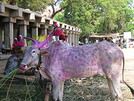
Since we were lucky enough to be there on a Wednesday morning, we explored the surprising Malapay Market, a 10-minute walk from our hotel. You’ll find numerous stalls selling vegetables, fruits, live or dried fish, and handicrafts. Enclosures are set up for selling livestock (calves, zebu, pigs). There are also restaurants. We were lucky to see two pigs roasted traditionally on a spit. There are few Europeans, and the people are warm. A great moment.
We left this beautiful place with regret because we didn’t have time to visit the island or go swimming with whale sharks.
Days 12 to 15:
From Dumaguete port, we took a short crossing (1 hour with Ocean Jet) to Siquijor Island to reach the Coco Grove Beach Resort. A beautiful hotel nestled in a spacious tropical garden. Several restaurants and bars, 4 pools. Despite the size of the place, it remains intimate. You can snorkel (corals and fish) right in front of the beautiful beach. We stayed in a very pleasant duplex suite. For those interested, there’s a spa and a diving center. You can also take the Apo Island excursion (offered at 1,950 PHP).
We spent our days relaxing between the pool and the beach. In the evening, the sunsets over Negros and Apo were stunning.
We booked an island tour with a comfortable tricycle from the hotel (1,500 PHP). The circuit was classic and allowed us to go around the island. We discovered beaches, the famous 400-year-old ficus tree with its enormous roots, and its equally famous foot bath with its cleaning fish. Then we visited the St. Isidore Convent before heading to the Cambugahay waterfalls and their four pools. The setting is idyllic, and the water is surprisingly good—we had a lot of fun swimming. We had dinner at a restaurant overlooking the island, where you can see Apo, Cebu, and Negros. In the end, Siquijor turned out to be a real little tropical paradise.
Since the hotel restaurants were expensive, we dined at nearby establishments: Fuego (clean, good—excellent raw fish—and quiet), Chekesch (louder), and the very pleasant Baha Bar, which brews its own beer and offers more refined cuisine.
Days 15 to 16:
We left at dawn to return to Dumaguete and its airport by ferry. We had breakfast at the Coco Grande Hotel, an annex of the previous one. The Philippine Airlines flight went smoothly. A driver took us to the town of Taal. We stayed at Paradores Del Castillo, right in the heart of the old town. It’s a charming old house with only 6 rooms. The various rooms are decorated with antiques—a real little museum. The garden is pleasant and opens onto the town.
It’s an old early 19th-century house converted into a hotel, beautifully arranged with 6 rooms in the heart of the city. The restaurant in the garden is very pleasant and offers a panoramic view.
We visited an old Spanish house before heading to the beautiful Basilica of St. Martin of Tours, one of the most beautiful religious buildings in the Philippines. A mass was in progress, allowing us to gauge the Filipinos’ fervor before we could visit. When we left, it was dark, and we could admire the illuminated building. We ended our evening by exploring the night market with its many fruit and skewer stalls. A nice surprise.
In the morning, we were taken to the shores of Taal Lake, an ancient caldera where a second volcano has formed in the middle of the lake, which in turn contains another lake. We boarded a *banca* to reach the island in the middle of the lake. This was followed by an uphill walk, made difficult by the high temperature (36°C) and the dust on the path. The dust was worsened by the many horses carrying (or bringing back) the less courageous. To illustrate the difficulty of the climb, the trail is marked by the Stations of the Cross and its 14 stations. We were panting while our guide trotted far ahead. Our effort was rewarded when we reached the summit and its viewpoints over the inner lake and the surroundings. The wisps of smoke seen here and there confirmed we were on an active volcano. Inside the lake, there are supposedly 45 small volcanoes, one of which emerged during its last eruption in 1911.
On the way back, we had lunch by the lake before returning to Manila and the Bayleaf Hotel, whose main merit is its location in the Intramuros district. In the late afternoon, we walked along the walls of the old city.
We had dinner on the hotel’s panoramic terrace overlooking the city and the bay.
Day 17:
Last day! Our tour operator joined us for a tour of the Intramuros district. He enriched the visit with comments on the history, geopolitics, and economy of the Philippines. We visited the Manila Cathedral, destroyed 7 times in the past (6 earthquakes and the 1945 bombing). It’s beautiful, and its stained glass is magnificent. We couldn’t enter the San Agustin Church, the oldest Catholic building in Manila. We passed by the memorial to the Battle of Manila, which claimed over 100,000 lives. We visited the area around Casa Manila, which was closed on Monday, and had a drink at Barbara’s cabaret, located in a historic house. A very enriching morning.
Then we went to the Mall of Asia, the world’s largest shopping mall, to buy some souvenirs (Kultura store) before being taken to the airport. We exchanged our last pesos at the buying rate right after check-in.
The return flight went smoothly. We regretted not being able to use the facilities of Istanbul’s new airport, as its opening was delayed by another month.
Finances:
In the end, we spent 1,640 € for the international flights, 4,200 € for the stay (hotels, visits, various transports) with the agency (whose professionalism we can only praise), and about 700 € for meals, tips, and souvenirs.
Summary:
Luckily, we had beautiful weather throughout our stay, with temperatures between 26 and 35°C. Discovering the Philippines was a wonderful experience. The diversity of the landscapes, the kindness of the Filipinos, the cleanliness, and the truly delicious fruits (especially pineapples and mangoes). We were never harassed, unlike in many touristy countries. On the other hand, the food, though generally cheap, wasn’t exceptional.
Since this country is so vast, we might return in the near future.
Though I’m not a specialist on this destination, I’m happy to answer your questions based on my experience.
So, my flight tickets have just been booked for a trip to Cambodia from November 4th to 27th, 2025.
I’ll be traveling solo and want to explore this amazing country while getting a bit off the beaten path.
I’m arriving in Phnom Penh and also departing from Phnom Penh.
My goal is to travel as much as possible by bus and scooter.
What itinerary would you recommend?
What are the must-do things?
I’m open to all tips and info.
Thanks in advance for your help and responses.
We got back enchanted from a 6-week trip to Cambodia!
Our itinerary: Kampot - Kampong Chhnang - Battambang - Siem Reap - Kampong Cham - Sen Monorom (Mondulkiri) - Banlung (Ratanakiri) - Kratie - Kampong Thom - Phnom Penh.
We traveled by bus, minivan, boat (between Battambang and Siem Reap), overnight bus, scooter, tuk-tuk, and rickshaw for shorter distances. We stayed in guesthouses, homestays, and even in the jungle during a trek.
While the Angkor temples are fabulous, it’s the people you should visit Cambodia for—the "Land of Smiles" truly lives up to its nickname! Tourists gather in Angkor but are quite rare elsewhere, even though the country is easy to travel around.
I won’t describe our trip in detail but instead highlight a few favorite moments.
From Kampot, don’t hesitate to head out around 6 AM to see the fishermen return and their wives selling their catch (just 10 minutes away by the coast). Guaranteed picturesque!
In Battambang, known for its food scene, we discovered a cooking class with Smokin’ Pot (authentic Khmer cooking class). They pick you up from your guesthouse to shop for ingredients (we made fish amok and beef lok lak) at their village market, then cook and eat together. A private class—just the two of us! They also send the recipes via WhatsApp as a PDF. +855 12 821 400
In Siem Reap, I can recommend a francophone tuk-tuk driver who was very attentive to our wishes. We visited tourist spots but also more remote villages and local grilled-pork restaurants with him. He’s a wealth of information about local life, and chatting with him was a real pleasure—we left with regret! You can reach him on WhatsApp: Vung Hem, +855 96 614 0146.
We did a 2-day, 1-night trek in Mondulkiri. Don’t expect a super dense jungle—it looks more like a forest similar to ours. But Nara, our Bunong ethnic guide, made the experience adventurous and ultimately very immersive! WhatsApp +855 86 630 489
Bee Bee’s Chalets homestay: If you pass through Banlung in Ratanakiri, we *loved* this family and their budget-friendly bungalows. Playing Uno, enjoying Nita’s cooking (ask for her fish amok—amazing!), it was a true homestay experience! Contact Nita on WhatsApp: +855 88 818 5525.
In Kratie, rent a scooter and follow the Mekong north for 40 km at your own pace. Being so close to the locals was a treat! Same goes for heading south if you have time.
Kampong Thom: Head 25 km out to visit the pre-Angkorian temples of Sambor Prei Kuk. Around a hundred monuments spread across three sites… and hardly anyone there!
A few practical tips:
Though prices are often listed in dollars, you can always pay in riels (1 USD = 4000 riels), which is what we preferred.
PassApp: An app to book tuk-tuks or rickshaws (and most importantly, know the price upfront).
Virak Buntham: A bus company connecting several cities, bookable online.
Feel free to ask me questions about places, accommodations, etc.—I’d be happy to answer!
We’re planning our second trip to Thailand (2 weeks on-site, late April/early May) as a family with our 5- and 7-year-olds.
On our first trip, we visited Bangkok, Ayutthaya, the River Kwai, Koh Lipe, Koh Phi Phi, and Khao Lak. We especially loved Koh Phi Phi for its limestone cliffs and lush vegetation, as well as Koh Lipe for its crystal-clear waters and snorkeling.
This time, I’m thinking of spending 7 days on the islands. I was considering Koh Tao and Koh Phangan. We’d like some scenery, snorkeling right from the beach, and a bit of atmosphere—but not too much (just enough to grab dinner in the evening).
For the other part of the trip, we’re torn between Chiang Mai and Khao Sok. One or the other… or both? We don’t want to rush, but we’re really nature-focused, so we won’t be hitting too many temples…
Hi there, I’ll be on vacation in Malaysia in November and plan to spend 5 days in Penang. After that, I’d like to visit some temples and places in Butterworth or nearby, and also explore the city. Since I usually get around on foot, which neighborhood would be best for me—meaning within a 30-minute walk of attractions, street food stalls, bus lines, etc.? Thanks in advance for your help!
Françoise
Hello, it’s been a while since I last asked for your help on this forum—I’ve really missed it! I hope you’re all doing well, whether you're new or returning members.
I’m planning a trip from February 6 to 18, 2027, with my sister (we’re 47 and 50—time flies!). I’ve got my eye on a flight from Paris that lands in Bangkok on February 7 at 3 PM, with a return flight from Bangkok on February 18 at noon.
My sister has never been to this destination, and it’ll be her first time in Asia. Her priorities: beaches, sunshine, and cocktails by the shore. For me, I love that too, but I also enjoy exploring, nature, forests, and a bit of comfort (mixing guesthouses and higher-end hotels with pools). A little evening entertainment would be great, but not too much—good cocktails in a nice atmosphere rather than a rave party ;-). And I can’t help but dream of taking her on a little trek through a tropical forest (guaranteed memories and laughs, though she might curse me at the time) and showing her some karst landscapes.
I’ve been to Thailand before, but it was 15 years ago...
The idea is to give her a taste of Bangkok for 1 or 2 nights, a few days on an island (but which one...?), a tropical forest excursion with 1 or 2 nights on-site (Khao Sok?), and then back to Bangkok.
For the "main" island, even after reading the *Guide du Routard*, I’m still undecided. It’s hard to find a place that ticks all the boxes without feeling as crowded as the French Riviera in August: Koh Lanta? Khao Lak (though it’s not an island)? Koh Tao (I could maybe get my PADI certification, but I’m afraid she’d get bored, and it might be better to save that for a solo trip)? Koh Yao Yai (I worry we’d be bored in the evenings)? What a dilemma!
Thank you if you’ve read this far! Feel free to share any advice—it’ll all be warmly welcomed.
Here’s a rough outline of the itinerary (I’d rather skip a night in Bangkok if needed):
· Saturday, February 6, 2027: departure (overnight flight)
· Sunday, February 7, 2027: arrival at 3 PM, probably at the hotel by 6 PM, evening in Bangkok (overnight in Bangkok)
· Monday, February 8, 2027: day in Bangkok (Wat Pho and a floating market?) (overnight in Bangkok)
· Tuesday, February 9, 2027: travel to Koh Lanta or another island (flight to Phuket or Krabi?) (overnight on island "x")
· Wednesday, February 10, 2027: beach and walks (overnight on island "x")
· Thursday, February 11, 2027: beach and walks (overnight on island "x")
· Friday, February 12, 2027: beach and walks (overnight on island "x")
· Saturday, February 13, 2027: beach and walks (overnight on island "x")
· Sunday, February 14, 2027: beach and walks (overnight on island "x")
· Monday, February 15, 2027: travel to Khao Sok—nighttime excursion to Khao Sok (overnight in Khao Sok)
· Tuesday, February 16, 2027: exploration and hike in Khao Sok (overnight in Khao Sok)
· Wednesday, February 17, 2027: return trip to Bangkok (overnight in Bangkok)
· Thursday, February 18, 2027: return flight to Paris at noon
I’m planning a trip to Cambodia and was set on visiting the Ratanakiri region, which seemed to match what we love most in terms of landscapes: forests, jungle, greenery...
However, as I started looking into the area, I read that deforestation there is massive, and some of the info on the topic is years old—the situation hasn’t improved since, unfortunately.
So my question is: is Ratanakiri still worth visiting, and does it justify the long travel time and distance to get there?
I’ve seen that jungle treks are possible, but from experience, I know guides sometimes hesitate to venture deep into the forest and stick to shorter walks along the edges of parks.
Hi there,
I’ve found so many tips and reviews on this forum, so it’s my turn to contribute a little.
We spent just over two weeks with our family, with the following itinerary:
- Hanoi: 5 days
- Halong Bay: 3 days and 2 nights
- Tam Coc: 3 days
- Mai Chau: 2 days
- Sapa: 3 days
We got around by bike, scooter, Grab, and bus.
Our main accommodations were homestays and hotels in Hanoi.
We visited lots of museums, temples, and neighborhoods in Hanoi.
We did a 2-day, 1-night trek in Sapa with May, a Hmong local, without going through an agency.
A few small regrets: the weather was overcast, and we couldn’t make it to Fansipan, but nothing major 😅. We also couldn’t find transport to get from Sapa to Mu Cang Chai.
Other than that, this trip will stay in our memories for the kindness of the Vietnamese people, the connections we made, the food (street food, homestays...), the coffee 😋, the landscapes, and how easy it was to get around...
Our goal was to take our time and focus only on a small part of northern Vietnam.
If you need any tips or recommendations, don’t hesitate to ask.
Looking forward to hearing from you.
Cédric.
Hi there, we’re landing at Hanoi Airport and would like to head straight to Cao Bang without going into Hanoi. Does anyone know if there are buses that go directly from the airport to Cao Bang (especially in the early afternoon)? Thanks in advance!
Hi everyone,
I’m currently working on a 30-day itinerary for May/June 2027.
10 days in eastern Java (Malang, Bromo, waterfalls, Meru Beriti Park, Banyuwangi, and Ijen), a short transit in Ubud for a few days, then Flores before heading back to Jakarta.
We’ll spend 15 days in Flores (the classic route: Moni, Bajawa, Riung, Ruteng, ending in Labuan Bajo).
I’d love some firsthand feedback on flights to Maumere or Ende from Bali Denpasar. I know there are no direct routes and that you have to connect through Labuan Bajo or Timor (I think), which isn’t an issue in itself.
But I’ve read here and there that flights to these destinations can be delayed—or worse, canceled—and that it’s better to fly in and out of Labuan Bajo, which isn’t exactly ideal...
Thanks for any tips or experiences you can share!