Travel journals · Peru
FR

← Travel journals: all destinations

AT
Attila 2 weeks ago
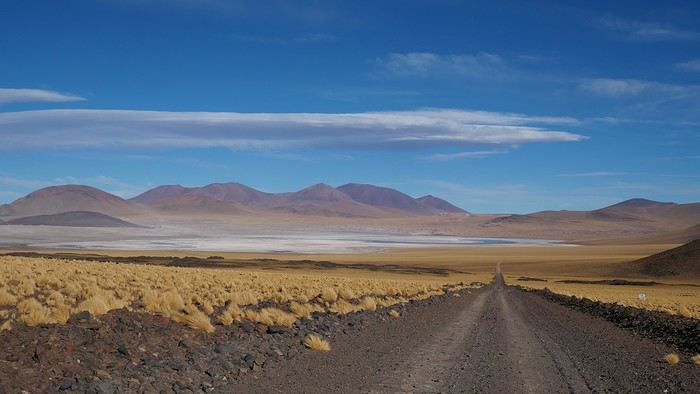
Northern Chile, Andean impressions.
Alright, this year, we're heading back to South America!

The initial plan was to retrace the route we imagined in the summer of 2020: a trip to northern Argentina starting from Córdoba.

Unfortunately, the flight to Córdoba no longer exists, and airfares to Javier Milei’s country are both outrageously priced and involve multiple layovers.

So, I tweaked Google Flights every which way and finally found a flight within my budget—departing from Clermont-Ferrand!

Not to Argentina, though...

Our transatlantic flight will cross the snow-capped Andes, landing in Santiago, Chile, with a return from Lima!

In between, two domestic flights and a big road trip loop starting from the coastal city of Arica to explore the treasures of northern Chile.

Our mode of transport: a pseudo 4x4 that won’t take us through sand dunes or devilish tracks but will let us tackle the entire secondary network, including unpaved main roads, while still being insured.

Is the suitcase packed with all-season clothes?

Are the driver’s license and passport ready?

Bank cards and a few euros too?

Off we go for just over 3 weeks of southern wanderings!


--/--

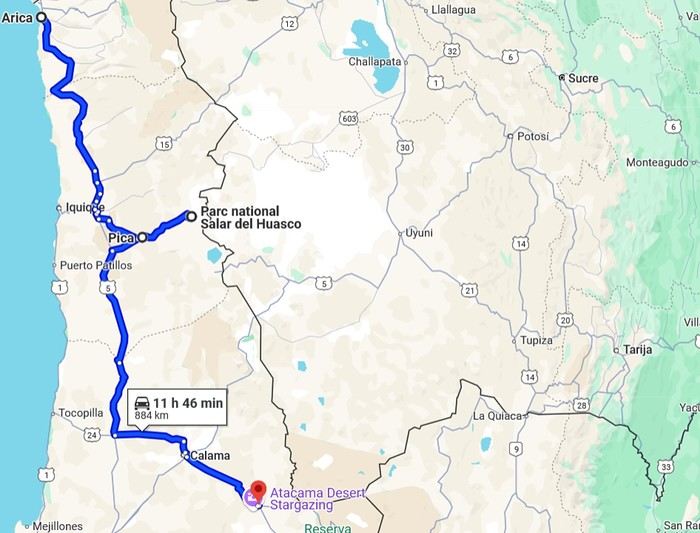
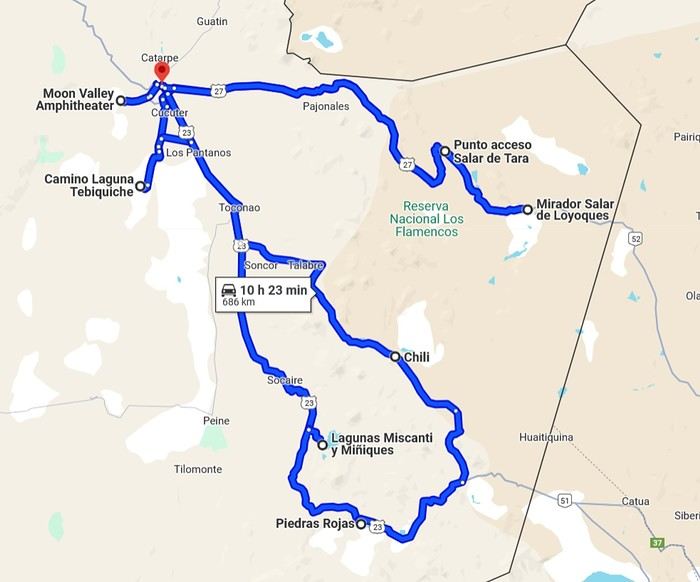
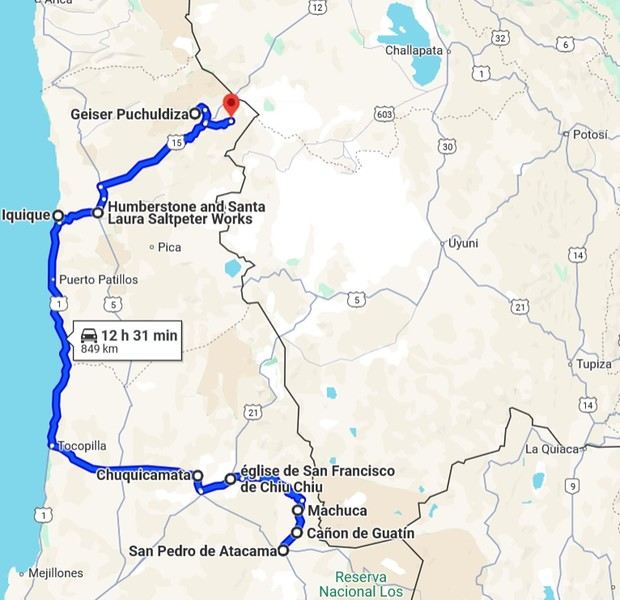
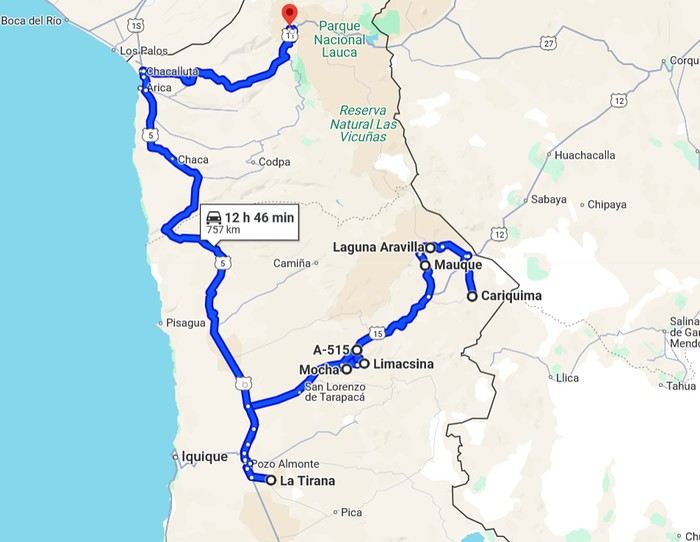
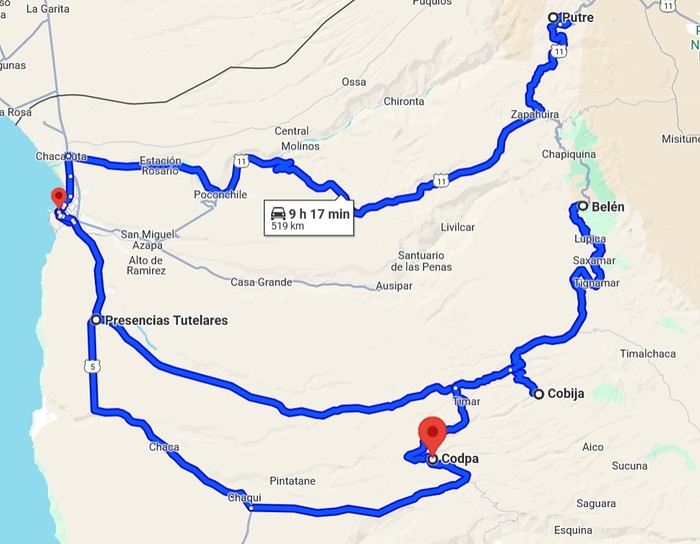
To keep all my esteemed readers on track, here are a few maps outlining the Arica-Arica loop!

1- From Arica to San Pedro de Atacama via Pica and the Salar de Huasco

2- Around San Pedro


3- From San Pedro to Cariquima


4- From Cariquima to Putre


5 - From Putre to Arica


Gas stations in this part of Chile are located in Arica, Iquique, Pozo Almonte, Pica, Calama, and San Pedro de Atacama.
Open
LA
Larri last month · Ticapi
Peru: A Childhood Dream Finally Fulfilled
Preamble

I could have titled my travel journal like Carmen: "Some trips are born twice." Indeed, we had considered this destination back in February 2020. However, an honest tour operator advised us against traveling at that time due to the climate. So, we gave up and opted for Guatemala instead (see "On the Mayan Lands" on this site).

So, why this title? When I was in primary school, over 65 years ago, the illustrations in my history books (Machu Picchu) and geography books (Lake Titicaca) made me dream, and those images stayed in my mind. It took until 2026 to finally make this dream come true!

We prepared our trip with Tout Pérou, a French-speaking "agency." Everything was handled via email and WhatsApp exchanges with our contact: Laurent, who was both competent, friendly, and full of good advice. For 200 €, Tout Pérou provided us with drivers and guides whenever we wanted, helped us buy our domestic flights (cheaper when purchased in Peru), booked shuttles between airports and hotels, and got us a discount on the train ride to Aguas Calientes, as well as on the buses between Chivay and Puno and between Puno and Cusco. In short, Laurent took care of all the logistics and the Machu Picchu tickets. It was up to us to book our hotels. Tout Pérou provided a list, but we weren’t obliged to follow it. Another advantage of the package: we didn’t have to pay in advance; we paid the service providers directly day by day.

We didn’t meet Laurent in person because he was on vacation in Europe. Before his departure, he gave us a briefing, provided a summary table with the entire program, the service providers, their phone numbers, their fees, the schedules, and gave us plenty of advice (money, exchange, safety, etc.). After returning at the end of our stay, he kept checking in on us.

Lastly, we had also gathered information from Arnaud Lagadec, who runs a hotel in Cusco and offers tours of the region. He gave us a lot of useful information. Another contact: Thomas Montaigne, very friendly, who runs an agency in Arequipa (Agence Pérou Exclusif).

Day 1 – Paris to Lima

Foreword I’ll share our trip without any pretension—I don’t have the talent of some contributors on this forum—and I’ll illustrate it with a few photos (taken with an ordinary smartphone). My comments are personal and only reflect my own views. So, please be kind! Feel free to comment on my story as you like, but let’s avoid pointless debates.

Even though we live in the south of the Paris region, true to our habits when the flight is in the morning, we chose to spend the night before our departure in a hotel near CDG and parked our car in a parking lot in Garches. This way, we avoid the stress that often comes with traveling around Paris (accidents, roadworks, traffic jams, etc.).

Check-in and border control went smoothly on that Sunday morning. Our Air France flight was uneventful. In Lima, border control took a particularly long time, and for the first time, we didn’t get an entry visa stamped in our passports.

As planned, a driver took us to the Miraflores district, where our hotel was located. We were surprised by the numerous signs about possible tsunamis, having forgotten that Peru is prone to such events and regularly experiences earthquakes. We’d see the consequences of these during our journey.

Exhausted from the early wake-up, the 13-hour flight, and the 7-hour time difference, we had dinner at the hotel before a restful night.

Note that this day was Peru’s presidential election day. As a result, we weren’t served beer—the sale of alcohol was banned that Sunday.
Open
MA
Mathews 4 months ago · Voyajou
A Brief A to Z of Peru
Foreword This text has been proofread many times. Sorry if some points in this A to Z have already been covered on this forum. Text and drawings by the author.

Peru is still a very vast country, with so much to see, and obviously this text can't list all the attractions of the country.

*Abiseo (River) A national park that's very hard to access and doesn’t seem open to visitors. Includes the Gran Pajaten site (see below). Personally, it really sparks my imagination (not visited personally)

*Aguas Calientes the town next to Machu Picchu, more precisely below the archaeological site. As far as I know, you can only get there by train. Reminds me of the market where stalls line both sides of the tracks near Bangkok. I love it

*Altiplano: somewhere the "heart" of the Andes. I was able to trek across it on foot, starting from Caracollo in Bolivia, and of course, it’s vast plains to explore. This is where people live in a very rural way. Andean populations are quite austere compared to those in the lowlands or on the coast. You really have to appreciate the harshness of life to live there. Life is anything but superficial. I set a compass heading and found myself walking west toward the expanse of water near a place called La Joya. For pitching the tent, the nights were still chilly

*Canyon del Colca One of the deepest canyons in the world. Personally, I hiked down and back up on foot. The toughest stretch I’ve ever covered in my life.

*Ceviche More or less the national dish. A marinade of fish, shellfish, and lime. But you can find it in some restaurants in Europe, France, and certainly in Belgium or Switzerland. In the small restaurants of Pisco, you can eat excellent ceviche

*Cerro Sechín: Mostly bas-reliefs. A site little known to travelers in the Casma province. The first vestiges of a pre-Inca civilization with iconography similar to that of Chavín (not visited personally)

*Chan Chan A large city of the Chimú civilization and relatively vast to visit. You can see adobe walls with bas-reliefs. Visit from Trujillo, take a colectivo. Plan for the whole day

*Charango: a small guitar widely used in Andean music

*Chauchilla A necropolis near Nazca where you can see mummies exposed on the ground. YouTubers can do paranormal experiments there. And for anyone wondering about the fate of the soul and body after death, here’s the answer: the body remains after death. You can imagine your own flesh and body exposed to the winds of the Pampa and before eternity... (not visited personally)
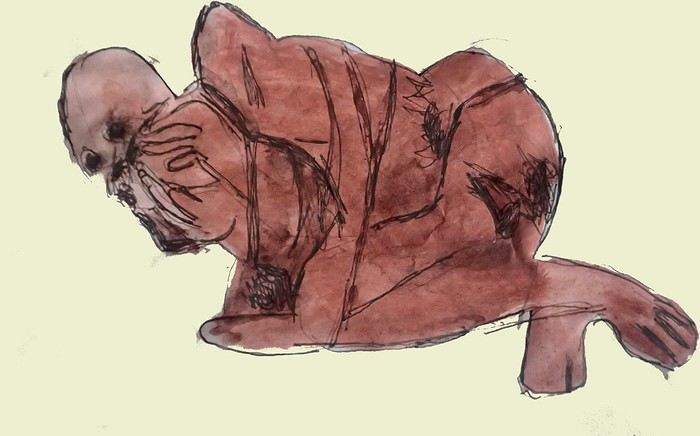


*Chavín de Huántar (Lanzón) The site’s appeal lies in its mountainous surroundings, the Lanzón stela, and the sculpted heads on the façades. What few people know is that the Chavín civilization began its expansion centuries before the Incas. Unfortunately, you can’t get too close to see the Lanzón—the day I was there, it was protected by grilles. To get there: minibus from Huaraz or trek from Olleros. Then cross a high pass (over 5,000m). If you do it solo on foot, be careful—the path isn’t obvious from Olleros

*Chullpa: funerary tower, notably at Sillustani in the Lake Titicaca region

*Chimú: pre-Inca civilization whose center was Chan Chan.

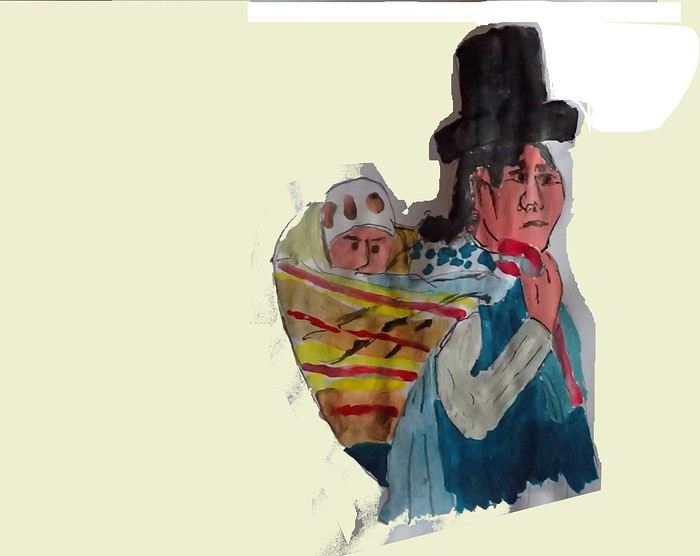
*Chola/Cholitas (Bolivia): typical clothing style of women from the Andean plateaus


*Chompa: pronounce it *Chompaaa!* A common term for a wool sweater with vicuña patterns, often knitted from alpaca wool. If you dress like this, it’s a bit kitschy around the edges

*Cuy That one isn’t a guinea pig like in Guyana but an actual guinea pig. During a trip to Peru, I was hiking near a village north of Quillabamba (the terminus of the train line that passes through Aguas Calientes), and I was invited to stay in a house. The family raised a few of these pets. Apparently, the locals eat them. Since I’m not much of a meat-eater, it doesn’t really tempt me. How about you?

*Pacific Coast or how to talk about a place you haven’t visited? Except for the coast near Pisco and San Andrés, I haven’t visited any coastal cities. But that doesn’t mean these places lack interest or poetry. For fans of clichéd images, pelicans, seabirds, and fishing boats appear by the sea.

*Gran Pajaten: also closed to the public. Features anthropomorphic bas-reliefs. (not visited personally)

*Huaca. Visit the Huaca del Sol and Huaca de la Luna, especially near Trujillo. However, you can skip them—Chan Chan is still more interesting. Don’t forget to spend time visiting Chan Chan

*Huacachina A small oasis in the desert near Ica. Yes, we’re talking about an oasis because for those who’ve never traveled to Peru, the coastal strip along the Pacific is almost entirely desert, from north to south. Peru is territorially made up of three different regions: the desert coast, the Altiplano stretching north to south with mountain ranges (the Cordilleras), and the Amazon basin to the east. (not visited personally)

*Inca Kola It’s neither Coca-Cola nor Pepsi but a unique cola with a slightly orange color. Tastes like bubble gum

*Intiwatana: a carved rock shaped like a parallelepiped. Is it a sundial?

*Ballestas Islands: a highlight in Peru, though very touristy. You can only get there by boat from the port of San Andrés, a few kilometers from Pisco. It’s a surreal place to me—actually islets with cavities where sea lions and fur seals live. Since it’s a protected area, you’re not allowed to disembark. Guano is harvested there, which can be used as fertilizer.

*Kuelap: a fortress built by the Chachapoyas people. Rarely visited by travelers. (not visited personally)

*Larco Museum: an iconic museum in Lima with a large collection of pieces from archaeological and pre-Columbian sites. From what I remember, it has many pieces from the Moche civilization. As for the Moche statuettes, the prudish might look away. Probably a veneration of the god Priapus without knowing it.

*Nazca Lines Discovered by German archaeologist Maria Reiche, they stretch for kilometers. The designs in the desert around Nazca depict animals and cabalistic signs. The question I ask myself is why the creators of these lines represented a monkey and a hummingbird—species endemic to the tropical forest, not the desert plains around Nazca.

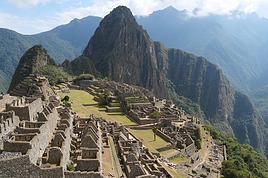
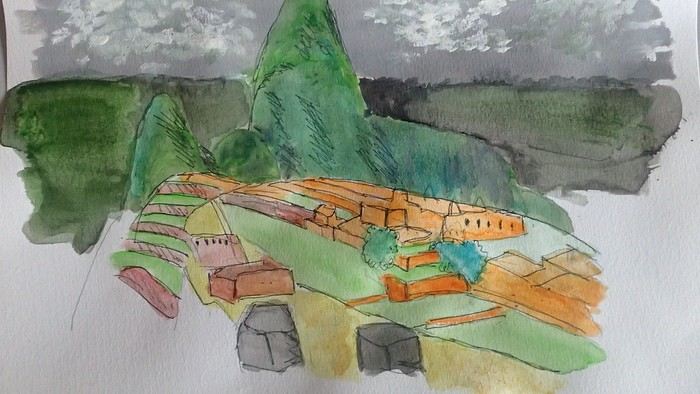
*Machu Picchu: means "old mountain" in Quechua. There’s also Wayna Picchu. The ruins of the site emerge from a sort of small plateau above Aguas Calientes. When the mist rises above the site and the bend of the Urubamba River, it’s truly magical... Also the starting point of the Inca Trail.


*Coca tea A decoction/infusion of the coca plant, meant to ease altitude sickness or *soroche*

*Chullo A rough translation would be a Peruvian wool hat.

*Moche: a civilization established in the Moche Valley, hence the term *Mochica*. What characterizes this civilization are the distinctive clay pieces representing faces and erotic statuettes

*Papa a la Huancaína A local potato dish

*Pisac: a typical market near Cusco

*Pisco Sour: perhaps the Peruvian equivalent of the *caipirinha* you drink in Brazil.

*Puya Raimondii A Bromeliaceae that still looks like a cactus, endemic to the Altiplano

*Quechua The language spoken by the indigenous people of the high plateaus (as well as Aymara in Bolivia)

*Quipu A knotted string used for counting. Widely used by the Inca administration.

*Sacsayhuamán (Q’enqo, Inca Bath) From Cusco’s Plaza de Armas, take the streets that climb above the city. Sacsayhuamán is called a fortress and is made up of large stone blocks. You wonder how the Incas could cut such huge blocks to assemble them—just like some streets in Cusco. The Q’enqo block is enigmatic; no one really knows what it represents.

*Savia Andina An Andean folk group.

*Tambo (=> Ollantaytambo) The Inca emperor (Atahualpa, Manco Capac) had the mission of controlling a vast empire. An empire that was still very extensive. Hence the importance of these *tambos* or relay stations. Napoleon created the civil code; the Incas invented the *tambos* and *quipus*.

*Tawantinsuyu: the Inca Empire

*Tinku: a warrior dance practiced mainly in Bolivia

*Golden Tumi: a sacrificial weapon. Often featured in Peru travel guides. See illustration
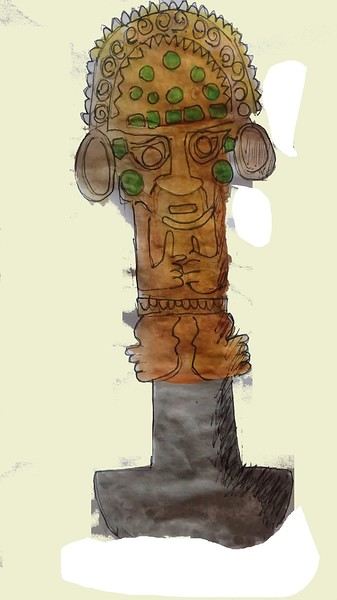


*Terra X: a documentary series from the German TV channel that aired on Arte. Some episodes focused on pre-Inca and Inca Peru. I must have some old recording tapes. In memory of Gottfried Kirchner as a source of inspiration.

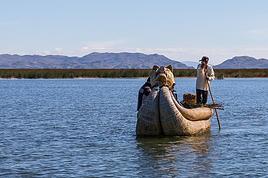
*Uros: I checked—it actually refers to the people who live on these floating islands. Even if it’s touristy, it’s a must-visit because it’s incredible how people can live on islets made from nothing. Take the boat from Puno

*Vicuña, llama, guanaco: camelids characteristic of the Altiplano
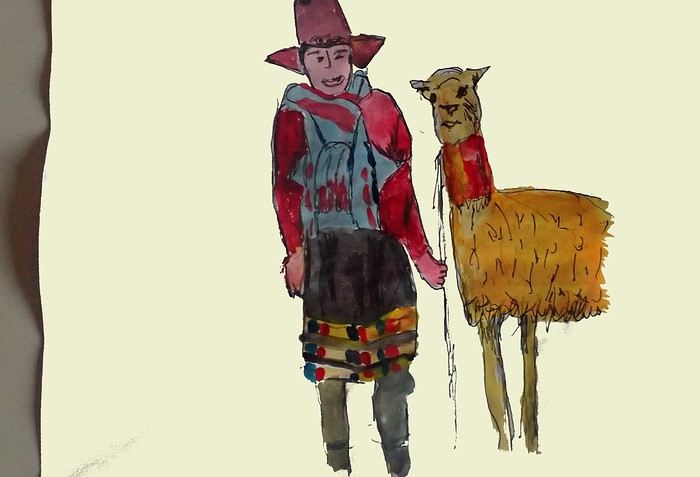


*Wayna Picchu The young Picchu mountain. In the first minutes of *Aguirre, the Wrath of God*, you see Klaus Kinski—well, Aguirre—making his way along the Inca Trail. Werner Herzog must have broken his back filming those sequences.

*Zampoña: pan flute
Open
TI
Ticapi 4 months ago · VallM17
Some trips are born twice - Peru April - May 2025
Some trips are born twice.

Ours was supposed to happen in 2020. Everything was ready: the itinerary, the flight tickets, hotel reservations and Machu Picchu, the rental car, dreams of high altitudes and wide-open spaces. And then the world stopped.

Like so many other plans, our trip to Peru was put on hold. Disappointment was followed by a more concrete reality: paperwork, endless back-and-forth, and battles to recover some of the costs we’d already paid.

The years went by. Life moved on, with its shifting priorities and unexpected twists. Rescheduling this trip wasn’t possible until 2025.

The itinerary stayed mostly true to what we’d imagined five years earlier. One major difference, though—in 2020, we’d planned to rent a car and explore the roads completely independently. Most importantly, we hadn’t included the three-day Ausangate trek, due to lack of time.

For 2025, our plans evolved. 4x4 rental prices had skyrocketed, and when we looked at our schedule more closely, we realized quite a few days didn’t actually need a vehicle. So we made a different choice and opted for private drivers instead. A decision we never regretted. Always punctual, thoughtful, and available... they were so much more than just drivers.

All our reservations were made in January, except for the trek, which we booked in February.

Finding reliable drivers on our own was tough, so we asked Laurent from Tout Pérou to handle it for us. Going through Tout Pérou also gave us a discount on the train ride to Aguas Calientes, so Laurent booked those tickets too. He also bought our Machu Picchu entrance tickets at the same price we would’ve paid on the official website. When comparing domestic flight prices, we found it was cheaper to book from Peru, so Laurent took care of those as well.

This time, nothing was going to stop us. Peru was waiting. And we were ready. 🙂
Open
MA
Marati 6 months ago · Montagnard74
A Bold Combo: Southern Peru, Bolivia, and Northern Chile
Hello everyone,

For our latest 3-week family trip (yes, the kids are growing up, and two of them are about to enter the working world), we’re heading to South America! For our first time on this continent, I had planned a classic 3-week loop in Peru.

But since we won’t be returning to this part of the world anytime soon, I thought: why not follow in the footsteps of Franck, aka Bibouns51, who, in 18 days, didn’t just stick to Peru but also added two of the planet’s most stunning landscapes to his itinerary... the Salar de Uyuni in Bolivia and its neighbor, the fabulous Atacama Desert in northern Chile !!

So, I set about the tricky task of limiting the regions we’d visit in Peru to those we considered must-sees, to avoid rushing too much. The visit schedules were optimized, including several comfortable overnight buses that have the huge advantage of letting us hop between regions.

So, we’re off on a somewhat adventurous trip with three domestic flights (two on the first day and one on the last), two overnight buses for quick hops, several car rentals, the services of a few drivers to make the trip more comfortable, and even a tour operator for crossing the Salar...

Our main concern is altitude sickness, and we’re bringing Diamox, aspirin, etc., just in case.

Our second worry before departure was not even getting off the ground... Yes, for once, we’re leaving from France—Marseille, to be exact. The week before our departure, with the surprise air traffic controllers’ strike, I remembered why we usually prefer to leave from abroad, like Turin or Barcelona... In the end, it wasn’t the air traffic controllers who made us nervous but the early July wildfires that paralyzed the airport a few days before our departure. Fortunately, the fires were quickly brought under control, and on the big day, everything was smooth sailing!

Detailed itinerary (which changed on Day 1 due to departure hiccups): Day 0: Flight Marseille - Madrid - Lima PERU Theoretical and abandoned Day 1: Flight Lima - Cuzco and visit Cuzco (Puka Pukara, Tambomachay, Cristo Blanco Observatory, Sacsayhuaman sunset) - Night in Cuzco Day 2: Taxi -> Chinchero - Moray - Maras Salt Mines - Ollantaytambo - Train to Aguas Calientes Day 3: Machu Picchu - Return train to Ollantaytambo Day 4: 2-day taxi -> Pisac - Tipon - Andahuaylillas - Huaro - Night in San Pedro Day 5: Palcoyo - Checacupe - Vinicunca - Return and night in Cuzco Day 6: Day in Cuzco (catch-up on Sacsayhuaman, San Blas district, Temple of the Sun) - Overnight bus to Arequipa Day 7: Rental car -> On the road to Colca Canyon, night in Cabanaconde Day 8: Descent to the bottom of Colca Canyon, night at Oasis Sangalle Day 9: Ascent from the canyon - Maca - Chivay - Return and night in Arequipa Day 10: Visit Arequipa (Santa Catalina Convent, La Recoleta Church and Monastery, La Compañía Church, Cathedral) - Overnight bus to Puno Day 11: Lake Titicaca - Night in Puno BOLIVIA Day 12: Shared taxi -> Road to La Paz, visit downtown La Paz - Night 1 in La Paz Day 13: Moon Valley and Las Animas Valley - Night 2 in La Paz Day 14: Day in La Paz - Night 3 in La Paz Day 15: Flight to Uyuni - Day 1 of Salar de Uyuni tour - Night at the edge of the Salar Day 16: Crossing the Lipez region and lagoons - Night near Laguna Colorada Day 17: Sol de Mañana CHILE Day 17 cont.: Pre-booked transfer to SPDA - 4x4 rental - Pukara de Quitor - Stargazing tour - Night 1 in SPDA Day 18: Death Valley and Moon Valley - Night 2 in SPDA Day 19: Miscanti and Miniques Lagoons, Salar de Aguas Calientes and its Piedra Roja, Tebenquiche Lagoon and Quebrada del Diablo - Night 3 in SPDA Day 20: Rainbow Valley and swim in the Puritama River - Night 4 in SPDA Day 21: Tebenquiche Lagoon - Bus to Calama - Flight to Santiago Day 22: Return Santiago - Madrid - Marseille

Day 0 - 11/07: Destination Lima

Our first flight from Marseille went smoothly to our Iberia layover in Madrid.

In Madrid, just after getting off the plane around 8 PM, and as we were walking through the terminal, we got a rude awakening!!

We saw the word "Cancelled" next to our flight number on the display boards. Thinking it must be a glitch, we checked another screen, but the system was stubborn, and the same dreaded word appeared !

So, we headed to the Iberia counter, where an agent confirmed that our Friday evening flight was canceled and rescheduled for the next morning. The reason? A breakdown and no replacement plane, even though we were in Madrid, Iberia’s home base!

To make matters worse, I remembered our super-tight schedule, planned to the minute, with no buffer day in Lima. Since I’m a bit phobic of megacities and hadn’t found anything appealing in the Peruvian capital in our guidebooks, we’d planned to leave Lima as soon as possible for Cusco, the heart of the Sacred Valley, to spend our first day there.

Bad idea, because we already knew the 4-hour buffer wouldn’t be enough, and we’d miss the domestic flight, which was, of course, non-refundable and non-changeable. So, we had to call LATAM from Madrid to find another flight for Saturday evening and negotiate a rate to recover some of our initial outlay.

After an hour on the phone with customer service, several endless holds, and three failed attempts to dictate our credit card number over the phone to a Spaniard speaking English with a thick accent, we finally managed to confirm the transaction, securing our new flight tickets for a moderate extra cost of just 150 € total.

At first, we were pretty bummed about losing a day and incurring extra fees to reschedule the domestic flight, but then, when we learned from an Iberia customer service rep that we’d receive the max compensation of 600 € per traveler, we even ended up grinning... because 3000 € in refunds for only losing the first day in Cusco? We’d sign up for that 10 times over!!

Iberia then took care of us, putting us up in a hotel where we had dinner before a short 5-hour night and an early morning departure. I took the opportunity to improvise a quick day of sightseeing in Lima, focusing on the Barranco and Miraflores districts.
Open
JP
Jpm04 last year · Snack
5 weeks in Bolivia and southern Peru this summer
This quick summary of our trip follows a project I posted on VF back in March 2016. I can answer more specific questions, but here I’m highlighting the points that seem most important. Generally, we started our days early (~7 AM or even earlier), had lunch on the go—often in the street—and dinner at somewhat rustic restaurants (< 100 Bs for two). The hotels (unbooked except for our arrival day in La Paz) had so-called "matrimonial" rooms with private bathrooms, usually costing 150–200 Bs or less.

We had a few cold sweats right off the bat: our debit cards only worked at the last ATM (out of 12!) at the airport… and the next day, our flight to Rurrenabaque was grounded, leaving us stranded for a day. We found decent lodging at Hotel Avenida. The following morning, our plane was finally fixed and crossed the Cordillera without issue. Our stay (5 days / 4 nights in the jungle & pampa) with Mashaquipe was great (our guide Domingo played a big part in that). Very interesting and a reliable agency. We saw quite a few animals, though spotting them in the jungle is tricky. In the savanna, though, it’s easier, and Mashaquipe seems to be one of the few agencies with a site in the pampa (near Santa Rosa).

We flew back to La Paz that evening and got lucky—within an hour, we caught a flight to Santa Cruz. The next morning, our first encounter with bus stations: Santa Cruz’s is huge, and we got a little lost. But we found a bus to San José. We visited the church in the late morning, then headed to the bus station, where schedules seemed random and buses only left in the late afternoon at best. We decided to walk to the outskirts of town toward San Rafael and try hitchhiking. It worked—every (rare) vehicle stopped, and we hopped into the first one heading to San Rafael. When we arrived, we gave the driver half the bus fare (~60 Bs). The next morning, we visited the church early and positioned ourselves at the village exit. A pickup truck quickly picked us up and took us to San Miguel (for free). Then, the same thing happened on the way to San Ignacio, but this time it was a *collectivo* that stopped. We arrived in San Ignacio in the early afternoon, but it was Saturday, and the church was closed. It was supposed to open… but never did. Since the *flota* bus left for Concepción around 7 PM, we took it without getting to visit. The next day, we toured the church and attended mass (++) with a choir and musicians. Then, we took a bus to San Javier, visited the church, and caught a *flota* back to Santa Cruz that evening. It might seem a little rushed, but we were lucky. Verdict: the churches are hidden gems in this somewhat off-the-beaten-path province (almost no tourists). We loved the last two the most, but the others were great too.

The next morning, we flew to Sucre, a beautiful city (though I didn’t connect with it), especially compared to the others, at a moderate altitude for the country… except for the central market, the Museum of Indigenous Art, and the San Felipe Neri convent. By chance, we ended up at *Le Petit Parisien*, a café two steps from the main square (65 c. estudiante). Christian, the owner, is originally from Paris and serves French food. His wife, Anna, is Bolivian and organizes visits to the Jal’qa community west of Sucre. You have to enjoy walking (~35 km in 2 days) and be okay with a *camione* (truck) ride and rustic lodging. We said yes for the next morning (cost: 600 Bs for two). A great memory, especially our night with a Quechua family who had just harvested corn… and the otherworldly landscapes.

Then, an overnight bus to Tupiza, where we checked out agencies for a 4-day loop through Sud Lípez and the salt flats, returning to Uyuni. We were really impressed by *Granero del Oro* (though there were only two of us), but we ultimately went with *Tupiza Tours*, the biggest agency, which had other clients so we could leave as a group of four (it was late June, and there weren’t many tourists yet; cost: 2,600 Bs for two). No regrets—this agency seemed solid, with a well-maintained vehicle and a serious driver (Freddy) who stopped whenever we asked. With our +5°C sleeping bags, we weren’t cold since the hotels (which the Bolivians call *basico*) provided blankets. The landscapes were mind-blowing in color, variety, and scale… even though the weather was pretty variable. We saw quite a few vicuñas.

In Uyuni, we took an overnight bus to La Paz, then another to Puno less than two hours later, arriving in the afternoon. That gave us time to head to the port to find lodging on Amantani. We avoided the street vendors and found an office run by locals from the island. We left the next day with an Italian couple and stayed two nights in Occopampa with a host family. Instead of returning via Taquile, we took a boat to Chifrón, then a bus to Juliaca, and from there to Cusco. The island was nice, and we did a lot of walking. At one point, we ran into a horde of tourists (and the second night, there was a dance with quite a few tourists… but also some locals, though I didn’t connect much). I got the impression the northern part of the island is less touristy… but you don’t get to choose your lodging.

In Cusco, we stayed at Suecia 2 (almost quiet, since it’s on the edge of the happy-hour bars and nightclubs) and across from the excellent restaurant *Victor Victoria*. On Sunday, we took a *collectivo* to the Chinchero market. It was touristy but still fun. There were great textile deals, but we were broke and couldn’t find an ATM. Some regrets… We met two young Spanish women and shared a taxi to Moray (we didn’t visit because you need the *boleto turistico*) and Salinas. The taxi dropped us off for an hour—it was nice, especially in the late afternoon. The next day, though, we were really disappointed by Pisac, which felt 100% touristy and New Age… we’d recommend avoiding it. On the way back from Pisac, we asked the bus to stop at Sacsayhuamán, which we explored a bit without a ticket before walking back down to Cusco. The city itself was nice but nothing extraordinary. We only got the *boleto religioso* (cathedral + Iglesia San Blas + San Cristóbal). The Inca Museum and Qorikancha were highlights.

We’d booked the Lares Trek + Machu Picchu (MP) over 4 days with *Sam Travel Perú*. There were five couples and two guides (Eddy & Julian). Great organization, great guides, and the food… no complaints. The landscapes were stunning… and no altitude issues (we’d acclimatized well with Lípez and Lake Titicaca) or breathing problems since we were in shape. That wasn’t the case for the other participants, but it wasn’t a problem since we had two guides, and on the last day, we split into two groups. We stopped in Aguas Calientes before Lares, then took a car and train to Aguas Calientes. On the guide’s advice, we decided to line up at 4:30 AM (there were already hundreds of people) for the bus to MP. At the top, Eddy guided us until 9 AM, then we explored on our own. At first, it was peaceful with clouds clinging to the peaks, but then it got crowded and hot. We escaped with two other couples to climb Wayna Picchu (it’s steep, but with dry weather, no problem). Still, I’d recommend being in shape for the trek and the climb to WP to really enjoy it. We returned to Cusco in the late afternoon, and the next morning, we flew (booked in advance) to La Paz, where we explored a bit (cable car, San Francisco, Calle Jaén…).
Open
FA
FamilleUS last year · Muriel18
16 days in Peru in August 2023
Hi everyone, The years go by and Machu Picchu has been on our "to-do list" for a few decades now... But Peru is, fortunately, so much more than this legendary site...

We went as a couple for a 15-day trip. For the first time, we delegated the logistics to a local agency (Paprika in Arequipa). This agency offers "classic" small-group tours and the option to do it privately, which we chose.

No complaints—they were perfect for organizing transportation, hotels, and French-speaking guides.

The "classic" southern Peru loop is: Lima, Paracas, Nazca, Arequipa, Colca, Titicaca, Cusco, Sacred Valley, Cusco. Nothing very original... but why get creative when there’s already so much beauty to discover?

We opted for a shorter loop, skipping Paracas/Nazca because the small planes in Nazca weren’t a unanimous hit, and it saved us dozens of hours on the bus. But we added a stop at Palccoyo (the rainbow mountains) between Titicaca and Cusco.

It might seem like a shame, but we don’t regret it at all.
Open
MO
Montagnard74 last year
Peru-Bolivia 2017: A Month in the Andes
Here we go...

It’s been almost a month since we got back, and my head is still over there... Just like every time... For my own sake, I know travel journals are useful for travelers planning a trip to a country. But selfishly, they’re also helpful for me—to put the final stone on each journey and revisit it from time to time, just for the memories...

So, this trip won’t be any different, and I invite you to follow along on our Andean adventure, from Lima to the Southern Lipez, from December 16, 2016, to January 14, 2017. It’s a chronological journal because I don’t know how to approach it any other way. It doesn’t hold any absolute truths—just my experiences and feelings, which are obviously personal and not objective!

But if it inspires you to visit these magical countries (and I assume you’re already interested if you’re here) or gives you a couple of tips, then I’ll consider it a win!

So, let’s hit the road for the land of wide-open spaces!

Open

Recommended for you

Previous Page 1 of 1 Next

64 more discussions in this forum are in French. Browse them on the French forum