last edited Dec 11, 2019
What to See in Cuba
Location Map of Cuba
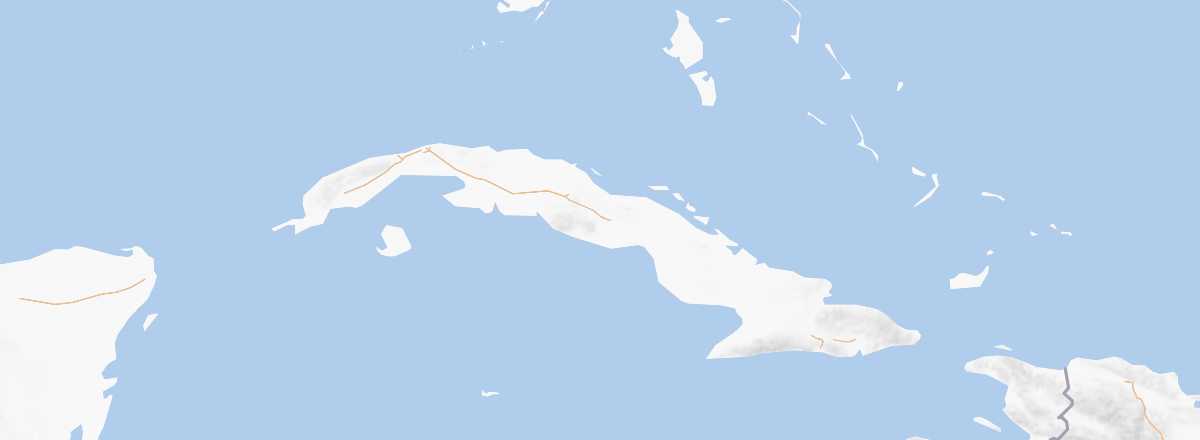 Cuba
Open the interactive map
UNESCO World Heritage Sites
Cuba has 10 sites inscribed on the UNESCO World Heritage list.

Historic Centre of Camagüey (2008)
Its historic centre, a remarkable example of 19th-century Spanish colonial architecture.
Its historic centre, a remarkable example of 19th-century Spanish colonial architecture.

Historic Centre of Cienfuegos (2005)
A UNESCO World Heritage Site, it is a remarkable example of 19th-century Spanish colonial architecture.
A UNESCO World Heritage Site, it is a remarkable example of 19th-century Spanish colonial architecture.

Historic Centre of Trinidad (1988)
With its Plaza Mayor, churches, museums, and old houses, the heart of the city is a UNESCO World Heritage site for its remarkable architecture.
With its Plaza Mayor, churches, museums, and old houses, the heart of the city is a UNESCO World Heritage site for its remarkable architecture.

Castillo de San Pedro de la Roca (1997)
Overlooking Santiago de Cuba Bay, this 17th-century Spanish fortress is a UNESCO World Heritage site.
Overlooking Santiago de Cuba Bay, this 17th-century Spanish fortress is a UNESCO World Heritage site.

Alejandro de Humboldt National Park (2001)
The site has been a UNESCO World Heritage Site since 2001 for its biological and geological wealth.
The site has been a UNESCO World Heritage Site since 2001 for its biological and geological wealth.

Desembarco del Granma National Park (1999)
Another UNESCO-listed park known for its biological and geological diversity, particularly its coastal cliffs.
Another UNESCO-listed park known for its biological and geological diversity, particularly its coastal cliffs.

Coffee Plantations of Southeastern Cuba (2000)
Located in the Sierra Maestra, this is the region where coffee production once thrived. Though it features a dedicated museum (Museo Isabelica), its value is primarily symbolic, which hasn’t stopped it from being listed as a UNESCO World Heritage site.
Located in the Sierra Maestra, this is the region where coffee production once thrived. Though it features a dedicated museum (Museo Isabelica), its value is primarily symbolic, which hasn’t stopped it from being listed as a UNESCO World Heritage site.

Valley of the Sugar Mills (1988)
This UNESCO-listed valley, jointly inscribed with the city of Trinidad, was once a major hub for sugar cane cultivation. Today, you can still see the plantations, slave quarters, mills, and other remnants of the era in varying states of preservation.
This UNESCO-listed valley, jointly inscribed with the city of Trinidad, was once a major hub for sugar cane cultivation. Today, you can still see the plantations, slave quarters, mills, and other remnants of the era in varying states of preservation.

Viñales Valley (1999)
This fertile valley, where a large portion of Cuban tobacco is produced, is part of the national park of the same name and is a UNESCO World Heritage site. It is surrounded by mountains with numerous caves. You can hike and go climbing here.
This fertile valley, where a large portion of Cuban tobacco is produced, is part of the national park of the same name and is a UNESCO World Heritage site. It is surrounded by mountains with numerous caves. You can hike and go climbing here.

Old Havana (1982)
It is the largest colonial city center in Latin America, with numerous historic buildings and monuments. Currently under restoration, it offers unique architecture that has earned it a place on the UNESCO World Heritage list.
It is the largest colonial city center in Latin America, with numerous historic buildings and monuments. Currently under restoration, it offers unique architecture that has earned it a place on the UNESCO World Heritage list.
The West
This includes (from west to east) the provinces of Pinar del Río, Artemisa, La Habana, Mayabeque, Matanzas, plus the Isla de la Juventud.
Bay of Pigs
This bay, named after a species of fish rather than the mammal, is world-famous for being the site of the 1961 attempted landing by Cuban opponents of Castro’s regime. A museum at Playa Girón commemorates the events.
This bay, named after a species of fish rather than the mammal, is world-famous for being the site of the 1961 attempted landing by Cuban opponents of Castro’s regime. A museum at Playa Girón commemorates the events.

Cayo Largo del Sur
Near Isla de la Juventud, Cayo Largo has several hotels and is known for its beaches (including Sirena and Playo Paraiso) and diving opportunities.
Near Isla de la Juventud, Cayo Largo has several hotels and is known for its beaches (including Sirena and Playo Paraiso) and diving opportunities.

Isla de la Juventud
This is the main island of the Canarreos Archipelago and the largest in the country. For tourism, it hosts several hotels and is known for its beaches and diving. The southern part is home to the Ciénaga de Lanier National Park (birds, turtles, crocodiles).
This is the main island of the Canarreos Archipelago and the largest in the country. For tourism, it hosts several hotels and is known for its beaches and diving. The southern part is home to the Ciénaga de Lanier National Park (birds, turtles, crocodiles).

Havana
Both the capital and the country’s economic and cultural hub, Havana is a must-visit on any trip to the island, if only for its incredibly rich heritage from its Spanish era. Its historic centre is also a UNESCO World Heritage site.
Both the capital and the country’s economic and cultural hub, Havana is a must-visit on any trip to the island, if only for its incredibly rich heritage from its Spanish era. Its historic centre is also a UNESCO World Heritage site.

Matanzas
The city has several buildings dating from the colonial era as well as the San Carlos Borromeo Necropolis. You can also explore the Bellamar Cave, the birds of the Yumuri Valley, or navigate the Canimar River in its surroundings.
The city has several buildings dating from the colonial era as well as the San Carlos Borromeo Necropolis. You can also explore the Bellamar Cave, the birds of the Yumuri Valley, or navigate the Canimar River in its surroundings.

Pinar del Río
Though the city itself has limited tourist appeal, it remains a great base for visiting nearby national parks (Viñales, Guanahacabibes, La Güira). Pinar del Río is also at the heart of Cuba’s tobacco-growing region, where the country’s famous cigars are made.
Though the city itself has limited tourist appeal, it remains a great base for visiting nearby national parks (Viñales, Guanahacabibes, La Güira). Pinar del Río is also at the heart of Cuba’s tobacco-growing region, where the country’s famous cigars are made.

Varadero
One of the largest beach resorts in the Caribbean, known for its all-inclusive packages. Varadero is famous for its beautiful beaches, water activities, and diving. It’s also a place completely separate from the rest of Cuba, with a purely tourist-focused purpose.
One of the largest beach resorts in the Caribbean, known for its all-inclusive packages. Varadero is famous for its beautiful beaches, water activities, and diving. It’s also a place completely separate from the rest of Cuba, with a purely tourist-focused purpose.

Viñales
Although the small town has several museums, its main attraction is being the gateway to the valley of the same name, a UNESCO World Heritage site.
Although the small town has several museums, its main attraction is being the gateway to the valley of the same name, a UNESCO World Heritage site.
Natural Heritage
Colorados Archipelago
This group of islands, located between Viñales and the western tip of Cuba, has become a tourist destination, notably featuring Cayo Levisa. The area is prized for its birdlife, but above all for its stunning beaches and excellent diving opportunities.
This group of islands, located between Viñales and the western tip of Cuba, has become a tourist destination, notably featuring Cayo Levisa. The area is prized for its birdlife, but above all for its stunning beaches and excellent diving opportunities.

Cienaga de Zapata National Park
This vast wetland area near the Bay of Pigs is renowned for its birdlife and the endemic presence of crocodiles.
This vast wetland area near the Bay of Pigs is renowned for its birdlife and the endemic presence of crocodiles.

Guanahacabibes National Park
The park is known for its birds and sea turtles, as well as for being home to over a hundred sites bearing witness to the region’s earliest inhabitants, the Guanahacabibes. Several beaches in the park, such as María la Gorda, also attract many visitors and diving enthusiasts.
The park is known for its birds and sea turtles, as well as for being home to over a hundred sites bearing witness to the region’s earliest inhabitants, the Guanahacabibes. Several beaches in the park, such as María la Gorda, also attract many visitors and diving enthusiasts.
La Guira National Park
Forests, streams, lakes, and gardens surrounded by beautiful mountainous landscapes between Pinar del Rio and Havana.
Forests, streams, lakes, and gardens surrounded by beautiful mountainous landscapes between Pinar del Rio and Havana.

Sierra del Rosario
Hiking opportunities in this mid-mountain nature reserve at the western tip of the island.
Hiking opportunities in this mid-mountain nature reserve at the western tip of the island.
Viñales Valley
This fertile valley, where a large portion of Cuban tobacco is produced, is part of the national park of the same name and is a UNESCO World Heritage site. It is surrounded by mountains with numerous caves. You can hike and go climbing here.
This fertile valley, where a large portion of Cuban tobacco is produced, is part of the national park of the same name and is a UNESCO World Heritage site. It is surrounded by mountains with numerous caves. You can hike and go climbing here.
The Centre
This covers the provinces of Cienfuegos, Villa Clara, Sancti Spíritus, Ciego de Ávila, and Camagüey.

Camagüey
Capital of the province of the same name and the country's third-largest city, Camagüey has been a UNESCO World Heritage Site since 2008 for its historic colonial centre.
Capital of the province of the same name and the country's third-largest city, Camagüey has been a UNESCO World Heritage Site since 2008 for its historic colonial centre.

Cayo Coco
A major tourist destination known for its stunning postcard-perfect beaches, water activities, dive-friendly marine life, and birdwatching.
A major tourist destination known for its stunning postcard-perfect beaches, water activities, dive-friendly marine life, and birdwatching.

Cayo Guillermo
The island is home to a few all-inclusive hotels. It is prized for its dunes and stunning beaches, water activities, diving spots, and birdwatching.
The island is home to a few all-inclusive hotels. It is prized for its dunes and stunning beaches, water activities, diving spots, and birdwatching.

Cayo Romano
One of the largest islands in the Sabana-Camagüey archipelago. With fewer tourist facilities than its neighbors, it is wilder and ideal for birdwatching.
One of the largest islands in the Sabana-Camagüey archipelago. With fewer tourist facilities than its neighbors, it is wilder and ideal for birdwatching.

Cayo Sabinal
Located at the southern tip of the Sabana-Camagüey archipelago, Cayo Sabinal is first and foremost known for its beautiful beaches.
Located at the southern tip of the Sabana-Camagüey archipelago, Cayo Sabinal is first and foremost known for its beautiful beaches.

Cayo Santa Maria
Fairly long and narrow, Cayo Santa Maria is home to several all-inclusive resorts. Like its neighbors, it’s popular for its beaches, diving, and water activities.
Fairly long and narrow, Cayo Santa Maria is home to several all-inclusive resorts. Like its neighbors, it’s popular for its beaches, diving, and water activities.

Ciego de Ávila
Although it is rarely visited, Ciego has several buildings dating from the colonial era.
Although it is rarely visited, Ciego has several buildings dating from the colonial era.

Cienfuegos
The city is a UNESCO World Heritage Site for its historic centre, a remarkable example of 19th-century Spanish colonial architecture. It is also nestled in the heart of one of the Caribbean’s most beautiful bays.
The city is a UNESCO World Heritage Site for its historic centre, a remarkable example of 19th-century Spanish colonial architecture. It is also nestled in the heart of one of the Caribbean’s most beautiful bays.


Sancti Spiritus
This low-key tourist destination still boasts an old town with numerous 18th- and 19th-century buildings.
This low-key tourist destination still boasts an old town with numerous 18th- and 19th-century buildings.


Trinidad
This is the best-preserved colonial city in Cuba, with a historic center designated a UNESCO World Heritage Site since 1998. Beyond the city itself, its surroundings also offer tourist attractions (Ancon, Topes Reserve, Valley of the Sugar Mills, etc.).
This is the best-preserved colonial city in Cuba, with a historic center designated a UNESCO World Heritage Site since 1998. Beyond the city itself, its surroundings also offer tourist attractions (Ancon, Topes Reserve, Valley of the Sugar Mills, etc.).
Valley of the Sugar Mills
This UNESCO-listed valley, jointly inscribed with the city of Trinidad, was once a major hub for sugar cane cultivation. Today, you can still see the plantations, slave quarters, mills, and other remnants of the era in varying states of preservation.
This UNESCO-listed valley, jointly inscribed with the city of Trinidad, was once a major hub for sugar cane cultivation. Today, you can still see the plantations, slave quarters, mills, and other remnants of the era in varying states of preservation.
Natural Heritage

Sabana-Camagüey Archipelago
A long archipelago stretching nearly 500 km parallel to the northern coast, running roughly from Varadero to Camalote. It’s renowned for its beaches, diving, birdwatching, and all-inclusive resorts like Cayo Coco, Cayo Guillermo, Cayo Romano, Cayo Sabinal, and Cayo Santa María.
A long archipelago stretching nearly 500 km parallel to the northern coast, running roughly from Varadero to Camalote. It’s renowned for its beaches, diving, birdwatching, and all-inclusive resorts like Cayo Coco, Cayo Guillermo, Cayo Romano, Cayo Sabinal, and Cayo Santa María.
Laguna de Leche
The "milk lake" is Cuba's largest lake. Its limestone bed gives it this milky colour. The lagoon is also home to many colonies of pink flamingos.
The "milk lake" is Cuba's largest lake. Its limestone bed gives it this milky colour. The lagoon is also home to many colonies of pink flamingos.

Jardines de la Reina National Park
The archipelago, off the southern coast, is renowned for its beaches, diving, and deep-sea fishing.
The archipelago, off the southern coast, is renowned for its beaches, diving, and deep-sea fishing.


Topes de Collantes Nature Reserve
The main attraction here is nature. Amid beautiful landscapes, you can explore several caves, waterfalls, and beaches on short hikes. The area is also known for its orchids.
The main attraction here is nature. Amid beautiful landscapes, you can explore several caves, waterfalls, and beaches on short hikes. The area is also known for its orchids.
The East (Oriente)
This is also known as "Oriente", covering the provinces of Las Tunas, Granma, Holguín, Santiago de Cuba, and Guantánamo.

Baracoa
Until a road was built in the 1960s, this small coastal town was cut off from the rest of the country. It’s "thanks" to this isolation that it has preserved its colonial charm, which makes it a major tourist attraction.
Until a road was built in the 1960s, this small coastal town was cut off from the rest of the country. It’s "thanks" to this isolation that it has preserved its colonial charm, which makes it a major tourist attraction.


Guardalavaca
It’s the main beach resort on the northeast coast of Holguín, known for its all-inclusive hotels among other things.
It’s the main beach resort on the northeast coast of Holguín, known for its all-inclusive hotels among other things.

Holguin
The city is especially appealing for its surroundings, with mountains, the sea, and resorts like Guardalavaca just a few kilometers away.
The city is especially appealing for its surroundings, with mountains, the sea, and resorts like Guardalavaca just a few kilometers away.
Coffee Plantations of Southeastern Cuba
Located in the Sierra Maestra, this is the region where coffee production once thrived. Though it features a dedicated museum (Museo Isabelica), its value is primarily symbolic, which hasn’t stopped it from being listed as a UNESCO World Heritage site.
Located in the Sierra Maestra, this is the region where coffee production once thrived. Though it features a dedicated museum (Museo Isabelica), its value is primarily symbolic, which hasn’t stopped it from being listed as a UNESCO World Heritage site.

Santiago de Cuba
It is the island's second-largest city. Santiago boasts numerous architectural landmarks from its past, and its castle, Castillo de San Pedro de la Roca, is a UNESCO World Heritage Site. This is also where Fidel Castro is buried.
It is the island's second-largest city. Santiago boasts numerous architectural landmarks from its past, and its castle, Castillo de San Pedro de la Roca, is a UNESCO World Heritage Site. This is also where Fidel Castro is buried.
Also...
- Guantánamo Naval Base: This "famous" U.S. base on Cuban soil, over a century old, is not open to visitors.
Natural Heritage
Alejandro de Humboldt National Park
The site has been a UNESCO World Heritage Site since 2001 for its biological and geological wealth.
The site has been a UNESCO World Heritage Site since 2001 for its biological and geological wealth.
Desembarco del Granma National Park
Another UNESCO-listed park known for its biological and geological diversity, particularly its coastal cliffs.
Another UNESCO-listed park known for its biological and geological diversity, particularly its coastal cliffs.

Sierra Maestra
This mountain range in southern Cuba is known for being home to the island’s highest peak (Pico Turquino: 1,974 m), as well as serving as Castro’s refuge during the Revolution. The area, also called Turquino National Park, offers stunning landscapes and hiking opportunities.
This mountain range in southern Cuba is known for being home to the island’s highest peak (Pico Turquino: 1,974 m), as well as serving as Castro’s refuge during the Revolution. The area, also called Turquino National Park, offers stunning landscapes and hiking opportunities.
Must-see & highly recommended
Sabana-Camagüey Archipelago
★★★★ A long archipelago stretching nearly 500 km parallel to the northern coast, running roughly from Varadero to Camalote. It’s renowned…
Havana
★★★★ Both the capital and the country’s economic and cultural hub, Havana is a must-visit on any trip to the island, if only for its…
Trinidad
★★★★ This is the best-preserved colonial city in Cuba, with a historic center designated a UNESCO World Heritage Site since 1998. Beyond the…
Old Havana
★★★★ It is the largest colonial city center in Latin America, with numerous historic buildings and monuments. Currently under restoration, it…
Recommended
Colorados Archipelago
★★★ This group of islands, located between Viñales and the western tip of Cuba, has become a tourist destination, notably featuring Cayo…
Baracoa
★★★ Until a road was built in the 1960s, this small coastal town was cut off from the rest of the country. It’s "thanks" to this…
Camagüey
★★★ Capital of the province of the same name and the country's third-largest city, Camagüey has been a UNESCO World Heritage Site since 2008…
Cayo Coco
★★★ A major tourist destination known for its stunning postcard-perfect beaches, water activities, dive-friendly marine life, and birdwatching.
Cayo Guillermo
★★★ The island is home to a few all-inclusive hotels. It is prized for its dunes and stunning beaches, water activities, diving spots, and…
Cayo Santa Maria
★★★ Fairly long and narrow, Cayo Santa Maria is home to several all-inclusive resorts. Like its neighbors, it’s popular for its beaches…
Historic Centre of Camagüey
★★★ Its historic centre, a remarkable example of 19th-century Spanish colonial architecture.
Historic Centre of Cienfuegos
★★★ A UNESCO World Heritage Site, it is a remarkable example of 19th-century Spanish colonial architecture.
Historic Centre of Trinidad
★★★ With its Plaza Mayor, churches, museums, and old houses, the heart of the city is a UNESCO World Heritage site for its remarkable…
Cienfuegos
★★★ The city is a UNESCO World Heritage Site for its historic centre, a remarkable example of 19th-century Spanish colonial architecture. It is…
Santiago de Cuba
★★★ It is the island's second-largest city. Santiago boasts numerous architectural landmarks from its past, and its castle, Castillo de San…
Worth a look / Other
Cayo Largo del Sur
★★ Near Isla de la Juventud, Cayo Largo has several hotels and is known for its beaches (including Sirena and Playo Paraiso) and diving…
Cayo Romano
★★ One of the largest islands in the Sabana-Camagüey archipelago. With fewer tourist facilities than its neighbors, it is wilder and ideal for…
Cayo Sabinal
★★ Located at the southern tip of the Sabana-Camagüey archipelago, Cayo Sabinal is first and foremost known for its beautiful beaches.
Castillo de San Pedro de la Roca
★★ Overlooking Santiago de Cuba Bay, this 17th-century Spanish fortress is a UNESCO World Heritage site.
Guardalavaca
★★ It’s the main beach resort on the northeast coast of Holguín, known for its all-inclusive hotels among other things.
Isla de la Juventud
★★ This is the main island of the Canarreos Archipelago and the largest in the country. For tourism, it hosts several hotels and is known for…
Matanzas
★★ The city has several buildings dating from the colonial era as well as the San Carlos Borromeo Necropolis. You can also explore the…
Alejandro de Humboldt National Park
★★ The site has been a UNESCO World Heritage Site since 2001 for its biological and geological wealth.
Cienaga de Zapata National Park
★★ This vast wetland area near the Bay of Pigs is renowned for its birdlife and the endemic presence of crocodiles.
Guanahacabibes National Park
★★ The park is known for its birds and sea turtles, as well as for being home to over a hundred sites bearing witness to the region’s…
Jardines de la Reina National Park
★★ The archipelago, off the southern coast, is renowned for its beaches, diving, and deep-sea fishing.
Desembarco del Granma National Park
★★ Another UNESCO-listed park known for its biological and geological diversity, particularly its coastal cliffs.
Ancon Peninsula
★★ The area south of the city of Trinidad offers beautiful beaches.
Playa Santa Lucía
★★ This spot on the north coast has become a tourist area for its beach and diving.
Topes de Collantes Nature Reserve
★★ The main attraction here is nature. Amid beautiful landscapes, you can explore several caves, waterfalls, and beaches on short hikes. The…
Sancti Spiritus
★★ This low-key tourist destination still boasts an old town with numerous 18th- and 19th-century buildings.
Sierra del Rosario
★★ Hiking opportunities in this mid-mountain nature reserve at the western tip of the island.
Sierra Maestra
★★ This mountain range in southern Cuba is known for being home to the island’s highest peak (Pico Turquino: 1,974 m), as well as…
Viñales Valley
★★ This fertile valley, where a large portion of Cuban tobacco is produced, is part of the national park of the same name and is a UNESCO…
Varadero
★★ One of the largest beach resorts in the Caribbean, known for its all-inclusive packages. Varadero is famous for its beautiful beaches…
Bay of Pigs
★ This bay, named after a species of fish rather than the mammal, is world-famous for being the site of the 1961 attempted landing by Cuban…
Bayamo
★ The city center features several beautiful buildings from the 19th century or earlier.
Ciego de Ávila
★ Although it is rarely visited, Ciego has several buildings dating from the colonial era.
Holguin
★ The city is especially appealing for its surroundings, with mountains, the sea, and resorts like Guardalavaca just a few kilometers away.
Laguna de Leche
★ The "milk lake" is Cuba's largest lake. Its limestone bed gives it this milky colour. The lagoon is also home to many colonies of pink…
La Guira National Park
★ Forests, streams, lakes, and gardens surrounded by beautiful mountainous landscapes between Pinar del Rio and Havana.
Pinar del Río
★ Though the city itself has limited tourist appeal, it remains a great base for visiting nearby national parks (Viñales, Guanahacabibes, La…
Coffee Plantations of Southeastern Cuba
★ Located in the Sierra Maestra, this is the region where coffee production once thrived. Though it features a dedicated museum (Museo…
Santa Clara (Cuba)
★ This is the city where Che Guevara was laid to rest in a dedicated mausoleum.
Valley of the Sugar Mills
★ This UNESCO-listed valley, jointly inscribed with the city of Trinidad, was once a major hub for sugar cane cultivation. Today, you can…
Viñales
★ Although the small town has several museums, its main attraction is being the gateway to the valley of the same name, a UNESCO World…