Nice, Cannes, Antibes-Juan les Pins, Menton, Mougins, Saint-Paul de Vence, and many other renowned spots give this département a chic appeal that has long attracted visitors. Beyond the pleasures of the beach (and often the nightlife), you can still find charming medieval villages like Coaraze or natural spaces like the Mercantour.
Nice, Cannes, Antibes-Juan les Pins, Menton, Mougins, Saint-Paul de Vence, and many other renowned spots give this département a chic appeal that has long attracted visitors. Beyond the pleasures of the beach (and often the nightlife), you can still find charming medieval villages like Coaraze or natural spaces like the Mercantour.
What to do in the Alpes-Maritimes
Climate and weather
Like the département itself, the climate in the Alpes-Maritimes is varied. The southern coast has a Mediterranean climate (mild winters and hot summers without extreme heat), the north has a mountain climate (snow and cold winters), and Cannes enjoys a particularly warm and dry microclimate in summer and mild, humid winters. Despite these differences, the climate shares one common feature: plenty of sunshine year-round, heavy autumn rainfall, and potentially violent summer storms.
Spanning the 04 and 06 departments, this stunning mountain and valley park (Ubaye, Vésubie, Verdon) is one of France’s most visited. It draws visitors with its breathtaking landscapes and activities like hiking, mountaineering, and skiing. The park is home to…
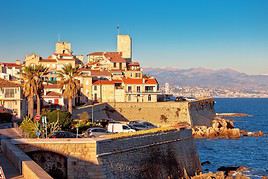
Between Cannes and Nice, Antibes is a renowned coastal resort with plenty of activities of all kinds. The city also boasts old quarters and, with the Cap d'Antibes, one of the most upscale residential areas. Between Cannes and Nice , Antibes is a renowned…
The town enjoys a sunny Mediterranean climate (one of the best in France) with hot, dry summers and mild, wet winters. October and November see the most rainfall, sometimes with violent storms.
Cannes has a typically Mediterranean climate, very sunny, with mild winters and hot, dry summers. Rainfall occurs in autumn, particularly around October-November. As for the wind, it is quite common and can sometimes blow in gusts.
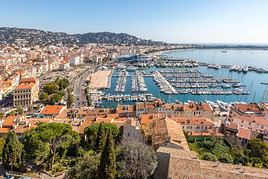
Walk of Stars ★★ This is the equivalent of Hollywood's "Walk of Fame" with the handprints of film celebrities who have participated in the Festival. The Croisette ★★★ This wide pedestrian promenade lined with pine trees runs along the beach and the bay. It is…
The town enjoys a sunny Mediterranean climate (one of the best in France), with hot, dry summers and mild, wet winters. October and November see the most rainfall, sometimes with violent storms.
This small hilltop village, part of the "Most Beautiful Villages of France," is located in the hinterland of Nice. Within a medieval setting, you can discover old stone houses lining steep narrow streets.
Overview of Coaraze
This small hilltop village, part of the "Most Beautiful Villages of France," is located in the hinterland of Nice. Within a medieval setting, you can discover old stone houses lining steep narrow streets.
The municipality has a typically Mediterranean climate, very sunny, with mild winters and hot, dry summers. Rainfall occurs in autumn, particularly around October-November. As for the wind, it is often present and can sometimes blow in gusts.
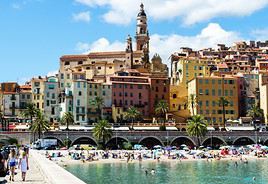
On the Italian border, Menton offers a port and a charming, colourful old town, as well as being a seaside resort. On the Italian border, Menton offers a port and a charming, colourful old town, as well as being a seaside resort. Type de lieu: small town.…
A small town with a medieval charm that has always been upscale, but also features many neo-Provençal-style villas built over the past few decades. It is located in the hinterland of Cannes.
Overview of Mougins
A small town with a medieval charm that has always been upscale, but also features many neo-Provençal-style villas built over the past few decades. It is located in the hinterland of Cannes.
Key Facts
Type of place: small town.
Tourist interest: ★ (worth a stop if you are in the area).
The fifth-largest city in France is also the capital of its department. Its climate, beaches, activity, and beauty (particularly the Old Town) make it one of the most visited places in France.
Key Facts
Type of place: main city.
Tourist interest:★★★★ (must-see or highly recommended).
Location:
Latitude/longitude:
Distances:
Local time:Heure : 18154.
Population: 342,637 inhabitants, with over a million in the metropolitan area (2016).
Area: 71.92 km².
Density: 4,782 inhabitants/km².
Altitude: From sea level to 520 m.
Tourism
Travel Essentials
Daily backpacker budget:
Best for accommodation:
Best for getting around:
Best time for climate/crowds/prices:
Tourist interest:★★★★ (must-see or highly recommended).
Nice enjoys a sunny Mediterranean climate (one of the best in France) with hot, dry summers and mild, wet winters. October and November see the most rainfall, sometimes with violent storms.
Promenade des Anglais ★★★★ Even if some find its reputation overrated, it remains the symbol of the city. Stretching 7 kilometres, this legendary avenue runs along the seafront in the Baie des Anges, while on the land side, elegant old villas and the first…
Among the many interesting sites to see within a 50-kilometre radius of Nice:
Antibes-Juan les Pins★★ Between Cannes and Nice, Antibes is a renowned coastal resort with plenty of activities of all kinds. The city also boasts old quarters and, with the Cap d'Antibes, one of the most upscale residential areas.
Cannes★★ Its Croisette, its festival, its beaches, and its old town make Cannes a must-visit on the French Riviera for many travelers.
Riviera Corniche★★ This is the scenic route (actually three distinct roads) running from Nice to Menton, offering stunning panoramic views of the entire coastline.
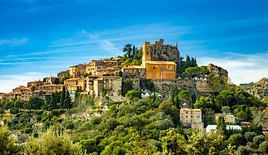
Èze★★ Èze is a very pretty medieval village perched between Nice and Monaco.
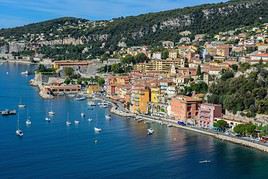
Menton★★★ On the Italian border, Menton offers a port and a charming, colourful old town, as well as being a seaside resort.
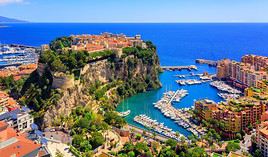
Monaco Between Nice and Italy, the tiny principality draws hundreds of thousands of “visitors” every year, whether for luxury stays, day trips, or—more and more—cruises.
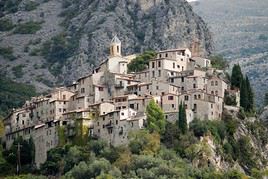
Peillon★★ This is one of the stunning medieval villages in the Alpes-Maritimes. It is perched and located in the Nice hinterland.
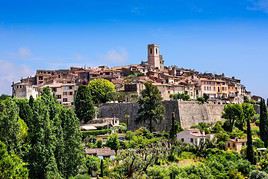
Saint-Paul de Vence★★★ One of the most beautiful villages in Provence, traditionally beloved by artists, and home to the Maeght Foundation. The village is "associated" with the nearby town of Vence.
While there was once a fortress on this hill—of which a few remnants still stand—today it is a large landscaped park in the heart of Old Nice, much loved by locals and tourists alike.
The town enjoys a sunny Mediterranean climate (one of the best in France) with hot, dry summers and mild, wet winters. October and November see the most rainfall, sometimes with violent storms.
The commune enjoys a sunny Mediterranean climate (one of the best in France) with hot, dry summers and mild, wet winters. October and November see the most rainfall, sometimes with violent storms.
The town enjoys a sunny Mediterranean climate (one of the best in France), with hot, dry summers and mild, wet winters. October and November see the most rainfall, sometimes with violent storms.
One of the most beautiful villages in Provence, traditionally beloved by artists, and home to the Maeght Foundation. The village is "associated" with the nearby town of Vence.
Overview of Saint-Paul de Vence
One of the most beautiful villages in Provence, traditionally beloved by artists, and home to the Maeght Foundation. The village is "associated" with the nearby town of Vence.
The town has a typically Mediterranean climate, very sunny, with mild winters and hot, dry summers. Rainfall occurs in autumn, particularly around October-November. As for the wind, it is often present and can sometimes blow in gusts.
The town has a typically Mediterranean climate, with plenty of sunshine, mild winters, and hot, dry summers. Rainfall occurs mainly in autumn, particularly around October-November. The wind is often present and can sometimes blow in gusts.
The town enjoys a sunny Mediterranean climate (one of the best in France), with hot, dry summers and mild, wet winters. October and November see the most rainfall, sometimes with violent storms.
The town enjoys a sunny Mediterranean climate (one of the best in France) with hot, dry summers and mild, wet winters. October and November see the most rainfall, sometimes with violent storms.
This pretty mountain range along the coast runs from Fréjus (83) to the outskirts of Cannes (06). You can explore it on foot or by car along the "Corniche d'Or".
Overview of the Esterel Massif
This pretty mountain range along the coast runs from Fréjus (83) to the outskirts of Cannes (06). You can explore it on foot or by car along the "Corniche d'Or".
A small archipelago facing Cannes, administratively linked to it. You can visit the fort that once imprisoned the Man in the Iron Mask and a botanical garden (on Sainte Marguerite), as well as a monastery (on Saint-Honorat).
Overview of the Lérins Islands
This is a small archipelago of two main islands (Sainte Marguerite and Saint-Honorat) facing Cannes, administratively linked to it. You can visit the fort that once imprisoned the Man in the Iron Mask and a botanical garden (on Sainte Marguerite), as well as a monastery (on Saint-Honorat).
Key facts
Tourist interest:★★ (worth seeing).
Location:
Local time:Heure : 18244
Main locality:
Population: 40 inhabitants, split evenly between the two islands (2016).
Area: 2.1 km² (Sainte Marguerite) and 0.37 km² (Saint-Honorat).
The town enjoys a sunny Mediterranean climate with hot, dry summers and mild, wet winters. October and November see the most rainfall, sometimes with violent storms.
From Golfe-Juan to Grenoble, this is the route taken by Napoleon at the start of his Hundred Days upon returning from exile on the island of Elba. What was long known as the RN85 allows you to discover various towns, sites, and landscapes that don’t necessarily have any connection to the Emperor.
Overview of Napoleon's Route
From Golfe-Juan to Grenoble, this is the route taken by Napoleon at the start of his Hundred Days upon returning from exile on the island of Elba. What was long known as the RN85 allows you to discover various towns, sites, and landscapes that don’t necessarily have any connection to the Emperor.