Skip to content
Bouches-du-Rhône

Travel guide

Bouches-du-Rhône

★ 4 · last edited Aug 5, 2020 · 4 versions

Synonymous with Provence and the South of France, Bouches-du-Rhône boasts some of the region’s top tourist spots, including cities like Aix-en-Provence, Arles, and Marseille, as well as the must-see Baux-de-Provence, the stunning Calanques, the Alpilles Natural Park, and the unique Camargue. More than enough to fill a trip...

Overview

Aix-en-Provence, Bouches-du-Rhône, France
Aix-en-Provence, Bouches-du-Rhône, France · © VoyageForum

Key facts

  • Type de lieu: department.
  • Localisation: at the heart of the Mediterranean coast.
  • Code département: 13.
  • Départements limitrophes: Gard, Var, Vaucluse.
  • Sous-préfectures: Aix-en-Provence, Arles, Istres.
  • Nombre de communes: 119.
  • Population: 2,024,062 inhabitants (2017).
  • Superficie: 5,087 km².
  • Densité: 398 inhabitants/km².
  • Point le plus haut: Pic de Bertagne (1,041 m).
  • Point le plus bas: sea level.
  • Littoral:
  • Intérêts (on ): Nature / ; Culture ; Relaxation-holidays

History of Bouches-du-Rhône

Geography and environment

Culture and economy

What to see in Bouches-du-Rhône

Synonymous with Provence and the South of France, Bouches-du-Rhône boasts some of the region’s top tourist spots, including cities like Aix-en-Provence, Arles, Marseille, and the must-see Les Baux-de-Provence, along with the stunning Calanques, the Alpilles Regional Nature Park, and the unique Camargue. More than enough to fill a trip...

What to do in Bouches-du-Rhône

Climate and weather

The department has a Mediterranean climate with various microclimates. Broadly speaking, summers are very hot and dry, winters are mild, and there’s a risk of heavy rainfall in spring and autumn. As for the wind, the mistral blows nearly 100 days a year in the region.

Sea temperature throughout the year

Jan.Feb.Mar.Apr.MayJun.Jul.Aug.Sep.Oct.Nov.Dec.
Bouches-du-Rhône131213141620222322191614

Transport

Getting there

Getting around

Accommodation

Food

Additional resources

Marseille

Unique in its kind, both in atmosphere and tourist attractions, the capital of Bouches-du-Rhône is a must-visit destination in the region. Overview of Marseille Neighbourhoods of Marseille History, Culture and Society of Marseille Marseille Cuisine Marseille Climate and Weather What to See in Marseille Things to Do in Marseille Tips for Marseille Flying to Marseille Getting to Marseille by Land or Sea Getting Around Marseille Accommodation in Marseille Other practical information for Marseille Living in Marseille

Further information

View guide page: Marseille

Overview of Marseille

Overview of Marseille

Unique in its atmosphere and tourist attractions, the prefecture of Bouches-du-Rhône is a must-visit destination in the region.

Key Facts

  • Type of place: main city.
  • Tourist interest: (must-see or highly recommended).
  • Location:
  • Latitude/longitude:
  • Distances:
  • Local time: Heure : 17781.
  • Population: 863,310 inhabitants and around 1.75 million for the metropolitan area (2017).
  • Area: 240.62 km².
  • Density: 3,566 inhabitants/km².
  • Altitude: from sea level to 652 m.

Tourism

Travel Essentials

  • Backpacker daily budget:
  • Best for accommodation:
  • Best for getting around:
  • Best time for climate/crowds/prices:
  • Tourist interest: (must-see or highly recommended).

Additional Information

View guide page: Overview of Marseille

Marseille Climate and Weather

Climate Overview

Marseille has a typically Mediterranean climate—very sunny, with mild winters and hot, dry summers. Rainfall occurs mainly in autumn, particularly around October-November. As for the wind, the mistral is quite common and can sometimes blow in strong gusts.

Best Time to Visit Marseille Weather-Wise

Jan.Feb.Mar.Apr.MayJun.Jul.Aug.Sep.Oct.Nov.Dec.
Climate

Sea Temperatures Throughout the Year

Jan.Feb.Mar.Apr.MayJun.Jul.Aug.Sep.Oct.Nov.Dec.
Marseille131213141620222322191614

Climate and Forecast

Additional Information

View guide page: Marseille Climate and Weather

What to See in Marseille

Cours Julien ★★ A large, lively pedestrian esplanade with numerous shops, galleries, performance venues, bars, and restaurants along its edges or in the surrounding streets. It’s also a neighbourhood where street art is highly visible. L'Estaque ★ This former…

Read the full guide: What to See in Marseille

Tips for Marseille

Best Times to Visit Marseille

Exploring the City

Must-See

Unique Experiences

Family-Friendly

Based on Length of Stay

Nearby Attractions

Among the selection of interesting sites to see around Marseille:

Aix-en-Provence, Bouches-du-Rhône, France
Aix-en-Provence
North of Marseille, the city boasts a stunning architectural heritage and a historic centre.
Cap Canaille et falaises de Soubeyrannes, Bouches-du-Rhône, France
Cap Canaille and Soubeyrannes Cliffs
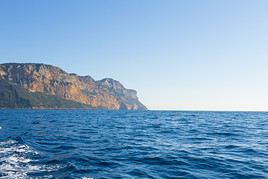
Between Cassis and La Ciotat, these are some of Europe’s highest sea cliffs, dropping up to 400 m into the Mediterranean.
Cassis, Bouches-du-Rhône, France
Cassis
Southeast of Marseille, this charming little port is known for its stunning calanques, which you can also explore (preferably off-season) on boat trips.
La Ciotat, Bouches-du-Rhône, France
La Ciotat
La Ciotat is a fishing port, an old town centre, and above all, its surroundings are well worth a detour, with calanques (coves), some of Europe’s highest cliffs (Cap Canaille), beaches, and diving opportunities.
Massif de la Sainte-Baume, Bouches-du-Rhône, France
Sainte-Baume Massif
Straddling two departments (Var and Bouches-du-Rhône), this small massif is popular with hikers.
Parc national des Calanques, Bouches-du-Rhône, France
Calanques National Park
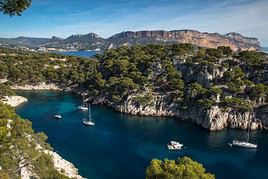
This stunning coastal area stretches over twenty kilometres from the south of Marseille to La Ciotat via Cassis. A must-visit for tourism, the calanques can be explored on foot or by boat. The location is also ideal for diving and climbing.
Saint-Cyr sur Mer, Var, France
Saint-Cyr-sur-Mer
A small marina with its beach, nestled in a bay surrounded by pine forests and vineyards.

Additional Resources

View guide page: Tips for Marseille

Flying to Marseille

Marseille Airport

Airport details

  • Name: Marseille-Provence Airport, most often also called Marignane Airport.
  • IATA code: MRS
  • Hub:
  • Number of terminals:
  • Passenger capacity/year:
  • Passenger traffic: 9,390,371 (2018)
  • Distance from city centre: 27 km northwest of the city.

Services

Sleeping at the airport

Transport to the city centre

  • Public transport:
  • Taxis:

Other nearby airports

From the rest of the country

From the rest of Europe

From elsewhere

Additional information

View guide page: Flying to Marseille

Getting to Marseille by Land or Sea

By Land

By Bus

By Train

Distances

Between Marseille and the main cities in the country (in km):

BiarritzBord.BrestLilleLimogesLyonNantesNiceParisPerp.Strasb.Toul.
Marseille

By Sea

Ferries

Cargo

Cruises

Sailboats

View guide page: Getting to Marseille by Land or Sea

Mediterranean Archaeology Museum

The site is primarily dedicated to Egyptian antiquities alongside other ancient Mediterranean civilizations. It is housed in a beautiful 17th-century building, the "Vieille Charité," which also hosts the Museum of African, Oceanic, and Native American Arts.
View guide page: Mediterranean Archaeology Museum

Marseille Natural History Museum

Housed in a wing of the building.
View guide page: Marseille Natural History Museum

Arles

Thanks to its Roman and Romanesque monuments, the city is a UNESCO World Heritage site. It also hosts many "traditional" Provençal festivals. Thanks to its Roman and Romanesque monuments, the city is a UNESCO World Heritage site. It also hosts many…

Read the full guide: Arles

Montmajour Abbey

Located on the outskirts of Arles, this is a very beautiful 10th-century Benedictine abbey.

Overview of the Abbey

Located on the outskirts of Arles, this is a very beautiful 10th-century Benedictine abbey.

  • Tourist interest: (worth seeing).

History of the Abbey

What to See and Do

Practical Information

  • Location:
  • Address: Route de Fontvieille, 13200 Arles.
  • Opening hours:
  • Price:
  • How to get there:

Nearby Attractions

Additional Information

View guide page: Montmajour Abbey

Aix-en-Provence

North of Marseille, the city boasts a stunning architectural heritage and a historic centre. North of Marseille , the city boasts a stunning architectural heritage and a historic centre that visitors greatly appreciate. Type of place: city. Tourist interest :…

Read the full guide: Aix-en-Provence

Les Baux-de-Provence

Listed among the "Most Beautiful Villages of France", this perched commune in the Alpilles draws large crowds eager to discover its historical heritage. Les Baux-de-Provence is one of the most visited spots in the PACA region. Listed among the "Most Beautiful…

Read the full guide: Les Baux-de-Provence

Carry-le-Rouet

It’s a seaside resort around thirty kilometres west of Marseille.

Overview of Carry-le-Rouet

Carry-le-Rouet is a seaside resort located around thirty kilometres west of Marseille.

Key facts

  • Type of place: small town.
  • Tourist interest: (worth a stop if you are in the area).
  • Location: on the coast between Marseille and Martigues, in the Bouches-du-Rhône department.
  • Distances:
  • Local time: Heure : 18174.
  • Population: 5,908 inhabitants (2014).
  • Area: 10 km².
  • Altitude: sea level.

History of Carry-le-Rouet

What to see and do

In the surrounding area

Climate and weather

The local climate is typically Mediterranean, very sunny, with mild winters and hot, dry summers. Rainfall occurs in autumn, particularly around October-November. The wind is often present and can sometimes blow in gusts.

Sea temperature throughout the year

Jan.Feb.Mar.Apr.MayJun.Jul.Aug.Sep.Oct.Nov.Dec.
Carry-le-Rouet131213141620222322191614

Transport

Getting there

Getting around

Accommodation

Food

Useful addresses

Further information

View guide page: Carry-le-Rouet

Cassis

Southeast of Marseille, this charming little port is known for its stunning calanques, which you can also explore (preferably off-season) on boat trips.

Overview of Cassis

Southeast of Marseille, the charming little port of Cassis is known for its stunning calanques, which you can also explore (preferably off-season) on boat trips.

Key facts

  • Type de lieu: small town.
  • Intérêt touristique: (worth seeing).
  • Localisation: in the calanques southeast of Marseille, in the Bouches-du-Rhône department.
  • Distances:
  • Heure locale: Heure : 18175.
  • Population: 7,333 inhabitants (2014).
  • Superficie: 26.86 km².
  • Altitude: sea level.

History of Cassis

What to see and do in Cassis

Between cliffs and calanques, the town of Cassis is built around its pretty little fishing port.

Mediterranean Museum of Popular Arts and Traditions of Cassis
In a former 17th-century presbytery with collections on archaeology, fine arts, and ethnography.

Climate and weather in Cassis

The town has a typically Mediterranean climate, with plenty of sunshine, mild winters, and hot, dry summers. Rainfall occurs mainly in autumn, particularly in October and November. The wind is also a common feature and can sometimes blow in strong gusts.

Sea temperature throughout the year

Jan.Feb.Mar.Apr.MayJun.Jul.Aug.Sep.Oct.Nov.Dec.
Cassis131213141620222322191614

Getting around

How to get there

How to get around

Where to stay

Where to eat

Useful addresses

Nearby

Cap Canaille et falaises de Soubeyrannes, Bouches-du-Rhône, France
Cap Canaille and Soubeyrannes Cliffs
Between Cassis and La Ciotat, these are some of Europe’s highest sea cliffs, dropping up to 400 m into the Mediterranean.
Parc national des Calanques, Bouches-du-Rhône, France
Calanques National Park
This stunning coastal area stretches over twenty kilometres from the south of Marseille to La Ciotat via Cassis. A must-visit for tourism, the calanques can be explored on foot or by boat. The location is also ideal for diving and climbing.

Further reading

View guide page: Cassis

Mediterranean Museum of Popular Arts and Traditions of Cassis

In a former 17th-century presbytery with collections on archaeology, fine arts, and ethnography.

Overview of the museum

In a former 17th-century presbytery with collections on archaeology, fine arts, and ethnography.

  • Tourist interest: (worth a stop if you are in the area).

History of the museum

Collections on display

Practical information

  • Location:
  • Address: Place Baragnon, 13260 Cassis.
  • Opening hours:
  • Admission fee:
  • Website:
  • How to get there:

What to see nearby

  1. == In addition
View guide page: Mediterranean Museum of Popular Arts and Traditions of Cassis

Fontvieille

This large village not far from Arles is where Daudet wrote "Letters from My Windmill." You can still see the windmill and the Daudet Museum.

Overview of Fontvieille

Fontvieille is the town not far from Arles where Daudet wrote "Letters from My Windmill." You can still see this windmill and the Daudet Museum.

Key Facts

  • Type of place: small town.
  • Tourist interest: (worth a stop if you are in the area).
  • Location: a few kilometers northeast of Arles, in the Bouches-du-Rhône department.
  • Distances:
  • Local time: Heure : 18176.
  • Population: 3,619 inhabitants (2014).
  • Area: 40.18 km².
  • Altitude: from 0 to 245 m.

History of Fontvieille

What to See and Do in Fontvieille

Apart from a few chapels and Roman ruins, the town is best known for "its" Daudet windmill and a few others perched on hills around its outskirts.

Alphonse Daudet Museum
A museum dedicated to the author of "Letters from My Windmill," located in the Château de Montauban, where he was welcomed several times during his life.

In the Surrounding Area

Climate and Weather in Fontvieille

Transportation

Getting There

Getting Around

Accommodation

Dining

Useful Addresses

Further Information

View guide page: Fontvieille

Alphonse Daudet Museum

A museum dedicated to the author of "Letters from My Windmill," located in the Château de Montauban, where he was welcomed several times during his life.

Overview of the Museum

This is a dedicated museum located in the Château de Montauban, where the author of "Letters from My Windmill" was welcomed several times during his life. It is part of the "Daudet Trail" along with the town's four windmills.

  • Tourist interest: (worth a stop if you are in the area).

History of the Museum

Collections on Display

Practical Information

  • Location:
  • Address: 21 Chemin de Montauban, 13990 Fontvieille.
  • Opening hours:
  • Admission:
  • Website:
  • How to get there:

Nearby Attractions

  1. == In addition
View guide page: Alphonse Daudet Museum

La Ciotat

La Ciotat is a fishing port, an old town centre, and above all, its surroundings are well worth a detour, with calanques (coves), some of Europe’s highest cliffs (Cap Canaille), beaches, and diving opportunities.

Overview of La Ciotat

La Ciotat is a fishing port, an old town centre, and above all, its surroundings are well worth a detour, with calanques (coves), some of Europe’s highest cliffs (Cap Canaille), beaches, and diving opportunities.

Key Facts

  • Type de lieu: small town.
  • Intérêt touristique: (worth seeing).
  • Localisation: at the end of the calanques when coming from Marseille, in the Bouches-du-Rhône department.
  • Distances:
  • Heure locale: Heure : 18177.
  • Population: 35,631 inhabitants (2014).
  • Superficie: 31.46 km².
  • Altitude: sea level.

History of La Ciotat

What to See and Do in La Ciotat

Ciotaden Museum
A discovery of the city's cultural, religious, traditional, and economic heritage, along with its maritime history, the invention of cinematography, and pétanque.

Climate and Weather in La Ciotat

The local climate is typically Mediterranean, very sunny, with mild winters and hot, dry summers. Rainfall occurs in autumn, particularly around October-November. The wind is often present and can sometimes blow in gusts.

Sea Temperature Throughout the Year

Jan.Feb.Mar.Apr.MayJun.Jul.Aug.Sep.Oct.Nov.Dec.
La Ciotat131213141620222322191614

Transport

Getting There

Getting Around

Accommodation

Eating Out

Useful Addresses

Nearby

Cap Canaille et falaises de Soubeyrannes, Bouches-du-Rhône, France
Cap Canaille and Soubeyrannes Cliffs
Between Cassis and La Ciotat, these are some of Europe’s highest sea cliffs, dropping up to 400 m into the Mediterranean.
Parc national des Calanques, Bouches-du-Rhône, France
Calanques National Park
This stunning coastal area stretches over twenty kilometres from the south of Marseille to La Ciotat via Cassis. A must-visit for tourism, the calanques can be explored on foot or by boat. The location is also ideal for diving and climbing.

Further Reading

View guide page: La Ciotat

Ciotaden Museum

A discovery of the city's cultural, religious, traditional, and economic heritage, along with its maritime history, the invention of cinematography, and pétanque.

Overview of the Museum

This is a discovery of the city's cultural, religious, traditional, and economic heritage, along with everything related to maritime history, the invention of cinematography, and pétanque.

  • Tourist interest: (worth a stop if you are in the area).

Museum History

Collections on Display

Practical Information

  • Location:
  • Address: 1 Quai Ganteaume, 13600 La Ciotat.
  • Opening hours:
  • Price:
  • How to get there:

Nearby Attractions

  1. == In addition
View guide page: Ciotaden Museum

Martigues

Between the sea and the Étang de Berre, the town is mainly known for its two beaches, including Carro Beach, which is famous for windsurfing.

Overview of Martigues

Between the sea and the Étang de Berre, the town of Martigues is mainly known for its two beaches, including Carro Beach, which is famous for windsurfing.

Key Facts

  • Type de lieu: small town.
  • Intérêt touristique: (worth a stop if you are in the area).
  • Localisation: not far from Marseille, between the sea and the Étang de Berre, in the Bouches-du-Rhône department.
  • Distances:
  • Heure locale: Heure : 18179.
  • Population: 48,870 inhabitants (2014).
  • Superficie: 71.44 km².
  • Altitude: sea level.

History of Martigues

What to See and Do in Martigues

Musées de Martigues:

Gnidzaz Cinematheque
A combined cinema and museum showcasing the history and prehistory of film through screenings and collections.
Martigues History Gallery
Through written documents, photographs, models, and interactive terminals, the gallery traces the key stages in the city's evolution.
Ziem Museum
This downtown museum primarily features 19th-century paintings.
Small Museum of Carro
It traces the life through the ages of the inhabitants of the fishing village-port of Carro, now part of Martigues.

In the Surrounding Area

Climate and Weather in Martigues

The town has a typical Mediterranean climate, with plenty of sunshine, mild winters, and hot, dry summers. Rainfall occurs in autumn, particularly in October and November. The wind is quite common and can sometimes blow in gusts.

Transportation

Getting There

Getting Around

Accommodation

Dining

Useful Addresses

Additional Information

View guide page: Martigues

Ziem Museum

This downtown museum primarily features 19th-century paintings.

Overview of the Museum

This downtown museum primarily features 19th-century paintings.

  • Tourist interest: (worth a stop if you are in the area).

History of the Museum

Collections on Display

Practical Information

  • Location:
  • Address: 11 Boulevard du 14 Juillet, 13500 Martigues.
  • Opening hours:
  • Admission:
  • How to get there:

Nearby Attractions

  1. == In addition
View guide page: Ziem Museum

Small Museum of Carro

It traces the life through the ages of the inhabitants of the fishing village-port of Carro, now part of Martigues.

Overview of the Museum

The place traces the life through the ages of the inhabitants of the fishing village-port of Carro, now part of Martigues.

  • Tourist interest: (worth a stop if you are in the area).

History of the Museum

Collections on Display

Practical Information

  • Location:
  • Address: 15 place Joseph Fasciola, Carro, 13500 Martigues.
  • Opening hours:
  • Price:
  • How to get there:

Nearby Attractions

  1. == En complément
View guide page: Small Museum of Carro

Gnidzaz Cinematheque

A combined cinema and museum showcasing the history and prehistory of film through screenings and collections.

About the Venue

This spot is both a cinema and a museum that presents the history and prehistory of film through screenings and collections.

  • Tourist interest: (worth a stop if you are in the area).

History of the Cinematheque

What to See and Do

Practical Information

  • Location:
  • Address: 4 rue Colonel Denfert, 13500 Martigues.
  • Opening hours:
  • Price:
  • How to get there:

Nearby Attractions

  1. == In addition
View guide page: Gnidzaz Cinematheque

Martigues History Gallery

Through written documents, photographs, models, and interactive terminals, the gallery traces the key stages in the city's evolution.

Overview of the History Gallery

Through written documents, photographs, models, and interactive terminals, the gallery traces the key stages in the city's evolution.

  • Tourist interest: (worth a stop if you are in the area).

History of the Gallery

Exhibitions and Events

Practical Information

  • Location:
  • Address: Rond Point de l'Hôtel de Ville, 13500 Martigues.
  • Opening hours:
  • Price:
  • Website:
  • How to get there:

Nearby Attractions

View guide page: Martigues History Gallery

Saint-Rémy-de-Provence

In the heart of the Alpilles, the town offers visitors beautiful mansions and old streets. The surrounding countryside, which inspired many artists (including Van Gogh), is also well worth discovering.

Overview of Saint-Rémy-de-Provence

In the heart of the Alpilles, Saint-Rémy-de-Provence offers visitors beautiful mansions and old streets. The surrounding countryside, which inspired many artists (including Van Gogh), is also well worth discovering.

Key Facts

  • Type of place: small town.
  • Tourist interest: (worth seeing).
  • Distances:
  • Local time: Heure : 18180.
  • Population: 9,612 inhabitants (2016).
  • Area: 89.09 km².
  • Altitude: from 7 to 392 m.

History of Saint-Rémy-de-Provence

What to See and Do

Glanum, Bouches-du-Rhône, France
Glanum
These are the archaeological remains of what was once a Greek and later a Roman city near Saint-Rémy-de-Provence.

Museums in Saint-Rémy-de-Provence:

Alpilles Museum
Its aim is to help visitors better understand the current landscapes—both natural and human—of this part of Provence known as the Alpilles.
Estrine Museum
A tribute to Vincent van Gogh, who lived in Saint-Rémy de Provence, this museum features a multimedia space dedicated to the life and work of the painter.

In the Surrounding Area

Parc naturel régional des Alpilles, Bouches-du-Rhône, France
Alpilles Regional Nature Park
In the north of the department, it consists of the Alpilles massif, where you can hike. Several tourist spots like Les Baux or Saint-Rémy de Provence are located within its boundaries.

Climate and Weather

Transport

Getting There

Getting Around

Accommodation

Eating Out

Useful Addresses

Further Information

View guide page: Saint-Rémy-de-Provence

Alpilles Museum

Its aim is to help visitors better understand the current landscapes—both natural and human—of this part of Provence known as the Alpilles.

Overview of the museum

Its aim is to help visitors better understand the current landscapes—both natural and human—of this part of Provence known as the Alpilles.

  • Tourist interest: (worth a stop if you are in the area).

History of the museum

Collections on display

Practical information

  • Location:
  • Address: 7 rue Carnot, 13210 Saint-Rémy-de-Provence.
  • Opening hours:
  • Price:
  • Website:
  • How to get there:

What to see nearby

  1. == In addition
View guide page: Alpilles Museum

Estrine Museum

A tribute to Vincent van Gogh, who lived in Saint-Rémy de Provence, this museum features a multimedia space dedicated to the life and work of the painter.

Overview of the Museum

A tribute to Vincent van Gogh, who lived in Saint-Rémy de Provence, this museum features a multimedia space dedicated to the life and work of the painter.

  • Tourist interest: (worth a stop if you are in the area).

History of the Museum

Collections on Display

Practical Information

  • Location:
  • Address: 8 rue Lucien Estrine, 13210 Saint-Rémy-de-Provence.
  • Opening hours:
  • Price:
  • How to get there:

Nearby Attractions

  1. == In addition
View guide page: Estrine Museum

Saintes-Maries-de-la-Mer

This Camargue commune at the mouth of the Rhône is internationally renowned for the annual Gypsy pilgrimage held here.

Overview of Saintes-Maries-de-la-Mer

This Camargue commune at the mouth of the Rhône is internationally renowned for the annual Gypsy pilgrimage held here.

Key facts

  • Type of place: small town.
  • Tourist interest: (worth a stop if you are in the area).
  • Location: in Camargue in the Bouches-du-Rhône department.
  • Distances:
  • Local time: Heure : 18181.
  • Population: 2,683 inhabitants (2014).
  • Area: 374.61 km² (third-largest commune in France).
  • Altitude: sea level.

History of Saintes-Maries-de-la-Mer

What to see and do

Pilgrimages of Saintes-Maries-de-la-Mer:

In the surrounding area

Parc naturel régional de Camargue, Bouches-du-Rhône, France
Camargue Regional Nature Park
La Camargue est située dans le delta du Rhône avec l'étang du Vaccarès en son centre. Plate et humide la zone abrite nombre d'espèces d'oiseaux (notamment dans la réserve ornithologique de Pont du Gau) et surtout les fameuses manades qui sont ces élevages de taureaux ou de chevaux de races locales.

Climate and weather

The commune has a typically Mediterranean climate, with plenty of sunshine, mild winters, and hot, dry summers. Rainfall occurs mainly in autumn, particularly around October–November. The wind is also a common feature and can sometimes blow in strong gusts.

Sea temperature throughout the year

Jan.Feb.Mar.Apr.MayJun.Jul.Aug.Sep.Oct.Nov.Dec.
Saintes-Maries131213141620222322191614

Transport

Getting there

Getting around

Accommodation

Food

Useful addresses

Further information

View guide page: Saintes-Maries-de-la-Mer

Salon-de-Provence

An ancient town dominated by the largest medieval castle in Provence, the Château de l'Empéri.

Overview of Salon-de-Provence

Salon-de-Provence is an ancient town dominated by the largest medieval castle in Provence, the Château de l'Empéri.

Key details

  • Type de lieu: small town.
  • Intérêt touristique: (worth a stop if you are in the area).
  • Localisation: in the Bouches-du-Rhône department, between Marseille and Avignon.
  • Distances:
  • Heure locale: Heure : 18182.
  • Population: 44,187 inhabitants (2014).
  • Superficie: 70.30 km².
  • Altitude: from 53 to 325 m.

History of Salon-de-Provence

What to see and do

Musées de Salon-de-Provence:

Nostradamus's House
Discover the house where he lived from 1547 to 1566 and wrote his famous prophecies.
Empéri Museum
Housed in the former archbishops' castle of Arles, this museum features collections dedicated to French military history from Louis XIV to the Great War.
Marseille Soap Museum
It traces the history of soap in Provence, which began in the Middle Ages.

In the surrounding area

Climate and weather

Transport

Getting there

Getting around

Accommodation

Food

Useful addresses

Further information

View guide page: Salon-de-Provence

Nostradamus's House

Discover the house where he lived from 1547 to 1566 and wrote his famous prophecies.

Overview of Nostradamus's House

Discover the house where he lived from 1547 to 1566 and wrote his famous prophecies.

  • Tourist interest: (worth a stop if you are in the area).

Museum History

Exhibits

Practical Information

  • Location:
  • Address: Rue Nostradamus, 13300 Salon-de-Provence.
  • Opening hours:
  • Admission:
  • How to get there:

Nearby Attractions

  1. == In addition
View guide page: Nostradamus's House

Empéri Museum

Housed in the former archbishops' castle of Arles, this museum features collections dedicated to French military history from Louis XIV to the Great War.

Overview of the museum

Housed in the former archbishops' castle of Arles, this museum features collections dedicated to French military history from Louis XIV to the Great War.

  • Tourist interest: (worth a stop if you are in the area).

History of the museum

Collections on display

Practical information

  • Location:
  • Address: Montée du Puech, 13300 Salon-de-Provence.
  • Opening hours:
  • Admission:
  • How to get there:

Nearby attractions

  1. == In addition
View guide page: Empéri Museum

Marseille Soap Museum

It traces the history of soap in Provence, which began in the Middle Ages.

Overview of the museum

The museum traces the history of soap in Provence, which began in the Middle Ages.

  • Tourist interest: (worth a stop if you are in the area).

History of the museum

Collections on display

Practical information

  • Location:
  • Address: 148 avenue Paul Bourret, 13300 Salon-de-Provence.
  • Opening hours:
  • Price:
  • Website:
  • How to get there:

What to see nearby

  1. == In addition
View guide page: Marseille Soap Museum

Sausset-les-Pins

Bordering Carry-le-Rouet, this fishing port is also a seaside resort.

Overview of Sausset-les-Pins

Bordering Carry-le-Rouet, the fishing port of Sausset-les-Pins is also a seaside resort.

Key Facts

  • Type of place: small town.
  • Tourist interest: (worth a stop if you are in the area).
  • Location: on the coast of Bouches-du-Rhône, right next to Carry-le-Rouet.
  • Distances:
  • Local time: Heure : 18183.
  • Population: 7,639 inhabitants (2014)
  • Area: 12.1 km².
  • Altitude: sea level.
  • Website:

History of Sausset-les-Pins

What to See and Do in Sausset-les-Pins

In the Surrounding Area

Climate and Weather in Sausset

The town has a typically Mediterranean climate, very sunny, with mild winters and hot, dry summers. Rainfall occurs in autumn, particularly around October-November. The wind is often present and can sometimes blow in gusts.

Sea Temperature Throughout the Year

Jan.Feb.Mar.Apr.MayJun.Jul.Aug.Sep.Oct.Nov.Dec.
Sausset131213141620222322191614

Transportation

Getting There

Getting Around

Accommodation

Dining

Useful Addresses

Further Information

View guide page: Sausset-les-Pins

Tarascon

Separated from Beaucaire (Gard) by the Rhône, the town is home to the charming Château du Roi René, dating from the 15th century.

Overview of Tarascon

Separated from Beaucaire (Gard) by the Rhône, the town of Tarascon is home to the charming Château du Roi René, dating from the 15th century.

Key facts

  • Type de lieu: small town.
  • Intérêt touristique: (worth a stop if you are in the area).
  • Localisation: in the Bouches-du-Rhône department, facing Beaucaire (30), from which it is separated only by the Rhône.
  • Distances:
  • Heure locale: Heure : 18184.
  • Population: 14,583 inhabitants (2014).
  • Superficie: 73.97 km².
  • Altitude: from 3 to 200 m.

History of Tarascon

What to see and do in Tarascon

Château de Tarascon, Tarascon, Bouches-du-Rhône, France
Tarascon Castle
Also known as the Château du Roi René, this 15th-century reconstruction is the main attraction in the town. Its interior architecture and state of preservation make it one of the finest medieval castles in France.

In the surrounding area

Climate and weather in Tarascon

Transport

Getting there

Getting around

Accommodation

Food

Useful addresses

Further information

View guide page: Tarascon

Tarascon Castle

Also known as the Château du Roi René, this 15th-century reconstruction is the main attraction in the town. Its interior architecture and state of preservation make it one of the finest medieval castles in France.

Overview of the castle

Also known as the Château du Roi René, this 15th-century reconstruction is the main attraction in the town. Its interior architecture and state of preservation make it one of the finest medieval castles in France.

  • Tourist interest: (worth seeing).

History of the castle

What to see and do

Practical information

  • Location:
  • Address: 5 Boulevard du Roi René, 13150 Tarascon.
  • Opening hours:
  • Admission fee:
  • How to get there:

Nearby attractions

  1. == In addition
View guide page: Tarascon Castle

Cap Canaille and Soubeyrannes Cliffs

Between Cassis and La Ciotat, these are some of Europe’s highest sea cliffs, dropping up to 400 m into the Mediterranean.

Overview of the Site

Between Cassis and La Ciotat, these are some of the highest sea cliffs in Europe, reaching nearly 400 m in height.

Key Details

  • Type of place: cliff.
  • Tourist interest: (worth seeing).
  • Features:
  • Height: up to 394 m.
  • Altitude: sea level.

Environment

Precautions

What to See and Do

Climate and Weather

The site has a typical Mediterranean climate—very sunny, with mild winters and hot, dry summers. Rainfall occurs in autumn, particularly around October-November. The wind is often present and can sometimes blow in gusts.

Practical Information

  • Location:
  • Website:
  • How to get there:
  • Distances:

Accommodation and Dining

Nearby Attractions

Additional Information

View guide page: Cap Canaille and Soubeyrannes Cliffs

Sainte-Baume Massif

Straddling two departments (Var and Bouches-du-Rhône), this small massif is popular with hikers.

Overview of the Sainte-Baume Massif

Straddling two departments (Var and Bouches-du-Rhône), this small massif is popular with hikers.

Key facts

  • Tourist interest: (worth seeing).
  • Characteristics:
  • Massif:
  • Area: around 500 km².
  • Summit: Joug de l'Aigle (1,148 m).

Site environment

Wildlife and flora

Population and economic activity

Precautions

Climate and weather

What to see and do

Practical information

  • Location:
  • Distances:
  • Website:

Getting there

Getting around

Accommodation and dining

Nearby attractions

Further reading

View guide page: Sainte-Baume Massif

Mont Sainte-Victoire

Located near Aix-en-Provence, Mont Sainte-Victoire was immortalised by the painter Cézanne in many of his works. Today, it is primarily a spot for walks, hikes, climbing, and paragliding.

Overview of Mont Sainte-Victoire

Located near Aix-en-Provence, Mont Sainte-Victoire was immortalised by the painter Cézanne in many of his works. Today, it is primarily a spot for walks, hikes, climbing, and paragliding.

Key facts

  • Tourist interest: (worth a stop if you are in the area).
  • Features:
  • Massif:
  • Area: 160 km².
  • Summit: Pic des Mouches (1,011 m).

Site environment

Wildlife and flora

Population and economic activity

Precautions

Climate and weather

What to see and do

Practical information

  • Location:
  • Distances:
  • Website:

Getting there

Getting around

Accommodation and dining

Nearby attractions

Further reading

View guide page: Mont Sainte-Victoire

Alpilles Regional Nature Park

In the north of the department, it consists of the Alpilles massif, where you can hike. Several tourist spots like Les Baux or Saint-Rémy de Provence are located within its boundaries.

Overview of the Alpilles Park

In the north of the department, it consists of the Alpilles massif, where you can hike. Several tourist spots like Les Baux or Saint-Rémy-de-Provence are located within its boundaries.

Key facts

  • Tourist interest: (worth seeing).
  • Features:
  • Area: 510 km².
  • Altitude:

Environment

Landscape of the park

Wildlife and flora

Precautions

Climate and weather

What to see and do

Practical information

  • Location:
  • How to get there:
  • Distances:

Accommodation and dining

What to see nearby

Additional information

View guide page: Alpilles Regional Nature Park

Camargue Regional Nature Park

La Camargue est située dans le delta du Rhône avec l'étang du Vaccarès en son centre. Plate et humide la zone abrite nombre d'espèces d'oiseaux (notamment dans la réserve ornithologique de Pont du Gau) et surtout les fameuses manades qui sont ces élevages de taureaux ou de chevaux de races locales.

Présentation de la Camargue

La Camargue est située dans le delta du Rhône avec l'étang du Vaccarès en son centre. Plate et humide la zone abrite nombre d'espèces d'oiseaux (notamment dans la réserve ornithologique de Pont du Gau) et surtout les fameuses manades qui sont ces élevages de taureaux ou de chevaux de races locales.

Repères

  • Intérêt touristique: (recommended).
  • Caractéristiques:
  • Localisation:
  • Superficie: 857 km2.
  • Altitude: niveau de la mer.

Environnement

Physionomie du site

Faune et flore

Précautions

À voir, à faire

Dans les environs

Climat et météo

Le climat de la Camargue est typiquement méditerranéen, très ensoleillé, avec des hivers doux et des étés chauds et secs. De la pluie en automne, notamment vers octobre-novembre. Quant au vent, il est plutôt présent et peut souffler parfois en rafales.

Transports

S'y rendre

S'y déplacer

Dormir

Manger

En complément

View guide page: Camargue Regional Nature Park

Ventabren

A small, typically Provençal town with its narrow streets and clustered old houses. You can also see the impressive Roquefavour Aqueduct, built in the 19th century.

Introduction to Ventabren

Ventabren is a small, typically Provençal town with its narrow streets and clustered old houses. You can also see the impressive Roquefavour Aqueduct, built in the 19th century.

Key Facts

  • Type de lieu: small town.
  • Intérêt touristique: (worth a stop if you are in the area).
  • Localisation: in the Bouches-du-Rhône department, not far from Aix-en-Provence.
  • Distances:
  • Heure locale: Heure : 18246.
  • Population: 5,067 inhabitants (2014).
  • Superficie: 28.5 km².
  • Altitude: from 59 to 286 m.

History of Ventabren

What to See and Do in Ventabren

The village of Ventabren is typically Provençal with its narrow streets and clustered old houses.

Roquefavour Aqueduct
Built in the mid-19th century, it is the largest stone aqueduct in the world.

In the Surrounding Area

Climate and Weather in Ventabren

Transportation

Getting There

Getting Around

Accommodation

Dining

Useful Addresses

Further Information

View guide page: Ventabren

Roquefavour Aqueduct

Built in the mid-19th century, it is the largest stone aqueduct in the world.

Overview of the Aqueduct

Built in the mid-19th century, it is the largest stone aqueduct in the world.

  • Tourist interest: (worth a stop if you are in the area).

History of the Roquefavour Aqueduct

What to See and Do

Practical Information

  • Location:
  • Local time: Heure : 22854.
  • Opening hours:
  • Price:

Transport

Sleeping and Eating

What to See Nearby

  1. == En complément
View guide page: Roquefavour Aqueduct

Calanques National Park

This stunning coastal area stretches over twenty kilometres from the south of Marseille to La Ciotat via Cassis. A must-visit for tourism, the calanques can be explored on foot or by boat. The location is also ideal for diving and climbing.

Overview of the park

This stunning coastal area stretches over twenty kilometres from the south of Marseille to La Ciotat via Cassis. A must-visit for tourism, the calanques can be explored on foot or by boat. The location is also ideal for diving and climbing.

Key details

  • Tourist interest: (must-see or highly recommended).
  • Features: both a terrestrial and marine park.
  • Location:
  • Area: 520 km².
  • Altitude: sea level.

Environment

Wildlife and flora

Precautions

What to see and do

Nearby

Climate and weather

The climate of the Calanques is typically Mediterranean, with plenty of sunshine, mild winters, and hot, dry summers. Rainfall occurs in autumn, particularly around October-November. The wind is often present and can sometimes blow in gusts.

Transport

Getting there

Getting around

Accommodation

Food

Additional information

View guide page: Calanques National Park

Glanum

These are the archaeological remains of what was once a Greek and later a Roman city near Saint-Rémy-de-Provence.

Overview of the site

These are the archaeological remains of what was first a Greek and then a Roman city near Saint-Rémy-de-Provence.

Key points

  • Tourist interest: (worth a stop if you are in the area).
  • Features: Greek and Roman ruins.
  • Area:
  • Altitude:

History of Glanum

What to see and do

Practical information

  • Location:
  • Address: Route des Baux-de-Provence, 13210 Saint-Rémy-de-Provence.
  • Opening hours:
  • Price:
  • How to get there:

What to see nearby

Further information

View guide page: Glanum

Something wrong or out of date? Report this page