Skip to content
Eastern Germany

Travel guide · Germany

Eastern Germany

★ 3 · last edited Dec 11, 2019

At the heart of what was once East Germany, Berlin (and its stunning neighbor Potsdam, often overlooked) is by far the main attraction of this region bordering Poland. However, you can also discover beautiful castles and fortresses (Königstein, Moritzburg, Pillnitz...), several towns and villages worth a stop (including Quedlinburg and Görlitz for their historic charm), or enjoy the natural beauty of Saxon Switzerland.

Overview

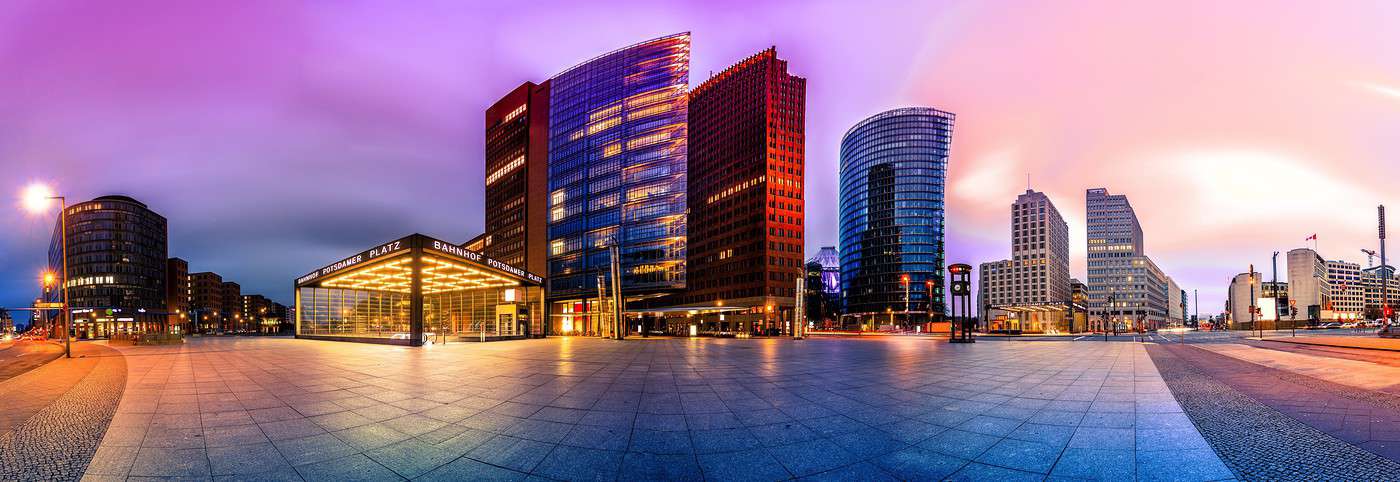
Berlin, Allemagne
Berlin, Allemagne · © VoyageForum

At the heart of what was once East Germany, Berlin (and its stunning neighbor Potsdam, often overlooked) is by far the main attraction of this region bordering Poland. However, you can also discover beautiful castles and fortresses (Königstein, Moritzburg, Pillnitz...), several towns and villages worth a stop (including Quedlinburg and Görlitz for their historic charm), or enjoy the natural beauty of the Saxon Switzerland.

Key facts

  • Type of place: tourist region.
  • Location:
  • Local time: Heure : Eastern Germany
  • Population:
  • Area:
  • Density:
  • Highest point:
  • Lowest point:
  • Coastline: 0 km; no maritime access.
  • Highlights (out of ): Nature ; Adventure / ; Culture ; Relaxation-holidays /
Main cities

Tourist attractions

Towns and heritage

Nature and activities

Climate and weather in Eastern Germany

Berlin

Once divided for 28 years, this city is now the capital of reunified Germany. Beyond the last remnants of that era (including its "famous" Wall), Berlin offers countless museums, vibrant neighborhoods, striking buildings and monuments, and parks—plus lakes and forests on its outskirts. It also boasts an intense and diverse cultural and nightlife scene. For many, Berlin is the most fascinating city in the country. Overview of Berlin Neighbourhoods of Berlin History, Culture and Society of Berlin Berlin Cuisine Berlin Climate and Weather What to See in Berlin Things to Do in Berlin Tips for Berlin Flying to Berlin Getting to Berlin by Land Getting Around Berlin Accommodation in Berlin Other Practical Information for Berlin Living in Berlin
Berlin, Allemagne
Berlin, Allemagne · © VoyageForum

Additional Information

View guide page: Berlin

Overview of Berlin

Overview of Berlin

The city, which was divided for 28 years, is the capital of reunified Germany. Beyond the last remnants of that era (including its "famous" Wall), the city offers countless museums, vibrant neighbourhoods, interesting buildings and monuments, parks (plus lakes and forests on the outskirts), and an intense, diverse cultural and nightlife scene. For many, Berlin is by far the most interesting city in the country.

Key Facts

  • Type of place: main city.
  • Tourist interest: (must-see or highly recommended).
  • Location:
  • Latitude/longitude: 52°31' N; 13°23' E.
  • Distances:
  • Local time: Heure : 13836.
  • Population: 3,711,930 inhabitants (2017).
  • Area: 891.7 km².
  • Altitude: 34 m.

Tourism

Essentials for Travel

  • Tourist interest: (must-see or highly recommended).
  • By air:
  • Backpacker daily budget:
  • Best for accommodation:
  • Best for getting around:
  • Best time for climate/crowds/prices:

Further Information

View guide page: Overview of Berlin

History, Culture and Society of Berlin

History of Berlin

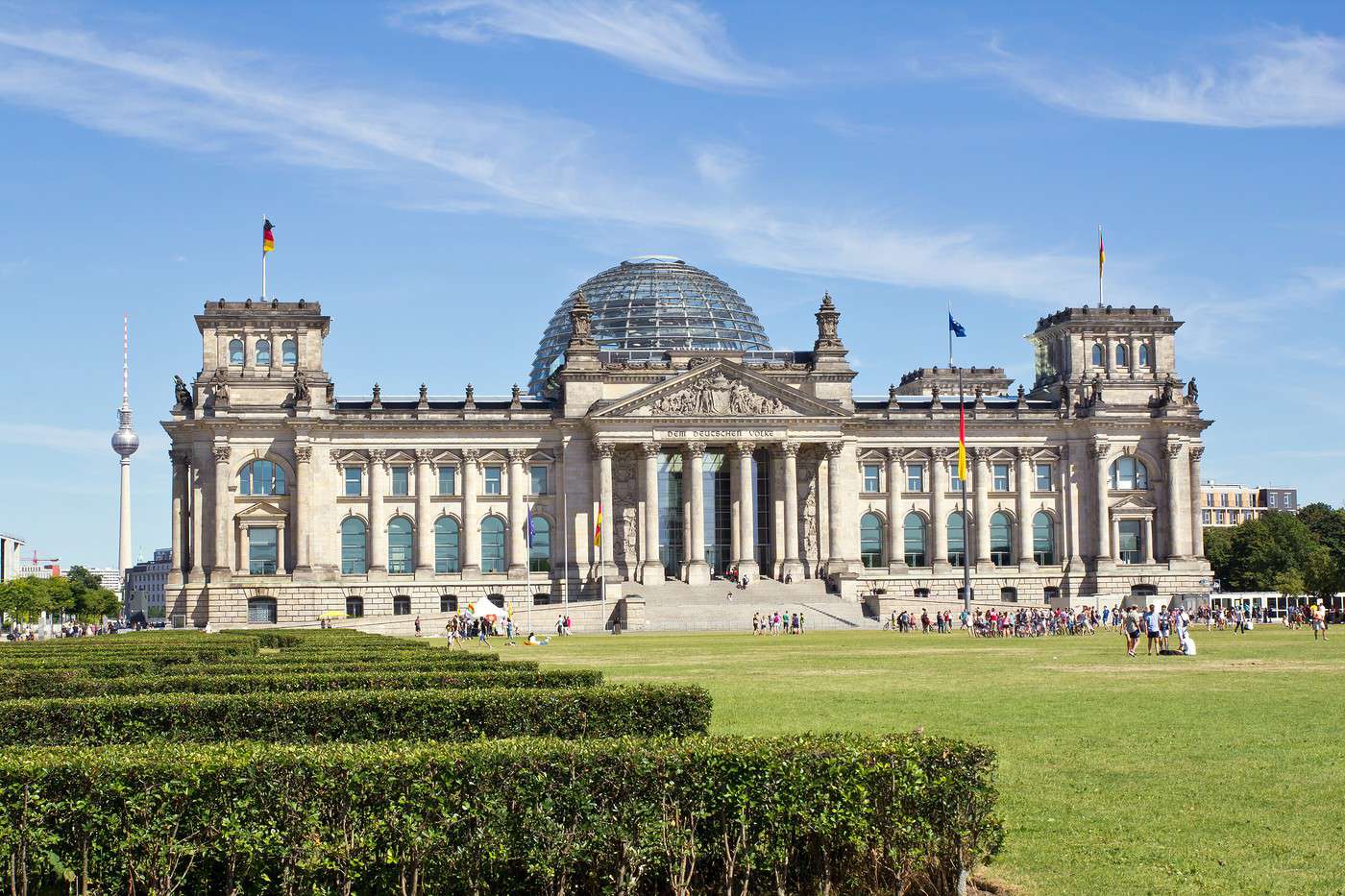
Reichstag, Berlin, Allemagne
Reichstag, Berlin, Allemagne · © VoyageForum

Society

Population

Economy

Culture and Local Traditions

Further Reading

View guide page: History, Culture and Society of Berlin

Berlin Climate and Weather

Climate Overview

Best Time to Visit Berlin

Jan.Feb.Mar.Apr.MayJun.Jul.Aug.Sep.Oct.Nov.Dec.
Climate

Climate and Forecast

Additional Information

View guide page: Berlin Climate and Weather

What to See in Berlin

Palaces and Parks of Berlin ★★★ Spread across Berlin and especially Potsdam, these include 500 hectares of parks and 150 structures (including several palaces) built between 1730 and 1916, all listed as UNESCO World Heritage sites. Berlin Modernism Housing…

Read the full guide: What to See in Berlin

Flying to Berlin

Berlin Airport

While the repeatedly delayed opening of Berlin Brandenburg Airport Willy Brandt—a true financial black hole—continues, the city currently operates two airports that will eventually be replaced by this new hub. For now, travellers have two options:

  • Berlin-Tegel: the busier of Berlin’s two airports, handling over 20 million passengers per year.
  • Berlin-Schönefeld: once East Berlin’s airport during the GDR era, now primarily used for charter and low-cost flights.

Transport between airports

Other nearby airports

From the rest of the country

From Europe

From France

From elsewhere

From Africa

From the Americas

From Asia-Pacific

Additional information

View guide page: Flying to Berlin

Berlin Tegel Airport

Tegel is the larger of Berlin's two airports, handling over 20 million passengers per year.

Berlin Tegel Airport

It is the larger of Berlin's two airports, handling over 20 million passengers per year.

  • Name: Berlin Tegel "Otto Lilienthal" Airport.
  • IATA code: TXL
  • Hub:
  • Number of terminals: 5.
  • Annual passenger capacity:
  • Passenger traffic: 20,500,000 (2017).
  • Distance from city centre: 8 km northwest of the city.

Services

Sleeping at the airport

Transport to the city centre

Public transport

Taxis

Additional information

View guide page: Berlin Tegel Airport

Berlin Schönefeld Airport

The former East Berlin airport from the GDR era is now mainly used for charter and low-cost flights.

Berlin Schönefeld Airport

The former East Berlin airport from the GDR era is now mainly used for charter and low-cost flights.

  • Name: Berlin-Schönefeld Airport.
  • IATA code: SXF
  • Hub:
  • Number of terminals: 4.
  • Annual passenger capacity:
  • Passenger traffic: 12,900,000 (2017).
  • Distance from city centre: 18 km southeast of the city

Services

Sleeping at the airport

Transport to the city centre

Public transport

Taxis

Additional information

View guide page: Berlin Schönefeld Airport

Frankfurt (Oder)

A city on the Polish border, on the route from Berlin to Warsaw, not necessarily one of the most touristy.

Overview of Frankfurt (Oder)

A city on the Polish border, on the route from Berlin to Warsaw, not necessarily one of the most touristy.

Key details

  • Type of place: landmark town.
  • Tourist interest: (worth a stop if you are in the area).
  • Location:
  • Distances:
  • Local time: Heure : 13837.
  • Population: 58,193 inhabitants (2017).
  • Area: 147.61 km².
  • Altitude: from 19 to 135 m.

History of Frankfurt (Oder)

What to see and do in Frankfurt (Oder)

In the surrounding area

Climate and weather

Transportation

Getting there

Getting around

Accommodation

Eating

Useful addresses

  1. == Further information
View guide page: Frankfurt (Oder)

Mühlberg

A large town in southern Brandenburg with a few old buildings, an abbey, and a castle by a lake. Short hikes can be taken around the village.

Introduction to Mühlberg

It's a large town in southern Brandenburg with a few old buildings, an abbey, and a castle by a lake. Short hikes can be taken around the village.

Key Details

  • Type of place: small town.
  • Tourist interest: (worth a stop if you are in the area).
  • Location:
  • Distances:
  • Local time: Heure : 13838.
  • Population: 3,813 inhabitants (2017).
  • Area: 89.2 km².
  • Altitude: 91 m.

History of Mühlberg

What to See and Do in Mühlberg

In the Surrounding Area

Climate and Weather in Mühlberg

Transportation

Getting There

Getting Around

Accommodation

Dining

Useful Addresses

  1. == Additional Information
View guide page: Mühlberg

Potsdam

Right next to Berlin, the city is somewhat the "tourist extension" of the capital, with its many parks and palaces in the Babelsberg district, many of which are UNESCO-listed. Additionally, the city features several beautiful old areas (including the Dutch Quarter) and reconstructed neighborhoods.

Overview of Potsdam

Right next to Berlin, the city is somewhat the "tourist extension" of the capital, with its many parks and palaces in the Babelsberg district, many of which are UNESCO-listed. Additionally, the city boasts several beautiful old areas (including the Dutch Quarter) and reconstructed neighborhoods.

Key Facts

  • Type of place: city.
  • Tourist interest: (must-see or highly recommended).
  • Location:
  • Distances:
  • Local time: Heure : 13839.
  • Population: 175,710 inhabitants (2018).
  • Area: 188.61 km².
  • Altitude: 32 m.

History of Potsdam

What to See and Do in Potsdam

Châteaux et parcs de Potsdam, Potsdam, Allemagne
Palaces and Parks of Potsdam
Spread across Berlin and especially Potsdam, these are a total of 500 hectares of parks and 150 structures (including several palaces) built between 1730 and 1916, which are listed as UNESCO World Heritage sites.

In the Surrounding Area

Climate and Weather in Potsdam

Transportation

Getting There

Getting Around

Accommodation

Dining

Useful Addresses

Additional Information

View guide page: Potsdam

Palaces and Parks of Potsdam

Spread across Berlin and especially Potsdam, these are a total of 500 hectares of parks and 150 structures (including several palaces) built between 1730 and 1916, which are listed as UNESCO World Heritage sites.

Overview of the Palaces and Parks

Spread across Berlin and especially Potsdam, these are a total of 500 hectares of parks and 150 structures (including several palaces) built between 1730 and 1916, which are listed as UNESCO World Heritage sites.

  • Tourist interest: (recommended).

History of the Palaces and Parks of Potsdam

What to See and Do

Practical Information

  • Location:
  • Local time: Heure : 19821.
  • Opening hours:
  • Admission:

Transport

Accommodation and Dining

Nearby Attractions

  1. == En complément
View guide page: Palaces and Parks of Potsdam

Sachsenhausen

A former concentration camp turned memorial on the outskirts of Oranienburg. The town also boasts one of Germany’s oldest Baroque castles.

Overview of Sachsenhausen

This is a former concentration camp turned memorial on the outskirts of Oranienburg. The town also boasts one of Germany’s oldest Baroque castles.

  • Tourist interest: (worth a stop if you are in the area).

History of Sachsenhausen

What to see and do

Practical information

  • Location:
  • Local time: Heure : 13840.
  • Opening hours:
  • Admission:

Transport

Accommodation and dining

Nearby attractions

  1. == En complément
View guide page: Sachsenhausen

Spreewald

Located southeast of Berlin, this is a vast wetland area with numerous marshes and canals running through farms, woods, and meadows. It’s a great place for pleasant boat or canoe trips, as well as hiking or cycling along the trails.

Overview of Spreewald

Located southeast of Berlin, this is a vast wetland area with numerous marshes and canals running through farms, woods, and meadows. It’s a great place for pleasant boat or canoe trips, as well as hiking or cycling along the trails.

Key Details

  • Type of place: marsh.
  • Tourist interest: (worth seeing).
  • Features:
  • Location:
  • Area: 475 km².
  • Altitude:

Site Environment

Wildlife and Flora

What to See and Do

Nearby Attractions

Climate and Weather

Precautions

Getting There

Accommodation and Dining

  1. == En complément
View guide page: Spreewald

Bautzen

The old Saxon city has well preserved its medieval architecture, particularly in its center.

Overview of Bautzen

The old Saxon city has well preserved its medieval architecture, particularly in its center.

Key Facts

  • Type of place: small town.
  • Tourist interest: (worth seeing).
  • Location:
  • Distances:
  • Local time: Heure : 13842.
  • Population: 39,963 (2017).
  • Area: 66.67 km².
  • Altitude: 204 m.

History of Bautzen

What to See and Do in Bautzen

In the Surrounding Area

Climate and Weather in Bautzen

Transportation

Getting There

Getting Around

Accommodation

Dining

Useful Addresses

  1. == Additional Information
View guide page: Bautzen

Hohnstein Castle

This is a medieval castle in the municipality of the same name, in Saxon Switzerland.

Overview of Hohnstein Castle

This is a medieval castle in the municipality of the same name, in Saxon Switzerland.

  • Tourist interest: (worth a stop if you are in the area).

History of Hohnstein Castle

What to see and do

Practical information

  • Location:
  • Local time: Heure : 13843.
  • Address: Schloßstraße 10, 01833 Stolpen.
  • Opening hours:
  • Price:
  • Website:

Transport

Accommodation and dining

What to see nearby

  1. == En complément
View guide page: Hohnstein Castle

Moritzburg Castle

A Baroque-style castle and one of the most important in Saxony. It is located not far from Dresden.

Overview of Moritzburg Castle

A Baroque-style castle and one of the most important in Saxony. It is located not far from Dresden.

  • Tourist interest: (worth seeing).

History of Moritzburg Castle

What to see and do

Practical information

  • Location:
  • Local time: Heure : 13844.
  • Address: Schloßallee, 01468 Moritzburg.
  • Opening hours:
  • Price:

Transport

Sleeping and eating

What to see nearby

  1. == In addition
View guide page: Moritzburg Castle

Pillnitz Castle

A Renaissance-style castle and its park built along the Elbe, a few kilometres from Dresden.

Overview of Pillnitz Castle

This is a Renaissance-style castle and its park built along the Elbe, a few kilometres from Dresden.

  • Tourist interest: (worth seeing).

History of Pillnitz Castle

What to see and do

Practical information

  • Location:
  • Local time: Heure : 13845.
  • Address: August-Böckstiegel-Straße 2, 01326 Dresden.
  • Opening hours:
  • Price:

Transport

Sleeping and eating

Nearby attractions

View guide page: Pillnitz Castle

Dresden

Almost entirely destroyed in 1945, the capital of Saxony nevertheless boasts a very pretty historic Baroque centre that was once a UNESCO World Heritage Site. Several beautiful castles in its surroundings (Moritzburg, Pillnitz...).

Overview of Dresden

Almost entirely destroyed in 1945, the capital of Saxony nevertheless boasts a very pretty historic Baroque centre that was once a UNESCO World Heritage Site. Several beautiful castles in its surroundings (Moritzburg, Pillnitz...).

Key Facts

  • Type of place: large city.
  • Tourist interest: (worth seeing).
  • Location:
  • Distances:
  • Local time: Heure : 13846.
  • Population: 551,072 inhabitants (2018).
  • Area: 328.48 km².
  • Altitude: 113 m.

History of Dresden

What to See and Do in Dresden

In the Surroundings

Climate and Weather in Dresden

Transport

Getting There

Getting Around

Accommodation

Eating

Useful Addresses

Further Information

View guide page: Dresden

Königstein Fortress

This imposing medieval castle along the Elbe, later transformed into a military fortress, is one of the main tourist attractions in Saxony.

Overview of the fortress

This imposing medieval castle along the Elbe, later transformed into a military fortress, is one of the main tourist attractions in Saxony.

  • Tourist interest: (worth seeing).

History of the fortress

What to see and do

Practical information

  • Location:
  • Local time: Heure : 13847.
  • Address: 01824 Königstein.
  • Opening hours:
  • Admission fee:

Transport

Accommodation and dining

Nearby attractions

Additional information

View guide page: Königstein Fortress

Görlitz

This is a beautifully preserved historic city on the Polish border, with architecture blending Gothic, Baroque, and Renaissance styles. Over 3,500 old-town houses are listed.

Overview of Görlitz

This is a beautifully preserved historic city on the Polish border, with architecture blending Gothic, Baroque, and Renaissance styles. Over 3,500 old-town houses are listed.

Key Facts

  • Type of place: city.
  • Tourist interest: (worth seeing).
  • Location:
  • Distances:
  • Local time: Heure : 13848.
  • Population: 56,391 inhabitants (2018).
  • Area: 67.52 km².
  • Altitude: 201 m.

History of Görlitz

What to See and Do in Görlitz

In the Surrounding Area

Climate and Weather in Görlitz

Transportation

Getting There

Getting Around

Accommodation

Dining

Useful Addresses

  1. == Additional Information
View guide page: Görlitz

Leipzig

Saxony’s largest city is a lively, commercial hub with numerous museums, religious and historic buildings. To the south, several lakes, including the Cospudener See, have been developed into recreational areas.

Overview of Leipzig

Saxony’s largest city is a lively, commercial hub with numerous museums, religious and historic buildings. To the south, several lakes, including the Cospudener See, have been developed into recreational areas.

Key facts

  • Type of place: large city.
  • Tourist interest: (worth seeing).
  • Location:
  • Distances:
  • Local time: Heure : 13849.
  • Population: 581,980 inhabitants (2018).
  • Area: 297.8 km².
  • Altitude: 113 m.

History of Leipzig

What to see and do in Leipzig

In the surrounding area

Climate and weather in Leipzig

Transport

Getting there

Getting around

Accommodation

Eating

Useful addresses

Further information

View guide page: Leipzig

Meissen

This town, nestled in the Elbe vineyards, boasts a stunning castle-cathedral complex overlooking the river and the historic quarter. It is also renowned for its porcelain.

Overview of Meissen

This town, nestled in the Elbe vineyards, boasts a stunning castle-cathedral complex overlooking the river and the historic quarter. It is also renowned for its porcelain.

Key Facts

  • Type of place: small town.
  • Tourist interest: (worth seeing).
  • Location:
  • Distances:
  • Local time: Heure : 13850.
  • Population: 28,061 inhabitants (2018).
  • Area: 30.92 km².
  • Altitude: 106 m.

History of Meissen

What to See and Do in Meissen

In the Surrounding Area

Climate and Weather in Meissen

Transportation

Getting There

Getting Around

Accommodation

Dining

Useful Addresses

  1. == Additional Information
View guide page: Meissen

Ore Mountains

This mid-mountain range between Saxony and the Czech Republic is a landscape of lakes, forests, hills, small villages, former mines, and small castles. You can hike here and ski at the Oberwiesenthal resort.

Overview of the Ore Mountains

This mid-mountain range between Saxony and Czech Republic is a landscape of lakes, forests, hills, small villages, former mines, and small castles. You can hike here and ski at the Oberwiesenthal resort.

Key Facts

  • Type of place: mountain range.
  • Tourist interest: (worth seeing).
  • Characteristics:
  • Massif: Bohemian Massif.
  • Area:
  • Summit: Klinovec (1,244 m).

Environment of the Ore Mountains

Wildlife and flora

Population and economic activity

Climate and weather

Precautions

What to see and do

Practical information

  • Location:
  • Distances:
  • Website:

Getting there

Getting around

Accommodation and dining

Nearby attractions

  1. == En complément
View guide page: Ore Mountains

Saxon Switzerland

Between Dresden and the Czech border, along the Elbe, this beautiful national park, ideal for hiking, features spectacular rock formations popular with climbers. Several castles and fortresses were built in the region, the best-known being Königstein and Hohnstein.

Introduction to Saxon Switzerland

Between Dresden and the Czech border, along the Elbe, this beautiful national park, ideal for hiking, features spectacular rock formations popular with climbers. Several castles and fortresses were built in the region, the best-known being Königstein and Hohnstein.

Key Facts

  • Type of place: national park.
  • Tourist interest: (recommended).
  • Features:
  • Local time: Heure : 13852
  • Annual visitors:
  • Area: 367.87 km².
  • Altitude:

Environment

Landscape of the Park

Wildlife and Flora

Climate and Weather

Precautions

What to See and Do

Practical Information

  • Location:
  • Distances:
  • Opening period:
  • Prices:

Getting There

Getting Around

Accommodation and Dining

Nearby Attractions

  1. == In Addition
View guide page: Saxon Switzerland

Elbe Valley

The most picturesque stretches of the river are around Dresden, with its vineyards and castles such as Pillnitz. Many paddle steamer cruises depart from Dresden to Saxon Switzerland, and the same route can also be cycled along the well-maintained bike paths.

Overview of the Elbe Valley

The most picturesque stretches of the river are around Dresden, with its vineyards and castles such as the one at Pillnitz. Many paddle steamer cruises depart from Dresden to Saxon Switzerland, and the same route can also be cycled along the well-maintained bike paths.

Key Details

  • Type of place: valley.
  • Tourist interest: (worth a stop if you are in the area).
  • Features:
  • Length:
  • Altitude:

Valley Environment

Wildlife and Flora

Climate and Weather

Precautions

What to See and Do

Practical Information

  • Location:
  • Distances:
  • Website:

Getting There

Getting Around

Accommodation and Dining

Nearby Attractions

  1. == In Addition
View guide page: Elbe Valley

Dessau

Or rather Dessau-Rosslau after merging with its neighbour. Little-known abroad, the city is nevertheless twice listed by UNESCO for its Bauhaus architecture and the "Dessau-Wörlitz Garden Realm," one of Europe's largest English garden ensembles.

Overview of Dessau

Or rather Dessau-Rosslau after merging with its neighbour. Little-known abroad, the city is nevertheless twice listed by UNESCO for its Bauhaus architecture and the "Dessau-Wörlitz Garden Realm," one of Europe's largest English garden ensembles.

Key facts

  • Type de lieu: city.
  • Intérêt touristique: (worth a stop if you are in the area).
  • Localisation:
  • Distances:
  • Heure locale: Heure : 13854.
  • Population: 82,111 inhabitants (2018).
  • Superficie: 244.74 km².
  • Altitude: 59 m.

History of Dessau

What to see and do in Dessau

In the surrounding area

Climate and weather in Dessau

Transport

Getting there

Getting around

Accommodation

Eating

Useful addresses

  1. == Further information
View guide page: Dessau

Magdeburg

A major city and the capital of Saxony-Anhalt, southwest of Berlin, it isn’t particularly touristy, offering just a rather beautiful cathedral and plenty of green spaces.

Overview of Magdeburg

A major city and the capital of Saxony-Anhalt, southwest of Berlin, it isn’t particularly touristy, offering just a rather beautiful cathedral and plenty of green spaces.

Key facts

  • Type of place: city.
  • Tourist interest: (worth a stop if you are in the area).
  • Location:
  • Distances:
  • Local time: Heure : 13855.
  • Population: 238,478 inhabitants (2018).
  • Area: 201 km².
  • Altitude: 55 m.

History of Magdeburg

What to see and do in Magdeburg

In the surrounding area

Climate and weather in Magdeburg

Transport

Getting there

Getting around

Accommodation

Eating

Useful addresses

Further information

View guide page: Magdeburg

Osterwieck

It's a large "historic" town by the river, with an old centre.

Overview of Osterwieck

It's a large "historic" town by the river, with an old centre.

Key facts

  • Type of place: small town.
  • Tourist interest: (worth seeing).
  • Location:
  • Distances:
  • Local time: Heure : 13856.
  • Population: 11,176 inhabitants (2018).
  • Area: 212.87 km².
  • Altitude: 123 m.

History of Osterwieck

What to see and do in Osterwieck

In the surrounding area

Climate and weather in Osterwieck

Transport

Getting there

Getting around

Accommodation

Food

Useful addresses

  1. == Additional information
View guide page: Osterwieck

Quedlinburg

In the Harz Mountains, one of its gateways, this small, highly touristic medieval town—one of Europe’s best-preserved—is home to a collegiate church, a castle, and above all, a UNESCO-listed old town center.

Overview of Quedlinburg

In the Harz Mountains, one of its gateways, this small, highly touristic medieval town—one of Europe’s best-preserved—is home to a collegiate church, a castle, and above all, a UNESCO-listed old town center.

Key facts

  • Type of place: small town.
  • Tourist interest: (recommended).
  • Location:
  • Distances:
  • Local time: Heure : 13857.
  • Population: 24,555 inhabitants (2016).
  • Area: 120.42 km².
  • Altitude: from 123 to 182 m.

History of Quedlinburg

What to see and do in Quedlinburg

In the surrounding area

Climate and weather in Quedlinburg

Transportation

Getting there

Getting around

Accommodation

Food

Useful addresses

  1. == Additional information
View guide page: Quedlinburg

Wernigerode

In the Harz Mountains, the town features several charming historic buildings and a medieval castle. It’s also the starting point for the steam train that crosses part of the mountain range.

Overview of Wernigerode

In the Harz Mountains, the town boasts several charming historic buildings and a medieval castle. It’s also the starting point for the steam train that crosses part of the mountain range.

Key facts

  • Type of place: small town.
  • Tourist interest: (worth seeing).
  • Location:
  • Distances:
  • Local time: Heure : 13858.
  • Population: 32,837 inhabitants (2018).
  • Area: 170.18 km².
  • Altitude: 240 m.

History of Wernigerode

What to see and do in Wernigerode

In the surrounding area

Climate and weather in Wernigerode

Transport

Getting there

Getting around

Accommodation

Food

Useful addresses

  1. == Further information
View guide page: Wernigerode

Wittenberg

This is Luther’s city, home to several UNESCO-listed memorial buildings from his era. A few kilometres away, the town of Eisleben (where the theologian was born) also has buildings listed under the same designation.

Overview of Wittenberg

This is the city of Luther, home to several UNESCO-listed memorial buildings from his era. Just a few kilometres away, the town of Eisleben (where the theologian was born) also has buildings listed under the same designation.

Key facts

  • Type of place: small town.
  • Tourist interest: (worth a stop if you are in the area).
  • Location:
  • Distances:
  • Local time: Heure : 13859.
  • Population: 46,272 inhabitants (2018).
  • Area: 240.34 km².
  • Altitude: 75 m.

History of Wittenberg

What to see and do in Wittenberg

In the surrounding area

Climate and weather in Wittenberg

Transport

Getting there

Getting around

Accommodation

Food

Useful addresses

  1. == Additional information
View guide page: Wittenberg

Muskau Park

This is a landscape park straddling Germany (Bad Muskau municipality) and Poland (Łęknica). With its castle, it is a UNESCO World Heritage Site. The whole is called Park Mużakowski on the Polish side.

Overview of Muskau Park

This is a landscape park straddling Germany (Bad Muskau municipality) and Poland (Łęknica). With its castle, it is a UNESCO World Heritage Site. The whole is called Park Mużakowski on the Polish side.

Key details

  • Type of place: botanical garden.
  • Tourist interest: (worth seeing).
  • Features:
  • Local time: Heure : 28157
  • Annual visitors:
  • Area: 348 ha.
  • Altitude:

Environment

Park landscape

Wildlife and flora

Climate and weather

Precautions

What to see and do

Practical information

  • Location:
  • Distances:
  • Opening period:
  • Rates:

Getting there

Getting around

Accommodation and dining

What to see nearby

  1. == In addition
View guide page: Muskau Park

Something wrong or out of date? Report this page