last edited Dec 11, 2019
What to See in Germany
Location Map of Germany
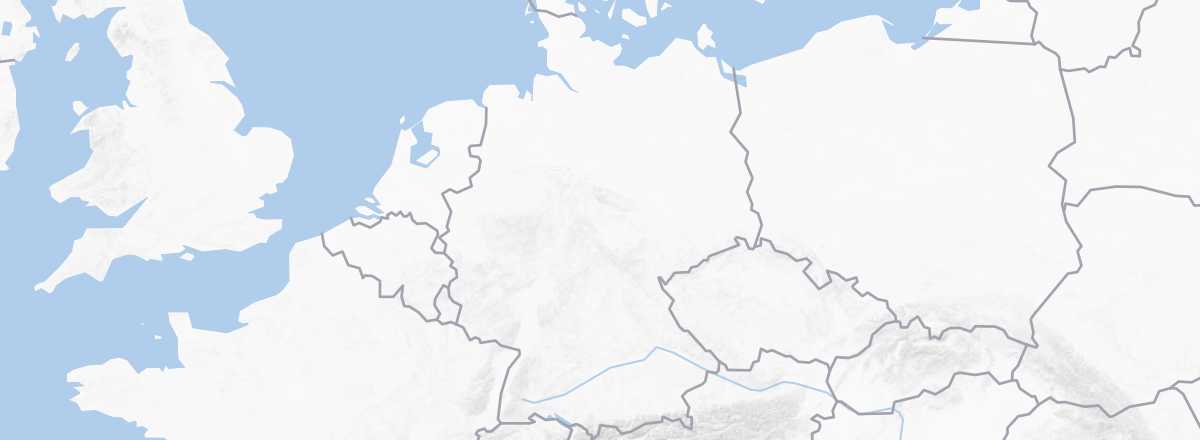 Germany
Open the interactive map
Germany
Open the interactive map
UNESCO World Heritage Sites
With over forty sites listed as UNESCO World Heritage, Germany ranks in the global Top 5 for the most "inscribed" countries. Beyond cultural and historical landmarks, Germany is unique in having numerous industrial sites designated by UNESCO, though not all necessarily hold "tourist value."
The North
The northern part of the country includes the states of Lower Saxony, Mecklenburg-Western Pomerania, Schleswig-Holstein, and the city-states of Bremen and Hamburg.
UNESCO World Heritage Sites
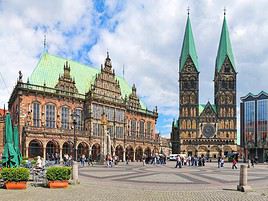
Bremen Market Square (2004)
In the heart of the Hanseatic city, the town hall and the statue of Roland on the market square are UNESCO-listed.
In the heart of the Hanseatic city, the town hall and the statue of Roland on the market square are UNESCO-listed.
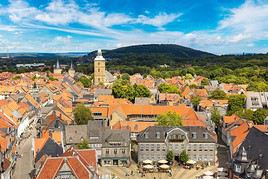
Goslar (1992)
At the gates of Harz National Park, this historic town has so well preserved its medieval heritage that it is a UNESCO World Heritage Site, along with the nearby Rammelsberg mines that once brought it wealth.
At the gates of Harz National Park, this historic town has so well preserved its medieval heritage that it is a UNESCO World Heritage Site, along with the nearby Rammelsberg mines that once brought it wealth.
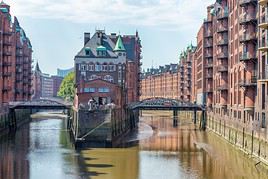
Speicherstadt and Kontorhaus Districts in Hamburg (2015)
These are two urban port areas featuring warehouses, offices, and various buildings dating from the first half of the 20th century.
These are two urban port areas featuring warehouses, offices, and various buildings dating from the first half of the 20th century.
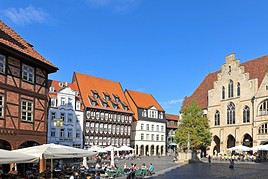
Hildesheim (1985)
Although the medieval centre of this Lower Saxony city was destroyed during the war, its reconstruction and charm have earned it UNESCO status for its cathedral and St. Michael’s Church.
Although the medieval centre of this Lower Saxony city was destroyed during the war, its reconstruction and charm have earned it UNESCO status for its cathedral and St. Michael’s Church.
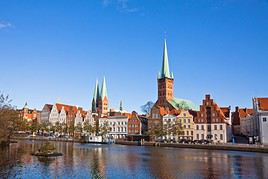
Lübeck (1987)
The former Hanseatic city is a UNESCO World Heritage site for its medieval city center. It is also one of the most important ports on the Baltic Sea, including for ferries departing from its outskirts at Travemünde, which is also a seaside resort.
The former Hanseatic city is a UNESCO World Heritage site for its medieval city center. It is also one of the most important ports on the Baltic Sea, including for ferries departing from its outskirts at Travemünde, which is also a seaside resort.
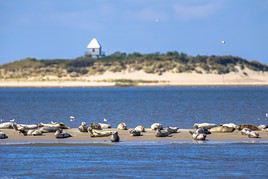
Wadden Sea (2009)
From the Netherlands to Denmark via Germany, this coastal area is a UNESCO World Heritage site. A tourist destination, it is home to numerous islands, several national parks, and attracts visitors for its beaches, hiking, and landscapes.
From the Netherlands to Denmark via Germany, this coastal area is a UNESCO World Heritage site. A tourist destination, it is home to numerous islands, several national parks, and attracts visitors for its beaches, hiking, and landscapes.
Rammelsberg Mines (1992)
Former mines converted into a museum near the historic town of Goslar. Both are part of the UNESCO World Heritage Site.
Former mines converted into a museum near the historic town of Goslar. Both are part of the UNESCO World Heritage Site.
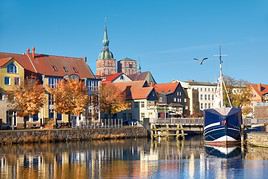
Stralsund (2002)
This small Hanseatic town has preserved its beautiful medieval charm, earning it UNESCO World Heritage status (jointly with Wismar).
This small Hanseatic town has preserved its beautiful medieval charm, earning it UNESCO World Heritage status (jointly with Wismar).
Fagus Factory (2011)
Located in the industrial town of Alfeld, this factory, built between 1911 and 1913, is a UNESCO World Heritage site for its modernist architecture of the period.
Located in the industrial town of Alfeld, this factory, built between 1911 and 1913, is a UNESCO World Heritage site for its modernist architecture of the period.
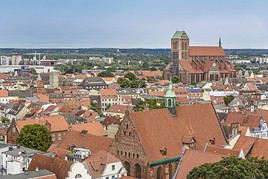
Wismar (2002)
Like Stralsund, this Hanseatic city is a UNESCO World Heritage site for its historic heritage.
Like Stralsund, this Hanseatic city is a UNESCO World Heritage site for its historic heritage.
Bremen and Lower Saxony
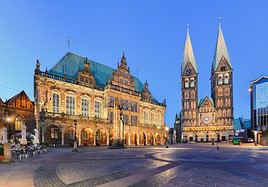
Bremen
This Hanseatic city is one of Germany's most important. It boasts a stunning old town, with some elements—such as the town hall and the Roland statue on the market square—recognized as UNESCO World Heritage sites.
This Hanseatic city is one of Germany's most important. It boasts a stunning old town, with some elements—such as the town hall and the Roland statue on the market square—recognized as UNESCO World Heritage sites.
Bremerhaven
It is the port of Bremen about fifty kilometres away. The Naval Museum and the Emigration Museum are its two main attractions. There are a few beaches nearby.
It is the port of Bremen about fifty kilometres away. The Naval Museum and the Emigration Museum are its two main attractions. There are a few beaches nearby.
Brunswick
This large city, largely destroyed during the war, now has only a few remnants of its medieval past.
This large city, largely destroyed during the war, now has only a few remnants of its medieval past.
Cuxhaven
A popular seaside resort on the Elbe estuary, attracting many visitors from Hamburg and Bremen, which are not far away.
A popular seaside resort on the Elbe estuary, attracting many visitors from Hamburg and Bremen, which are not far away.
Goslar
At the gates of Harz National Park, this historic town has so well preserved its medieval heritage that it is a UNESCO World Heritage Site, along with the nearby Rammelsberg mines that once brought it wealth.
At the gates of Harz National Park, this historic town has so well preserved its medieval heritage that it is a UNESCO World Heritage Site, along with the nearby Rammelsberg mines that once brought it wealth.
Göttingen
This university city is better known for the song by Barbara than for its tourist attractions.
This university city is better known for the song by Barbara than for its tourist attractions.
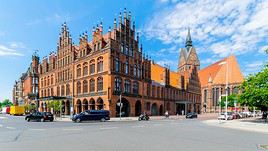
Hanover
This large city boasts an old town centre (partially rebuilt after the war) and the Royal Gardens of Herrenhausen, among Europe’s most important Baroque-style gardens.
This large city boasts an old town centre (partially rebuilt after the war) and the Royal Gardens of Herrenhausen, among Europe’s most important Baroque-style gardens.
Hildesheim
Although the medieval centre of this Lower Saxony city was destroyed during the war, its reconstruction and charm have earned it UNESCO status for its cathedral and St. Michael’s Church.
Although the medieval centre of this Lower Saxony city was destroyed during the war, its reconstruction and charm have earned it UNESCO status for its cathedral and St. Michael’s Church.
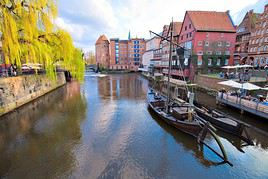
Rammelsberg Mines
Former mines converted into a museum near the historic town of Goslar. Both are part of the UNESCO World Heritage Site.
Former mines converted into a museum near the historic town of Goslar. Both are part of the UNESCO World Heritage Site.
Fagus Factory
Located in the industrial town of Alfeld, this factory, built between 1911 and 1913, is a UNESCO World Heritage site for its modernist architecture of the period.
Located in the industrial town of Alfeld, this factory, built between 1911 and 1913, is a UNESCO World Heritage site for its modernist architecture of the period.
Natural Heritage
Lüneburg Heath
A vast region of forests, heathlands, and small villages where you can hike and locally go canoeing. Several theme parks (birds, safari, etc.) and attractions in the area.
A vast region of forests, heathlands, and small villages where you can hike and locally go canoeing. Several theme parks (birds, safari, etc.) and attractions in the area.
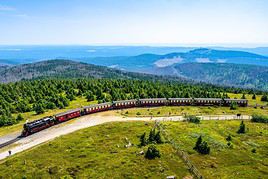
Harz National Park
Spanning two federal states, this is a mid-mountain forest park. You can hike, mountain bike, ski (in Schierke), or take rides on a small steam train.
Spanning two federal states, this is a mid-mountain forest park. You can hike, mountain bike, ski (in Schierke), or take rides on a small steam train.
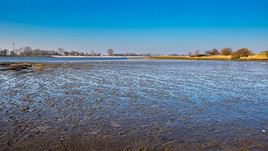
Wadden Sea National Parks
This is a group of three parks across two *Länder*, along the North Sea coast. The entire area is a UNESCO World Heritage site, with the Dutch section included as a complement. Visitors come for the beaches, hiking, small islands (including Heligoland and Sylt), and landscapes.
This is a group of three parks across two *Länder*, along the North Sea coast. The entire area is a UNESCO World Heritage site, with the Dutch section included as a complement. Visitors come for the beaches, hiking, small islands (including Heligoland and Sylt), and landscapes.
Hamburg and Schleswig-Holstein
Eutin Castle
One of the well-known castles in Schleswig-Holstein. It is located in the municipality of the same name in Holstein Switzerland.
One of the well-known castles in Schleswig-Holstein. It is located in the municipality of the same name in Holstein Switzerland.
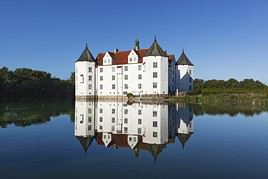
Flensburg
The last German city before Denmark offers a charming old town center and numerous shops highly appreciated by Danes for their prices.
The last German city before Denmark offers a charming old town center and numerous shops highly appreciated by Danes for their prices.
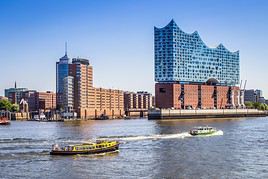
Hamburg
One of Europe's leading ports and Germany's second-largest city. However, Hamburg isn't one of the most touristy destinations, even though its canals, docks, architecture, lively districts like Sankt Pauli, and its cosmopolitan vibe can be appealing.
One of Europe's leading ports and Germany's second-largest city. However, Hamburg isn't one of the most touristy destinations, even though its canals, docks, architecture, lively districts like Sankt Pauli, and its cosmopolitan vibe can be appealing.
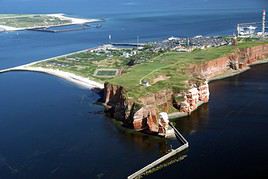
Heligoland
Along with its neighbor Düne, these are the main German islands in the North Sea. Heligoland is a popular destination for its landscapes, beaches, lack of vehicles, and duty-free products.
Along with its neighbor Düne, these are the main German islands in the North Sea. Heligoland is a popular destination for its landscapes, beaches, lack of vehicles, and duty-free products.
Kiel
The capital of the state is a major Baltic port (including ferries and cruises). However, the city isn’t particularly touristy.
The capital of the state is a major Baltic port (including ferries and cruises). However, the city isn’t particularly touristy.
Lübeck
The former Hanseatic city is a UNESCO World Heritage site for its medieval city center. It is also one of the most important ports on the Baltic Sea, including for ferries departing from its outskirts at Travemünde, which is also a seaside resort.
The former Hanseatic city is a UNESCO World Heritage site for its medieval city center. It is also one of the most important ports on the Baltic Sea, including for ferries departing from its outskirts at Travemünde, which is also a seaside resort.
Plön
The small town is nestled in the heart of Holstein Switzerland, on the edge of forests and lakes. It is home to a 17th-century castle, one of the largest in northern Germany.
The small town is nestled in the heart of Holstein Switzerland, on the edge of forests and lakes. It is home to a 17th-century castle, one of the largest in northern Germany.
Sankt Peter-Ording
Located on the North Sea, this spa town is also Germany’s largest seaside resort.
Located on the North Sea, this spa town is also Germany’s largest seaside resort.
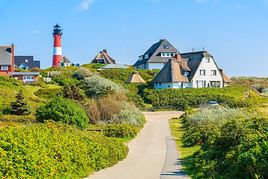
Sylt
This is an island in the Frisian archipelago near the Danish border. It has long been a popular (and rather upscale) tourist destination, particularly known for its beaches and landscapes.
This is an island in the Frisian archipelago near the Danish border. It has long been a popular (and rather upscale) tourist destination, particularly known for its beaches and landscapes.
Natural Heritage
Holstein Switzerland
This region of hills, forests, and lakes between Kiel and Lübeck is quite tourist-friendly. Visitors come to enjoy the countryside setting, hike, cycle, canoe, or sail. Several castles are worth discovering, such as those in Plön and Eutin, as well as nearby beaches.
This region of hills, forests, and lakes between Kiel and Lübeck is quite tourist-friendly. Visitors come to enjoy the countryside setting, hike, cycle, canoe, or sail. Several castles are worth discovering, such as those in Plön and Eutin, as well as nearby beaches.
Wadden Sea National Parks
This is a group of three parks across two *Länder*, along the North Sea coast. The entire area is a UNESCO World Heritage site, with the Dutch section included as a complement. Visitors come for the beaches, hiking, small islands (including Heligoland and Sylt), and landscapes.
This is a group of three parks across two *Länder*, along the North Sea coast. The entire area is a UNESCO World Heritage site, with the Dutch section included as a complement. Visitors come for the beaches, hiking, small islands (including Heligoland and Sylt), and landscapes.
Mecklenburg-Western Pomerania
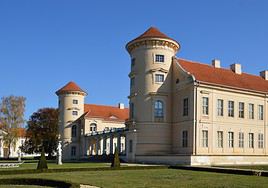
Rheinsberg Castle
This is a rococo-style castle museum in the town of the same name. Construction began in the mid-15th century.
This is a rococo-style castle museum in the town of the same name. Construction began in the mid-15th century.
Greifswald
This fairly large coastal city draws visitors more for its position on the Baltic shoreline than for any specific attractions, though it does have several museums and some fine buildings.
This fairly large coastal city draws visitors more for its position on the Baltic shoreline than for any specific attractions, though it does have several museums and some fine buildings.
Neubrandenburg
A city with well-preserved medieval fortifications, a 13th-century church, and a few historic houses.
A city with well-preserved medieval fortifications, a 13th-century church, and a few historic houses.
Rostock
This major Baltic port (including ferries) has some historic buildings and a very long beach on its outskirts at the seaside resort of Warnemünde.
This major Baltic port (including ferries) has some historic buildings and a very long beach on its outskirts at the seaside resort of Warnemünde.
Rügen
A large Baltic Sea island connected to the mainland. Highly tourist-friendly, it’s beloved for its seaside villages (Binz, Sellin, etc.), beaches, cliffs, and water activities. The island is also home to the ruins in Prora, which were meant to become the world’s largest seaside resort during the Third Reich era.
A large Baltic Sea island connected to the mainland. Highly tourist-friendly, it’s beloved for its seaside villages (Binz, Sellin, etc.), beaches, cliffs, and water activities. The island is also home to the ruins in Prora, which were meant to become the world’s largest seaside resort during the Third Reich era.
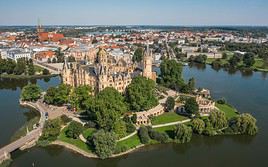
Schwerin
The least populous of all German state capitals boasts a cathedral and, above all, a stunning castle with its park built on an island.
The least populous of all German state capitals boasts a cathedral and, above all, a stunning castle with its park built on an island.
Stralsund
This small Hanseatic town has preserved its beautiful medieval charm, earning it UNESCO World Heritage status (jointly with Wismar).
This small Hanseatic town has preserved its beautiful medieval charm, earning it UNESCO World Heritage status (jointly with Wismar).
Usedom
This half-German and half-Polish island offers several seaside resorts (Zinnowitz, Heringsdorf...), beautiful landscapes, and many beaches. It is quite touristy and also enjoys good sunshine.
This half-German and half-Polish island offers several seaside resorts (Zinnowitz, Heringsdorf...), beautiful landscapes, and many beaches. It is quite touristy and also enjoys good sunshine.
Wismar
Like Stralsund, this Hanseatic city is a UNESCO World Heritage site for its historic heritage.
Like Stralsund, this Hanseatic city is a UNESCO World Heritage site for its historic heritage.
Natural Heritage
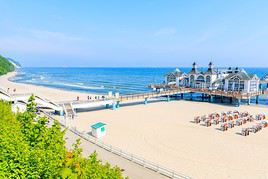
Baltic Sea Coast
This is essentially the coastline running from Rostock to the Polish border. The area is quite tourist-friendly, with seaside resorts, long beaches, high chalk cliffs, and generally beautiful landscapes. The large islands of Rügen and Usedom attract many visitors.
This is essentially the coastline running from Rostock to the Polish border. The area is quite tourist-friendly, with seaside resorts, long beaches, high chalk cliffs, and generally beautiful landscapes. The large islands of Rügen and Usedom attract many visitors.
Western Pomerania Lagoon National Park
Located by the sea, in the northeast of Rostock, this is one of Germany’s largest national parks. It is renowned for its ornithology.
Located by the sea, in the northeast of Rostock, this is one of Germany’s largest national parks. It is renowned for its ornithology.
Müritz National Park
A vast park of forests and lakes (around a hundred) where you can go for walks.
A vast park of forests and lakes (around a hundred) where you can go for walks.
The West
The states of North Rhine-Westphalia, Rhineland-Palatinate, and Saarland.
UNESCO World Heritage Sites
Corvey Abbey (2014)
This is a Benedictine monastery in North Rhine-Westphalia, dating from the 9th century and listed as a UNESCO World Heritage site.
This is a Benedictine monastery in North Rhine-Westphalia, dating from the 9th century and listed as a UNESCO World Heritage site.
Aachen Cathedral (1978)
The oldest cathedral in Northern Europe, begun in Charlemagne’s time in the 8th century, earning it UNESCO status.
The oldest cathedral in Northern Europe, begun in Charlemagne’s time in the 8th century, earning it UNESCO status.
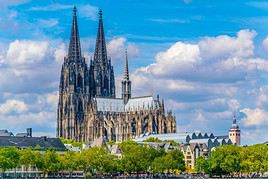
Cologne Cathedral (1996)
Construction began in the 13th century, making it one of the largest Gothic cathedrals in the world. It is a UNESCO World Heritage site.
Construction began in the 13th century, making it one of the largest Gothic cathedrals in the world. It is a UNESCO World Heritage site.
Speyer Cathedral (1981)
It is the largest Romanesque cathedral in the world. Built in the 11th century in Speyer, it is a UNESCO World Heritage site.
It is the largest Romanesque cathedral in the world. Built in the 11th century in Speyer, it is a UNESCO World Heritage site.
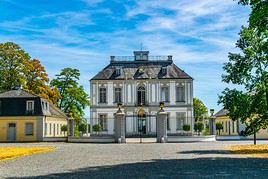
Augustusburg and Falkenlust Palaces (1984)
Set in a vast park and garden spanning several hectares in Brühl, not far from Cologne, these two charming 18th-century palaces are UNESCO World Heritage sites.
Set in a vast park and garden spanning several hectares in Brühl, not far from Cologne, these two charming 18th-century palaces are UNESCO World Heritage sites.
Zollverein Coal Mine Industrial Complex in Essen (2001)
This 20th-century industrial complex is a UNESCO World Heritage site for the architectural value of its buildings.
This 20th-century industrial complex is a UNESCO World Heritage site for the architectural value of its buildings.
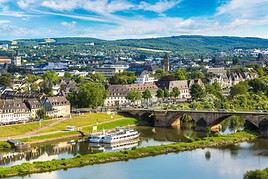
Trier (1986)
The city was an important Roman colony, as evidenced by several surviving structures (gate, amphitheatre, baths, etc.). These, along with the cathedral and Notre-Dame Church, are UNESCO-listed. On its outskirts, the Roscheider Hof open-air museum showcases rural culture in the region and is one of Europe's largest open-air museums.
The city was an important Roman colony, as evidenced by several surviving structures (gate, amphitheatre, baths, etc.). These, along with the cathedral and Notre-Dame Church, are UNESCO-listed. On its outskirts, the Roscheider Hof open-air museum showcases rural culture in the region and is one of Europe's largest open-air museums.
Völklingen Ironworks (1994)
On the outskirts of Saarbrücken, in Völklingen, this former ironworks turned museum is a UNESCO World Heritage site.
On the outskirts of Saarbrücken, in Völklingen, this former ironworks turned museum is a UNESCO World Heritage site.
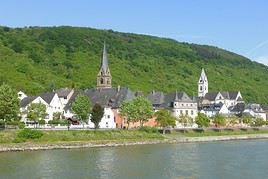
Middle Upper Rhine Valley (2002)
Also known as the "Romantic Rhine," these 70 km from Koblenz to Bingen are a UNESCO World Heritage site. The area features stunning landscapes, particularly in its most rugged section, with vineyards, numerous castles (Stolzenfels, Rheinfels, Burg Rheinstein...) and charming villages (Boppard, Bacharach...). This stretch of the Rhine is also a classic for river cruises and cycling trips.
Also known as the "Romantic Rhine," these 70 km from Koblenz to Bingen are a UNESCO World Heritage site. The area features stunning landscapes, particularly in its most rugged section, with vineyards, numerous castles (Stolzenfels, Rheinfels, Burg Rheinstein...) and charming villages (Boppard, Bacharach...). This stretch of the Rhine is also a classic for river cruises and cycling trips.
North Rhine-Westphalia
Corvey Abbey
This is a Benedictine monastery in North Rhine-Westphalia, dating from the 9th century and listed as a UNESCO World Heritage site.
This is a Benedictine monastery in North Rhine-Westphalia, dating from the 9th century and listed as a UNESCO World Heritage site.
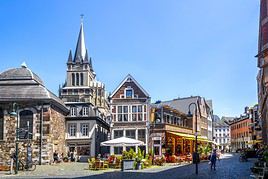
Aachen
The city of Aachen is located at the intersection of the borders of Germany, the Netherlands, and Belgium. The city blends modern and historic elements, with its old town and especially its UNESCO-listed cathedral, where Charlemagne is buried.
The city of Aachen is located at the intersection of the borders of Germany, the Netherlands, and Belgium. The city blends modern and historic elements, with its old town and especially its UNESCO-listed cathedral, where Charlemagne is buried.
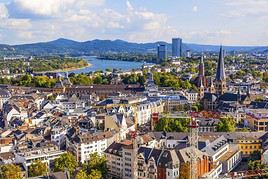
Bonn
Once the capital of West Germany (FRG) from 1949 to 1990, Bonn is a pleasant university and cultural city with its museums. It is also the birthplace of Beethoven, whose house you can visit.
Once the capital of West Germany (FRG) from 1949 to 1990, Bonn is a pleasant university and cultural city with its museums. It is also the birthplace of Beethoven, whose house you can visit.
Augustusburg and Falkenlust Palaces
Set in a vast park and garden spanning several hectares in Brühl, not far from Cologne, these two charming 18th-century palaces are UNESCO World Heritage sites.
Set in a vast park and garden spanning several hectares in Brühl, not far from Cologne, these two charming 18th-century palaces are UNESCO World Heritage sites.
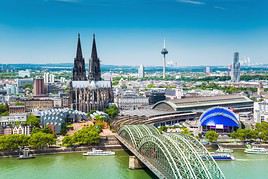
Cologne
Germany’s fourth-largest city is famous for its carnival. You can also explore its small old town, a dozen beautiful Romanesque churches, the UNESCO-listed cathedral, and several museums.
Germany’s fourth-largest city is famous for its carnival. You can also explore its small old town, a dozen beautiful Romanesque churches, the UNESCO-listed cathedral, and several museums.
Dortmund
It’s a major city in the Ruhr region and a river port with just a few traces of its medieval past in the centre.
It’s a major city in the Ruhr region and a river port with just a few traces of its medieval past in the centre.
Düsseldorf
At the heart of the Rhine-Ruhr conurbation, the state capital is primarily a city valued for its lively atmosphere, its carnival, its cultural and economic dynamism rather than for its few monuments or its old town, rebuilt after the war.
At the heart of the Rhine-Ruhr conurbation, the state capital is primarily a city valued for its lively atmosphere, its carnival, its cultural and economic dynamism rather than for its few monuments or its old town, rebuilt after the war.
Essen
Once at the heart of mining and steelmaking activity, Essen still boasts several reminders of that era, including the villa of the Krupp industrial family and the UNESCO-listed Zollverein coal mine complex.
Once at the heart of mining and steelmaking activity, Essen still boasts several reminders of that era, including the villa of the Krupp industrial family and the UNESCO-listed Zollverein coal mine complex.
Gelsenkirchen
This city in the Ruhr region has recycled much of its industrial heritage into parks and gardens.
This city in the Ruhr region has recycled much of its industrial heritage into parks and gardens.
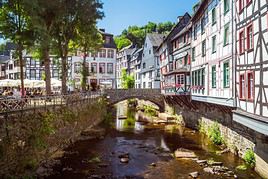
Monschau
At the gates of the Eifel National Park and Belgium, this large town (also called Montjoie) boasts an old centre with timber-framed houses dominated by the remains of a medieval castle.
At the gates of the Eifel National Park and Belgium, this large town (also called Montjoie) boasts an old centre with timber-framed houses dominated by the remains of a medieval castle.
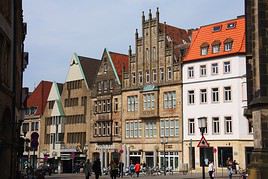
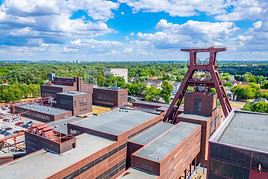
Ruhr
This region north of Cologne was long the heart of Germany’s mining industry. Industrial tourism is now offered here, with visits to mines (including the Zollern mine), industrial zones (Landschaftspark in Duisburg, Zollverein in Essen), slag heaps, working-class neighborhoods (in Oberhausen, Essen, Bochum...), and, conversely, bourgeois residences (the Krupp villa in Essen).
This region north of Cologne was long the heart of Germany’s mining industry. Industrial tourism is now offered here, with visits to mines (including the Zollern mine), industrial zones (Landschaftspark in Duisburg, Zollverein in Essen), slag heaps, working-class neighborhoods (in Oberhausen, Essen, Bochum...), and, conversely, bourgeois residences (the Krupp villa in Essen).
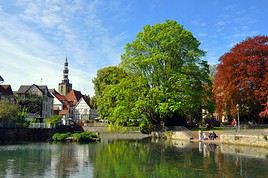
Soest
A small town near Dortmund with a "traditional" centre and several beautiful medieval churches.
A small town near Dortmund with a "traditional" centre and several beautiful medieval churches.
Natural Heritage
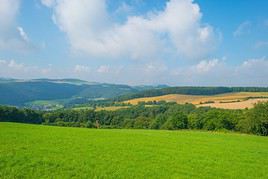
Eifel National Park
This is an area of hills, lakes, and forests on the Belgian border where you can enjoy great hiking and cross-country skiing.
This is an area of hills, lakes, and forests on the Belgian border where you can enjoy great hiking and cross-country skiing.
Siebengebirge
This range of small hills south of Bonn is popular for hiking and, secondarily, its landscapes.
This range of small hills south of Bonn is popular for hiking and, secondarily, its landscapes.
Rhineland-Palatinate
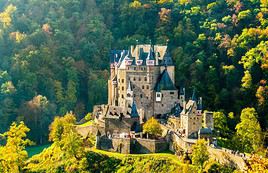
Koblenz
This is the city where the Rhine and Moselle rivers meet and the start of the "Romantic Rhine", the most beautiful and popular section of the river for cruise passengers. In terms of urban attractions, Koblenz is home to several museums and beautiful churches.
This is the city where the Rhine and Moselle rivers meet and the start of the "Romantic Rhine", the most beautiful and popular section of the river for cruise passengers. In terms of urban attractions, Koblenz is home to several museums and beautiful churches.
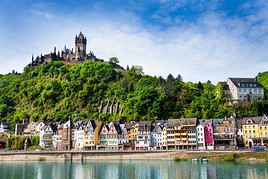
Cochem
A small town near Koblenz with traditional architecture, featuring old half-timbered houses dominated by a hilltop castle. It is also a major wine-growing center on the Moselle River.
A small town near Koblenz with traditional architecture, featuring old half-timbered houses dominated by a hilltop castle. It is also a major wine-growing center on the Moselle River.
Mainz
This regional capital is best known as the city of Gutenberg, to whom a museum is dedicated. Its carnival is also famous, as is its wine trade, with many vineyards in the surrounding area.
This regional capital is best known as the city of Gutenberg, to whom a museum is dedicated. Its carnival is also famous, as is its wine trade, with many vineyards in the surrounding area.
Speyer
In addition to a charming old town, Speyer is home to the world's largest Romanesque cathedral, a UNESCO World Heritage site.
In addition to a charming old town, Speyer is home to the world's largest Romanesque cathedral, a UNESCO World Heritage site.
Trier
The city was an important Roman colony, as evidenced by several surviving structures (gate, amphitheatre, baths, etc.). These, along with the cathedral and Notre-Dame Church, are UNESCO-listed. On its outskirts, the Roscheider Hof open-air museum showcases rural culture in the region and is one of Europe's largest open-air museums.
The city was an important Roman colony, as evidenced by several surviving structures (gate, amphitheatre, baths, etc.). These, along with the cathedral and Notre-Dame Church, are UNESCO-listed. On its outskirts, the Roscheider Hof open-air museum showcases rural culture in the region and is one of Europe's largest open-air museums.
Worms
While the city has several museums and beautiful churches in its historic center, it is best known for its vineyards and wine festival.
While the city has several museums and beautiful churches in its historic center, it is best known for its vineyards and wine festival.
Natural Heritage
Eifel National Park
This is an area of hills, lakes, and forests on the Belgian border where you can enjoy great hiking and cross-country skiing.
This is an area of hills, lakes, and forests on the Belgian border where you can enjoy great hiking and cross-country skiing.
Palatinate Forest
This mountain range stretching from the French border to the outskirts of Kaiserslautern is covered in forests and locally in vineyards. It offers beautiful landscapes, the remains of several medieval fortresses (Altdahn, Neuscharfeneck, Trifels...), and opportunities for hiking, cycling, or climbing.
This mountain range stretching from the French border to the outskirts of Kaiserslautern is covered in forests and locally in vineyards. It offers beautiful landscapes, the remains of several medieval fortresses (Altdahn, Neuscharfeneck, Trifels...), and opportunities for hiking, cycling, or climbing.
Middle Upper Rhine Valley
Also known as the "Romantic Rhine," these 70 km from Koblenz to Bingen are a UNESCO World Heritage site. The area features stunning landscapes, particularly in its most rugged section, with vineyards, numerous castles (Stolzenfels, Rheinfels, Burg Rheinstein...) and charming villages (Boppard, Bacharach...). This stretch of the Rhine is also a classic for river cruises and cycling trips.
Also known as the "Romantic Rhine," these 70 km from Koblenz to Bingen are a UNESCO World Heritage site. The area features stunning landscapes, particularly in its most rugged section, with vineyards, numerous castles (Stolzenfels, Rheinfels, Burg Rheinstein...) and charming villages (Boppard, Bacharach...). This stretch of the Rhine is also a classic for river cruises and cycling trips.
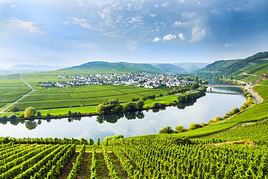
Moselle Valley
The Moselle and its valley are tourist destinations in Germany (and Luxembourg), though far less so than the Rhine Valley. You can take river cruises here or follow the "Moselle Wine Route," whose vineyards line the river.
The Moselle and its valley are tourist destinations in Germany (and Luxembourg), though far less so than the Rhine Valley. You can take river cruises here or follow the "Moselle Wine Route," whose vineyards line the river.
Saarland
Saarbrücken
The capital of Saarland is primarily an industrial city, much like the rest of the state. The Völklingen Ironworks (now a museum) on its outskirts is a UNESCO World Heritage site.
The capital of Saarland is primarily an industrial city, much like the rest of the state. The Völklingen Ironworks (now a museum) on its outskirts is a UNESCO World Heritage site.
Saarlouis
The town near the French border still has a small old centre and remnants of fortifications and casemates dating from the time of Vauban or later.
The town near the French border still has a small old centre and remnants of fortifications and casemates dating from the time of Vauban or later.
Völklingen Ironworks
On the outskirts of Saarbrücken, in Völklingen, this former ironworks turned museum is a UNESCO World Heritage site.
On the outskirts of Saarbrücken, in Völklingen, this former ironworks turned museum is a UNESCO World Heritage site.
The East
The states of Brandenburg, Saxony, Saxony-Anhalt, and the capital, Berlin.
UNESCO World Heritage Sites
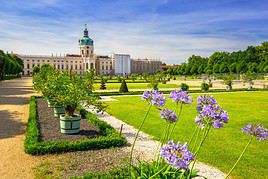
Palaces and Parks of Berlin (1990)
Spread across Berlin and especially Potsdam, these include 500 hectares of parks and 150 structures (including several palaces) built between 1730 and 1916, all listed as UNESCO World Heritage sites.
Spread across Berlin and especially Potsdam, these include 500 hectares of parks and 150 structures (including several palaces) built between 1730 and 1916, all listed as UNESCO World Heritage sites.
Berlin Modernism Housing Estates (2008)
A collection of six social housing estates built between 1913 and 1934 in Berlin's outer districts. The entire complex is a UNESCO World Heritage site.
A collection of six social housing estates built between 1913 and 1934 in Berlin's outer districts. The entire complex is a UNESCO World Heritage site.
Museum Island Berlin (1999)
Or in English, Museum Island. It comprises five museums on a site established in the early 19th century, housing one of the world's richest art collections.
Or in English, Museum Island. It comprises five museums on a site established in the early 19th century, housing one of the world's richest art collections.
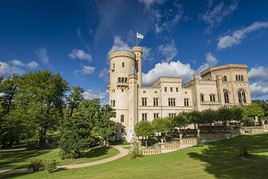
Palaces and Parks of Potsdam (1990)
Spread across Berlin and especially Potsdam, these are a total of 500 hectares of parks and 150 structures (including several palaces) built between 1730 and 1916, which are listed as UNESCO World Heritage sites.
Spread across Berlin and especially Potsdam, these are a total of 500 hectares of parks and 150 structures (including several palaces) built between 1730 and 1916, which are listed as UNESCO World Heritage sites.
Dessau (1996 & 2000)
Or rather Dessau-Rosslau after merging with its neighbour. Little-known abroad, the city is nevertheless twice listed by UNESCO for its Bauhaus architecture and the "Dessau-Wörlitz Garden Realm," one of Europe's largest English garden ensembles.
Or rather Dessau-Rosslau after merging with its neighbour. Little-known abroad, the city is nevertheless twice listed by UNESCO for its Bauhaus architecture and the "Dessau-Wörlitz Garden Realm," one of Europe's largest English garden ensembles.
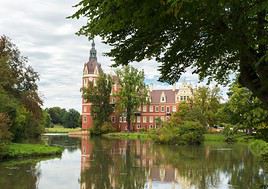
Muskau Park (2004)
This is a landscape park straddling Germany (Bad Muskau municipality) and Poland (Łęknica). With its castle, it is a UNESCO World Heritage Site. The whole is called Park Mużakowski on the Polish side.
This is a landscape park straddling Germany (Bad Muskau municipality) and Poland (Łęknica). With its castle, it is a UNESCO World Heritage Site. The whole is called Park Mużakowski on the Polish side.
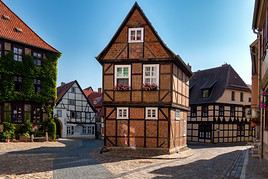
Quedlinburg (1994)
In the Harz Mountains, one of its gateways, this small, highly touristic medieval town—one of Europe’s best-preserved—is home to a collegiate church, a castle, and above all, a UNESCO-listed old town center.
In the Harz Mountains, one of its gateways, this small, highly touristic medieval town—one of Europe’s best-preserved—is home to a collegiate church, a castle, and above all, a UNESCO-listed old town center.
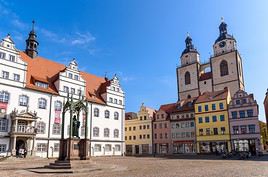
Wittenberg (1994)
This is Luther’s city, home to several UNESCO-listed memorial buildings from his era. A few kilometres away, the town of Eisleben (where the theologian was born) also has buildings listed under the same designation.
This is Luther’s city, home to several UNESCO-listed memorial buildings from his era. A few kilometres away, the town of Eisleben (where the theologian was born) also has buildings listed under the same designation.
Berlin and Brandenburg
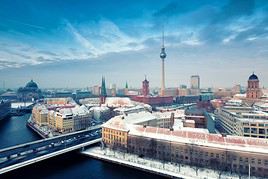
Berlin
Once divided for 28 years, this city is now the capital of reunified Germany. Beyond the last remnants of that era (including its "famous" Wall), Berlin offers countless museums, vibrant neighborhoods, striking buildings and monuments, and parks—plus lakes and forests on its outskirts. It also boasts an intense and diverse cultural and nightlife scene. For many, Berlin is the most fascinating city in the country.
Once divided for 28 years, this city is now the capital of reunified Germany. Beyond the last remnants of that era (including its "famous" Wall), Berlin offers countless museums, vibrant neighborhoods, striking buildings and monuments, and parks—plus lakes and forests on its outskirts. It also boasts an intense and diverse cultural and nightlife scene. For many, Berlin is the most fascinating city in the country.
Frankfurt (Oder)
A city on the Polish border, on the route from Berlin to Warsaw, not necessarily one of the most touristy.
A city on the Polish border, on the route from Berlin to Warsaw, not necessarily one of the most touristy.
Mühlberg
A large town in southern Brandenburg with a few old buildings, an abbey, and a castle by a lake. Short hikes can be taken around the village.
A large town in southern Brandenburg with a few old buildings, an abbey, and a castle by a lake. Short hikes can be taken around the village.
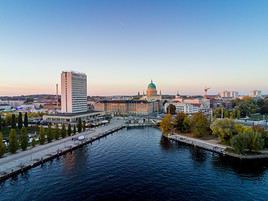
Potsdam
Right next to Berlin, the city is somewhat the "tourist extension" of the capital, with its many parks and palaces in the Babelsberg district, many of which are UNESCO-listed. Additionally, the city features several beautiful old areas (including the Dutch Quarter) and reconstructed neighborhoods.
Right next to Berlin, the city is somewhat the "tourist extension" of the capital, with its many parks and palaces in the Babelsberg district, many of which are UNESCO-listed. Additionally, the city features several beautiful old areas (including the Dutch Quarter) and reconstructed neighborhoods.
Sachsenhausen
A former concentration camp turned memorial on the outskirts of Oranienburg. The town also boasts one of Germany’s oldest Baroque castles.
A former concentration camp turned memorial on the outskirts of Oranienburg. The town also boasts one of Germany’s oldest Baroque castles.
Natural Heritage
Lower Oder Valley National Park
This is a German-Polish natural polder area near Szczecin, home to numerous nesting bird species.
This is a German-Polish natural polder area near Szczecin, home to numerous nesting bird species.
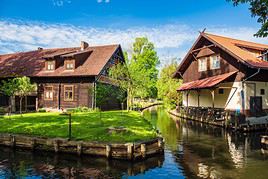
Spreewald
Located southeast of Berlin, this is a vast wetland area with numerous marshes and canals running through farms, woods, and meadows. It’s a great place for pleasant boat or canoe trips, as well as hiking or cycling along the trails.
Located southeast of Berlin, this is a vast wetland area with numerous marshes and canals running through farms, woods, and meadows. It’s a great place for pleasant boat or canoe trips, as well as hiking or cycling along the trails.
Saxony
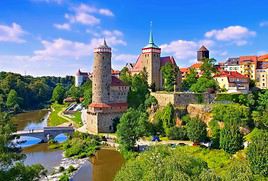
Bautzen
The old Saxon city has well preserved its medieval architecture, particularly in its center.
The old Saxon city has well preserved its medieval architecture, particularly in its center.
Hohnstein Castle
This is a medieval castle in the municipality of the same name, in Saxon Switzerland.
This is a medieval castle in the municipality of the same name, in Saxon Switzerland.
Moritzburg Castle
A Baroque-style castle and one of the most important in Saxony. It is located not far from Dresden.
A Baroque-style castle and one of the most important in Saxony. It is located not far from Dresden.
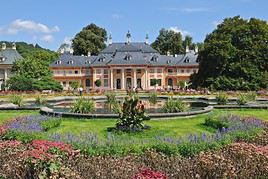
Pillnitz Castle
A Renaissance-style castle and its park built along the Elbe, a few kilometres from Dresden.
A Renaissance-style castle and its park built along the Elbe, a few kilometres from Dresden.
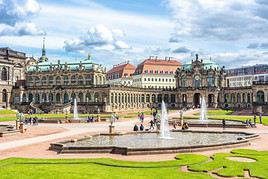
Dresden
Almost entirely destroyed in 1945, the capital of Saxony nevertheless boasts a very pretty historic Baroque centre that was once a UNESCO World Heritage Site. Several beautiful castles in its surroundings (Moritzburg, Pillnitz...).
Almost entirely destroyed in 1945, the capital of Saxony nevertheless boasts a very pretty historic Baroque centre that was once a UNESCO World Heritage Site. Several beautiful castles in its surroundings (Moritzburg, Pillnitz...).
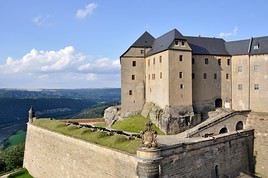
Königstein Fortress
This imposing medieval castle along the Elbe, later transformed into a military fortress, is one of the main tourist attractions in Saxony.
This imposing medieval castle along the Elbe, later transformed into a military fortress, is one of the main tourist attractions in Saxony.
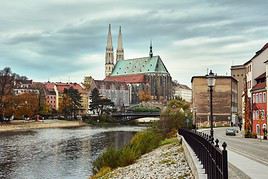
Görlitz
This is a beautifully preserved historic city on the Polish border, with architecture blending Gothic, Baroque, and Renaissance styles. Over 3,500 old-town houses are listed.
This is a beautifully preserved historic city on the Polish border, with architecture blending Gothic, Baroque, and Renaissance styles. Over 3,500 old-town houses are listed.
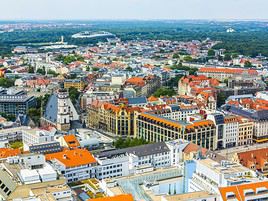
Leipzig
Saxony’s largest city is a lively, commercial hub with numerous museums, religious and historic buildings. To the south, several lakes, including the Cospudener See, have been developed into recreational areas.
Saxony’s largest city is a lively, commercial hub with numerous museums, religious and historic buildings. To the south, several lakes, including the Cospudener See, have been developed into recreational areas.
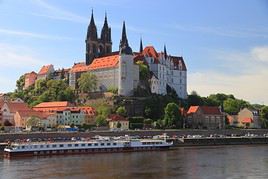
Meissen
This town, nestled in the Elbe vineyards, boasts a stunning castle-cathedral complex overlooking the river and the historic quarter. It is also renowned for its porcelain.
This town, nestled in the Elbe vineyards, boasts a stunning castle-cathedral complex overlooking the river and the historic quarter. It is also renowned for its porcelain.
Muskau Park
This is a landscape park straddling Germany (Bad Muskau municipality) and Poland (Łęknica). With its castle, it is a UNESCO World Heritage Site. The whole is called Park Mużakowski on the Polish side.
This is a landscape park straddling Germany (Bad Muskau municipality) and Poland (Łęknica). With its castle, it is a UNESCO World Heritage Site. The whole is called Park Mużakowski on the Polish side.
Natural Heritage
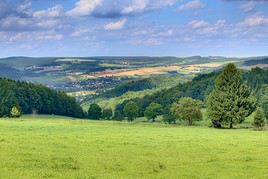
Ore Mountains
This mid-mountain range between Saxony and the Czech Republic is a landscape of lakes, forests, hills, small villages, former mines, and small castles. You can hike here and ski at the Oberwiesenthal resort.
This mid-mountain range between Saxony and the Czech Republic is a landscape of lakes, forests, hills, small villages, former mines, and small castles. You can hike here and ski at the Oberwiesenthal resort.
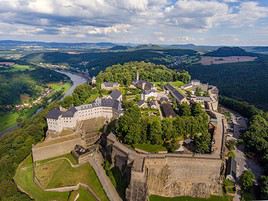
Saxon Switzerland
Between Dresden and the Czech border, along the Elbe, this beautiful national park, ideal for hiking, features spectacular rock formations popular with climbers. Several castles and fortresses were built in the region, the best-known being Königstein and Hohnstein.
Between Dresden and the Czech border, along the Elbe, this beautiful national park, ideal for hiking, features spectacular rock formations popular with climbers. Several castles and fortresses were built in the region, the best-known being Königstein and Hohnstein.
Elbe Valley
The most picturesque stretches of the river are around Dresden, with its vineyards and castles such as Pillnitz. Many paddle steamer cruises depart from Dresden to Saxon Switzerland, and the same route can also be cycled along the well-maintained bike paths.
The most picturesque stretches of the river are around Dresden, with its vineyards and castles such as Pillnitz. Many paddle steamer cruises depart from Dresden to Saxon Switzerland, and the same route can also be cycled along the well-maintained bike paths.
Saxony-Anhalt
Dessau
Or rather Dessau-Rosslau after merging with its neighbour. Little-known abroad, the city is nevertheless twice listed by UNESCO for its Bauhaus architecture and the "Dessau-Wörlitz Garden Realm," one of Europe's largest English garden ensembles.
Or rather Dessau-Rosslau after merging with its neighbour. Little-known abroad, the city is nevertheless twice listed by UNESCO for its Bauhaus architecture and the "Dessau-Wörlitz Garden Realm," one of Europe's largest English garden ensembles.
Magdeburg
A major city and the capital of Saxony-Anhalt, southwest of Berlin, it isn’t particularly touristy, offering just a rather beautiful cathedral and plenty of green spaces.
A major city and the capital of Saxony-Anhalt, southwest of Berlin, it isn’t particularly touristy, offering just a rather beautiful cathedral and plenty of green spaces.
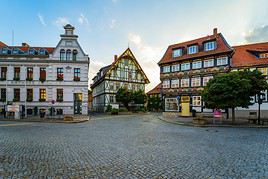
Quedlinburg
In the Harz Mountains, one of its gateways, this small, highly touristic medieval town—one of Europe’s best-preserved—is home to a collegiate church, a castle, and above all, a UNESCO-listed old town center.
In the Harz Mountains, one of its gateways, this small, highly touristic medieval town—one of Europe’s best-preserved—is home to a collegiate church, a castle, and above all, a UNESCO-listed old town center.
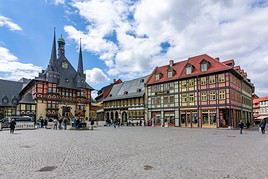
Wernigerode
In the Harz Mountains, the town features several charming historic buildings and a medieval castle. It’s also the starting point for the steam train that crosses part of the mountain range.
In the Harz Mountains, the town features several charming historic buildings and a medieval castle. It’s also the starting point for the steam train that crosses part of the mountain range.
Wittenberg
This is Luther’s city, home to several UNESCO-listed memorial buildings from his era. A few kilometres away, the town of Eisleben (where the theologian was born) also has buildings listed under the same designation.
This is Luther’s city, home to several UNESCO-listed memorial buildings from his era. A few kilometres away, the town of Eisleben (where the theologian was born) also has buildings listed under the same designation.
Natural Heritage
Harz National Park
Spanning two federal states, this is a mid-mountain forest park. You can hike, mountain bike, ski (in Schierke), or take rides on a small steam train.
Spanning two federal states, this is a mid-mountain forest park. You can hike, mountain bike, ski (in Schierke), or take rides on a small steam train.
The Center
These are the states of Hesse and Thuringia, at the heart of the country.
UNESCO World Heritage Sites
Lorsch Abbey (1991)
This 8th-century abbey, or more precisely its porch, which is the only remaining vestige, is a UNESCO World Heritage Site for its pre-Romanesque architecture.
This 8th-century abbey, or more precisely its porch, which is the only remaining vestige, is a UNESCO World Heritage Site for its pre-Romanesque architecture.
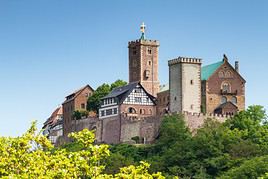
Wartburg Castle (1999)
The structure, begun in the 11th century, overlooks the town of Eisenach. It is one of Germany’s main castles and a UNESCO World Heritage site.
The structure, begun in the 11th century, overlooks the town of Eisenach. It is one of Germany’s main castles and a UNESCO World Heritage site.
Wilhelmshöhe Park (2013)
A vast public park, UNESCO-listed, culminating in the palace of the same name in the city of Kassel.
A vast public park, UNESCO-listed, culminating in the palace of the same name in the city of Kassel.
Messel Fossil Site (1995)
This former quarry in the town of the same name is home to countless fossils, earning it UNESCO World Heritage status.
This former quarry in the town of the same name is home to countless fossils, earning it UNESCO World Heritage status.
Middle Upper Rhine Valley (2002)
Also known as the "Romantic Rhine," these 70 km from Koblenz to Bingen are a UNESCO World Heritage site. The area features stunning landscapes, particularly in its most rugged section, with vineyards, numerous castles (Stolzenfels, Rheinfels, Burg Rheinstein...) and charming villages (Boppard, Bacharach...). This stretch of the Rhine is also a classic for river cruises and cycling trips.
Also known as the "Romantic Rhine," these 70 km from Koblenz to Bingen are a UNESCO World Heritage site. The area features stunning landscapes, particularly in its most rugged section, with vineyards, numerous castles (Stolzenfels, Rheinfels, Burg Rheinstein...) and charming villages (Boppard, Bacharach...). This stretch of the Rhine is also a classic for river cruises and cycling trips.
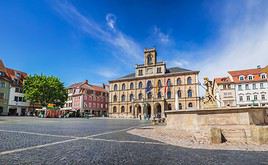
Weimar (1996)
This was the city of writers, musicians, and above all, architects when it stood at the heart of the Bauhaus movement. The entire city and its Bauhaus-style buildings are UNESCO-listed.
This was the city of writers, musicians, and above all, architects when it stood at the heart of the Bauhaus movement. The entire city and its Bauhaus-style buildings are UNESCO-listed.
Hesse
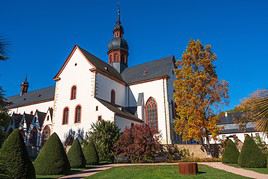
Eberbach Abbey
A Cistercian monastery, partly converted into a cultural foundation and museum, which you can visit. It is known for its vineyards... and for having served as a filming location for the movie "The Name of the Rose".
A Cistercian monastery, partly converted into a cultural foundation and museum, which you can visit. It is known for its vineyards... and for having served as a filming location for the movie "The Name of the Rose".
Lorsch Abbey
This 8th-century abbey, or more precisely its porch, which is the only remaining vestige, is a UNESCO World Heritage Site for its pre-Romanesque architecture.
This 8th-century abbey, or more precisely its porch, which is the only remaining vestige, is a UNESCO World Heritage Site for its pre-Romanesque architecture.
Darmstadt
South of Frankfurt, the city, which suffered considerably during the war, still boasts many Art Nouveau buildings and several museums.
South of Frankfurt, the city, which suffered considerably during the war, still boasts many Art Nouveau buildings and several museums.
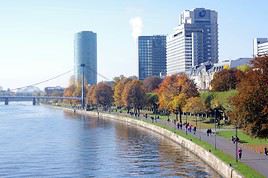
Frankfurt
Germany’s commercial and financial hub is far better known to travelers as the base for Lufthansa than for its tourist attractions, though the highlights can easily be seen between flights.
Germany’s commercial and financial hub is far better known to travelers as the base for Lufthansa than for its tourist attractions, though the highlights can easily be seen between flights.
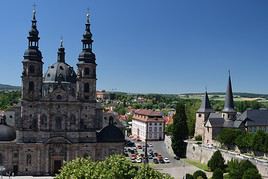
Fulda
This city with a religious past has many churches, abbeys, small palaces, and various buildings to visit. It also boasts numerous parks.
This city with a religious past has many churches, abbeys, small palaces, and various buildings to visit. It also boasts numerous parks.
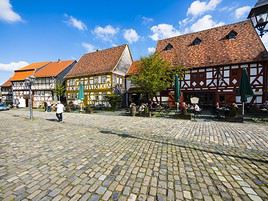
Hessenpark
This is an open-air museum featuring around a hundred traditional houses and buildings from the Hesse region. It is located about thirty kilometres north of Frankfurt.
This is an open-air museum featuring around a hundred traditional houses and buildings from the Hesse region. It is located about thirty kilometres north of Frankfurt.
Kassel
A major university city north of Frankfurt. Its main (and almost only) tourist attraction is Wilhelmshöhe Palace with its UNESCO-listed park, linked to the Karlsaue Park.
A major university city north of Frankfurt. Its main (and almost only) tourist attraction is Wilhelmshöhe Palace with its UNESCO-listed park, linked to the Karlsaue Park.
Marburg
A charming town with its castle and historic center featuring narrow alleys and half-timbered houses dating from the 17th–18th centuries or even earlier.
A charming town with its castle and historic center featuring narrow alleys and half-timbered houses dating from the 17th–18th centuries or even earlier.
Wilhelmshöhe Park
A vast public park, UNESCO-listed, culminating in the palace of the same name in the city of Kassel.
A vast public park, UNESCO-listed, culminating in the palace of the same name in the city of Kassel.
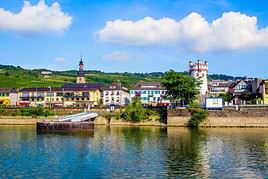
Wiesbaden
The capital of Hesse is also traditionally a spa town, though it doesn’t have many tourist attractions.
The capital of Hesse is also traditionally a spa town, though it doesn’t have many tourist attractions.
Natural Heritage
Messel Fossil Site
This former quarry in the town of the same name is home to countless fossils, earning it UNESCO World Heritage status.
This former quarry in the town of the same name is home to countless fossils, earning it UNESCO World Heritage status.
Middle Upper Rhine Valley
Also known as the "Romantic Rhine," these 70 km from Koblenz to Bingen are a UNESCO World Heritage site. The area features stunning landscapes, particularly in its most rugged section, with vineyards, numerous castles (Stolzenfels, Rheinfels, Burg Rheinstein...) and charming villages (Boppard, Bacharach...). This stretch of the Rhine is also a classic for river cruises and cycling trips.
Also known as the "Romantic Rhine," these 70 km from Koblenz to Bingen are a UNESCO World Heritage site. The area features stunning landscapes, particularly in its most rugged section, with vineyards, numerous castles (Stolzenfels, Rheinfels, Burg Rheinstein...) and charming villages (Boppard, Bacharach...). This stretch of the Rhine is also a classic for river cruises and cycling trips.
Thuringia
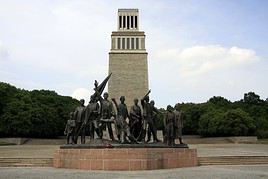
Buchenwald
Just a few kilometres from Weimar, what was one of the worst camps of the Second World War is now a museum and memorial.
Just a few kilometres from Weimar, what was one of the worst camps of the Second World War is now a museum and memorial.
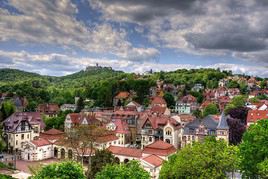
Eisenach
The city is home to Wartburg Castle, one of Germany’s most important castles and a UNESCO World Heritage site. The structure, begun in the 11th century, overlooks Eisenach, which is also the birthplace of Bach. There are also several churches and beautiful Art Nouveau or older houses.
The city is home to Wartburg Castle, one of Germany’s most important castles and a UNESCO World Heritage site. The structure, begun in the 11th century, overlooks Eisenach, which is also the birthplace of Bach. There are also several churches and beautiful Art Nouveau or older houses.
Wartburg Castle
The structure, begun in the 11th century, overlooks the town of Eisenach. It is one of Germany’s main castles and a UNESCO World Heritage site.
The structure, begun in the 11th century, overlooks the town of Eisenach. It is one of Germany’s main castles and a UNESCO World Heritage site.
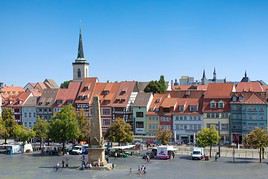
Erfurt
The former medieval trading city has preserved part of its medieval heritage with the narrow streets and half-timbered houses of its centre.
The former medieval trading city has preserved part of its medieval heritage with the narrow streets and half-timbered houses of its centre.
Mühlhausen
This town in central Germany has partly retained its medieval charm, particularly with its city walls.
This town in central Germany has partly retained its medieval charm, particularly with its city walls.
Saalfeld
The ancestral home of part of the British royal family, Saalfeld features a small historic centre surrounded by caves, lakes, and forests ideal for hiking or skiing.
The ancestral home of part of the British royal family, Saalfeld features a small historic centre surrounded by caves, lakes, and forests ideal for hiking or skiing.
Weimar
This was the city of writers, musicians, and above all, architects when it stood at the heart of the Bauhaus movement. The entire city and its Bauhaus-style buildings are UNESCO-listed.
This was the city of writers, musicians, and above all, architects when it stood at the heart of the Bauhaus movement. The entire city and its Bauhaus-style buildings are UNESCO-listed.
Natural Heritage
Thuringian Forest
This vast expanse of forests and hills is a premier hiking destination in central Germany, particularly with its 170 km-long Rennsteig trail. Skiing is also possible, such as at the Silbersattel resort.
This vast expanse of forests and hills is a premier hiking destination in central Germany, particularly with its 170 km-long Rennsteig trail. Skiing is also possible, such as at the Silbersattel resort.
The South
It consists of the state of Baden-Württemberg and the most well-known of all: Bavaria.
UNESCO World Heritage Sites
Reichenau Abbey (1993)
This 8th-century Benedictine abbey is a UNESCO World Heritage site. It is located on the small island of Reichenau in the south of Lake Constance.
This 8th-century Benedictine abbey is a UNESCO World Heritage site. It is located on the small island of Reichenau in the south of Lake Constance.
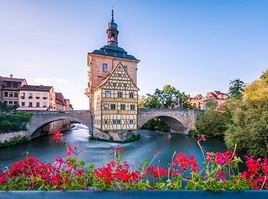
Bamberg (1993)
A stunning medieval and Baroque city at the gateway to Franconian Switzerland. The entire city is a UNESCO World Heritage site.
A stunning medieval and Baroque city at the gateway to Franconian Switzerland. The entire city is a UNESCO World Heritage site.
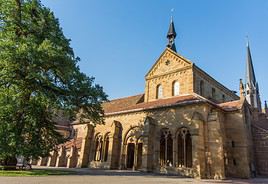
Maulbronn Monastery (1993)
Located in the town of the same name, this UNESCO-listed building blends Romanesque and Gothic styles.
Located in the town of the same name, this UNESCO-listed building blends Romanesque and Gothic styles.
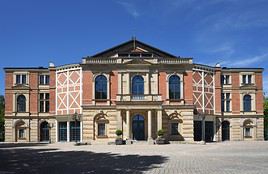
Bayreuth Opera House (2012)
Officially known as the Margravial Opera House, this late 18th-century building is considered a masterpiece of Baroque theatrical architecture, with its magnificent Rococo interior.
Officially known as the Margravial Opera House, this late 18th-century building is considered a masterpiece of Baroque theatrical architecture, with its magnificent Rococo interior.
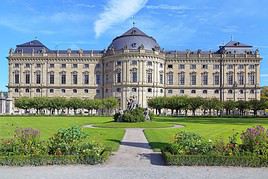
Würzburg Residence (1981)
A very beautiful and massive Baroque-style construction in the city centre of Würzburg. The 18th-century building is a UNESCO World Heritage site.
A very beautiful and massive Baroque-style construction in the city centre of Würzburg. The 18th-century building is a UNESCO World Heritage site.
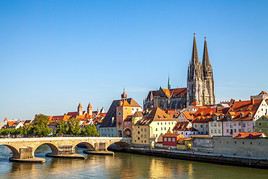
Regensburg (2006)
The city (called Regensburg in German) was built along the Danube. It is a UNESCO World Heritage site for its beautiful medieval centre.
The city (called Regensburg in German) was built along the Danube. It is a UNESCO World Heritage site for its beautiful medieval centre.
Prehistoric Pile Dwellings (1993)
These remains (around a thousand) are spread across six Alpine countries, with a hundred designated as UNESCO sites. Germany has 18, mostly in Baden-Württemberg around Lake Constance. The open-air museum in Unteruhldingen offers the best representation of this type of settlement.
These remains (around a thousand) are spread across six Alpine countries, with a hundred designated as UNESCO sites. Germany has 18, mostly in Baden-Württemberg around Lake Constance. The open-air museum in Unteruhldingen offers the best representation of this type of settlement.
Steingaden (1983)
This large village near Austria is home to several churches, including the Wies Church, a UNESCO World Heritage site renowned for its Rococo style.
This large village near Austria is home to several churches, including the Wies Church, a UNESCO World Heritage site renowned for its Rococo style.
Baden-Württemberg
Reichenau Abbey
This 8th-century Benedictine abbey is a UNESCO World Heritage site. It is located on the small island of Reichenau in the south of Lake Constance.
This 8th-century Benedictine abbey is a UNESCO World Heritage site. It is located on the small island of Reichenau in the south of Lake Constance.
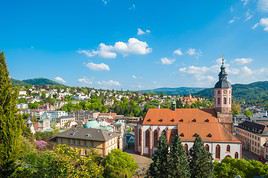
Baden-Baden
A rather upscale spa and resort town on the edge of the Black Forest, not far from France and Strasbourg.
A rather upscale spa and resort town on the edge of the Black Forest, not far from France and Strasbourg.
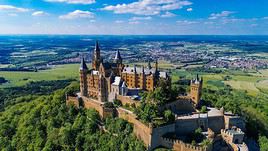
Hohenzollern Castle
This is a magnificent castle perched about fifty kilometres south of Stuttgart. It is one of Germany’s most visited castles.
This is a magnificent castle perched about fifty kilometres south of Stuttgart. It is one of Germany’s most visited castles.
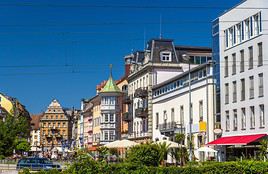
Constance
On the shores of Lake Constance, the city has an old town centre but is primarily a base for enjoying the lake (boating, boat trips, cycling). Constance also marks the end of the "Green Route", a tourist itinerary starting in the Vosges, allowing visitors to discover the local produce, gastronomy, and culture of the regions it crosses.
On the shores of Lake Constance, the city has an old town centre but is primarily a base for enjoying the lake (boating, boat trips, cycling). Constance also marks the end of the "Green Route", a tourist itinerary starting in the Vosges, allowing visitors to discover the local produce, gastronomy, and culture of the regions it crosses.
Europa Park
Located in Rust, between Freiburg and Strasbourg, it is the largest theme park in Europe by area and the second most visited after Disney.
Located in Rust, between Freiburg and Strasbourg, it is the largest theme park in Europe by area and the second most visited after Disney.
Freiburg im Breisgau
Located at the foot of the Black Forest mountains, Freiburg has an old town rebuilt around its iconic cathedral.
Located at the foot of the Black Forest mountains, Freiburg has an old town rebuilt around its iconic cathedral.
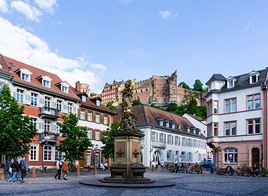
Heidelberg
A beautiful university (and romantic) city with its 15th-century castle and old town centre.
A beautiful university (and romantic) city with its 15th-century castle and old town centre.
Karlsruhe
A large city near France, best known for its imposing early 18th-century palace, which remains its main attraction.
A large city near France, best known for its imposing early 18th-century palace, which remains its main attraction.
Ludwigsburg
A beautiful Baroque-style city near Stuttgart with a stunning and grand 18th-century palace.
A beautiful Baroque-style city near Stuttgart with a stunning and grand 18th-century palace.
Mannheim
It's an industrial city south of Frankfurt. It's not one of the most tourist-friendly destinations.
It's an industrial city south of Frankfurt. It's not one of the most tourist-friendly destinations.
Maulbronn Monastery
Located in the town of the same name, this UNESCO-listed building blends Romanesque and Gothic styles.
Located in the town of the same name, this UNESCO-listed building blends Romanesque and Gothic styles.
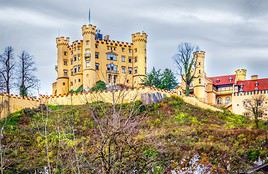
Castle Road in Southern Germany
This tourist route, starting in Mannheim, lets you discover over fifty castles in Baden-Württemberg, Bavaria, and even the Czech Republic, as it ends in Prague.
This tourist route, starting in Mannheim, lets you discover over fifty castles in Baden-Württemberg, Bavaria, and even the Czech Republic, as it ends in Prague.
Prehistoric Pile Dwellings
These remains (around a thousand) are spread across six Alpine countries, with a hundred designated as UNESCO sites. Germany has 18, mostly in Baden-Württemberg around Lake Constance. The open-air museum in Unteruhldingen offers the best representation of this type of settlement.
These remains (around a thousand) are spread across six Alpine countries, with a hundred designated as UNESCO sites. Germany has 18, mostly in Baden-Württemberg around Lake Constance. The open-air museum in Unteruhldingen offers the best representation of this type of settlement.
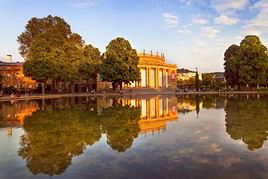
Stuttgart
It's the state capital. It isn't particularly touristy, despite an old centre (rebuilt after the war) and a few parks and museums.
It's the state capital. It isn't particularly touristy, despite an old centre (rebuilt after the war) and a few parks and museums.
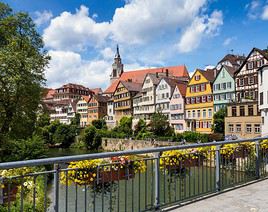
Tübingen
A lively university town near Stuttgart. It has a pleasant town centre and riverside, with hiking opportunities in the nearby forests.
A lively university town near Stuttgart. It has a pleasant town centre and riverside, with hiking opportunities in the nearby forests.
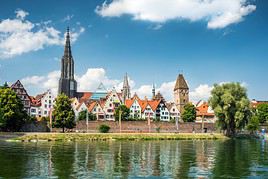
Ulm
A city with a historic centre on the banks of the Danube and a cathedral with the tallest spire in the world (161 m).
A city with a historic centre on the banks of the Danube and a cathedral with the tallest spire in the world (161 m).
Natural Heritage
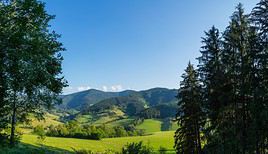
Black Forest
A forested mid-mountain range with valleys in southwestern Germany, parallel to the French border. It is home to several spa towns (including Baden-Baden) and is highly popular for its thousands of kilometers of hiking trails.
A forested mid-mountain range with valleys in southwestern Germany, parallel to the French border. It is home to several spa towns (including Baden-Baden) and is highly popular for its thousands of kilometers of hiking trails.
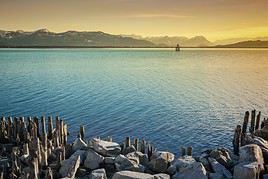
Lake Constance
Straddling Switzerland, Germany and Austria, it is one of Europe’s largest lakes. Visitors come for boating, ferry rides, or cycling along its many bike paths.
Straddling Switzerland, Germany and Austria, it is one of Europe’s largest lakes. Visitors come for boating, ferry rides, or cycling along its many bike paths.
Bavaria
Andechs Abbey
Not far from Munich, this beautiful Benedictine abbey is as famous for its Baroque-Rococo style as for its brewery, which offers tours.
Not far from Munich, this beautiful Benedictine abbey is as famous for its Baroque-Rococo style as for its brewery, which offers tours.
Weltenburg Abbey
A beautiful abbey set in a natural landscape on the banks of the Danube. It is the oldest in Germany.
A beautiful abbey set in a natural landscape on the banks of the Danube. It is the oldest in Germany.
Augsburg
This city near Munich boasts a charming cathedral, several interesting buildings, and an old quarter (Fuggerei).
This city near Munich boasts a charming cathedral, several interesting buildings, and an old quarter (Fuggerei).
Bad Reichenhall
A spa town near Salzburg with an old town center and saltworks you can visit. Plenty of outdoor activities in the area (hiking, skiing, rafting, canyoning...).
A spa town near Salzburg with an old town center and saltworks you can visit. Plenty of outdoor activities in the area (hiking, skiing, rafting, canyoning...).
Bamberg
A stunning medieval and Baroque city at the gateway to Franconian Switzerland. The entire city is a UNESCO World Heritage site.
A stunning medieval and Baroque city at the gateway to Franconian Switzerland. The entire city is a UNESCO World Heritage site.
Bayreuth
This is the city of Wagner and the famous festival dedicated to him every year. The Margravial Opera House of Bayreuth is a UNESCO World Heritage site.
This is the city of Wagner and the famous festival dedicated to him every year. The Margravial Opera House of Bayreuth is a UNESCO World Heritage site.
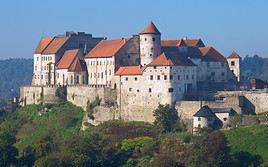
Burghausen Castle
A towering castle perched in the town of the same name on the border with Austria.
A towering castle perched in the town of the same name on the border with Austria.
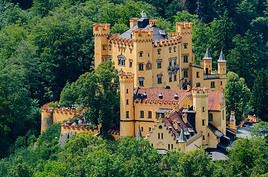
Hohenschwangau Castle
In the eponymous municipality, this castle, (re)built by Maximilian II of Bavaria in the early 19th century, is located next to Neuschwanstein Castle, built by his son Ludwig II.
In the eponymous municipality, this castle, (re)built by Maximilian II of Bavaria in the early 19th century, is located next to Neuschwanstein Castle, built by his son Ludwig II.
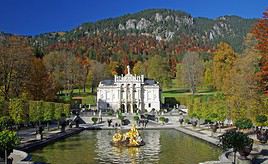
Linderhof Palace
This is one of the palaces built in the late 19th century by Ludwig II of Bavaria in the Romantic style. Unlike other, more famous ones (including the well-known Neuschwanstein), this one is not perched on a hill and features a lovely park.
This is one of the palaces built in the late 19th century by Ludwig II of Bavaria in the Romantic style. Unlike other, more famous ones (including the well-known Neuschwanstein), this one is not perched on a hill and features a lovely park.
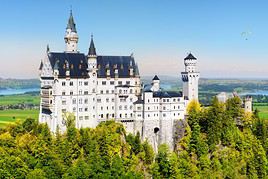
Neuschwanstein Castle
This magnificent castle, which Ludwig II of Bavaria had built in the late 19th century, is now the most famous in Germany and one of the most visited. It also served as the inspiration for Disney’s Sleeping Beauty Castle and is located next to Hohenschwangau Castle.
This magnificent castle, which Ludwig II of Bavaria had built in the late 19th century, is now the most famous in Germany and one of the most visited. It also served as the inspiration for Disney’s Sleeping Beauty Castle and is located next to Hohenschwangau Castle.
Plassenburg Castle
One of Germany’s most impressive castles due to its size, overlooking the town of Kulmbach.
One of Germany’s most impressive castles due to its size, overlooking the town of Kulmbach.
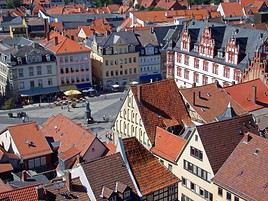
Coburg
A town in northern Bavaria dominated by its imposing castle, with many houses from the 16th–18th centuries.
A town in northern Bavaria dominated by its imposing castle, with many houses from the 16th–18th centuries.
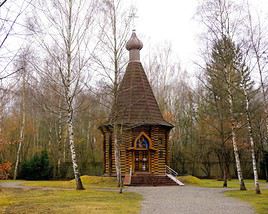
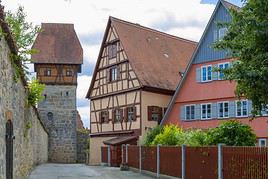
Dinkelsbühl
The town has preserved its medieval character with its ramparts, towers, market halls, churches, and old houses. It is a stop on the Romantic Road.
The town has preserved its medieval character with its ramparts, towers, market halls, churches, and old houses. It is a stop on the Romantic Road.
Fürth
On the outskirts of Nuremberg, and unlike it, Fürth has preserved a number of its original historic buildings, many dating from the 17th to 19th centuries.
On the outskirts of Nuremberg, and unlike it, Fürth has preserved a number of its original historic buildings, many dating from the 17th to 19th centuries.
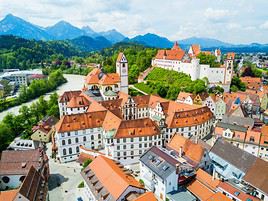
Füssen
At the foot of the Alps, the town marks the end of the Romantic Road. It is home to a stunning Gothic castle and the Benedictine monastery of Saint Mang. Nearby are two of Germany's most beautiful castles: Neuschwanstein and Hohenschwangau.
At the foot of the Alps, the town marks the end of the Romantic Road. It is home to a stunning Gothic castle and the Benedictine monastery of Saint Mang. Nearby are two of Germany's most beautiful castles: Neuschwanstein and Hohenschwangau.
Ingolstadt
A city on the Danube with many old Gothic and Baroque buildings. Ingolstadt is also linked to the Frankenstein character, with its story explored through a "Frankenstein Tour".
A city on the Danube with many old Gothic and Baroque buildings. Ingolstadt is also linked to the Frankenstein character, with its story explored through a "Frankenstein Tour".
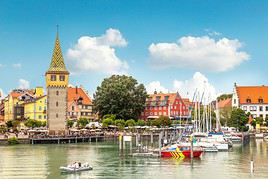
Lindau
A charming town on the shores of Lake Constance, whose old quarter was built on an island. Ferries and cruises offer a way to explore the lake.
A charming town on the shores of Lake Constance, whose old quarter was built on an island. Ferries and cruises offer a way to explore the lake.
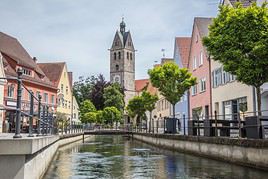
Memmingen
Between the Bavarian Alps and Lake Constance, the town has retained its medieval appearance.
Between the Bavarian Alps and Lake Constance, the town has retained its medieval appearance.
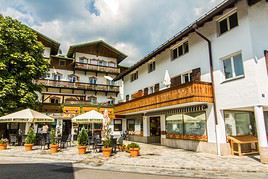
Mittenwald
A large town in Upper Bavaria with beautiful houses featuring painted facades and a well-known violin-making industry. Plenty of outdoor activities in the nearby Alpine ranges, including the Karwendel massif, where you can hike, ski, climb, or go mountaineering.
A large town in Upper Bavaria with beautiful houses featuring painted facades and a well-known violin-making industry. Plenty of outdoor activities in the nearby Alpine ranges, including the Karwendel massif, where you can hike, ski, climb, or go mountaineering.
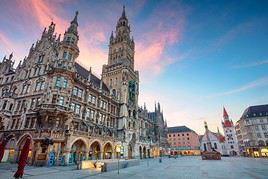
Munich
Bavaria’s capital, world-famous for its Oktoberfest, also offers a historic old centre, many beautiful buildings of all kinds, several palaces and castles, museums and parks, as well as a lively festive and cultural scene.
Bavaria’s capital, world-famous for its Oktoberfest, also offers a historic old centre, many beautiful buildings of all kinds, several palaces and castles, museums and parks, as well as a lively festive and cultural scene.
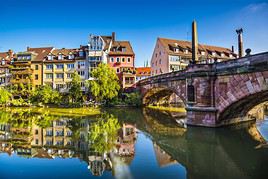
Nuremberg
A city with a heavy past, Nuremberg is home to museums and an old town rebuilt after the war.
A city with a heavy past, Nuremberg is home to museums and an old town rebuilt after the war.
Oberstdorf
A renowned resort for ski jumping and Nordic skiing, from which you can enjoy beautiful hikes and take one of Europe's highest cable cars.
A renowned resort for ski jumping and Nordic skiing, from which you can enjoy beautiful hikes and take one of Europe's highest cable cars.
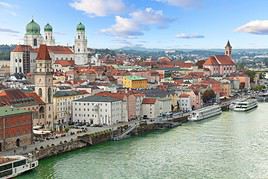
Passau
The city is a stop for Danube river cruises and, in a different style, the EuroVelo 6 cycling route. You can visit an old town centre with a citadel and a beautiful Baroque cathedral.
The city is a stop for Danube river cruises and, in a different style, the EuroVelo 6 cycling route. You can visit an old town centre with a citadel and a beautiful Baroque cathedral.
Regensburg
The city (called Regensburg in German) was built along the Danube. It is a UNESCO World Heritage site for its beautiful medieval centre.
The city (called Regensburg in German) was built along the Danube. It is a UNESCO World Heritage site for its beautiful medieval centre.
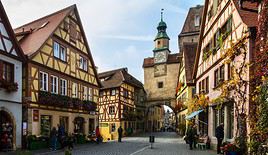
Rothenburg ob der Tauber
A stunning small town on the Romantic Road that has preserved its medieval appearance and architecture. Naturally, it is very popular with visitors.
A stunning small town on the Romantic Road that has preserved its medieval appearance and architecture. Naturally, it is very popular with visitors.
Castle Road in Southern Germany
This tourist route, starting in Mannheim, lets you discover over fifty castles in Baden-Württemberg, Bavaria, and even the Czech Republic, as it ends in Prague.
This tourist route, starting in Mannheim, lets you discover over fifty castles in Baden-Württemberg, Bavaria, and even the Czech Republic, as it ends in Prague.
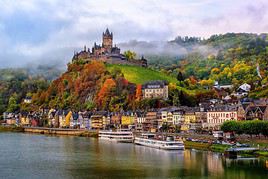
Romantic Road
This is the name of the approximately 350 km tourist route connecting Würzburg to Füssen (Austrian border). Along the way, you’ll discover many medieval towns and villages, magnificent castles—most famously Neuschwanstein—and charming landscapes.
This is the name of the approximately 350 km tourist route connecting Würzburg to Füssen (Austrian border). Along the way, you’ll discover many medieval towns and villages, magnificent castles—most famously Neuschwanstein—and charming landscapes.
Steingaden
This large village near Austria is home to several churches, including the Wies Church, a UNESCO World Heritage site renowned for its Rococo style.
This large village near Austria is home to several churches, including the Wies Church, a UNESCO World Heritage site renowned for its Rococo style.
Tegernsee
A rather upscale resort town in the Bavarian Alps, next to the lake of the same name. A Benedictine abbey and outdoor activities in the surrounding area.
A rather upscale resort town in the Bavarian Alps, next to the lake of the same name. A Benedictine abbey and outdoor activities in the surrounding area.
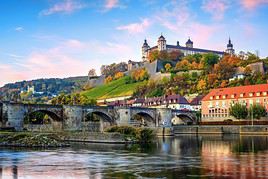
Würzburg
The city that marks the start of the "Romantic Road" is home to, among other things, a beautiful cathedral, the Marienberg Fortress dating from the 13th century, and above all the magnificent Würzburg Residence, a UNESCO World Heritage site.
The city that marks the start of the "Romantic Road" is home to, among other things, a beautiful cathedral, the Marienberg Fortress dating from the 13th century, and above all the magnificent Würzburg Residence, a UNESCO World Heritage site.
Natural Heritage
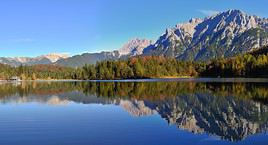
Bavarian Alps
Along the Austrian border, this part of the Alps is one of the most beautiful areas in Germany with its peaks between 2,000 and 3,000 m, its lakes, forests, and pastures. Activities include hiking, mountain biking, and skiing.
Along the Austrian border, this part of the Alps is one of the most beautiful areas in Germany with its peaks between 2,000 and 3,000 m, its lakes, forests, and pastures. Activities include hiking, mountain biking, and skiing.
Bavarian Forest
This is a forested mid-mountain region on the Czech border, part of which is a national park. It’s a prime destination for "nature tourism," offering great hiking, cycling, and skiing. The local wildlife is also rich, with wolves, bears, lynxes, and many bird species.
This is a forested mid-mountain region on the Czech border, part of which is a national park. It’s a prime destination for "nature tourism," offering great hiking, cycling, and skiing. The local wildlife is also rich, with wolves, bears, lynxes, and many bird species.
Lake Ammer
A large lake southwest of Munich that locals use for water sports. Andechs Abbey, a pilgrimage site, is on its shores, along with the village of Diessen, known for its artists and its museum dedicated to Carl Orff.
A large lake southwest of Munich that locals use for water sports. Andechs Abbey, a pilgrimage site, is on its shores, along with the village of Diessen, known for its artists and its museum dedicated to Carl Orff.
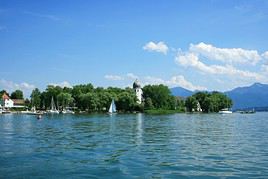
Lake Chiem
Bavaria's largest lake is famous for Herrenchiemsee Island, where Ludwig II of Bavaria built a replica of Versailles that visitors can tour. Boat trips are also available.
Bavaria's largest lake is famous for Herrenchiemsee Island, where Ludwig II of Bavaria built a replica of Versailles that visitors can tour. Boat trips are also available.
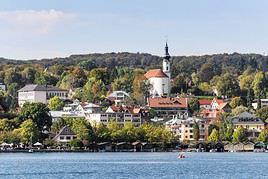
Lake Starnberg
Right next to Lake Ammer, this other large lake carries the memories of Ludwig II of Bavaria and Empress Sissi through several castles (Berg, Possenhofen...), a chapel, and a museum. It’s also a favorite spot for water sports, cycling, and hiking.
Right next to Lake Ammer, this other large lake carries the memories of Ludwig II of Bavaria and Empress Sissi through several castles (Berg, Possenhofen...), a chapel, and a museum. It’s also a favorite spot for water sports, cycling, and hiking.
Franconian Lakes
A collection of small lakes southwest of Nuremberg, popular for their beaches and water activities. You can also hike, cycle, or explore the architectural and cultural charms of this small region known as Franconia.
A collection of small lakes southwest of Nuremberg, popular for their beaches and water activities. You can also hike, cycle, or explore the architectural and cultural charms of this small region known as Franconia.
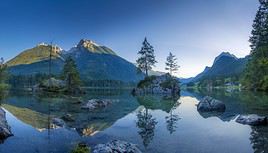
Berchtesgaden National Park
This alpine park on the Austrian border offers stunning landscapes of valleys, lakes (including Königssee with its chapel), and high peaks. You can hike over 200 km of marked trails here.
This alpine park on the Austrian border offers stunning landscapes of valleys, lakes (including Königssee with its chapel), and high peaks. You can hike over 200 km of marked trails here.
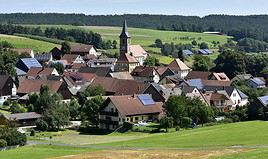
Franconian Switzerland
This region of forests, caves, and hills between Nuremberg and Bayreuth has long been a tourist destination. Visitors come for the beautiful landscapes and outdoor activities (hiking, climbing, canoeing...), as well as to explore dozens of small medieval castles, some in better condition than others.
This region of forests, caves, and hills between Nuremberg and Bayreuth has long been a tourist destination. Visitors come for the beautiful landscapes and outdoor activities (hiking, climbing, canoeing...), as well as to explore dozens of small medieval castles, some in better condition than others.
Must-see & highly recommended
Bavarian Alps
★★★★ Along the Austrian border, this part of the Alps is one of the most beautiful areas in Germany with its peaks between 2,000 and 3,000 m…
Berlin
★★★★ Once divided for 28 years, this city is now the capital of reunified Germany. Beyond the last remnants of that era (including its "famous"…
Hohenschwangau Castle
★★★★ In the eponymous municipality, this castle, (re)built by Maximilian II of Bavaria in the early 19th century, is located next to…
Hohenzollern Castle
★★★★ This is a magnificent castle perched about fifty kilometres south of Stuttgart. It is one of Germany’s most visited castles.
Neuschwanstein Castle
★★★★ This magnificent castle, which Ludwig II of Bavaria had built in the late 19th century, is now the most famous in Germany and one of the…
Black Forest
★★★★ A forested mid-mountain range with valleys in southwestern Germany, parallel to the French border. It is home to several spa towns…
Berchtesgaden National Park
★★★★ This alpine park on the Austrian border offers stunning landscapes of valleys, lakes (including Königssee with its chapel), and high peaks…
Potsdam
★★★★ Right next to Berlin, the city is somewhat the "tourist extension" of the capital, with its many parks and palaces in the Babelsberg…
Castle Road in Southern Germany
★★★★ This tourist route, starting in Mannheim, lets you discover over fifty castles in Baden-Württemberg, Bavaria, and even the Czech Republic…
Romantic Road
★★★★ This is the name of the approximately 350 km tourist route connecting Würzburg to Füssen (Austrian border). Along the way, you’ll…
Middle Upper Rhine Valley
★★★★ Also known as the "Romantic Rhine," these 70 km from Koblenz to Bingen are a UNESCO World Heritage site. The area features stunning…
Recommended
Bamberg
★★★ A stunning medieval and Baroque city at the gateway to Franconian Switzerland. The entire city is a UNESCO World Heritage site.
Bremen
★★★ This Hanseatic city is one of Germany's most important. It boasts a stunning old town, with some elements—such as the town hall and…
Eltz Castle
★★★ A stunning medieval castle perched on wooded hills above the Moselle near Koblenz.
Linderhof Palace
★★★ This is one of the palaces built in the late 19th century by Ludwig II of Bavaria in the Romantic style. Unlike other, more famous ones…
Palaces and Parks of Berlin
★★★ Spread across Berlin and especially Potsdam, these include 500 hectares of parks and 150 structures (including several palaces) built…
Palaces and Parks of Potsdam
★★★ Spread across Berlin and especially Potsdam, these are a total of 500 hectares of parks and 150 structures (including several palaces)…
Baltic Sea Coast
★★★ This is essentially the coastline running from Rostock to the Polish border. The area is quite tourist-friendly, with seaside resorts, long…
Bavarian Forest
★★★ This is a forested mid-mountain region on the Czech border, part of which is a national park. It’s a prime destination for "nature…
Heidelberg
★★★ A beautiful university (and romantic) city with its 15th-century castle and old town centre.
Lake Chiem
★★★ Bavaria's largest lake is famous for Herrenchiemsee Island, where Ludwig II of Bavaria built a replica of Versailles that visitors can…
Lübeck
★★★ The former Hanseatic city is a UNESCO World Heritage site for its medieval city center. It is also one of the most important ports on the…
Wadden Sea
★★★ From the Netherlands to Denmark via Germany, this coastal area is a UNESCO World Heritage site. A tourist destination, it is home to…
Munich
★★★ Bavaria’s capital, world-famous for its Oktoberfest, also offers a historic old centre, many beautiful buildings of all kinds…
Wadden Sea National Parks
★★★ This is a group of three parks across two *Länder*, along the North Sea coast. The entire area is a UNESCO World Heritage site, with the…
Quedlinburg
★★★ In the Harz Mountains, one of its gateways, this small, highly touristic medieval town—one of Europe’s best-preserved—is…
Rothenburg ob der Tauber
★★★ A stunning small town on the Romantic Road that has preserved its medieval appearance and architecture. Naturally, it is very popular with…
Franconian Switzerland
★★★ This region of forests, caves, and hills between Nuremberg and Bayreuth has long been a tourist destination. Visitors come for the…
Saxon Switzerland
★★★ Between Dresden and the Czech border, along the Elbe, this beautiful national park, ideal for hiking, features spectacular rock formations…
Moselle Valley (Germany)
★★★ The Moselle and its valley are tourist destinations in Germany (and Luxembourg), though far less so than the Rhine Valley. You can take…
Worth a look / Other
Eberbach Abbey
★★ A Cistercian monastery, partly converted into a cultural foundation and museum, which you can visit. It is known for its vineyards... and…
Weltenburg Abbey
★★ A beautiful abbey set in a natural landscape on the banks of the Danube. It is the oldest in Germany.
Aachen
★★ The city of Aachen is located at the intersection of the borders of Germany, the Netherlands, and Belgium. The city blends modern and…
Baden-Baden
★★ A rather upscale spa and resort town on the edge of the Black Forest, not far from France and Strasbourg.
Bautzen
★★ The old Saxon city has well preserved its medieval architecture, particularly in its center.
Bonn
★★ Once the capital of West Germany (FRG) from 1949 to 1990, Bonn is a pleasant university and cultural city with its museums. It is also the…
Buchenwald
★★ Just a few kilometres from Weimar, what was one of the worst camps of the Second World War is now a museum and memorial.
Aachen Cathedral
★★ The oldest cathedral in Northern Europe, begun in Charlemagne’s time in the 8th century, earning it UNESCO status.
Cologne Cathedral
★★ Construction began in the 13th century, making it one of the largest Gothic cathedrals in the world. It is a UNESCO World Heritage site.
Burghausen Castle
★★ A towering castle perched in the town of the same name on the border with Austria.
Glücksburg Castle
★★ A 16th-century castle-museum built by a lake in the town of Glücksburg.
Moritzburg Castle
★★ A Baroque-style castle and one of the most important in Saxony. It is located not far from Dresden.
Pillnitz Castle
★★ A Renaissance-style castle and its park built along the Elbe, a few kilometres from Dresden.
Rheinsberg Castle
★★ This is a rococo-style castle museum in the town of the same name. Construction began in the mid-15th century.
Wartburg Castle
★★ The structure, begun in the 11th century, overlooks the town of Eisenach. It is one of Germany’s main castles and a UNESCO World…
Augustusburg and Falkenlust Palaces
★★ Set in a vast park and garden spanning several hectares in Brühl, not far from Cologne, these two charming 18th-century palaces are UNESCO…
Koblenz
★★ This is the city where the Rhine and Moselle rivers meet and the start of the "Romantic Rhine", the most beautiful and popular section of…
Coburg
★★ A town in northern Bavaria dominated by its imposing castle, with many houses from the 16th–18th centuries.
Cochem
★★ A small town near Koblenz with traditional architecture, featuring old half-timbered houses dominated by a hilltop castle. It is also a…
Cologne
★★ Germany’s fourth-largest city is famous for its carnival. You can also explore its small old town, a dozen beautiful Romanesque…
Constance
★★ On the shores of Lake Constance, the city has an old town centre but is primarily a base for enjoying the lake (boating, boat trips…
Dachau
★★ This was one of the worst Nazi concentration camps. The site has since become a memorial.
Dinkelsbühl
★★ The town has preserved its medieval character with its ramparts, towers, market halls, churches, and old houses. It is a stop on the…
Dresden
★★ Almost entirely destroyed in 1945, the capital of Saxony nevertheless boasts a very pretty historic Baroque centre that was once a UNESCO…
Eisenach
★★ The city is home to Wartburg Castle, one of Germany’s most important castles and a UNESCO World Heritage site. The structure, begun…
Erfurt
★★ The former medieval trading city has preserved part of its medieval heritage with the narrow streets and half-timbered houses of its centre.
Europa Park
★★ Located in Rust, between Freiburg and Strasbourg, it is the largest theme park in Europe by area and the second most visited after Disney.
Thuringian Forest
★★ This vast expanse of forests and hills is a premier hiking destination in central Germany, particularly with its 170 km-long Rennsteig…
Königstein Fortress
★★ This imposing medieval castle along the Elbe, later transformed into a military fortress, is one of the main tourist attractions in Saxony.
Füssen
★★ At the foot of the Alps, the town marks the end of the Romantic Road. It is home to a stunning Gothic castle and the Benedictine monastery…
Goslar
★★ At the gates of Harz National Park, this historic town has so well preserved its medieval heritage that it is a UNESCO World Heritage Site…
Görlitz
★★ This is a beautifully preserved historic city on the Polish border, with architecture blending Gothic, Baroque, and Renaissance styles…
Hamburg
★★ One of Europe's leading ports and Germany's second-largest city. However, Hamburg isn't one of the most touristy destinations, even though…
Hanover
★★ This large city boasts an old town centre (partially rebuilt after the war) and the Royal Gardens of Herrenhausen, among Europe’s…
Heligoland
★★ Along with its neighbor Düne, these are the main German islands in the North Sea. Heligoland is a popular destination for its landscapes…
Hessenpark
★★ This is an open-air museum featuring around a hundred traditional houses and buildings from the Hesse region. It is located about thirty…
Hildesheim
★★ Although the medieval centre of this Lower Saxony city was destroyed during the war, its reconstruction and charm have earned it UNESCO…
Lake Constance
★★ Straddling Switzerland, Germany and Austria, it is one of Europe’s largest lakes. Visitors come for boating, ferry rides, or cycling…
Lake Starnberg
★★ Right next to Lake Ammer, this other large lake carries the memories of Ludwig II of Bavaria and Empress Sissi through several castles…
Franconian Lakes
★★ A collection of small lakes southwest of Nuremberg, popular for their beaches and water activities. You can also hike, cycle, or explore…
Leipzig
★★ Saxony’s largest city is a lively, commercial hub with numerous museums, religious and historic buildings. To the south, several…
Lindau
★★ A charming town on the shores of Lake Constance, whose old quarter was built on an island. Ferries and cruises offer a way to explore the…
Ludwigsburg
★★ A beautiful Baroque-style city near Stuttgart with a stunning and grand 18th-century palace.
Marburg
★★ A charming town with its castle and historic center featuring narrow alleys and half-timbered houses dating from the 17th–18th…
Meissen
★★ This town, nestled in the Elbe vineyards, boasts a stunning castle-cathedral complex overlooking the river and the historic quarter. It is…
Memmingen
★★ Between the Bavarian Alps and Lake Constance, the town has retained its medieval appearance.
Mittenwald
★★ A large town in Upper Bavaria with beautiful houses featuring painted facades and a well-known violin-making industry. Plenty of outdoor…
Maulbronn Monastery
★★ Located in the town of the same name, this UNESCO-listed building blends Romanesque and Gothic styles.
Monschau
★★ At the gates of the Eifel National Park and Belgium, this large town (also called Montjoie) boasts an old centre with timber-framed houses…
Ore Mountains
★★ This mid-mountain range between Saxony and the Czech Republic is a landscape of lakes, forests, hills, small villages, former mines, and…
Museum Island Berlin
★★ Or in English, Museum Island. It comprises five museums on a site established in the early 19th century, housing one of the world's richest…
Neubrandenburg
★★ A city with well-preserved medieval fortifications, a 13th-century church, and a few historic houses.
Nuremberg
★★ A city with a heavy past, Nuremberg is home to museums and an old town rebuilt after the war.
Nördlingen
★★ A well-preserved medieval town with its ramparts, on the Romantic Road.
Bayreuth Opera House
★★ Officially known as the Margravial Opera House, this late 18th-century building is considered a masterpiece of Baroque theatrical…
Osterwieck
★★ It's a large "historic" town by the river, with an old centre.
Würzburg Residence
★★ A very beautiful and massive Baroque-style construction in the city centre of Würzburg. The 18th-century building is a UNESCO World…
Muskau Park
★★ This is a landscape park straddling Germany (Bad Muskau municipality) and Poland (Łęknica). With its castle, it is a UNESCO World…
Eifel National Park
★★ This is an area of hills, lakes, and forests on the Belgian border where you can enjoy great hiking and cross-country skiing.
Müritz National Park
★★ A vast park of forests and lakes (around a hundred) where you can go for walks.
Harz National Park
★★ Spanning two federal states, this is a mid-mountain forest park. You can hike, mountain bike, ski (in Schierke), or take rides on a small…
Western Pomerania Lagoon National Park
★★ Located by the sea, in the northeast of Rostock, this is one of Germany’s largest national parks. It is renowned for its ornithology.
Wilhelmshöhe Park
★★ A vast public park, UNESCO-listed, culminating in the palace of the same name in the city of Kassel.
Passau
★★ The city is a stop for Danube river cruises and, in a different style, the EuroVelo 6 cycling route. You can visit an old town centre with…
Palatinate Forest
★★ This mountain range stretching from the French border to the outskirts of Kaiserslautern is covered in forests and locally in vineyards. It…
Bremen Market Square
★★ In the heart of the Hanseatic city, the town hall and the statue of Roland on the market square are UNESCO-listed.
Regensburg
★★ The city (called Regensburg in German) was built along the Danube. It is a UNESCO World Heritage site for its beautiful medieval centre.
Ruhr
★★ This region north of Cologne was long the heart of Germany’s mining industry. Industrial tourism is now offered here, with visits to…
Rüdesheim
★★ A charming medieval town on the banks of the Rhine, surrounded by vineyards.
Rügen
★★ A large Baltic Sea island connected to the mainland. Highly tourist-friendly, it’s beloved for its seaside villages (Binz, Sellin…
Schwerin
★★ The least populous of all German state capitals boasts a cathedral and, above all, a stunning castle with its park built on an island.
Siebengebirge
★★ This range of small hills south of Bonn is popular for hiking and, secondarily, its landscapes.
Soest
★★ A small town near Dortmund with a "traditional" centre and several beautiful medieval churches.
Spreewald
★★ Located southeast of Berlin, this is a vast wetland area with numerous marshes and canals running through farms, woods, and meadows…
Stralsund
★★ This small Hanseatic town has preserved its beautiful medieval charm, earning it UNESCO World Heritage status (jointly with Wismar).
Holstein Switzerland
★★ This region of hills, forests, and lakes between Kiel and Lübeck is quite tourist-friendly. Visitors come to enjoy the countryside setting…
Sylt
★★ This is an island in the Frisian archipelago near the Danish border. It has long been a popular (and rather upscale) tourist destination…
Trier
★★ The city was an important Roman colony, as evidenced by several surviving structures (gate, amphitheatre, baths, etc.). These, along with…
Tübingen
★★ A lively university town near Stuttgart. It has a pleasant town centre and riverside, with hiking opportunities in the nearby forests.
Ulm
★★ A city with a historic centre on the banks of the Danube and a cathedral with the tallest spire in the world (161 m).
Usedom (Germany)
★★ This half-German and half-Polish island offers several seaside resorts (Zinnowitz, Heringsdorf...), beautiful landscapes, and many beaches…
Weimar
★★ This was the city of writers, musicians, and above all, architects when it stood at the heart of the Bauhaus movement. The entire city and…
Wernigerode
★★ In the Harz Mountains, the town features several charming historic buildings and a medieval castle. It’s also the starting point for…
Wismar
★★ Like Stralsund, this Hanseatic city is a UNESCO World Heritage site for its historic heritage.
Würzburg
★★ The city that marks the start of the "Romantic Road" is home to, among other things, a beautiful cathedral, the Marienberg Fortress dating…
Andechs Abbey
★ Not far from Munich, this beautiful Benedictine abbey is as famous for its Baroque-Rococo style as for its brewery, which offers tours.
Corvey Abbey
★ This is a Benedictine monastery in North Rhine-Westphalia, dating from the 9th century and listed as a UNESCO World Heritage site.
Lorsch Abbey
★ This 8th-century abbey, or more precisely its porch, which is the only remaining vestige, is a UNESCO World Heritage Site for its…
Reichenau Abbey
★ This 8th-century Benedictine abbey is a UNESCO World Heritage site. It is located on the small island of Reichenau in the south of Lake…
Augsburg
★ This city near Munich boasts a charming cathedral, several interesting buildings, and an old quarter (Fuggerei).
Bad Reichenhall
★ A spa town near Salzburg with an old town center and saltworks you can visit. Plenty of outdoor activities in the area (hiking, skiing…
Bayreuth
★ This is the city of Wagner and the famous festival dedicated to him every year. The Margravial Opera House of Bayreuth is a UNESCO World…
Bodenmais
★ A tourist ski resort near the Czech border, also known for its crystals and mine museum.
Bremerhaven
★ It is the port of Bremen about fifty kilometres away. The Naval Museum and the Emigration Museum are its two main attractions. There are a…
Brunswick
★ This large city, largely destroyed during the war, now has only a few remnants of its medieval past.
Speyer Cathedral
★ It is the largest Romanesque cathedral in the world. Built in the 11th century in Speyer, it is a UNESCO World Heritage site.
Eutin Castle
★ One of the well-known castles in Schleswig-Holstein. It is located in the municipality of the same name in Holstein Switzerland.
Hohnstein Castle
★ This is a medieval castle in the municipality of the same name, in Saxon Switzerland.
Plassenburg Castle
★ One of Germany’s most impressive castles due to its size, overlooking the town of Kulmbach.
Berlin Modernism Housing Estates
★ A collection of six social housing estates built between 1913 and 1934 in Berlin's outer districts. The entire complex is a UNESCO World…
Cuxhaven
★ A popular seaside resort on the Elbe estuary, attracting many visitors from Hamburg and Bremen, which are not far away.
Darmstadt
★ South of Frankfurt, the city, which suffered considerably during the war, still boasts many Art Nouveau buildings and several museums.
Dessau
★ Or rather Dessau-Rosslau after merging with its neighbour. Little-known abroad, the city is nevertheless twice listed by UNESCO for its…
Dortmund
★ It’s a major city in the Ruhr region and a river port with just a few traces of its medieval past in the centre.
Duisburg
★ A major industrial city in the Ruhr and the world's "largest inland port".
Düsseldorf
★ At the heart of the Rhine-Ruhr conurbation, the state capital is primarily a city valued for its lively atmosphere, its carnival, its…
Essen
★ Once at the heart of mining and steelmaking activity, Essen still boasts several reminders of that era, including the villa of the Krupp…
Flensburg
★ The last German city before Denmark offers a charming old town center and numerous shops highly appreciated by Danes for their prices.
Frankfurt
★ Germany’s commercial and financial hub is far better known to travelers as the base for Lufthansa than for its tourist attractions…
Frankfurt (Oder)
★ A city on the Polish border, on the route from Berlin to Warsaw, not necessarily one of the most touristy.
Freiburg im Breisgau
★ Located at the foot of the Black Forest mountains, Freiburg has an old town rebuilt around its iconic cathedral.
Fulda
★ This city with a religious past has many churches, abbeys, small palaces, and various buildings to visit. It also boasts numerous parks.
Fürth
★ On the outskirts of Nuremberg, and unlike it, Fürth has preserved a number of its original historic buildings, many dating from the 17th to…
Garmisch-Partenkirchen
★ This is the best-known winter sports resort in Germany.
Gelnhausen
★ A small town near Frankfurt with an old town center.
Gelsenkirchen
★ This city in the Ruhr region has recycled much of its industrial heritage into parks and gardens.
Greifswald
★ This fairly large coastal city draws visitors more for its position on the Baltic shoreline than for any specific attractions, though it…
Göttingen
★ This university city is better known for the song by Barbara than for its tourist attractions.
Herborn
★ A town north of Frankfurt known for its old half-timbered houses.
Ingolstadt
★ A city on the Danube with many old Gothic and Baroque buildings. Ingolstadt is also linked to the Frankenstein character, with its story…
Karlsruhe
★ A large city near France, best known for its imposing early 18th-century palace, which remains its main attraction.
Kassel
★ A major university city north of Frankfurt. Its main (and almost only) tourist attraction is Wilhelmshöhe Palace with its UNESCO-listed…
Kiel
★ The capital of the state is a major Baltic port (including ferries and cruises). However, the city isn’t particularly touristy.
Lake Ammer
★ A large lake southwest of Munich that locals use for water sports. Andechs Abbey, a pilgrimage site, is on its shores, along with the…
Lüneburg Heath
★ A vast region of forests, heathlands, and small villages where you can hike and locally go canoeing. Several theme parks (birds, safari…
Landshut
★ A city with an old town and many Gothic-style buildings.
Lüneburg
★ A charming town with an old centre and half-timbered houses not far from Hamburg.
Magdeburg
★ A major city and the capital of Saxony-Anhalt, southwest of Berlin, it isn’t particularly touristy, offering just a rather beautiful…
Mannheim
★ It's an industrial city south of Frankfurt. It's not one of the most tourist-friendly destinations.
Mainz
★ This regional capital is best known as the city of Gutenberg, to whom a museum is dedicated. Its carnival is also famous, as is its wine…
Zollverein Coal Mine
★ This 20th-century industrial complex is a UNESCO World Heritage site for the architectural value of its buildings.
Rammelsberg Mines
★ Former mines converted into a museum near the historic town of Goslar. Both are part of the UNESCO World Heritage Site.
Mühlberg
★ A large town in southern Brandenburg with a few old buildings, an abbey, and a castle by a lake. Short hikes can be taken around the…
Mühlhausen
★ This town in central Germany has partly retained its medieval charm, particularly with its city walls.
Münster
★ A major university city with many churches.
Neustrelitz
★ A small Baroque-style town located by a lake.
Oberammergau
★ A small town known for its charming painted façades from the 18th century.
Oberstdorf
★ A renowned resort for ski jumping and Nordic skiing, from which you can enjoy beautiful hikes and take one of Europe's highest cable cars.
Oldenburg
★ A university city with an old town centre and a princely castle.
Lower Oder Valley National Park
★ This is a German-Polish natural polder area near Szczecin, home to numerous nesting bird species.
Plön
★ The small town is nestled in the heart of Holstein Switzerland, on the edge of forests and lakes. It is home to a 17th-century castle, one…
Speicherstadt and Kontorhaus District Neighborhoods
★ These are two urban port areas featuring warehouses, offices, and various buildings dating from the first half of the 20th century.
Rostock
★ This major Baltic port (including ferries) has some historic buildings and a very long beach on its outskirts at the seaside resort of…
Saalfeld
★ The ancestral home of part of the British royal family, Saalfeld features a small historic centre surrounded by caves, lakes, and forests…
Sachsenhausen
★ A former concentration camp turned memorial on the outskirts of Oranienburg. The town also boasts one of Germany’s oldest Baroque…
Sankt Peter-Ording
★ Located on the North Sea, this spa town is also Germany’s largest seaside resort.
Saarbrücken
★ The capital of Saarland is primarily an industrial city, much like the rest of the state. The Völklingen Ironworks (now a museum) on its…
Saarlouis
★ The town near the French border still has a small old centre and remnants of fortifications and casemates dating from the time of Vauban or…
Messel Fossil Site
★ This former quarry in the town of the same name is home to countless fossils, earning it UNESCO World Heritage status.
Prehistoric Pile Dwellings
★ These remains (around a thousand) are spread across six Alpine countries, with a hundred designated as UNESCO sites. Germany has 18, mostly…
Speyer
★ In addition to a charming old town, Speyer is home to the world's largest Romanesque cathedral, a UNESCO World Heritage site.
Steingaden
★ This large village near Austria is home to several churches, including the Wies Church, a UNESCO World Heritage site renowned for its…
Stuttgart
★ It's the state capital. It isn't particularly touristy, despite an old centre (rebuilt after the war) and a few parks and museums.
Tegernsee
★ A rather upscale resort town in the Bavarian Alps, next to the lake of the same name. A Benedictine abbey and outdoor activities in the…
Fagus Factory
★ Located in the industrial town of Alfeld, this factory, built between 1911 and 1913, is a UNESCO World Heritage site for its modernist…
Völklingen Ironworks
★ On the outskirts of Saarbrücken, in Völklingen, this former ironworks turned museum is a UNESCO World Heritage site.
Elbe Valley
★ The most picturesque stretches of the river are around Dresden, with its vineyards and castles such as Pillnitz. Many paddle steamer…
Weinheim
★ It is nicknamed the "city of two fortresses" and also has a small old town centre.
Wiesbaden
★ The capital of Hesse is also traditionally a spa town, though it doesn’t have many tourist attractions.
Wittenberg
★ This is Luther’s city, home to several UNESCO-listed memorial buildings from his era. A few kilometres away, the town of Eisleben…
Worms
★ While the city has several museums and beautiful churches in its historic center, it is best known for its vineyards and wine festival.