
UNESCO World Heritage Sites
Hungary has 8 sites inscribed on the UNESCO World Heritage list:

Benedictine Abbey of Pannonhalma (1996)
This beautiful edifice, founded in the 10th century near Győr, is a UNESCO World Heritage site.
This beautiful edifice, founded in the 10th century near Győr, is a UNESCO World Heritage site.
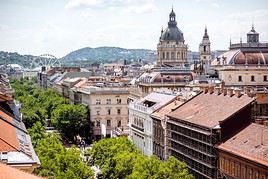
Historic Centre of Budapest (1987)
In the urban centre of the Hungarian capital, the banks of the Danube, Buda Castle District, and Andrássy Avenue are UNESCO-listed for their architectural significance.
In the urban centre of the Hungarian capital, the banks of the Danube, Buda Castle District, and Andrássy Avenue are UNESCO-listed for their architectural significance.

Aggtelek Caves (1995)
In the village of the same name, on the Hungary-Slovakia border. This vast network of karst caves within a national park is a UNESCO World Heritage Site.
In the village of the same name, on the Hungary-Slovakia border. This vast network of karst caves within a national park is a UNESCO World Heritage Site.

Hollókő (1987)
This village, about a hundred kilometres north of Budapest, is a true open-air museum. Its 16th- and 17th-century houses and other buildings are listed as a UNESCO World Heritage site.
This village, about a hundred kilometres north of Budapest, is a true open-air museum. Its 16th- and 17th-century houses and other buildings are listed as a UNESCO World Heritage site.

Lake Neusiedl (2001)
This large lake, shared by Hungary but primarily Austrian, is home to numerous bird species and is a UNESCO World Heritage site. It is also popular for water activities, including ice sailing in winter, and hiking. It is part of the Austro-Hungarian Fertő-Hanság National Park.
This large lake, shared by Hungary but primarily Austrian, is home to numerous bird species and is a UNESCO World Heritage site. It is also popular for water activities, including ice sailing in winter, and hiking. It is part of the Austro-Hungarian Fertő-Hanság National Park.
Early Christian Necropolis of Pécs (2000)
This is one of the most significant late Roman necropolises outside Italy. The site is a UNESCO World Heritage Site for this reason.
This is one of the most significant late Roman necropolises outside Italy. The site is a UNESCO World Heritage Site for this reason.
Hortobágy National Park (1999)
East of Hungary, in the Great Plain (the "Puszta"), this is the country’s oldest and largest national park. It’s a steppe and livestock-raising area that’s also home to many bird species. It’s a UNESCO World Heritage site.
East of Hungary, in the Great Plain (the "Puszta"), this is the country’s oldest and largest national park. It’s a steppe and livestock-raising area that’s also home to many bird species. It’s a UNESCO World Heritage site.
Tokaj Wine Region (2002)
This small town in the northeast is internationally known for its wine, Tokaji. The entire surrounding wine region, with its cellars and estates to visit, is a UNESCO World Heritage site.
This small town in the northeast is internationally known for its wine, Tokaji. The entire surrounding wine region, with its cellars and estates to visit, is a UNESCO World Heritage site.
Cities and Cultural Heritage
Benedictine Abbey of Pannonhalma (1996)
This beautiful edifice, founded in the 10th century near Győr, is a UNESCO World Heritage site.
This beautiful edifice, founded in the 10th century near Győr, is a UNESCO World Heritage site.
Balatonfüred
One of the main lakeside resorts on Lake Balaton, in the wine-growing region, with a strong nautical tradition.
One of the main lakeside resorts on Lake Balaton, in the wine-growing region, with a strong nautical tradition.

Budapest
Hungary’s beautiful capital, rich in architecture, monuments, museums, and activities, is a UNESCO World Heritage Site for its Danube banks, Buda Castle district, and Andrássy Avenue. In season, boats connect the city to Bratislava and Vienna via the Danube.
Hungary’s beautiful capital, rich in architecture, monuments, museums, and activities, is a UNESCO World Heritage Site for its Danube banks, Buda Castle district, and Andrássy Avenue. In season, boats connect the city to Bratislava and Vienna via the Danube.
Gyula Castle
This is a 13th-century fortress in the town of the same name, near the Romanian border.
This is a 13th-century fortress in the town of the same name, near the Romanian border.
Sárospatak Castle
In the town of the same name. This is the castle depicted on the back of the 500 Forint banknote.
In the town of the same name. This is the castle depicted on the back of the 500 Forint banknote.

Visegrád Castle
A beautiful complex of two medieval fortresses and a small royal palace in the town of Visegrád, on the banks of the Danube.
A beautiful complex of two medieval fortresses and a small royal palace in the town of Visegrád, on the banks of the Danube.
Debrecen
It's the second-largest city in Hungary. It's not very touristy, mainly offering a few museums.
It's the second-largest city in Hungary. It's not very touristy, mainly offering a few museums.
Dunaújváros
A city on the Danube, at the heart of the country, with architecture and urban planning typical of the Soviet era.
A city on the Danube, at the heart of the country, with architecture and urban planning typical of the Soviet era.

Esztergom
This border town in Slovakia, with its beautiful architecture, is home to the largest basilica in Central Europe.
This border town in Slovakia, with its beautiful architecture, is home to the largest basilica in Central Europe.

Győr
A lively city with a Baroque-style old centre. On its outskirts, you can also visit the UNESCO-listed Benedictine Abbey of Pannonhalma.
A lively city with a Baroque-style old centre. On its outskirts, you can also visit the UNESCO-listed Benedictine Abbey of Pannonhalma.

Hévíz
This small spa town was built on the shores of a thermal lake (the largest and hottest in the world) with therapeutic properties.
This small spa town was built on the shores of a thermal lake (the largest and hottest in the world) with therapeutic properties.
Hollókő
This village, about a hundred kilometres north of Budapest, is a true open-air museum. Its 16th- and 17th-century houses and other buildings are listed as a UNESCO World Heritage site.
This village, about a hundred kilometres north of Budapest, is a true open-air museum. Its 16th- and 17th-century houses and other buildings are listed as a UNESCO World Heritage site.
Miskolc
Despite a few monuments and the cave thermal baths of Miskolctapolca, this large urban area mainly serves as a base for exploring the nearby mountains (the Bükk Massif), which are ideal for hiking.
Despite a few monuments and the cave thermal baths of Miskolctapolca, this large urban area mainly serves as a base for exploring the nearby mountains (the Bükk Massif), which are ideal for hiking.

Esterházy Palace
This beautiful palace, with gardens modeled after those of Versailles, is located in the small town of Fertőd, just a stone's throw from the Austrian border.
This beautiful palace, with gardens modeled after those of Versailles, is located in the small town of Fertőd, just a stone's throw from the Austrian border.


Keszthely Palace
In the eponymous lakeside resort on the shores of Lake Balaton, this is a charming 18th-century Baroque palace also known as Festetics Palace.
In the eponymous lakeside resort on the shores of Lake Balaton, this is a charming 18th-century Baroque palace also known as Festetics Palace.

Pécs
A pleasant university city highly appreciated by visitors for its historic centre, the Vasarely Museum, and its UNESCO-listed Early Christian Necropolis.
A pleasant university city highly appreciated by visitors for its historic centre, the Vasarely Museum, and its UNESCO-listed Early Christian Necropolis.
Salgotarjan
This mining town in the north is home to a mining museum and the remains of several fortresses in its immediate surroundings.
This mining town in the north is home to a mining museum and the remains of several fortresses in its immediate surroundings.
Siofok
This is the main lakeside resort on Lake Balaton. It is well-known for its lively atmosphere, especially among young people.
This is the main lakeside resort on Lake Balaton. It is well-known for its lively atmosphere, especially among young people.

Sopron
A stunning old town with architecture reflecting its Roman, medieval, and Baroque past. It is located on the Austrian border.
A stunning old town with architecture reflecting its Roman, medieval, and Baroque past. It is located on the Austrian border.
Szeged
A city near the Serbian and Romanian borders with some fine Art Nouveau architecture and a few monuments.
A city near the Serbian and Romanian borders with some fine Art Nouveau architecture and a few monuments.

Szentendre
This small town near Budapest has preserved its beautiful Baroque architecture. Quite touristy, it is also home to numerous art galleries and several small museums.
This small town near Budapest has preserved its beautiful Baroque architecture. Quite touristy, it is also home to numerous art galleries and several small museums.
Szombathely
It's a city founded by the Romans (and the oldest in the country) with some lovely buildings.
It's a city founded by the Romans (and the oldest in the country) with some lovely buildings.
Tokaj
This small town in the northeast is internationally known for its wine, Tokaji. The entire surrounding wine region, with its cellars and estates to visit, is a UNESCO World Heritage site.
This small town in the northeast is internationally known for its wine, Tokaji. The entire surrounding wine region, with its cellars and estates to visit, is a UNESCO World Heritage site.
Veszprém
A town near Lake Balaton with an old centre, Baroque buildings, narrow streets, and small bridges that give it a certain charm.
A town near Lake Balaton with an old centre, Baroque buildings, narrow streets, and small bridges that give it a certain charm.
Natural Heritage
Aggtelek Caves
In the village of the same name, on the Hungary-Slovakia border. This vast network of karst caves within a national park is a UNESCO World Heritage Site.
In the village of the same name, on the Hungary-Slovakia border. This vast network of karst caves within a national park is a UNESCO World Heritage Site.

Lake Balaton
The largest lake in Central Europe. It attracts fishermen and tourists with its beautiful landscapes, seaside resorts (Siofok, Balatonfured, Keszthely...), thermal towns (Héviz, Marcali), vineyards (northern shore), and Keszthely Castle. You can also hike around the lake or in the surrounding area, as well as take short cruises.
The largest lake in Central Europe. It attracts fishermen and tourists with its beautiful landscapes, seaside resorts (Siofok, Balatonfured, Keszthely...), thermal towns (Héviz, Marcali), vineyards (northern shore), and Keszthely Castle. You can also hike around the lake or in the surrounding area, as well as take short cruises.
Lake Neusiedl
This large lake, shared by Hungary but primarily Austrian, is home to numerous bird species and is a UNESCO World Heritage site. It is also popular for water activities, including ice sailing in winter, and hiking. It is part of the Austro-Hungarian Fertő-Hanság National Park.
This large lake, shared by Hungary but primarily Austrian, is home to numerous bird species and is a UNESCO World Heritage site. It is also popular for water activities, including ice sailing in winter, and hiking. It is part of the Austro-Hungarian Fertő-Hanság National Park.
Bükk National Park
Hiking is possible in this Carpathian massif, as is discovering several caves. The Bükk is also home to the Bankut ski resort.
Hiking is possible in this Carpathian massif, as is discovering several caves. The Bükk is also home to the Bankut ski resort.
Hortobágy National Park
East of Hungary, in the Great Plain (the "Puszta"), this is the country’s oldest and largest national park. It’s a steppe and livestock-raising area that’s also home to many bird species. It’s a UNESCO World Heritage site.
East of Hungary, in the Great Plain (the "Puszta"), this is the country’s oldest and largest national park. It’s a steppe and livestock-raising area that’s also home to many bird species. It’s a UNESCO World Heritage site.
Körös-Maros National Park
This is a nature reserve in southern Hungary known for hosting a variety of bird species.
This is a nature reserve in southern Hungary known for hosting a variety of bird species.