Skip to content
Western Germany

Travel guide · Germany

Western Germany

★ 2 · last edited Dec 11, 2019

Traditionally known for its industry—home to the Ruhr—Western Germany isn’t widely seen as a holiday destination. Yet beyond a niche "industrial tourism" scene, the region boasts charming cities (Aachen, Bonn, Cologne, Trier) and two prime spots for river cruises (and wine): the Middle Upper Rhine Valley, also called the "Romantic Rhine," and the Moselle Valley.

Overview

Aix-la-Chapelle, Allemagne
Aix-la-Chapelle, Allemagne · © VoyageForum

Traditionally known for its industry—home to the Ruhr—Western Germany isn’t widely seen as a holiday destination. Yet beyond a niche "industrial tourism" scene, the region boasts charming cities (Aachen, Bonn, Cologne, Trier) and two prime spots for river cruises (and wine): the Middle Upper Rhine Valley, also called the "Romantic Rhine," and the Moselle Valley.

Key facts

  • Type of place: tourist region.
  • Location:
  • Local time: Heure : Western Germany
  • Population:
  • Area:
  • Highest point:
  • Lowest point:
  • Coastline: 0 km; no maritime access.
  • Highlights (out of ): Nature / ; Adventure ; Culture ; Relaxation/holidays
Main cities

Tourist attractions

Cities and heritage

Nature and activities

Climate and weather in Western Germany

Aachen

The city of Aachen is located at the intersection of the borders of Germany, the Netherlands, and Belgium. The city blends modern and historic elements, with its old town and especially its UNESCO-listed cathedral, where Charlemagne is buried.

Overview of Aachen

The city of Aachen (its German name) is located at the intersection of the borders of Germany, Netherlands, and Belgium. The city is a blend of modern and historic, with its old town and especially its UNESCO-listed cathedral, where Charlemagne is buried.

Key Facts

  • Type of place: city.
  • Tourist interest: (worth seeing).
  • Location:
  • Distances:
  • Local time: Heure : 13809.
  • Population: 246,272 inhabitants (2018).
  • Area: 160.85 km².
  • Altitude: from 67 to 410 m.

History of Aachen

What to See and Do in Aachen

Aachen Cathedral
The oldest cathedral in Northern Europe, begun in Charlemagne’s time in the 8th century, earning it UNESCO status.

In the Surrounding Area

Climate and Weather

Transportation

Getting There

Getting Around

Accommodation

Dining

Useful Addresses

Additional Information

View guide page: Aachen

Aachen Cathedral

The oldest cathedral in Northern Europe, begun in Charlemagne’s time in the 8th century, earning it UNESCO status.

Overview of the Cathedral

The oldest cathedral in Northern Europe, construction began during Charlemagne’s reign in the 8th century, earning it UNESCO World Heritage status.

  • Tourist interest: (worth seeing).

History of the Cathedral

What to See and Do

Practical Information

  • Location:
  • Address: Domhof 1, 52062 Aachen.
  • Opening hours:
  • Admission:
  • How to get there:

Nearby Attractions

  1. == En complément
View guide page: Aachen Cathedral

Bonn

Once the capital of West Germany (FRG) from 1949 to 1990, Bonn is a pleasant university and cultural city with its museums. It is also the birthplace of Beethoven, whose house you can visit.

Overview of Bonn

Once the capital of West Germany (FRG) from 1949 to 1990, Bonn is a pleasant university and cultural city with its museums. It is also the birthplace of Beethoven, whose house you can visit.

Key Facts

  • Type de lieu: city.
  • Intérêt touristique: (worth seeing).
  • Localisation:
  • Distances:
  • Heure locale: Heure : 13810.
  • Population: 325,490 inhabitants (2018).
  • Superficie: 141.06 km².
  • Altitude: 60 m.

History of Bonn

What to See and Do in Bonn

In the Surrounding Area

Climate and Weather in Bonn

Transportation

Getting There

Getting Around

Accommodation

Dining

Useful Addresses

  1. == Additional Information
View guide page: Bonn

Cologne

Germany’s fourth-largest city is famous for its carnival. You can also explore its small old town, a dozen beautiful Romanesque churches, the UNESCO-listed cathedral, and several museums. Overview of Cologne Cologne Weather and Climate What to See in Cologne Things to Do in Cologne Flying to Cologne Getting to Cologne by Land Getting Around Cologne Sleeping and Eating in Cologne Living in Cologne

Further reading

View guide page: Cologne

Overview of Cologne

Overview of Cologne

The fourth-largest city in Germany is famous for its carnival. You can also explore a charming old town, a dozen beautiful Romanesque churches, its UNESCO-listed cathedral, and several museums.

Key Facts

  • Type of place: large city.
  • Tourist interest: (worth seeing).
  • Location:
  • Distances:
  • Local time: Heure : 13812.
  • Population: 1,060,582 inhabitants, with over double that in the metropolitan area (2016).
  • Area: 405.15 km².
  • Altitude: 37 m.

History of Cologne

Useful Addresses

  • Tourist Office:

Services

  • Local agencies:
  • Banks:
  • Hospital:
  • Internet:
  • Laundries:
  • Vehicle rental:
  • Post office:
View guide page: Overview of Cologne

Cologne Weather and Climate

Climate Overview

Best Time to Visit Cologne Weather-Wise

Jan.Feb.Mar.Apr.MayJun.Jul.Aug.Sep.Oct.Nov.Dec.
Climate

Climate and Forecast

Further Information

View guide page: Cologne Weather and Climate

What to See in Cologne

Overview

UNESCO World Heritage Sites

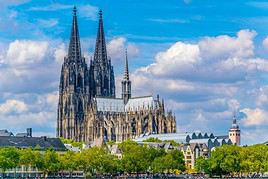
Cathédrale de Cologne, Cologne, Allemagne
Cologne Cathedral
Construction began in the 13th century, making it one of the largest Gothic cathedrals in the world. It is a UNESCO World Heritage site.

Neighborhoods

Sites, Monuments, and Architectural Ensembles

Religious Buildings

Museums

Parks and Gardens

In the Surrounding Area

Additional Information

View guide page: What to See in Cologne

Cologne Cathedral

Construction began in the 13th century, making it one of the largest Gothic cathedrals in the world. It is a UNESCO World Heritage site.

Overview of Cologne Cathedral

Construction began in the 13th century, making it one of the largest Gothic cathedrals in the world. It is a UNESCO World Heritage site.

  • Tourist interest: (worth seeing).

History of the cathedral

What to see and do

Practical information

  • Location:
  • Address: Domkloster 4, 50667 Köln.
  • Opening hours:
  • Price:
  • How to get there:

What to see nearby

  1. == In addition
View guide page: Cologne Cathedral

Flying to Cologne

Cologne Airport

Cologne Airport is shared by the city and the former capital of West Germany (1949–1990), Bonn.

Airport details

  • Name: Cologne/Bonn Konrad Adenauer Airport.
  • IATA code: CGN
  • Hub:
  • Number of terminals: 2.
  • Annual passenger capacity:
  • Passenger traffic: 12,384,223 (2017).
  • Distance from city centre: 15 km southeast of Cologne and 16 km northwest of Bonn.

Services

Sleeping at the airport

Transport to the city centre

Other nearby airports

From the rest of the country

From the rest of Europe

From Africa

From the Americas

From Asia-Pacific

Additional information

View guide page: Flying to Cologne

Dortmund

It’s a major city in the Ruhr region and a river port with just a few traces of its medieval past in the centre.

Overview of Dortmund

It’s a major city in the Ruhr and a river port with just a few traces of its medieval past in the centre.

Key facts

  • Type of place: large city.
  • Tourist interest: (worth a stop if you are in the area).
  • Location:
  • Distances:
  • Local time: Heure : 13813.
  • Population: 586,600 inhabitants (2018).
  • Area: 280.71 km².
  • Altitude: 86 m.

History of Dortmund

What to see and do in Dortmund

In the surrounding area

Climate and weather in Dortmund

Transport

Getting there

Getting around

Accommodation

Food

Useful addresses

Further information

View guide page: Dortmund

Duisburg

A major industrial city in the Ruhr and the world's "largest inland port".

Overview of Duisburg

A major industrial city in the Ruhr and the world's "largest inland port".

Key facts

  • Type of place: large city.
  • Tourist interest: (worth a stop if you are in the area).
  • Location:
  • Distances:
  • Local time: Heure : 13814.
  • Population: 499,845 inhabitants (2017).
  • Area: 232.82 km².
  • Altitude: 31 m.

History of Duisburg

What to see and do in Duisburg

In the surrounding area

Climate and weather in Duisburg

Transport

Getting there

Getting around

Accommodation

Food

Useful addresses

  1. == Further information
View guide page: Duisburg

Düsseldorf

At the heart of the Rhine-Ruhr conurbation, the state capital is primarily a city valued for its lively atmosphere, its carnival, its cultural and economic dynamism rather than for its few monuments or its old town, rebuilt after the war. Overview of Düsseldorf Climate and Weather in Düsseldorf What to See in Düsseldorf Things to Do in Düsseldorf Flying to Düsseldorf Getting to Düsseldorf by Land Getting Around Düsseldorf Accommodation and Dining in Düsseldorf Living in Düsseldorf

Further information

View guide page: Düsseldorf

Overview of Düsseldorf

Overview of Düsseldorf

At the heart of the Rhine-Ruhr conurbation, the capital of North Rhine-Westphalia is primarily a city valued for its lively atmosphere, its carnival, its cultural and economic dynamism rather than for its few monuments or its old town rebuilt after the war.

Key Facts

  • Type of place: large city.
  • Tourist interest: (worth a stop if you are in the area).
  • Location:
  • Distances:
  • Local time: Heure : 13815.
  • Population: 612,178 inhabitants and 1.22 million for the conurbation (2016).
  • Area: 217 km².
  • Altitude: 38 m.

History of Düsseldorf

Precautions

Useful Addresses

  • Tourist Office:

Services

  • Local agencies:
  • Banks:
  • Hospital:
  • Internet:
  • Laundries:
  • Vehicle rental:
  • Post office:
View guide page: Overview of Düsseldorf

Climate and Weather in Düsseldorf

Climate Overview

Best Time to Visit Düsseldorf

Jan.Feb.Mar.Apr.MayJun.Jul.Aug.Sep.Oct.Nov.Dec.
Climate

Climate and Forecast

Additional Information

View guide page: Climate and Weather in Düsseldorf

Flying to Düsseldorf

Düsseldorf Airport

Airport details

  • Name: Düsseldorf International Airport.
  • IATA code: DUS
  • Hub:
  • Number of terminals: 3.
  • Annual passenger capacity:
  • Passenger traffic: 23,521,919 (2016).
  • Distance from city centre: 7 km north of the city.

Services

Sleeping at the airport

Transport to the city centre

Other nearby airports

From the rest of the country

From the rest of Europe

Departing from France

Departing from elsewhere

From Africa

From the Americas

From Asia-Pacific

Additional information

View guide page: Flying to Düsseldorf

Essen

Once at the heart of mining and steelmaking activity, Essen still boasts several reminders of that era, including the villa of the Krupp industrial family and the UNESCO-listed Zollverein coal mine complex.

Overview of Essen

Once at the heart of mining and steelmaking activity, Essen still boasts several reminders of that era, including the villa of the Krupp industrial family and the UNESCO-listed Zollverein coal mine complex.

Key facts

  • Type of place: large city.
  • Tourist interest: (worth a stop if you are in the area).
  • Location:
  • Distances:
  • Local time: Heure : 13816.
  • Population: 583,393 inhabitants (2018).
  • Area: 210.37 km².
  • Altitude: 116 m.

History of Essen

What to see and do in Essen

Zollverein Coal Mine
This 20th-century industrial complex is a UNESCO World Heritage site for the architectural value of its buildings.

In the surrounding area

Climate and weather in Essen

Transport

Getting there

Getting around

Where to stay

Where to eat

Useful addresses

Further reading

View guide page: Essen

Zollverein Coal Mine

This 20th-century industrial complex is a UNESCO World Heritage site for the architectural value of its buildings.

Overview of the Zollverein Mine

This 20th-century industrial complex is a UNESCO World Heritage site for the architectural value of its buildings.

  • Tourist interest: (worth a stop if you are in the area).

History of the Zollverein Mine

What to see and do

Practical information

  • Location:
  • Local time: Heure : 28171.
  • Address: Gelsenkirchener Str. 181, 45309 Essen.
  • Opening hours:
  • Price:

Transport

Accommodation and dining

What to see nearby

  1. == En complément
View guide page: Zollverein Coal Mine

Gelsenkirchen

This city in the Ruhr region has recycled much of its industrial heritage into parks and gardens.

Overview of Gelsenkirchen

This city in the Ruhr has recycled much of its industrial heritage into parks and gardens.

Key Facts

  • Type of place: city.
  • Tourist interest: (worth a stop if you are in the area).
  • Location:
  • Distances:
  • Local time: Heure : 13817.
  • Population: 262,528 inhabitants (2017).
  • Area: 104.84 km².
  • Altitude: 60 m.

History of Gelsenkirchen

What to See and Do in Gelsenkirchen

Nearby

Climate and Weather

Transportation

Getting There

Getting Around

Accommodation

Dining

Useful Addresses

Further Reading

View guide page: Gelsenkirchen

Monschau

At the gates of the Eifel National Park and Belgium, this large town (also called Montjoie) boasts an old centre with timber-framed houses dominated by the remains of a medieval castle.

Overview of Monschau

At the gates of Eifel National Park and Belgium, this large town (also called Montjoie) boasts an old centre with timber-framed houses dominated by the remains of a medieval castle.

Key facts

  • Type of place: small town.
  • Tourist interest: (worth seeing).
  • Location:
  • Distances:
  • Local time: Heure : 13818.
  • Population: 12,065 inhabitants (2017).
  • Area: 94.62 km².
  • Altitude: 517 m.

History of Monschau

What to see and do in Monschau

In the surrounding area

Climate and weather in Monschau

Transport

Getting there

Getting around

Accommodation

Eating

Useful addresses

Further information

View guide page: Monschau

Münster

A major university city with many churches.

Overview of Münster

It's a major university city with many churches as well.

Key Facts

  • Type of place: city.
  • Tourist interest: (worth a stop if you are in the area).
  • Location:
  • Distances:
  • Local time: Heure : 13819.
  • Population: 311,846 (2017).
  • Area: 302.91 km².
  • Altitude: 60 m.

History of Münster

What to See and Do in Münster

In the Surrounding Area

Climate and Weather in Münster

Transportation

Getting There

Getting Around

Accommodation

Food

Useful Addresses

Further Reading

View guide page: Münster

Ruhr

This region north of Cologne was long the heart of Germany’s mining industry. Industrial tourism is now offered here, with visits to mines (including the Zollern mine), industrial zones (Landschaftspark in Duisburg, Zollverein in Essen), slag heaps, working-class neighborhoods (in Oberhausen, Essen, Bochum...), and, conversely, bourgeois residences (the Krupp villa in Essen).

Overview of the Ruhr

This region north of Cologne was long the heart of German, even European, mining industry. Industrial tourism is now offered here, with visits to mines—including the Zollern mine—industrial zones (Landschaftspark in Duisburg, Zollverein in Essen), slag heaps, working-class neighborhoods (in Oberhausen, Essen, Bochum...), and, conversely, bourgeois residences (the Krupp villa in Essen).

Key Facts

  • Type of place: secondary tourist region.
  • Tourist interest: (worth seeing).
  • Location:
  • Local time: Heure : 13820
  • Main cities: Dortmund (600,000 inhabitants), Essen (590,000 inhabitants), Duisburg (500,000 inhabitants).
  • Population: 5,118,681 inhabitants (2017).
  • Area: 4,435 km².
  • Highest point:
  • Lowest point:

Climate and Weather

Main Cities

Tourist Attractions

Cities and Heritage

Nature and Activities

Transportation

Getting There

Getting Around

Accommodation

Food

Further Information

View guide page: Ruhr

Soest

A small town near Dortmund with a "traditional" centre and several beautiful medieval churches.

Introduction to Soest

A small town near Dortmund with a "traditional" centre and several beautiful medieval churches.

Key Facts

  • Type of place: small town.
  • Tourist interest: (worth seeing).
  • Location:
  • Distances:
  • Local time: Heure : 13821.
  • Population: 47,436 (2017).
  • Area: 85.81 km².
  • Altitude: 90 m.

History of Soest

What to See and Do in Soest

In the Surrounding Area

Climate and Weather in Soest

Transportation

Getting There

Getting Around

Accommodation

Dining

Useful Addresses

  1. == Additional Information
View guide page: Soest

Eifel National Park

This is an area of hills, lakes, and forests on the Belgian border where you can enjoy great hiking and cross-country skiing.

Overview of Eifel National Park

This is an area of hills, lakes, and forests on the Belgian border where you can enjoy great hiking and cross-country skiing.

Key facts

  • Type of place: national park.
  • Tourist interest: (worth seeing).
  • Features:
  • Local time: Heure : 13822
  • Annual visitors:
  • Area: 107 km².
  • Altitude:

Environment

Landscape of the park

Wildlife and flora

Climate and weather

Precautions

What to see and do

Practical information

  • Location:
  • Distances:
  • Opening period:
  • Rates:

Getting there

Getting around

Accommodation and dining

Nearby attractions

Further reading

View guide page: Eifel National Park

Siebengebirge

This range of small hills south of Bonn is popular for hiking and, secondarily, its landscapes.

Overview of the Siebengebirge

This range of small hills south of Bonn is popular for hiking and, secondarily, its landscapes.

Key facts

  • Type of place: massif.
  • Tourist interest: (worth seeing).
  • Features:
  • Range:
  • Area:
  • Summit: Oelberg (460 m).

The range’s environment

Wildlife and flora

Population and economic activity

Climate and weather

Precautions

What to see and do

Practical information

  • Location:
  • Distances:

Getting there

Getting around

Sleeping and eating

Nearby attractions

  1. == En complément
View guide page: Siebengebirge

Eltz Castle

A stunning medieval castle perched on wooded hills above the Moselle near Koblenz.

Overview of Eltz Castle

This is a stunning 12th-century medieval castle perched on wooded hills above the Moselle near Koblenz.

  • Tourist interest: (recommended).

History of Eltz Castle

What to see and do

Practical information

  • Location:
  • Local time: Heure : 13824.
  • Address: 56294 Wierschem, Germany.
  • Opening hours:
  • Price:

Transport

Sleeping and eating

What to see nearby

  1. == En complément
View guide page: Eltz Castle

Koblenz

This is the city where the Rhine and Moselle rivers meet and the start of the "Romantic Rhine", the most beautiful and popular section of the river for cruise passengers. In terms of urban attractions, Koblenz is home to several museums and beautiful churches.

Introduction to Koblenz

This is the city where the Rhine and Moselle rivers meet and the start of the "Romantic Rhine", the most beautiful and popular section of the river for cruise passengers. In terms of urban attractions, Koblenz is home to several museums and beautiful churches.

Key Facts

  • Type of place: city.
  • Tourist interest: (worth seeing).
  • Location:
  • Distances:
  • Local time: Heure : 13825.
  • Population: 113,844 inhabitants (2018).
  • Area: 105.02 km².
  • Altitude: 65 m.

History of Koblenz

What to See and Do in Koblenz

In the Surrounding Area

Climate and Weather in Koblenz

Transportation

Getting There

Getting Around

Accommodation

Dining

Useful Addresses

Additional Information

View guide page: Koblenz

Cochem

A small town near Koblenz with traditional architecture, featuring old half-timbered houses dominated by a hilltop castle. It is also a major wine-growing center on the Moselle River.

Overview of Cochem

This is a small town near Koblenz with traditional architecture, featuring old half-timbered houses dominated by a hilltop castle. It is also a major wine-growing center on the Moselle River.

Key Details

  • Type of place: small town.
  • Tourist interest: (worth seeing).
  • Location:
  • Distances:
  • Local time: Heure : 13826.
  • Population: 5,332 inhabitants (2018).
  • Area: 21.21 km².
  • Altitude: 85 m.

History of Cochem

What to See and Do in Cochem

In the Surrounding Area

Climate and Weather in Cochem

Transportation

Getting There

Getting Around

Accommodation

Dining

Useful Addresses

Additional Information

View guide page: Cochem

Mainz

This regional capital is best known as the city of Gutenberg, to whom a museum is dedicated. Its carnival is also famous, as is its wine trade, with many vineyards in the surrounding area.

Overview of Mainz

The capital of Rhineland-Palatinate (Mainz in German) is best known as the city of Gutenberg, to whom a museum is dedicated. Its carnival is also famous, as is its wine trade, with many vineyards in the surrounding area.

Key facts

  • Type of place: city.
  • Tourist interest: (worth a stop if you are in the area).
  • Location:
  • Distances:
  • Local time: Heure : 13827.
  • Population: 215,110 inhabitants (2018).
  • Area: 97.74 km².
  • Altitude: 89 m.

History of Mainz

What to see and do in Mainz

In the surrounding area

Climate and weather in Mainz

Transport

Getting there

Getting around

Accommodation

Eating

Useful addresses

Further information

View guide page: Mainz

Speyer

In addition to a charming old town, Speyer is home to the world's largest Romanesque cathedral, a UNESCO World Heritage site.

Overview of Speyer

In addition to a charming old town, Speyer (or Speyer) is home to the world's largest Romanesque cathedral, a UNESCO World Heritage site.

Key facts

  • Type of place: city.
  • Tourist interest: (worth a stop if you are in the area).
  • Location:
  • Distances:
  • Local time: Heure : 13828.
  • Population: 50,931 inhabitants (2018).
  • Area: 42.6 km².
  • Altitude: 103 m.

History of Speyer

What to see and do in Speyer

Speyer Cathedral
It is the largest Romanesque cathedral in the world. Built in the 11th century in Speyer, it is a UNESCO World Heritage site.

In the surrounding area

Climate and weather in Speyer

Transport

Getting there

Getting around

Accommodation

Food

Useful addresses

  1. == Further information
View guide page: Speyer

Speyer Cathedral

It is the largest Romanesque cathedral in the world. Built in the 11th century in Speyer, it is a UNESCO World Heritage site.

Overview of Speyer Cathedral

It is the largest Romanesque cathedral in the world. Built in the 11th century in Speyer, it is a UNESCO World Heritage site.

  • Tourist interest: (worth a stop if you are in the area).

History of the cathedral

What to see and do

Practical information

  • Location:
  • Address: Domplatz, 67346 Speyer.
  • Opening hours:
  • Price:
  • How to get there:

What to see nearby

  1. == En complément
View guide page: Speyer Cathedral

Trier

The city was an important Roman colony, as evidenced by several surviving structures (gate, amphitheatre, baths, etc.). These, along with the cathedral and Notre-Dame Church, are UNESCO-listed. On its outskirts, the Roscheider Hof open-air museum showcases rural culture in the region and is one of Europe's largest open-air museums.

Overview of Trier

The city, called Trier in German, was an important Roman colony, as evidenced by several surviving structures (gate, amphitheatre, baths, etc.). These, along with the cathedral and Notre-Dame Church, are UNESCO-listed. On its outskirts, the Roscheider Hof open-air museum showcases rural culture in the region and is one of Europe's largest open-air museums.

Key Facts

  • Type of place: city.
  • Tourist interest: (worth seeing).
  • Location:
  • Distances:
  • Local time: Heure : 13829.
  • Population: 110,013 inhabitants (2018).
  • Area: 117.13 km².
  • Altitude: 136 m.

History of Trier

What to See and Do in Trier

In the Surrounding Area

Climate and Weather in Trier

Transportation

Getting There

Getting Around

Accommodation

Dining

Useful Addresses

Further Reading

View guide page: Trier

Worms

While the city has several museums and beautiful churches in its historic center, it is best known for its vineyards and wine festival.

Overview of Worms

While the city has several museums and beautiful churches in its historic center, it is best known for its vineyards and wine festival.

Key Facts

  • Type of place: city.
  • Tourist interest: (worth a stop if you are in the area).
  • Location:
  • Distances:
  • Local time: Heure : 13830.
  • Population: 83,081 inhabitants (2018).
  • Area: 108.73 km².
  • Altitude: 100 m.

History of Worms

What to See and Do in Worms

In the Surrounding Area

Climate and Weather in Worms

Transportation

Getting There

Getting Around

Accommodation

Dining

Useful Addresses

  1. == Additional Information
View guide page: Worms

Palatinate Forest

This mountain range stretching from the French border to the outskirts of Kaiserslautern is covered in forests and locally in vineyards. It offers beautiful landscapes, the remains of several medieval fortresses (Altdahn, Neuscharfeneck, Trifels...), and opportunities for hiking, cycling, or climbing.

Overview of the Palatinate Forest

This mountain range stretching from the French border to the outskirts of Kaiserslautern is covered in forests (hence its other name, the Palatinate Forest) and locally in vineyards. It offers beautiful landscapes, the remains of several medieval fortresses (Altdahn, Neuscharfeneck, Trifels...), and opportunities for hiking, cycling, or climbing.

Key facts

  • Type of place: massif.
  • Tourist interest: (worth seeing).
  • Characteristics:
  • Area: 1,771 km².
  • Highest point: Kalmit (673 m).

The mountain range’s environment

Wildlife and flora

Population and economic activity

Climate and weather

Precautions

What to see and do

Practical information

  • Location:
  • Distances:

Getting there

Getting around

Accommodation and dining

Nearby attractions

  1. == En complément
View guide page: Palatinate Forest

Middle Upper Rhine Valley

Also known as the "Romantic Rhine," these 70 km from Koblenz to Bingen are a UNESCO World Heritage site. The area features stunning landscapes, particularly in its most rugged section, with vineyards, numerous castles (Stolzenfels, Rheinfels, Burg Rheinstein...) and charming villages (Boppard, Bacharach...). This stretch of the Rhine is also a classic for river cruises and cycling trips.

Introduction to the Middle Upper Rhine Valley

Also known as the "Romantic Rhine," these 70 kilometres from Koblenz to Bingen in the south are a UNESCO World Heritage site. The area boasts stunning landscapes, particularly in its most rugged section, with vineyards, numerous castles (Stolzenfels, Rheinfels, Burg Rheinstein...) and charming villages (Boppard, Bacharach...). This stretch of the Rhine is also a classic for river cruises and cycling trips.

Key Facts

  • Type of place: valley.
  • Tourist interest: (must-see or highly recommended).
  • Features:
  • Length: 70 km.
  • Altitude:

Valley Environment

Wildlife and Flora

Climate and Weather

Precautions

What to See

What to Do

Practical Information

  • Location:
  • Distances:

Getting There

Getting Around

Accommodation and Dining

Nearby Attractions

Further Information

View guide page: Middle Upper Rhine Valley

Saarlouis

The town near the French border still has a small old centre and remnants of fortifications and casemates dating from the time of Vauban or later.

Overview of Saarlouis

The town near the French border still has a small old centre and remnants of fortifications and casemates dating from the time of Vauban or later.

Key facts

  • Type of place: small town.
  • Tourist interest: (worth a stop if you are in the area).
  • Location:
  • Distances:
  • Local time: Heure : 13833.
  • Population: 34,532 inhabitants (2018).
  • Area: 43.27 km².
  • Altitude: 181 m.

History of Saarlouis

What to see and do in Saarlouis

In the surrounding area

Climate and weather in Saarlouis

Transport

Getting there

Getting around

Accommodation

Eating

Useful addresses

  1. == Additional information
View guide page: Saarlouis

Saarbrücken

The capital of Saarland is primarily an industrial city, much like the rest of the state. The Völklingen Ironworks (now a museum) on its outskirts is a UNESCO World Heritage site.

Overview of Saarbrücken

The capital of Saarland is primarily an industrial city, much like the rest of the state. The Völklingen Ironworks (now a museum) on its outskirts is a UNESCO World Heritage site.

Key Facts

  • Type of place: city.
  • Tourist interest: (worth a stop if you are in the area).
  • Location:
  • Distances:
  • Local time: Heure : 13834.
  • Population: 183,663 (2018).
  • Area: 167.07 km².
  • Altitude: 230 m.

History of Saarbrücken

What to See and Do in Saarbrücken

In the Surrounding Area

Climate and Weather

Transportation

Getting There

Getting Around

Accommodation

Dining

Useful Addresses

Further Reading

View guide page: Saarbrücken

Moselle Valley (Germany)

The Moselle and its valley are tourist destinations in Germany (and Luxembourg), though far less so than the Rhine Valley. You can take river cruises here or follow the "Moselle Wine Route," whose vineyards line the river.

Overview of the Moselle Valley

The Moselle and its valley are tourist destinations in Germany (and in Luxembourg), though far less so than the Rhine Valley. You can take river cruises here or follow the "Moselle Wine Route," whose vineyards line the river.

Key Facts

  • Type of place: valley.
  • Tourist interest: (recommended).
  • Features:
  • Length:
  • Altitude:

Valley Environment

Wildlife and Flora

Climate and Weather

Precautions

What to See

What to Do

Practical Information

  • Location:
  • Distances:

Getting There

Getting Around

Sleeping and Eating

Nearby Attractions

Further Reading

View guide page: Moselle Valley (Germany)

Corvey Abbey

This is a Benedictine monastery in North Rhine-Westphalia, dating from the 9th century and listed as a UNESCO World Heritage site.

Overview of Corvey Abbey

This is a Benedictine monastery in North Rhine-Westphalia, dating from the 9th century and listed as a UNESCO World Heritage site.

  • Tourist interest: (worth a stop if you are in the area).

History of the Abbey

What to See and Do

Practical Information

  • Location:
  • Address:
  • Opening hours:
  • Admission fee:
  • How to get there:

Nearby Attractions

  1. == En complément
View guide page: Corvey Abbey

Augustusburg and Falkenlust Palaces

Set in a vast park and garden spanning several hectares in Brühl, not far from Cologne, these two charming 18th-century palaces are UNESCO World Heritage sites.

Overview of the Palaces

Located in a vast park and garden spanning several hectares in Brühl, not far from Cologne, these two charming 18th-century buildings are UNESCO World Heritage sites.

  • Tourist interest: (worth seeing).

History of Augustusburg and Falkenlust

What to See and Do

Practical Information

  • Location:
  • Local time: Heure : 19816.
  • Address: Parkplatz, Max-Ernst-Allee, 50321 Brühl.
  • Opening hours:
  • Admission:

Transport

Accommodation and Dining

Nearby Attractions

  1. == En complément
View guide page: Augustusburg and Falkenlust Palaces

Völklingen Ironworks

On the outskirts of Saarbrücken, in Völklingen, this former ironworks turned museum is a UNESCO World Heritage site.

Overview of the Völklingen Ironworks

On the outskirts of Saarbrücken, in Völklingen, this former ironworks turned museum is a UNESCO World Heritage site.

  • Tourist interest: (worth a stop if you are in the area).

History of the Völklingen Ironworks

What to see and do

Practical information

  • Location:
  • Local time: Heure : 19818.
  • Address: Rathausstrasse 75-79, 66333 Völklingen.
  • Opening hours:
  • Admission:

Transport

Accommodation and dining

Nearby attractions

  1. == En complément
View guide page: Völklingen Ironworks

Something wrong or out of date? Report this page