
Overview
UNESCO World Heritage Site
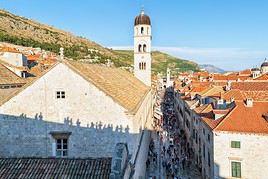
Old Town of Dubrovnik
Damaged during the Yugoslav conflict, the historic heart of the city has been restored and offers a remarkable collection of beautiful Gothic, Renaissance, and Baroque monuments, churches, monasteries, palaces, and fountains.
Damaged during the Yugoslav conflict, the historic heart of the city has been restored and offers a remarkable collection of beautiful Gothic, Renaissance, and Baroque monuments, churches, monasteries, palaces, and fountains.
Sites, Monuments, and Architectural Ensembles
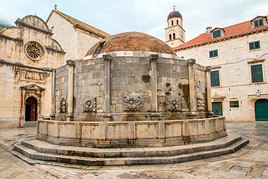
Onofrio's Fountain
Impressive in design, it was built in 1438 to celebrate the commissioning of the 12 km aqueduct that then supplied the city with water.
Impressive in design, it was built in 1438 to celebrate the commissioning of the 12 km aqueduct that then supplied the city with water.

Sponza Palace
The building is recognisable by its arcades and is one of the few in the city to have withstood the 1667 earthquake. Today, the venue is used for events and exhibitions.
The building is recognisable by its arcades and is one of the few in the city to have withstood the 1667 earthquake. Today, the venue is used for events and exhibitions.
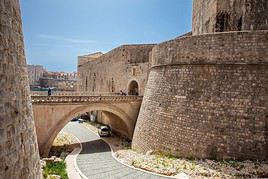
Dubrovnik City Walls
With numerous gates, additions, and modifications throughout their history, they were considered among the greatest medieval fortification systems. You can walk the full circuit (despite the cost...) and enjoy the views.
With numerous gates, additions, and modifications throughout their history, they were considered among the greatest medieval fortification systems. You can walk the full circuit (despite the cost...) and enjoy the views.
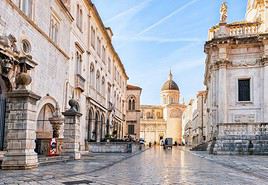
Stradun
Also called Placa, this is the main pedestrian street in the old town. It is lined with beautiful 17th-century houses.
Also called Placa, this is the main pedestrian street in the old town. It is lined with beautiful 17th-century houses.
Old Town of Dubrovnik
Damaged during the Yugoslav conflict, the historic heart of the city has been restored and offers a remarkable collection of beautiful Gothic, Renaissance, and Baroque monuments, churches, monasteries, palaces, and fountains.
Damaged during the Yugoslav conflict, the historic heart of the city has been restored and offers a remarkable collection of beautiful Gothic, Renaissance, and Baroque monuments, churches, monasteries, palaces, and fountains.
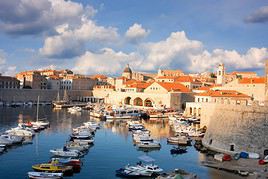
Old Port of Dubrovnik
It’s a very pretty site with Fort St. John (14th century) guarding its entrance, its arcades, its jetty, and the walled city in the background.
It’s a very pretty site with Fort St. John (14th century) guarding its entrance, its arcades, its jetty, and the walled city in the background.
Religious Buildings
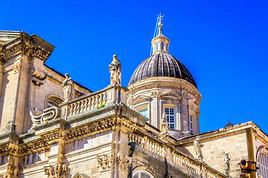
Cathedral of the Assumption
Built on the ruins of the former Byzantine cathedral, the current Baroque-style structure dates from 1670.
Built on the ruins of the former Byzantine cathedral, the current Baroque-style structure dates from 1670.
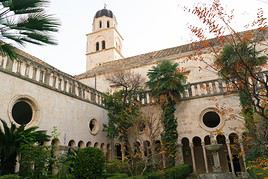
Franciscan Monastery
This masterpiece of Romanesque art in Dalmatia dates from the 14th century. You can visit its cloister and a small museum, which includes the monastery’s pharmacy—also open to visitors.
This masterpiece of Romanesque art in Dalmatia dates from the 14th century. You can visit its cloister and a small museum, which includes the monastery’s pharmacy—also open to visitors.
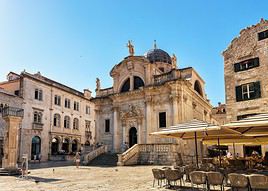
Church of Saint Blaise
Set off by the small square on which it stands, this is a very beautiful Baroque-style church dating from 1715.
Set off by the small square on which it stands, this is a very beautiful Baroque-style church dating from 1715.
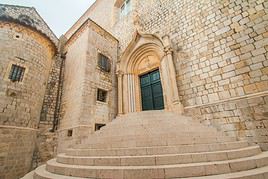
Dominican Monastery
Built into the city walls, it is a beautiful architectural blend. It also houses a small museum showcasing the monastery's sacred art collections.
Built into the city walls, it is a beautiful architectural blend. It also houses a small museum showcasing the monastery's sacred art collections.
Dubrovnik Synagogue
Built in 1352, it is one of the oldest synagogues in Europe. A small museum detailing the history of the community can be visited here.
Built in 1352, it is one of the oldest synagogues in Europe. A small museum detailing the history of the community can be visited here.
Museums
Dubrovnik Maritime Museum
It occupies St. John's Fortress at the entrance to the old port. It is dedicated to the history of maritime navigation in the region over the years.
It occupies St. John's Fortress at the entrance to the old port. It is dedicated to the history of maritime navigation in the region over the years.
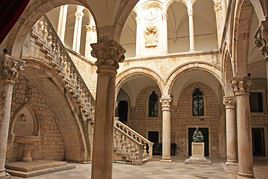
Rector's Palace
This 13th-century palace in the historic center of the city houses the Dubrovnik History Museum. It is a charming blend of Renaissance, Baroque, and Rococo styles.
This 13th-century palace in the historic center of the city houses the Dubrovnik History Museum. It is a charming blend of Renaissance, Baroque, and Rococo styles.
War Photo Limited
This is an exhibition space dedicated to war photography. While it naturally covers the former Yugoslavia (1991-99) and the siege of Dubrovnik, other conflicts are also featured.
This is an exhibition space dedicated to war photography. While it naturally covers the former Yugoslavia (1991-99) and the siege of Dubrovnik, other conflicts are also featured.
In the Surrounding Area
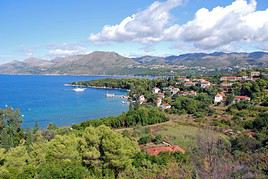
Elaphiti Islands
These are small islands (Sipan, Lopud, and Kolocep being the main ones) near Dubrovnik, popular for their landscapes and beaches.
These are small islands (Sipan, Lopud, and Kolocep being the main ones) near Dubrovnik, popular for their landscapes and beaches.
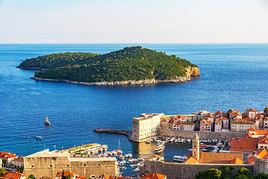
Lokrum
It's a small island in the Bay of Dubrovnik. You can take walks there, see an old fort, as well as a small botanical garden and the ruins of a monastery that were used in several scenes from the *Game of Thrones* series.
It's a small island in the Bay of Dubrovnik. You can take walks there, see an old fort, as well as a small botanical garden and the ruins of a monastery that were used in several scenes from the *Game of Thrones* series.