last edited Dec 11, 2019
What to See in Senegal
Contributionsversion #1created Dec 11, 2019Report this pageLatest contributions in this guideContributors to this guide
Location Map of Senegal
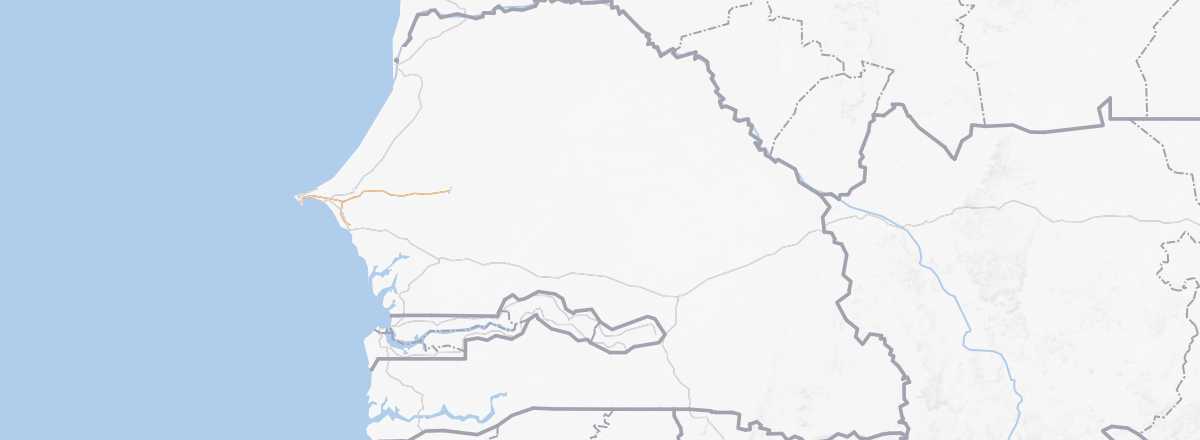 Senegal
Open the interactive map
UNESCO World Heritage Sites
Senegal has 7 sites inscribed on the UNESCO World Heritage list:

Senegambian Stone Circles (2006)
This UNESCO-listed site spans Senegal and Gambia. It consists of a thousand small monuments spread across a 100 km-wide strip running 350 km along the Gambia River.
This UNESCO-listed site spans Senegal and Gambia. It consists of a thousand small monuments spread across a 100 km-wide strip running 350 km along the Gambia River.

Gorée Island (1978)
A UNESCO World Heritage site, it is Senegal’s most famous tourist attraction. Off the coast, facing Dakar, Gorée was from the 15th to the 19th century the largest slave-trading center on the African coast, as its architectural heritage still reflects.
A UNESCO World Heritage site, it is Senegal’s most famous tourist attraction. Off the coast, facing Dakar, Gorée was from the 15th to the 19th century the largest slave-trading center on the African coast, as its architectural heritage still reflects.

Saint-Louis (2000)
At the mouth of the Senegal River, Saint-Louis is a historic city that was also the country's capital from 1872 to 1957. It played a significant cultural and economic role in West Africa for a long time. Its island (the historic centre) is a UNESCO World Heritage site.
At the mouth of the Senegal River, Saint-Louis is a historic city that was also the country's capital from 1872 to 1957. It played a significant cultural and economic role in West Africa for a long time. Its island (the historic centre) is a UNESCO World Heritage site.

Saloum Delta National Park (2011)
This area of marshes, forests, mangroves, and lagoons is home to a rich variety of wildlife (especially birds) and small fishing villages. One of Senegal’s most beautiful regions, it is a UNESCO-listed site best explored by water.
This area of marshes, forests, mangroves, and lagoons is home to a rich variety of wildlife (especially birds) and small fishing villages. One of Senegal’s most beautiful regions, it is a UNESCO-listed site best explored by water.

Djoudj National Bird Park (1981)
A UNESCO World Heritage Site, it is the third-largest ornithological reserve in the world. Covering 160 km², it hosts countless migratory birds, as well as crocodiles, pythons, monkeys, and gazelles. The park is typically visited by pirogue between November and April.
A UNESCO World Heritage Site, it is the third-largest ornithological reserve in the world. Covering 160 km², it hosts countless migratory birds, as well as crocodiles, pythons, monkeys, and gazelles. The park is typically visited by pirogue between November and April.

Niokolo-Koba National Park (1981)
At over 9,000 km², this is Senegal's largest park and one of the main ones in this part of the continent. Its rich wildlife and landscapes are quite similar to those of East Africa.
At over 9,000 km², this is Senegal's largest park and one of the main ones in this part of the continent. Its rich wildlife and landscapes are quite similar to those of East Africa.

Bassari Country (2012)
In the south-east of the country, this region is a UNESCO World Heritage site for the still-vibrant culture and traditions of its people, who live in small villages.
In the south-east of the country, this region is a UNESCO World Heritage site for the still-vibrant culture and traditions of its people, who live in small villages.
Northern Coast
Senegambian Stone Circles (2006)
This UNESCO-listed site spans Senegal and Gambia. It consists of a thousand small monuments spread across a 100 km-wide strip running 350 km along the Gambia River.
This UNESCO-listed site spans Senegal and Gambia. It consists of a thousand small monuments spread across a 100 km-wide strip running 350 km along the Gambia River.

Dakar
Senegal’s capital has long been the flagship city of West Africa. While it is modernising, it still retains traces of its past and offers numerous points of interest in its immediate surroundings, starting with the Cap-Vert peninsula.
Senegal’s capital has long been the flagship city of West Africa. While it is modernising, it still retains traces of its past and offers numerous points of interest in its immediate surroundings, starting with the Cap-Vert peninsula.

Great Coast
In contrast to the Petite Côte located south of Dakar, it stretches for nearly 150 km north of the capital. Less populated and especially less developed than the Petite Côte, it is also far less visited, even though its small coastal villages and beaches offer great opportunities.
In contrast to the Petite Côte located south of Dakar, it stretches for nearly 150 km north of the capital. Less populated and especially less developed than the Petite Côte, it is also far less visited, even though its small coastal villages and beaches offer great opportunities.
Gorée Island
A UNESCO World Heritage site, it is Senegal’s most famous tourist attraction. Off the coast, facing Dakar, Gorée was from the 15th to the 19th century the largest slave-trading center on the African coast, as its architectural heritage still reflects.
A UNESCO World Heritage site, it is Senegal’s most famous tourist attraction. Off the coast, facing Dakar, Gorée was from the 15th to the 19th century the largest slave-trading center on the African coast, as its architectural heritage still reflects.

Joal-Fadiouth
These are two merged municipalities. Joal is a fishing port famous for its fish market and the birthplace of Léopold Sédar Senghor. Fadiouth is an artificial island connected to the coast by a bridge. Its village is highly popular with visitors for its narrow streets and buildings.
These are two merged municipalities. Joal is a fishing port famous for its fish market and the birthplace of Léopold Sédar Senghor. Fadiouth is an artificial island connected to the coast by a bridge. Its village is highly popular with visitors for its narrow streets and buildings.

La Somone
Known for its lagoon, a classified nature reserve, La Somone is also a small seaside resort and a holiday destination for the wealthy population of the capital or foreigners. You can also go diving here.
Known for its lagoon, a classified nature reserve, La Somone is also a small seaside resort and a holiday destination for the wealthy population of the capital or foreigners. You can also go diving here.

The Mamelles
These are two volcanic hills located west of the Cap-Vert Peninsula. One is home to the Mamelles Lighthouse, one of the most powerful in Africa, and the other to the African Renaissance Monument, a gigantic 50-meter-high statue symbolizing "the continent’s opening to the rest of the world." Both can be visited.
These are two volcanic hills located west of the Cap-Vert Peninsula. One is home to the Mamelles Lighthouse, one of the most powerful in Africa, and the other to the African Renaissance Monument, a gigantic 50-meter-high statue symbolizing "the continent’s opening to the rest of the world." Both can be visited.
Mbodiène
A fishing port, a beach resort on the Petite Côte, and a birdwatching spot at its lagoon, which is lined with mangroves.
A fishing port, a beach resort on the Petite Côte, and a birdwatching spot at its lagoon, which is lined with mangroves.
Mboro
It's the main town on the Grande Côte. Like other villages along the coast, it's also a fishing port with beautiful beaches.
It's the main town on the Grande Côte. Like other villages along the coast, it's also a fishing port with beautiful beaches.

Ngor
The village and its eponymous island are at the tip of the Cap-Vert peninsula. The environment is ideal for water sports, fishing, and birdwatching, with a few hotels as a bonus.
The village and its eponymous island are at the tip of the Cap-Vert peninsula. The environment is ideal for water sports, fishing, and birdwatching, with a few hotels as a bonus.

Palmarin
It's a commune on the edge of the Sine Saloum region, popular for its beach and birdwatching.
It's a commune on the edge of the Sine Saloum region, popular for its beach and birdwatching.

Petite Côte
This is the country's main tourist region. Over nearly a hundred kilometers, beautiful beaches, several seaside resorts, some cliffs, and small fishing villages follow one another.
This is the country's main tourist region. Over nearly a hundred kilometers, beautiful beaches, several seaside resorts, some cliffs, and small fishing villages follow one another.

Cape Verde Peninsula
This peninsula forms the westernmost point of Senegal and is home to the city of Dakar, its port, and its suburbs. It also features beaches and several tourist sites, the most famous of which is Gorée Island.
This peninsula forms the westernmost point of Senegal and is home to the city of Dakar, its port, and its suburbs. It also features beaches and several tourist sites, the most famous of which is Gorée Island.
Rufisque
Southeast of the capital, which it neighbors, the town of Rufisque has several colonial-era buildings and villas.
Southeast of the capital, which it neighbors, the town of Rufisque has several colonial-era buildings and villas.
Saint-Louis
At the mouth of the Senegal River, Saint-Louis is a historic city that was also the country's capital from 1872 to 1957. It played a significant cultural and economic role in West Africa for a long time. Its island (the historic centre) is a UNESCO World Heritage site.
At the mouth of the Senegal River, Saint-Louis is a historic city that was also the country's capital from 1872 to 1957. It played a significant cultural and economic role in West Africa for a long time. Its island (the historic centre) is a UNESCO World Heritage site.

Saly-M'bour
These two towns adjoin to the point that many consider them a single destination. Saly is the region's main seaside resort and a major hub of Senegalese tourism, while M'bour is the principal town of the Petite Côte.
These two towns adjoin to the point that many consider them a single destination. Saly is the region's main seaside resort and a major hub of Senegalese tourism, while M'bour is the principal town of the Petite Côte.
Toubab Dialaw
Located at the start of the Petite Côte coming from Dakar, it is a fishing port that also has beautiful beaches.
Located at the start of the Petite Côte coming from Dakar, it is a fishing port that also has beautiful beaches.
Natural Heritage

Lake Retba (Pink Lake)
Also known as Lake Retba, this is a highly visited site in the Dakar region. Located northeast of the capital, it is a small lake surrounded by dunes, known for its pink color due to the presence of a microorganism.
Also known as Lake Retba, this is a highly visited site in the Dakar region. Located northeast of the capital, it is a small lake surrounded by dunes, known for its pink color due to the presence of a microorganism.
Saloum Delta National Park (2011)
This area of marshes, forests, mangroves, and lagoons is home to a rich variety of wildlife (especially birds) and small fishing villages. One of Senegal’s most beautiful regions, it is a UNESCO-listed site best explored by water.
This area of marshes, forests, mangroves, and lagoons is home to a rich variety of wildlife (especially birds) and small fishing villages. One of Senegal’s most beautiful regions, it is a UNESCO-listed site best explored by water.
Madeleine Islands National Park
This park, located 4 km offshore on the west coast of the Cap-Vert peninsula, is home to several bird colonies.
This park, located 4 km offshore on the west coast of the Cap-Vert peninsula, is home to several bird colonies.

Langue de Barbarie National Park
A bird sanctuary stretching 15 km along the coast about twenty kilometers south of Saint-Louis. The site is famous for its flamingos, pelicans, cormorants, and marine turtles that come to nest here.
A bird sanctuary stretching 15 km along the coast about twenty kilometers south of Saint-Louis. The site is famous for its flamingos, pelicans, cormorants, and marine turtles that come to nest here.
Djoudj National Bird Park (1981)
A UNESCO World Heritage Site, it is the third-largest ornithological reserve in the world. Covering 160 km², it hosts countless migratory birds, as well as crocodiles, pythons, monkeys, and gazelles. The park is typically visited by pirogue between November and April.
A UNESCO World Heritage Site, it is the third-largest ornithological reserve in the world. Covering 160 km², it hosts countless migratory birds, as well as crocodiles, pythons, monkeys, and gazelles. The park is typically visited by pirogue between November and April.

Guembeul Reserve
This small private reserve near Saint-Louis is home to several species of gazelles, monkeys, tortoises, warthogs, and around 200 bird species.
This small private reserve near Saint-Louis is home to several species of gazelles, monkeys, tortoises, warthogs, and around 200 bird species.
Casamance

Cap Skirring
This village at the tip of Casamance is known for being Senegal’s first seaside resort. While it still attracts visitors, it now faces competition from the Petite Côte south of Dakar. Beyond its beautiful beaches and water activities, a few excursions in the surrounding area are possible.
This village at the tip of Casamance is known for being Senegal’s first seaside resort. While it still attracts visitors, it now faces competition from the Petite Côte south of Dakar. Beyond its beautiful beaches and water activities, a few excursions in the surrounding area are possible.
Kafountine
On the northern coast, near Gambia, this town is located in an area of bolongs (saltwater channels), beaches, and lagoons that can be explored by pirogue.
On the northern coast, near Gambia, this town is located in an area of bolongs (saltwater channels), beaches, and lagoons that can be explored by pirogue.
Kolda
This town in Casamance is known for being at the heart of a game-rich region that attracts hunting tourists.
This town in Casamance is known for being at the heart of a game-rich region that attracts hunting tourists.
Ziguinchor
It’s the main city of Casamance. Despite its somewhat limited tourist appeal, it can serve as a base for various excursions in the surrounding area if the current security situation allows.
It’s the main city of Casamance. Despite its somewhat limited tourist appeal, it can serve as a base for various excursions in the surrounding area if the current security situation allows.
Natural Heritage

Casamance River
Boat trips by pirogue are still possible, especially between Ziguinchor and its mouth on the Atlantic.
Boat trips by pirogue are still possible, especially between Ziguinchor and its mouth on the Atlantic.
Basse-Casamance National Park
Halfway between Cap Skirring and Ziguinchor, this park is home to numerous bird species and several mammals. Following the Casamance conflict, it remains officially closed due to security concerns, including the possible presence of landmines.
Halfway between Cap Skirring and Ziguinchor, this park is home to numerous bird species and several mammals. Following the Casamance conflict, it remains officially closed due to security concerns, including the possible presence of landmines.
Inland

Kédougou
The town itself has little tourist interest and primarily serves as a base for exploring Niokolo-Koba National Park, Dindefelo Falls, and several villages with traditional architecture, including ancient earthen fortifications.
The town itself has little tourist interest and primarily serves as a base for exploring Niokolo-Koba National Park, Dindefelo Falls, and several villages with traditional architecture, including ancient earthen fortifications.
Bassari Country
In the south-east of the country, this region is a UNESCO World Heritage site for the still-vibrant culture and traditions of its people, who live in small villages.
In the south-east of the country, this region is a UNESCO World Heritage site for the still-vibrant culture and traditions of its people, who live in small villages.
Podor
This large town is the terminus for cruises on the Senegal River departing from Saint-Louis. It features old colonial trading posts and a well-restored fort.
This large town is the terminus for cruises on the Senegal River departing from Saint-Louis. It features old colonial trading posts and a well-restored fort.

Richard-Toll
Around a hundred kilometers from Saint-Louis, this town is known for its castle, the "Folly of Baron Roger," built there in the 1820s by the then-governor of Senegal.
Around a hundred kilometers from Saint-Louis, this town is known for its castle, the "Folly of Baron Roger," built there in the 1820s by the then-governor of Senegal.

Tambacounda
The large city in eastern Senegal isn’t really a tourist destination. It’s mainly a stopover on the way to Mali or, secondarily, Casamance, as well as a possible base for visiting Niokolo-Koba National Park.
The large city in eastern Senegal isn’t really a tourist destination. It’s mainly a stopover on the way to Mali or, secondarily, Casamance, as well as a possible base for visiting Niokolo-Koba National Park.
Thiès
Despite its museums (History and Decorative Arts) and a few remnants of the colonial era, this large city is rarely visited by tourists.
Despite its museums (History and Decorative Arts) and a few remnants of the colonial era, this large city is rarely visited by tourists.

Touba
It is the second-largest urban area in Senegal after Dakar and a holy city for the Mouride Muslim brotherhood, considered by some to be very strict.
It is the second-largest urban area in Senegal after Dakar and a holy city for the Mouride Muslim brotherhood, considered by some to be very strict.
Natural Heritage
Dindefelo Waterfall
Around forty kilometres southwest of Kédougou, Dindefelo is home to a spectacular 100-metre-high waterfall in the middle of lush forest.
Around forty kilometres southwest of Kédougou, Dindefelo is home to a spectacular 100-metre-high waterfall in the middle of lush forest.

Senegal River
It is the border river between Mauritania and Senegal. Starting from Saint-Louis, Senegal, on the coast, it is possible to travel upstream for several dozen kilometres, as far as Podor and beyond.
It is the border river between Mauritania and Senegal. Starting from Saint-Louis, Senegal, on the coast, it is possible to travel upstream for several dozen kilometres, as far as Podor and beyond.
Niokolo-Koba National Park
At over 9,000 km², this is Senegal's largest park and one of the main ones in this part of the continent. Its rich wildlife and landscapes are quite similar to those of East Africa.
At over 9,000 km², this is Senegal's largest park and one of the main ones in this part of the continent. Its rich wildlife and landscapes are quite similar to those of East Africa.
Must-see & highly recommended
Gorée Island
★★★★ A UNESCO World Heritage site, it is Senegal’s most famous tourist attraction. Off the coast, facing Dakar, Gorée was from the 15th to…
Saloum Delta National Park
★★★★ This area of marshes, forests, mangroves, and lagoons is home to a rich variety of wildlife (especially birds) and small fishing villages…
Niokolo-Koba National Park
★★★★ At over 9,000 km², this is Senegal's largest park and one of the main ones in this part of the continent. Its rich wildlife and landscapes…
Recommended
Djoudj National Bird Park
★★★ A UNESCO World Heritage Site, it is the third-largest ornithological reserve in the world. Covering 160 km², it hosts countless migratory…
Petite Côte
★★★ This is the country's main tourist region. Over nearly a hundred kilometers, beautiful beaches, several seaside resorts, some cliffs, and…
Cape Verde Peninsula
★★★ This peninsula forms the westernmost point of Senegal and is home to the city of Dakar, its port, and its suburbs. It also features beaches…
Saint-Louis, Senegal
★★★ At the mouth of the Senegal River, Saint-Louis is a historic city that was also the country's capital from 1872 to 1957. It played a…
Worth a look / Other
Cap Skirring
★★ This village at the tip of Casamance is known for being Senegal’s first seaside resort. While it still attracts visitors, it now…
Dindefelo Waterfall
★★ Around forty kilometres southwest of Kédougou, Dindefelo is home to a spectacular 100-metre-high waterfall in the middle of lush forest.
Dakar
★★ Senegal’s capital has long been the flagship city of West Africa. While it is modernising, it still retains traces of its past and…
Casamance River
★★ Boat trips by pirogue are still possible, especially between Ziguinchor and its mouth on the Atlantic.
Senegal River
★★ It is the border river between Mauritania and Senegal. Starting from Saint-Louis, Senegal, on the coast, it is possible to travel upstream…
Great Coast
★★ In contrast to the Petite Côte located south of Dakar, it stretches for nearly 150 km north of the capital. Less populated and especially…
Joal-Fadiouth
★★ These are two merged municipalities. Joal is a fishing port famous for its fish market and the birthplace of Léopold Sédar Senghor…
Kafountine
★★ On the northern coast, near Gambia, this town is located in an area of bolongs (saltwater channels), beaches, and lagoons that can be…
Lake Retba (Pink Lake)
★★ Also known as Lake Retba, this is a highly visited site in the Dakar region. Located northeast of the capital, it is a small lake…
Mbodiène
★★ A fishing port, a beach resort on the Petite Côte, and a birdwatching spot at its lagoon, which is lined with mangroves.
Ngor
★★ The village and its eponymous island are at the tip of the Cap-Vert peninsula. The environment is ideal for water sports, fishing, and…
Langue de Barbarie National Park
★★ A bird sanctuary stretching 15 km along the coast about twenty kilometers south of Saint-Louis. The site is famous for its flamingos…
Bassari Country
★★ In the south-east of the country, this region is a UNESCO World Heritage site for the still-vibrant culture and traditions of its people…
Saly-M'bour
★★ These two towns adjoin to the point that many consider them a single destination. Saly is the region's main seaside resort and a major hub…
Senegambian Stone Circles
★ This UNESCO-listed site spans Senegal and Gambia. It consists of a thousand small monuments spread across a 100 km-wide strip running 350…
Kaolack
★ Not at all touristy, it's one of the largest cities in Senegal and a transport "hub".
Kédougou
★ The town itself has little tourist interest and primarily serves as a base for exploring Niokolo-Koba National Park, Dindefelo Falls, and…
Kolda
★ This town in Casamance is known for being at the heart of a game-rich region that attracts hunting tourists.
La Somone
★ Known for its lagoon, a classified nature reserve, La Somone is also a small seaside resort and a holiday destination for the wealthy…
The Mamelles
★ These are two volcanic hills located west of the Cap-Vert Peninsula. One is home to the Mamelles Lighthouse, one of the most powerful in…
Mboro
★ It's the main town on the Grande Côte. Like other villages along the coast, it's also a fishing port with beautiful beaches.
Nianing
★ Another fishing port on the Petite Côte that has gradually turned into a seaside resort.
Palmarin
★ It's a commune on the edge of the Sine Saloum region, popular for its beach and birdwatching.
Basse-Casamance National Park
★ Halfway between Cap Skirring and Ziguinchor, this park is home to numerous bird species and several mammals. Following the Casamance…
Madeleine Islands National Park
★ This park, located 4 km offshore on the west coast of the Cap-Vert peninsula, is home to several bird colonies.
Podor
★ This large town is the terminus for cruises on the Senegal River departing from Saint-Louis. It features old colonial trading posts and a…
Popenguine
★ This town of a few thousand inhabitants is a Catholic pilgrimage site.
Guembeul Reserve
★ This small private reserve near Saint-Louis is home to several species of gazelles, monkeys, tortoises, warthogs, and around 200 bird…
M'bour Ecological Reserve
★ Next to the city of the same name. A great spot for birdwatching.
Richard-Toll
★ Around a hundred kilometers from Saint-Louis, this town is known for its castle, the "Folly of Baron Roger," built there in the 1820s by…
Rufisque
★ Southeast of the capital, which it neighbors, the town of Rufisque has several colonial-era buildings and villas.
Tambacounda
★ The large city in eastern Senegal isn’t really a tourist destination. It’s mainly a stopover on the way to Mali or…
Thiès
★ Despite its museums (History and Decorative Arts) and a few remnants of the colonial era, this large city is rarely visited by tourists.
Touba
★ It is the second-largest urban area in Senegal after Dakar and a holy city for the Mouride Muslim brotherhood, considered by some to be…
Toubab Dialaw
★ Located at the start of the Petite Côte coming from Dakar, it is a fishing port that also has beautiful beaches.
Ziguinchor
★ It’s the main city of Casamance. Despite its somewhat limited tourist appeal, it can serve as a base for various excursions in the…
- Senegambian Stone Circles
- Gorée Island
- Djoudj National Bird Park
- Niokolo-Koba National Park
- Bassari Country
- Dakar
- Tambacounda
- Saint-Louis, Senegal
- Saloum Delta National Park
- Great Coast
- Joal-Fadiouth
- Mboro
- Ngor
- Nianing
- Petite Côte
- Cape Verde Peninsula
- Rufisque
- Cap Skirring
- Kafountine
- Kolda
- Ziguinchor
- Kaolack
- Kédougou
- Podor
- Richard-Toll
- Thiès
- Touba
- Senegal River
- Madeleine Islands National Park
- The Mamelles
- Popenguine
- La Somone
- Lake Retba (Pink Lake)
- Mbodiène
- Saly-M'bour
- Palmarin
- M'bour Ecological Reserve
- Langue de Barbarie National Park
- Guembeul Reserve
- Casamance River
- Basse-Casamance National Park
- Toubab Dialaw
- Dindefelo Waterfall