
Overview
Tangier can generally be explored in a long half-day or a little more, depending on how many museums you plan to visit. But beyond the city itself, you can also use your stay to discover the surrounding area, with Tangier as your base.
Districts
Tangier is divided into two main parts: the medina, which is the historic city, and the "new town," which is more modern and built in a European style.
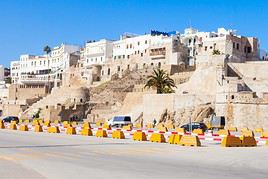
Tangier Medina
The Tangier Medina is a true tiered labyrinth of lively alleys, where artisans, carpenters, jewelers, and cobblers come together. This is where you’ll find the "Petit Socco", among other highlights.
The Tangier Medina is a true tiered labyrinth of lively alleys, where artisans, carpenters, jewelers, and cobblers come together. This is where you’ll find the "Petit Socco", among other highlights.
New Town of Tangier
Liberty Street runs south from the Grand Socco to the heart of modern Tangier, Place de France and Boulevard Pasteur. Cafés, restaurants, travel agencies, and bookshops are clustered along a few streets; the esplanade overlooks the port and the Strait of Gibraltar.
Liberty Street runs south from the Grand Socco to the heart of modern Tangier, Place de France and Boulevard Pasteur. Cafés, restaurants, travel agencies, and bookshops are clustered along a few streets; the esplanade overlooks the port and the Strait of Gibraltar.
Sites, monuments, and architectural ensembles
In the medina
Petit Socco
In the heart of the medina, Petit Socco (small market) is a charming little square surrounded by cafés. It is also the most famous in Tangier. In the past, during the "International Zone" era, this was where the city's business—both legal and illegal—was conducted.
In the heart of the medina, Petit Socco (small market) is a charming little square surrounded by cafés. It is also the most famous in Tangier. In the past, during the "International Zone" era, this was where the city's business—both legal and illegal—was conducted.
Kasbah of Tangier
The kasbah (citadel) with its crenellated ramparts sits atop the hill overlooking the medina. Sultan Moulay Ismail built the governor’s palace here in the 17th century, sheltered by the battery of cannons installed on the ramparts. A gateway on Rue Riad Sultan leads into the garden that takes you to the Dar el-Makhzen, the Sultan’s palace.
The kasbah (citadel) with its crenellated ramparts sits atop the hill overlooking the medina. Sultan Moulay Ismail built the governor’s palace here in the 17th century, sheltered by the battery of cannons installed on the ramparts. A gateway on Rue Riad Sultan leads into the garden that takes you to the Dar el-Makhzen, the Sultan’s palace.
In the new town
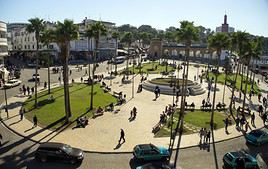
The Grand Socco
Just outside the ramparts of the old city, the Grand Socco (main market) is the busiest crossing point in Tangier. A gateway leads into the medina.
Just outside the ramparts of the old city, the Grand Socco (main market) is the busiest crossing point in Tangier. A gateway leads into the medina.
St Andrew's Anglican Church
Built in the late 19th to early 20th century, the building features Moorish architecture, notably a minaret-shaped bell tower.
Built in the late 19th to early 20th century, the building features Moorish architecture, notably a minaret-shaped bell tower.
Museums
Dar el-Makhzen
Dar el-Makhzen is the Sultan’s palace built in the late 16th century by the great builder Moulay Ismail. Today, it houses the Kasbah Museum, which features ethnographic and archaeological collections.
Dar el-Makhzen is the Sultan’s palace built in the late 16th century by the great builder Moulay Ismail. Today, it houses the Kasbah Museum, which features ethnographic and archaeological collections.
Lorin Foundation
Housed in a former synagogue, this art museum features temporary exhibitions as well as photographs, newspapers, and archives tracing the city's history since the 1930s.
Housed in a former synagogue, this art museum features temporary exhibitions as well as photographs, newspapers, and archives tracing the city's history since the 1930s.
Contemporary Arts Museum
This small museum in the new part of the city showcases paintings primarily by Moroccan artists.
This small museum in the new part of the city showcases paintings primarily by Moroccan artists.
Carmen-Macein Museum
This is a small private museum located in the kasbah, showcasing paintings and lithographs by artists such as Picasso, Max Ernst, and Georges Braque.
This is a small private museum located in the kasbah, showcasing paintings and lithographs by artists such as Picasso, Max Ernst, and Georges Braque.
American Legation Museum
This magnificent building, once home to American diplomats, is now a contemporary museum showcasing national and international works, along with historical documents.
This magnificent building, once home to American diplomats, is now a contemporary museum showcasing national and international works, along with historical documents.
Parks and gardens
In the surrounding area
There are several points of interest within a hundred kilometers of Tangier. And if you're up for it, you can even take a ferry across the strait to see, for example, Gibraltar and its famous Rock.

Asilah (45 km)
The tourist appeal of this seaside resort south of Tangier lies, beyond its beaches, in its stunning all-white medina. Moreover, the city has become increasingly popular in summer.
The tourist appeal of this seaside resort south of Tangier lies, beyond its beaches, in its stunning all-white medina. Moreover, the city has become increasingly popular in summer.

Cape Spartel and the Caves of Hercules (15 km)
Just a few kilometres from Tangier, Cape Spartel is a rocky promontory at the entrance to the Strait of Gibraltar, towering over 300 metres above the sea. Below it, waves have carved out caves known as the Caves of Hercules.
Just a few kilometres from Tangier, Cape Spartel is a rocky promontory at the entrance to the Strait of Gibraltar, towering over 300 metres above the sea. Below it, waves have carved out caves known as the Caves of Hercules.

Ceuta (70 km)
The city is a Spanish enclave in Moroccan territory. It's a rather pleasant city with its waterfront and duty-free products.
The city is a Spanish enclave in Moroccan territory. It's a rather pleasant city with its waterfront and duty-free products.

Larache (90 km)
The town is primarily known for the Roman ruins of Lixus on its outskirts and, secondarily, the Merja Zerga National Park, as well as the (future) seaside resort of Port Lixus nearby.
The town is primarily known for the Roman ruins of Lixus on its outskirts and, secondarily, the Merja Zerga National Park, as well as the (future) seaside resort of Port Lixus nearby.
Lixus (85 km)
These Roman ruins, 2 or 3 kilometres from Larache across the river, represent the second ancient site in Morocco after Volubilis. The site itself includes, among other things, the remains of an acropolis, temples, and an amphitheatre.
These Roman ruins, 2 or 3 kilometres from Larache across the river, represent the second ancient site in Morocco after Volubilis. The site itself includes, among other things, the remains of an acropolis, temples, and an amphitheatre.

Tetouan (60 km)
The city is renowned for its medina, a UNESCO World Heritage site. The Mediterranean beaches and the Rif Mountains are also nearby.
The city is renowned for its medina, a UNESCO World Heritage site. The Mediterranean beaches and the Rif Mountains are also nearby.