ben oui, tout à fait d'accord avec Sunrisa, ll y a de très nombreux Italiens à Cuba...d'ailleurs, dans les années 90, avec les Espagnols, ils étaient les plus nombreux!...depuis quelques années, le rytme ralentit en rapport avec la répression policière qui touche leur hobby préfèré, à savoir: la chica cubana!....ils sont très nombreux à ne pas se morfondre en ''todo includo" pour la raison susmentionnée ci-avant...donc, pas de vacances vraiment culturelle mais plutôt..cul-turelle!!!🤪
On les retrouvait en très grand nombre à santiago de Cuba...playa Syboney constituait leur fief...tout comme Sunrisa, je trouve leur mentalité détestable et d'ailleurs, nombreux sont les Cubains qui ne les apprécient pas car ce sont des "conquistadores" et ils ne sont pas très respectueux envers la population...Mais ils se sentent à l'aise à Cuba, ce sont des "latins", ils s'habillent comme les Cubanos et la langue est assez proche de l'espagnol ce qui facilite les choses ( wow!...un Rital de 50 ou 60 berges avec un t-shirt "puta madre" et chaines en or sur un scooter de location sans oublier la jeune chica derrière, cela "jette un max!"😛)
Voici un graphique officiel Cubain qui va remettre les pendules à l'heure concernant les nationalités qui visitent Cuba ( sorry Viaje! )...bon, apparemment, je suis le seul belge...snif, je ne suis pas dans la liste!😕)
Il s'agit de statistiques pour les mois de janvier/février 2010...
il était une fois un comte de fée qui se termine en cauchemar
Periodo 1900-1959
• 1900: Circula en La Habana el primer tranvía que se conoce en Latinoamérica. También ese año circula por las calles de La Habana el primer automóvil, antes que en cualquier lugar de Latinoamérica se conociera ese medio de transporte, y fue conducido por la escritora cubana René Méndez Capote, que se convirtió así en la primera mujer iberoamericana en conducir un automóvil.
• 1900: El primer campeón olímpico latinoamericano fue el esgrimista cubano Ramón Fonts.
• 1906: La Habana se convierte en la primera ciudad del mundo en tener telefonía con discado directo (sin mediación de operadora).
• 1907: La Habana pone en funcionamiento el primer departamento de Rayos X del mundo iberoamericano, que fue dirigido por el médico cubano Francisco Domingues Roldán.
• 1913: El primer vuelo internacional de la aviación latinoamericana fue realizado por los cubanos Agustín Parla y Domingo Rosillo. Ocurrió el día 19 de mayo, de Cuba a Cayo Hueso, y duro dos horas y 40 minutos.
• 1915: Se acuña por primera vez el peso cubano como moneda nacional, y desde su nacimiento tuvo el mismo valor que el dólar estadounidense. Desde 1955 hasta 1959 el peso cubano valió un centavo más que el dólar.
• 1918: Cuba es el primer país de Iberoamérica en promulgar la ley del divorcio.
• 1921: El cubano Jose Raúl Capablanca se convierte en el primer iberoamericano en ganar un campeonato mundial de ajedrez, y también es el primer campeón mundial de ajedrez nacido en un país subdesarrollado. Ganó consecutivamente todos los campeonatos mundiales desde 1921 hasta 1927, y es considerado por los especialistas como “El Mozart del ajedrez”.
• 1922: Cuba se convierte en el segundo país del mundo en inaugurar una emisora de radio, la PWX, y fue el primer país del mundo en emitir por radio un concierto musical y también en emitir un noticiero radial. La primera locutora mujer de la radio mundial fue la cubana Esther Perea de la Torre.
• 1928: Cuba tenía ya 61 emisoras radiales, 43 de ellas en La Habana, lo que colocaba al país en el cuarto lugar mundial, solo superada por USA, Canadá y la Unión Soviética, y en el primero mundial dada su cantidad de emisoras radiales por número de habitantes y por extensión territorial.
• 1933: Alfonso de Borbón y Battenberg, hijo de Alfonso XIII y en aquel entonces príncipe de Asturias renuncia a sus derechos sucesorios al Trono de España para poder casarse con la cubana Edelmira Sampedro Robato.
• 1935: Cuba se consolida como primer exportador para Iberoamérica de libretos y grabaciones radiales. El cubano Félix Caignet crea el concepto del serial radiofónico y la radionovela.
• 1937: Cuba se convierte en el primer país de Latinoamérica en decretar por ley la jornada laboral de ocho horas, el salario mínimo y la autonomía universitaria.
• Año 1940: Cuba se convierte en el primer país de Iberoamérica en tener un presidente mulato electo por sufragio universal, y además por mayoría absoluta. Esto era especialmente significativo pues se producía en un país donde la mayoría de su población era todavía de raza blanca.
• 1940: Se aprueba en Cuba la Constitución del 40, una de las más avanzadas del mundo de su época. Cuba se convierte así en el primero de Iberoamérica en reconocer mediante ley el derecho al voto de la mujer, la igualdad de derechos entre sexos y razas, y el derecho de la mujer al trabajo. Ya en la década del 30 en Cuba había surgido el primer movimiento feminista de Iberoamérica. Recordemos que en 1976 todavía la mujer española no tenía derecho al voto, ni derecho a la patria potestad sobre sus hijos, ni podía abrir una cuenta bancaria ni sacar pasaporte sin la autorización escrita y firmada por su marido.
• 1942: El cubano Ernesto Lecuona se convierte en el primer iberoamericano en ser director musical de una productora cinematográfica mundial, y también en el primer iberoamericano en conseguir una nominación a los premios Oscar.
• 1946: La mulata cubana Zoila Gálvez se convierte en la primera iberoamericana en cantar en la Scala de Milán, y en 1950 otra cubana, Martha Pérez, se convertiría en la segunda.
• 1950: Cuba se convierte en el segundo país del mundo en emitir regularmente señales de televisión. Ese Año van a Cuba a hacer su debut televisivo Libertad Lamarque, Pedro Vargas, Arturo de Córdoba, Dolores del Río, María Félix, Lola Flores, Sara Montiel, Concha Piquer, Tita Merello, Lucho Gatica y otras estrellas que no contaban con el medio televisivo en sus respectivos países. Ese Año Cuba se convierte también en el primer promotor, productor y exportador mundial de telenovelas seriadas.
•1950: El músico cubano Dámaso Pérez Prado coloca durante 15 semanas consecutivas en el hit parade de los EEUU su éxito “Patricia”. Este record no pudo ser igualado ni por Elvis Presley ni por los Beatles.
• 1951: El cubano Dessie Arnaz se convierte en el productor más importante de la televisión de los Estados Unidos. Fue además el primero del mundo en implementar el uso de una tercera cámara en televisión y también el primero en hacer escenas completas en español en un programa transmitido de costa a costa de los Estados Unidos.
• 1951: Se construye el Hotel Riviera de La Habana, el primero del mundo en tener aire acondicionado centralizado.
• 1952: Se construye en La Habana el edificio Focsa, primero de apartamentos construidos completamente de hormigón en todo el mundo. Un año después, en los sótanos de ese edificio se construyen los estudios de televisión más modernos del mundo en su momento, los estudios de la CMQ.
• 1954: Cuba cuenta con una vaca por persona, y es el tercer país de Iberoamérica (solo superada por Argentina y Uruguay) que más carne de res per cápita consume (40 kg al año).
• 1955: Según el anuario de la OMS, Cuba es el segundo país de Iberoamérica que tiene más bajos porcentajes de mortalidad infantil (33,4 por cada mil nacidos vivos).
• 1956: Cuba es reconocida por la ONU como el segundo país de Iberoamérica que tiene más bajos índices de analfabetismo (solo el 23,6%). Según ese informe, en el ámbito iberoamericano Haití estaba por encima del 90%, y con más del 50% de analfabetismo estaban España, El Salvador, Republica Dominicana, Guatemala, Nicaragua, Perú, Brasil, Venezuela y Bolivia, entre otros.
• 1957: El anuario de la ONU ubica a Cuba como el mejor país de Iberoamérica en cuanto a cantidad de médicos per cápita (1 por cada 957 habitantes), el de más alto porcentaje de viviendas urbanas electrificadas (82,9%), y viviendas urbanas con baños propios (79,9%), y el segundo, después de Uruguay, en cuanto al consumo de calorías por día y por habitantes (2870).
• 1957: La Habana se convierte en la segunda ciudad del mundo en tener cine de tercera dimensión; el actual cine Yara, en aquel momento Radiocentro.
• 1958: Cuba se convierte en el segundo país del mundo en emitir señales de televisión a color, y en tener el tercer canal televisivo a color de todo el mundo.
• 1958: Cuba es el país de Iberoamérica con más automóviles; 160 mil, uno por cada 38 habitantes. Es también el que posee mayor cantidad de electrodomésticos, el de más kilómetros de líneas férreas construidas por kilómetro cuadrado, y el segundo considerando el total de receptores de radio.
• 1958: Durante toda la década del 50 Cuba mantuvo entre la segunda y tercera mejores rentas per cápita de Iberoamérica, siempre superior a la de Italia y más de dos veces superior a la de España. Por su Producto Interno Bruto (PIB) Cuba ocupaba en 1958 la posición 29 entre las mejores economía del mundo, a pesar de su poca extensión territorial y de contar con solo seis millones de habitantes.
• 1959: Con sus 358 salas de cine, La Habana era la ciudad del mundo con más salas de cine superando a Nueva York y París, que ocupaban el segundo y tercer lugar respectivamente.
a partir de la ploufffffffffffffff
Salut vivva, pas tout à fait ça... les français qui voyagent sont en général "friqués ou baroudeurs , et il y a les "contemporains "mondialement ploucs comme partout.. assez ploucs pour être radins puissance 5 sur l'échelle de "richeter"l'exemple venant d'en haut si je peux me permettre... et ceux des djeuns qui se déchirent à Ibiza ou sur la costa brava ou ailleurs ( justement selon le porte feuille ) Mexique par exemple , et j'en oublie.... sont trés contents d'imiter les Américains qui sont un exemple pour tous les djeuns ...!!! Cuba j'ai franchement pas trop vu ; et c'est pas parce que c'est trop cher car beaucoup vont aussi dans des TI ....
mais , vivva , tous les français ne sont pas des radins.. j'en connais moi plein qui donnent leur chemise tout le temps. et ceux qui ont 5 semaines de vacances et qui n'ont effectivement pas assez pour partir à l'étranger 5 semaines ( sauf au Maroc , là il y en a ) restent en France ou vont en Espagne et aussi restent chez eux... de plus en plus avec la "crise" qui précisément n'est pas pour tout le monde et permet aux "ploucs" de s'exporter avec tous leurs fardeaux comportement inclus of course ... amts billie
trop agé désormais pour être baroudeur désormais, j'ai donné .... me reste hélas le coté bobo friqué, je n'y peux rien, 😠
ceci étant le voyage à la routard est une spécialité très européenne, '' nous '' français reservons notre fréquentation des tout inclus au sud de la Mediterranée, Maroc, Tunisie, pays musulmans ou les abus ne seraient de toute façon pas bien vus! reste Ibiza, l'exception qui confirme, effectivement la règle.
de nombreux français résident pour des raisons d'économie au Maroc une partie de l'année ou parfois en Espagne 😇😇
en matière de radinisme ne pas oublier une particularité française ; on ne donne jamais de pourboire car c'est inclus officiellement dans les prix en France depuis très longtemps.... donc nous n'avons pas la culture du tip comme les américains.
Salut vivva, pas tout à fait ça... les français qui voyagent sont en général "friqués ou baroudeurs , et il y a les "contemporains "mondialement ploucs comme partout.. assez ploucs pour être radins puissance 5 sur l'échelle de "richeter"l'exemple venant d'en haut si je peux me permettre... et ceux des djeuns qui se déchirent à Ibiza ou sur la costa brava ou ailleurs ( justement selon le porte feuille ) Mexique par exemple , et j'en oublie.... sont trés contents d'imiter les Américains qui sont un exemple pour tous les djeuns ...!!! Cuba j'ai franchement pas trop vu ; et c'est pas parce que c'est trop cher car beaucoup vont aussi dans des TI ....
mais , vivva , tous les français ne sont pas des radins.. j'en connais moi plein qui donnent leur chemise tout le temps. et ceux qui ont 5 semaines de vacances et qui n'ont effectivement pas assez pour partir à l'étranger 5 semaines ( sauf au Maroc , là il y en a ) restent en France ou vont en Espagne et aussi restent chez eux... de plus en plus avec la "crise" qui précisément n'est pas pour tout le monde et permet aux "ploucs" de s'exporter avec tous leurs fardeaux comportement inclus of course ... amts billie
Salut BILLIE64 merci pour ton explication, c, est sure qu'il ne sont pas tous radin et dieu merci!😉
Mais c'est quelque chose que j'ai lui ici qui concernais les vac dans different pays et cette exemple était donné pour la France disant qu'il n'avait pas assez d'argent pour survivre ou bouger pendant 5 semaines.
Et je dois te dire que quand je vois des gens qui se dise bobo friké, et qu'ils portent le même vetement pour trois jous à différent endroit a Cuba ou que cette personne fait changé le pneu de sa voiture par un enfant de 12 ans environs surement par écomonie ou pour ne pas salire ces unique beau vetements, , 😉
c, est vrais que l'on peu dire ce que l'on veu et de essayé de fraire croire ce que l'on veu sur le net!😄😄😄
le seul bobo quil a notre ami se situe à la tête.😏😏
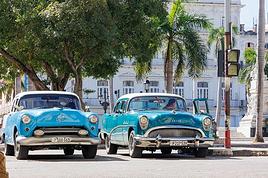
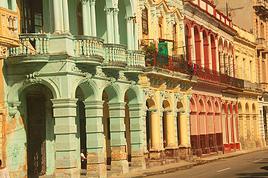
c'est le cuba que j'aurais voulu connaître pas de chance heu heu heu........ La Havane avec des belles maison , des voitures impec , des femmes élégantes qui se baladaient sur paseo ...................................
vivva, yesssssssss.............. ya une chanson d'un gentil mignon français ( au fait , assez "bobo" à ce qu'il parait.... mais moi , celui la je l'aiiiiiiiimmmmmmmmme!! ) qui s'intitule "allo, maman bobo"!!! tu connais? c'était ya longtemps ...
non , sans blague... ce que tu dis??? alors là assimilable direct à "plouc" intégral....
donc, le tourisme mondial continue à se développer cahin caha tralala blabla comme tu dis , j'aime bien tu me fais marrer ... il faut se marrer pour être en bonne santé...
salutations amicales billie
Je viens d’entendre à Radio-canada (RDI) avec Simon Durivage Un reportage sur la fameuse rencontre à Cancun avec les autorités Américaine et les représentants du gouvernement Cubain les 24, 25 et 26 mars.
Le gouvernement Américains s’apprêterait à autoriser tout les américains sans exceptions comme les américains d’origine Cubaine qui à l’heure actuel ont le droit d’effectuer un voyage par année dans l’ile de Cuba avec un visas touriste et ce à compter du premier novembre 2010
La condition que les Américains auraient exigés serait que des infrastructures d’accueils nécessaires soient construite dans un délai de 2 ans à auxquelles ceux-ci auraient soit les américains une participation de 60% et les Cubains 40%
Semble-t-il que les représentants Cubains auraient accueillis cette exigence favorablement.
Je viens d’entendre à Radio-canada (RDI) avec Simon Durivage Un reportage sur la fameuse rencontre à Cancun avec les autorités Américaine et les représentants du gouvernement Cubain les 24, 25 et 26 mars.
Le gouvernement Américains s’apprêterait à autoriser tout les américains sans exceptions comme les américains d’origine Cubaine qui à l’heure actuel ont le droit d’effectuer un voyage par année dans l’ile de Cuba avec un visas touriste et ce à compter du premier novembre 2010
La condition que les Américains auraient exigés serait que des infrastructures d’accueils nécessaires soient construite dans un délai de 2 ans à auxquelles ceux-ci auraient soit les américains une participation de 60% et les Cubains 40%
Semble-t-il que les représentants Cubains auraient accueillis cette exigence favorablement.
A SUIVRE
S'Ils ont accueilli ça favorablement, ça me surprend énormement! Les investissements étrangers fonctionnent sur le même modèle depuis des années... Investissement de 100% des étrangers, et aprtage des profits 50-50... Je suis un peu sceptique à l'effet que Cuba va changer ses pratiques commerciales pour les USA...
Mais on verra bien, rien n'est impossible ou presque...
Vu le contexte actuel, je suis pour le moins septique...mais bon, qui peut savoir!..en tous les cas, Obama n'était pas de très bonne humeur envers Cuba ce 24 mars...
Mais bon, intérêts financiers de lobbys et "pseudo morale" politique, ne sont pas toujours curieusement incompatiblle!😕
pas besoin d'être en contact avec l'au dela, je n'ai que 10 % de chances de me tromper car 90 % des cubains ''en amour'' avec une canadienne le font pour de l'argent, le jineterismo n'étant qu'une forme de prostitution....
statistiquement je m'en sors bien, juste une chance sur dix d'erreur, non? je suis loin d'être le seul à le dire sur ce forum, non, toutes origines et pays confondus!!
Viaje, il n'y a pas de statistiques sur le sujet... Mais selon mon expérience, ce serait plutôt 50-60% des mariages qui seraient une fraude. Toutefois, après 2-3 ans, seuls 10% des couples seraient encore ensemble, car dans le 40-40% de mariages "véridique", très peu fonctionnent compte tenu que les partenaires ne sont pas compatibles.
Ce n'est pas scientifique, mais ça correspond à ce que je vois et j'entends.
De toute façon, on s'éloigne du sujet... S'il y a encore un sujet à cette discussion, qui smeble plutôt servir à ressasser les mêmes préjugés, les mêmes rancoeurs et les mêmes attaques...
J’AI l’impression Viage que tu seras obligé de réviser l’ensemble de tes statistiques lorsque la horde d’américains et surtout d’américaines à la recherche d’un amour enveloppé dans un corps d’adonis débarqueront à Cuba.🤪
je voulais le dire justement.... ya des "petites fleurs des prairies "qui vont flipper, elles vont toutes les lui piquer vite fait bien fait................vive la concurrence c'est la mondialisation .........................................
et viaje n'aura aucun mal pour refaire ses calculs les pourcentages ne changeront pas de continent.......
Il faudra tout de même qu’il existe un peu plus de précision dans sa nomenclature, vous savez très bien ils sont au-delà de 300millions au US et nous au canada nous dépassons à peine les 30 millions, tout un potentiel.
Sinon nous tomberons dans des discussions stériles du genre je suis une canadienne avant d’être une Nord américaine vous voyez le genre, un peu comme si je vous mettais dans le même panier qu’une belge etc.🤪
ok d'accord ...
vous pouvez me mettre dans le panier que vous voulez ça ne me fait ni chaud ni froid je suis comme les chats je sors du panier souvent.........
mais il n'y aura pas 300 millions d'américains qui viendront à Cuba non plus .
ils ont un trés grand pays et se promènent beaucoup chez eux .
donc nous verrons bien . amts billie
Une nouvelle possibilité pour effectuer des virements en monnaie convertibles (euro, dollars) à un cubain. la nouvelle réglementation permet à un cubain un…
Voicise que mon conjoint à reçu du REVENANT en MP du routard Nouvelle Numérotation à laHavane" "Attention, à partir du 21 février, la numérotation des…
VOICI DERNIER NOUVELLE DU JOURNAL DE MONTREAL SAMEDILE 10 DECEMBRE 2014 LA HANANE| (AFP) Cuba a accueille en 2014 en record de trois millions De touristes, la…
Le gouvernement cubain vient d'autoriser le secteur touristique public à déléguer des services tels que l'hébergement, la restauration ou les transports à des…
We all know the raft is taking on a bit of water.
No discussion threads about the island for weeks...
Have all travelers really moved on elsewhere? No one who could come to the rescue with recent info?
I’m in the Caribbean and still kinda feel like swinging by in September/October...
Looks like there are still direct flights from Mexico and the Dominican Republic for getting in and out.
I'm heading to the Dominican Republic for 5 days in December.
I arrive and depart from Samana Airport (AZS). I'm looking to rent a car, ideally right at the airport, but I don't see any options. Are there no rental agencies at Samana Airport?
If not, do you know where I could rent a vehicle closest to the airport and how to get there?
Hi,
I’m heading to Miches for the first time in November 2026 (no all-inclusive)
I’d love some tips to plan my stay—accommodation, things to do, places of interest nearby.
Is it possible to rent a scooter there to get around the area?
Thanks for your help!
Best,
hi there, I’ve never been to Martinique. my girlfriend, who’s of Martinican origin, has never had the chance to go either (life isn’t always easy). now we can plan a little trip, but we don’t know which airline to choose or how to find accommodation.
basically, I need quite a few tips.
we’re planning to go in September—no chance before that.
Hi! We spent 10 wonderful days in Guadeloupe’s gorgeous climate. Our arrival got off to a shaky start, though—our suitcase was left behind at the airport, which caused quite a stir. A police officer was shouting at us to get out and cross the street. Then, a taxi driver refused to take us after we showed him where we were staying, right by the port in Pointe-à-Pitre. "No one goes there," he told us! Good thing we arrived during Carnival! A second driver finally agreed to take us, and I can say he knew every nook and cranny of his city.
The rest of the trip was amazing. The locals were smiling and welcoming. We didn’t rent a car, so we didn’t get around much and stayed in the Deshaies area—a real favorite. Plage de la Perle (Pearl Beach) truly lives up to its name! We liked Grande Anse Beach less because of the steep slope, which made walking tricky, and the waves were pretty intense. The landscapes in this part of the island are idyllic. We visited the botanical garden—it’s worth it—and went to the port in Deshaies. If we ever go back, we’ll rent a vehicle so we can explore more, because taxis aren’t cheap!
Hi, I’m leaving soon for Punta Cana—what kind of money should we bring: Canadian dollars, US dollars, or are we forced to exchange once we arrive?
Thanks
We spent 15 days in the Exumas from March 10th to 26th.
I should mention that we’ve been traveling to islands for 20 years, so we have points of comparison when it comes to prices, hospitality, and landscapes.
First, the flights: we now live in the Luberon, so we flew out of Marseille. We took British Airways, which we’ve used several times before for trips to the English-speaking Caribbean and which offers flights via Heathrow. We had an overnight layover in London on the way out, then a flight to Nassau. After that, we took a connecting flight (we had a 2h20 layover in Nassau, which was more than enough) to George Town with Sky Bahamas. We had initially ruled out Bahamasair based on very negative reviews.
Immigration and customs were very quick.
When we arrived, we took a taxi to our hotel, Augusta Bay. Cost: $30.
We rented a car through Sure and Shore. It was delivered to our hotel the day after we arrived, and we kept it until we left for Stocking Island. For 9 days, we paid $470 (which is a great price) for a small Honda that wasn’t very new, but we didn’t have any issues with it. One thing we’d never experienced before: they’d put newspaper sheets on the floor, and we were told not to get any sand in the car if we went to the beach!
We stayed 5 nights at Augusta Bay. A 5-minute walk away is the beautiful, uncrowded Jolly Beach, perfect for swimming. We visited the southern part of the island to see the beaches of Little Exuma, especially Tropic of Cancer Beach and the one next to Santana’s restaurant. We also went to Hopper Bay Beach, where you can see a group of about ten turtles near a small boat dock. We went kayaking from the hotel.
Then we stayed at Paradise Bay in the north. While we hadn’t encountered the sandfly problem before, here it’s important to know that the beach is infested with them. The hotel’s restaurant, which is very good otherwise, even provides repellent for guests— that’s how bad it is!
From there, we visited Coco Plum Beach, Three Sisters Beach (where you can snorkel), and others. We also went kayaking again.
We ended our trip with 3 nights on Stocking Island at Saint Francis Resort. If we were to do it again, we’d spend 4 nights there. The island has many trails, snorkeling spots, and you can get around by kayak. We saw rays, turtles, and even a harmless shark, as well as some beautiful beaches. Plus, the welcome at Saint Francis was the warmest we experienced.
Be aware that everything is very expensive on the island—much more so than in the English-speaking Caribbean. Clearly, the purchasing power of Americans plays a role. They say everything is imported, but that’s the case on all islands!
Some places only accept cash or charge a 5% fee if you pay by card.
We didn’t find the locals particularly friendly. If you’ve been to Dominica or Grenada, for example, you’ll know what I mean.
We explored the whole island. The beaches are stunning, but the roads tell a different story. There are a lot of car wrecks—some houses have two or three in front of them, which really spoils the landscape. There are also many abandoned, ruined houses.
The vegetation is lush but not tropical, and you’ll be served apples and oranges for breakfast because there are very few exotic fruits.
As for the climate in March, there was no humid atmosphere, and the heat was very manageable (26°C). It was very pleasant. The seawater, however, is definitely cooler than in the Indian Ocean, for example.
There’s not much snorkeling, but we knew that before coming.
In conclusion: beautiful beaches, sand as fine as flour, and a very pleasant climate. But honestly, for the same cost, I’d prefer the Seychelles, for example.
Hi everyone,
I need your help!
We’re planning to visit Guadeloupe and take the opportunity to explore the islands La Désirade, Marie-Galante, and Les Saintes.
I initially planned to rent a car to get around the main island and then take the ferry from Trois-Rivières to Les Saintes, from Pointe-à-Pitre to Marie-Galante, and finally from Saint-François to La Désirade, following that route.
But when I look at it, the car would sit unused for at least 5 days—that’s paying for nothing🙁.
Is it possible to go from LES SAINTES to MARIE-GALANTE and then on to LA DÉSIRADE? We’d only rent a car once we arrive in Saint-François to continue exploring Guadeloupe. What do you think—is that doable?
This trip is planned for April.
Thanks so much for your help
Just a quick update on the state of this road: the unpaved section has been significantly improved. You can now complete the journey in about 4 to 4.5 hours instead of 6. Great news! For me, the most hazardous part is actually the paved section before and after Sagua. It encourages higher speeds, but there are deep, dangerous potholes that appear without warning. Be careful!
I’d also note that despite occasional power outages—which casas and paladares know how to handle—tourism remains perfectly doable. Cuba is still magical! I was just told, with a touch of humor, that the official German government website suggests bringing your own toilet paper and candles… Hmm, maybe an update on rechargeable gear would be in order…
Hi! We’re visiting Guadeloupe for the first time in January. We’re looking for accommodation near Deshaies to start our trip. A quiet spot, not too far from the sea so we can walk there. Any suggestions are welcome!
I’ve just returned from 15 days in Cuba and wanted to share my experience along with some practical tips for those planning a trip there.
1. Formalities:
- Passport valid for at least 6 months after your return.
- E-visa: apply online (payment by bank transfer only via the embassy of your choice): evisacuba.cu or through an agency novelacuba.com (card payment on their site—I had to go with this option and recommend it because the Cuban embassy in Brussels apparently never received my transfer...)
- Digital D’Viajeros form to fill out a few days before departure
- Mandatory health insurance
2. Currency/budget
- Plan your entire budget in cash; card payments are rare, and withdrawals at the official rate aren’t great.
Local currency: CUP (Cuban Peso)
Official rate: ~1 € = 120 CUP → state-run restaurants and shops.
Current unofficial rate: ~1 € = 490 CUP → private restaurants, local bars, Cuban-owned shops.
For exchanging money:
The easiest way: ask at your *casa particular* or a local restaurant.
3. My itinerary (15 days)
Havana: 3 nights
Viñales: 3 nights
Cienfuegos: 1 night
Trinidad: 3 nights
Varadero: 3 nights
Havana: 1 night
Flights: Air Europa from Brussels, with a layover in Madrid. Smooth and pleasant service.
Accommodations: *casas particulares* booked on Airbnb except for Varadero (Iberostar Playa Alameda hotel).
Practical tips
Install a VPN before departure (many blocked sites like Instagram and Airbnb).
Download the El Toque app to check the updated CUP exchange rate.
Internet via ETECSA SIM card (~30 € for 10 GB) or Wi-Fi in hotels/*casas*.
Download Maps.me for offline maps.
Intercity travel: shared taxi, Viazul bus, or private transfer through your *casa*.
Electricity: 110 V, sometimes 220 V.
Bring basic supplies and medications—hard to find there.
Cuba requires flexibility and openness: regular power outages, unstable internet (especially in Trinidad).
Finally, my personal take:
I loved my trip to Cuba! It’s a disorienting yet deeply charming country.
Poverty is visible, especially in Havana: crumbling buildings, many people asking for help (but no safety concerns!). Bringing some essentials for locals is a good idea (soap, toothpaste, medications, clothes...).
Cubans are incredibly welcoming and friendly. A few basics in Spanish help a lot! The vibe is unique: music in every street, musicians everywhere, salsa all around.
The variety of landscapes is amazing: colonial architecture, paradise beaches, mountains, waterfalls, lush valleys—you’ll never get bored.
Only downside: Varadero, less authentic than the rest of the country, but I expected that!
Overall, it was a wonderful trip, and I’d love to go back!
Hi,
Several comments recommend bringing mosquito repellent. Got it. Are there a lot of them during the day? And by the seaside? Or are they more present (and voracious) in the evening? Thanks.
I bought tickets for Martinique in April 2025 for 15 days, without really looking into what there was to do, and with the idea in my head that we could: hike, do water activities, swim, visit rum distilleries...
But... I’m worried I’ll get bored over 15 days and I’m considering maybe spending 1 week in Guadeloupe and 1 week in Martinique.
For example, I don’t know how to spend a whole afternoon at the beach. 2 hours, max.
I know it’s a personal question and depends on how you travel, but I’d love to hear your thoughts if you’ve done it:
- Did you feel too rushed?
- Is it reasonable to do?
- How much time would you spend on each island?
I’ve just returned from Havana after an 18-day stay from October 8th to 26th.
From Montreal, you have to go through Varadero Airport. I now break up the airport-to-Havana transfer with a SUPER pleasant stopover halfway, in the historic village of Hershey (Camilo Cienfuegos). Quebecer Anne-Marie has renovated a century-old house there, and every stay of mine feels like a peaceful oasis. Amazing food, a pool, impeccable hospitality—I highly recommend it! Casa Cub'Anita.
Life for Cubans remains just as tough, made even harder right now by tropical viruses spread by mosquitoes. It’s absolutely essential to protect yourself properly. That said, the purchasing power of foreign currency hasn’t changed much, despite skyrocketing inflation. As of today, the US dollar exchanges for nearly 500 pesos on the "informal market."
This was my first time staying in Vieja, in the non-touristy part. I discovered some great little restaurants run by the younger generation. Affordable, excellent food, and remarkably friendly service: El Chanchulero (it was about time I checked it out—unbeatable value for money!), El Café, Jibaro...
Cubans are still as warm and welcoming as ever—bicitaxis, servers, markets. Speaking the language is a huge plus.
Essentials to download from abroad before you leave: the maps.me offline maps app, and the La Nave taxi/motorcycle taxi app, which is super efficient for getting around the capital.
Sending my best to all my friends in Oriente as the hurricane passes, especially to Baracoa. I’m planning to visit this winter.
I’m planning a trip to Cuba this summer and I’d love some info: Is travel insurance really necessary? Can you easily get online by buying a local SIM card or internet card? Apparently, there’s only one currency now—is it better to exchange money with your *casa particular* host?
Thanks for all these valuable tips!
Hi!
I’m heading to Havana for a week in February. I’m looking for a casa particular that’s affordable, clean, and cozy. Since I’ll be traveling alone, I’d love a place where people are welcoming!
Also, I really want to stay in Habana Vieja...
Do you have any recommendations for places you’ve stayed before?
I tried booking the casa particular *Chez Nous*, but I never got a response.
Hi fellow travelers,
We're heading to Martinique for a month from mid-January to mid-February.
Our plan is to explore the island by staying in three different spots for 10 days each, on both sides of the island...
Could you share some great tips on where to stay for an authentic experience and what we absolutely must see?!
Hi there,
In March 2026 I’ll be at the Club Med in Sainte-Anne and I’m thinking of heading to Les Saintes at the end of my stay.
Do you know what the most convenient way to get there is?
Thanks so much!
Hi everyone.
For those traveling to Cuba and then planning to go to the USA, you won’t be able to get your ESTA for the United States (same applies) if you’ve been to Cuba after 2021 due to a law passed by Donald Trump (a law that Biden later repealed).
You’ll have no choice but to apply for a visa, which costs 200 € (and approval isn’t guaranteed even after payment).
If you’re in this situation, the process to get this visa will be a real hassle—you’ll need to book an appointment at the U.S. Embassy in Paris. It’s the only embassy in France authorized to handle your application after you’ve filled out the visa request on the official website.
If you try to cheat by applying for an ESTA for the USA, just know that the American administration has ways of finding out if you’ve been to Cuba. 😉
I'm looking for information on the islands of Puerto Rico, St. Barthélemy, and St. Martin for March 2026.
What is there to see, and if possible, prices or tips, please?
Thanks, Michel V.
I’ve booked a room at an all-inclusive in Varadero for January 2025. This will be my 3rd trip to Cuba, the last one was 20 years ago.
The whole tipping and gratuities thing is wearing me out. Even though it’s an all-inclusive package, I think it’d be rude not to leave any tips for the bar staff and the housekeeping team, especially.
Here’s what I’m aiming for:
1. Not feeling stingy (or “feeling cheap” for my fellow Quebecers);
2. Not disrespecting Cubans by offering junk or, on the flip side, going overboard and creating unrealistic expectations for future tourists;
3. And most importantly, not spending the whole week wondering if I’m doing the right thing. I’m going there to relax, not to stress!
Hi there,
I’m planning our upcoming trip to Guadeloupe. We’re looking for a place to stay where human contact is a priority, with air conditioning, close to the beaches, and clean.
We’ve had several responses. After doing some research online, I was able to rule out quite a few options.
But now I’m deciding between:
Kokoplaj, tipayoune (issue: no AC, just fans—is that a problem?), Résidence Le Zandoli, and Gwada Rêves.
If you have any info or experiences to share, I’d love to hear them! ;-)
Thanks for your help!
See you soon...
I’m heading to Blau Costa Verde next February and I’d like to rent a scooter to explore the area. Are the roads around Holguín in good condition? I’m thinking of renting one for 1–2 or 3 days to visit Holguín, Gibara, and Banes on my own. Do you recommend it (I’ve got a great sense of direction)? How much does it usually cost to rent a scooter for 2 or 3 days (or a car, though I’d prefer a scooter)? Also, are there any other interesting spots nearby you’d suggest checking out?
Are there any excursions to Santiago, and how much do they typically cost?
Hi,
When booking the tickets to Martinique for our family, I must have made a mistake, and on one of the tickets, the third first name is wrong. Michel instead of Joel...
CORSAIR Airlines is telling me I have to buy a new ticket for 1200 € (Christmas period). I think that’s outrageous and, above all, impossible for us.
I’m desperate—I feel like Corsair is really overdoing it.
Is there any recourse? How can I get out of this?
I’m throwing this message in a bottle, just in case...😕
Hi, I'm looking for a car rental for January 2020 in Guadeloupe. There are several agencies I've seen reviews for—has anyone dealt with Autolagon before?
Thanks!