Unfortunately, I share your opinion because learning that this park is suffocated not by "tourists"—who are absolutely right to go there—but by the locals themselves is disheartening. From my perspective, Ruaha and Selous are also an excellent alternative.
See you,
Thanks for your analysis of the chaos in the Masai Mara. Indeed, it seems difficult to control under any circumstances, so the worst is unfortunately yet to come.
hi
is the Masai Mara being stifled by the locals???
the Maasai have been there for centuries
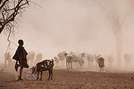
independent Kenya decided to turn it into a nature reserve, excluding the Maasai, but eventually part of the land was returned to them, free to manage and graze their livestock, even if it's true that some encroach on the tourists' territory...
it seems to me that every national park in Africa is very different from another
so Selous, Mikumi, Ruaha, yes, but there are also other national parks in Kenya
Hi,
I’d add that when you’re a seasoned traveler, you don’t forget to pack your own soap and you take care of your own underwear, like a big girl. Or you bring enough for the whole trip if water is scarce and you need to save it.
hi sylvie
I don’t get this attraction people have for their expat compatriots who run
camps, hotels, restaurants, and so on.
the real change of scenery is actually not running into your neighbor on the other side of the world.
totally agree—you can ask the guide to stick to the trails unless you’ve got a few
excitement-seekers trying to snap the photo of the century.
the best is definitely going solo, no doubt, even if sometimes you get side-eyed by tour operators who think they know better. and like you said, Kenya is huge.
valerie
If the predators (poisoned) are eradicated from their habitat, then only the herbivores will remain, and they’ll eventually disappear too because they compete with the Maasai’s goats and cows—which don’t eat meat but sustain their livelihood. And there you have it! 😉
even if it’s true that some encroach on the tourists’ territory...
The tourists’ territory? The park isn’t theirs—it’s dedicated to wildlife. So it’s not abnormal for our big cats and other carnivores to take a few. As for tourists, they’re just passing through, asked to observe with their eyes and not disrupt the natural order.
hey eric
I still don’t get it—between your message and your reply—how we were supposed to see the predators in there. I was only saying that the Maasai are legitimate and had little to do with the disappearance of the habitat compared to tourist overconsumption.
They’ve always been there; the national park has only existed since the 60s. What’s happened since then?
A skyrocketing Maasai population or a skyrocketing number of tourists?
valerie
For my part, following the interesting exchanges with Blesl, I went back through my documents and references, and there’s no clear study showing a direct link between overgrazing and the decline of large herbivores. The strongest connections seem to be around natural resources and access to them (water in particular), the spread of animal diseases, and the fact that many of the problems aren’t caused by herders but by agricultural populations who "block" migration corridors for both wild and domestic animals.
I’d also like to point out that many reserves were created on land where people were already living. These same pastoral communities are being pushed off their land, not just by reserves (which has been going on for a while) but now also by the expansion of agriculture and general population pressure.
So blaming them as scapegoats seems a bit simplistic to me. Especially since tourists, who don’t stay long (though the camps do, and the damage caused by overtourism, etc.), could just as easily be called out. And we don’t manage our own reserves in our countries the same way (where herders can live just fine).
Then there’s the myth of prestige livestock farming, which has been debunked for quite some time. Accumulating livestock is a risk-management strategy in extremely difficult areas. Of course, there are wealthy people with large herds they don’t use, but most are small-scale herders trying to have more to survive (and they make up the vast majority).
Yes, they eat meat, but not bushmeat, so they aren’t direct competitors with predators. However, if predators threaten their livestock, they *will* defend it! That said, they aren’t the only ones responsible for the decline of big cats or other carnivores. I’m fully aware of that, but they and their herds are still part of the problem. Other factors—like the predators themselves—also need to be considered, making this a complex issue, of course.
Just a side note: I followed the Instagram link Besl shared—bravo!!! I think your photos are gorgeous and have such an original framing 😎
I won’t comment on the Masai Mara since I haven’t been, but I totally agree with your "stars" for the other camps in Southern Africa, especially BBC Camp where we spent 3 amazing days... By the way, did you also go to Chitake? If not, book a flight ticket and go ASAP 😉
Animals have lived alongside humans for a very long time.
Humans are predators to animals. Animals can be predators to humans.
Over generations, animals have grown accustomed to certain situations. These lived experiences are passed down to new generations.
Human = hunter = danger.
If an animal has never encountered a situation before, it won’t identify it as dangerous or disruptive.
Example: Humans arrived on Réunion Island. There had never been humans on this island before. The first travelers could catch birds very easily, by hand. The birds quickly learned from their own experience or their parents’ that humans = danger. Try catching a bird on Réunion Island today!
It’s an example of rapid learning across a few generations about a danger. An adaptation to a way of life, a living space...
(Another example: the first humans arriving in the Americas via Bering... or in Australia in ancient times... wiping out entire species with "ease").
In an animal park (a closed, long-established one), it’s the opposite. Humans in a car = a big, smelly creature that isn’t dangerous.
The cheetah’s grandmother wasn’t afraid because *her* grandmother wasn’t afraid. She passed this behavior down to her daughters, sons, granddaughters, etc...
So today, cars = part of life in the park. No danger, and even useful for dominating the savanna. I’m not in danger, I’m not bothered, I use it...
Example:
In South Africa (which I know well), buffaloes and cars? No problem. Humans on foot and buffaloes? The buffalo charges... (with exceptions, of course...).
Adaptation to this big creature that doesn’t represent danger and doesn’t even seem disruptive.
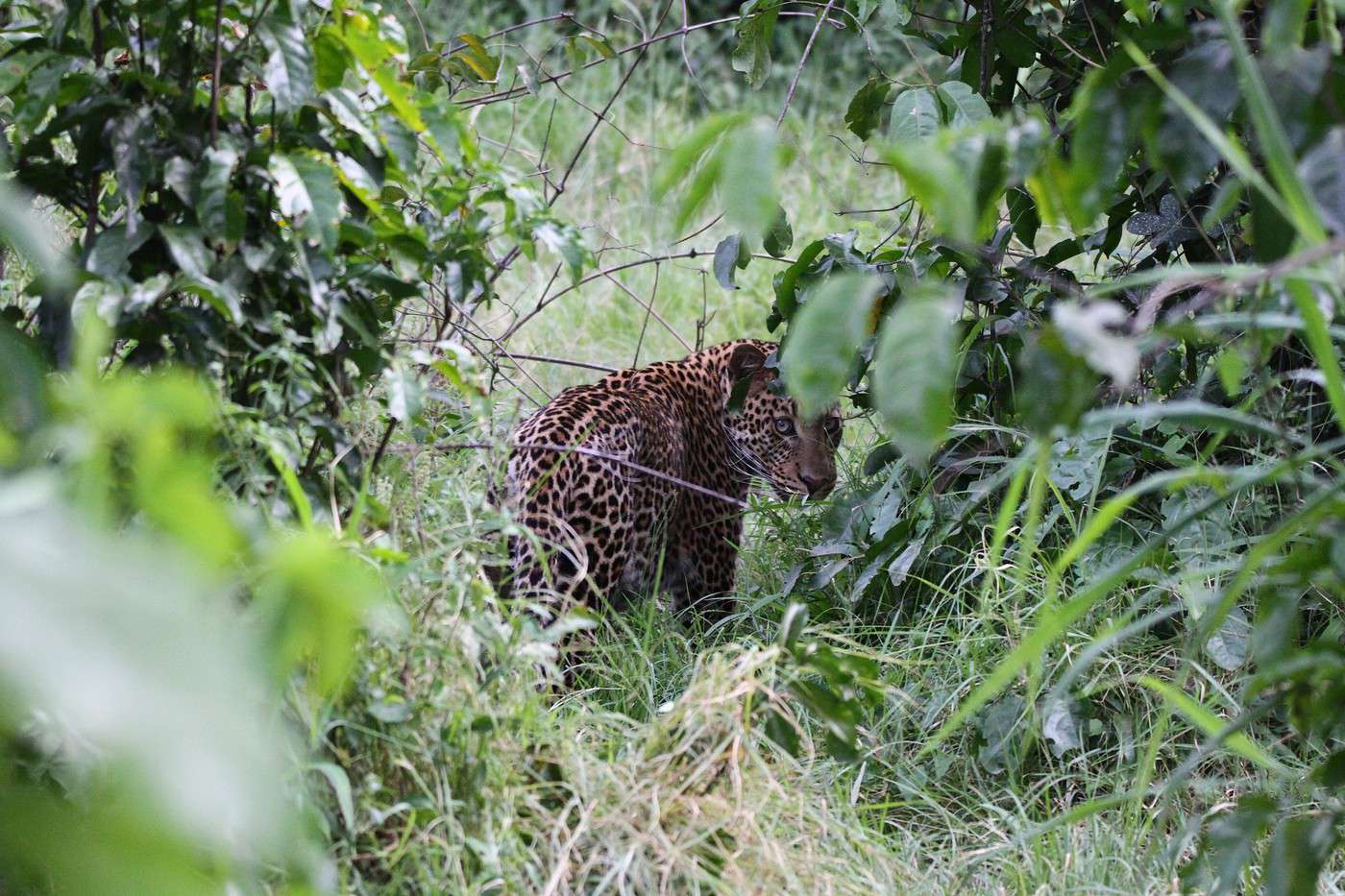
I saw a female leopard use the ranger’s vehicle and its tourists to hunt. I move when the car moves, hidden behind it. I freeze when the car stops... and I sneak up on my prey.
Using a "foreign" element that’s become ordinary due to habituation.
That’s why, in cases of culling (for example, too many impalas), they shoot at night from a distant vehicle so there’s no association of car = danger.
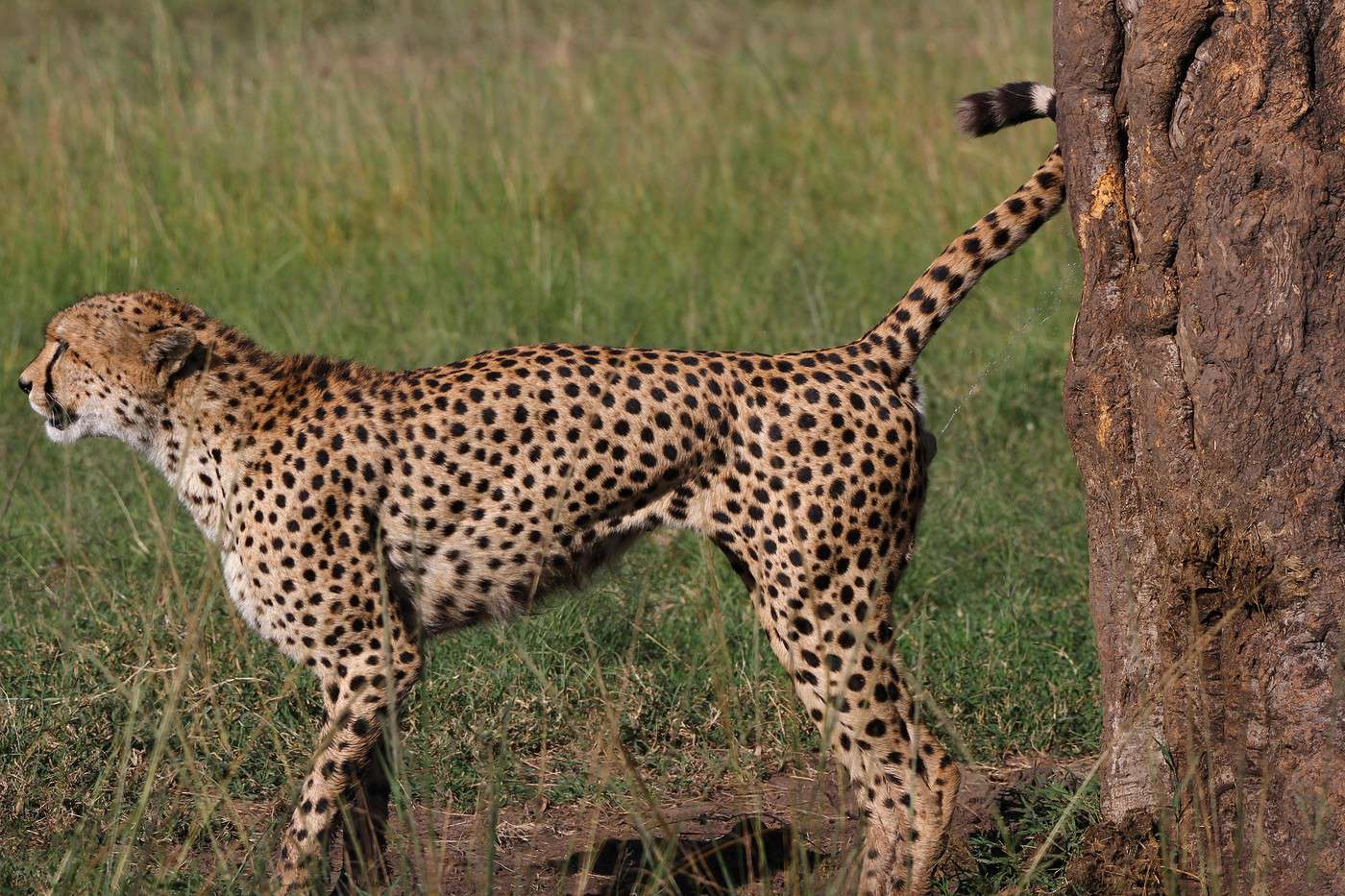
So our cheetah isn’t bothered by the car... The jackal comes to pee on the 4x4’s wheel... the leopard hunts with the car.
The four cheetahs that hunted a zebra in Madikwe, very close to our car, weren’t disturbed at all.
Well...
The price of an animal park where life is still quite wild... is this.
Well...
Now, too many cars, obviously... excess is rarely a good thing!
hey michel
one foreign element that’s become commonplace is what really gets me
honestly, maybe we shouldn’t have let great-grandma climb onto the hood
I live in a country that unfortunately ranks in the “top” and is therefore getting more and more visitors
so we’re bound to see worse things
valerie
I completely agree with you. I remember a similar moment in Tanzania, in the southern parks. A trio of young lions right by the open 4x4 🦁 No problem at all, even if we were pretty nervous. That’s when I started to understand. As for the crowds of vehicles, I’d be in favor of limiting their numbers through quotas, but not banning access entirely. The parks should remain a business, but a respectful one.
hi again
I thought, being a vet, your opinion might be a bit different from regular tourists.
Madikwe, which you mentioned, is closed to animals but also to visitors—it costs an arm and a leg!
I’ve never been there, preferring self-drive.
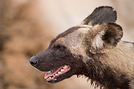
I’d rather see African wild dogs on the main road between Nata and Kasane and two cheetahs between Panda and Robins outside the parks—this actually happened to me, since what everyone ends up writing about on this forum is what they’ve *actually* seen.
Valérie
Unfortunately, if the grandmother hadn’t climbed onto the hood, it would be because there was no tourism. Tourism still brings a lot of money to countries—African ones in this case—that really need it...
And probably, I do mean probably, that wildlife (in a world that, whether we like it or not, depends on that money) wouldn’t be protected much...
Seeing African wild dogs on the road you mentioned is amazing, but... for a traveler who’s only there for a limited time, it would be quite a stroke of luck.
Travelers who come to Africa to see animals... prefer to actually see them! In good conditions if possible! Otherwise, they won’t come back.
Madikwe is a closed space, yes, and expensive, but it’s large and recreated. A new, recent space for travelers, sure... but also for the animals that can live there...
So, isn’t it still better? No?
As someone who tries to explain that we shouldn’t be fooled by "petting lions" (see my discussion), I’m very aware of the excesses of tourism... but also of its benefits for wildlife, communities, and countries (see Tembe, iSimangaliso, etc.).
I prefer seeing African wild dogs on the main Nata-Kasane road and 2 cheetahs between Panda and Robins outside the parks—this actually happened since everyone eventually writes about what they’ve seen on this forum
... leopard and greater kudus jumping a fence over 1.7 m high on the road from Nata to Maun, impressive! 🙂.
Just a side note: I followed the Instagram link Besl shared—bravo!!!
I think your photos are stunning and have such an original framing 😎
I won’t comment on the Masai Mara since I haven’t been there, but I completely agree with your "stars" for the other camps in Southern Africa, especially BBC Camp where we spent 3 amazing days... by the way, have you been to Chitake? If not, book a flight ticket and go ASAP 😉
Best regards,
JF
Thanks! No (not yet!), we haven’t been to Chitake, even though we stayed for 9 days. We really fell in love with BBC Camp. Mana Pools is a wonder of the world...
Well, this is complicated!
Many animals will charge at people on foot 🦁
The hunter
In Gorongosa, the animals are very wary
After thirty years of slaughter
But if we want to see rhinos outside of zoos, maybe we should teach them to hate us.
Moving them while making it clear who’s moving them and giving them a fear of helicopters?
Stress to avoid ending up as, well, you know… balls, as they say.
I didn't quite understand what your usual way of traveling around Africa is?
Total self-drive?
Private car with a driver and logistics handled by an agency?
Organized small-group tour?
Accommodation in a rooftop tent, pitched tent, or lodge?
Food self-catering, a dedicated cook, or the lodge restaurant?
This could be one of the reasons for your disappointment.
I've done a bit of everything in Southern Africa, especially self-drive (Botswana, Zambia, South Africa, Zimbabwe), self-drive with a 4x4 and rooftop tent, game drives through all kinds of lodges—4-star, camping, you name it. Anyway, I'm not here to show off my "resume" of African experiences, but contrary to the venom Doppio might spew, I'm only here to share my point of view. Overall, that’s exactly what this forum is for: sharing experiences, desires, and tips about our shared passion for travel (and it’s perfect that way!).
I find it a shame to take things this way because, as I mentioned in my first post in this thread, this is JUST my opinion. I simply feel that some people might be interested in hearing about my experience in the Mara. The place itself is still stunning, the safaris are still fantastic, but the park is, well, quite touristy, and this camp just seemed a bit overhyped and disappointed me in some ways. Anyway, I’m not here to harm Mr. Crocetta’s business—I just have the right to share my experience, even if it doesn’t please everyone... Should we only give our opinion if it’s positive?
Some feedback can be explained by travel choices that don’t suit us.
For example, I know a multi-day guided group safari would just not be my thing, whereas others who love that way of traveling would adore it.
Plus, the Masai Mara isn’t exactly known for being quiet.
I think it’s a shame to take things this way
Meaning?
I didn’t express any opinions.
Just tried to find out more.
No need to get worked up.
Should we only share our opinions if they’re positive?
No.
But highlighting what’s positive for us and what’s negative for us.
Criticisms with universal appeal are rare.
What you don’t like might appeal to others, and vice versa.
To each their own quirks and desires.
The main issue is knowing them so we can sift through reviews and then take trips that reflect who we are—not the neighbor with totally different expectations.
Some feedback can be explained by travel choices that don’t suit us.
For example, I know a multi-day guided group safari would just not be my thing, whereas others who love that way of traveling would adore it.
No.
But highlighting what’s positive for us and what’s negative for us.
Criticism with universal intent is rare.
What you don’t like might appeal to others, and vice versa.
To each their own quirks and desires.
The main challenge is knowing them so you can sift through reviews and ultimately take trips that reflect who you are—not the neighbor with completely different expectations.
I couldn’t agree more!
The whole point was to share what I liked and what I didn’t —everyone has their own way of traveling, as you said, and we generally know our tastes.
And the Masai Mara isn’t known for being low-key.
I still thought—never having been there but having done my research—that the Masai Mara wouldn’t be *that* touristy (meaning, for me, beyond animal welfare and ethics, with 50 vehicles revving around a leopard...). I figured a private safari (just 4 of us in the car—perfect!) would suit me better. I was wrong, that’s all.
In my first post on this thread, I started by saying, on the one hand, that this was just my opinion, and on the other, I also described the things I enjoyed about the trip (the stunning Mara, the comfortable tents, the view of the river from the campsite...).
Sorry for the "I think it’s a shame people are taking it this way"—in this case, I was talking to Dobbio, who’s outraged by my comments because he must have shares in Melting Pot Safari .
Joking aside, it’s totally normal for Africa to stir such passion—let’s be honest, it’s just so incredible...!
Hey Michel,
This idyllic vision of tourism bringing money to local populations... really?
Apart from possibly employing them as staff, what else?
It’s because the money goes directly into their pockets that they make an effort—take Bob and Zuma, for example.
Have you seen the poverty of the rangers at Hwange, Zimbabwe’s largest park? They were so eager to please us for a light bulb or a leaking tap.
I just got back from a private camp in Hwange—a small family-run concession, not expensive. When you ask the staff what we can bring them next time, it’s food.
Zimbabwe and Botswana are handing everything over to South Africans who want to make a quick buck with luxury lodges.
Don’t you think that when private reserves are created, some locals get pushed out?
What will they do in Madikwe when there are too many elephants—because it *will* happen—since natural selection isn’t allowed? They’ll let them starve, like what’s happening in Zimbabwe right now due to lack of food.
Bad image for tourists.
Because in the end, tourists want to see an idealized version of nature, and with a guide, you can avoid the disturbing sights.
I have friends in France who have no idea about these issues—they go on cruises and...
But I was lucky enough to be born in ’61 and have seen things that no longer exist.
And since I’m an Africa lover and have lived here for 16 years, I’m getting a little "emotional."
Valerie
Totally agree with you.
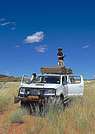
We visited the Masai Mara on our own, with a rented car and our camping gear, after exploring other parks like Samburu, Nakuru, Aberdare, Tsavo West, and Amboseli (we spent 3 weeks in Kenya).
We saved the Masai Mara for last, and, along with Aberdare, it was the most disappointing park for all the reasons you mentioned. We also had to deal with rangers over a serious "offense": two of our wheels had left the track to see leopards eating meat... which those same rangers had just thrown to them (gotta attract tourists to that spot, right?). We got out of it by pretending not to understand a word of English and only speaking French to them. Never has such a farce cost us 100 €.
In the end, there are so many less prestigious parks that are nice and give you more than the Masai Mara.
Wow! What a heartfelt and frustrating post... I'm just as sorry for you as I am for myself, and I truly hope to one day visit the other parks you mentioned under better circumstances!
Thanks for sharing your experience!
Sorry you were disappointed, but we just returned from a 10-day safari in the Masai Mara with MELTINGPOT SAFARIS and we were absolutely thrilled. The welcome, organization, meals, and quality of the guide-drivers were all fantastic. When you do this kind of trip, you have to be very open-minded and tolerate a few minor inconveniences or imperfections...
Tony CROCETTA wasn’t on-site, but he still called us twice before departure and a third time recently after our return.
And we were truly amazed by the wildlife and birdlife we encountered, thanks to the eagle eyes of Edward, our guide-driver!
For the record, we travel regularly around the world.
This message doesn’t require a specific response; I just wanted to share our positive experience with MELTINGPOT...
I have a very slow internet connection, so I won’t be posting any photos.
Especially since I consider myself a "newbie" when it comes to DSLR cameras.
However, you can download a summary of our journey (people, landscapes, animals, birds) here:
Download the files: www.grosfichiers.com/X79GxqkJYmb
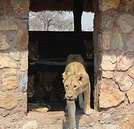
I didn’t believe this cat at all (I thought it was a "stray domestic" one...), so I put my camera down too soon because I could’ve gotten much better shots!
Maybe you could take advantage of the lockdown to share some of your best photos?
I’ll admit I don’t like downloading friends’ photos—not so much for security reasons (fake JPG files with malware, which isn’t an issue here) or storage space, but because of the risk of importing random keywords that don’t match ours. There, I said it.
Otherwise, thanks for your justified, positive feedback about Melting Pot. If there was still any doubt, it’ll help set the record straight, call a spade a spade, and dot the i’s, etc.
Have a great day, take care of yourselves, and stay safe!
For photos, I have an ADSL connection with a *very* *very* *very* slow speed, so I don’t dare try!
Back in the day... in 2025 (sic!) when my countryside is hooked up to fiber, I’ll get into it. Hi Hi! Another panorama on F....R:
https://www.flickr.com/photos/187263250@N02/
With two friends, we spent three weeks in Kenya on a self-drive trip.
Aberdare and the Masai Mara were the most disappointing parks. Luckily, since we were independent, we didn’t stay more than a day—same reasons as you mentioned. We were also threatened with a $100 fine because two wheels of our vehicle went off the track... and we were only saved by pretending we didn’t speak a word of English...
There are cheaper, friendlier, and far more charming parks. And Kenyans are welcoming, helpful, and even selfless when they realize you’re struggling sometimes...
Hi Bernard, thanks for your feedback. This isn’t about competing perspectives—I just shared my own because I wish I’d had these insights before leaving.
That said, I’ll admit that the Masai Mara is indeed a very busy park, and I was aware of that before I went. It’s a shame for such a beautiful corner of Africa, but personally, I won’t be going back for all the reasons I mentioned. Oh well, the world still has so much to offer! ;)
Jijicques, thanks for your reply too. I’d love to hear about other incredible places if you’re happy to share! 😉
Claire, what might interest you about Kenya, Tanzania, or Zanzibar, where we were in September 2019? We were there on a free drive, without going through an agency.
Oh, thanks for your feedback! I know you can also go there on a self-drive trip. I’d be really interested in Tanzania, since I’ve never been and, like many, I dream of the wildebeest migration. Kenya in general too—if you’ve had any incredible safari moments yourself, especially if you were lucky (and maybe experienced) enough to spot animals without being packed in with 50 vehicles around one poor creature...
Camps, local guides if needed, and vehicle rental agencies—everything interests me! Thanks a million in advance for sharing!
Back in 2018, we did a self-drive trip in Tanzania and had some amazing encounters. If you need any tips, I’d be happy to help. Otherwise, you can check out our travel journal on our site!
Je risque de partir pour le kenya au mois de janvier 2010 et parmis les différents itinéraires qui me sont proposé j'hésite, normal. Mais je voudrais savoir si…
Y a -t-il quelqu'un qui va bientôt au Masai Mara côté kenyan et qui pourrait me ramener des photos d'un endroit précis. J'ai besoin de ces photos pour…
Pour une fois je délaisse le self drive Sud Africain pour un safari photo organisé dans le Masai Mara. Ça faisait quelque temps que j'échangeais via email avec…
Afrique de l'Est et Australe › Kenya / Tanzanie · 2 replies
J'ai des infos totalement contradictoires concernant l'ouverture du poste frontière entre le Parc du Masai Mara (Kenya) et son prolongement en Tanzanie, le…
J'essaie de choisir mon voyage au kenya. Je me dirige vers nomade aventure, mais j'ai le choix entre 2 voyages. Selon vous, mieux vaut: - visiter le masai mara…
Question: we’re doing a 3-week trip in Namibia, including 5 days for Victoria Falls.
I’ve booked one night in Brandberg, and then I have some questions.
I was thinking of spending 2 nights in Palmwag, then heading to Etosha for one night in Okaukuejo and then 2 nights in Halali.
Alternatively, from Brandberg, I could book a night near Galton Gate and then enter Etosha.
I’m not really sure about the distances, especially with a 4x4.
Same for the return trip: Halali to Windhoek seems long. Maybe it’d be smart to break it up on the way back? (We have 2 days to get back if needed.) If so, where?
Jambo! I organized my trip through this kind of group, so I thought I’d share my experience here. We traveled as a group of four, including two kids aged 9 and 11. After requesting around twenty quotes, I decided to book the safari portion with MAKING MEMORIES IN AFRICA. Ally responded quickly and listened to all my requests—unlike other agencies—such as having a French-speaking guide, the order of park visits (Tarangire, Manyara, Serengeti, then Ngorongoro), and a mix of budget hotels and camping to keep costs down. There were still four agencies in the running, and price was the deciding factor. Even though they were the cheapest, I felt better taken care of than with others. For example, all meals were prepared by a Maasai chef, Louis, who accompanied us throughout the trip, while some others ate meals out of cardboard boxes. Samuel, our guide, explained so many things and answered all our questions. José drove us safely the whole way. Everything was done with great cheer!
At the end of the stay, Ally came to meet us and gave us t-shirts with the agency’s logo—we loved that they took the time to hear our feedback in person. In short, I highly recommend them +++, especially since it’s a local agency that also supports a charity for women and children.
For Zanzibar, I organized everything myself. I hesitated for a long time but eventually booked all four nights at the same place. We don’t like crowds, so I initially considered Jambiani but ended up choosing EVERGREEN BUNGALOWS in Bwejuu. We took their first airport-to-hotel transfer since we arrived at night, and it felt safer. Great value for money, in our opinion. Just be aware that it’s quite isolated—perfect for relaxing and going on excursions. There were very few beach vendors, unlike what I’d read about Zanzibar. We lived with our feet in the sand from morning to night, with a small basin of water outside our room to rinse off. Such a lovely spot!
I had asked for some excursion prices before leaving but ended up booking on-site. Not at our hotel, but at a nearby restaurant that was cheaper. After some thought, since we were based in Bwejuu, I wanted to do Blue Lagoon and Pungume (both departing from the south of Zanzibar).
Blue Lagoon: About 3 hours total, with snorkeling on a small reef full of fish (coral wasn’t great) and a stop at a spot with tons of starfish, plus local snacks, fruit, and drinks.
Pungume: An amazing day with a 50% chance of seeing dolphins (we missed them), a visit to the mangroves, then snorkeling at a spot with some nice coral and, of course, fish. We ended with a fantastic grill (tuna, shrimp, squid, lobster, and fries) on a sandbank in the shade.
Finally, before heading to Stone Town, we visited Paje Cave, which is much less known than Maalum. It’s smaller, but we saw bats, went for a swim, and fed the chickens and rabbits (great for the kids). To finish, we explored Stone Town on our own and had dinner at Forodhani Market.
For flights, we flew with Turkish Airlines from Barcelona to Kilimanjaro and back from Zanzibar—no issues there. However, I don’t recommend the Kilimanjaro-Zanzibar leg with Precision Air. Our luggage didn’t arrive, and according to the hotel, this happens often. We only got it back a day and a half later.
I’m planning a potential trip to Namibia for a classic circuit in April 2027.
I’m surprised by how expensive the accommodations inside the parks are—really steep! Is it possible to stay outside the parks but still close enough to enjoy the game drives?
Do you have any recommendations for more reasonably priced lodging? I’m okay with spending 200 to 250 € per night.
No camping—the friend I’m traveling with absolutely refuses 😉, but maybe upgraded tents would work.
March or May 2027.
Around 15 days in the Western Cape,
then 15 days in the southern KNP.
Arrival either in PE or George.
The pros know I’m somewhat familiar with the area... that I don’t camp... that my accommodations can be simple and remote, self-catering but with basic comforts... that I’m looking for spots that are a bit off the beaten path... in a relaxed mode...
From George:
Late arrival... need some rest... Herolds Bay from George to the N1.
Tsitsikamma is catching my eye (Storms River)... with or without a stop in Knysna.
Question:
What’s the current condition of the pass from Knysna to Uniondale? R339.
And while I’m at it, the condition of the R340.
Tsitsikamma, Knysna, and my questions still apply if arriving in PE.
Is the Swartberg still closed?
Any recommendations for accommodation in Prince Albert?
If I cross the escarpment, I’ll continue via Anysberg NR, Touwsrivier... any thoughts?
From there... Tankwa Karoo or Mount Cedar (or both).
Then heading back down to the coast... the highlands of Hermanus or Kogelberg NR (any opinions on the latter?).
Or,
A more classic route along the coast...
If I arrive (fairly late) in PE... any ideas for accommodation in that little area?
Given that Nyathi Camp is winking at me...
(For context... a while back, I stayed at Riverbend (same Addo sector, private concession)... and I visited the ruins of that abandoned lodge at the time, which has clearly been renovated since... located in a very quiet part of Addo...).
Any feedback from the pros?
Well, that’s about it...
I’m open to any other tips or advice!
I’m reaching out with a question about which park to choose for a 3-day safari in Kenya.
After 20 days in Uganda, I’m meeting up with my dad for a 3-day safari (that works for him). We’ll be meeting in Nairobi and have a full day to travel to a park (preferably the farthest from Nairobi to avoid crowds?) and spend 4 nights there before heading back to the capital for our flight to France.
I’d love to hear your recommendations since I’ve read so many great tips on this forum.
Hi there,
I’m considering camping in Nyungwe Park with my family (2 adults, 2 kids) at Uwinka campsite. Problem: the park rents the tent but without any gear (mattresses, blankets). We don’t have a car. Is it possible to rent or buy mattresses and blankets near the park, please?
Thanks for your help
Hi, I'm looking for information on the road conditions in Moremi. We're leaving in 15 days, and from what I've heard, the roads are pretty tough to drive on. Any advice?
Thanks
At the end of July, we’re heading to Namibia with a group of five for a three-week road trip and visit to the national parks.
We’ve read conflicting info about buying entry tickets—either online (where?) or at the gate when we arrive?
I’d love to hear your thoughts on the agencies you used to plan your trip to Uganda.
There’s the whole issue of gorilla permits, which need to be booked in advance and involve a significant financial commitment. That’s where I’m at with my trip planning. Between checking lutb.go.ug/ and reading online reviews, it’s hard to move forward with confidence.
I contacted the French Embassy, but they don’t provide any recommendations. I almost booked with an agency that had a really bad review from February specifically about the permit process.
How did you go about choosing your agency? Given the large sum involved, I’m this close to booking through a travel agency in France for this part.
From what I understand, no matter which agency books the permit, you’re ultimately guided by professionals trained for gorilla trekking based on the permit itself? I’m assuming that’s how it works.
Thanks for your feedback, and I’m really happy to see the forum’s new energy—it’s been super helpful to me in the past.
We’re heading to Uganda next summer for three weeks with our two kids, who’ll be 7 and 9 years old.
We’ve been to Southern Africa before but not East Africa, and after a trip to South Africa two years ago, the kids wanted to return to Africa, while we wanted to explore a new region while staying independent... Uganda’s been catching our eye for a while, and with Rwandair offering relatively attractive prices, we’re going for it!
We’ll be traveling in a 4x4 (self-drive) with roof tents. I don’t have any 4x4 driving experience, so it’ll be a first for me, but we’ll manage 😉 No great apes for us—kids need to be 15, and we don’t want to do that experience without them.
I don’t usually ask the forum much for trip planning, but this time, I’d love your thoughts and advice!
First question: Karamoja or not? At first glance, if we want to add it to a "classic" loop in the southwest, it doesn’t seem realistic—too packed, too much driving. We could consider doing the full loop via Kidepo and then heading down to Murchison, but I’m worried the trip might feel less varied and less kid-friendly. That said, the region looks stunning, and I’m struggling to accept not going at all... What do you think?
If we skip Karamoja, we’d do a loop: Murchison/Fort Portal/QENP/Bunyonyi/Mburo, which seems pretty comprehensive and would let us take our time, which is nice. A few random questions:
- How much time should we plan for the Fort Portal area? I was thinking at least 3 days to visit Bigodi Swamp, walk around the craters, and maybe do a community walk (any thoughts on that?).
- Between Murchison Falls and the Fort Portal area, is it worth breaking up the drive? I spotted Lake Albert Safari Lodge on the shores of Lake Albert—it’s not too expensive and looks nice.
- I’d love to do some easy walks/hikes at the foot of the Rwenzori Mountains, ideally without a guide, but it doesn’t seem straightforward. Do you know if it’s possible to do nice walks independently? I’ve read about hikes in the hills near Kilembe but nothing very specific. Maybe staying somewhere at the foot of the mountains, like Ruboni Community Camp, would allow that.
- Lake Mutanda looks really cool, and so does Lake Bunyonyi... Ideally, I’d like to see both, but won’t that feel repetitive? Is Lake Mutanda worth the detour?
Last practical question, since we don’t have experience with this: for the car with kids, would you recommend two tents (a bit more space) or a four-person tent?
I’ll stop here—already a lot of questions...
Thanks in advance for your feedback, and looking forward to exchanging ideas!
Gabriel
We’re planning our second trip to South Africa in July 2026. In 2023, we did a loop from Joburg, Golden Gate, Drakensberg, Hluhluwe, St Lucia, Eswatini, Kruger, Blyde River Canyon, and back to Joburg.
This time, we’d like to go to Cape Town and do a road trip to Port Elizabeth, then fly back to Joburg to return to Kruger. At this stage of my planning, here’s what it could look like:
D1 to D4: Cape Town and Cape of Good Hope (Table Mountain, Lion’s Head, Waterfront, Bo-Kaap, Boulders, Cape Point, Chapman’s Peak Drive). I’ve spotted a few places to stay between Camps Bay and Hout Bay (3 nights).
D5 and D6: Either Karoo NP or Hermanus and De Hoop. Any opinions to tip the scales? I’ll admit I’m already leaning toward Karoo (the "wild" vibe of the landscapes and wildlife encounters appeal to me much more than the seaside, which feels less exotic). If we go for Karoo, where should we stay? Inside the park or in Beaufort West? I’ve seen good reviews for Ko-ka Tsara Bush Camp, but maybe it’s better to stay in the Sanparks cottages to make the most of the park? (2 nights)
Option B is to do Stellenbosch (though vineyards aren’t great in winter) and/or the Whale Route—Betty’s Bay, Hermanus, De Hoop (2 nights near Gansbaai).
D7 and D8: Klein Karoo, Oudtshoorn. Staying at De Cango Guest Farm (2 nights).
D9 and D10: Knysna, Robberg Nature Reserve, Tsitsikamma (2 nights in Plettenberg Bay and 1 night in PE).
D11: Flight from Port Elizabeth to Joburg at 7 AM and drive to Marloth Park.
For Kruger, I’ve booked 2 nights in Marloth Park, 1 night in Skukuza, 2 nights in Satara, and 1 night in Talamati, which we loved. I’ll book the last night in Graskop later since we want to revisit the Blyde Canyon area.
I’d love all the feedback you can give on my itinerary, especially for days 5 and 6.
If you have recommendations for accommodations for 4 people, I’d appreciate those too.
Thanks! 🙂
We’re a family of four (two daughters aged 18 and 21) and we’re planning a three-week trip to Tanzania. Zanzibar would be our main base, but we’d also like to do a safari on the mainland.
Could you share any tips on:
- the ideal length for such a safari, the best place to go during this period (and easily accessible by flight from Zanzibar)
- your recommendations for the most suitable type of stay for a family like ours
- reliable local agencies with reasonable prices that could help us with this plan
Hi everyone, I’m here to get some advice on visiting KRUGER Park.
From what I’ve gathered through my reading, I understand there are two ways to visit the park:
- Independently with your own vehicle
=> Do you drive all day?
- By booking with a professional
=> Safari early in the morning and late in the afternoon. But what do you do in between?
When it comes to accommodations, the options are:
- Booking in one of the park’s camps, where the lodging is basic but functional
- Booking in a private reserve, which is more comfortable but prohibitively expensive
- Booking outside the park, which means entering the park every morning. But if you want to stay for 3 days, that doesn’t seem practical to me.
Do you have any advice for accommodations?
To be honest, I’m really struggling to understand how it all works...
Thanks to everyone for your help.
Bidule 27
Hey everyone!
Heading to Namibia in a few days and I just read that the entry fees for all parks in Namibia have skyrocketed. Increases between 86 and 100%, and this has been in effect since April 1st (no joke). Have any of you heard about this, and if so, do you know if it’s actually being enforced?
For example, the fee for Etosha has gone from 150 NAD to 280 NAD per day per person.
Thanks in advance!
I’m really interested in traveling to South Africa in September 2020. My question is whether I should go on an organized tour or plan my own itinerary. Organized trips are pretty expensive $$$$, but the security aspect reassures me. I’d love to hear your thoughts on safety in South Africa and whether it’s easy to arrange activities like visiting vineyards, Cape Town, and going on a safari on our own. Which is better in terms of cost—booking an organized trip or doing it ourselves? It’s definitely less exciting to follow a group for 10 days. We’re a couple in our 50s who love nature.
😊🦁
We’re heading out in April 2027 with our 4x4 to explore part of Southern Africa. Right now we’re researching all these beautiful countries and deciding where to ship our vehicle. We’re from Le Havre—has anyone here already shipped from that port to South Africa or East Africa?
As for all these countries, is wild camping allowed, tolerated, easy, or difficult?
We’ve already visited a few, but you can read just about anything online, so getting tips from real independent travelers is way better :)
We’re all ears for any hacks, experiences, or spots you’d recommend.
See you on the road with Doddy
Hi,
I’m starting to plan a great trip for the last three weeks of January 2027 (my first time in South Africa).
After spending a few hours (!) browsing this forum, here’s a rough first draft of my itinerary:
D0 Arrival at JNB
D1, D2 Blyde River Canyon
D3, D4, D5, D6, D7: Kruger
D8, D9, D10: St Lucia and surrounding area
D11, D12, D13, D14: Drakensberg + Lesotho
D15 A very long driving day to the south (hope the AC doesn’t break down!)
D16, D17, D18, D19 southwest coast (so far I’ve noted Oudtshoorn, Robberg Nature Reserve, Wilderness NP, De Hoop Reserve, and a bit of the wine route)
D20, D21 Cape Town (peninsula and a bit of the city) + domestic flight and return flight (departure from JNB at 11 PM)
A few questions before refining this:
- Do you see any major issues with this itinerary?
- We don’t have a choice on dates, and personally, I prefer green landscapes to desert ones anyway, but do you really see far fewer animals in January than in the dry season? Five days in Kruger should give us enough time to spot plenty of different animals despite the tall grass, right? As for the heat, we’re from Réunion, so we’re relatively used to it, even though I know it’s not the same type of heat.
- Can I trust the distances and driving times given by Google Maps?
- Picking up the vehicle in Johannesburg and dropping it off in Cape Town: how much might that cost us? I’m thinking it probably won’t be worse (in terms of time or money, since there are five of us—2 adults + 3 kids) than going back to Joburg after Lesotho, taking a flight to Cape Town, and renting another vehicle... but maybe I’m wrong.
- Finally, wouldn’t it be better to focus on just one of the two regions (either the northeast or Cape Town and the south coast)? If it were up to me, I’d stick to the first part and extend a few stops... but not everyone agrees! And we’re thinking that since it’ll be really hot, a second part of the trip that’s a bit """cooler""" would be welcome.
Here’s my feedback after a recent trip to Ethiopia, organized with a local guide.
Despite a signed quote, months of prep exchanges (over eight months!), and phone calls right up to departure day, the guide didn’t honor the commitments we’d agreed on.
Haile Haftu FANUAILE, manager of the agency www.charmethiopiantours.com—who we’d organized everything with—didn’t meet us as promised when we arrived in Addis Ababa. Without any warning, he sent a different guide to accompany us for the entire trip (with a flimsy excuse).
Several parts of the signed quote weren’t respected:
– Services included in the quote but not provided on-site (meals, water),
– Hotels we’d chosen, booked, and paid for were swapped for lower-category places,
– Visits were canceled because the timing wasn’t calculated properly,
– One stop on the itinerary was dropped without any reason or explanation.
We’d paid a deposit for domestic flights, with a promise to refund any overpayment. A month after returning, 150 € per person (there were three of us) still hasn’t been refunded.
I’m sharing this to warn fellow travelers about the importance of solid guarantees to ensure contracts are actually honored. Double-check everything before committing!
Wishing everyone safe and smooth travel prep—Ethiopia is an incredible country!
---
Hello,
Feedback following a recent trip to Ethiopia, organized with a local guide.
Despite a signed quote, numerous preparatory exchanges over eight months, and phone calls right up until the day of departure, the guide did not fulfill his commitments.
Haile Haftu FANUAILE, manager of the agency www.charmethiopiantours.com with whom we had organized everything, did not meet us as agreed upon our arrival in Addis Ababa; without warning us, he sent another guide in his place to accompany us throughout the trip (with a bogus excuse).
Several points in the signed quote were not honored:
– services included in the quote but not provided on site (meals, water),
– hotels chosen, booked, and paid for, replaced by lower-category establishments,
– visits canceled due to lack of time, which had not been calculated correctly,
– one stop on the itinerary canceled without reason or explanation.
A deposit had been paid for the booking of domestic flights, with a commitment to refund the overpayment.
To date, one month after our return, 150 € per person (there were three of us) has still not been refunded.
This testimony is intended to alert travelers to the importance of solid guarantees for contracts that are actually honored, so that everyone can be extra vigilant before committing.
Good luck with your travel preparations, everyone.
Ethiopia is an extraordinary country!
Hello,
With so many agencies out there, we're feeling a bit lost. Could you please share your experience—like recommending your agency if you were happy with them—and tell us why, and if possible, what budget we should expect? Feel free to send it in a private message :)
We’re just the two of us, and ideally, we’d like to go in a 4x4 alone or with another couple, or in a very small group.
Hi there,
I’ve reached out to a few agencies for a week-long family safari next summer before heading to Zanzibar.
So far, the itinerary looks like this:
Day 1: Late arrival at JRO and overnight in Arusha
Day 2: Drive to Tarangire, park visit, and overnight in Tarangire
Day 3: Tarangire, drive to and overnight in Karatu
Day 4: Ngorongoro and overnight in Ngorongoro
Day 5: Drive to Serengeti and safari in Seronera
Day 6: Serengeti and overnight near Lobo
Day 7: Serengeti and overnight in Seronera
Day 8: Flight from Seronera to Zanzibar
On paper, it covers "everything," but maybe there’s a bit too much time lost on the road... Any alternatives?
To simplify (and cut costs), I was thinking:
Day 1: Late arrival at JRO and overnight in Arusha
Day 2: Arusha National Park with a walking safari and meeting the Maasai (?)
Day 3: Drive to Tarangire, park visit, and overnight in Tarangire
Day 4: Full day in Tarangire
Day 5: Tarangire, drive to and overnight in Karatu
Day 6: Ngorongoro and overnight in Ngorongoro
Day 7: Morning in Manyara or Natron and drive to JRO
Day 8: Flight to Zanzibar
Your thoughts and recommendations are welcome...
Thanks
We have the opportunity to spend about ten days somewhere for Christmas, and I’m really tempted by Zanzibar. I’ve been dreaming for a long time about the Spice Island, Stone Town, diving...
Which hotels could you recommend? Not a big "resort"—we’re more into "boutique hotels" or even an Airbnb house. Somewhere quiet (we’re not party animals).
I’m thinking of staying the first few nights in Stone Town and then moving to a beach, preferably one where we can swim regardless of the tides, without ending up in seaweed and mud at low tide.
I’m a bit lost with all the beaches because apparently, the north is very crowded, the south is very windy, and the east has some good and some not-so-good spots, with big tides or not... HELP! 🤪
I’d like to limit myself to a maximum of 2 different places to stay over the 10 days.
I’m reaching out because I don’t understand how Volcanoes National Park works.
I looked at booking for the gorillas, but there’s just the price listed, and the same goes for the Diane Fossey tomb.
So I contacted a hotel in Kinigi, and they told me that for the gorillas, you need a car to get to the park headquarters, and then once you know your group, you need to get from the headquarters to the trekking start point?? Do you confirm this? Is that really how it works? They say the hotel has a driver and it would cost 100 DOLLARS!!
I just found out that on top of the permit, there are other fees??? Uhh…
Are there other options, knowing I don’t want to rent a 4x4 since I’m traveling alone?
And if I don’t get the gorilla permit but just want to visit the Diane Fossey tomb, is it the same issue? From Kinigi, do you need a 4x4? How far is the tomb from the headquarters? Is it a hike you can do alone OR DO YOU NEED A GUIDE, ON FOOT? By car??
If someone could explain everything to me… and is the DF Foundation different??
If I decide to go through an agency, is it possible in Musanze (which would save me trips) or is it mandatory to go through Kigali?
Thanks so much for your help…
Best regards
I’m in the middle of planning a road trip in Southern Africa, and I’m specifically working on the itinerary—especially the distances.
I’ve got the time, but I’m struggling with the transfer days (so much driving just to end up spending the whole day on the road). That’s why I’m trying to analyze travel times, even if it means adding extra stops.
My highlights in Zimbabwe would be:
- Hwange
- Victoria Falls (and maybe Matusadona)
- Mana Pools
- Harare
- Gonarezhou
- Great Zimbabwe
But the distances and travel times seem huge (over 4 hours each time), and I don’t see how to make the drives more chill or shorten them—even if it means adding stops (but which ones?) between each leg.
Would anyone be able to estimate the travel time between these highlights and maybe suggest some nice stops to take breaks?
I’ve been to Rwanda twice before, in November 1991 and December 1993, mostly for solidarity work.
I’m looking into going back this November or December for three weeks, but I’m a bit hesitant when I see the tourist offerings—it’s so far from how I like to travel...
I travel solo using public transport and stay in places like guesthouses (GH), or accommodations run by cooperatives, associations, or religious groups. I love villages, markets, hikes, and local crafts.
So far, my searches for these kinds of lodging options haven’t turned up much.
For now, I’m considering visiting (in no particular order):
Butare: Kibeho, Bisesero, Nyanza
Ngenda
Akagera, Kibungo, Lake Muazi
Dian Fossey’s tomb (with the possibility of seeing gorillas)
Kibuye??? Is the political situation stable there? Or Cyangugu?
So here are my first questions:
-Is French still widely spoken?
-Are there lists of the types of accommodations I mentioned above, or places to find that info?
-Is what I’m planning doable using public transport? From the towns, are moto-taxis still available to get to villages, sites, and—most importantly—back?
-Is it possible to go hiking solo?
-Which are the best markets and what days are they held?
I know that’s a lot of questions already, and I really appreciate any relevant answers you can share.
Looking forward to exchanging more!
I’m planning my next trip in September, and after two self-drive trips to Botswana last year, I’d love to explore Kruger. Since I’m used to camping, I’m thinking of renting an equipped van from Kitted Africa (a small Suzuki van—thanks Safari Expert!) to sleep in a tent and occasionally in a hut.
Here’s my provisional itinerary, and I’d love to hear your thoughts if you don’t mind.
I’ve got 13 nights to plan in Kruger. The rental company is based in Nelspruit.
Entering from the south:
14-15-16.09: 3 nights at Crocodile Bridge or Lower Sabie
17-18-19.09: 3 nights at Skukuza
20-21.09: 2 nights at Satara
22-23-24.09: 3 nights at Olifants
25-26.09: 2 nights at Tamboti or Talamati
Exiting the park on 27.09 via Orpen Gate, then heading to Blyde River Canyon for a night in a hotel or elsewhere.
28.09: Return to Nelspruit, drop off the van, and stay in a hotel.
29.09 (midday): Airlink flight to Johannesburg, then an evening return flight to GVA.
What do you think? Too many nights here, not enough there?
I’ll be traveling solo, I love driving, and I enjoy settling in the middle of nature to listen, observe, and take photos (Botswana was perfect for that).
Thanks in advance!
Nicole
Photo: Baines Baobab, Botswana, April 2025
I’d like to return to Africa and stay in a lodge where I can see animals—not necessarily the Big Five—without needing any transport once I arrive at the lodge, and at a price under $250 per day for two people with full board. The week-long stay is planned for late June into early July. I’m looking for suggestions. Thanks in advance!
Hi, I’d like to travel to Ethiopia as a solo 60-year-old woman, backpacking style, between December 2025 and January 2026.
I’m wondering about the current state of the country: unrest, safety concerns, etc.
Government websites advise against going, saying it’s too dangerous.
But I’m skeptical—they tend to be overly cautious.
So I’m looking for reliable information, though I’m not sure where to find it.
Thanks in advance!