When it comes to security, there’s no comparison. Our Western countries are far less safe than most tourist destinations. I’ll still set aside Central and South America, though.
That’s not what I was warning you about—it was the intensity of police road checks in Xinjiang. Always courteous, but extremely time-consuming.
While Chinese citizens go through automatic mode (ID card scan, facial recognition identity verification, automatic database logging), that’s not yet the case for foreign nationals:
- Two separate checks and computer loggings by two different officers (making any collusion more complicated).
- Passport photo + face shot in the background, seemingly sent to a specialist center for authentication.
There must be some processing of the information and photo because the wait time far exceeds the time needed to input the data. Yet my current passport doesn’t list any sensitive destinations (so no Iran or Syria, where I’ve traveled in the past).
On top of that, there’s the vehicle check (X-rayed under a gantry, with no passengers or luggage) and the driver check (sometimes longer than for my passport).
Finally, if you arrive after a few buses or during rush hour, you’ll be stuck in line for a long time.
Also, note that speed limits are relatively low and strictly followed by drivers. On top of surveillance cameras, there must be plenty of speed cameras...
All these hassles are avoided by taking the train.
This is really specific to Xinjiang. No road checks during the rest of my trip.
The road network is of very high quality, especially the highways, but heavy with freight traffic on toll-free roads. When there’s construction, the traffic jam can get very long with all those trucks.
at least 1 month in Asia (China, Russia, Siberia, Mongolia, Uzbekistan, Kyrgyzstan, Kazakhstan, etc.).
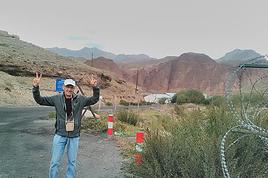
Since summer 2017, third-country nationals can enter Xinjiang from Tajikistan via the Kulma Pass. That was my case in late August 2018, and I ended up on the Karakoram Highway near Tashkurgan.
Fabrice
S'exposer à l'Etranger lointain amène à mieux connaître et comprendre sa propre Culture.
Worth seeing in 2020, but all my Chinese contacts confirmed there wouldn’t be any problems.
It would cost them a lot to admit there are "problems" in this great China that’s reclaiming its standing.
Still, as long as you don’t stop between Kashgar and Khotan/Hotan (an area I was "expelled" from), and your guides vouch for you, things should go smoothly.
You’re more likely to fear an earthquake. Or getting hit by an electric scooter you didn’t hear, since sidewalks are often given over to them—especially in Kashgar.
my driver took me across the Taklamakan Desert from Kashgar to Urumqi.
If you’re not going to Khotan, that means you’ll take the Northern Route via Aksu, Kuqa, and Korla. In that case, you’ll skirt the Taklamakan but not cross it. To cross it via one of the two desert roads, you’d have to go through either Khotan (toward Aksu/Kuqa) or Niya or Qiemo (toward Korla). That means taking the Southern Route, at least partly—the same one Marco Polo and your fellow countryman Ella Maillart traveled.
The distance from Kashgar to Ürümqi is huge, with few sights to see along the way...
urumki
Ürümqi is pronounced "Urumtchi" for French speakers. For the Han, it’s "Wulumutchi." Learning to pronounce pinyin is helpful for being understood—even by English speakers, especially for place names.
Gute Reise!
Fabrice
S'exposer à l'Etranger lointain amène à mieux connaître et comprendre sa propre Culture.
All the Silk Road itineraries passed through Xinjiang. As a result, there’s a wealth of artistic and cultural heritage there. That said, it was the landscapes that really blew me away:
- The Karakoram Highway.
- The natural setting of Tashkorgan.
- The Tianshan Canyon, north of Kuqa.
- The Flaming Mountains near Turpan.
- The grape-drying racks around Turpan.
There can’t be many places left where silk Atlas is still made by hand, like in Jiya, near Khotan.
You’re not unaware that there have been numerous attacks by Uyghur extremists
Absolutely—I’d been planning this trip since 2009 (after a first opportunity in 1995!), so I wasn’t oblivious to the fact that the region is under tight security.
In the cities, the checks turned out to be far less intrusive than some reports suggested, with claims of passport controls every 20 meters in certain areas.
In Kashgar, for example, I was only checked to enter the bazaar, the train station, the bus station, a small underground shopping hall near Id Kah Square, and the tourist sites I visited (Abakh Khoja Mausoleum, Kashgar District Museum). But I wasn’t checked at all in the historic old town of Kashgar, where I could wander freely.
Similar experiences in Tashkorgan, Kuqa, Ürümqi, Turpan, and Khotan.
What did surprise me was how much time the checks wasted—especially the roadside ones.
which resulted in massacres in several train stations.
It made headlines in China, but on a national scale, it’s microscopic. The Kunming station attack had 31 deaths—not even a Bataclan. On November 13, 2015, Paris had 130 deaths. That’d be the equivalent of 2,817 deaths in China’s population.
More than massacres, these are challenges to the Party’s "enlightened" governance—an unacceptable challenge to its authority.
Their way of handling it is undoubtedly more "radical" than ours, but as you point out, the Han Chinese appreciate this heavy police presence.
And I told them that if attacks like Bataclan 2015 or Nice 2016 happened too often, France could see similar security measures within 10 years. A state’s first duty has always been to ensure its citizens’ safety—even if it means building a fortress.
If you go in with a general hatred of "cops," there might be some... misunderstandings.
What made you think I had any hatred for cops in my comments?
I mentioned that the checks were always polite—sometimes even friendly. Like that young police officer who told me he was a software-engineering graduate... "and now, I’m a cop 😕..." Clearly disappointed with his career prospects. Others asked me about Paris, a city they dream of for its supposed romance. Most of the officers who dealt with me spoke some English, which made these exchanges possible.
Fabrice
S'exposer à l'Etranger lointain amène à mieux connaître et comprendre sa propre Culture.
My plan is:
Bishkek - Torugart - Kashgar - Yarkant - Hotan - Kuqa - Korla - Turpan - Ürümqi. Over 15-20 days.
"En route, le mieux c'est de se perdre. Lorsqu'on s'égare, les projets font place aux surprises et c'est alors, mais alors seulement, que le voyage commence." (Nicolas Bouvier)
Your experience in Yarkand will be interesting to hear, given my "deportation."
Note that in Khotan, very few hotels accept foreigners. In fact, only one hotel claimed to welcome foreigners, but it was already fully booked by midday—apparently due to a large number of Pakistani guests.
It took police intervention for the Khotan Hotel to agree to take me in, but at a price that was highly discouraging. Maybe a subtle way to refuse me, despite the police’s efforts—several officers really went out of their way to help and support me.
Fabrice
S'exposer à l'Etranger lointain amène à mieux connaître et comprendre sa propre Culture.
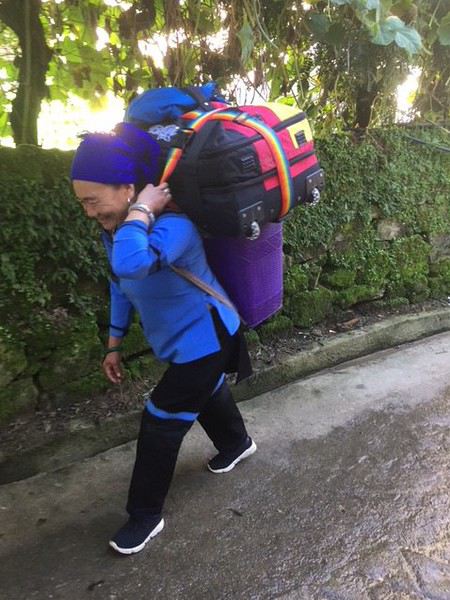
And there you have it. She carries my luggage for free! And in 70% of cases, they didn’t even want me to carry my own bags! I’m 76 years old, and 80% of Chinese people would give up their seat for me on buses! And this only happens in China! It’s never happened to me in Europe!!
"En route, le mieux c'est de se perdre. Lorsqu'on s'égare, les projets font place aux surprises et c'est alors, mais alors seulement, que le voyage commence." (Nicolas Bouvier)
For my part, I’ve taken many trips to Greece and Italy when I was younger. I mainly took the ferry from Ancona to Patras, but also traveled by road through the former Eastern Bloc countries. I never had any problems anywhere. We once left a large camera bag containing all our money on a terrace in Genoa. When we returned a few hours later, we found our bag untouched behind the bar at the restaurant. I think it all depends on our attitude, no matter where I’ve been. I’ve always been extremely cautious in highly touristy areas by not flaunting anything that might attract envy: keeping my watch in my pocket, wearing ordinary and worn-out clothes, using minimal photo gear that’s artificially aged, and never looking like I’m searching for something—only pulling out a map in discreet spots. In Naples, for example, I accepted the paid help of a young local "guide" and was able to go wherever I wanted without any issues. A little common sense never hurts.
In China, I only go for work, so most of my tourist stops are with Chinese friends. But I often go for walks in Shanghai in the evening, sometimes very late, and no one has ever bothered me. In professional relationships, I’ve never had any bad surprises after concluding a contract—sometimes just verbal but always very detailed and therefore inevitably time-consuming. I’m learning Chinese, which makes my interlocutors laugh a lot, but everyone appreciates the effort you’re making.
But basically, we agree. I didn’t write that I sensed any hatred of cops in what you said. It was a general remark, probably poorly worded. Corruption and dishonesty are rare among "ordinary" Chinese people, who’ve been taught certain principles since school and tend to respect them. I see this among the many students I interact with, often from working-class backgrounds. On the street, as soon as someone realizes you’re French, you hear "De Gaulle" in a flood of Chinese words. De Gaulle is compared to Mao. They both restored their country’s independence through acts of bravery.... You have to understand that "the Party," as people here often call it—and you can think what you want about it (but just think, otherwise Switzerland might be a better option)—wants to develop tourism. Why would the police bother people who are supposed to go home praising China? I see police officers and military personnel as people doing their jobs seriously, nothing more, nothing less. Stay calm, smile, and nothing bad will happen to you. There are over 10,000 French expats in Shanghai. It’s a very organized community, easy to connect with thanks to *Le Petit Journal de Shanghai*, which I recommend reading before your stay to avoid many misunderstandings. Of course, there are issues here like anywhere else—renting or buying an apartment, for example—but the French community will help you avoid known pitfalls. Don’t forget to register (by mail) with the French Embassy or Consulate before you leave.
Jean
https://lepetitjournal.com/shanghaihttps://www.youtube.com/watch?v=gBJzhp7Oskg&t=401s
In October 2017 in Xinjiang, in Kuitun (east of Ürümqi), I was stopped by Chinese police and taken to the police station, where I spent an afternoon being interrogated. From what I understood during the interrogation (same questions for hours, I think to see if I’d give the same answers), the officers thought I was a journalist "disguised" as a tourist. They checked my camera and my laptop. Everything was handled courteously, and once they were sure I wasn’t a journalist, they drove me back in a police car to where they’d stopped me!
During my road trips (Ürümqi, Kuitun, Urho, and back to Ürümqi), I must’ve been stopped at least fifteen times, with each stop lasting at least 10 to 15 minutes. Again, it was always courteous—during one check, since it was freezing cold, they even let me into a prefab building and brought me a chair!! There was only one stop where the atmosphere was really tense (not weather-wise!!!), where the officer who checked me didn’t even bother to look at me or say a word...
And a little moment of laughter with two officers in Urho: I was waiting in my hotel lobby, and when I saw the police come in, I took out my passport to hand it over. They walked right past me without even checking me, and as they left, they said in English, "Have a nice trip in Urho"!!!
In October 2017 in Xinjiang, in Kuitun (east of Urumqi), I was stopped by the Chinese police and taken to the police station, where I spent an afternoon being interrogated. From what I understood during the interrogation (same questions for hours, I think to see if I gave the same answers every time), the police thought I was a journalist "disguised" as a tourist. They checked my camera and my laptop. Everything went courteously, and once they were sure I wasn’t a journalist, they drove me back in a police car to where they’d stopped me! During my road trips (Urumqi, Kuitun, and Urho, then back to Urumqi), I was checked at least fifteen times, with each stop lasting at least 10 to 15 minutes. Same thing—always courteous—even during one check when it was very cold, they had me come into a prefab building and brought me a chair!! Only one check had a very cold atmosphere (not meteorologically speaking!!!), where the officer who checked me didn’t even deign to look at me and didn’t say a word... And a little laugh with two police officers in Urho, where I was waiting in the lobby of my hotel. When I saw the officers come in, I took out my passport to hand to them, but they walked right past me without even checking me. As they left, they said in English, "have a nice trip in Urho"!!!
That’s the China I know :) Stay zen, and everything goes well—sometimes slowly, which gives you time to meditate and observe... You never waste your time by staying positive and avoiding complaints. But what’s said in this post should make us vigilant. Bring a "clean" laptop to avoid any misunderstandings: no photos of your bedroom exploits, etc.
Jean
Yeah, in the moment it’s pretty annoying because you’re wasting time, but afterward, it still ends up being a good memory—even though when the police took my passport and made me get into the police car during my arrest, I totally freaked out because I had no idea why they were stopping me!!!
I did have a VPN on my laptop and I panicked they’d see it, but since it was in French, they didn’t catch on at all!!!!
Yeah, in the moment it’s pretty annoying because you’re wasting time, but afterward, it still makes for good memories—though when the police take your passport and make you get into the police car during the arrest, you freak out a bit because you have no idea why they’re stopping you!!!
I did have a VPN on my laptop and panicked they’d see it, but since it was in French, they didn’t catch on at all!!!!
For the VPN, I got permission from my company. I think tourists should be able to get it too—worth checking. Anything’s possible as long as you’re not breaking the law. Also, make sure to register with the French embassy or consulate before you leave. Really understand how your travel insurance (Visa or otherwise) works too. For Visa Premier, for example, double-check how it functions: there are two separate insurance policies managed by two different providers—one for trip cancellation issues before you travel and another for medical problems on-site. Set up your account(s) before you leave, and don’t call the number on the back of the card. Otherwise, it’s a nasty surprise...
Rule of thumb: don’t do anything without their prior approval via email. Prepare this before you leave, not in a panic while you’re there. Things are clearer with Mondial Assistance (or similar), which isn’t too expensive for a short trip. I don’t work for them at all, and I know we’re not supposed to advertise here... but it’s a super important point. I learned that the hard way
Okay, I did have a VPN on my PC and I freaked out thinking they’d see it, but since it was in French, they didn’t catch on at all!!!!
The main thing is they’re not really strict with foreigners.
Because there’s no need to read French. You just try accessing a site blocked by the Great Firewall, like googlenews. If it works, that means the Great Firewall’s been bypassed—so a VPN’s installed.
During the automatic scan of your smartphone (or computer) at the border, a routine could uninstall it, or at least flag it. But so far, they let it slide...
It’d probably be different for a Uyghur.
Fabrice
S'exposer à l'Etranger lointain amène à mieux connaître et comprendre sa propre Culture.
Ugh, my young friend, if China is China with all its absurdities... what is Paris today? Have you even visited?... If you didn’t like China, ouch! Don’t come here...
People sitting across from you on the metro can’t even cough or yawn without spitting on you! You’d think putting your hand over your mouth went out of style...
Everyone shoves you in the metro, but almost no one apologizes! You want to get out of a 4-seater, and no one budges—you’ll have to insist...
And then there’s worse (this really happened...). This thirty-something woman, true to her generation, thinks she can do whatever she wants, pulls out her camera, and starts filming the train car without asking anyone. You’re sitting right in front of her, and she’s filming your nose hairs. You call her out, saying, "Hey, that’s enough, right?" Her response? "Buuut I don’t give a damn about your crap!"
Look, I’m not usually violent, but that was the last straw for me. She got the slap she should’ve had since she was a kid...
Oh, and let’s not forget the young backpacker with overflowing consumerism who doesn’t know how to travel light and cares about nothing but their own comfort... who boards an already packed rush-hour metro with their huge backpack... and won’t even bother putting it down in a corner!
Add to that the famously unfriendly French attitude from service employees—post office workers, shop staff, suburban kids who only know insults as vocabulary... see the picture now?
Not sure it’s any better than a bustling China.
Thanks for this hilarious post. A few years ago, I was coming back after ten years spent on a remote island, far from Paris and its codes. Even the subways were inaccessible with a suitcase—and I had one. I looked at all those gloomy people, dressed in gray or black with matching expressions. Not a single smile, and I immediately wanted to go back to my island.
I watched all those somber people, dressed in gray or black with matching expressions. Not a single smile, and I immediately wanted to go back to my island.
If you know of a subway anywhere in the world where people actually smile, don’t hesitate to let me know—I’ve been looking for one for so long 😉
This discussion thread is really interesting.
Thanks Ericdu38 for sharing your experience. I haven’t read all the replies yet, but of course you were bound to get some negative reactions, some people contradicting you—but not just that, thankfully.
There are plenty of things that are "true" in life, but you’d better not say them! It’s disturbing.
It’s "politically incorrect," or people will call you 'racist,' or intolerant, or stuck in your comfort zone. Meh. Your experience and your feelings are what they are. So, thanks.
Personally, I’m not a big traveler, but I’ve felt similar discomfort in another country too, 20 years ago :-)
(Just to clarify, I’ve never been racist toward anyone in my life. I’m the son of immigrants in France myself.)
Hello
The forum is a place for exchanges. Some people think that if you don’t agree with them, well, you’re wrong.
You’ve got to go with the flow, and everyone’s happy 😊
Not me.....
Hey Eric,
I’ve been to China five times and loved every trip, but I honestly don’t get why people can’t understand that someone might not have enjoyed it. Now, making such sweeping generalizations after just a few days in China is pretty bold, don’t you think?
Nine pages???? for this title "No, I won’t be going back to China"... so what?
It’s fine not to go with the flow, but no need to turn into a tornado either! 🙂😛
I’m heading back for a third time in April to visit Yunnan, which I haven’t explored yet. I’ll keep a sharp eye out for all those (little) annoyances you’ve mentioned. Plus, I expect to get *some* hassle given the current chill in Canada-China relations. Both sides have political prisoners, and the Canadian government just issued a new advisory to avoid China. We’ll see how it goes.
I totally get how you feel. It reminds me of my first meal in China a few years ago. It was a tourist-trap restaurant with awful food. I was really worried at the thought of spending a month with that kind of cuisine.
But maybe we should question ourselves and try to understand why 99% of people here have a positive impression of China. Sticking with the food example, after spending over 6 months in China, I can now say it’s one of the best cuisines in the world.
It’s obvious that if you go through a travel agency, you don’t get to choose the restaurant—it’s picked by the agency based on price, not quality or style of food. Plus, it’s hard to ask for a less spicy dish if the meal is already prepared for a group of a dozen people.
For me, my best food memory was in a small Miao village. In the middle of the village, there was a little house with two guest rooms. The owner cooked whatever you wanted. The tomato omelets were delicious with fresh eggs from that day and tomatoes picked that afternoon. I’d watch her cook in her kitchen and ask in Chinese, "Not too spicy." It’s also really easy to have that little phrase in your phone’s translator. As a result, I extended my stay in that little village by 4 days. A really great memory.
Thanks, Daniello, for this positive message about a country that the French know so little about—and sometimes even refuse to see for what it really is. Personally, I’ve only spent time in cities, apart from the Great Wall near Beijing, some fishing villages near Hong Kong, and the water towns like Nanxun, close to Shanghai. I’m defending my thesis on March 15th, and I’ve got a job starting May 1st in Shanghai, a fascinating city where I plan to settle. As you rightly said, you *can* eat badly in China or have a bad experience—just book through Booking.com. But the vast majority of restaurants I’ve been to offered excellent food at very low prices, from noodle and shrimp soup in the subway to roast duck (not Peking duck) at the Hyatt hotel. When you live there, you can find creamy-edged camembert, excellent New Zealand beef ribs, countless fresh vegetables, and always-ripe fruit. But I think that’s true of any country—it depends on who you are and how you behave. You might hate Vienna (Austria) because sitting on the grass is forbidden and you have to pay to visit the cathedral. Or you might love it if you find a quiet family-run guesthouse and enjoy smoking a cigar in a *Winstub* with a brass band.
Safe travels to everyone, and don’t believe everything you read in the papers!
I’ve read quite a few posts in this thread and I’m sitting on the fence about a trip to China:
I’d love to go, but my girlfriend isn’t up for it (even on an organized tour), so I’d go solo as an independent traveler...
I’ve read quite a few posts in this thread and I’m sitting on the fence about a trip to China:
I want to go, but my girlfriend doesn’t (even on an organized tour), so I’ll go solo and independent...
You’re right—it’s the only way to form your own opinion. After that, the choice of travel style (independent or organized), timing, cities or countryside... all of that can paint a different picture.
Hi everyone, this is the second time I’m sharing my thoughts on this topic. No matter how it compares to other Asian countries—since I’ve visited 80% of them—that’s not the point. There are plenty of Asian countries where I’ve felt great, whether alone or with family.
China is a country with a mediocre population, but one where the diversity of flora, fauna, and landscapes is still exceptional if you venture off the beaten path.
The Chinese people have been an oppressed population for centuries, under imperialism and communism. They’re often disrespectful toward foreigners, spit a lot, eat with their fingers, and lack basic manners. Tourists are treated like walking ATMs, especially in big cities like Shanghai and Beijing, and scams of all kinds are everywhere—tea scams, karaoke scams, you name it.
Tips:
Stay alert and refuse any "free tea" invitations. If you invite a girl to your hotel, let the reception know (and tip them), but don’t follow her no matter what she says. If you go out for drinks, always keep an eye on your glass or finish it before hitting the dance floor. Stick to group outings—never go alone or just the two of you...
Best regards
Hello, for the second time, I’m addressing this topic: no matter how it compares to other Asian countries since I’ve visited 80% of them—this isn’t the point because I’ve felt great in many Asian countries, whether alone or with family.
China is a country where the population is mediocre, but one where the diversity of flora, fauna, and landscapes remains exceptional if you venture off the beaten path.
The Chinese people have been an oppressed population since the dawn of time, primarily due to imperialism and communism. They’re often disrespectful toward foreigners, spit a lot, eat with their fingers, and lack basic manners. Tourists are treated like sitting ducks, especially in big cities like Shanghai and Beijing, and scams of all kinds are rampant: tea scams, karaoke scams, and many others.
Advice: Stay vigilant and refuse any invitation for free tea. If you invite a girl to your hotel, let the reception know (tip them), but don’t follow her no matter what she says. If you go out for a drink, always keep an eye on your glass or finish it before hitting the dance floor. Opt for group outings and never go alone or in pairs... Best regards
Hello,
I’m responding to this message because a few things in your experience really stood out to me.
I’m not saying you’re wrong, but it really shows how everyone’s travel experience—good or bad—shapes their opinion.
Let me explain: when you say, “people are disrespectful to foreigners, spit a lot, and eat with their fingers,” I have to say that the two of us (we’ve been traveling as a couple and solo for a long time) haven’t noticed any of that. People have always been polite and ready to help us on the street. We crossed six provinces in a month, visiting big cities, parks, and any green space—people in groups were dancing, doing gymnastics, and singing. We’d watch them, and some even invited us to join. Maybe it’s because of our age—China still respects elders, a value we’ve lost back home. To explain their lack of respect, you say it’s because they’ve always been oppressed, but unfortunately, we don’t have that excuse for all the rudeness we see every day. On the contrary, we’re the “spoiled children.”
That said, I *did* find Chinese tourists insufferable when they travel abroad.
When you mention scams, unfortunately, tourism brings that out everywhere—you’ll find it in every country (including France), and I’ve seen plenty.
For our part, we weren’t scammed in China (I can’t speak for karaoke bars or clubs since we don’t go out at night), but we *were* scammed in Vietnam and other countries. We just chalk it up to the ups and downs of travel and try to be more careful.
Still, it’s a beautiful country to visit with so many incredible things to see. We hope to go back to explore the provinces we didn’t have time for.
In conclusion, for travelers—and despite our age—there’s always that pull to see other cultures, and we always learn something new.
Best regards
I completely share your point of view. We’ve already traveled to China 3 times, across the whole country, for 1 to 2 months per trip. Backpacking and independent travel. Like you, we’ve often been kindly helped by strangers. Whether in big cities or the middle of nowhere in the countryside. We’ve never had to complain about scams (except, of course, for one or two taxi drivers) or other mishaps. It’s true that we don’t go out to nightclubs or other hotspots. Of course, there are big cultural differences between the French and the Chinese, in behavior too. In fact, that’s maybe why we love going to this country so much. A trip to China is incredibly disorienting and eye-opening. In a word, it’s real travel.
it’s incredibly disorienting and unsettling. In a word, it’s a real journey.
“Disorienting and unsettling—a real journey.”
That’s what I take away after 17 years of living in complete isolation in this country of a thousand languages. Arrived in summer 2004, left in winter 2019.
It’s incredibly disorienting and eye-opening. In a word, it’s a real journey.
“Disorienting and eye-opening—a real journey.”
That’s what I took away after 17 years of living completely off the grid in this country of a thousand languages. Arrived in summer 2004, left in winter 2019.
And I’m heading back this fall...
China fascinates me...😇
It’s incredibly disorienting and unsettling. In a word, it’s real travel.
"Disorienting and unsettling, real travel"
That’s what I took away after 17 years of complete self-imposed isolation in this country of a thousand languages. Arrived in summer 2004, left in winter 2019.
And I’m going back this autumn...
China fascinates me...
China fascinates you, the country is no doubt appealing. As for me, it’s the Chinese people who drive me crazy. I’m currently in Cambodia and I still see the same "characters" shouting, respecting nothing and no one... it’s infuriating
The things you mentioned in your first article really struck me as fascinating. It’s hard to say whether I agree or not. Even though I live in China and work in the tourism sector, I find your writing incredibly talented. Your story had me laughing the whole way through.
As a Chinese person who’s lived in France for a few years, I see things differently. Life and people’s personalities here aren’t the same as in France. Actually, the experiences you had don’t happen everywhere or to everyone. I’m sorry you’ve kept such a memory of China. If you ever decide to come back in a few years, don’t hesitate to reach out if you need help—for example, I can help translate your questions to hotel staff over the phone. 🙂
When it comes to food, the typical style of each province might not suit your tastes.
As for people’s personalities, it’s hard to generalize because it really depends on the person and the place you visit. Sure, situations like the ones you described can happen, especially at the Terracotta Army. Your image of a bowl of rice and hundreds of "gugus" is so vivid, especially during holidays and school vacations. Kudos for noticing that!
When it comes to communication, I’m convinced that cutting-edge technology will improve things by 2025 and beyond.
If the staff don’t understand you, ask to speak to their manager. That sometimes works.
About the rare self-service laundromats and the high cost of hotel laundry services—yep, that’s true. Most hotels don’t offer free washing. You pay per item, which can get expensive fast. Your best bet is to stay in a serviced apartment, as some offer laundry services. Laundromats are rare in China. You might want to bring portable hangers. In the north, clothes dry quickly—bonus physics! 😛
For air travel, I won’t comment on the service, but the food is pretty bad. They say it’s because of competition from other transport options, so costs have been cut.
Personally, a trip to China isn’t always as bad as that. 🙂
By the way, the phrase "a bowl of rice and hundreds of gugus" is brilliant, but I’m not sure what "gugus" are.
Have a great day.
J’espère que les informations que je partage pourront vous aider à mieux découvrir la Chine, alliant authenticité et échanges culturels. lena.chinatour@outlook.com
J’espère que les informations que je partage pourront vous aider à mieux découvrir la Chine, alliant authenticité et échanges culturels. lena.chinatour@outlook.com
The things you mentioned in your first post really struck me as fascinating. It’s hard to say whether I agree or not. Even though I live in China and work in the tourism sector, I find your writing very talented. Your story had me laughing the whole way through.
As a Chinese person who’s spent a few years in France, I see things differently. Life and people’s personalities here are not the same as in France. Actually, the experiences you had don’t happen everywhere or to everyone. I’m sorry you kept such a memory of China. If you ever decide to come back in a few years, don’t hesitate to reach out if you need help—for example, I can help translate your questions to hotel staff over the phone. 🙂
When it comes to food, it’s possible that the typical style of each province didn’t suit you.
As for people’s personalities, it’s hard to comment because it really depends on the person and the place you visit. Sure, there can be situations like the ones you described, especially at the Terracotta Army. Your image of a bowl of rice and hundreds of "gugus" is so vivid, especially during holidays and school breaks. Kudos for noticing that!
Regarding communication, I’m convinced that cutting-edge technology will improve things by 2025 and beyond.
If the staff don’t understand you, ask for their manager to come. That sometimes works.
As for the rare self-service laundromats and the high cost of hotel laundry services, that’s true. Most hotels don’t offer free washing. You pay per item, which can get expensive fast. I’d recommend staying in a serviced apartment instead—some offer laundry services. In China, laundromats are rare. You might want to bring portable hangers. In the north, clothes dry quickly—bonus physics! 😛
For airline services, I won’t comment on the service itself, but the food is terrible. They say it might be due to competition from other transport options, so costs have been cut.
Personally, a visit to China isn’t always that bad. 🙂
By the way, the phrase "a bowl of rice and hundreds of gugus" is brilliant, but I’m curious—what are "gugus"?
Have a great day.
Hi,
Things may have changed since then.
My opinion is very personal.
Still, I might go back to do a bike trip from Hong Kong to northern Vietnam.
Yes, of course. That’s also my personal take. :) We’re all allowed to feel things differently. Sometimes I’m really touched by people’s kindness, and other times, I’m saddened by their lack of manners. It changes from one day to the next. I’d love to chat with you about our experiences via PM or if you ever need anything. ^^
J’espère que les informations que je partage pourront vous aider à mieux découvrir la Chine, alliant authenticité et échanges culturels. lena.chinatour@outlook.com
Regarding Ericdu's comments. His position is incomprehensible.
I’ve spent a month in China three times. In Tibet, with the southern minorities, and around Beijing. Never in tourist hotels! Always in charming or private hotels, welcomed like a king. My memories with the minorities, their hospitality, and sharing their last bowl of rice. Incredible.
And I did the entire Silk Road all the way to Torugart. With my Defender, alone from Switzerland to Mongolia, via Uzbekistan, Russia, and Kazakhstan. I never had any problems.
Traveling in Europe, it’s not the same welcome as in Eastern countries.
I’ve had more security issues in Europe (often traveling alone).
There you go.
I know some excellent Chinese guides. One of my guides is Mongolian and a minister!
I’m planning, in principle, one last trip to China in 2026-27 to do the Silk Road from Kashgar to Xi’an. The rest is already done!
Prices are very expensive for a foreigner to cross Xinjiang by road.
If I go back to China, I’ll let you know!
Take care.
John
"En route, le mieux c'est de se perdre. Lorsqu'on s'égare, les projets font place aux surprises et c'est alors, mais alors seulement, que le voyage commence." (Nicolas Bouvier)
Regarding Ericdu’s comments. His position is incomprehensible to me.
I’ve spent a month in China three times—once in Tibet, with the southern minorities, and around Beijing. Never in tourist hotels! Always in charming or private hotels, welcomed like royalty. My memories with the minorities, their hospitality, and sharing their last bowl of rice… Incredible.
And I did the entire Silk Road all the way to the Torugart Pass. With my Defender, alone from Switzerland to Mongolia, via Uzbekistan, Russia, and Kazakhstan. I never had any problems.
Traveling in Europe, the welcome in Eastern European countries isn’t the same.
I’ve had more safety issues in Europe (often traveling solo).
There you go.
I know some excellent Chinese guides. One of my Mongolian guides was even a minister!
I’m planning, in principle, one last trip to China in 2026–27 to do the Silk Road from Kashgar to Xi’an. The rest I’ve already done!
Crossing Xinjiang by road is very expensive for a foreigner.
If I do go back to China, I’ll let you know!
Take care.
John
Why is it incomprehensible? Everyone has their own feelings and experiences 😊
Is it just me who doesn’t get it? Everyone does what they want! Have a good evening.
"En route, le mieux c'est de se perdre. Lorsqu'on s'égare, les projets font place aux surprises et c'est alors, mais alors seulement, que le voyage commence." (Nicolas Bouvier)
Hi John,
I’m often touched by the positive, neutral, or even negative comments left by foreigners on all kinds of platforms, whether they’ve been to China or not. Having lived in France for 8 years and traveled solo a lot around Europe, my experiences were just like what you describe... As for the problems, I’ve had those too—because of my Asian appearance or just being anyone, really.
It’s really not easy to get used to living in a different situation, at least not on the first encounter. So, the feeling is sometimes generated by unfamiliarity. And accepting another culture can come from meeting at the right time or with the right person. What happened to Eric is so funny if you look at it from his own mood.
I told him I’d done a bike trip from a city in the north all the way to Mont-Saint-Michel. Gorgeous, though the raw seafood gave me a stomachache. Hahaha.
Little interludes like that are part of the exotic discovery too. 😛
The tour along the Silk Road can be expensive. Hotels, food, etc., are a bit pricier too. Plus, the distance between each stop is long, and you need a powerful car to make the trip. Also, the weather can change suddenly, so make sure you’re well prepared. Hope to hear from you when you’re back here.
J’espère que les informations que je partage pourront vous aider à mieux découvrir la Chine, alliant authenticité et échanges culturels. lena.chinatour@outlook.com
As you mentioned, the minority communities along the Silk Road must be very welcoming. Here, when we eat roasted meat, we prefer to go to restaurants run by Huns or Uyghurs. Because they have their faith, we believe they serve healthier meat. That’s just my personal opinion. I’d love to do a trip like yours one day—admire how people live, the architecture, and so on.
J’espère que les informations que je partage pourront vous aider à mieux découvrir la Chine, alliant authenticité et échanges culturels. lena.chinatour@outlook.com
Thanks, Lena, for these stories—you’ve got an excellent command of French!
I’ve never been to China, and the country really fascinates me with all the regions there are to explore.
Is the southwest of China really tropical?
Tibet isn’t tropical. No region in China is tropical—temperatures are always pleasant, except in the deserts. Same in Mongolia. I’ve never had temperature issues in any country in the East. Even in Vietnam, it was pleasant.
I visit these regions between September and December.
The advantage of China is you can fantasize and choose your region based on your interests.
The north: the Silk Road.
The south: Fascinating—Tibet and the southern minorities.
The west: the big cities.
Try to avoid big tourist hotels!
Charming hotels or homestays are a bit more expensive, but it’s worth trying.
Because the Chinese have a somewhat special character and are more welcoming than in Europe (and Switzerland).
Go to China, and you won’t be fantasizing anymore!!
Good luck.
John
"En route, le mieux c'est de se perdre. Lorsqu'on s'égare, les projets font place aux surprises et c'est alors, mais alors seulement, que le voyage commence." (Nicolas Bouvier)
East (to the right) of China are the big cities! Okay. Sorry about that. Not important. I’ve already driven about 50,000 km on the roads alone with my Defender (Russia, Siberia, Mongolia, Kazakhstan, Uzbekistan, etc., and all of Europe and Eastern Europe), and I still don’t know where East is!!!!
You can make mistakes!!
"En route, le mieux c'est de se perdre. Lorsqu'on s'égare, les projets font place aux surprises et c'est alors, mais alors seulement, que le voyage commence." (Nicolas Bouvier)
Please, I’m always happy to share useful insights from my experience. Even though advanced techniques can perfectly present another country and its features without visiting in person, many surprises—whether beautiful or astonishing—can’t be predicted by cold data. That’s something AI may never be able to replace.
Thanks also for pushing me into geographic theory and helping me structure my French writing better, so I don’t make reading too much of a chore for you. The southwest region accounts for about 15% of China’s total land area. Around 10% of this region can be considered tropical due to temperature, humidity, rainfall, culture, biodiversity, and lifestyle. This includes Hainan province, southern Yunnan, southern Guangxi, and small islands in the sea south of Guangdong province. The remaining 85% of the southwest region is classified as subtropical.
However, with the rapid urbanization over the past few decades, to find the tropical vibe we imagine, you’ll need to head toward remote, undeveloped areas.
This aligns with what Mr. Xagga mentioned.
Besides, the costumes, customs, and dishes of ethnic minorities, along with their unique traits, are far more fascinating than the landscapes you might expect. Given that the southwest region of China is home to 56 nationalities, once you’re there, you might forget your original plans—you’ll be so drawn into this incredible world.
Different neighborhoods showcase diverse characteristics. Thanks again for Mr. Xagga’s conclusion.
I love southwest China, Hong Kong, Kunming (the capital of Yunnan), Guilin (a city in Guangxi known for its landscapes), and Sanya (kind of like the Chinese version of the French Riviera, but... well, you know).
J’espère que les informations que je partage pourront vous aider à mieux découvrir la Chine, alliant authenticité et échanges culturels. lena.chinatour@outlook.com
In response to the very first message.
I spent 3 weeks traveling independently in China in 2015 (Beijing, Xi’an, Yunnan) and I recognize pretty much everything (except the food, which was rarely very spicy).
These characteristics can be appreciated or not—some might find them exotic, not take offense, find it funny, or even play along. All of that is subjective.
But what’s objective are the facts: yes, I often felt like a piece of furniture, or even an annoying object rather than a human being. Yes, locals often speak very loudly. Yes, tourist groups are massive, noisy, and make visits complicated. Yes, English, French, and Spanish are barely spoken... We could also add the XXL spitting in the street.
It’s good to know this, and then it’s up to each person to adapt based on their expectations, sensitivity, etc.
And of course, that doesn’t mean there aren’t also very nice things, kind locals, and beautiful sights.
To give context to my comment: I’ve been taking two independent trips a year since 2006, without a smartphone until 2022, no agencies, moving around without taxis or cars, eating local most of the time, and staying in small hotels or youth hostels. I’ve also visited most of Southeast Asia.
The comparison with India made earlier is partly relevant, but the big difference is that in India—at least in the tourist regions of Rajasthan—the pressure from touts, scammers, etc. is the most intense I’ve ever experienced... With Egypt close behind. Whereas in China, they leave you alone.
Hi there,
Xishuangbanna (Jinghong), on the border with Laos, is still a bit tropical, though.
I’ve never had any temperature problems in any country in the East. Even in Vietnam, it was pleasant.
It all depends on what you mean by "the East." Go to Rajasthan in May—you’ll tell me all about it...
It’s not cold in Thailand, Laos, or Myanmar in May or June either!
I’m trying to understand what you didn’t like about China. For context, your trip was in 1986.
- The food: way too spicy. No flavors, little taste. I’m speaking "in general" because we did try some good steamed dumplings, smoked pork, and dumplings...
On the other hand, we were blown away by Thailand, Cambodia, and India, but Chinese cuisine didn’t impress us.
I found the food in China to be very good and, above all, the most varied of all the countries I’ve visited. (Lots of vegetables and unknown condiments.)
Only one region had spicy food—Sichuan. (But I’m used to chili peppers.)
- Chinese behavior: disrespectful, rushed, agitated.
You constantly have to fight—we were pushed, crowded, etc.
At the entrance to the Terracotta Army (or other sites), it was like a human tidal wave... and I mean that literally. We were carried by the crowds without even touching the ground. It was like a situation where you have one bowl of rice and 20,000 starving people diving for it...
You’re at a ticket counter, and they cut in front of you.
You’re in line for boarding, your suitcase ready on the conveyor belt, and someone shows up out of nowhere to put THEIR suitcase down... And yet, they also have a plane ticket with THEIR seat number, and they won’t leave before you!!!!
You’re getting on the bus, and someone else rushes in to push past you so they’re not behind you.
It was like these people only thought about themselves. I didn’t see anyone let someone else go first or even ask—it was like politeness and respect were foreign concepts.
Of course, I didn’t experience that since I traveled at a time when Chinese people rarely traveled. In fact, I even found myself in the opposite situation—cutting in line out of necessity... and no one said a word!
The only exception was on a boat between Hainan and the mainland, where we were packed like sardines. Across from me, a Chinese guy was smoking *bhang*, his face 20 cm from mine, blowing smoke right in my face!
The most surprising thing for me was how often Chinese people spat—even in restaurants and buses! About every 30 seconds! The sidewalks in Kunming became a real slip hazard... 😏 And yet, there were spittoons everywhere.
- Communication: In every country we’ve visited, whether in Asia or Europe, we always manage with English, a few words of Italian, French, or Spanish.
In China, to be very stereotypical, if you don’t speak Chinese, you’re screwed.
Totally agree! I had to draw a train to get to a station and a boat to get to the port!
The only Chinese word I can still say phonetically is: *Meïo*, which for me meant "no," "there isn’t," or "it’s not possible."
Once, I was in line to buy a train ticket... and they told me *Meïo*.
No problem—I asked them to sell me the same ticket as the Chinese guy behind me in line, then took the first train that came along!
It was REALLY difficult, but that didn’t stop me from loving the country. People tried to help me many times. Someone even fixed my torn bag... and refused payment! I traveled dozens of kilometers in a sidecar for the equivalent of 2 or 3 francs at the time.
Regarding flights: On the way there with Air China and back with Austrian Airlines—no comparison. No service and "inedible" food with Air China. With Austrian, multiple services, a rather "elaborate" meal, and smiling flight attendants.
I flew with CAAC (China Airlines).
We had to bring our own luggage to the plane... At the arrival airport, there was a simple canteen (where I ate the worst meal). At the table, I ended up with the entire crew—flight attendants and the captain! Same menu for everyone: rice and vegetables!
I don’t know if you’ve had the same experience with this country, but I’m not at all eager to go back. Whereas if someone offered me India, Thailand, or Vietnam tomorrow, I’d leave right away!!!
I wouldn’t go back for other reasons, but mostly because of the growth of Chinese tourism—I imagine too many crowds, too many lines, and being "forced" to visit the "must-see" spots instead of going where I really want.
For context, during my 1986 trip, I liked the Chinese people but not the authorities. The reason? I got stopped by the police near Yangshuo (Guilin) for unknowingly entering a "restricted area"—the sign was only in Chinese. I spent a day in a police station, endured a stupid interrogation, and had to pay a fine!
I wanted to add something similar to what the last poster (Fayech) said:
In China, aside from the authorities (the cops), I was left alone, and the people I met were all nice to me. Many avoided me because of the language barrier and probably because they were afraid to talk to foreigners—it was more or less forbidden. Foreigners were only allowed in hotels designated for them, but if a Chinese hotel was empty or nearly empty, I could have an entire dorm (10 beds) to myself for 2 or 3 francs!
In India, you often need strong nerves and travel experience (scams and harassment are common!). Same in Egypt... I almost got into a fight with a taxi driver who wouldn’t let me go. None of that in China.
J'ai fait une recherche avant de poster mais je n'ai pas trouvé le renseigement. j'ai souvent lu que les transports en comun en Chine étaient très enfumés, il…
J'ai voulu acheté des billets sur le site d'air china, mais on me demande le n°de passeport et la date d'expiration mais l'un des deux est expiré! Et pour…
J'ai l'intention d'aller 3 semaines en Chine en février/mars 2007. Et on veut les passer au maximum dans 2 endroits, qu'importe où, mais... On m'a déjà fait le…
Je pars probablement faire un tour en vélo dans le xinjiang (urumqi jusqu a kashgar via Yining) mais j aimerais savoir si il y a des zones non autorisées aux…
Comme je dois partir en Chine dans quelques semaine et que pour l'instant il n'y a aucune nouvelle du TO je me demande s'il faut anticiper ou non l'annulation…
je demande vos avis de connaisseurs sur un voyage de env 1 mois au Japon.
De fin octobre à fin novembre 2026.
Nous voyageons souvent en Asie du Sud-Est mais avons jamais fait le Japon.
D'après mes diverses lectures j'aimerais bien que vous me dites si :
- voyager du jour au jour, sans avoir pris les hôtels, ni le train en avance...est possible au Japon.
(j'ai lu plein de carnets de voyage ou blogs qui indique que tout a été réservé longtemps en avance .. mais ce n'est pas notre façon de voyager habituellement).
- le Japan Rail Pass sera favorable pour nous ?
(d'après un simulateur (vieux ??) je suis à environ 400 euros de train par rapport à 570 pour JRP)
Voici notre circuit prévu en gros lignes (qui peuvent bouger) :
- Arrivée Osaka 3 nuits avec Nara
- Hiroshima et île de Miyajima 3 nuits
- Kurashiki ou Naoshima 2 nuits
- Himeji 1nuit
- Kyoto 4 nuits
- Kanazawa 2 nuits
- Takayama et Shirakawa go 3 nuits
- autour Mont Fudji 3 nuits
- Tokyo avec Nikko 6 nuits (sans aucun parc d'attraction)
départ Tokyo
We’re arriving as a group of three in Tokyo on Saturday, October 17th, then heading straight to Kyoto by direct train.
On Sunday and Monday, we’ll explore Kyoto, and in the evening, we’ll take a train to Osaka to spend the night.
On Tuesday, we’ll pick up a rental car at Itami Airport for a 6-day/5-night road trip around Shikoku:
- 2 nights in the Iya Valley
- Thursday morning, we’ll head to Matsuyama for 2 nights.
- Saturday, we’ll visit Mima (town, a few temples + overnight stay) and return on Sunday to drop off the car in Osaka.
We’ll leave very early on Monday the 26th by plane for Aomori in northern Honshu, where we’ll pick up another rental car at the airport for a 5-day/4-night trip:
- Day 1: Tsugaru Peninsula (Takayam Inari, Cape Tappi, Kanita); overnight in Kanita
- Day 2: Ferry transfer to the Mutsu Peninsula (cliffs, Lake Usori); overnight in Shimofuro
- Day 3: Head to the Hakkoda Mountains and onsens galore; overnight TBD
- Day 4: Return the car in Aomori by noon and explore the city before taking the train to Tokyo in the evening
We’ll spend Friday night in Tokyo, wander around on Saturday, and head home on Sunday.
Thoughts on the road feasibility of this trip? We’ll be there right in the middle of Koyo season, so it’ll be busy...
I know it’s a lot of driving, but there are two of us who can take turns. We’re not afraid of driving, even in the mountains and on the left side! Just wondering, are we going to be rushing, or is this manageable? AI says it’s all good, but it’s not the one driving...
Any tips for booking accommodations in the Iya Valley? Not many places have email addresses or websites (I know Booking.com exists, but not all listings are on there... and given the season, I think it’s better to book ahead!). Same question applies for northern Honshu.
For the rental car, I’m thinking of going with Alamo since at least it’s in French and straightforward, but are there any direct rental companies with user-friendly websites (Toyota Rentacar, ugh... 🏴☠️)?
Another question: With so many trains, is it even necessary to book them in advance? Can we just go to the ticket counter and grab seats on the spot?
For paying for the rental car, do we need a credit or debit card?
I’m starting to look at neighborhoods in Seoul, and I’m leaning toward staying in a hotel in Insa-Dong—I’ve spotted one really close to Unhyeongung.
Is this a good area—nice and convenient for exploring the city?
Otherwise, I’ve also found another hotel in Yongsan-Gu, right near the station of the same name. Is that station useful for getting around Seoul?
Since I’ll be in South Korea for nearly two months, I plan to spend at least a week in Seoul to recover from jet lag (it takes me a while to adjust...). So, I’d love a neighborhood that’s pleasant and a hotel not too far from a subway station.
Hi,
My departure is coming up soon—two months backpacking in Taiwan, so much to discover! I’d love to hear about your travel experiences.
My main interests are meeting people, understanding how things work, hiking, and nature in general. I’ve also done a lot of reading about Taiwan’s complex situation.
I do stone sculpture.
I also want to visit Orchid Island for its history.
Marie
We’re back from a one-month trip to China and wanted to share our itinerary. Hopefully, this can give future travelers some ideas for exploring this beautiful country.
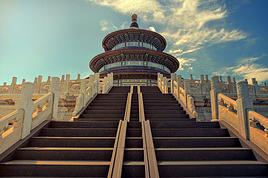
Beijing → Temple of Heaven / Forbidden City
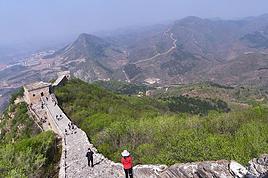
Jinshanling → Great Wall
Zhangjiajie → Tianmen Mountain and Heaven’s Gate
Wulingyuan → Avatar Mountains / sandstone pillars
Fenghuang → riverside houses
Ping’an → terraced rice fields
Tiantouzhai → village / rice terraces
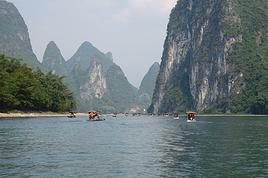
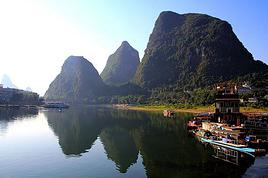
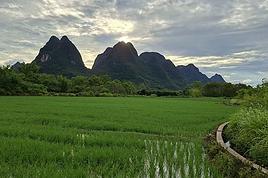
Yangshuo → Li River / karst mountains
Shanghai → skyline with the Oriental Pearl Tower
Our travel journal is available on our travel journal, written day by day. You’ll find lots of photos and some travel tips there.
I could really use your help to finalize our trip to Japan.
We’re heading there for three weeks with my partner, starting November 10th. Our plan was to visit Tokyo, Kyoto, and a few stops in between (nothing too original so far…).
However, we’re more into nature and hiking, so even though we do want to explore Tokyo and Kyoto, we’d like to maximize nature stops between the two. Initially, we’d considered places like Kamikochi, but I understand it’s not accessible this late in the season.
Hi there,
I’d like to do this cycling route over 2 or 3 days. I’m struggling to figure out and find a (good) bike rental that lets me start in Onomichi and drop off in Imabari. Can anyone help with great tips for rentals and accommodations along the route? How do I get back to Onomichi afterward?
Next year, we’re celebrating 20 years of marriage (and travel 🙂), and we’re looking for something new, pretty legendary, and something the teens will enjoy too.
The family council has settled on Japan for now. And it’d have to be a summer trip—no choice there.
The catch: I keep reading that August isn’t the right season for southern Japan. It’s hot, humid, and there’s a risk of typhoons… Okay, but what does that *actually* mean in practice? Are there any travelers who’ve been there during this time? Is it *that* unbearable?
We’re pretty familiar with Southeast Asia—last year, we dealt with scorching heat in Vietnam and insane humidity, plus a typhoon we experienced from a distance, and visiting Angkor in the blazing sun. Is it worse than that?
I’m back with my detailed itinerary for 20 days in South Korea—it’s my first trip to the country. Our idea is to experience a more rural and cultural Korea. Here’s the rough plan: Seoul for 4 nights at the start and 1 night at the end, Gurye for 4 nights, Suncheon for 4 nights, Namhae for 4 nights, and Gyeongju for 2 nights. The goal is to pick a base and explore the surrounding areas. What do you think of this itinerary? Anything you’d change?
thanks
hi everyone, we're heading out for a 12-day trek in the Japanese Alps. We're bringing freeze-dried meals like we always do. We just found out that importing meat is banned, even freeze-dried. Is that true? We already bought them. They're commercially made freeze-dried meals. Online, it's not specified that they have to be "commercially made" because you can make your own freeze-dried food. And since we've heard they're really strict in Japan, can anyone confirm this for us? thanks
I haven’t found what I’m looking for despite my searches!
For a 15-day trip next spring, I’d like to buy a card (preferably an eSIM, but a physical SIM is fine too) that also lets me make calls in the country (to contact a hotel, a tourist spot, etc.).
You can easily find options just for data, but I haven’t come across any that include calls, texts, or even MMS.
Could you recommend something?
hi there
I’m planning a trip in September—here’s my rough itinerary. What do you think? Is it easy to rent a car to get around between my stops? Thanks so much!
Philippe
StopNightsFull daysSeoul44Gurye (Jirisan)43Suncheon43Namhae43Gyeongju21Seoul1—
Hi,
July 2026: I’m writing to you from Dali.
First, I got scammed on Booking—AI-retouched photos. No tourists at this hotel (Yishanju Designer Hotel), and the reality was horrible: dirty, with a disgusting breakfast. It’s better to use Trip.com here.
Next, the old town was an infernal cacophony, packed with tourists who shoved past without a care. Some vendors harassed you to buy things. All the stalls sold the same cheap plastic junk or other uninteresting stuff. The beautiful scenery was ruined by vendors lining 100% of the alleys. Impossible to walk, crushing heat, nothing good to eat except fresh fruit. Horrible experience.
Day 2: We went to Cangshan Mountain by cable car—the ride was short and nothing spectacular. We were at 2,600 m.
My plan was to see Erhai Lake. Unfortunately, I followed the advice of an AI chatbot: take the boat at Langkan Dock. The Didi dropped us off in the nearest area, which was full of charming little alleys but packed with Chinese tourists. The three-wheeled yellow cabs zoomed through the narrow streets, forcing you to hug the walls, on top of the scooters and other pedestrians to deal with. Crossing the neighborhood was hellish and suffocating. Once out, we hit the "corniche," which was also packed with Chinese tourists. The lake’s edge was all pebbles, and everyone was standing around taking photos. I was with my 5-year-old son. I would’ve liked to sit down and let him play with stones by the water, but it was clear we didn’t belong. They were even shoving each other for a shot! There were no boats in sight. In short, we’d had enough, and there was nothing interesting there either.
On the way back, we had to cross that maze again under the scorching sun. My son was braver than me—I even had a little dizzy spell from all the chaos. Add to that Dali’s altitude (2,200 m), so altitude insomnia, fatigue, and vulnerability during the day...
The restaurants weren’t inviting—the staff served sticky rice in a little bucket. The dishes were wrapped, and you had to figure it out yourself. After that, they ignored you completely, even if you were the only tourist.
On the 3rd day, it was time to leave for Shaxi. I hope to see beautiful villages. But honestly, I’m exhausted by this atmosphere where everything is complicated, communication is never smooth, noise is everywhere, and the behavior of some Chinese people is abusive...
Silver lining: not a drop of rain in 4 days and blue skies.
I couldn’t visit the villages in southern Yunnan because of rain and storms there...
But I was expecting to see a few more tourists.
We’re planning a 17-day trip to South Korea in October 2026 with my husband and our daughters, who’ll be 9 years old.
I’d love to get your thoughts on our draft itinerary.
First, some key details:
1/ Jeju Island is a must for us. I’ve personally dreamed of going there for years after reading a novel about it.
2/ Our girls are used to road-trip style travel since they were born, so this kind of trip won’t be an issue for them.
3/ We plan to travel by train, except on Jeju where we’ll rent a car (we already have an international driver’s permit).
Itinerary:
Seoul: 1 arrival day at 10 AM + 4 full days
Gyeongju: 2 days
Busan: 3 days
Jeju: 4 days
Seoul: 2 days
Hi there,
My girlfriend (23) and I (24) are heading to Japan for the first time from October 20th to November 6th. Here’s our itinerary:
6 nights in Tokyo
1 night in Hakone (ryokan already booked)
4 nights in Kyoto (hotel already booked)
2 nights in Osaka
4 nights back in Tokyo
I’d like to book hotels for Tokyo (both stays) and Osaka, but I’ve gotten so many different recommendations.
I’ve read that Shinjuku is the place to be for its huge hub, accessibility, and things to do, but I’ve also heard about Shibuya, Asakusa, and Ueno.
I’ve looked at hotels, and first off, I’m surprised by the prices compared to what I’ve seen on forums (I guess inflation’s hit here too… and maybe I’m late to the booking game?). I’m feeling a bit overwhelmed with all the options.
For our first stay in Tokyo, I’d prefer a hotel (not a residence or Airbnb) since we’ll be arriving at night, and it’s our first time in Japan. It’d be great to have a place with a reception, staff who speak at least a little English, and can give us some guidance. For the second stay, we could consider other options if it’s better.
Budget-wise, we can go up to 150–180 € per night, but if we can save some money to spend elsewhere, that’d be amazing!
I’m open to all recommendations, hotel suggestions, or any other tips for Tokyo (first stay), Osaka, and Tokyo (second stay).
Hi there,
I’m getting ready for a classic tourist trip to China in May 2026.
The "Terres Lointaines" itinerary looks good to me, and the price is interesting.
Has anyone traveled with them before? Any feedback?
Is there a better option?
Thanks so much for sharing your experiences on this!
Michel
I just booked my hotel in Seoul—it’ll be near Unhyeongung, on Samil-Daero 30-Gil—and I’m wondering if there’s public transport from the airport to this address (bus or subway)? If not, what’s the taxi fare? I read it’s around 50 or 60 €.
I’m traveling to Japan with a young adult with autism (ASD) from July 28 to August 8, following a pretty classic route: Osaka, Hiroshima, Kyoto, and Tokyo. I’m looking for a schedule of the most spectacular fireworks displays during that time. So far, the dates for the major *hanabi* events aren’t available online yet. If anyone has them, I’d really appreciate it if you could share!
We’ll be doing a self-drive trip using public transport in May 2026.
On Day 6, we’ll arrive in Hakone by train from Tokyo in late morning. We’ll spend the night in Hakone before heading to Kyoto.
The main goal of this stop is clearly the view (no hiking) of Mount Fuji, not so much exploring Hakone, where the sights seem limited.
I’ve read on the forum that the view is great from Gotemba, but it also takes a good hour by bus to get there. And, apart from that view, there’s nothing else to see in Gotemba!
So, I’m not sure what to choose. Any thoughts? Or alternatives to suggest?
Maybe some spots in Hakone or Gotemba for a great view?
Hi everyone, I’m Julien!
This summer, from late June to late July, I’m planning a one-month solo trip to Japan—my first time!
I’d love to hear your thoughts and advice on the itinerary I’ve put together to explore this amazing country.
Here are the routes I’m considering:
**Option 1: More mountain and nature-focused**
Tokyo: 8 nights, with day trips to Nikko and maybe the Izu Peninsula
Kawaguchiko (Lake Kawaguchi/Mt. Fuji): 1 night. The place looks stunning, but I’m worried Mt. Fuji might not be visible due to the weather
Kyoto: 6–7 nights (including a trip to Nara)
Osaka: 1–2 nights, where I’d like to drop off my things to make the Kumano Kodo easier
Kumano Kodo: 3 nights—an experience I haven’t seen much elsewhere, but I thought it sounded really interesting
Hiroshima: 2 nights
Miyajima: 1 night
Takayama: 3 days
Kanazawa: 3 days (From what I understand, the Osaka–Takayama–Kanazawa–Tokyo route is convenient for transport)
Tokyo: 1 night (return)
**Option 2: More varied but a bit vague in parts**
Tokyo: 8 nights
Kyoto: 7 nights (+ Nara)
Osaka: 2 nights
Kobe + Himeji: just passing through—I’m not sure if it’s worth a night
Naoshima: 1 night—still pretty unclear for me
Takamatsu: 2 nights. An interesting city, but I’m not sure how long to stay
Shimanami Kaido: biking from Imabari to Onomichi, then heading to Hiroshima
Hiroshima: 2 nights
Miyajima: 1 night
Kyushu road trip (Aso + onsens + Fukuoka): 5 nights (also pretty vague—I could fly from Fukuoka back to Tokyo)
Tokyo: 1 night
**Option 3: More balanced/simplified**
Tokyo: 8 nights
Kawaguchiko: 1 night
Kyoto: 7 nights (+ Nara)
Osaka: 2 nights
Koya-san: 1 night
Kumano Kodo: 3 nights
Takayama: 3 nights
Kanazawa: 3 nights
Tokyo: 1 night
A few key points:
I haven’t made any reservations yet, except for the flight tickets.
I know my plans are too packed and will need to be adjusted.
I’m specifically looking for advice on which stops to cut or shorten.
Hello everyone,
Like Cedric13600, I’ve booked a flight ticket for 30 days / 29 nights in September 2026, from Beijing to Shanghai. We’re a couple in our sixties who love independent road trips.
I’d like to draw inspiration from the following private itinerary suggested by a travel agency:
Day 1: Arrival in Beijing
Day 2 to 4: Beijing
Day 5: Datong
Day 6 & 7: Pingyao
Day 8 to 10: Xi'an
Day 11: Luoyang
Day 12: Dengfeng
flight
Day 13 & 14: Chongqing
flight
Day 15 & 16: Lijiang
Day 17: Dali
Day 18: Kunming
Day 19: Jianshui
Day 20 & 21: Yuanyang
Day 22: Travel via Guilin
Day 23 & 24: Yangshuo
Day 25: Guilin
Day 26 & 27: Zhangjiajie
flight
Day 28 & 29: Shanghai
Day 30: Departure from Shanghai
But to do this itinerary independently:
1. This schedule seems very ambitious to me—what do you think?
2. If it’s too packed, what would you remove as a priority?
Thanks so much in advance for your help.
I’m planning a 5-week trip between Yunnan and Sichuan from mid-October to the end of November 2026:
Arriving in Kunming, I’ll do a loop in the far south of Yunnan via Thonghai, Jhiansu, Zhemi, Yuanyang, Nafa, Jinping, Mengzi, and Shilin (visiting markets, villages, and hiking), then head to northern Yunnan/southern Sichuan on the same theme (passing through Kunming again) via Dongchuan, Huize, Qiaojia, Puge, Xichang, Lanba, Butuo, Huolie, Dimo, Riha, Niuniuba, Meigu, Mabian, and Leshan, before arriving in Chengdu (where I’ll take my return flight to Paris).
This would be a trip with a strong ethnic/rural focus. Since I’ve never traveled in China, I’d love to hear your thoughts on doing this solo. Are there public transport options in the region? What tips do you have for traveling through this area as smoothly and enjoyably as possible? I’ve done quite a bit of backpacking in the mountains of northern Vietnam and really enjoyed using local motorbike drivers. Is something like that available in this region (through local tourist agencies or hotels)?
What should I be cautious about? Are local tourist agencies (or hotels) offering tours and guides reliable? If you know of any specialized sites sharing tips or experiences, or names of local agencies, hotels, etc., please don’t hesitate to share them! :)
In short, all your advice (on any topic that comes to mind!) is very welcome.
Thanks so much!
While researching South Korea, I came across the term "templestay," which refers to a Korean program that lets you stay in a traditional temple to discover Buddhism and Korean culture by living like the temple residents and doing activities like making lanterns.
A templestay isn’t just for foreign tourists—on the booking site, I saw that some temples are more geared toward foreigners, with English-speaking monks.
I was wondering if it’s still worth it, especially in temples where the monks don’t speak English?
I'm 69 years old and heading to China, where most tourist sites are free or discounted for me. However, trip.com either refuses to let me book because the sites are free or doesn’t apply the discount. Does WeChat apply this discount if I book through them? How can I just reserve without paying and pay on-site? Is that possible?
I’d love to get some feedback on our 30-day / 29-night itinerary in China. We’ll be there in September as a family with two kids (6 and 10 years old).
Do you think I should cut a few nights between Wulingyuan (Avatar Mountain) and Yangshuo? I’ve planned 15 nights total there.
We’ll be on a round-the-world trip starting May 2026 and will need to do schoolwork with the kids. Hoping to fit it in during train rides!!
Ever since I started planning this China itinerary, I’ve been discovering completely mind-blowing places I’d never heard of before—30 days feels way too short for China!!!
Here’s our itinerary:
Beijing - 4 nights
Forbidden City
Great Wall of China
Temple of Heaven
Xi’an - 3 nights
Terracotta Army
Muslim Quarter & Great Mosque
Chengdu - 3 nights
Zoo - Research Base of Giant Panda Breeding
Wenshu Yuan Temple